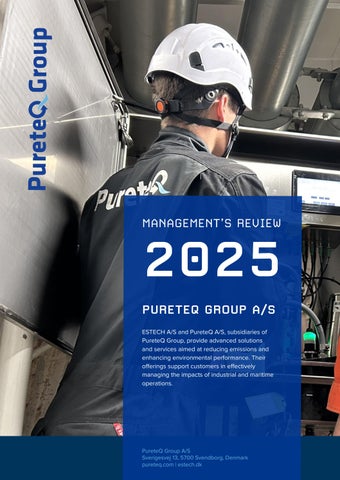
PURETEQ GROUP A/S
ESTECH A/S and PureteQ A/S, subsidiaries of PureteQ Group, provide advanced solutions and services aimed at reducing emissions and enhancing environmental performance. Their offerings support customers in effectively managing the impacts of industrial and maritime operations.
PureteQ Group A/S Sverigesvej 13, 5700 Svendborg, Denmark pureteq.com | estech.dk
Copyright © PureteQ Group A/S 2025
Exerpts, including figures and charts, are allowed with clear source references.
Made by the Executive Team of PureteQ A/S & ESTECH A/S
GROUP STRUCTURE
PureteQ Group A/S is a holding company represented by the two sister companies, ESTECH A/S and PureteQ A/S, including four foreign subsidiaries of PureteQ A/S and one subsidiary of ESTECH A/S.
The majority shareholder is Erik Skjærbæk, owner of PureteQ and ESTECH. Minority shares are owned by key employees.
As joint-stock companies, ESTECH and PureteQ both have a board of directors responsible for the overall and strategic management of the company and for ensuring that the strategy is followed.
See simplified organisational chart below.
YEAR-IN-REVIEW 2025
Geopolitical Impact on the Green Transition
Geopolitical developments—including the war in Ukraine, shifting priorities within the U.S. administration, and the recent crisis in the Middle East—have redirected political focus from the green transition toward defence. As a result, many CO₂ capture and hydrogen projects have been postponed or cancelled.
The International Maritime Organization (IMO) has not reached agreement on CO₂ levies, postponing a decision by at least one year and increasing uncertainty for investors and stakeholders. Given the current position of the U.S. administration, achieving a global agreement appears unlikely for the time being. During IMO negotiations, U.S. threats of countermeasures against countries supporting a global CO₂ tax led several oil-producing and shipping nations to withhold support. Consequently, many industries, including shipping, have revised their timelines for phasing out fossil fuels.
The previously strong momentum for investments in green hydrogen and e-fuels for shipping and aviation has weakened. In response, both policymakers and industry are increasingly focusing on technologies that mitigate the environmental impact of continued fossil fuel use—particularly CO₂ capture. This reflects a growing view that solutions enabling continued fossil fuel use will play a more prominent role in the transition.
Executive Summary - PureteQ
Global shipbuilding activity remains strong, with most new vessels designed to operate on Heavy Fuel Oil (HFO) or other fossil fuels, reflecting current market conditions. Major shipyards in
China, Korea, and Japan are fully booked through 2030, with Japan planning further capacity expansion.
While several onboard carbon capture and storage systems have been installed, the absence of a mature CO₂ value chain and financial incentives continues to limit large-scale adoption.
In response to market shifts, PureteQ has defined a five-year growth strategy supporting sustainable growth and profitability toward 2030. PureteQ has expanded its global service platform, achieving average annual growth rate of more than 30% over the past four years. Our market position has strengthened through servicing all scrubber brands and into adjacent systems such as Water Treatment Units, Exhaust Gas Recirculation systems, and Ballast Water Treatment systems.
“We are fortunate to attract some of the sharpest minds and most diligent hands across all our branches, providing us with the best possible foundation for our continued growth journey.”
Scrubber technology remains a long-term solution, driven by newbuild installations and its relevance to future CO₂ capture. While retrofit activity was limited in 2025, service demand continues to increase, supported by five-year drydockings and stricter environmental regulations.
China remains a key growth market. Through our partnership with CSSC/CPGC and the establishment of a local entity in Shanghai in 2025, PureteQ has strengthened its competitive position and local presence in line with its “China +1” strategy.
PureteQ continues to expand its product and service offering, including Water Monitoring Systems (WMS), Water Treatment Solutions, and new products such as PurePass for sludge reduction and the Remote Access Unit for real-time system support of all brands of scrubbers. These solutions improve efficiency, reduce lifecycle costs, and support increased digitalisation.
In 2025, PureteQ further developed its drydocking support concept. As scrubber systems age, demand for specialised service and structural repairs is increasing. Enhanced preinspection reporting now ensures clear scoping, including work not feasible during vessel operation.
PureteQ is supported by a strong and growing service organisation and is well positioned to capture increasing service demand and related market opportunities.
Executive Summary - ESTECH
The global landscape has shifted markedly in recent years. Progress in the green transition has slowed, while major Carbon Capture & Storage (CCS) projects are being delayed or cancelled due to legal and economic uncertainty. As a result, fossil fuels are likely to remain a costeffective energy source for some time, shaping the company’s strategic focus on reducing the environmental impact of continued consumption.
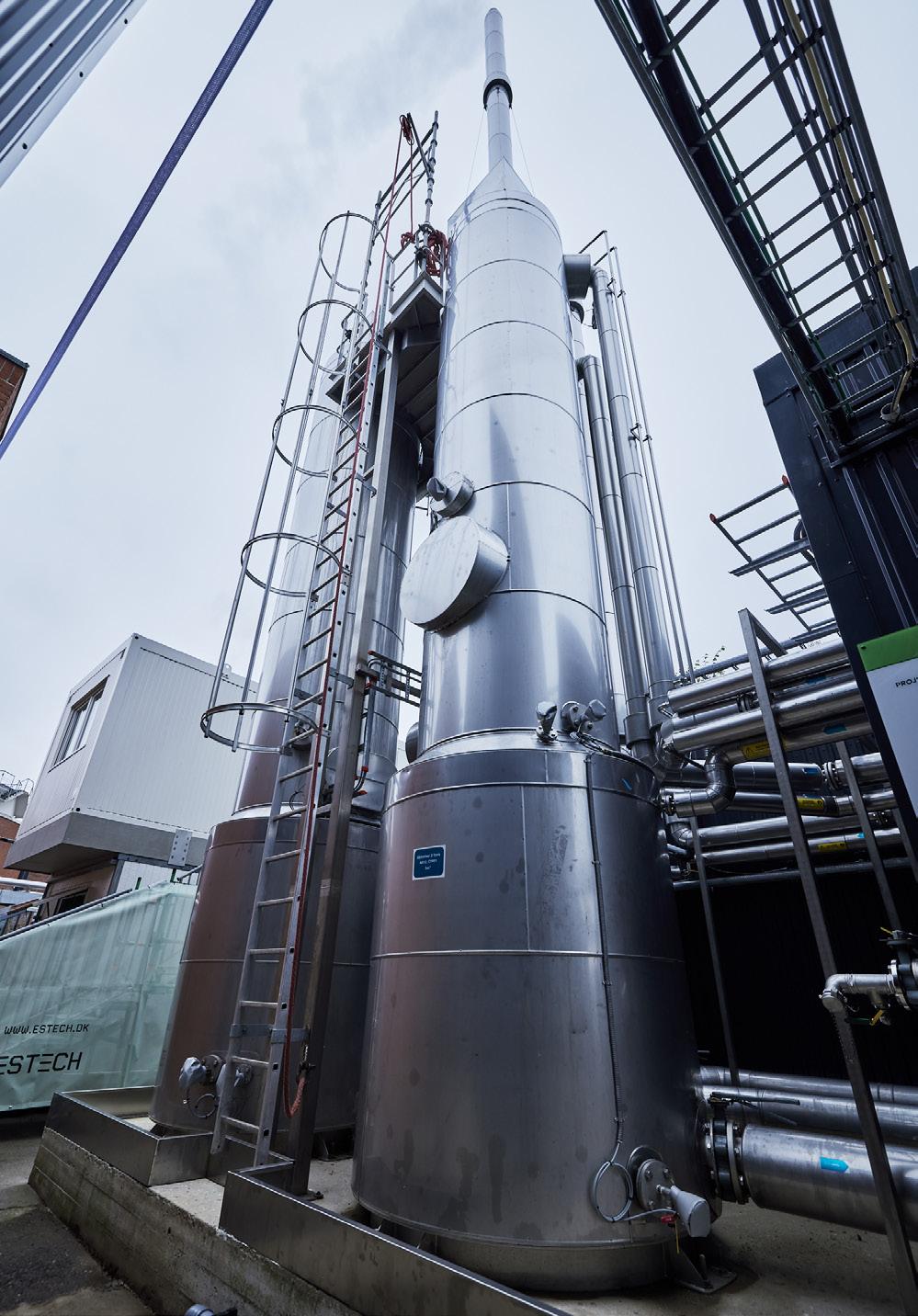
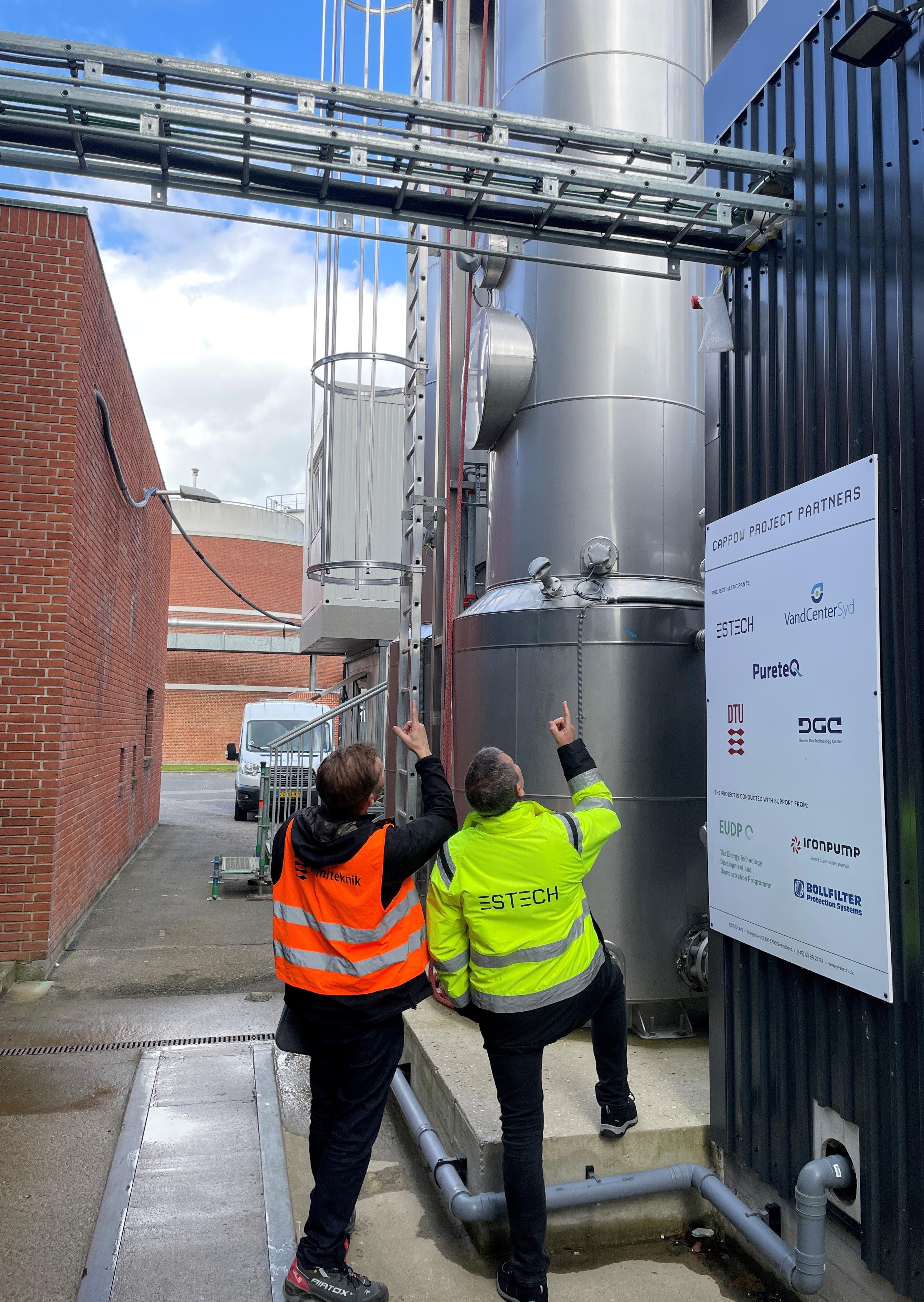
Although numerous CO₂ capture projects are under development worldwide, only a limited number have been scaled for industrial use. The commissioning of the company’s CAPPOW plant in 2025 demonstrates the technology’s scalability and suitability for industrial applications.
ESTECH’s technology is particularly relevant in industries where legislation already mandates reductions in CO₂ emissions and where the produced hydrogen has value. While competing with traditional amine plants, these alternatives often struggle to treat flue gas from certain
smaller industries such as brickworks in an economically viable manner.
In addition, ESTECH is addressing the growing demand for biogas upgrading. This process requires the removal of significant amounts of CO₂ to enable distribution through existing natural gas networks. With CAPPOW technology, both CO₂ content and hydrogen production can be optimized, further enhancing overall emission reductions in biogas systems.
In 2025, ESTECH launched two externally funded projects to further develop the CAPPOW technology for the production of e-methanol. These projects focus on methanol for use in wood adhesives and fuel applications, respectively. Methanol is expected to play a key role in future green fuel solutions.
The purpose is evident: ESTECH is continuously fighting to transform CO2 from a climate burden into valuable resources, driving a sustainable future – now, and for generations to come.
Anders Skibdal, CEO PureteQ Group A/S
TECHNOLOGY STATUS
ESTECH CAPPOW
Development of the technology for combined carbon capture and production of hydrogen began in 2019 under the name CAPPOW, short for Carbon Capture and Power-to-X.
Now, the facility is complete, the testing phase is over, and the optimization phase has begun. Data has been collected throughout the past two years, and the results are continuously analyzed, evaluated and optimized.
On the Technology Readiness Level (TRL) scale – a method of estimating the maturity of new technologies on a scale from 1 to 9, with 9 indicating a proven and competitive technology ready for production – the CAPPOW technology currently stands at TRL 8.
BIOGAS UPGRADE
Efforts have been made to meet the increasing demand for upgrading biogas, which in the short term can be an alternative way to utilize ESTECH's CAPPOW technology.
By upgrading biogas, a large amount of CO2 naturally present in biogas is removed, as required by authorities to allow it to be pumped into the natural gas grid. With the CAPPOW technology, it is possible to both reduce the amount of CO2 and produce the hydrogen needed for further reduction of CO2 in biogas.
BIOCHAR
Biochar is an effective solution for binding large amounts of carbon from sources such as agricultural manure and municipal wastewater, thereby contributing to national and global CO₂ reduction efforts.
Biochar production through pyrolysis generates syngas, and in 2025 it was documented that, when combined with ESTECH’s advanced gas and water treatment solutions, these gases can be used directly in e.g. gas engines for green electricity generation.
It was also demonstrated that the ESTECH system can reduce CO₂ in syngas by more than 95%, further enhancing the overall emission reduction benefits of the biochar solution.
In 2025, these results were presented to interested biogas plants, biochar plants, and brickworks.
TECHNOLOGY ADVANTAGES
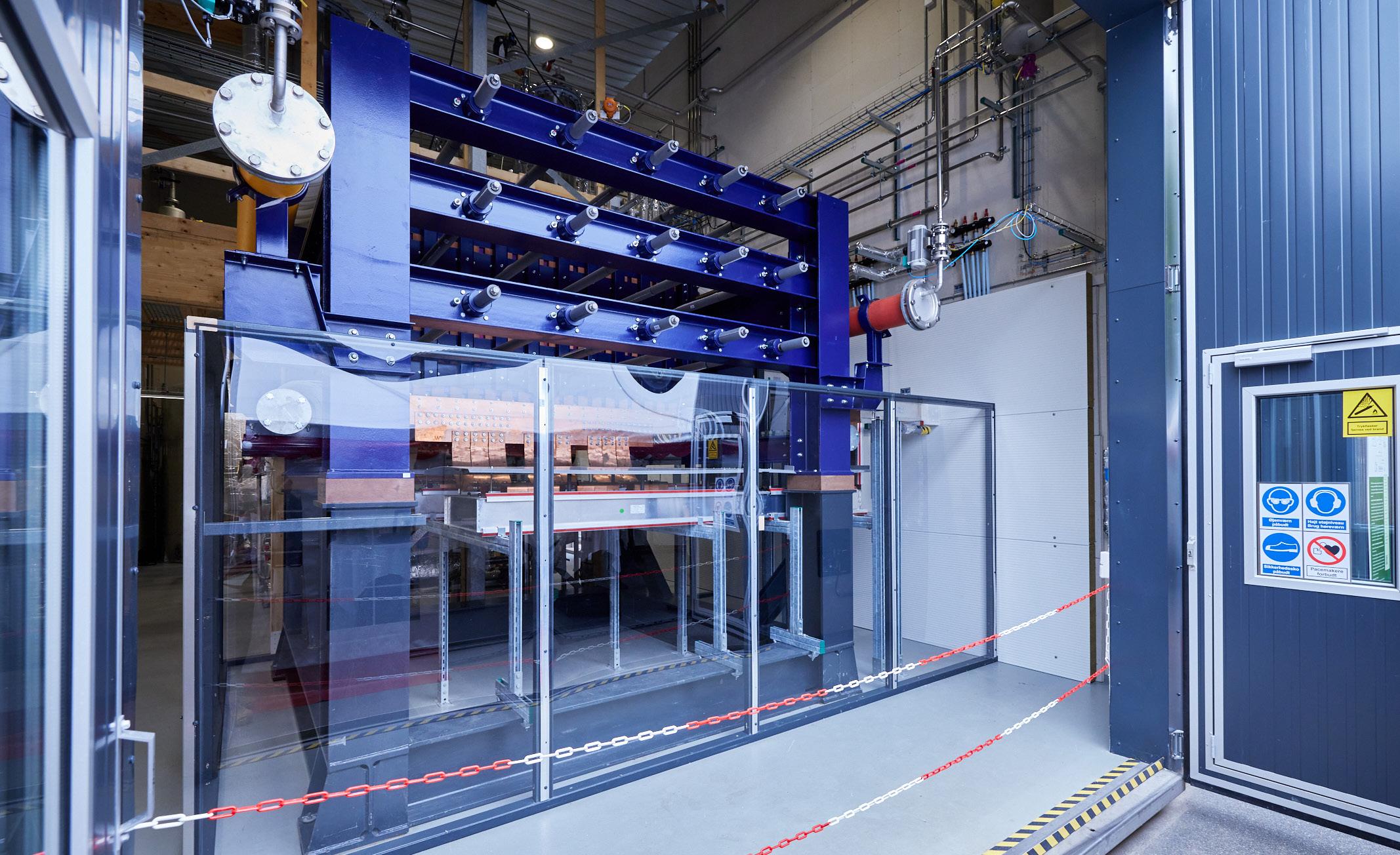
ESTECH’s CAPPOW technology combines two otherwise separate processes: CO2 capture and hydrogen production via electrolysis (Power-to-X) powered by green electricity. The advantage of combining these two processes is threefold:
1. It is more cost-effective than building two separate plants for CO2 capture and hydrogen production
2. It is more energy-efficient to run the processes together rather than individually
3. The process solely uses harmless chemicals, specifically potassium hydroxide (KOH) –a natural cleaning agent – and does not require heat
WHAT IS POWER -TO-X
Power-to-X refers to technologies that use electricity to produce fuels, chemicals, or materials by generating hydrogen through electrolysis. This hydrogen can be used directly or converted into products like ammonia, methanol, or methane.
A PARTNERSHIP WITH A GREEN MISSION
In 2025, ESTECH entered a partnership with MissionGreenFuels to support their vision of contributing to global climate goals and advancing Danish research, innovation, growth, and export potential within the green fuels sector—an essential driver of the green transition.
ABOUT THE PARTNERSHIP
The MissionGreenFuels partnership includes more than 100 partners across large industrial companies, SMEs, universities, and knowledge institutions. MissionGreenFuels provides a platform that ensures flexibility, optimal use of resources, and socioeconomic transparency— achieved through the industrialisation and upscaling of flagship projects, as well as through research, innovation, demonstration activities, and knowledge sharing.
Through this collaboration, ESTECH—together with project partners DTU, Elplatek, VandCenter Syd and Torm—has secured financial support from Innovation Fund Denmark for the Powerto-X-based Carbon Capture and Methanol Production for Wastewater Decarbonization project, known as WURTZ.
CARBON CAPTURE AND METHANOL PRODUCTION
The WURTZ project aims to demonstrate an innovative Power-to-X process that converts biogenic CO₂ into green methanol, supporting circular carbon utilization.
The solution integrates electrochemical carbon capture—part of ESTECH’s CAPPOW technology, which purifies emissions from the wastewater facility at VandCenter Syd in Odense—with
DTU’s BioReFuel methanol plant, an advanced methanol synthesis system, in a compact, modular setup. In this system, CO₂ emissions from the treatment process are transformed into high-purity green methanol using advanced capture technologies and a retrofitted Gas-toLiquids (GTL) platform, which is being upgraded by Elplatek and DTU for methanol synthesis.
The process will be demonstrated at pilot scale, with methanol production assessed for purity, efficiency, and market potential. Key partner TORM, a global shipping company, is exploring green methanol as a marine fuel—supporting emission reductions both on land and at sea.
This project merges two innovative technologies to produce green methanol, offering a modular and scalable solution for small- and mid-scale CO₂ emitters.
Additionally, it significantly contributes to the operation and optimisation of ESTECH’s CAPPOW technology.
The vision for the MissionGreenFuels partnership is to contribute substantially to the Danish, European and global climate goals, specifically 70% reduction by 2030 and net zero by 2050, and to support Danish research, innovation, growth, jobs and export potential within the field of green fuel. Learn more at missiongreenfuels.dk
EXHIBITING AT INTERNATIONAL TRADE FAIRS
In 2025, we participated in numerous networking meetings, hosted a technical seminar, and exhibited at a total of four trade fairs, both under the PureteQ and ESTECH banners.
PureteQ's technical forum in Athens, Advancing Maritime Efficiency, held in collaboration with our Greek partners, Royal Blue Ltd, offered a focused afternoon on maritime emission technologies and future compliance solutions, featuring both internal expertise and external insights from the market..
Our exhibition concept, featuring a demonstration model of carbon capture and power-to-X technology, has proven to be a great attraction.
Overall, we have had a high number of visitors at the trade fairs we attended and have returned home with many promising leads
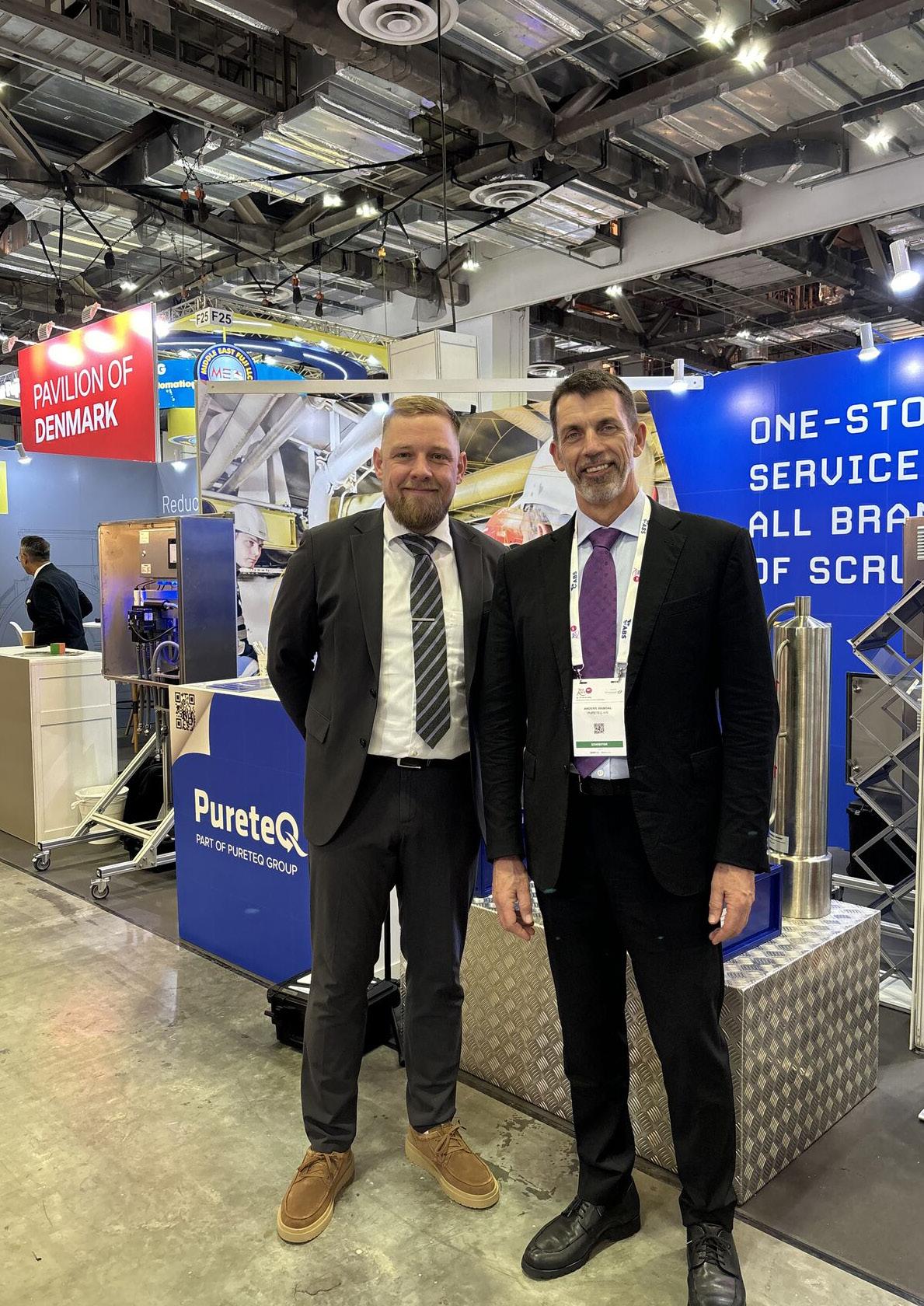
Photo: CSO Søren Holm Hansen and CEO Anders Skibdal in front of PurerteQ stand at Sea Asia 2025, Singapore
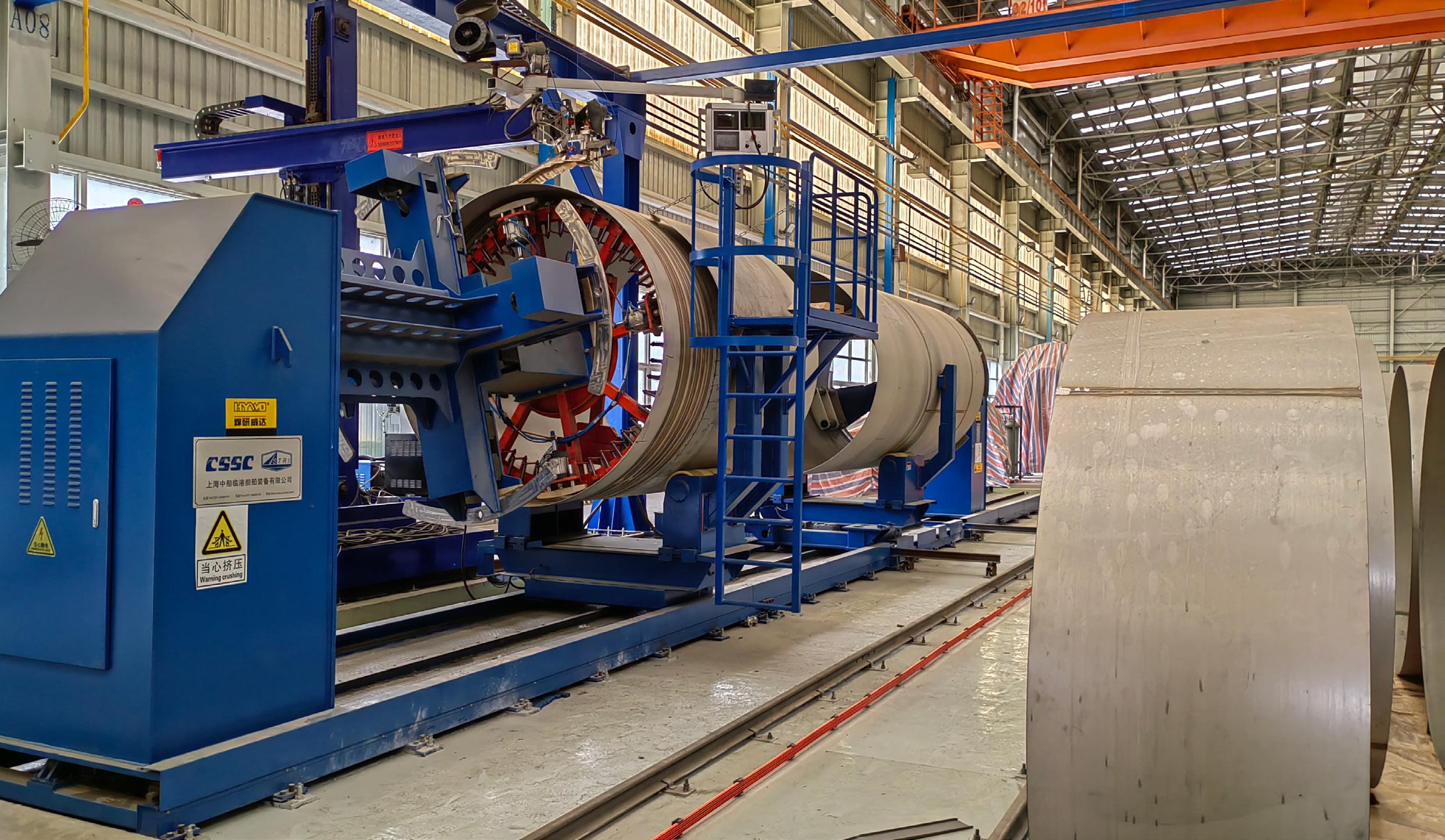
THE MARKET POTENTIAL IN CHINA
For PureteQ China is not only about volume but also about positioning. With a clear niche, strong relationships, and digital capabilities, we have established ourselves in the world’s largest shipbuilding nation.
PureteQ has exported to China since 2017, and we have in 2025 taken the next major strategic step by establishing a wholly foreign-owned company in Shanghai.
This decision is about anchoring the business locally and staying close to shipyards and shipping companies in China. The China+1 strategy requires local presence to service Chinese shipowners with Chinese scrubber
Our products target the environmental sector, helping global shipping customers reduce pollution and climate impact
systems in China and to continue selling scrubbers and related products to Chinese customers.
We decided early on that if we wanted to stay in China, we needed to be perceived as local. China is a large shipping nation, but Chinese shipyards don't have the same relationships with global shipowners as we do — and this is exactly where we can create value and the right connection
Quote: Anders Skibdal, CEO
It is important to maintain contact with both shipyards, shipowners, operators, and managers. Once we have developed and installed the scrubber systems, our team of marine engineers helps shipowners and operators ensure continuous operation and reliability. This applies not only to PureteQ’s own systems, but to all scrubber brands.
ADDRESSING SPECIFIC NEEDS IN CHINA
A strong partnership opened the door to China for PureteQ. In 2022, we entered a partnership with CSSC (China State Shipbuilding Corporation), a state-owned shipbuilding conglomerate.
CSSC was facing challenges with a previously launched product. We had a strong solution that could meet their needs, resolving issues related to design and control systems, and provide a global service network, which was our entry point into the partnership.
FIND YOUR NICHE – AND STICK TO IT
Chinese suppliers sell complete scrubber
systems at prices far below those of European solutions. It was therefore essential to define our niche in China to compete on quality and customer needs rather than on price. Without compromise, gaining access to the negotiating table is difficult.
The three largest competitors in China are state-owned and compete among themselves. For a European company, it is about finding your niche and clearly defining what you can sell — and for how long
Quote: Anders Skibdal, CEO
Today, PureteQ services more than 2,400 ships — more than 30 percent of the world’s installed scrubber systems — and in this specialized niche has no direct competitors in or outside of China other than local OEMs.
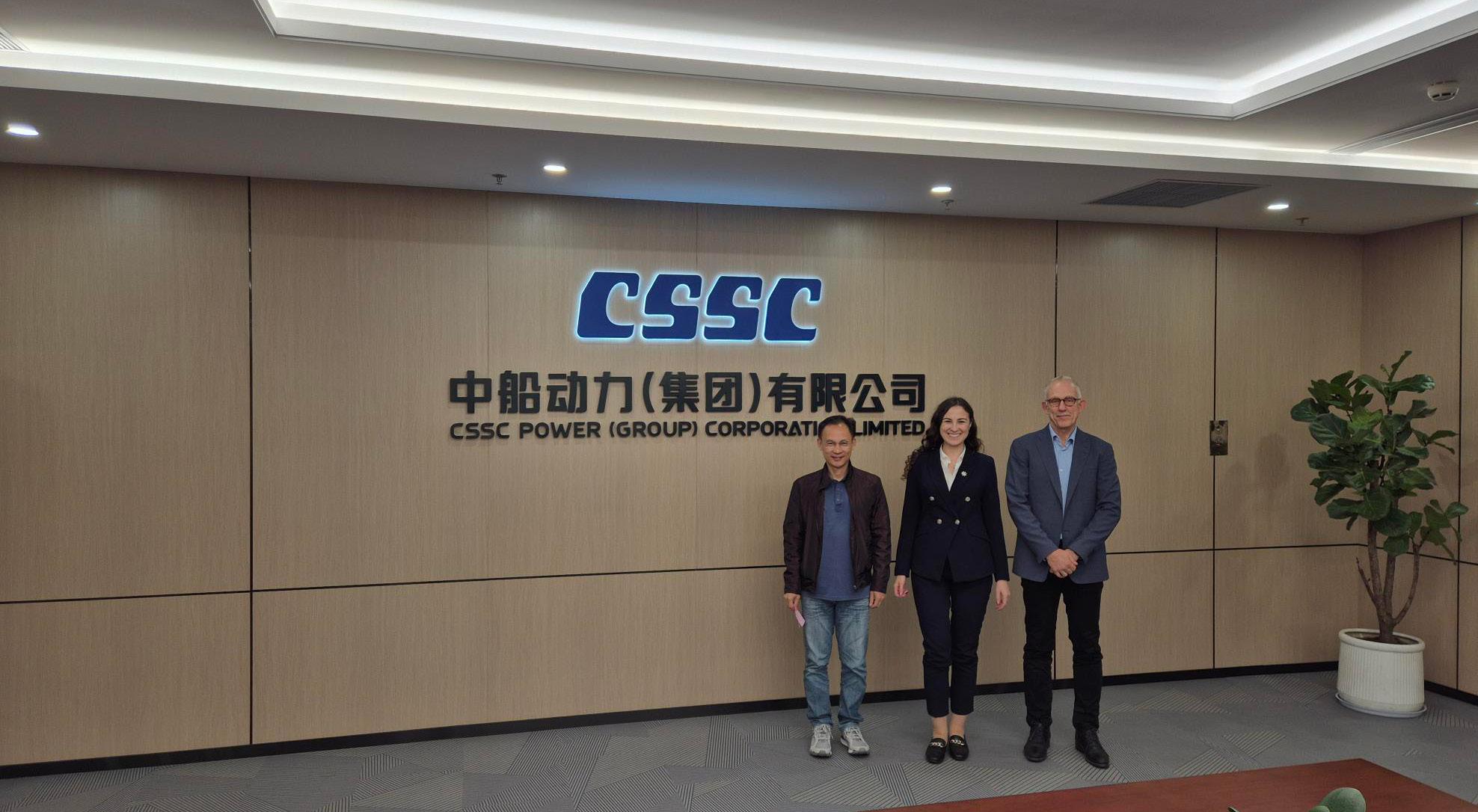
Photo: Three PureteQ representatives receiving a tour of the CSSC Power Group premises during a meeting in China
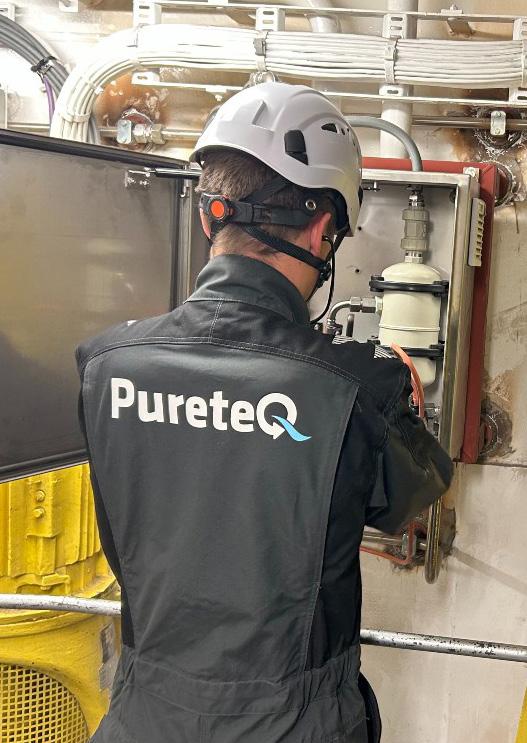
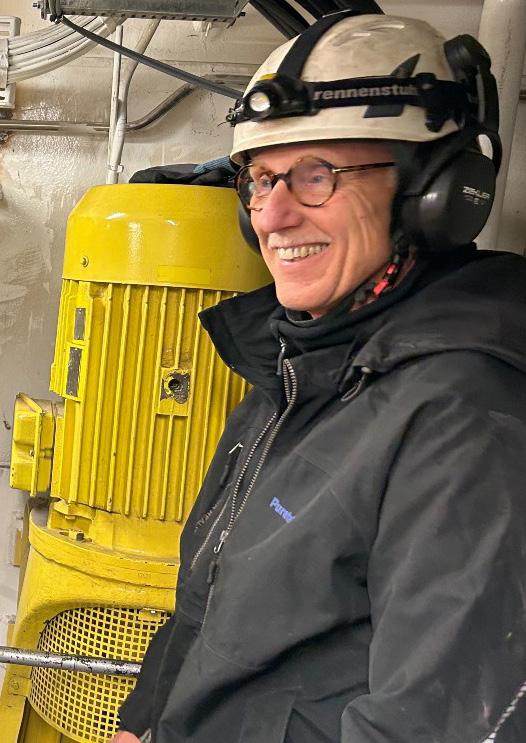
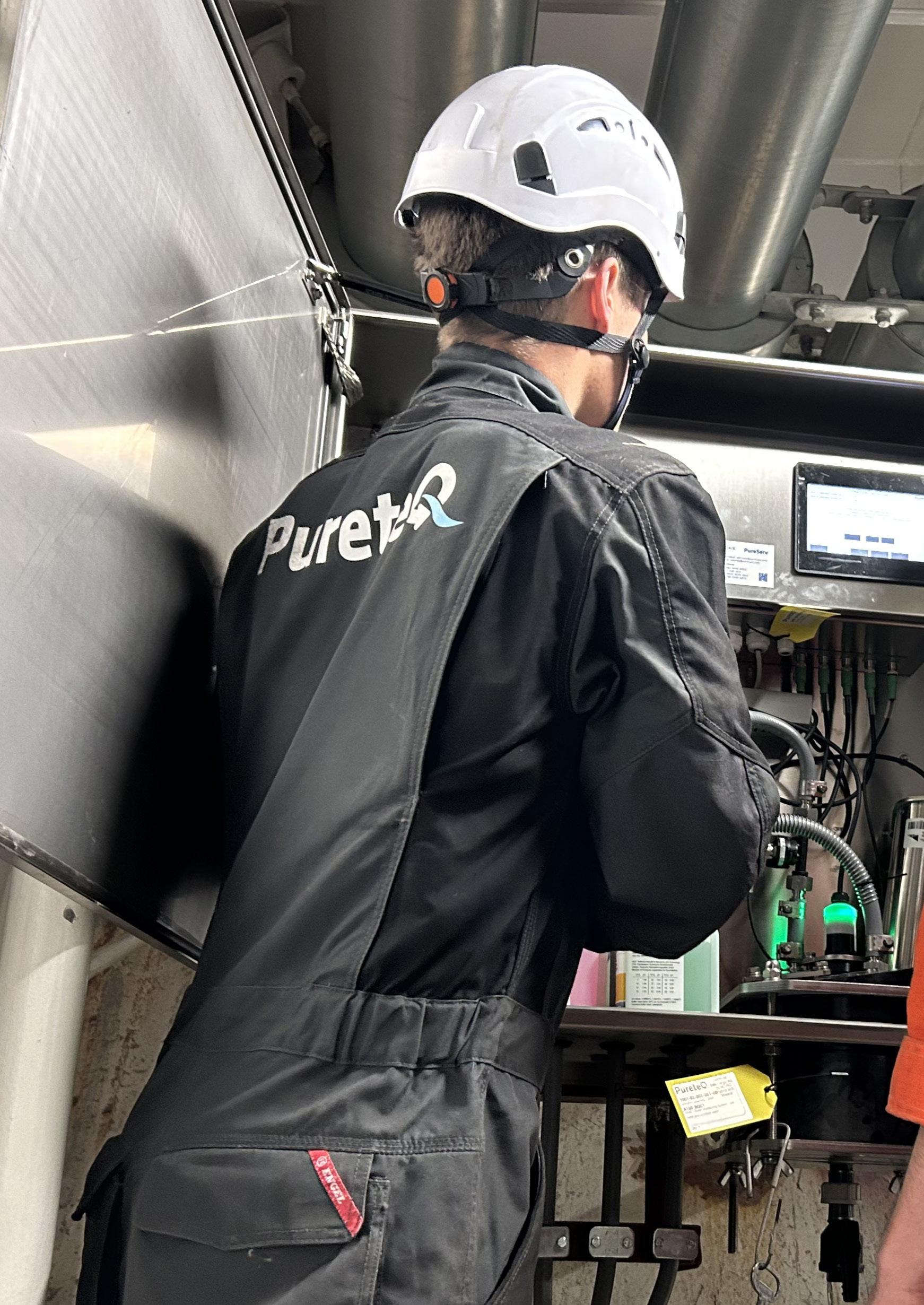
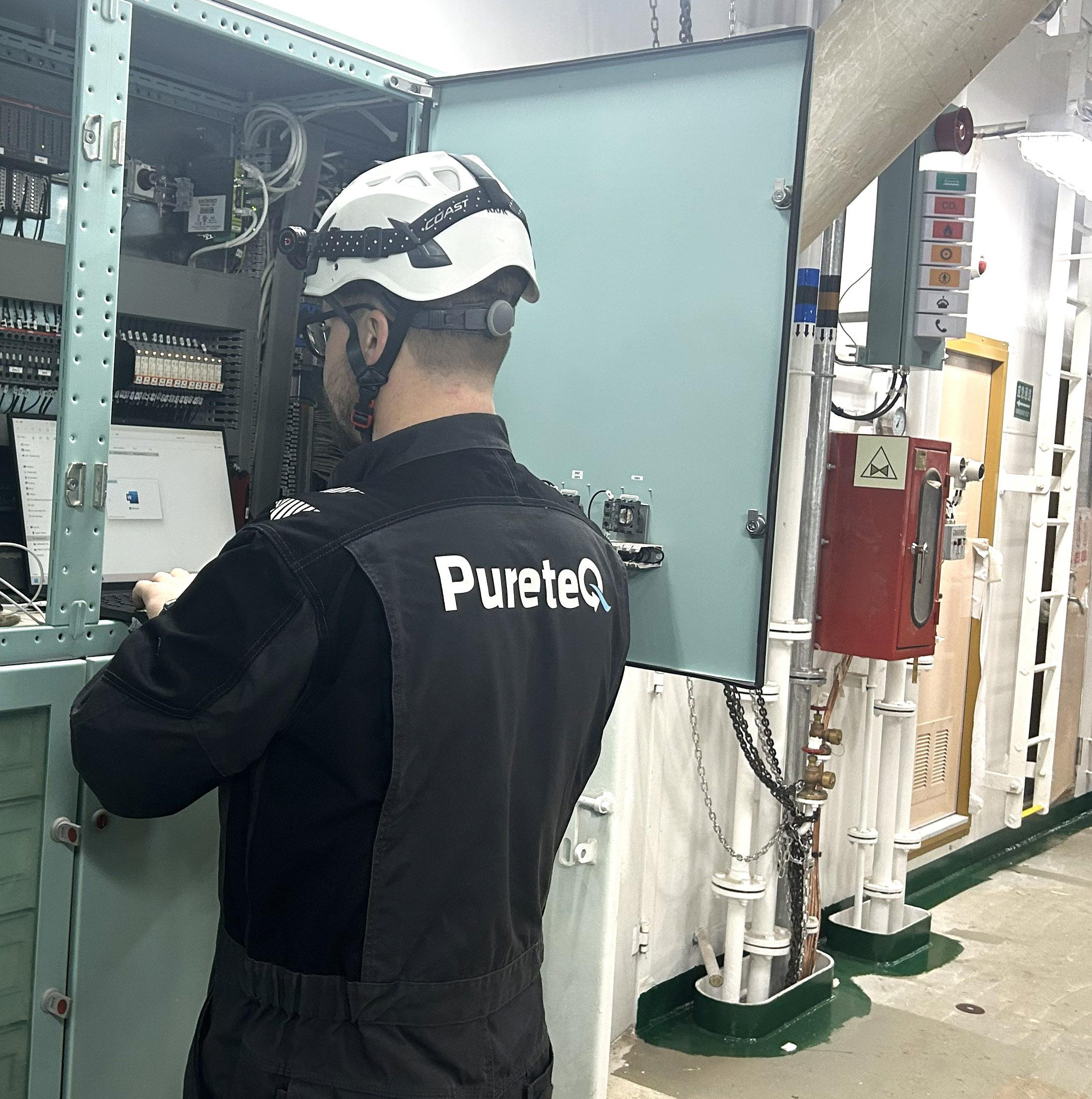
Photo: Junior Project Manager Tobias G. S. Jørgensen and CPO Henrik Pander installing a pressure-reduction unit for seawater inlet sampling as part of a system retrofit
DRYDOCKING A STRATEGIC OPPORTUNITY
The share of Engineering Work Orders (service assignments requiring design and engineering activities) increased significantly in 2025. Service activities related to vessels’ 5-year dry-dockings accounted for a substantial part of this growth, which is expected to continue in the coming years.
CHOICE, RESILIENCE, AND COST CONTROL
Shipowners are using planned drydock windows to strengthen scrubber reliability—and safeguard fuel flexibility for the long haul.
For shipowners navigating today’s fuel and emissions landscape, the discussion is no longer simply about compliance. It is about choice, resilience, and cost control in an environment defined by tightening sulphur limits, expanding Emission Control Areas (ECAs), and volatile fuel spreads.
Both inside and outside these areas, an increasing number of operators of Hybrid Loop scrubbers are expanding the use of closed-loop functionality, including the operation of installed Water Treatment Units (WTUs). This often requires upgrades and optimization to ensure higher uptime. Adding remote access capabilities can help prevent costly downtime and reduce the need for expensive physical attendance.
THE TECHNOLOGY GAP
Many vessels operating today were built more than a decade ago. Research from the EU-funded Retrofit project (CORDIS ID 285420) shows that while a ship’s hull and propulsion systems may remain viable for 25–30 years, core technical systems typically become outdated within 10–15 years. This gap creates both risk and opportunity — particularly for exhaust gas cleaning systems
(EGCS) / scrubbers, where reliability, monitoring accuracy, and maintenance directly influence fuel flexibility and operating cost.
RETROFITTING: A PRACTICAL RESPONSE TO FUEL & REGULATORY REALITY
Market conditions alone do not always justify replacing legacy technology. However, regulatory pressure increasingly does. Expanding IMO ECAs, regional requirements, and stricter enforcement of wash-water monitoring mean that older EGCS configurations are often the weak link in an otherwise viable compliance strategy.
Retrofitting is defined as the installation of modern or innovative components into existing vessels, either to meet new regulatory thresholds or to improve operational standards.
As demonstrated by the retrofit project, a structured retrofit approach allows shipowners to maintain access to high-sulphur fuel, reduce energy consumption and emissions, extend the economic life of existing assets, and avoid premature system replacement or newbuild investment.
For bunker buyers and technical managers, this translates into greater confidence in scrubber availability, more predictable fuel strategies, less concern for the crew and reduced off-hire.
WHY STRATEGIC DRYDOCKING MATTERS
Drydocking is more than a maintenance issue. It is the most efficient point in a vessel’s lifecycle to implement targeted upgrades that improve system robustness and future readiness.
PureteQ supports shipowners with:
• Pre-drydock inspections of EGCS-related pumps, fans, internal structures, and compliance equipment
• Clear, defined work scopes that reduce schedule risk and avoid cost escalation
• Performance assessments that identify where legacy components constrain system stability, monitoring accuracy, energy optimization and reduced maintenance cost
This approach enables shipowners to align technical upgrades with long-term fuel and compliance strategies — rather than reacting to failures or regulatory findings resulting in costly repairs.
RETROFITTING EGCS: A FUEL STRATEGY ENABLER
As fuel markets remain unpredictable and regulatory pressure increases, scrubberequipped vessels only deliver value if their systems are reliable, compliant, and easy to operate. Retrofitting critical EGCS components (particularly monitoring and control systems) helps ensure that scrubbers remain an asset rather than a liability.
Our drydocking and retrofit services help shipowners safeguard fuel flexibility, reduce operational risk, and unlock additional value from existing compliance investments.
CASE EXAMPLE: SIMPLIFYING EGCS WATER MONITORING
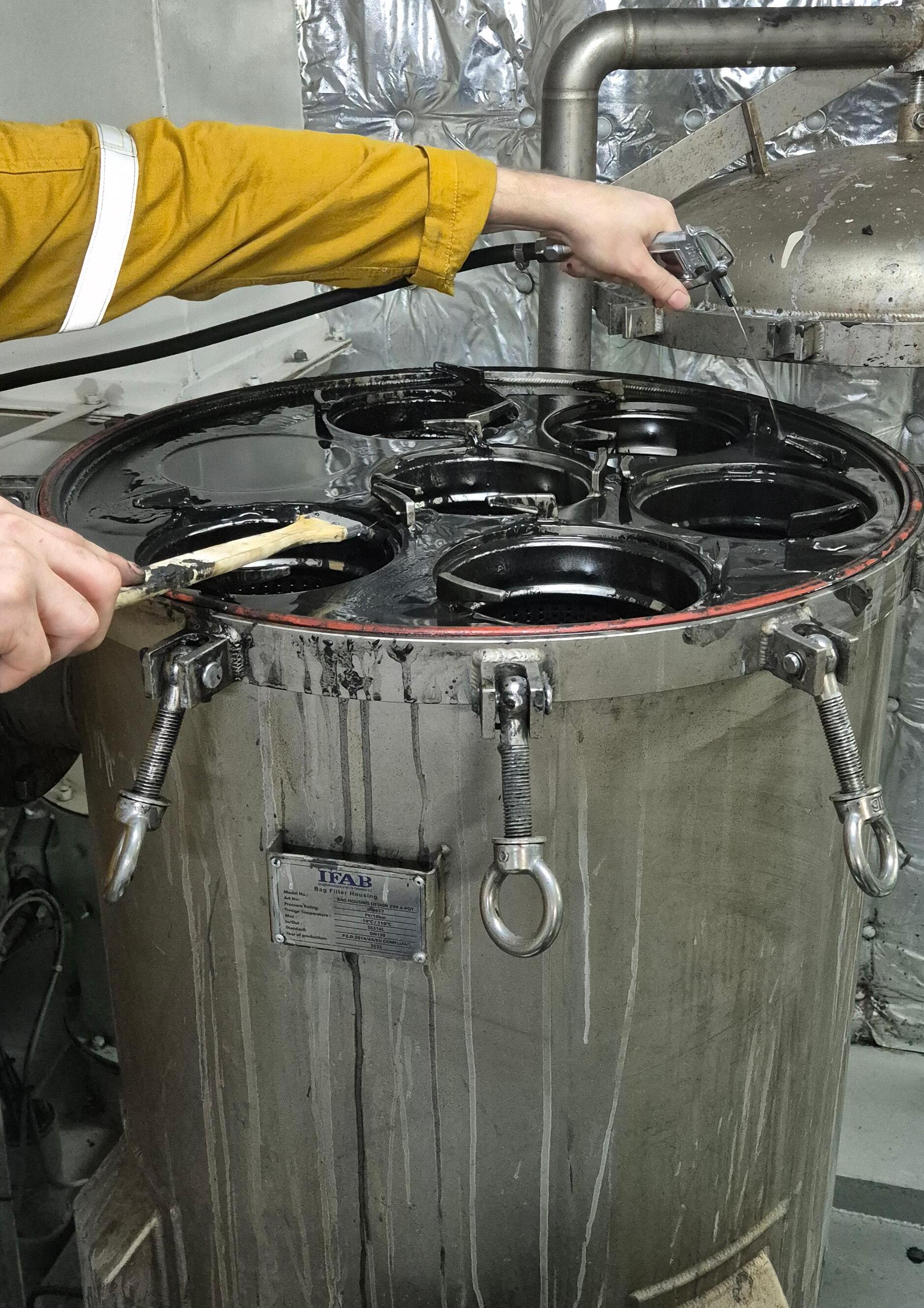
In a recent retrofit project, a vessel’s EGCS was equipped with two separate water analyzers — one for seawater inlet and one for washwater discharge. The configuration suffered from unstable operation and high maintenance requirements, creating operational risk and high cost for the owner.
Within just three days, PureteQ retrofitted the system with the PureteQ WMS013, a single analyzer capable of monitoring up to three sample points via internal switching system.
For the owner, the upgrade reduced lifecycle cost and improved scrubber reliability — a direct enabler of continued fuel flexibility and lower operating cost.
Key elements of the retrofit project
• Removal of two analyzers and replacement with one WMS013 unit
• Installation of a pressure reduction unit (WSR) for seawater inlet sampling, eliminating the need for pumps
• Gravity-fed wash-water sampling via a scoop on the scrubber drainpipe
The results were substantial:
• One analyzer replaced two, simplifying system architecture
• No pumps required, significantly lowering maintenance demand
In a market where margins are tight and decisions are scrutinized, retrofitting done right is not an expense — it is risk management and strategic positioning
• More stable operation and reduced calibration effort
• Updated software with remote access capability
• Signal conversion enabling compatibility with different shipboard systems
• Full class approval for retrofit installations
By 2030 world-wide emission of C02 must be reduced with
In 2030 EU must reduce its CO2-emissions with
Scope 1, 2 and 3 emissions enable companies to understand their full value chain emissions
The world must limit global warming to
PureteQ Group provides advanced solutions and services aimed at reducing emissions and enhancing environmental performance 70% 55% 1.5°
Scope 3 emissions typically account for 70–90% of the total greenhouse gas emissions
ESG ENVIRONMENT, SOCIAL AND GOVERNANCE IMPACTS
Too often, the ESG discourse is narrowed down to carbon, diversity and board composition. While important, this selective focus delegitimizes ESG and weakens corporate action as it encompasses a far broader spectrum of strategic priorities.
EU law requires companies above a certain size to disclose information on what they consider as the risks and opportunities arising from social and environmental issues, and on the impact of their activities on people and the environment.
THE OMNIBUS INITIATIVE
In February 2025 the European Commission published the requirements of the revised European Sustainability Reporting Standards (ESRS) under the Corporate Sustainability Reporting Directive (CSRD). The revised ESRS apply to companies above the new threshold of 1,000 employees and net turnover of EUR 450m.
The standards include 12 topical standards related to environment, social and governance impacts.
Although PureteQ Group is not subject to the CSRD requirements, we are preparing for the new standards and how small and mediumsized enterprises (SMEs) can contribute to the sustainability agenda and continue to attract and retain customers, capital, and employees in both the short and long term.
For PureteQ Group, ESG serves as the foundation for our engagement with society, employees, customers, suppliers, and other stakeholders, reflecting our commitment to addressing climate change in preparation for long-term resilience and sustainability.
On the social and governance scale, PureteQ Group fosters a healthy and positive working environment, conducts workplace assessments and employee satisfaction surveys, plans at least four social events per year, and ensures that both national and international employment conditions are attractive.
SCOPE 1, 2 AND 3
On the road to net zero, one of the main ways to measure and assess the impact of greenhouse gas emissions is to categorize them in three different scopes. Incorporating Scope 1, 2 and 3 emissions enable companies to understand their full value chain emissions and how to focus their efforts on the greatest reduction opportunities.

With the UN Sustainable Development Goals as a starting point, PureteQ Group is committed to taking part in the green transition
Scope 1 are direct emissions that are owned or controlled by a company, whereas scope 2 and 3 are indirect emissions that are a consequence of the activities of the company but occur from sources not owned or controlled by it.
SCOPE 1 EMISSIONS
For PureteQ Group scope 1 emissions cover company car fuel consumption, waste separation and the company lunch program.
• We are gradually replacing petrol-driven company cars with electric or hybrid cars and have to date installed four EV charging stations on our HQ’s parking lot.
• We recycle our plastic, glass, paper and food waste in our offices, warehouse and kitchen.
• Our lunch program offers a varied and healthy seasonal menu, including a weekly meat-free dish. To minimize food waste, any leftovers are served on Fridays.
SCOPE 2 EMISSIONS
Scope 2 emissions include electricity and heat consumption. Our HQ offices are heated by a gas furnace that can’t be replaced with either district heating or a heat pump. The gas is purchased from the North Sea. Our focus on energy reducing measures is based on turning down the heat and replacing old strip lights with LED lighting.
SCOPE 3 EMISSIONS
For most companies, Scope 3 emissions typically account for 70–90% of their total greenhouse gas emissions — sometimes even more, depending on the industry.
Scope 3 emissions for PureteQ Group include business travel, transportation and distribution of spare parts and scrubber components, and
the use and end-of-life treatment of our sold products.
• We offer our customers certified Gas Analyser and Sensor Replacement Programmes to prolong the life of installed compliance equipment to reduce OPEX
• As a cost-effective measure we offer systematic cleaning and refurbishment of used filters/membranes for reuse in most common Water Treatment Units
• Our service engineers are dispatched from our branches in Asia and Europe to save time and reduce travel milage to the service destinations, and we have local sales managers and agents to assist our global sales directors
EFFORTS OUTSIDE SCOPE
PureteQ Group’s sustainability reporting does not include the indirect impact of products that enable customers to reduce emissions.
The Group focuses on CO₂ capture, utilization, and storage (CCUS), supporting emission reductions in sectors where alternatives are limited. ESTECH’s integrated CO₂ capture and Power-to-X solution significantly reduces energy consumption compared to conventional standalone technologies, positioning CAPPOW as a contributor to the green transition.
Since 2024, PureteQ has expanded sales of type-approved Water Monitoring Systems (WMS) for both retrofit and newbuild installations across all scrubber brands. These systems offer high robustness and lower lifecycle costs.
A more cost-effective WMS for EGR systems and Water Treatment Units has also been introduced, supporting increased adoption.
Stricter environmental regulations are driving demand for Closed Loop and Hybrid Loop scrubbers with water treatment systems.
PureteQ has obtained certification in this area, and its OEM-trained engineers provide ongoing service support for multiple brand water treatment systems.
In 2025, PureteQ launched PurePass, a sludge reduction solution addressing water
treatment and waste handling challenges, with initial orders secured. A Remote Access Unit (RAU) was also introduced, enabling realtime monitoring and remote troubleshooting, reducing the need for physical attendance and strengthening global service capabilities across all scrubber brands.
Watch the 2-minute 3D animation video for a brief explanation of the product PurePass.
FINANCIAL REVIEW PURETEQ
The financial result for 2025 shows a profit before tax of DKK 16,2 million. The result has been positively impacted by strong growth in the company's aftermarket and service sector under the PureServ brand.
Minimal warranty work has been required on the company's products, leading to a reversal of provisions from previous years, which has further contributed to the positive result in 2025.
Overall results for 2025 are considered satisfactory given market developments and the growth achieved. New opportunities have been created that extend well into the coming years.
The amounts are stated in TDKK For further financial details see the official annual report at www.virk.dk
FINANCIAL REVIEW
ESTECH
In 2025, the company recorded a loss before tax of DKK 17,9 million, and equity as of December 31, 2025, accounting to DKK 32,8 million, which is in line with expectations.
As of the reporting date, DKK 55,2 million has been capitalized in development costs. The need for potential write-downs is continuously assessed. Depreciation will commence upon the commissioning of projects.
The liquid assets amount to DKK 0,3 million as of the balance sheet date, which—together with grants from, among others, EUDP funding schemes, commercial activities in ESTECH CAPPOW, and financial support from the parent company PureteQ Group—ensures the company’s continued operations.
Based on this, management considers the year’s results and financial position satisfactory.
The amounts are stated in TDKK For further financial details see the official annual report at www.virk.dk
ADAPTING TO THE FUTURE MARKET
PureteQ Group remains committed to addressing climate change by continuously developing and improving its products while adapting to evolving market conditions.
MARKET RISKS
Demand for scrubber systems is influenced by oil price spreads and freight rates. Increasing trade barriers outside the EU present a key risk, mitigated through local presence, including the establishment of a subsidiary in Shanghai.
Geopolitical tensions and resistance to the IMO’s net-zero agenda have weakened regulatory momentum. The 2025 shipping climate summit ended without agreement on a standalone CO₂ levy, with a potential decision postponed to 2026 or later. At the same time, policy responses in the U.S. have added uncertainty, reducing interest in dual-fuel vessels. Oil and gas consumption, as well as the number of scrubber-equipped vessels, continues to rise.
Attention is now focused on whether the IMO will adopt a CO₂ framework for shipping in 2026, potentially followed by similar regulations ashore. Industry focus is shifting from alternative fuels toward onboard CO₂ capture and other costeffective emission-reduction technologies.
From June 2025, the Mediterranean Sea became an Emission Control Area (ECA), increasing demand for scrubber systems—particularly Closed Loop and Hybrid Loop configurations, which require higher levels of maintenance and service.
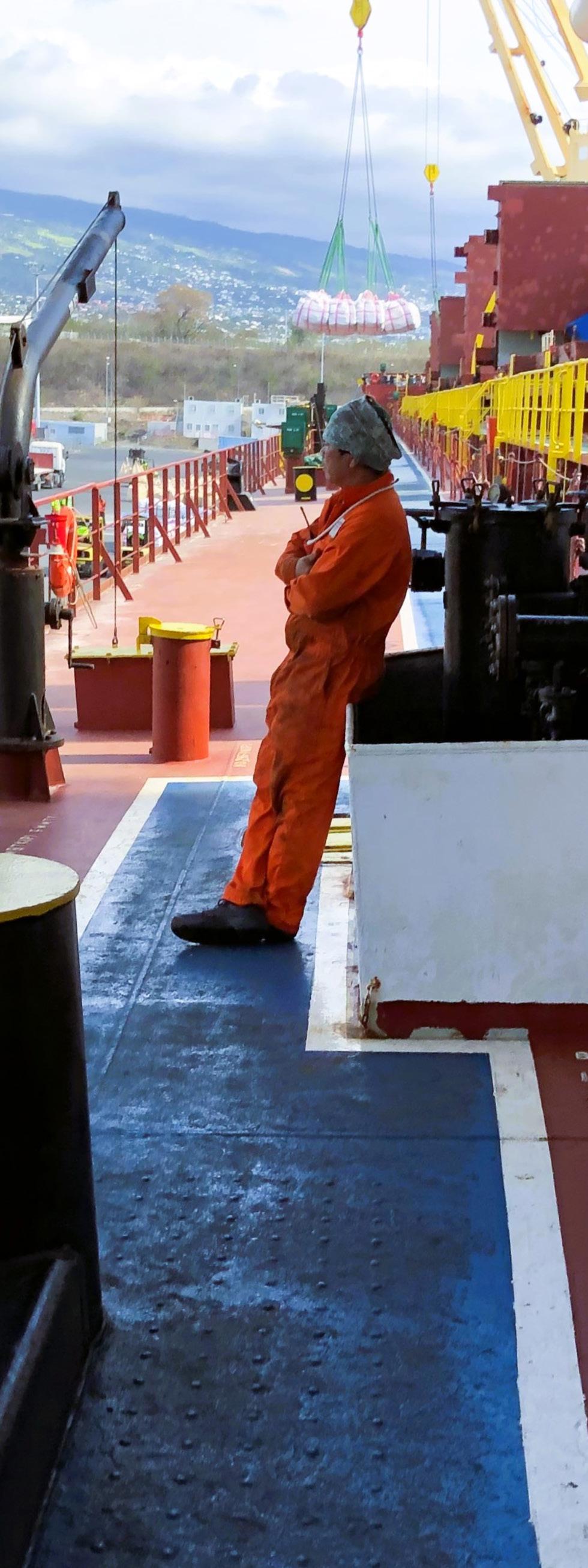
SCRUBBER AND SERVICE PROJECTS
Future project activity will include hybridready and closed-loop scrubber systems designed to meet stricter discharge regulations. Many existing systems are expected to be upgraded in response to new ECA requirements.
In addition to scrubber services, PureteQ is expanding into adjacent areas, including ballast water treatment (BWT) systems and NOx reduction technologies.
ONBOARD CARBON CAPTURE
Even though Onboard Carbon Capture & Storage (OCCS) remains a strategic focus area activities have been put on hold until the CO₂ value chain has been decided, and financial incentives makes large-scale adoption possible. Even though OCCS technology mainly consist of well-known components it still requires specialized crews to operate the plants.
THERMAL DESORPTION TECHNOLOGY
Carbon capture combined with green hydrogen production requires significant access to renewable energy. Alongside its patented solutions, PureteQ is exploring thermal desorption technologies for CO₂ as a complementary pathway.
PRODUCTION OF E-METHANOL
ESTECH has initiate a collaborative project to produce e-methanol using captured CO₂ and produced hydrogen directly from the polluting source. Methanol is expected to play a key role in the future supply of green fuels.
PURETEQ GROUP A/S
Sverigesvej 13
DK-5700 Svendborg
+45 62 21 27 87 info@pureteq.com | info@estech.dk
pureteq.com | estech.dk