![]()


Sign up. Get inspired. Feel brilliant.
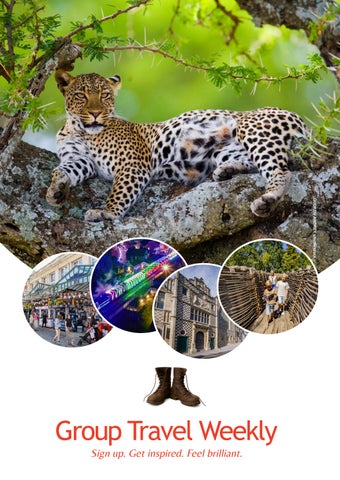
Welcome.This is Group Travel Weekly, which sounds brisk and purposeful, and occasionally is. Group Travel Weekly, is an excuse to pause and look properly at places that understand groups not as a problem to be managed, but as people to be received.
Inside, there’s London doing what London does best: quietly getting on with it. Jubilee Market, still owned by its traders, still slightly chaotic, still the sort of place where a group can browse, eat a bacon roll, and feel part of the city rather than in its way. It works because it has always worked.
Further out, Norfolk opens up. Big skies. Slow railways. Towns that don’t rush introductions. The Mid-Norfolk Railway understands that sometimes the journey really is the point, especially when tea is involved and nobody’s checking the time too closely.
Elsewhere, the world widens. Heuvelland, where the land remembers even when the people move on. A place where history sits underfoot rather than behind glass, and where walking feels like a form of listening. In Amboseli, life runs to a different clock entirely — one that doesn’t care much for schedules, apps, or my own sense of competence.
There are also small, useful facts scattered throughout. The sort that make you pause mid-page. Pilots eating different meals. Train stations that exist purely for the view. Countries that have politely declined to agree on what year it is.
Happy travelling

one in twenty new subscribers wins a carvery voucher for two.
Thousands of organisers already read our updates for smarter insights, early opportunities, and the occasional grin. And yes - one in twenty new subscribers wins a carvery voucher for two. Bribery remains an underrated art.

The Jubilee Hall, which houses the Jubilee Market, was designed and built in 1904 and gained Grade 2 listed status after a renovation programme in the 1980’s. Steeped in history, and named as a tribute to Queen Victoria, Jubilee Market is at the heart of Covent Garden and nowadays, the market has a wide variety of eclectic arts and crafts stalls, to antiques and general market items spread over three different markets during a seven-day period. Perfect for tourists to browse away a few hours amongst the 120 stalls it is the only London market
owned by its traders who have a 125-year lease on the market. Jubilee Market is instantly recognisable with its exciting atmosphere, flags, beautiful hanging baskets, and brass Jubilee Hall Market signage and from the moment you arrive, you are caught up in the hustle and bustle of diverse products, unique niche stalls and wonderful traders from all across the UK all in the heart of Covent Garden.
Jubilee Market has plenty to offer to pre booked groups for a fabulous shopping trip
including discounted shopping, guided tours, snack bar and restaurant. Local coach drop off and public toilets are a short walking distance away.
Book a Jubilee Market guided walking tour for your Group (minimum 10) and receive discounted shopping wristbands for use on the day of your visit (Tuesday to Sundays). The discount wristbands can be used on all Jubilee Market traders’ stalls. You don’t have to book the walking tour to take advantage of the discount wristbands, simply let the Jubilee Market team know in advance what date you are visiting (Tuesday to Sundays), and they will despatch wristbands in advance.
You will have lots of free time to enjoy your shopping experience, relax, take a tour, have a bacon roll and a
cuppa, and then explore the local area which includes the Covent Garden Piazza, the Royal Opera House, Trafalgar Sq, Bow Street Police Museum, and the London Transport Museum amongst other local attractions.
‘Lovely tour, great bacon rolls and David our Tour Guide was so informative and funny, and we learnt a lot while having fun’ - Andrew Holden - Magic Moments Tours - Epsom
‘It’s tours experience you can’t afford to miss when you visit London’ – Sylvia SaxonMeridian Club Chair.
Contact Barry for full details at info@jubileemarket.co.uk, or visit: jubileemarket.co.uk


West Norfolk - the Gateway to the East
Where the countryside meets the coast and culture abounds
A classic destination for groups and coach tours for decades, visit west Norfolk with its best-in-Britain beaches, rich culture and passion for festivals, along with some incredible hidden gems. Explore the only coastline in the East of England where you can watch the sunrise and sunset. Discover hidden gems in unspoilt English countryside, along with award-winning dining. Many coach tours choose to stay in King’s Lynn and then explore superb nearby destinations during such a staying trip – including visits to the renowned Sandringham Estate, Castle Rising, Norfolk Lavender, Castle Acre and, of course, the Norfolk coast.
The three towns of west Norfolk offer distinctively different high quality visitor experiences. The classic resort of Hunstanton offers Victorian charm and traditional seaside fun. Along with the quieter neighbouring Old Hunstanton, it is the
ideal base for enjoying the wonderful Norfolk coastline.
The Hanseatic town of King’s Lynn is brim full of maritime heritage and outstanding historic buildings. Combining a King’s Lynn Town Guide’s tour with the town centre’s wide variety of food and drink, it truly is a great place groups to discover and explore. The intimate ancient town of Downham Market is full of character, an excellent base from which to explore the surrounding countryside and fenlands - a haven for
lovers of wildlife, peace, and tranquillity. For more information about the three towns of west Norfolk, the wider area, and sample itineraries, visit www.visitwestnorfolk.com
Mid-Norfolk Railway
Out in the wide skies of Norfolk, the Mid-Norfolk Railway offers groups a day out with that rare combination of charm, simplicity, and genuine atmosphere. Running through the Heart of Norfolk from
Dereham to Wymondham, it’s the region’s longest standardgauge heritage railway a proper countryside line where the scenery does half the entertaining and the train does the rest.
For group organisers, it’s refreshingly straightforward. The railway actively welcomes coach parties and group bookings, and can tailor visits from a simple heritage journey to a fuller day programme making it ideal for clubs, societies, and tour operators looking for something that feels special but runs smoothly.
And if you want to elevate the experience, Mid-Norfolk Railway also offers dining and event days throughout the year, including popular themed experiences like Afternoon Tea services, which turn a scenic ride into a real occasion.
In short: it’s Norfolk at its best unhurried, welcoming, and quietly memorable.
For group enquiries: groups@mnr.org.uk.


The Amboseli people are Maasai. They live in the south of Kenya, close to the Tanzanian border, with Kilimanjaro hovering about like an unhelpful postcard.
Life is organised around cattle, weather, and an internal clock that has no interest in mine. Beads mark age, status, marriage, responsibility — things I struggle to remember without a phone.
The culture is communal, practical, and stubbornly intact, despite tourism, borders, and passing decades.
I found myself admiring that, while quietly suspecting I wouldn’t last a week.
Step aboard the Bluebell Railway for a glorious group day out, steam, heritage stations, countryside views, and timeless charm, all with easy group planning.Embark on a captivating adventure aboard the Bluebell Railway in 2026, where the splendor of Sussex's landscapes meets the nostalgia of the golden age of travel. This isn't just a train ride; it's a journey through time, perfect for groups yearning for a unique and memorable experience. Your adventure
begins at Sheffield Park, home to STEAMWORKS!, a fascinating exhibition of static locomotives and interactive displays that captivate visitors of all ages. Dive into history at our museum or explore our gift and model shop for unique souvenirs. Before or after your journey, savor a delightful meal in our restaurant, offering a variety of hot dishes, beverages, and snacks.
As the train steams through the scenic countryside, the next


Flanders does not so much remember its history as wear it, in the soil, in the wind, in the way light falls over the fields as if it too is paying respects. Nowhere is that more true than Heuvelland, that quietly undulating corner of West Flanders where the past is ever present. The name means hill country, almost boastful by Belgian standards. These are not


stop is Horsted Keynes, a beautifully preserved Edwardian station, continue to a quiet idyllic countryside station at Kingscote and finally, East Grinstead, our station which connects with the national rail station to London. For groups, the Bluebell Railway offers a plethora of options: catering trains, joint tickets with local attractions, and guided tours of Sheffield Park Station, ensuring there's
mountains, more polite ripples across an otherwise obedient landscape. Yet here, on these modest ridges, empires collided and generations were defined. Just south of Ypres lies one of the most poignant chapters of the First World War: the story of the 16th Irish and 36th Ulster Divisions at Wijtschate and Messines Ridge. In 1917 they fought side by side in a rare moment of unity that history has struggled to repeat. A century later, the hills are threaded with walking and cycling trails tracing lines of advance, trenches and craters. The land is green now, deceptively serene. Poppies still appear when the soil is turned, reminders that the ground remembers everything.
The Wijtschate and Messines Ridge Experience is less a route than a reckoning. Geography becomes memorial; every dip and rise once dictated lives and deaths. The Heuvelland Visitor Centre in Kemmel
provides the context without ceremony, its staff quick to offer both insight and the quiet kindness of a café recommendation. Reverence here sits comfortably alongside hospitality.
From Kemmel, the land rolls away in gentle waves. Vineyards now drape slopes that once shook with artillery. The contrast is almost indecent. The wines taste of renewal. The Pool of Peace lies still and reflective, its calm made unbearable by knowledge of what formed it.
Villages like Kemmel, Wijtschate and Mesen carry their history without display. Churches stand repaired, spires no longer pockmarked. Life continues: walkers pause, cyclists pass, children play. Endurance, not despair, is the legacy.
Heuvelland is quietly preparing for 2026. The cycling network is being rebuilt from the ground up, smoother routes, safer crossings, better views. There
always something exciting on the agenda. Throughout the year, the railway hosts an array of events, guaranteeing a lively and engaging visit. Don't miss the opportunity to book your adventure with the Bluebell Railway, where each journey is a celebration of steam travel's magic, promising an unforgettable experience that transcends the ordinary.
WWW.BLUEBELL-RAILWAY.COM
will be detours for now, confusion with signage, but patience will be rewarded. Behind the scenes, a new long-term plan focuses on sustainable tourism and preserving the landscape’s essential calm.
UNESCO recognition has arrived discreetly, bringing subtle improvements rather than spectacle. Walking and cycling remain the priority, vineyard rambles and heritage routes taking precedence over anything motorised.
Heuvelland does not hurry or shout. It evolves carefully, improving without fuss. The land has healed, but it has not forgotten. To walk here is to feel memory beneath your feet and life pressing gently onward.

Many airlines require pilots and co-pilots to eat different meals on board to reduce the risk of both suffering food poisoning at the same time
There’s a quietly brilliant bit of paranoia baked into modern aviation, and it happens long before take-off. Many airlines require the pilot and co-pilot to eat completely different meals. Not because one prefers chicken and the other is watching carbs, but because of a far less glamorous threat: food poisoning.It’s called “crew meal diversification”, which sounds like a lifestyle choice but is really a hedge against chaos. If the lasagne turns out to be a biological weapon, at least only one person is sprinting towards the cockpit toilet while the other remains upright, conscious, and ideally capable of landing several
Dull, Scotland
A perfectly pleasant village in Perthshire that has spent decades explaining that it is, in fact, quite nice. Its name comes from the Gaelic dul, meaning meadow, but that hasn’t stopped the jokes. In 2012, Dull formally twinned with Boring, Oregon, and later welcomed Bland, Australia into the alliance, proving that if you lean into a name hard enough, it can become a tourist strategy rather than a problem.
tonnes of aluminium safely on a strip of tarmac.This rule isn’t optional or polite. It’s procedural. Different dishes. Often prepared by different kitchens. Sometimes even loaded at different times. In some airlines, the captain eats first and the co-pilot waits, just in case symptoms arrive early and decisions need to be made quickly. Nothing says “aviation professionalism” quite like monitoring your colleague for signs of nausea while chewing thoughtfully on beef stroganoff. The beauty of this tactic is how unglamorous it is. No cutting-edge tech. No AI. Just a calm acknowledgement that humans are fragile, bacteria are
opportunistic, and salmonella does not respect seniority.It also reveals something deeper about safety culture. Aviation doesn’t rely on heroics; it relies on redundancy. Two engines, multiple systems, endless checklists — and yes, two very different lunches. It’s risk management served with a side of rice.So next time you’re choosing between pasta or chicken on a flight, remember: somewhere up front, the same decision is being made with considerably higher stakes. One bad prawn away from a very interesting incident report.short, is civilisation. Folded neatly. At six thirty in the morning.

In Japan, some train stations have no exits and exist purely to admire the view. Known as “secrets stations,” they let passengers step off into nature, take photos, breathe deeply, then get back on the same train as it returns—travel as a pause, not a destination.
And doing so with remarkable confidence. While much of the world hurtles along on the Gregorian calendar, Ethiopia cheerfully runs on its own ancient timetable, sitting roughly seven to eight years behind everyone else. If you’ve ever fancied going back in time without the hassle of a flux capacitor, this is as close as it gets.The Ethiopian year begins on September 11 (or September 12 in leap years), neatly timed to celebrate the end of the rainy season rather than the onset of winter gloom.

Even better, the calendar has 13 months. Twelve of them are satisfyingly tidy, each lasting exactly 30 days, followed by a bonus short month called Pagumē. Think of it as the calendar’s pocket-sized encore: five days long, or six when it’s a leap year.It’s elegant, logical, and quietly subversive — a reminder that time isn’t fixed, it’s cultural. Ethiopia didn’t fall behind. It simply chose a different clock.