
ENDURANCE ROAD BIKES
£1,500 models from Kinesis and Merida MED TO MANCHE 1,000 miles across France aged 78
To boldly ride Going the distance: Audax UK at 50

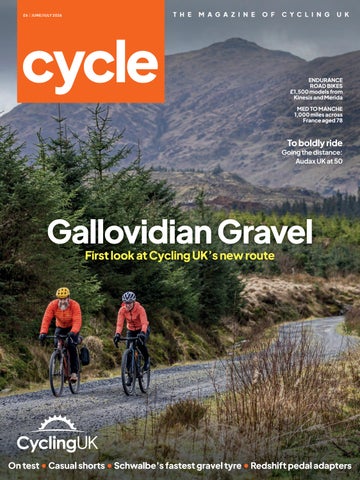
ENDURANCE ROAD BIKES
£1,500 models from Kinesis and Merida MED TO MANCHE 1,000 miles across France aged 78
To boldly ride Going the distance: Audax UK at 50
First look at Cycling UK’s new route
Cycling UK: Parklands, Railton Road, Guildford, GU2 9JX
E: cycling@cyclinguk.org
W: cyclinguk.org
T: 01483 238301
Cycle promotes the work of Cycling UK. Cycle’s circulation is approx. 51,000. Cycling UK is one of the UK’s largest cycling membership organisations, with approx. 70,500 members and affiliates.
Chief Executive: Sarah Mitchell. Cyclists’ Touring Club, a Company Limited by Guarantee, registered in England No 25185, registered as a charity in England and Wales Charity No 1147607 and in Scotland No SC042541.
Registered office: Parklands, Railton Road, Guildford, GU2 9JX.
Cycle magazine:
Editor: Dan Joyce
E: editor@cyclinguk.org
Designer: Christina Richmond
Advertising: Amelia Marshall
T: 0203 198 3092
E: amelia.marshall@ jamespembrokemedia.co.uk
Publisher: James Houston.
Cycle is published six times per year on behalf of Cycling UK by James Pembroke Media: Ground Floor, Riverside North, Walcot Yard, Bath, BA1 5BG. T: 01225 337 777
Cycle is copyright Cycling UK, James Pembroke Media, and individual contributors. Reproduction in whole or in part without permission from Cycling UK and James Pembroke Media is forbidden. Views expressed in the magazine are those of the individual contributors and do not necessarily reflect those of the editor or the policies of Cycling UK. Advertising bookings are subject to availability, the terms and conditions of James Pembroke Media, and final approval by Cycling UK.

Gliding through the countryside, with scenery rolling by like a droneshot video, long summer rides feel like a great escape. The realities of everyday life recede. Push the pedals. Feel the breeze. Nothing to think about except whether the coffee and cake will be nice at the next café.
Whatever your definition of a long ride – whether it’s 100 miles or 20 – now is the best time of the year to head out on one. Daylight will last for more than 16 hours. It will be warm (hopefully) and dry (fingers crossed).
Long distances can seem daunting but are only as hard as you and your bike make them. You don’t have to ride out of your comfort zone. Sportives aren’t races. Audaxes definitely aren’t. Solo or club rides? Relax. Turn off Strava. Stick your Garmin in your pocket.
I’ve done century rides that were certainly hard in parts. At the CTC North Yorkshire dinner earlier this year, president Anne Benton reminded me that we’d met 25 years ago, halfway up White Horse Bank on the CTC Ron Kitching Ride. She was sensibly spinning her smallest gear. I was grinding up on fixed. But for more recent centuries, I’ve had an 11−48 cassette and a mellower mindset. Unsurprisingly, it’s totally transformed the feel of the rides.
04 Freewheeling
Bits and pieces from the bike world
07 Quick releases
The Cyclists’ Defence Fund at 25; events from around the UK; new trustees sought; and ways to make the most of your membership
TOUR & EXPLORE
18 Gallovidian Gravel Cycling UK’s new Adventure Series route
24 Weekender
The Ards Peninsula
46 Books
Cycling inspiration when you’re stuck inside
48 Merida Scultura
Endurance 300
An all-rounder road bike for sportives and more
51 Kinesis 4S Tiagra
Endurance road bike at a bargain, on-sale price
55 Diamant Mahon World
A fully equipped German trekking bike
58 Casual cycling shorts
Six pairs of baggies that show Lycra is optional
OVER TO YOU
Printed by: Acorn Web Offset Ltd, Loscoe Close, Normanton Industrial Estate, Normanton, WF6 1TW T: 01924 220633
Non-cyclists or new cyclists may be agog when you mention big mileages. Yet you absolutely do not need to be some kind of cycling superhero to ride long distances. It’s mostly about comfort, gearing and a pace that suits you. That and some fuel for your ride. Coffee and cake, anyone?
DAN JOYCE Editor
26 Med to Manche E-biking 1,000 miles across France at 78
FEATURES
30 To boldy ride
Audax UK is 50 this year. Four riders discuss going the distance
IN THE FRAME
39 Gear
Components and accessories tested
44 Shop window
Previews of new products
63 Letters
Your feedback on Cycle and cycling
66 Profile
Robert Murphy’s cycling legacy
68 Q&A
Your technical, health and legal questions
70 Bike finder
Budget electric-assist trike for a 90₋year₋old
73 Travellers’ tales
Cycling UK members’ ride reports
Founded in 1878

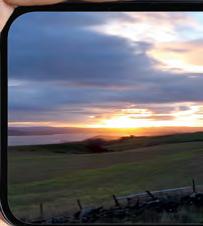

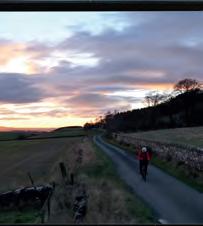


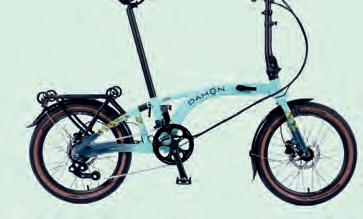
Dahon back in the UK Dahon folding bikes, which have been hard to get hold of in the UK for some years, are now available direct from a new UK website: uk.dahon.com. While Dahon has a wide range, including a new Brompton G Line competitor called the Lunden 20″ (pictured), only a small selection of its less expensive models were for sale online at time of writing.
In his latest short film, Roughstuffing in Fife, Markus Stitz documents a 243km bikepacking journey through Scotland. The film was inspired by George Berwick, a Fife resident and one of the longest-standing members of the Rough-Stuff Fellowship, the world’s oldest off-road cycling club. Markus met him in early 2025. Watch the film on YouTube: bit.ly/roughstuff-fife-stitz.
Find a local group near you and enjoy a ride this weekend: cyclinguk.org/ group-listing
Jo is best known in the MTB world but also loves drop-bar bikes and writes for road.cc

Mint Sauce cartoonist and cycling journalist
Why do you cycle?
Being outside, escape, quiet, transport, pretending to stay young, cake at the end.
How far do you ride each week?


Depends on the weather and deadlines but I try to get out for a ‘proper’ ride at least every other day. I don’t keep a record of my mileage.
Which of your bikes is your favourite?
The one I’m on at the time.
Jo’s book, Lost Summers and Half-Forgotten Afternoons, is reviewed on p46.
Although if I had to choose just one, it would have to be the gravel bike for its ‘let’s go down here’ adaptability.
What do you always take with you when cycling?
All the tools to get home, an extra layer, money, a sense of fun and my front door keys. Who mends your punctures?
Me. Although, as I’m tubeless on all my bikes, I haven’t had a puncture in ages.
It’s raining: bike, public transport or car?
I don’t own a car so unless I can cadge a lift from someone, public transport.
Lycra or normal clothes? Bike for transport – normal clothes. Bike for escape – Lycra. If you had £100 to spend on
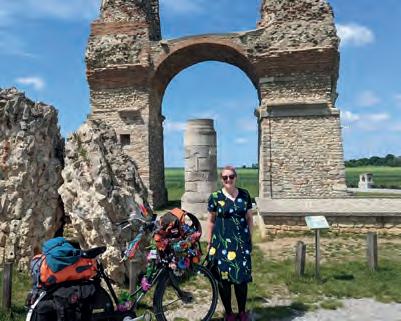
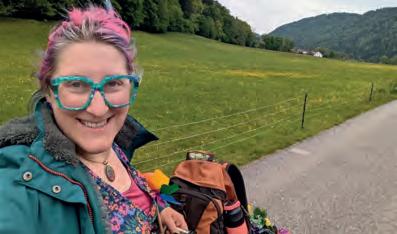
Robyn is one of 2025’s 100 Women in Cycling and chair of York Cycle Campaign. She primarily cycles for transport on her Dutch bike, a WorkCycles Omafiets that she describes as “the absolute Rolls-Royce of transport bikes: built to last, eminently reliable, sturdy and elegant”.
Although she says she doesn’t really consider herself ‘a cyclist’, she had long fancied the idea of doing a long-distance ride. She was put off by the way other people talked about them. “For a long time it felt like there was no point in even trying to do an adventure if I weren’t competing or trying to outdo someone else. Then one day I had something of a revelation and I thought: isn’t the whole point just doing it in the first place?”
Her first long ride was five days on the Trans Pennine Trail. After posting about it, she received lots of positive feedback from other women. So she decided to try another: 1,300km along the Danube. Once again she used her Dutch bike. “I wore dresses and my favourite iridescent trainers, just like I would when cycling at home,” she said. “No Lycra in sight.”
Robyn rode 40km each day, with rest days when needed. She hopes to write a book about her trip. cyclinguk.org/robyn-jankel








cycling, what would you get?

lot of miles in preparation for
The nicest thing anyone got me when I was churning out a lot of miles in preparation for a long ride [Jo took part in the Transcontinental Race] was £100 of Sainsbury’s gift vouchers to spend on food. So either that or a flight to the Pyrenees. What’s your favourite cycle journey?
The one straight from my house, wiggling up to the top of the South Downs.
What single thing would most improve matters for UK cyclists?
Having ridden in countries where cyclists aren’t treated as a nuisance that needs to be driven off the road, I’d say the answer isn’t the oft-touted infrastructure but attitude.
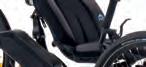
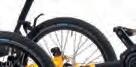
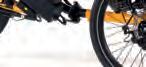
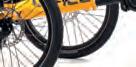
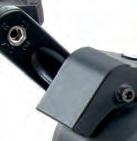
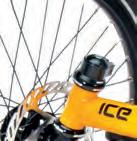
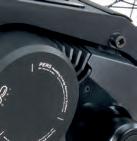
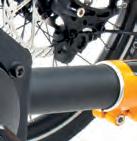
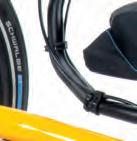
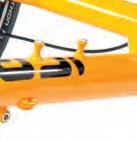







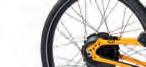
Recumbent manufacturer ICE Trikes has launched the PERS Chainless e-assist system, which converts human power into electric power. There’s no gear shifting; speed is controlled by pedalling. It also offers reverse pedalling and regenerative braking. The 250W rear hub motor has 75Nm of torque and is powered by a 700Wh battery. icetrikes.co
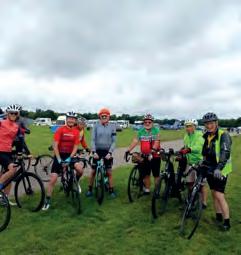

The Yorkshire Cycle Festival, incorporating York Cycle Rally and the Retrobike Show, takes place from 12− 14 June at the new location of Driffield Show Ground. There will be a range of
guided rides and audaxes, a trade expo, a cycle jumble, skills training, grasstrack racing and more. It’s free to enter as a day visitor, and camping is available from £45 for three nights. yorkshirecyclefestival.co.uk Your ride










Looking back over the last 148 years, there’s many moments and achievements which define Cycling UK. But one always stands out for me, writes Duncan Dollimore, and it started 25 years ago.
Darren Coombes was nine and riding his bike when a driver crashed into him. He suffered brain damage and his life changed forever. Then things got worse. The insurance company accepted the driver was responsible but sought to reduce the compensation they paid, claiming that Darren was partly to blame because he wasn’t wearing a helmet.
CTC (as Cycling UK was then known) set up the Cyclists’ Defence Fund (CDF) in response, so that we could step in and stand up for cyclists when needed.
Blaming a child rather than the driver didn’t land well with our members. Donations flooded in, the insurer’s claim was defeated and we’ve been using CDF to fight for cyclists and cycling ever since.
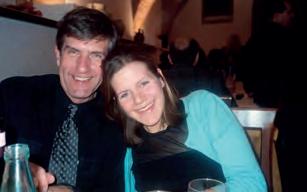
When teacher Michael Mason (pictured below with his daughter) died after being hit from behind while cycling on a clear, straight road, the police declined to prosecute the driver. We again stepped in, using CDF to bring the UK’s first private prosecution for causing death by careless driving.
We’ve also challenged councils’ infrastructure changes, like removing cycle lanes, and have won two judicial review cases in the last five years. We’ve used CDF to secure more off-road access for cycling: after the government announced plans to create a new national trail across the Wainwright Coast to Coast route, but only for walking, we sought legal advice through CDF.
Along with British Horse Society, we threatened legal action. The government backed down and agreed to consult with us. The new national trail, which launched in March, now has increased access for cycling along or parallel to parts of the route.
But legal action comes at a cost, and the work of CDF depends on donations from supporters. CDF was there for Darren, Mick’s family and many others. If you’d like us to carry on standing up for cyclists, please consider donating today to ensure we can make a difference tomorrow. bit.ly/donate-CDF
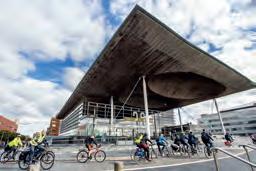
Thanks to you sending messages to thousands of candidates in Wales and Scotland ahead of the May elections, we had lots of positive responses from candidates confirming their support for making cycling the easy choice. At our online hustings events in April, there was cross-party consensus on the need to give people better choices about how they travel, but with different approaches on the best way to do it. With big changes in both Holyrood and the Senedd on 7 May, we’ll be working to hold the new governments to account on their manifesto promises.
Northern Ireland’s Department for Infrastructure has made some bold proposals to reduce speed limits and improve road safety. These include changing many 30mph roads to 20mph and reducing the national speed limit to 50mph on single-carriageway rural roads. The changes are much needed: Northern Ireland is the only country in the UK where road deaths and serious injuries are rising, not falling. Thanks to those of you who responded to the consultation.
Cycle to Work Day 2026 is happening on Thursday 6 August. It’s all about getting more people across the UK cycling for everyday journeys – and it’s free. The idea is simple: swap your usual commute for a ride, whether that’s the whole trip or just part of it. The day celebrates how cycling can boost your mood, improve your fitness and help cut down traffic and pollution at the same time. It doesn’t matter if you ride all the time or haven’t been on a bike in years, it’s just about giving it a go and seeing how it fits into your daily life.
The Welsh Festival of Cycling (Gŵyl Seiclo Cymru) returns to Ruthin Rugby Club from 24-27 July. There will be rides each day on some of the best roads in North Wales, including hill-climbing and freewheeling competitions and a treasure hunt. This year there will again be two audax rides from the festival: The Clwydian, a 207km event, and the Y Dyffryn Clwyd, which is 130km. These need to be entered separately. (See page 30 for more information about entering and riding audax events.) Camping is available from the afternoon of 23 July and must be booked in advance. cyclinguk. org/welsh-festival-cycling

If you already have a few audax rides under your belt (see p30), the Tour of the Co-Ops, organised by Cycling UK Peak Audax, is an event to challenge you. It’s a 308km route through some of the hilliest parts of north-west England, visiting Co-op stores along the way. cyclinguk.org/tour-co-ops
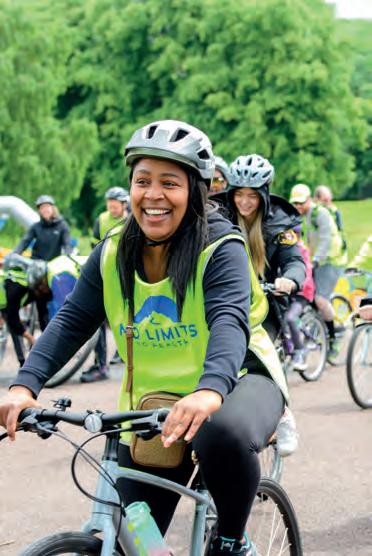
In-Tandem East Lothian, a friendly, inclusive tandem club, welcomes adults (18+) of all abilities, including visually impaired riders and those with other disabilities. It’s free to join short or long rides at a social pace across East and Midlothian’s beautiful countryside. Meet at QMU, Musselburgh, at 9:30am for a 10am start, on the second Sunday and fourth Saturday each month, with some summer mid-week rides, including 18 June. Training, helmets, tandems and e-tandems are provided, and new pilots and stokers are welcome. Visit cyclinguk.org/tandem-east-lothian
Celebrating its 11th year, The Big Bike Revival helps adults to start cycling or start riding again. Free events, workshops and training sessions run across England to help you get your bike fixed, learn or brush up on your cycling skills or take part in a local ride. Share this information with your family and friends to help them regain their confidence, get healthier and save money –especially with rising fuel costs – by getting back on their bike. cyclinguk. org/bigbikerevival
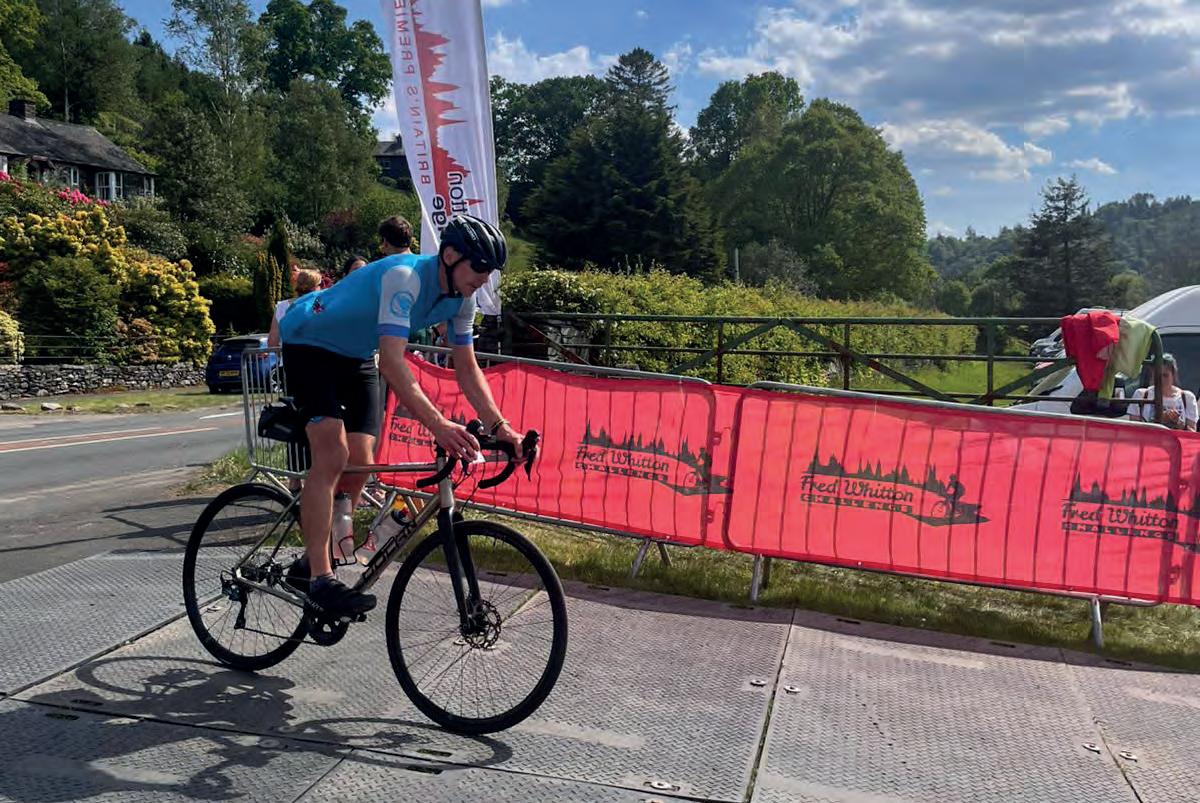
We’re looking for members to join Cycling UK’s Board of Trustees. Our trustees play a vital leadership role in shaping the charity’s direction and ensuring it enables and inspires people from all backgrounds and abilities to experience cycling’s joys and benefits.
Cycling UK is governed by a board of up to 12 trustees. At least eight must be members, elected by the membership, so if you have the skills we’re looking for and would like to stand for election this year, please consider applying.
Each trustee serves for a term of three years, up to a maximum of three consecutive terms. All trustees share the same core duties and must act as a group, in the best interests of the charity.
Ben Still (pictured above), became a trustee last year. He explains why he stood: “Because I believe in cycling as a force for good -
“Cycling has been part of my everyday life since my teenage paper round in north London, and remains my main way of getting to work”
improving health, happiness and equality - and I wanted to give something back to Cycling UK, an organisation I’ve been proud to belong to since 1990.
“Cycling has been part of my everyday life since my teenage paper round in north London, and remains my main way of getting to work, to the shops and out into the countryside. Through my career in transport planning and senior roles in central and local government, I’ve worked on cycle policy, active travel, infrastructure, bike hire and community programmes to encourage cycling.
“Since becoming a trustee, I’ve really enjoyed supporting the organisation’s strategy, contributing my experience of good governance and leadership, and helping turn ambition into practical, value-for-money outcomes that make everyday cycling easier for more people.”
Find out more and apply
The application process for appointments to the board for 2027-29 is now open. The deadline for applications is 9am on Thursday 2 July 2026.
Visit cyclinguk.org//become-trustee for more information and to download the application pack, which includes details of the skills we’re looking for this year.
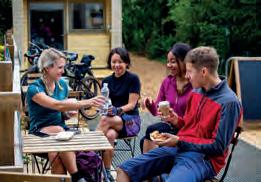
Bike Week returns from 8-14 June 2026. One of the easiest ways to get involved is by hosting a Bike Week Brunch. It’s a relaxed and sociable way to bring people together with coffee and cake, a workplace breakfast or a simple a gettogether before a ride. It’s all about celebrating cycling, building community and raising funds to support our work.
To get started, head to cyclinguk.org/bikeweek to register and get a free fundraising pack. If you can’t host a brunch you can still celebrate Bike Week with a solo or group ride to enjoy the freedom cycling brings.
From June, we’re expanding the range of products available through the Cycling UK online shop. We’ll have merchandise inspired by our Adventure Series routes, along with products that let you show your support for Cycling UK. Proceeds from every purchase support the charity’s vital work. Lookout for more updates in CycleClips shortly. shop.cyclinguk.org
Diary date: Cycling UK AGM
The 2026 Cycling UK AGM will take place online on Friday 18 September. Ballot papers and information on how to register to attend will be shared in the Aug/ Sep issue of Cycle.
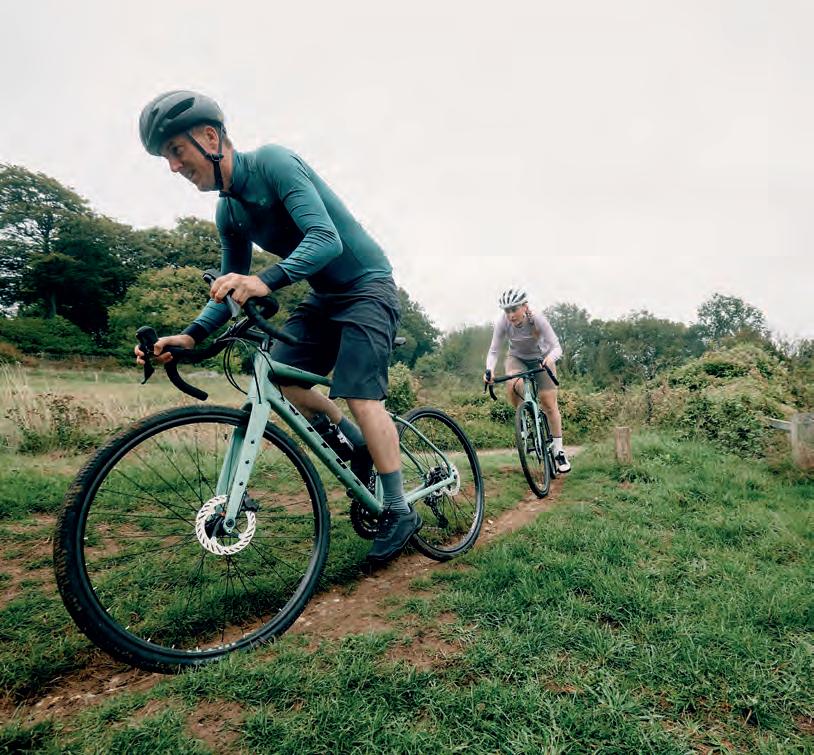
Gravel riding connects lanes, towpaths and trails into one seamless adventure.
With Cycling UK’s new gravel route launching, alongside the many other inspiring Adventure Series routes, now is the time to make sure your bike is ready.
That’s where Evans Cycles can help. They stock a wide range of gravel bikes to suit every rider, from first-timers to experienced explorers. If you’re new to gravel, Evans Cycles’ own-brand Pinnacle offers great-value, confidence-inspiring bikes built for comfort and control on mixed terrain. With stable handling, generous tyre clearance and practical gearing, they’re ideal for discovering how versatile gravel riding can be.
For riders ready to go further, Vitus gravel bikes bring lighter frames and upgraded components that help you ride longer, faster and over more challenging surfaces, perfect for bigger days out
and ambitious route planning. And for seasoned riders, Evans Cycles stocks premium gravel bikes from brands such as Cannondale, Specialized and Trek, featuring advanced frame materials, wide gearing and high-spec components built for endurance, bikepacking and all-day performance on rough ground.
Exclusive member benefit Cycling UK members can enjoy an exclusive 10% discount until the end of June on all full-priced bikes and accessories at Evans Cycles (cyclinguk. org/evans-10−percent). Explore the range and find your ride: evanscycles. com/bikes/gravel-bikes



Ortlieb: adventure bags for life
Make sure you have the best gear for the job with Ortlieb. Their bikepacking range is trusted by riders for its fully waterproof, highly durable design. It will keep your kit protected in all conditions, from heavy rain to dusty trails, while staying stable and secure over rough ground. Every piece is designed to maximise space without affecting ride quality. Whether you’re heading out for a night under the stars or a multiday adventure, Ortlieb bags make carrying your kit simple, reliable and worry free. Cycling UK members get 10% off at Ortlieb. cyclinguk.org/ortlieb


Saddle Skedaddle is Cycling UK’s official routes holiday partner, opening the door to unforgettable cycling adventures that take the stress out of planning and put the focus firmly on the ride. From short breaks to longer touring holidays, their trips combine carefully designed routes, local insight and a real sense of discovery on two wheels. A brand-new, fully dsupported cycling holiday is being developed for Cycling UK’s Gallovidian Gravel route (see page 18 for more). cyclinguk.org/saddleskedaddle
Make the most of your Cycling UK membership this year.
From riding together to saving on kit and getting involved in events, your membership supports you to cycle more and enjoy every mile.
With the nights drawing in, make sure you’re well lit – and legal – on your bike. Get 10% off lights and other accessories with Evans Cycles. cyclinguk.org/ evans-10−percent
Get ready for Cycle to School Week (5−9 October 2026) by getting your bike serviced. Members get a free 10−point bike health check at Evans Cycles. cyclinguk.org/ evans-bike-check
The UK’s biggest celebration of cycling is back! Bike Week is a great excuse to get out on your bike. If you want to do something special, host a Bike Week Brunch to encourage more people to get on bikes and raise money for Cycling UK. cyclinguk.org/ bikeweek
Do something fun and sign up to an inflatable 5km run in support of Cycling UK! cyclinguk.org/inflatableobstacle-course
Look out for exclusive new merchandise and member discounts as we relaunch our online shop during Bike Week.
Kalas
As the weather warms up, freshen up your cycling wardrobe with 15% off clothing with Kalas. cyclinguk.org/ kalas-kit
Don’t let winter stop you cycling! Find a local group to stay motivated on cold, wet days, keep fit, share miles with others and lift your mood. Ride through winter together, because winter miles bring summer smiles! cyclinguk.org/groups
FREE CYCLING SUPPORT
Take part in The Big Bike Revival for free cycling support helping adults in England learn, repair, ride, build confidence and rediscover the joy of cycling. cyclinguk.org/bigbikerevival
3000, c y c liststook part in2025’ s gl o w r sedi
Free Wills Month
Get your will written for free and consider leaving a gift for Cycling UK during Free Wills Month. cyclinguk.org/ free-wills
MEMBER BENEFITS
Planning that trip of a lifetime?
Make sure you have travel insurance – members get 10 % off with Bikmo. cyclinguk.org/bikmo
30,944 Forum users
Spring season advice
Get yourself and your bike spring ready. Read our spring cycling advice. cyclinguk.org/spring
Glow rides will be back on 22 October to brighten the dark evenings. In towns and cities across the UK, we’ll come together for joyful rides that spotlight the need for better cycle routes. Organise your own ride: cyclinguk.org/glow-rides
2,000+
Guidebooks purchased in the last year
Explore beyond Gallovidian Gravel: our Adventure Series features eight incredible routes to plan your next cycling challenge. This time of year is perfect to tick off another route, with guidebooks and Ordnance Survey map posters available in our shop. cyclinguk.org/shop
Christmas gifting
Black Friday offers on festive gifts and exclusive Cycling UK Christmas cards: the perfect treats for cyclists cyclinguk.org/shop
SADDLE SKEDADDLE
Planning a cycling holiday next year? Saddle Skedaddle offers incredible UK and overseas trips, with exclusive member discounts. cyclinguk.org/saddle-skedaddle
NATIONAL POTHOLE DAY
Want safer, smoother cycling? If you spot a pothole, report it with our online tool Fill That Hole, proudly supported by Cycle SOS. cyclinguk.org/ fillthathole
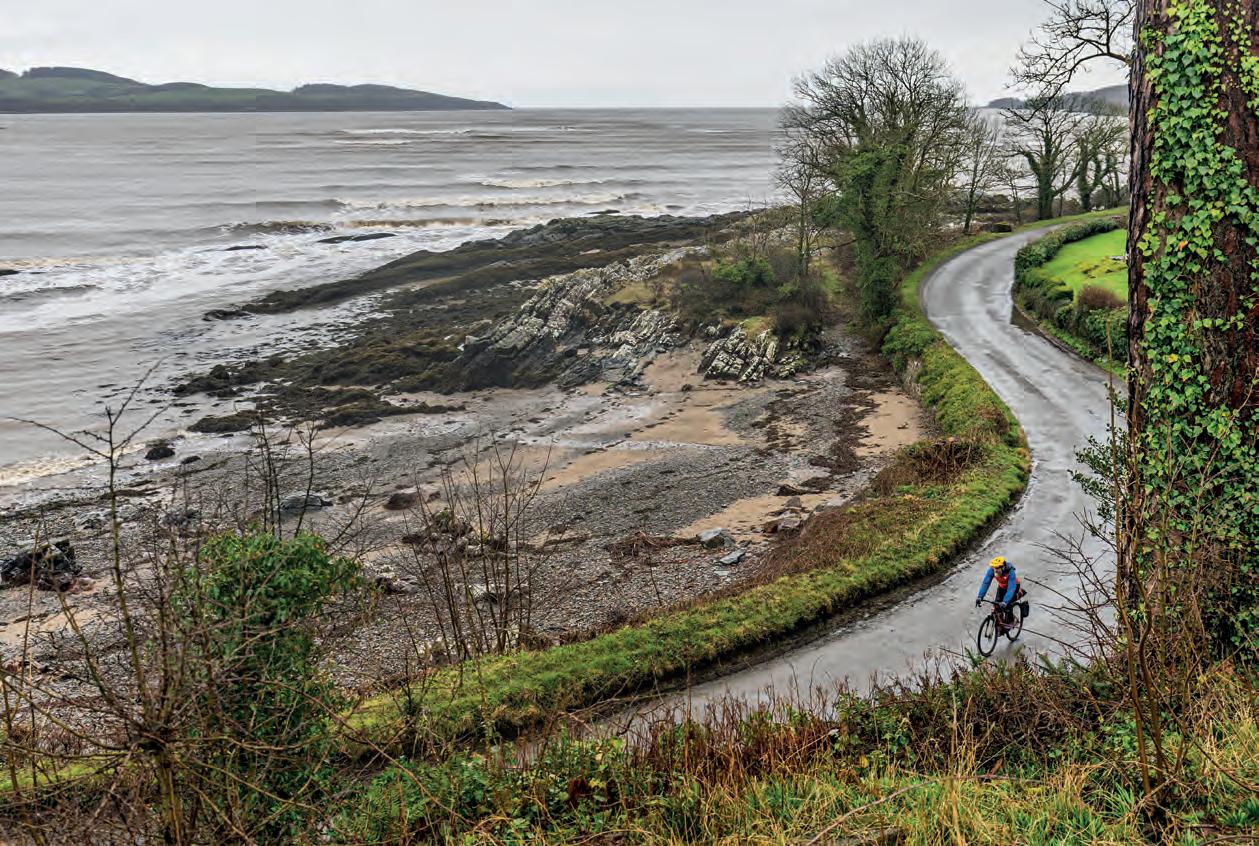
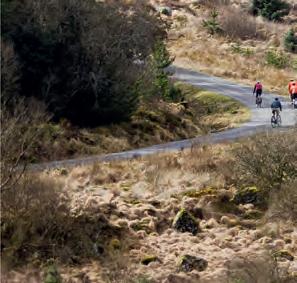
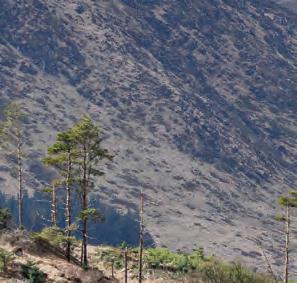
Get ready to explore south-west Scotland when Cycling UK’s new route launches in late June. Ross Adams did a trial run this spring
Great rides
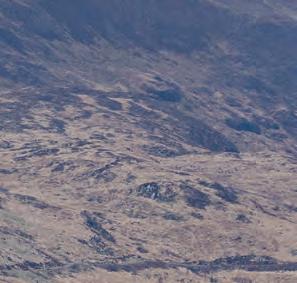
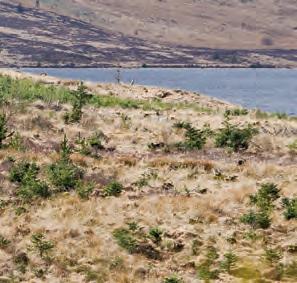
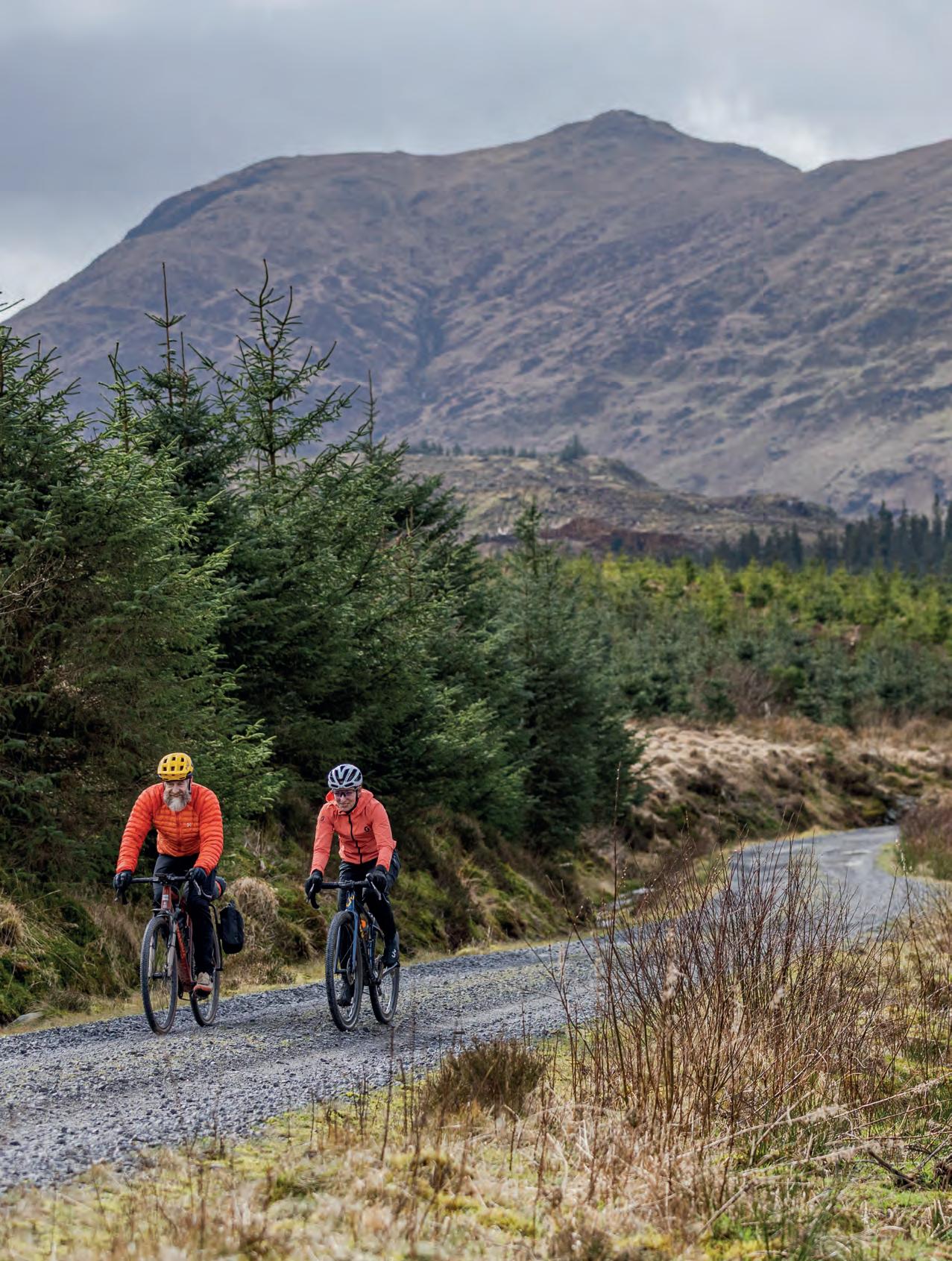
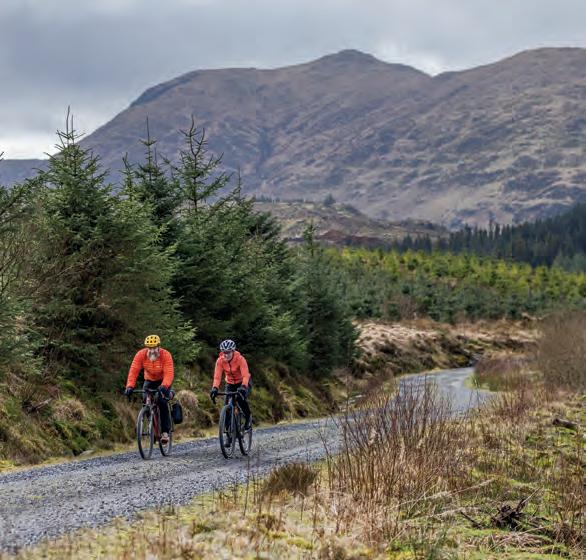
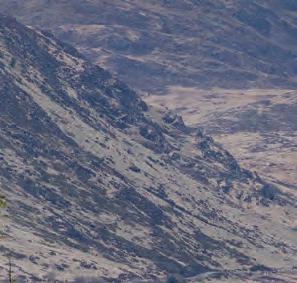
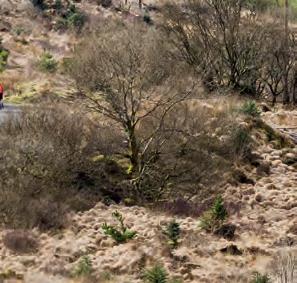
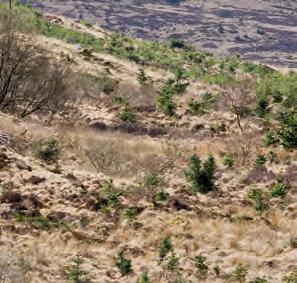
Gallovidian Gravel takes Cycling UK’s bikepacking routes north of the border. While the existing Great North Trail runs the whole length of Scotland and more, this new route will be the first in our Adventure Series located entirely within the country.
Scouting out a new route near the Scottish Borders in March throws up all sorts of challenges. One of the biggest issues was the weather. In order to launch a new route in the summer, all the legwork must take place in the preceding winter months. Yet despite the storms, wetter weeks and darker days, we’re proud of what we’ve produced so far. At the time of writing, the route is still being finalised. We’re launching it on 25 June, so I can’t share all the details relating to the locations visited or the direction of travel. But I can tell you everything we put into creating it!
Scotland is a world-class cycling destination. Off-road riders may know it best for its 7Stanes mountain bike trails, its downhill track at Fort William, and the emergence of Innerleithen as a trail-riding honeypot. Yet it also offers some of the best untouched landscapes
in the UK. If you want to explore what southern Scotland has to offer for adventure riding, saddle up for Gallovidian Gravel this summer.
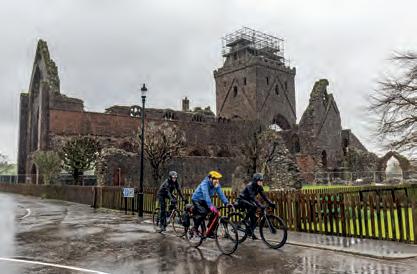
Our first day started in Mabie Forest, just outside of the official start point of Dumfries. The town is a gateway to Dumfries and Galloway. A statue of its most famous resident, Scotland’s national poet, Robert Burns, watches over you from his plinth opposite Greyfriars Church.
Crossing the river Nith you leave behind the bustle of Dumfries until you return via the picturesque bridges days, nights, miles and smiles later. The town is well connected and easily accessible thanks to a good road network and a train station. There’s a wealth of places to stay to suit all pockets, and with plenty of history and intrigue, Dumfries is more than just a start and end point for the route.
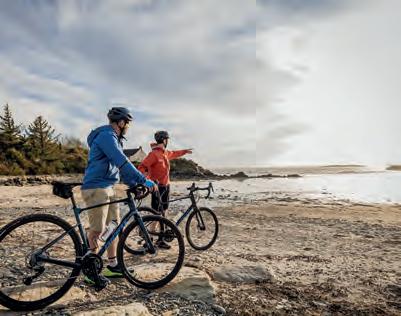
our positivity and sense of humour, and set off. We embraced the rain and Irish Sea breeze with enthusiasm as we knew the sort of scenery that awaited.
Braking
“Our latest route is firmly geared towards a gravel or adventure touring bike”
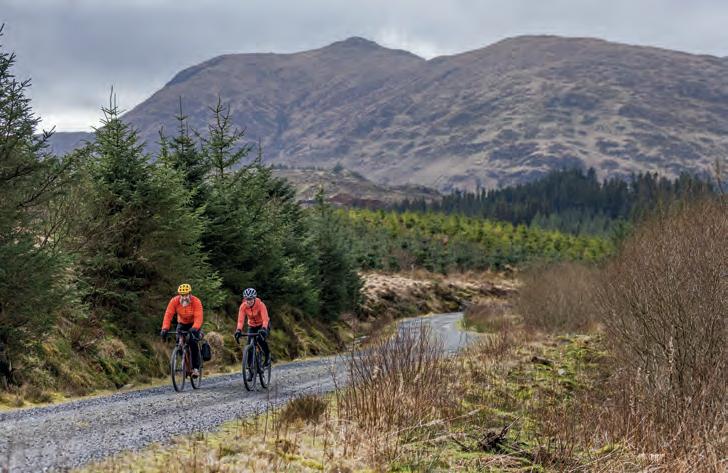
The first sections of the route incorporated a varied mix of surprisingly good, segregated cycle paths and back streets, leading to forest fire roads and quiet country lanes. This set the tone of the entire ride. We’ve worked hard to ensure our latest route is firmly geared towards a gravel or adventure touring bike. The climbs are longer and steadier, slowly revealing epic scenes that you should have the breath to enjoy, rather than rising up out of the ground like steep ramps.
Our first day coincided with a yellow weather warning. Heeding the maxim that ‘there’s no such thing as bad weather, only unsuitable clothing’, we donned our waterproofs, unpacked
Remaining on the coast, we took refuge in one of the coastal villages along the way to escape the rain and refuel. Taking time to stop and visit local eateries plays a significant part in creating our Adventure Series routes. Local shops and places to eat are fundamental to these more remote communities, and by promoting and encouraging

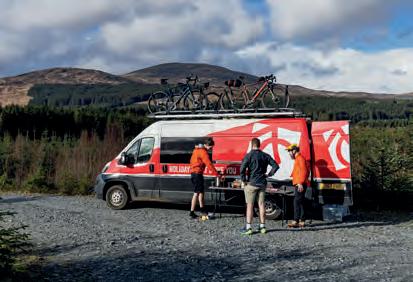
sustainable tourism, our routes help contribute to their economies. We happily tucked into tea and cake. Suitably reinvigorated, we pressed on, knowing we still had some distance to cover, photos to capture and notes to take. We’d seen that the weather was due to break. We hoped to coincide clearing skies with our first foray into the more remote wilderness and mountainous terrain. And as if to reward us for our efforts, the late afternoon sun appeared, picking out the array of colours on the hillsides and giving us a taste of what was in store for the rest of the ride. Day one done, happy in our accomplishments, we arrived at our accommodation, got spruced up and headed out for a curry.
Glorious Galloway
Day two dawned to dappled daylight and drying kit. The wood-burning
stoves in our bunkhouse had worked a treat: socks were no longer saturated and our shoes no longer squelched. We headed to Kirroughtree Mountain Bike Centre to plan the day over breakfast and to meet up with colleagues from Saddle Skedaddle, who were joining us for the day. Saddle Skedaddle is one of Cycling UK’s official partners, and provides supported cycling holidays on some of our routes. The team has plans to set up a guided holiday for Gallovidian Gravel from this summer onwards, so if you want someone else to take on the planning and luggage transfers while you concentrate on riding unencumbered, Saddle Skedaddle can arrange it. (Members get exclusive discounts with Saddle Skedaddle. See the website for more information: cyclinguk.org/ saddle-skedaddle.)
After a warm welcome at the visitor centre, we set off for the most northerly, remote and stunningly beautiful section of the route. Galloway Forest Park is exceptional, and it’s unmistakably Scottish in the sense of awe it inspires. Every turn and rise over each blind summit provided an ‘oh, wow!’ moment. This section of the route evokes a real sense or wilderness without taking you to uncomfortable levels of inhospitably. Depending on the time of year, you may not see
Distance: Full route is 330km (205 miles). Shorter, taster loops will be available from different starting points.
Climbing: 3,900m (12,796ft).
Route: It encompasses the Galloway Forest Park and Galloway coastline, using a mix of forest tracks, byways and quiet lanes.
Conditions: Rain and wind on one day, sunshine and stillness on others. Epic scenery, ranging from established towns to sleepy fishing villages, rugged coastlines and mountainous valleys. Getting there: Dumfries has a train station and is less than 40 minutes by rail from Carlisle. There are ferries from Belfast to Stranraer, if travelling from Northern Ireland.

Above: Saddle Skedaddle joined us to recce the route in preparation for their upcoming Gallovidian Gravel holidays Below: Linking lochs via superb gravel roads and unspoilt landscapes
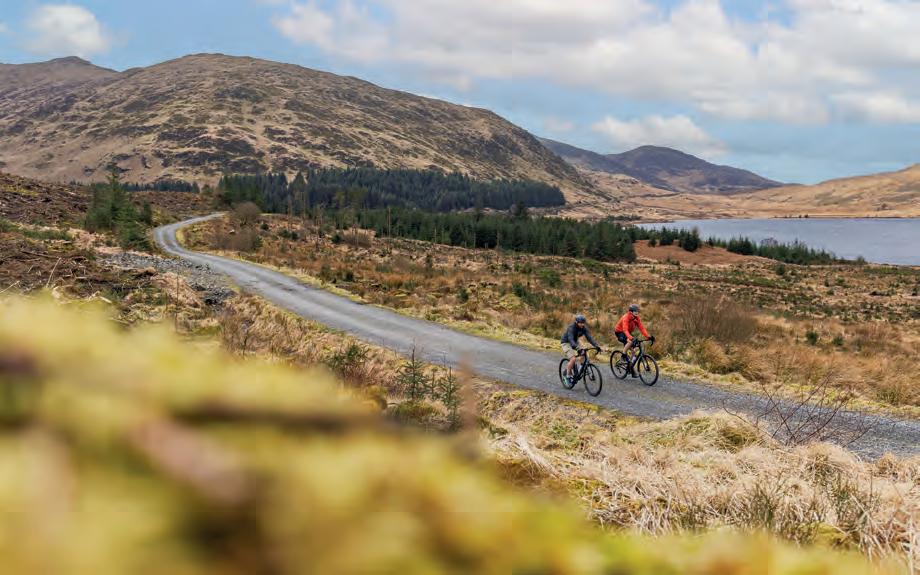
Accommodation: There’s a wealth of accommodation available on the route. Wild camping is permitted, too. Bikes and equipment: We used gravel bikes and an e-MTB hardtail. Gravel bikes are ideal but wider (35mm+) tyres would provide some added comfort on the more stoney sections, as well as supporting luggage-laden bikes better.
Maps/guides: The official guidebook will be available from the Cycling UK shop on 25 June (shop.cyclinguk.org). A downloadable GPX file will also be available from 25 June, from cyclinguk.org/ gallovidian-gravel. OS Explorer maps 312, 313, 318, 319 and 320 cover the route. If you prefer digital, you can get 35% off your first year of an OS Maps premium subscription (cyclinguk.org/ osmaps).
I’m glad I had… Camera to capture the incredible scenery and wildlife. Companions to share the experience with. Next time I would… Go later in the year to have longer days.
anyone for several miles. On this particular day we found ourselves among some timber trucks and water management officers, who were tending to the lochs and the water courses feeding them.
Forestry operation folk weren’t our only companions. A herd of wild mountain goats shared the hillside with us, while buzzards soared overhead. Sightings of golden eagles are relatively common within Galloway Forest Park, and although we didn’t have the pleasure of spotting one, you may be more fortunate.
Over the rolling hills and home
The gravel miles galloped by as we ticked off yet more lochs, imposing dam walls and towering forests. We passed foreboding, derelict industrial structures, their history and heritage evident from arches protruding monstrously from the valley floor. As we rode south, the landscape changed. Rugged ruins and rocky outcrops were left behind; ahead lay rolling terrain as far as the eye could see.
Emerging from a forest, we knew there was a hamlet up ahead. We crossed our fingers that the promised café would be open and have enough cake to go around. Our hopes were answered and we sat outside,
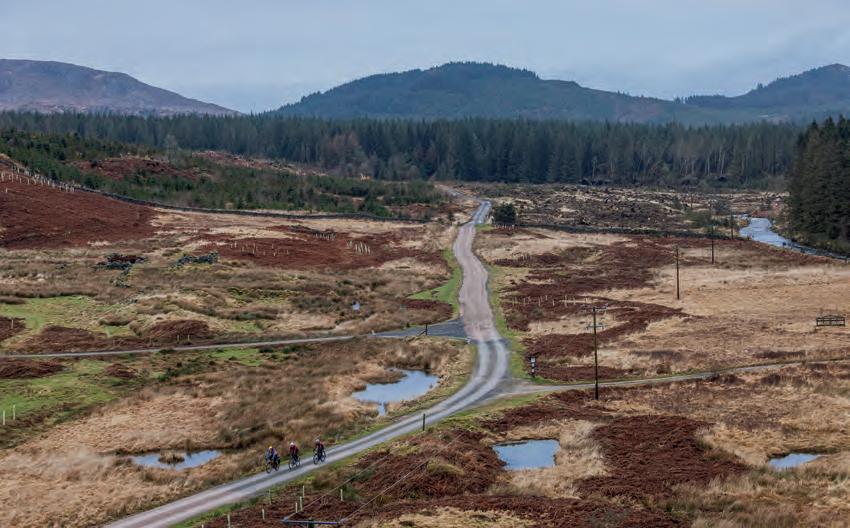

conscious that the bulk of the route was now behind us. We reflected on the adventure so far, on how it will fit into our series, and we imagined the tales that will be told by future riders. Then we hoovered up the last crumbs of cake and carried on.
The frequency of villages and communities increased, as did our cake-fuelled cadence. We made good progress on this, our final leg. The bridges we’d crossed days earlier came back into sight and, rather than troubled water, Robert Burns welcomed us back into Dumfries. Smiles were etched deeply across all our dirty faces, with the memories of an unforgettable trip through some of Scotland’s finest scenery still fresh in our minds.
“Every turn and summit provided an ‘oh, wow!’ moment”
Gallovidian Gravel isn’t just another bikepacking route; it’s a journey through history, culture, coastline and remote mountain passes. But journeys like this
Cycling UK’s Adventure Series is a collection of long-distance bikepacking routes. They embody the spirit of exploration, nature, community, health and wellbeing, personal challenge and adventure.
Each route must meet certain criteria to qualify as part of the series, as we want them to appeal to a wide range of cyclists. The routes are broken down into suggested itineraries to support your planning. Each has a GPX file for navigation and a must-have guidebook (with a discount for Cycling UK members) to provide fascinating details about the sights, sounds and smells you’ll experience on your journey.
Great views, incredible riding, delectable dining and memories to last a lifetime are on the menu for each route. However, they also have their own unique flavour that sets them apart from each other, ranging from the momentous mountains of Traws Eryri and the coastal coves of West Kernow Way to the heritage and history of Marcher Castles and King Alfred’s Way. Around every corner and over every rise, there’s something new to discover. Whether you’ve ridden one or more, why not plan your next adventure and complete the series? cyclinguk.org/adventure-series
are only possible because of the people behind them. The support of our members and donors allows us to discover these remarkable places and share them with others to be ridden, respected and enjoyed by all. See you out on the trail!
The official guidebook – available from 25 June – will provide a suggested itinerary for the route, as well as shorter options for those challenged by time or fitness. Members get a discount on this and other guidebooks. shop.cyclinguk.org

This rural ride runs along quiet lanes from Bangor to Portaferry in Northern Ireland. Stephen McCrory, who helped create it, is your guide
The Ards Peninsula and the sheltered waters of Strangford Lough are well known for their wildlife and natural beauty. Less familiar is what lies inshore: a network of quiet country roads and lanes, tucked away from busy, coastal A roads. They trace a green spine down the peninsula and offer relaxed, rewarding cycling.
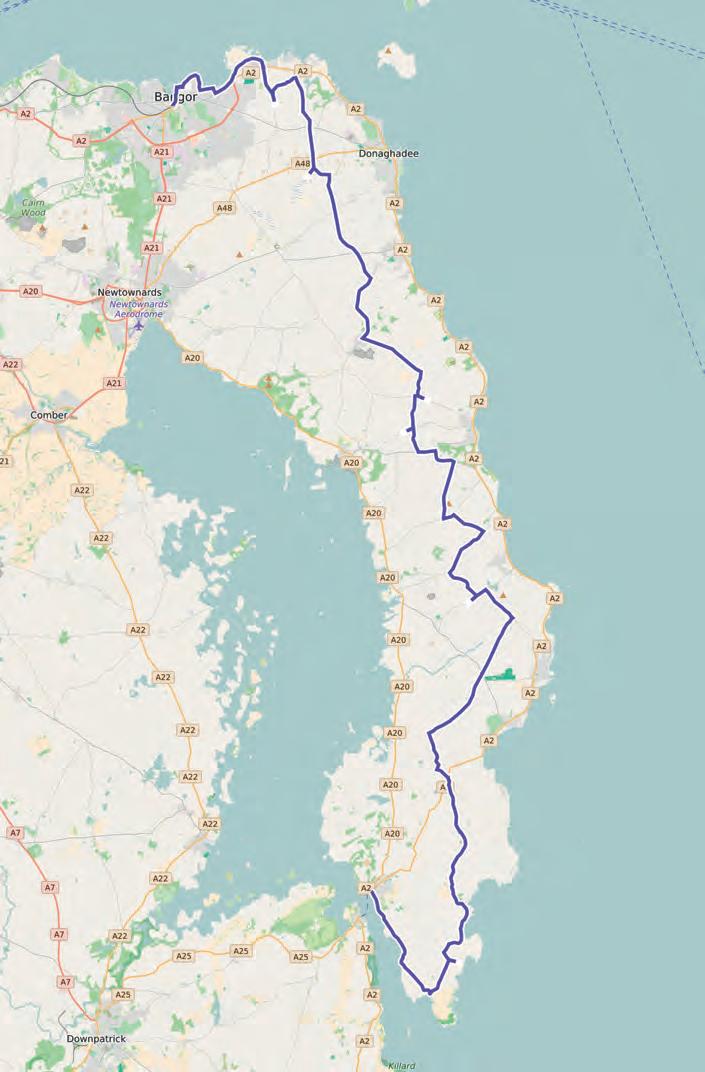
Improved Greenways from Belfast through Comber and Newtownards now provide easier access to the peninsula by bike. The Ards Peninsula Quiet Ways Trail was launched by Ards and North Down Cycling Campaign, in partnership with Ards and North Down Borough Council. It begins in Bangor and guides riders from the colourful Victorian terraces overlooking Belfast Lough to the tidal narrows at the mouth of Strangford Lough.
This is not a direct route – and that is very much the point. The trail meanders along narrow roads that once linked farmyard to farmyard. Blackthorn and gorse line the verges, while fields shift with the seasons, with lambs in spring or crops of barley and potatoes later in the year. History is never far away: a working windmill stands near to the stumps of others. Glimpses of castles, baronial houses, small churches and fragments of ancient woodland
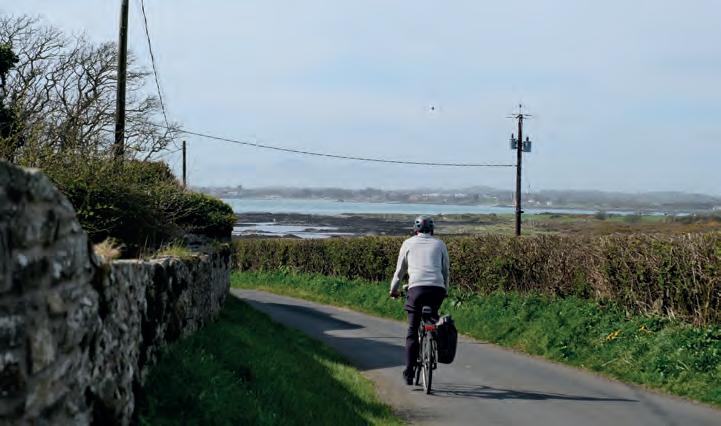
appear unexpectedly around bends in the road.
Short diversions can add depth to the journey. Mount Stewart’s neoclassical house and celebrated gardens provide a striking contrast to the surrounding farmland, while nearby Greyabbey offers a quiet pause among the atmospheric ruins of its Norman past.
The riding itself is gently demanding. Rolling drumlins, shaped by the last Ice Age, create a steady rhythm of short climbs and descents that keep the route engaging without becoming arduous. As the road heads south, the
peninsula narrows and flashes of water begin to appear first on one side, then the other.
Near the tip, riders face a choice: turn east towards the wilder Irish Sea coast or west to the calmer, wooded shores of Strangford Lough. Both offer memorable views and abundant birdlife.
The route finishes in Portaferry, where powerful tides surge through the narrow channel and the ferry battles its way across the lough. It’s an ideal place to stop, refuel and reflect on a ride that takes in some of Northern Ireland’s best quiet roads.
Route Name: Ards Peninsula Quiet Ways Trail


STEPHEN MCCRORY
Stephen is chair of the Ards and North Down Cycle Campaign
Start/finish: Bangor Station (no bikes on trains before 9:30) or via Comber Greenway and its new extensions. North Down Coastal Path is also possible but is narrow and rough in places
Finish: Portaferry Maps: OS
Discoverer Series sheets 15 (Belfast) and 21 (Strangford) Ride length: 66.4km (41.27 miles) Climbing: 340m Bike type: Road, touring, hybrid, e-bike Ride level: Regular GPX file: cyclinguk.org/ weekender-ards-peninsula
01 Bangor
A small city retaining the charm of its Victorian seaside heyday, with plenty of places to eat and stay. For those in a hurry to be off, ‘Trax’ in the station can provide the ideal cyclist’s breakfast: the Ulster fry. If you have more time, the castle grounds above the station hosts an excellent small museum, café and enchanting walled garden.
The last survivor on what was once a landscape dotted with a hundred mills. Built in the late 1700s, with a rotating cap and three mill wheels, it was cutting edge technology in its day. Today, cyclists can visit the mill and relax in the café, which is due to reopen this year. For opening times, see visitardsandnorthdown.com.
03 Mount Stewart House
A short diversion at this point allows a visit to the magnificent house and gardens of this National Trust property. It lies just north of the charming village of Greyabbey, with its cafés, pub, antique shops and Norman abbey. (Getting here does necessitate using a stretch of A road.)
04 Broom Hill
At a staggered junction, the route offers a choice. Tired legs or wild weather make going straight ahead tempting, dropping past Lough Cowey until Marlfield Road arrives at the wooded shores of
Strangford Lough. Turning left keeps to the main route, heading for the Irish Sea coast, which is increasingly wild and rocky. Camping is available at nearby Ardminnan.
As one approaches the tip of the peninsula, there is an abundance of ancient history present, particularly relating to the Stone and Bronze Ages. It is a land of standing stones and raths (circular earthen ramparts). St Cowey’s Wells merit a visit for a
refreshing taste of (healing?) spring water and the views of the salt marshes.
A small town with plenty of options for food, drink, shelter and possibly some traditional music. The views over the narrows towards the village of Strangford are stunning. You can take the ferry across if you want to visit another splendid National Trust property, Castle Ward, which also offers a campsite and cycle trails.
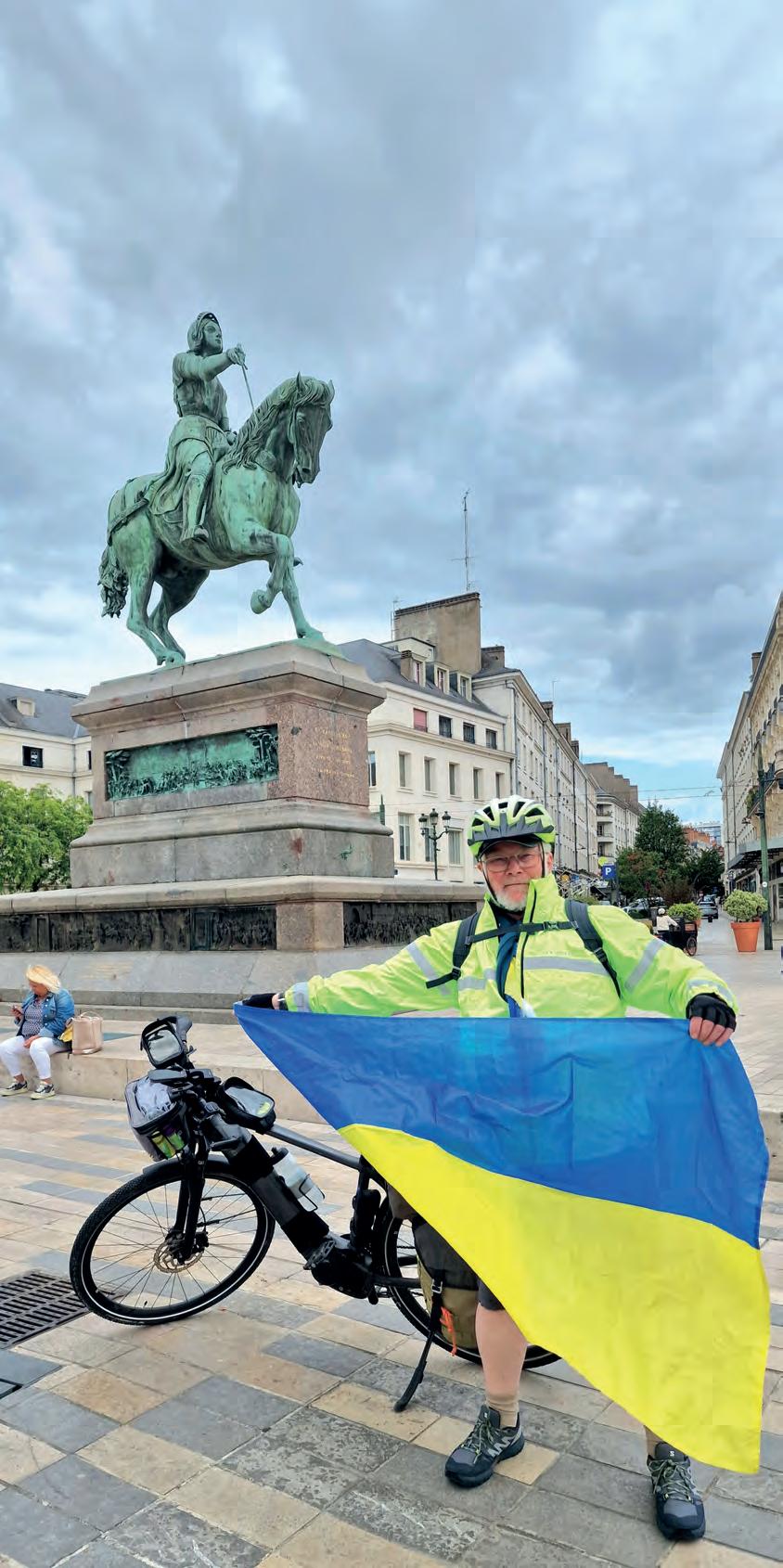
Last summer, 78−year-old Cycling UK member Vic Ient pedalled 1,000 miles across France, from south coast to north. Here’s how he and his e-bike got on
The night train from Paris arrived into Nice around 9am. Soon I was cycling along the Côte d’Azur to Golfe-Juan, where Napoléon landed in 1815 after escaping Elba. My plan was to follow the 200−mile Route Napoléon (route-napoleon.com) to Grenoble, after which I would continue north.
The first day’s cycling was short: 32 miles to Grasse, the perfume capital of Provence. I had imagined that sightseeing along the French Riviera would be a relaxing start but this morning the Côte d’Azur was anything but. A grey stormy sea greeted me, dark clouds gathered and torrential rain began.
A Turkish restaurateur at Golfe-Juan welcomed a very wet cyclist. I asked the young waiter where the monument to Napoléon’s 1815 landing was. Amazingly, it was only 100m away, near the beach opposite, on which the sun was beginning to shine. I had arrived at the beginning of the Route Napoléon.
Route Napoléan: dynamite
After cycling through the Cannes Film Festival, where I was completely out of place with all the glamorous people and limousines, I turned north into the Alpes-Maritimes. It was quite a climb to the hilltop town of Grasse, with its narrow streets and tall buildings, but the roads were quiet away from the
coast. Roadside cycle route markers showed the ascent for each hill and the distance to the top of the col.
Travelling through the mountains of the Alpes-Maritimes and on to the Alpes-de-Haute-Provence, I enjoyed crystal-clear mountain air and breathtaking views of distant, snowcovered peaks, along with forests and inviting valleys. I began to appreciate just how big France is.
I’d love to mention all the inviting villages I stayed at along they way, but will settle for describing Castellane. It’s an ancient town set around a central square, with sand-coloured buildings fitted with light green and blue shutters.
The main feature is a huge rocky outcrop, Le Roc, which rises up above the town. At its summit is the Notre-Dame du Roc chapel.
My ride continued to nearby Lake Verdon, the fourth-largest lake in France, which was created by the hydroelectric dam at its southern end. The turquoise lake is something to behold, with high wooded cliffs to one side and the road backed by steep cliffs to the other.
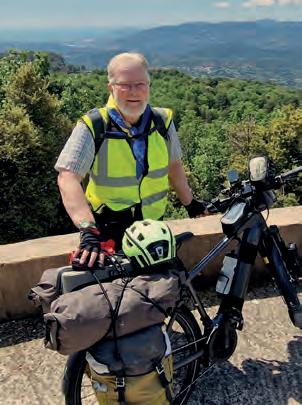
climb of 4,000ft, my battery power was running very low so I stopped at an open-air bar. The barman gladly recharged the battery while I downed a pint in the evening sunshine.
“The barman gladly recharged the battery while I downed a pint in the evening sunshine”
My final stop before Grenoble was at Corps, a picturesque village with a steep valley to one side and mountains to the other. If you want the full old-fashioned French hotel experience, stay here at the Hôtel de la Poste. The maîtresse de maison even provided some escargots to try as a free extra with my evening meal.
Route: Nice to Dieppe via Cannes, Grenoble, source of the River Loire, Orléans, River Seine and Dieppe.
Distance: 1,000 miles (1,609 km), including 18 in the UK, over 20 days of cycling and two rest days.
Getting there: Ferry to Dieppe. Train to Paris and then a night train to Nice. For details, see bit.ly/vic-ient-night-trainsouth.
Conditions: Road and cycle paths were excellent; I think I saw one pothole! It was mostly sunny and dry in May and June, with temperatures of 15−23ºC and occasional rain.
Maps/guides: Mostly I used IGN Top 100−series paper maps. I also had the IGN Rando app on my phone and The River Loire Cycle Route guide (Cicerone).
I continued over the hills into the wide valley of the River Durance, which is bracketed by mountains on either side. My route was a well-made path alongside a wide irrigation canal. It went on for miles. The town of Sisteron is a must-see in the Durance valley.
A citadel commands the narrow gap in the mountains at this point. This is where Napoléon was held up by royalist forces. Thanks to them eventually relenting and opening the gates, he was able to go on to Paris.
Following the Loire
The rest of the route to Grenoble consisted of long rides, as I moved away from the River Durance and up some long ascents. One day, after a

The next day was virtually all downhill to Grenoble, which sits beneath a beautiful arc of snow-clad mountains. From here I followed the rivers Isère and Rhône on some excellent cycleways, including the ViaRhôna. After Valence, I headed up into the Massif Central on a well-made cycleway on a former mining railway line. But this only got me part of the way: I still had some mountainous hills to climb. Finally, I arrived at the
Bike: Giant Explorer E+1 touring bike with 2×10 manual gears and five e-bike settings.
Accommodation: There are plenty of campsites, gîtes and hotels en route but few hostels. I stayed in small hotels that cost £50−£95 per night.
I’m glad I had… My French cycling cape, which was excellent for keeping the rain out on the few wet days. Next time I would… Get a mount for my phone so it could be positioned on my handlebar.
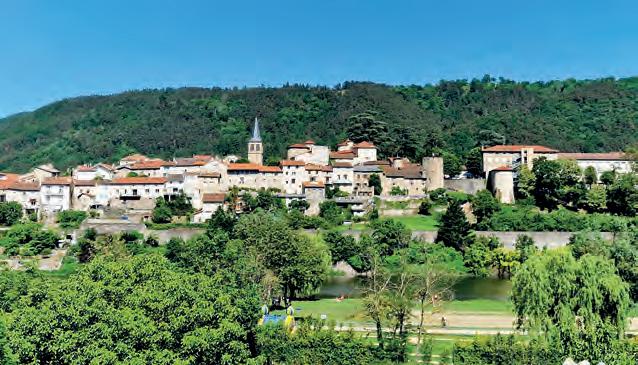

source of the River Loire (4,619ft), at the foot of Mont Gerbier de Jonc in the Cévennes range.
The route from the source of the River Loire to Orléans is about 375 miles. There isn’t a cycle path alongside this first part of the ride, but you do get to cycle through beautiful, undulating countryside dotted with villages and hamlets. Although there are some hills, you drop from 4,619ft to the pilgrimage town of Le Puy-en-Velay at 2,000ft. This is on the French part of the Camino de Santiago de Compostela.
From here I cycled through the Gorges de la Loire. The views along this stretch offer impressive panoramas, where the clear waters meander between cliffs and steep, wooded hillsides. Eventually I arrived at the fortified medieval village of Aurec-sur-Loire, set on a hilltop overlooking the river.
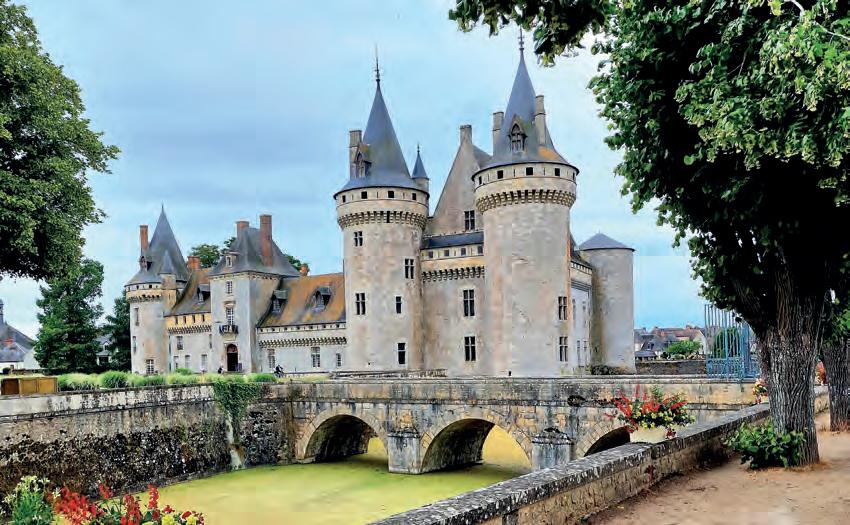
Then the landscape spreads out onto a wide alluvial plain. There is still no cycle path alongside the river until you get to Roanne, where I joined a canal path and then an excellent path along a former railway line. I was now in the Burgundy region, and the fields were dotted with the famous Charolais white cattle.
The weather had mostly been good to me but towards the end of the day I got caught in a downpour. It didn’t stop me from diverting off my route up to the medieval hilltop town of Sancerre to sample a glass of this region’s excellent wine.
The kindness of strangers
My e-bike has an 800Wh battery. It provides a good range but there were a few occasions when I ran out of power. One of these was in Alpes-de-HauteProvence. Here I asked a restaurateur to charge my battery, which he was happy to do. On another occasion, I had a long ride up to the source of the River Loire, with some steep ascents. The tourist office staff were very kind and let me charge my battery in their office.
Along the River Loire there were a few places where there were public charging points near camping/rest areas. On at least two occasions, I had to go to a bike shop. I chose Decathlon as they had charging points outside the shop.
“It was great cycling on canal paths and on a track along the top of the levees”
The people I met were the biggest bonus of all. In the area of Nevers, I was trying to find the start of the EV6 cycle route when I paused at a patisserie. There I met Margret and Rainer from Germany, who were cycling to the Atlantic on the Loire route. I rode with them for a while and then they guided me onto the route of the EV6 itself. What lovely people! It was great cycling on canal paths and on a track along the top of the levees.
I spent one evening chatting to an old guy accompanied by his little dog. We had a wonderful dinner on the terrace overlooking the River Loire. In his career, he had set up centres all around France for autistic children, long before it became a well-known condition.
On another occasion, I had a puncture and, as if by magic, a young boy of eight or nine turned up with his grandfather. The boy took over the repair work of the tyre, taking it into their nearby farm workshop, and set about inserting the new innertube. I didn’t have to do anything. It was marvellous
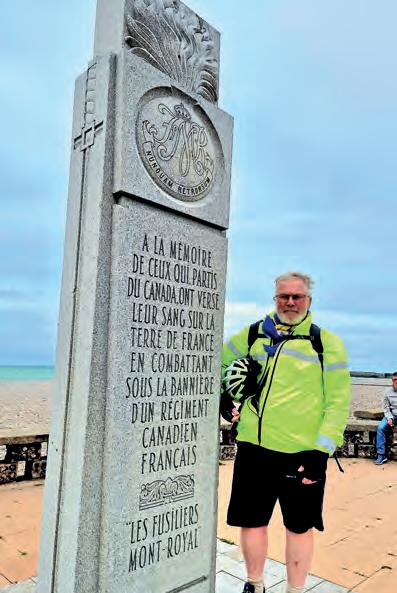
Avenue Verte to Dieppe I left the River Loire at Orléans for the cathedral city of Chartres, and then followed the beautiful River L’Eure valley to the ancient town of Vernon. I crossed the River Seine and went up over the hills to Forges-les-Eaux, where I joined the Avenue Verte to Dieppe. Orléans to Dieppe is just over 300 miles.
At Dieppe, I met two Dutch cyclists who asked if I would do it again.
“Actually,” I said, “I could start cycling again now, I enjoyed it so much.”

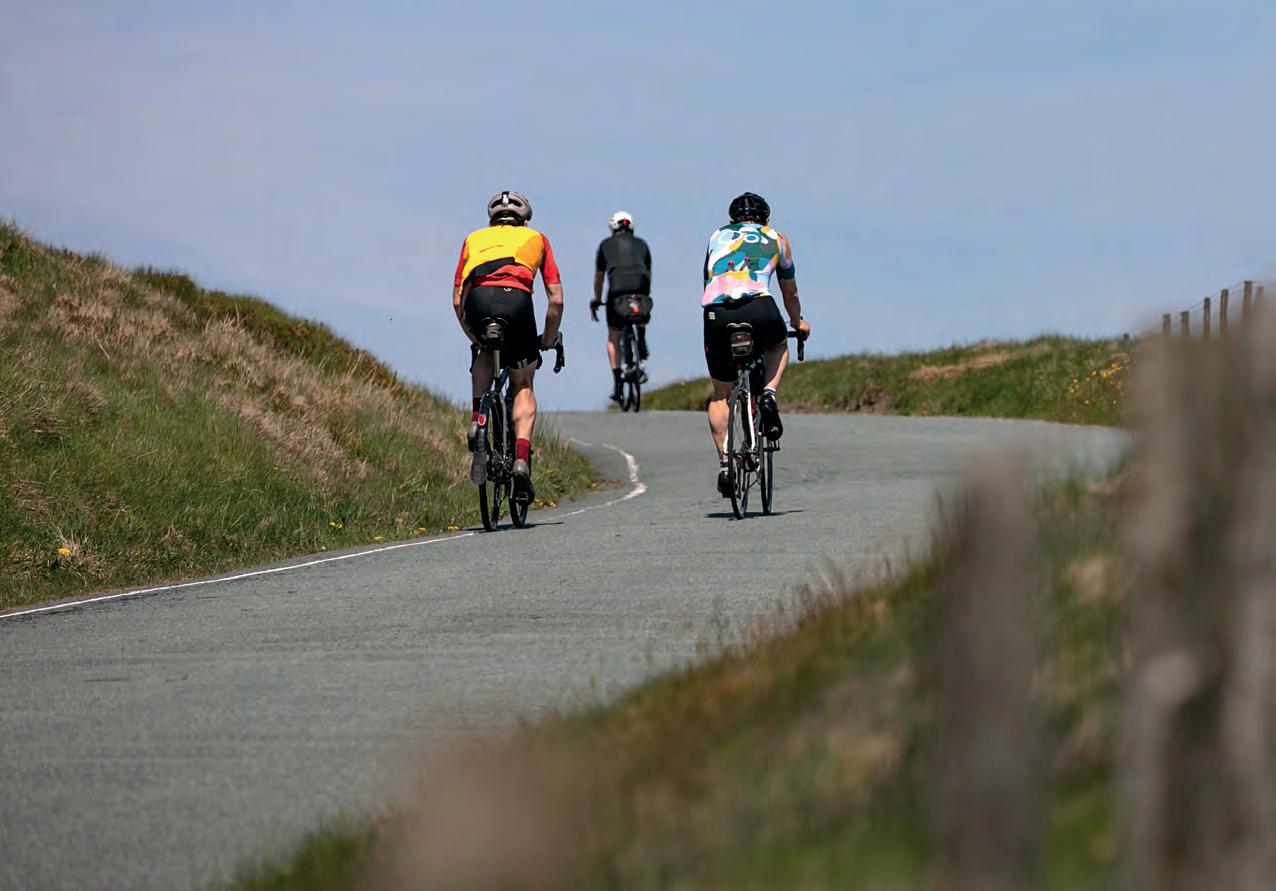
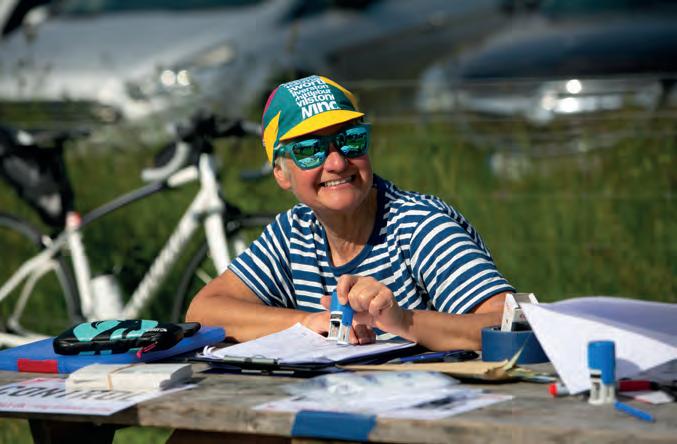
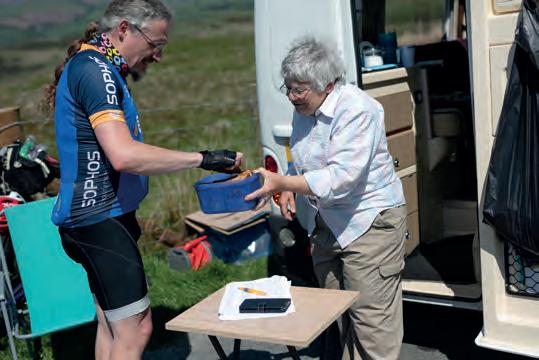
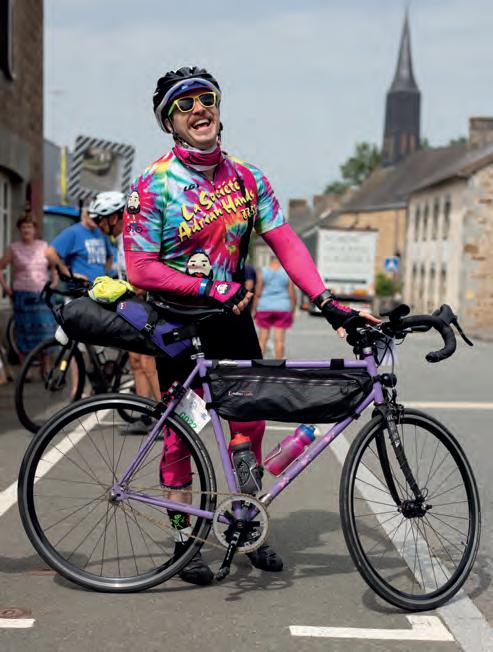

Audax – Latin for bold – is the original non-competitive, long-distance cycling discipline. On Audax UK’s 50th anniversary, Liam FitzPatrick, Anne Young, Mark Moroney and Nadia Kerr explain what it means to them
IF I’M HONEST, the first few miles were fairly dull. We had to get out of London on suburban streets that were busy even in the early morning of a July Saturday. But then we hit Kent. Dropping down from Higham and heading towards the Isle of Grain, the countryside opened up. We found ourselves on unfamiliar, sun-dappled lanes. And when we reached our first check-in at the beach, we were met with the sight of the Essex coast across the water and home-baked cakes from the ride organiser.
That event was The Way to the Sea, a 200km audax that I rode in 2022. I’d been doing audaxes for nearly 20 years at that point, and it was typical of the events I had tackled before and since. It showcased a route I would never have found on my own. We looped around the remote Kentish marshlands, where Dickens’s terrified

Pip had met the escaped the convict Magwitch. We made it to the Isle of Sheppey and then headed home along shaded roads once trodden by pilgrims. Finally, we slipped into London for a beer by the riverside at the old Greenwich Naval College.
At a little over 120 miles, that ride was one of the shorter ones in the Audax UK calendar. But regardless of ride length, the opportunity for entrants to explore new terrain is probably one of the reasons why more than 17,500 individual rides (clocking up over 3.5 million miles) were validated last year by the governing body for the sport, Audax UK
fare for many long-distance cycling fans, recent years have seen rising interest in rides of 50, 100 and 200km.
Audax UK’s roots and routes It’s a far cry from when the organisation was first mooted in the CTC magazine 50 years ago. In 1976, 16 long-distance enthusiasts came together to put on events to enable people to qualify for the oldest cycling ride in the world: the 1,200km Paris Brest Paris (PBP), which dates back to 1891. Initially PBP was a race, but amateurs were later allowed in a separate time-limited event that was, and still is, governed by Audax Club Parisien.
The focus on PBP by these original Audax UK member resulted in longerdistance qualifying rides that crossed regions and almost always entailed riding through the night – as opposed to my summer daytime excursion into Kent. But the fiercely protected, non-competitive ethos has been a constant regardless of ride length. Whether it’s a 60−mile tour of cake shops or a 600km battle up and down the length of Wales, there are set maximum and minimum times. With racing strictly banned, the format encourages collaboration. Long-lasting friendships are forged at café stops and at the roadside mending punctures.
“Long-lasting friendships are forged at café stops and at the roadside mending punctures”
It reflects both the growing popularity of audax and the range of challenges it offers. While rides of 300, 400 and 600km are the staple
Importantly, Audax UK provides challenges to match most tastes, without the need to publish finish times or announce winners. Some riders aim to complete a Super Randonneur series of rides covering 200, 300, 400 and 600km in one year. Others are simply glad to test themselves over 50 or 100km, or to set out to sample a fresh route or catch up with friends. Audax UK’s Randonneur Round the Year programme has become a popular way to commit to completing 12 consecutive monthly 200km rides. For most people, though, the test is very often about mental
stamina; whatever challenge you pick, success will depend on your mindset as much as fitness.
Audax riding
Many riders joke that they’re only in it for the sort of home-baked cakes that I had on the Kentish beach, but the strength of the audax community is its willingness to support each other. It’s just one of the benefits of a sport that owes everything to volunteers.
The 600−plus events in the Audax UK calendar are created and curated by Cycling UK groups, clubs and individuals. It means there’s a rich mix of rides, from shoestring setups with the most basic of logistics to others offering cake-rich control points seemingly staffed by contestants from the Great British Bake Off. Behind them all is a community of cyclists supporting other cyclists.
The volunteer-led nature of audax means that fees are low. Just £6 might buy you an entry to a basic 100km event. Even a longer ride with food provided around the clock rarely costs much more than £30. Events are open to all, although members of Audax UK and Cycling UK are exempt from a £3 temporary membership surcharge. Apart from that, no special licences, insurances or bikes are needed.
Unlike a sportive, routes are not marshalled or signposted. It’s up to you on most events to decide how you want to navigate between the control points – although almost everyone follows either the GPX file or turnby-turn route sheet supplied by the organiser. At the start you are issued with a small card where your arrival at control points is recorded either by a stamp, a receipt from a café or a piece of information such as a pub name.
And that’s it. A few last-minute words from the organiser at the start and you’re off on an adventure that could last three hours or a couple of days. Along the way, you support yourself. No broom wagon to patch you up or pick you up; just you, the tools and spares you carry, and the kindness of strangers to keep you going. When the puncture fairy finds
you on a crow-black night in Mid Wales, you’ll need to fix it yourself –although you’ll probably be quickly joined by others keen to help.
A journey into audax
My first 200km ride in 2003 was the start of a slippery slope. We set off on a foggy February morning from a DIY superstore’s car park, then posted our finished cards though the organiser’s letterbox some hours later. I rode most of the way with a Dutch postie who was over for the ride and a supermarket manager on his day off. I still hear from both of them today.

Within weeks I had signed up for a 300km ride around the New Forest and had decided to buy some proper lights. By the end of the summer I had tackled a 400km event, which introduced me to the benefits of hill climbing in the dark: you don’t realise how big it is until you reach the top! There was also a two-day, 600km audax that took me from Milton Keynes to Retford, around the Fens, to a 24−hour café near Mildenhall and back to Milton Keynes via Watling Street.
Four years later I found myself in the company of several thousand riders from around the world, all aiming to finish the 1,200km of PBP in under 90 hours. Paris Brest Paris is huge in France: it’s spawned its own pastry and gets mentioned on national news. Yet the rides I remember most are the ones where I turned a corner and saw the vales of England laid out before me, or when a stranger, unasked, handed me his spare rear light, or where I could have a beer in a park by the Thames with a new friend who’d shared my day out around unfamiliar lanes in Kent.
Liam FitzPatrick is the Head of Communications for Audax UK.
Rides are listed on the Audax UK website, and online entry is easy. Cycling UK members are exempt from the temporary membership fee, which also covers the insurance needed to ride. Entrants get a turn-by-turn route sheet and a GPX file
No special machine or equipment is needed. As long as it will get you round within the time limit, you’re welcome to join in. And don’t worry too much about the technical jargon of brevet cards and multiple abbreviations –someone will explain what you need to know when you turn up.
You’ll need to fill out a card to prove you have visited the control points. The instructions will tell you whether it’s a stamp, a receipt or a piece of information.
Full details at www.audax.uk
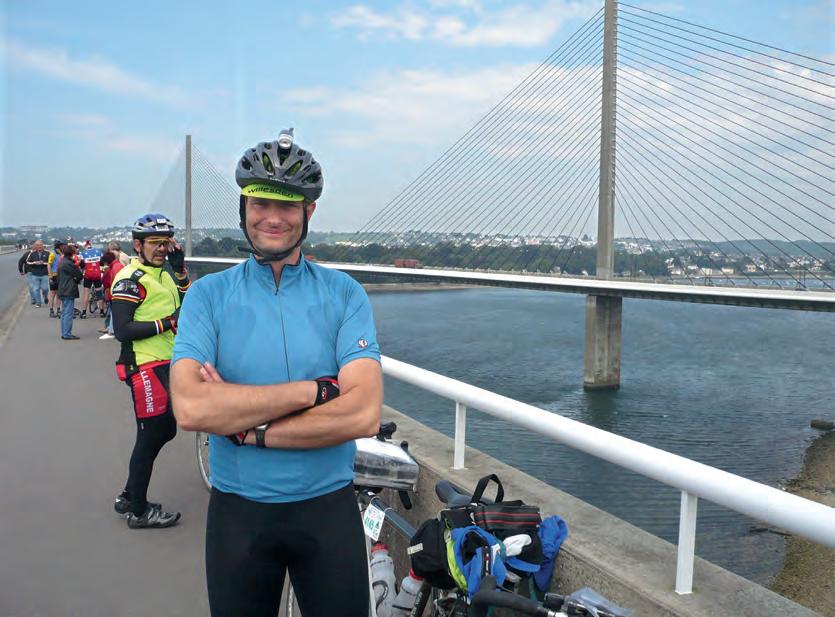
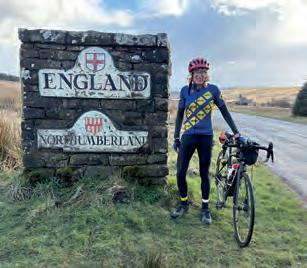
SITTING EXHAUSTED IN the organiser’s kitchen with a mug of stewed tea and a triangular cheese sandwich, I reflected on the ride I had just completed. That was the Hartside 200km audax. Three weeks earlier I hadn’t heard of audax or Hartside, one of the highest passes in England, and didn’t believe it was possible to ride 125 miles in a day. I wasn’t familiar with kilometres either. On that day in May 1996, my love of audax was born. It was an ideal way to ride further and explore new areas.
At the start of 2003, some of my clubmates were talking about an event in northern France called Paris Brest Paris, a 1,200km audax that has to be ridden in 90 hours. I didn’t consider myself to be experienced enough, but after completion of my first 300, 400 and 600km audax rides the same year, I decided to give it a go. My first setback was having a request for holiday leave denied from my accountancy job. So I handed in my notice. Well, I was ready for a career change anyway, so what did I have to lose?
And what an experience it was: riding with around 4,000 other cyclists of different nationalities across northern France and back in under four days. I have lasting memories of the French locals lining the route cheering riders on, and of the pop-up crêpe and coffee stalls.
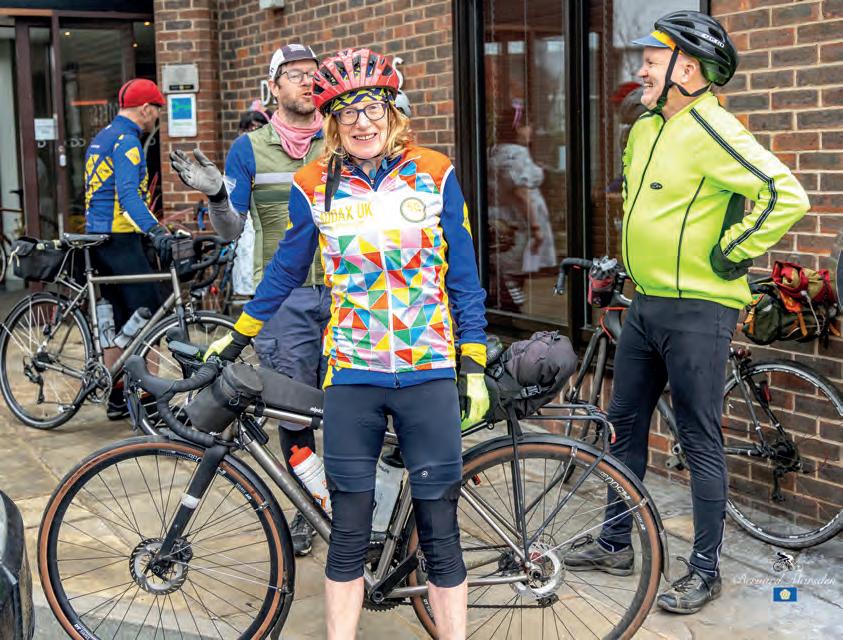
rediscovered audax and found that riding events at weekends, ranging from 200km to 1,000km, provided an escape from the stresses of being a GP. I encouraged my boyfriend, Ulrich, to ride audaxes. He often joins me on rides now.
What I enjoy most about audax is the feeling of freedom and adventure from being on your bike all day, together with the challenge of riding a long distance, sometimes with hills and adverse weather thrown in, along with the achievement of completing an event within a specified time limit. There is something unique about arriving at a McDonalds or a 24−hour garage in the early hours to be reunited with a group of fellow riders who are all sharing the feelings of hunger and fatigue. Fuelled by caffeine, we continue together into the night and on into the breaking dawn.
“What I enjoy most about audax is the feeling of freedom and adventure”
I went on to study medicine, the training for which meant cycling took a back seat for some years. In 2014 I
It’s hard to pinpoint a favourite ride; they all have their own personality, ranging from full support to being left to your own devices. It is often the harder rides that stick in your memory. Paris Brest Paris is probably the most iconic I’ve ridden; I am hoping to complete my fifth PBP next year.
I have been a non-executive director of Audax UK for the last
Bike: Sonder Colibri for winter. Specialized Roubaix with dynamo front light for summer
Long-ride essentials
• Decathlon waterproof trousers (£14.99) –these are lightweight and pack small. They’re essential on cold wet rides
• M&S Xmas cake (£4 approx for a bar cake) – a few slices per ride to provide a boost when energy is low
• Teaspoon – for use at
petrol stations and shops to eat food such as yogurt
• Shokz Bluetooth bone-conduction headphones – with a variety of podcasts and music to listen to
• A power bank – to ensure that my Garmin, phone, watch and Shokz all stay charged!
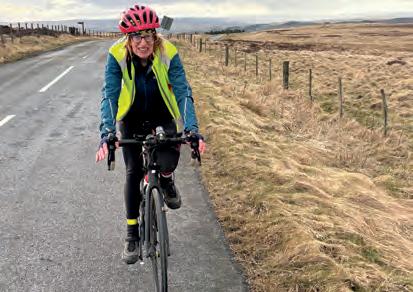

couple of years, and this has provided the opportunity to be involved in the development of long-distance cycling. As part of our half-centenary celebrations, we’re promoting events branded 50:50@50, with the ambition of having women making up half the starting lists on rides.
I FIRST CAME TO audax riding in 1989 with the Toronto Randonneurs when I was looking for a way to expand my riding capabilities. The randonneurs were an eager bunch who regularly rode 150, 200 and 300km from the heart of the Toronto metropolis into the surrounding Ontario countryside. They weren’t racers but they enjoyed riding their bikes at pace and for long distances. Their enthusiasm for the open road made for great company and, although I was helping to bring up a young family, I managed to fit in several audax adventures with them.
Our family decided to move back to my native Ireland in early 1991. Despite being occupied with settling in, the allure of the 1991 edition of the jewel of the audaxing crown, Paris Brest Paris, was too much to pass up. I got the all clear to attempt this massive challenge and, with qualifying rides of 200, 300, 400 and 600km under my belt, headed to France with a small group of Audax Ireland riders. That first PBP was a real test, but the tremendous support of the French people, the superb scenery and the camaraderie of the riders made for a marvellous adventure. I was sold.
After I retired in 2015, I decided that to celebrate I would again tackle PBP. I stepped up my training, although my qualification rides were completed at a slower pace than in my earlier years. My fitness wasn’t helped by a leg wound I had received from a vicious dog during a 2014 bike race. However, I made it to the start. Despite finishing outside the allocated time, I had some marvellous adventures. I rode with a non-English-speaking Brazilian for two
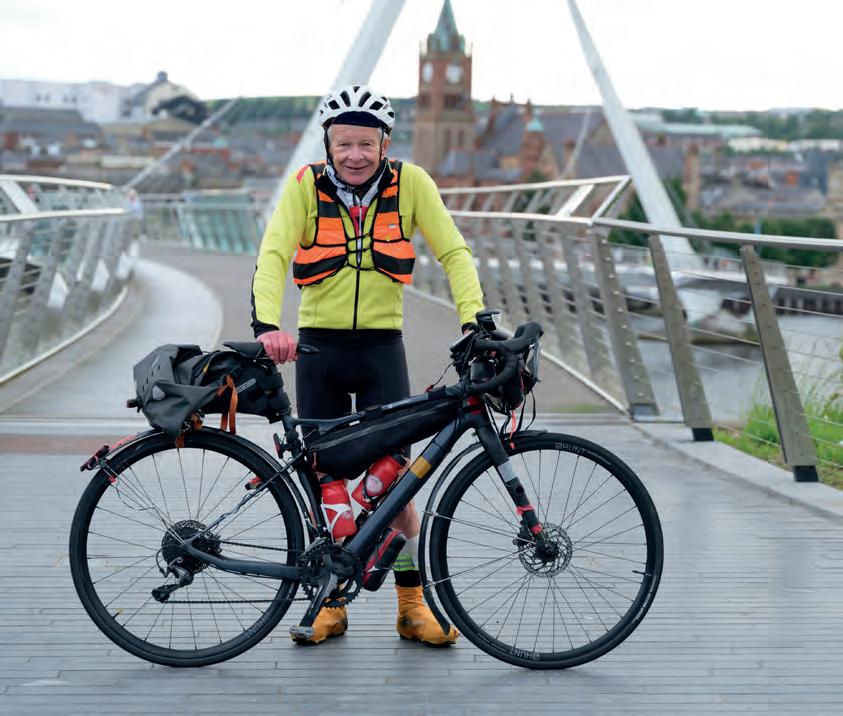
days, slept on a village park bench, and got hopelessly lost.
Audax is addictive. Every ride is an adventure, a challenge both mentally and physically. It’s satisfying to ‘make the time’, but more often it is who you meet, the beauty of the countryside and simply finishing that makes everything worthwhile.
“I am now well into my 70s, but my love for long-distance cycling hasn’t diminished”
Time failure in events, although frustrating, has given me great memories. In 2017 I completed the UK flagship event, London Edinburgh London (LEL) despite beating into gale-force winds in the Fens of Lincolnshire. In 2022 I abandoned LEL after suffering painful
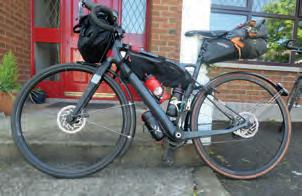
Bike: GT Grade gravel with 46−30 10−speed chainset and 11−34 cassette. Equipped with SON dynamo hub and lights, Ortlieb seatpack, Restrap frame bag and a front bar roll.
Long-ride essentials
• Aluminium-foil space blanket
• GPS system and a spare
• Power bank
• Head torch
• Rubber gloves (for warmth and for breakdowns)
• 10−speed chain link
• Little Canuck doll for support on a cold night!

outside Malton but was rescued by a generous English couple who transferred my bike on top of their tent box to the nearest train station.
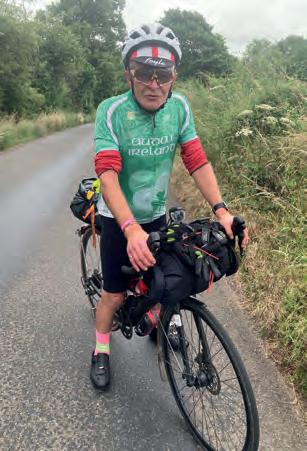
Londonderry. On the Solstice Spring audax in Warwickshire. Mark’s GT Grade, audax ready
I am now well into my 70s, but my love for long-distance cycling hasn’t diminished. My speed has dipped and my targets are more realistic now, but the allure of the open road, a new challenge and a desire to explore with like-minded people keeps me well motivated.
Last year I completed the TransAtlanticWay from Cork to Derry, enjoying beautiful countryside, quiet roads, and enthusiastic, friendly fellow riders from all over the world. I was the oldest finisher. I didn’t set any records, but I had a lot of fun and overcame some personal challenges.
Mark blogs about his adventures at: markslevel2coachingadventure.co.uk
I STARTED RIDING audaxes in early 2022. I had entered an ultra-endurance multi-day event called All Points North, covering about 1,000km, and I needed to extend my ride distances and my endurance. I found a supportive, welcoming bunch of nonracing riders. I finished my first longer events ‘out of time’ but that was fine. I was learning and I was enjoying riding.
“Watching days unfold from the peace and quiet of the saddle is very special”
Each ride has a story to tell. A highlight for me was approaching the Hartside climb on an audax very early one morning with a barn owl flying along at the side of me. It was serene. Watching days unfold from the peace and quiet of the saddle is very special.
One of the beauties of audax is that you can try tested routes in different parts of the country. You get to enjoy the camaraderie, the ‘treasure-hunt’ style of information gathering at controls, and the food provided at the end by the organiser. Food is talked about a lot between audaxers!
I am not a special or talented cyclist
Read about Nadia’s 2025 LEL ride: cyclinguk.org/ nadia-lel-2025
but I try to stretch the limits of my comfort zone. I crave head space during my busy working week, as a solicitor specialising in cycling claims, and what better way to satisfy that craving than to ride a long audax in my spare time? Audax riders support each other. When I stopped at the side of the road in the early hours on London Edinburgh London 2025, literally everyone who passed asked if I was OK.
I would particularly encourage women to ride audaxes. It is a safe and supportive environment, and safety is a real barrier to cycling for many women. There is a ‘Women in Audax’ Facebook group for Q&As and general support. Stops are planned in events at frequent intervals, which helps break up the ride. Audaxes start at around 50km, a lovely distance for a ride. A different mindset and different levels of preparation are needed for the longest events. Most riders will build up to those over time. I am involved in the promotion of audax to women during this 50th
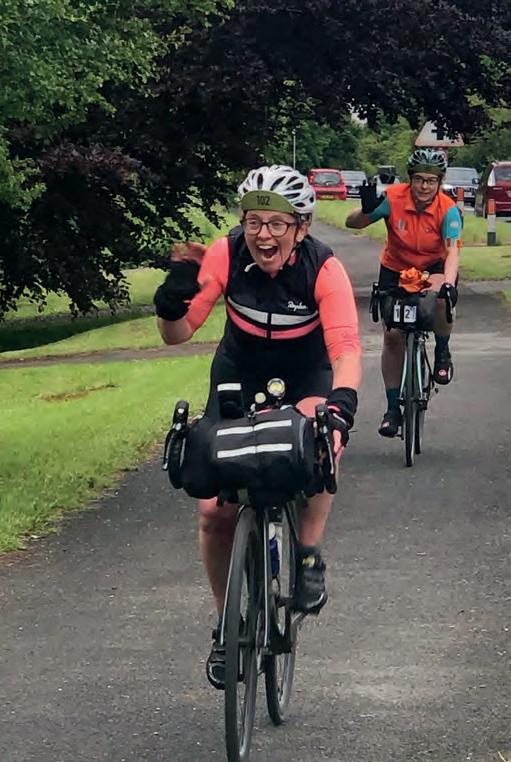
Above left: Approaching Windermere on day two of All Points North 2022
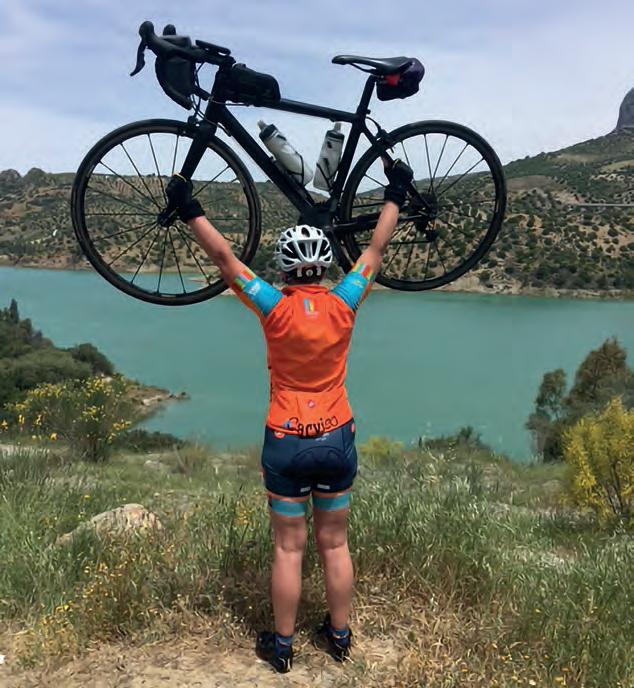
Above right: At the ZaharaEl Gastor Reservoir on a road ride in Andalusia, Spain

anniversary year. When women see other women taking part, they see role models for what is possible – things they may not have thought about before. I try to gather women together at audax starts for a photograph to publicise the representation.
I talk about audaxes (my partner says ‘a lot’) and post stories and experiences on social media. I recently introduced some riders from my Manchester-based women’s cycling group, Team Glow, to the event ‘EyUp!’; some have already booked their next event! A hilly route of mine (bit.ly/audaxuk-bikini-glow) has just been accepted as a permanent audax, which is great.
Bike: Trek Emonda (called Edna Monda Kerr)
Long-ride essentials
• A roll of photos and encouraging words from my dad, which are hidden in my handlebar
• Foil blanket
• Chamois cream
• Pouch of electrics (power bank, cables, backup lights)
• Waterproof clothing (jacket, shorts, latex gloves)
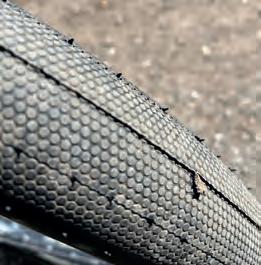
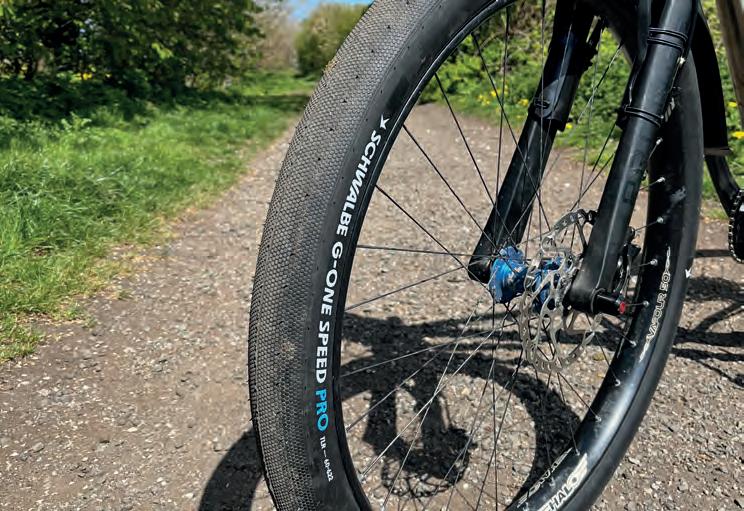
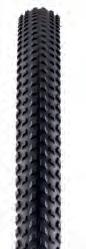
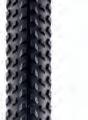
The G-One Speed Pro sits in Schwalbe’s range of gravel tyres. But it’s not really an off-road tyre in the UK sense: it’s an all-road tyre. While I did try it on singletrack trails, it best suits tarmac, dirt roads and finely graded gravel. The tread pattern of tiny shallow dots has poor grip in soft and wet conditions. Conversely, it loses little if anything to a quality road tyre when the going is firm. Unlike road tyres, it’s huge. The nominal (and only) size is 60−622
Verdict
This is the most efficient wide (50mm+) tyre I’ve ridden. It rolls – and holes – like a fat version of a supple, tubeless road tyre. Don’t even think of running this with an innertube. Or through mud. But if you want to surprise road or gravel riders this summer, put a pair on your MTB or drop-bar 29er.
(29×2.35in). On my bike’s Halo Vapour 50 rims, that plumped out to 66mm. It’s a lot of shock-absorbing air space, assuming you don’t over inflate. The recommended range is 23−50psi, but anything above 40 felt rock hard. I mostly used 20−30psi. Even at low pressures, the rolling performance is spectacularly good. Some of that is the minimalist tread. But it also has a casing that feels unusually supple for 67 threads per inch, and that’s covered with the ADDIX Race rubber compound Schwalbe uses (the clue’s in the name) for its XC racing tyres. It’s a thin layer of rubber, too. This big tyre weighed just 510g on my scales. Supple, lightweight tyres are lovely to ride on but tend to puncture fairly easily. Despite its RaceGuard puncture protection, consisting of two layers of nylon under the tread, I
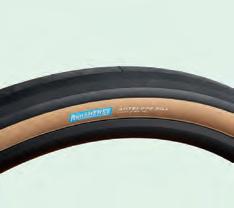
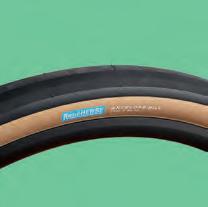
RENÉ HERSE 700×55C ANTELOPE HILL TC £82
A 55mm version of the silky, 44mm Snoqualmie Pass tyres that I’ve ridden century rides on. rene-herse.co.uk
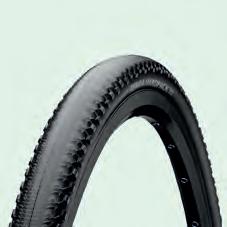
CONTINENTAL TERRA HARDPACK SHIELDWALL
£41.95
Available in 50−584 or 50−622 sizes, this keenly priced tyre has a semi-slick centre combined with low-profile shoulder lugs for cornering off road. continental-tires.com
suffered an early flat tyre on the nonextreme terrain of the ScarboroughWhitby Cinder Track.
On tarmac, the tyres rolled well enough for an 18mph-average club ride. I was marginally slower than on my road bike with Continental GP5000 AS TR tyres. I think that’s due more to the differences in air resistance than rolling resistance: my ‘gravel bike’ has an On-One Geoff handlebar, not drops, and big tyres are themselves less aerodynamic. Dan Joyce
Adapters for riding an SPDpedal bike in normal shoes
£54.99, redshiftsports.com REDSHIFT
Riders wanting both clipless and flat-pedal functionality in the same machine have until now had the choice of either swapping pedals or fitting dual-purpose pedals, which combine an MTB-style cleat attachment on one side with a flat surface on the other.
While convenient, practical and effective, dual usage adds weight. More importantly, for performance riding, the ‘flattie’ side is usually a lot wider than the clipless side, significantly reducing cornering clearance and increasing air drag at speed. And they usually look bulky.
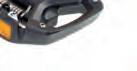
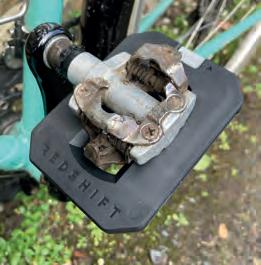
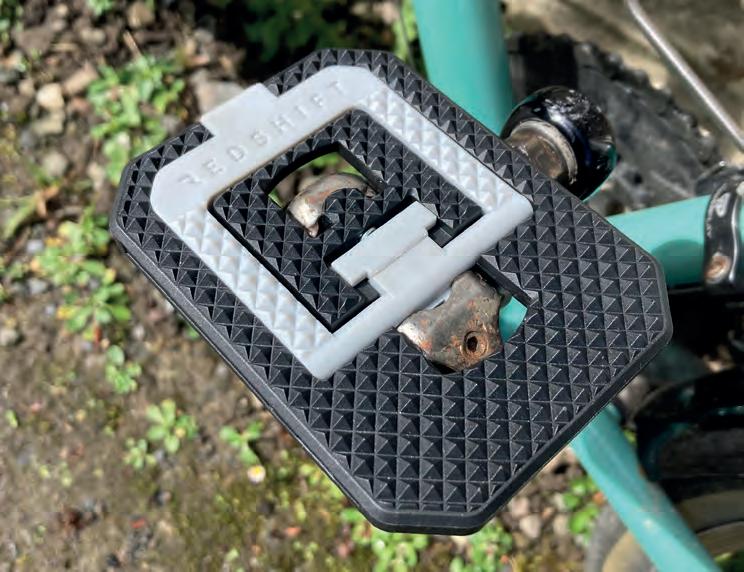
Step forward Redshift’s new Mousetrap pedal adapter. This slots into the two-bolt SPD pedal cleatretention jaws to provide a broad, supportive and grippy pedalling surface suitable for most footwear. The attachment mechanism isn’t quite that simple. The adapters are moulded in a hard plastic and comprise the platform itself, plus
a latch lever with a spring-loaded retention cam that keeps it in place when closed. Opening the lever moves together tabs that are shaped to match those on steel cleats, enabling the tabs to drop into the space between the retention jaws.
Flipping the lever down into its recess pushes the tabs apart, locking them into place between the jaws and securing the adapter to the pedal. The adapters are directional but can be used on either pedal. Magnets inside the two adapters hold them together for storage.
Fitting and removal are the work of seconds and, once in place, the adapters are firmly attached, with no movement or free play. The platform area is huge and, with its diamondserrated surface, holds rubber-soled footwear well. None of the pedalling force is transmitted through the adapter retention tabs, ensuring that in normal usage they should prove durable. The adapters do, however,


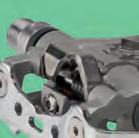





SHIMANO PD-M324 SPD MTB PEDALS £69.99
Dual-sided pedals with an SPD cleat attachment on one side and a toothed, open-plate ‘flattie’ on the other. shimano.com
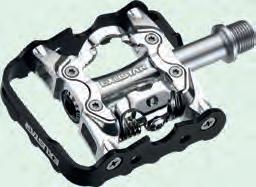
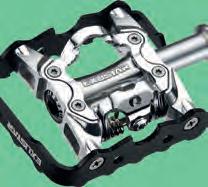
EXUSTAR PM86 FLAT/SPD PEDALS £49.99
Same idea as Shimano’s PD-M324, with an SPD cleat attachment one side and an open platform on the other. spacycles.co.uk
A quick, easy and fuss-free way to turn double-sided SPD pedals into flatties for riding around in regular footwear – and back again. When you don’t need them, the adapters are compact enough to fit in a pocket.
stick out a long way and the tabs may suffer in an impact. They only fit double-sided SPD pedals (full list on web FAQ page); single-side SPDs foul the underside of the platform and won’t let the tabs engage. Richard Hallett
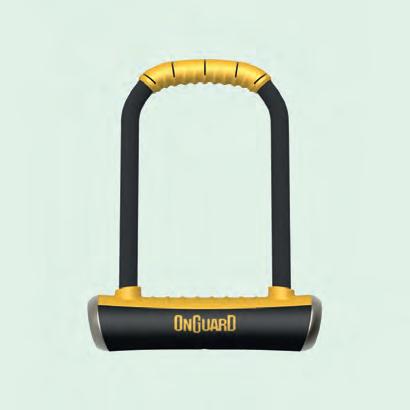
Inexpensive for a Diamond-rated lock but it won’t stand up to an angle grinder





PITBULL £49.99
Diamond-rated lock has the same shackle thickness and price,
+ AFFORDABLE FOR A DIAMOND RATING + LARGE SHACKLE – VULNERABLE TO GRINDERS



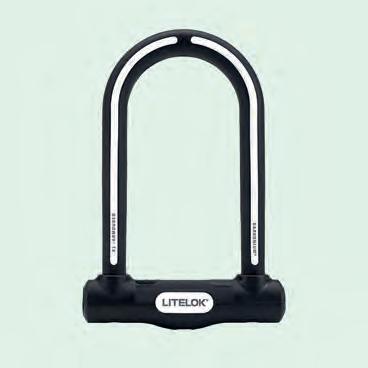
plus a ‘Mini’ option for £44.99. extrauk.co.uk
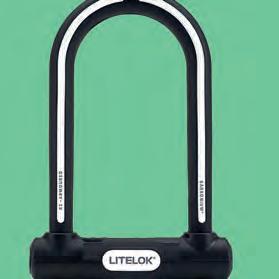


times the price and 50% heavier, but it took 2 minutes 38 seconds to grind through the untwistable shackle in our D-Lock group test. litelok.com
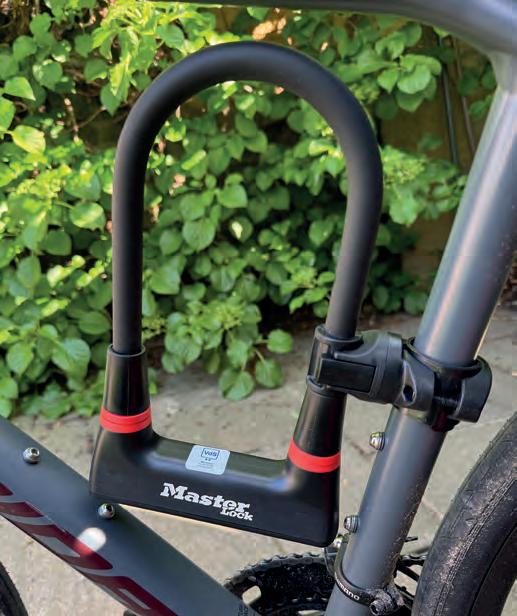
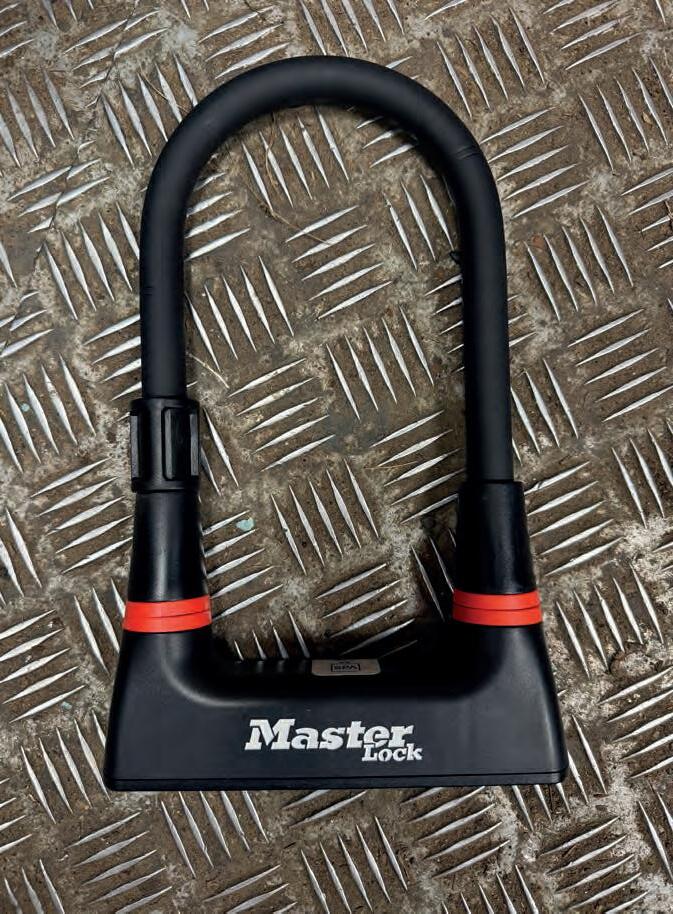
Masterlock’s oddly named 8279EURDPRO is well priced for a Sold Secure Diamond lock. But what does that mean in terms of street security and day-to-day usability?
It’s a comparatively light lock, at 1.16kg without its bracket. External dimensions of 26×16.5cm (the widest part of the foot) give an internal space of 21×10cm. This would have made it the second roomiest lock in our D-Lock group test (cyclinguk. org/guys-lock-test), so it’s easy to find chunky objects to lock it round. If you don’t need that much volume, Masterlock’s 8278EURDPRO Mini U-Lock is the same lock in a 16×8cm size for £42.99.
The 14mm hardened-steel shackle is vinyl coated to protect paintwork, but the plastic on the foot is harder. Be careful you mount the twopiece frame clamp to give plenty of clearance, as the quick-release lock clamping lets the lock waggle enough to woodpecker your bike if you don’t leave a decent gap. The lock itself also rattles noisily on rough roads, so bagging your Masterlock is definitely the quieter option.
The lock comes with four spare keys. Its pick-resistant, disc-keyed,
double-locking mechanism is hidden behind a sliding red cover to aid weatherproofing. The lock is straightforward to use, with an easy key turn. It also comes with a limited lifetime warranty against manufacturing faults.
In terms of security, it’s Diamond rated by Sold Secure, ‘Secured by Design Police approved’ and Klasse A+ rated by the German VdS testing company. Masterlock says the lock resists cutting, sawing and prying, and has a two-ton pull rating against car-jack attacks.
However, when I attacked it with a battery-operated angle grinder, I cut through the shackle in just 26 seconds. Once one side is cut you can twist the shackle completely open by hand, so there’s no need to cut the second side.
Guy Kesteven
Masterlock’s 8279EURDPRO is well priced for an officially top-rated lock. It’s also relatively light. While it’s not going to cause an angle grinder much stress, that’s not unexpected at this price.
New and upcoming products that have caught the








01
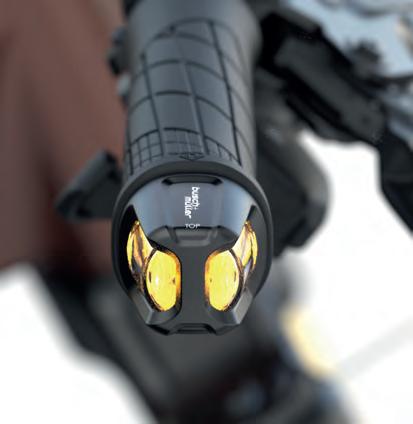
Busch+Müller TURNTEC T2
£109
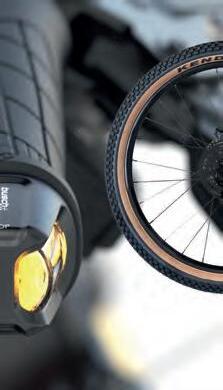
Bicycle indicators are an invention that keeps winking in and out of existence. But Busch+Müller has a good pedigree and its bar-end blinkers look as good as indicators are likely to get. bumm.de/en/
05
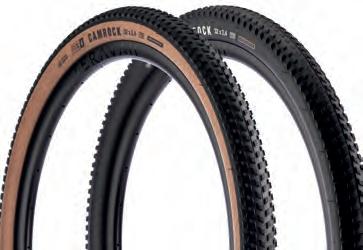
Terravail Camrock
32×2.4in $95 (£tbc)
In a sign of the times, Terravail has announced a 32in version of its Camrock XC tyre, which also comes in 29×2.2 and 29×2.4in. A 32/29 Camrock ‘mullet’ would fit some rigid-fork 29ers. terravail.com



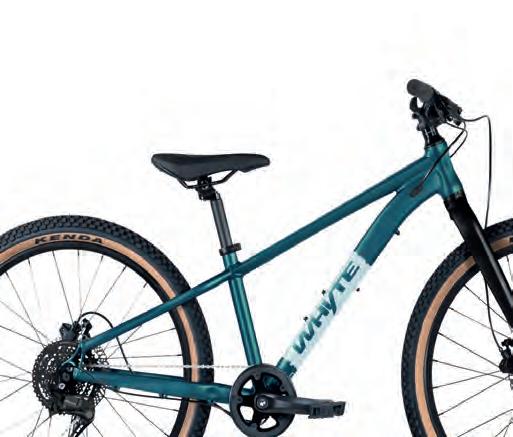
Whyte Secta 24
£599
Aimed at riders aged 7−9 (120−140cm tall), Whyte’s Secta 24 is the smallest version of its progressive hardtail. The bike has a lightweight aluminium fork and 67º/75.5º head and seat tube angles. whytebikes.com
06

Islabikes Rosetta
£3,299.99 (tbc)

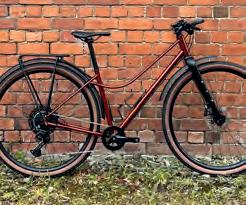
If you were at Bespoked in April, you’ll have seen Isla Rowntree’s new flat-bar, mid-step gravel bike. It’s designed for real-world riding like Cycling UK’s Adventure Series. islabikes.co.uk

Save money
Don’t forget your exclusive member savings, with up to 50% off cycling products and services. cyclinguk.org/ member-benefits exclusive savings,
Visit



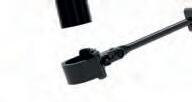
Topeak Zi:Rak £89.99



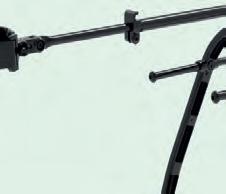







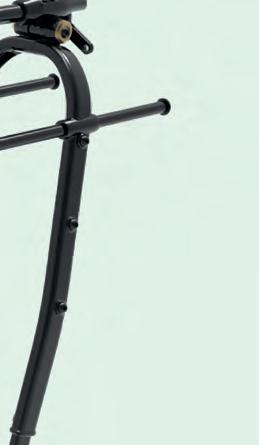
Lightweight racks for road and gravel bikes are becoming a category of their own. Topeak’s fits tyres up to 55−622 and attaches to eyelets, seatstays or a thru-axle.






04



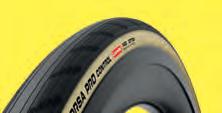
Vittoria Corsa Pro Control £89.99
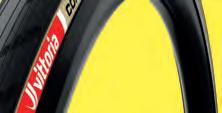
While mountain bike tyres are getting taller, road tyres keep getting wider. Vittoria has launched two new sizes of its all-weather road tyre, the Corsa Pro Control: 38mm and 42mm. vittoria.com

£150 approx
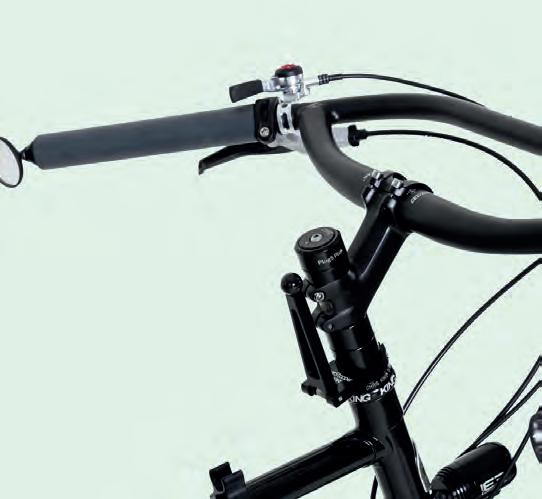
me was the SteerStopper, a front-wheel stabiliser for tourers to keep them upright when parked. Available in the UK from SJS Cycles and Stanforth Bikes (pictured). steerstopper.com

Details
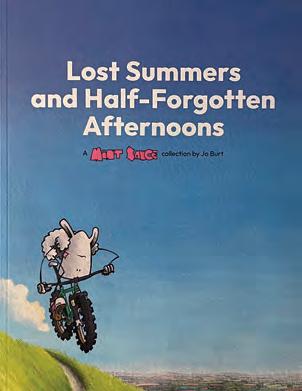
By: Jo Burt
Publisher: Isola Press
Price: £35
ISBN: 9781739126766
Lost Summers and Half-Forgotten Afternoons brings Jo Burt’s muchloved mountain biking sheep cartoons together for the first time in a single book – a significant milestone for a comic strip that has been in print for more than three decades.
As someone who grew up reading Mint Sauce, opening this book feels like bumping into an old friend: familiar, reassuring and ready with a knowing smile and a story you’ve half forgotten. Jo Burt’s world, where sheep ride bikes, memories glow warmer than reality and summer appears as a capricious goddess, remains as entertaining as ever.
The collection includes the very first appearance of Mint and mixes iconic cartoons from across the years with
“Jo Burt’s world, where sheep ride bikes, memories glow warmer than reality and summer appears as a capricious goddess…”
new artwork, all delivered with Burt’s trademark artistic style. His gentle teasing of cycling culture is spot on: the love of cake, the endless hunt for the next ‘essential’ upgrade and the industry’s occasional tendency to take itself a little too seriously. Riders will recognise the affectionate humour instantly.
What elevates the book beyond a simple anthology is Jo Burt’s accompanying narrative, which offers insight into the origins and evolution of Mint Sauce. His reflections reveal how a simple cartoon sheep became an enduring icon of British mountain biking culture - capturing not only the sport but the friendships, freedoms and those perfect summer rides that define it.
Beautifully presented and rich with nostalgia, Lost Summers and Half-Forgotten Afternoons is a delightful addition to any coffee table, and an ideal gift for any cyclist who appreciates artistic humour and reflections on life on (and occasionally off) two wheels. Paul Howard
Print queue Cycle doesn’t feature all books received. Reviewers pick the ones they think you need to know about from the editor’s shortlist. Send books to: Cycle, Cycling UK, Parklands, Railton Rd, Guildford, GU2 9JX
You can read excerpts from some of the books that Cycle has reviewed at: cyclinguk.org/cyclebook-excerpts

By: Kenneth Wilson
Publisher: City Village Books
Price: £10.95
ISBN: 9781739318208
Recent letters in Cycle have featured members carrying musical instruments by bike. Former vicar Kenneth Wilson ups the ante by transporting his cello from Cumbria to Rome via the Alps on a trailer attached to his 50₋year₋old Dawes Galaxy. He busks and plays formal concerts as he goes. He enjoys memorable encounters and stunning scenery along the way. It’s an entertaining read for anyone interested in music, cycling or spirituality.
Julie Rand
By: Christine Elliot & David Jablonka
Publisher: Schiffer
Price: £45.99
ISBN: 9780764369742
Trade, profession, artistry, craftsmanship or fabrication: what does it take to handcraft a bicycle? After reading and studying the fabulous photography of some stunning bikes, you get a great insight into 32 independent bike builders all doing things their own unique way. It’s a breath of fresh air in an ever-growing digital landscape. Maybe the next book can include a few more UK-based frame builders?
Jordan Matthews
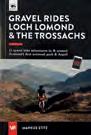
Loch Lomond & the Trossachs
By: Markus Stitz
Publisher: Vertebrate
Price: £15.95
ISBN: 9781839812781
Markus has created and described 16 gravel rides in this region, ranging from easy forays up to challenging day rides. There’s some useful information on how to use the book; responsible access; conditions you may face; plus bike and kit advice. Each route has a downloadable GPX file, a map, information on surface grading and how to get there –and more. It’s a great pocket-sized guide to some of the UK’s amazing gravel riding.
Ross Adams
This £1,500 road bike lives up to the long-ride aspirations of its name, but some components will be divisive.
Guy Kesteven tested it
Merida’s Scultura Endurance 300 is a good example of a modern ‘all-rounder’ road bike, complete with wider tyre compatibility and internally cabled, clean lines. It’s a sleek, alloy-framed equivalent of the ‘clubman’ road bike of yesteryear.
Frame and fork
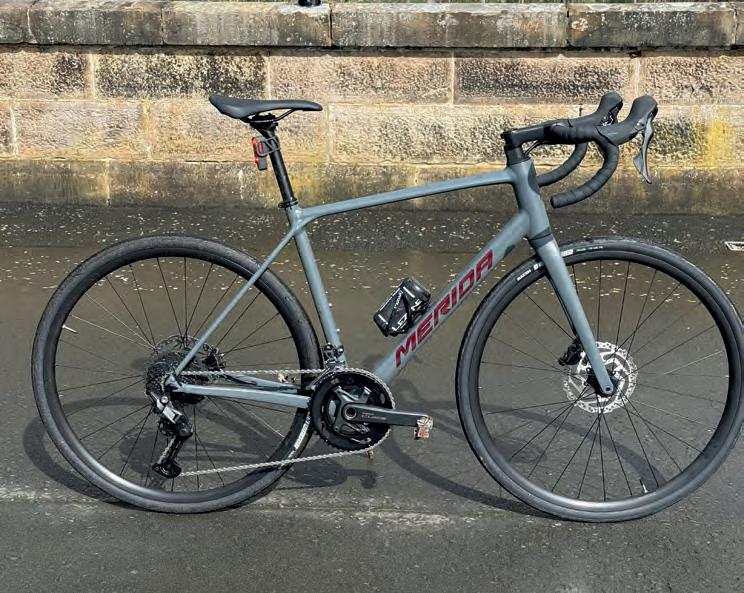
room in the full carbon fork, which also gets mudguard mounts.

Merida is a Taiwanese manufacturing giant that’s been building excellent alloy and carbon bikes for decades. The brand has never been shy of idiosyncratic innovation, and the finned ‘radiator’, heat-dissipating disc-brake mounts of the Scultura 300 definitely sit in that category. Looking beyond acronyms and buzzwords, the triple-butted, pressure-shaped frame uses smoothed welds, blended stays and curved profiles to give a ‘carbon if you squint’ aesthetic. There are two bottle mounts, as well as discreet mudguard/rack mounts.
Merida says there’s space for 32mm tyres with mudguards and 35mm without. I think that’s over cautious – which is lucky as the 32mm Maxxis tyres it comes with actually measure 34.6mm. Yet there’s still several millimetres between the tyre and the closest parts of the frame. There’s even more
There are two issues likely to cause consternation among long-distance riders. The first is Merida’s decision to feed brake and gear lines into the frame through the headset. This keeps things tidy but means upper headset bearing replacement will require a disconnection of the controls. It also creates tight turns in the gear cables, which adds friction even when new.
The second issue is the PressFit bottom bracket. To be fair, interference-fit bottom bracket bearings seem to be more reliable now, and the wider shell does help give the Merida its generous tyre clearance. But a threaded bottom bracket will always pose less risk of irreversible frame damage from a worn bearing or clumsy insertion. They’re easier to find spares for, too.
I found the sizing and shape of the Scultura excellent. The head tube is appropriately tall for comfort,
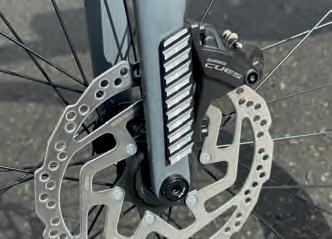
without leaving you at the mercy of headwinds. The tapered fork steerer inside is stiff enough to escape the flex and vagueness that can plague a lot of endurance-category bikes on ‘sporting’ descents.
Merida has kept the handling angles sharp and the fork offset racy, so it feels responsive and able to make the most of the enhanced traction from the chubby tyres. You do need to actively pilot the Scultura more than a slacker, more stable bike, and this can be tiring as ride times or speeds increase. You’ll also need to be wary of toe overlap if you’ve got larger-than-average feet, especially with mudguards.

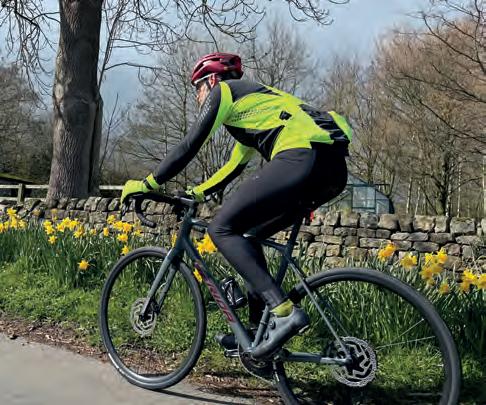
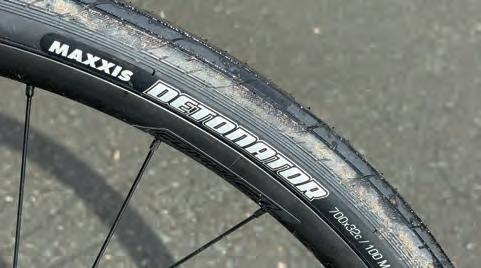
Despite a weight over 10kg, and big tyres adding inertia, the Merida muscles up to speed well. Contrary to my experience of previous Maxxis road tyres, the big Detonator tyres roll easily. Just be sure to lower pressures to compensate for the volume or they’ll feel like concrete.
Clever sculpting of the hydroformed tubes, including the shallow-but-broad top tube and very slim stays, means less vibration through the frame. This is amplified by the compact frame layout, which provides lots of seatpost extension.
The CUES combined brake and shifter levers are lumpy where they meet the bar but not to the palm-bruising extent of previous, affordable Shimano designs. A 50−34 chainset and 11−39 cassette keep cadence reasonable, whether descending at warp speed or winching up a wall. There is noticeably more lever throw for each shift compared to more expensive groupsets, and the KMC chain means shifts are fractionally slower. Hydraulic braking is firm and well communicated, with the wider footprint of the big tyres enabling you to brake harder on rougher surfaces without skidding.



SPECIALIZED ALLEZ SHIMANO CUES £1,249
The Allez has always been a benchmark of alloy ride quality. This model matches the Merida for componentry, tyre clearance and frame fixtures for a significantly lower price. specialized.com
Merida Scultura Endurance 300
Price: £1,500.
Sizes: S, M (tested), L, XL.
Weight: 10.37kg (22.86lb), without pedals.
Frame & fork: 6066 triplebutted and hydroformed aluminium frame with twin bottle cage mounts, three-point mudguard/rack mount and PressFit bottom bracket. Merida full-carbon fork with ‘hidden’ mudguard mounts.
Wheels: 32−622 Maxxis
Detonator tyres, Merida Comp SL 622×23mm rims, 28 spokes, Merida Expert (Novatec) hubs.

Top: Discreet mudguard mounts make it suitable for year-round use, not just sunny days Above: These 32mm tyres improve comfort and traction but still roll well
TREK DOMANE AL4 £1,400
Trek’s Domane AL4 combines more traditional frame proportions with a flared bar, a Shimano Tiagra 10−speed groupset, 32mm tyres, and rack, guard and top-tube bag mounts. trekbikes.com
Merida’s Scultura Endurance 300 is a lot more lively and sporting than you might expect for a relatively upright, wider-tyred bike. It holds speed well, doesn’t drag obviously on climbs or descents and has enjoyable precision. As long as you use appropriate tyre pressures (I settled on around 50psi) this doesn’t come at the expense of comfort. Mudguard mounts, a broad gear range and good tyre grip make it suited to longer rides in any weather.
For DIY bike maintainers, the positives on the road will be weighed against headset cable routing and PressFit bottom bracket concerns. Pricing is also slightly steeper than competitors from other mainstream, shop-sold brands.
Transmission: no pedals, Shimano CUES 170mm chainset with 50−34t chainrings, Shimano BB71 PressFit bottom bracket, KMC X10 chain, Shimano LG300 11−39 10−speed cassette. Shimano CUES 6030 shifters, 6020 GS rear and 6030 front derailleurs. 20 ratios, 24−123in.
Braking: Shimano CUES 6030 levers and callipers with RT10 160mm rotors. Steering & seating: Merida Expert bar tape, Merida Expert SL II 400mm handlebar, Merida Team CC III 100mm stem, Acros ICR headset. Merida Comp SL saddle, Merida Comp CC 27.2mm seatpost.
Equipment: 4/6mm Allen key tool in rear-axle handle.
merida-bikes.com
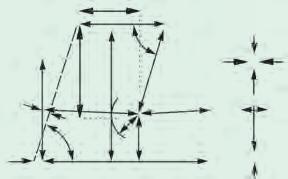
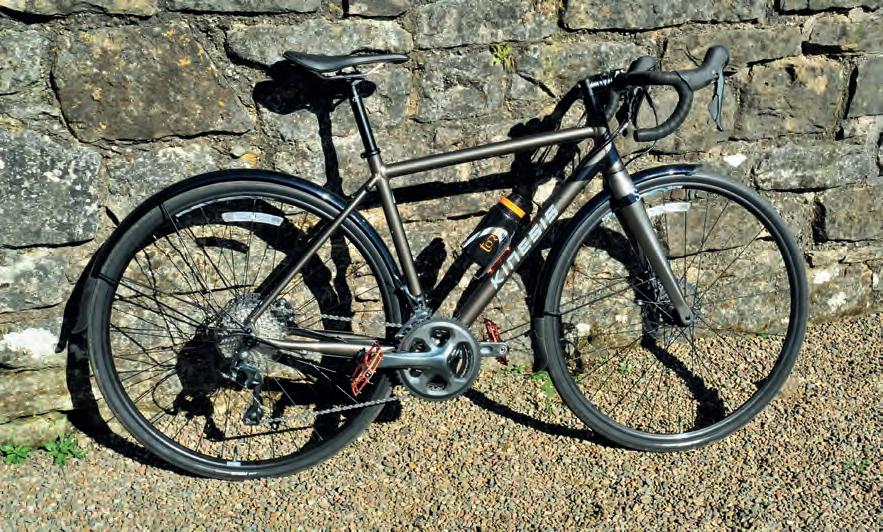
Promising ‘a balance between speed and adventure’, the £1,600 Kinesis 4S was just £795 at time of testing. Hannah Collingridge tried it out
Women’s-specific road bikes seem to be a rarer breed these days. I tested one last year, the Liv Avail AR 1 (cyclinguk.org/liv-avail-review). But what’s more common is for unisex bikes to be sold in a wide enough range of sizes to suit men and women. That’s the case with the Kinesis 4S.
On paper, it looks to do a similar job as the Liv but at a lower price – much lower if you buy it in the Kinesis sale.
Frame, fork & components
The 4S (‘four seasons’) aluminium frame is not new; I think the original iteration came out a decade ago. But it’s still a sensible, practical frame. It can be set up for year-round use and for a variety of purposes. It has space for wide road tyres (35−45 mm) and fixings for a rear rack and mudguards. If you’re commuting, the Tiagra 2×10 transmission is a more practical choice than 12−speed, being hard wearing and more reasonably priced when parts need replacing. The groupset fitted is actually all Tiagra 4700 series, rather than a mix of series and non-series parts.
Kinesis 4S Tiagra
Price: £1,600 (£795 in sale).
Sizes: S/51cm (tested), M/54cm, L/57cm, XL/60cm.
Weight: 10.1kg (22.3lb) with guards but no pedals.
Frame & fork: Kinesis double-butted 6061 alloy frame with Kinesis carbon fork and steerer, threaded BB, 12 mm thru-axles front and rear, and fittings for rear rack, mudguards and two bottle cages.
Wheels: 32−622 Maxxis
Pursuer tyres, Sector A519 aluminium rims, plain-gauge spokes, Novatec D729SB 6−bolt-disc hubs.

Top: The versatile frameset (aluminium frame, fullcarbon fork) is equipped with 2×10− speed Tiagra, hydraulic discs and budget wheels
The gears work with the standard Shimano functionality, and the hydraulic disc brakes add great stopping power, which I tested in time-honoured fashion with an endo. I had to replace the Selle Italia saddle, which is definitely not female specific. You might get on with it.
The frame comes in four sizes, S-XL, in 3cm increments from 51−60cm. The sizing chart on the Kinesis website suggested that I, at 5ft 6in, go for the small. My cyclocross bike, coincidentally a Kinesis, is a 54 so I was curious how well it would fit. While the 4S top tube length is similar to that of the medium-sized Liv I tested, the Kinesis has a shorter stem so it does feel more compact at the front end. Riders shorter than 5ft 3in would be better off with the Liv, which comes in smaller sizes.
It rides well. The frame is shorter than I’m used to but there is good adjustability with bar and seatpost height. While the shorter frame made it feel nimble and agile,
Transmission: no pedals, 170mm Tiagra chainset with 50−34 chainrings, Shimano HTII bottom bracket, Shimano 10−speed chain, 11−34 Tiagra cassette. Shimano Tiagra 4720 hydraulic levers and Tiagra front and rear derailleurs. 20 ratios, 27−123in.
Braking: Tiagra BR-4770 hydraulic flat-mount callipers with Shimano RT56 rotors, 160 mm front and rear.
Steering & seating: All Kinesis branded and 6061 alloy: 420mm handlebar; 80mm x 6º stem; tapered headset with loose ball bearings. Selle Italia X3 saddle, 27.2×350mm seatpost; alloy clamp. Equipment: unbranded mudguards.
kinesisbikes.co.uk
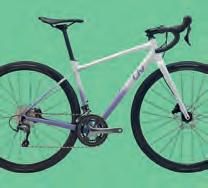
£1,399
The cheaper, Tiagraequipped sister of the Avail AR1 that I tested in the Feb/Mar 2025 issue of Cycle. It comes set up tubeless. liv-cycling. com
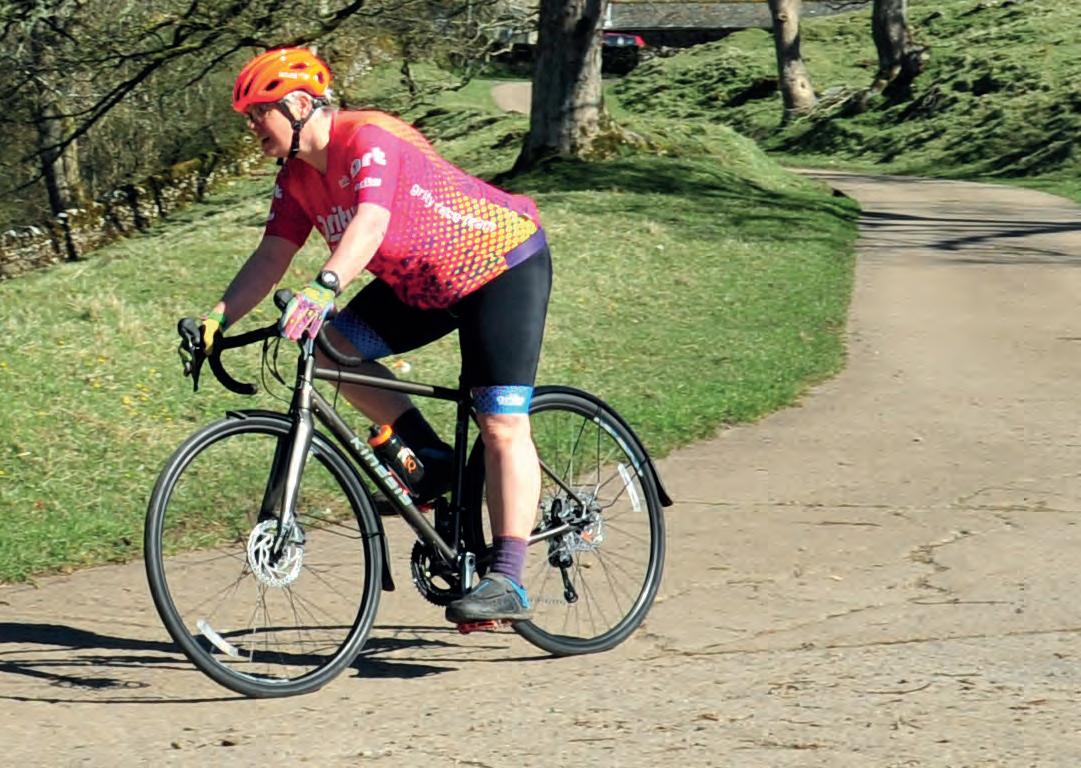

£1,199
Aluminium frame, carbon fork, Tiagra 2×10 gearing, hydraulic brakes and tubeless-ready wheels. Lacks guard and rack mounts, though. cube.eu
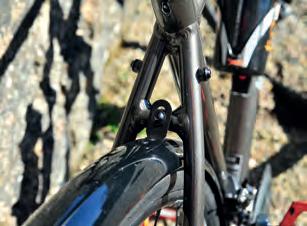
the toe overlap with my size 7s was hard to ignore. It feels stable while descending, and again the smaller frame meant I could move freely around the bike. A bottom gear of 34/34 makes gradients manageable, and the bike climbs well – or at least will plod uphill steadily with a chunky, middle-aged woman aboard. So where’s the rub? The wheels. This is where the budget decision has been taken. The hubs are Novatec cartridge-bearing disc hubs. Novatec makes thousands of hubs, many of them OEM, and these are just a standard budget set. Servicing is straightforward enough and you can get spares. However, the spokes are plain gauge and the rims, while labelled ‘Sector A 519’, are just inexpensive alloy rims. They’re not

Left: It comes with mudguards and has fittings for a rear rack, so could also be used as a commuter or credit-card tourer
tubeless ready, and while the Maxxis Pursuer tyres are perfectly reasonable at their price point, this tyre/tube combination did see me having to fix punctures by the side of the road, something I haven’t done in ages. Were the 4S my bike, I would invest in different wheels with tubeless rims. I’d then be happier using wellsurfaced tracks and trails in addition to tarmac.
The loose-ball headset is also a budget decision. I’d run this until it died, then replace it with a cartridge model for easier maintenance.
The Kinesis 4S is a sensible and practical bike suitable for a wide range of activities. Mudguards mean club runs and winter riding are fair game, and rear rack fittings enable it to double up as a commuter bike quite easily. The gearing is practical enough for climbing, while 10−speed Tiagra offers a good compromise between price, performance and longevity. The riding position is comfy for endurance rides, and the handling sure footed. Value for money is good overall, especially if you get it in the sale. The only weak points to consider are the wheels and headset.
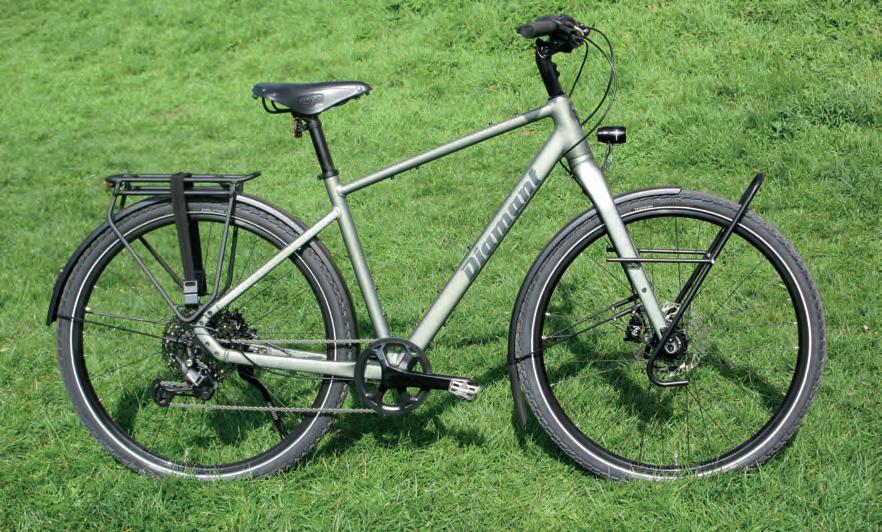
This £1,750 European-style trekking bike is made for day-to-day riding as well as bigger adventures. Simon Withers put it to the test
Diamant is part of Trek’s empire, but it’s a German brand and the Mahon World is very much a European tourer. It’s an absolute beast of a trekking bike with a correspondingly high load limit: 136kg for rider, bike and luggage.
The Mahon World is an all-aluminium bike with chunky tubes and squareprofile seatstays. The frame has a quick-release axle, while the fork uses Trek’s Thru-Skew system. The driveside seatstay can be split to fit a belt, because that’s what the Mahon Style Pro and Plus models come with; they share the frame.
The bike’s touring aspirations are clear from the number of bottle and luggage mounts. All the bolts have washers, which is good to see. I like the understated look of the bike.
Components
This Diamant comes with just about everything: a super-chunky Tubus front rack; a rear rack integrated with the mudguard; a front hub dynamo and LED lights; and a kickstand, which
Diamant
Mahon World
Price: £1,750.
Sizes: M (tested), L, XL, XXL.
Weight: 16.36kg as shown.
Frame & fork: Alpha Smooth Aluminium frame with four pairs of bottle bosses and triple bosses on down tube. Alloy disc touring fork with accessory mounts.
Wheels: 50−622 Schwalbe Marathon Mondial tyres, 622×20 Bontrager
Connection rims, Shimano DH-3D72 dynamo front hub, Shimano QC400 rear hub, 32 spokes front and rear.
Transmission: 175mm
ProWheel chainset with 42t chainring, Shimano CUES

Top: This 1× trekking bike from Germany is equipped with highquality dynamo lighting, a kickstand, front and rear racks and mudguards
I used pretty much every ride. The rear rack is an all-in-one structure with the mudguard, which has a hefty metal striprunning up its centre. The downside to this design is that if you want to fit even bigger tyres, you’ll need a different rack.
The Shimano front hub dynamo powers LED lights, which reach maximum brightness at around 8mph. The front’s 200−lumen beam is bright enough for you to be seen, but I wanted more power for unlit routes. Being mounted on the fork crown, it picks out potholes very well.
Gearing is based around a single ProWheel chainring and an 11−speed ultra-wide-range Shimano cassette, whose largest sprocket is the size of a small plate. The chain can run at quite an extreme angle, but I never unshipped it during testing. The large jumps between sprocket sizes didn’t prove an issue either.
The 42−tooth chainring and 50t sprocket deliver a 24in bottom gear, which is low enough for casual days out, as well as commuting-type rides and trips to the shops. If I were
Linkglide 11−50 11−speed cassette. Shimano U6000, 11−speed shifter and rear derailleur. 11 ratios, 24−109in. Braking: Magura MT Thirty levers and 4−piston hydraulic callipers, 180mm rotors.
Steering & seating: Ergotec EG Active Flex grips and Ergo Series 31.8mm bar, Bontrager 31.8mm adjustable stem, FSA 1 1/8−1.5in headset. Brooks B17 saddle, Bontrager 31.6mm alloy seatpost.
Equipment: Tubus Tara front rack, rear Clever Rack by Diamant, mudguards, Pletscher Comp Flex 40 stand, Supernova E3 Pro 2 front light, Spanninga Pimento Large rear.
diamantrad.com/en-GB/


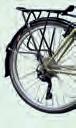

OXFORD BIKE WORKS MODEL 1
£1,729+
A more traditional-style British tourer with triple chainrings, a Reynolds steel frame, V-brakes and a lovely finish. oxfordbikeworks.co.uk
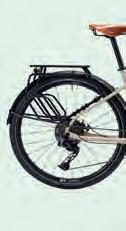
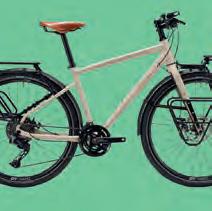


ROCKRIDER TRAVEL
BIKE ADVT 900
£1,799
Similar-looking, wellequipped 1× machine from Decathlon that’s even weightier – but it does have a mighty 170kg maximum load. decathlon.co.uk
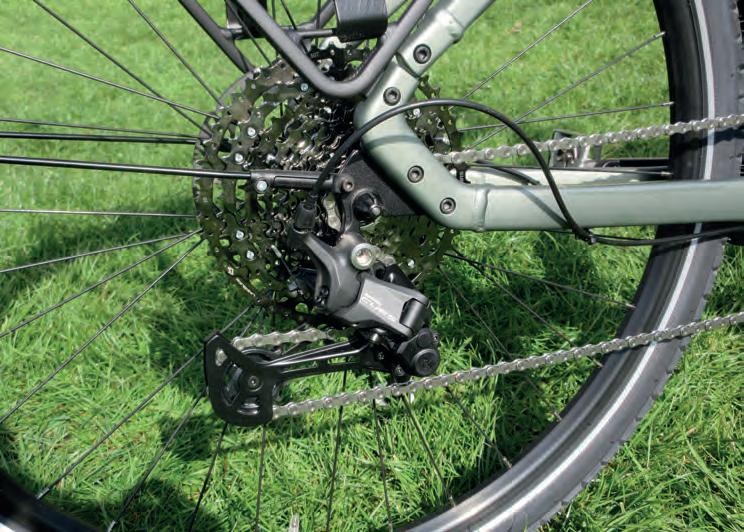
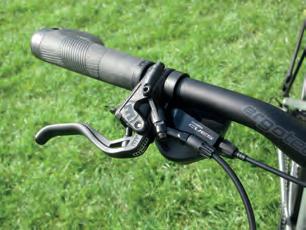
planning a fully laden tour, I’d like a smaller chainring, such as a 38 or 36, to get the bottom gear nearer to 20in. Braking comes courtesy of Magura four-piston hydraulic brakes. I can’t say I noticed any extra power over a dual-piston design, but the action was light and smooth, and the 180mm rotors make the most of the power.
The 32−spoke wheels and high-end Schwalbe tyres major on toughness and durability. I’m a big fan of the tyres’ reflective strips, which are very effective at night.
The Mahon World delivers a regal and imperious ride. You’re in a nicely upright position that puts little strain on your body, and the slack head angle makes for relaxed handling.

Above: Other bikes in the same range have a belt drive, which is why the seatstay is separable Left: Comfy grips but no bar-ends
You notice the bike’s weight when climbing but its very stable, thanks to its long wheelbase (1,117mm) and high trail figure (95mm). The gearing and braking deliver consistent control at all times, and it’s a confidenceinspiring descender once you’ve crested a hill; you’ve got to love hydraulic disc brakes!
Long, leisurely days out are this bike’s forte. The tread of the 50mm tyres copes well with broken roads, light gravel and unsurfaced canal towpaths, so you’re not restricted to the tarmac touring.
Straight out of the box, the Diamant Mahon World has everything you need for composed, everyday rides. A lot of care has clearly been put into its design and execution. With racks and guards, it’s ideal for commuting, big days out and leisure riding. The wide tyres and – to my surprise – Brooks B17 saddle keep it comfortable.
I’d ride it exactly as it is for day-today use, only switching to a smaller chainring for a fully laden tour. Overall, though, it’s a very good trekking bike that’s well priced, given the quality of the components and equipment.
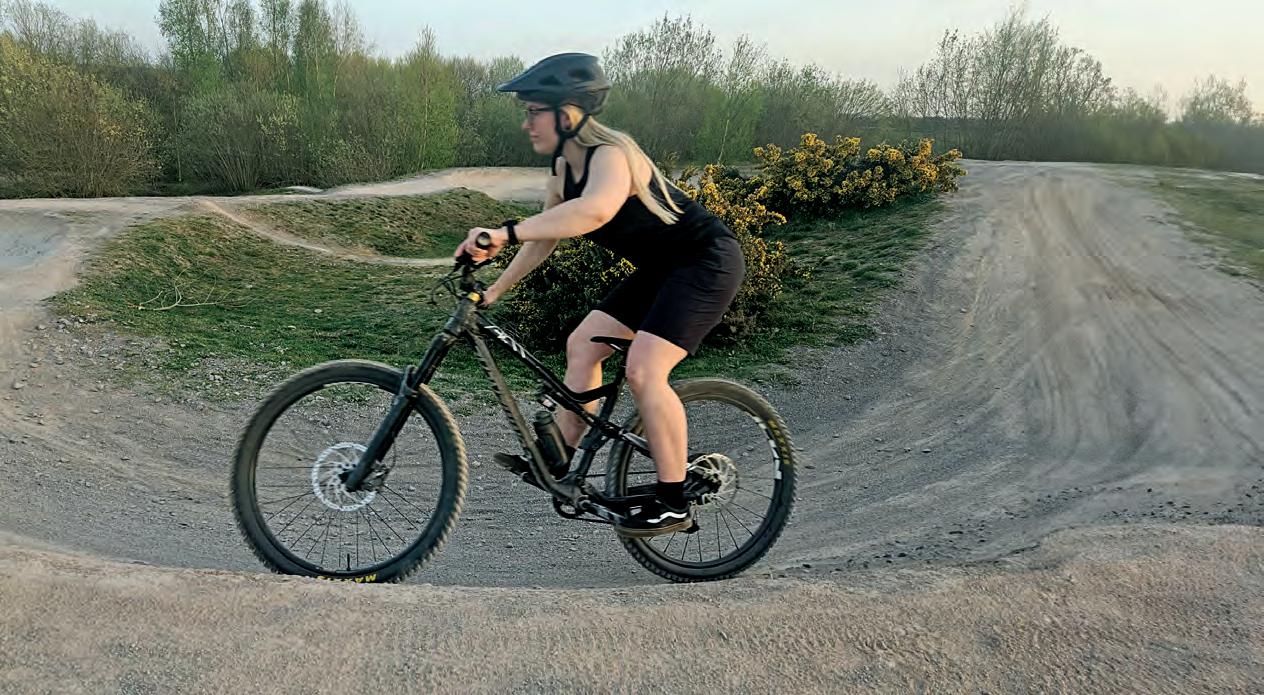
Skin-tight Lycra isn’t the only option for summer cycling. Dan Joyce and Jaz Morse test six pairs of baggy shorts: three men’s, three women’s
Padded Lycra shorts are primarily designed for racers. They’re more aerodynamic and they can improve undercarriage comfort on longer or faster rides. But they’re not obligatory and they also have disadvantages: no pockets (usually); worse ventilation; and a revealing appearance.
Baggy shorts are a normal-looking alternative for non-racers that can double as everyday clothing off the bike. They work well for mountain biking, gravel riding, touring, commuting – even road riding. They can be worn with or without padding. If you do want cushioning, choose a pair that comes with, or will accommodate, removable undershorts – or invest in padded underwear (cyclinguk.org/grouptest-padded-pants). Most baggies fit fine over Lycra shorts, too.
Casual shorts for cycling differ from high-street fashions in that the fabric typically incorporates elastane (which
may be listed as Lycra or Spandex).
The stretchiness from this creates more freedom of movement for pedalling. They’re usually cut lower at the waist so it won’t dig in and higher at the back to prevent exposed skin. To reduce pressure or chafing while cycling, the seat will have an extra, diamond-shaped panel (or gusset) or will use less obtrusive seams.
Most baggy cycling shorts have three or more pockets. Zipped ones are obviously best for valuables, especially when riding a mountain bike or recumbent. Other common features include: an adjustable or elasticated waist; belt loops; a zipped fly; and a water-repellant coating to help shrug off showers. Some have prominent logos, which make the shorts look more ‘bikey’.
As ever, sizing and fit varies. Try before you buy if possible, particularly if you’re a woman buying unisex shorts.
Shorts ride up a little when pedalling, so most cycling shorts reach at least mid thigh to prevent skin rubbing on the saddle. Many finish at or just above the knee. (We’re not looking at three-quarterlength shorts here.)
A gusset prevents uncomfortable seams between the saddle and your soft bits. Flat seams in lighter-weight stretch fabrics can still be comfortable, however. Some shorts have a reinforced seat for wear resistance.
Few baggies have a stitchedin seat pad because the looser fit means it wouldn’t sit snugly against your body. If you want padding and the shorts don’t come with an inner, try them for fit with your preferred padded underwear or Lycra shorts. Mountain bikers may also want kneepad compatibility.
Press-studs are convenient but can pop open while riding. One or two buttons at the waist makes for a more secure fastening. Ideally, the shorts will fit well without a belt. If you need to use one, lightweight walking-trouser belts work best.
When trying on shorts, take with you whatever you expect to put in your pockets so that you can be sure your phone/keys/snacks will fit securely and comfortably. Inner pockets are often the first part of shorts to wear through.
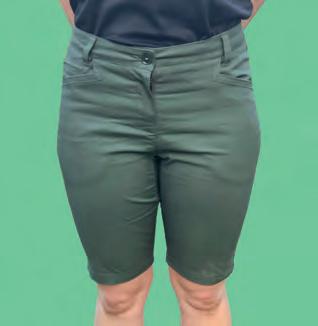
Vulpine Women’s Gravel Shorts
£70, vulpine.cc
Vulpine’s take on women’s baggies leans towards the smarter, more understated end of the spectrum. The cotton/elastane fabric is noticeably thicker than others on test, which makes them a great option for cooler spring rides where the extra warmth is welcome. That added heft doesn’t feel restrictive, however, and they strike a good balance between durability and comfort on the bike. The stiffer fabric gave me that slight gap at the back you find when wearing men’s shorts, although I can’t say I noticed them moving around too much while riding.
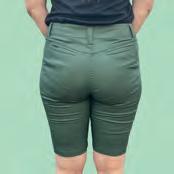
The cut is slightly more tailored than traditional MTB shorts, avoiding the ultra-baggy look without veering into anything too snug. Length is well judged, sitting comfortably over knee pads, making them a solid option for trail riding. However, I am a big fan of the humble zipped pocket for rough MTB riding, and unfortunately these only provide a small one for keys. Off the bike, the clean styling gives them a versatility that works just as well for a café stop or short commute.
Colours: moss, sandstone, blue.
Sizes: XS-XL (M tested); men’s S-XXL. Smart, versatile shorts with excellent coverage for cooler rides
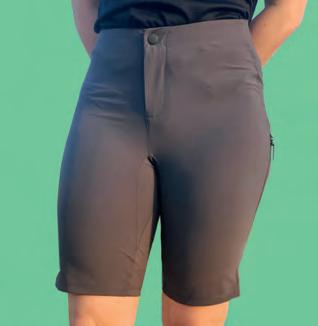
£130, rapha.cc
These shorts arrived with the brand’s usual attention to detail, right down to instructions on how to open the packaging! On the bike, I found they deliver a close, ‘race-inspired’ fit that feels more akin to their road cycling roots than traditional MTB baggies; I’d size up if you’re looking for a more relaxed fit. Sitting just above the hip with a slightly elasticated waistband, these felt like they were designed with women in mind, rather than being a smaller pair of men’s shorts. The lightweight fabric is a highlight, keeping things cool and comfortable on longer rides or warmer days. However, the streamlined cut and minimal excess material mean they’re best suited to gravel or touring rather than more technical trail use. I found them slightly over-engineered with features that won’t necessarily appeal to riders looking for simplicity, though on a multi-day tour I think you’d begin to appreciate the light feel and adjustments available.
Colours: dark grey.
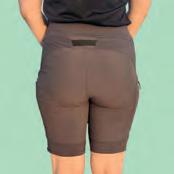
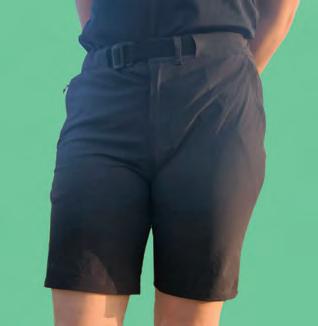
The fit from Madison’s shorts is noticeably more relaxed than the others here, providing plenty of freedom of movement without feeling bulky or ill-shaped. Similar to the Rapha pair, these felt designed with a woman in mind as they sit comfortably above the hip without any awkward bunching when pedalling. The generous length also meant they worked easily with knee pads, with no gap.
While they may not have the premium feel or standout styling of the others on test, they deliver where it matters most for mountain biking and have become a staple for me as the weather has been warming up. They cinch nicely around the waistband, and the mid-weight fabric inspires confidence with a traditional rip-stop feel.
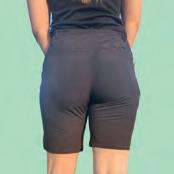
On longer gravel rides, I did find the metal buckle hook began to dig after a while, so these wouldn’t be ideal for longer tours or cross-country epics. Zipped pockets all round does make these a firm favourite for me, though. At time of writing, they were on sale for less than half price: £19.99.
Sizes: XXS-XL (M tested); men’s XS-XXL.
Lightweight and refined, but best for gravel and road-leaning rides
Colours: black, sand.
Sizes: 8−16 (12 tested); men’s S-XXL. A reliable, well-fitting all-rounder that nails the MTB brief
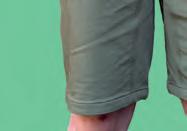
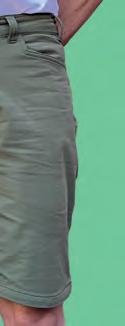
£80, swrve.co.uk
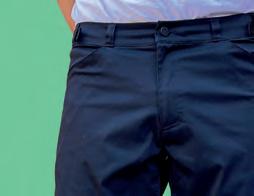
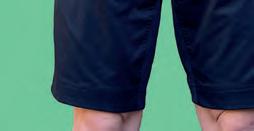
Men’s Shorts
£65, altura.co.uk

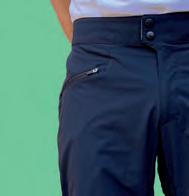
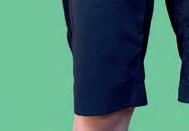

£90 endurasport.com


I’ve worn Swrve’s Cordura jeans for years. These 94% nylon/6% elastane shorts have some similar features: heavier-duty, four-way-stretch fabric; triple stitching for key seams; a seamless gusset; a non-elasticated waist; and a jeans-style button that won’t pop open. They’re better in the rain thanks to a water-repellent coating and the fact that they’re not cotton. They suit mountain biking, commuting and walking, where the tougher, heavier construction will pay dividends.

There are five pockets – one zipped – but the two front ones are mesh lined and snag keys or tools. Colours: black, grey, blue, green.
Sizes: 30−38in (32 tested). No women’s. Durable shorts for trail and town use. Shame about the mesh pockets
Jaz: Vulpine’s pair stands out for the smart looks and thicker fabric, making them ideal for cooler days and riders who want something more refined.
Rapha’s shorts are a premium, lightweight, close-fitting option, best suited to touring and commuting.
Madison strikes the middle ground with
Altura’s All Roads Shorts have a tailored fit and an unobtrusive style that makes them a good choice for city streets, country lanes and gravel tracks. The mid-weight stretch polyester is unrestrictive and doesn’t flap, while the waistband is adjustable at both sides so you can fine tune the fit without a buckle in your belly.
There are three pockets: two front and a zipped rear.
There’s no gusset, but the flat seams didn’t cause me any discomfort.




These were the first shorts I reached for during the test as I could put them on and leave them on, whatever activity I’d be doing that day.
Colours: black, green.

Sizes: S-XXL (S tested); women’s 8−18. All-day, everyday shorts. Tailored fit suits commuting, road and gravel
These are the short-fit version, with legs 4cm shorter. They’re the most comfortable shorts I’ve worn, on road or off. They have a seamless gusset, Velcro waist adjusters and plenty of stretch in the 85%/15% elastane fabric. The material is super lightweight, making the shorts unrestrictive and airy. Perforations on the inner thighs provide extra ventilation.
There are poppers to fit Endura Clickfast liners. Sadly, the waist fastens with poppers too, not a button. There are three pockets, all zipped, and some reflective detailing. Colours: black, carbon grey, dreich grey, green, orange.



Sizes: S-3XL (M tested); women’s XXS-XL. Lightweight, airy and comfortable – but quite clearly bike wear
traditional MTB fit that’s comfortable, practical and versatile across different types of riding. Zipped pocket are a winner.
Dan: I liked the Swrve shorts for mountain biking and general mooching around in, but didn’t wear them as often as I might because the mesh pockets kept snagging my keys. Normal pockets, please.
Endura’s airy SingleTrack Lites are ideal for summer trails and work well for other disciplines if you don’t mind some flapping. But they’re more conspicuous off the bike. The Altura shorts were the ones I wore most often. Their fit and style made them more versatile than the Endura shorts, and their pockets are better than the Swrve’s.
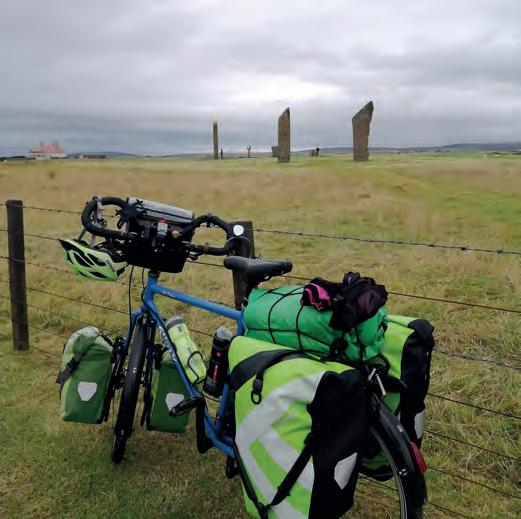
I enjoyed Sarah Cook’s BCQ article in Cycle magazine (pictured), and was amused by her discussion of efforts to plan a route. This deceptively simple problem is much studied in computer science and is notoriously difficult. It is known as the travelling salesman problem or TSP for short. A quick internet search will reveal that there are lots of research efforts looking for effective solutions. So BCQ and TSP are good bedfellows.
The article also led me to investigate the nearest checkpoint, which is at Settle station just 10 minutes from home. The online entry tells how the sign that is the subject of the question is no longer there, but will be replaced. At the foot of the wall where the sign previously lived is a small sign explaining that the plants have been removed from the small garden at the base of the wall, as there are plans to rebuild the wall.
However, I went down to the station and talked to the staff (Paul) and told him of the BCQ. The wall is now scheduled for rebuilding in 2027, and Paul offered to put the sign back ‘for the season’, which I guess means this summer. David Holdsworth


THE LETTER OF THE MONTH wins a 7.5−litre Ortlieb Seat-Pack QR, courtesy of Lyon Cycle. We tested the 13L size (A/M 24), saying it was: “Very well designed and made, and typically Ortlieb tough and waterproof.” It’s stable in use and is compatible with a dropper post. For more about Ortlieb products, visit uk.ortlieb.com. And don’t forget that, as a Cycling UK member, you get a 10% discount on Ortlieb products bought online. See cyclinguk.org/ortlieb for details.

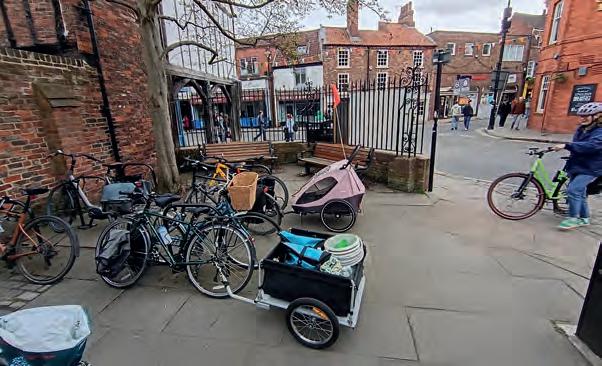
On one’s tows I was pleased to see the coverage of trailers in the April/May issue of Cycle. Two years ago I broke the dropout on one side of my bike while carrying bricks. I now have a replacement cycle, to which I’ve attached a widget that means I can pull our trailer.
I live in York, which is mainly flat. There are motor-traffic-free links to many places, including retail parks. Many people already use a trailer in this city; the pink one in the photo was already there when I arrived.
If I lived somewhere hillier I’d welcome e-assist, and can imagine as I get older I’d need this. But for now the trailer attached to my standard cycle gives me freedom and flexibility and extends the utility uses I can put my bike to.
Rebecca Lack
Speaking of trailers: Bob from Carry Freedom got in touch to say that, although the company doesn’t produce its own thruaxles, it recommends the Robert Axle Project 12mm Thru Axle for Kid Trailer. This is available in various lengths and thread pitches from sjscycles.co.uk for about £65.
Well done. With the recent changes to the fonts, colours and background colours in the magazine, the articles are a lot easier to read.
While still not a fan of any background colouration or graphics behind text, there is now an improvement. It’s good to know, and I’d like to think that correspondence with your colleagues on this matter was put to good use, and that many others besides myself can benefit from the better text/background contrast we see in the latest edition.
Alwyn Howes
I enjoyed reading the article ‘Questing time’ by Sarah Cook. However, as someone who lived for many years in Sussex and who cycled through Ashdown Forest on the public roads, I feel that the article may lead to confrontations.
Local by-laws forbid cycling on the off-road trails; they are for horses and walkers only, unfortunately. I was hopeful that when East Sussex County Council
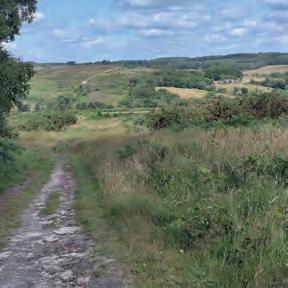
became involved in the purchase of the land and rights, about 30 to 40 years ago, this anomaly would be corrected. As far as I know, there appears to be little chance of change.
We have the absurdity of motor vehicles travelling at relatively high speed through the forest, killing wildlife large and small, while cycles cannot use the off-road trails. The article may result in a wasted journey that ends in a confrontation.
Eddie Collict
I’m impressed at the cycle carriage of bass viol, trombone and viola. As another lifetime cyclist, my sole contribution to the debate are my bagpipes.
In 1974, my wife and I, plus threeyear-old son, went on our tandem to Colonsay for two weeks, with the boxed pipes strapped to the top of the rear carrier. This arrangement served us well the following year on Rum and Eigg, and then again in 1975 on Coll.
These days, the pipes occasionally travel by bike to pipeband practice, carefully wrapped in a large bath towel and secured in a pannier. I’ve decided that in my next cycling life, any musical instrument will be confined to something the size of a mouth organ.
Gordon Casely

Get in touch Letters are edited for space and clarity. The editor reads and automatically acknowledges all letters but publishes only a selection. Please include your membership number. Write to: Cycle Letters, Cycling UK, Parklands, Railton Rd, Guildford, GU2 9JX or email editor@cyclinguk.org.
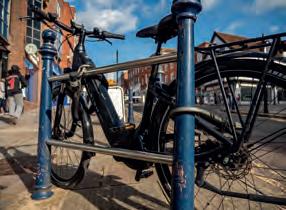
The letter from John Heathcote (Feb/Mar 2026) raises a point I’ve never seen in Cycle magazine before about cutting a Sheffield stand to steal a bike. It’s already happening in London. A large pipe cutter can be used to cut a Sheffield rack without electrical power, sparks or noise.
If a lock is only used to hold the frame, the bike can be lifted and the lock dropped through a short gap between two cuts in the top tube of a rack. The bike can then be ridden away with the lock dangling loose, to be cut later.
To help prevent this, follow advice from Cycling UK and use two locks. Both of them should lock the frame and a wheel to the stand.
Adrian Williams

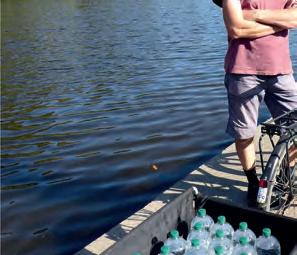
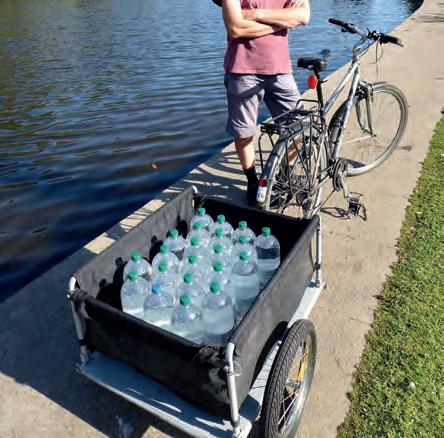
Rob Ainsley
Get feedback from other members at forum.cyclinguk.org. Here’s an abridged extract from a recent thread: cyclinguk.org/forum-new-bike-ideas
Thehairs1970: My wife is struggling with her drop-bar road bike due to neck issues. (Her flat bar tourer doesn’t give her any issues.) We’d like to replace the road bike with a gravel bike. Budget is £2k absolute max.
Nearholmer: Isn’t her flat-bar tourer the bike for the job? If a flat-bar gravel bike might be her thing, I can speak well of the Genesis Croix de Fer FB20. al_yrpal: Why not just fit some butterfly bars and fatter tyres before spending shedloads? Gravel bikes are marketing hype.

Yes, bike trailers are great (Apr/May issue, p56). Mine’s paid for itself many times over in the last 15 years. I can take items to the tip (sorry, ‘recycling centre’) such as mattresses, furniture or fridges, avoiding hefty council collection charges. From my experience, a kickstand is essential when towing. Without one, it’s hard to lean the bike safely against anything with the trailer attached.
fatmac: I ride my Brompton on fire roads, bridleways and woodland tracks – at a sensible speed, almost any bike will do.
JohnR: If weight is a key consideration and the size is OK, then the Boardman ADV 8.9 carbon is a gravel bike that’s currently £1,400 at Halfords.
AndyK: Maybe look at the flat-bar versions of the Sonder Camino? “For B-roads and bridleways” as they put it. mig: Old-school question: what are the defining features of a gravel bike? pjclinch: It’s a hybrid design compromising between an MTB and a road bike, but not a hybrid as that term’s already taken.
Nearholmer: It’s a catch-all term, a shorthand way of referring to bikes biased to off-road use which fit between CX bikes and hardtail MTBs.

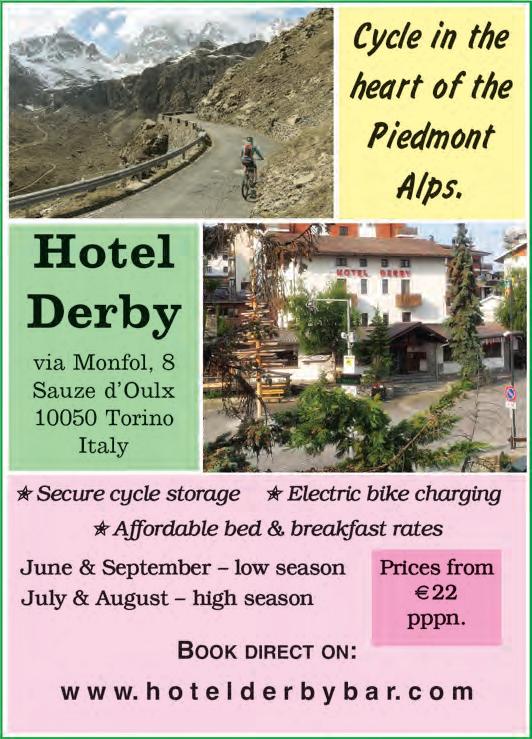
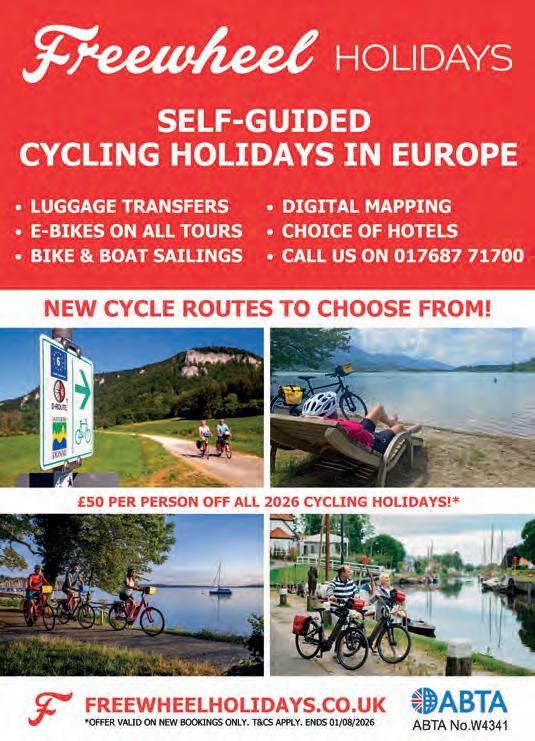
After decades as a member, Robert Murphy has left a legacy to the charity in his will. He told Senior Philanthropy Officer Harry Deacon why
“I’VE ALWAYS had a bike. There’s a family photo of me aged four on my Raleigh trike. One day, aged five, I decided that I would meet my dad on his way home from work. I rode my trike, alone, for about two miles across town. I didn’t meet my dad that day but I did meet the police, who returned me safely home. My interest in long-distance cycling had begun!”
Robert Murphy has been cycling for as long as he can remember. Growing up in Middlesbrough, he and his friends formed the Acklam Wheelers. They explored the countryside on Saturday rides and gradually pushed themselves further afield. Inspired by the CTC Gazettes he discovered in youth hostels, Robert joined CTC in April 1969, opening the door to a whole new world of cycling.
“Two of the original members of Acklam Wheelers subsequently joined me in CTC activities. Early that summer, we went on our own trainingcum-test run. Our training ride was of the order of 240 miles. I spent the next day in bed but made it into school on the Monday.”
These formative experiences led to his membership of the Hardriders section of Teesside CTC, which was known for its challenging, long-distance rides. As one of the youngest members, Robert quickly found himself riding alongside more experienced cyclists who pushed him further than he had ever imagined possible. The club became a place of mentorship and camaraderie, where shared miles built lasting friendships.
Summer rides could stretch to 100 miles in a day, taking in the North York
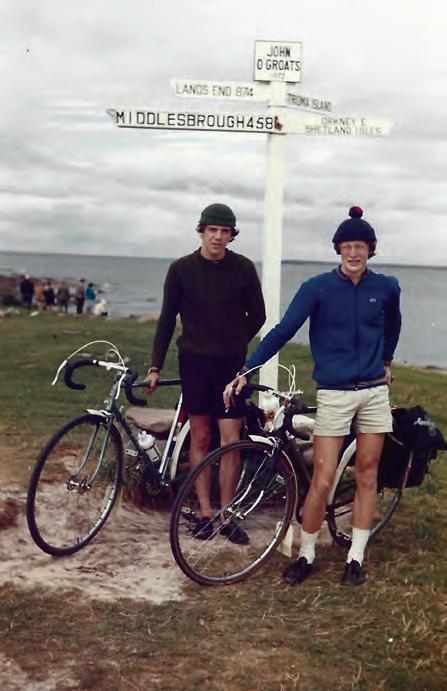
Moors and beyond. Winter brought its own traditions: fixed-wheel bikes, tough conditions and a shared sense of determination. Reliability trials tested endurance to the limit, including rides of up to 260 miles in 24 hours. These weren’t just physical challenges but defining experiences that shaped Robert’s confidence and resilience.
“I joined the Hardriders in April 1969. I was the youngest member. For reasons I can’t explain, I am still the youngest member.”
Over the decades, cycling remained a thread running through Robert’s life. While much has changed since those early days – routes, equipment, even the club itself – the sense of belonging and shared purpose has endured. When Robert took early retirement in 2014, it marked the start

Planning ahead has never been easier. As a Cycling UK member, you can access our free standard wills service and enjoy exclusive discounts on more complex wills. Whether you’re leaving a legacy to family, friends or Cycling UK, our service ensures that your wishes are respected. It can also help to reduce inheritance tax where applicable.
Leaving a gift in your will is a meaningful way to support the future of cycling. Like Robert, many of our members choose to give something back to the organisation that has been part of their lives for so many years. Even a modest gift will help future generations. Our wills service is professional, clear and free for members, which makes it easy to take that next step when the time feels right. To find out more about our free wills service, visit

of a new chapter. With more time to reflect, and following his marriage in 2015, he decided to review his will.
“All this change prompted me to review my will. At the time of writing, I have left £750 as a legacy to the Cyclists’ Touring Club. I’ll try to explain why. The club has been a constant in my life, its members a source of advice and inspiration. I owe them a lot.”
For Robert, leaving a gift in his will felt, he says, like a natural step. After a lifetime of cycling, friendships, and challenges shaped by CTC (and latterly Cycling UK) activities, it was a way to recognise something that had quietly been there all along, a constant presence, from childhood adventures to later life.
Your technical, health and legal queries answered by Cycle’s experts
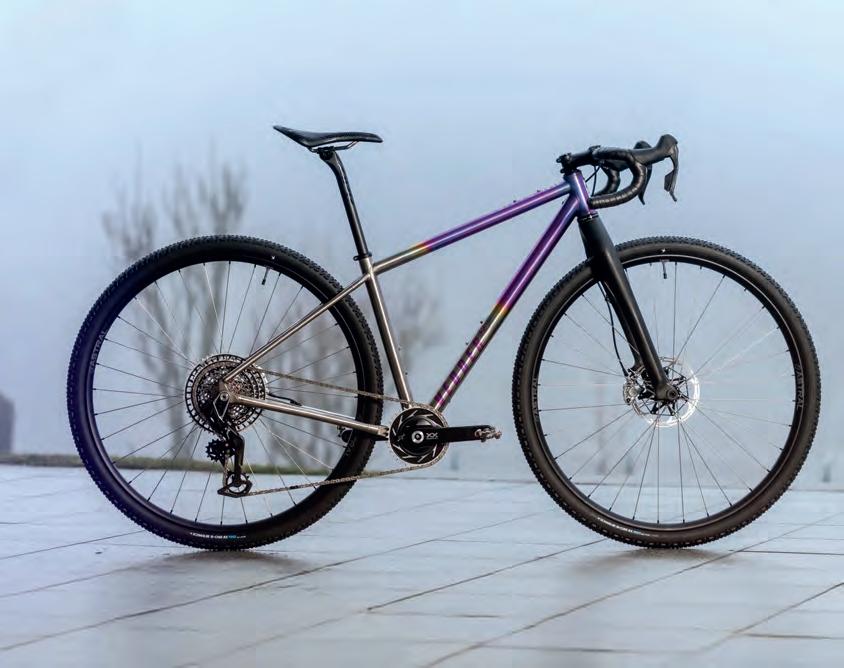
Q I’ve been reading about the new trend of 32-inch wheels for mountain and gravel bikes. While this may offer advantages if you’re 6ft 3in and above, is this just another cynical ploy to re-stimulate the market by introducing yet another standard for the mass market?
Ferrij, on the Cycling UK Forum
A great subject for an in-depth article – but, in essence, tyre (and wheel) size, whether on road or off, is a trade-off between various factors including weight, ease
of rolling and structural integrity. Larger diameter wheels roll more easily over obstacles and their weight carries more inertia through obstacles, which is basically why gravel and MTB wheels are getting progressively bigger.
On the other hand, they add to the overall weight of the machine and are, assuming comparable components and construction, weaker and less rigid than smaller wheels. It is, of course, harder to accommodate larger wheels on a small frame without running into issues with geometry. The advantages are clear for off-road riding. Whether they outweigh the drawbacks is a decision for the bike designer – or buyer.
Richard Hallett
QI have 700x28C Panaracer GravelKings on my Condor Fratello. They’re a close fit under the mudguards. I want to fit Schwalbe Green Marathons in this size. Will they fit? Are all 28mm tyres the same height?
Garry Booth, on the Cycling UK Forum
All 28mm tyres are not the same height – or width for that matter, even fitted to the same rim. A 1mm or so variation is possible. Tread thickness adds a further variable to its height. A heavily treaded ‘wide’ 28mm tyre will be significantly taller than a slim, lightweight tyre such as a slick GravelKing. Given that 25mm tyres offer acceptable road performance in most circumstances and are lighter than 28mm, sticking to the former would appear a good choice if you are set on fitting the Schwalbes.
Richard Hallett
QA friend of mine is keen to dimple their seatstays in order to fit a larger tyre. Is this a bad idea? BerlinMatt, on the Cycling UK Forum
Indenting or dimpling steel chainstays to increase clearance for a tyre or chainring is common practice. It’s unusual to dimple seatstays. If small indents – say, 3mm or so each sidewould be enough and they are done correctly, there should be no more of a problem than with dimpling chainstays. Much more in a 16mm seatstay would mean substantial tube wall deformation, with the risk of work hardening and consequent cracking. Richard Hallett
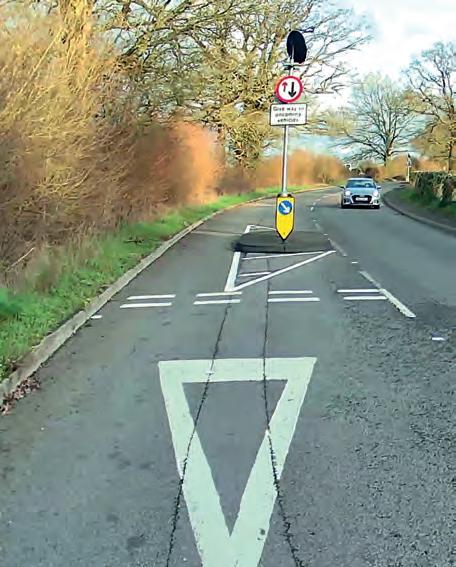
QMy local council has put in a series of traffic-calming measures with signage compelling vehicles to pass to the right. There is a space to the left, presumably for cyclists, but the sign says to go right. What is the situation for cyclists? Common sense says pass to the left; the law says pass to the right.
Ross Bannister
This signage presents an interesting dilemma. On the one hand there is a red circle sign: a prohibitory traffic sign indicating an order that must be obeyed.
Qcirculation? Also, I imagine the


There is also the blue circle sign, which gives a positive instruction. There are then give-way lines painted on the road, including across the narrow lane to the left, which is presumably for bikes. Yet there are no signs shown in the image which would suggest the lane is for bikes, either painted on the road or signed. Is there any further information on the approach to this infrastructure? I can only suggest you apply common sense here and use the narrow lane if you are on a bike. To do otherwise puts you in direct conflict with traffic when there is a reasonable alternative. If you followed the signs and there was a collision here with an oncoming vehicle, then the argument would be: “Why didn’t you give way?” If you were hit in the rear, then I would pursue the driver who hit you and would not be deterred by an argument that you should have used the narrow lane to the left. I would need to consider the circumstances carefully in determining prospects of success and would always refer to the hierarchy of road users principles from the Highway Code. It is poor infrastructure in my opinion.
Nadia Kerr
At nearly 60, I’m about to be prescribed support stockings for my varicose veins. Do I need to wear them when cycling? Surely the movement of pedalling must be good for blood circulation? Also, I imagine the pressure on my calves might restrict movement? Would it be OK to leave them off when I’m going on a longer bike ride?
Ann-Charlotte Holman
Varicose veins are an annoying and unsightly condition, causing aching and swollen legs and dry skin. Thankfully they can be controlled,
Meet the experts












and support stockings are the least invasive treatment. Exercise alone, such as cycling, will help squeeze out the extra fluid from swollen legs through muscle contraction and increased venous return but wearing stockings should further reduce symptoms and prevent progression. They may be hot to wear in summer but if fitted properly will not damage your muscles or restrict you. In fact, the popularity of compression hose (pictured) for high-level athletes is increasing. There is evidence that applying these garments after exercise reduces fatigue and delayed onset muscle stiffness (DOMS). They help eliminate lactic acid and other metabolites after exercise. Overall, using well-fitted garments will not impair your cycling and may make you more comfortable afterwards.


Dr Kate Brodie


Photo: compressport.com
Get in touch Email your technical, health or legal questions to editor@cyclinguk.org or write to Cycle Q&A, Cycling UK, Parklands, Railton Road, Guildford, GU2 9JX. Please include your membership number. Cycle cannot answer unpublished queries. Note: Cycling UK has an advice line for members’ personal injury claims, t: 0330 107 1789.

For: Michael Wynn, aged 90, from Topsham, Devon. Bike needs: I have two good tourers but am losing my balance so am considering a trike, probably electric. It would be used for shopping, plus some short rides into town and country. I’m thinking of a Scout from Buytricycle. Must have: Low gears, and I like simple machines with hub gears. Must not have: Multiple chainrings or high gears; 15mph is fine by me. Attract thieves. Budget: Less than £1,500.
While the price tag of Buytricycle’s Scout is attractive – and you are buying direct from a UK-based retailer rather than from a brand based abroad – I would still urge caution. The bike itself doesn’t fare too badly on Trustpilot, but there are some vociferous complainants when it comes to customer service, which rather negates the value of UK backup.
Still, the bang for your buck looks pretty impressive with the Scout. I’d recommend avoiding anything similar on eBay and the like. At your budget of £1,500, you may struggle to get out of the ‘pile ’em high and sell ’em cheap’ market and the associated lack of aftercare.
Jorvik is a step up from the likes of Buytricycle in terms of customer service. As you like hub gears, the Jorvik Rida could tick many of your boxes; it has a Shimano Nexus 3−speed hub. The Rida retails at £1,999 (or £1,665.83 if you qualify for VAT relief). One handy feature of many Jorvik trikes is a low-speed throttle for hill starts. If you are sticking strictly to budget, however, e-trikes do pop up on reputable secondhand sites like mynextbike.co.uk at considerable discounts.
I note you live in Devon so if you regularly head up very steep hills, consider a mid-drive model. Jorvik makes several. They tend to be pricier than hubmotor models. Beyond that, the likes of Cube and vanRaam trikes are of a much higher quality and price, but you would have to be very lucky to find a secondhand model near your budget.
Jorvik Rida



£1,999

Switch GO kit
£349
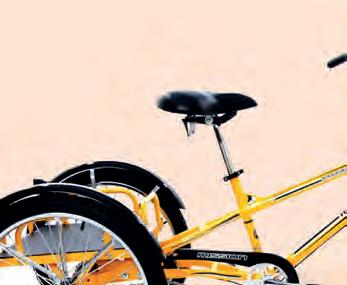

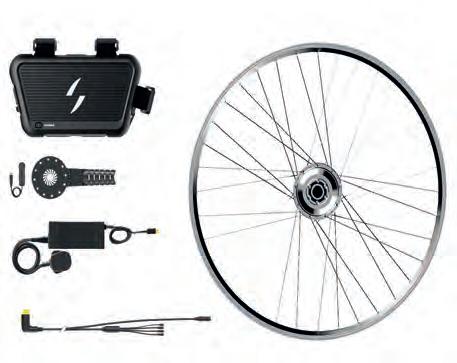

Mission Cycles Industrial
Cargo Trike £950
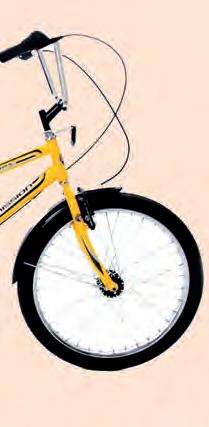
I agree with Richard that the best option would be to raise your budget by £500 and buy a Jorvik Rida. But if £1,500 is an absolute limit, you can still do better than the Buytricycle Scout, in my opinion. Doing so involves buying a budget trike and a reputable, retrofit e-bike kit separately.
For the trike, I’d suggest the Mission Cycles Industrial Cargo Trike (£950, missioncycles.co.uk). This has Shimano Nexus 7−speed hub gearing, along with 24in wheels, a cargo platform and a robust steel frame. The downsides are high overall weight and, if you’re not a fan, a rear coaster brake. Other options from Mission Cycles include the Trilogy Adult Trike (£770) and the Semi-recumbent tricycle (£1,310); the latter would be over budget once you factor in an e-bike kit.
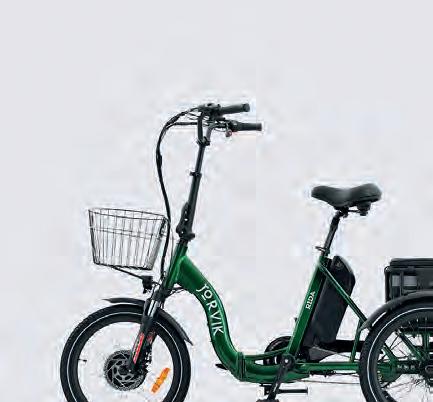

For the e-bike conversion, a Swytch front-hubmotor kit (swytchbike.com) is simple and inexpensive: the Swytch GO kit starts at £349, the Swytch MAX at £499. Neither is available built into a 24in front wheel, so you’ll need to factor in a wheel build – not a problem, budget-wise, if you get the Swytch GO. Alternatively, the Swytch MAX kit is available with a 20in wheel, which would fit the smaller of the Mission Trilogy models. If you’re considering the Mission Semi-recumbent, a 16in Swytch MAX front wheel would fit that.
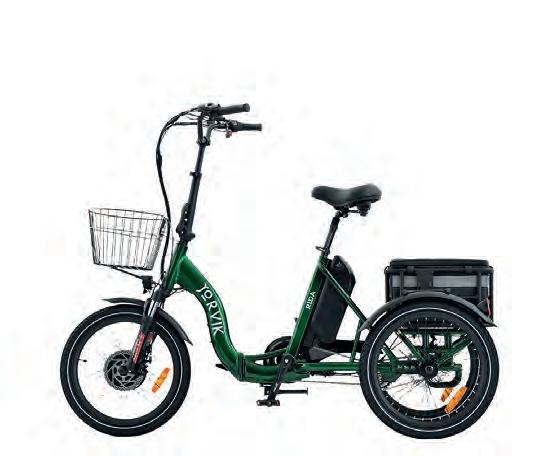
All the Swytch motors have a maximum torque rating of 40Nm. For the riding you describe, that should be sufficient. If you have steep hills to climb, you could instead get an 80Nm TongSheng TSDZ2B mid-motor (electric-bike-conversions.co.uk). Fitted to a Mission Trilogy trike that could still come in under budget, as the kit costs from £660 with a battery.
I note you live in Devon so if you regularly head up very They tend to be pricier than hubthe likes of Cube and vanRaam quality and price, but be very lucky to find so you’ll need to factor in a wheel build – not a problem, the Swytch MAX kit is available with a 20in wheel, which you’re considering the Mission Semi-recumbent, a 16in (electric-bike-conversions.co.uk). Fitted to a Mission kit costs from £660 with a battery.
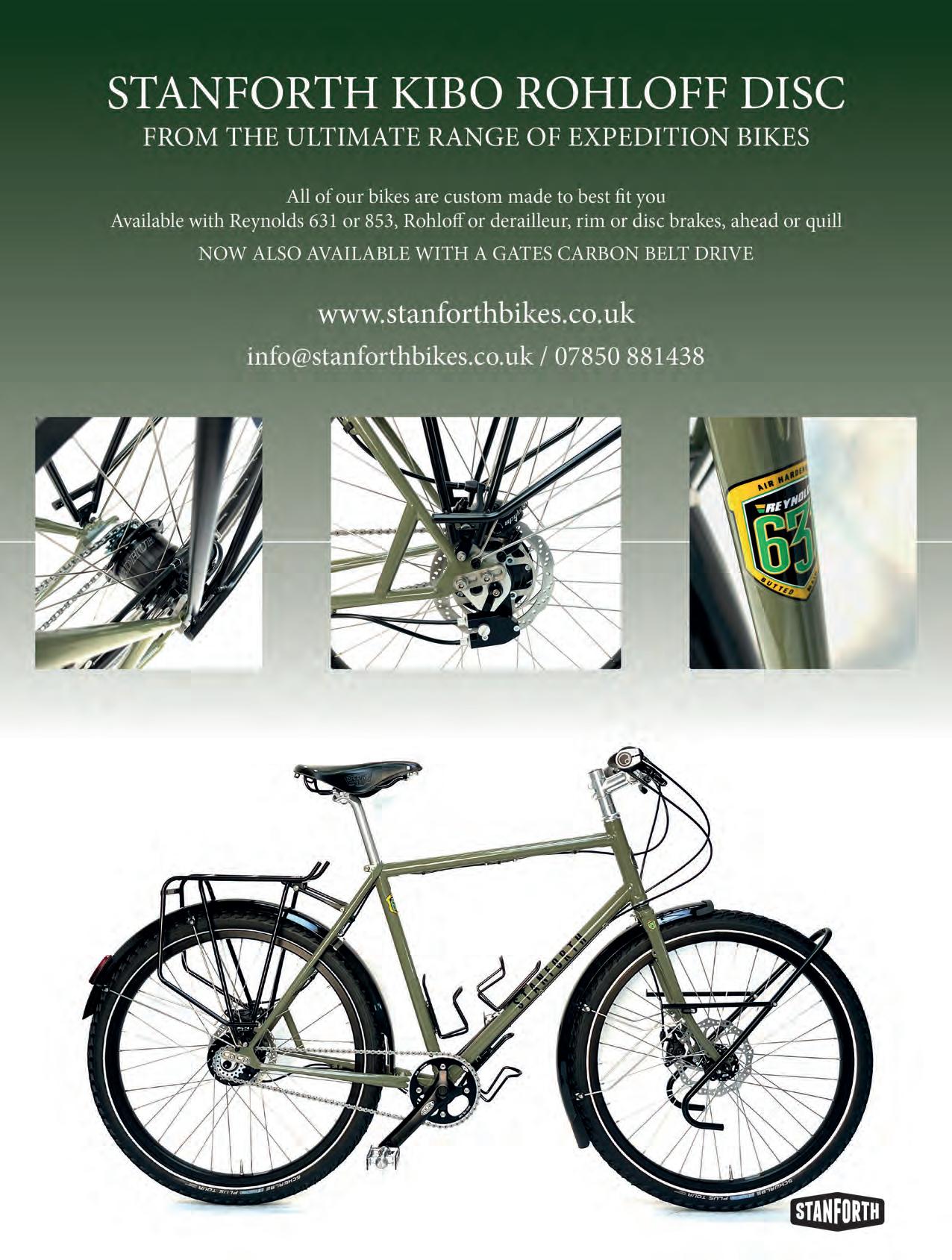
Cycle Sportive Supporting Aberdeen Samaritans
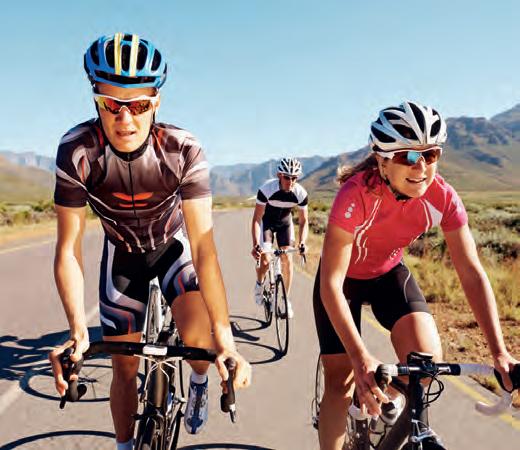


To advertise here contact Tilly Prytherch 0203 198 3092 tilly.prytherch@jamespembrokemedia.co.uk Holidays & Directory
To advertise contact Tilly Prytherch: tilly.prytherch@jamespembrokemedia.co.uk
Sunday 23 August 2026

Alford Community Campus, Greystone Road, Alford, Aberdeenshire, AB33 8TY
For more information and to sign up, visit: www.britishcycling.org.uk

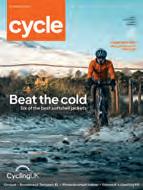
Ideal for cycling breaks, super cabins (4/5 berth) each with en-suite toilet/ shower, mini-kitchen and decking area and set in wonderful Suffolk meadows. Miles of quiet lanes to explore, all year round. From around £100 per night. Book on wigwamholidays.com/magliarosso or through booking.com or Air BnB ACCOMMODATION IN N MALLORCA FROM £50/NIGHT
To advertise here contact Tilly Prytherch 0203 198 3092
tilly.prytherch@jamespembrokemedia.co.uk
A beautiful house in ancient POLLENCA: roof terraces, aircon, 2 double ensuites. Close to Plaza and Calvary. Patio to store bikes. View at: pollensaproperties.wordpress.com rolandkhoward@hotmail.co.uk
FOR SALE ELECTRIC BROMPTON Black, six speed, approx. 4-5 years old, good condition, many extras. Hampshire. £1,750 or nearest offer 07581 712299
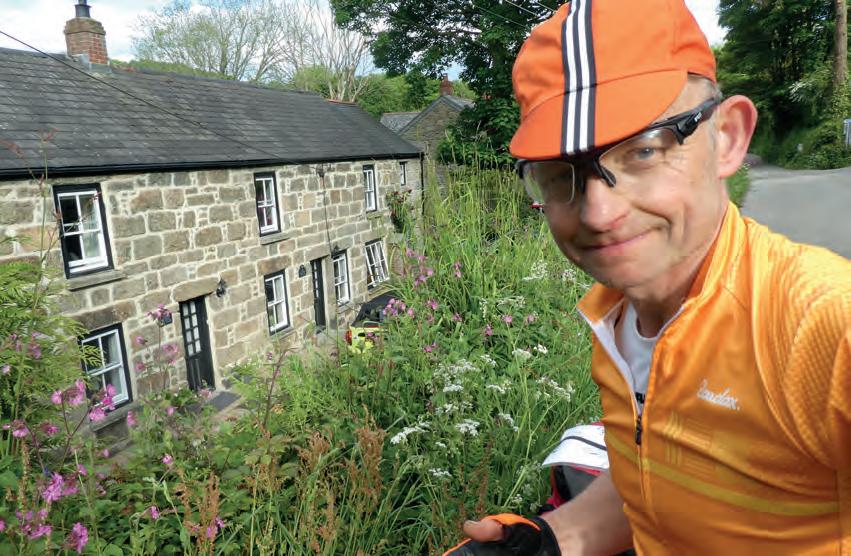
Where: British coast
Who: Guy Roebuck
When: May to August 2025
The start of my journey from home in Hove on what I’d named GRAB – Guy Rides
Around Britain – was a rare chilly day. I was riding for the charity National Axial Spodylioarthritis Society, mostly camping. I kept the sea on my left for easier-tonavigate left turns.
May felt more like August in the south-easterly tailwind I had. I discovered a beautiful place in Cornwall called Fowey after catching one of the many ferries. Later the whole of the wonderful Welsh coast was a joy, which I shared with my friend Pat, who joined me.
The Moray coast was another revelation to me.
Mental exhaustion had caught up with me by Hull. No fault of Hull: I love the place. So I had three days off at my best friend’s house in Nottinghamshire, taking a return train back to the coast. From there I had the remaining 12 nights of accommodation booked. What a weight off!
A friend of a friend put me up near Skegness. He even cleaned my bike! I met my cousins and family at Southwold, home to some very humorous pier attractions, and had my only swim in the sea of the three-month trip. The Isle of Grain was properly, restfully, off the tourist route.
Who: Andy McRae
Where: Italy, Slovenia & Croatia
When: September 2025
Two friends and I cycled in Istria in early September. We flew into Trieste in Italy, where Moovtrieste rented us gravel bikes. We rode from Trieste along EuroVelo 8 to Portoroz in Slovenia, and then Umag and Piraz in Croatia. Most of the route was on cycle lanes.
From Piraz we cycled along the Parenzana Trail back to Trieste, staying in Livade and Portoroz on the way back. The Parenzana Trail is off road along an old railway line. It’s easy to follow and has a decent surface, mainly gravel. Ascents and descents were gradual, but you need either a mountain bike or a gravel bike. It winds its way through rural Croatia and Slovenia, through forested hills, vineyards, olive groves and amazing hilltop villages. There were lots of cyclists on the route, mainly on e-MTBs.
After the mixed weather of Wales, I was impressed with the west coast and its surprisingly huge sea defences. The first biting midges arrived near Stranraer; I gave wild camping a break for a couple of weeks and stayed at the amazing Scottish Youth Hostels. After the sudden scenery change from the north coast of Scotland to the gentle east coast, I visited an old friend I’d not seen in 25 years.
In Hastings, my final night saw me in a hot tub. “Oh, my leg muscles are more sore than I thought!”, I realised. I was met by the Brighton and Hove Cycling UK group at Berling Gap. I had raised over £3,900 for NASS. The whole experience had been definitely the best journey of my lifetime: 5,091 miles, 84 cycling days, and about 270 pieces of cake scoffed. Burp. Want
The weather was sunny and warm (25ºC). There weren’t many tourists and traffic was light. We stayed in hotels but there were plenty of places to camp. We thoroughly enjoyed the trip and would recommend it. May or September would be a good time to go to avoid the summer heat. The sea is still warm in September.
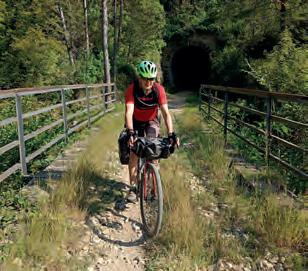
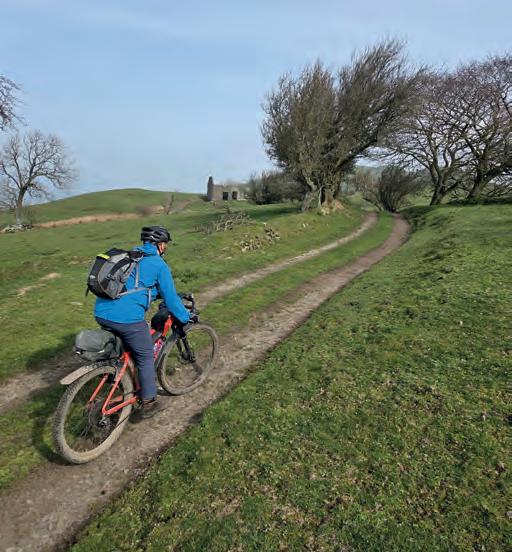
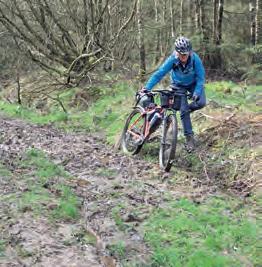
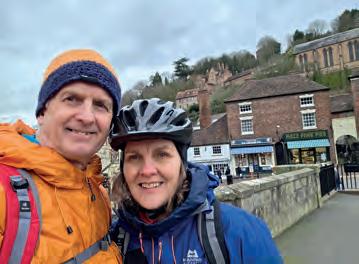
Who: Mike Raine & Sally Hancox
Where: Welsh borders
When: March 2026
Share your story
We’d love to hear your Travellers’ tales! Email: editor@ cyclinguk.org
Leaving Shrewsbury station, we took quiet streets to the riverside cycleway. This path along the Severn felt like a gift. We rolled along beside the swollen brown river, its presence loud.
Beyond town, spring gathered. Blackthorn blossomed, celandines carpeted the ground and robins declared territories. Sparrows squabbled, a buzzard mewed overhead, and the land opened gently towards Wroxeter, where the ghost of a Roman city lay quiet behind a fence.
Lanes carried us on, past hazel, hawthorn and widening fields. A feed lorry thundered past, enlarging potholes as it went. After Coalbrookdale, Ironbridge and lunch, the hills made us work – although only as far as an overnight stop in Much Wenlock.
Day two stretched us further. We rode beneath Wenlock Edge, up big climbs and into a headwind. By Ludlow we were ready for the welcoming bunkhouse.
By day three, the rhythm had settled: quiet lanes and bridleways and hot sun. Presteigne offered rest. Knighton slipped by. And in Knucklas, Ying’s Thai cooking restored body and spirit on the eve of our third night.
On Offa’s Dyke next morning, skylarks lifted upwards, bees drifted on the verge and then we heard curlew. That bubbling, ancient-sounding note carried across the hills and brought smiles to our faces.
We declined to descend to Clun and stayed up high as far as the Kerry Ridgeway. We saw cattle, sheep and a red kite floating above. Then we swooped down to Newtown, where we had a lovely stay and a Caribbean dinner.
Over the Stiperstones and Long Mynd, we were blessed with calm, dry weather, then had another drop down to Ludlow for our fifth night. Next morning we rolled back to Shrewsbury, where we boarded the train home with tired legs and the curlew’s call still in our ears.
Who: Victor Arotsky
Where: England
When: May 2025
When I told my daughter that I was going to come and visit her during her first year as a student in York, she probably assumed that I’d be taking the train from our home in London. Instead, I dug out my cyclecamping gear, refurbished my commuting bike to make it more suitable for touring and set off on two wheels.
This was my first cyclecamping trip for 27 years. For the first half of my four-day ride I stayed west of the A1, cycling along gently undulating country roads and through pretty, wellkept villages. The second half of the route was through flatter farmland, with little to break up the stiff northerly breeze.
I was lucky with the weather and arrived in York on a bright spring day. There I collected my daughter. We returned together, travelling first class on the train to London. This was my bribe to get her to stay in York a couple of days after lectures had finished for the term!
The journey was a great success and a reminder that, however long it’s been since your last trip, you never know when you’ll find an opportunity to get back in the saddle.