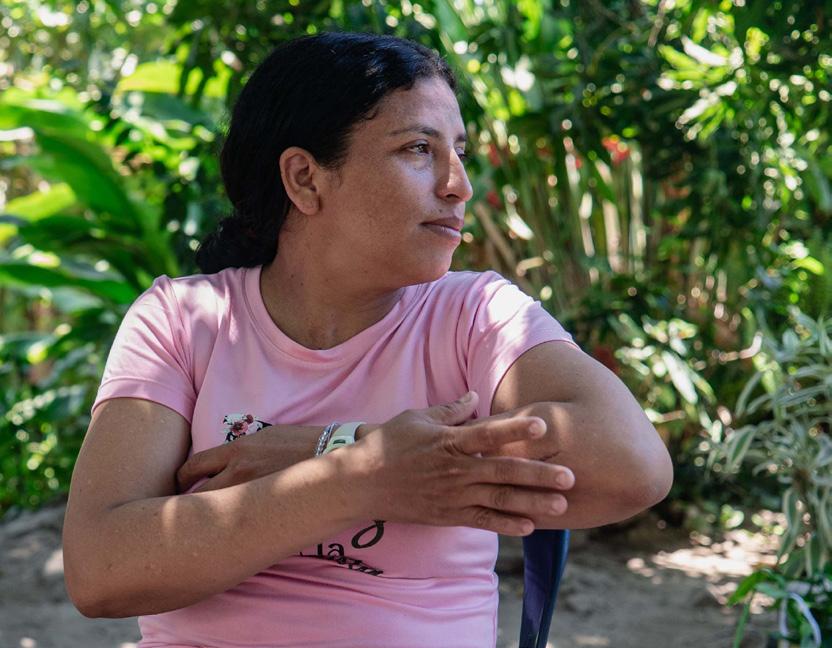
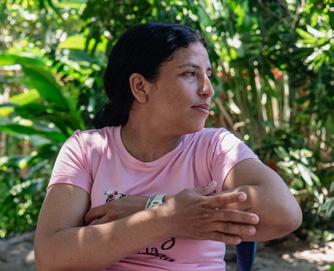
Pastor Karen, whose husband Ivan was murdered in January 2025.
Photo: Juan Pablo Daza

Scot Bower, CEO, shares why religious communities are increasingly at risk in Colombia — and how we can respond.
‘I can’t believe you came,’ Karen said as we arrived. ‘It’s so dangerous here!’
I was in Magdalena, northern Colombia, in the home of Pastor Karen Niebles. I’d met her a year earlier, not long after her husband Iván had been killed. Iván, also a pastor, was 28 when he was shot dead in January 2025, after refusing to let a local armed group store drugs and guns in their church.
‘He told me that he was not afraid to teach the Bible, that his life was new,’ Karen shared at the time. ‘He told me, “For me to live is Christ and to die is gain.”’
When we met again this year, Karen explained how several men had recently been killed in a shooting. Violence like this has become all too normal.
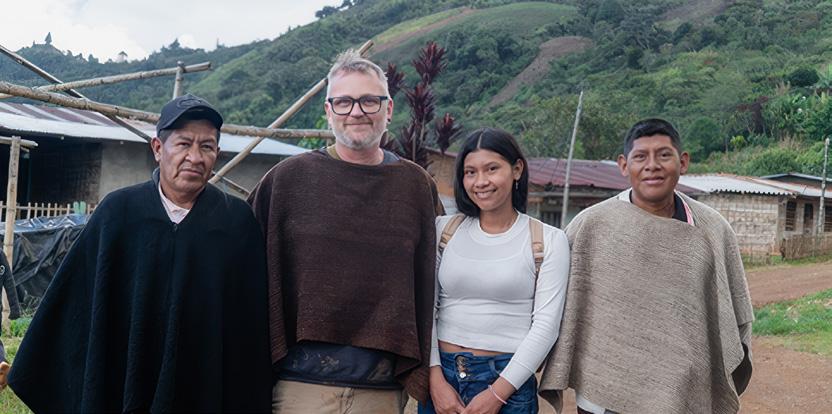
In March 2026, a small team from CSW were in Colombia for the launch of Perseguidos mas no Destruidos (Persecuted but not Destroyed) — a book of memories from the lived experiences of the Nasa Indigenous Evangelical Church, in the south-western department of Cauca.
The plan had been for church and community leaders to join us in Bogotá for a high-profile launch in parliament, to draw attention to the suffering of indigenous religious minorities. But that plan had to change. It was decided that there was a very real risk to life for some of the contributors if they were to speak publicly, especially with national elections looming. If it was too risky for these leaders to come to Bogotá, we would go to them instead.
He told me, “For me to live is Christ and to die is gain.”
After several hours driving through the hills of Cauca, we arrived at our destination: a small settlement with a breezeblock church building. Children ran up to welcome us, while men stood drinking sweet coffee and women tended a cooking pot that was simmering on a fire. With rain bouncing off the metal roof, we sat in the church set with rows of garden chairs, and listened to shared memories of persecution. Brave families stood one by one and told their stories from the past 20 years. Stories of threats and violence, of arrests and beatings and murder. For many, even the simple act of telling their
stories, especially to foreigners who had travelled to their community, was immensely significant. One said to us: ‘We are thankful because you kept and fulfilled your word. Now we have our own book. For many people it may not seem important, but for us it is a great step forward.’
The violence of ideologically driven guerilla groups, as well as the countless armed criminal gangs, is reaching levels not seen for two decades.
In Santa Marta, the capital of Magdalena, we met an indigenous Kogi Christian leader called Juan Carlos. He told us that, until last year, indigenous groups had been left alone by the armed criminal groups in the region. But now they were being forced to hand over half of any profits they made from their land.
And it wasn’t just the minority Christian Kogi community that were affected. Holy places associated with the majority religion (traditional indigenous beliefs) had also been desecrated and destroyed.
This recent rise in violence is not limited to remote indigenous areas, either. In the urban landscape of Santa Marta, pastors Rodian and Kelly stood beside the rubble of their church and home, which had been burnt to the ground by a local armed group. Its leader had ordered its destruction after hearing Rodian preaching from the Bible. Less than a mile away is the bustling tourist heart of this Caribbean city.
‘Without protecting the vulnerable, how can there ever be total peace?’
Before leaving Magdalena, we were keen to check in with our friend Pastor Karen.
She had asked if we would be willing to spend time with her family at their home, and it felt important to honour the invitation. One of the principles of CSW is to stand in solidarity with those who suffer injustice because of their religion or belief. And here, in the ‘Banana Zone’ of Magdalena — in territory controlled by armed criminal groups — that invitation to stand with her felt, once again, like a privilege. We sat and talked on her front porch, played with the kids and ate plantain. We admired a parrot that lives in the tree outside their bungalow. It felt extremely normal. But less than 50 metres from where we sat, hidden from view by the tree, is the place where Iván was shot and killed — where the police refused to attend because they were too afraid.
The men who killed Iván are still free; the level of impunity here is almost unbelievable. Because of their peaceful influence in communities, religious leaders are obvious targets for illegal armed and criminal groups seeking total control.
Yet the Colombian government stripped religious leaders of state protections in 2023 — leaving them exposed to the rising tide of violence.
Since December 2024, at least 11 religious leaders have been kidnapped or killed. Iván is one of them. In this beautiful, hospitable country, religious leaders need protecting. And we can all play a part in seeing that happen.
It’s because of people like Karen and Iván, Rodian and Kelly, Juan Carlos and many others that we’ve launched a new campaign: Total Peace. We’re calling the Colombian government to recognise the unique risks that religious leaders face, and urgently restore their protection. Because without protecting the vulnerable, can there ever be total peace?
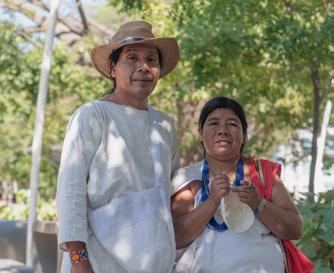
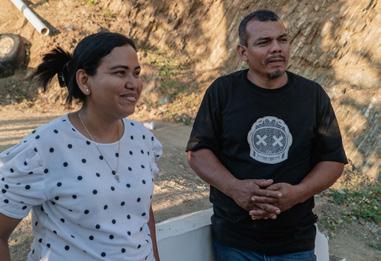
Could you write to encourage Pastor Rodian and Pastor Kelly, or Pastor Karen? Send a card to the addresses below, or find out more at cswusa.org/ConnectEncourage
Rodian Rodriguez & Kelly Medina
Carrera 24 calle 21 # 21–75
Barrio 7 de agosto. Santa Marta, Magdalena Colombia
Karen Niebles
Carrera 11B # 2-19 sur Barrio Policarpa Salavarrieta Bogotá, Colombia
Members of indigenous communities

Members of indigenous communities who have converted to other faiths or no faith – and therefore away from the beliefs and practices promoted by their community leaders –suffer injustice and severe discrimination within their communities. It’s best to address your cards generally and let our contacts distribute them:
RELIEC
Calle 45b # 24-24
Bogotá D.C Colombia
Sunday 12 July
For over 20 years, members of the Nasa Indigenous Evangelical Church in Cauca have endured threats, violence, arrests, beatings and even murder on account of their faith. Pray that God’s justice would prevail for this community today.
Monday 13 July
Ask God to provide for Pastors Rodian and Kelly, whose church and home in Santa Marta was burnt to the ground. The leader of an armed criminal group ordered its destruction after hearing Rodian quoting from the Bible during a service.
Tuesday 14 July
Pray today for Pastor Karen Niebles and her family as they continue to grieve the murder of her husband Iván García. He was shot dead last year for refusing to allow a local armed group to store drugs and guns in their church building.
Wednesday 15 July
‘Even though I walk through the darkest valley, I will fear no evil, for you are with me; your rod and your staff, they comfort me.’ Pray that religious leaders under threat in Colombia would know the truth of these famous words from Psalm 23 today.
Thursday 16 July
Later this year CSW will deliver a petition to the incoming government of Colombia calling on it to restore protections to religious leaders, recognising the unique risks they face. Please pray that our efforts are successful and that God is glorified through them.
Friday 17 July
Thousands of people have been forcibly disappeared over the course of Colombia’s decades-long internal conflict. In most cases, their families never receive answers. Ask God to raise up leaders – religious, social and political – who would help heal the deep wounds in the country.
Saturday 18 July
Lord Jesus, thank you for all who use their influence to work for peace, justice and reconciliation in Colombia. Please protect and uphold them today, and raise up many more to follow in their footsteps. Amen.
Find out more at cswusa.orgk/colombia
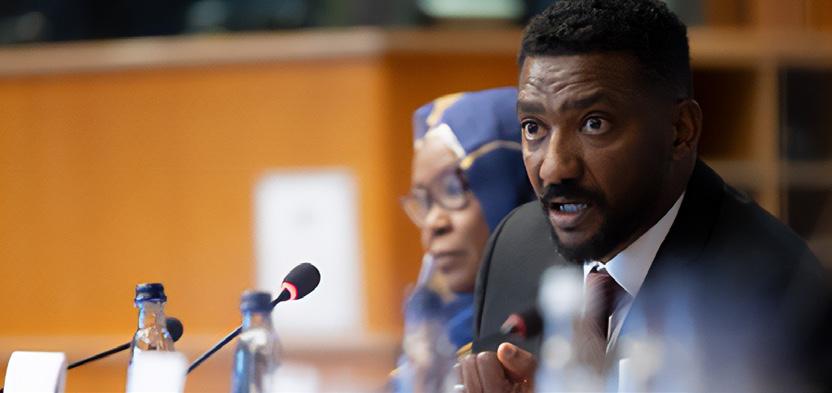
‘My own mother asked me, “Why are you defending Christians? You are not Christian.” But someone had to do it; I had to take the risk.’
Mohaned Elnour is CSW’s Sudan Specialist. He worked for many years as a human rights lawyer in Sudan — including on the highprofile case of Meriam Ibrahim, a Christian whose death sentence was overturned in 2014. Now based in the UK, he continues to speak out against the war in Sudan.
Tell us about where you grew up. How did that shape how you see Sudan?
I couldn’t be luckier. I was born in central Sudan, my father is from western Sudan and my mother from the north. So I feel like I represent many parts of Sudan, and this gives me the opportunity to see the nation with different eyes than those who grew up in a certain place and never left it.
I went to primary school in western Sudan, and later we moved to the capital, Khartoum, where there was better education and a better health system.
I was also lucky to be in the neighbourhood we lived in. Everyone was so close to each other, helping each other and standing with each other. It was very diverse.
Why did you decide to become a lawyer, and what drew you into human rights work?
I always wanted to be a lawyer from a very young age. I even wanted to be the General Secretary of the UN! Seeing the injustices towards some of my classmates and friends who were from South Sudan or from different backgrounds stayed with me.
As soon as I graduated from university, I joined a legal aid centre. We worked in many states, especially focusing on women and children. Through this work, my eyes were opened more and more to the injustices faced by specific communities, especially Christians. I felt that something should be done.
I remember being arrested when we tried to stop the demolition of a church. Even though we had a court decision, the police just did it anyway.
In the end, I had to leave the country. My own house was demolished, just like many churches. I went through a very difficult time. I left my home, my office, my family – everything.
What helped you to keep going when the risks were so high?
Why did you choose to defend Christians and other religious minorities?
In a strange way, I felt embarrassed to not be more aware of what so many people were going through. I felt compelled to do something. It wasn’t popular. My own mother asked me, ‘Why are you defending Christians? You are not Christian.’ But someone had to do it; I had to take the risk. Anyone who spoke out was treated as a spy for the West, and Christianity was always linked with the West — even though the very oldest kingdom in Sudan was actually a Christian kingdom. It was very dangerous. I was questioned often by the police. But justice cannot be selective. If you only defend some people and not others, then it is not justice.
What was it like to do this work under the Bashir regime?
It was very, very difficult. During Bashir’s time, if you even said the words ‘human rights’, it was enough reason to be arrested or detained. Some people I know were in prison for many years, in what we call the ‘ghost houses’.
The CSW team spans the world! We’re a diverse group of highly skilled, deeply passionate people – including lawyers, advocacy experts, in-country partners and volunteers. And alongside us are those who faithfully pray, campaign, and give so generously to ensure our advocacy efforts are possible. We’re all working together with one goal in mind: to see the world set free from religious persecution.
Sunday 19 July
‘We’re so thankful for all the wonderful churches that have invited us to speak in their services and partner with us in the work of justice. Please pray for the team heading to Wildfires Festival this week, that the conversations they have will inspire even more people to stand with us.’
(Church Engagement Manager, Bruna Willing)
I never worked alone. I always surrounded myself with many other lawyers and human rights defenders. That was like a shield. It protected me, and it allowed the work to continue.
We have to work together. Legal work alone is not enough, and advocacy alone is not enough. You need both. When organisations outside Sudan spoke out, it made a difference inside Sudan.
When someone speaks loudly here, it can make a difference there.
Where do you find hope today?
We have never lost it. Even as we see atrocities being committed in the current conflict, we are resilient. We believe the war will stop –today or tomorrow – because it cannot continue forever. The moment the war stops, Sudanese people will rise again.
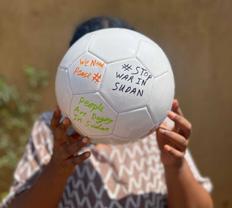
What do the war in Sudan and Manchester City Football Club have in common? Find out and start speaking out: cswusa.org/EyesOnSudan
Monday 20 July
‘I’m very pleased to lead CSW-Nigeria. Every member of the team shows commitment and resilience in this work, despite the difficulties of the environment in which we serve. Please ask God to continue protecting and sustaining us.’
(Rev Yunusa Nmadu, CEO CSW-Nigeria)
Tuesday 21 July
‘Please pray for CSW’s work in Latin America. Pray especially that our campaign Total Peace would be effective, and that the incoming government in Colombia would restore protections for religious leaders who face grave danger.’ (Deputy Team Leader for Latin America)
Wednesday 22 July
‘I’d appreciate your prayers for our work in international advocacy arenas and with the media too. In a world where there’s so much misinformation, it’s more important than ever that the truth is shared in places of power and influence.’
(Kiri Kankhwende, External Affairs Team Leader)
Thursday 23 July
‘Please pray for CSW’s work in the Middle East. It’s a very turbulent time for the region, so pray especially for the safety and protection of the vulnerable religious minority communities we work with and for.’ (Mena, Advocacy Officer for the Middle East and North Africa)
Friday 24 July
‘Please could you pray for CSW-USA? Our team is small but has a big vision and a lot of passion! Ask God to help us share CSW’s mission effectively with churches across the US.’
(Darren Adwalpalker, President of CSW-USA)
Saturday 25 July
‘We are blessed to have a very dedicated team based in Europe and within the region to defend freedom of religion or belief in Asia. Thank God for our staff and for all the incountry documenters who are pivotal to our advocacy.’
(Raj, Asia Team Leader)
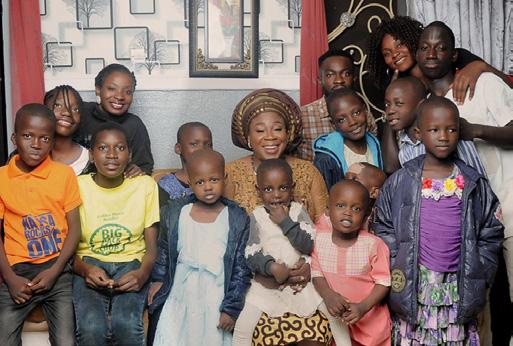
Wednesday 15 April. This should have been the day that the surviving Du Merci children finally came home to the Tarfa family in Nigeria. Yet once again, that long-awaited reunion was cruelly denied.
Professor Solomon and Mrs Mercy Tarfa are a Christian couple who co-founded the Du Merci Centres for vulnerable children in Kano and Kaduna.
Twenty-seven children were unjustly taken from their care in December 2019, and they have been tirelessly seeking their return ever since.
In 2025, a High Court instructed the Kano State government to release the remaining minors by 19 March 2025. Yet they continued to defy this order. Court hearings were delayed again and again, while the children remained in a deeply vulnerable situation.
In August 2025, eight more children were reunited with the Tarfas, but only after one of the girls suffered serious mental health issues. This left the eight youngest in the governmentrun orphanage where they had faced mistreatment, neglect and pressure to convert since 2019.
Tragedy followed in January 2026. Thirteen-year-old David Tarfa died after orphanage staff failed to provide the medical care he urgently needed. At the time of writing, his body has still not been released to his family.
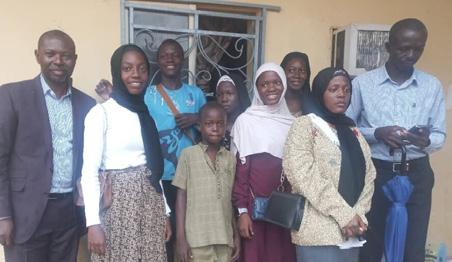
After further delays, a handover meeting was finally set for Wednesday 15 April. This should have been the moment the seven surviving children came home – bringing an end to more than six years of traumatic separation. But that is not what happened.
A document was signed, stating that the seven surviving children had been returned to the Tarfas. Yet before proceedings had ended, the Commissioner for Women’s Affairs and Social Development left the meeting, taking all the children with her.
The authorities appear to have used every means to prevent the children’s return – even promoting false narratives to scare them from wanting to return to their adoptive parents.
The children had been told that if they returned to the Du Merci Centre they would be killed – either for having converted to Islam, or in the event they reverted to Christianity.
All of the children experienced consistent pressure to convert during their six years at the government facility.
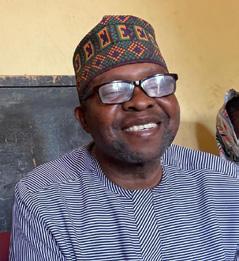
The youngest were most vulnerable to this pressure, and those who had succumbed to it were extremely emotional during the supposed handover meeting.
Responding together
Thank you for standing with the Tarfa family through every delay and disappointment. We know that many of you have been praying since the beginning.
Now we ask you to pray once again at this critical moment –trusting that God is able to do immeasurably more than all we ask or imagine.
Visit csw.org.uk/DuMerci-case for latest updates and a timeline of key moments, including how our prayer, campaigning and advocacy efforts are working together for change.
Sunday 26 July
Please pray that the remaining Du Merci children will be returned to the care of the Tarfa family without any further delay. Ask God to ensure true justice is served –including through reparations from the government and by removing from power those who have prolonged this family’s suffering.
Monday 27 July
Nigeria has witnessed a particularly significant surge in terrorist activity since the United States launched airstrikes on Sokoto State (northwest Nigeria) in December. Attacks on Christian communities in the Middle Belt continue unhindered, and insecurity is increasing across the country. Ask God to bring this to an end.
Tuesday 28 July
At time of writing, over 40 abductees from three schools – including nursery, primary and secondary schoolchildren and staff – are held captive by terrorists in the Old Oyo National Park forest (Oyo State, south-western Nigeria). One of the teachers, Michael Oyedokun, was murdered. Please pray urgently for the safe release of the remaining captives, as well as comfort for Michael’s family.
Wednesday 29 July
Psalm 18:2: ‘The Lord is my rock, my fortress and my deliverer; my God is my rock, in whom I take refuge, my shield and the horn of my salvation, my stronghold.’ Pray that this truth would be a constant reality for targeted communities across Nigeria.
Thursday 30 July
Presidential elections are scheduled for 2027. Pray for a fair and peaceful election process, that the current government would stop neglecting its constitutional duty to protect the lives and properties of citizens, and that it would cease harassing and undermining the opposition.
Friday 31 July
Nigeria is one of many countries to have suffered severe economic consequences from the US and Israel’s war with Iran. Please pray that the pressures of economic hardship would be lifted, particularly in communities that are already vulnerable.
Saturday 1 August
Lord God, as Nigeria reckons with unprecedented insecurity, mounting economic challenges, and impending elections, we affirm that you are still in control. Move in power, send your peace and bring lasting change to the nation and its future today. Amen.
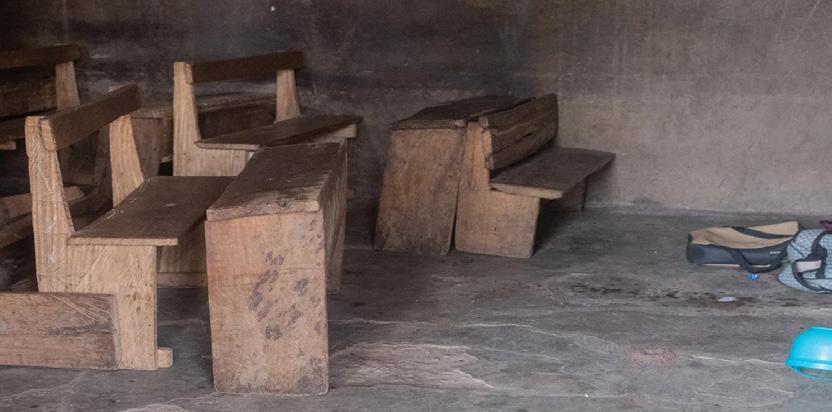
Nigeria does not have a kidnapping problem. It has a protection accountability problem.
Despite significant funding, school abductions continue in Nigeria. Matthew Folorunsho Braimoh, Director of Advocacy, Research and Training at CSW-Nigeria, reflects on why children remain unprotected — and what must change.
On 15 May 2026 armed men attacked three schools in Oriire Local Government Area, Oyo State. Forty-six pupils and teachers were taken.
A mathematics teacher, Michael Oyedokun, was killed. His students watched.
On the same day — the same day — 42 children were abducted from Mussa Primary and Junior Secondary School in Askira-Uba, Borno State.
At the time of writing, most of those children are still missing. Nigeria does not have a kidnapping problem; it has a protection accountability problem. The kidnapping is the outcome. The accountability failure is the system.
The record on paper Nigeria endorsed the Safe Schools Declaration in 2015. It launched a National Policy on Safety, Security and Violence-Free Schools in 2021. In December 2022 the government committed ₦144.8 billion to a Safe Schools financing plan running through 2026. A National Safe Schools Response Coordination Centre was established. Security personnel were trained across all 36 states.
On paper, this is an impressive policy architecture. In practice, it has not protected a single child from the pattern of mass
The Senate has now summoned ministers to account for over $30 million mobilised since 2014.
A rights failure, not just a security failure
There is something else that must be named directly. The federal government mobilised quickly for Oyo — high-level visits, national statements, visible political response. The 42 children in Borno — taken on the same day from the same kind of classroom by the same kind of armed men — were met largely with silence. The Coalition of Northern Groups said it plainly: the victims in Borno have been abandoned.
abduction that has defined the last decade.
The record on the ground
The money moved, but the children did not get safer.
During the same four-year window that ₦144.8 billion was being committed to safe schools programming, over 600 pupils and teachers were abducted.
Only 37% of schools across ten sampled states have functional early warning systems.
In November 2025, over 300 children and teachers were taken from a single school in Niger State — one of the largest mass abductions since Chibok (2014). Then Kebbi. Then Oyo and Borno, simultaneously.
‘The money moved, but the children did not get safer.’
has been tracked primarily through government and donor self-reporting. There has been no independent verification of what reached schools, what was repurposed, and what never moved beyond the ministry level. The Public Expenditure Tracking methodology, which has driven education reform in Uganda and across sub-Saharan Africa, has not been applied in Nigeria at scale or with genuine civil society oversight.
Statements from international bodies are consistent, credible, and largely ignored by the implementing architecture.
When a government’s protection response is geographically selective, that is not a security failure. That is a rights failure. Every child in a Nigerian classroom holds the same claim on the full weight of the state’s protection obligation. That is not an aspirational standard. It is the minimum floor set by the Convention on the Rights of the Child, which Nigeria has ratified. There is no legal basis for a hierarchical protection response. There is only political geography.
The harder question
Why do the same calls keep being made after every abduction — by UNICEF, Save the Children, the UN Resident Coordinator — with no structural change? The gap is not knowledge. It is consequence.
Every naira and dollar committed to safe schools programming in Nigeria
This is uncomfortable. It exposes failures at every level — federal, state, donor, implementing partner. That is precisely the point. Commitments without consequence architecture are not commitments. They are performance.
The Safe Schools Declaration needs a binding performancereview mechanism with civil society verification. Nigeria’s ₦144.8 billion Safe Schools financing plan needs an independent audit, not Senate inquiries convened after another mass abduction, but structured civil society-led expenditure tracking tied to the Declaration’s performance review cycle.
What is needed before the end of 2026 is a multi-stakeholder Independent Safe Schools Expenditure Review led by a credible Nigerian civil society coalition alongside an international partner, covering the full ₦144.8 billion plan and the prior $30 million, with school-level verification against the Minimum Standards for Safe Schools, disaggregated findings by state and activity, and results tied directly to the Safe Schools Declaration performance review cycle.
The expanding risk I have spent nearly a decade working within this system across Nigeria’s most fragile zones in documentation, legal casework, research, advocacy, and rights-based policy analysis. The pattern is not new. What is new is the geography. Oyo was supposed to be outside the risk corridor. It is not anymore. The protection deficit has expanded. The consequence architecture has not.
The 88 children in Oyo and Borno are not a crisis to be responded to. They are evidence of a system that was never built to protect them. That distinction matters for how we design what comes next. And it matters for how long the international community is willing to accept solidarity statements as a substitute for structural demands.
‘The 88 children in Oyo and Borno are not a crisis to be responded to. They are evidence of a system that was never built to protect them.’
Religious leaders in Venezuela are under constant surveillance. Many now practice a form of self-censorship out of concern that a government informant might be listening. They are careful about what they say – not only in public prayers or sermons, but in private or informal meetings, too.
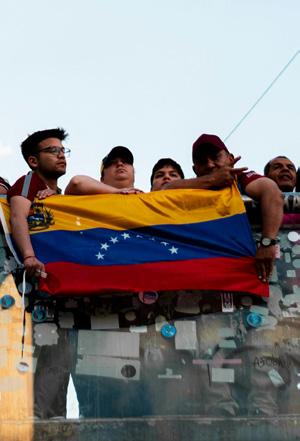
The government has tried to project an image of religious freedom by sponsoring religious ceremonies and establishing religious benefit programmes. Some religious groups have accepted this preferential treatment in exchange for their loyalty. Others, however, denounced the dictatorship, refused the incentives, and paid the price. They have faced discrimination and, in some cases, have been accused of inciting hatred or threatening public order. Yet all religious leaders – whether they accept these benefits or not – remain under surveillance.
Government informants in congregations are common. Religious leaders who are perceived to have said the ‘wrong’ thing are treated as traitors. In some cases, they have been attacked by illegal armed groups supported by the regime.
A pastor from El Callao told us about the time a stranger asked him about his family, mentioning the name of his children’s school and the schedule of activities his wife attended at church. The pastor questioned why he was being asked for this information, to which the man replied:
‘We know everything about you. We’re very concerned about the safety of religious leaders in the region, and we want you to stay alive. So, it’s good for you to be careful with what you preach and who you support.’
‘It’s very common to see people we’ve never met before, listening carefully, taking some notes, some on their phones, others in small notepad.’
A pastor from Tumeremo
Learn more
Our latest report on Venezuela takes a detailed look at the challenges facing religious communities: csw.org.uk/VenezuelaReport
Update: Chen Yu, China Christian bookseller Chen Yu may no longer be able to receive letters at the previous address. Thank you for keeping him in your prayers. For latest names and addresses, visit cswusa.org/Connect Encourage
Pastor Lorenzo and family
Pastor Lorenzo was so grateful for the cards you sent while he was in prison, which he said helped sustain him when hope was dwindling. Please continue to pray and encourage the pastor, his wife Maridilegnis, and their two children:
Lorenzo Rosales and family Calle Lora 203, entre Paraíso y Avenida libertad.
Palma Soriano CP 92610 Santiago de Cuba, CUBA ‘In every action taken for my cause, I saw the love of Christ reflected, who is not silent in the face of injustice.’
Pastor Lorenzo
Please don’t mention CSW or make any political comment in your cards to Cuban people – this could endanger them.
‘Please pray that we can truly be free – that we can believe in what we want and be free from persecution, more than anything else.’
Luis, a displaced pastor from Jalisco State
Sunday 2 August
According to the law, everyone in Mexico should be free to practise their faith. But in reality, there are threats, violence, discrimination and more. Families in some indigenous communities have been forced from their homes, and children have been denied education. People have even had their water and electricity cut off. Pray that the law would be upheld in every region.
Monday 3 August
We haven’t forgotten Pastor Aarón Méndez Ruiz and his colleague Alfredo, abducted seven years ago today. Pastor Aarón ran a migrant shelter on the US border, protecting and supporting vulnerable migrants and asylum seekers. Watch our short film to help you pray: csw.org.uk/TheDisappeared
Tuesday 4 August
Pray for a thorough investigation into the disappearance of Benito Guevara Arcos. The 79-year-old missionary had travelled to preach and give out Bibles in San Vicente, Guerrero State, when he was forced into a car by armed men from an organised criminal group.
Wednesday 5 August
Both Protestant and Roman Catholic leaders are under pressure from organised criminal groups which extort churches –attempting to coerce them into paying protection money or allowing their churches to be used for money laundering. Pray for wisdom and divine protection, especially for those who resist.
Thursday 6 August
Juan Nicolás, a pastor’s assistant from Hidalgo, was among a large group of Protestant Christians who were displaced from their villages in 2024. He asks you to pray for his family and community as they rebuild their lives in a new state, and for spiritual strength to move forward.
Friday 7 August
Angelina, Maria Francisca and Valentina are three women who shared their stories for our 2022 report: ‘Let her be heard’. Ask God to uplift them today, and change the story for women who face injustice because of their gender, as well as their beliefs.
Saturday 8 August
Your words can bring hope to people facing injustice for their beliefs – including those you’ve been praying for this week. If you’re able to send a card, please address it generally so our partners can distribute them to those in need.
Our general address for receiving in Mexico has changed:
CSW recorded 309 separate freedom of religion or belief cases in 2025 – up from 220 in 2024. Most cases involved multiple violations, and many affected large numbers of people.
In 200 cases (65%) the victims were Roman Catholic, and in 108 cases were Protestant. One case involved a journalist who was not religious, but was targeted for covering religious issues.
On 19 May, the government granted legal status to 191 churches and buildings belonging to different Christian denominations. 3,804 have now been legalised since 2016, when the government created a committee to oversee legalisation of churches.
This is a welcome step forward, although there is still discrimination. The law that allows Christian buildings to be legalised does not cover other religious groups, such as Ahmadis, the Baha’i, and Shia communities. Sunni Muslims, on the other hand, do not face the same requirements with their houses of worship.
In March, Maharashtra became the 13th state to adopt a stringent anti-conversion bill – legislation that many fear will increase pressure on religious minorities and interfaith couples. Similar laws in other states have led to unjust arrests, intimidation, and heightened scrutiny of Christians and Muslims.
If the bill is enacted, anyone intending to convert will have to notify the authorities 60 days in advance, and then again within 21 days after conversion
Punishment includes up to 7 years in prison, or up to 10 years for repeat offenders.
Simple acts of charity and service – running schools, or offering food or medical care – could be criminalised if seen as encouraging conversion.
Sunday 9 August
Father Vincent Pereira is a Roman Catholic priest from Uttar Pradesh. After preaching in church that Christianity was the only true religion, he was accused of hurting the religious sentiment of the Hindu community. He was criminally charged in 2024. Thankfully the Supreme Court halted all proceedings in April 2026 – but Father Pereira and many others still need our prayers. Learn more at cswusa.org/india
Monday 10 August
A rising tide of intolerance continues to claim lives in India’s tribal communities. Pray that the government would act urgently and wisely to address this – especially in Odisha State, which has seen a surge of violence and hostility towards Christians.
Take a moment to remember three Christians from a village in Keonjhar District, Odisha State. Jitendra Soren, his wife Malati and their 15-year-old daughter were brutally murdered in January by members of their extended family.
Wednesday 12 August
Jitendra and Malati Soren are survived by an elder married daughter, a younger daughter who managed to escape the attack, and a son who was away studying at the time. Ask God to be their comforter, their strength and their shield.
In April, Dr Nguyen Dinh Thang was sentenced in absentia to 11 years in prison on false terrorism charges. Cases like this reflect a growing effort to silence and intimidate those who expose Vietnam’s human rights abuses – including those now living abroad. Dr Thang is based in the United States and is president of the human rights organisation Boat People SOS.
The Soren family’s conversion to Christianity was not welcomed by their relatives, who accused them of black magic and believed their new faith was causing illness in the family. For weeks before the murder, they warned them not to go to church or face death. Yet the anti-Christian motive was left out of the police report. Pray that the case would not be dismissed as a land dispute, but that truth and justice will prevail.
Friday 14 August
It’s not only Christians who are extremely vulnerable in India. There has also been heightened hostility towards Muslims since the Bharatiya Janata Party came into power in 2014, promoting a Hindu nationalist agenda. Pray for practical measures to protect all religious minority communities, and heal societal divisions.
Saturday 15 August
Lord, we cry out against the injustice in India – that changing your faith could cost your freedom, or even your life. Please protect all who are in danger because of their beliefs. Uproot the culture of impunity so that no perpetrator escapes punishment, and others are discouraged from similar crimes. Amen.
We believe we can all play a part in campaigning for freedom of religion or belief
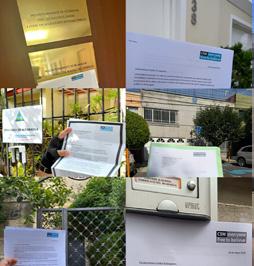
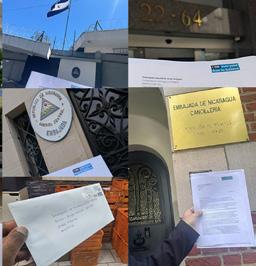
Pastor Efrén is serving 23 years for a crime he didn’t commit –despite CCTV evidence proving his alibi. The Nicaraguan authorities simply want to silence him. But over 1,000 of you signed our petition and showed them that the world is watching. We delivered it to Nicaraguan embassies and consulates in 11 countries around the world,
from Brussels to Bogotá to Washington DC. Our message was clear: Pastor Efrén must be released without condition –and we will not be silent until he is free.
Sustained international attention is one of the few ways to help protect those who are unjustly imprisoned, and that’s why your action matters so much. Our
Pray for Pastor Efrén’s health and freedom. Prison officials have refused to pass on packages with food and essential medicines to the pastor, who is diabetic. He is rarely allowed outside, and his Bible has been confiscated.
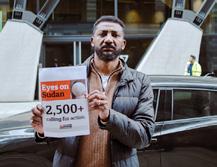
The first time we tried to deliver our Eyes on Sudan petition to the Premier League, it was signed by over 2,500 people.
It highlights the welldocumented ties between Manchester City owner, Sheikh Mansour, and the devastating
war in Sudan – a conflict that has killed over 150,000 people, displaced 13 million, and left 30 million in urgent need of humanitarian assistance.
You joined us in calling on the Premier League to raise these concerns with the sheikh as a
matter of urgency. But they refused to listen; they didn’t send anyone to receive the petition.
‘We are disappointed that they chose not to engage with us,’ said Scot Bower, our CEO. ‘We are reminded of being outside the Cuban Embassy and having a petition torn up and pushed back at us, or at the Eritrean Embassy where they refuse to open the door.’
A few weeks later, we returned with even more signatures. Still, the doors remained closed.
Nevertheless, we will keep on raising our voices for peace in Sudan. It cannot go on being the forgotten war.
‘One thing we’ve learnt from all our years of protesting is that we don’t give up,’ said Scot. ‘We’ll be back again with more names on the petition, we’ll chant even louder, and we’ll keep going until the doors are opened.’
Pray that our collective efforts would help shine a light on the crisis in Sudan, and that those with influence will take meaningful steps towards peace, justice and accountability.
Sign and share
cswusa.org/EyesOnSudan
Sunday 16 August
In April, the government of Punjab passed a bill raising the legal age of marriage to 18 for both boys and girls. Praise God for this positive step! We are hopeful it will help reduce the abduction, forced conversion and forced marriage of Christian and Hindu girls.
Monday 17 August
Underage marriage is now criminalised in three of Pakistan’s four provinces, as well as in Islamabad. Pray that these laws are fully enforced and that Khyber Pakhtunkhwa follows suit – protecting Christian and Hindu girls across the country.
Tuesday 18 August
The future of a young Christian girl has taken a heartbreaking turn after a court ruled she could stay married to the man who abducted her last summer. Maria Shahbaz was taken from home, converted to Islam and married against her will. Her father presented documents in March to prove she was no more than 13 – yet judges dismissed it, saying she appeared older. Cry out against this unjust ruling, and for Maria’s safe return.
Wednesday 19 August
Maria’s family have fought for months to bring her back from the man who abducted her when she was barely a teenager. When the court validated her marriage and conversion, it felt like losing their daughter all over again. Ask God to comfort and strengthen them to continue the fight.
Thursday 20 August
Pakistan’s blasphemy laws are still one of the biggest threats to religious minority communities – dangerously vague and used to settle personal scores. Even an unproven allegation can lead to mob violence or imprisonment. Pray in faith for laws to be repealed and charges dropped.
Friday 21 August
Junaid Hafeez was arrested for blasphemy in 2013, for comments allegedly posted on Facebook. In 2014, his defence lawyer was assassinated in his chambers. Pray urgently for Junaid’s death sentence to be overturned, and an end to more than 12 years of solitary confinement.
Today is an international day to commemorate those who have faced violence because of their religion or belief. Spend a moment in prayer for victims and survivors in Pakistan and elsewhere, asking for healing, support, and prevention of further violence.
Find out more at cswusa.org/Pakistan
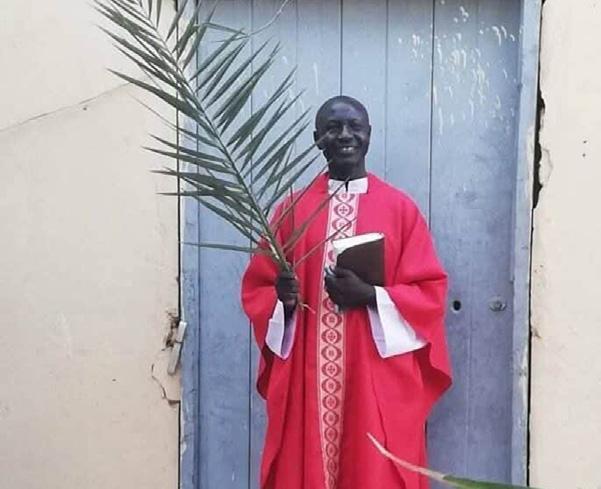
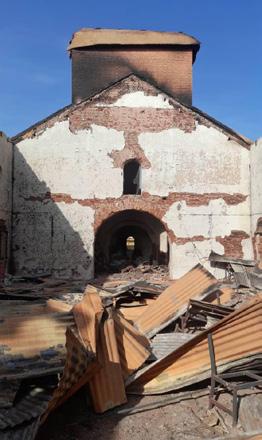
Father Luka Jomo was a Roman Catholic priest who served in El Fasher, the capital of North Darfur. As the war intensified, he remained in his parish serving all those in need. He cared deeply for the most vulnerable, the elderly and children.
In June 2025, Father Luka was critically wounded in an attack by the Rapid Support Forces (RSF). This was not a targeted assassination, but the result of the RSF’s intense bombing of civilian sites, including places of worship.
Father Luka stood with the city of El Fasher during its long siege and was much loved by the community there. We remember him, and countless others who have lost their lives during Sudan’s conflict.
The RSF has repeatedly attacked places of worship, targeted churches and pressured Christian communities to convert to Islam. They have also attacked mosques; in El Fasher over 80 people died when the RSF attacked a dawn prayer service in September 2025.
The Sudan Armed Forces (SAF) have also indiscriminately targeted places of worship during the conflict with aerial bombardment.
The siege of El Fasher lasted 2 years, 6 months and 13 days. The RSF captured the city on 26 October 2025 and targeted the civilian population in a manner that UN experts concluded had ‘the hallmarks of genocide’.
Sunday 23 August
Syria is in transition following the fall of the Assad regime in 2024. The country remains unstable and there is anxiety among religious minorities. Pray for them today, and for the new regime to reform laws and regulations in line with international human rights standards. Pray for vision and determination to combat hate speech, extremism and terrorism.
Monday 24 August
Earlier this year, rising sectarian tensions led church leaders to cancel public Easter celebrations across Syria – restricting activities to inside churches only. Pray for practical measures to end tensions and prevent further incidents of sectarian violence.
Tuesday 25 August
Church leaders can play a vital role in building bridges and facilitating dialogue between different communities. Ask God to bless them with an abundance of wisdom, compassion and opportunity to continue this work.
Wednesday 26 August
Sheikh Farhan Al-Mansour was a prominent Shia imam who had taken part in several interfaith dialogue initiatives since the fall of the Assad regime. After prayers on Friday 1 May, he was assassinated outside a mosque in Damascus by an unknown assailant, who threw a hand grenade into his car. We think of his community today, and pray that those who committed this heinous crime face justice.
Thursday 27 August
Pray that perpetrators who have committed atrocities and crimes against humanity in Syria are brought to justice. Call on the Lord to bring healing for victims of torture and abuse.
Friday 28 August
CSW’s advocacy on Syria is made possible through the efforts of our research and advocacy officer, who must remain anonymous. Join us in giving thanks for their work, including the psychosocial support and training they’re providing to those who have experienced trauma. Ask God to continually strengthen them with health, perseverance and hope.
Saturday 29 August
Lord God, you love the people of Syria. We pray for justice, peace and reconciliation. Please remove from positions of influence those set on violence and division, bring an end to sectarian attacks, and raise up peacemakers to lead with truth and integrity. Amen.
Find out more at cswusa.org/syria
Andrew Saul has been volunteering with our Fundraising and Supporter Care team for over two years. His role includes speaking in churches and organising events. He explained why he got involved and how he helps others to connect with CSW.
Why did you choose to volunteer with CSW?
Having been a supporter for many years, as I approached retirement from working as a lawyer, it was on my heart to see what more I could do to help. I strongly believe that as Christians we are all called to stand up for heroes of faith who are victimised because of their religion or belief. CSW does a fantastic job with less than other much bigger charities, so I hoped that I could make a difference by providing volunteer support.
What do you enjoy most when you share about CSW’s work in churches?
The invariable high level of engagement from the congregations. When I speak with people who are unfamiliar with CSW’s work, almost everyone is taken aback
when I explain that 80% of the world’s population live in countries with high or very high governmental restrictions on freedom of religion or belief. Many are deeply affected by the examples of violations I give. The most enjoyable part is when people tell me that they will support CSW after learning how they address these issues.
How have you helped your church to get more involved with CSW?
My home church is St Mary’s East Molesey, where CSW has been a mission partner for many years.
I give regular updates on CSW’s work and ask people to sign petitions.
At one of our ‘Messy Vintage’ gatherings, everyone chose an imprisoned leader from Connect & Encourage and wrote them a card.
Invite a speaker
Book a guest speaker for your workplace or event: cswusa.org/inviteaspeaker
Is there anything else that you would like others to know?
I never cease to be amazed at the skill and dedication of everyone I meet at CSW. At the core of our work, we are blessed to have such a talented advocacy team. Given the great work CSW does with limited resources, I would encourage everyone to support the charity as best they can to help it grow its work.
Sunday 30 August
Today is the International Day of the Victims of Enforced Disappearance. Take a moment to remember those whose whereabouts are unknown, like Kim Cheol-ok. She was sent back to North Korea from China in 2023, having escaped in the late ’90s. Pray for her sister, Kyu Li, and others who are missing loved ones.
Monday 31 August
Those who manage to escape North Korea must pass through China, where they are at risk of being detained and forcibly repatriated. The Chinese administration knows this is illegal, and that they are returning them to certain danger. Pray that China would change its policy and stop returning North Korean refugees.
Tuesday 1 September
You also help to raise awareness of CSW’s work in law firms. What are these events like and why should others think about hosting one at their workplace?
We want lawyers in this country to be aware that other lawyers do not share the same freedom to represent their clients.
So we share specific instances where lawyers have been victimised simply for doing a good job for their clients. Violations of freedom of religion or belief get very little media attention in this country.
A workplace talk is a great opportunity to raise awareness and get others involved with CSW.
There will be issues relating to freedom of religion or belief that are relevant to every organisation, and these can be used to tailor a talk. And because we advocate for all religions and beliefs, our talks should appeal to everyone.
‘We are
born in
North Korea; we don’t have freedom. That is not right.’
North Korean Defector
‘In
places too dark for the world to see, North Koreans have begun to sprout seeds of freedom in their own quiet ways… As long as they have not given up on themselves, we must not give up on them.’
Ju Il-Lyong, defector
and activist
The US government has long been a champion of the North Korean people, particularly through the 2004 North Korean Human Rights Act. This bill supports refugees and human rights activities, but has not been funded by the current administration and lies dormant. Pray that funding will be restored to help protect the vulnerable.
Wednesday 2 September
North Koreans face great difficulty in acclimatising to life outside of their country. They can often face social, economic and educational barriers when adjusting to life in places like South Korea. Ask God to provide communities of support and a hopeful future.
Thursday 3 September
North Korea is the most closed, isolated and repressive state in the world. And since 2020, it has been even more challenging for information to flow into the country. Pray that news of the outside world will reach North Korean citizens in creative and covert ways – stirring hope and inspiring change.
Friday 4 September
Three South Korean missionaries – Kim Jeong-wook, Kim Guk-gi and Choi Chun-gil – have been imprisoned in brutal conditions in North Korea since 2013. Pray they would feel God’s comfort and presence today, and that they would be released and re-united with their families very soon.
Saturday 5 September
In 2 Corinthians 1, Paul writes that they experienced so much pressure that they ‘despaired of life itself.’ Yet he sets his hope on God, affirming: ‘He has delivered us from such a deadly peril, and he will deliver us again.’
Pray boldly for deliverance from persecution, and hope instead of despair. Remember the brave Christians who take extreme risks to practise their faith – knowing that gathering for worship, owning a Bible or praying could result in years of jail time and hard labour. Find out more at cswusa.org/northkorea
24-7 Prayer is an international, interdenominational movement of prayer, mission and justice; a non-stop prayer meeting that has continued for every minute of this century so far, in over half the countries on earth.
From 6-13 September 2026, they are inviting the global Church to pray non-stop in every nation on earth, in an event called the Global Week of Prayer. Brian Heasley (International Director of Prayer) shares the heart behind this bold vision, and how you can join the biggest prayer meeting in the world.
The heart of CSW for prayer and justice aligns so beautifully with what we’re hoping to see unfold in the Global Week of Prayer. We are so encouraged to have them partnering with us this year, and we’d love for you to get involved too!
Our theme will be ‘In the Name of Jesus,’ drawn from Philippians 2:10. Within the context of these verses, whoever utters the name of Jesus confesses not simply his name but his Lordship—the authority, reality and majesty that it encompasses.
Therefore God exalted him to the highest place and gave him the name that is above every name...’
Philippians 2:9
This is echoed throughout the biblical narrative, first appearing in Exodus 3 when God tells Moses his name is ‘I AM,’ the name of the God who sends him. This was the God who came to set his people free and give them a voice.
A collective ‘amen’
We love all that CSW does to champion freedom of religion or belief. Our hope is that many will join with us, crying out against injustice with faith, believing God can break down powerful regimes and give people the freedom we are all meant to have.
This is an invitation to pray boldly in the name of Jesus as his royal priesthood. We are sent to proclaim his Lordship within our communities, cities, and nations—not only announcing our collective ‘amen’, but embodying it through action.
Jesus taught us to love our neighbour as ourselves, regardless of whether or not we believe the same things as them. When we see the repression suffered by Christians around the world, we are moved to speak out. And we are also moved to speak out for all those suffering because of their religion or belief. The Rohingya in Myanmar, the Uyghurs in China, atheists in Egypt, Muslims in India – each of these groups suffer injustice because of their religious beliefs, as do many others.
1. Pray for peace.
Case in focus: Pastor Jose Otoniel Ortega was the eleventh church leader to have been assassinated in Colombia in just over a year. He was shot dead on New Year’s Eve while celebrating with his family. Illegal armed and criminal groups often see churches and their leaders as a threat to their control.
3. Freedom for prisoners.
4. Pray for displaced people.
We’re called to imitate our royal priest Jesus through service, humility and self-giving love. We do this best when we speak up, when we pray with the rest of the world asking that Jesus be made great. In doing this, we believe injustice is addressed and people are set free.
Sign up at: 24-7prayer. com/weekofprayer
Join us in prayer
We’ve partnered with 24-7 Prayer to create the following guide. Download the full version for more Bible verses and real-life stories to help you pray: cswusa.org/ GlobalWeekOfPrayer
Religiously motivated violence can take many forms. In some countries, such as Nigeria, it is primarily perpetrated by terrorist groups driven by religious extremism, or using religion as a rallying point. In other countries, like Egypt and India, mobs are often emboldened by a lack of consequences – or even by inflammatory remarks from government officials.
• Pray for peace where there is conflict and sectarian violence.
• Ask God to strengthen the work of peacemakers, and to inspire the church to model radical forgiveness, love for enemies and peaceful co-existence.
2. Protection for religious leaders.
Call on God the protector to watch over religious leaders whose work and influence often places them at risk. Ask him to grant wisdom to speak truth to power, while keeping them and their families safe from those who seek to harm them.
Countless people around the world have been detained in connection with their religion or belief. Many of them are denied access to lawyers, visits from family members, or even access to religious texts.
• Appeal to the God of justice – who came to this earth to proclaim freedom for prisoners – to move powerfully even in the most complicated cases.
• Pray boldly for the release of those who have been detained for peacefully exercising their fundamental human rights. Ask God to comfort their loved ones in the meantime, trusting that no injustice goes unnoticed.
Case in focus: Over one million Uyghurs and members of other predominantly Muslim ethnic groups have been detained without charge in so-called ‘political re-education camps’ in China’s Xinjiang Uyghur Autonomous Region since 2017. Many detainees have been subjected to torture or other forms of severe mistreatment.
An estimated 1 in 5 cotton garments in the global market may be linked to Uyghur forced labour. (Source: enduyghurforcedlabour.org)
It’s impossible to estimate how many people have been displaced on account of their religion or belief. It is a global problem – from religious minority families forced from their villages in India and Mexico, to hundreds of thousands displaced by religiously motivated violence and discrimination in Afghanistan, Iraq and Nigeria.
• Ask God to provide for those who have been displaced because of their religion or belief, war, natural disasters or economic hardship.
• Pray they would be able to return to their homes, towns and countries without fear of violence, discrimination or harassment.
Case in focus: Over one million members of Myanmar’s predominantly Muslim Rohingya community are currently residing in refugee camps in Bangladesh. Most were forced to flee in August 2017, after the military launched so-called ‘clearance operations’ in Rakhine State. A United Nations Fact-Finding Mission has since concluded that the campaign of atrocities should be investigated as a genocide.
5. Pray for those in positions of power.
Read Ephesians 6:12 and affirm God’s authority over every power and principality. Give thanks that no government or political party or system will ever outlast him. Pray that he would change hearts or even entire regimes so that the right to freedom of religion or belief is afforded to everyone, everywhere.
The Central African Republic continues to experience a fragile peace, with periodic eruptions of violence. There is particular insecurity in Zemio, where thousands were displaced by attacks during the 2025 elections.
Civilians continue to face serious abuses by armed groups, the national army and Russian fighters now known as the Africa Corps – often with impunity. Yet throughout recent conflicts, religious leaders have worked together to rebuild trust, support displaced communities, and promote peace, reconciliation and development. Find out more at cswusa.org/CAR
Our CAR advocate said, ‘When I reflect on the situation in CAR,
Psalm 46 often comes to mind. Please pray with me that God will be an ever-present help in trouble, especially for religious leaders and peace workers. May those who feel worn down be refreshed.’
• Pray for all who work for peace in CAR. We think of community leaders, imams, priests and pastors, as well as UN peacekeepers who have been targeted . Pray their efforts produce lasting peace and reconciliation, as well as facilitating accountability.
• That communities at risk of violence would be protected. Pray particularly for those who were displaced in episodes of religiously motivated violence, as in Zemio.
The situation in rural areas is much more concerning.
‘Nothing
in all
creation is hidden from God’s sight. Everything
is uncovered and laid bare before the eyes of him to whom we must give account.’
Hebrews 4:13
While there have been some improvements in the protection of freedom of religion or belief in Laos in recent years, these have been concentrated in urban areas and for groups which maintain working relationships with the authorities.
• For justice for those who have suffered severe violations, including those targeted because of their religion or belief. Pray specifically for the Special Criminal Court to have the resources needed to carry out its work.
• For CAR’s leaders as a new political chapter unfolds. A controversial amendment allowed President Touadéra to stand for re-election. Other candidates were restricted from campaigning in all parts of the country, while the main opposition party boycotted the election altogether.
Myanmar has remained a human rights and humanitarian catastrophe since the military seized power five years ago. The regime has attacked civilian targets, such as churches, monasteries and schools. It has also forcibly closed places of worship – in some cases repurposing them as military bases – and forced some ethnic and religious communities to celebrate Christmas and Karen New Year on a different date, under heavy surveillance. Forced conscription is another concern, compelling many young people to flee the country. The Rohingya, who have been denied citizenship since 1982, have been coerced into military service under false
promises of citizenship, only to find themselves trapped in cycles of exploitation and violence.
Yet even in the face of escalating repression, the people of Myanmar continue to resist with extraordinary resilience. We stand with them and pray:
• For all who are internally displaced, seeking safety abroad, or desperately trying to flee forced conscription.
• For the Rohingya and other vulnerable communities without legal status. They are particularly at risk of arrest, human trafficking and exploitation.
• For political prisoners facing inhumane treatment at the hands of prison authorities. Those belonging to ethnic and religious minorities often receive the harshest punishments.
• For governments around the world to impose a global arms embargo, and that this would save civilians from deadly strikes.
• Give thanks and pray for the efforts underway to hold Myanmar’s military accountable. There are ongoing genocide proceedings at the International Court of Justice, which has heard powerful testimony from Rohingya survivors.
Religious minorities, particularly Catholic and Protestant Christians, continue to be subjected to arbitrary detention, forced eviction, confiscation of land and livestock, destruction of property, harassment, and discrimination by village chiefs, who operate semiautonomously. Two Catholic priests had to wait over six months for permits to have their ordination service. Find out more at csw.org.uk/laos But even in a country that receives little attention in the news – and even in parts of that country where leaders think no-one is watching – God sees all. Justice will prevail.
Lord God, for Christians in Laos who feel unseen, unheard and at risk, we pray comfort and protection.
For village leaders who feel they can violate human rights with impunity, we pray conviction and transformation.
For those in government who may be oblivious to the situation in more remote parts of the country, we pray enlightenment and action. And finally, for those around the world who may be ignorant of the challenges Laos faces – everyone from tourists visiting the country to policy-makers working in international arenas – we pray awareness and understanding. Amen.
‘Afghanistan is a graveyard for human rights.’
Volker Türk, UN Human Rights Chief It’s been five years since the Taliban regained control of Afghanistan in August 2021. The takeover prompted several thousand men, women and children to flee to neighbouring countries – fearing the group’s long history of violence, oppression and persecution. Human rights have deteriorated dramatically, with a particularly crushing impact on women and girls. Yet hundreds of thousands of Afghans have been sent back from Iran and Pakistan,
including refugees and asylum seekers. Now some European countries are doing the same.
The return of refugees is adding pressure to a nation on the brink of famine. Please pray especially for communities who may be acutely vulnerable in times of crisis, including religious and ethnic minorities. Among them are Ahmadis, Baha’is, Christians, Hazaras, Shi’as, and non-believers. Pray that no one would be discriminated against in food and aid distribution.
‘He is the Maker of heaven and earth, the sea, and everything in them—he remains faithful forever. He upholds the cause of the oppressed and gives food to the hungry.
The Lord sets prisoners free…’ (Psalm 146:6-7)
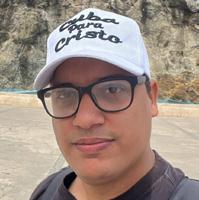
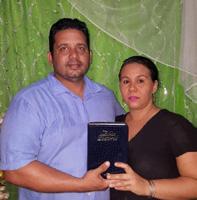
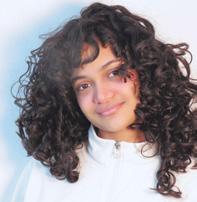
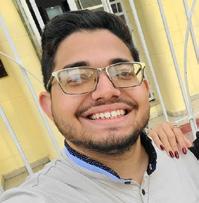
Young Cubans have become the protagonists of a new revolution. Their weapons: the truth and a mobile phone. Many Christians are among them, motivated by their faith, using social media to challenge decades of state control. It caught the regime off-guard –but was not without retaliation. Ernesto is imprisoned. Iván Daniel has fled to Spain. Anna and her mother are under house arrest. David is under surveillance and threatened with reprisals against his children and wife. And it is important to point out that, until these content creators publicly identified with Christianity and its influence in bringing freedom to the country, their posts on social media were tolerated.
This is a shortened version of an article published on 6 May 2026. Read it in full at cswusa.org/blog
‘Neither the Party nor the Cuban government represents me […] I am represented by Christ, who never remained passive in the face of injustice and oppression…’
Anna Bensi
‘What motivates us to create this Christian content is precisely our faith; […] precisely because we are Christians, we are against injustice, and the Church cannot remain silent.’
Iván Daniel Calás Navarro
‘Jesus is Lord, not the Communist Party of Cuba.’
Ernesto Ricardo Medina
‘God has been good. He has not failed. We hope we will not fail Him.’
Iván Daniel Calás Navarro
In 2025, CSW documented 505 verified cases of violations of freedom of religion or belief in Cuba. Find out more at cswusa.org/cuba
Sunday 11 October
On 16 March, 16-year-old Jonathan Muir Burgos was detained alongside his father, Pastor Elier Muir Ávila, following peaceful protests in Morón. At the time of writing, Jonathan remains in detention – facing a possible 15-year sentence. Pray for his immediate release.
Monday 12 October
Earlier in March, police in Palma Soriano came to the home of Pastor Ibrahim Rosabal Viamonte and threatened to force his 23-year-old son David Rosabal Cabrera into military service ‘whether he wants it or not.’ Pray that David’s right to conscientious objection would be respected.
Tuesday 13 October
Pray for Protestant pastor Rolando Pérez Lora, who was detained in front of his family after he uploaded a Bible teaching video to his YouTube channel. He was released and continues to upload regular videos, but has since moved with his family for fear of further repercussions.
Wednesday 14 October
‘What does the Lord require of you? To act justly and to love mercy and to walk humbly with your God.’ Give thanks for those in Cuba who live out these words from Micah 6:8, speaking out even in the face of severe consequences.
Thursday 15 October
A 20-year-old Christian influencer, known online as Anna Bensi, has been placed under house arrest and denied internet access for months. This was after her videos critiquing the ideology of the Cuban Communist Party went viral, gaining over 94,000 views on Facebook. Pray that Anna would regain her freedom today.
Friday 16 October
Another Christian influencer, Iván Daniel Calás Navarro, was forced into exile in Spain after receiving multiple threats and warnings for publicly denouncing the crisis in the country. Pray that he and his wife Gaby would find comfort and community.
Saturday 17 October
Lord God, thank you that every political prisoner, every religious leader under pressure, and every person affected by Cuba’s severe economic crisis is known to you by name. Provide for the needy, comfort the fearful, and bring breakthrough on the island today. Amen.