Director’s Foreword
Near and Far, Far Away: Sala Wong and Peter Williams represents a chance to view their notable work. Video and Time Based Media is one of the Art Department’s most interesting educational areas for artists. Having exceptional exhibitions of Video & Time Based Media in our galleries helps to generate meaningful discussions and lifelong learning about medium.
The University Art Gallery’s programing helps to support our faculty’s teaching. It is through faculty recommendations that many exhibitions come to our galleries. This exhibition was recommended by my colleague Jessica Gomula-Kruzic, Professor of Video & Time Based Media, who wrote the following about Sala and Peter’s work:
Near and Far, Far Away: Sala Wong and Peter Williams is an especially relevant piece in our current Zoom-based reality of mediated intimacy. With the home being the new workplace, boundaries of personal and public life have become increasingly disrupted, merged, and intermingled. At the same time, relationships with people who are geographically distant have become as immediate as those with people who live just down the street. Wong and Williams’ work, while begun before our current re-orientation of relationships through technology, takes on new and poetic significance through its questioning of how technology is changing our understanding of actual and virtual distance.
I am very delighted to be able to exhibit Sala and Peter’s work for others to enjoy.
I would like to thank the many colleagues that have been instrumental in presenting this exhibition. Sala Wong and Peter Williams for the opportunity to exhibit their wonderful work, Jessica Gomula-Kruzic for recommending Sala Wong and Peter Williams’ exhibition, Brad Peatross of the School of the Arts, California State University, Stanislaus for the catalog design and Parks Printing for the printing this catalog.
Much gratitude is extended to the Instructionally Related Activities Program of California State University, Stanislaus, as well as anonymous donors for the funding of the exhibition and catalogue. Their support is greatly appreciated.

Dean De Cocker
Director, University Art Galleries
California State University, Stanislaus
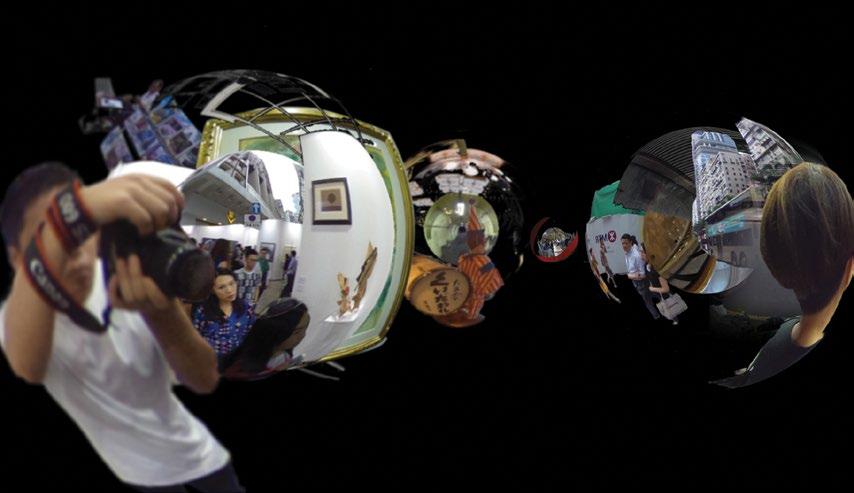
Conglomerate Distortions (screenshots), Stereoscopic computer animation with 360-degree photography and sound, 2014
Sala Wong and Peter Williams
Artist Statement
To be immersed; to have a sense of place; to be in the moment; to be grounded; to be embodied — to lucidly wander, absorbing. From one moment to the next, as technology dis-integrates reality, what it means to be here changes. To become oriented is to internalize, process and abstract. Vis-à-vis VR, everything is light, and endless portals into portals. What we know lies in shadow, which has no place in the electronic glow.
Virtual spaces provide us with opportunities to reexamine our physical environments and the ways in which technology reshapes them. Degrees of immersion and presence vary through states of un/familiarity within hybrid surroundings. As we approach the unfamiliar, we become more aware of our surroundings and rely more intently on our physical senses. Becoming oriented, we internalize our environments. Through memory and mental abstraction, sensorial immersion dissipates. On the other hand, digital illusions can provide endless encounters with the unknown: virtual objects can morph, scale and perspective can shift and cleave, voices can merge and interchange. Electronic displays and projections use light to present fantastic and unusual experiences. Still, these experiences can be thoroughly disrupted, by, for example, breaking a projection beam, or being physically touched while wearing VR goggles.
Our site-based digital art installations situate viewers and participants within responsive negotiations of urban architecture and spaces, exploring the literal and figurative distancing effects of technology. Technology is a (dis) orienting force in daily life, often colliding abstract representations with subjective experience. Mobile technologies produce hybrid states, such that distance becomes ambiguous, and closeness, uncertain. When every encounter can be cataloged, recalled, correlated, simulated and even created, the concept of one’s surroundings can seem to expand, and unfamiliarity can itself become familiar.
Often working within places where we do not speak the local language, we follow a dérive-like approach and rely on our immediate senses to orient ourselves to transit systems, city layouts, histories, current events and cultures. Through interactivity and participatory processes, we seek to involve the public in the ideation, creation, viewing/ experience and interpretation of our work. By integrating research and fieldwork, we complicate the documentary form through personal, aesthetic interpretations of immediate experiences. In this regard, we use indeterminacy as a key organizational strategy as we embrace our status as outsiders and roles as artists.
Sala Wong and Peter Williams
March 2021
Near and Far, Far Away: Sala Wong and Peter Williams
Sala Wong and Peter Williams lead unsettled lives. They reside in apartments among packed boxes and sparse furnishings, Williams in Sacramento, CA and Wong in Terre Haute, IN. They wander the streets of Prague, Hong Kong and Tokyo in search of locations, stories, and participants for their multi-media installations. Perhaps contributing to their wanderlust is the fact that they each were caught between two countries/cultures while growing up, Wong in British controlled Hong Kong and Williams in Camlachie, Ontario near the US border.
Wong and Williams’ work reflects their multiple realities and untethered approach to life. They freely explore international cities as contemporary psychogeographers, to address issues such as the obfuscation of a location’s history by overtourism or the disconnect between urban inhabitants and their environment. Their aim is not to simply critique but, through participatory projects, engage residents in mapping and drawing exercises that connect them on a more personal level with their surroundings and fellow residents.
Wong and Williams’ contemporary approach to psychogeography, and other theories of Guy Debord and the Situationists, are at the core of their work. Debord defined psychogeography as “the study of the precise laws and specific effects of the geographical environment, consciously organized or not, on the emotions and behavior of individuals.” In other words, how do different places make us feel and behave? The dérive (drift or aimless walking) is essential to psychogeography as a way to effectively engage in the surrounding environment. Debord and the Situationists advocated these methods to combat bureaucratized capitalism, consumerism, and Le Corbusier’s “machine for living in,” which they believed created widespread social alienation. Debord’s concept of unitary urbanism “acknowledged no boundaries; it aims to form a unitary human milieu in which separations such as work/ leisure or public/private will finally be dissolved.”
Contemporary psychogeographers embrace technology and some consider internet exploration as a form of psychogeography. Architectural historian Simon Sadler called Wikipedia “an extraordinary kind of psychogeography because you can come out a changed person and not only that, we don’t quite know who is writing it. Everybody is pitching in and people are arguing—if Wikipedia was a city, it would be a city built by many.”
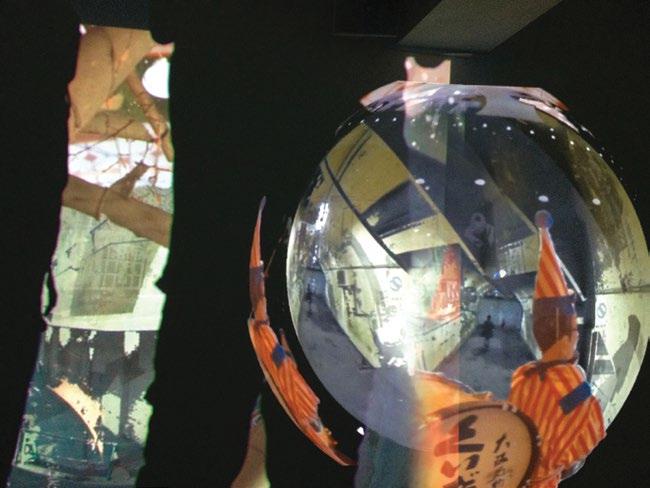
In Conglomerate Distortions Wong and Williams use newer technologies of panoptic photography and 3D animation to create an immersive installation which documents their travels in Tokyo, Taipei, Hong Kong, and Basel. Postcards, crowds, paintings, and man-made structures morph into a sphere floating in space. This is the spectacle of human congregation and consumerism on Earth. A photographer is plucked from the Art Basel crowd and spins in a flatten form above the crowded scene. Styrofoam containers of food float above the art fair, perhaps referring to consumption of resources. Grids of products, advertisements, and postcards become the sphere’s facade. A clown with a base drum inexplicably appears in a tunnel and then becomes part of the sphere’s outer core. Wong’s sister is a motionless spectator, but Wong and Williams are participants. They describe themselves as hypertourists visiting a diversity of tourist spectacles in a highly compressed timeframe. Perhaps they are urging us to slow down and consider the environment in front of us, including its layers of history. We have all been guilty of hypertourism; the
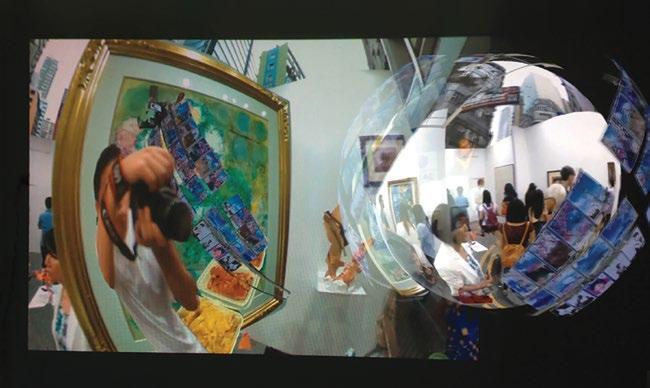
faster we go, the more we see and experience. But do we? Hypertourism can also refer to overtourism. How do mobs of tourists impact locations? How does hypertourism affect the history of a place?
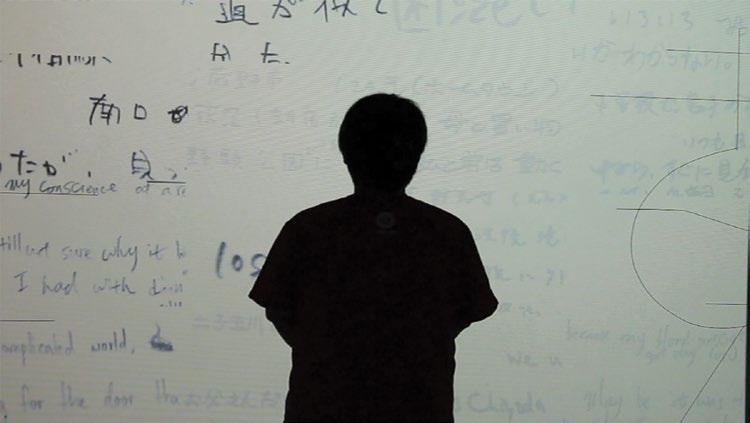
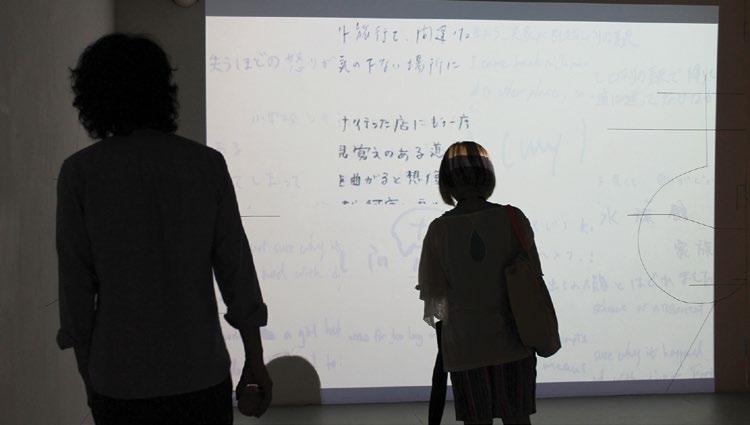
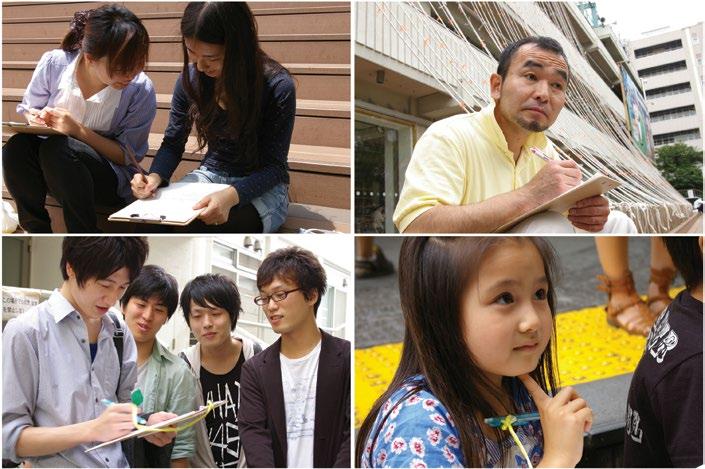
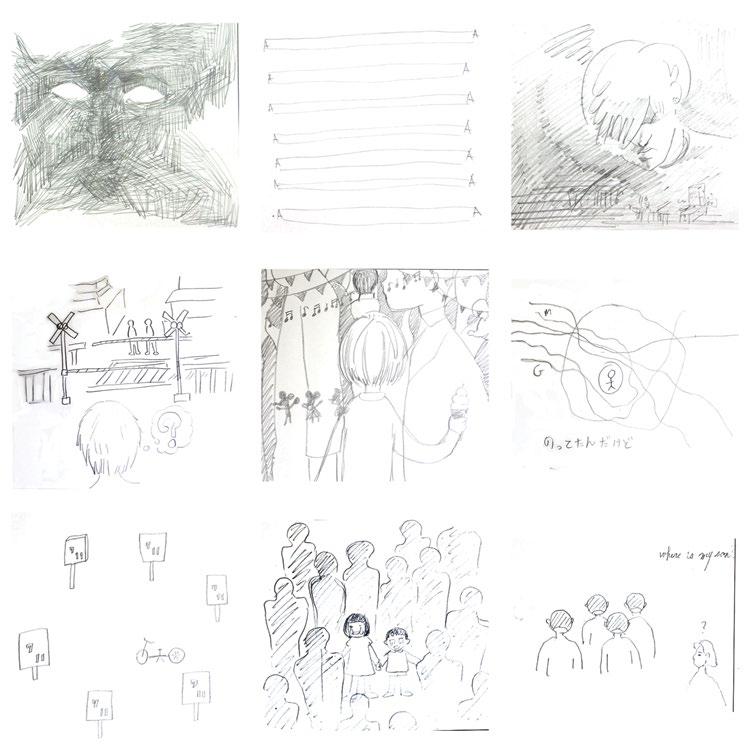
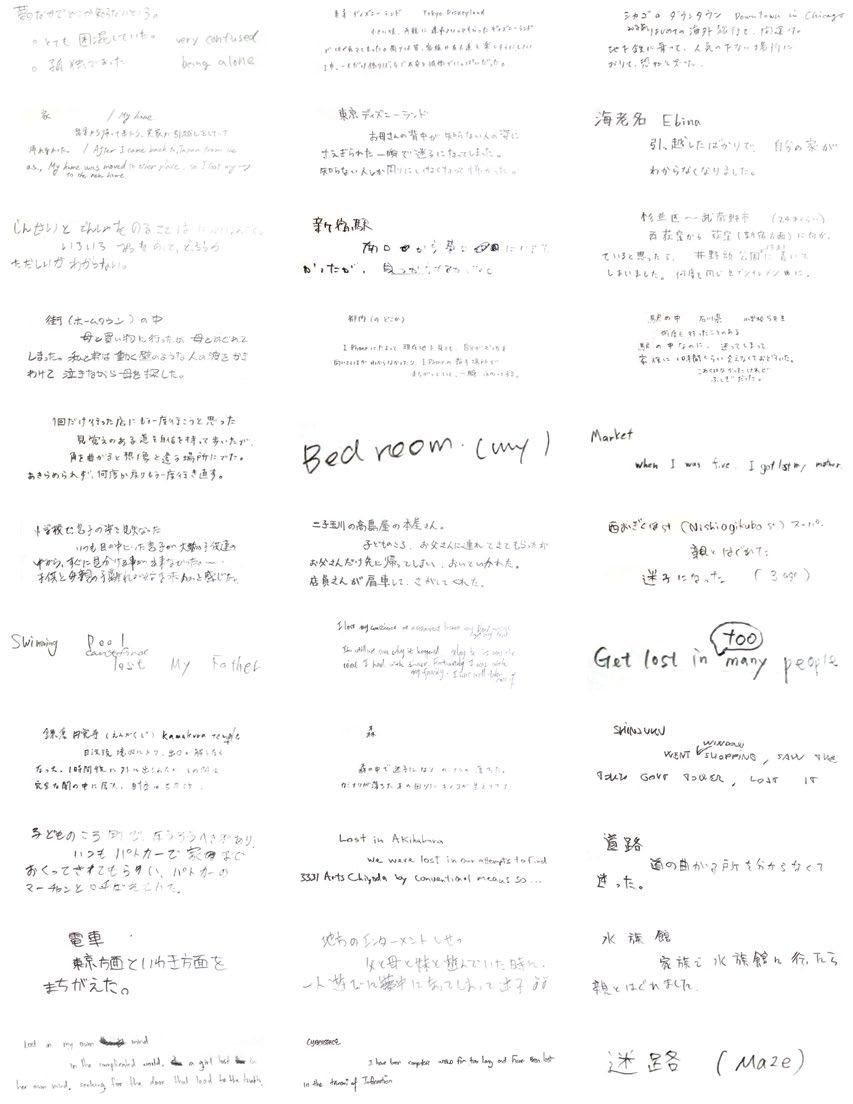
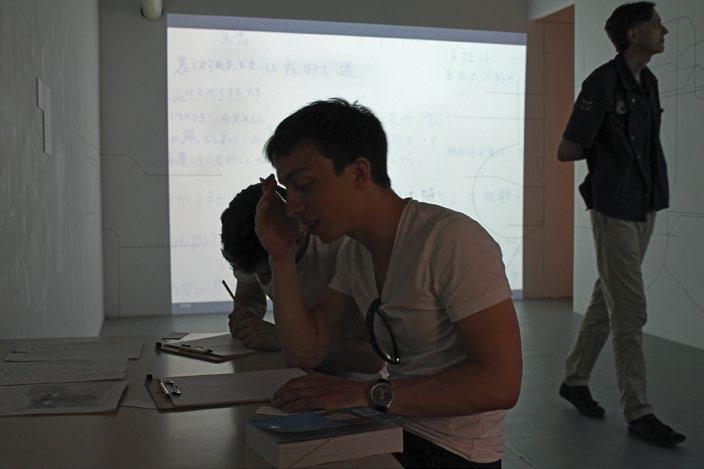
Wong and Williams explore concepts associated with urban palimpsests, the intangible and dynamic aspects of historical layers in cities, in their participatory project titled Recurrent. With the title Recurrent, the artists are referring to “a state of the urban environment, one of continual movement and change, of losing and finding one’s self and one’s memories, over and over again.” Wong and Williams wandered Tokyo and approached over 300 residents, asking for their interpretations of being lost. Participants either wrote (in English or Japanese) or drew their responses. Segments of the responses were projected in active or inactive forms on a gallery wall. Some verbiage faded while other verbiage rapidly flickered. The movement of visitors determined the outcome of the layered verbiage or palimpsests. In the upper right corner, participants’ drawings were layered over real-time images from IP webcams around the world, reflecting, according to the artists, “the nonlinear nature of memory; forgotten experiences might suddenly be recalled in an unexpected place.” The layers of an urban palimpsest and their interrelations are like the human mind’s unconscious and conscious memories; both are dynamic and ever changing. The dérive is also important to the process of this project. Not only do the artists randomly wander the city to find participants, but the participants are asked to respond to their interpretation of being lost. Are they happily lost in the city while experiencing a dérive, or are they anxiously lost? Perhaps another message here is that urban dynamics do not have to be driven by capitalism and bureaucracy, but can be defined by participation.
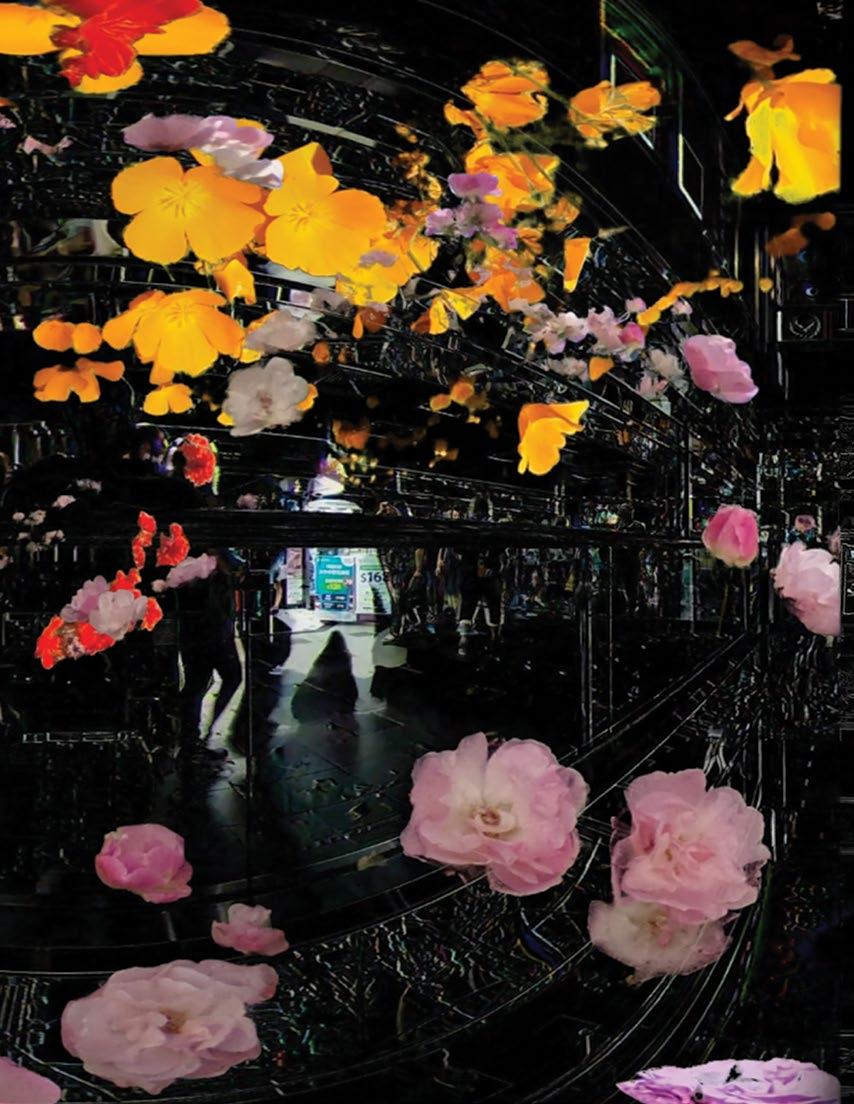
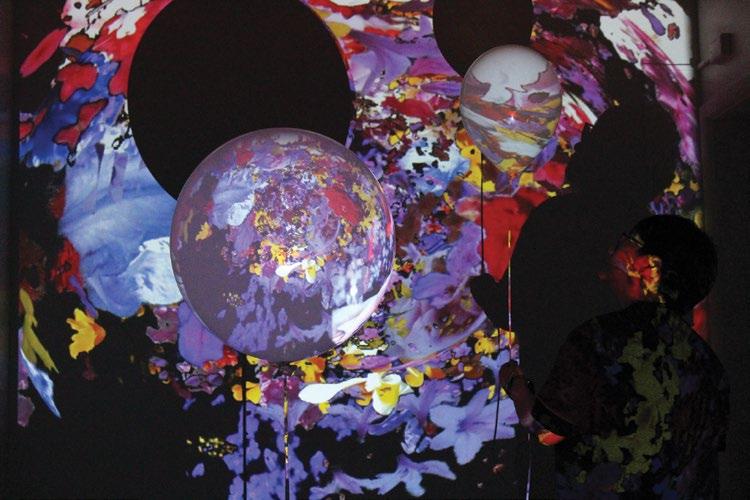
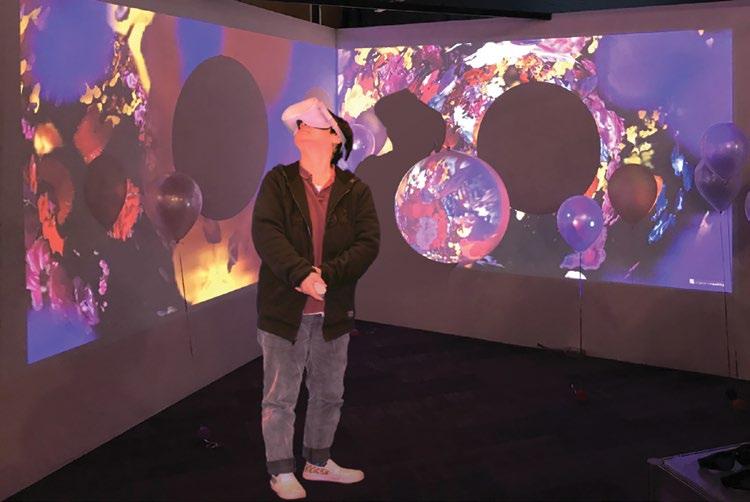
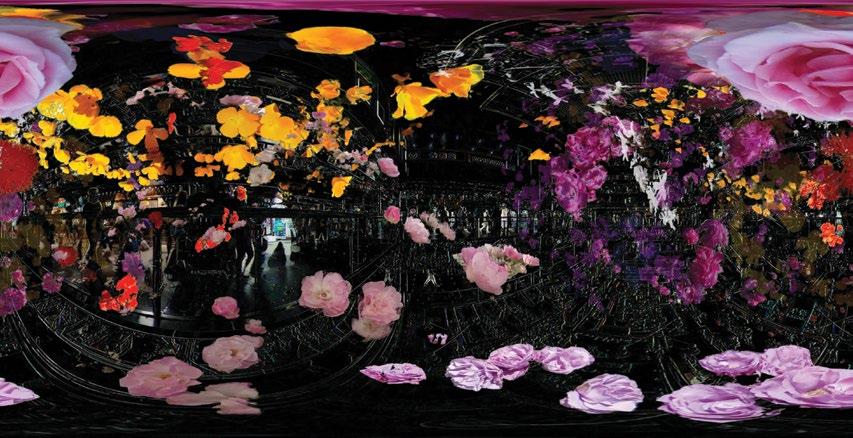
In Wandering Without Wondering the colorful images of flowers and the presence of balloons seem to believe the artists’ warning of technology’s distancing effects on everyday life. But these are not real flowers that one can
touch or smell. We watch people wander in an artificial world that we cannot experience. We could be “wandering without wondering” or worrying about ever present dangers in the urban environment. Or we could be wandering blindly, closing our minds to the wonders out there in the real environment.
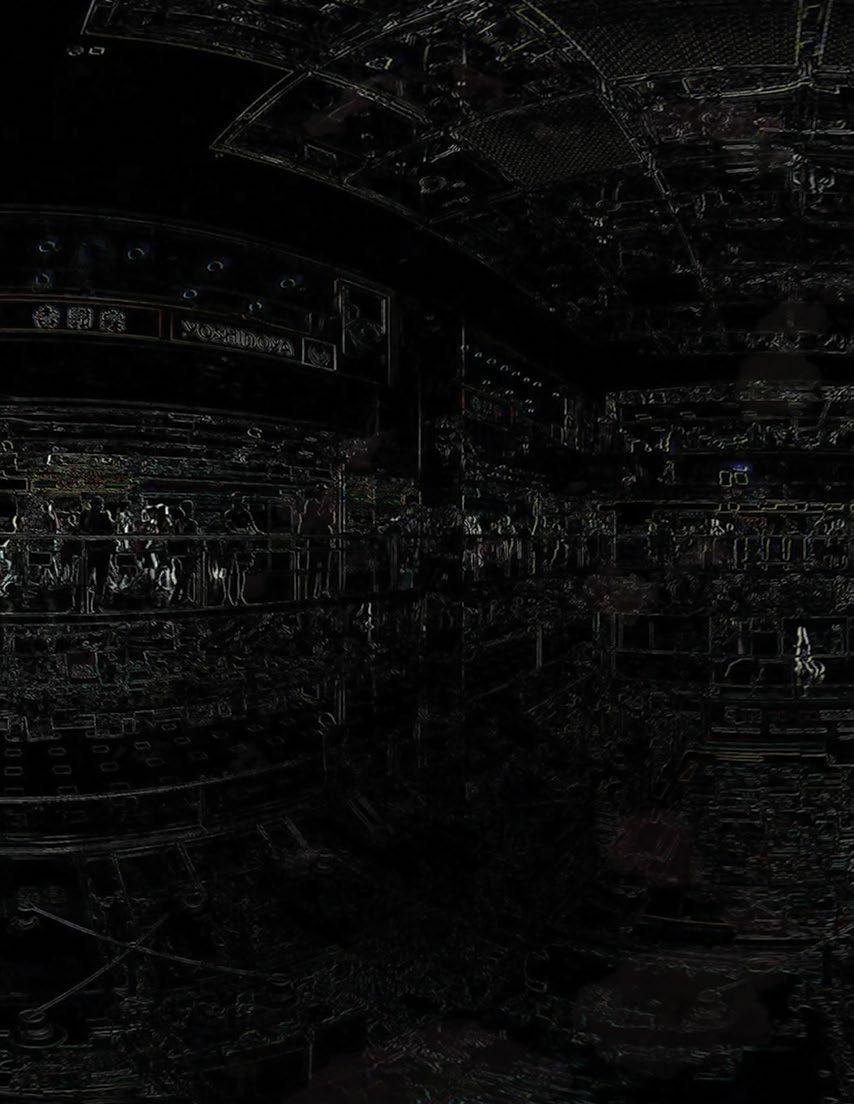
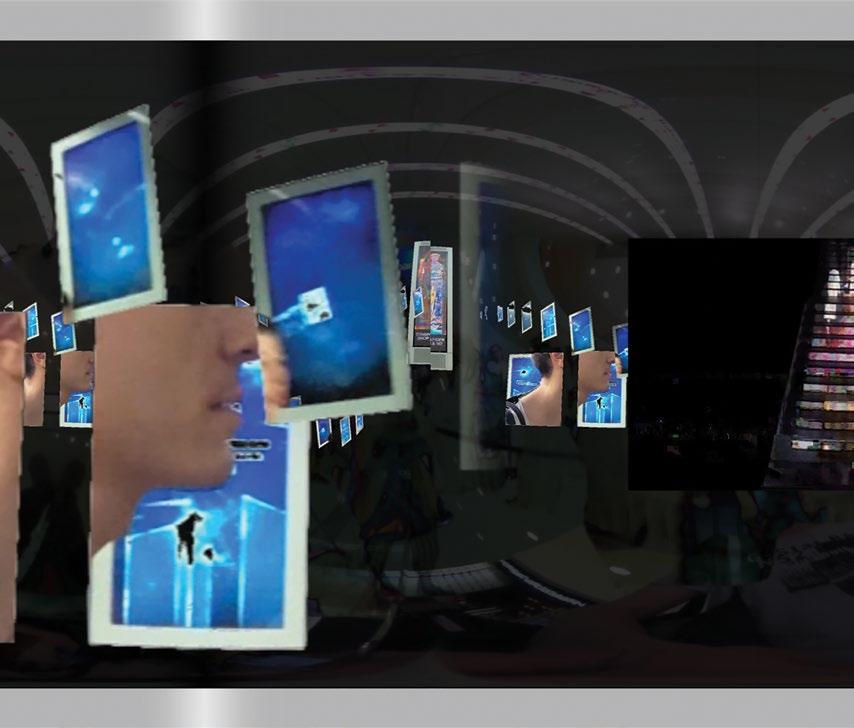
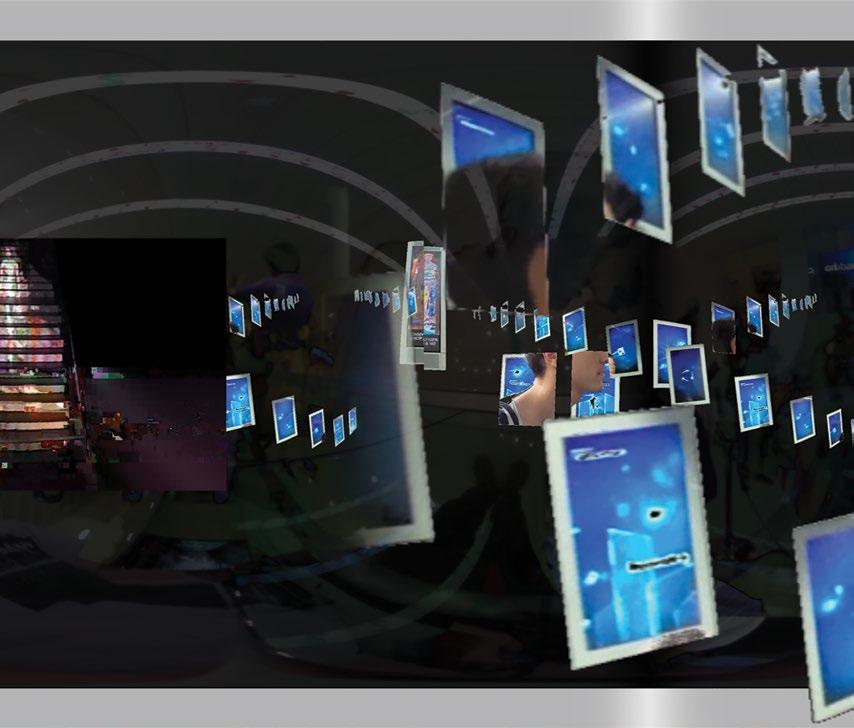
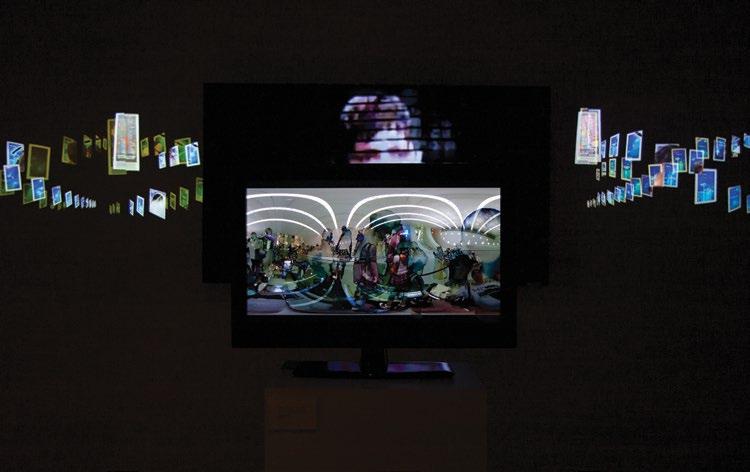
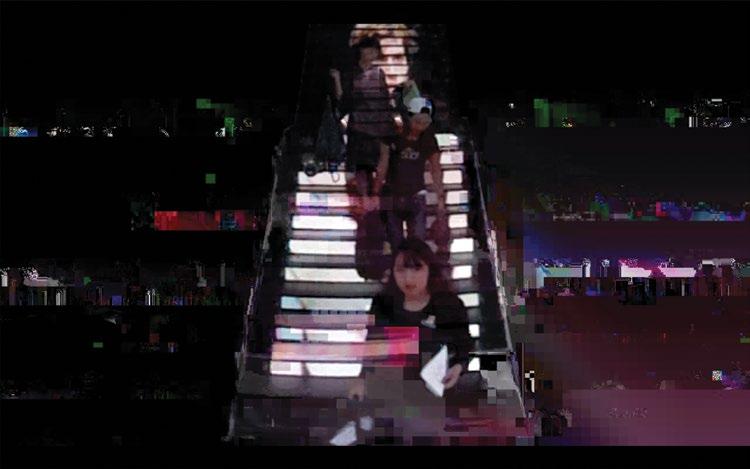
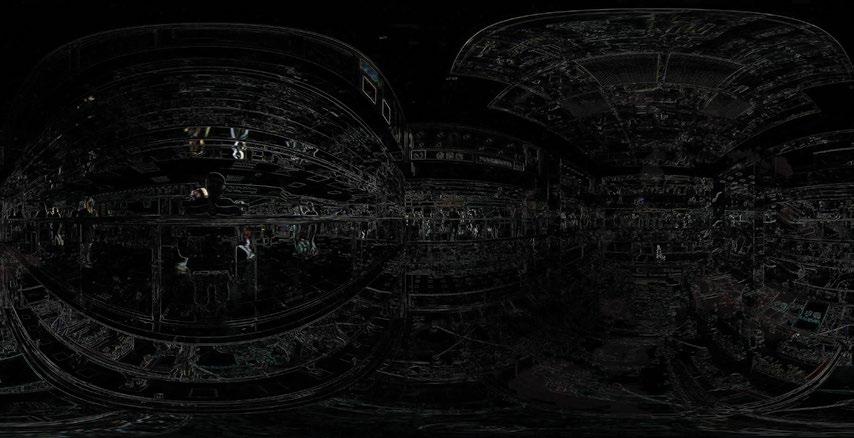
Getting into your screens’ space, a four-channel animation, represents Williams’ experiences in Hong Kong, the most light-polluted city in the world. He writes, “Public and private spaces are saturated in and permeated by screens of all sizes and shapes from the world’s largest (the LED facade of the 108-story International Commerce Centre) to myriad advertising displays installed throughout the city’s extensive public transportation systems and the ubiquity of smartphones.” The back row of projections flash images onto a while wall. In the center is an accelerated video of people coming and going on stairs. On either side are small card-like images bouncing up and down as they move across the screen. The front monitor presents a layered, slow moving collage between flashing arches (representing VR glasses?) that Williams shot with an omnidirectional camera. Williams is at the bottom of the screen relaxing while visitors experience the unsettling installation.
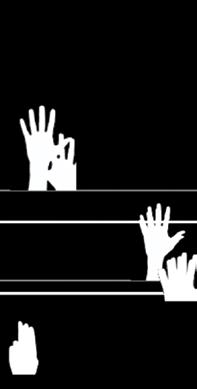
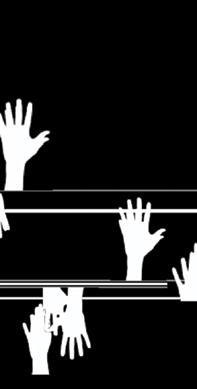
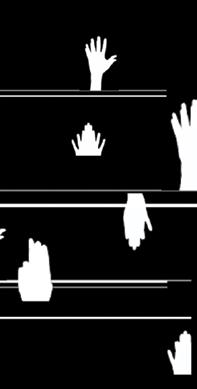
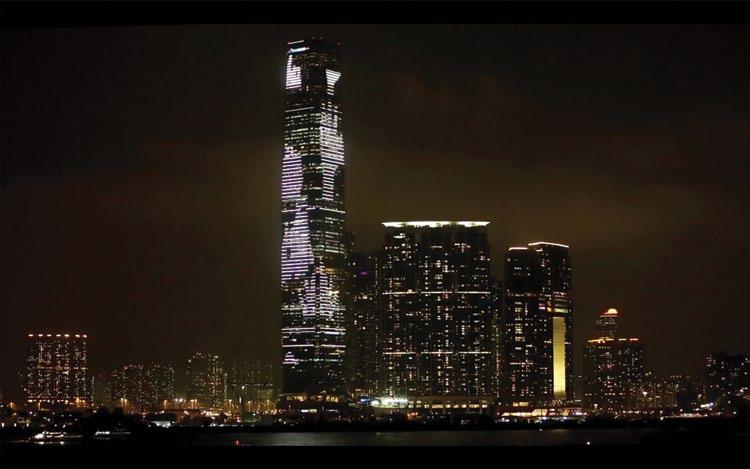
Both critique and re-enchantment can be goals of psychogeographers’ urban explorations. Wong’s animation, If You Are Happy, Clap Your Hands, on the International Commerce Centre in Tsim Sha Tsui, Hong Kong, speaks of urban reenchantment. The giant clapping hands move up, down, and around the world’s largest outdoor LED screen, which is the 50,000m2 façade of the building. They transform an unremarkable glass tower into a festive light show.
Wong writes of the animation, “A simple gesture of hand clapping—flickering big and small on the ICC building— creates a mechanical texture of light and is accompanied by sounds of both clapping hands and electronic beats. In the age of overflowing electronic gadgets and sophisticated technologies, even a straightforward expression becomes overcomplicated. All the same, we still become enraptured in the glowing moments of the city and lights.”
Barbara Räcker
Director
Cathy and Jesse Marion Art Gallery State University of New York at Fredonia
Bibliography
Debord, Guy Ernest. The Situationist International Text Library/Introduction to a Critique of Urban Geography. Library, library.nothingness.org/articles/SI/en/display/2.
Huyssen, Andreas. Present Pasts Urban Palimpsests and the Politics of Memory. Stanford Univ. Press, 2009.
Sadler, Simon. The Situationist City. The MIT Press, 2001.
Williams, Peter. Peter Williams - Sample Artist Works, 2018, www.peterjwilliams.com/.
Wong, Sala. Sala Wong Personal Work Portfolio, 2018, salawong.com/personal_work_portfolio/.
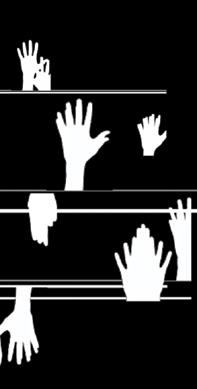
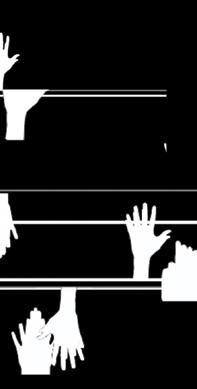
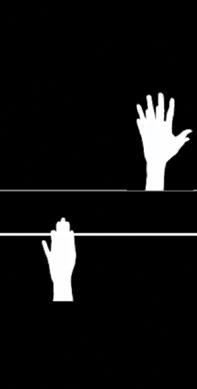
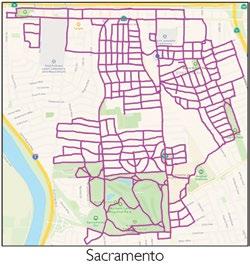
If You Are Happy, Clap Your Hands
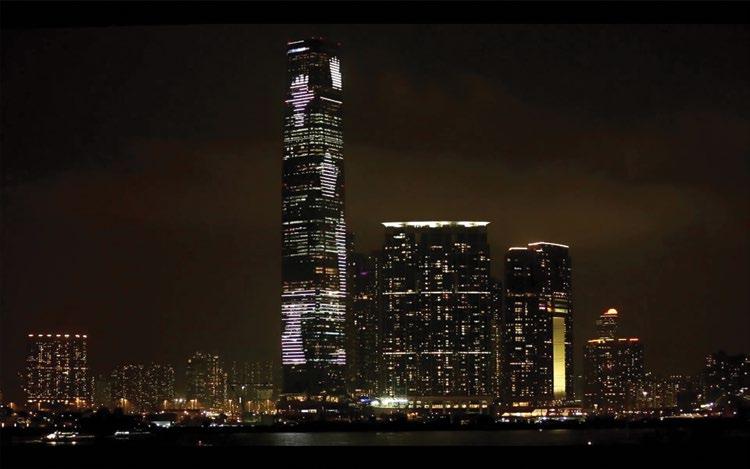
Getting into your screens’ space
Wandering Without Wondering
Artists Curriculum Vitae
Sala Wong - Curriculum Vitae
EDUCATION
2003 M.F.A. Imaging and Digital Arts, University of Maryland, Baltimore County
TEACHING
2010-pres. Associate Professor of Digital Art, Indiana State University, Indiana
2013-pres. Affiliated Faculty, International Studies Program, Indiana State University, Indiana
2005-10 Assistant Professor of Digital Art, Indiana State University, Indiana
EXHIBITIONS, SELECTED ONE & TWO-PERSON SHOWS, GROUP EXHIBITIONS AND EVENTS
2019 Wandering Without Wondering, ACM/EG Expressive 2019, Genoa
2019 Big Mountain, [If…] [Then]: Art at the Digital Interface, Arts Benicia, California
2017 Wandering World, SIGGRAPH Asia 2017, Bangkok
2016 If You Are Happy, Clap Your Hands, 22nd International Symposium on Electronic Art, Hong Kong
2016 Sala Wong & Peter Williams, Two-person exhibition, SUNY Fredonia Marion Art Gallery, New York
2015 Conglomerate Distortions, SIGGRAPH Asia 2015, Kobe
2015 Outside-in, Wells Library, Indiana University, Bloomington
2014-15 Conglomerate Distortions, The 3rd Lumen Prize Exhibition
• Wales (Llandaff Cathedral & Cardiff School of Art & Design)
• Greece (Onassis Cultural Centre)
• New York City (Auditorium on Broadway, New York Institute of Technology)
• Amsterdam (Art’otel)
• London (The Crypt Gallery)
2014 MicroWorld, The Space, Sheung Wan, Hong Kong
2013 Flow/Ebb, 3331 Arts Chiyoda Gallery, Tokyo
2013 Recurrent, 3331 Arts Chiyoda Gallery, Tokyo
2013 Surface-edge: Indistinct, Art Spaces, Inc./Year of the River, Terre Haute
2012 John Cage: Dreams, Richard G. Landini Center for Performing & Fine Arts, Terre Haute
2011 Lost & Found in Tokyo, 3331 Arts Chiyoda Gallery, Tokyo
2011 Listening, (outdoor urban intervention project), Terre Haute
2010 To Tell a Secret, Installation Nation presented by Primary Colors, Indianapolis
2010 Finding the Invisible Cities, Swope Art Museum, Terre Haute
2009 Approaching & Receding, Atelier MUJI, Harbour City, Hong Kong
2009 Zen-less, Low Road Gallery, Greencastle, IN
2009 Swing Feet, Digital Fringe, Melbourne
2008 Sense of a Place, Hong Kong Visual Arts Centre, Hong Kong
2008 Submersion, Microfestival 2, DePauw University, Greencastle
2007 talk…the…line (Prague), The International Digital Media & Arts Association, Philadelphia
2007 Open Conversations, Three-person exhibition, Skolska28 Gallery, Prague, Czech Republic
2007 Persistence of Absence, (outdoor urban intervention project), Terre Haute
2005 Please Be Seated, Initiative for Cultural Exchange and Computer Arts, Bangkok
2002 Encased, ISEA2002: 11th International Symposium on Electronic Art, Nagoya
Peter Williams - Curriculum Vitae
EDUCATION
2003 M.F.A. Imaging and Digital Arts, University of Maryland, Baltimore County
TEACHING
2020-pres. Associate Professor of New Media Art, California State University, Sacramento
2016-2020 Assistant Professor of New Media Art, California State University, Sacramento
2013-2016 Visiting Assistant Professor of Digital Art, Indiana University, Bloomington
2006-2009 Assistant Professor of Art, DePauw University, Greencastle
EXHIBITIONS SELECTED ONE & TWO-PERSON SHOWS, GROUP EXHIBITIONS AND EVENTS
2019 Wandering Without Wondering, ACM/EG Expressive 2019, Genoa
2019 Sarcasm, [If…] [Then]: Art at the Digital Interface, Arts Benicia, California
2018 Grasping Elapsing 3.6, Conference on Computation, Communication, Aesthetics & X, Madrid
2017 Wandering World, SIGGRAPH Asia 2017, Bangkok
2017 Walls, Screens, Building Imagination Center, Turlock, California
2017 Grasping Elapsing 3.1, The University of Edinburgh, Edinburgh College of Art, Edinburgh
2016 818 Cubed, International Commerce Centre, Sun Hung Kai Properties, Hong Kong
2016 Getting into your screens’ space, Solo exhibition, The INSIDE()ut, Sacramento, California
2016 Sala Wong & Peter Williams, Two-person exhibition, SUNY Fredonia Marion Art Gallery, New York
2015 Conglomerate Distortions, SIGGRAPH Asia 2015, Kobe
2015 Reified Meme I: Extreme Greenies, 21st International Symposium on Electronic Art, Vancouver
2014-15 Conglomerate Distortions, The 3rd Lumen Prize Exhibition
2013 Grasping Elapsing 3.0, w ArtSpaces, Inc. Public performance at Fairbanks Park, Terre Haute
2010 Divisible Synthesis, Halcyon Contemporary Art, Terre Haute, IN
2010 The Ghost at the Feast, Low Road Gallery, Greencastle, IN
2009 Approaching and Receding, Atelier MUJI, Harbour City, Hong Kong
2009 Sala Wong and Peter Williams, Halcyon Contemporary Art Gallery, Terre Haute, IN
2008 Weaving Time: An Experience of Then and Now, Hong Kong Visual Arts Centre, Hong Kong
2007 talk…the…line: Prague, IDMAA 2007 Conference, Philadelphia, PA
2007 Open Conversations, Three-person exhibition, Skolska28 Gallery, Prague, Czech Republic
2007 Liquid Sand, Oranj Arts Festival, Indianapolis
2006 Hats Dreams, ArtConcept Festival, St. Petersburg
2004 Hats Dreams, ISEA2004: 12th International Symposium on Electronic Art, Baltic Sea
2004 Please Be Seated, ARTCONCEPT, St. Petersburg, Russia
2002 Encased, ISEA2002: 11th International Symposium on Electronic Art, Nagoya
Sala Wong & Peter Williams
SELECTED LECTURES, PANELS, WORKSHOP PRESENTATIONS & EVENTS
2020 “Leaving the Windows Open: Indeterminate situations through composite 360-degree photography” Paper presentation. The Engineering Reality of Virtual Reality 2020 Conference, Burlingame, CA.
2016 “Conglomerate Distortions” Paper presentation. ISEA2016, 22nd International Symposium on Electronic Art, Run Run Shaw Creative Media Centre, City University of Hong Kong.
2014 “Lumen Prize Panel” Panel presentation. Co-presented with Robert Smith, Edward Bateman, Carla Rapoport and Bruce Wands. School of Visual Arts, New York City
2014 “Location & Translation” Workshop. IEEE CHI 2014, Toronto.
2011-12 Humanities High Performance Computing Collaboratory (HpC), University of Illinois National Center for Supercomputing Applications and University of South Carolina.
2010 “Digital Ceramic Image Transfer” Workshop. Yingge Ceramics Museum, Taiwan.
2008 “SITE Seeing: Image Geotagging and the Vernacular” Paper presentation. ISEA2008, Singapore.
2008 “Sense of Place” Artist lecture Hong Kong Visual Arts Centre, Hong Kong.
2005 “Second Skin” Artist lecture. MAF’05, British Council of Thailand.
SELECTED FELLOWSHIPS, ARTIST RESIDENCIES & INSTITUTES
2018 Banff Centre Residency Program, Banff (One-month artist residency)
2013 3331 Arts Chiyoda Residency Program, Tokyo, Japan (One-month artist residency)
2012-13 High Performance Computing Collaboratory Institute, National Center for Supercomputing Applications (University of Illinois at Urbana-Champaign and University of South Carolina)
2011 3331 Arts Chiyoda Residency Program, Tokyo, Japan (One-month artist residency)
2007 Open Studios Prague Dolní Počernice, Czech Republic (Two-month residency)
SELECTED BIBLIOGRAPHY
D. Berio, P. Cruz, and J. Echevarria, eds. “Wandering Without Wondering” in Proceedings of The 8th ACM/EG Expressive Symposium, Genoa, Italy, 2019.
Rangel, André, et. al., ed. “Grasping Elapsing 3.6” in The Sixth Conference on Computation, Communications, Aesthetics and X, Madrid, 2018. pp 200-205.
Talianni, Katerina, ed. “Grasping Elapsing” in Airea: Arts Research, (1), Edinburgh, 2018. pp 28-34.
Armstrong, Kate, ed. “Reified Meme I: Extreme Greenies” in ISEA2015 Vancouver, Canada, 2015. pp 34.
Ferran, Bronaċ, ed. “Conglomerate Distortions” in 2014 Lumen Prize Catalog, London, 2015. pp 68-69.
Hoofd, Ingrid, et. al., ed. “SITE Seeing: Image Geotagging and the Vernacular” in Proceedings of ISEA2008:14th International Symposium on Electronic Art, Singapore, 2008. pp 467-468.
iDEAs 07: Beyond Boundaries, Dena Elisabeth Eber, ed. “talk…the…line” in The International Digital Media and Arts Association, 2007. pp 76-77.
ISEA2004 Publicity Committee, ed. “Hats Dreams” in ISEA2004, 12th International Symposium on Electronic Art, Tallinn, Estonia, 2004. pp124.
ISEA2002 Publicity Committee, ed. “Encased” in ISEA2002, 11th International Symposium on Electronic Art, NAGOYA [Orai], Nagoya, Japan, 2002. p44-45.
Acknowledgements
California State University, Stanislaus
Dr. Ellen Junn, President
Dr. Kimberly Greer, Provost/Vice President of Academic Affairs
Dr. James A. Tuedio, Dean, College of the Arts, Humanities and Social Sciences
Department of Art
Martin Azevedo, Associate Professor, Chair
Patrick Brien, Lecturer
Tricia Cooper, Lecturer
Dean De Cocker, Professor
James Deitz, Lecturer
Daniel Edwards, Associate Professor
Patrica Eshagh, Lecturer
Jessica Gomula-Kruzic, Professor
Daniel Heskamp, Lecturer
Chad Hunter, Lecturer
Dr. Carmen Robbin, Professor
Ellen Roehne, Lecturer
Dr. Staci Scheiwiller, Associate Professor
Susan Stephenson, Associate Professor
Jake Weigel, Associate Professor
Meg Broderick, Administrative Support Assistant II
Alexander Quinones, Equipment Technician II
University Art Galleries
Dean De Cocker, Director
School of the Arts
Brad Peatross, Graphic Specialist II
Special Thanks
Sala Wong and Peter Williams extend their special thanks to Dean De Cocker, Jessica Gomula, Brad Peatross, Barbara Räcker and 3331 Arts Chiyoda Tokyo.
Near and Far, Far Away: Sala Wong & Peter Williams
April 27–May15, 2021 | Stan State Art Space, California State University, Stanislaus | 226 N. First St., Turlock, CA 95380
300 copies printed. Copyright © 2020 California State University, Stanislaus • ISBN 978-1-940753-58-4
All rights reserved. No part of this publication may be reproduced or transmitted in any form without the written permission of the publisher. This exhibition and catalog have been funded by Associated Students Instructionally Related Activities, California State University, Stanislaus.