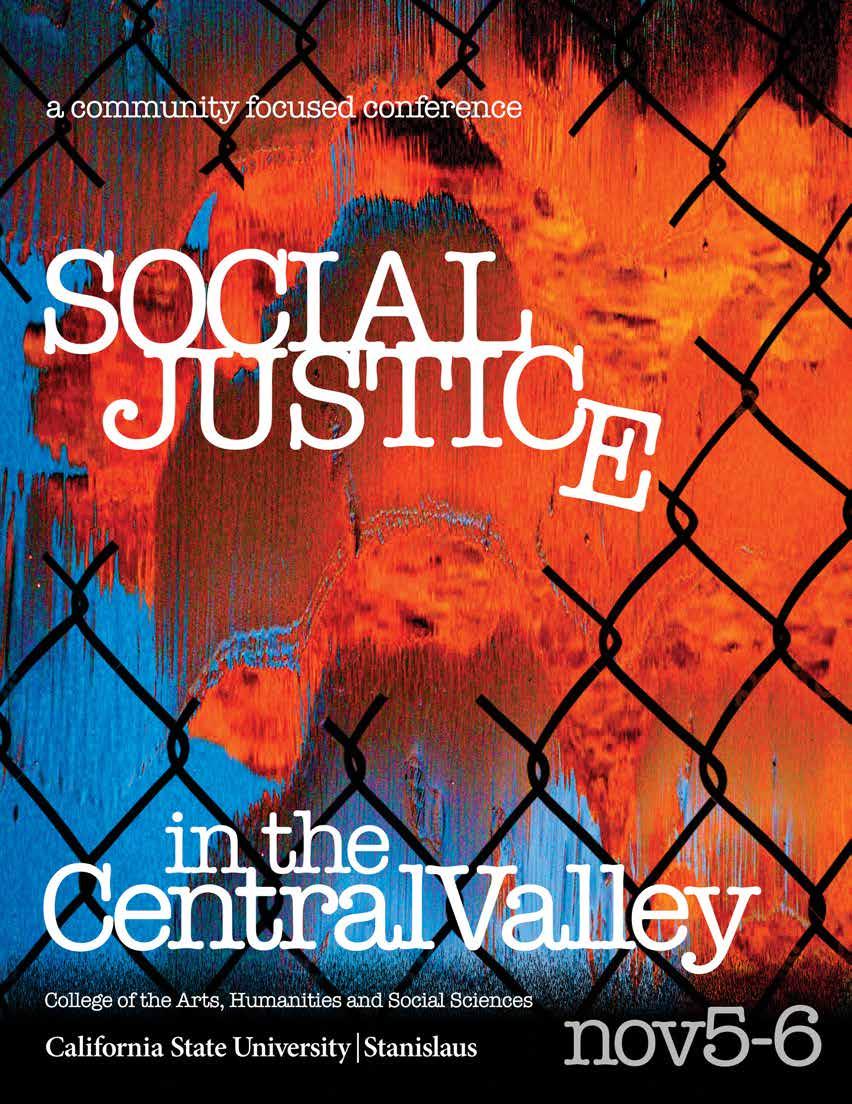
November 5thand 6th
California State University, Stanislaus
Sponsored by Stanislaus State’s College of the Arts, Humanities and Social Sciences K
Thursday Nov 5 @7:15pm Snider Hall
T h u r s d a y N o v . 5 t h ( N o o n - 8 : 3 0 p m )
S n i d e r H a l l ( N o o n - 4 : 3 0 p m )
N i g e l H a t t o n (Prison Education Project: Dignity’s Place in the Educative Approach to Prison Reform and Rehabilitation) 1 2 : 0 0 p m
Y v e t t e M c S h a n (Isolated confinement, forced psychiatric treatment, and disproportionate intersectional discrimination practices impacting African Americans in CA prisons) 1 2 : 5 0 p m
D i x i e S a l a z a r (inmate poetry Altar for Escaped Voices) 1 : 1 0 p m
T a n y a G o l a s h - B o z a (Latino immigrant men, due process & the deportation crisis) 1 : 3 0
)
2 : 1 0 p m (film documentary & follow-up Dreamer panel discussion A b i g a i l R o s a s , moderator; I m e l d
(UCLA Dream Resource Center); and J o s e P a r e d e s , N a d i a L
C h
and P
P
dreamer students) 2 : 4
E m i l y R e n t e r i a (identity issues facing light-skinned people of color: “Middle of the Margins: White passing, ethnic options, and the multiracial experience:) 3 : 3 0 p m
K i m M c M i l l a n (utilizing the Black Arts Movement to strengthen the empathy muscle) 3 : 5 0 p m
S n i d e r H a l l C o n f
)
V i c t o r L e w i s (Race, Power and Privilege/personal healing & restorative social activism: “This is Your Brain on Race”) 6 : 0 0 p m
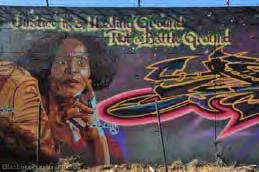
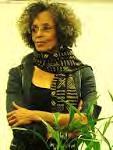
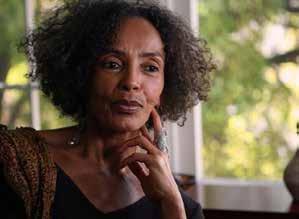
F a n i a D a v i s (Keynote Talk: Restorative Justice for At-Risk Youth/civil rights and reconciliation practices) 7 : 1 5 p m Introduction by K i m M c M i l l a n Speaker profiles & reserved Keynote seating: https://www.csustan.edu/social-justice-conference

r i d a y N o v . 6 t h ( N o o n - 8 : 3 0 p m )
S o u t h D i n i n g ( N o o n - 2 p m )
Homelessness panel #1: the homeless experience K e
B a r b a r a O
/ J o h n L u c
s (documentary project on Modesto homeless), V
r n o n P r i c
, Y v e t t e M c S h a n (Victorious Black Women/Castro Valley), and D i x i e
S a l a z a r (Dakota House/Fresno) 1 2 : 0 0 p m
Homelessness panel #2: efforts to address needs K
K
(Livingston Community Health Center), A
moderator;
I m p e r i a l (Stanislaus County Focus on Prevention Initiative), B e v H a t c h e r (United Samaritans) & M a r i s S t u r t e v a n t (United Samaritans/We Care Program) 1 : 0 0 p m
C - 1 0 2 ( 2 : 0 0 - 4 : 4 5 p m )
A l e t h a H a r v e n (racial achievement gaps/achievement motivation/psychological assets/social environmental resources for at-risk students) 2 : 0 0 p m
I m e l d a P l a s c e n c i a (health justice /health access for immigrant communities/intersectional immigrant issues impacting LGBTQ immigrants) 2 : 3 0 p m
l a u r e n O r n e l a s (food justice/food empowerment projects for at-risk populations: “Access to healthy foods in communities of color and low-income communities”) 3 : 0 0 p m
M a r i s o l A
r (CRLA Community Equity Initiative) & Y
(CRLA housing/employment/education initiatives) 3 : 3 0 p m
L a u r e l F i r e s t o n e (water quality issues for at-risk populations) 4 : 1 5 p m
S n i d e
H
D i x i e S a l a z a r (poet/artist working with at-risk youth/prison/homeless populations; Poetry reading & discussion: “And homeless near a thousand homes I stood”) 6 : 1 5 p m
S a s h a A b r a m s k y (Closing Keynote: the American Way of Poverty) 7 : 1 5 p m (book signing at 8 : 1 5 p m )




Speaker profiles & reserved Keynote seating: https://www.csustan.edu/social-justice-conference
F a n i a D a v i s , J . D . , P h . D
The dramatic successes of the Truth and Reconciliation Commission in healing the wounds of mass violence in South Africa and of restorative juvenile justice legislation in making youth incarceration virtually obsolete in New Zealand inspired civil rights attorney and community activist Fania E. Davis to explore the possibility of an Oakland initiative to apply Restorative Justice practices to issues facing at-‐risk youths. In 2005, others joined the effort, including Oakland City Councilmember Nancy Nadel and community activist Aeeshah Clottey. Nancy hosted a series of meetings at her office, attended by community members, judges, educators, law students and representatives of the District Attorney’s, Public Defender’s, and Human Services offices. With a small grant from Measure Y, Oakland’s voter-‐approved violence prevention initiative, Restorative Justice for Oakland Youth (RJOY) was born.
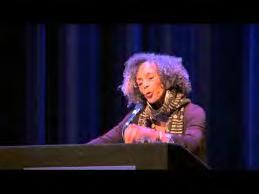
Coming of age in Birmingham, Alabama during the social ferment of the civil rights era, the murder of two close childhood friends in the 1963 Sunday School bombing crystallized within Fania a passionate commitment to social transformation. For the next decades, she was actively engaged with social issues devoted to civil rights, Black liberation, women, and prisoners, and actively involved in peace, anti-‐racial violence and anti-‐apartheid movements. After receiving her law degree from UC Berkeley in 1979, Fania practiced for 27 years as a civil rights trial lawyer.
In the mid-‐1990’s, she entered a Ph.D. program in Indigenous Studies at the California Institute of Integral Studies, and apprenticed with traditional healers around the globe, particularly in Africa. Since receiving her Ph.D. in 2003, Fania has been engaged in a search for healing alternatives to adversarial justice. She has taught Restorative Justice at San Francisco ‘s New College Law School and Indigenous Peacemaking at Eastern Mennonite University’s Center for Justice and Peacebuilding. She writes and speaks actively on these subjects.
The search for a healing justice also led Fania to bring restorative justice to Oakland. A founder and currently Director of Restorative Justice for Oakland Youth (RJOY), Fania also serves as counsel to the International Council of Thirteen Indigenous Grandmothers. She recently received the Ubuntu award for service to humanity. Fania’s research interests include exploring the indigenous roots, particularly the African indigenous roots, of restorative justice.
R e s t o r a t i v e J u s t i c e f o r O a k l a n d Y o u t h ( R J O Y )
Disparately impacting youth of color, punitive school discipline and juvenile justice policies activate tragic cycles of youth violence, incarceration, and wasted lives. Founded in 2005, Restorative Justice for Oakland Youth (RJOY) works to interrupt these cycles by promoting institutional shifts toward restorative approaches that actively engage families, communities, and systems to repair harm and prevent re-‐offending. RJOY focuses on reducing racial disparities and public costs associated with high rates of incarceration, suspension, and expulsion. We provide education, training, and technical assistance and collaboratively launch demonstration programs with our school, community, juvenile justice, and research partners.
Beginning in 2007, RJOY’s city-‐funded West Oakland Middle School pilot project eliminated violence and expulsions, and reduced suspension rates by 87%, saving the school thousands in attendance and Title I funding. Inspired by the successes of our Middle School pilot, by May 2008, nearly 20 Oakland Unified School District (OUSD) principals requested training to launch programs at their sites. We have served over 1000 youth in Oakland’s schools. UC Berkeley Law’s Henderson Center for Social Justice evaluated the Middle School pilot and released a study in February 2011. A publication on implementing restorative initiatives in schools produced in collaboration with the Alameda County Health Care Agency is forthcoming. In 2010, the OUSD Board of Directors passed a resolution adopting restorative justice as a system-‐wide alternative to zero tolerance discipline and as an approach to creating healthier schools.
RJOY has enjoyed similar success in the juvenile justice arena. In 2007, we gave educational presentations to the Presiding Judge of the Juvenile Court and others. Impressed with the restorative justice model, the judge convened a Restorative Justice Task Force. RJOY provided education and training and helped initiate a planning process which engaged approximately 60 program directors-‐ including probation, court, school, and law enforcement officials, as well as community-‐based stakeholders. In 2009, the group produced a Strategic Plan that charts reform of the county’s juvenile justice system through institutionalization of restorative justice. Two innovative restorative diversion and restorative re-‐entry projects focused on reducing disproportionate minority contact and associated public costs. The pilots have successfully served 19 youth of color. In collaboration with several partners, we now seek funding to expand the pilots.
RJOY has had programs at three school sites—West Oakland Middle School, Ralph Bunche Continuation School, and a three-‐year demonstration program at East Oakland’s Castlemont Community of Small Schools funded by a grant from The California Endowment’s Building Healthy Communities Initiative. Goals of the demonstration program were to reduce violence, arrests, and suspensions (particularly of youth of color) while decreasing associated costs and promoting parent and community engagement. Having trained and made presentations to more than 1500 key justice, community, school, and philanthropic stakeholders as well as youth in the Oakland metropolitan area, and having significantly influenced policy changes in our schools and juvenile justice system, RJOY has already made headway toward its strategic goal of effectuating a fundamental shift from punitive, zero tolerance approaches to youthful wrongdoing that increase harm toward more restorative approaches that heal it.
O p e n i n g K e y n o t e S p e a k e r T h u r s d a y N o v 5 @ 6 : 0 0 p m “ T h i s i s Y o u r B r a i n o n R a c e ”
Victor Lewis is a nationally recognized social justice educator, trainer, and social activist. He has conducted keynote speeches, seminars, workshops and "train the trainer" programs throughout the U.S. and abroad. Lewis is founder/Director of the Radical Resilience Institute. As a Progressive Life Coach, his work supports transformative change agents to improve and maximize emotional resilience, mental flexibility, and personal performance and effectiveness. Lewis brings a unique socially progressive vision to the work of personal growth, personal empowerment and emotional health with special consideration for healing factors that emphasize humanizing community-‐based social engagement circuitry to address stresses and traumas arising from contexts of social oppression. This is the fruit of his 30+ years search for personal healing and social justice, and nearly as many years of innovating practice in using liberatory educational approaches to bring healing and justice to others.
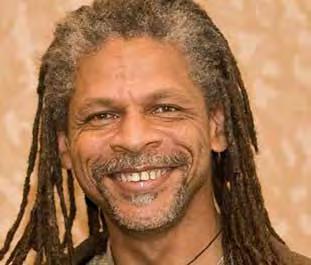
Lewis is best known for his inspiring leadership role in the award-‐winning race relations documentary, "The Color of Fear." Lewis is co-‐author, with Hugh Vasquez, of Lessons from The Color of Fear, a four volume multi-‐media curriculum to be used in conjunction with the film. This is an indispensable resource for educators, diversity trainers and facilitators. Lewis also conducts trainings using the curriculum and is a contributor to the anthology Crash Course:
Reflections on the Film “Crash” for Critical Dialogues about Race, Power and Privilege.
Between 1990-‐96, Lewis served as Director of Adult Education at the Oakland Men's Project (OMP), one of the oldest and most respected multicultural violence prevention training programs in the nation. He is a past member of the board of A Safe Place, the battered women's shelter program serving Oakland CA. Currently Co-‐Chair of the Black Church and Domestic Violence Institute, Lewis is an activist with deep environmental concern, a founding board member of the Urban Habitat Program, and a former board member of Urban Ecology, Inc. Lewis received his Master of Arts in Culture and Spirituality in 1987 from the Institute in Culture and Creation Spirituality (ICCS) at Holy Names College in Oakland. He is a Neuro-‐Linguistic Programing Master (NLP) Practitioner, an NLP Health Practitioner, an EFT (Emotional Freedom Techniques) Advanced Practitioner, an AAMET-‐certified EFT Trainer, a certified NLP hypnotherapist and a resilient and thriving trauma survivor.
Sasha Abramsky is a freelance award winning journalist and author of The American Way of Poverty: How the Other Half Still Lives (Nation Books, 2013). His work has appeared in The Nation, The Atlantic Monthly, New York Magazine, American Prospect, Salon, Slate, the New Yorker (online), Los Angeles Weekly, Village Voice, Daily Beast, and Rolling Stone. Originally from England and a graduate of Oxford University, Sasha has since adopted his mother’s homeland of America and now lives in Sacramento, CA with his wife, daughter and son. He has a master’s degree from Columbia University School of Journalism. In 2000 he was awarded an Open Society, Crime, and Communities Media Fellowship, and he is currently a Senior Fellow at the New York City-‐based Demos think tank. The New York Times named The American Way of Poverty: How the Other Half Still Lives one of the 100 Notable Books of the Year. It presents an ambitious portrait of poverty in 21st century America, offering what one Booklist reviewer considers “detailed policies to address poverty, including reform in education, immigration, energy, taxation, criminal justice, housing, Social Security, and Medicaid, as well as analysis of tax and spending policies that could reduce inequities."
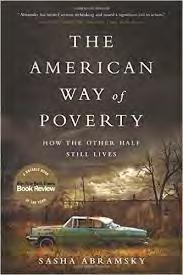
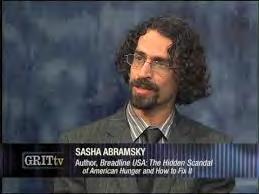
Many of the interviews on which this book is based are accessible at the following audio archive: www.thevoicesofpoverty.org Abramsky’s published books include Breadline USA: The Hidden Scandal of American Hunger and How to Fix It (PoliPoint Press, 2009), American Furies: Crime, Punishment, and Vengeance in the Age of Mass Imprisonment (Beacon Press, 2007), Hard Time Blues (2002) chronicling the growth of the American prison system, Conned (2006) chronicling the impact of criminal disenfranchisement on national political elections, and a recently published memoir entitled The House of Twenty Thousand Books (2014).
N o t e : F r i d a y ’ s C l o s i n g K e y n o t e P r o g r a m b e g i n s @ 6 : 1 5 p m : D i x i e S a l a z a r “ A n d h o m e l e s s n e a r a t h o u s a n d h
Dixie Salazar, an award-‐winning artist, author, activist, and educator, has been a working artist and writer for more than forty years. Her work is alive with the passion of life, and rich in the color and iconography of her Spanish heritage. Her paintings are a delicate combination of flowing forms, vivid color, and provocative abstraction, tempting fantasies that stimulate the imagination. Her work has been shown extensively, including exhibits in San Francisco, Las Vegas, New York, and numerous galleries throughout the Central Valley. Dixie is also an accomplished writer, having published two novels, including CARMEN AND CHIA MIX MAGIC (2014), and five volumes of poetry, including REINCARNATION OF THE COMMONPLACE (a national poetry award winner published in 1999), BLOOD MYSTERIES (2003), FLAMENCO HIPS AND RED MUD FEET (2010) and ALTAR FOR ESCAPED VOICES (2013). The latter contains poems written in the voices of inmates she met while teaching and writing at men’s and women’s prisons, including Corcoran State Prison.
Dixie has spent a lifetime forging her identity out of two cultures: “On one side was my father’s world: Spanish speaking from las montanas. On the other side was my mother’s world: a deep Southern drawl wafting from the magnolia and chinaberry trees.” Her poems examine her identity as a product of both cultures, never completely at home in either one, always navigating the alienation of her cultural in-‐between-‐ness and comfortable with her status as “outsider,” free to decide where her own “borders” begin or end. “Dixie works at the tense points of the ordinary and unlocks the extra-‐ordinary,” writes our current national Poet Laureate, Juan Felipe Herrera. “Here, the city, the shores, the streets, the display windows, the family rooms—and those that inhabit these spaces—are all cast in hard light and raw truths. Yet, she is singing. All comes back to life in this manner, the text seems to say. An incandescent and brave voice for our times.”
Her recent projects include a photographic exhibit of a homeless encampment in Fresno and serving on the board of the Eco Village Project and the Dakota Eco Garden, which provide sustainable, green housing for the homeless in a community environment. “In 2009,” she writes, “I accompanied a friend who was making a film, set in the homeless encampments of H Street, at that time a huge mass of makeshift dwellings patched together from blue tarps, scraps of wood and odd pieces of junk, by the railroad tracks downtown, with about two to three hundred homeless residents. I was so taken with the visual tableau that I came back with my camera and ended up with a photography show at city hall. It was fascinating how they put together living spaces with scavenged metal, wood, tarps, and all manner of discarded detritus.... Some years later, a friend bought a big house with half an acre and opened up a transitional living shelter for the homeless. Immediately, I jumped on board and it’s been quite a ride. I’ve met remarkable people, those who are truly at the bottom of the pile, both physically and metaphorically. And they’ve shared their stories and many of their voices have crept into my poems.... I didn’t ever feel that making artwork was a choice for me and being involved in activist work that is meaningful is also not a choice. And it’s not complicated, it’s what I have to do because it’s who I am.”
h t t p s : / / s u p e r s t i t i o n r e v i e w . a s

Nigel Hatton is Assistant Professor of Literature in the School of Social Sciences, Humanities and Arts at the University of California, Merced. In addition to his position at UC Merced, he has taught classes at Central California Women’s Facility and as an adjunct instructor with the Prison University Project at San Quentin State Prison, where he has facilitated literature, writing and journalism courses and consulted with staff for the prison newspaper, The San Quentin News. He received his Ph.D. in both Modern Thought & Literature and the Humanities, with a minor in political science, from Stanford University, and completed postdoctoral studies at the Søren Kierkegaard Research Centre in Copenhagen, Denmark. He also holds master’s degrees in Latin American Studies and Journalism from the University of California, Berkeley. A former Du Bois fellow at Harvard University, his published work includes articles on human rights and cosmopolitanism, and on writers and thinkers such as Søren Kierkegaard, Martin Luther King, Jr., Jose Martí, Ivan Klíma and Louise Erdrich. Research and teaching interests include the interrelated histories of the development of classical, modern and contemporary fictional narrative and human rights discourses, and aesthetics as a response to and means for preventing and interrogating cultures of violence. He is also a member of the governance council for the Center for Collaborative Research for an Equitable California.
Tanya Golash-‐Boza is the author of five books: 1) Deported: Policing Immigrants, Disposable Labor, and Global Capitalism (2015), which explains the connection between mass deportation and global capitalism; 2) Due Process Denied (2012), which describes how and why non-‐citizens in the United States have been detained and deported for minor crimes, without regard for constitutional limits on disproportionate punishment; 3) Immigration Nation (2012), which provides a critical analysis of the impact that U.S. immigration policy has on human rights; 4) Yo Soy Negro: Blackness in Peru (2011), the first book in English to address what it means to be black in Peru; and 5) Race and Racisms: A Critical Approach (2015). She has also published many articles in peer-‐reviewed journals on deportations, racial identity, U.S. Latinos/as and Latin America, in addition to essays and chapters in edited volumes and online venues such as Al Jazeera, The Nation, and Counterpunch. Her innovative scholarship was awarded the Distinguished Early Career Award from the Racial and Ethnic Minorities Studies Section of the American Sociological Association in 2010. In 2013, she was awarded the UC Merced Academic Senate Award for Distinguished Scholarly Public Service. Tanya’s most recent work is on the consequences of mass deportation. With funding from a Fulbright-‐Hays Faculty Research Abroad Award, she completed over 150 interviews with deportees in Brazil, Guatemala, Jamaica and the Dominican Republic in 2009 and 2010. This research forms the basis of her most recent book, Deported, which will be released in November 2015 from New York University Press. Kim McMillon is currently completing a Ph.D. in World Cultures at the University of California, Merced, with an emphasis on the Black Arts Movement and African American Literature. In collaboration with UC Merced’s Office of Student Life and Center for the Humanities, Ms. McMillon produced the UC Merced “Black Arts Movement Conference 50 Years On,” February 28 -‐ March 2, 2014. As President of the UC Merced African Diaspora Student Association, Ms. McMillon produced programs on race and culture with such renown speakers as Askia Toure, one of the main architects of the Black Arts and Black Power Movements, and former Black Panther Charlotte “Mama C” O’Neal, and she facilitated a graduate panel on diversity at UC Merced. Ms. McMillon is a guest editor for the December issue of The Journal of PAN African Studies, a special edition on the Black Arts Movement, and has been asked to contribute to Black Power Encyclopedia (1965-‐1975), a
two-‐volume reference work that explores the emergence and evolution of the Black Power Movement in the United States. From 2001–2005, Ms. McMillon produced the Oakland Literature Expo with PEN Oakland as part of the City of Oakland’s Art & Soul Festival. Ms. McMillon’s radio show Arts in the Valley (2010-‐2014) aired every Saturday on 1480 KYOS AM in Merced, California. In 2014, the PEN Oakland anthology Fightin’ Words, which she co-‐edited with Claire Ortalda and Judith Cody, was published by Heyday Press in Berkeley, California.
Karissa Moreno is a bilingual native of the North Bay Area and lifelong advocate of minority advancement. She earned her BA in Cultural Anthropology from UC Santa Barbara and her Master’s degree for the University of Chicago. After spending years working with at-‐risk youth and as an educator, she found her passion fighting to eliminate health disparities and improve access to care. She worked at Santa Rosa Community Health Centers for over 7 years, and in spring 2015, she joined Livingston Community Health as their Chief Operations Officer. From the Merced Sun-‐Star: “Livingston Community Health has opened its first dental clinic in Hilmar, expanding access to dental care in the area. The dental clinic is at 7970 Lander Ave., next door to Livingston Community Health’s medical clinic in Hilmar. The dental clinic opened its doors to the general public during a soft opening Monday. Livingston Community Health officials said they opted for a slow rollout, taking only a small group of patients initially, to help the new staff adjust and because there’s still some construction taking place at the site. Livingston Community Health officials plan an official ribbon-‐cutting ceremony during the summer. But those interested in dental services can start scheduling appointments now. Karissa Moreno, the chief operating officer at Livingston Community Health, said the Hilmar dental clinic will serve patients regardless of their ability to pay. In addition to insurance, the dental clinic will take Denti-‐Cal, Medi-‐Cal’s dental program, and will offer fee arrange-‐ments to those who qualify. Moreno said services primarily target the uninsured and low-‐income residents. This group of people, she said, usually avoids dental services because they can’t afford out-‐of-‐pocket costs. The dental clinic has an enrollment counselor on-‐site who can help those who qualify sign up for health insurance. Moreno said that once insured, patients tend to seek more preventive care. Dr. Remya Niranjan is the Hilmar clinic’s only dentist at this time. Niranjan, who is originally from San Francisco and previously worked in Gustine, said she decided to continue her work in a rural community because of the need for such services by the area’s underserved population. “There’s a lot more need (for services) here,” Niranjan said. “A lot of places don’t take (Denti-‐Cal) and some people have to wait months for an appointment.” Moreno said the dental clinic is looking for a second dentist to help Niranjan with patient flow. “It’s important to hire the right fit,” Moreno said. “Someone committed to working in rural communities.” Niranjan said she is currently focusing on preventive and restorative services, and can see about eight to 10 patients per day. Once the dental clinic is up to full speed, she expects to add more invasive and extensive dentistry and see up to 22 patients per provider, per day. The dental clinic also has space for urgent walk-‐ins. In addition to Niranjan, the dental team consists of three dental assistants, one registered dental assistant and two receptionists – all new hires. The clinic also is looking for a dental billing specialist and office manager. Moreno said Livingston Community Health’s next goal is to build a similar dental clinic at its Livingston site. The nonprofit health system would need to seek grants to make this happen, she explained.” –ANA B. IBARRA, Merced Sun-‐Star (May 6, 2015)
Aletha Harven is Assistant Professor of Child Development at California State University Stanislaus. Her research studies the impact of school-‐related risk factors on the mental health and academic functioning of Black and Latino students, while also discussing the psychological and social environmental factors that might help students to stay resilient in the face of adversity. Her research examines educational implications, including Black and Latino student mental health, motivation, and academic achievement, providing insight on the promotion of a college-‐going culture among Black, Latino, and other underrepresented groups of students in the central valley.
Imelda Plascencia is the Project Coordinator of Health Initiatives at the Dream Resource Center of the UCLA Labor Center; addressing the lack of access and health resources for undocumented communities. For the past ten years, Imelda has organized with the immigrant rights movement as a Queer Undocumented activist. Her work centers on health justice and health access for immigrant communities, and intersectional organizing for LGBTQ immigrants. Imelda has previously coordinated Queer Dream Summer, a national summer internship program for UndocuQueer immigrant youth, and is a co-‐founder of IDEAS at Mt. SAC, the Queer Undocumented Youth Collective and the CIRCLE Project; initiatives that intentionally address intersectional immigrant issues. Imelda is a lead researcher on the study Undocumented and Uninsured. Here’s an interview where Imelda discusses the challenges of achieving her educational objectives as an undocumented student: https://www.youtube.com/watch?v=XK7GUsKSqqs
Lauren Ornelas is founder of Food Empowerment Project and serves as the group’s executive director. She is also the former executive director of Viva!USA, a national nonprofit vegan advocacy organization, which she was asked to start in 1999 after spending four years as national campaign coordinator for In Defense of Animals. lauren has been active in the animal rights movement for more than 20 years. In cooperation with activists across the country, she worked and achieved corporate changes within Whole Foods Market, Trader Joe’s, and Pier 1 Imports. She served as campaign director with the Silicon Valley Toxics Coalition for six years. Watch lauren’s TEDx talk, The Power of Our Food Choices. One goal of the Food Empowerment Project is to highlight inequities in food systems in the United States, which have led to higher rates of health problems among people of color and in low-‐income communities, including diabetes, due to the lack of access to healthy foods. Areas lacking such access are commonly referred to as food deserts, a form of environmental racism that threatens the health of future generations. This form of injustice is complicated and has many moving parts: it involves, among other things, where and how people work, the responsibilities they have to juggle, and the importance of a living wage. While policy makers and communities need to work together to address inequitable food access, communities ultimately need to be the ones making the decisions. FMP works with community members to survey healthy food availability and conduct focus groups with local organizations in the impacted areas. They also work to inform public officials of their findings and encourage policy changes. Their efforts started in Santa Clara County, California, where they were based from 2007 to 2011. That work culminated in their report Shining a Light on the Valley of Heart’s Delight: Taking a Look at Access to Healthy Foods in Santa Clara County’s Communities of Color and Low-‐Income Communities, released along with GIS maps showing districts most likely to be impacted by inequitable food distribution. In 2014, they released another report, Bringing Community Voices to the Table: Food Empowerment Project in San José Focus Groups Qualitative Data Analysis Results.
Laurel Firestone co-‐founded and co-‐directs the Community Water Center (CWC), a non-‐profit environmental justice organization based in California’s Central Valley. The CWC helps disadvantaged communities gain access to clean and affordable water. Laurel previously served as the Director of the Rural Poverty Water Project at the Center on Race, Poverty and the Environment in Delano, California, under a 2004-‐06 Equal Justice Works Fellowship. Laurel was awarded the Gary Bellow Public Service Award by the Harvard Law School in 2013, awarded to one alumnus and one student each year. In 2010, she and her Co-‐Executive Director, Susana De Anda, were co-‐awarded the Carla Bard Advocacy Award from Public Officials for Water and Environmental Reform (POWER), awarded to one water advocate in California each year. In 2009, she authored the comprehensive Guide to
Community Drinking Water Advocacy. She also served on the Tulare County Water Commission from 2007-‐2012, and Co-‐Chaired Governor Brown's Drinking Water Stakeholder Group. Laurel graduated with honors from Harvard Law School and holds a
B.A. magna cu m laude in Environmental Studies from Brown University.

The Elixir of Clean Water and Sanitation Aspen Ideas Festival (2015)
Marisol Aguilar and Yessenia Martinez serve as staff attorneys with the Modesto office of the California Rural Legal Assistance (CRLA), working with low-‐income individuals on social justice efforts addressing housing, employment, and education issues. Yessenia works with low-‐income individuals on social justice efforts addressing housing, employment, and education issues. Marisol is the lead staff attorney on their Community Equity Initiative. She works on environmental justice and infrastructure issues alongside community members residing in unincorporated areas. Her successful leadership of the CRLA’s effort to address Parklawn neighborhood municipal services issues was chronicled in a recent Modesto Bee article (Parklawn homes can finally make connection to Modesto wastewater service—Oct. 13, 2015). CRLA supports innovative and ongoing initiatives focused on marginalized communities to address community-‐identified needs and works with an array of community organizations, researchers and local leaders to identify complex areas of need specific to local communities. Throughout California hundreds of thousands of people live in Disadvantaged, Unincorporated Communities (DUCs). DUCs range from urban pockets that are excluded from cities, to more remote, densely settled rural communities. Residents in these communities often live without the most basic features of a safe and healthy environment -‐ potable drinking water, sewer systems, safe housing, public transportation, access to healthy food, sidewalks, streetlights and parks -‐ due to decades of neglect and exclusion from formal decision making by city, county and state governments.
The Community Equity Initiative (CEI) is a multi-‐strategy effort designed to address and eliminate social, political and environmental factors that negatively impact DUCs. The CEI was established to focus
CRLA resources towards changing patterns of historic inequality in rural regions of California. In partnership with PolicyLink and the California Rural Legal Assistance Foundation, CRLA staff work alongside community leaders to raise awareness of DUCs, increase investment in community infrastructure, advocate for equitable development, promote environmental justice, guarantee fair representation and build leadership capacity, so that residents can engage meaningfully in decision-‐making that impacts their neighborhoods and their families.
Yvette McShan is the founder of Victorious Black Women, an organization dedicated to empowering and providing support to Modesto homeless populations through feeding, clothing and counseling them, and making referrals. The Victorious Black Women and Women of Color take a stand for those who are misunderstood, disenfranchised, marginalized, discriminated against and overlooked by serving as a voice for mental health and substance abuse consumers in all communities of California. The Victorious Black Women are dedicated to enlightening, educating, and informing members of society in how to treat people with mental health, substance abuse challenges with dignity and respect, whether these conditions are experienced by ex/cons, veterans, older adults, gays, lesbians, bisexuals, or transgender individuals. The Victorious Black Women are empowering women who encourage awareness and understanding for those affected by challenges involving mental health, substance abuse, and homelessness. Their goal is to reduce disparities, barriers, stigmas and discrimination that exist and all too often prevail in African American and Women of Color communities. Yvette also spoke in Geneva, Switzerland at a United Nations event in 2014 on the topic of inhumane isolation of black males in Pelican Bay State Prison. She is a tireless advocate for mental health and humans rights quality-‐of-‐life issues, with emphasis on providing assistance to help at-‐risk populations gain access to housing, medical care, employment and education.
Leng Power and John Lucas are co-‐producing a feature-‐length documentary on local area homeless populations, based on interviews conducted and filmed on the streets of Modesto. Their project, launched by the Modesto Peace/Life Center, is dedicated to providing helpful and inspiring information on homelessness, through a collection of homeless video interviews, collected poems and stories from local community members, by identifying local homeless services, homeless advocacy campaigns, and homeless issues facing the community, and by bringing attention to the causes of homelessness. Their goal is to humanize the community’s experience of its the homeless population by putting a face on the homeless experience. They also intend to display the impressive, complex system of support provided to our local homeless, interviewing public agencies, churches, civic groups and individuals who serve our homeless, as well as to inform their viewers on how they can become involved to help address local homelessness.
Aaron Farnon and Ruben Imperial (Stanislaus County Focus on Prevention Initiative)
Bev Hatcher and Maris Sturtevant (United Samaritans & the We Care Program of Turlock)
Emily Renteria (San Francisco State Ethnic Studies MA program)
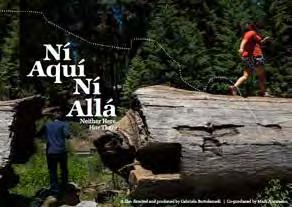
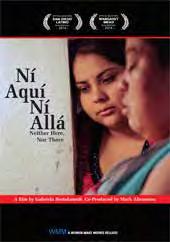
Ni Aquí, Ni Allá (Neither Here, Nor There)
A film by Gabriela Bortolamedi, Co-Produced by Mark Abramson US, 2014, 24 minutes, Color, DVD, Spanish, Subtitled
NI AQUI, NI ALLA (“Neither Here, Nor There”) illuminates the challenges facing an undocumented college student and her family. Blanca, a second-‐year student at the University of California, Berkeley, crossed the border from Mexico into the United States with her parents when she was a child. As a student under the California DREAM Act who possess DACA (Deferred Action for Childhood Arrivals), Blanca qualifies for financial aid and has temporary protection from deportation, though her undocumented parents, who live and work in California's agricultural Central Valley, do not. NI AQUI, NI ALLA paints an intimate portrait of an undocumented family as they support each other during a turning point in their lives and stay together through the distance. At a time in this country’s history where the debate around immigration is highly contested and demands to close the border are in the daily news, NEITHER HERE, NOR THERE paints a very human face on an issue that many use simply as partisan, political fodder.