BRITTA SJOGREN THE GAZE RETURNED

BRITTA SJOGREN THE GAZE RETURNED
Britta Sjogren – The Gaze Returned , represents a chance to see her significant work. This exhibition comprised of her films, film stills and photography show the extraordinary talent that Sjogren brings to the media. Her deep understanding of feminist film theory and her studies of the female voice in Hollywood films allows her to use her film and photography to reframe what we think of the female image in a highly positive manner.
Stanislaus State is fortunate to have exceptional exhibitions of Video and Time Based Media in the gallery programing. These exhibitions generate meaningful discussions and lifelong learning about these mediums. These important exhibitions also help to support our faculty’s teaching. It is through faculty recommendations that many exhibitions come to our galleries. This exhibition was recommended by my colleague Jessica GomulaKruzic, who wrote the following about Britta Sjogren’s work:
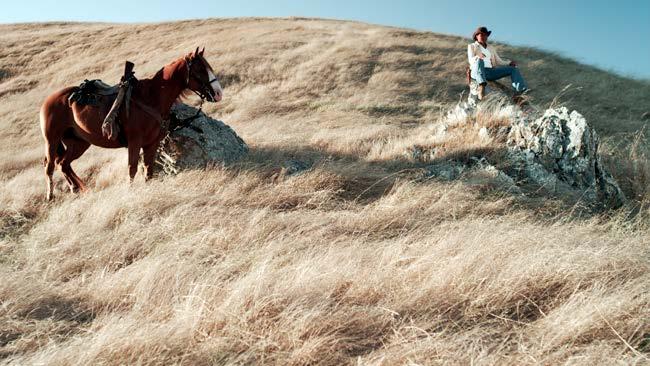
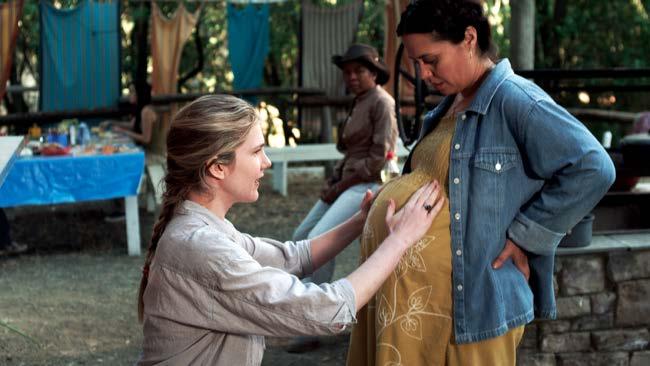
Sjogren’s work is especially relevant in our contemporary #MeToo and the aftermath of George Floyd. These recent social movements have converted personal, individual experiences that were shared online into tangible change, sparking legal, political, and social changes. Redemption Trail, while preceding these movements, repeats a familiar refrain as it follows two strong women, who have experienced personal trauma. As with the recent social movements, which brought together disparate groups of people from across the world, the women in Redemption Trail form an unlikely alliance, as their differences open them up to new visions of themselves.
I am elated to be able to exhibit Britta Sjogren’s work for others to enjoy. I would like to thank the many colleagues that have been instrumental in presenting this exhibition. Britta Sjogren for the chance of exhibiting her brilliant work, Jessica Gomula-Kruzic for recommending Britta Sjogren’s exhibition, Brad Peatross of the School of the Arts, California State University, Stanislaus for the catalog design and Parks Printing for the printing. Much gratitude is extended to the Instructionally Related Activities Program of California State University, Stanislaus, as well as anonymous donors for the funding of the exhibition and catalogue. Their support is greatly appreciated.

Dean De Cocker
Director, University Art Galleries
California State University, Stanislaus
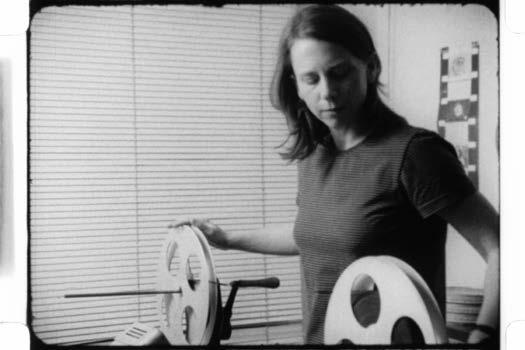
(Writer/Director/Producer) Sjogren’s films have received awards in such diverse venues as the Sundance Film Festival, SXSW, Rio FEMINA, Atlanta, Aspen, as well as been included in special showcases at Creteil’s Festival of Films by Women and the Locarno International Film Festival. Her most recent feature, Redemption Trail , a contemporary feminist Western set in Oakland and Marin, premiered at the prestigious Mill Valley International Film Festival, winning the audience award. Past features written and directed by Sjogren include In This Short Life (2005), a neorealist docu-fiction about choices—big and small—and their consequences, and Jo-Jo at the Gate of Lions , (1992) a modern Joan-of-Arc story about a young woman’s perverse attempt to save the world through self-denial. Sjogren’s short, a small Domain —a fable about a solitary woman in her 90s who kidnaps a baby—won the Grand Jury Prize for Best Short Film at the 1996 Sundance Festival, and a dozen other top festival awards. Sjogren is a Guggenheim Fellow, and recipient of the AFI Independent Filmmaker grant and the CineReach award for Best Screenplay Minority Protagonist, among other honors. She has programmed film series for the Creteil Festival and the Pacific Film Archive in Berkeley, and is Professor of Cinema at San Francisco State University, where, as School Director from 2015–2019, she launched a major curricular initiative to spotlight the contributions of women in film and oversaw important capital improvements, including the renovation of the famed Coppola Theater. Sjogren is author of a book on female voice and sound in film, Into the Vortex . She co-founded the production company Dire Wolf in 2007. Sjogren is currently developing several new projects, including an episodic fictional series delving into the issues of gun violence/gun control in the United States, as well as a limited series set in Yurok country exploring historical and contemporary water rights conflicts and their connection to the disturbing pandemic of missing and murdered indigenous women and girls.
Artist Statement
My films are unorthodox narratives that center on the subjective experience of women. My work flexes on principle against the presumption, pessimistically wrought by many feminist film theorists, that the powerfully centered male gaze of cinema reduces the female image and women characters of film to pure “objectified” spectacle. My first feature, Jo-Jo at the Gate of Lions , highly influenced by feminist film theory and my own studies of female voice in Hollywood films of the 1940s, plumbs the potential of voice to disrupt and “reframe” the image. With a small Domain and In This Short Life, I continued to use sound and narrational layering to interfere productively with the image, to promote empathetic identification and represent dissonant points of view that bring to the fore the experience and/or interiority of women. In these two films, also, I sought to render “visible” other marginalized figures—the elderly, people of color, the mentally ill. The subtle, richly self-reflective
awkwardness that comes from a hybrid documentary/fictional form promotes a sense of connection to the “real” people whose lives are represented in these films. My most recent feature, Redemption Trail , swings back into a full-throttle fictionality structured by an emphatic weave of multiple voices. The stress on threading perspectives, layered reminders of psychological, cultural and political difference, honors contradictions within and between the characters and their stories.
Filmmaking is a collaborative practice: the cinematographers, sound designers, editors and actors I have worked with are essential co-artists on these films. I am so grateful for their brilliant ideas, and creative generosity in working with me on these projects. The photographic work shared in this exhibit is, on the other hand, an ongoing solitary practice—one that feeds my film work as I refine my own compositional “eye” and aesthetic fixations—here obvious in my love of color, collage compositions, the lives of women and children, the beauty of work, the grace of abstracted details, and the compelling presence in the gaze returned.
I would like to acknowledge, with appreciation, everyone involved with the work that went into this show, in particular all my film collaborators, as well as everyone at CSU Stanislaus involved in mounting the show. Huge thanks to Director Dean De Cocker for the invitation to exhibit in the Art Space Gallery. He and the exceptionally talented Graphic Artist Bradley Peatross were wonderfully generous collaborators on the editorial and creative design and technical execution of the show and catalog. Finally, I am grateful to my two biggest supporters, my daughter Asta Sjogren-Uyehara and my husband Scott Verges. You two are the earth under my feet.
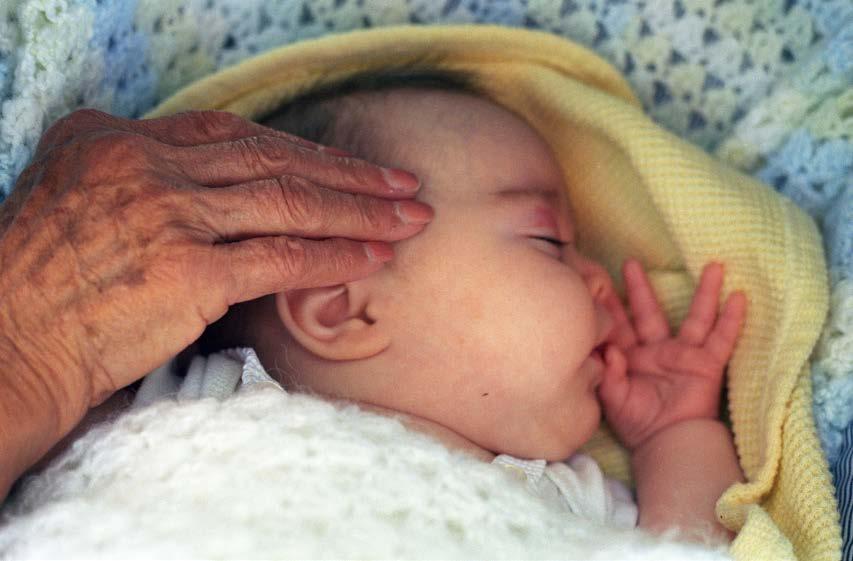
a small Domain, 1996
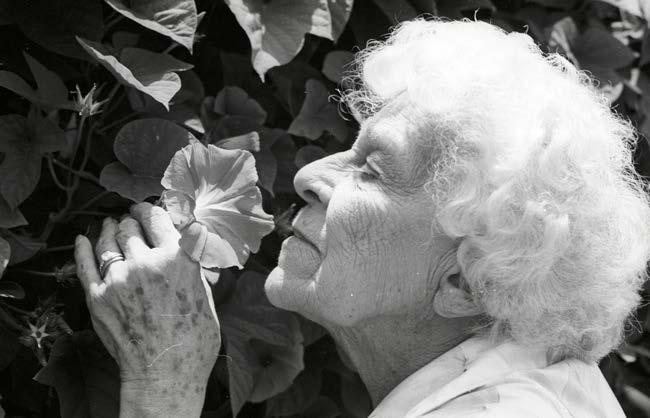
Jo-Jo at the Gate of Lions (16mm, b&w, 96 mins., 1992)
Writer/Director/Producer/Editor/Sound Design: Britta Sjogren
Cinematographer: Greg Watkins
Creative Advisor/Assistant Director: Caveh Zahedi
Starring: Lorie Marino, Chris Shearer, David Schultz
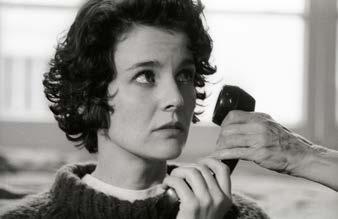
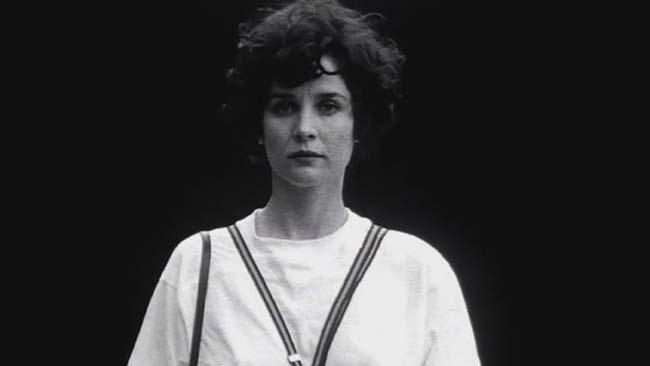
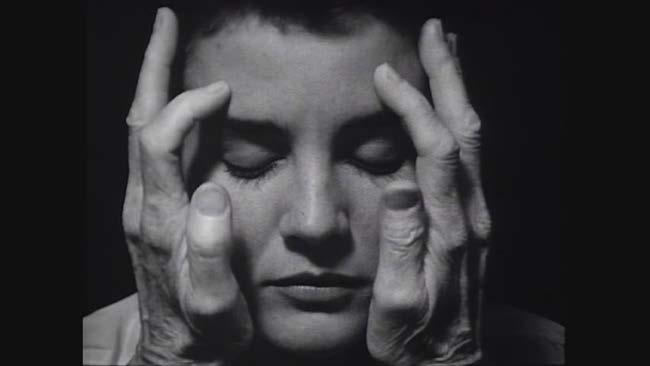
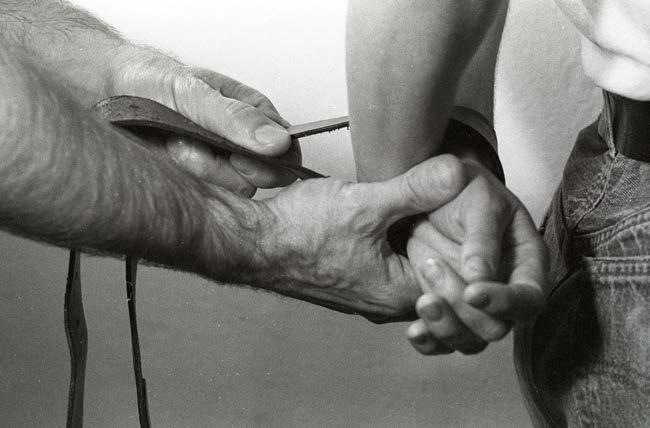
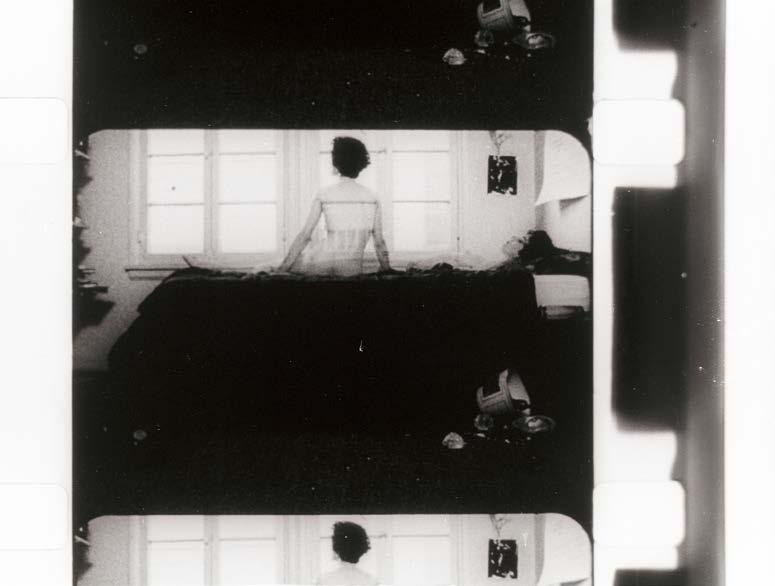
This first of my three feature films is a modern Joan-of-Arc story about a woman who believes she can prevent nuclear war by resisting her own desires. Jo-Jo is above all a portrait of a consciousness. A young woman struggles to embrace an internal divide that defines her being, a divide “between” a deeply felt subjective self and an equally acute experience of being objectified. To derail the seemingly inevitable objectification of the “beautiful” Jo-Jo, I emphasized the many different “voices” telling this story. In addition to Jo-Jo’s dialog within scenes, her character possesses a lyrical, “poetic” asynchronous interior monologue; she also “listens” to a mysterious “Other” voice that the male characters cannot hear (but which we hear along with her, as if hallucinating together). Jo-Jo has a voice in “writing” the film, through intertitles that suggest her character’s retrospective view of the social and narrative conventions that have structured her life, her love affair and trials, spanning themes of love, work, death, and myth. These intertitles also speak of the filmmaker, another “absent” woman speaking through the film. Along with these acoustic strategies exploring the dimension and psychological force of “voice” to disrupt the image and align the spectator with Jo-Jo’s interiority, I visually underscored Jo-Jo’s entrapment as Woman/Other in the cinema and as an opaque figure of mystery to the male characters in the film, using long takes, and aestheticized compositions that stress her association to the image. The “patriarchal” voice—of ideology itself perhaps—also flows through the film, through “the rational” and “coercive” speech of the two men who seek to understand and/or possess Jo-Jo: their love and violence both are linked to controlling impulses within language and gaze. Thus, as the film progresses, multiple perspectives on the character of Jo-Jo open up, offering different and sometime irreconcilable viewpoints of her persona and situation. Complex, ambivalent, self-sabotaging – in short, not exactly a “positive role model,”—socially confined and mythically empowered—Jo-Jo navigates the contradictions of being female.
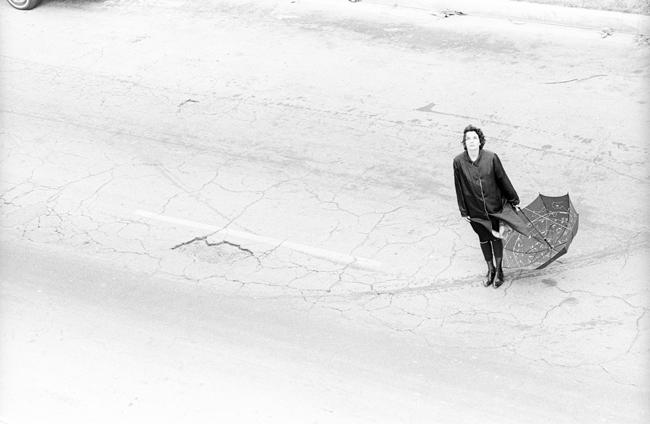
a small Domain (16mm, color, 18 mins, 1996)
Writer/Director: Britta Sjogren
Producers: Andrea Sperling & Britta Sjogren
Cinematographer: Greg Watkins
Editor: Dody Dorn
Sound Design: Alberto Garcia
Music: Blake Leyh
Starring: Beatrice Hayes, Anna Gasteyer, Rebecca Guadeloupe de las Carreras Kuntz
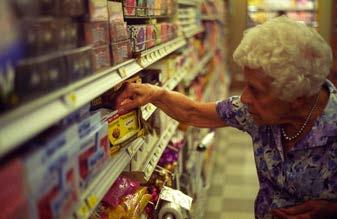
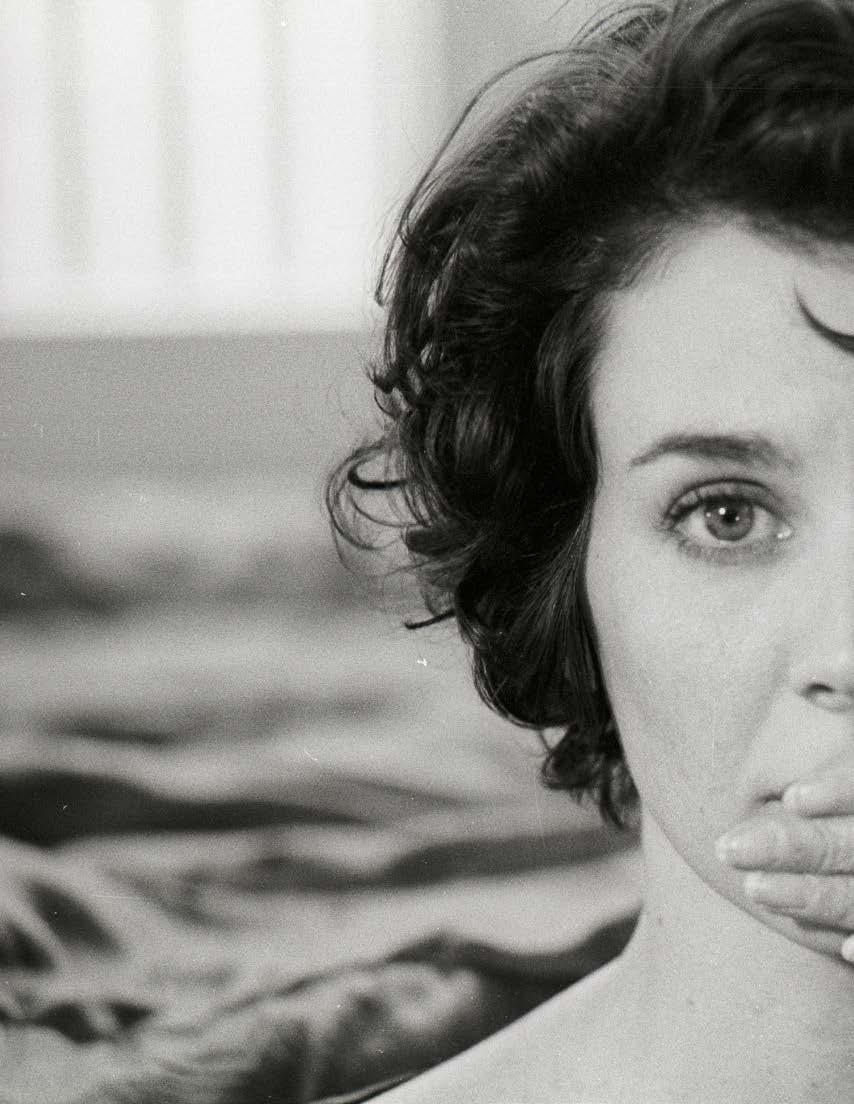
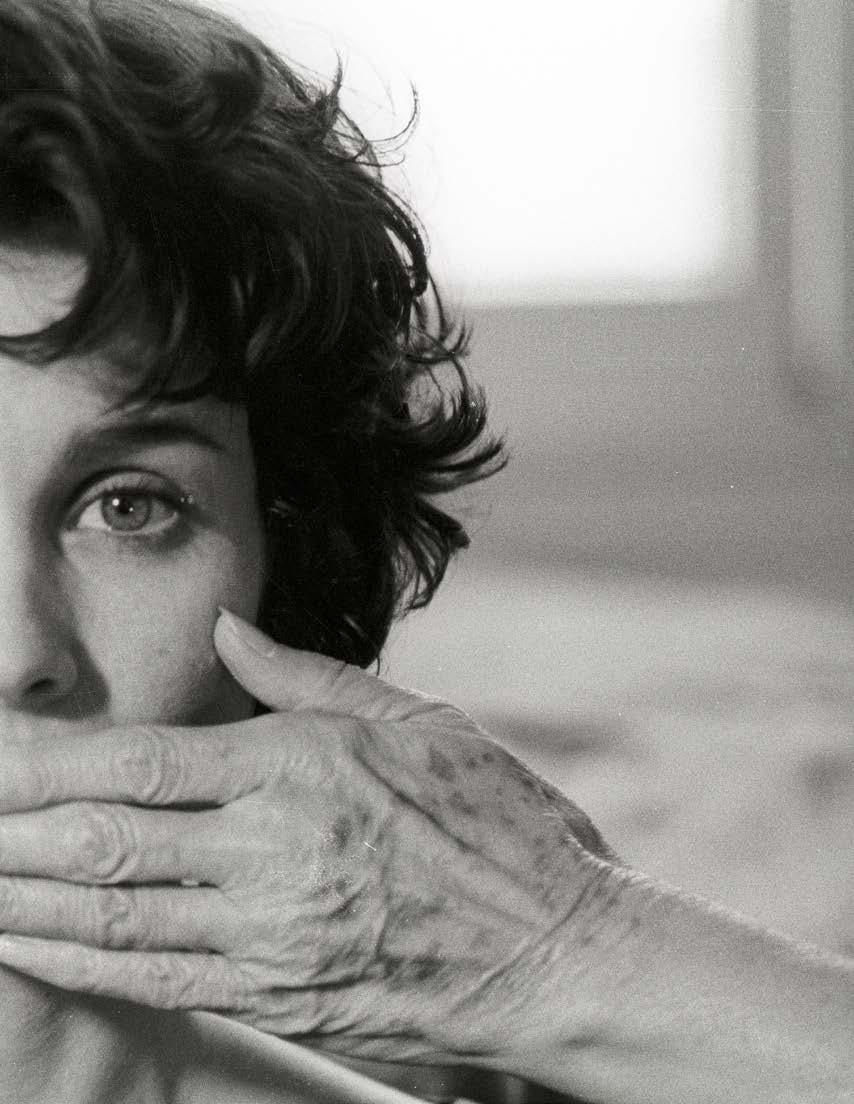
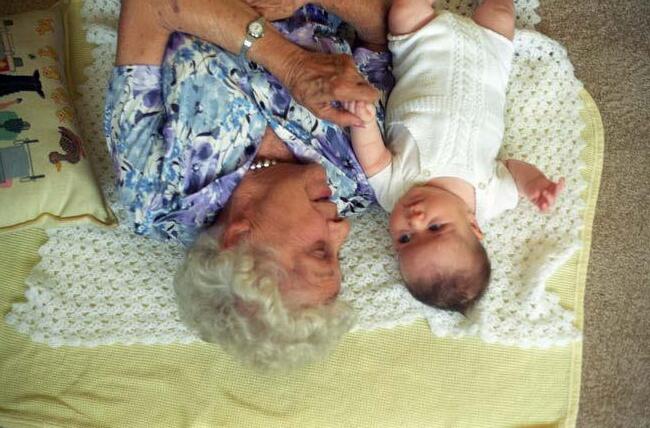
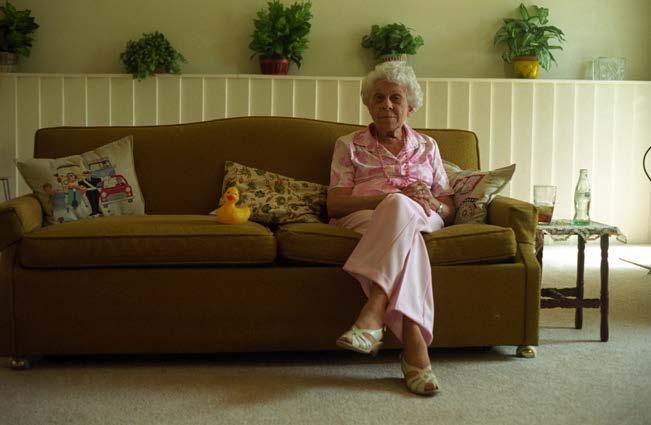
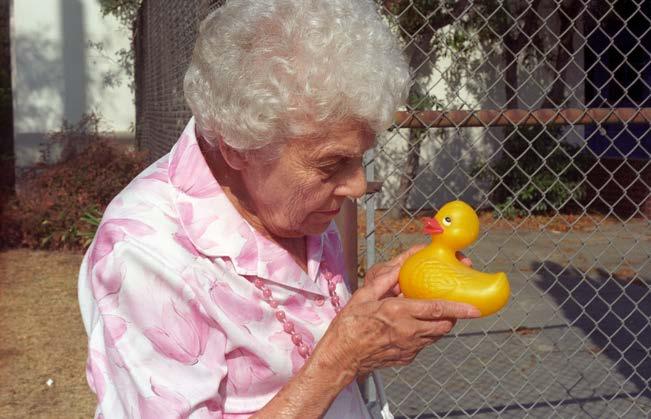
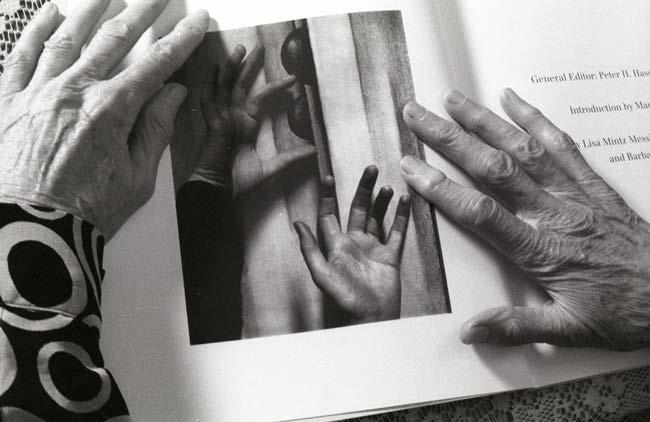
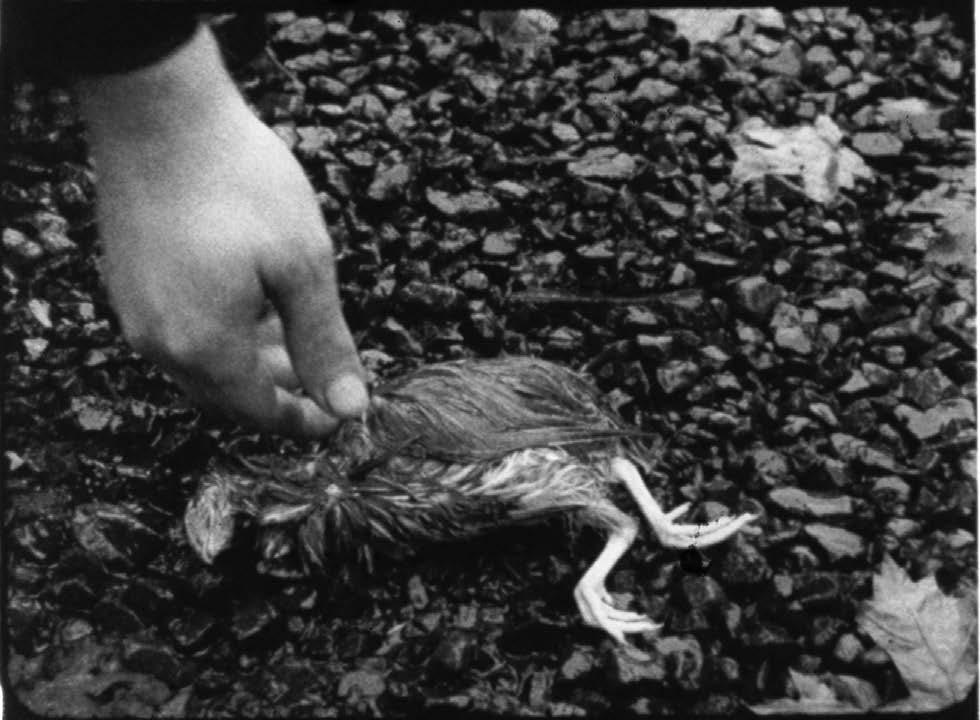
Inspired equally by the poetry of Emily Dickinson and my friendship with Beatrice Hayes, a small Domain relies almost entirely on image to tell the story of the lonely, yet vigorous last days of a 95-year old woman who prepares for death. The underlying premise of the film was based on my observation of how my friend seemed to live in two times at once: she was keenly in the present and avid to drink in all that is sweet in life, while also being palpably immersed in the past—“with” her beloved husband, dead now for 30 years—already, in a sense, half-dwelling in the shade. I wanted to portray this “split,” to reveal her rich dimensionality, to render homage to her poignant ability to inhabit a kind of poetic, vertical temporality. Bee’s character is “out” of time, in a sense; she also experiences the weight of time more acutely for her solitude: I invite the viewer to bear that weight for the duration of the film. I also wanted to portray the subjectivity of an elderly woman without denying her a body, or obliterating its history of desire.
Of course, where Jo-Jo was conspicuously visible—due to her youth and beauty—Bee is conspicuously invisible. As a “little old lady,” she glides through public spaces, commits petty acts of theft, even kidnaps a baby, without anyone really “seeing” her. Bee, like Jo-Jo, is complicated: she is capable of drastic, “unwise,” troubling actions that subvert our idea of how an old woman should behave. At the end of the film, she becomes radically visible: her bared breast, her association with an ambivalent image of sexual identity, or maternity, turned out -- to my surprise -- to be a taboo that outraged some viewers. This says a lot about how powerfully our society represses the ancient female.

In This Short Life (16mm, b&w, 96 mins, 2005)
Writer/Director/Editor/Producer: Britta Sjogren
Cinematographer: Bradley Sellers
Sound Design/Editing: Sean Uyehara
Music: Mark Eitzel & Mark Capelle
Starring: Chris Shearer, Christopher Sjogren, Christine Sjogren, Per Sjogren, Britta Sjogren, Sean Uyehara
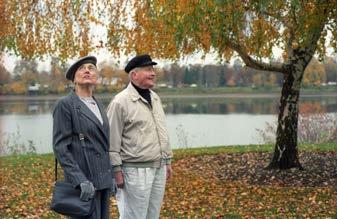
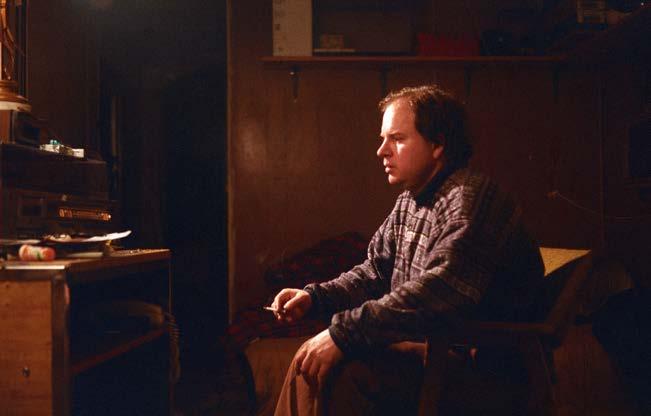
With a small Domain , an enhanced commitment to documentary elements emerged in my work, evident in the locations, style, acting, observational camera and other formal choices. I eschewed the self-referential elements cultivated to evoke Jo-Jo’s internality. Rather, the goal was stark simplicity – to distill the story rather than complicate it. My next feature, In This Short Life , extended and pushed the weaving of fiction to non-fiction, continuing to focus on not only women but other marginalized people who rarely get to tell their story—enmeshed in lives of what T.S. Eliot called “quiet desperation.” Four intertwined narrative threads—an elderly woman ambivalently embarking on an affair, a mentally unstable man being evicted from his home, a frustrated actor waiting for his breakthrough, and a young woman at a crossroads between career and motherhood—portray struggles of economic survival and existential quest. Inspired by Italian Neorealist and contemporary Iranian cinema, the film is also indebted to the films of Bresson, with their mythic simplicity, and exquisite understanding of how ordinary people transcend suffering.
The interwoven stories themselves, while conveyed in “non-fiction”-like style, were far from spontaneous ‘documentations.’” Rather, the narrative arcs were conceived in pre-production collaboration with the subject/actor/ characters who then “played” themselves in roles that are largely based on their lives. Everyone involved in the production was both “inside” and “outside” the film: actors were non-actors, writers and crew were characters. As we conceived their individual stories together, drawing on both fact and imagination, our common goal was to emphasize the central themes of the film—the challenges and twists of life, the difficulties of choice, the desire for personal liberty. Finally, this film was a route for me to push further into the grey zone of authorial voice. No longer an “omniscient” off-screen director, I play one of the characters. As my role as writer/director is increasingly decentered, compelling questions surface about my own subjectivity, the authenticity of “my” story, and my reliability as a narrator.
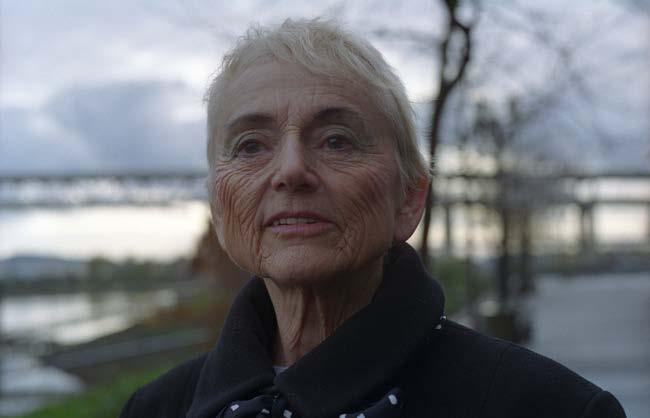

Redemption Trail (digital, color, 90 mins, 2013)
Writer/Director: Britta Sjogren
Producers: Britta Sjogren & Soumyaa Kapil Behrens
Cinematographer: Bradley Sellers
Editors: Christopher Munch & Mike Goodier
Production Design: Gillian Eversole Servais
Sound Design: Fred Helm
Music: Mark Orton
Starring: Lily Rabe, Lisagay Hamilton, Jake Weber, Hamish Linklater, Asta Sjogren-Uyehara, Juliet Stubbs
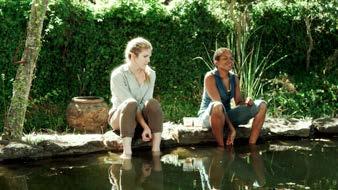
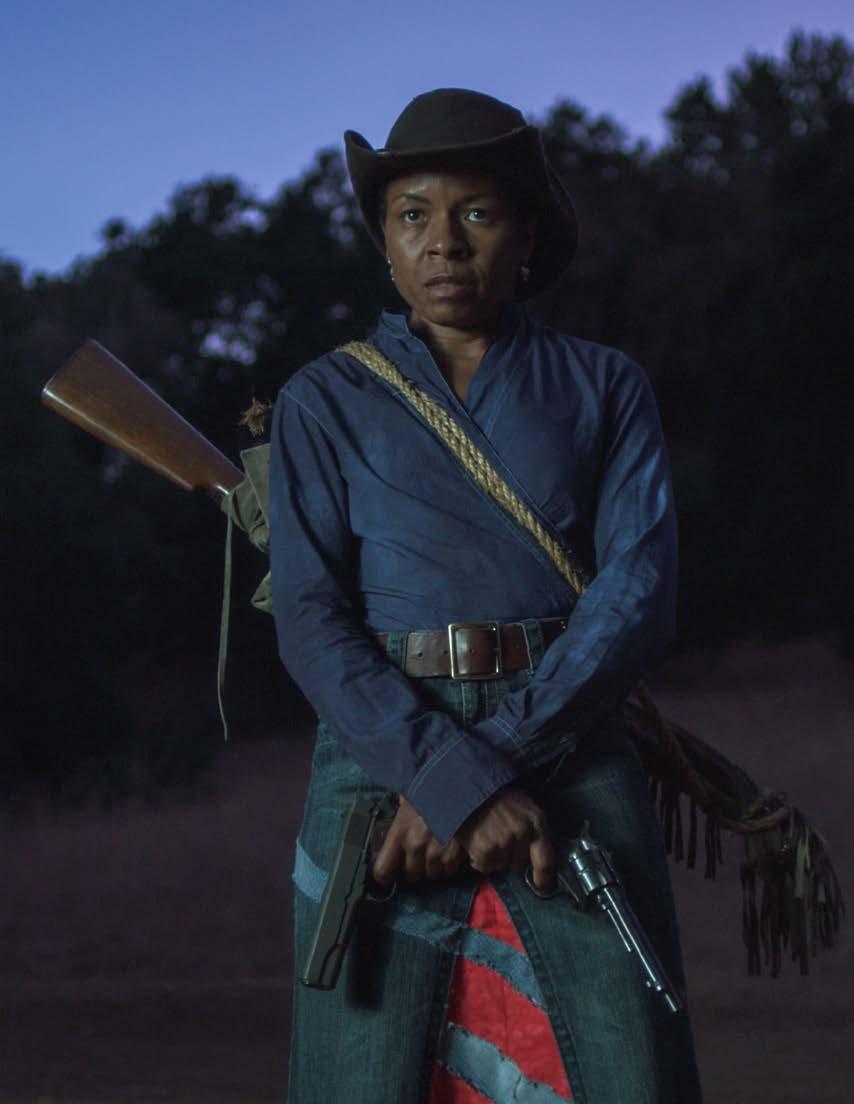
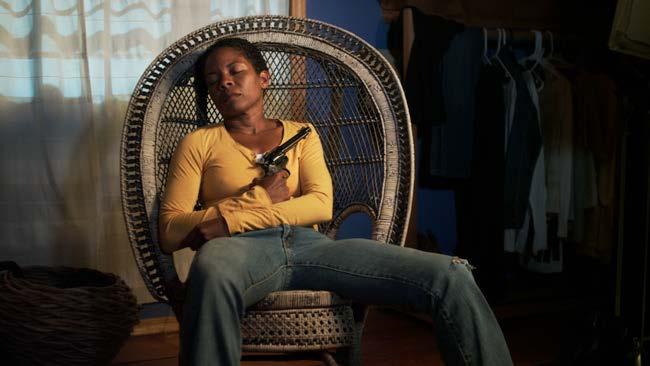
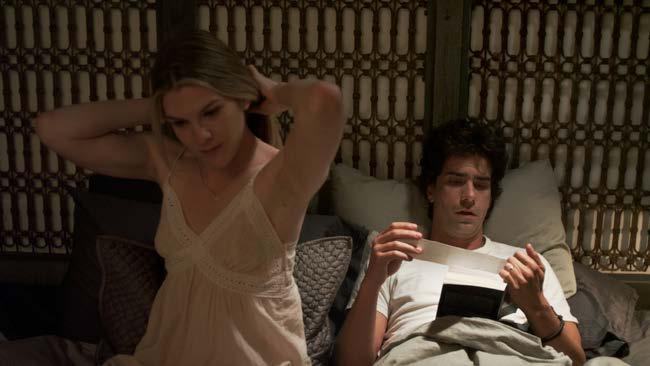
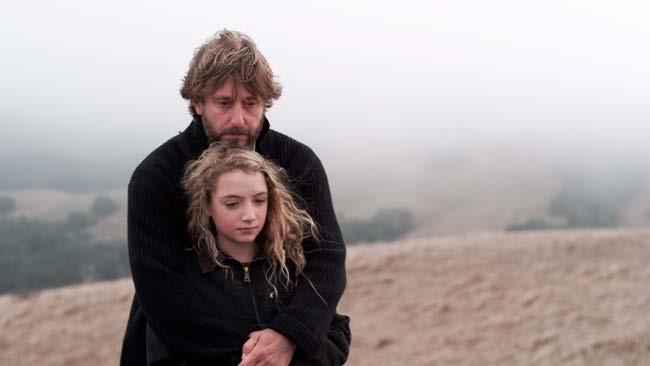
The two main characters of Anna and Tess in Redemption Trail reflect my longstanding commitment to write strong, deeply internal—but by no means idealized—women characters whose very imperfections connect us to their subjectivity. Ultimately, the film is a meditation on the possibility of recovery from trauma. Where do those who have survived deep personal loss, devastating political oppression, or who have committed irrevocable, ruinous mistakes find the will to go on? What is required to reinvent our world, to reconcile with pain we both do not want to remember, and do not want to forget? Tess, in particular, with her deep emotional and political scars—her “invisibility” as a person of color, and her colossal dignity—seeks a freedom from the past that is perhaps ineluctably compromised by both her sex and her history. Inspired by such disparate influences as John Ford’s The Searchers , Rossellini’s films with Ingrid Bergman, feminism, and Blaxploitation pics, this film was a formal and thematic opportunity to reshape classic genres within a female-centric, contemporary context. The film re-examines traditional classical Hollywood tropes -- the divide between East and West, the individual’s quest for liberty, the shifting tides of race and class tension, and the American mythology of gun-violence—and sets them into an untraditional narrative study of grief, one tempered by the affectionate lightness of a woman director’s riff on the Spaghetti Western.

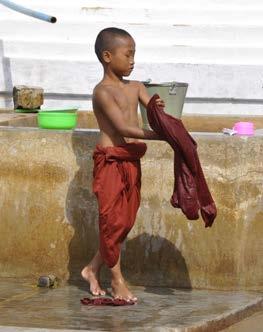
In November of 2012, President Obama visited Myanmar in a symbolic gesture welcoming the country’s baby steps towards democratic reform in the wake of its recent opening up to the West after 50 years of military rule. Coincidentally, I had at the same time the opportunity to travel to Burma with my partner. I remember vividly watching Obama’s speech on the rabbiteared TV of a dusty village café along with a half-dozen locals. Obama visited the home of Aung San Suu Kyi, embracing the pro-democracy martyr whose political sun was at its apex – this sun sinking a few years later as the outside world was forced to reckon with Suu Kyi’s troubling tolerance of the persecution and murder of the Rohingya—Burma’s ethnic Muslim minority—and her apparent collaborationist turn towards the junta.
This moment of opening became, retrospectively, a brief window into a country that really has no suitable or “politically correct” name for those of us on the outside to call it. (While the West seems to have adopted “Myanmar,” in well-intentioned rejection of the colonialist “Burma,” most of the Burmese we met told us they greatly preferred “Burma,” associating “Myanmar” with their military oppressors.) As of 2021, Burma, while not closed to tourists, has effectively closed the door on true democratic reform. The military regime has doubled down; violent religious intolerance and ethnic strife makes large swathes of this land unsafe. During our 2012 visit, the atmosphere was giddy with a sense of hope—for increasing democratic freedoms, for economic reforms and increased prosperity, even for tribal harmony: we did not know that our glimpse at the “new” Burma would be fleeting, nor could we know all that was happening outside the confines of a guest’s window into this land. With optimism so high, it was not possible to perceive the degree to which this small country— constituted of hundreds of distinct tribes—struggled to tolerate, much less affirm, its diversity. We adored the people we met, and felt deeply the honor of their openness to an encounter with us. We also had moments of sudden shock in the course of conversations with our hosts, wondering—had we understood correctly? One guide’s unguarded ethnic disparagement the Rakhine, another’s prejudice and resentment of the indigenous Pa’O tribe’s claim to cultural and natural preserves…. These moments, little shards of ice, were incongruous to the sunny times unfolding. We came away warmed by many new friendships, but saddened and chilled at the divides between those friends.
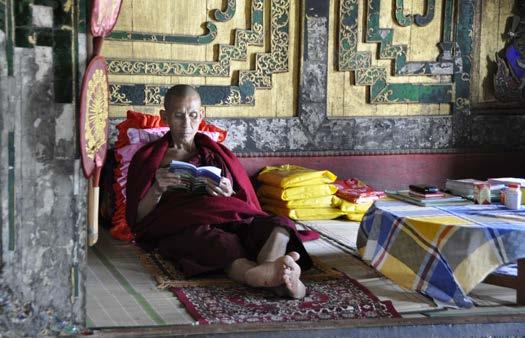
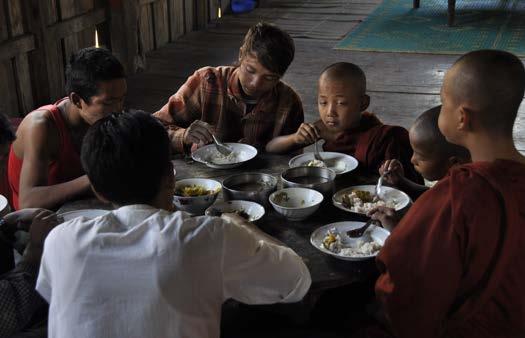
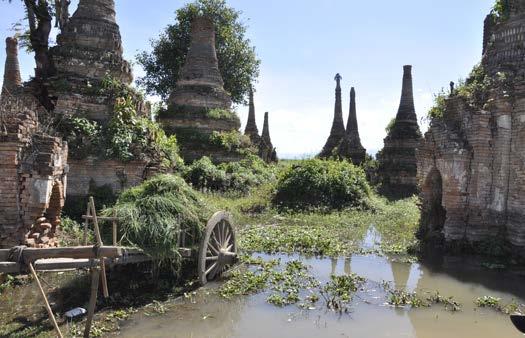
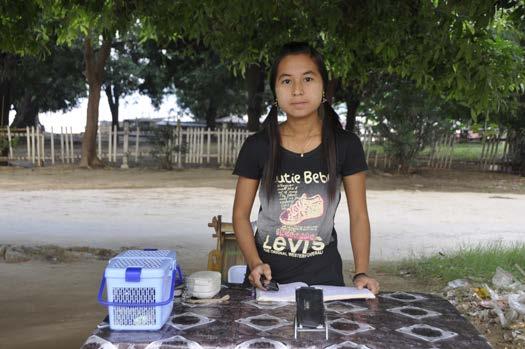
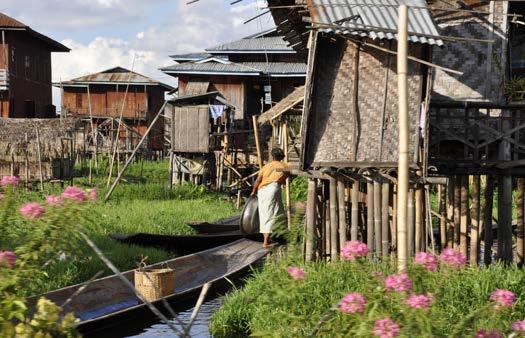
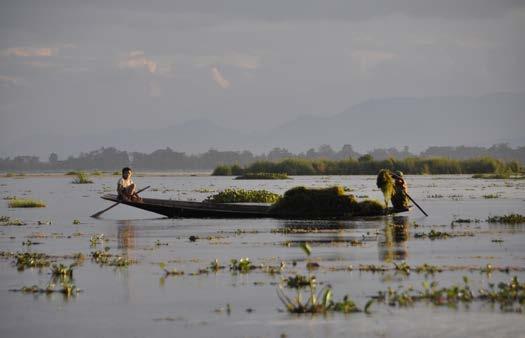
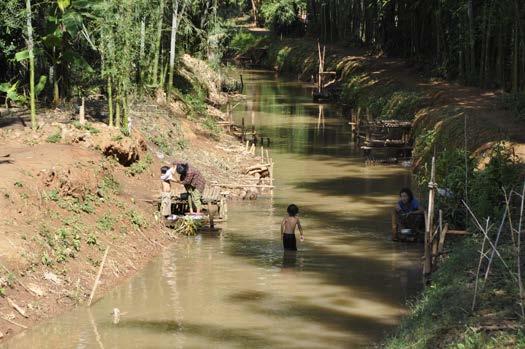
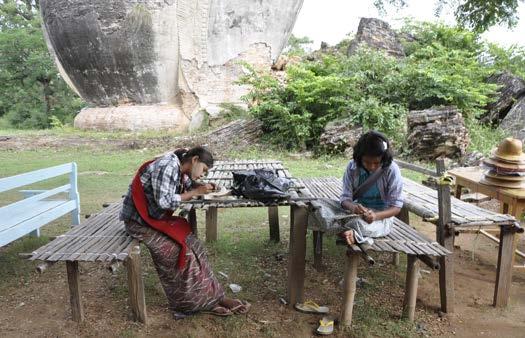
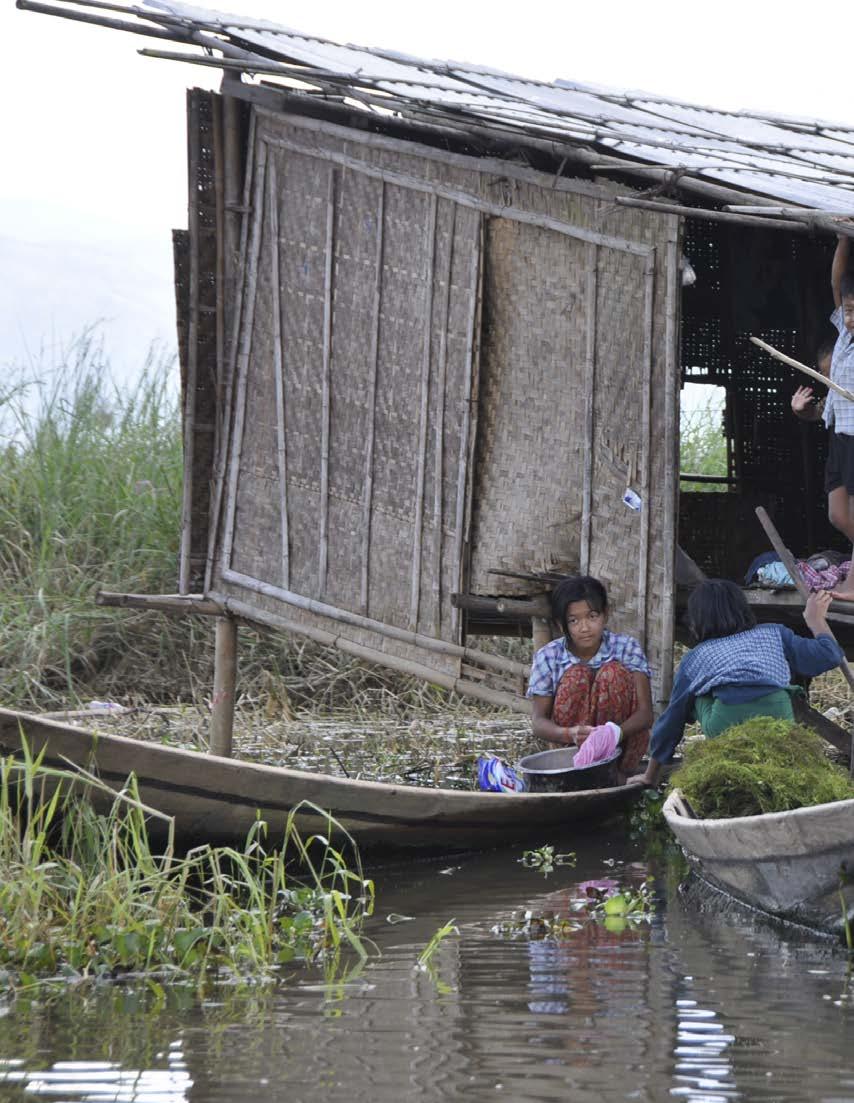
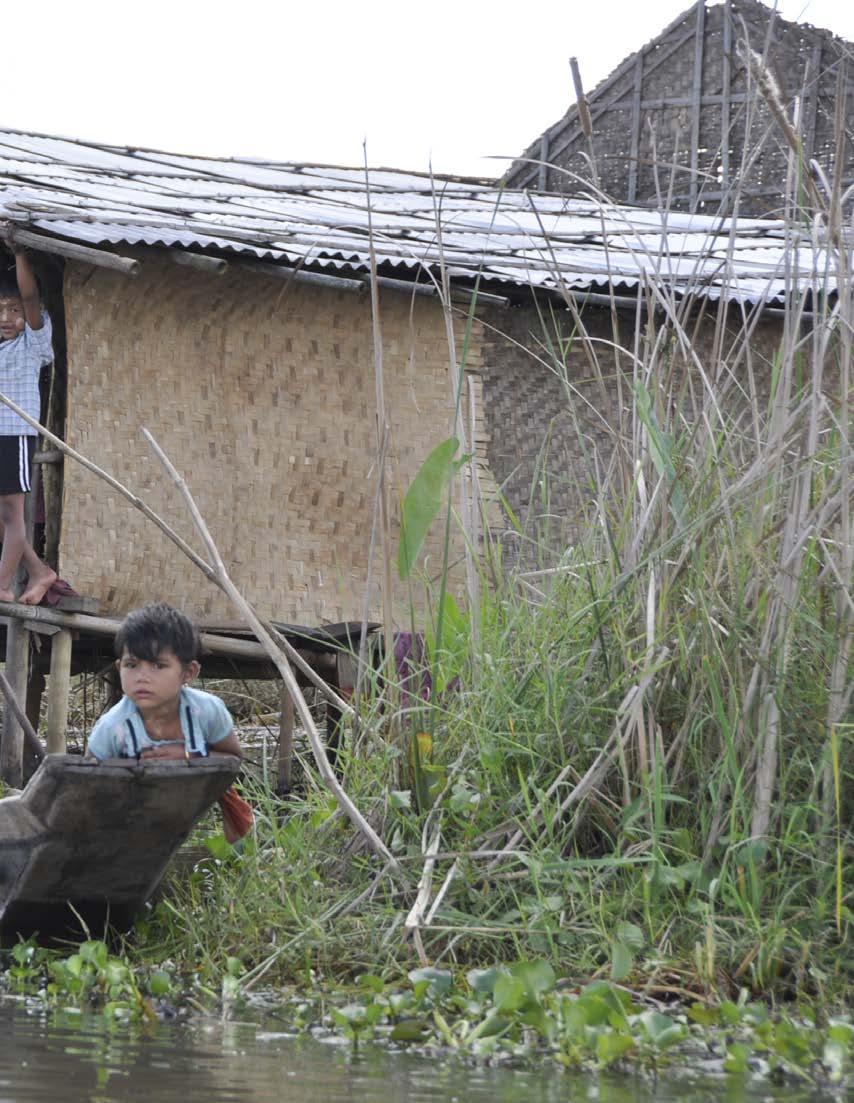
I took hundreds and hundreds of photographs during our trip through Burma. Striking images are everywhere to the Westerner’s eye: the bustle of Yangon’s clotted colonial-era boulevards; the chaos of worshippers in pilgrimage to the massive gold-plated domes of Shwedagon Pagoda; the time-warp of rural agricultural lands plowed by oxen, carts, and harvested with scythes; the visual ricochet as temples of Bagan spread across
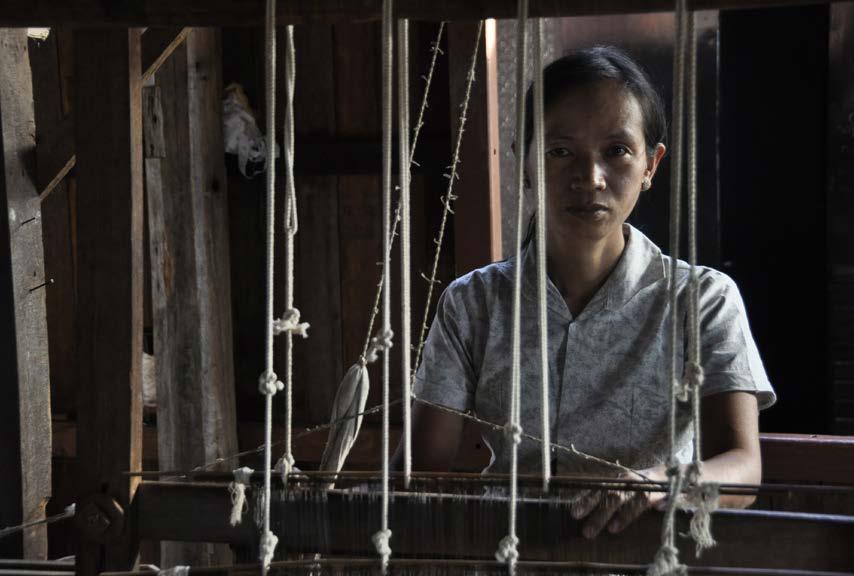
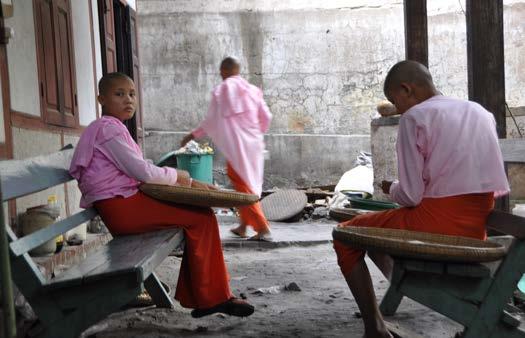
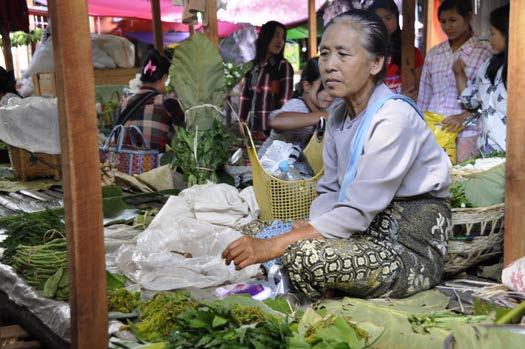
forested hills, infinite to the eye; the brown muscle of the Irrawaddy River snaking to Mandalay; cryptic monasteries and nunneries with their shadowy recesses, low chantings, bright courtyards, saffron and electric pink robes; the glistening fishnets, fairy mist, water mazes of lotus and reeds, and hydroponic gardens of Lake Inle; hectic market communities hawking vegetables, fruits, seeds, fabrics and baskets in a seething riot of purples, greens, reds, and yellows; the artisanal workshops where mere children finessed silver, wove textiles, pressed flowers into rice paper, rolled cigars and lacquered bowls; studious young women poring over books amid mythic Buddhist ruins. Indelible, the bright red-striped headscarf of our Pa’O guide, her dazzling smile and quiet eyes—these moments and many more.
At a loss to select 20 images out of 1000 for this show, I’ve chosen portraits that speak to me for perhaps ineffable reasons. In looking over the images, I am struck by the intent gazes meeting mine, with curiosity, with welcome, with trust, with occasional dubiousness, or a hint of confrontation, but always with candor and dignity. Looking at these many individuals whose paths crossed with mine, I am also left pondering the sense of pervasive, if serene, solitudes.


EDUCATION
1997 Ph.D. Film and Television, University of California, Los Angeles
1992 M.F.A. Film and Television, University of California, Los Angeles
1986–87 Liçense de quatrieme année - Cinéma -- Paris University III
1983 Graduate Diploma, International Relations, Johns Hopkins SAIS – Bologna, Italy
1981 A.B. University of California, Berkeley, Humanities
ACADEMIC WORK EXPERIENCE
1999–pres. Professor, Department/School of Cinema, SFSU
2015–19 Director, School of Cinema, SFSU
1995–99 Assistant Professor, Department of Communication Studies, University of North Carolina at Chapel Hill
CREATIVE WORK/FILM PRODUCTION – SELECTED SCREENINGS & AWARDS
Redemption Trail, 90 min, 2013, color, HD, dramatic feature (writer/director/producer) Breaking Glass Pictures, Amazon Prime
John D. Simon Guggenheim Foundation Fellowship, 2006
Mill Valley International Film Festival, 2013: Audience Award
POWfest (Portland) Opening Night Film, Audience Award, 2013
Harlem International Fest 2014: Mira Nair Award Female Filmmaker
Lady Filmmaker International Film Festival, 2014
Best Feature, Best Lead: LisaGay Hamilton, Best Ensemble
Oaxaca International Film Festival, 2014
Finalist, Sundance Screenwriter Lab, 2009
Finalist, Kenneth Rainen Grant, 2010
At Sixes and Sevens , 12 min, 2010, color, HD, documentary (writer/director)
In This Short Life , 96 mins, 2005, b&w hybrid documentary/narrative, 16mm film (writer/director/producer/editor/actor)
Creteil Intl. Festival of Films by Women – 2009
Davis Film Festival, Opening Night Selection, 2009
RedCat (Roy and Edna Disney/CalArts Theater, (Los Angeles), 06
Bend Independent Film Festival, 06 – Best Feature Award
Pacific Film Archive, 2006
Rio FEMINA festival, 05: Best Direction – Intl. Feature Competition
California Arts Council Grant in Media Production, 01 a small Domain , 18 min., 16mm, color, 1996 (writer/director/producer/co-editor). Distributed by Big Film Shorts
Sundance Festival, 1996 - Grand Jury Prize for Best Short Film
Aspen Short Film Festival, 96 - Award Special Recognition
Dallas USA Festival, 96 - Special Jury Award
Cinequest, 97 - Special Jury Award for Best Narrative Short SXSW Film Festival, 97 - Best Narrative Short Film
Charlotte Film Festival, 97 - Carolina Filmmaker Award
Locarno International Festival, Switzerland, 96: Filmmakers of Today
British International Short Film Festival, 96
Sao Paolo International Short Film Festival, 96
Rio de Janeiro Intl. Short Film Festival, 96
Rencontres Intl. de Film, Paris, France, 96
Mill Valley Film Festival, 96
Los Angeles Independent Film Festival, 96
Anthology Film Archives, 98
Pacific Film Archive; June 98
Theatrical Exhibitions
Lincoln and Omaha Nebraska, Ross Theaters; October 16-Nov. 6, 1997
Laemmle’s Grand Theater - Los Angeles; November 19-21, 1996
Nuart Theater -- Weekend double bill with Jo-Jo, Los Angeles, July 96
Jo-Jo at the Gate of Lions , 100 min., 16 mm, b&w; 1992 (writer/director/producer). Strand Releasing
Top Ten List Best Films of the 1990s, Artforum 12/99
Sundance Festival Competition, 92
Southwest Alternate Media Project, Austin, TX, 92
Pacific Film Archive, Berkeley, CA, 92
Torino Festival Giovene, Italy, 92
Atlanta Festival, 93 - Award for Narrative Film
Tel Aviv International Festival, 93
Helsinki International Festival, Finland, 93
Créteil International Festival of Films by Women, Paris, 93
Second Place - Best First or Second Feature
Anthology Film Archives, NY, 98
Pacific Film Archive, 09
Southern Circuit – Selected filmmaker 2002-03 season.
TELEVISION EXHIBITIONS
Sundance Channel: Jo-Jo : 96-97; a small Domain : 96-98
PERMANENT COLLECTIONS
Jo-Jo, Domain, ITSL, Redemption Trail selected
Archive of the Academy of Motion Picture Arts and Sciences
University of California, San Diego
California Institute of the Arts
University of Wisconsin, Milwaukee
A Letter , 18 min., 3/4 inch color video; 1986 (co-writer/co-director) - Tokyo Video Art Festival, 86, Award of Special Distinction
OTHER AWARDS
Within the Living , feature narrative script: Finalist, Sundance Sloan Commissioning Grant, 2010
Rage Carolina , feature screenplay: Cynosure Screenwriting Awards -- First Place -- Best Minority Protagonist, 01
A Chain of Windows , documentary development: Film Arts Foundation Development Grant, 02, and American Antiquarian Society Visiting Artist Fellowship, 02-03 Claire’s Bones, feature screenplay: Finalist, Hearst Screenwriting Grant, 09; American Film Institute Independent Filmmaker Grant, 95 Western States Regional Media Arts Grant, 94
IN DEVELOPMENT
Homesick River : Fictional series exploring the epidemic of missing and murdered indigenous women and girls. Gun Country : Screenplay, fictional series on gun violence. Awarded SFSU Marcus Distinguished Faculty Grant, 2019
Cake for Breakfast : 3-act theatrical play
PUBLICATIONS
Radical Light: Alternative Film and Video in the San Franicsco Bay Area , Contributor. Authored commissioned essay on experimental filmmaker Greta Snider’s Flight, 2010. Into the Vortex: Female Voice and Paradox in Film. University of Illinois Press, 2006
California State University, Stanislaus
Dr. Ellen Junn, President
Dr. Kimberly Greer, Provost/Vice President of Academic Affairs
Dr. James A. Tuedio, Dean, College of the Arts, Humanities and Social Sciences
Department of Art
Martin Azevedo, Associate Professor, Chair
Tricia Cooper, Lecturer
Dean De Cocker, Professor
James Deitz, Lecturer
Daniel Edwards, Associate Professor
Patrica Eshagh, Lecturer
Jessica Gomula-Kruzic, Professor
Daniel Heskamp, Lecturer
Chad Hunter, Lecturer
Dr. Carmen Robbin, Professor
Ellen Roehne, Lecturer
Dr. Staci Scheiwiller, Associate Professor
Susan Stephenson, Associate Professor
Jake Weigel, Associate Professor
Meg Broderick, Administrative Support Assistant II
Kyle Rambatt, Equipment Technician II
University Art Galleries
Dean De Cocker, Director
School of the Arts
Brad Peatross, Graphic Specialist II
Britta Sjogren - The Gaze Returned
October 1–November 4, 2021 | Stan State Art Space, California State University, Stanislaus | 226 N. First St., Turlock, CA 95380
300 copies printed. Copyright © 2021 California State University, Stanislaus • ISBN 978-1-940753-62-1
All rights reserved. No part of this publication may be reproduced or transmitted in any form without the written permission of the publisher. This exhibition and catalog have been funded by Associated Students Instructionally Related Activities, California State University, Stanislaus.