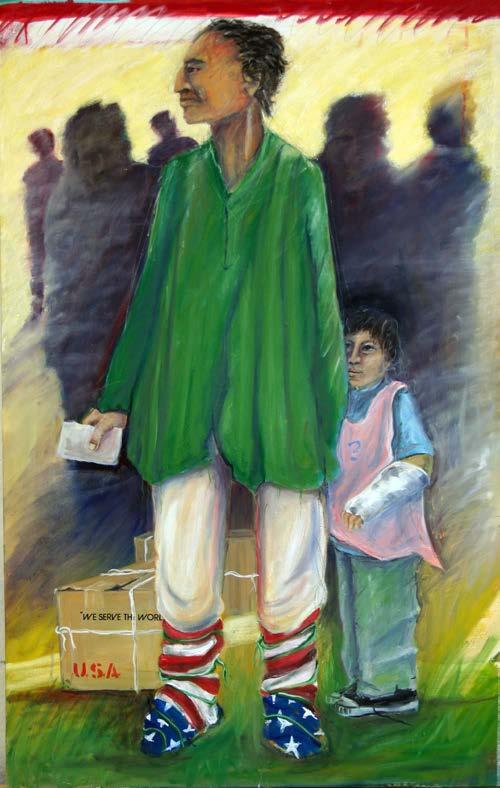
Voice for the Voiceless: The Art of Malaquias Montoya
Malaquias Montoya
Voice for the Voiceless: The Art of Malaquias Montoya
University Art Gallery
Department of Art
School of the Arts
California State University, Stanislaus
Malaquias Montoya
Voice for the Voiceless: The Art of Malaquias Montoya
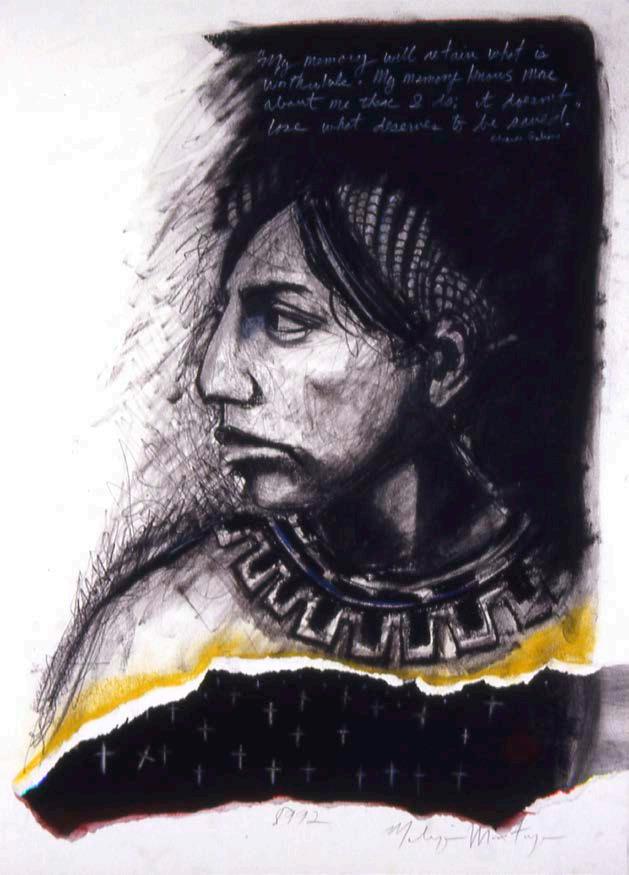
Memories, lithograph, 30”x22”, 2005
Director’s Foreword
Voice for the Voiceless: The Art of Malaquias Montoyarepresents an opportunity to view the important and inspiring works of Malaquias Montoya. As the invited artist in conjunction with the 4th Annual Conference on Social Justice in the Central Valley, his work gives us a view of art as protest, as a resistance in the face of injustice and a way to help people unite together to help to change the future.
I would like to thank Malaquias Montoya for the opportunity to exhibit his inspirational work, Dr. James Tuedio for recommending Malaquias be the invited artist in conjunction with the 4th Annual Conference on Social Justice in the Central Valley. Terezita Romo for writing the insightful catalog essay, the College of the Arts, California State University, Stanislaus for the catalog design, Parks Printing for the printing of this catalog.
We are also grateful and extend our warmest appreciation to the Instructionally Related Activities Program of California State University, Stanislaus, as well as anonymous donors for the funding of the exhibition and catalogue.
Dean De Cocker, Gallery Director California State University, Stanislaus
Social Justice in the Central Valley
It’s with great pleasure that we host this “call of conscience” exhibition featuring Malaquias Montoya’s artwork in conjunction with our 4th annual social justice conference (Social Justice in the Central Valley: A Community Focused Conference). This year’s conference showcases a multiplicity of efforts giving voice to the voiceless and support for their inclusion within the scope of human rights and due consideration.
Montoya’s engagement with visual expression as an art of protest gives voice to the struggles and injustices experienced by those among us who are all-toocommonly characterized as “populations,” “mobs,” and “caravans” – or simply dismissed in silence or assault. Montoya’s art of protest offers a distinctive plane of immanence for engaging with the resistance and strength of human struggles with injustice, and a calling to embrace these struggles as our own.
Our conference shares this vision, showcasing localized grassroots community advocacy for social justice, Community-based Participatory Research as an engine of distributed, comprehensive change, and coalitionbased activism geared to exposing and challenging the ongoing production and patterns of social inequality. Clearly the artwork of Malaquias Montoya belongs at the vanguard of these conversations. For information on this and previous year’s conference programs, please visit: www.csustan.edu/social-justice-conference.
Jim Tuedio, Dean College of the Arts, Humanities & Social Sciences California State University, Stanislaus
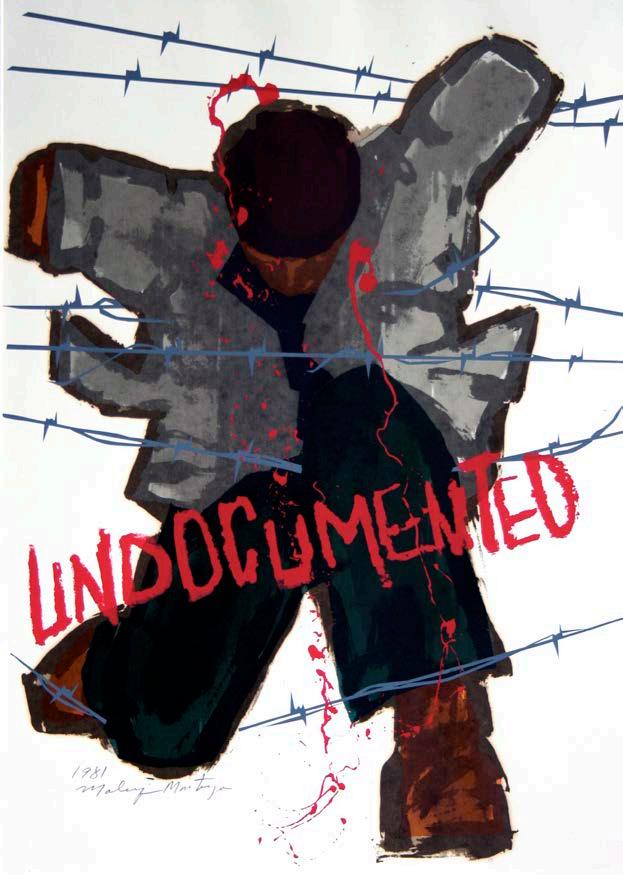
Undocumented, silkscreen, 32”x24”, 1981
Malaquias Montoya
Voice for the Voiceless: The Art of Malaquias Montoya
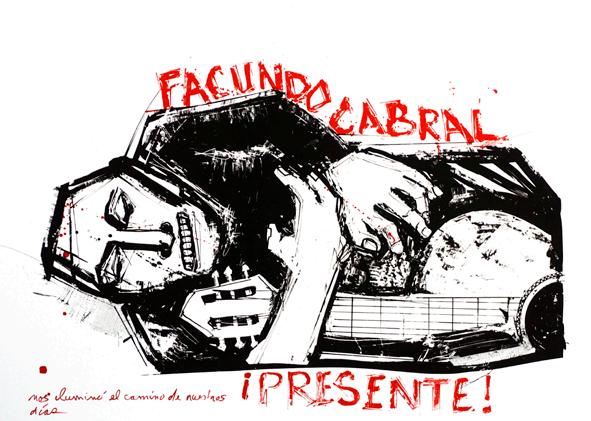
Voice for the Voiceless is a solo exhibition featuring the work of Malaquias Montoya, one of the founders of the social serigraphy movement in the San Francisco Bay Area in the mid-1960s. The paintings, silkscreens, charcoals and oil pastels, address three prominent themes: injustice, empowerment and international struggle. The works in this exhibition are intended to raise awareness and pay homage to those whom the artist calls the “silent and often ignored populace of Chicana/o, Mexican and Central American working class, along with other disenfranchised people of the world.” What better role for art at this critical time in our history?
Artist Biography
A UC Davis Professor Emeritus, Malaquias Montoya is credited by historians as one of the founders of the social serigraphy movement in the San Francisco Bay Area in the mid-1960s. He has lectured and taught at numerous colleges and universities including Stanford, UC Berkeley, the California College of Art, the University of Notre Dame, and the University of Texas, San Antonio. Montoya’s unique visual expression is an art of protest, depicting the resistance and strength of humanity in the face of injustice and the necessity to unite behind that struggle. Montoya is co-founder of Taller Arte del Nuevo Amanecer, a community-based art center in Woodland, where he continues to teach. In 2011, the UCLA Chicano Studies Research Center published a full-length monograph about Montoya and his work.
The Art of Protest: The Work of Malaquias Montoya
by Terezita Romo
“In a capitalistic class system, with its economic and political conditions, art cannot be anything else but an art of protest.”1
— Malaquias Montoya
Though almost fifty years have passed since the Chicano Movement gave birth to centro culturales (cultural centers), Malaquias Montoya continues to exemplify the true spirit of the community artist. His involvement as an artist in the Chicano social movement brought about key historical developments in the Chicano art movement. He is an inspiration and guiding force for other artists who do not want to merely reflect the human condition, but to tap art’s powerful ability to educate and motivate. Along with exceedingly high artistic standards, his body of work embodies a social consciousness that transcends nationalism to encompass the human condition. As noted by art historian Ramón Favela, “What began as an art form in the service of the movimiento Chicano has become for Malaquias Montoya an art for the struggle of all Third World oppressed peoples.”2
Montoya’s personal struggle began in a migrant family that traveled yearly through California and finally settled in Fowler when his parents separated. He started drawing while very young and by the third grade knew he wanted to be an artist. Ironically, he spent most of his time drawing while in a special class for “slow-learners” with other Chicanos and Blacks whose migrant lifestyle has left them academically behind. His interest in drawing continued throughout elementary school, but it was in high school that he was able to find an art professor who provided the impetus to not only draw, but also paint and sculpt. Mr. Moezzi, who was originally from India, gave Montoya technical knowledge, fatherly encouragement, art books, and an understanding of art as a means of self-expression.
As is true of many Chicano students even today, Montoya’s options as a high school graduate were limited. He enjoyed art and believed in his talent, but nevertheless chose to join the military after graduating. After his discharge from the Marines, he resumed his place in the family picking fruit until he enrolled at the local junior college as a football player. At Reedley Junior College he took as many art classes as he could, painting landscapes and producing drawings of the people he knew best: farmworkers. After a year, he left Reedley disillusioned with the physically abusive world of football and racist environment of the rural Fresno valley.
In 1962, Montoya moved to San José and was able to secure a job as a screen printer for a commercial painter. Even though he has never silkscreened before, Montoya learned quickly and immersed himself in a job that he thoroughly enjoyed. Within that well-equipped studio, he found an environment conducive to experimentation. Though the work he produced was of a commercial, graphic arts nature, Montoya continued to create personal artwork at home.
As Montoya began to assume more responsibilities at the printing shop, he was encouraged by the owner to take commercial art classes at the city college. There he met a professor who was to influence him personally and his art greatly. Professor Joe Zirker not only validated Montoya’s artistic talent, but also the vast reservoir of cultural images from his Mexican heritage. Now in his late 20s, this was the first time a professor had directed Montoya to look to the Mexican painters and to his own life for artistic imagery. As a result, by the time Montoya entered a museum
in his late 30s and saw Picasso and Braque’s artwork, he was secure in the artistic strength of his own art and not threatened or awed by the European masters.
It was while Montoya was a student at San José City College that he began his involvement in the emerging Chicano sociopolitical movement through his association with the Mexican American Student Confederation (MASC), a precursor to MEChA and MAYA student activist groups. He contributed graphics to the campus MASC newspaper, La Palabra and created the mast for El Machete and La Hormiga newspapers. He also produced posters that supported the MASC protests and celebrations at San José City College and San José State University. In fact, the poster he produced for the Chicano students walkout at San José State University cost him his job after the owner saw the ghost of the university building on the shop’s screen Montoya used to produce the poster.
Upon graduating from San José City College, Montoya was accepted into the University of California at Berkeley. When he arrived in Berkeley in 1968 it was a volatile period of student strikes and the civil rights movement. “I hardly went to school because of the grape strike, the Third World Strike, and the reconstitution of classes,” he recalled. “All the time I was there (UCB) I used my art work to help in different causes.”3 It was also an exciting time of cultural fermentation and political activity. The role of the artist within the larger Chicano movement became an important topic for discussion. “It was felt that through the discussions that took place, with their political content, beliefs and direction, an understanding would result, a frame of reference for struggle and commitment to all oppressed people.”4
Tierra Nuestra, silkscreen, 30”x22”, 2004
In keeping with the terminology of other Third World movements of the time, Montoya and other artists formed the Mexican American Liberation Art Front (MALA-F) in 1968 with the expressed intention of unifying the power of the arts with social progress. Formed by a core group of visual artists, Malaquias Montoya, Esteban Villa, René Yañez and Manuel Hernández, MALA-F’s Friday night meetings grew to include other artists from different disciplines. The collective filled a need on the part of Chicano artists to critique their own work, to discuss the important social issues (including the Chicano civil rights movement and the United Farm Workers struggle), and to strategize their role as artists. It was also an opportunity to rediscover their indigenous heritage. Manuel Hernández, who had traveled in México, introduced the group to pre-Colombian imagery and philosophy. He also introduced them to the rich Mexican printmaking tradition, including the work of José Guadalupe Posada and Mexico City’s Taller de Gráfica Popular, which influenced Montoya greatly.
MALA-F artists developed a manifesto of cultural nationalism that compared the Chicano movement of 1968 with the Mexican Revolution of 1910, which also sought to reject western European influenced art in favor of a more indigenous Mexican expression. They also were committed to bringing art to the community by organizing art exhibits of their own work. Their first exhibit, New Symbols for La Nueva Raza was organized by René Yañez and held
in March of 1969 at La Causa Center in Oakland. A MALA-F group exhibition put on expressly for the community, it was full of artwork with cultural imagery derived from a Mexican heritage seeped in an indigenous past. “It was a call for us to look at ourselves and be proud of who we were,” Montoya remembered, “including our indigenous heritage.” The seminal exhibit, which included paintings, sculptures, drawings, silkscreen posters and woodcut prints, proved to be a great success, drawing college students and a large segment of the surrounding neighbors. With its focus on community art and artist social responsibility, MALAF was an important historical precursor to the Rebel Chicano Art Front (RCAF) in Sacramento (1969) and the Galeria de la Raza in San Francisco (1970).
For artists, the late 1960s and 1970s yielded intense idealism and pride as the Chicano movement set about to recapture a people’s history and culture. Art became a vital part of this struggle for social and political selfdetermination. Workers became the new “heroes” as artists took their place alongside cultural, civil rights and farm workers in the movement. As artists entered the United Farm Workers struggle the transition was an easy one for Montoya. “My area of life is filled with images of workers as heroes. This is what I wanted to paint about. I never thought that it was ‘political’ or ‘Chicano art’.”5
Montoya did not limit himself to producing only paintings and posters. In 1969, he painted his first mural on a 16-foot portable canvas for the interior of the East Oakland Development Center. His was one of three canvas murals; the second painted by a Black artist and the third by another Latino. The following year, he painted two more portable murals. One was a 10’ x 12’ mural on oilcloth depicting the “U.S. crucifixion of the Third World,” which was exhibited at U.C. Berkeley during the student strikes against the Cambodian invasion and the Kent student killings. Montoya collaborated with Manuel Hernández on a second portable mural for the Latin-American Library in Oakland. In 1972, Montoya also painted a monumental mural on the façade of San José’s Community Legal Services building, which was influenced by José Alfaro Siqueiros’ mural New Democracy and called for Chicano selfdetermination.6
After graduating from U.C. Berkeley in 1974, Montoya decided to quit teaching his graphic art classes because he believed that the Chicano Studies program had become “institutionalized” and no longer cared about developing Raza community and culture. This commitment to community art led him to take the next step and accept a position at California College of Arts and Crafts (CCAC).
As MALA-F members left to pursue individual projects, Montoya and Hernández stayed in Oakland and established the Taller de Artes Gráficas. The taller concept pre-dates the centros culturales, but it placed the same importance on teaching. It was no longer enough to make art for the community, but more important to have art in the community through on-going art classes, poster workshops and exhibitions. By becoming teachers and sharing the art making process, artists sought to promote community empowerment.7 According to Montoya, “Teaching silkscreening to people so that they could mass produce images instantly is what we felt had to be done. So classes became important vehicles for this.” The Taller operated three public workshop sites at one time, teaching community members as well as college students who received college credits. Though the Taller closed in 1980, Montoya continued his commitment to teaching as a professor at the University of California, Davis and in the nearby community of Woodland, CA, where he co-founded Taller Arte del Nuevo Amanecer (TANA).
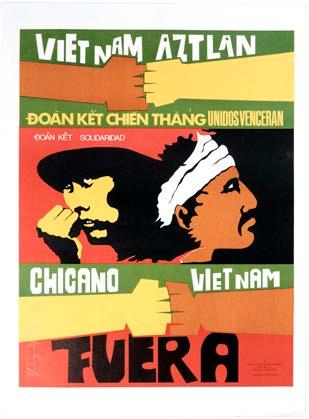
Over the years, Montoya’s artistic focus expanded beyond the United States borders and enveloped the progressive movements of Third World countries. One of his most famous posters exemplifies this philosophy. Vietnam Aztlan (1973) is a bold, hard-edged anti-war poster depicting two figures, a Vietnamese and Chicano, who though not facing each other are locking fists to form strong horizontal lines. With text both in Spanish and Vietnamese, Montoya calls for the withdrawal of US troops and promises “victory through unity” (Unidos Vencerán)
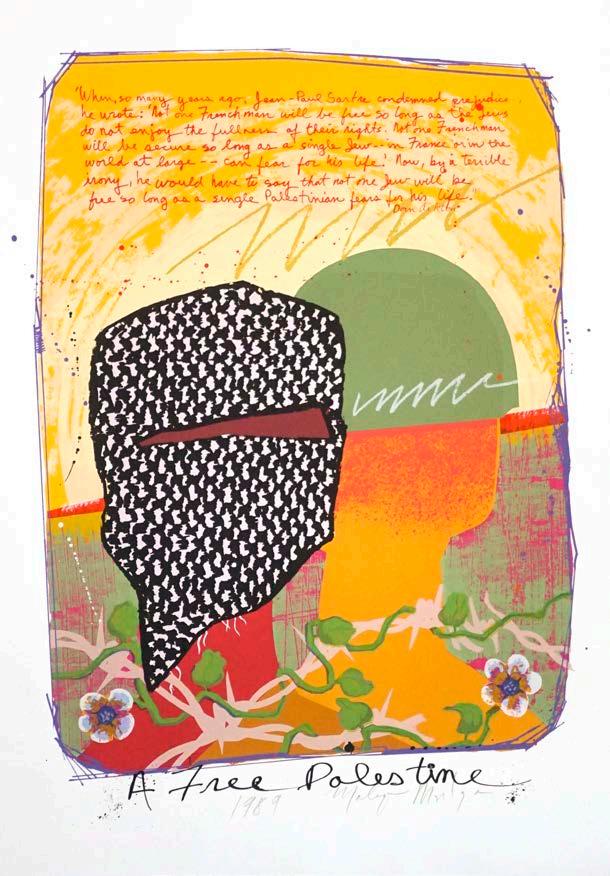
with the Vietnamese people. His connection with La Peña Cultural Center in Berkeley exposed him to the struggle in Chile, the nueva canción music of Violeta Parra and Victor Jara, and music’s power to bring about social change. “Through increased understanding of domestic issues,” Montoya believes, “Chicanos have been able to empathize with the people of Vietnam, Angola, Nicaragua, South Africa and other countries. Art work, especially the poster, began to serve as a bridge between those struggles.”8 His art work has served to expose the disgrace of apartheid in South Africa, human rights violations in Central America, as well as to support the Palestinian struggle for selfdetermination in the Middle East and the Maya “Zapatistas” movement in Chiapas, Mexico.
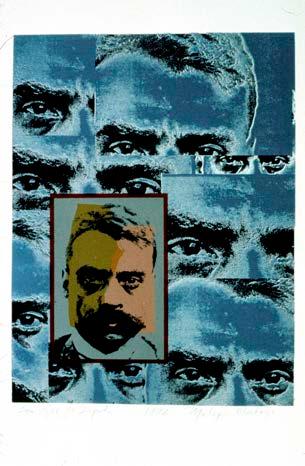
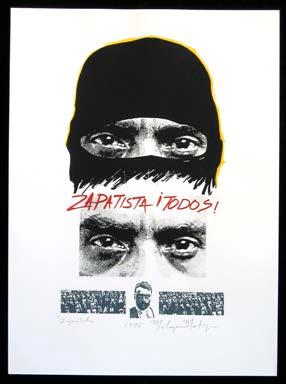
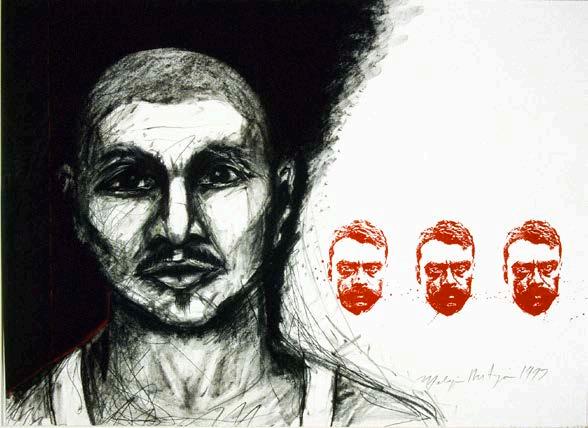
Montoya’s belief in the transformative power of art and his steadfast commitment to create an art with a message continue to this day. “It is my objective,” he states, “to show the relationship between artistic creativity and community action as both an educational tool and a catalyst for social change.”9 Whether it is through a mural, a painting or a poster, his work teaches, informs, confronts. His artwork draws its strength from his ability to impart complex ideas within the context of simple, bold imagery. Yet, in his search for a universal language to communicate his visual message, he never loses sight of the power of the human figure, whether it is a worker, a singer, a mother, or an undocumented person. Even when he uses the most abstract of visual elements or incorporates text, the figure emerges as a symbol of strength. In Zapatistas Todos! (1995), Montoya creates a simple, yet powerful totem made up of photographs of Emiliano Zapata flanked by his troops topped by enlargements of Comandante Marcos and Zapata’s eyes. The poster not only relays Montoya’s support of the 1994 Maya uprising in Chiapas, but also provides the visual context for the ideals and philosophy behind the Zapatistas’ movement: land and dignity. With his depiction of Zapata, Montoya also references an important Chicano icon and thereby re-incorporates the Chicano Movement into the historical continuum of international political and social struggles.
In the true sense of a community artist, Montoya has remained committed to the importance of an art that speaks of all people. A man of intense integrity, he has remained faithful to his initial commitment to community art through his poster, murals, and paintings. His artwork also serves as a reaffirmation of humanity at its best, a denouncement of societal wrongs lest we get too comfortable, and a rare example of an unwavering commitment to a true art without borders.
The essay was initially included in a publication for a 1997 exhibition
Sources
prints at MACLA in San Jose, CA.
Barnett, Alan W., Community Murals: People’s Art. New Jersey: Associated University Presses, 1984 Favela, Ramón, Malaquias Montoya: Postermaker to el Pueblo Chicano, exhibition brochure. San Francisco: La Raza Graphics Center, 1989 Goldman, Shifra and Tomás Ybarra-Frausto, The Political and Social Contexts of Chicano Art, Chicano Art: Resistance and Affirmation (CARA), exhibition catalogue. Los Angeles: Wight Art Gallery, University of California, 1991 Goldman, Shifra, Dimensions of the Americas. Chicago: University of Chicago Press, 1994 Montoya, Malaquias and Leslie Salkowitz-Montoya, A Critical Perspective on the State of Chicano Art, Metamorfosis, Spring/Summer v. 1, no. 1, 1980 Malaquias Montoya, Interviews with author, November 15, 1989 and September 23, 1996
Footnotes
1 Malaquias Montoya and Leslie Salkowitz-Montoya, A Critical Perspective on the state of Chicano Art, Metamorfosis, Spring/Summer 1980, v. 1, no. 1, p. 4
2 Ramón Favela, Malaquias Montoya: Postermaker to el Pueblo Chicano, exhibition brochure, La Raza Graphics Center, San Francisco, 1989
3 Shifra Goldman, Dimensions of the Americas, University of Chicago Press, 1994, p. 174
4 Malaquias Montoya and Leslie Salkowitz-Montoya, p. 4
5 Malaquias Montoya taped interview, November 15, 1989
6 Alan W. Barnett, Community Murals: People’s Art, Associated University Presses, 1984, p. 45
7 Malaquias Montoya phone interview, September 23, 1996
8 Malaquias Montoya and Leslie Salkowitz-Montoya, p. 5
9 Malaquias Montoya taped interview, November 15, 1989
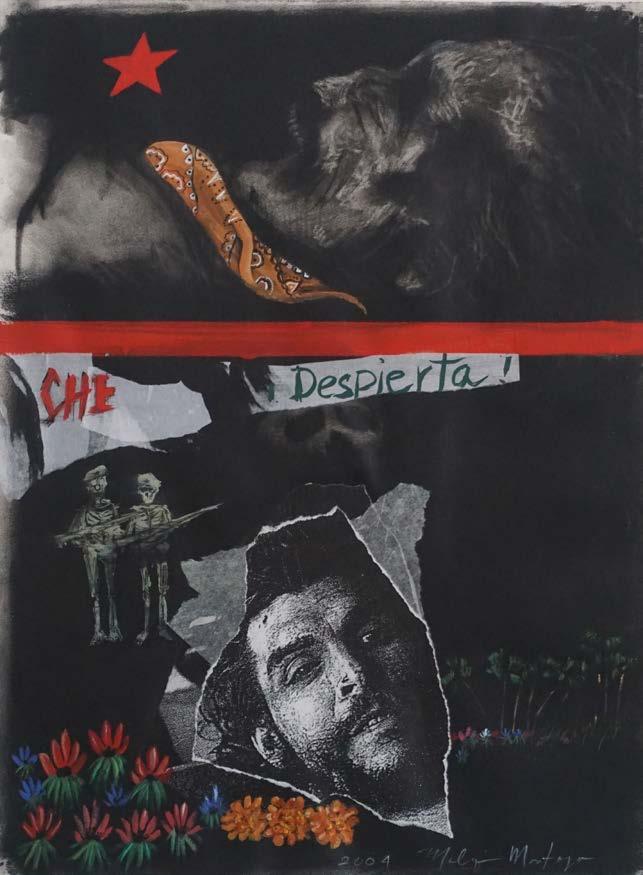
Che Despierta, pastel & charcoal collage, 30”x22”, 2004
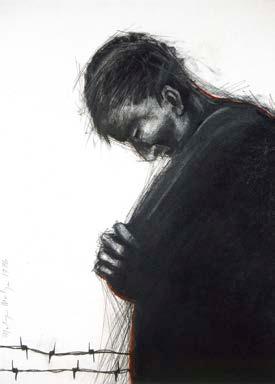
Untitled, 30”x22”, 1996
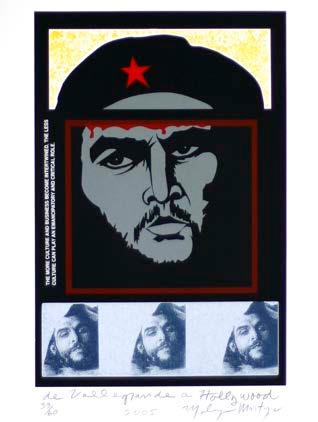
De Valle Grande a Hollywood, silkscreen, 30”X22”, 2005
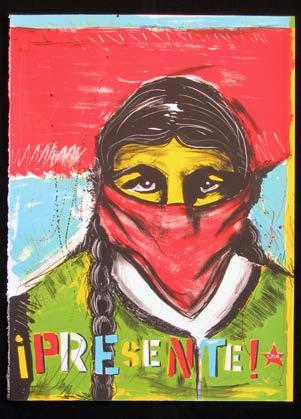
Mujer Zapatista, lithograph, 30”x22”, 1998
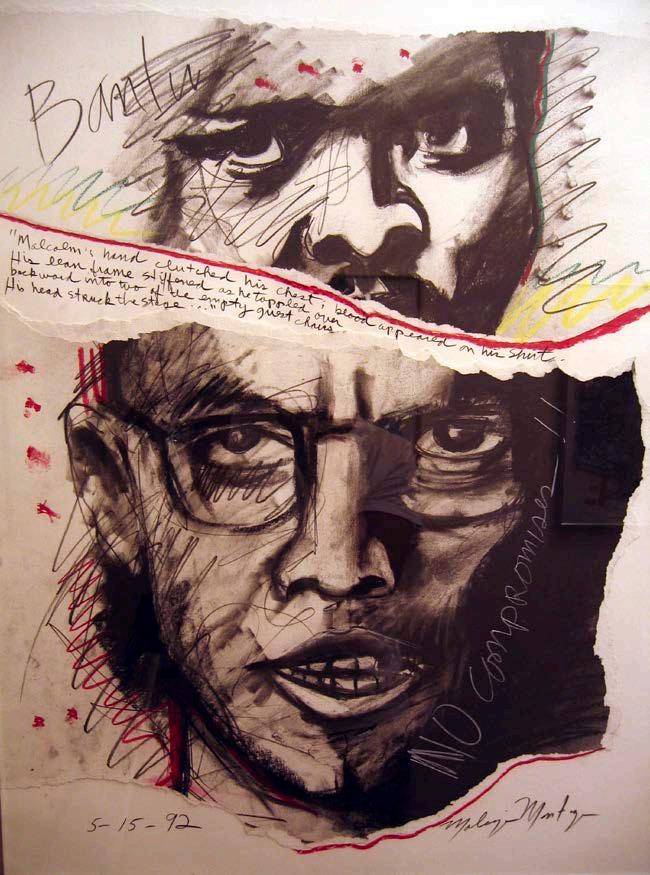
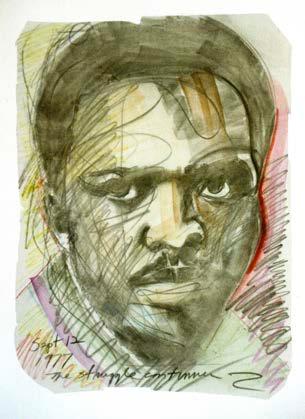
Malcolm X, charcoal collage, 30”x22”, 1992
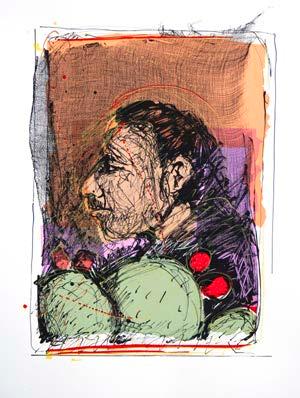
Aqui Me Quedo, silkscreen, 26”x20”, 2010
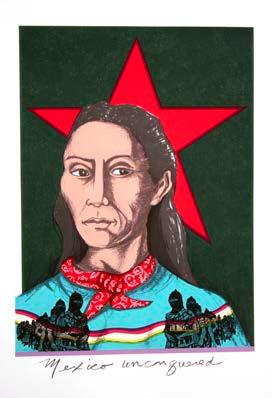
Mexico Unconquered, silkscreen, 26”x20”, 2010
Cuatro Caras de Zapata, charcoal/silkscreen, 30”x22”, 1997
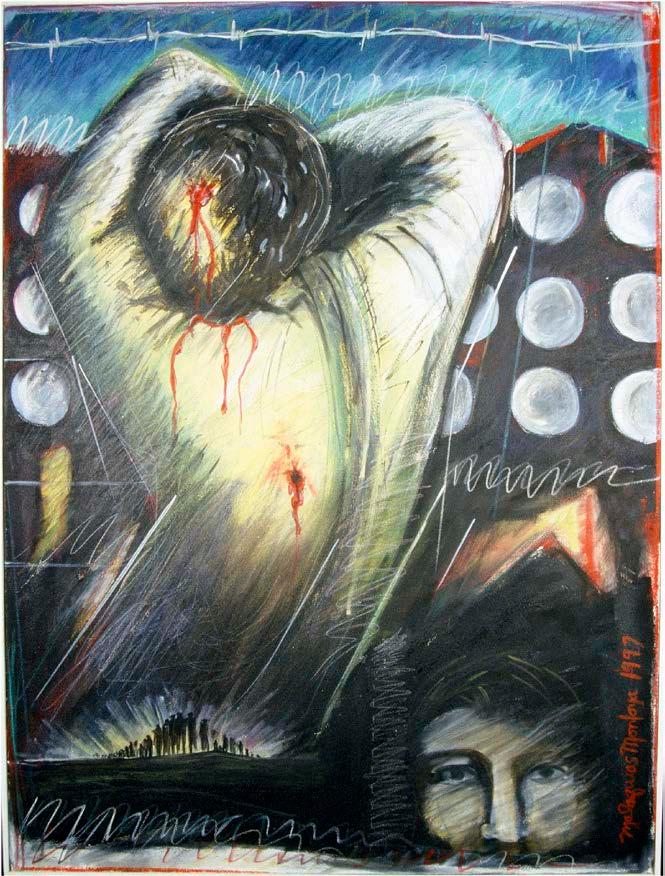
Border Incident, charcoal/pastel, 30”x22”, 1994
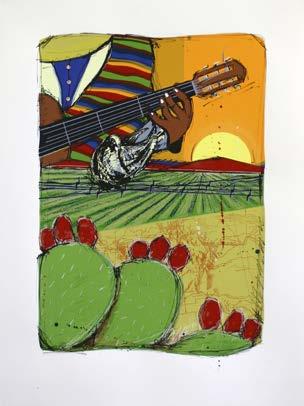
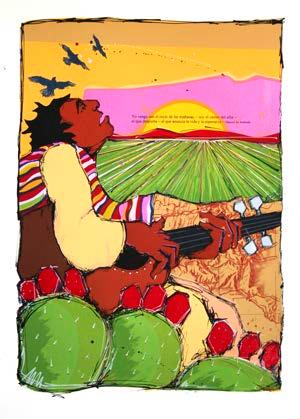
El Cantor, silkscreen, 30”x22”, 2008
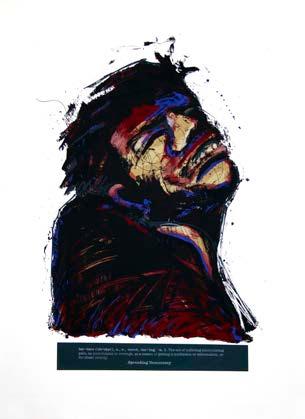
Torture, silkscreen, 30”x22”, 2005
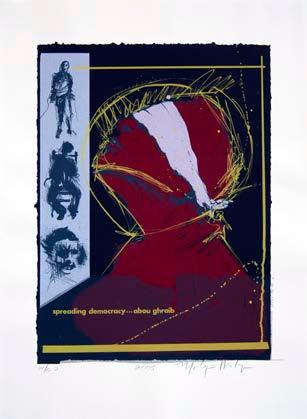
Spreading Democracy, silkscreen, 30”x22”, 2005
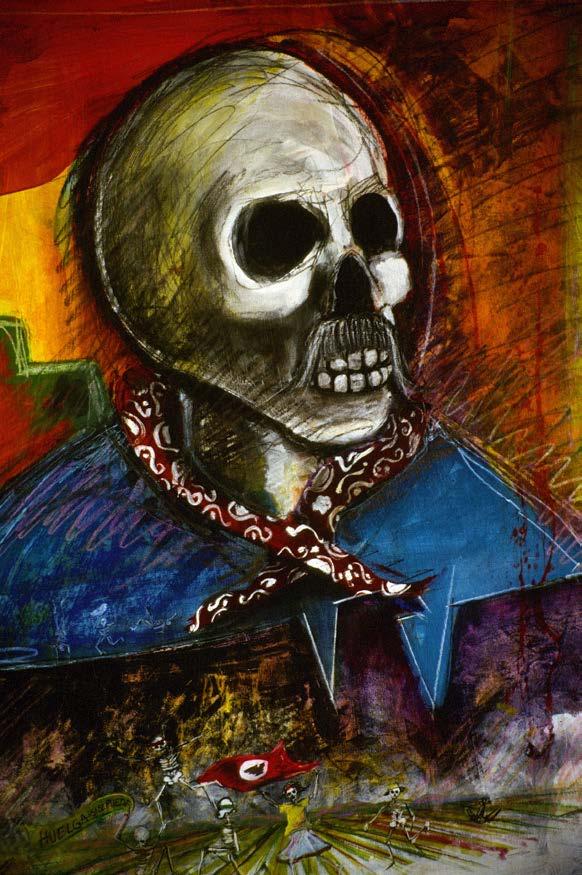
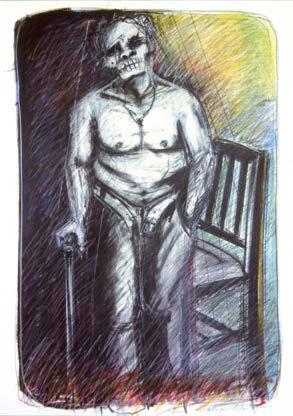
Calavera Campesino, painting/pastel on paper, 26”x21”,1993
Vietnam Aztlan, offset print, 26”x19”, 1973
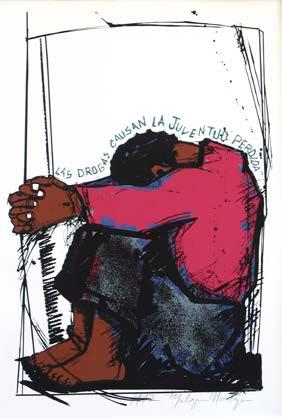
Las Drogas, silkscreen, 30”x22”, 1992
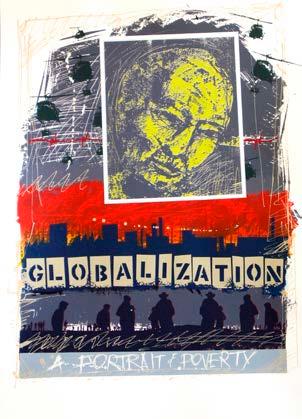
A Portrait of Poverty, silkscreen, 30”x22”, 2001
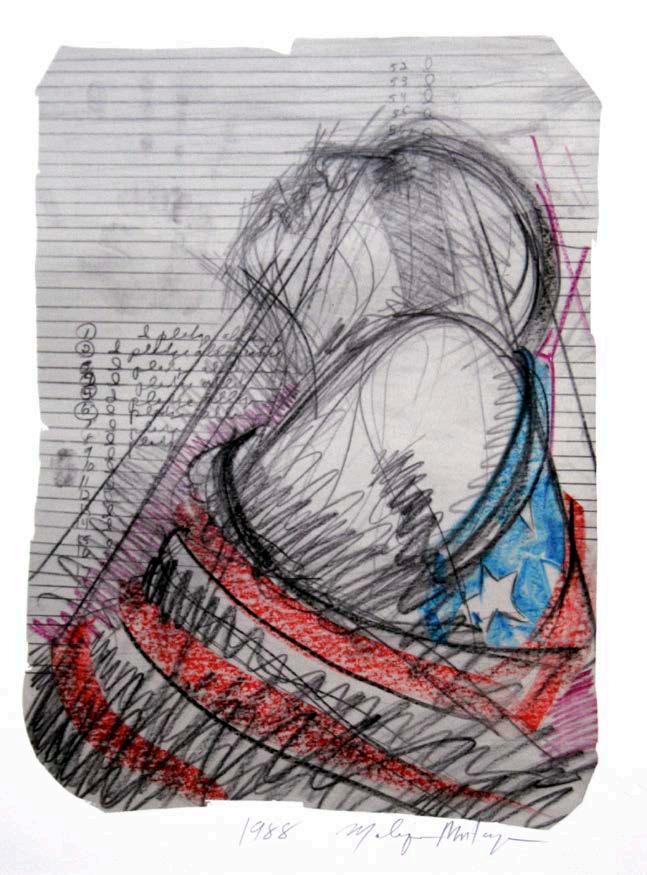
I Pledge, silkscreen monoprint, 30”x22”, 1988
Biko, silkscreen monoprint, 30”x22”, 1988
El Vato que se Volvio Loco, charcoal & color pencil, 30”x22”, 1992
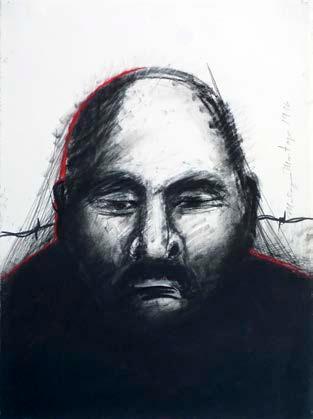
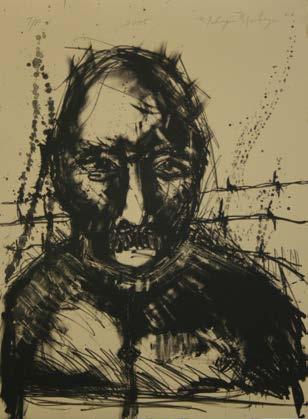
El Hombre Sin Paiz, lithograph, 30”x22”, 2005
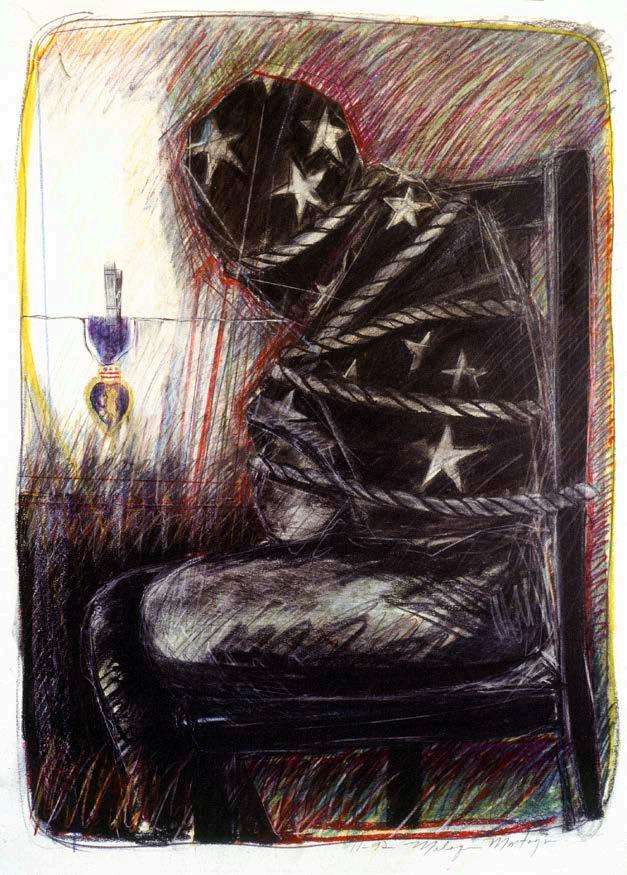
Blind Patriotism, charcoal & color pencil, 30”x22”, 1992
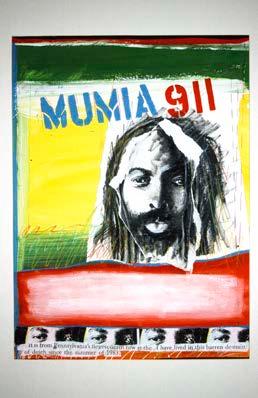
Mumia Abu Jamal, 911, charcoal & acrylic, 30”x22”, 1999
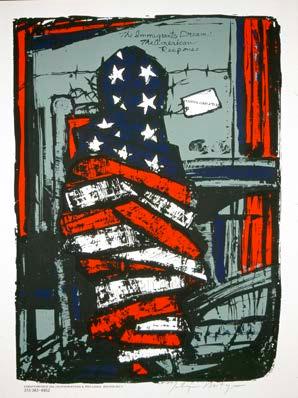
The Immigrant’s Dream: The American Response, silkscreen, 23”x17”, 1984
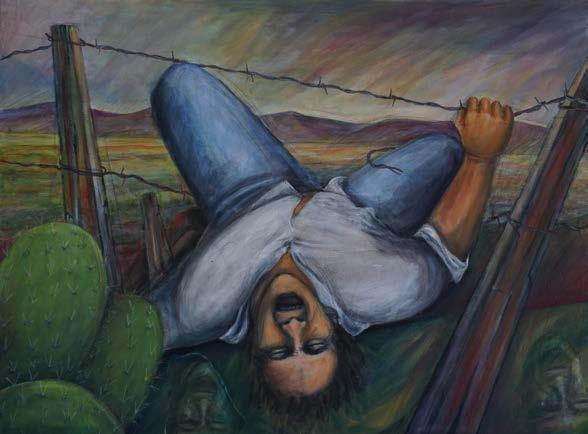
Man at the Border, acrylic, 24”x36”, 2016
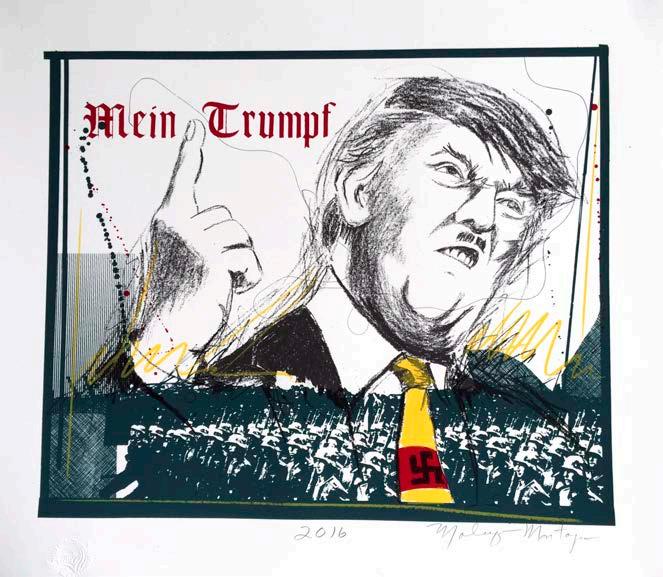
Mein Trumpf, silkscreen, 20”x22”, 2016
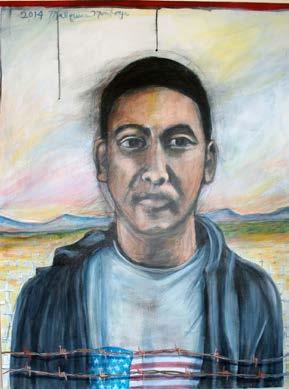
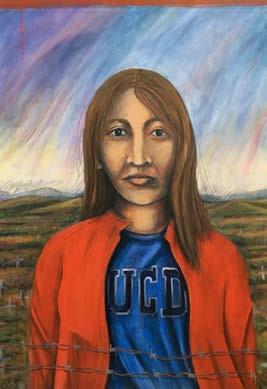
Dreamer, acrylic, 48”x36”, 2014
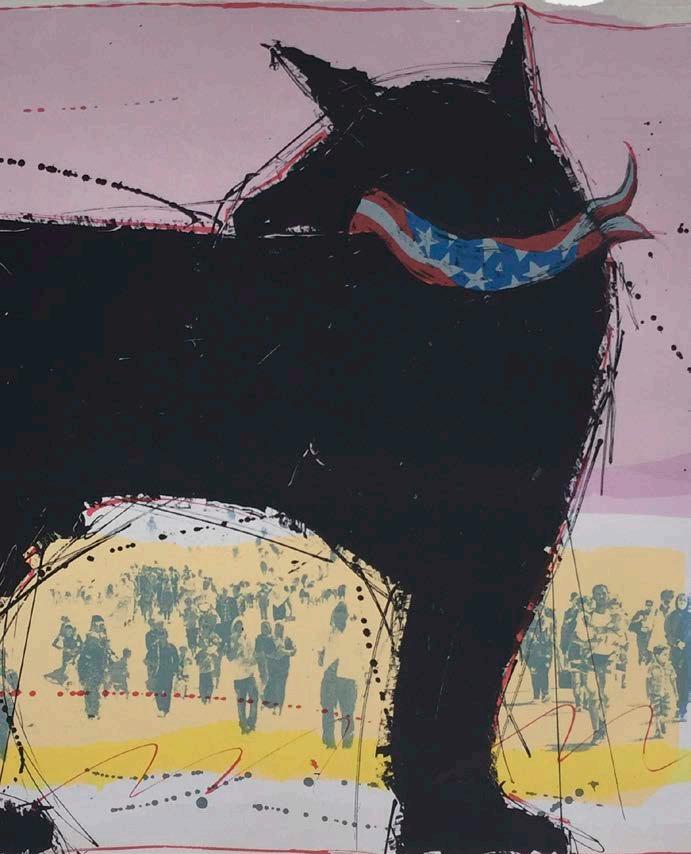
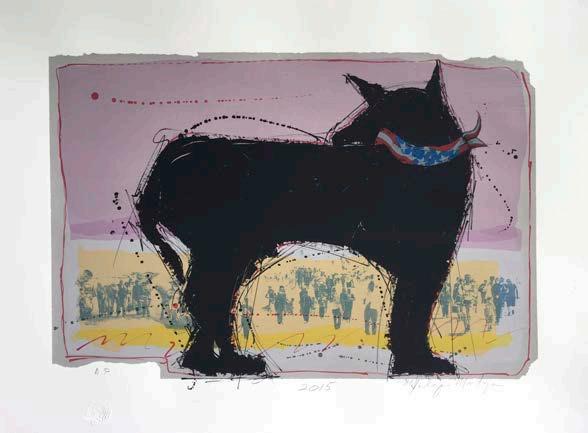
Trump Dog, silkscreen, 30”x22”, 2015
Dreamer #2, acrylic, 48”x36”, 2015
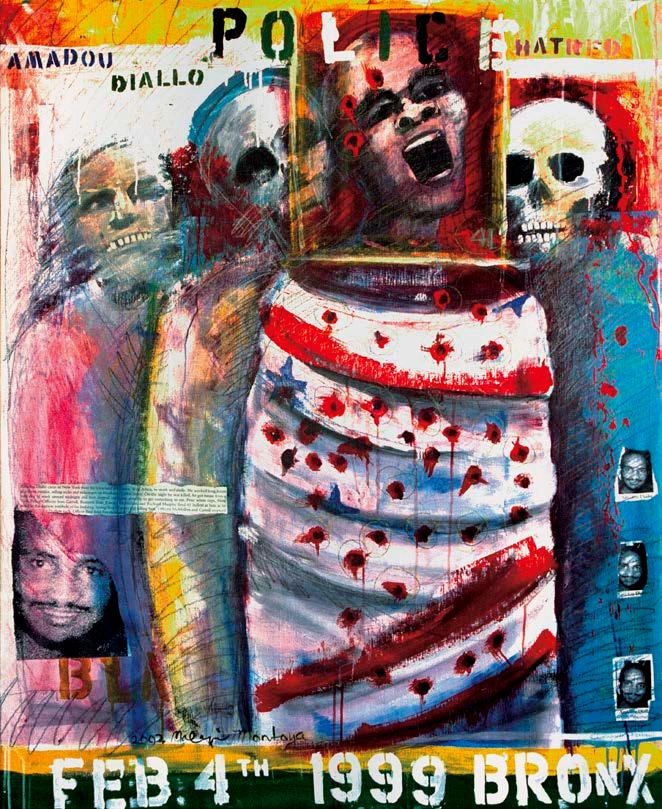
Amadou Diallo, acrylic, 48”x42”, 2001
Malaquias Montoya
Professor Emeritus, University of California, Davis
Born in Albuquerque, New Mexico, June 21, 1938
Raised in the San Joaquin Valley in a family of farm workers
Honorable discharge, U.S. Marine Corps, 1960
B.A. in Art, with honors, University of California, Berkeley, 1970
SELECTED SOLO EXHIBITIONS
2018 Malaquias Montoya: Women That I Have Encountered, Vacaville Museum, Vacaville, CA
2012 Voice for the Voiceless, the Art of Malaquias Montoya, Ruiz Gallery, Arte Americas: Casa de la Cultura, Fresno, CA
2007 Globalization & War – The Aftermath, works by Malaquias Montoya
Crystal Cove Auditorium Lobby, UC Irvine Student Center, Irvine, CA, travelled nationally
2003 PreMeditated, Meditations on Capital Punishment, new works by Malaquias Montoya, Snite Museum of Art, University of Notre Dame, Indiana, travelled nationally
LuchARTE, Guadalupe Cultural Arts Center, San Antonio, TX
1997 The Art of Protest: The Posters of Malaquias Montoya, MACLA, San José Center for Latino Arts, San José, CA
Malaquias Montoya: 1997 Adaline Kent Award Exhibition, San Francisco Art Institute, San Francisco, CA
1996 Malaquias Montoya: Prints and Drawings, Crocker Art Museum, Sacramento, CA
1986 Del Muralismo Revolucionario al Arte Chicano, Centro Cultural Tijuana, Tijuana, Mexico
SELECTED GROUP EXHIBITIONS
2017 Artists Respond: American Art and the Vietnam War, Smithsonian Art Museum, Washington DC
2014 Galeria Sin Fronteras, The National Museum of Mexican Art, Chicago, IL
2013 Our America: The Latino Presence in American Art, Smithsonian American Art Museum, Washington DC
2010 The African Presence in Mexico: From Yanga to the Present, The Mexican Fine Arts Center Museum, Chicago, IL
2009 Dos Vistas un Camino al Rumbo de la Humanidad, works by Malaquias & Maceo Montoya, The Mexican American Cultural Center, Austin, TX
2006 Caras Vemos, Corazones No Sabemos, The Human Landscape of Mexican Migration to the United States, Snite Museum of Art, University of Notre Dame, Notre Dame, IN
2004 Chicano Art for Our Millennium, Mesa Southwest Museum, Mesa, AZ
2001 Just Another Poster? Chicano Graphic Arts in California, Jack S. Blanton Museum of Art,University of Texas, Austin, TX
2001 Made in California: 1900--2000, Los Angeles County Museum of Art, Los Angeles, CA
1999 The Role Of Paper, El Papel del Papel, Affirmation and Identity in Chicano and Boricua Art, Sala Central of the Antiguo Arsenal de la Marina Espanola; La Puntilla, San Juan, Puerto Rico
1999 Hermanos Montoya, The Art of José & Malaquias Montoya, La Galeria Posada, Sacramento, CA
1995 Across the Street: Self-Help Graphics and Chicano Art in Los Angeles. Laguna Art Museum, Laguna Beach, CA
1990 Chicano Art, Resistance and Affirmation 1965-1985 (CARA), Wight Art Gallery, University of California at Los Angeles
1988 Das Andere Amerika (The Other America). Neuen Gesellschaft fur Bildende Kunst (NGBK), Berlin, Germany
1984 Califas, University of California, Santa Cruz
1969 New Symbols for La Nueva Raza. La Causa, Oakland, CA, Organized by the Mexican American Liberation Art Front
SELECTED MURALS DESIGNED AND EXECUTED
2012 The Practice of Freedom, Student Community Center, University of California, Davis
1994 Colegio de la Frontera Norte, Cafeteria, San Antonio, Baja California
1984 Latino Olympiad Exhibit, Pico Rivera House, Los Angeles, CA
1980 Stanford University, Chicano Resource Center, Palo Alto, CA Restored: 2008 by Maceo Montoya
SELECTED COLLECTIVE MURALS, DIRECTOR
2009 Pioneer High School, Woodland, CA
2000 Chicana/o Studies, M.e.Ch.A.,University of Wisconsin, Madison, WI
1999 Woodland High School, Woodland, CA
1998 Vacaville High School, Vacaville, CA
1994 Will C. Wood High School, Vacaville, CA
1993 Vaca Pena Intermediate School, Vacaville, CA
1988 La Escuelita, Oakland, CA
1986 Willard Junior High, Berkeley, CA
1981 Clinton Park and Adult School, Oakland, CA
SELECTED BIBLIOGRAPHY
2017 Flying under the Radar with the Royal Chicano Air Force: Mapping the Historical Consciousness of a Chicano/a Arts Collective, by Ella Diaz, University of Texas Press
2012 All of Us or None of Us: Social Justice Posters of the San Francisco Bay Area, by Lincoln Cushing, Heyday Books, Berkeley, CA
2011 Malaquias Montoya, By Terezita Romo: A Ver Revisioning Art History book series, UCLA Chicano Studies Research Center, University of Minnesota Press
2009 Agitate! Educate! Organizae! American Labor Posters, by Lincoln Cushing & Timothy W. Drescher, ILR Press, an imprint of Cornell University Press, Ithaca & London
2008 Globalization and War – The Aftermath, Works by Malaquias Montoya, Institute for Latino Studies, University of Notre Dame, Notre Dame, IN
2008 Unequal Sisters, An Inclusive Reader in U.S. Women’s History, Vickie Ruiz, Routledge Publishers, NY & UK
2007 Visions of Peace & Justice, San Francisco Bay Area: 1974-2007, Over 30 years of Political Posters from the archives of Inkworks Press, Oakland, CA
2006/7 The African Presence in Mexico: From Yanga to the Present, The Mexican Fine Arts Center Museum, Chicago, IL
2006 The 181st Annual invitational Exhibition of Contemporary American Art, Exhibition Catalogue, National Academy Museum & School of Fine Arts, NY, NY
2006 Latin American Posters; Public Aesthetics and Mass Politics, Exhibition Catalogue, Edited by Russ Davidson, Museum of New Mexico Press, Santa Fe, New Mexico
2006 Caras Vemos Corazones no Sabemos, The Human Landscape of Mexican Migraiton, Amelia Malagamba-Ansotegui, The Snite Museum of Art, University of Notre Dame, Notre Dame, IN
2005 Triumph of our Communities: Four Decades of Chicana/o Art, by Keller & Phillips, Bilingual Press/Editorial Bilingüe, Arizona State University, Tempe Arizona, The Mastery of a Maestro
2005 The Art of Engagement: Visual Politics in California and Beyond, by Peter Selz, University of California Press
2004 PreMeditated: Meditations on Capital Punishment, Recent Works, by Malaquias Montoya, Institute for Latino Studies, University of Notre Dame, Notre Dame, IN
2004 Chicano Art for Our Millennium: Collected Works from the Arizona State University Community, by Keller, Erickson, Villeneuve, Bilingual Press/Editorial Bilingüe, Arizona State University, Tempe, Arizona
2003 At Work: The Art of California Labor, edited by Mark Dean Johnson, co-published by California Historical Society Press and Heyday Books, San Francisco, CA
2002 American Studies in a Moment of Danger, by George Lipsitz, University of Minnesota Press; Cover Design
2002 Contemporary Chicana and Chicano Art, Artists, Works, Culture, and Education, Vol I, by Keller, Erickson, Johnson, & Alvarado; Bilingual Press/Editorial Bilingüe
2001 Arte y minorías en los Estados Unidos: el ejemplo chicano, by José Luis de la Nuez Santana, Universidad Carlos III de Madrid Press, Spain
2001 Just Another Poster? Chicano Graphic Arts in California, University Art Museum, University of California, Santa Barbara.
SELECTED LECTURES
2017 Workshop facilitator, Self Help Graphics and Art Inaugural Chicana/o Latina.o Printmaking Summit, Los Angeles, CA
2017 Keynote speaker for Cesar Chavez Day, California State University, Stanislaus Ethnic Studies, Turlock, CA
2014 Panelist & Slide presentation, Festival El Gran México: Culturas Mexicanas y Chicanas en Estados Unidos, El Colegio de la Frontera Norte, Sponsors: Tijuana, Mexico
2014 Panelist & slide presentation, Galeria with Integrity, Drawing on Identity, National Museum of Mexican Art, Chicago, IL
2013 Visiting artist for the Graduate Printmaking Program, Lecture, Slide & Print Presentation, Rhode Island School of Design, Providence, RI
2012 Indigenous Arts & Activism, Lecture by Malaquias Montoya & Maceo Montoya, Urban Studies Lecture & Workshop Series at the San Francisco Art Institute, San Francisco, CA
2012 Panelist, Quinto Sol Remembered: 45th Anniversary of the First Chicana/o, Publisher, University of California Berkeley, Berkeley, CA
2011 PreMeditated: Meditations on Capital Punishment; University Library, Panel Presentation along with Mike Farrell, President/Death Penalty Focus, California State University, Sacramento, CA
2010 Lecture & Slide Presentation, World Cultures Event; Saville Theatre Lecture, San Diego City College, San Diego, CA
2009 Lecture & Slide Presentation, Human Rights Center Seminar/Prof. Robin Kirk, Duke University, Durham, SC
2009 Keynote Speaker, Prison Creative Arts Project, University of Michigan, Ann Arbor, MI
2008 Guest Artist/Lecture & Slide Presentation Series, Art & Activism, Department of Art and Art History, The University of Texas at San Antonio
2008 Malaquias Montoya & Sister Helen Prejean, Social Justice Summit on the Death Penalty, Jesuit High School, Carmichael, CA
2008 Lecture & Slide presentation, “Art of Protest,” University of North Carolina, Chapel Hill
2007 Panelist, The Social Responsibility of the Artist, Abriendo Brecha Conference, The University of Texas@ Austin, TX.
2006 Lecture and Slide Presentation, University of California, Washington DC Center, Washington, DC
2005 Panelist, From Ike to Iraq: Conversations with Latino Artists on Six Decades of Art and Politics, Los Angeles County Museum of Art, Los Angeles, CA
2004 Visiting Critic, University of Notre Dame, Art, Art History & Design Department, Notre Dame, IN
2004 Roundtable Discussion, La Primera Onda: Los Precursores/The First Wave: The Precursors of the Chicano Movement, Latina/o Arts Festival, Hispanic Research Center, Arizona State University, Phoenix, AZ
2003 Panelist, Just Another Poster? Exhibition Discussion, Crocker Art Museum, Sacramento, CA
2003 Keynote Speaker, California Art Educators Association Conference, San Jose, CA
2003 El Consejo Nacional de Talleres (CNT) Focus Group, Institute for Latino Studies, University of Notre Dame, Notre Dame, IN
2000 The Spreading Reach of Chicanismo, Yale University, Fall ECCSF (East Coast Chicano Student Forum) Conference, New Haven, CT
SELECTED PUBLIC COLLECTIONS
Mexican Fine Arts Center Museum, Chicago, IL
Jack S. Blanton Museum of Art, University of Texas, Austin Snite Museum of Art, University of Notre Dame, IN Los Angeles Times, Los Angeles, CA
Smithsonian Institute, Washington, DC
Arizona State University, Art Museum, Tempe, AZ
Museo del Barrio, New York, NY
Los Angeles County Museum of Art, Los Angeles, CA
Center for the Study of Political Graphics, Los Angeles, CA
National Hispanic Cultural Center, Albuquerque, NM
San Antonio Museum of Art, San Antonio, TX
Benson Latin American Collection, University of Texas Libraries, Austin, TX
University of California, Los Angeles, Chicano Studies Research Center
University of Texas at Austin, Center for Mexican American Studies
University of Texas at San Antonio, Office of the President
Acknowledgements
California State University, Stanislaus
Dr. Ellen Junn, President
Dr. Kimberly Greer, Provost/Vice President of Academic Affairs
Dr. James A. Tuedio, Dean, College of the Arts, Humanities and Social Sciences
Department of Art
Dr. Carmen Robbin, Chair, Professor
Dean De Cocker, Professor
Martin Azevedo, Assistant Professor
James Deitz, Lecturer
Daniel Edwards, Associate Professor
Jessica Gomula-Kruzic, Professor
Chad Hunter, Lecturer
David Olivant, Professor
Ellen Roehne, Lecturer
Dr. Staci Scheiwiller, Associate Professor
Susan Stephenson, Assistant Professor
Jake Weigel, Assistant Professor
Meg Broderick, Administrative Support Assistant II
Andrew Cain, Instructional Technician I
Jon Kithcart, Equipment Technician II
University Art Gallery
Dean De Cocker, Director
Megan Hennes, Gallery Assistant
School of the Arts
Brad Peatross, Graphic Specialist II
Special Thanks
The artist would like to thank his wife, Lezlie Salkowitz-Montoya for all the work she did for this exhibition and catalogue. Additional thanks to James A. Tuedio, Ph.D., Dean, College of the Arts, Humanities and Social Sciences; to the University Art Gallery Director, Dean De Cocker; Bradley Peatross, Graphic Specialist; and the University Art Gallery staff.
Voice for the Voiceless: The Art of Malaquias Montoya
October 22–December 18, 2018 | University Art Gallery California State University, Stanislaus | One University Circle, Turlock, CA 95382