Acoustic Algorithms: Dislocating Sound from the Eardrums and Space
By Amanda Cachia
Darrin Martin’s powerful multimedia constellation of architectural and tactical gestures within space intersects with notions of sound, acoustics, hearing and access that might follow French philosopher Jacques Rancière’s model of “dissensus.’” Rancière’s aesthetic rupture, or “dissensus,” is “a conflict between sensory presentation and a way of making sense of it, or between several sensory regimes and/or ‘bodies’.” For example, perhaps it is the eardrum that is aggravated, when it hears a noise or a sound that is several decibels too loud, moving that particularized subjective body outside of its comfort zone. This space of “dissensus” might be considered Martin’s typical embodied compass, given the disjunction between sound, location, and repetitive feedback that the artist negotiates on a daily basis. Like the politics of queer and disabled bodies and their atypical forms in space, Rancière says that “politics breaks with the sensory self-evidence of the ‘natural’ order that destines specific groups and individuals to occupy positions of rule or of being ruled, assigning them to public or private lives, pinning them down to a certain time and space, to specific ‘bodies’, that is to specific ways of being, seeing and saying.” This so-called natural logic pins bodies to certain designations and to a correct order of the world, but politics – queer, crip politics – invents “new ways of making sense of the sensible” so that there are new configurations between the visible and the invisible, the audible and the inaudible, “new distributions of space and time – in short, new bodily capacities.” Queer and crip politics in aesthetics creates a “dissensual” commonsense. It is here that Darrin Martin offers us a window into a new sensorial experience in the built environment through alternative perspectives and perceptions.
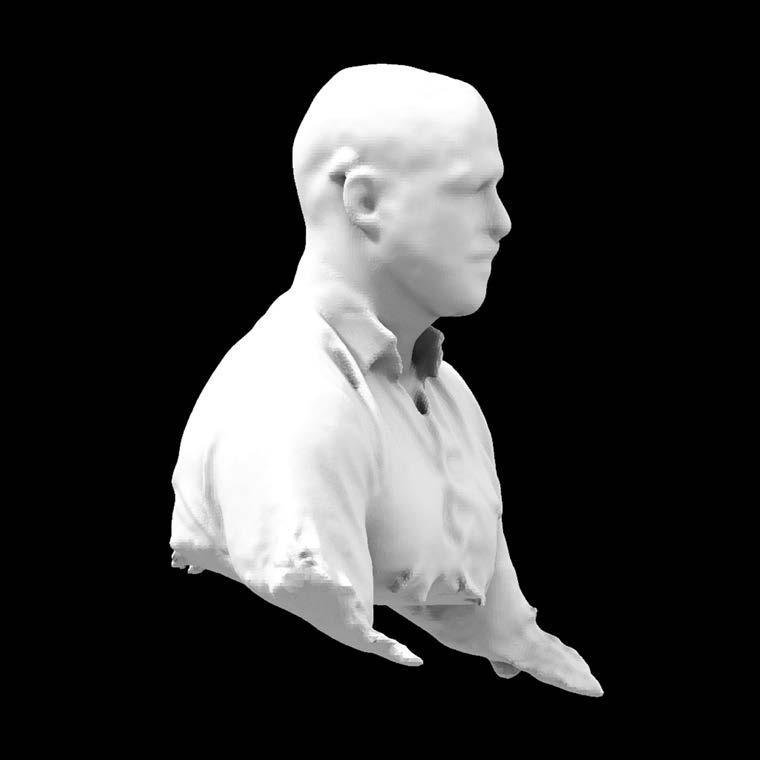
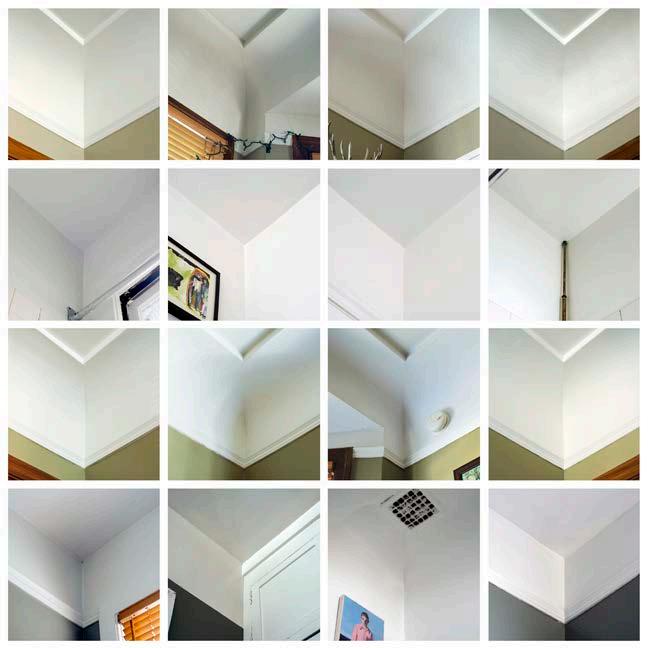
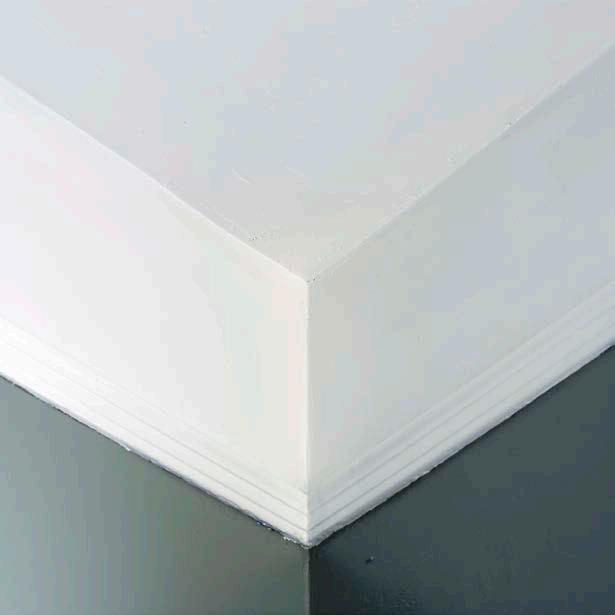
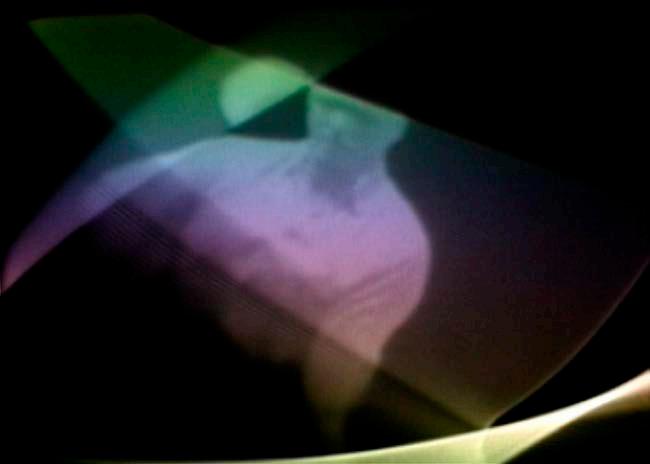
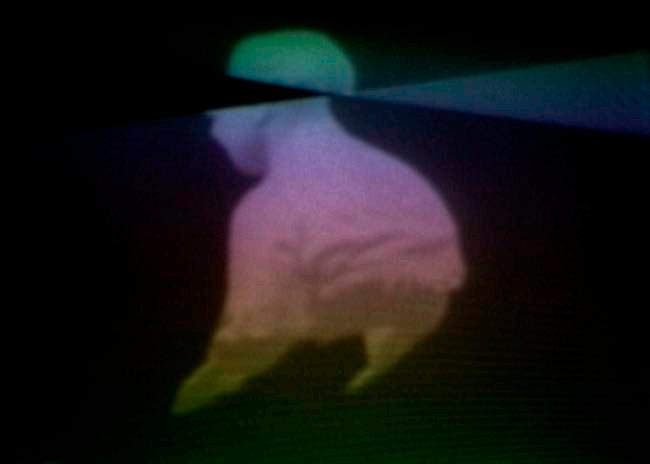
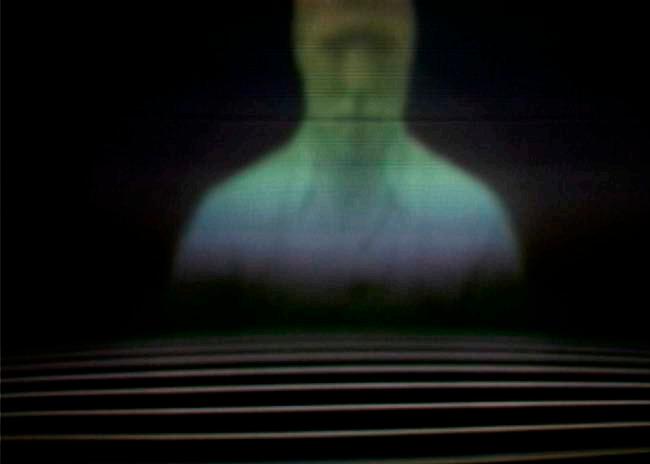
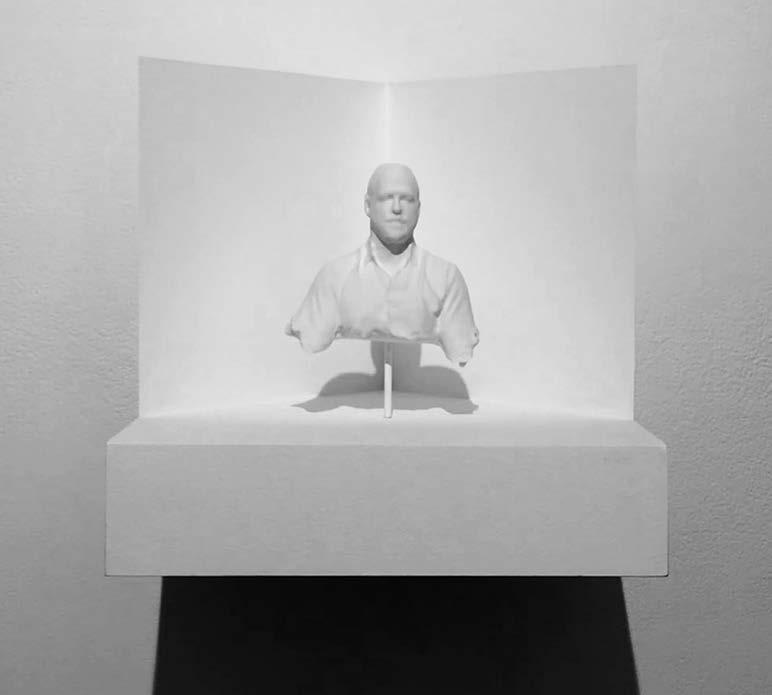
In three of the new works in this exhibition, Semblance (2015), Disembody Electric (2015), and Home Coordinates (2015), Martin employs the architectural device of the corner to guide his compositions, but also to experiment with its metaphorical qualities. In Gaston Bachelard’s seminal text,The Poetics of Space, the French philosopher devotes a chapter on the mythology and trope of corners. He claims that the corner is a “negation of the Universe” and that it is a “halfbox, part walls, part door.” It is naturally intersectional, atypical, and composed of many seemingly disparate elements, like queer/disability theory itself, which also negates and destabilizes. The corner also inhabits stereotypical spatial deviancy for bad behavior, yet it is also one of comfort and safety, where one can hide. Martin plays with all of these ideas in these three works. In the video, Semblance, we see the artist’s bust spinning in a corner space. The spinning motion actually emulates Martin’s ideal acoustic space, where he literally has one ear on each side – the corner and the other side of the corner, so that he can hear evenly, given that corners typically present hearing challenges for him. The idea of moving in and out of this space physically might emulate the direction and flow of his actual hearing, which is never stable or fixed. Disembody Electric conveys this idea further, although the spinning movement in this video is also accompanied by changing electronic frequencies, which affect the horizontal and vertical positioning of the image. An S-curve on Martin’s bust emulates the form of dancing. This work came out of Martin’s experiments with a wobbulator. Home Coordinates is a series of sixteen square photographs, 20” each. They are presented in a four by four grid and map the upper corners of each of the main living spaces of Martin’s apartment (this includes the living room, bathroom, bedroom, and kitchen).
Jacques Ranciere “The Paradoxes of Political Art” in Dissensus: On Politics and Aesthetics (London and New York: Continuum, 2010), 139.
Ibid.
Ibid.
Gaston Bachelard, “Corners,” The Poetics of Space. Translated from the French by Maria Jolas, with a Foreword by John R. Stilgoe. Boston: Beacon Press, 1994.
Ibid.
Here, Martin is interested in how the four corners begin to unfold as they are butted up against one another, slowly creating an optical illusion through the language of geometric art. Importantly, the act of repetition, doubling, quadrupling and unfolding through these corners also emulates how sound and acoustics dynamically reverberates and echoes through Martin’s own eardrum, and also within rooms themselves. Reverb is particular to the size of the space one is in during the act of hearing (which is why many sound editing tools spatialize their reverb filters from everything to closet to concert hall to outer space).
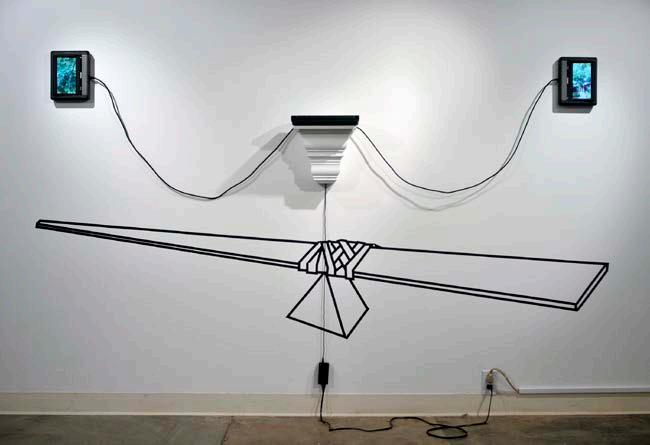
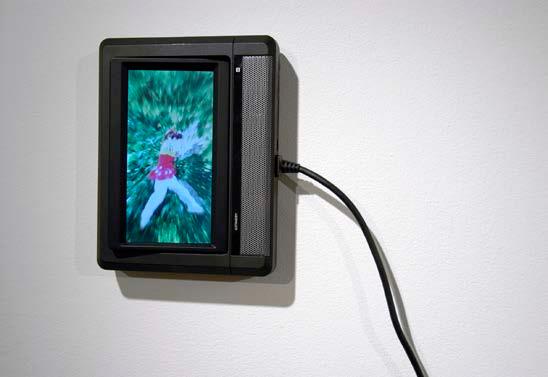
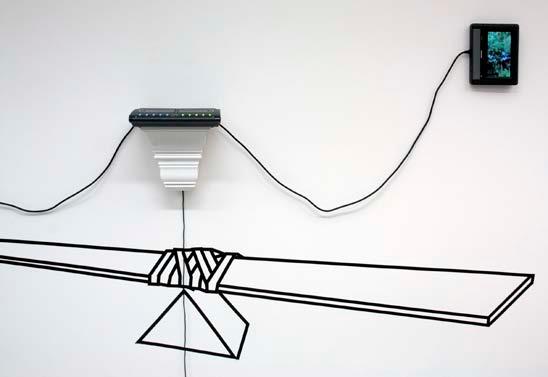
The act of moving back and forth and in and between spaces and sound is also considered in Drift (2010). Martin filmed two Korean acrobats bouncing up and down on a low-rise seesaw. All the viewer will see are the bodies of the acrobats going up and down as they swing, on two small screens facing one another. Martin fills the gap in between the screens by creating the illusion of a seesaw through cords that connect the two screens in tentacle-like fashion, and a 2D line drawing on the wall. Here, the artist is interested in the shift of perspective between 3D and 2D imaging, and also the tension between synchronization and a-synchronization. Initially, the viewer will see that the two acrobats are jumping in and out of the screens in so-called order, (one in, one out, one in, one out). But given that the two video channels are not synchronized, eventually this meddles with the smooth balancing act of the acrobats – they jump out of order, and drift in and off the screen at will. Martin metaphorically alludes to the nature of communication itself, which is in constant flux, is always out of synch, and is full of gaps, holes and misinterpretations and misunderstandings. This again, is part of Martin’s daily engagement with sound.
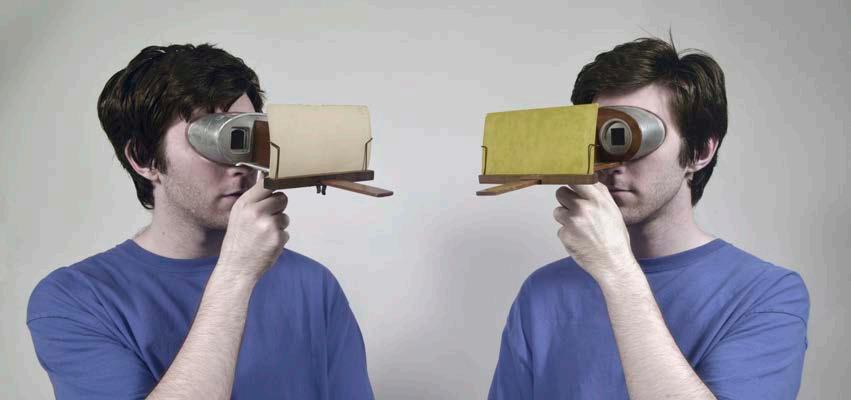
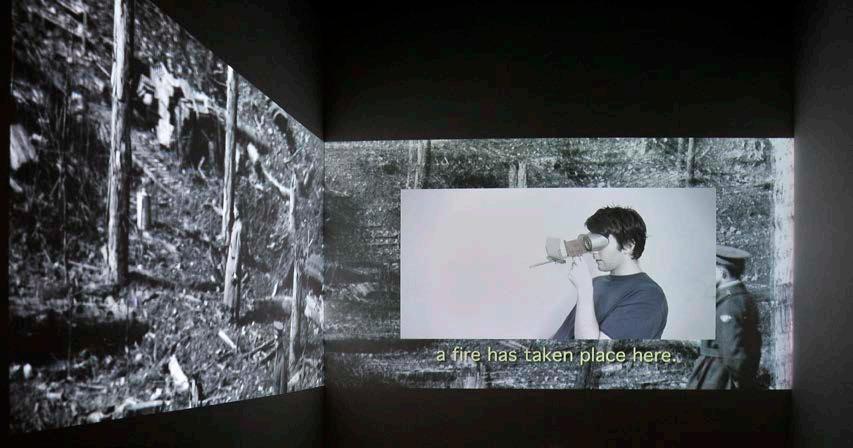
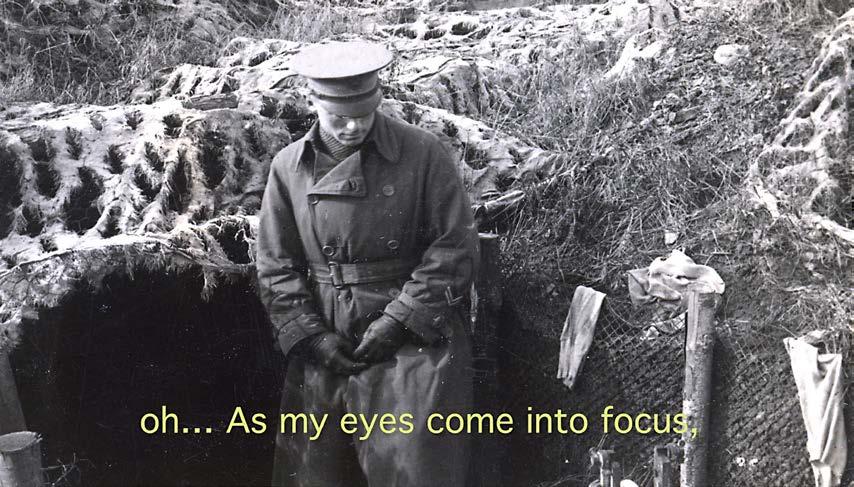
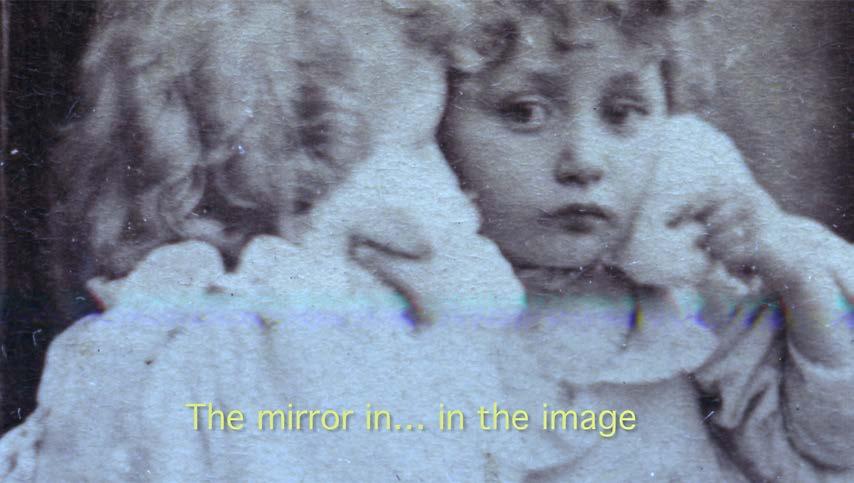
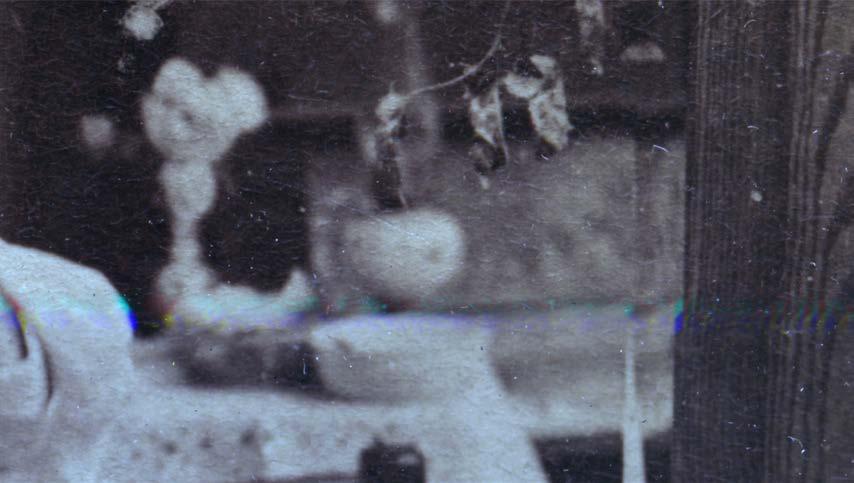
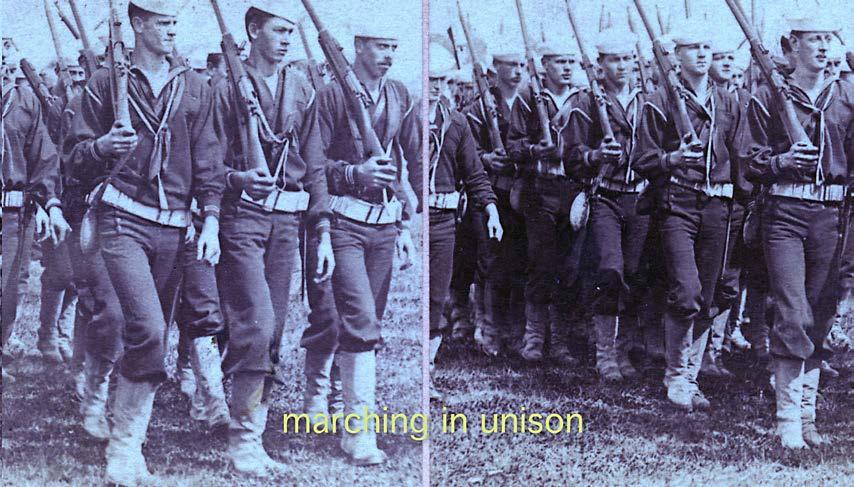
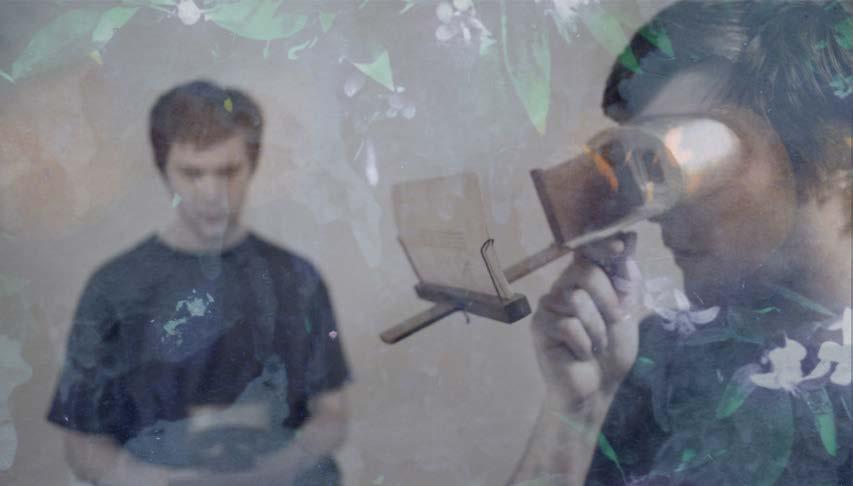
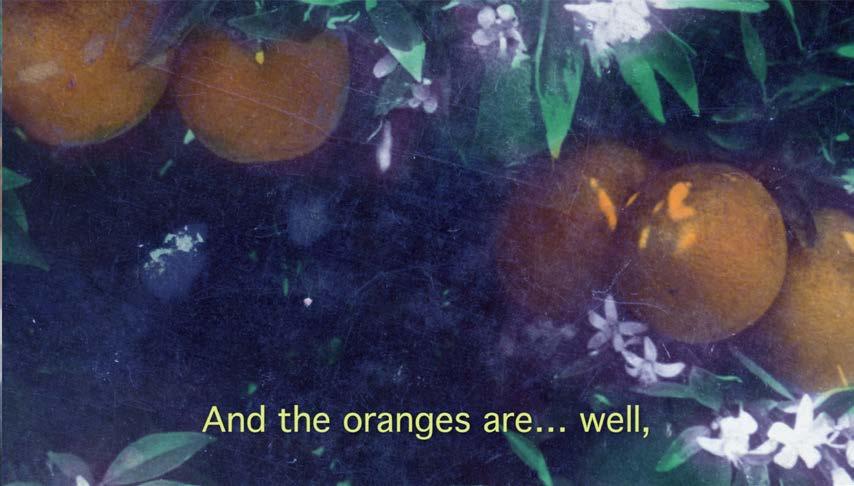
This idea of subjectivity in communication is enhanced in the two-channel video installation, The Divide (2015). Martin worked with male twins, and provided them with a series of antique stereoscopic photographs which he instructed them to audio describe. The images are made up of scenes of children, World War I, trench warfare, soldiers, navy cadets marching, the 1906 San Francisco earthquake, the New Orleans Mardi Gras, and more. Otherwise called visual description, this mode of engagement is typically offered and associated with blind or visually impaired people as a means to access visual art. In this case, Martin was interested in hearing both the possibilities and limitations that audio description has to offer both blind and non-blind audiences. Apart from the revelation that even twins have very different interpretations, assumptions and bases of knowledge in the process of describing images, Martin also attempts to complicate our very reading of art, where a mode of access is overlaid and woven into a work as part of the creative process. Even when an object is literally being described for us through the efforts of the twin brothers, ambiguity around the work’s meaning remains, and arguably, is further complicated by layers of meta-text generated through the additional audio interpretations.
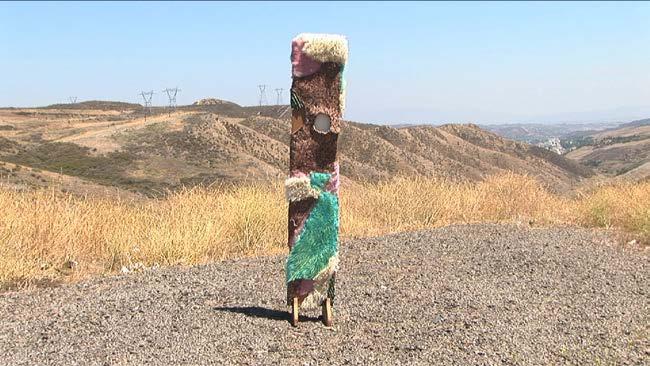
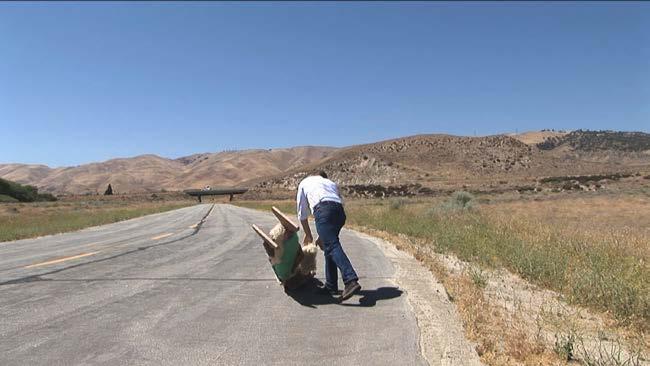
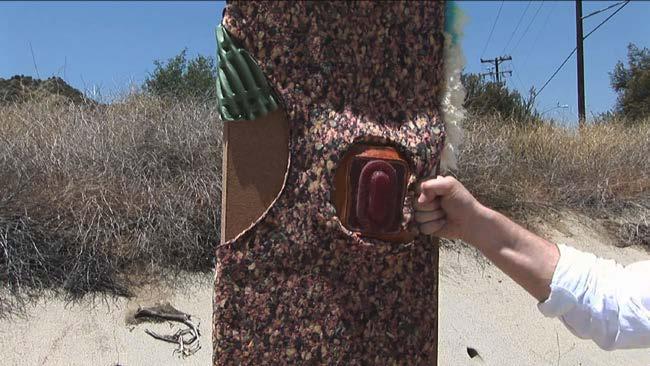
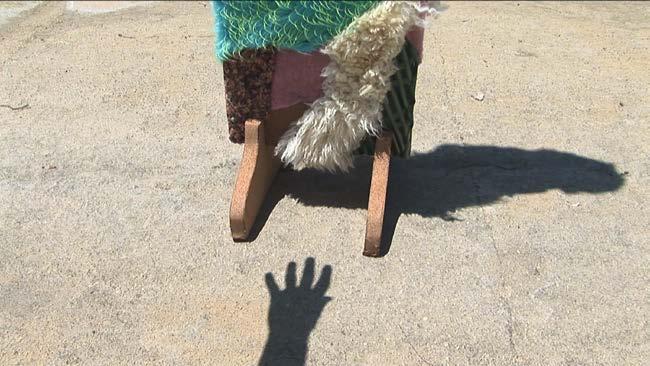
This layering of voice and sound is the basis for The Ugliest Thing (part 1) (2012/2015), which is the only audio piece in the exhibition. Martin has compiled a series of recordings where he invited five artists and scholars to enter into a black space and touch and feel their way around a textured sculptural object, all the while describing it.These audio descriptions became a complexly edited compendium of multi-sensorial and multi-sensual responses to a tactile work of art that are devoid of relying on vision. In the Ugliest Thing (part 2) (2012), which preceded part 1, we see Martin enter onto the screen in the California desert. He walks towards the same disheveled sculpture being audio described in part 1, and destroys it by stomping on it, and crushing it with his legs. In a quick succession of scenes, we see Martin enter the screen and destroy the sculpture, over and over again. The dysfunctional axis mundi is both deconstructed and reconstructed by its maker, alluding to the shift between inside/outside, center/margin, construction/destruction. Again, the rhythmic notion of in/out is being interrogated by the artist, calling on political aspirations for breaking down hierarchies, patriarchies and other dominant systems of power that seek to repress and control.
The vibrations, waves and curves of Martin’s acoustic world illustrated in this exhibition contributes to a definitive queer, crip politics of space that questions and broadens our ideas about how our corpus might begin to engage with private and public architectures of the body and the built environment, differently. More specifically, he offers us a palette of refreshing acoustic algorithms that dislocate and yet shape both the limits and alternative capacities of the eardrum and how that revised eardrum can define or be defined by the possibilities of space. All of this is critically tied into a new model of creative access, aesthetics and the sensorium, which ultimately broadens the availability of art to more diverse audiences.
Amanda Cachia is a PhD Candidate in Art History, Theory & Criticism at the University of California, San Diego. Her dissertation considers the politics of space as it intersects with, and dis/engages, the disabled body.
ARTIST STATEMENT
I was born a month before the biggest television event of the 1960s, the first walk on the moon. My parents checked the spelling of my name by watching the credits roll for the popular show “Bewitched.” I suppose I could consider myself a child of television. However, my mother and father were already sick of the novelty (and expense) of their Super 8 film camera soon after I was born, so I did not grow up accustomed to seeing moving images of myself.
My first exposure to film and video as a means of artistic expression was in my late teens in art school. The Structural Films of the 1960s and ‘70s stripped film away from its conventional use as a vehicle for narrative, addressing instead its essential properties and codes of the medium itself. Video art pioneers like Nam June Paik spearheaded investigations in image and sound processing through hacking into existing electronic devices or teaming up with engineers to make new ones. My early access as a maker of moving images was limited to the use of Super 8 film and VHS video. Yet, I was exposed to ways in which these mediums could be altered through the use of both analog tools and early digital technologies. This curiosity to explore new tools and processes to develop my visual language has carried on throughout my life as an artist.
Another early influence were feminist artists such as Carolee Schneemann and Martha Rosler, whose use of their own bodies and gestures in both film and video spoke volumes about repression and patriarchy. Meanwhile, other artists like the Viennese Actionist and the Japanese dance movement Butoh considered the body through both expressive and transgressive acts as a response to the violence of the modern era. I was then coming of age in the late 80s and early 90s as a young gay man feeling threatened by AIDS and the culture wars. Through both art history and media, I faced the undeniably fact that the body is politics.
Through my practice, I have continued to struggle to find ground between Modernist’s concerns with the potentials and distinct properties of various media and a need to express my own subjective inquiries related to difference and otherness. While many of my earliest works engaged with reflections upon queerness and sexuality, for over ten years beginning with the new millennium, I have made works that have been informed by my own experience with sudden hearing loss and its synesthetic impact upon my other senses. Moving beyond both the idea of loss and autobiographical influences, I have recently been working with a group of artists and scholars in the area of disabilities study, considering broader cultural representations of disability. We have also actively developed ways in which to consider notions of accessibly being built into a work of art at its inception rather than as an afterthought. Closed captions, audio descriptions, and tactile investigations have expanded and complicated my practice. As much as I am concerned with perceptual notions of access, I am also curious about the ways in which our observations of the world are consistently augmented and filtered through ever changing technological processes, as the Machine Age passes onto the era of information technologies and social networks.
“Echo: Location” is a culmination of recent works in moving image, sound, sculpture, and print media. The title of the exhibition plays off of the term “echolocation,” bifurcating it in a way that denies its original meaning while simultaneously constructing a new one. Metaphorically, I am interested in how the source of a sound or utterance can potentially be located by the direction and strength of its reverberation. Many of the works in “Echo: Location” are grounded in a simple gesture that becomes doubled, unfolded, or reverberated through the use of both old and new technologies. I am exploring the difficulty of locking down notions of self as something fixed, engaging in ordinary activities like describing, mapping, jumping, or spinning to reveal subjectivity as fluid yet limited by the times in which we live.
The Divide, synchronized two-channel HD video installation, 14 minutes
Still from The Divide, synchronized two-channel HD video installation
Still from The Divide, synchronized two-channel HD video installation
Still from The Divide, synchronized two-channel HD video installation
Still from The Divide, synchronized two-channel HD video installation
Stills from The Ugliest Thing (part 2), 8 minute video
Drift, two-channel video installation
Stills from Disembody Electric, 25 minute video loop
Stills from Disembody Electric, 25 minute video loop
Semblance, wall sculpture, wood, motor, 3D print
DARRIN MARTIN
dtmartin@ucdavis.edu • www.darrinmartin.com
EDUCATION
M.F.A. 2000 University of California, San Diego.
B.F.A. 1992 Alfred University, School of Art and Design.
1990 - 91 Friends World College of Long Island University, abroad program in India.
SELECTED SOLO EXHIBITIONS AND SCREENINGS
2015 Echo: Location, Art on Main, California State University, Stanislaus, Turlock, CA.
ARK 3: The Workshop Scenarios, Krowswork Gallery, Oakland, CA (with Torsten Zenas Burns).
Pattern Recognition, Aggregate Space Gallery, Oakland, CA.
2014 ARK 3: The Workshop Scenarios, Fosdick-Nelson Gallery, Alfred University, Alfred, NY (with Torsten Zenas Burns).
2012 What If? In the Days When the Tiger Smoked, Dumbo Arts Center, Brooklyn, NY, and traveled to Taber Gallery, Holyoke, MA, (with Torsten Zenas Burns).
2010 What If? In the Days When the Tiger Smoked, Krowswork Gallery, Oakland, CA, Improbable Mends, Center for Contemporary Art, Sacramento, Sacramento, CA.
2009 Inside Out, The Center for Interdisciplinary Art and Technology, University of Utah, Salt Lake City, UT; The Nightingale, Chicago, IL; Alfred University, Alfred, NY, Mass Art Film Society, Boston, MA; Time Space Ltd., Hudson, NY; Watkins College Theater, Nashville, TN; Eyedrum, Atlanta, GA; Zeitgeist, New Orleans, LA; Minicine?, Shreveport, LA; Avant Cinema Series, Austin, TX; Basement Films, Albuquerque, NM; Echo Park Film Center, Los Angeles, CA; Artists’ Television Access, San Francisco, CA, (a traveling and changing screening of solo and collaborative videos).
SELECTED GROUP GALLERY EXHIBITIONS
2015 Doris McCarthy Gallery, University of Toronto, Flesh of the World, Toronto, Canada. SOMArts, DIS/PLAY, San Francisco, CA. gallery@calit2, LOUD silence, University of California, San Diego, CA.
2014 Grand Central Art Center, LOUD silence, Santa Ana, CA.
Exile, Das stille Leben des Sammlers Kempinski, Berlin, Germany.
The Multimedia Museum at the Moscow House of Photography, New Orleans in Photography, Moscow, Russia.
2012 Southern Exposure, Point of No Return: Southern Exposure’s Annual Juried Exhibition, San Francisco, CA.
Munch Gallery, Up Against It, New York, NY.
Pier 3 Uplands in Brooklyn Bridge Park, Photoville, Brooklyn, NY.
2011 Famous Accountants, View of Outer Space from an Aquarium, Brooklyn, NY. Krowswork Gallery, Summer of Video Art – The Feel of Water, Oakland, CA.
2010 Space Bandee, The 7th International Busan Video Festival, Busan, South Korea.
SF Cameraworks, Suggestions of a Life Being Lived, San Francisco, CA.
Spaces Gallery, Co-Existing and Co-Llaborating, Cleveland, OH.
2009 The Lab, PastForward, The 25th Anniversary Exhibition, San Francisco, CA.
SELECTED GROUP SCREENINGS
2015 Stream: Chapter 2 (Helpless), ANTHROPOSCENIC, South Windham, VT.
2013 Kosma Spring Symposium, We + Media = Wedia, SungKyunKwan University Galley, Seoul, Korea.
Pacific Film Archive, The Sounds of Silence, Sourcing Sound: Experimental Works, Berkeley, CA.
2012 Kuala Lumpur Experimental Film & Video Festival, KLEX 2012: Deframed, Kuala Lumpur, Malaysia.
The Menil Collection, The Sounds of Silence: Three Evenings of Film, Houston, TX.
2011 Mix 24 New York Queer Experimental Film Festival, Secret Identities, New York, NY.
Anthology Film Archives, Migrating Forms 2011, New York, NY.
2010 European Media Art Festival, Doubles and Look-Alikes, Osnabrueck, Germany.
FotoFest Biennial, Aurora Picture Show presents Co-Existing and Co-Llaborating, Houston, TX.
2009 Soft Power, arte y tecnologías en la era biopolítica, Soft Science, Vitoria Gasteiz, Spain.
Issue Project Room, Shapeshifter, Brooklyn, NY.
European Media Art Festival, A Stroke of Genius, Osnabrueck, Germany.
2008 Centre Pompidou, Pockets Film Festival, CELLuloid: Cell-Phone Made Documentaries, Paris, France.
Impakt Festival, You Are What You Eat, curated by Migrating Forms, Utrecht, Netherlands.
Museum of Modern Art, CELLuloid: Cell-Phone Made Documentaries, Documentary Fortnight, New York, NY.
2007 MutaMorphosis, Challenging Arts and Science, International Conference, Soft Science, Prague, Czech Republic.
Ulsan University, Open Air Screenings, Video Dumbo Archive, Ulsan, South Korea.
Wuerttembergischer Kunstverein, Profile and Panorama, Landscape (Distance and Removal), Stuttgart, Germany.
University of Southern California, Transformations 3: Fiction Science, Los Angeles, CA.
2006 Kyung Sung University, D2 Festival, Busan, South Korea.
Lincoln Center, Scanners: The 2006 New York Video Festival, Hot Stuff: William E. Jones, Darrin Martin and Torsten Zenas Burns, New York, NY.
Medical Museion, Soft Science, Copenhagen, Denmark.
2005 Rencontres Internationales Paris/Berlin, Landscape, Paris, France.
ZKM/Center for Art and Mediatechnology, Sound + Vision, Karlsruhe, Germany.
SELECTED LECTURES PANELS & PRESENTATIONS
2015 Darrin Martin: Artist Talk, Time + Space Station, Kuvataideakatemia, Helsinki, Finland.
2014 Conable Distinguished Lecture Series in International Studies, Speculative Soundings, Rochester Institute of Technology, Rochester, NY.
2013 Darrin Martin: Video Shorts, Department of Media, Culture, & Communication, New York University, New York, NY.
2011 Society for Disability Studies, Workshop: Participatory Description: The Next Frontier in Accessibility?, San Jose, CA.
2009 The Center for Interdisciplinary Art and Technology, University of Utah, Seeing Us Listen, Salt Lake City, UT. College Art Association, Empathy in Media, chair of session panel, Los Angeles, CA.
SELECTED AWARDS, GRANTS, & RESIDENCIES
2015-14 Signal Culture, artist residency, Owego, NY.
2012 University of California Institute for Research in the Arts, for Arts Inclusion: Disability, Design, Curation, artist residency, UC Irvine, Irvine, CA.
2010 University of California Humanities Research Institute, Critical Disabilities Studies Fellowship, Irvine, CA.
SELECTED REVIEWS, PUBLICATIONS, & ARTICLES
Nirmala Nataraj, artwork featured in “SOMArts show ‘Dis/Play’ combats ‘tired notions of disability,’” SF Chronicle, March 25, 2015.
Sarah Burke, “Pattern Recognition: A Solo Exhibition by Darrin Martin,” East Bay Express, March 12, 2015.
Victoria Dalkey, “Art review: Exhibit explores imagery’s relation to sound,” Sacramento Bee, January 29, 2010.
Ara H. Merjian, “Playing It By Ear,” film reviews, Artforum, April 7, 2009.
Ioannis Mookas, Gay City News, “Truths and Consequences, Documentary Fortnight,” February 14, 2008.
Jim Ridley, “From Talking Heads to Dancing Bear, It’s another strong Doc Fortnight at MOMA,” The Village Voice, February 12, 2008.