
Hearne Pardee Displace D
500 copies printed
Hearne Pardee - Displaced
University Art Gallery
Department of Art
College of the Arts
California State University, Stanislaus
February 1 - March 11, 2011
This exhibition and catalog have been funded by:
Associated Students Instructionally Related Activities, California State University, Stanislaus
Copyright © 2011 California State University, Stanislaus
All Rights reserved. No part of this publication may be reproduced or transmitted in any form without the written permission of the publisher.
University Art Gallery
College of the Arts
California State University, Stanislaus
One University Circle Turlock, CA 95382
Catalog Design: Kristina Stamper, College of the Arts, California State University, Stanislaus
Catalog Printing: Claremont Print and Copy, Claremont, CA
Catalog Photography: Kristina Stamper, College of the Arts, California State University, Stanislaus and Brian Suhr
ISBN: 978-0-9830998-1-9
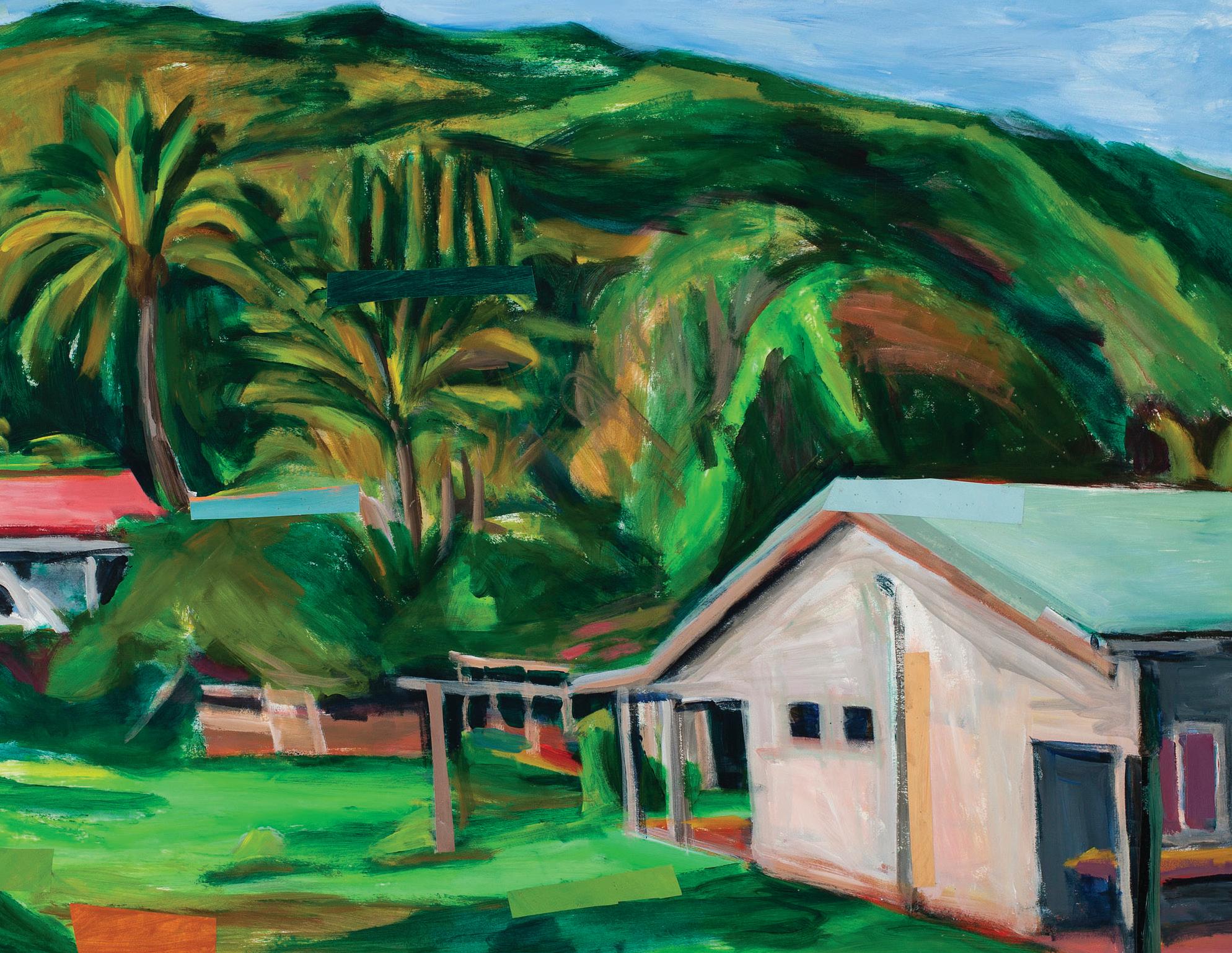
Cover Image: Raymond’s House, acrylic on paper, 2010
Director’s Foreword
This exhibition, Hearne Pardee – Displaced, represents a brief overview of Hearne Pardee’s most recent works. From a street corner in Davis California to the village of Nessakouya, on the Pacific Island of New Caledonia, Pardee’s work has documented and developed a rich vocabulary of painting and collage. The works in this exhibition represent his work from plein-air to total abstract painting. Loaded with retinal physiology with ethnographic observation, this body of work unites how we look at art in a complex and wonderful fashion. I am very excited to be able to exhibit work for others to enjoy.
Many colleagues have been instrumental in presenting this exhibition. I would like to thank Hearne Pardee for the opportunity of exhibiting his astounding work, Kristin Koster for her brilliant essay, College of the Arts, California State University, Stanislaus for the wonderful catalog design and Claremont Print and Copy for their expertise in printing this catalog.
A great thanks is extended to the Instructionally Related Activates Program of California State University, Stanislaus as well as anonymous donors for the funding of the exhibition and catalogue. Their support is greatly appreciated.
Dean De Cocker, Director
University Art Gallery
California State University, Stanislaus
Location, Mobility and the Color of Place
I first met Hearne Pardee in the parking lot of a suburban strip mall in Davis, Ca. I was returning groceries to my car, and he was set up with an easel—plein-air sketching--in front of a Carl’s Jr. What struck me then about his work, and what continues to draw me in, was an unexpected familiarity his composition elicited in me. Despite the potential irony of his fast-food chain subject matter, Pardee had off-set the Carl’s Jr. in the distance, and rendered it practically non-descript; with the disinterested eye of an ethnographer working on site, he recorded the blue-gray concrete before him, the curve of intervening vehicles, and the tree trunks punctuating the parking lot. His real engagement seemed to be with the patchwork of shapes that comprised the distance between where he sat and the structure—which, with its sprawling porch, and lack of logo, turned into any building, on a flat landscape, beyond which you can’t see. Invited into the foreground, I felt how rare it was to recognize my own body in a represented space. The way we approach our destinations is, after all, through form, and almost always at an oblique angle; our lines of sight and our movements are thwarted by obstacles as we maneuver built environments, across concrete, around sign posts, away from cars, towards whatever place.
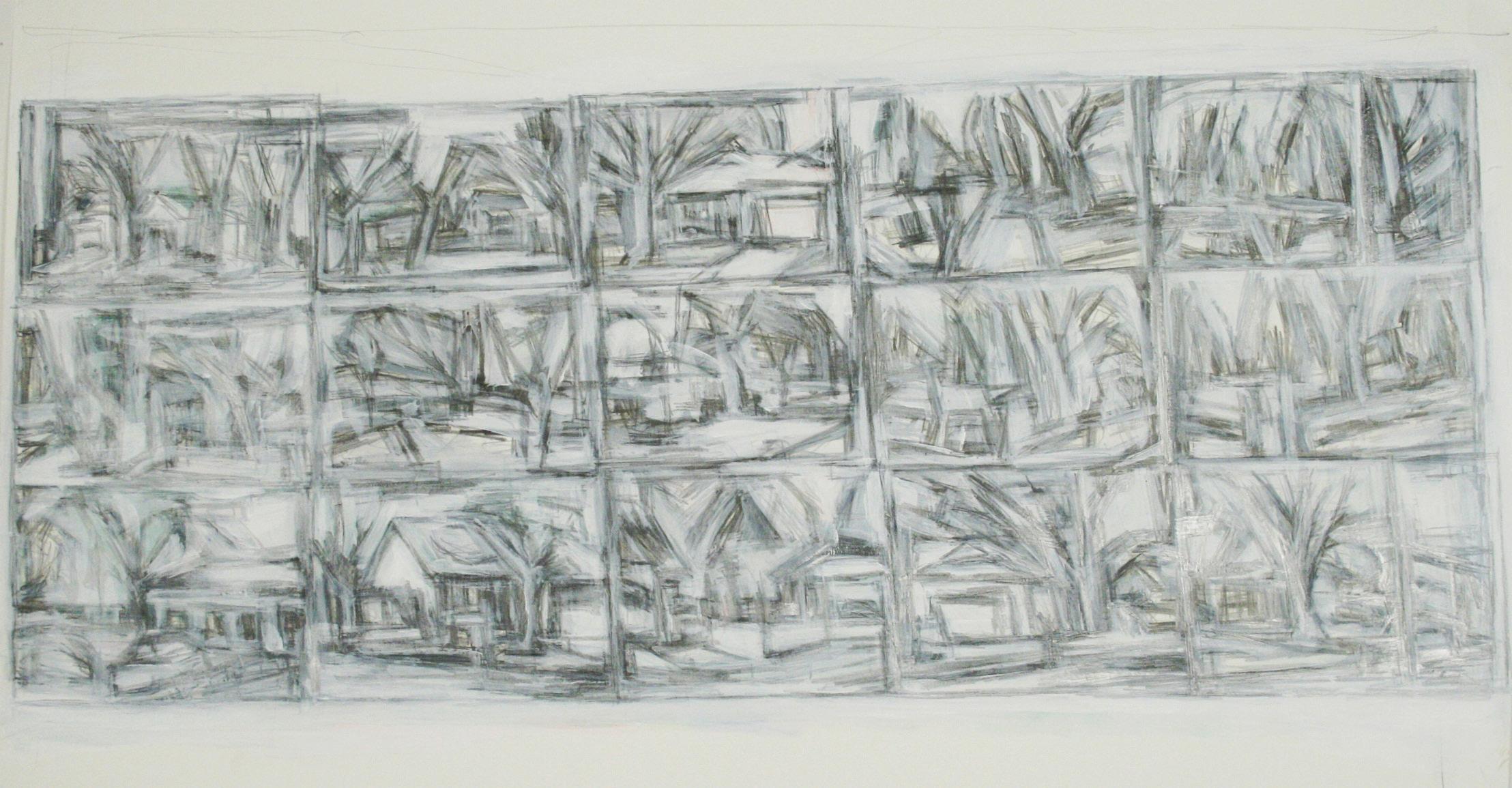
In Pardee’s present exhibition, Displaced, two of the parking lot paintings begun that day are on display, as part of the nine-panel wall hanging entitled Neighborhood. The other seven images that make up the large collage are of tract homes painted in that same north Davis, three-block area. In these, as with the Carl’s Jr. compositions, Pardee sets up his easel from afar, sketching the structures from across the street. From here, he maps a battery of imposing shapes, that passing by in cars, on bikes, or foot, we accustom ourselves not to see. The rise of the driveway, a bus curbed poorly along the street, the dull lawn, garage doors, some giant tree. And there are other shapes, ubiquitous in Pardee’s urban landscapes, that underscore the tension between this distance private property requires us to keep, and our evercommon impulse to enter in: these are the endlessly recurring frames created by gate posts, window panes, front doors, garages, porches, and rails. The squares and rectangles, in the urban landscape paintings of Davis, work in a number of ways: as form and shape, they assist in the illusion that allows us to project depth onto the two-dimensional plane; and as content, they mark the threshold where our entrance to the structures, (through vision), is delayed.
The artist then redoubles the opposition between outside and in, through the addition of colored grids and strips to the paintings’ surfaces. These are the geometries that make up the push-and-pull of Pardee’s visual everyday. In East Davis Neighborhood, he expresses the dialectic between depth and surface by directing our vision back out from the structures’ windows and doors, toward the image’s frame, where his contrasting ribbons of color remind us, that no matter the illusion, we are really just looking at paint.
Pardee is, of course, not the first artist to draw attention to this particular neighborhood, and to the serially produced tract homes of its lots. In the 1960s, ceramicist Robert Arneson, also on faculty in the studio art department at UC Davis, immortalized his own north Davis home, in his Alice Street series. His legendary working and reworking of one single house, drew unabashed attention to the ordinary, and mocked the high-art myth of the artist as private, inaccessible, or elite. By publicizing his house number (1303 Alice), the type of vehicle he drove to campus (a VW bus), and the predictable pastimes of Alice’s inhabitants (watching TV and shooting hoops), Arneson revealed the artist’s character as inseparable from the details of the everyday. Pardee no doubt gestures to Arneson in choosing his subjects from the neighborhood of Alice Street. But he re-evacuates all the detail, and thus evicts the character of the artist, replacing it with a palimpsest of color that re-deploys the middle-class structure to every place.
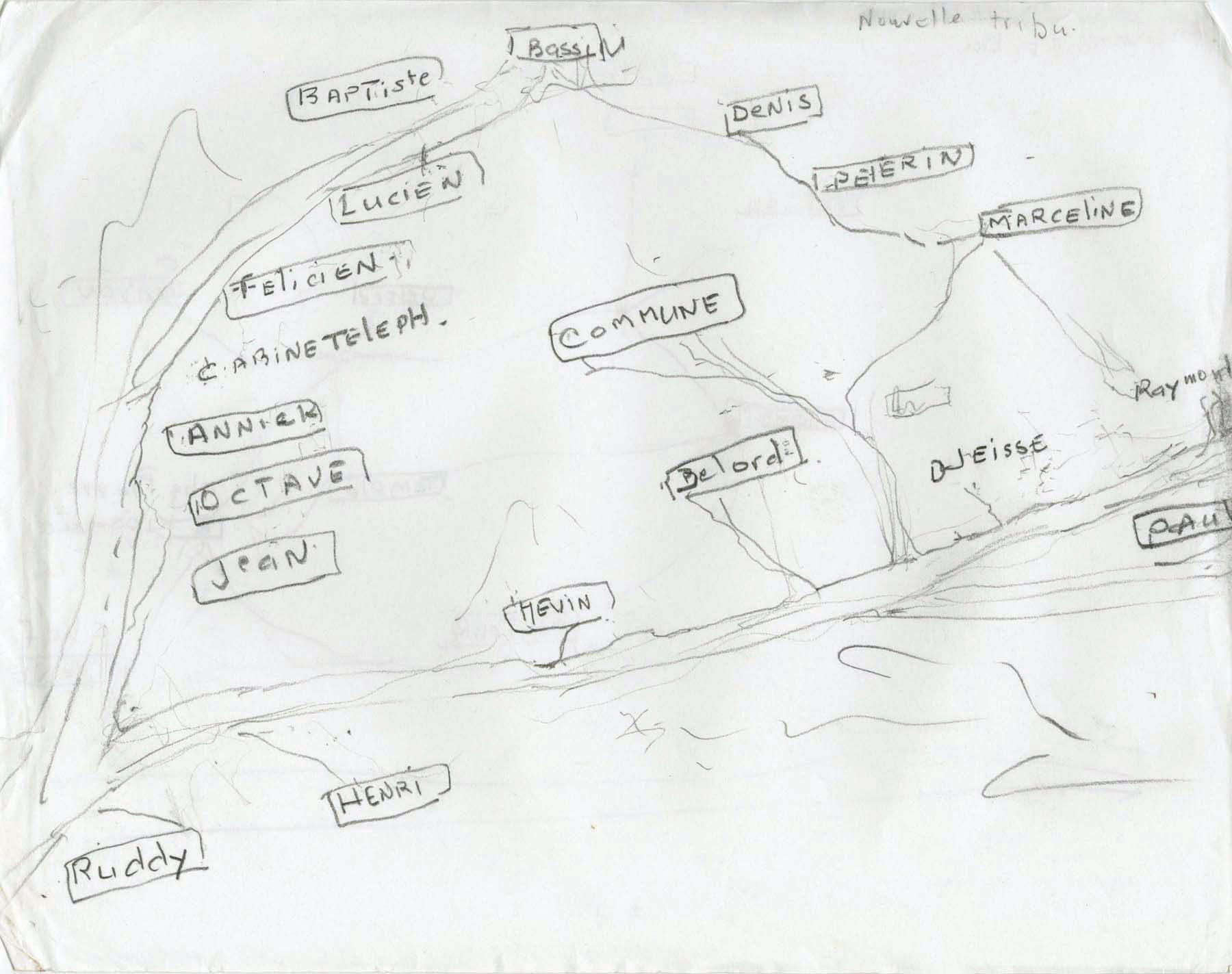
This is partially why, in the accompanying collages painted in the village of Nessakouya, on the Pacific Island of New Caledonia, we locate an immediate sense of familiarity. Over a series of visits to the island (first in 1967, then again in 2008 and 2010), Pardee has tracked (and encouraged villagers to map) the changing landscape in a remote section of an island still held as a protectorate of France.
The structures he records there—a church, houses, a community house, a basketball hoop, a shed—recall almost to the letter those of the painter’s urban California town: in the sprawling portico of School, Nessakouya, and pastel rooftops of Raymond’s House, it’s impossible not to recognize the front porch of Carl’s Jr., and tinywindowed walls of suburban north Davis homes. Far from exocitizing gaze of colorists Delacroix or Gaugin, Pardee confronts the colonizing influence on the landscape, and allows the atmosphere, built through color’s relationships, to reveal the singularity of place.
Yet in this very mapping of similarity where it does occur—this globalization of the everyday—we also track the difference of the inhabitants’ relations to their surroundings, and so the painter’s ethnographic dérive. In the works from New Caledonia, the artist, unhindered by sidewalks and the urban lots intended to maintain a distance, ventures much closer to his subjects. Sheltered by the sun-bleached tents of Hienghène, or the overhanging eaves of Montravel (the house where he stayed), Pardee renders the structures almost from within. The
vertical support beams and rooftops now open up to allow vision to pass through, and create with their geometry grids of frames—across which flow rivers, island mountains, banana plants and sky. As the painter moves into these structures, as he does in Verandah, his colored ribbons and squares become a patchwork of movement that vibrates the surface of the visual plane. He creates tensions of contrast with these collaged pieces, but their size and brushwork barely vary from those he uses to construct the landscape; the foreground and background seem to occur simultaneously, differentiated only by variations of color and directions of shape. More than any other piece, this image achieves its dimensionality through intervals of color and form, visible as a movement on the surface of a two-dimensional plane.
In Displaced, there are a number of entirely abstract pieces, and a few, like Field and Frame and Franklin Boulevard show the process of abstraction as it envelops the canvas, leaving only remnants of figuration. As a student of color-field masters Hans Hoffman and Joseph Albers, Pardee experiments with the way that intervals of colored shapes—and the eye’s movement from one to the other—achieve vitality and depth in abstraction that rivals linear perspective in representational painting. But equally indebted to Cézanne’s lessons of building tension in landscape through colors’ modulations, he maintains a representational choreography with contrasts of hue, saturation and tonal interplay. Pardee’s large collages of Davis and New Caledonia make visible an extraordinary simultaneity of distance and proximity, surface and depth, abstraction and figuration. In approaching the figurative through an urban landscape, and abstraction by means of colored shapes, we shift between illusions of depth, and islands of surface, locating one through the other, concurrently, in space.
Kristin Koster
Davis, California
Kristin Koster received her Phd in French literature at the University of California at Davis. She is a 19th century scholar with research interests in French literature, art history and critical theory. Her dissertation analyzed the cultural shifts that prompt color to emerge as a representational strategy of modernity.
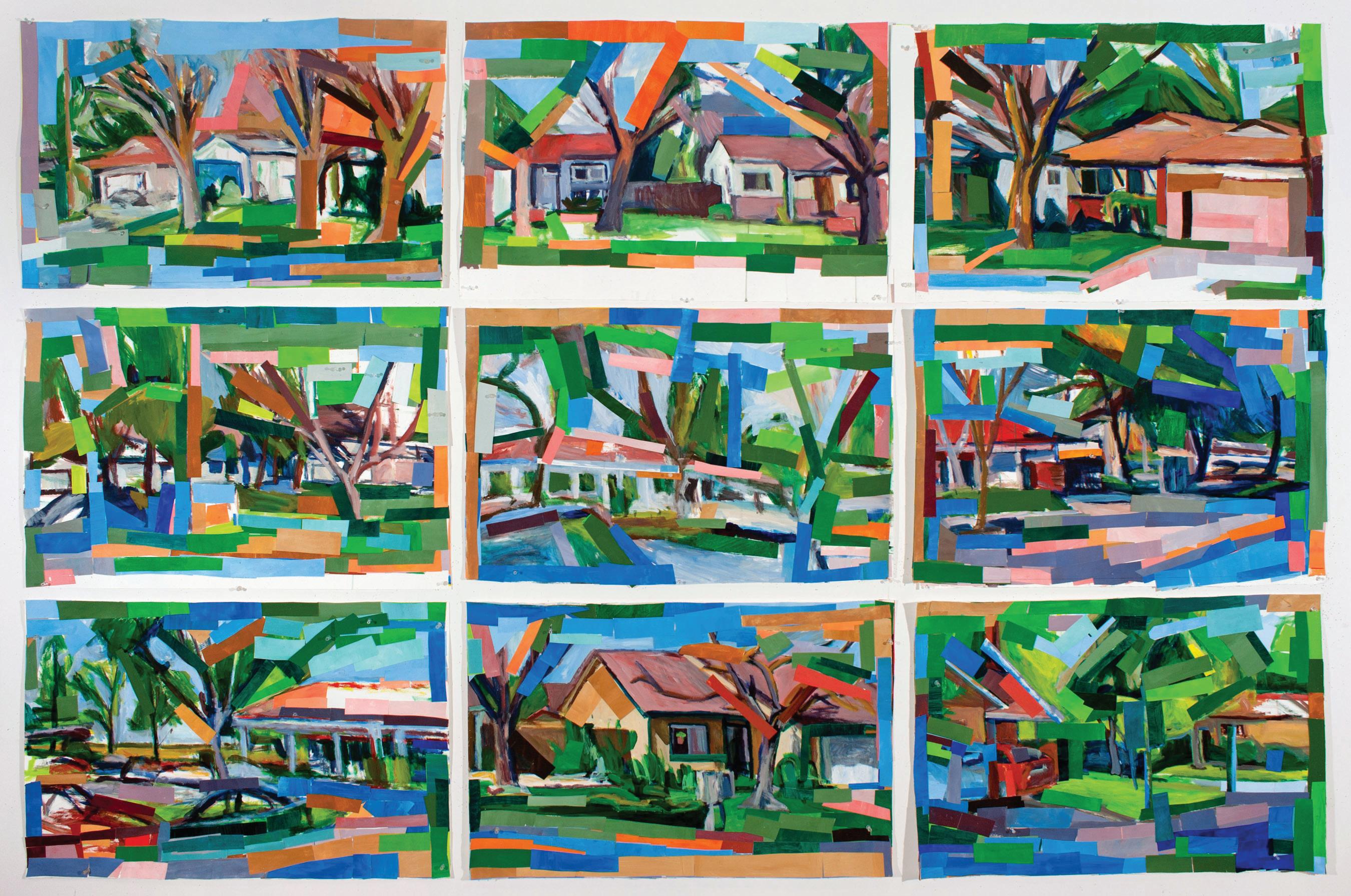
East Davis Neighborhood, 2010, acrylic on paper with collage (9 panels), 78” x 118”
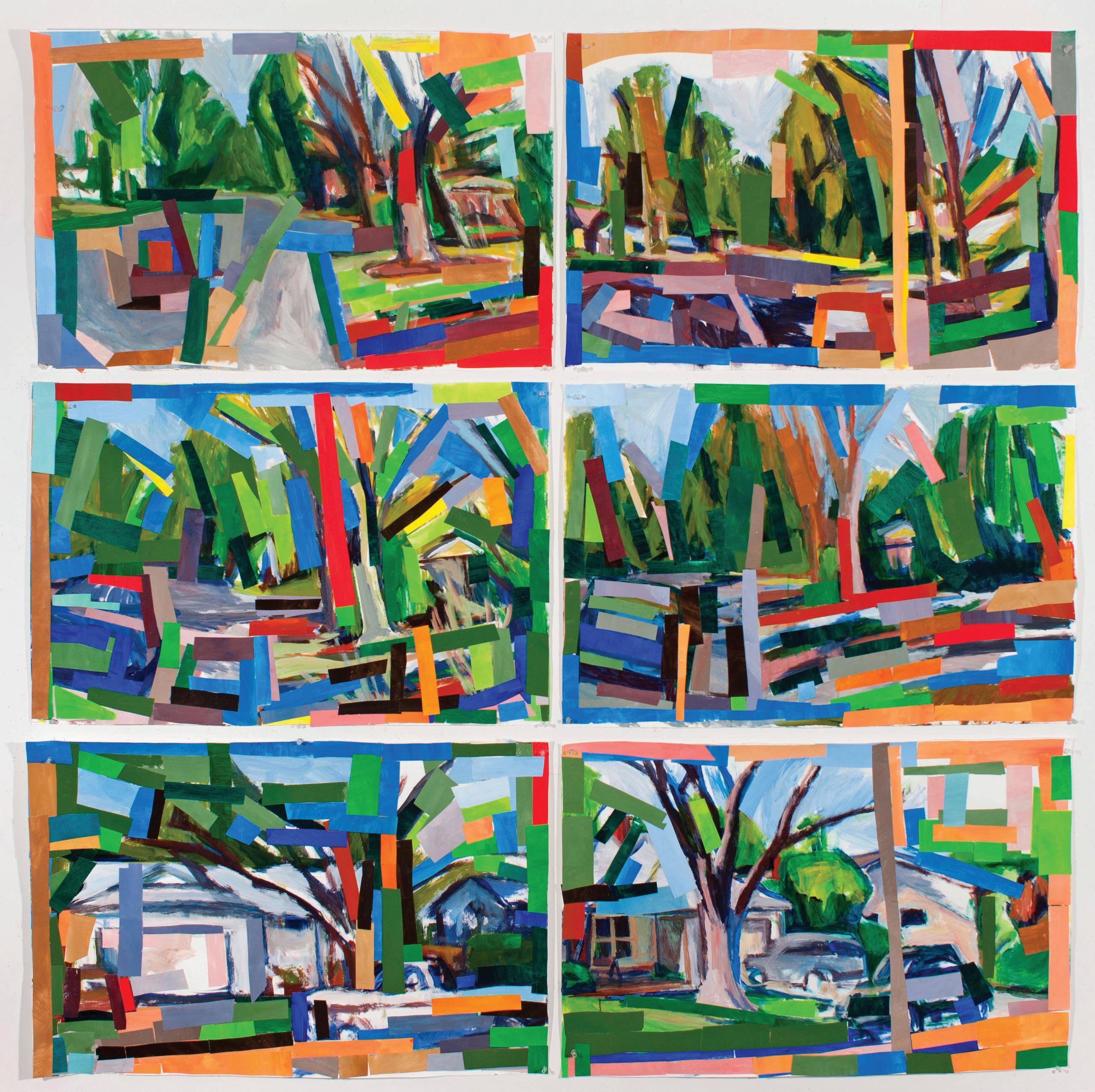
Alice Street, 2010, acrylic on paper with collage (6 panels), 78” x 78”
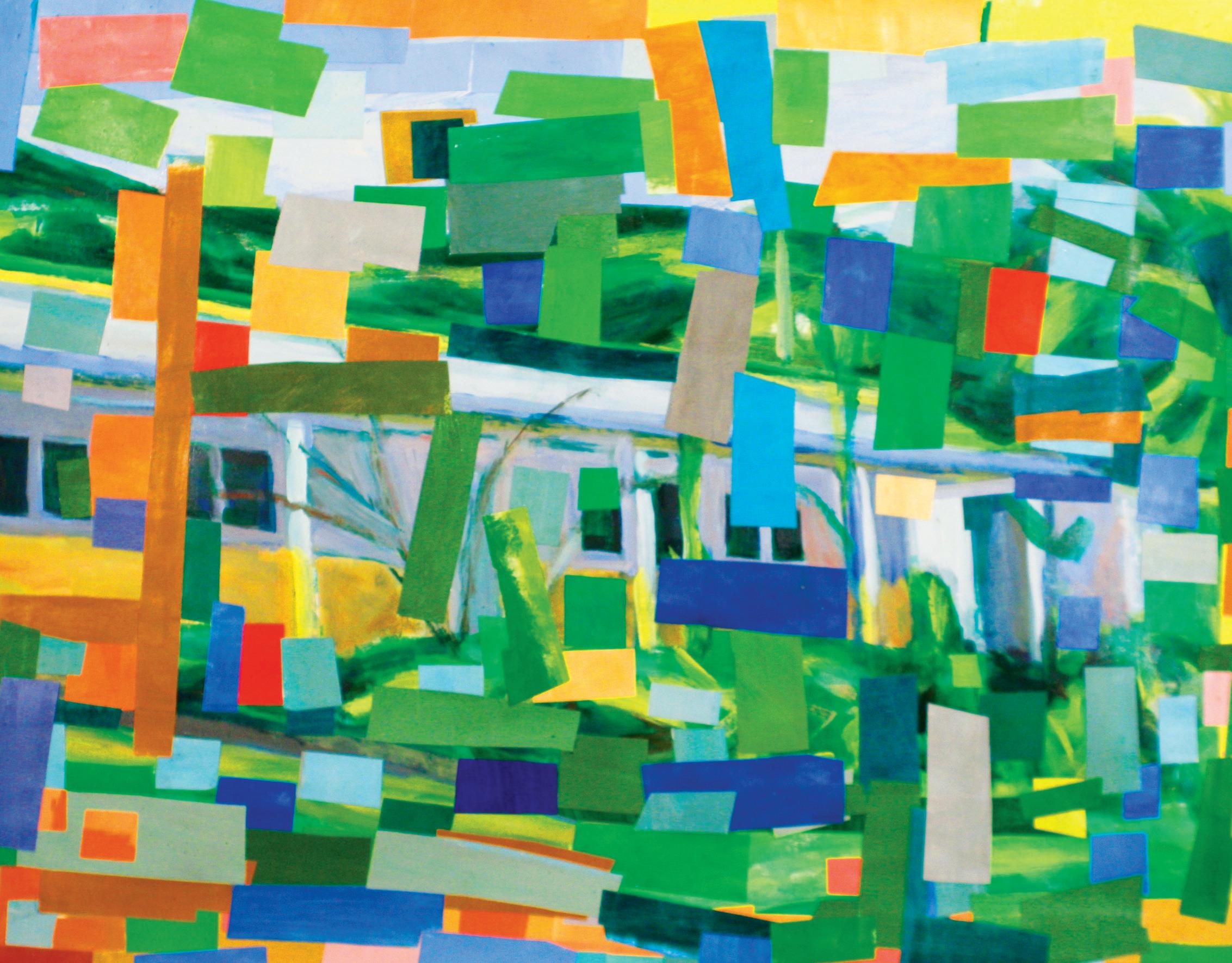
Nessakouya School, 2008-2010, acrylic on paper with collage, 24”x 36”
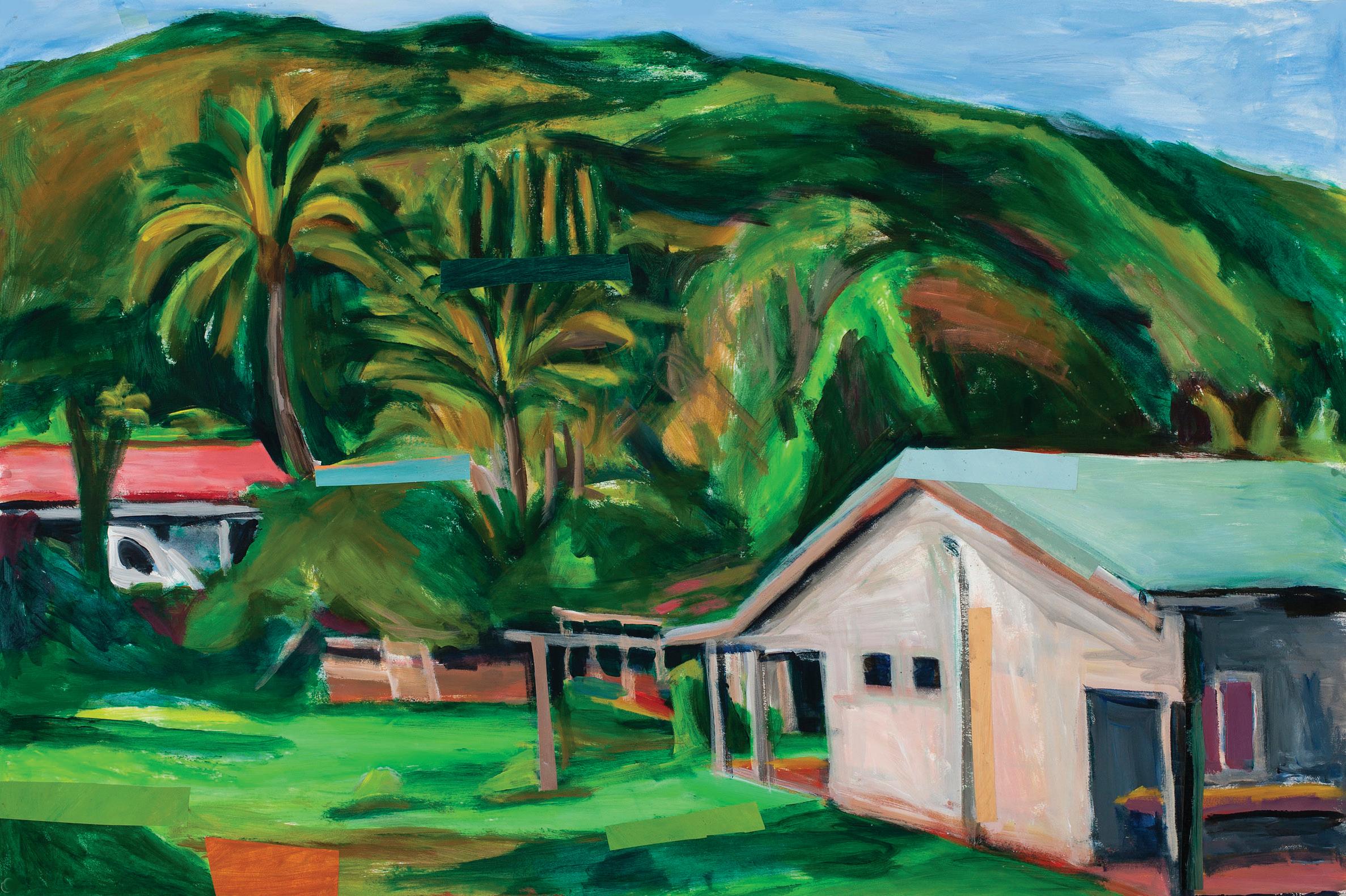
Raymond’s House, 2010, acrylic on paper with collage, 38” x 25”
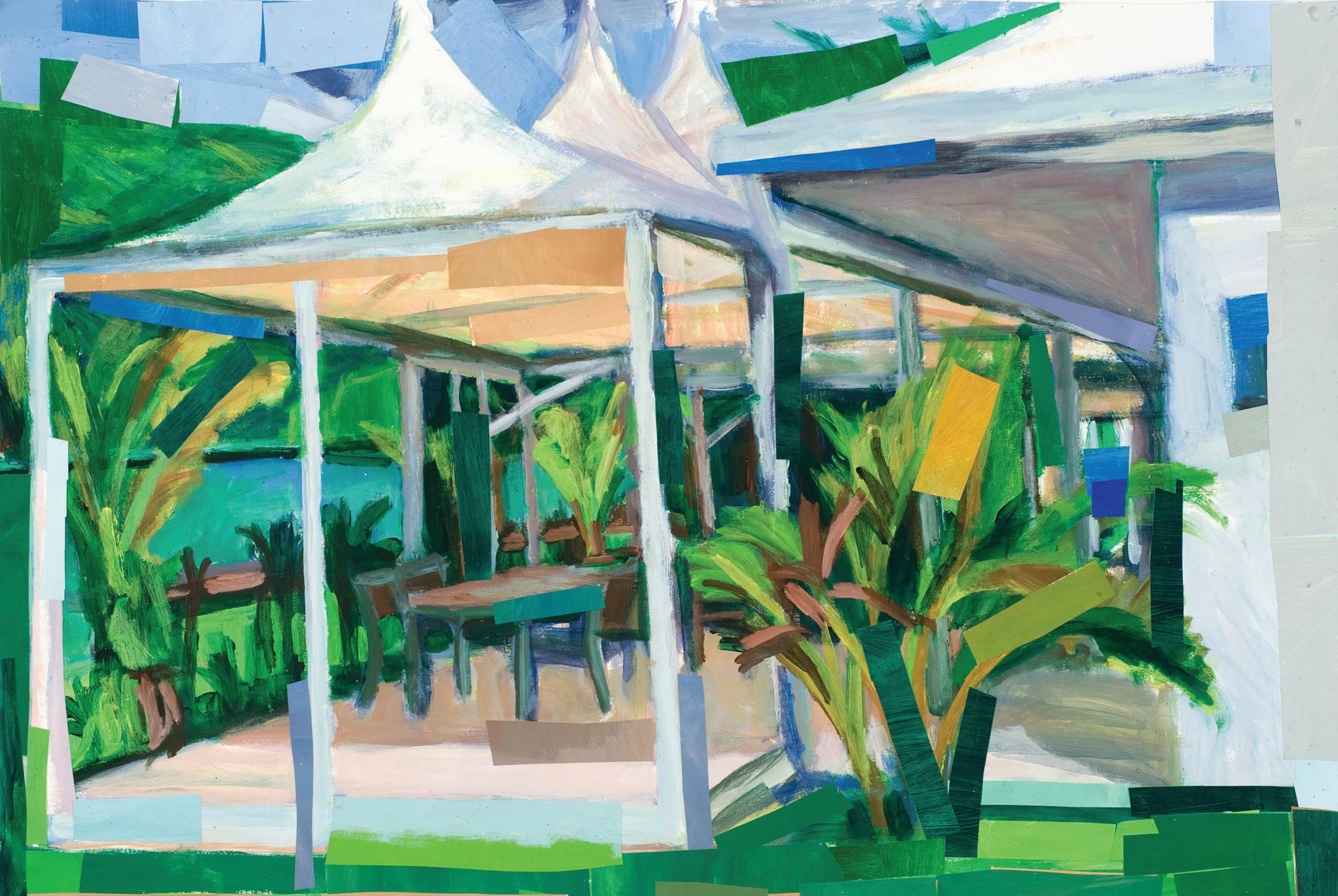
Hienghène, 2008-2010, acrylic on paper with collage, 38” x 26”
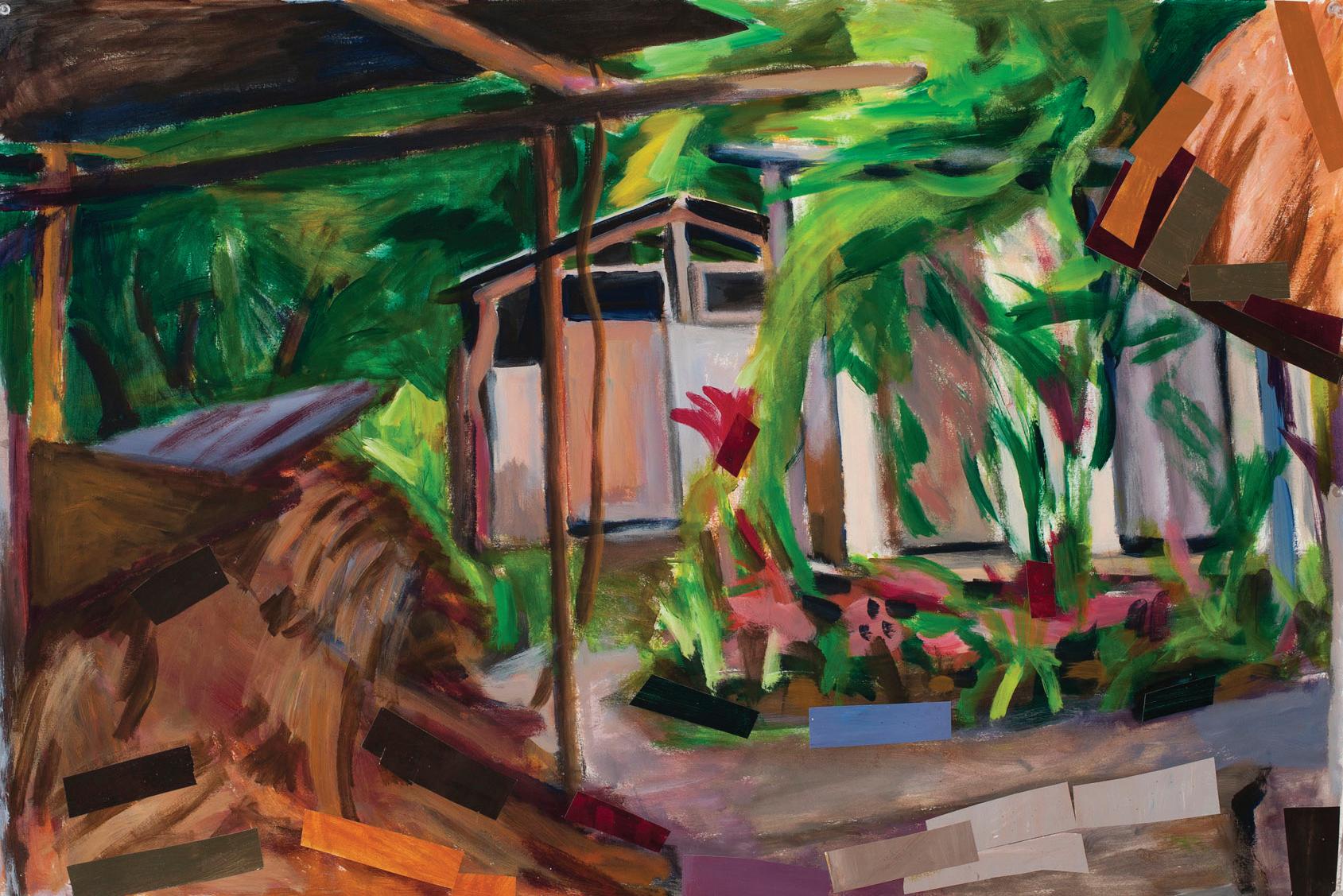
Montravel, 2010, acrylic on paper with collage, 25” x 38”
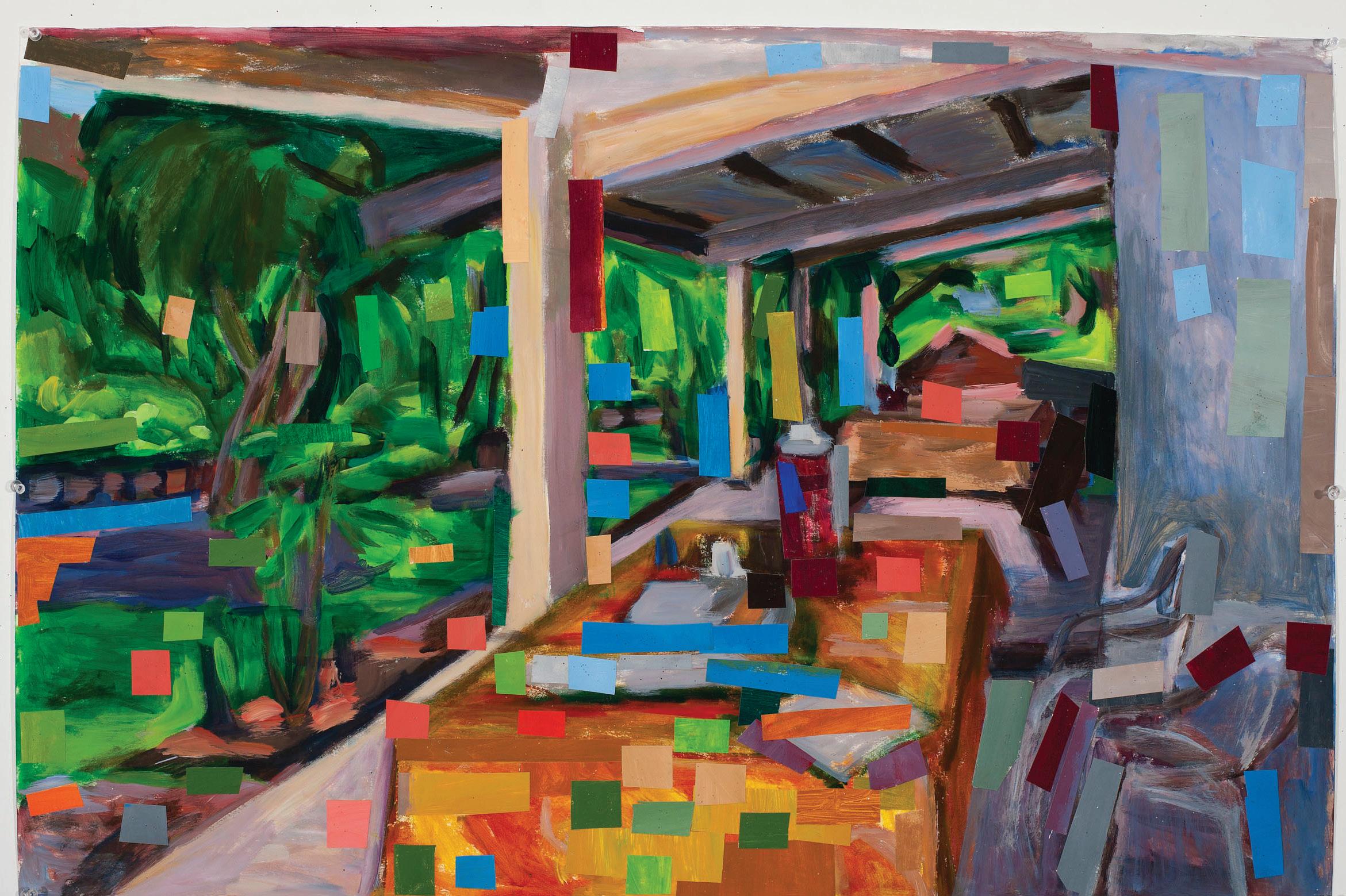
Verandah, 2010, acrylic on paper with collage, 25” x 38”
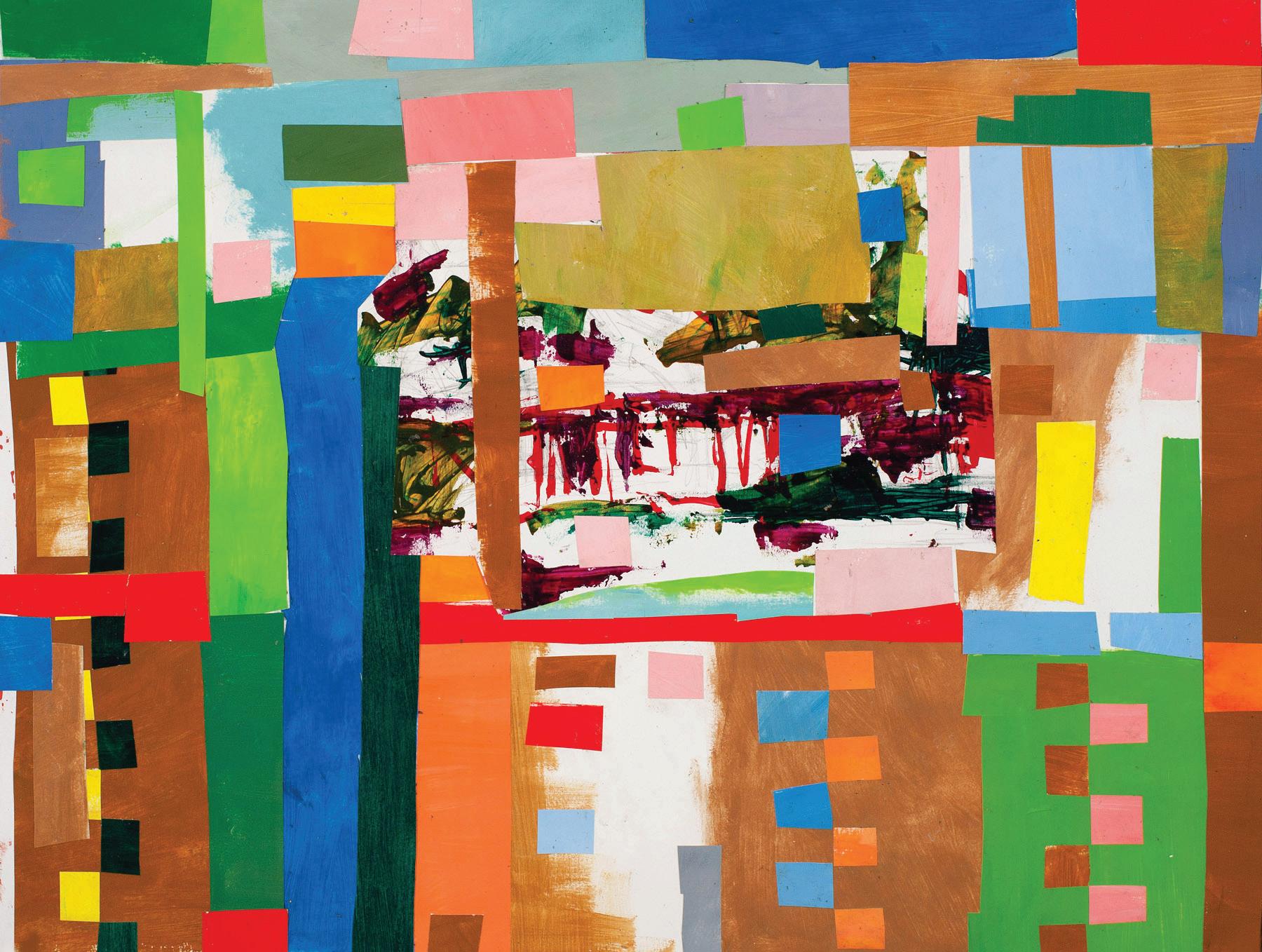
Field and Frame, 2010, acrylic on paper with collage, 24” x 31”
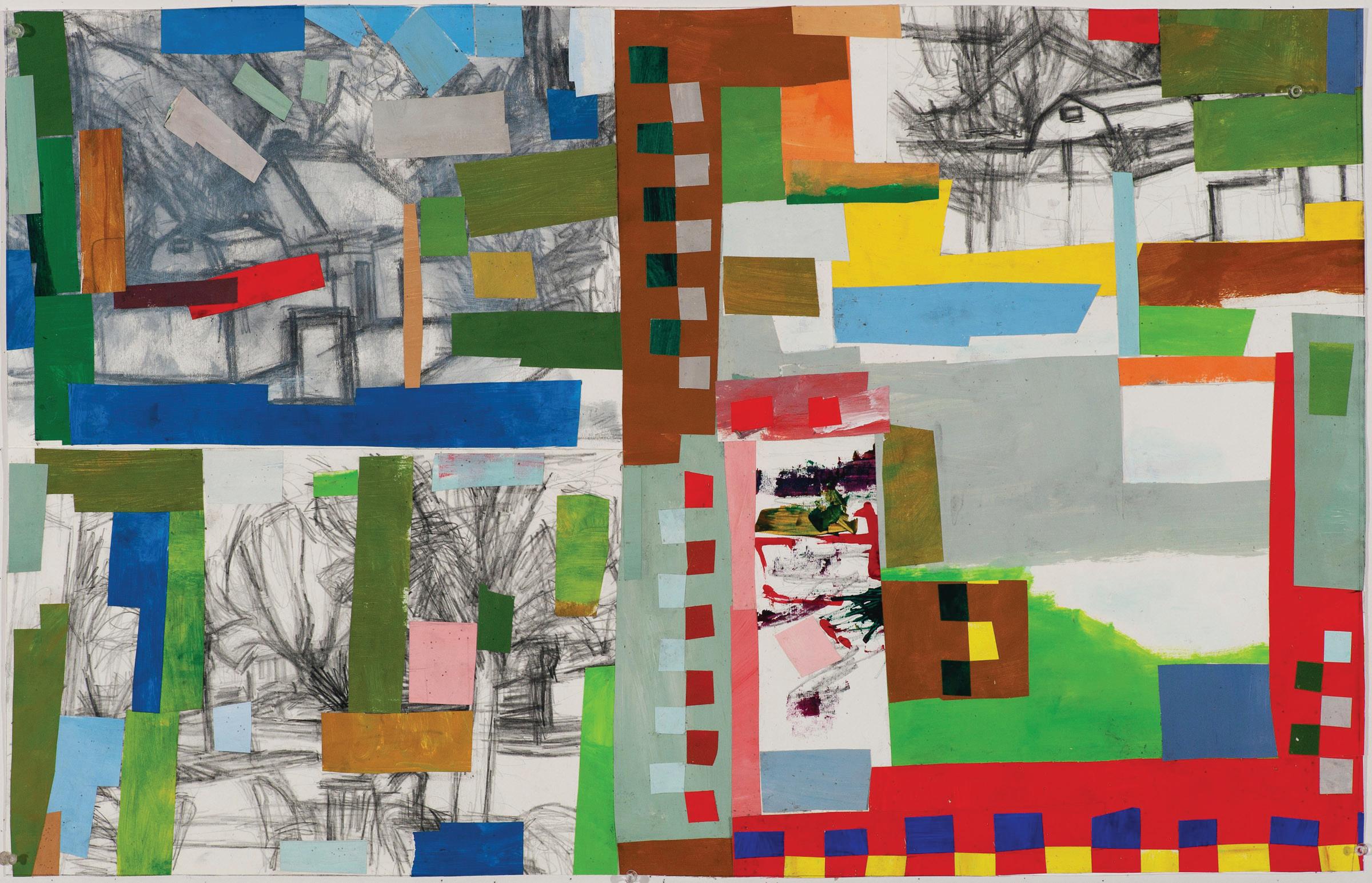
Franklin Boulevard, 2010 acrylic on paper with collage, 24” x 31”
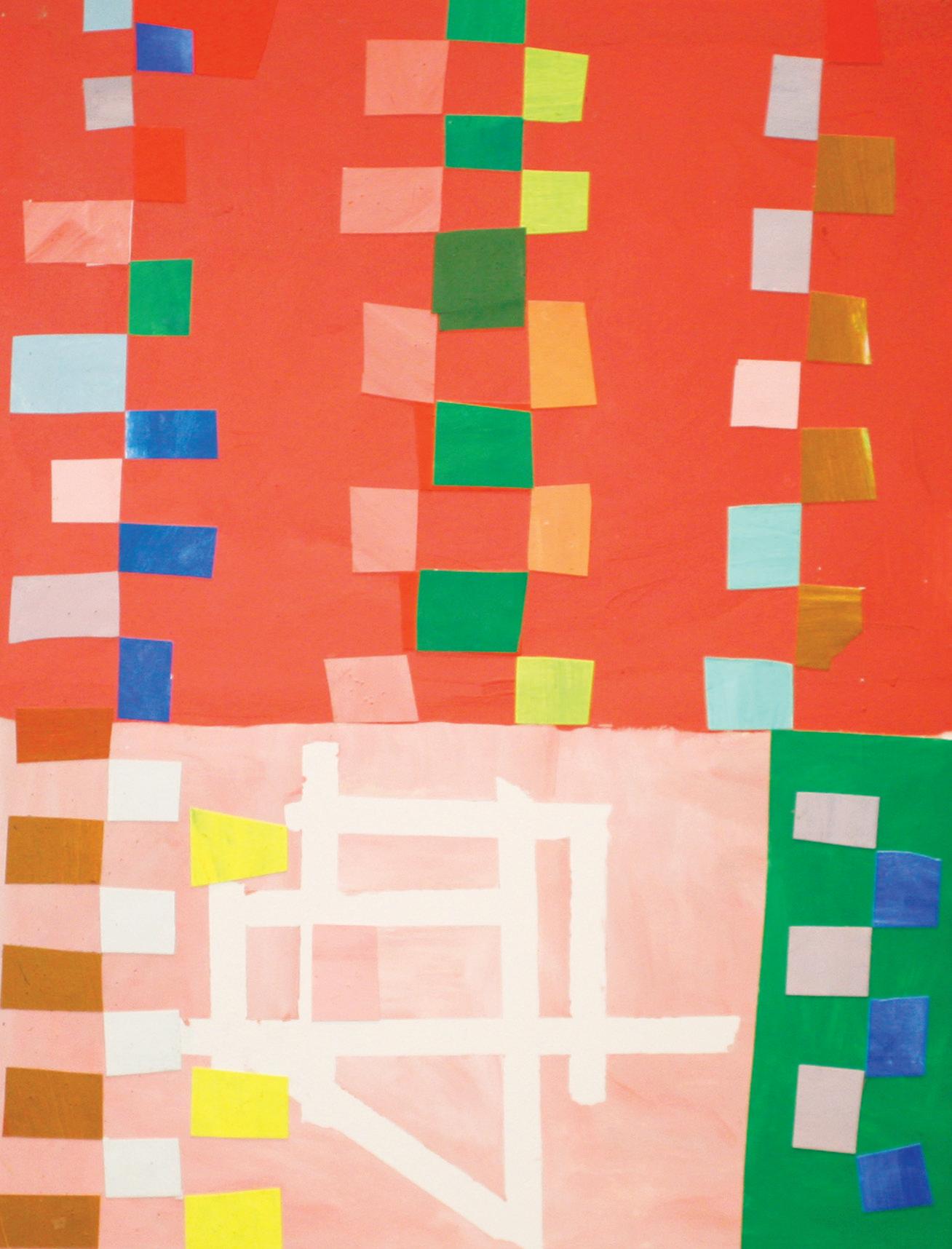
Bezold Landscape, 2010, acrylic on paper with collage, 22.5” x 15”
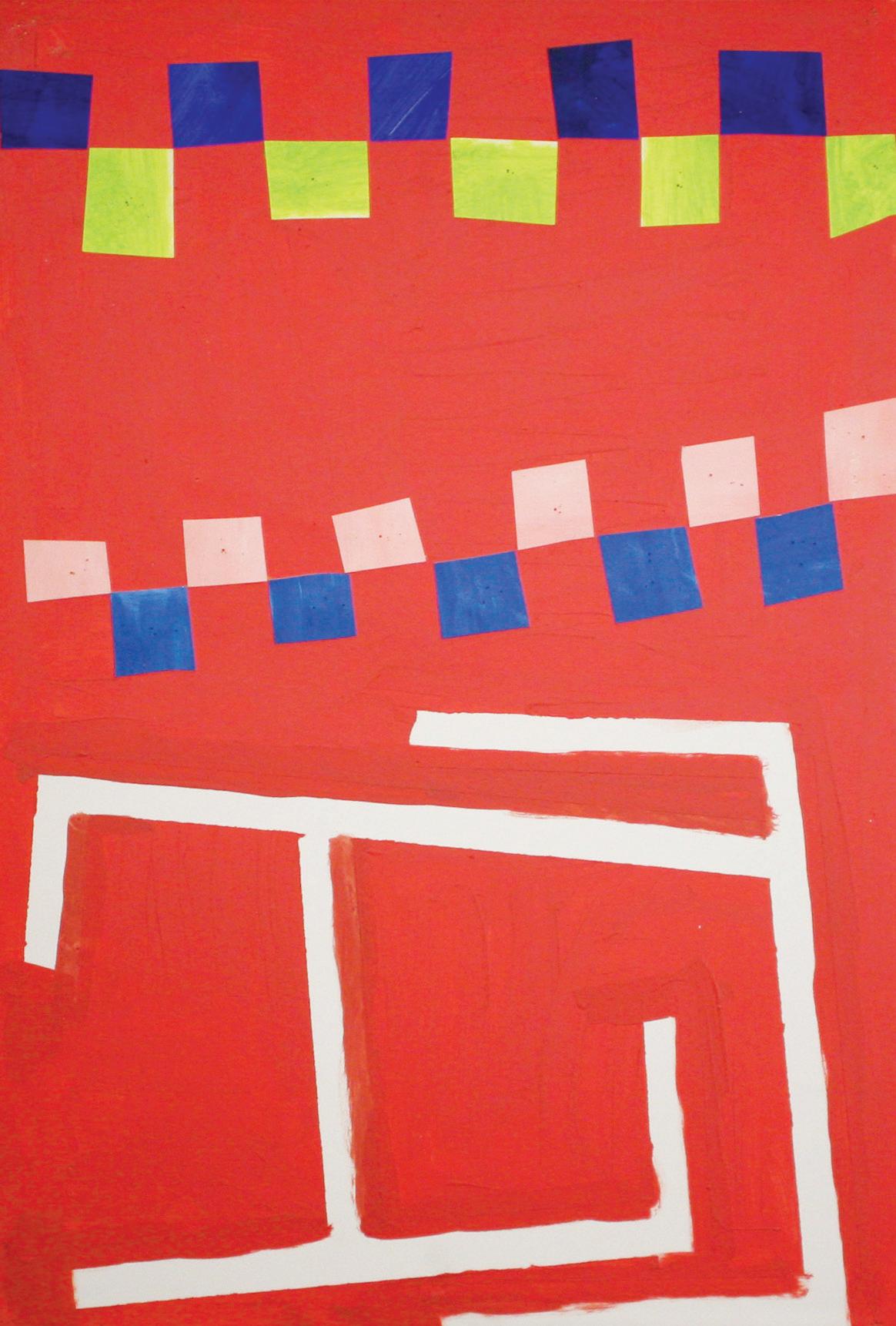
Pence, 2010, acrylic on paper with collage, 22.5” x 15”
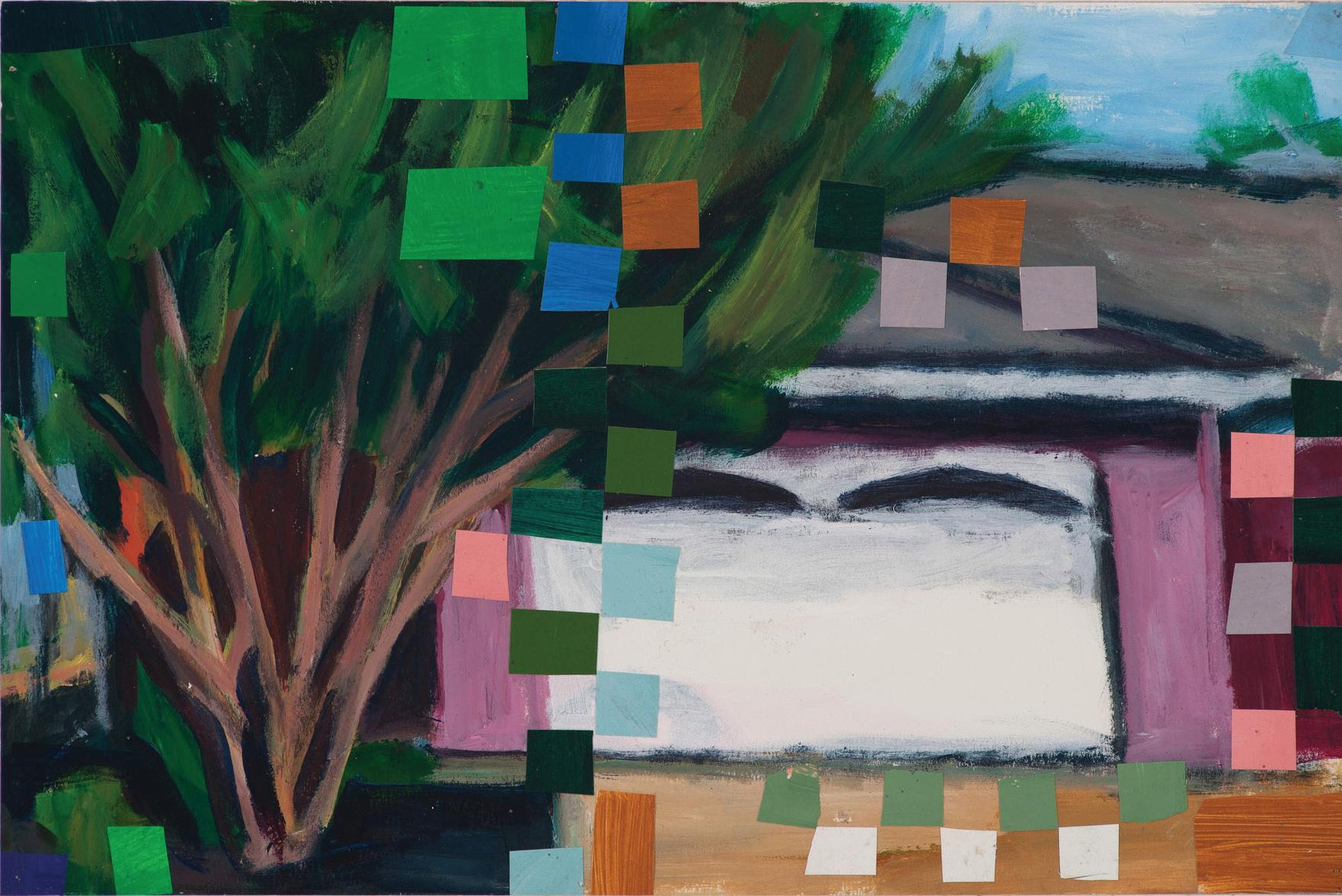
Garage, 2010, acrylic on paper with collage, 12.5” x 19”
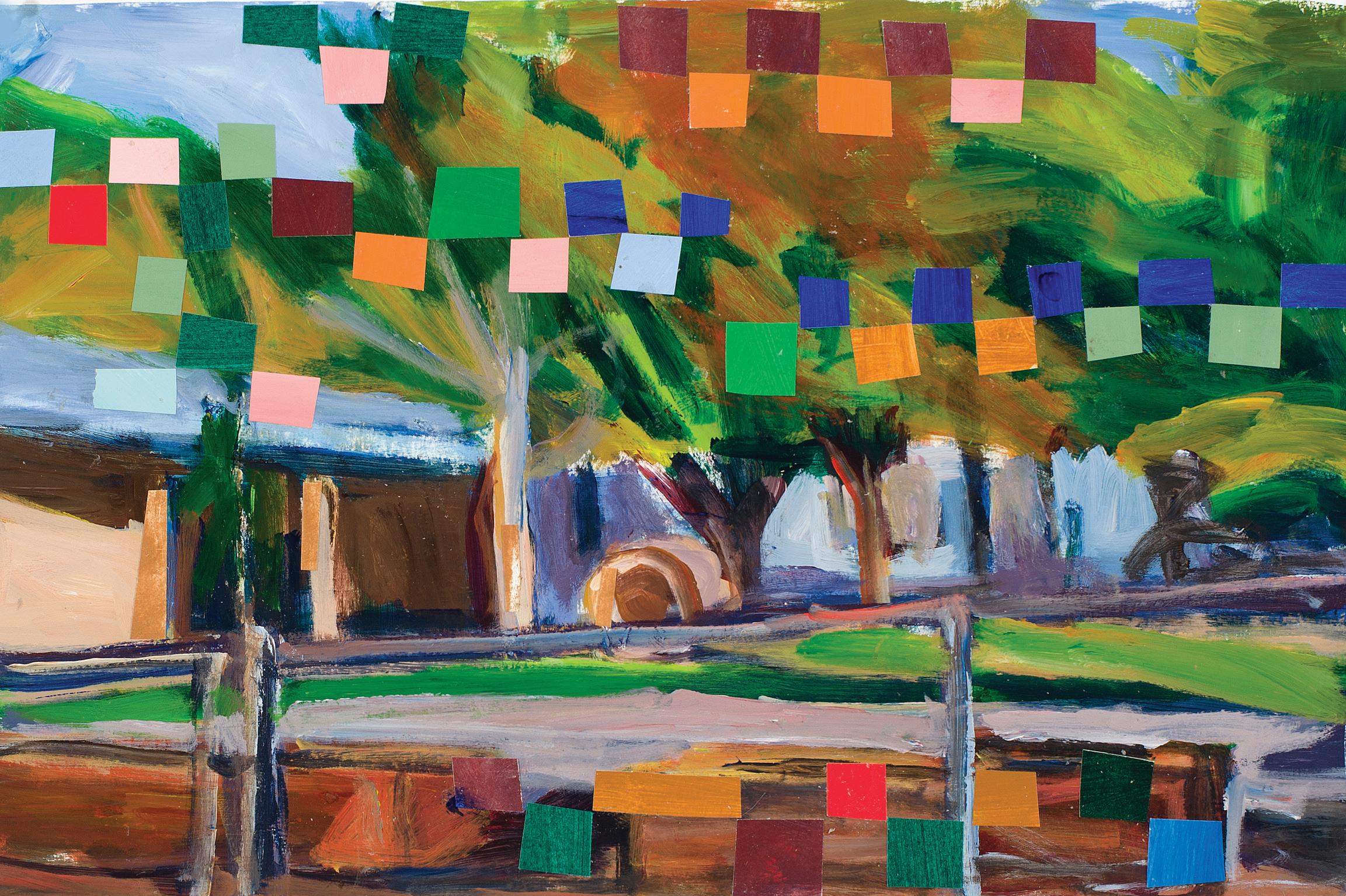
Birch Lane Gate, acrylic on paper with collage, 12.5” x 19”
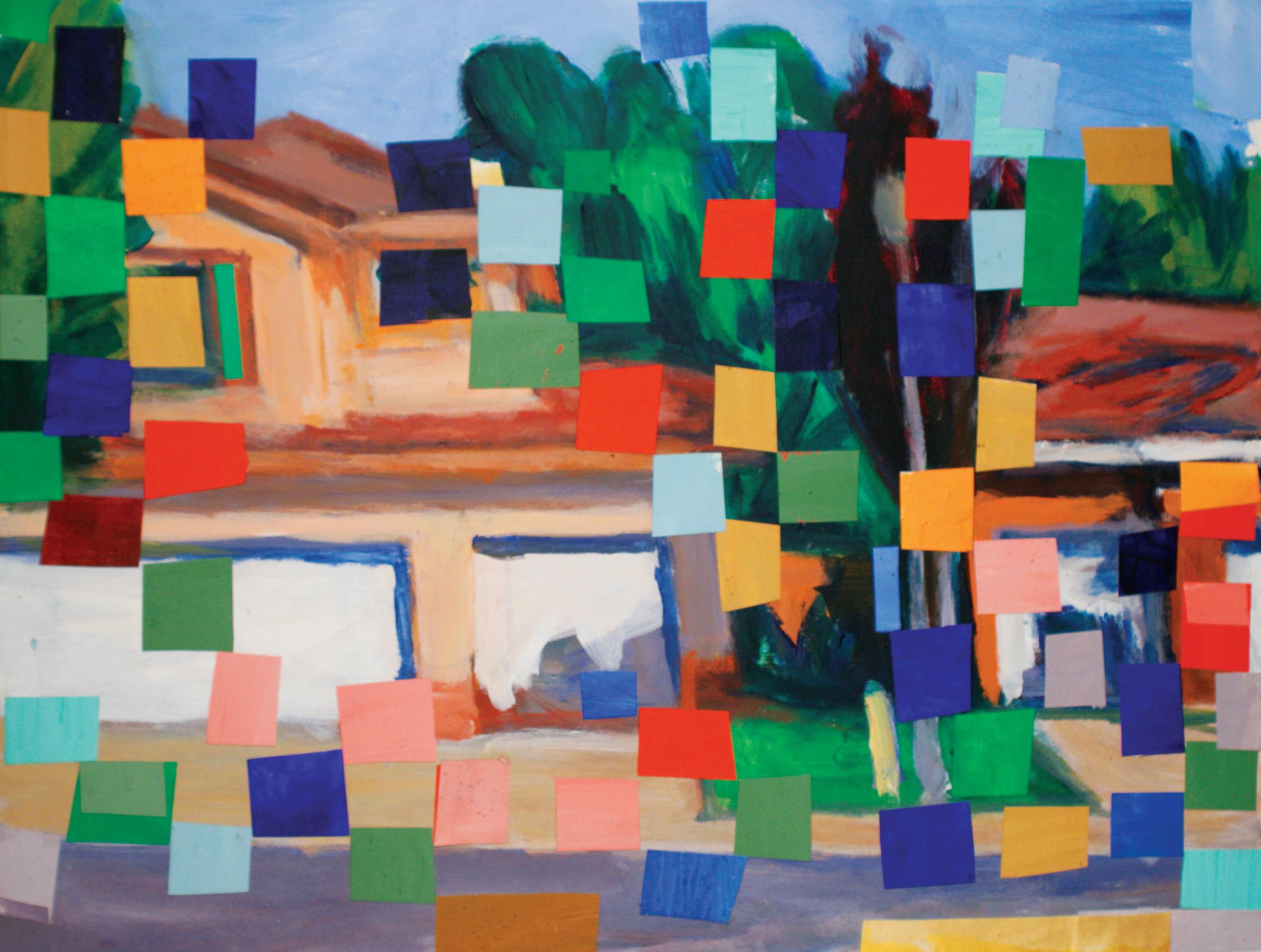
Façade, 2010, acrylic on paper with collage, 18” x 25”
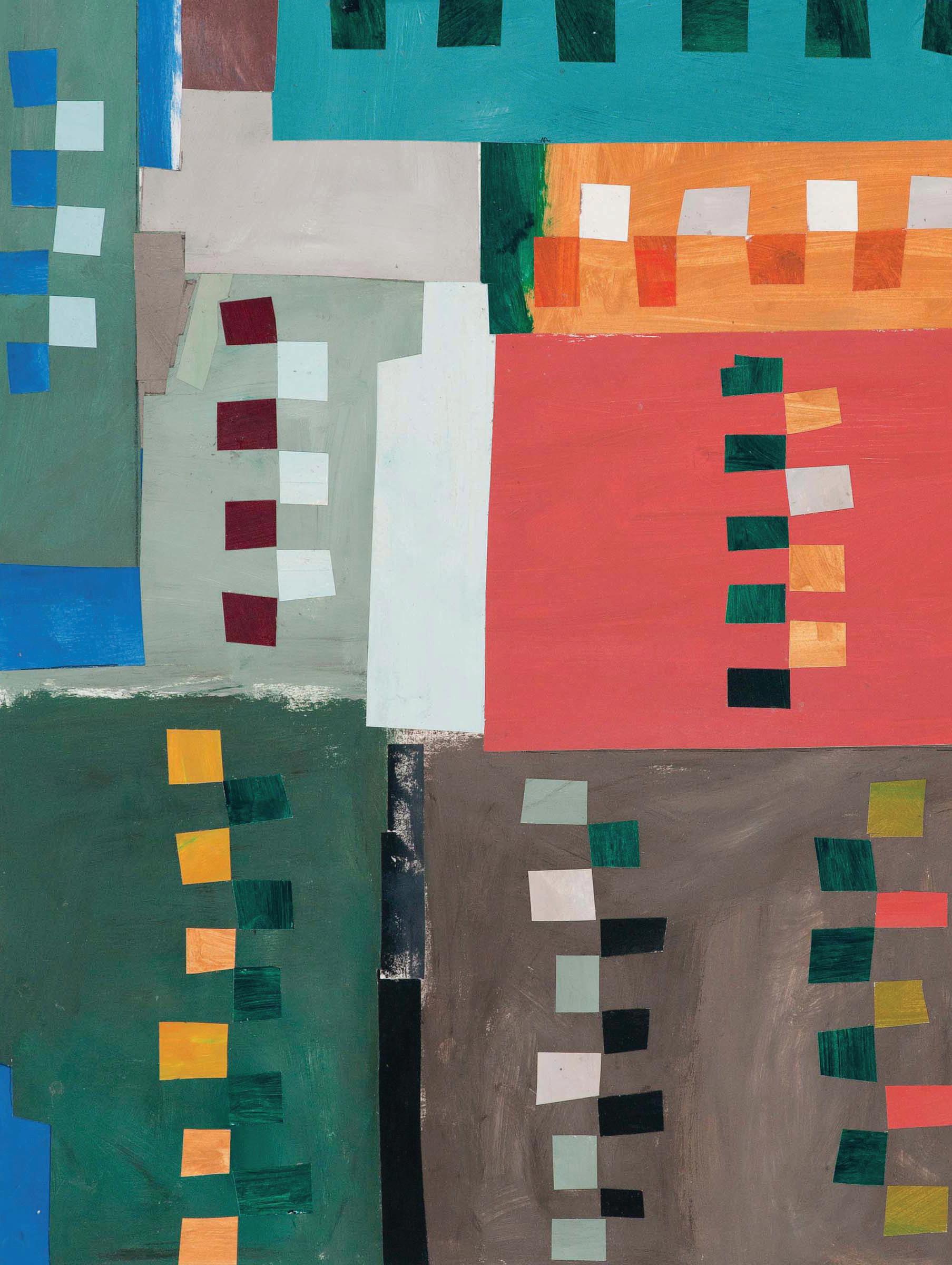
Subdivisions, 2010, acrylic on paper with collage, 25” x 19”
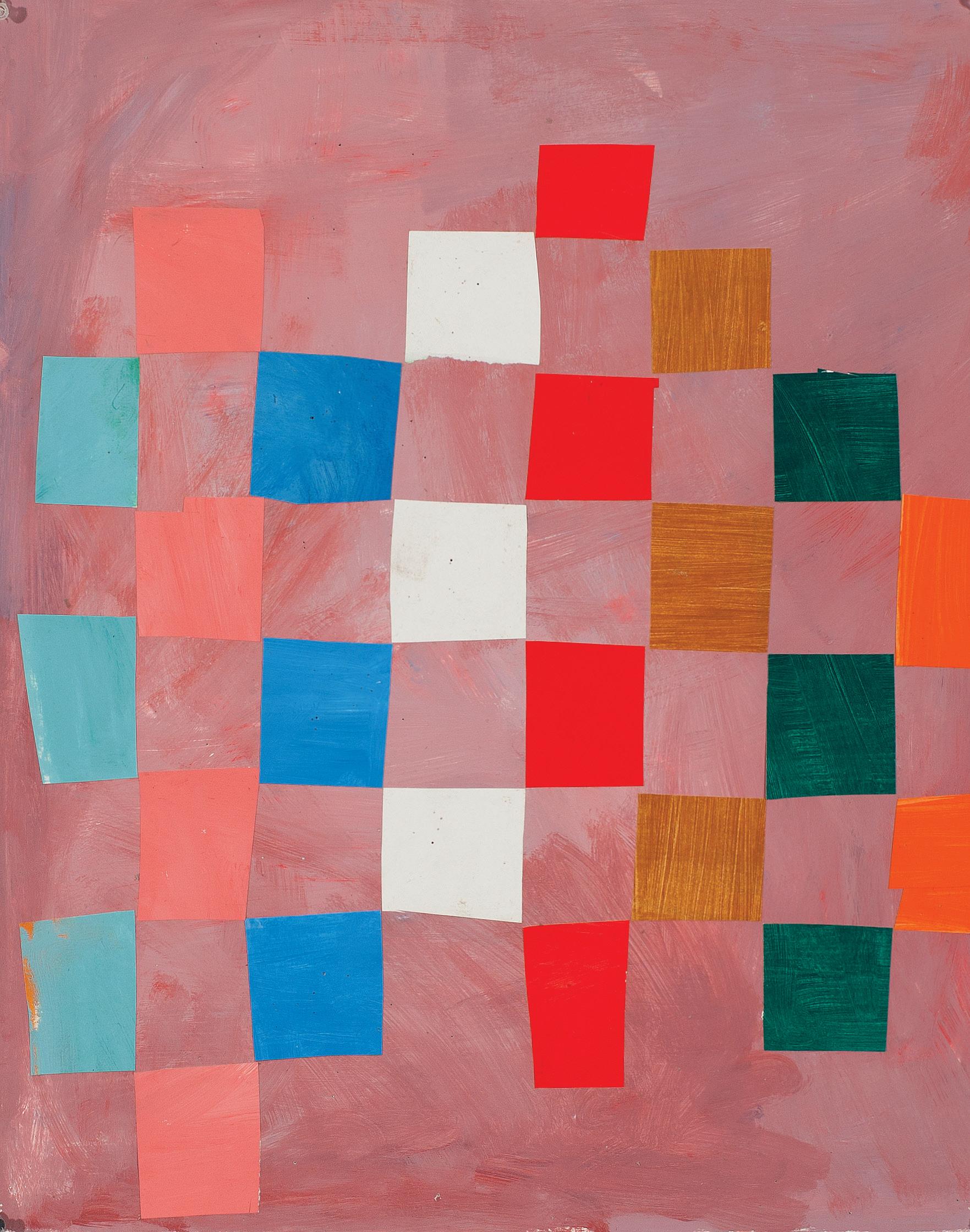
Borders, 2010, acrylic on paper with collage, 25” x 19”
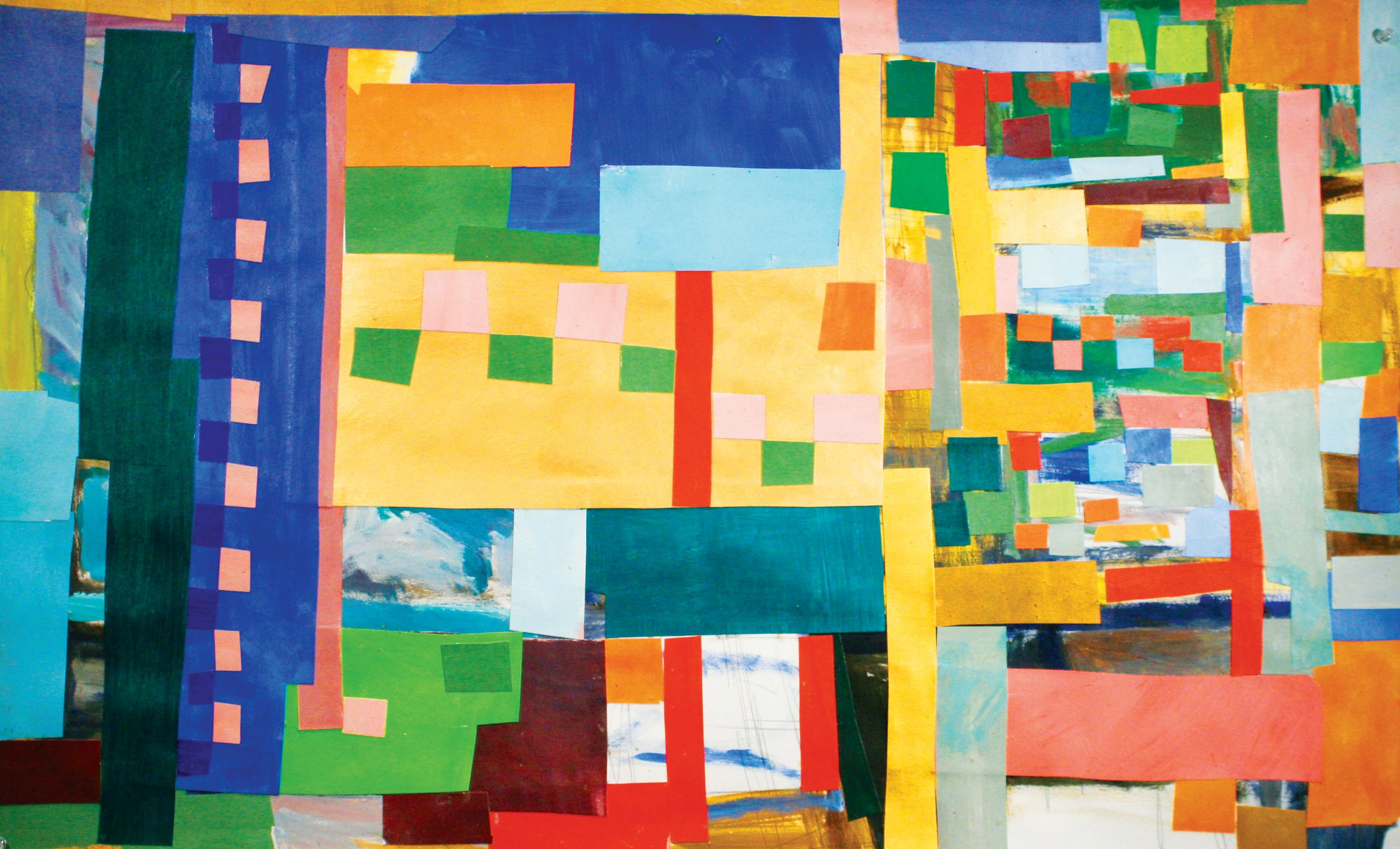
Pictures in the Studio, 2010, acrylic on paper with collage, 24” x 31”
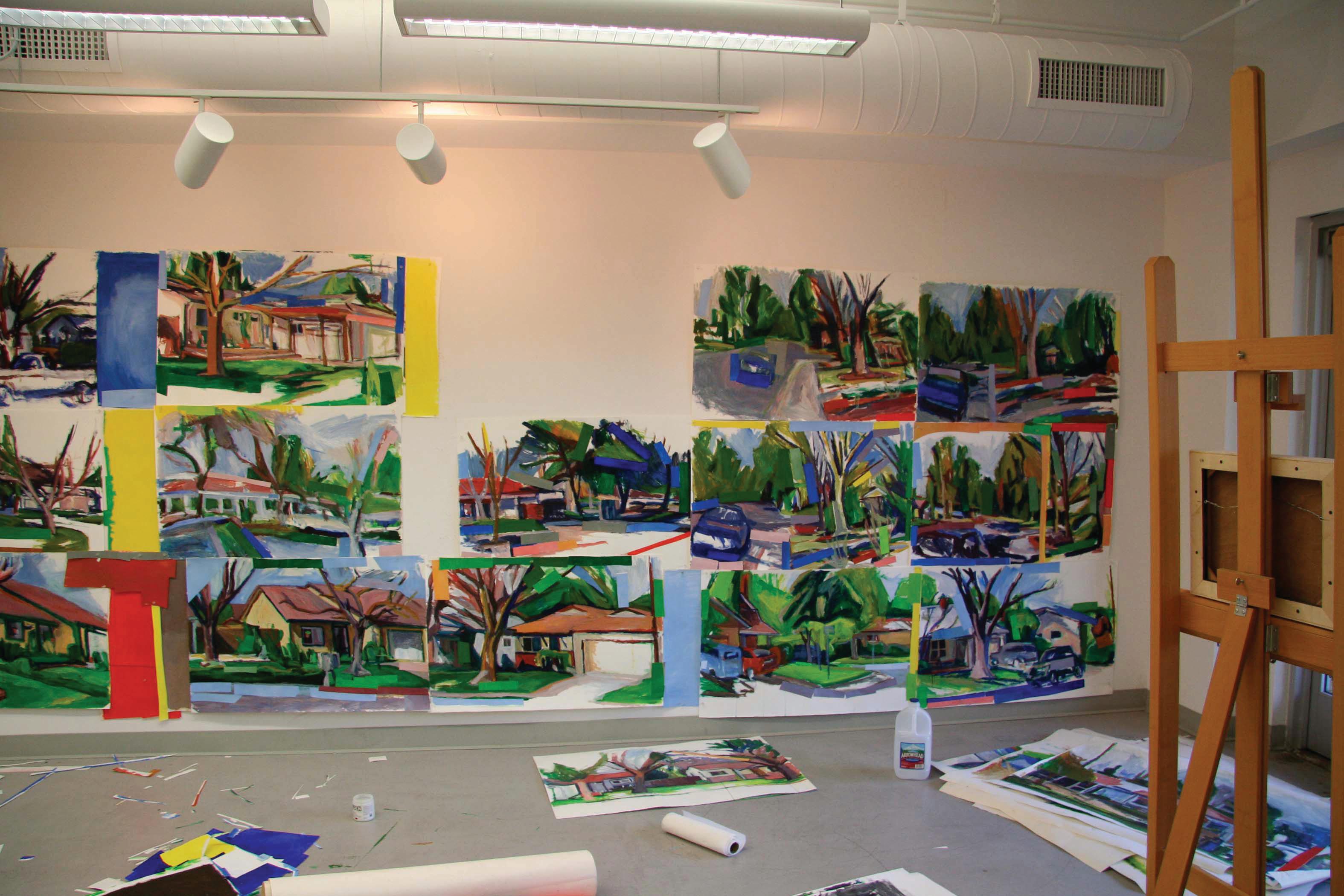
Hearne Pardee, studio, 2010
HEARNE PARDEE
EDUCATION
M.F.A., 1975 Columbia University, New York, NY
1969 - 1973 New York Studio School, New York, NY (full-time study)
B.A., 1969 Yale University, New Haven, CT
RECENT EXHIBITIONS
Individual:
2011 University Gallery, Displaced, CSU, Stanislaus
2010 Bowery Gallery,Field and Frame, New York, NY
2007 Wiegand Gallery, Belmont, CA (2-person)
2006 Bowery Gallery, New York, NY
2004 Bowery Gallery, New York, NY
2000 Bowery Gallery, New York, NY
Group:
Washington Art Association, Washington, CT (3-person)
2009 Geo-Morph: New Currents in Geometric and Biomorphic Abstraction, curated by David Roth, Pence Gallery, Davis, CA
Artists in Residence, Yosemite Museum, Yosemite, CA
The Nature of Landscape, San Francisco Studio School, San Francisco, CA
2008 Surface and Substance: Works on Paper, San Francisco Studio School, San Francisco, CA
2007 Strong Vision: Three Decades of Exhibitions, Wiegand Gallery, Belmont, CA
2006 Nine at Gaia, Gaia Arts Center, Berkeley, CA
Flatlanders: A Regional Roundup, Nelson Gallery, Davis, CA
2005 From Postwar to Postmodernism, Leroy Nieman Gallery, Columbia University, New York City
Alumni: The 1970s, New York Studio School, New York City, curated by Jennifer Samet
2004 See California Now, Gallery C, Hermosa Beach, CA, curated by Peter Frank
2003 The Other Side, B. Sakata Garo Gallery, Scaramento, CA
Drawing Conclusions: Works by Artist-critics, Arts New York, NYC, curated by Judy Collischan Gone West, John Natsoulas Gallery, Davis, CA (catalogue)
PUBLIC COMMISSIONS
2009 Franklin Boulevard Urban Plein-Air Project, outdoor painting on Franklin Boulevard site, sponsored by Sacramento Arts Commission
REVIEWS AND REPRODUCTIONS
Barbara MacAdam, “Hearne Pardee”, Artnews, October, 2010
Featured selection, artcritical.com, April 27, 2010 (color reproduction)
Victoria Dalkey, review of Geomorph, Sacramento Bee, October 23, 2009
Baker, Kenneth, “Nature of Landscape”, San Francisco Chronicle, April 17, 2009
Van Proyen, Mark, “Bridges Between World and Mind: Paintings by Hearne Pardee and Gina Werfel” catalogue essay, 2006
Haggerty, Gerard, “Hearne Pardee”, ARTnews, October, 2004
Frank, Peter, “Gone West”, catalogue essay, 2003
Little, Carl, “Hearne Pardee”, Art in America, June, 2001
Sievert, Robert, “Hearne Pardee”, Artezine.com. February, 2001
Gladstone, Valerie, “Hearne Pardee”, ARTnews, June, 1998
Goodman, Jonathan, “Hearne Pardee”, ARTnews, April, 1995
“Landscape Paintings of Hearne Pardee”, Orion Magazine, Winter, 1994
Henry, Gerrit, “Hearne Pardee”,ARTnews, December, 1992
Dunning, Jennifer, “Where to get off the Beaten Track”, New York Times, January 18, 1985
GRANTS AND AWARDS
2008 Pacific Rim Minigrant, Village landscapes in New Caledonia Summer, 2005 Yosemite National Park, Artist in residence Summer, 2000 Auvillar, France, Artist in residence 1993 Yosemite National Park, Artist in residence 1986 Djerassi Foundation, Woodside, CA (residency)
SELECTED PUBLICATIONS
Essays and Articles:
“Joan Moment: Artist Profile”, Art Ltd., September 2009
“Pure Painting: Milton Resnick Talks”, Art Journal, Spring, 2004
“Internal Images: The Digital Photographs of Peter Campus”, catalogue essay, Kunsthalle Bremen
“Reinterpreting Landscape”, catalogue essay, Maier Museum of Art, 1996
“Joan Mitchell”, catalogue essay, Maier Museum of Art, 1994
“A Distant Vision: Charles Tomlinson and American Art”, Partisan Review, Summer, 1991.
Review article on aesthetic theory, Art Journal, Summer, 1989.
“Durational Perceptions: The Work of Peter Campus”, Arts Magazine, December, 1988.
“Inner Images”, Arts Magazine, November, 1986.
“Landscape and Abstraction”, Arts Magazine, September, 1985.
“The New American Landscape”, Arts Magazine, April, 1984.
“Six Painters at the Hudson River Museum”, Arts Magazine, September, 1983.
“A Reading of Marsden Hartley”, Arts Magazine, September, 1983.
“Proust’s Visual Imagery”, Yale French Studies, 1965.
Reviews:
“Surrogate Eye: Peter Campus New Work”, artcritical.com, December 2010
“Catherine Wagner”, Art Ltd., Spring, 2010
“Mercedes Matter”, artcritical.com, April, 2010
“Stephen Kaltenbach”, Art in America, May, 2009
Jane Freilicher, artcritical.com, April, 2009
“Frances Hynes”, artcritical.com, March 2009
“Al Held”, artcritical.com, February 2009
“Stanley Lewis”, Art in America , February, 2008
“Sandy Walker”, Art Ltd., May, 2007
“Robert Berlind”, Art in America, April, 2006
“Elena Sisto”, Art in America, March 2005
“Jake Berthot, Art in America, January 2005
“Nell Blaine”, Art in America, September 2003
“Peter Campus”, Art in America, July 2003
“Catherine Lee at Galerie Lelong”, ARTnews, October, 1999
“Tony Smith: Stinger”, ARTnews, Summer, 1999
PANELS AND PAPERS
2008 “Contemporary Collage”, panelist, College Art Association, Dallas
2007 “Fairfield Porter: His Work and Legacy”, Chair of panel, College Art Association, New York City
2006 UC Davis Faculty Panel, Pence Gallery, Davis, CA
2004 “Mirroring Landscape”, Co-chair of panel, College Art Association, Seattle, WA
1996 “Watershed: Art, Nature and Community”, panelist, sponsored by the Orion Society and the Library of Congress, Washington, D.C.
“Reinterpreting Landscape”, moderator of panel with Leo Marx, Louise Westling, Mary Lucier and Rackstraw Downes, Maier Museum of Art
1993 “Joan Mitchell”, moderator of panel with Linda Nochlin and John Yau, Maier Museum of Art
1989 “Marsden Hartley and the American Landscape”, Chautauqua Institution.
1988 “Appropriating Nature”, Rice University, Houston, TX.
1986 “Georgia O’Keeffe: Close-Up”, Colby College Museum of Art, Waterville, ME
1984 “Contemporary Landscape”, panelist, College Art Association, Toronto, Canada.
1982 “Marsden Hartley: Visionary of Maine” (panelist), Joan Whitney Payson Gallery, Portland, ME.
PUBLIC COLLECTIONS
Art in the Hospitals, Richmond, VA
Blue Cross and Blue Shield of Maine
Maine Savings Bank
Yosemite Museum
ARTIST STATEMENT
Of rhythm is image
Of image is knowing
Of knowing there is a construct.
- Charles Olson
My recent paintings are about home - literally, in that they deal with the stuff of houses, schools and yards, and figuratively, in that they return to early sources of personal inspiration - the pasted color papers of the Josef Albers color course (which was my first art class) and the “total space” of Hans Hofmann (which I studied at the New York Studio School). Both approaches are based in the emergence of form from a less differentiated ground.
Home, what’s closest to us, resides in the details of windows, doors and driveways, and particularly in the personal responses they provoke. Work from observation offers a way to record these responses, which vary from day to day.
Composing with images on the studio wall is to reflect on what they “know”, to construct a public face for these more intimate visions. Framing, selecting, is the basis of our construction. Within the frame, the field of color provides the ground of our experience - visual, in the way one color meets and interacts with its neighbors, and psychological, in the way colors provide an intimate connection to memories and unconscious associations.
Residents of Davis long to be a village like Nessakouya; there everyone is related and shares in familial connections to place. For us suburbanites, however, only childhood memory provides a connection to family and to a place of origin, a sense of authenticity within the displacements of modern life.
HEARNE PARDEE
ACKNOWLEDGEMENTS
California State University, Stanislaus
Dr. Hamid Shirvani, President
Dr. James Strong, Provost/Vice President of Academic Affairs
Mr. Daryl Joseph Moore frsa, Founding Dean, College of the Arts
Ms. Susana Gajic-Bruyea, Vice President for University Advancement
Department of Art
Dr. Roxanne Robbin, Chair, Professor
Dean De Cocker, Associate Professor
Jessica Gomula, Associate Professor
David Olivant, Professor
Gordon Senior, Professor
Richard Savini, Professor
Dr. Hope Werness, Professor Emeritus
Christian Hali, Instructional Support Technician II
Jon Kithcart, Equipment Technician II
University Art Gallery
Dean De Cocker, Director