Life Games
David Olivant
You have just finished reading this brief essay on the work of Jessica Gomula. You have looked at the images that it addresses, crisply printed in the catalog that accompanies her recent exhibition. You wish to go deeper and investigate her work in detail, seek it at its source, in the original, the prototypical. You have seen the evidence tantalizingly displayed and now you want the real thing. You check out the artist’s website www.liquidneon.org and there it all is, catalogued and packaged, ready for your perusal.
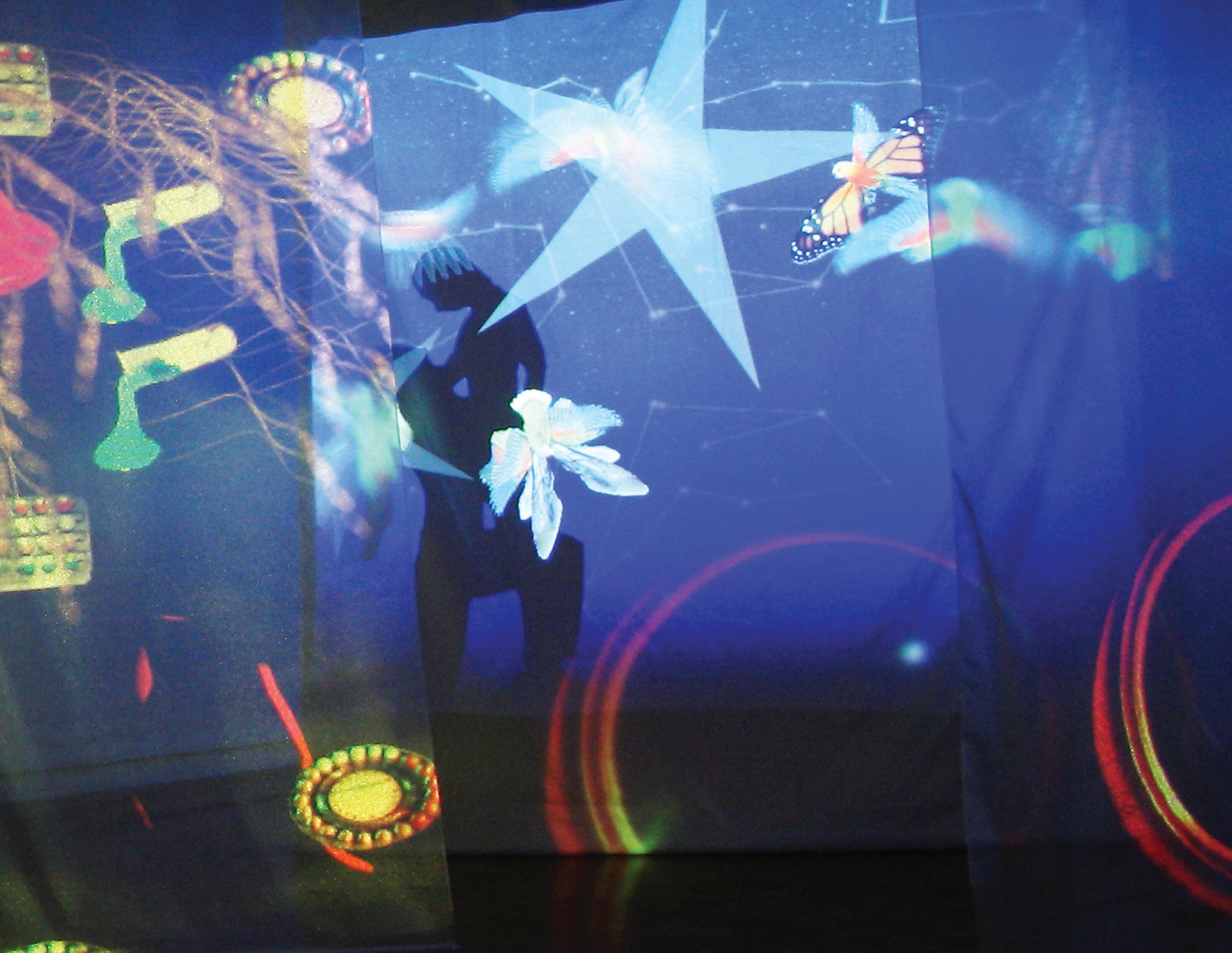
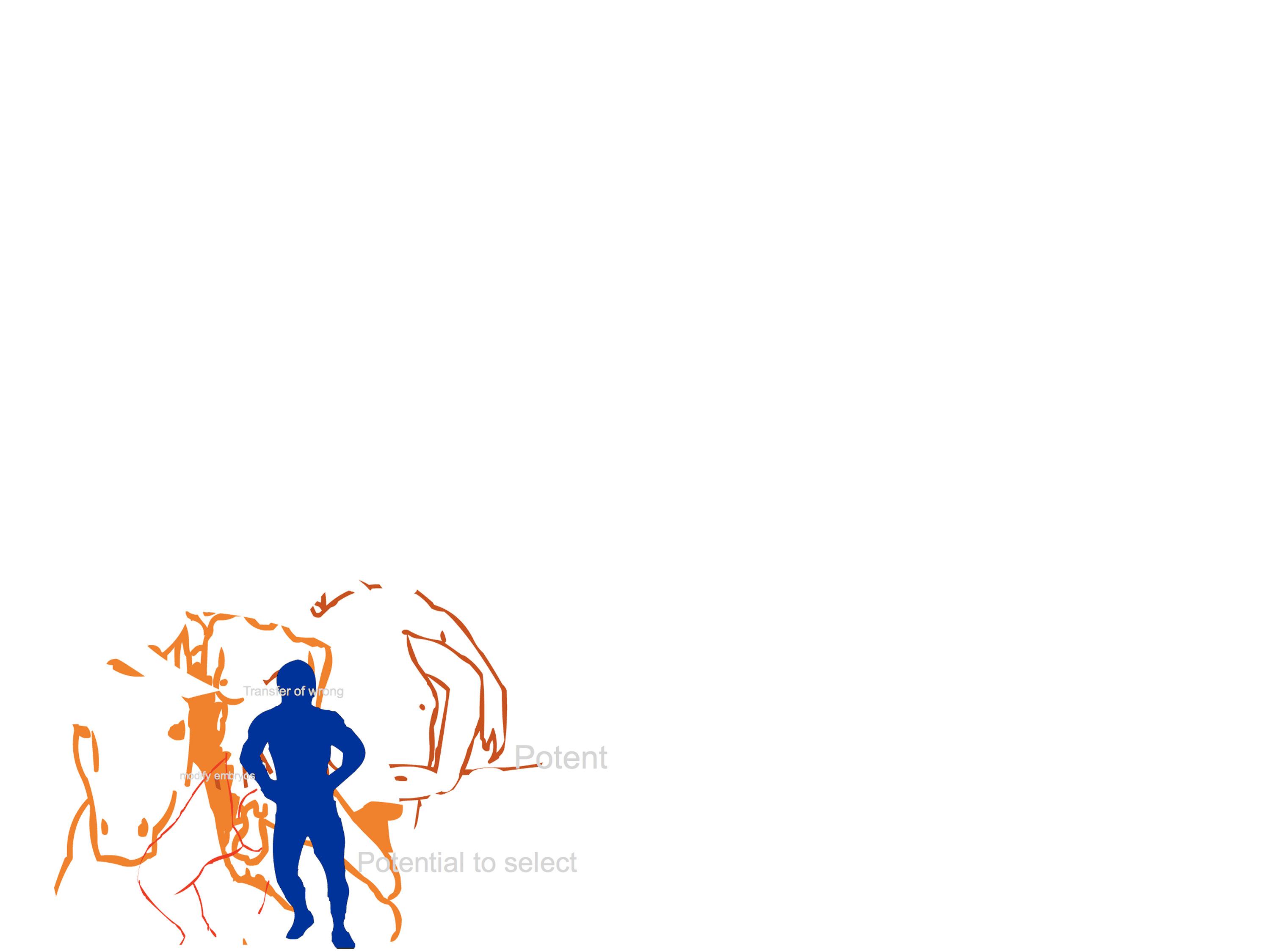
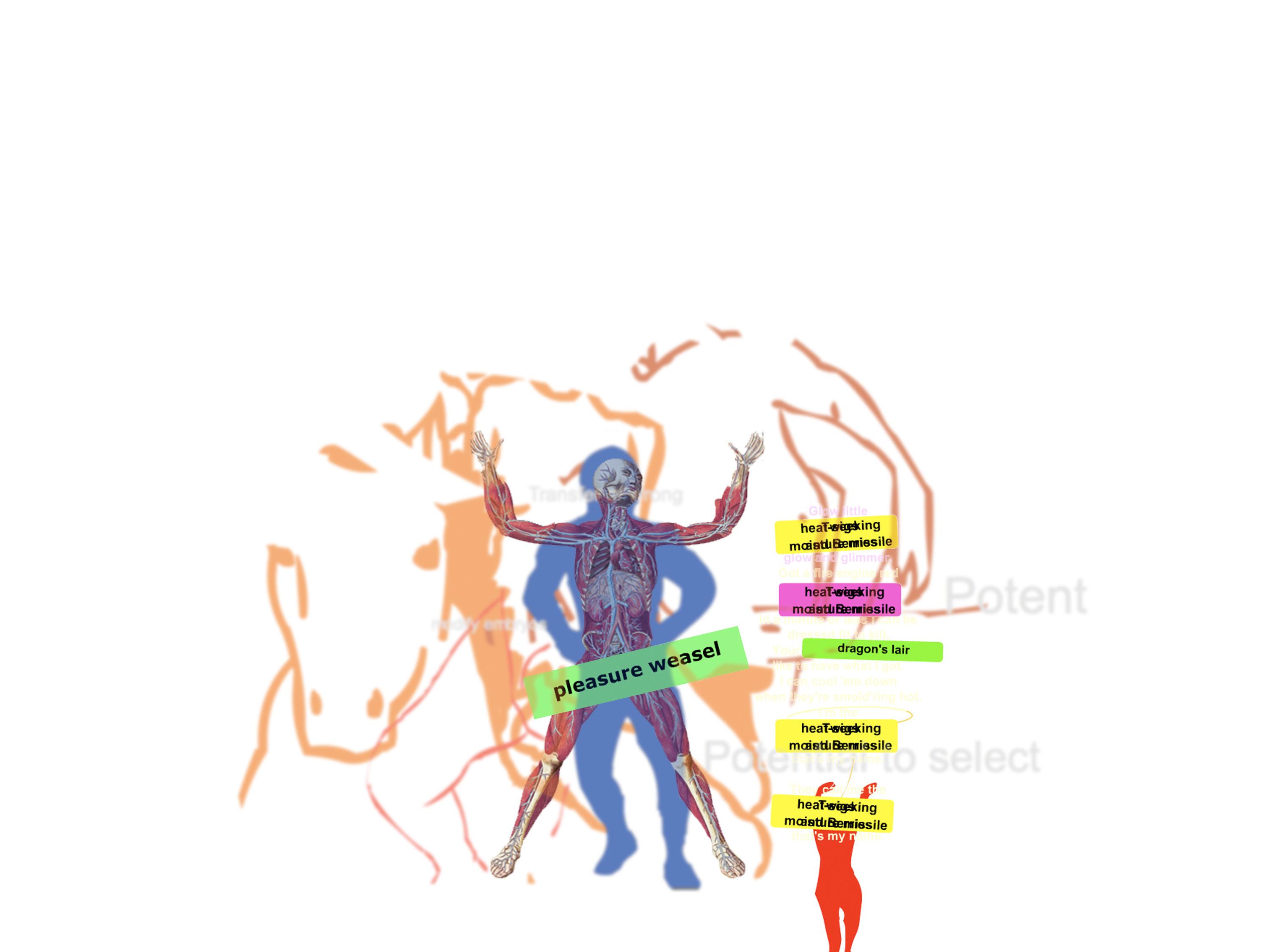
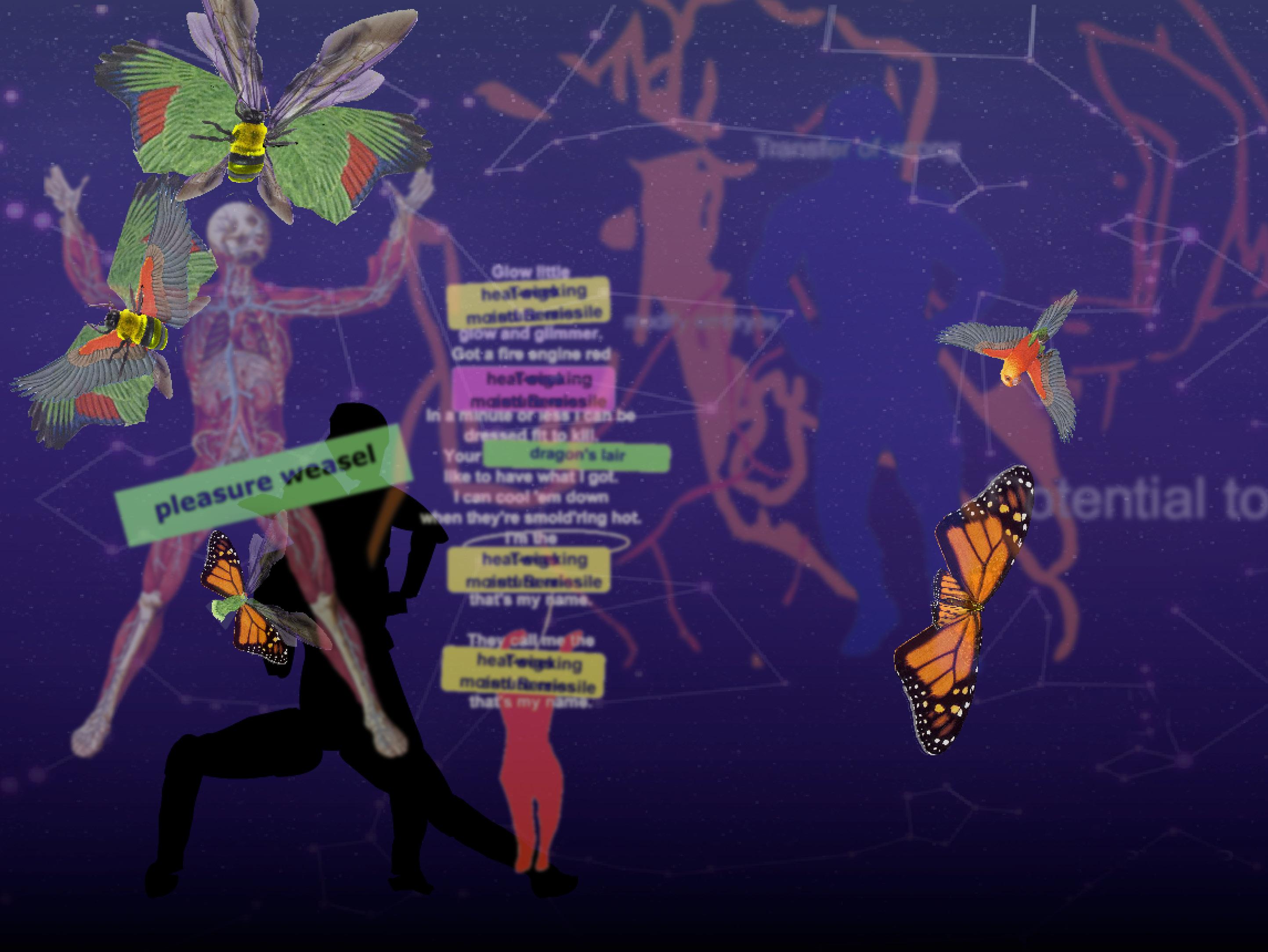
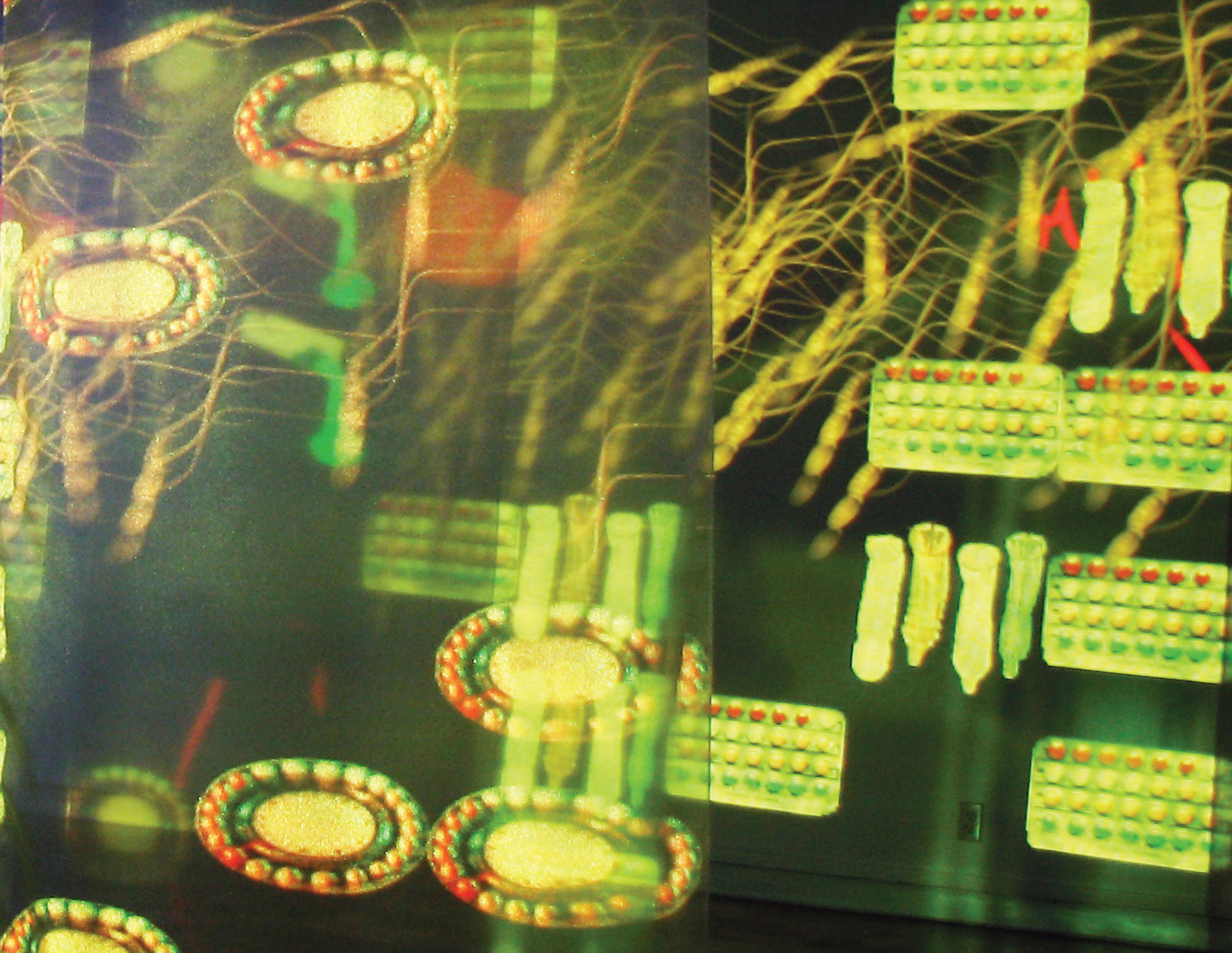
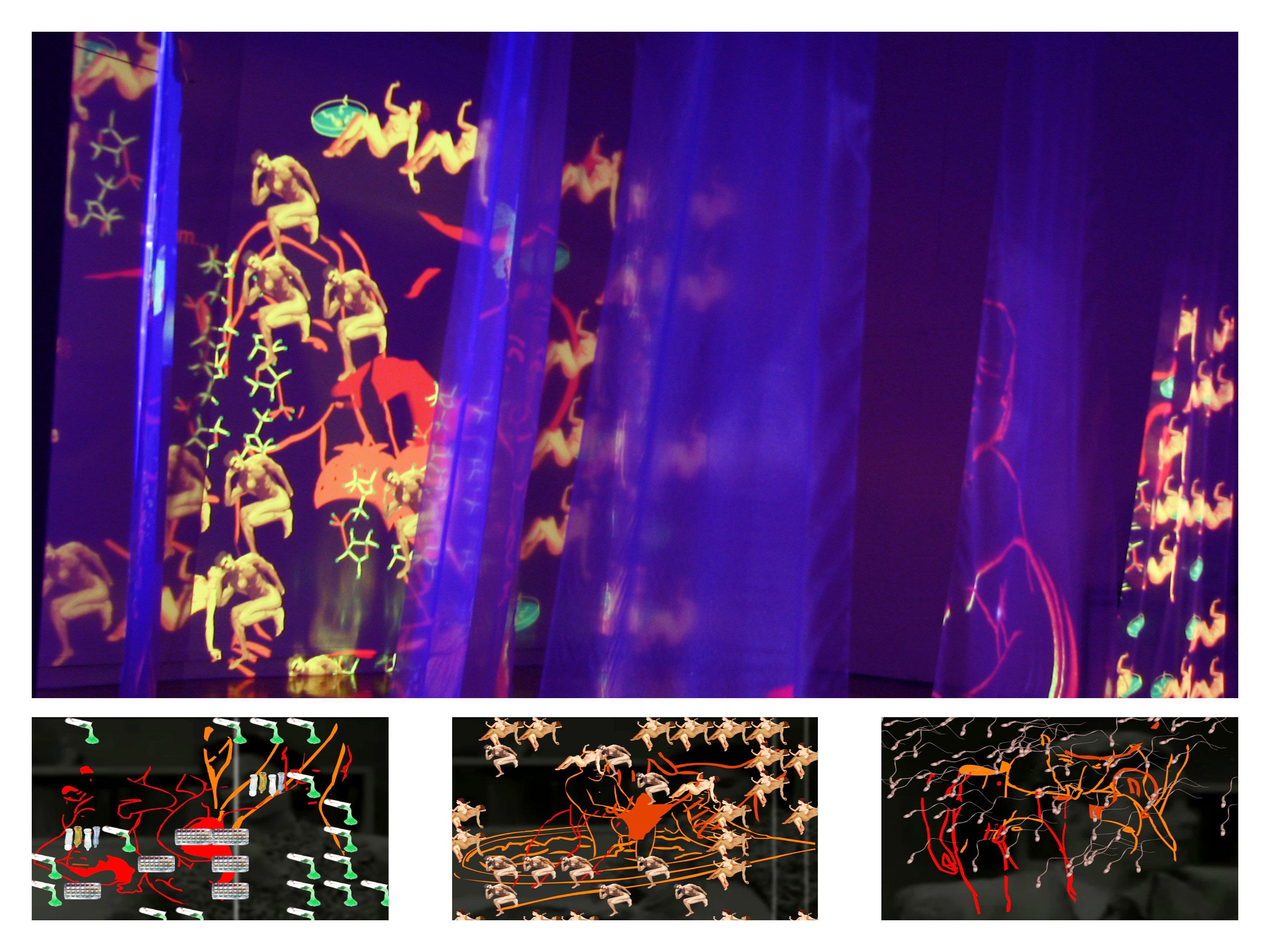
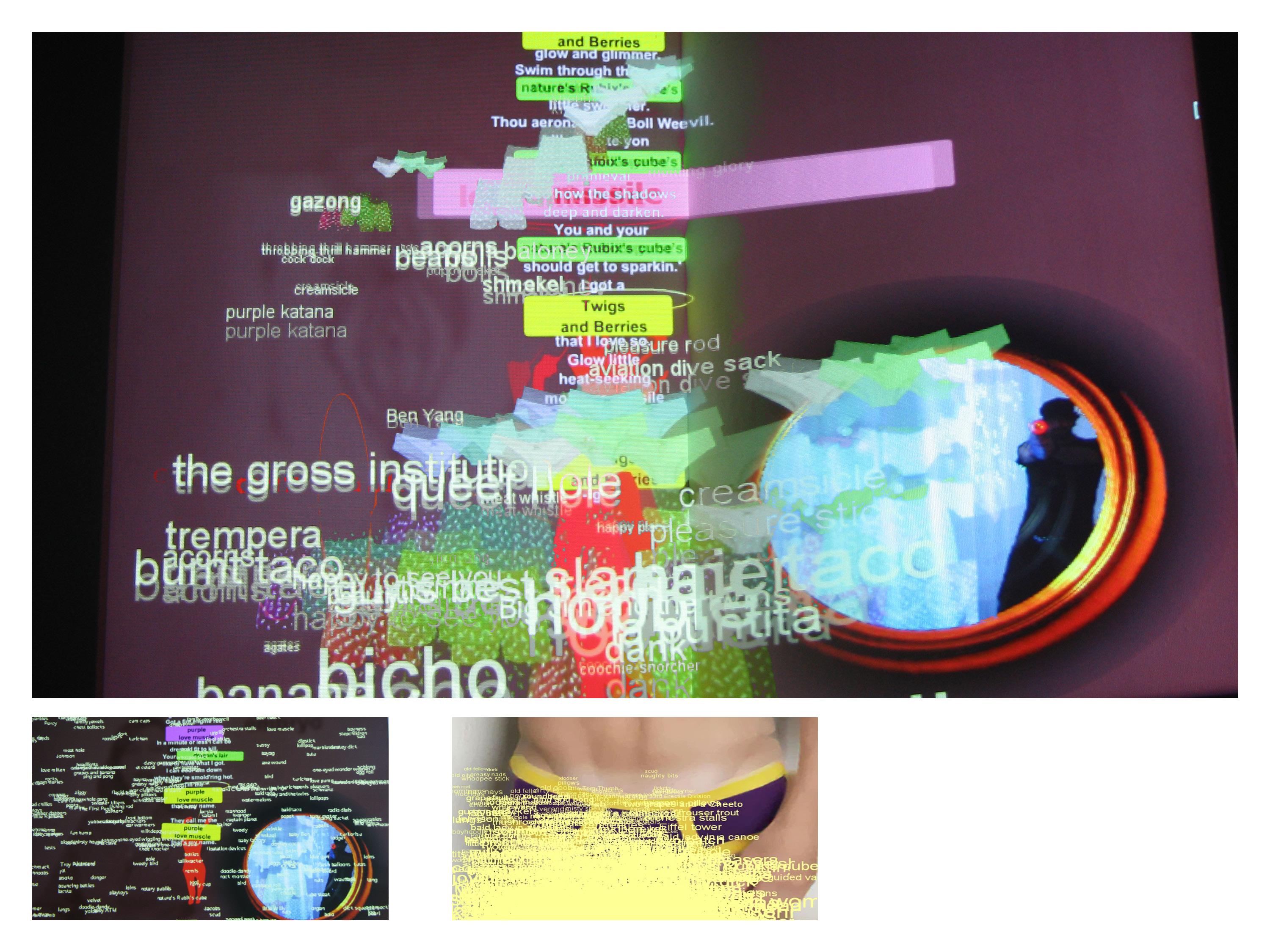
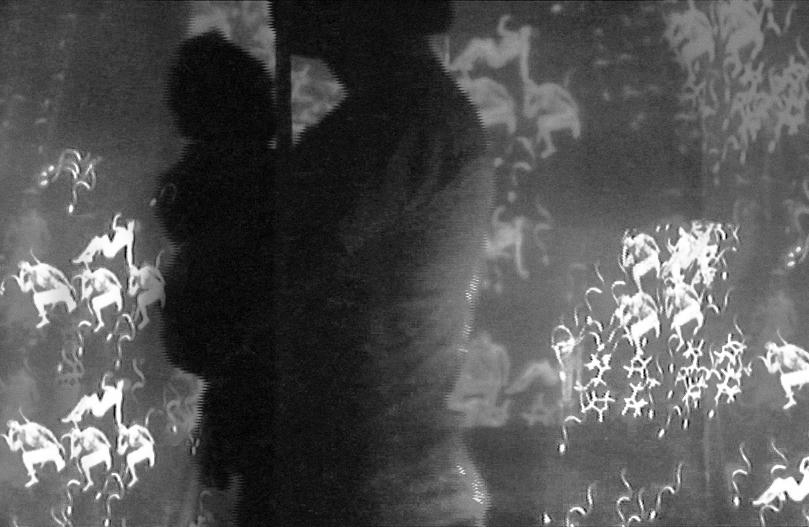
Where better to start but with Life Games, listed as an interactive installation? The screen blackens and the dance begins. Images float down the screen with hypnotic regularity and you start to vaguely discern mobile colored line drawings of amorous couples, followed by floating repetitions of nude cut-outs, both male and female, some kicking and twitching as if mimicking life. These seem somehow comic and quaint, evoking a disjunction between the fifties-ish nostalgia they evoke, their slightly Pythonesque silliness and the slick digital tour de force from which they emerge. As the imagery becomes increasingly about reproduction and sex further disjunction seems apparent. These images are so detached, so “nice,” so matter of fact, so very understated, even asexual in character—rather like a medical textbook, which you cannot help noticing has appeared as a backdrop to the cascading sperm and DNA helixes—that they seem vaguely at odds with the topic. Hold that thought for a moment.
Have you tried to interact, to fulfill the promise of the title, to be a partner in Life Games? Yes, you can click the button at top left, but what does this actually achieve? Is life not a process that goes on of its own volition, under-girded by some mysterious mathematical progression? And is this really an installation or, and this seems more promising, the evidence of an installation? Back to evidence again. Just when you thought you had the beast trapped in its lair, it has again escaped you. If only you had attended the gallery exhibit where you could have witnessed this installation. Or is it that you are looking for some resolution that is somehow beside the point, or rather that there isn’t a point so much as a constantly inflected, timeembedded surface?
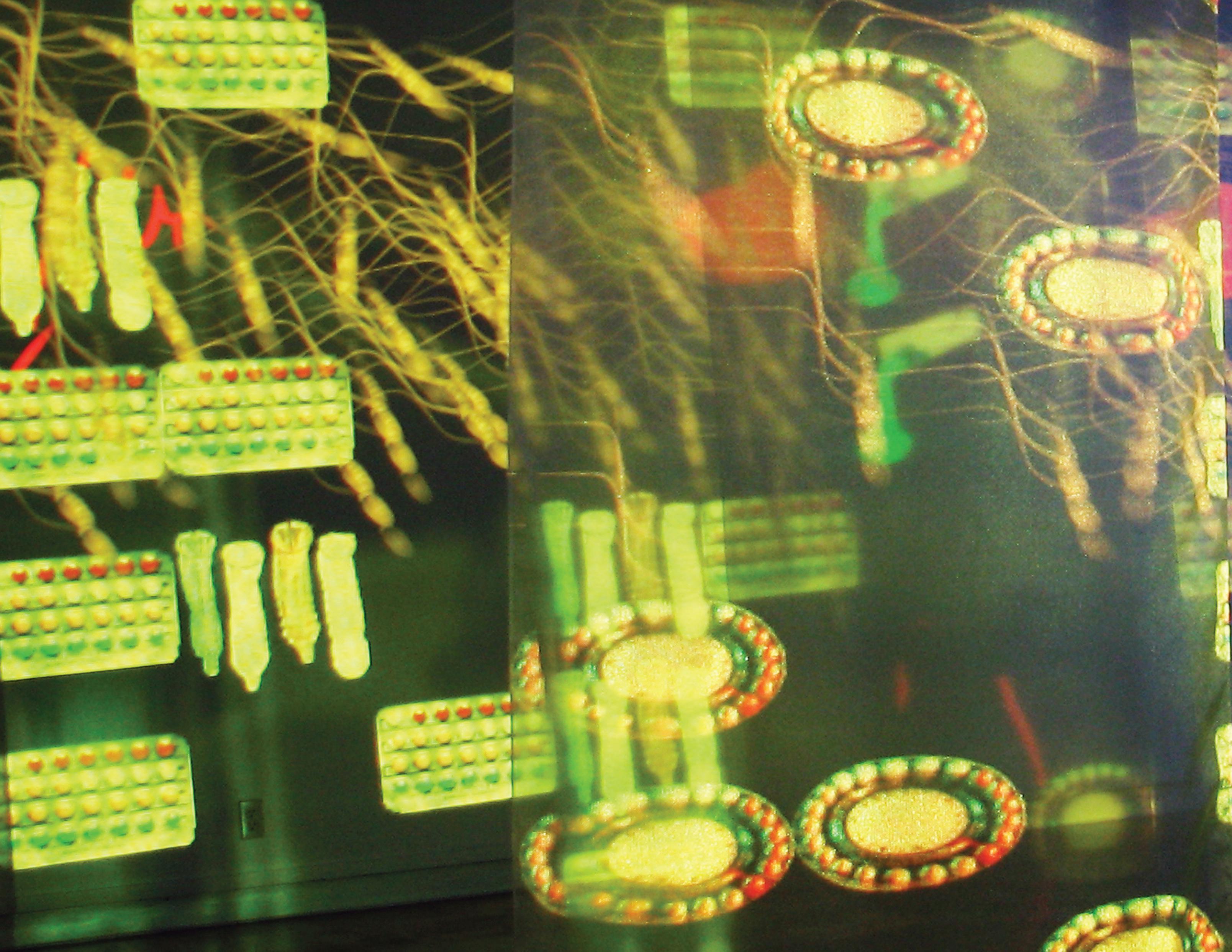
Look again at the computer screen where babies in eggs cascade alternately with nicely packaged contraceptive devices and clusters of penises and vaginas looking for all the world as if they should decorate a shower-curtain. “There is no end of it”, no end to the constant permutations, no end to the screen, which seems to continue indefinitely beyond the top, bottom and both sides, no end to the twitching of legs, to the game of life and your quest for meaning or for the original Gomula work of art. No end, because spatial and temporal succession are the true media of this work for which the digital virtuosity and the imagery it manipulates are merely supports or vehicles. No end because there are probably numerous screens displaying Life Games at any given moment, and because somewhere on numerous hard drives it is always latent, waiting its chance to be performed. What you have is the equivalent of a sort of cyber-Waterlilies (here the flowers are genitals and condoms), a digital Giverny (here the ponds are the implied layers of the screen), an octogenarian Monet on Viagra, a space (rather a space/time) that is at once intimate and public, alluring and distant, complacent and disruptive, a space/time that beggars description or forces it to the endless strings of analogy and metaphor in which the writer of catalogs can so easily indulge, wrapping himself in his own double-helixes, or double-entendres (or should that be quadruple entendres?) when the
application of a good spermicidal jelly might at least thin the flow. “That was a way of putting it—not very satisfactory:” or to move from over-extended allusion to over-quoted lines of poetry:
“In the knowledge derived from experience, The knowledge imposes a pattern, and falsifies, For the pattern is new in every moment…”
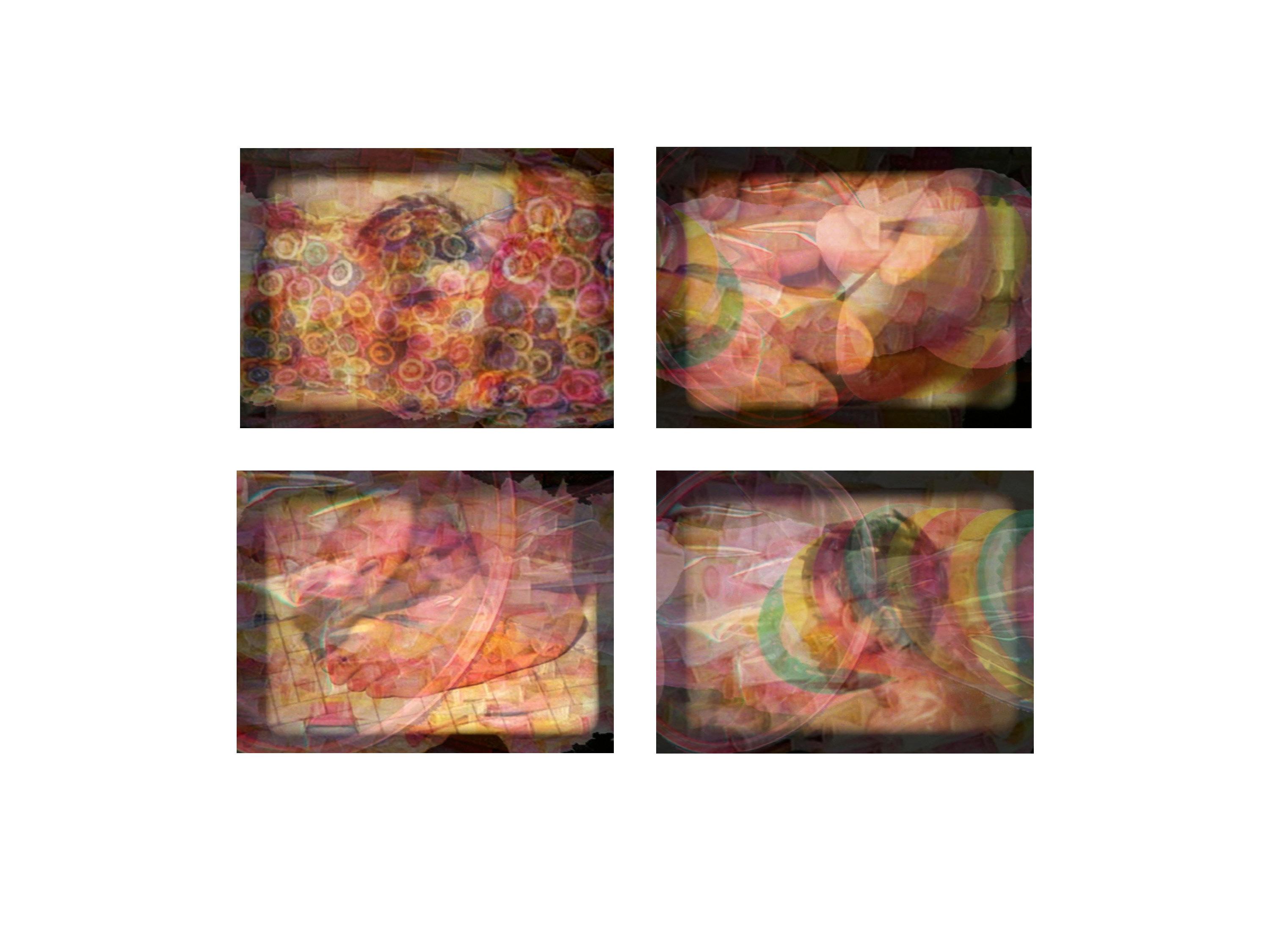
Your attempts to locate and define the ultimate Gomula art-object, to interpret meaning, to clarify the metaphors, cite the influences, are all ultimately futile, evasive strategies. Not that meanings and interpretations are to be eschewed, this is not, after all Abstract Expressionism, nothing visceral about it, couldn’t be further off the mark, but that they are all provisional, temporary camps in which the informed response might take refuge but never a citadel of certainty. We, like Jessica, might explore this territory, peer through the layers of condom (see Filthy Clean) or shower curtain, but we can never slash deep into the fabric hoping to plunge our knife into the heart of its soft naked body like Hitchcock’s killer in Psycho. The Dance of the Seven Veils has here become the disrobing of Draupadi in the Mahabharata by her evil in-laws and with each veil removed, another miraculously appears in its place. So for all its celebration of mind-boggling technological innovation, for all its informed engagement with gender politics, Post-Modern identity, quantum mechanics and the endless bewildering chain of Saussurian signifiers, the art of Jessica Gomula ultimately rests in a traditional aesthetic dichotomy. She engages the classical division of the beautifully modulated Apollinian surface illusion that cloaks the Dionysian ecstasies and writhings in a way that, I feel sure, Nietzsche could have appreciated, though he might have been blushing as well.
But, we must remind ourselves that, behind this screen, at the back of all the layers, beneath the live video feed, stands the silhouetted figure of a bearded male, his hands steadying a pistol, as if he might penetrate the layers from behind as we have failed to do from the front. He is the only image that remains stable in the otherwise constant mutations, a permanent hidden threat. We have met him before in Name Games, and now he has wandered off the set, although his backdrop is still with him. Time and again, we have tried to neutralize and emasculate his sinister intentions by clicking on the red barrel end of his weapon, but to no avail. He reminds us of the ancestry of Jessica’s art in the early space invaders games, so amusingly parodied in Sperm Control, as if he might shoot down all of the pristine decorations, as if Life Games is for him merely an opportunity for target practice. He is the question mark that hovers behind the scenes of life’s game, the malign ghost in the machine, the virus in the program, fed exclusively on a diet of spam and phallocentric polemics. He might pull the plug, spray his ammunition across the screen, destroying everything, including by implication ourselves the viewers, while in the background we hear the cynical exploitative chuckle, “ha, ha, ha, ha!”
On the other hand, he could also be the guardian of the secret, the warning against unveiling the mysteries, against pursuing a search that would seek to detach us from the space/time continuum and its endless variations. He could himself represent the fulcrum outside of the system by which it might be understood in some objective, unconditioned attitude. He may be the beast we thought we had tracked to its lair, the minotaur we must seek to slay to have any chance of transcending the virtual aspects of this visual puzzle whose terms can never be unraveled, not least by the ardent writer of catalog essays, endlessly lost in the web of allusion and metaphor generated by Life Games.
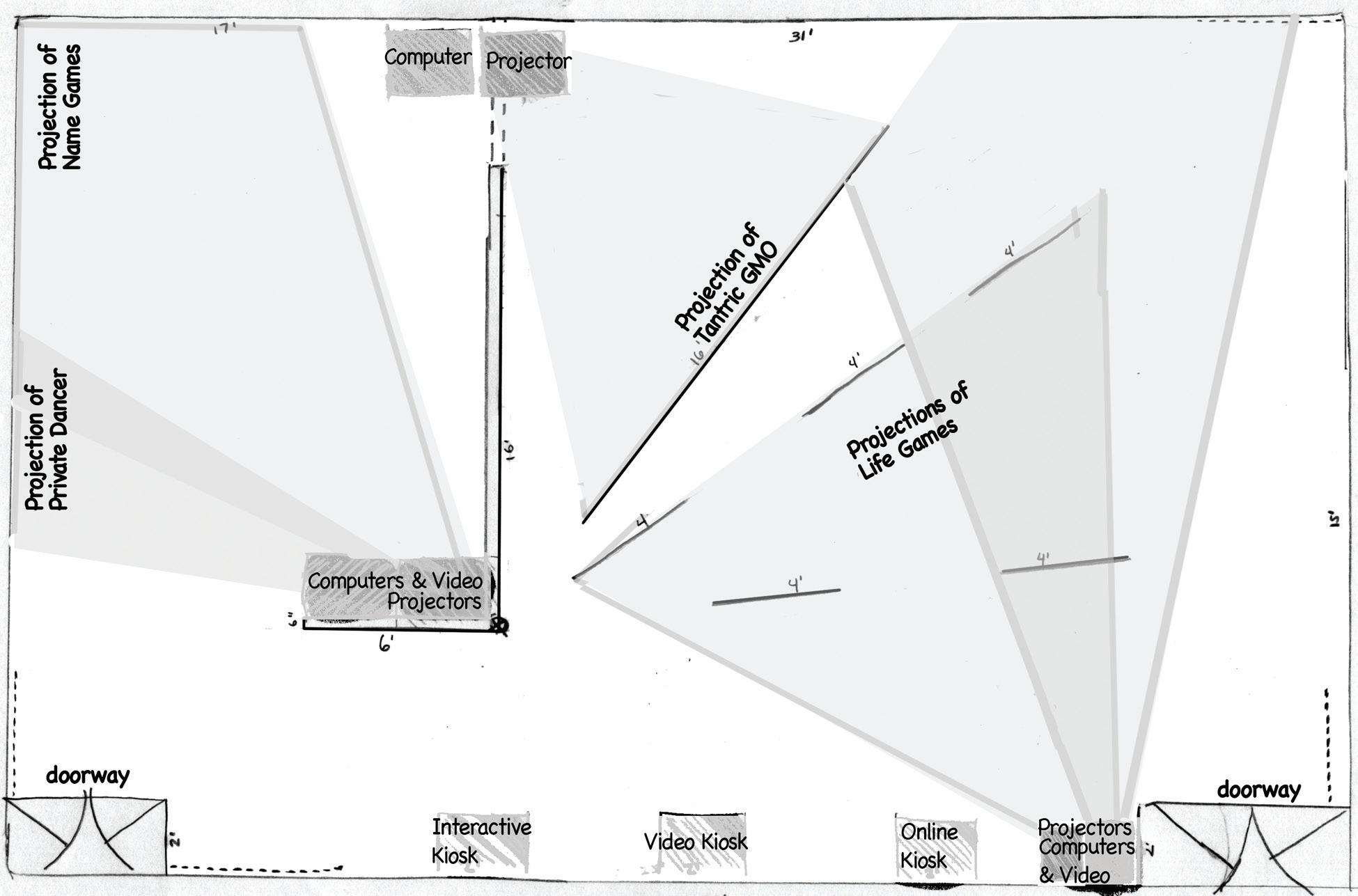
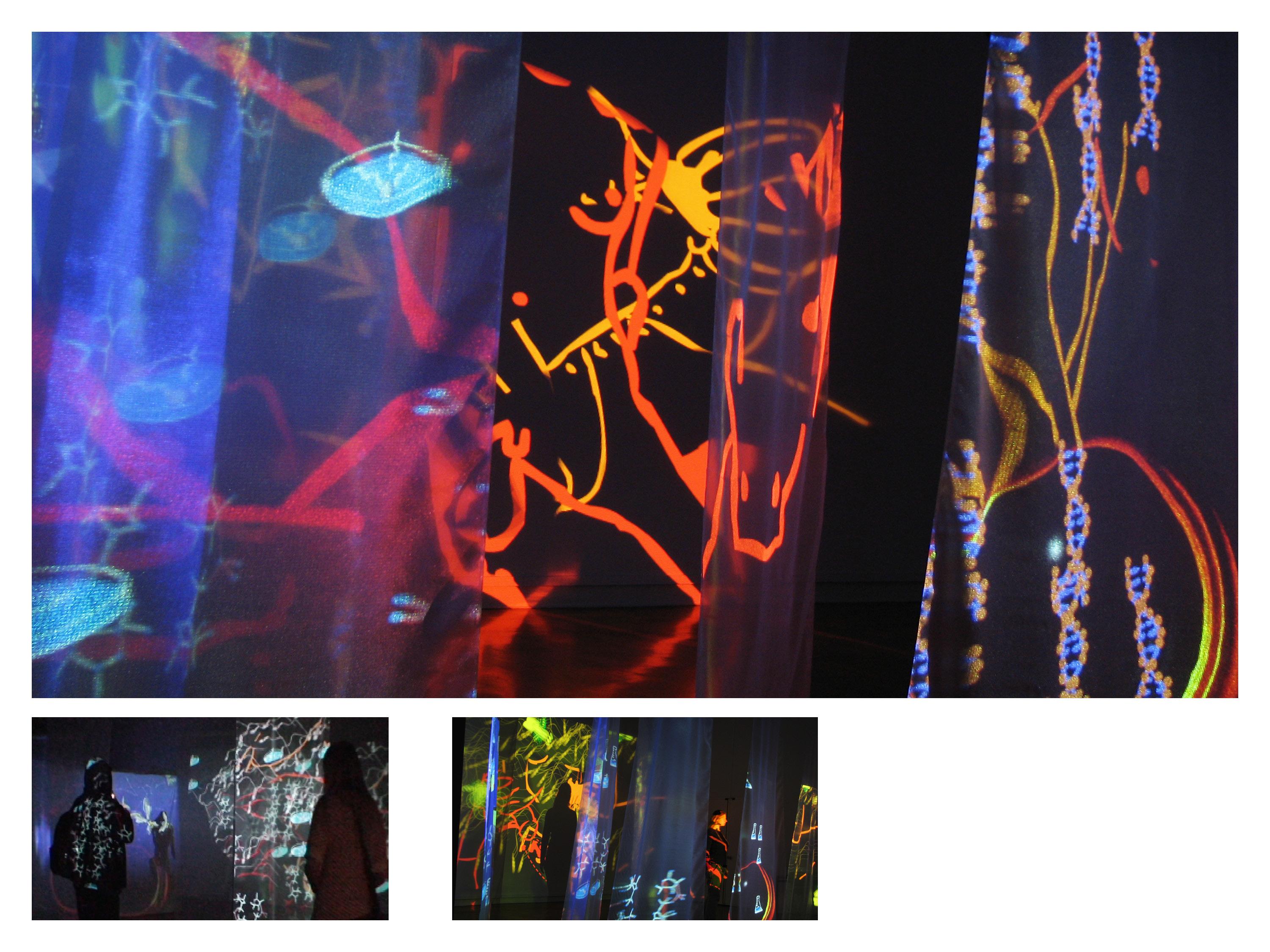
Tantric GMO. 2008. Interactive installation of transparent fabric, computer projections, audio. Variable dimensions.
Top left and right: Installation views
Bottom left: Images of computer display
Bottom right: Installation views with audience
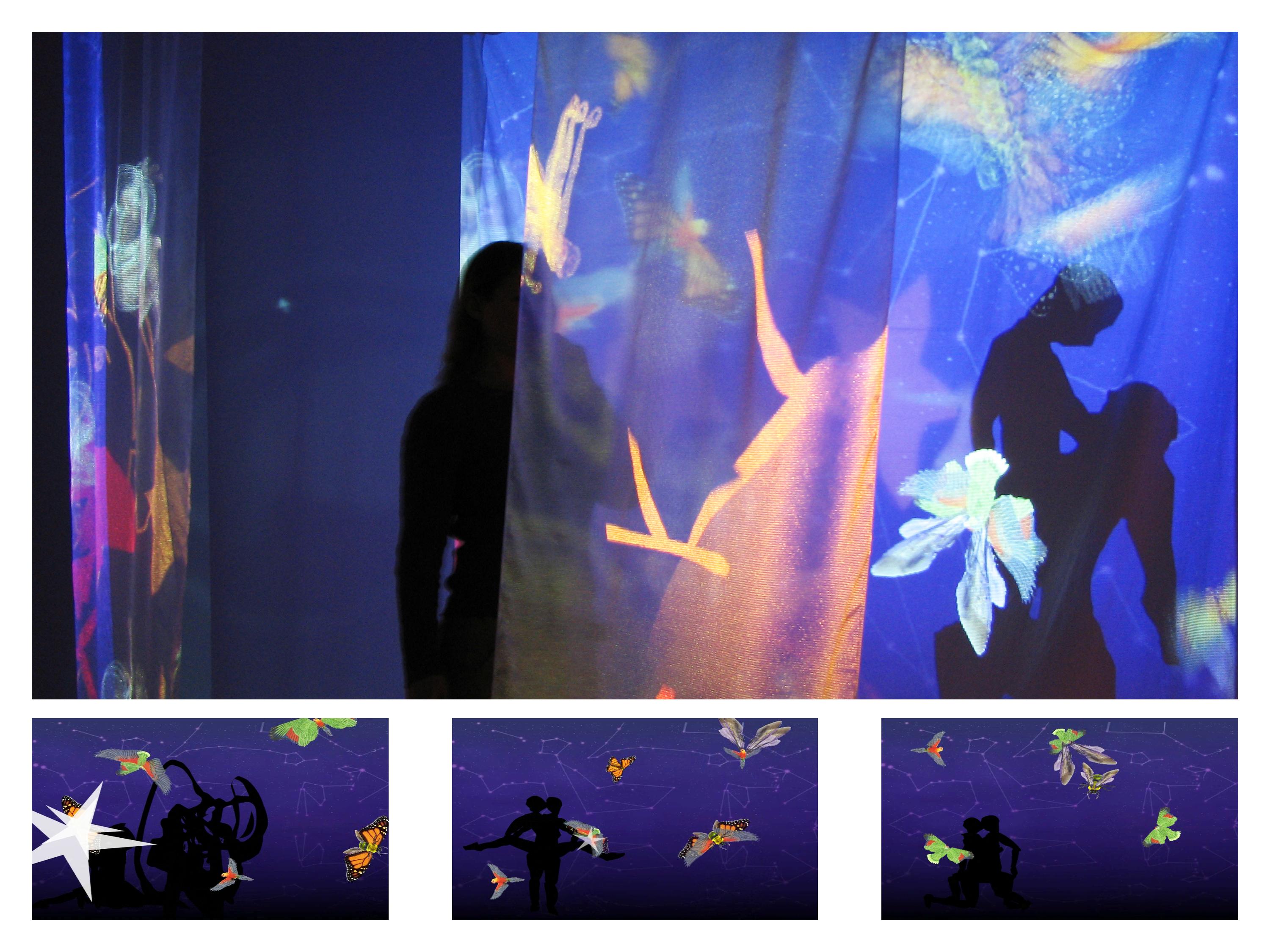
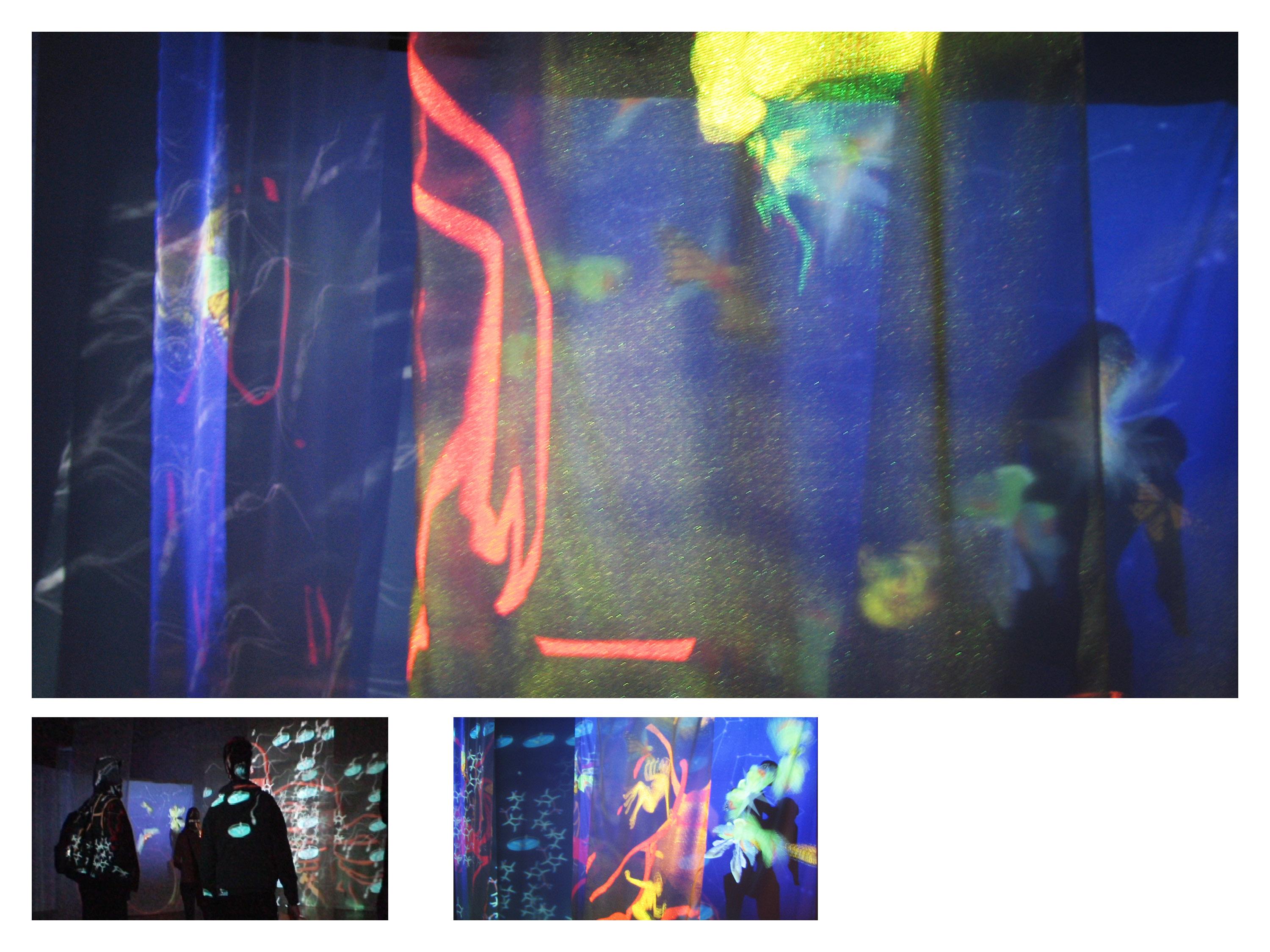
Life Games. 2007.
Interactive installation of transparent fabric, computer projections, audio, motion sensors, live video capture. Variable Dimensions.
Top left and right: Installation views
Bottom left: Images of computer display
Bottom right: Installation views with audience
Previous Spread: Installation view of
Tantric GMO and Life Games
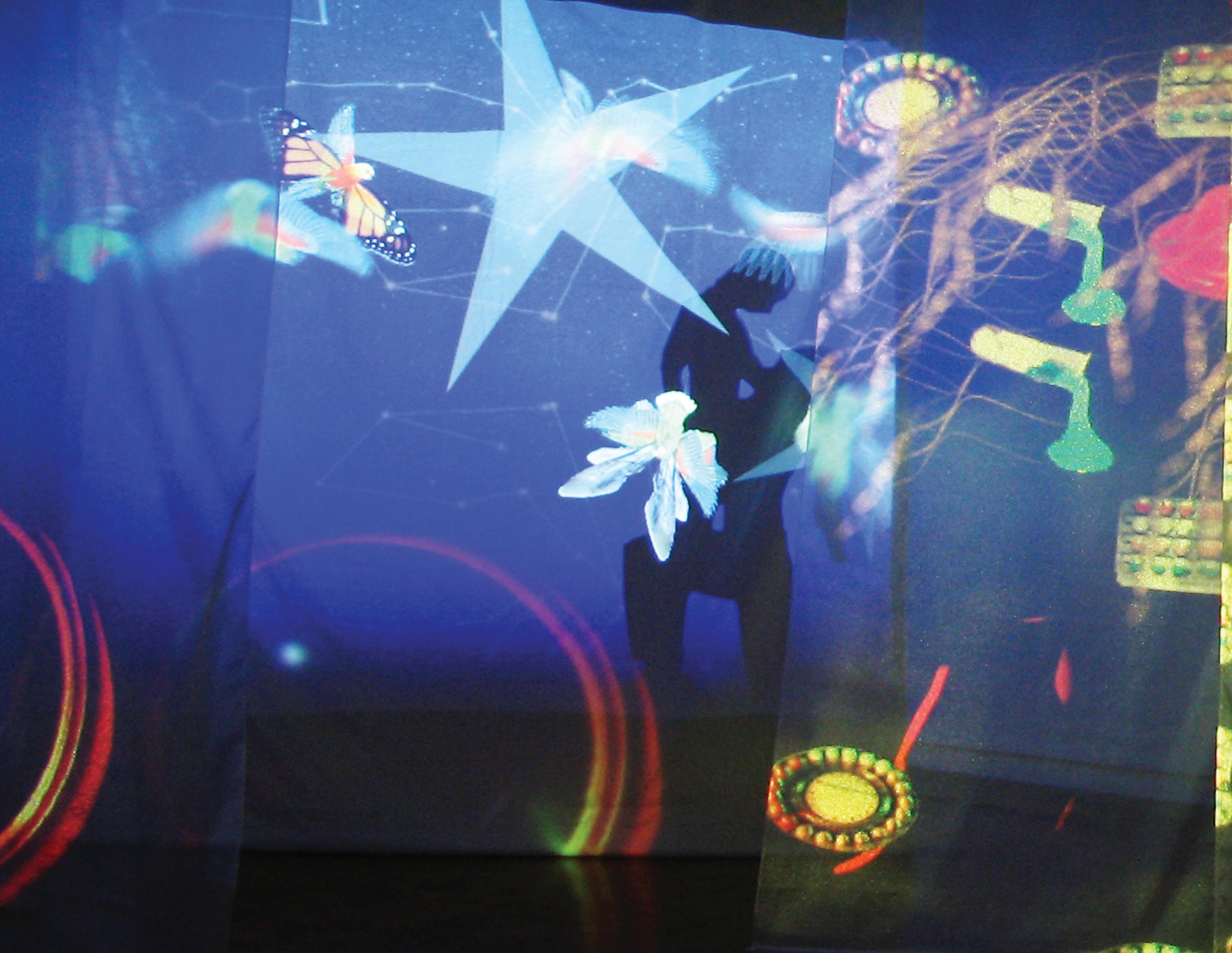
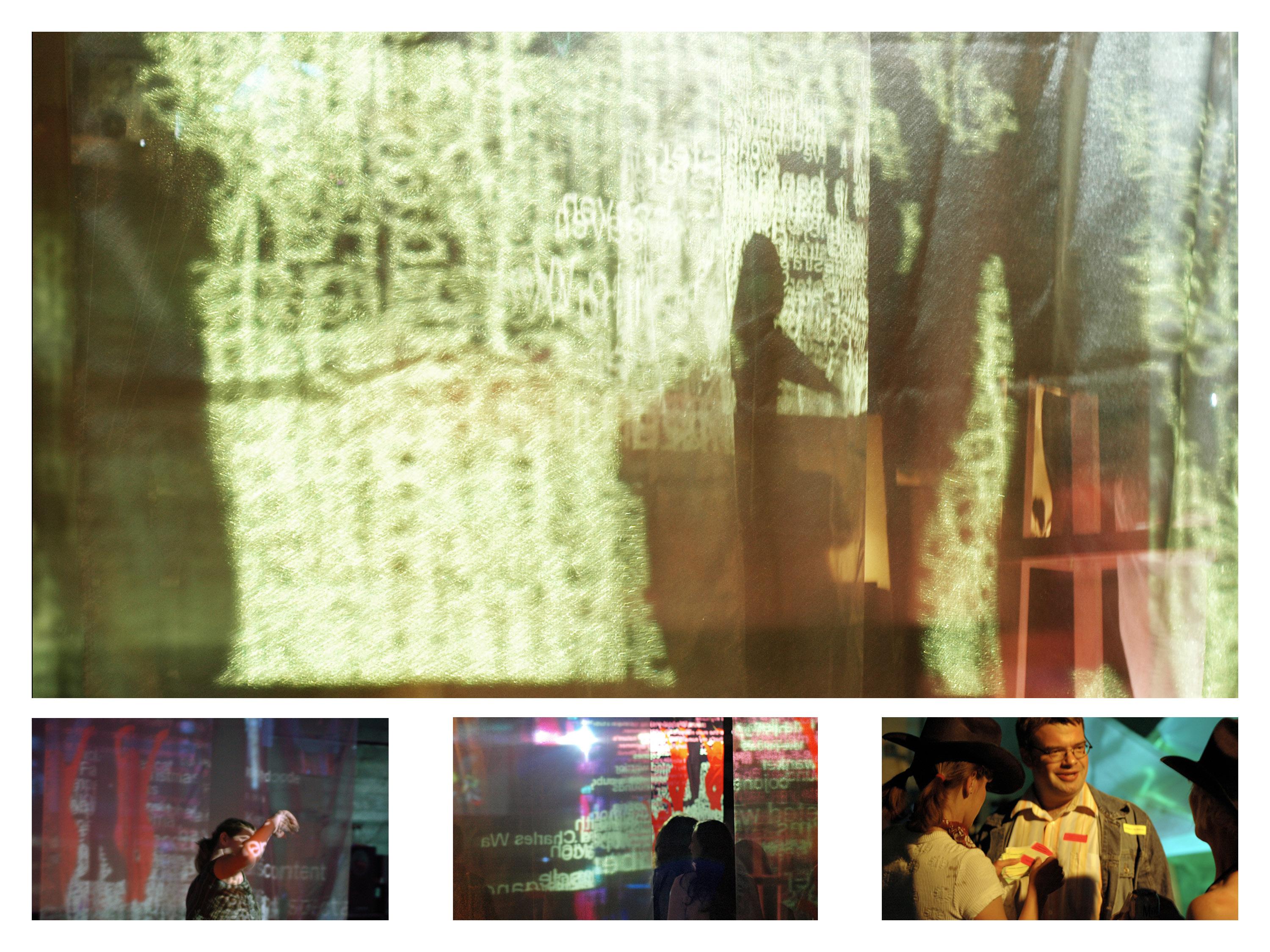
Name Games. 2007.
Interactive installation of transparent fabric, computer projections, audio, motion sensors, live video capture. Variable Dimensions.
Top left and right: Installation views
Bottom left: Installation views with audience and slang word stickers
Bottom right: Images of computer display
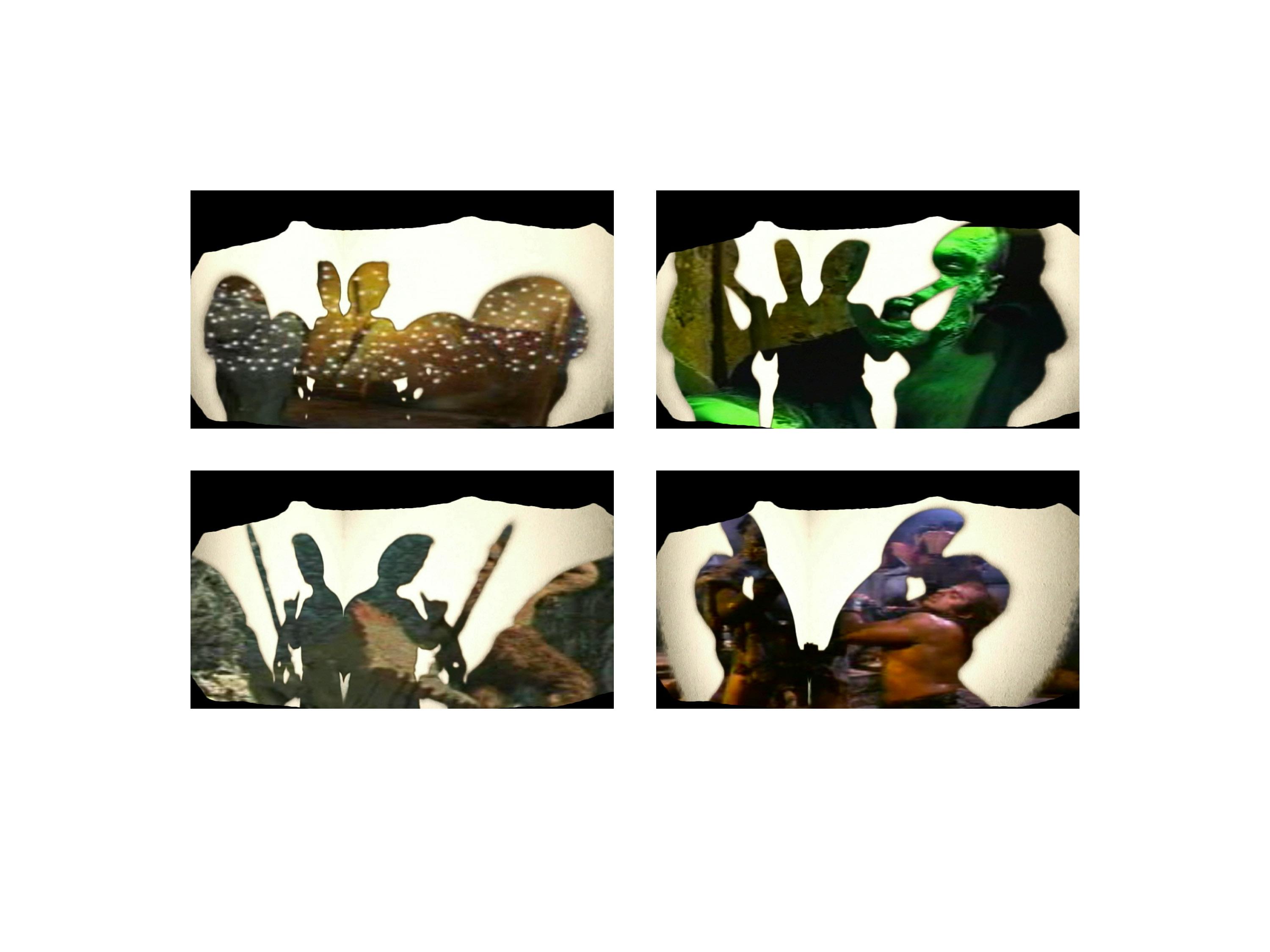
Jealousy’s Triangle. 2007.
3:30 Looping video with audio.
Above: 4 still frames from the video.
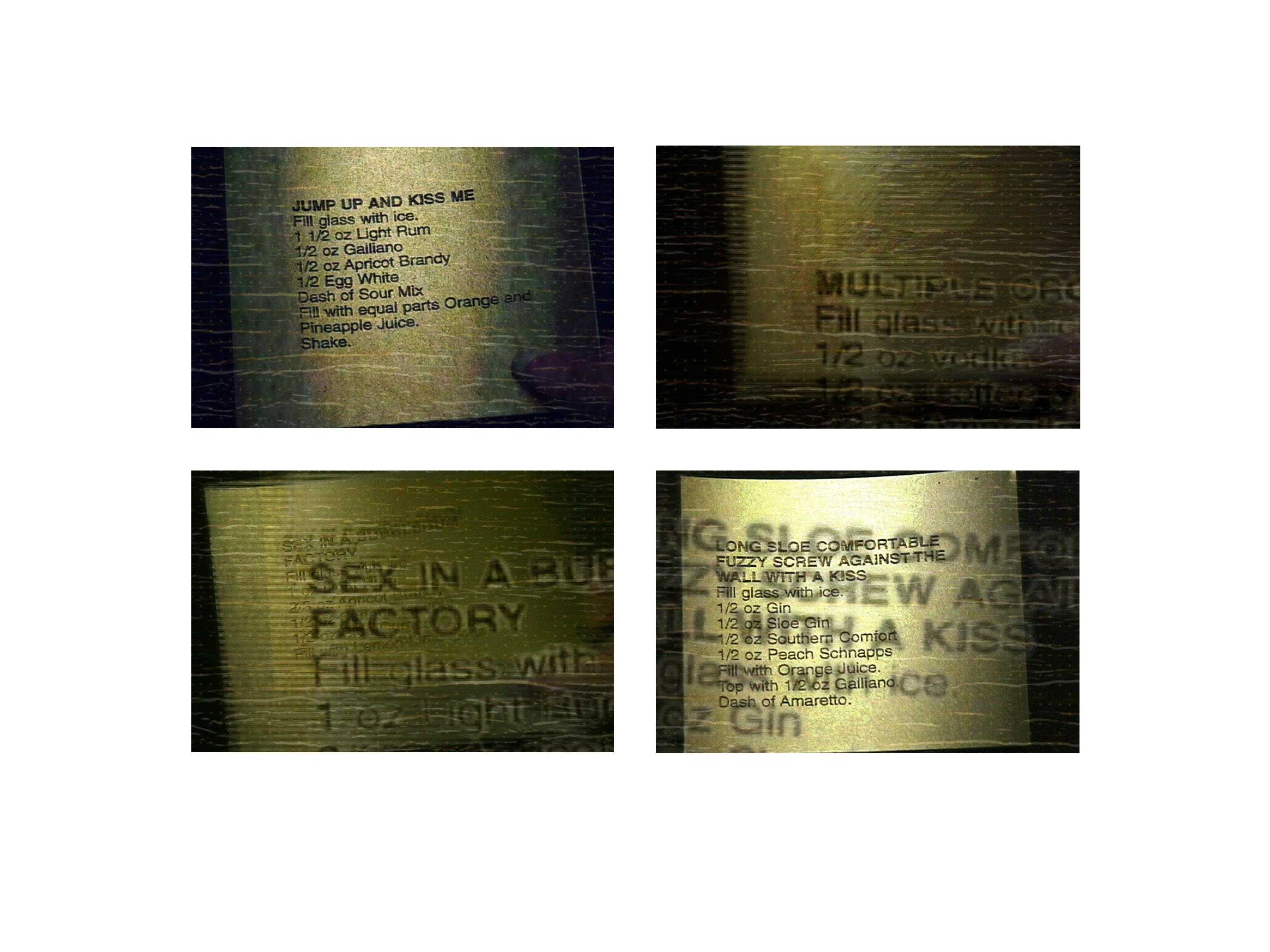
Magically Delicious. 2007. 3:30 Looping video with audio.
Above: 4 still frames from the video.
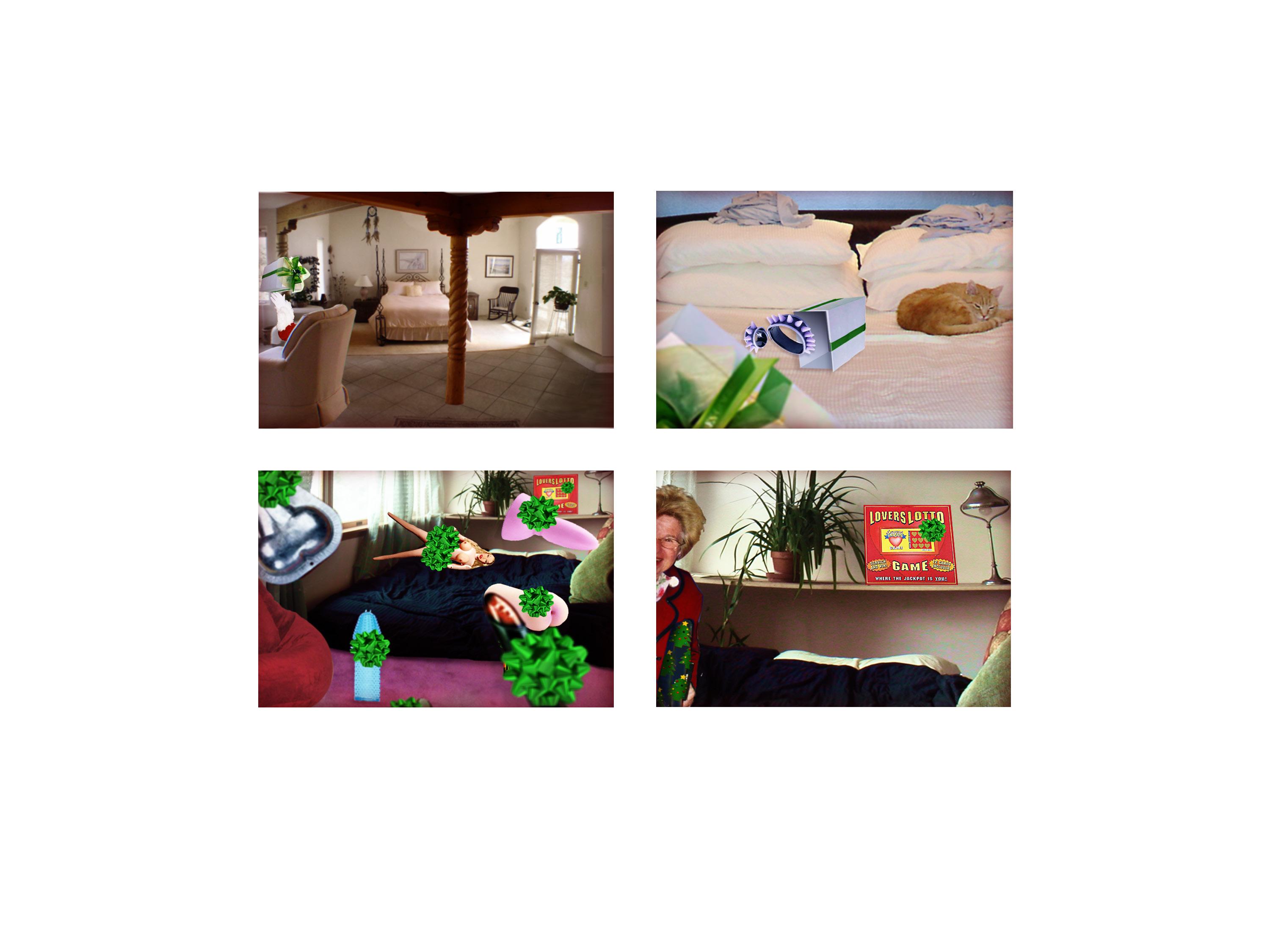
Filthy | Clean. 2008. 4:30 Looping video with audio.
4 still frames from the video.
Happy Holidays. 2005. 1:00 Video with audio.
4 still frames from the video.
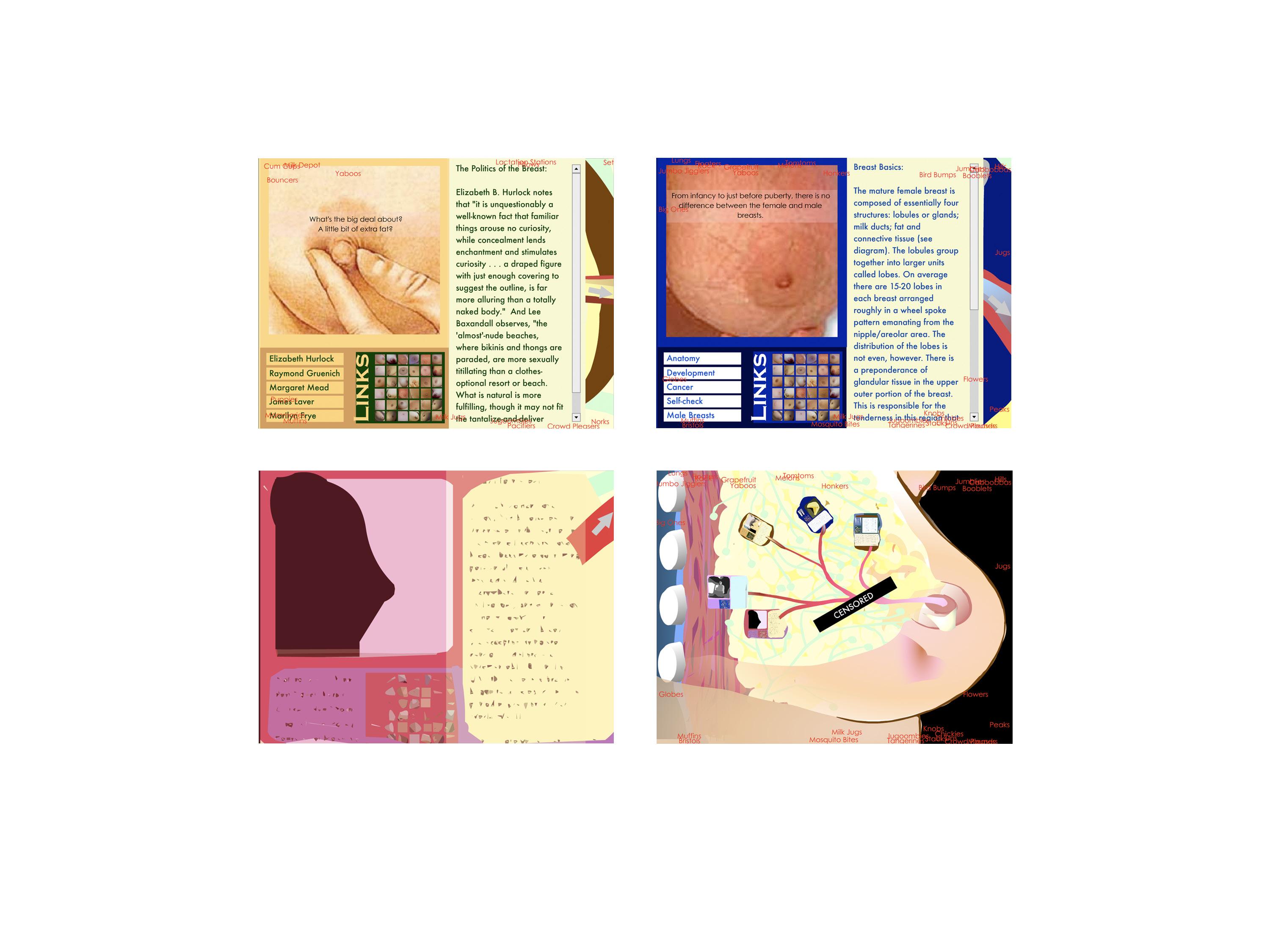
Knockers, etc. 2005.
Above: 4 screen captures from online interactive animation.
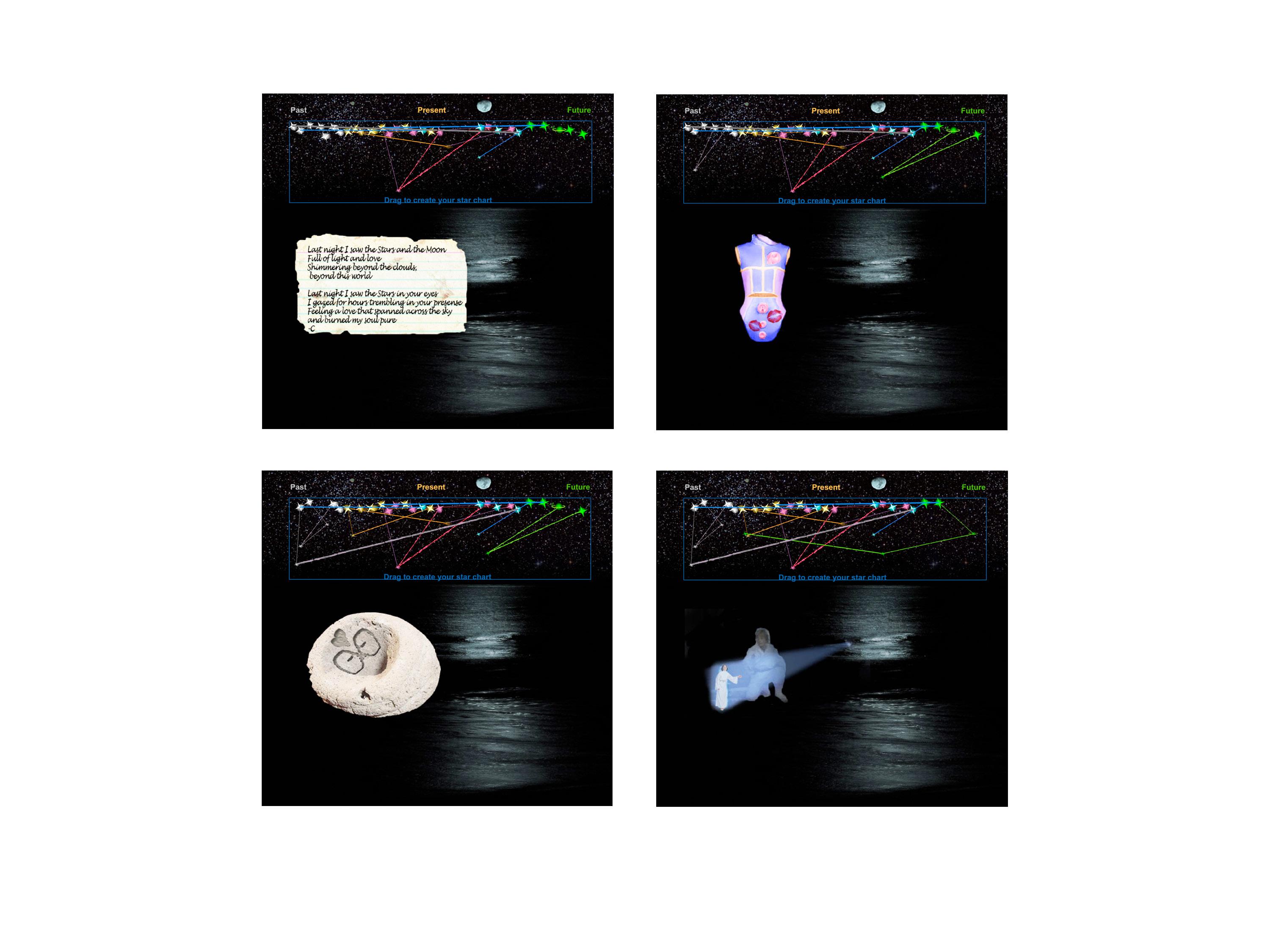
The Ancient Art of Romance. 2006. Above: 4 screen captures from online interactive animation.
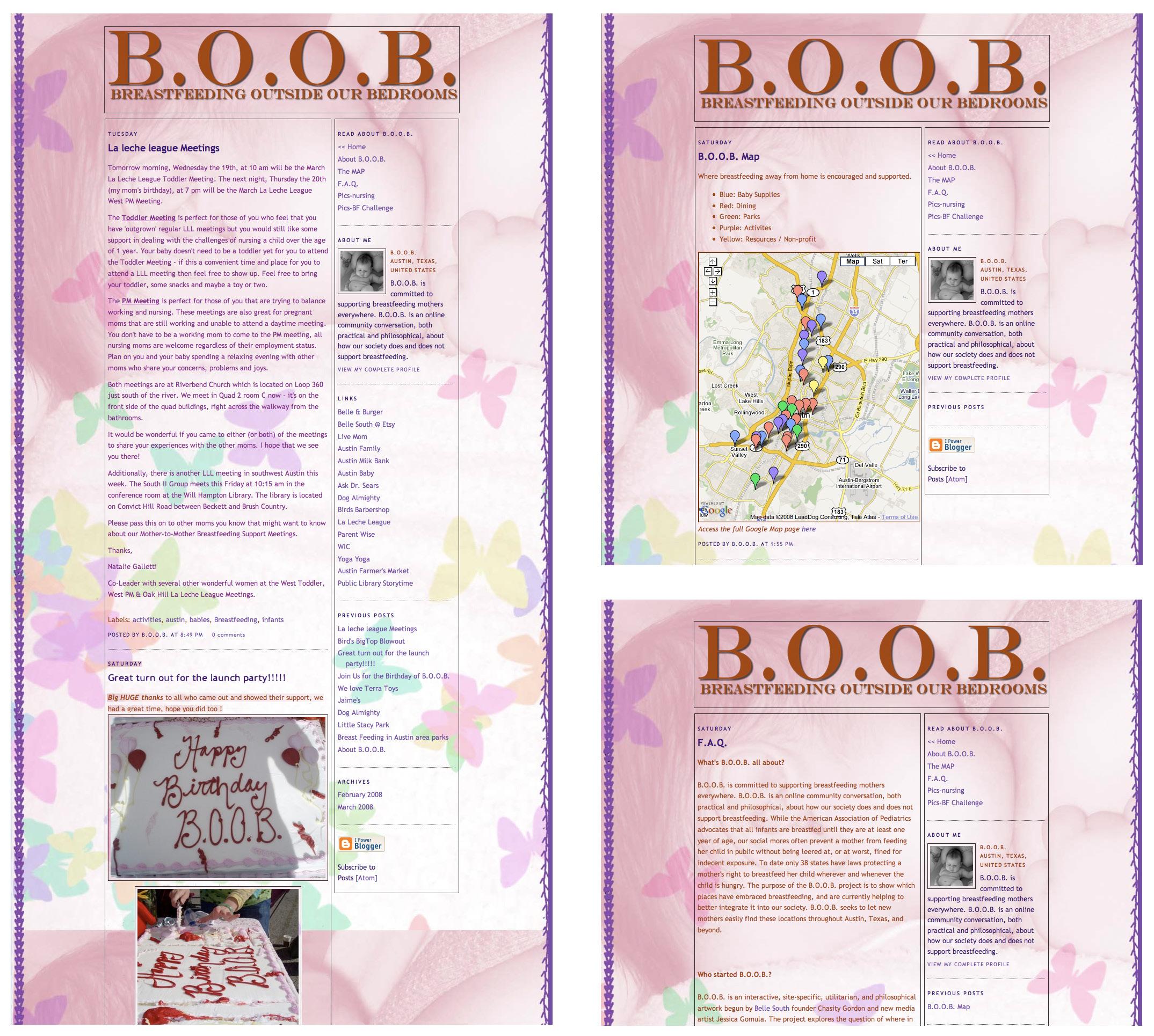
B.O.O.B. (Breastfeeding Outside Our Bedrooms). 2008.
Above: 3 screen captures from ongoing interactive blog with Google-map.
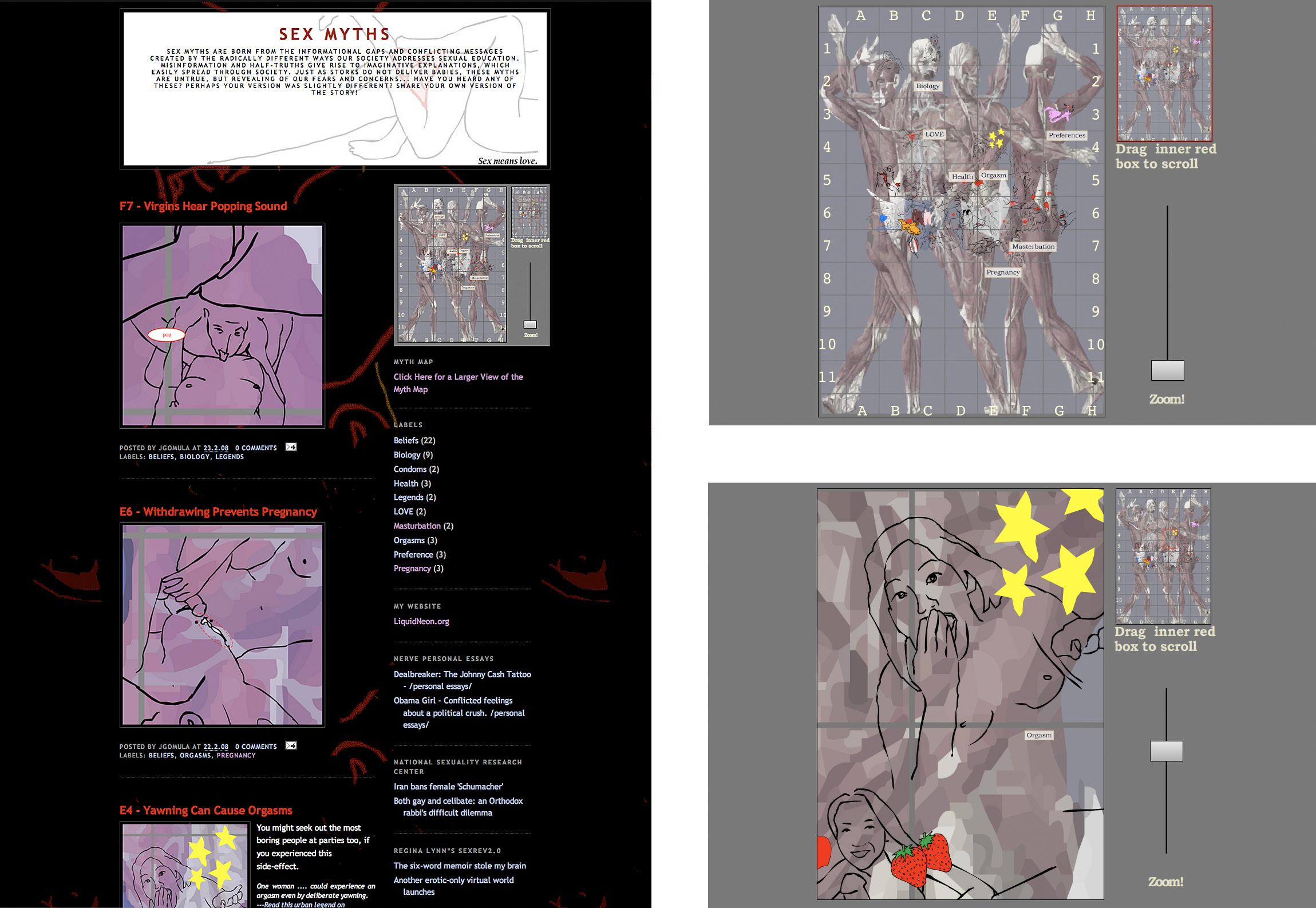
Sex Myths and Tall-tales. 2008.
Above: 3 screen captures from ongoing interactive blog.
EDUCATION
• Master of Fine Arts, Printmaking, Illinois State University, Normal, IL
• Bachelor of Fine Arts, Printmaking, Atlanta College of Art, Atlanta, GA
SELECTED EXHIBITIONS
2008
• To the Atlantic and Back Again. Traveling Interactive Installation with Double Vision.
• Dangerous Curve, Los Angeles, CA.
• Highways Performance Space, Los Angeles, CA.
• Trunk Space, Phoenix, AZ.
• ArtsLab, Albuquerque, NM.
• The Warehouse, Albuquerque, NM.
• The Spareroom, Chicago, IL.
• AV-Aerie, Chicago, IL.
• Galley S8, NJ.
• Infinite Transformations of Desire. Solo Exhibition. University Gallery, California State University, Stanislaus, California.
• 2nd Annual California Centered: Printmaking. Merced Cultural Art Center, Merced, CA.
• A Night of Live Art. WORKS, San Jose, CA.
2007
• Love’s Receipts. Solo Exhibition. Print / Photo Gallery, Truckee Meadows Community College, Nevada.
• To Futurism and Back Again. Installation with Double Vision, Yerba Beuna Center for the Arts, San Francisco, CA.
• Snap to Grid. Los Angeles Center for Digital Art, Los Angeles, CA.
• PAM – Perpetual Art Machine. Traveling Video Installation.
• Chelsea Art Museum, New York, New York
• Scope Art Fair, East Hampton, New York
• WRO07 - XII International Media Art Biennale, Wroclaw, Poland
• House of Campari, Los Angeles, CA
• Coachella Valley Music and Arts Festival, Inido, CA
• ArtDC art Fair, Washington D.C.
• Scope Art Fair, New York, New York
• Jealousy’s Triangle. Online screening at CultureTv: http://www.culturetv.tv.
• Digital Subjects. Block of the Arts, Coimbra, Portugal.
• To Futurism and Back Again. Installation with Double Vision, Dance Mission Theatre, San Francisco, CA.
• CSU System Print Invitational. Janet Turner Print Museum, Chico, CA.
• Evolution, Print Invitational. Burt Gallery, London, England.
• CultureCatch.com Artist Salon, MacWorld Conference. Red Ink Studios. Performance with Double Vision, CultureCatch.com, and Red Ink Studios. Red Ink Studios, San Francisco, CA.
• Digital Fringe. Horse Bazaar, The Age Melbourne Fringe Festival. Melbourne, Australia.
• Name Game. Rhizome.org Artbase: http://rhizome.org/object.rhiz?43121.
2006
• PAM – Perpetual Art Machine. Traveling Video Installation.
• ART|BASEL, Miami, Florida
• Scope Art Fair, Miami, Florida; East Hampton, New York; London, UK
• Split Film Festival, Split, Croatia
• Le Name Festival, Lille, France
• Digit Film Festival, Monticello, New York
• Eight Hours Difference. Peter Scott Gallery, Lancaster, England.
• 21/ONE. Performance with Double Vision and Boxcar Theatre, Fringe Festival, San Francisco, CA.
• Snap to Grid. Los Angeles Center for Digital Art, Los Angeles, CA.
• FILE: 2006. SESI Gallery, Sao Paulo, Brazil.
• Featured Artist. Women’s Caucus for Art online exhibition, http://nationalwca.com.
• Drunken Boat PanLiterary Online Journal. Web Art Award Finalist, Summer 2006.
• PublicDuck, Episode 16. Online screening. http://www.publicduck.com.
• Lonely Owl and the Game of Life, Byte #2. Performance with Double Vision, CELLspace, San Francisco, CA.
• Lessedra: World Art Print Annual. Lessedra Gallery, Sofia, Bulgaria and http://www.lessedra.com.
• 60 Seconds of Play. Get This! Gallery, Atlanta, GA; and Saltworks Gallery, Atlanta, GA; and Forum Gallery, Cranbrook Academy of Art, Bloomfield Hills, MI and online screening, http://www.drainmag.com.
• Lonely Owl and the Game of Life, Byte #1.5. Performance with Double Vision, ArtSFest Spectra Ball, San Francisco, CA.
• Flux. Works Gallery, San Jose, CA.
• Imaging Ourselves. Online exhibit and book publication through the International Museum of Women. Featured on front page of website, http://www.imow.org.
• Sigmund’s Laundromat. Online screening at CultureTv: http://www.culturetv.tv. 2005
• Lonely Owl and the Game of Life, Byte #1. Performance with Double Vision, Mad Horse, Oakland, CA.
• Survey 2005. Northern California Women’s Caucus for Art, SomArts, San Francisco, CA.
• In the Abstract. Sebastopol Center for the Arts, Sebastopol, CA.
• Eugene Presents. Glowlab’s Open Lab. Art Interactive, Cambridge, MA.
• Happy Holidays. Online screening at CultureTv: http://www.culturetv.tv.
• Works on Paper. Long Beach Arts, Long Beach, CA.
• Lonely Owl and the Game of Life, Byte #0. Performance with Double Vision, WORKS, San Jose, CA.
• Snap to Grid. Los Angeles Center for Digital Art, Los Angeles, CA.
• Happy Holidays. Rhizome.org Artbase: http://rhizome.org/object.rhiz?34821.
• Lo-Fi Net Art Locator. Online exhibition at: http://www.low-fi.org.uk/.
• A Decade of Web Design. Stedelijk Museum, Amsterdam, and http://www.designtimeline.org/.
• Jessica Gomula. Pendu Gallery: http://www.pendugallery.com.
• Museum of the Essential and Beyond That. Online exhibition, http://arteonline.arq.br/festival/festival.html.
PERMANENT COLLECTIONS
• Evolution. Print exchange. Asagaya College of Art & Design, Tokyo; Norwich School of Art & Design; and California State University, Stanislaus.
• Love’s Laundry. Mid-America Print Conference Archives at Perdue University and Ohio University, Athens, OH.
CURATION AND ORGANIZATION OF EXHIBITIONS
• 2006: Film Festival, Chair, National Women’s Studies Association Conference, Oakland, CA
• 2006: Stanislaus County High School Art Exhibit, Judge, Turlock Art Association, Turlock, CA
• 2005: Invited | Invaded, Rhizome Exhibitions: http://www.rhizome.org/art/member-curated/exhibit.rhiz?269
GRANTS AND SCHOLARSHIPS
• 2007 Research, Scholarship, and Creativity Grant, CSU Stanislaus, Turlock, CA
• 2005, 2006 Faculty Mini-Grant Award, CSU Stanislaus, Turlock, CA
• 2000, 1999 Best Print in Show, University Galleries, IL
• 1998, 1997 Friends of the Arts Talent Grant, Illinois State University, Normal, IL
• 1996 Alumni Scholarship, Atlanta College of Art, GA
• 1996, 1995 Academic Institutional Grant, Atlanta College of Art, GA
TEACHING EXPERIENCE
California State University, Stanislaus, Turlock, CA Printmaking and New Media Professor (2005 - present)
Bradley University, Peoria, IL
Temporary Full Time Instructor