All Rights reserved. No part of this publication may be reproduced or transmitted in any form without the written permission of the publisher.
University Art Gallery College of the Arts
California State University, Stanislaus 801 West Monte Vista Avenue Turlock, CA 95382
University Art Gallery Director Dean De Cocker
Catalog Design: Dean De Cocker and College of the Arts, California State University, Stanislaus
Catalog Printing: Claremont Print and Copy, Claremont, CA
Catalog Photography: Courtesy of the Artist’s
ISBN: 0-9773967-9-7
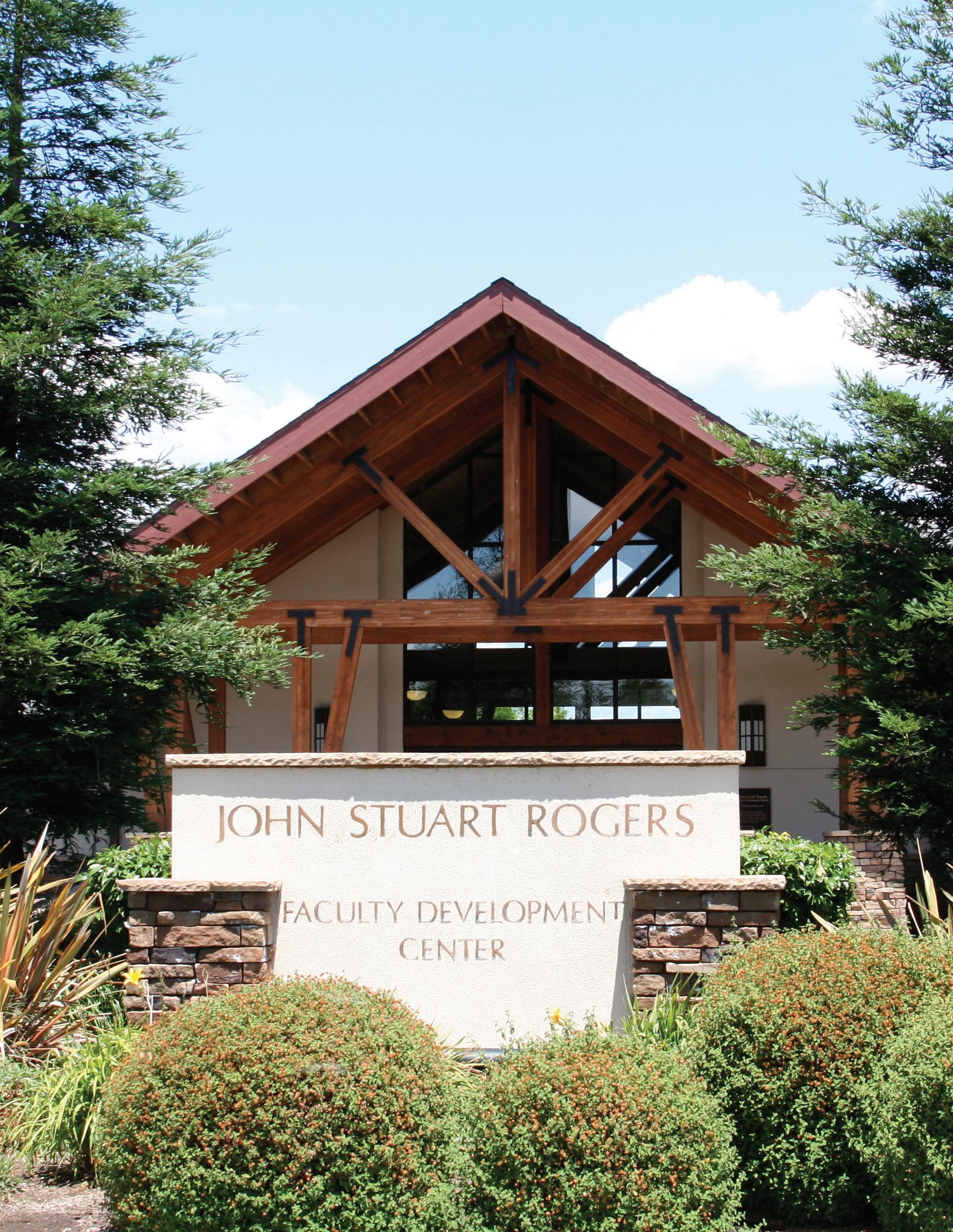
Cover Image: John Stuart RogersFaculty Development Center California State University, Stanislaus
Gordon Senior: Department of Art, Faculty Research @ John Stuart Rogers Faculty Development Center .................. 4
David Olivant: Made in China - Six Artists in California 5 Department of Art
Department of Art, Faculty Research @ John Stuart Rogers Faculty Development Center
Faculty research, scholarly and creative activities within the Art Department at California State University, Stanislaus, take on variety of forms. Faculty members create paintings, drawings, sculptures and ceramics, wall-based constructions and reliefs, photographs, performance art and videos, and works which combine elements. Such combined works may reflect computer technology, or light sources employed to realize a particular rebounding shadow or reflection. Visual work ranges from examples steeped in rich tradition, to those exploring contemporary 21st century forms. Recent publications by faculty include books, papers, articles, exhibition catalogs, and critical reviews.
Artists and art historians generally consider it important to make art if you teach art. It is part of an ongoing tradition for faculty members to stay actively participate in research and creative activity since this engenders good, vital and enthusiastic teaching. And rewarding, enjoyable learning!
It has been difficult for faculty to get a comprehensive picture of a colleagues’ practice. Many of the art department faculty members create their work outside the University. To foster a supportive and lively research environment within the department, a program of faculty presentations was initiated to share recent research and creative activity. Faculty members believe that holding such presentations will thus nurture tenure-track faculty’s commitment to artistic practice. Towards the end of the 2005/2006 academic year, the program began and art department faculty members made presentations which documented and explained their recent research and creative activity endeavors.
The presentations were so enlightening, and the ensuing discussion and debate so rewarding and stimulating, faculty wished to further develop the experience. The idea of this exhibition with its accompanying catalog was thus born and the faculty who participated in the earlier presentations agreed to show their work in this exhibition.
We thank Armin Schultz, the director of the John Stuart Rogers Faculty Development Center for his enthusiasm and support which has led to the realization of this event.
Gordon Senior Chair Department of Art
May 2007
Made in China- Six Artists in California
David Olivant, Professor of Art, Department of Art
Another July 4th celebration had ended following the familiar combination of self-congratulatory speechifying, earnest declarations of freedom and liberty and proclamations of the greatness of a nation past and present. My four–year old son had acquired a small paper American flag that he and many other youngsters waved enthusiastically throughout the evening. Upon returning home quite late, my son finally asleep, my attention was caught by the paper flag lying on the table. Idle curiosity caused me to pick it up and twirl its slender stick in my fingers. Noticing some faint text on its lowest red stripe I lazily examined the letters- MADE IN CHINA. I all but laughed out loud at the irony of it.
The connection between the appearance of a thing and its place and method of manufacture is the thread that loosely connects the artworks in this exhibition. In the case of the flag, that connection is fraught with contradiction, the contradiction between the supposed greatness of the country the flag signifies and the fact that its preeminence as a manufacturing power is being superseded by China. Further irony could be extracted from the notion that the writing MADE IN CHINA has become part of the flag’s design, pointing to a truth that such a flag might more normally conceal, namely that most of America is now made in China.
Post-Modernism has cast a similarly ironic eye over the mechanics of communication, suggesting a disjunction between the thing produced and its manner and place of production and questioning the romantic notion of authenticity or a demonstrable relationship between the artist’s intentions and the work of art. Reading recent critical literature we might believe that all artists pursue the latest tendency out of doctrinaire obedience. This is belied by familiarity with artworks being produced in college environments by artists who teach, such as those on display in this exhibition.
Take the example of Gordon Senior, for the last five years Chair of the Art Department at CSU Stanislaus. Gordon is a culturally displaced artist, whose work had, for three decades, responded directly to issues in the history of British landscape, and had consistently utilized the very materials of the landscape and its modification through agriculture. Surely such an artist, in being removed to an essentially alien landscape, would grasp the opportunity to use the one environment to comment on the other, or to employ the tools and materials of the new environment for satiric effect.
For the most part, Gordon’s work stands at the opposite remove to our US flag and the Post-Modernist tendencies it unwittingly signifies. The artist wishes the materials to act as signifiers largely independent of his intervention: “… it is more important that the materials speak than that the processes are evident.” A Post-Modernist might see this as willful naivety. “Truth to Materials”, a Modernist tenet, supplants the artist’s role with that of supporting actor; “ I hope to leave a trace on the material, but one which doesn’t obscure the material’s own alchemy and history”. In this attitude nature is sanctified and irony would only point to the artist and distract from the art. It is interesting to note in this context that for Gordon, the studio is itself an installation site, not a factory. The work is assembled from components, often cast in materials that either directly represent themselves or stand as metaphors for some quality they suggest. Only very recently is there sufficient dissonance between a component and the materials in which it is cast to indicate irony. This is definitely the case in “Tools of Unknown Use” where the dissonance between the carved wooden handles and
the tool heads recycled from kid’s plastic toys gives rise to the work’s title and starts to include references to the artist’s struggle to incorporate an alien culture and to be useful within it.
Minimalist is the most obvious label for the wall-sculptures of Dean De Cocker,an artist whose background, education and exhibition activity are strongly rooted in the West Coast of California, particularly the LA area. In this work the relationship between production processes and finished product is largely transparent but denuded of any traces of the artist’s activity, in an homage to industrial production techniques. This might place such sculpture squarely within a formalist aesthetic were it not for the veiled personal associations that come through. Dean’s work operates on two levels simultaneously. On the one hand, it takes quasi- geometrical structures from the immediate environment of factory-built objects and conceptualizes them into purely formal solids, thus purging them of any sense of utility and identity the originals might possess. On the other hand, these forms evoke a subtle range of associations (often nostalgic) connected with meanings present in the objects or production methods that serve as their inspiration. (The fact that the associations are often embedded in nostalgia for World War II military scenarios creates a kind of poignancy based on a discord between the essentially comforting nature of rumination on a distant past and its disruption by the distressing content of that past.) In this way, Dean’s sculptures read as a sort of confession, where the art reveals something beyond its formalist posture, where irony is at least approached, largely through the tension between the severely impersonal methods of manufacture and the personal associations that seep out despite them.
My own work cannot pretend to such noble restraint. There is almost nothing in my working process that allows for any kind of prediction of the end result and I have indulged corrupted versions of automatism for longer than I care to remember. Somewhere along the way, it seems that the characters thus extracted from what I hypothesized to be a collective unconscious, acted to all extents and purposes as if they occupied a life outside of the particular canvas in which they appeared. Not only this, but they rapidly became aware of the symbolic, archetypal burdens of meanings I was inflicting upon them and either cooperated or rebelled, as their mood suited. My embarrassment at such a usurpation of my role as creator has recently been furthered by the characters insistence on pre-empting my symbolic interpretations before they have been fully extracted from the chaos of marks that precedes their inception. This has tended to play havoc with my creative process causing me to all but tear up the Freudian/Jungian script that I have worked with for so long.
I realize, though I do so secretively, lest my characters are eavesdropping, that this evolution has pushed me perilously close to some of the values of Post-Modernism, with its foundation in a deconstruction of the notion of authentic authorship. If anything, the primary purpose of my narratives is the undoing of their author, either through his implied fragmentation into multiple selves or the usurpation of his interpretive role by many of his characters.
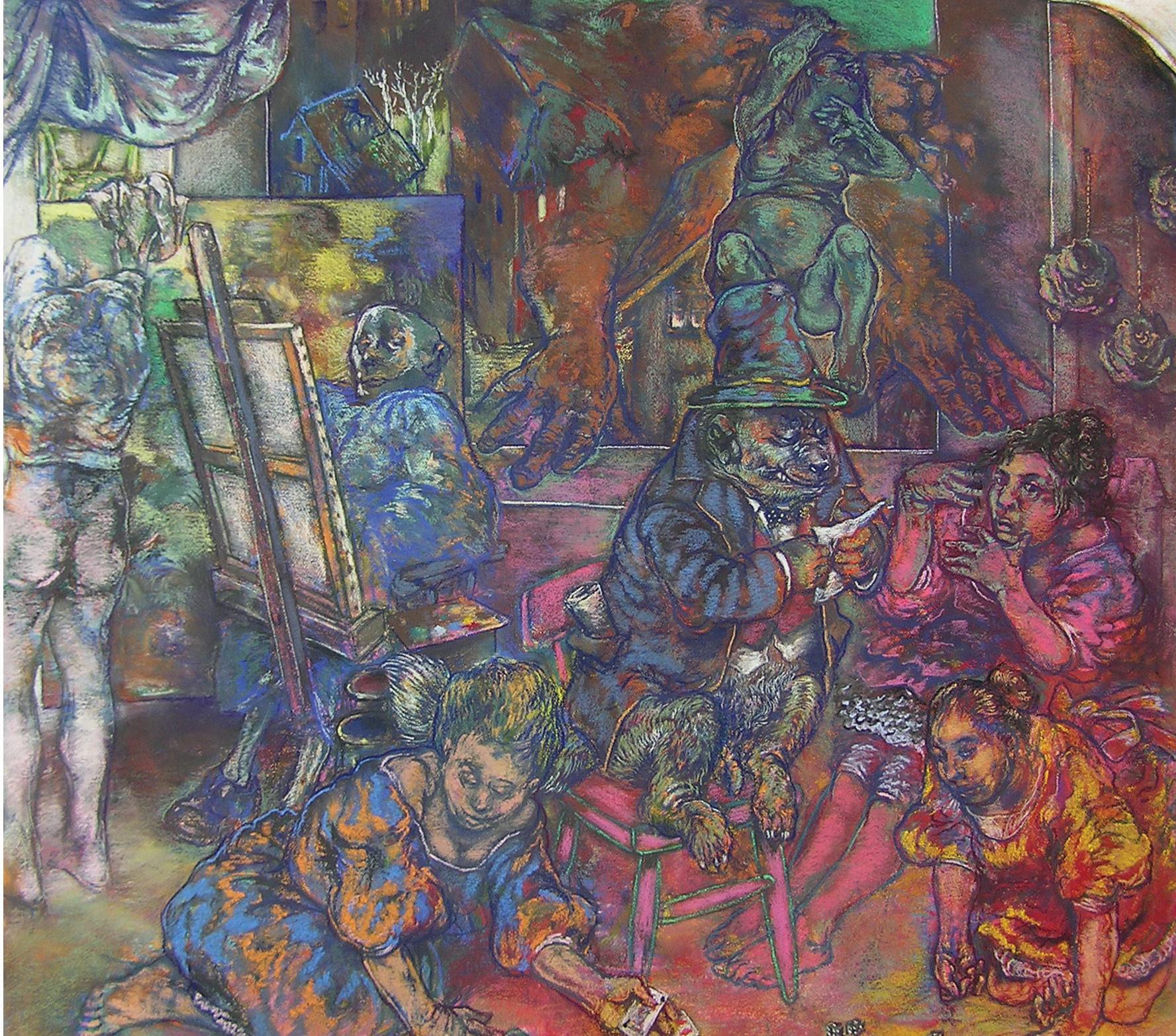
In a recent picture the artist (myself) is depicted showing a recent picture to one of his characters who is depicted therein for approval, in what is ultimately a rather obvious pictorial lie or joke that falsely suggests a methodology involving the capturing of the likeness of the characters dredged from my imagination, as if they inhabited my studio in the same sense as the furniture and other objects. This pictorial lie might have taken inspiration from the MADE IN CHINA inscription on the US flag. Through it all I have been consoled by that pivotal irony of Jungian psychology,
so beautifully portrayed in Andrei Trotsky’s Solaris, where the emotional relationship between two characters is lent extreme poignancy by the recognition on the part of one of them that they are probably a projection of the other. The ensuing pathos cannot be equaled by any ‘normal’ relationship. If my work has made even minor incursions into this territory it is more than ample compensation for the humbling of my artistic ego at the hands of its own creations.
In the art of Jessica Gomula, a recently arrived artist at CSU Stanislaus, the PostModern hybridization of genre and style is second-nature, virtually a reflex. The American flag, made in China, is almost a commonplace and irony such a staple item of the artistic diet that it passes through the digestive tract without so much as a hiccup. The computer screen is the melting pot for this cocktail, which I feel perfectly justified in using mixed metaphors to describe!
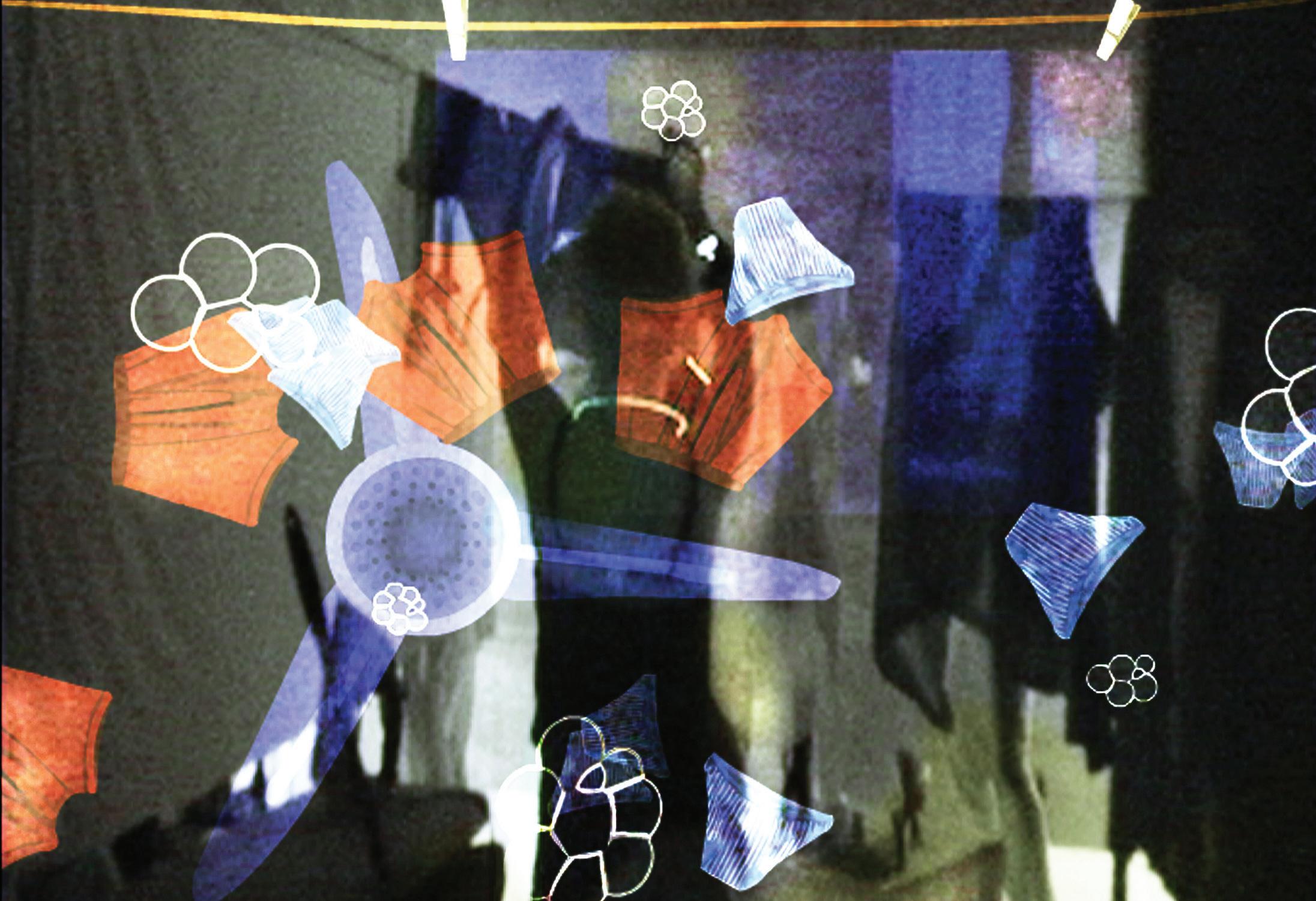
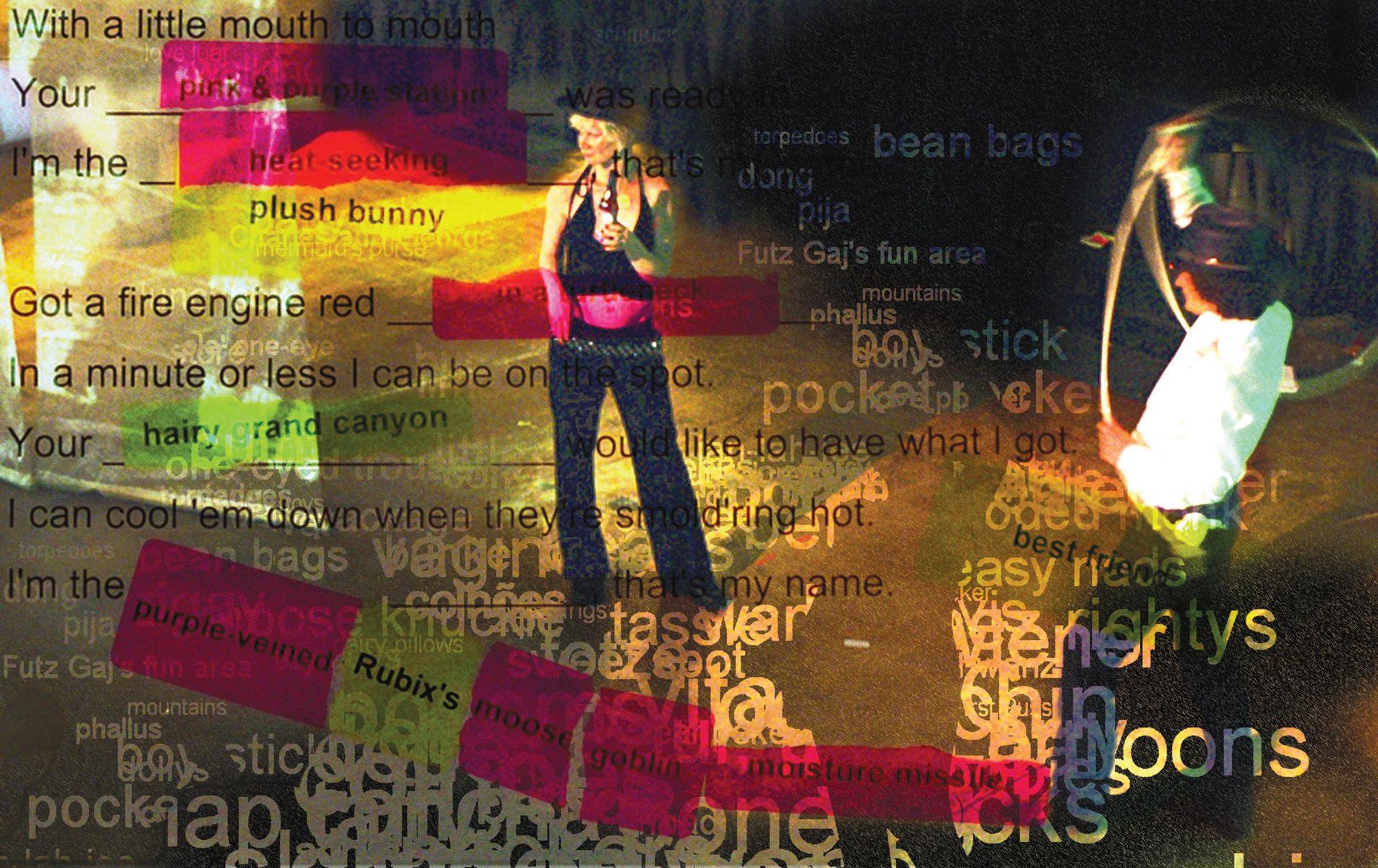
Jessica’s website, the most obvious portal through which the neophyte viewer might approach her output, presents us with an opening page that mimics a sheet of handmade paper and we suspect trouble immediately. Many of the short movies that can be activated there, like Happy Holidays, explore the socio-political issues surrounding sexual intimacy. The layering and stylistic heterogeneity are reminiscent of Polke and Salle, though the mood is sweeter. Significant is the sheer quantity of different media layered into a seamless whole, which underplays, if not suppresses the irony, as if there could be nothing more natural than the overlay of painted images, video montage, photographic stills, text, and sound. The disingenuousness of it all seems a spoof on sexual innocence. The sense of nostalgia only sweetens this further and we are cajoled into tacit acceptance of the dichotomy between the technological muscularity of the computer and the floating montaged sexual toy Xmas gifts hovering across a pleasantly bourgeois fifties interior straight out of ‘Ethan Allen’ Magazine. This dichotomy seems symbolic of the central contradiction in Jessica’s work between the casual, gentle humor of the presentation with its apparent good-natured innocence and the taboos surrounding the erotic subject matter. It is this dynamic that activates our reactions to Sigmund’s Laundry which shows, inset, a video of a nude ironing, sufficiently blurred and darkened to remain polite but at the same time inviting a voyeuristic attention. Surrounding this, against a blue background, images of embryos at an early stage of development and lady’s underpants float around, occasionally occupying the space of the nude. In the centre of this blue area is a large three-bladed washing machine agitator seen from above. Similar forces are at work in Clean/Fun in which an image of a woman showering is overlaid by semi-transparent footage that moves horizontally across the screen. The effect is to reverse conventional male voyeuristic proclivities redirecting our interest from the more obvious target of the woman’s nudity to the largely indecipherable forms that float across her.
The ceramic art of Hope Werness is in some ways an extension of a life of researching and teaching Art History. In these sculptures there is a Post-Modernist tension between the materials of the original canvas or architecture and their transformation into clay. This is also paralleled by the tension between the folk/populist qualities of the sculpture and the high art aspirations of the original. Further irony results from the approachable and decorative quality of these ceramic pieces and the unease evoked by the oeuvres of these two Expressionist masters. These pieces can be read as gently mocking the commercialization of artists like Pollock and Van Gogh, replica and popular versions of whose work is now often “Made in China”. At the same time they represent a much more subtle and personal homage to those artists in capturing some of the pathos created in the disjunction between their lifestyles and the
domesticity symbolized by miniature house forms.
This essay has tentatively navigated a path through a terrain of differently inflected attitudes to contradiction and irony, from abrupt, disconcerting, unintentional duplicity (the flag) to the refusal or sublimation of irony (Senior,) to the contradiction between a factory-formalist aesthetic and the personal associations that emerge despite this (De Cocker), to the attempt to express the unconscious personality and the sabotaging of that attempt by the supposed inhabitants of the unconscious (Olivant) to the absorption of contradiction into the fabric of the artistic statement as a rhetorical norm (Gomula) and finally to the ironies implicit in juxtaposition of high and low art idioms and attitudes (Werness). The severest differences among this group of artists result from whether they choose to suppress or exploit irony and contradiction. All of them share a heightened awareness of the possible range of interplay between process, procedure and product, and it is this more than the historical accident of their resemblance to a given artistic trend that marks their work as contemporary.
Dean De Cocker
Jessica Gomula
David Olivant
Gordon Senior
Hope Werness
Department of Art Faculty:
Images, Statements and Resumes
Dean De Cocker
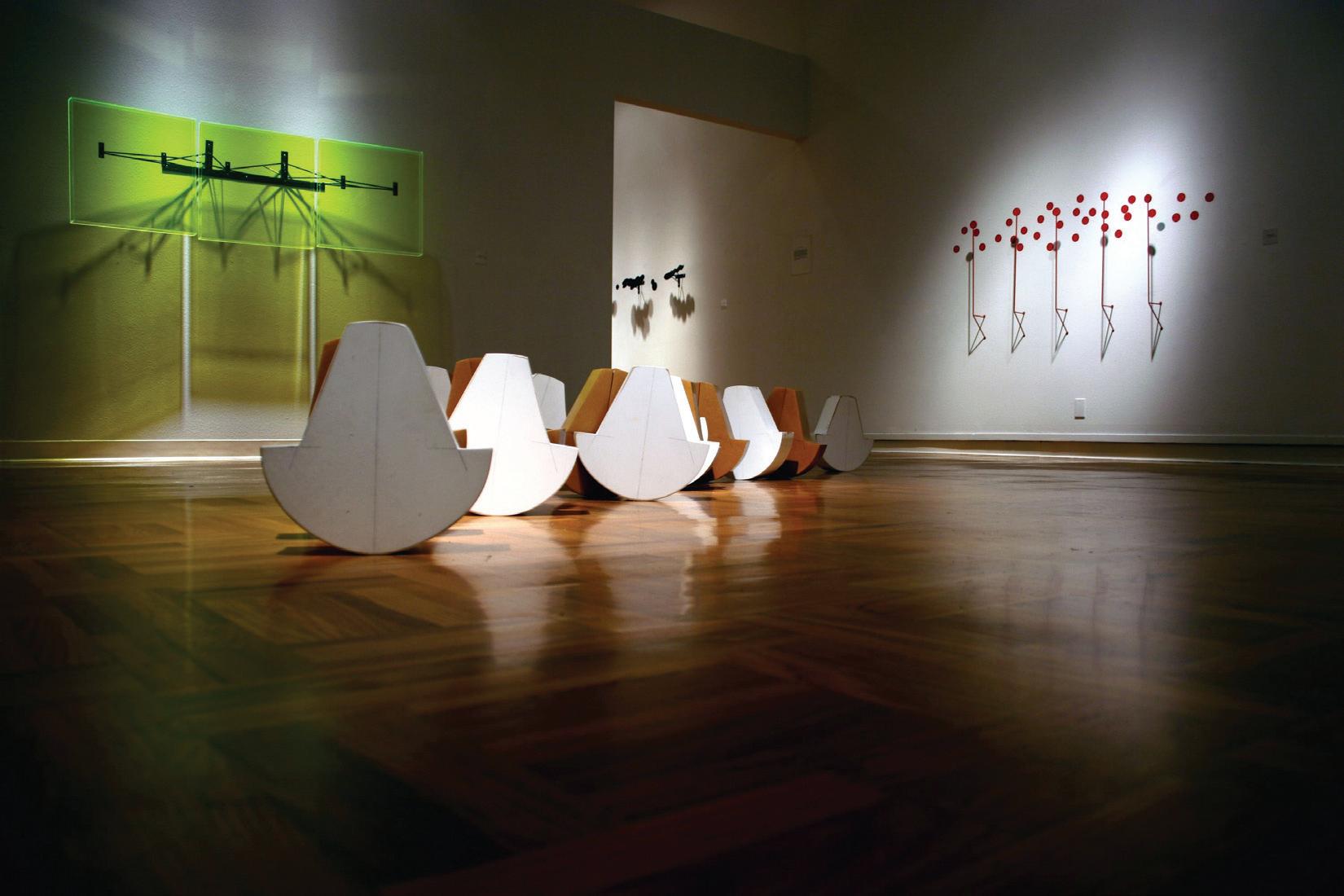
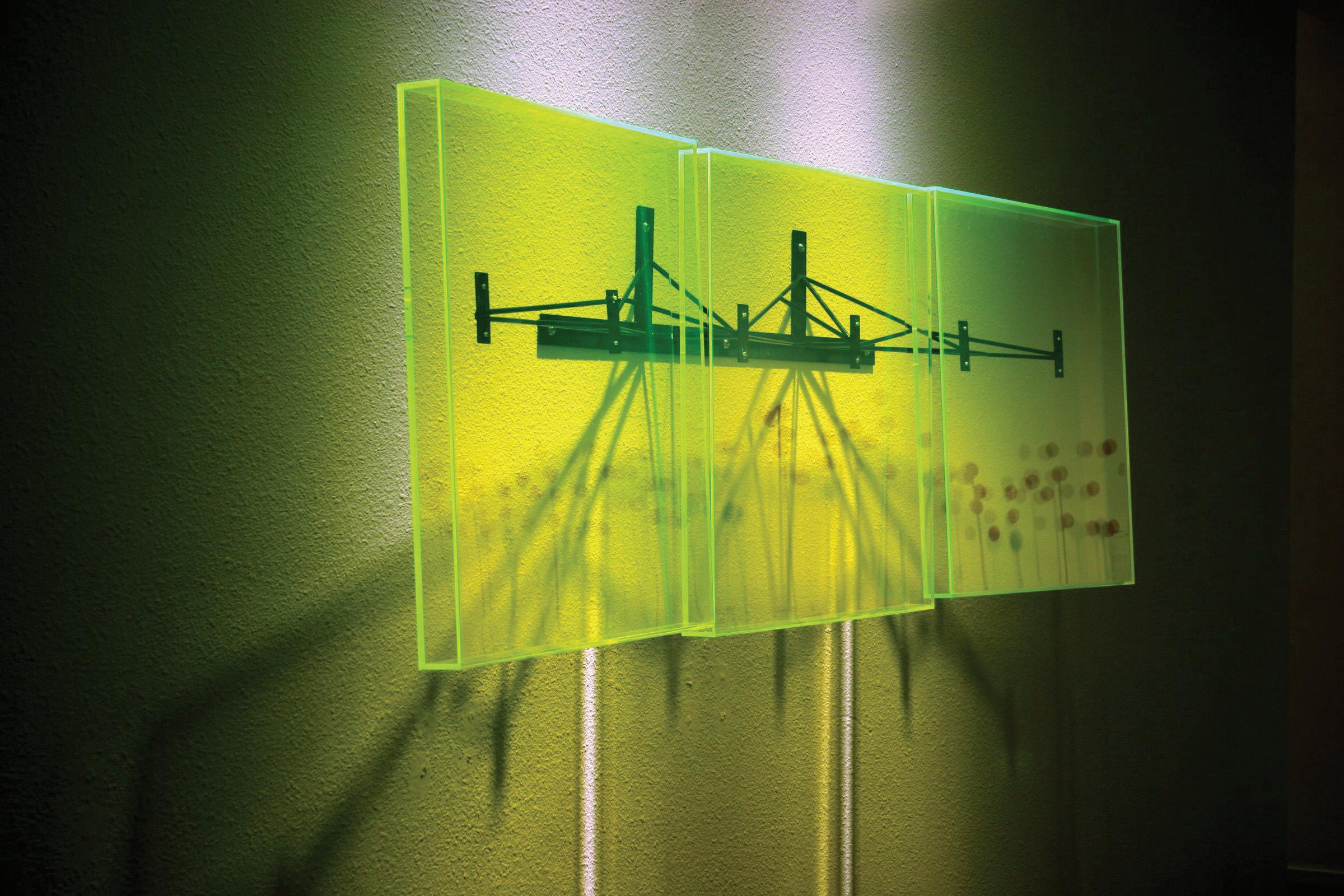
Pin Points in the Pacific 2005
acrylic paint, graphite, MDF Installation, Carnegie Art Center, Turlock, CA
Extended Orders
2006
Installation, University Art Gallery, California State University, Stanislaus
Artist Statement
My work is part of a continuing series, “Blue Jackets Return.” From the first wingedshaped structures to the current work, I have been exploring my interest in formal elements by transforming flat, two-dimensional surfaces into three-dimensional objects. I derive much of my inspiration from everyday objects such as mailboxes, aircraft structures, wings and propellers, heavy machinery and architectural works. These objects become conceptual elements, which I transform first into drawings. Then, via techniques of aircraft construction, I fabricate objects of inner structures and outer coverings that create volumetric enclosures. Recently, my interest in racecar fabrication and finishing has led to subtle changes in structure and the incorporation of color.
The titles of my works have no real meaning, but due to my interest in the construction techniques of World War II aircraft, I take my titles from the World War II battles in the South Pacific.
April 2007
Dean De Cocker
Education
1989 Claremont Graduate University, Claremont, CA, M.F.A.
1987 California State Polytechnic University, Pomona, CA, B.A.
1980 Don Bosco Technical Institute, Rosemead, CA, A.S. in Offset Lithography Color Separation
Teaching
2003-Present California State University, Stanislaus, Turlock, CA
2002
1990-2003
Associate Professor, Department of Art
California State University, San Bernardino, San Bernardino, CA
Adjunct Professor, Sculpture, Department of Art
Claremont Graduate University, Claremont, CA,
Adjunct Professor in studio practices/theory, Department of Art
Solo Exhibitions: Selected, from over 39 exhibitions
2008
2007
2006
2005
2004
2003
2002
2001
2000
“Turning Point in the Pacific,” JayJay, Sacramento, CA
“Battle of a Shallow Sea,” John Stuart Rodgers Faculty Development Center, CSU, Stanislaus, Turlock, CA
“Sources of Victory,” Limn Gallery, San Francisco, CA
“Return of the Black Cat,” Beaver Street Gallery, Flagstaff, AZ
“Like the Yorktown,” Ventura College Gallery, Ventura, CA
“Extended Orders,” University Art Gallery, California State University, Stanislaus, Turlock, CA (Catalog)
“South of Tawara,” Truckee Meadows Community College, Reno, NV
“Pin Points in the Pacific,” Limn Gallery, San Francisco, CA
“Silence in the Coral Sea,” Riverside Art Museum, Riverside, CA
“Full Fathom Five,” JayJay, Sacramento, CA
“The Pacific Boils Over”, Carnegie Art Center, Turlock, CA
“Power in the Pacific”, Ridley Gallery, Sierra College, Rocklin CA
“Year away from the Pacific”, Parson’s Gallery, Harvey Mudd College, Claremont, CA
“Current and Winds”, Robert V. Fullerton Art Museum, California State University, San Bernardino, CA
“Fighting the Tides”, The Branson School, Ross CA
“Past Magnetic North”, Limn Gallery, San Francisco, CA
“Rough Seas”, Parks Exhibition Gallery, Idyllwild Arts, Idyllwild, CA
“Rudder Shift”, Claremont City Hall Gallery, Claremont, CA
“In the Shallow Lagoon”, JayJay, Sacramento, CA
“Fragments from the Pacific”, Hunsaker/Schlesinger, Santa Monica, CA
“Works From the Pacific Campaign”, The Huntington Beach Art Center, Huntington Beach, CA
1999 “Silent Service”, Davis Art Center, Davis, CA
“Whispering Distance”, Santa Barbara Contemporary Arts Forum, Santa Barbara, CA (Catalog)
1998 “Vanishing Tide”, Gallery Paradiso, Costa Mesa, CA
“Allied Advances”, Weintraub Thomas Gallery, Sacramento, CA
“Under a Shattering Fire”, San Diego Art Institute, San Diego, CA
1996 “Principles of Recognition”, Gallery Paradiso, Costa Mesa, CA (Catalog)
1995 “In the Slot, 3 PM”, Boritzer/Gray/Hamano Gallery, Santa Monica, CA
“Flame Out”, The Art Store Gallery, Los Angeles, CA (Catalog)
1994 “Blue Jackets Return”, Boritzer/Gray Gallery, Santa Monica, CA
“Distances and Halts”, San Diego Art Institute, San Diego, CA
1993 “The Boatswain Pipe”, Mendenhall Art Gallery, Whittier College, Whittier, CA
“Dean De Cocker - Mixed Media Constructions”, Solomon Dubnick Gallery, Sacramento, CA
1992 “Dead Reckoning - The Resin Works”, Daniel Saxon Gallery, Los Angeles, CA
Group Exhibitions: Dean De Cocker has exhibited in over 100 group exhibitions
Selected Collections
The Crocker Museum, Sacramento, CA, Robert V. Fullerton Art Museum, California State University, San Bernardino, CA, Laguna Beach Museum, Laguna, CA, Merrill Lynch, Sacramento, CA, Orange County Museum of Art, Newport Beach, CA
Jessica Gomula
Sigmund’s Laundry, hanging 2006
Archival Digital Print 12.5”x19”
Name Game, Love Poem 2006
Archival Digital Print 13”x20.5”
Artist Statement
My work is an interactive investigation of the sexual aspects of our culture.
My work intends to be direct, whether the result is imagery of nude bodies and sexual paraphernalia, or purely semantic in nature. I seek to generate an intelligent dialog about sex by combining interactivity, playfulness, and humor. My work intends to be more direct and contemporary than commercial erotica, but less singularly focused than pornography’s sex-objects. It’s about ephemeral sexual cultures, the private spaces around erotic activities, and how these spaces move through and change with time.
I begin my explorations as interactive animations, designed specifically for the intimate experience of online viewing. Through my work with the inter-media performance group Double Vision, I have the opportunity to re-investigate my work for shared orgiastic experiences as interactive performance installations. And, like taboo snapshots of loved ones, I create printed montages to capture the fundamental essence of the experience of the installations. This imagery is re-incorporated into the original online project, creating a complexly layered experience.
I believe our sexual culture deserves dedicated, creative exploration. Not to document the mechanics of sex, but to tease out the ways it makes our heart race, the way it makes us both embarrassed and ecstatic. Sexual expression reveals of many of our universally shared human experiences. Our imperfect and unconventional bodies are ripe with expressions of honesty, shame, desire, and humor. I use humor within my work to defray the societal tensions that often coalesce around sex.
While sexual prudishness is diminishing, our society still reflects a similar schism, simultaneously sexually obsessed and puritanical. While I obviously believe in personal freedoms and political rights, my work seeks to be more open-ended than propaganda of sexual revolutions. I would rather track the multitude of paths our sexual taboos take; like following the half-hidden veins beneath your lover’s skin. I hope to make the most of this historical transition by creating a playground of discussion around these ironies.
J Gomula
Jessica Gomula
Education
Illinois State University, Normal, IL, M.F.A., Printmaking, Atlanta College of Art, Atlanta, GA, B.F.A., Printmaking
Teaching
2003-Present California State University, Stanislaus, Turlock, CA
2002-2005
2001-2004
Solo Exhibitions
Assistant Professor, Department of Art
Bradley University, Peoria, IL
Adjunct and Temporary Full-time Instructor, Multimedia Department
Heartland Community College, Bloomington, IL
Adjunct Instructor
2008 “Desire’s Ephemera+,” University Gallery, California State University, Stanislaus, CA
2007
“Love’s Receipts,” Print Gallery, Truckee Meadows Community College, Reno, NV
2000 “Transformations,” University Galleries, Illinois State University, Normal, IL
Selected Group Exhibitions
2007
“CSU System Print Invitational,” “Janet Turner Print Museum, Chico, CA
“Evolution, Print Invitational,” Burt Gallery, London, UK
“CultureCatch.com,” Artist Salon, MacWorld Conference.* Red Ink Studios. Performance with Double Vision, San Francisco, CA
“CultureCatch.com, and Red Ink Studios,” Red Ink Studios, San Francisco, CA
“Made in China,” Lancaster University Gallery, Lancaster, England
“60 Seconds of Play,” Get This! Gallery, Atlanta, GA
“21/ONE,” Performance with Double Vision and Boxcar Theatre, Fringe Festival, San Francisco, CA
“Snap to Grid,” Los Angeles Center for Digital Art, Los Angeles, CA
“FILE: 2006,” SESI Gallery, Sao Paulo, Brazil
“Featured Artist,” Women’s Caucus for Art online exhibition,http://nationalwca.com.
“Drunken Boat Pan Literary Online Journal,” Web Art Award Finalist, Summer 2006 “President’s Gallery,” California State University, Stanislaus, Turlock, CA
Selected Collections
“Evolution. Print Exchange,” Asagaya College of Art & Design, Tokyo, Japan; Norwich School of Art & Design, Norwich, UK; and California State University, Stanislaus, Turlock, CA
“Love’s Laundry+,” Mid-America Print Conference Archives at Perdue University and Ohio University, Athens, OH
David Olivant
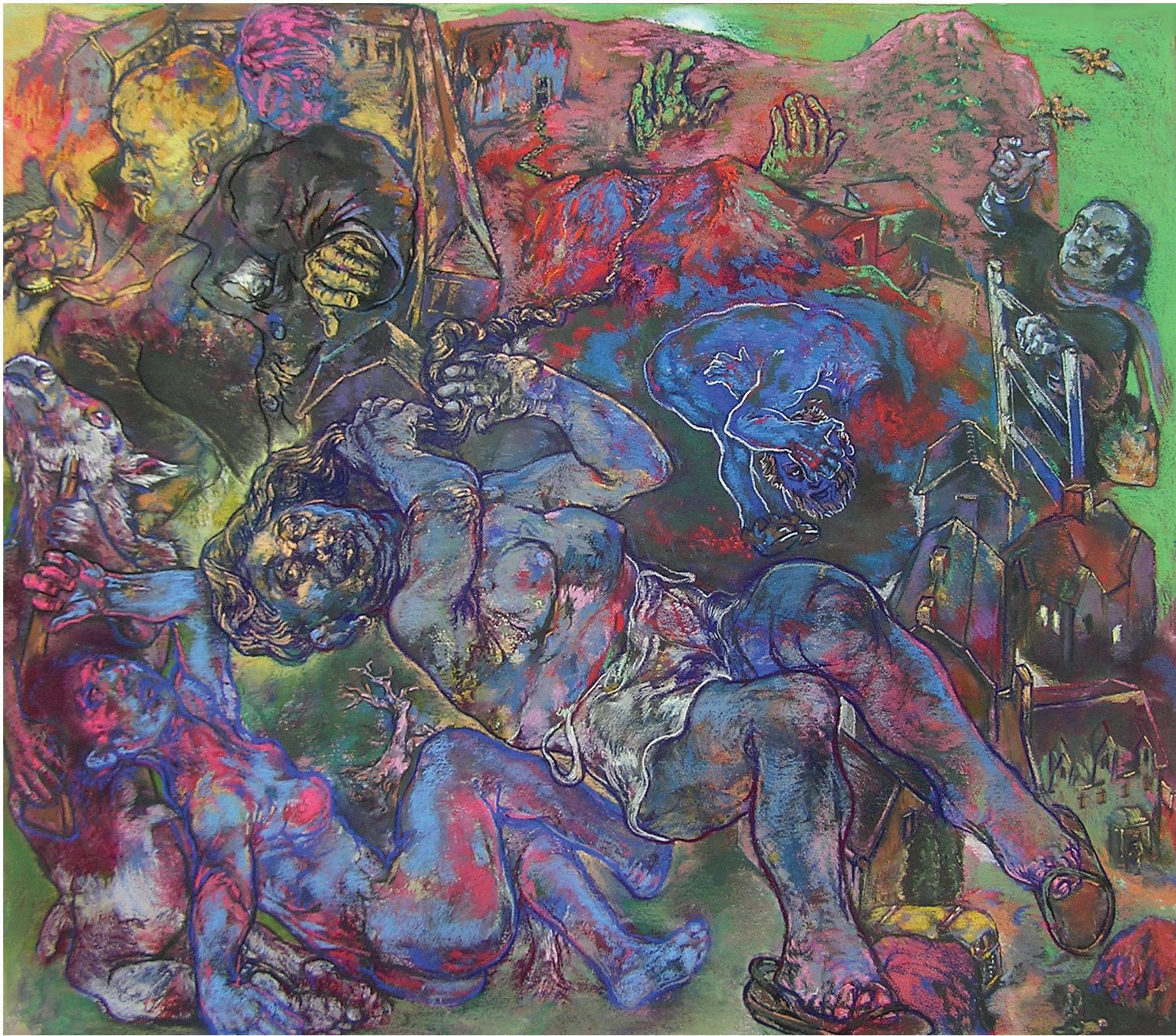
Dei ex Machina 2005 pastel on paper 45”x54”
Immaculate Misconception 2005 pastel on paper 45”x54”
Artist Statement
The futility of the creative process: scribbling, scraping, re-scribbling, inverting, wiping, dismembering, re-inverting, erasing and again erasing to finally coax images from the brute stupidity of colored dust is hardly compensated by any show of gratitude on the part of these images. Instead they threaten at any moment to dissolve or re-congeal, to stop pretending and reveal the hoax. At best they dust themselves down and loudly proclaim themselves to be clichés, outdated symbols, all too obviously archetypal.
Eschewing their creator’s methodology these images that yet fresh images can’t seem to beget disown the type of originality that might be scoured from the depths of a post-Freudian unconscious, the notion that behind or beneath their appearance there might be a latent content, - what do they care about ‘latent content’? Instead they enact a drama out of the failure of these very expectations albeit at the expense of some of their creator’s most cherished ideals.
Like Hari, the mind-born heroine of Tarkovsky’s “Solaris”, they demonstrate remarkable self-awareness, they seek to know themselves and their ultimate ontological status. They wonder if they are “real people” or just the mental chimeras of the artist, if they are constrained by the conventions of a pictorial language or whether they have achieved a measure of autonomy.
These images, now clearly personalities, comprehend their own iconographic precedents and exploit them. The children of Saturn start to bite back, Venus disfigures herself to avoid being stereotyped and the God of Michelangelo’s ceiling refuses to acknowledge his creation and absconds through the upper edge of the picture. The artist himself receives rough treatment, transformed into a piano playing pig-fox hybrid in “Cadenza” and a defunct generalissimo in “Chronos”.
Paradoxically the images’ self-doubt is also their self-awareness and their story ceases to be a fantasy of their creator’s unconscious, and becomes an autonomous universe, in which they are to a large extent the authors of their own destiny, seeking the hand of God in unlikely situations, only to demonstrate his superfluity. For the artist it is left only to wonder if these personalities themselves have an unconscious, (individual or collective) from which they might create their own images and if those in turn might also be similarly endowed, thus creating generations of nested worlds each charting the artistic Odyssey of its predecessors.
David Olivant
Education
1984 M.A. Painting. Royal College of Art, London, UK
1977 B.A. Art. Falmouth School of Art, Falmouth, UK
Teaching
1995-present California State University, Stanislaus, Turlock, CA
Professor of Painting
1992-1995 Southwest Texas State University, San Marcos, TX, Lecturer in Foundations
2001 “Towards the Door We Never Opened,” University Art Gallery, California State University, Stanislaus, Turlock, CA
1999 “World Not World,” Fresno Art Museum, Fresno, CA
1996 “David Olivant”, University Art Gallery, California State University, Stanislaus, Turlock, CA
1995 “David Olivant”, Art Heritage Gallery, New Delhi, India
1994 “Watercolors from the Aspen Series,” Stephen Solovy Fine Art, Chicago, IL
1992 “David Olivant”, Stephen Solovy Fine Art, Chicago, IL
1991 “David Olivant”, Stephen Solovy Fine Art, Chicago, IL
1990 “David Olivant”, Center for International Contemporary Art, New York, NY,
1997 “David Olivant”, Art Heritage Gallery, New Delhi, India
Selected Group Exhibitions
2002 “Art Department Faculty: Valley View” University Art Gallery, California State University, Stanislaus, Turlock, CA
1997-1999
“Last Dreams of the Millennium,” Art Museum, University of Hawaii, Honolulu, HI; Tyler Museum of Art, Tyler, TX; California State University, Fullerton, Fullerton, CA; University Art Gallery, California State University, Stanislaus, Turlock, CA
1997 “Two From Britain”, Pomona Art Gallery, California State Polytechnic, Pomona, CA
1995 Archer M. Huntington Art Gallery, University of Texas, Austin, TX
1993 Haggerty Art Museum, Marquette University, Milwaukee, WI
1990 French Institute, Stockholm, Sweden
Work in Public Collections
Archer M. Huntington Art Gallery, University of Texas, Austin, TX Art Institute of Chicago, Chicago, IL
British Council, London, U.K.
Haggerty Museum of Art, Marquette University, Milwaukee, IL
Gordon Senior
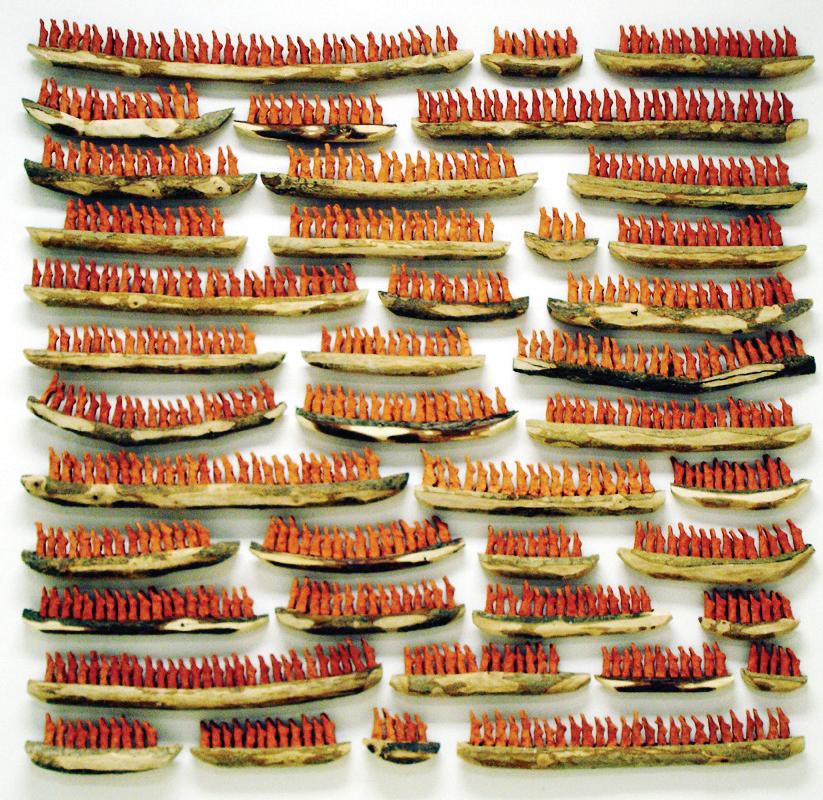
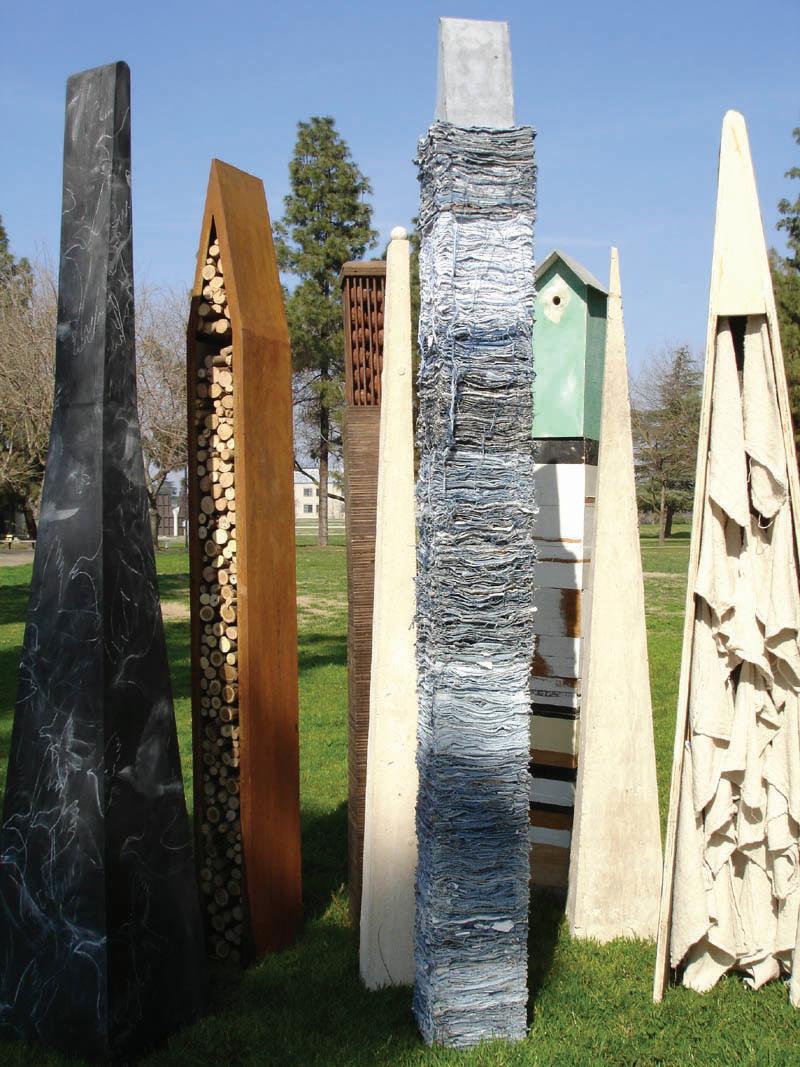
Hare Fleet 2006 ceramics, wood installation
Artist Statement
Thoughts and Observations on the work of Gordon Senior.
“Once you have lived on the land, been a partner with its moods, secrets, and seasons, you cannot leave. The living land remembers, touching you in unguarded moments, saying, I am here. You are part of me.”
Ben Logan, The Land Remembers.
“Gordon Senior’s work is concerned with nature. Often the work engages the viewer in the processes of change and regeneration. His work focuses on images of creatures / animals, hand tools, and collections of nature related objects.
Hare Fleet, 2006 directly reflects the artist’s move from his homeland to the Central Valley in California. In this piece we are presented with a group of thin vessels carved from sycamore branches in which stand, in carefully ordered rows, small, terracotta, clay hares gazing past the front of the voyaging craft into the unknown. The hare has inhabited Senior’s work before being used both as a metaphor for the artist himself, for his journey through life, and as a symbol of wildness and freedom.”
Eleanor Wood, 2006.
In 1849 John Muir made the thirty-eight day voyage from Britain to New York. With his father and others he was fleeing economic and social upheaval and industrialization’s impact on life in Britain. He was ten years old.”
In a recent review of Senior’s work David Olivant wrote:
“Senior has thus transformed uncertainty into invention and has charted the process in his recent series of object groups. In some he converts what is natural to his past into the form of his present and in others he transposes the objects of his present environment into a language of nostalgia for his former existence. Towers is a monument that embodies both of these practices. The eight structures of which it consists loosely conform to the skyscraper format, but through transpositions of materials and scale and utility they stand as testaments to a re-jigged nostalgia, a hybrid of memory and innovation in which the artist can cast the old forms into new molds. It is the signal achievement of Senior’s recent work to have invigorated the tendency to nostalgia in his earlier work, by exploiting the necessity of his current cultural alienation, and thus creating a potent meditation on the nature of memory as well as a subtle critique of multiculturalism.
Gordon Senior
Education
1963-1964 Goldsmiths’ College, London University: ATC.
1962-1963 Leeds College of Art: Post Diploma in Art and Design.
1960-1962
Leeds College of Art: National Diploma of Design.
1958-1960 Wakefield College of Art: Intermediate Diploma in Art and Design.
Teaching
2002- California State University, Stanislaus, Turlock, CA, Chair-Department of Art
1997-2002
1990-2002
Norwich School of Art and Design, UK, Course Leader MA
Norwich School of Art and Design, UK, Course Leader BA (Hons)
1998-1990 Northumbria University, Newcastle, UK, Head of Art
1986-1990 Northumbria University, Newcastle, UK, Head of Painting
1984-1986 Northumbria University, Newcastle, UK, Second year Painting Tutor
1966-1984 Northumbria University, Newcastle, UK, Head of Printmaking
1964-1966
Solo Exhibitions
Clarendon College of Further Education, Nottingham, UK, Fine Art Lecturer
2007 “Standing on Earth” Truckee Meadows Community College, Main Gallery, Reno, NV
2006 “Ground Work” Greenleaf Gallery, Whittier College, Whittier, CA
2005
“About This Earth” University Art Gallery, California State University, Stanislaus, Turlock, CA
“Gordon Senior”, Parks Exhibition Center, Idyllwild Arts, Idyllwild, CA
1999 Kelling Arts Festval, Kelling, UK
1996 Grizedale Centre. Grizedale Forrest, UK
1995 Norwich Gallery, Norwich, UK
Hardware Gallery, London, UK
Group Exhibitions
2006
2005
“Eight Hours Difference” Peter Scott Gallery, Lancaster University, Lancaster, UK
“Just Visiting” Huntington Beach Art Center, Huntington Beach, CA
2004 “Valley View” University Art Gallery, California State University, Stanislaus, Turlock, CA
2001
Objects in Contemporary Practice, Carnegie Arts Center, Turlock, CA
“Down to Earth” Salthouse Church, Norfolk, UK
“ The Hare” Gysing Arts Centre, Suffolk, UK
International Festival of Light, Westonbirt Arboretum, Curated by Lyn Cluer Coleman, Westonbirt, Gloustershire, UK
2000 “Drawing Connections” Beach Gallery, Kansas, KA
“Strands” I Gallery, Chicago, IL
“Strands” Gettysburg College Art Gallery, Pennsylvania, PA
“Drawing Connections” John Innes Centre, Norwich, UK
1998 Penrith Regioal Art Gallery and Lewers Bequest, NSW, Austrailia
“Inversions” Stroud House Gallery, Gloustershire, UK
‘View Points’ ArtsWay Gallery, Hampshire, UK
“Tree of Life” The Centre for Life Newcastle-Upon-Tyne, UK
“Vauxhall Gardens’ Norwich Gallery, Norwich, UK
‘’Sticks’ ArtSway Gallery, a Southern Arts touring exhibition, Hampshire,UK
1997 ‘Picture This’ Norwich, UK
Newcastle Regional Gallery,NSW, Austrailia
1996 “Weather View, Norwich-Den Haag” Koninkijke Gallery, Den Haag, Netherlands
‘’The Hare’ Leicester City Art Gallery, Leicester, UK
‘’Conversations’ Contact Gallery, Norwich, UK
Collections
The Crocker Museum, Sacramento, CA
The Darlington Collection, Darlington, UK
Northumbria University, Newcastle-Upon-Tyne, UK
Wakefield City Art Gallery, Wakefield, UK
Leeds Schools Loan Scheme, Leeds, UK
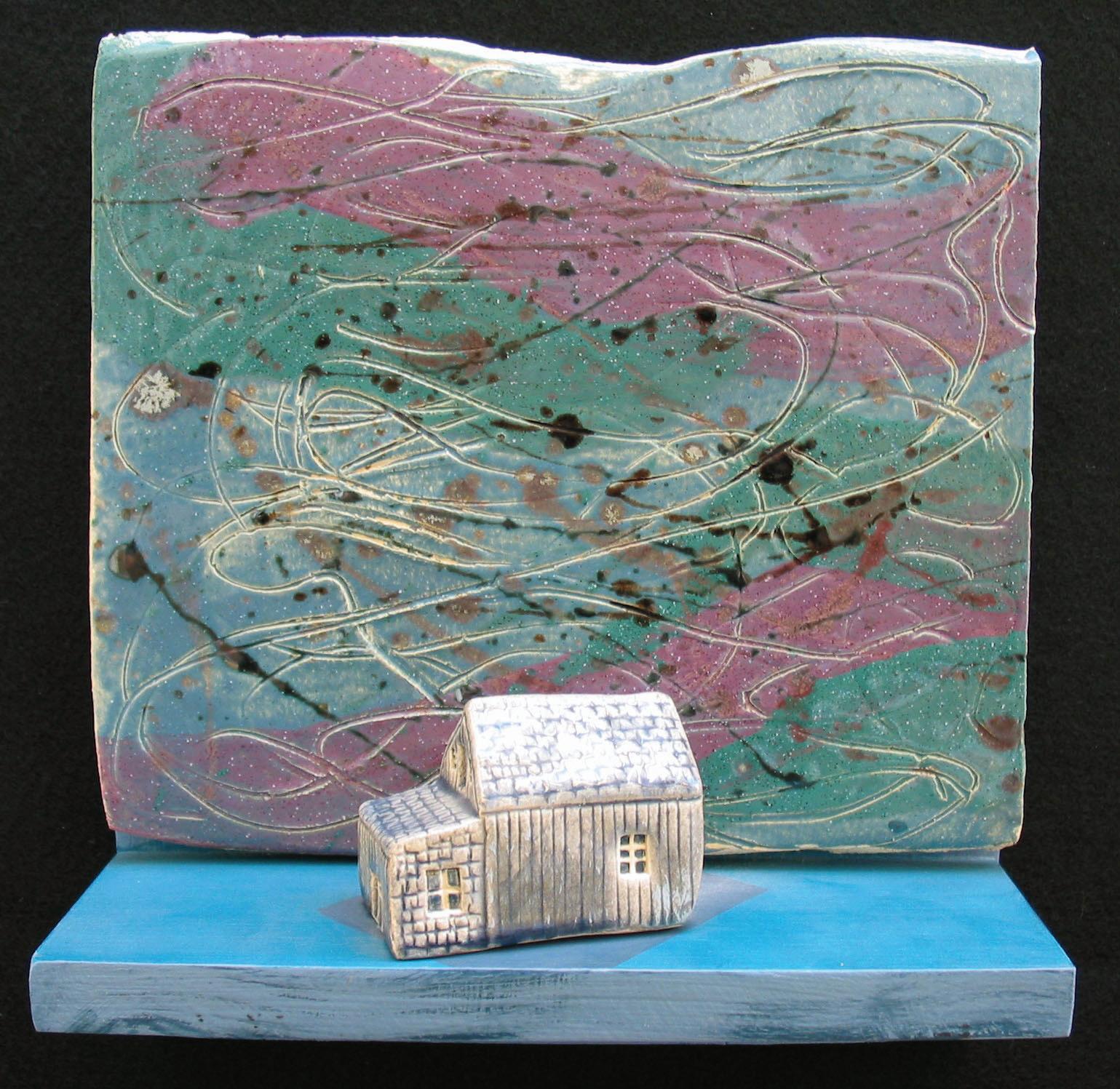
The Artists’ House Series: Jackson Pollock’s House, East Hampton, Long Island 1994 ceramics
Hope Werness
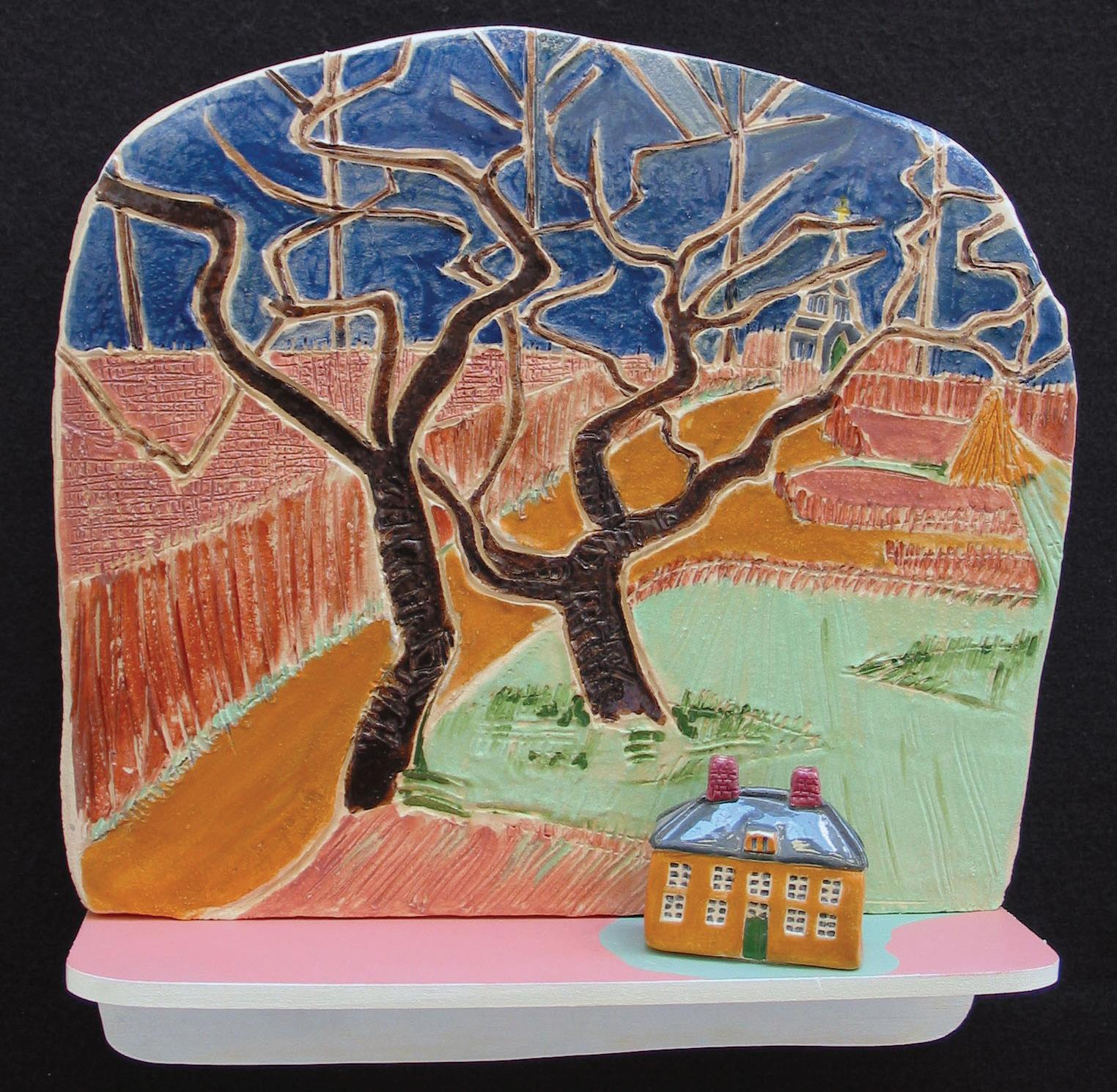
The Artists’ House Series: The Van Gogh Family Vicarage, Nuenen 1994 ceramics
Artist Statement
As an Art Historian and “frustrated” artist, I like to make things. As an undergraduate studio art major, my professors encouraged me to consider careers teaching high school or designing wallpaper. Neither appealed, so I went on, without thinking too much about the consequences, and obtained first an MA and then a PhD in Art History. During my early years of teaching, when it was necessary to focus on academic work in order to get promoted, I missed making things. Then, after I was promoted to Full Professor, I allowed myself to begin making things again.
I may be more of a craftsperson than an artist, but making things is both important and necessary to me now—I can’t do without it. I tend to work in series, and the work often relates to the research I’m engaged in at the moment. The Artist House series is one such body of work. The initial impetus came from research for a book proposal on the subject. It turned out, however, that publishers were uninterested in the project—they judged it to be too expensive to produce in relation to the potential market for the book. Having gathered five or six dozen documentary photographs of artists’ houses, with the idea that their personalities were reflected in their homes, possibly even some residue remaining there, as it did in their works, I felt the need to make use of the research. Thus, I took up clay and made a series of small houses backed by plaques inspired by the artists’ works. The series dates to the early ‘90s, but I continue to be interested in the topic—do we ever really change? I have begun work on a little book on van Gogh’s various domiciles. That lonely man drew and painted the places he lived more than any other artist I know of. They show his evolution as an artist as well as embodying is deepest feelings.
At any rate, making things provides a balance for me—a right-brain extension of the left-brain work of scholarship that enriches both sides. I feel most fortunate to have the time, conditions, and luxury to pursue these interests of mine. And, besides, it’s just plain fun!
Hope B. Werness
Education
1968-1972
University of California, Santa Barbara, Santa Barbara, CA, Ph.D.
1965-68 Tulane University, New Orleans, LA, M.A.
1963-65
University of California, Santa Barbara, Santa Barbara, CA, B.A.
1961-63 Occidental College, Pasadena, CA
Teaching
1976-present California State University, Stanislaus, Turlock, CA
Professor of Art History
1975-1976 San Jose State University, San Jose, CA
Visiting Lecturer of Art History
1969 Santa Barbara City College, Santa Barbara, CA
Visiting Lecturer of Art History
Solo Exhibitions
2005 University Art Gallery, California State University, Stanislaus, Turlock, CA
2004 “Art Department Faculty: Valley View,” University Art Gallery, California State University, Stanislaus, Turlock, CA
2001 “California State University, Stanislaus Art Faculty,” Art Space Gallery, Fresno City College, Fresno, CA
“The Art of Tile Show,” SMUD Gallery, Sacramento, CA.
2000 “The Little Prince,” Villa Montalvo, Los Gatos, CA, Grand Prize winner
1998 “Juried Show and Sale,” Turlock City Arts Commission, Carnegie Center for the Arts, Turlock, CA
1997 “Clay ’97,” University Art Gallery, California State University, Stanislaus, Turlock, CA
1995 “High Sierra Pack Trip: Grant Lakes,” University Art Gallery, California State University, Stanislaus, Turlock, CA and Yosemite Museum, Yosemite, CA
1995 “High Sierra Pack Trip: Grant Lakes,” University Art Gallery, California State University, Stanislaus, Turlock, CA and Yosemite Museum, Yosemite, CA
1993 “Art of California Competition,” Fresno Art Museum, Fresno, CA, Bronze Award
“Two-Person Exhibition,” Turlock City Arts Commission, Carnegie Center for the Arts, Turlock, CA
1991 “California State Fair, California Fine Arts,” Sacramento, CA, Award of Merit
Acknowledgements
California State University, Stanislaus
Dr. Hamid Shirvani, President
Dr. William Covino, Provost/Vice President of Academic Affairs
Mr. Daryl Joseph Moore frsa, Founding Dean, College of the Arts
Ms. Rebecca Abbott, Interim Vice President for University Advancement
Mr. Gordon Senior, Chair, Department of Art
Department of Art
John Barnett, Professor Emeritus
Dean De Cocker, Associate Professor
Jessica Gomula, Assistant Professor
David Olivant, Professor
Dr. Roxanne Robin, Professor
Richard Savini, Professor
Gordon Senior, Associate Professor
Dr. Hope Werness, Professor
Lauris Conrad, Administrative Support Assistant
Christian Hali, Instructional Support Tech II
This catalog is dedicated to our friend Bob Varin (19XX - 2007)