DANIELLE PETERS SACRED BLUE

Student Collaborators
Jamilee Amaya
Rosalinda Boyette
Janet Diaz
Keira Henderson
Victoria Johnson
Hannah Noonan
Rocio Nuno
Richard Onochie
Oliver Robles
Taylor Sanchez-Freas
Anthony Silva
Cristal Tadeo
Jeannie Tran
University Art Gallery Department of Art
School of the Arts
California State University Stanislaus
300 copies printed
Danielle Peters: Sacred Blue
October 20 - December 22, 2014
University Art Gallery
School of the Arts
California State University Stanislaus
One University Circle Turlock, CA 95382
This exhibition and catalog have been funded by:
Associated Students Instructionally Related Activities, California State University Stanislaus
Copyright © 2014 California State University Stanislaus
All rights reserved. No part of this publication may be reproduced or transmitted in any form without the written permission of the publisher.
Catalog Design: Nic Webber, School of the Arts, California State University Stanislaus
Catalog Printing: Claremont Print, Claremont, CA
Catalog Photography: Courtesy of the artist.
Sacred Blue in progess images (pgs. 23-24), Sandi Amaral and Nic Webber
Photographs included are used under the permission of the artist.
ISBN: 978-1-940753-07-2
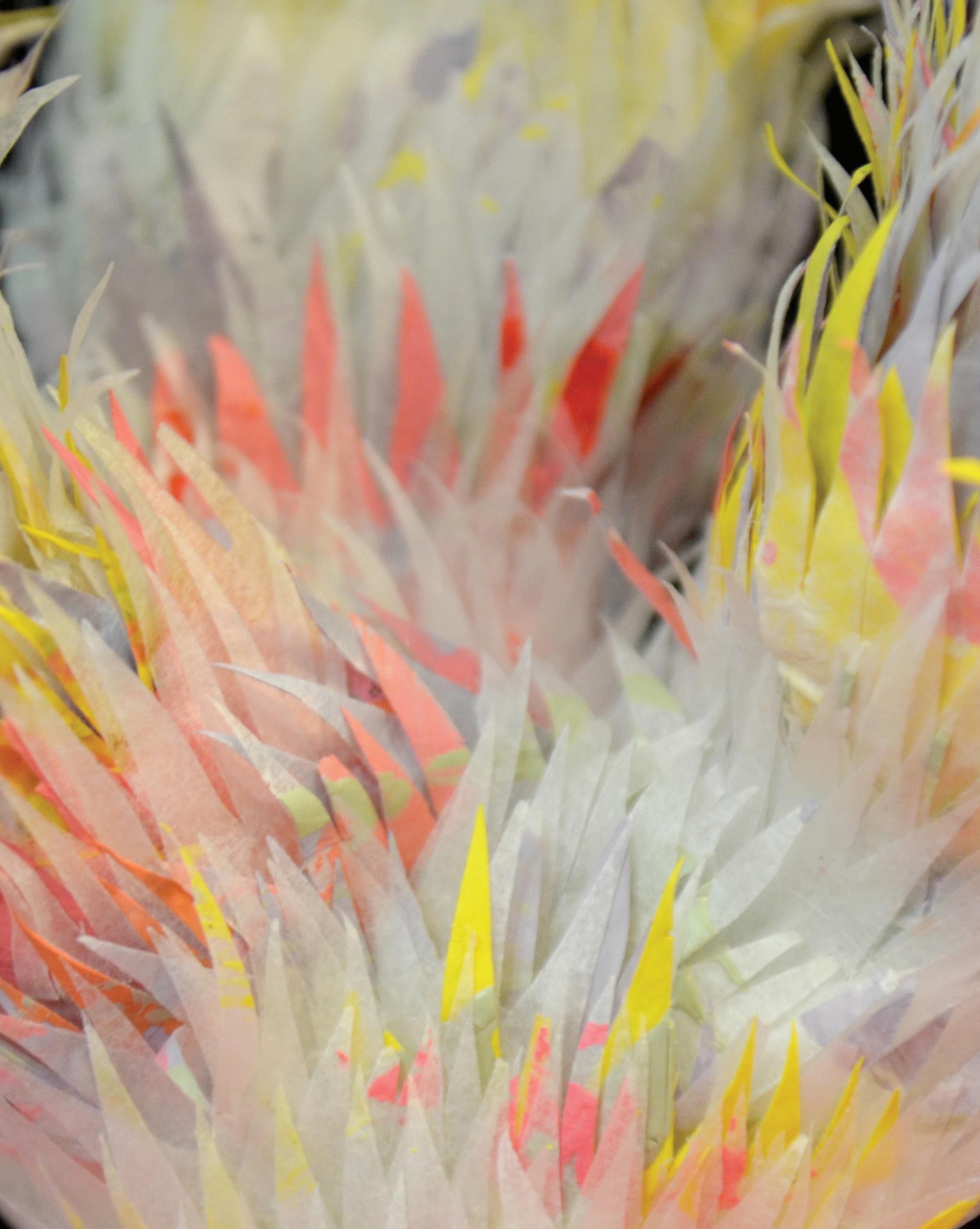
Cover Image: 2014, Succulents I, detail, cut paper
Sacred Blue represents a chance to view the amazing work of Danielle Peters. While working in a vast array of medias and in collaborations with other artists, Danielle creates works that move the viewer into a different realm. Her work creates a sense of excitement that allows the viewer to be truly astonished by her abilities as an artist. Her exhibitions and performances have been in many presitigous venues and have met with wide critical acclaim.
As a visiting lecturer at California State University, Stanislaus, Danielle has had a far reaching positive effect on our students, faculty, and now with this exhibition, the rest of our community. I am very excited to be able to exhibit her work for others to enjoy.
I would like to thank the many colleagues who have been instrumental in presenting this exhibition. Danielle Peters for the opportunity of exhibiting her wonderful work, Dana Self for the perceptive composition, the Department of Art Student Collaborators, the College of the Arts, Humanities and Social Sciences at California State University, Stanislaus for the catalog design and Claremont Print and Copy for the printing of this catalogue.
Much gratitude is also extended to the Instructionally Related Activities Program of California State University, Stanislaus, as well as anonymous donors for the funding of the exhibition and catalogue.
Dean De Cocker, Director
University Art Gallery
California State University, Stanislaus
For artist Danielle Peters, the interior of our bodies is territory for discovery, akin to the earth’s layered interior. Her two and three-dimensional works and performances examine micro and macrocosmic relationships, turning inward and outward, highlighting symbiosis between all things, including the physical and metaphysical realms. She finds influences from music, dance, meditation and nature.
Through her intricate and meticulously joined cut outs, she suggests a magical portal to an interior place, whether it is within the body, the psyche or the earth. Human arteries represent the duality of the human body as resilient, yet fragile. They seem infinitely explore-able, suggestive of a system of caves, and yet they exist within a finite corporeality. Peters’ works marry the patterns and systems she finds hidden within the body and within the geographical world outside of the body.
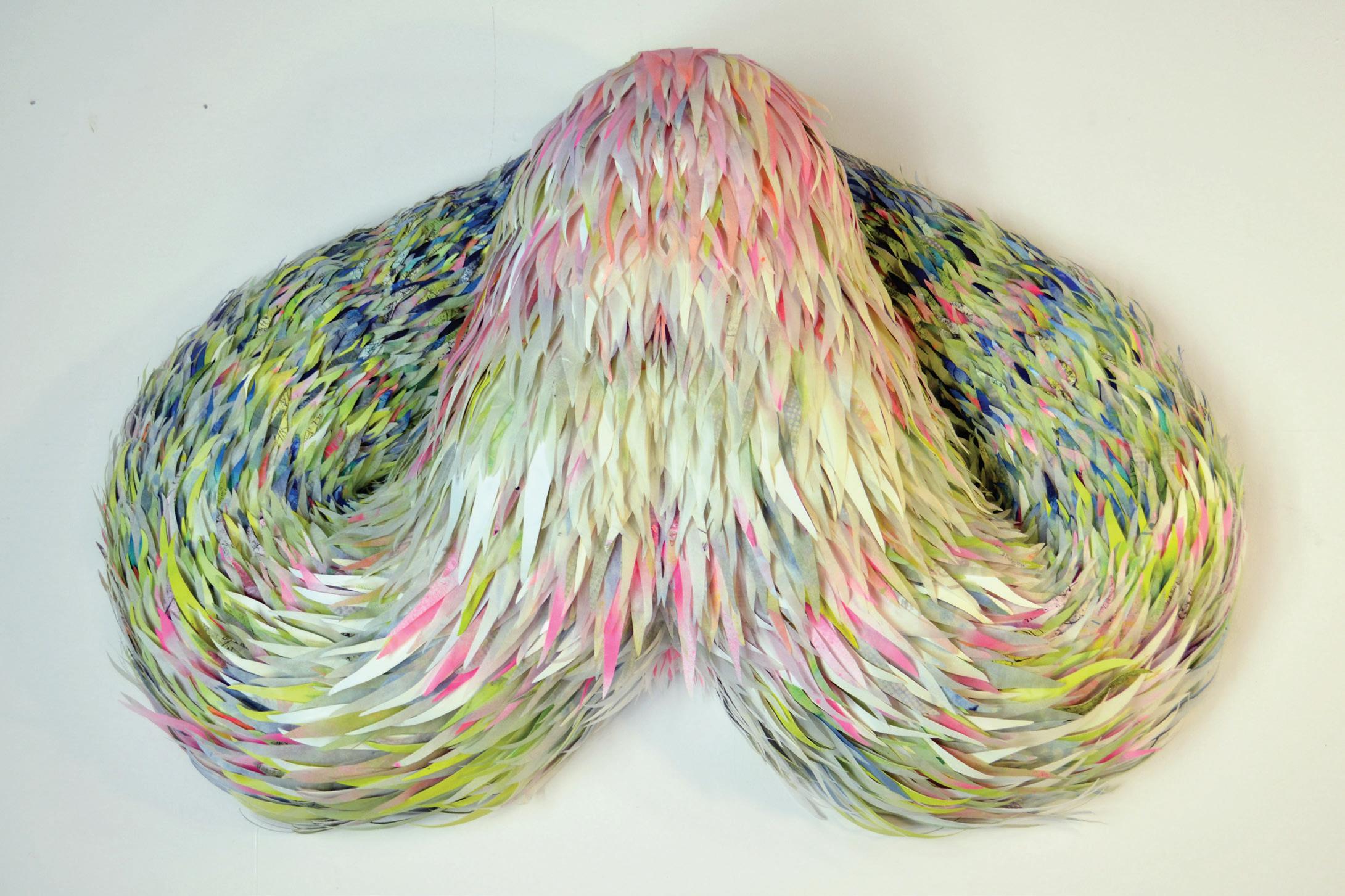
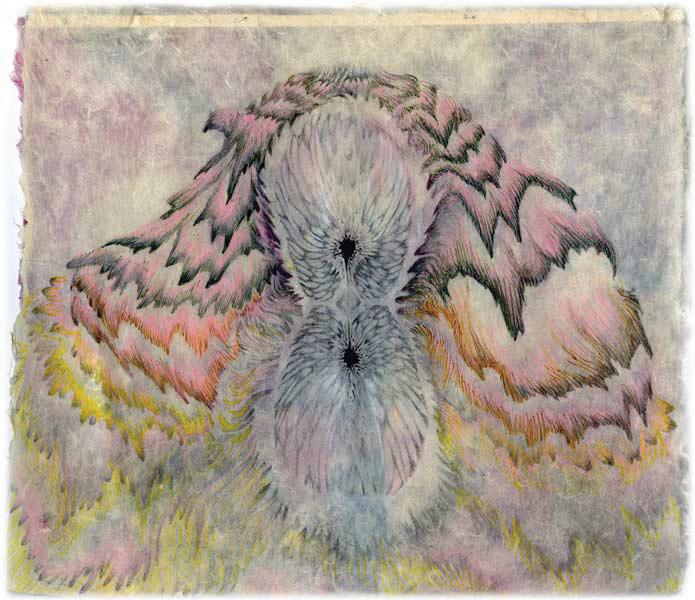
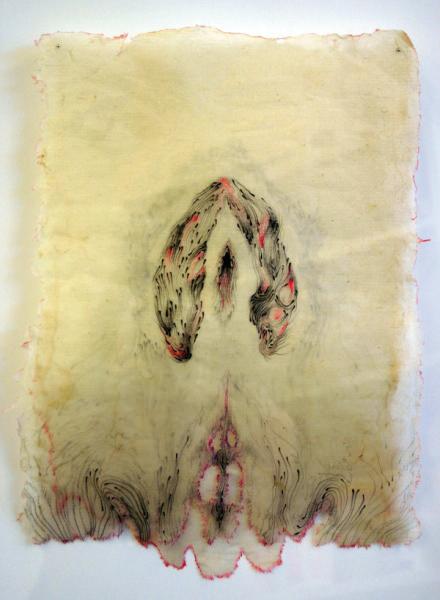
Her small drawings are suggestive of the most intimate parts of our human anatomy. They are underscored by titles such as Blowing Out Prophesies at Both Ends and Knowledge Behind Clenched Hole, yet the drawings have a particular mystical quality. The pastel colors and abstract lines emanating from central orifices feel otherworldly and yet straightforwardly anatomical. She balances the creative tension between these two ideas through her material choices and through the images’ ultimate ambiguity. The sculptures and drawings from the series Orifices and Apparitions broadly suggest the open/closed places of human, animal and vegetal anatomy. Furry and dense, secretive and exposed, the layers of multi-hued paper invite us in, yet are often coiled in defensive postures. No matter the method, Peters is continuously exploring the idea of portals between two otherwise separate worlds, whether bodily, culturally, geographically or spiritually.
Peters minored in Art History and received her B.F.A. in Printmaking from the University of Kansas in 2009. In the Spring of 2009 she studied printmaking in Seoul, Korea at Hongik University. She received her M.F.A. in Printmaking from the University of Georgia in 2013. She has exhibited work across the U.S. and internationally: Alberta, Canada; Tokyo, Japan; Seoul, Korea; Buenos Aires, Argentina; and Cairo, Egypt.
Dana Self
Kansas City Collection
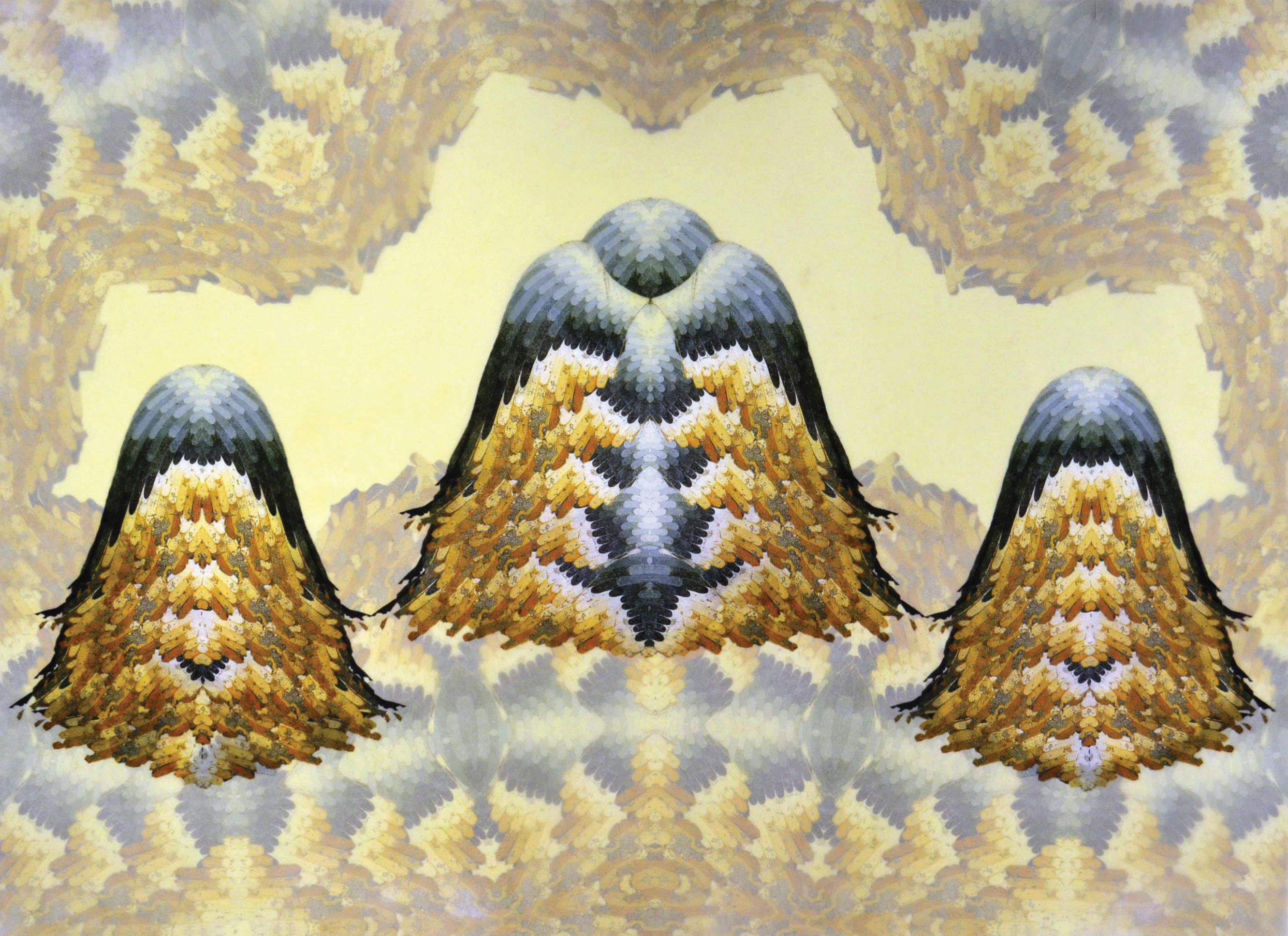
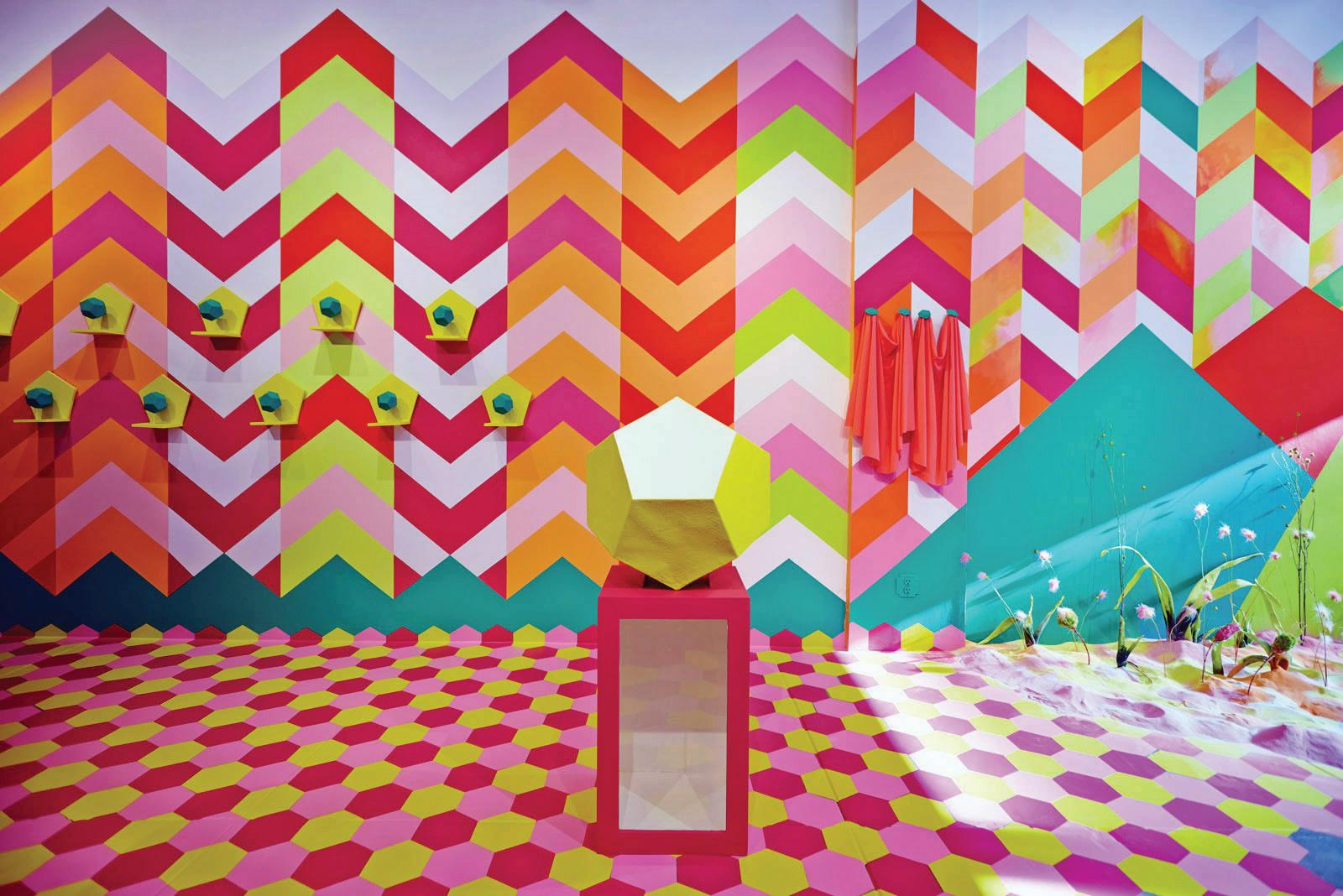
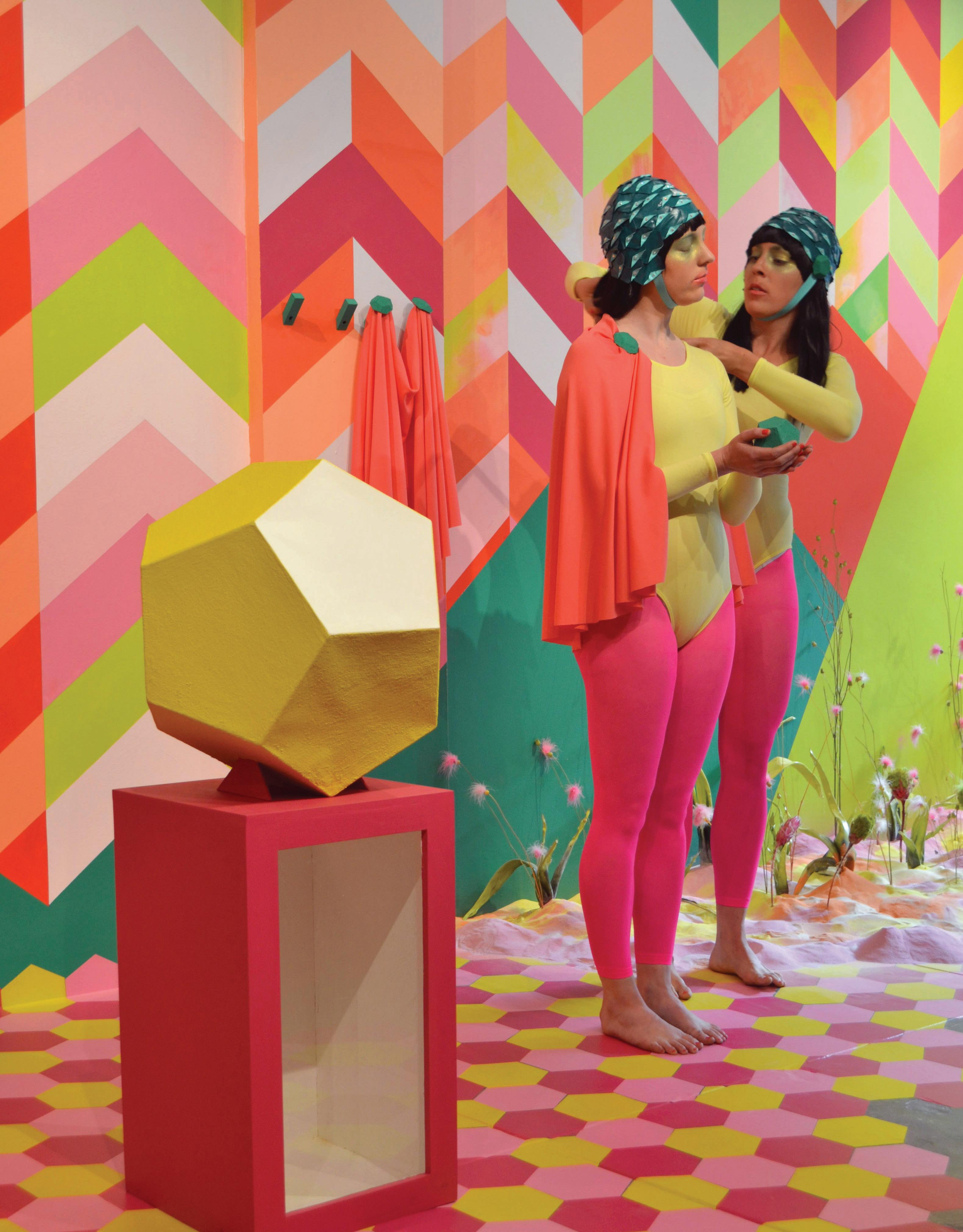
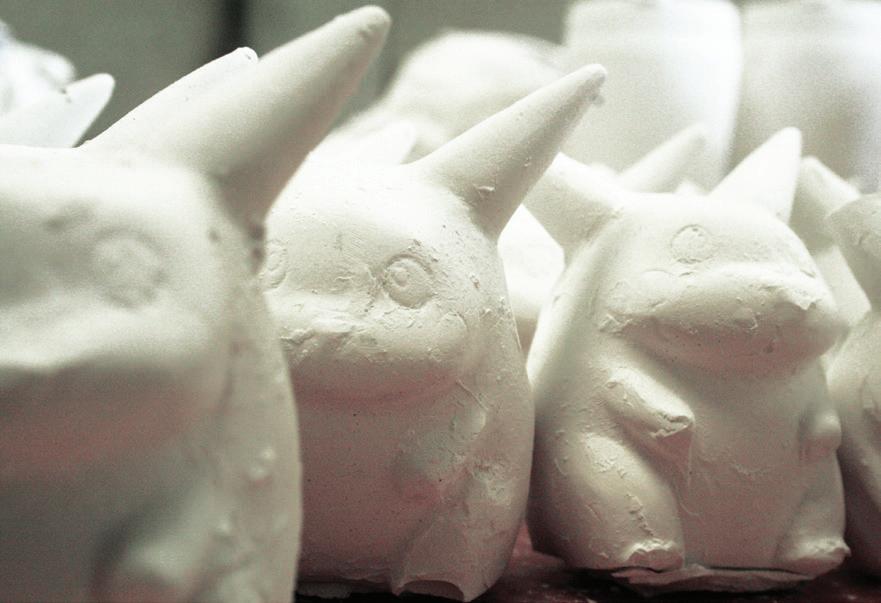
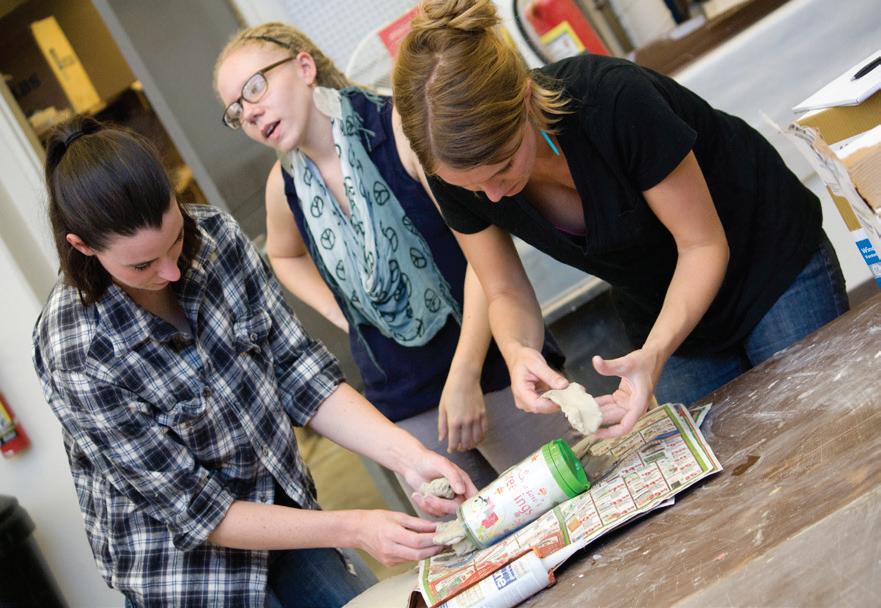
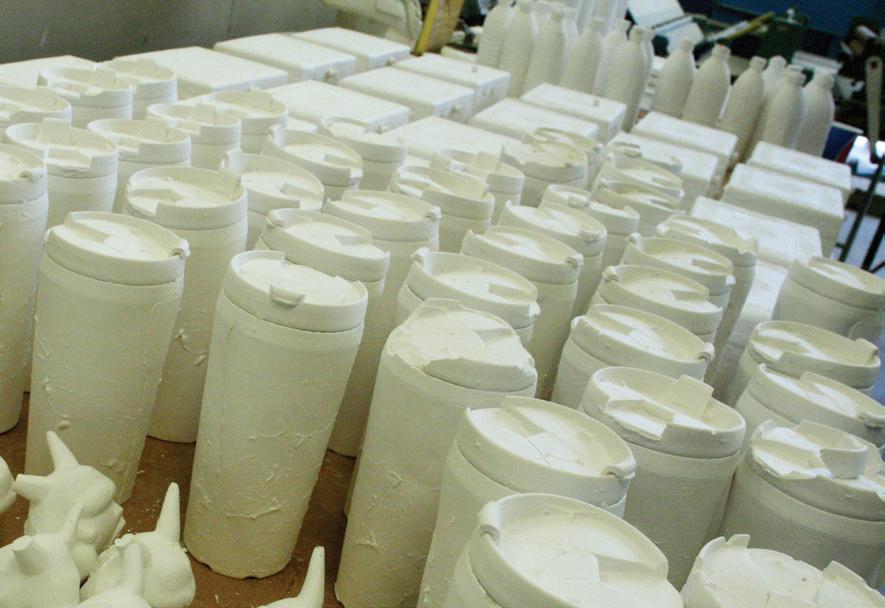
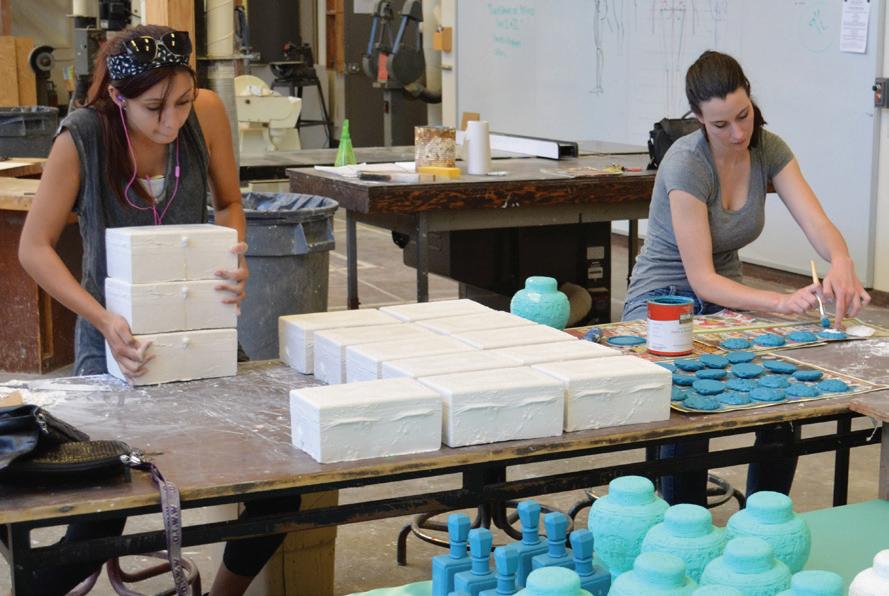
Sacred Blue mimics the various systems that societies develop in order to encourage diverse individuals to function together as a whole. In this collaborative work, participants are challenged to function both as individuals and as parts within a collective. In the initial stages of the installation process, collaborators designate sacred status to ordinary objects existing within their everyday lives.
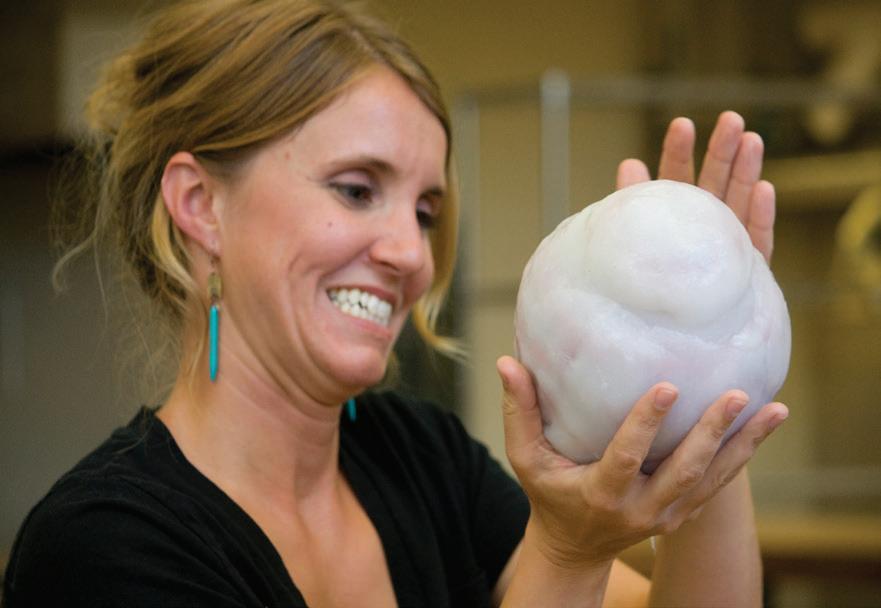
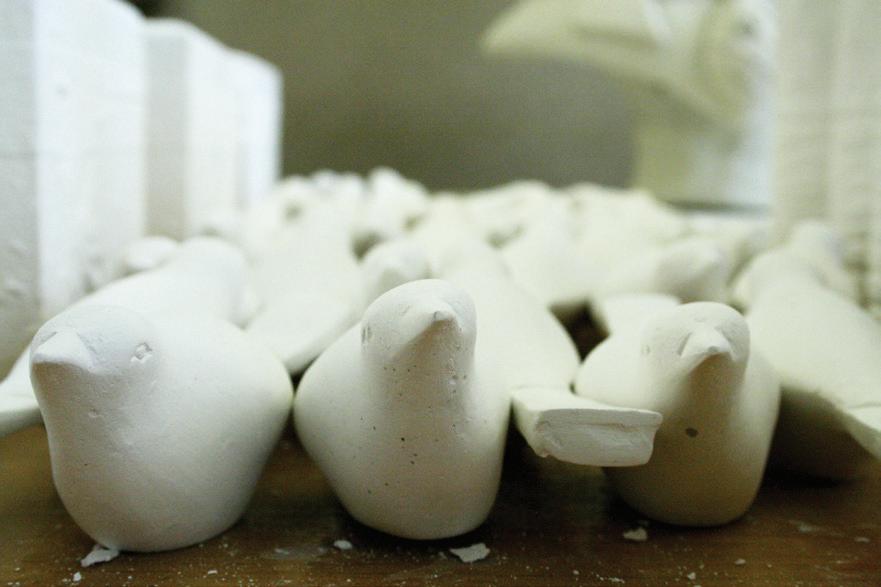
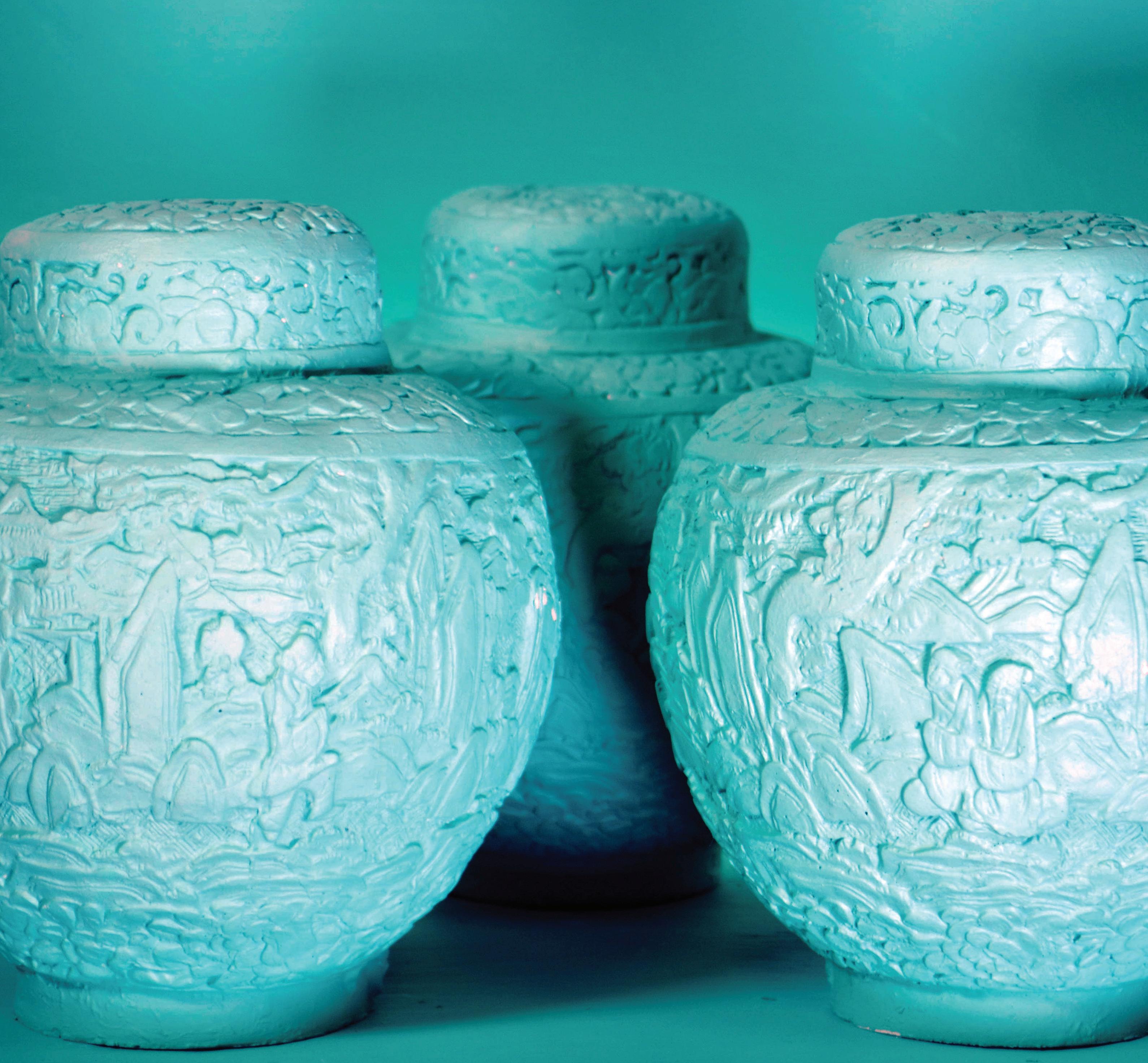
Through the act of mold making, each of the 14 collaborators creates multiple casts of their object of attachment, whether it be a cigarette carton or Q-tip dispenser. The resulting sculptures are painted various shades of blue and arranged like totems within a large installation that represents the collective conscience. The original objects are displayed in an adjacent room, each one standing for the individual to whom it belongs. Stemming from sociologist Emile Durkheim’s theories on the sacred and profane, Sacred Blue illustrates that by setting apart objects and values as sacred we aim to unite as a society.
Sacred Blue
Danielle Peters
Installation, University Art Gallery, California State University, Stanislaus October 2014
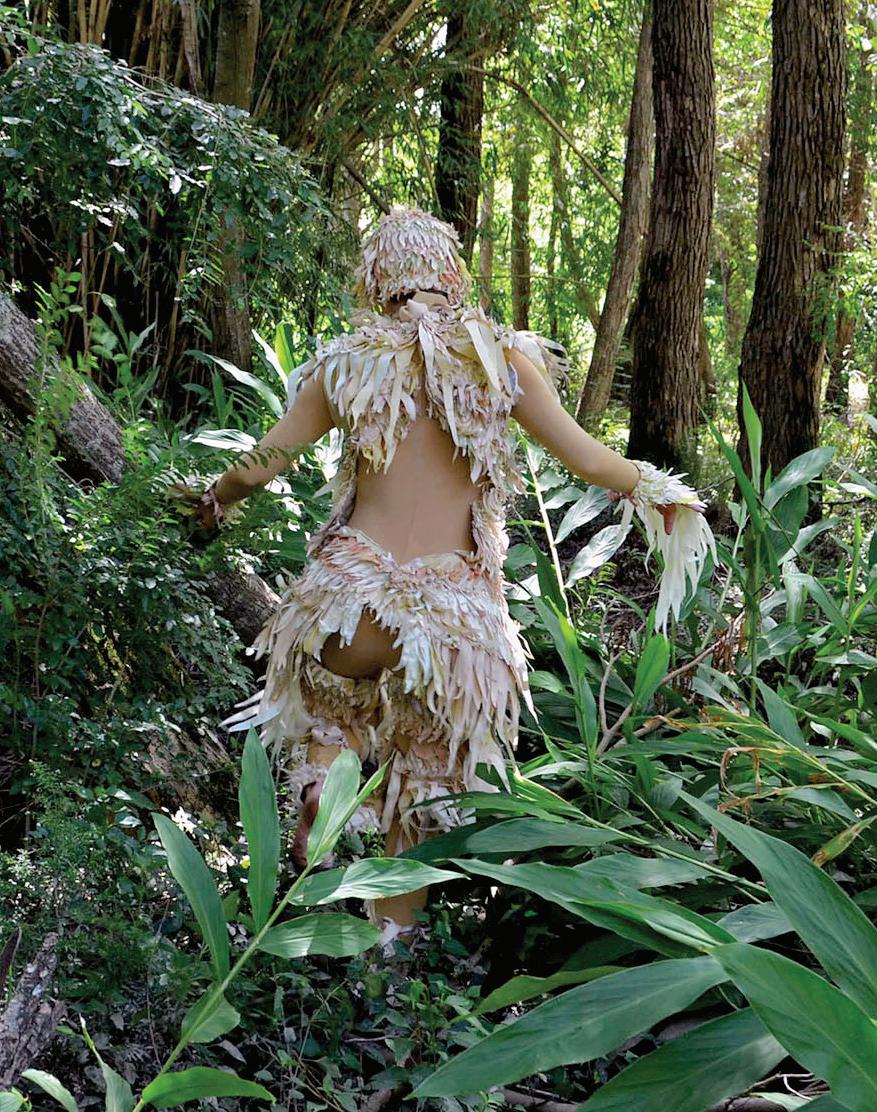
Everything we see is made up of separate parts that fit together through molecular bonds, repetitive motions and interlocking shapes. I attempt to grasp the intricacy involved in these micro and macro systems by layering thousands of hand cut paper pieces to construct sculptures, installations and costumes. Heavy patterning and textures cover each surface, hinting at corporeal substances like hair, fluid and tissue. Soft lighting and a palette of florescent pastels create somnolent atmospheres and objects that ignore the reality of the body in preference of a cleaner, idealized perception of its inner workings.
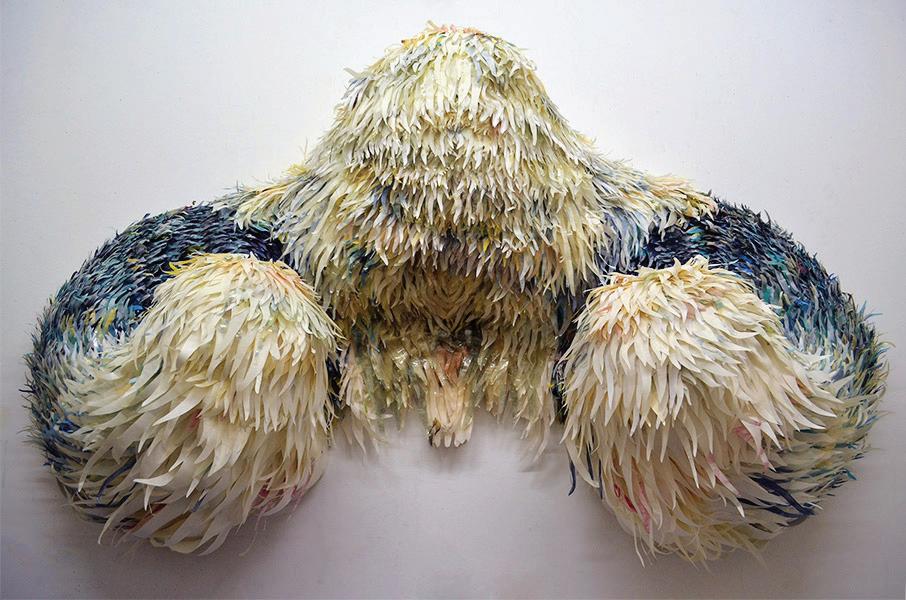
Writhe, as seen on page 16, is an example of this clean hybrid body. Plush mutant or upside-down ovaries, the identity of this object remains ambiguous. Its nature is also uncertain. While its center projects outward, sheltering the viewer like the eave of a Chinese Temple, the sides sweep inward like a riptide, suggesting both security and danger. The scale and symmetry of Writhe emit a sense of balance and possibility of wholeness. The negative space in the center suggests that the viewer is needed to complete its shape. This inviting form causes a mixed response from viewers who feel either comforted or threatened. Its giant arms make a welcoming gesture. Like the abominable snowman asking for a hug, Writhe bids the viewer to enter and become part it. However, it is unclear whether this merger would occur by means of embrace or consumption. It illustrates the occasion of separate entities merging together to create a larger unified form. Whether this blending leads to a harmonious coexistence or forced assimilation is open to interpretation.
Hybridity has long been an interest in the art world. Anthropomorphism has been a tool in art, religion and the sciences to help humanity better understand themselves in respect to the objects, animals and natural phenomena that surround them. The invention of the microscope and its development during 1890-1910 had a huge effect on the way designers viewed the world. This can clearly be seen in the decorative arts, fine art, and architecture of Art Nouveau. Artists interpreted the discoveries made in microscopy, cell theory, botany, neurology, psychology and evolution as proof that all forms of organic life share the same inner essence.
Fluidity and transformation became the key themes in the art of this time period. Ignoring Neoclassicisms high regard for structures based on conservative order, division and grids, Art Nouveau took a “Dionysian” approach to design. That is, in contrast to the “Apollonian” focus on restraint, detachment, and individuality the Art Nouveau philosophy dissolved the individual into a primal unity with others and with nature.
Endless curving lines and innovative material combinations (ceramic, brick, glass and iron) physically demonstrated this concept of absolute unity. Not only were materials combined, within the subject matter of Art Nouveau, humans transformed into plants and the cell itself could be seen in the process of mitosis, flowing into various shapes. Architecture and interior design, once meant to contrast with the organic, now integrated the systems of nature within their forms. This disillusionment of boundaries was emulated in all aspects of design.
Now in the midst of accelerating globalization made possible by the constant interchange available via the Internet, this theme of universal connection is more relevant than ever. Contemporary art
reflects this assimilation of culture. I particularly relate to the contemporary artists Takashi Murakami and David Altmejd. Murakami’s self titled style, “Superflat,” blends east and west, high art and low art and an array of colorful anime hybrids and body parts in gigantic installations, paintings, videos and commercial items. Similarly, David Altmejd’s installations and sculptures depict a world where teeth and hair grow off of rocks while crystals and plants sprout from hairy giants. Both artists create strange worlds where organisms are continually morphing and consuming one another. Whether faced with a dangerously sharp-toothed Mickey Mouse panda or a neon werewolf, it is clear that despite their glitz and bright colors these hybrid creatures are part of an invasive species and their condition is contagious. Whether depicting apocalyptic terror or primordial bliss, these invasive worlds have a powerful affect.
I am also interested in the passageways that connect our internal and external landscapes. In my drawings and sculptures, particularly in the series Orifices and Apparitions, all marks stem from a central aperture. I am fascinated by the small points of intersection between our ins and outs, these holes that allow substance, light, and sound waves to physically enter and exit us.
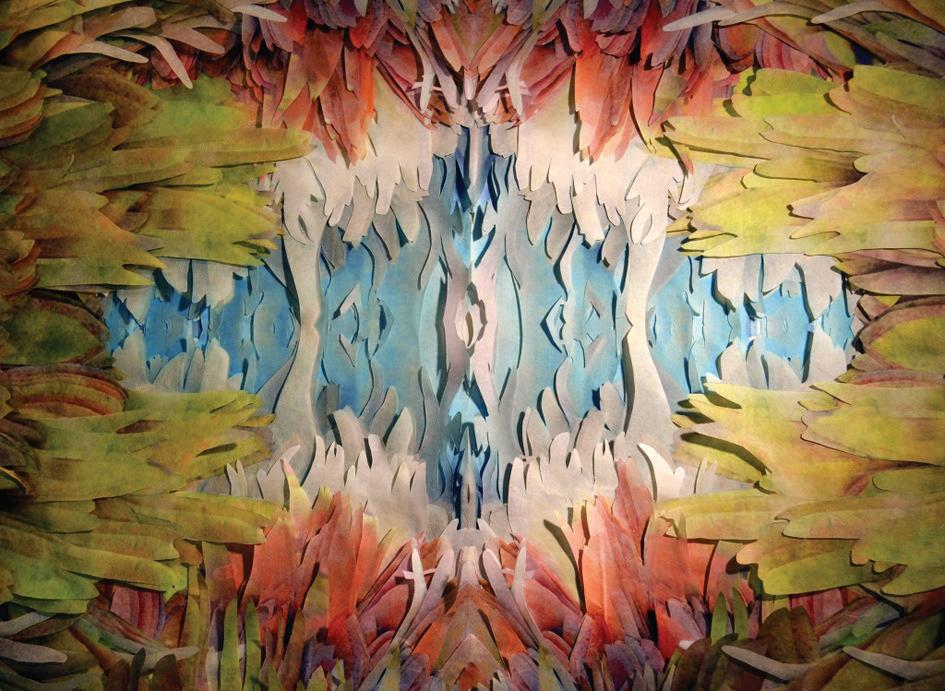
In Cave Diving I, as seen on page 9, the cavernous space depicted can be read as either a physiological or geological portal with the cutout shapes representing the cilia of a bodily lining or the stalagmites and stalactites of a cave entrance. I often use cut paper as a device to literally soften hard boundaries. The gradual descent into the cave’s mouth exemplifies this nebulous quality inherent in various forms of thresholds.
This notion of passage is analogous to food entering a mouth or an infant exiting the uterus. It is difficult to pin point the moment an entity goes from being part of the outside world to being part of the body; or conversely, when an entity separates from the body and becomes part of our environment. For a moment, the traveler or object is suspended between two worlds.
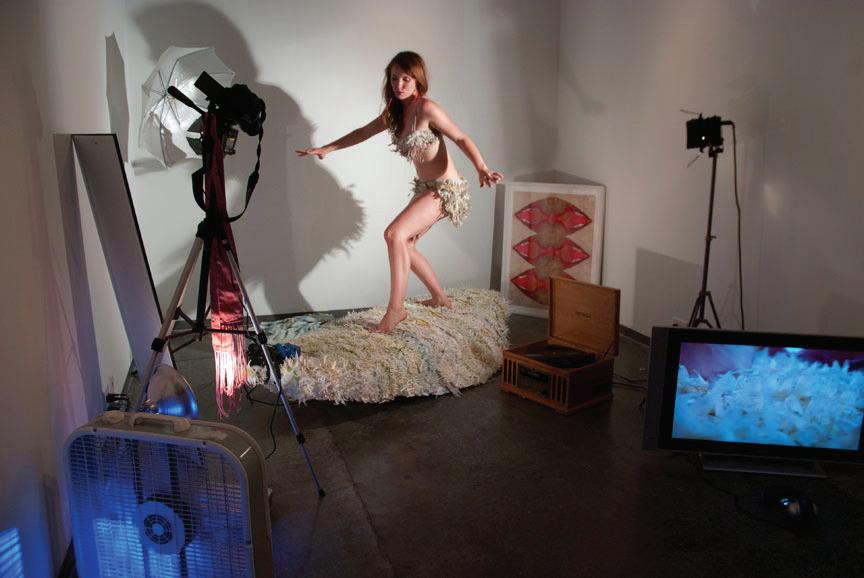
Through performance and video I explore instances of mutability: when actions and objects appear simultaneously solid and fluid, large and small, exposed and intimate. In my solo performances Drifter, as seen on page 13, and The Perfect Set, as seen on page 12, private experiences are on public display. Through the use of light, magnification, and amplification I illuminate sights and sounds that normally go unnoticed. In The Perfect Set, I surf a mechanical surfboard on a campy movie set among cameras providing live feed of close-ups of my body and amplified audio recordings of my sounds. I progress through a cycle that includes applying sunscreen, catching a wave, surfing and go-go dancing to a record by The Trashwomen. The audience is free to come and go as they please throughout the twohour performance. At first glance, the awkward display seems like nothing more than a superficial and flirty act of exhibitionism. However, a seat is made available for one viewer at a time to step away from the rest of the audience and put on a pair of headphones. This station offers the viewer an altered perception.
Here the spectator forms a more intimate connection with the activity that is taking place. Binaural microphones capture sounds otherwise unheard. Noise canceling headphones separate the spectator from the sound of the chattering crowd and loud music.
The listener now hears a dreamlike array of new sounds created by the fan, the heavy breathing of the surfer, rustling paper and other background noises that are completely inaudible without the headphones. The amplification of these obscure sounds drowns out ordinary noise, creating a surreal internal or underwater soundscape.
A camera on the nose of the board focuses in on small details. The surfboard is covered with green plantlike paper cut outs that blow in the “wind” of a box fan, creating a miniature stage within a stage. The television screen in front of this isolated viewer projects the live feed from these nosey cameras during the entirety of the surfer’s cycle. The viewer sees beads of sweat and sunblock dripping from inner thighs, giant strands of hair dangling in front of the lens, and a single pinky toe flexing and stretching in attempt to attain balance. This privately viewed microcosm does not capture the totality of the flashy event; instead it creates intimate abstractions out of extreme close-ups and hidden sounds. This sudden awareness of spaces typically too small, too transparent, or too silent to perceive, causes a sublime affect once brought to light.
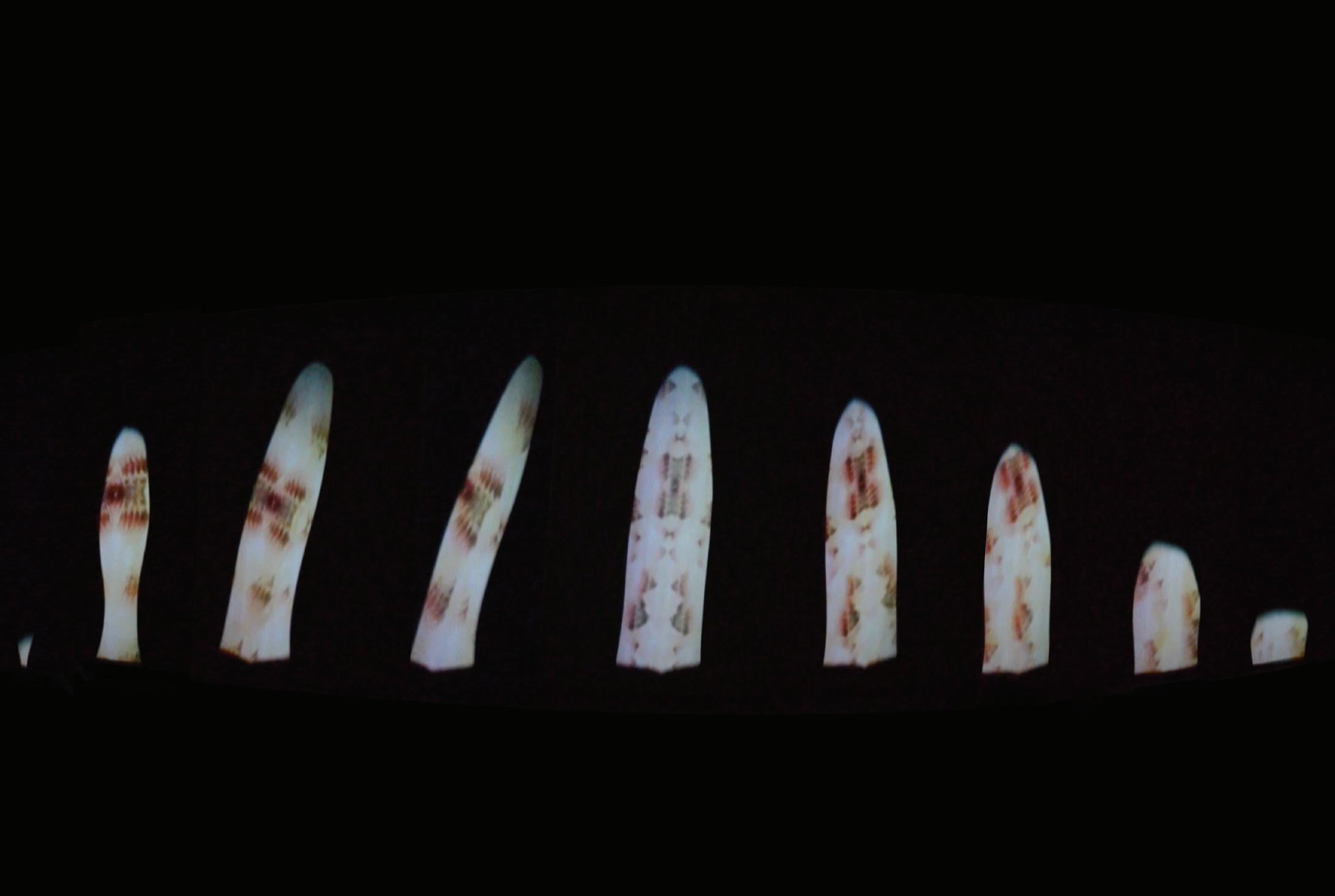
In Drifter I obscure negative and positive space. In this performance I situate myself at the entrance of a very small and narrow room in front of a projector. The audience lines the long sidewalls and faces the small wall opposite of me. The room goes pitch black and music begins to play. Slowly, I begin to open my legs from which a little light appears. This flicker is magnified as the light stretches across the length of the room onto the far wall. I open my legs wider and wider, shaking them, causing the animated projection that shines from behind my legs to ripple. The projection causes the small negative space between my inner thighs to transform into a giant positive shape on the wall. This form grows and sways. Because the shape is created by such a small (three inch) section of the body, it remains unrecognizable unless the viewers succumb to their curiosity and look over their shoulders. The tension between wanting to look backward or forward is strong. The undulating form undeniably suggests a fleshy source, so peeking feels like a violation of privacy.
In contrast to the strenuous bodily contortions necessary to create it, the ethereal form is weightless and suspended on the tall and narrow wall.The fact that the viewer cannot look at the projection and me, the performer, at the same time causes a strange split to occur. The audience is not only between the action and the image; they are also “in between my legs.” My inner thighs encompass the outer walls in darkness as the small aperture they form produces the sole source of light that activates the entire room.
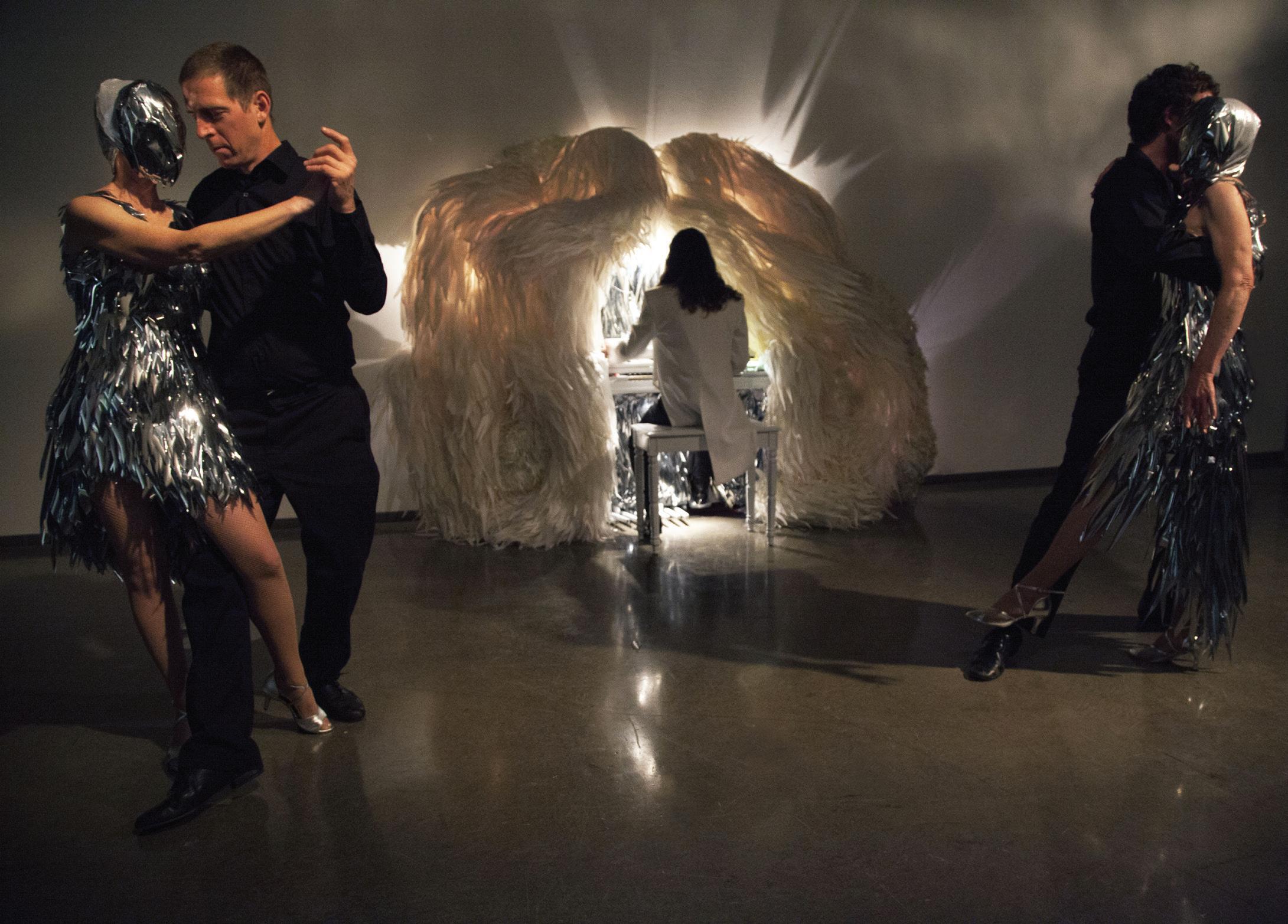
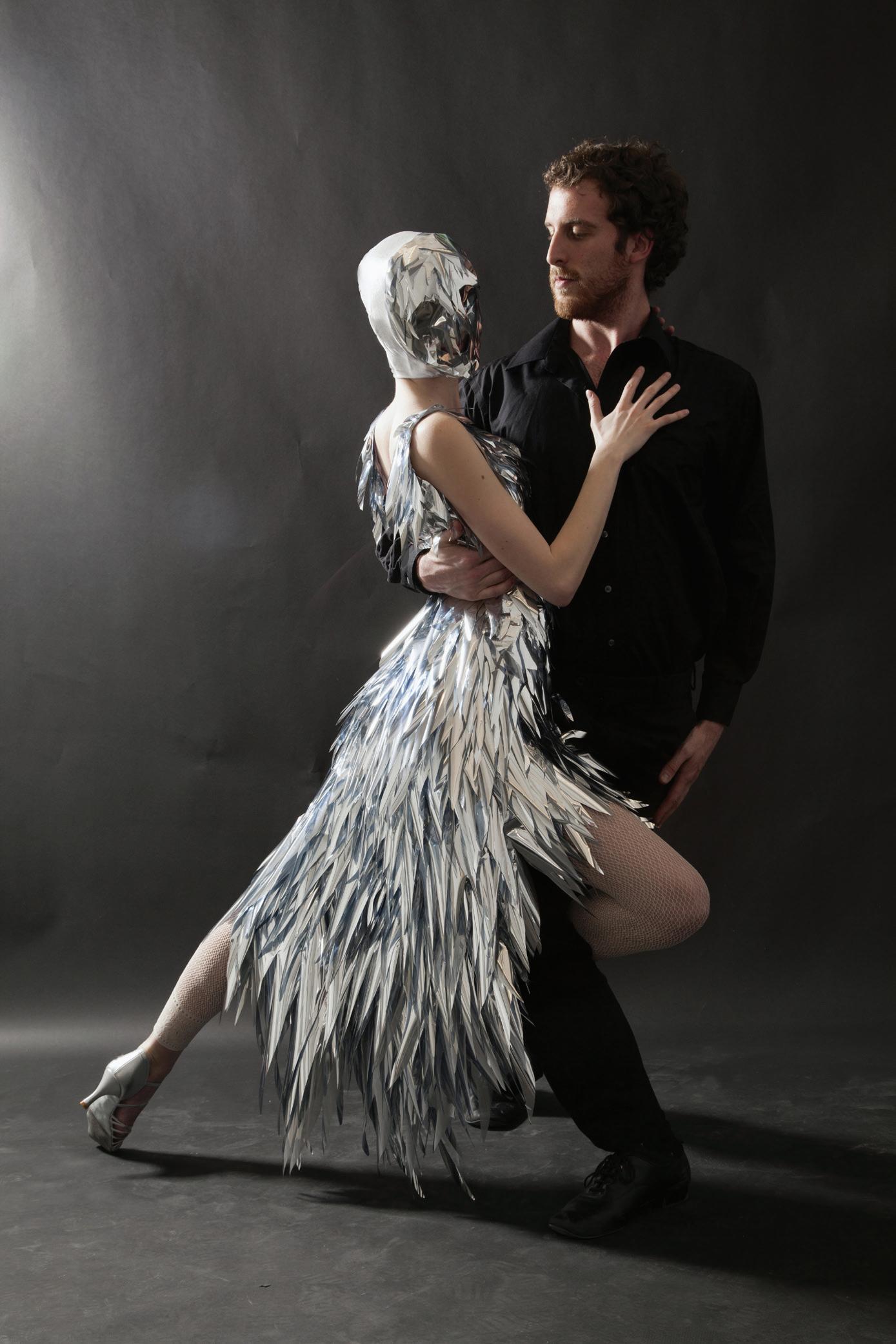
Symbiosis, as seen on pages 14 and 15, is a response to the similarities I find between my own weekly tango lessons and nature videos of mating snakes, schooling fish and starling murmurations.1 Building upon my ever-growing emphasis on interdependence, Symbiosis involves the process of collaboration. This collaborative performance features organ music, tango dancing, installation, and costume design that highlight the similarities between social dance and swarm dynamics.
At its core, Symbiosis is my desire to create a trancelike rendition of a Milonga2 I attended in Argentina. In this small venue in Buenos Aires, I was introduced to the extremely close embrace of the Argentine tango. Seemingly sharing the same mind the couples moved as one, the followers’ immaculately shadowing the impulsive movements of the leads as if under a spell.
Like swarms, almost all communication at a Milonga is done in silence. Men and women do not verbally ask for partners. Positioning, seating, a nod of the head and eye contact suggest the intent. The mass of couples on the dance floor is evenly distributed. As it is established in swarm dynamics, the direction of each individual dancer is simply determined by the avoidance of collision with others. There is not a leader directing traffic. In a swarm, each member reacts to its nearest swarm members. The basic framework of these systems (swarms and social dance) guides the movement of the whole without the individual needing to comprehend the overall design. Thorough planning and leadership is not necessary. The movement is intuitive.
Studies of swarm dynamics, symbiotic relationships, and the nervous system dramatically influenced the development of this performance. Upon reflection, I find that “Symbiosis” aligns with the concepts of stigmergy3 and synchronicity.4 Admittedly, I was not familiar with the meanings and origins of these two concepts until after the completion of the performance. However, I am struck by the terms’ ability to describe through words precisely what I have been acting out through performance.
Essentially, Symbiosis is a performance that relies heavily on instinct and tension. The musician and six dancers are given little direction before coming together for an uninterrupted set of three tenminute performances. On the night of the performances the audience files in as the musician plays carnival-esque tunes. The spectators create a tight box around the performers. The three women stand motionless and masked in the center of the small dance floor. Their heads are completely covered by masks made up of mirror mylar. The masks have no eyeholes or openings for the mouth or nose. The women face the audience during the whole duration of the seating process. Though the women’s eyes are concealed, the masks reflect the spotlights and pierce the audience like a fixed and unavoidable gaze. When the crowd settles the music stops and the lights dim. Men dressed in black slowly walk out from the crowd and approach the women. The organ lights up as the organist begins to play a strange and haunting tango. Upon contact the women begin to dance.
The set includes an illuminated paper sculpture of snakelike forms that envelop an electronic organ. As the organist plays he penetrates the giant cavernous space created by the entwined forms. Light erupts from the installation, ricocheting off of the mirror slivers that make up its interior. Reflection plays a major role in both installation and costume design. The same reflective shards cover the dresses and masks of the female dancers. Light bounces off of the women’s metallic gowns like sunrays off of the silvery scales of fish. The glimmering effect on the walls resembles moonlight off water. While the gowns create an alluring sight out of the women, the masks hinder their own ability to see.
The male dancers are unmasked and wear black suits. In direct opposition to the their female counterparts, they see but are unseen. These shadowy guides lead the ladies across the floor while avoiding the other couples that maneuver through this incredibly tight space. When the music stops, the men detach themselves from the women, who are once again motionless. They take another partner and a second more urgent song begins. A new dance commences. At the end of this dance the room suddenly darkens and immediately cheery circus music prompts the audience to exit. The cycle repeats two more times. The dance is not choreographed and the music, a loosely written melody over a basic tango beat, changes each time it is played, making each of the six dances a completely unique and spontaneous experiment in synchronization.
Taking cues from systems evident in nature, my work draws parallels between human intimacy and the natural world. I continuously seek out instances of physical and mental closeness, and question both the appeal and drawbacks of becoming part of a greater whole. Creating tactile objects and costumes has become my way of simultaneously exploring, satisfying, and evading this desire for intimacy and visceral experience.
1 A flock of starlings is also called a murmuration.
2 A Milonga is the specific place or event where the traditional salon style tango is danced.
3 Stigmergy is the spontaneous, indirect coordination between agents or actions, where the trace left on the environment by an action stimulates a subsequent action by the same or different agent. In that way, actions tend to reinforce and build on each other leading to the spontaneous emergence of coherent, apparently systematic activity. Stigmergy produces complex, seemingly intelligent structures, without the need for planning or direct communication between agents. As such it supports efficient collaboration between extremely simple agents, who lack any memory, intelligence or even individual awareness of each other. The term was introduced in 1959 by French biologist Pierre-Paul Grasse in reference to termite behavior.
4 Synchronicity is the experience of two or more causally unrelated events that occur together in a meaningful way and reveal an underlying framework that is larger than the systems that display the synchronicity. The term was coined in the 1920’s by psychologist Carl Gustav Jung who used examples of synchronicity as evidence of a collective unconscious.
Education
2013 The University of Georgia
Athens, Georgia, MFA, Printmaking
2009 The University of Kansas Lawrence, Kansas, BFA, Printmaking
Art History Minor
2008 Hongik University
Seoul, South Korea, Printmaking Exchange Program
Classes in Traditional Papermaking, Intaglio (Mezzotint), Digital Printmaking, and Lithography
Experience
2014 Visiting Lecturer
Foundation Sculpture, New Genre Art, New Media Theory and Senior Seminar
California State University, Stanislaus, Turlock, California
2013 Adjunct Lecturer
Two Dimensional Design and Three Dimensional Design
Emporia State University, Emporia, Kansas
Adjunct Instructor
Introduction to Printmaking, Intaglio, Summer Session, The University of Georgia, Athens, Georgia
Museum Intern
Art Handler and Exhibition Designer, The Georgia Museum of Art, Athens, Georgia
Instructor of Record
Introduction to Printmaking, Relief, The University of Georgia, Athens, Georgia
2012 Instructor of Record
Three Dimensional Design and Introduction to Printmaking, Intaglio, The University of Georgia, Athens, Georgia
2011 Instructor of Record
Introduction to Printmaking, Relief, The University of Georgia, Athens, Georgia
2010 Printmaking Shop Technician
Lamar Dodd School of Art, The University of Georgia, Athens, Georgia
Delegated tasks to printmaking interns, order supplies for intaglio, relief, letterpress, lithography, screen print, and graduate studios.
Teaching Assistant
Three Dimensional Design, The University of Georgia, Athens, Georgia
2008
Teaching Assistant
Special Topics in Sculpture, The University of Kansas, Lawrence, Kansas
Assisted in a Special Topics in Sculpture class that focused on working with mold making and casting techniques and materials such as silicone rubbers, clay, resin, foam, and plastics.
2007 Sculpture Shop Assistant
The University of Kansas, Lawrence, Kansas
Rented out tools, supervised equipment use and safety in welding, metal casting, wood shop areas.
2006 Photography Studio Assistant
Portrait and Event Photography, University Photography, Lawrence, Kansas Service
2013 Visiting Artist Liaison
Printmaking Student Association
The University of Georgia, Athens, Georgia
Host visiting artists and organize their critiques, lectures, and demonstrations.
Chair
Art Auction Committee
The University of Georgia, Athens, Georgia
2012 President
Printmaking Student Association
The University of Georgia, Athens, Georgia
Manage accounts, events, meetings, and committees.
2011 Treasurer
Printmaking Student Association
The University of Georgia, Athens, Georgia
Manage accounts and funding of club’s visiting artist program.
2010 Member
Mid America Print Council
The University of Minnesota, Minneapolis, Minnesota
2009 Member
Southern Graphics Council International
Annual Conferences across the U.S.
2008 Installation Crew Chair
Student Exhibition Organization
The University of Kansas, Lawrence, Kansas
Honors and Awards
2014 The Kansas City Collection
The Collectors Fund, Kansas City, Missouri
2013 Dean’s Award
Graduate School, The University of Georgia
2012 Willson Center Graduate Research Grant
Willson Center for the Arts, The University of Georgia
Artist Residency
Proyecto Ace, Printmaking December Session, Buenos Aires, Argentina
Foreign Travel Grant
Vice President for Research, The University of Georgia
2011 Best in Show
23rd Annual Printmaking and Book Arts Juried Exhibition, Lamar Dodd School of Art, The University of Georgia, Juror: David Humphrey
Honorable Mention
Third Annual Juried Student Exhibtion, Lamar Dodd School of Art, The University of Georgia, Juror: Brain Halcombe
2009 Daniel MacMorris Award
The University of Kansas
2008 Nelson Research and Travel Award
The University of Kansas
Norma Burrows Fine Art Scholarship
The University of Kansas
M & S Calvin Bushong Scholarship
The University of Kansas
McGrath Fine Art Scholarship
The University of Kansas
Larabee Fine Art Scholarship
The University of Kansas
Hollander Family Fund Scholarship
The University of Kansas
Thomas A. Klaverkamp Fine Art Scholarship
The University of Kansas
2007 McGarth Fine Art Scholarship
The University of Kansas
Raymond and Elizabeth Goetz Fine Art Scholarship
The University of Kansas
2006 University of Kansas Basic Design Scholarship
The University of Kansas
Exhibitions
*indicates solo exhibition
2014
*Mistiko: Installation and Performance (with RachelDebuque), SOIL Gallery, Seattle, Washington
Midwest Matrix
Grunwald Gallery, Bloomington, Indiana
Kansas City Collection III
Kansas City, Missouri
2013
*Makeway Falls: Installation (with Andrew Burkitt)
Lewis Art Gallery, Millsaps College, Jackson, Mississippi
*Hibernaculum
The Invisible Hand Gallery, Lawrence, Kansas
*Symbiosis: Performance, in collaboration with T.S. Woodward, Frances Torres, Fuad Elhage, Christie Moody, Dorian Zevos, Maggie Malone and A.J. Wheeler. Georgia Museum of Art, Athens, Georgia
Transmigrations
Poliglota Gallery, Proyecto Ace, Buenos Aires, Argentina
Taking Bearings
Morrissey Gallery, Davenport, Iowa
Assemble
The Classic Center, Athens, Georgia
Annual Faculty Exhibition
Eppink Gallery, Emporia State University, Emporia, Kansas
MFA Spring Thesis Candidate Exhibition
Georgia Museum of Art, Athens, Georgia
2012
*Tigre Delta: Outdoor Performance
Parana River Islands, Buenos Aires, Argentina
*Drifter: Video/Performance
Bridge Gallery, Lamar Dodd School of Art, Athens, Georgia
*The Perfect Set: Video/Performance
The Project Space, Lamar Dodd School of Art, Athens, Georgia
1st Annual Student International Print Show
Art Zone, Cairo, Egypt
24th Annual Printmaking & Book Arts Juried Exhibition
Gallery 307, University of Georgia, Athens, Georgia
2011 23rd Annual Printmaking & Book Arts Juried Exhibition
Suite Gallery, University of Georgia, Athens, Georgia
Received Best in Show
Spin the Bottle
Flicker gallery space, Athens, Georgia
2010 UGA/UA Exchange Exhibition
Department of Art & Design, FAB Gallery, University of Alberta, Alberta, Canada
Second Annual Juried Student Exhibition Gallery 101, Lamar Dodd School of Art, Athens, Georgia
Received Honorable Mention
Naughty, Taboo, and Just Plain Wrong
Nada Dada, Reno, Nevada
Naughty, Taboo, and Just Plain Wrong is a traveling print portfolio exchange curated by Vicki LoSasso, director of Oxbow Press in Reno, Nevada.
2009 *Under-Covers (with Amber Hansen)
Henry’s Upstairs, Lawrence, Kansas
Art Cosmos: International Printmaking Exhibition
Yougen Gallery, Tokyo, Japan
Bummertown: Group Printmaking Exhibition
Henry’s Upstairs, Lawrence, Kansas
University of Kansas Juried Scholarship Exhibition
Art and Design Building, Lawrence, Kansas scholarship awarded
2008 *Carnival of Delights (with Camille Buchand) Freestate Glass, Lawrence, Kansas
The International Exchange Exhibition of Prints Museum of Contemporary Art, Hongik University, Seoul, Korea
New Harvest
Fresh Produce Art Collective, Lawrence, Kansas
Salty Dogs
Red Door Gallery, Kansas City, Missouri
Hard Candy
HTL3 Gallery, Lawrence, Kansas
Sculpture Exhibition
Art and Design Gallery, The University of Kansas
Art Scholarship Show
Art and Design Gallery, The University of Kansas scholarship awarded
2007 Animation Show
The Jazzhaus, Lawrence, Kansas
University of Kansas Juried Scholarship Exhibition
Art and Design Building, Lawrence, Kansas scholarship awarded
Lectures
2013 Artist Lecture
Art Forum Lecture Series, Emporia State University, Emporia, Kansas
2012 Visiting Artist Lecture University of St. Mary, Leavenworth, Kansas
Press
2013 Printeresting. “All These Theses: Danielle Peters” 14 Mar. 2013 http://www.printeresting.org/2013/05/14/thesis-danielle-peters/
Proyecto Ace. “Transmigrations.” 22 Feb. 2013 http://www.proyectoace.org/en_transmigration
Holbrook’s Trunk. “Artist Uses Art to Illustrate Interdependence.” 19 Mar. 2013 http://gmoa.blogspot.com/2013/03/artist-uses-art-to-illustrate.html
2012 Montes de Oca, Augustin. “Mapa de Las Artes.” [Buenos Aires, Argentina] 14 Dec. 2012, ed.: 37.
Ramsay, Tami. “Curated: Artist Interview.” 12 Mar. 2012 http://www.tamiramsaydesign.com/blog/category/322
2011 Humphrey, David. “Gassed.” [Athens, Georgia] 25 Apr. 2011
2008 Hong, Seung Wuk. “The International Exchange Exhibition of Prints.” [Seoul, Korea] 4 Nov. 2008
Dr. Joseph F. Sheley, President
Dr. James T. Strong, Provost/Vice President of Academic Affairs
Dr. James A. Tuedio, Dean, College of the Arts, Humanities and Social Sciences
Department of Art
Dr. Roxanne Robbin, Chair, Professor
Dean De Cocker, Professor
Daniel Edwards, Assistant Professor
Jessica Gomula, Professor
David Olivant, Professor
Gordon Senior, Professor
Richard Savini, Professor
Dr. Staci Scheiwiller, Assistant Professor
Meg Broderick, Administrative Support Assistant II
Andrew Cain, Instructional Technician I
Jon Kithcart, Equipment Technician II
University Art Gallery
Dean De Cocker, Director