A Ten-Year Evolution: Alexander Couwenberg Composes Himself
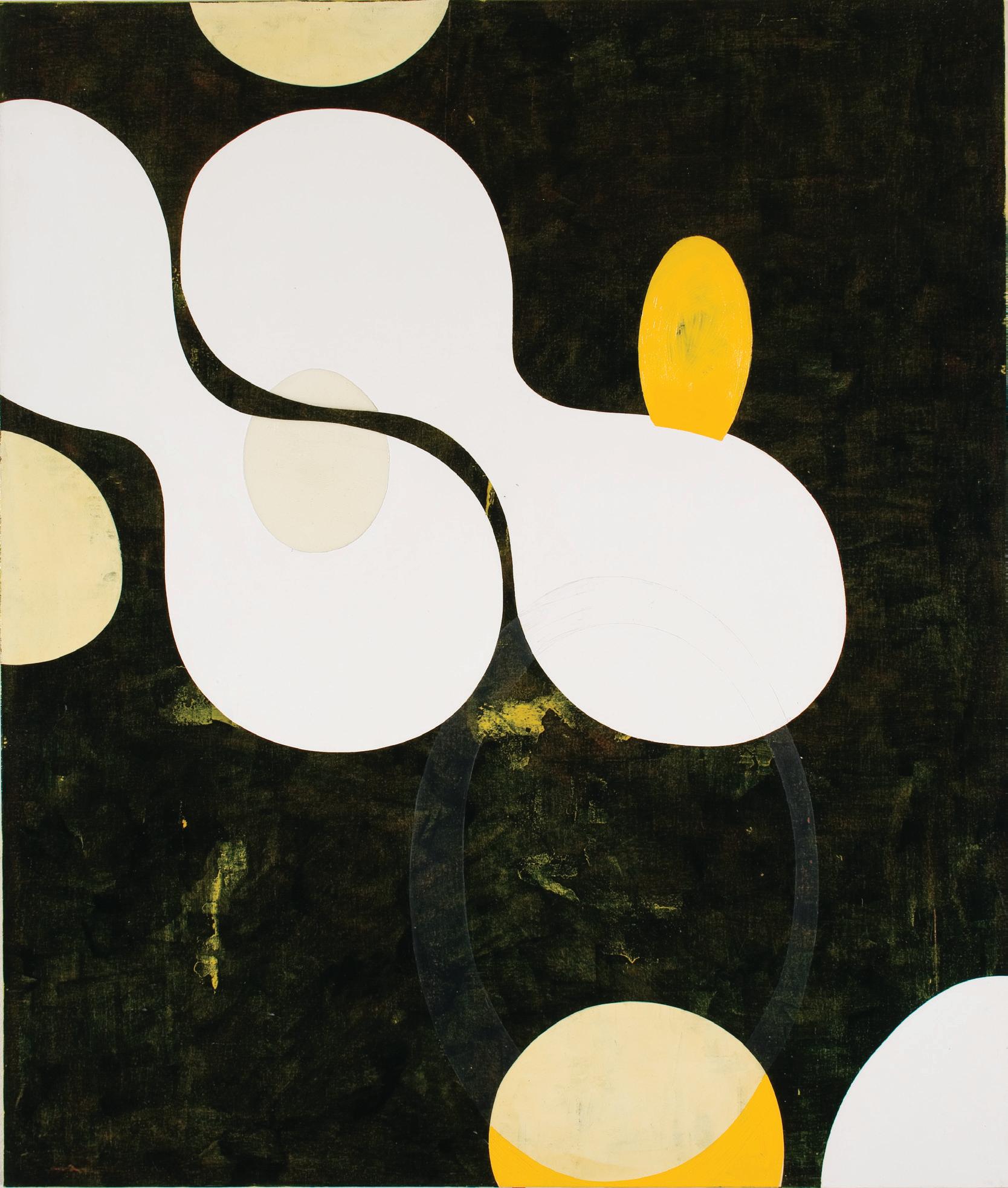
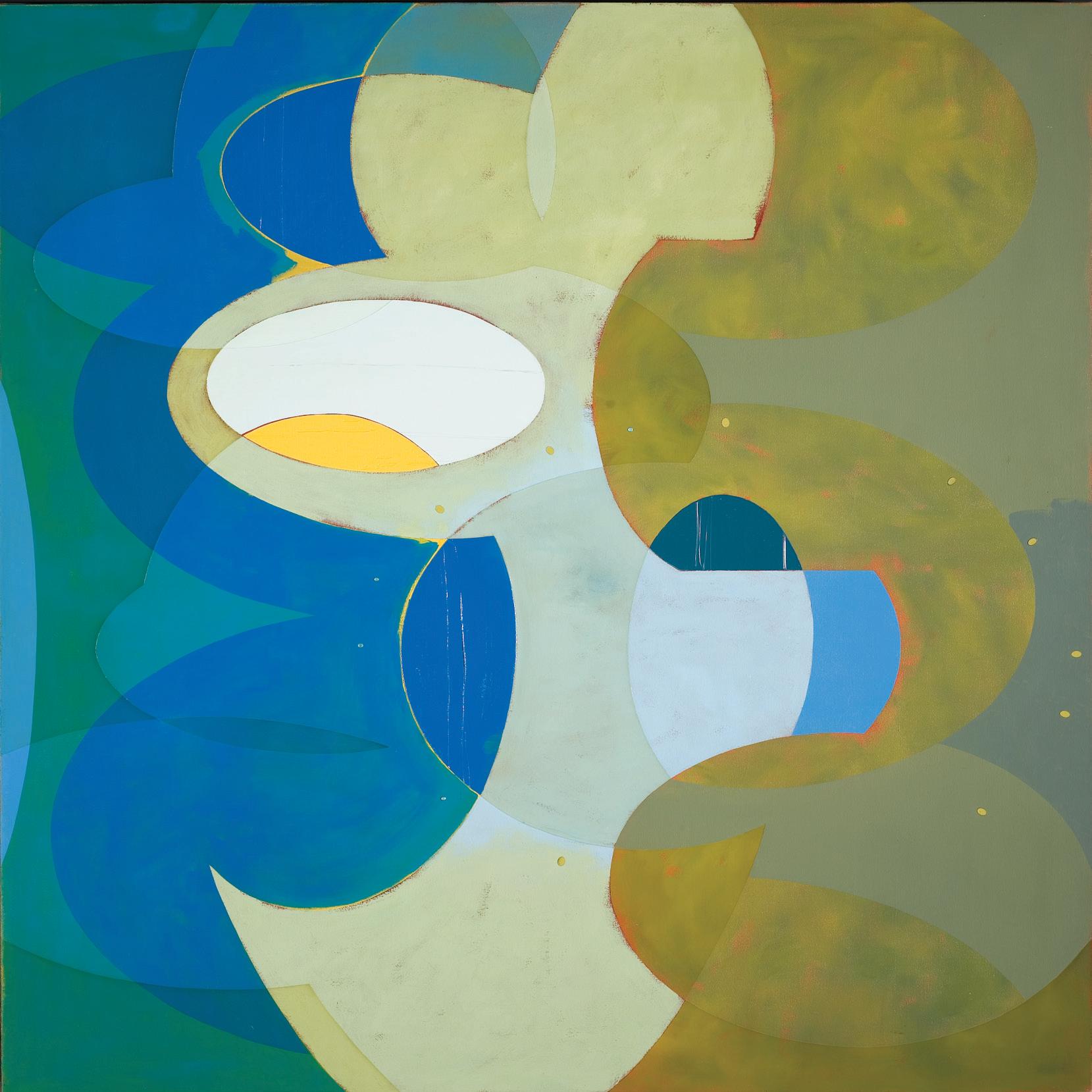
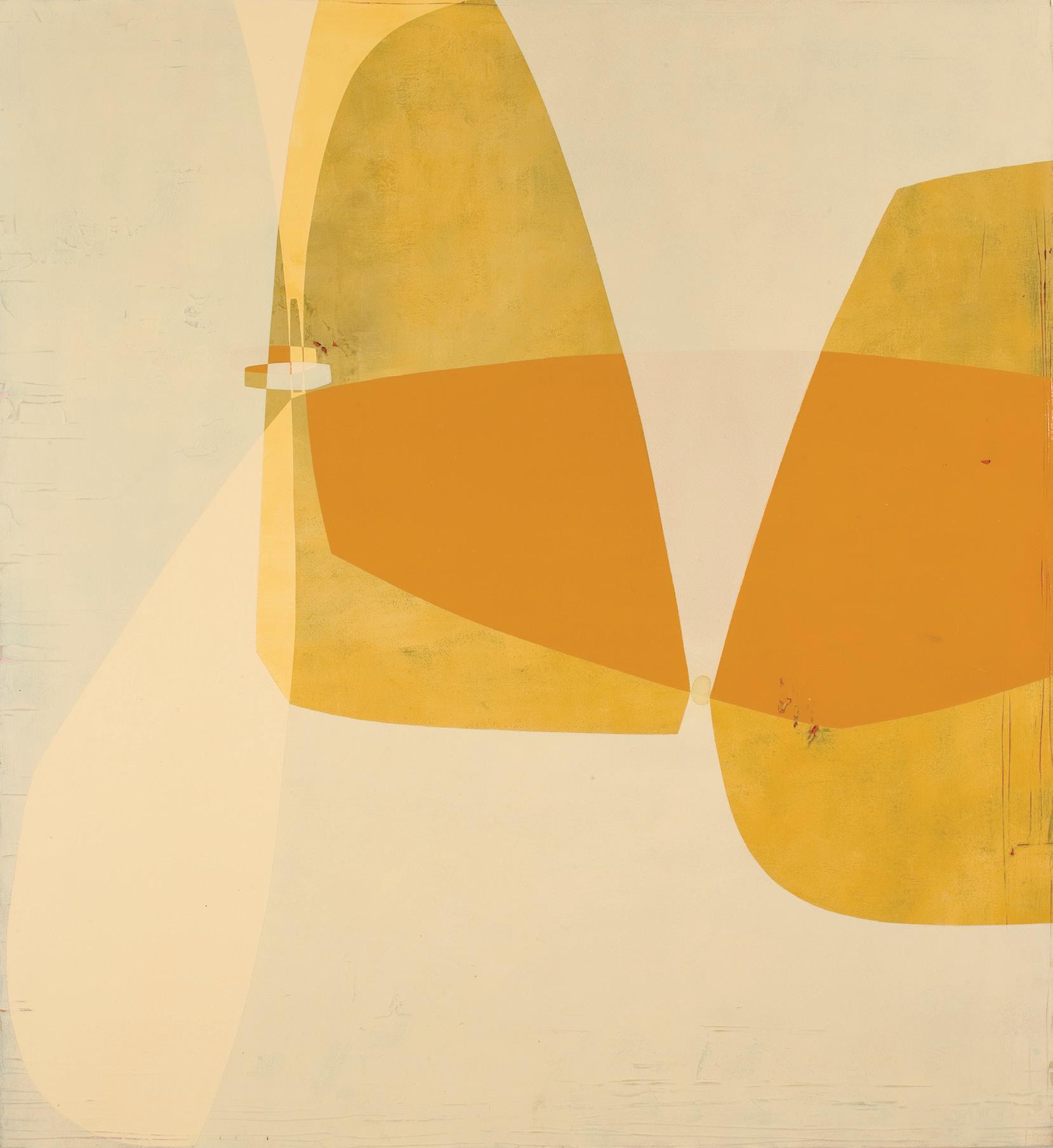
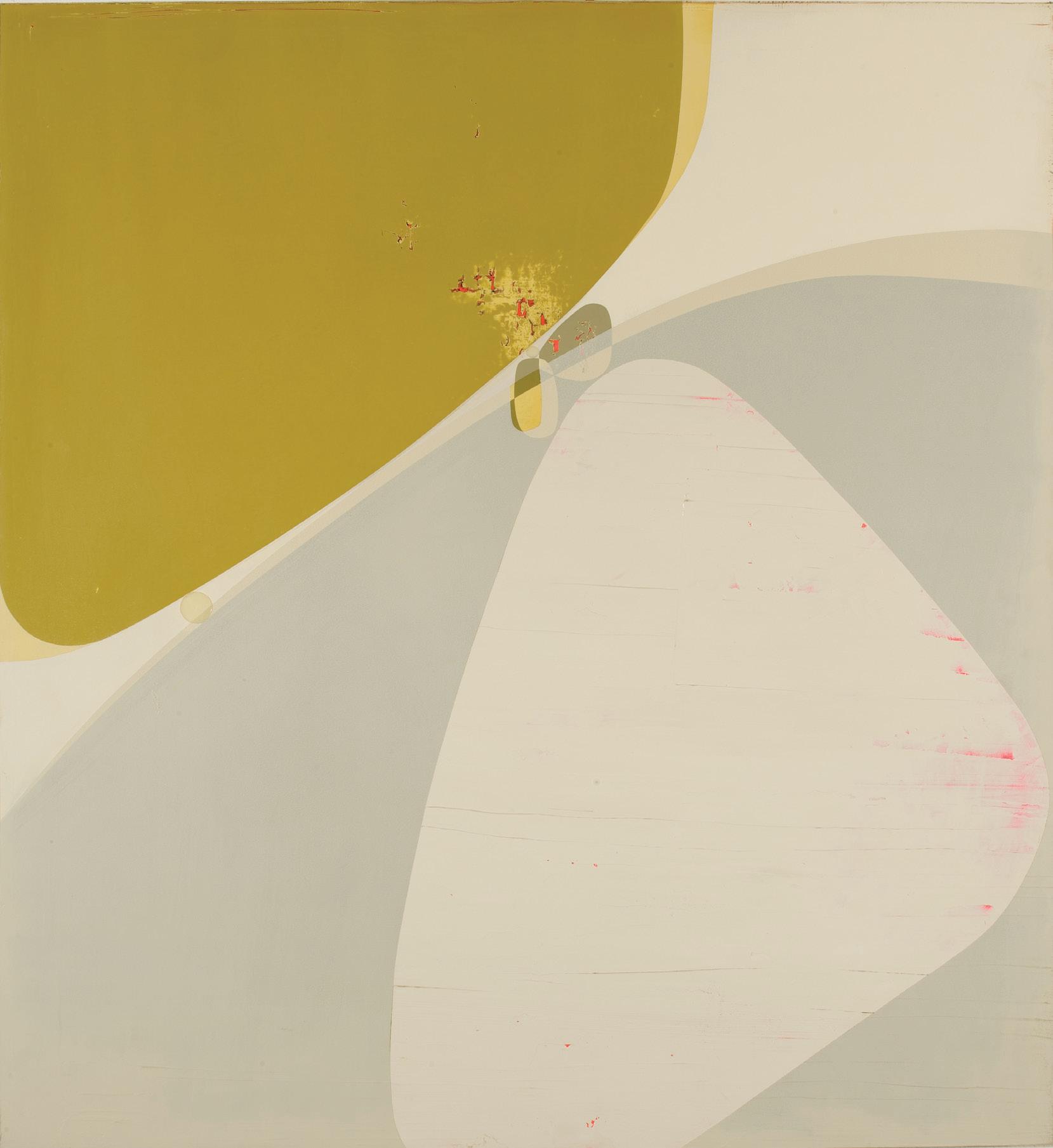
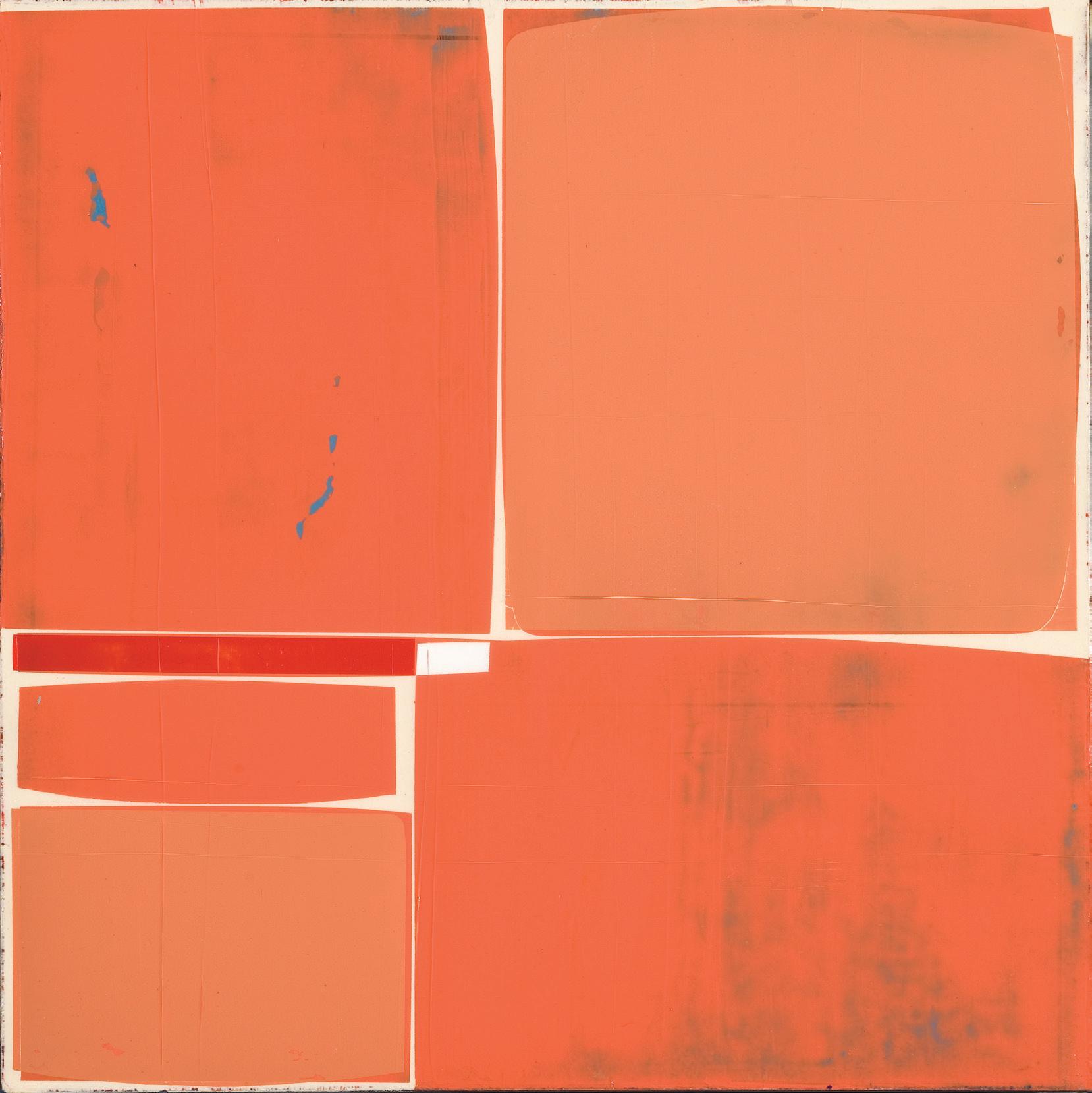
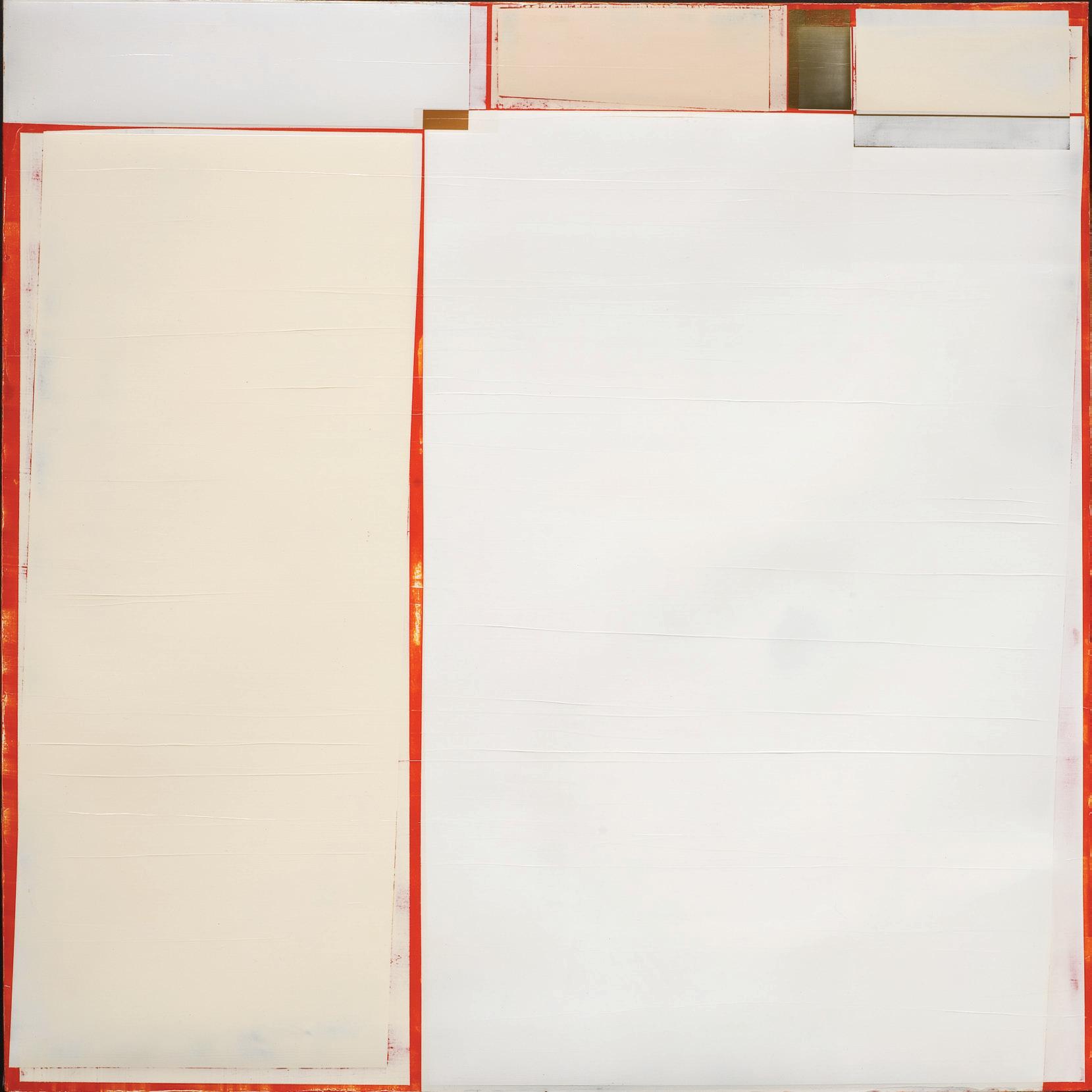
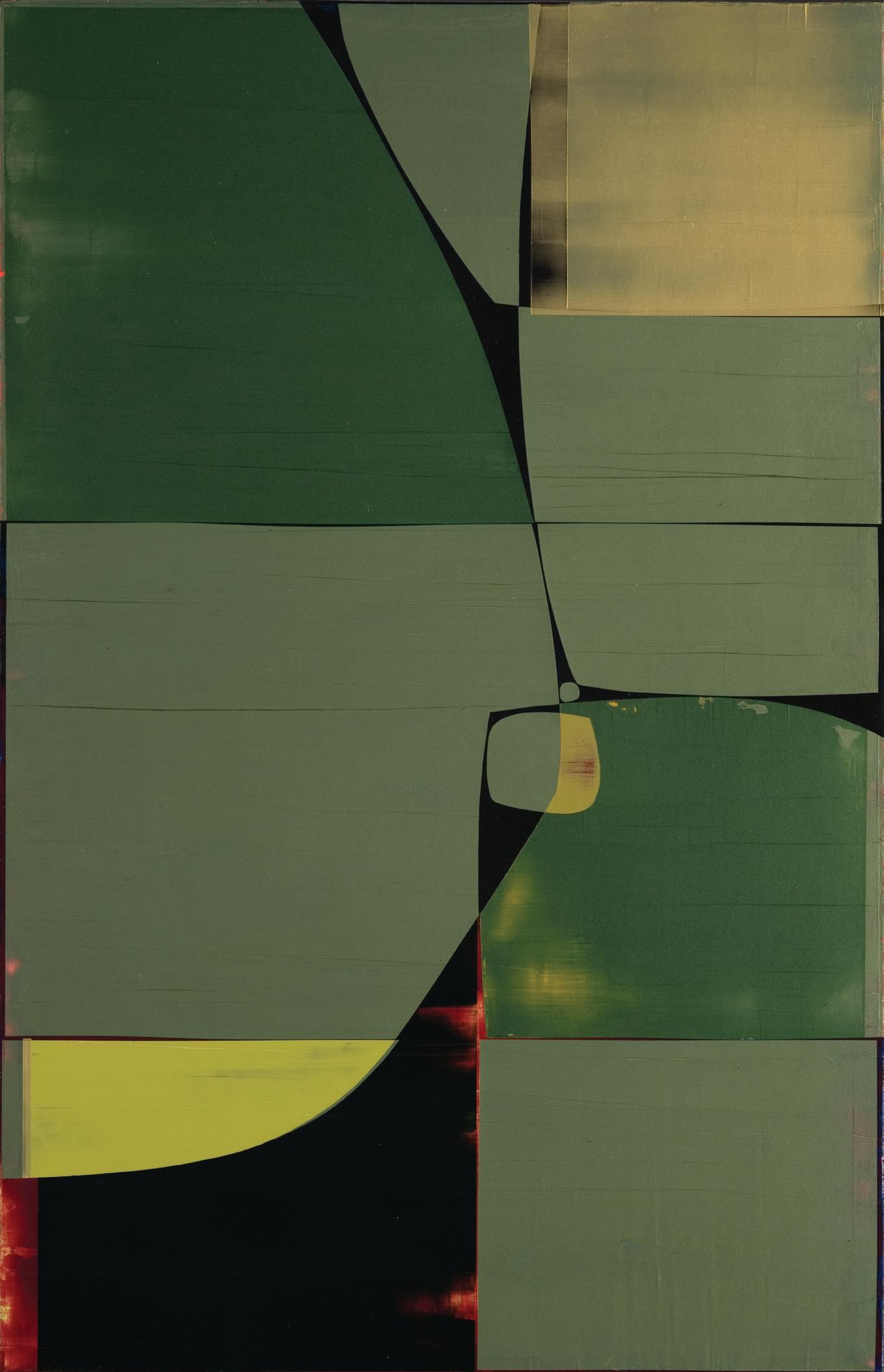
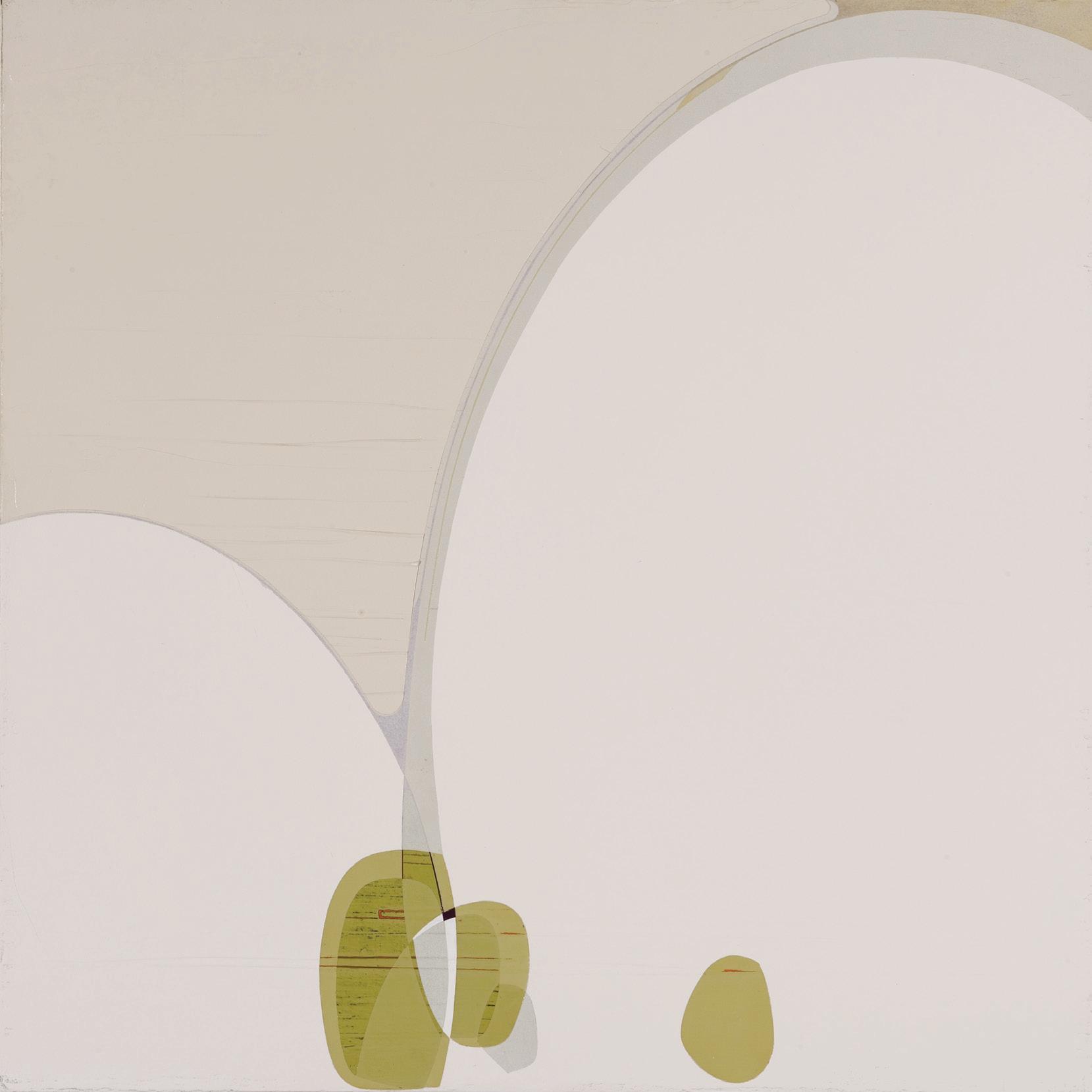
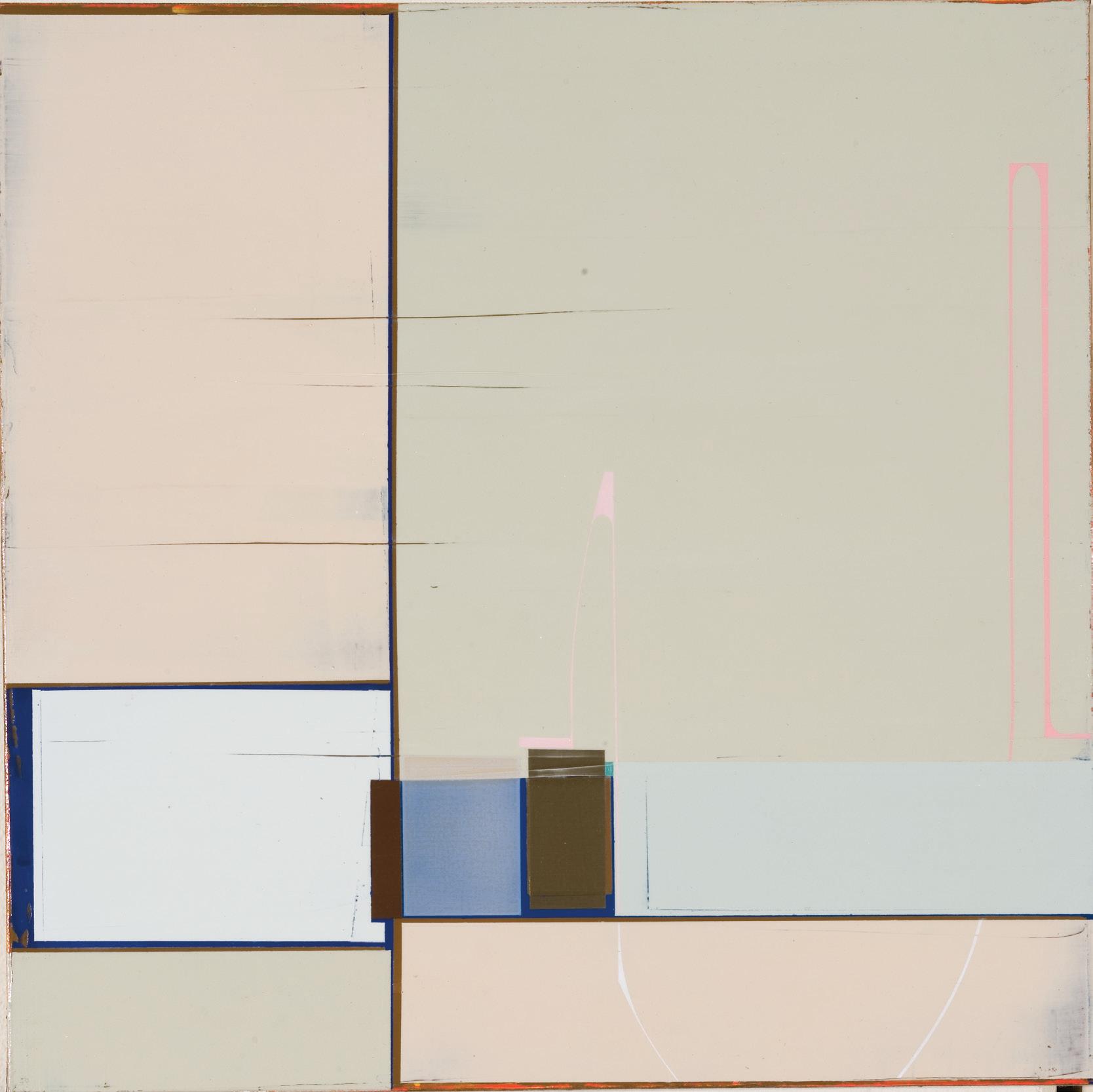
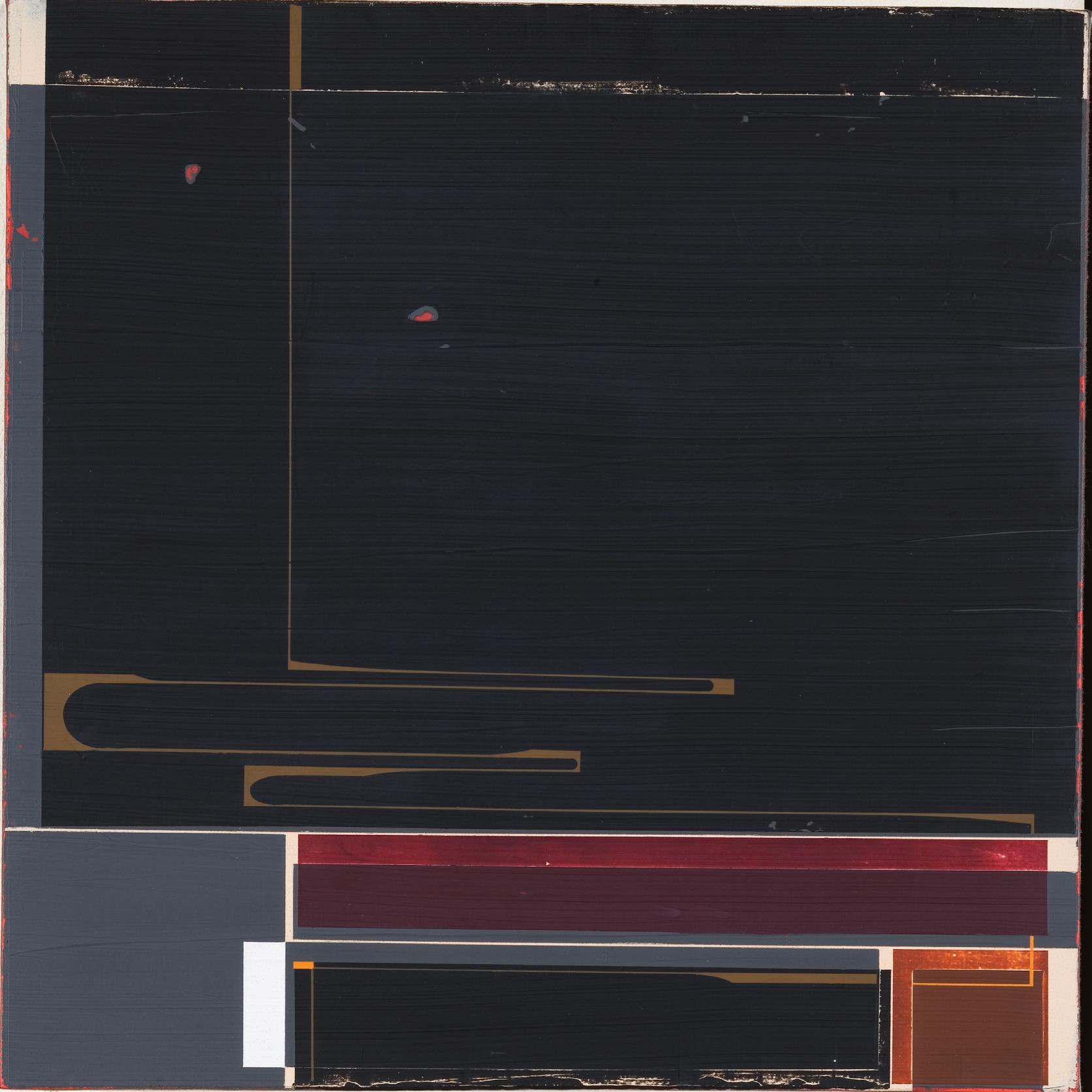
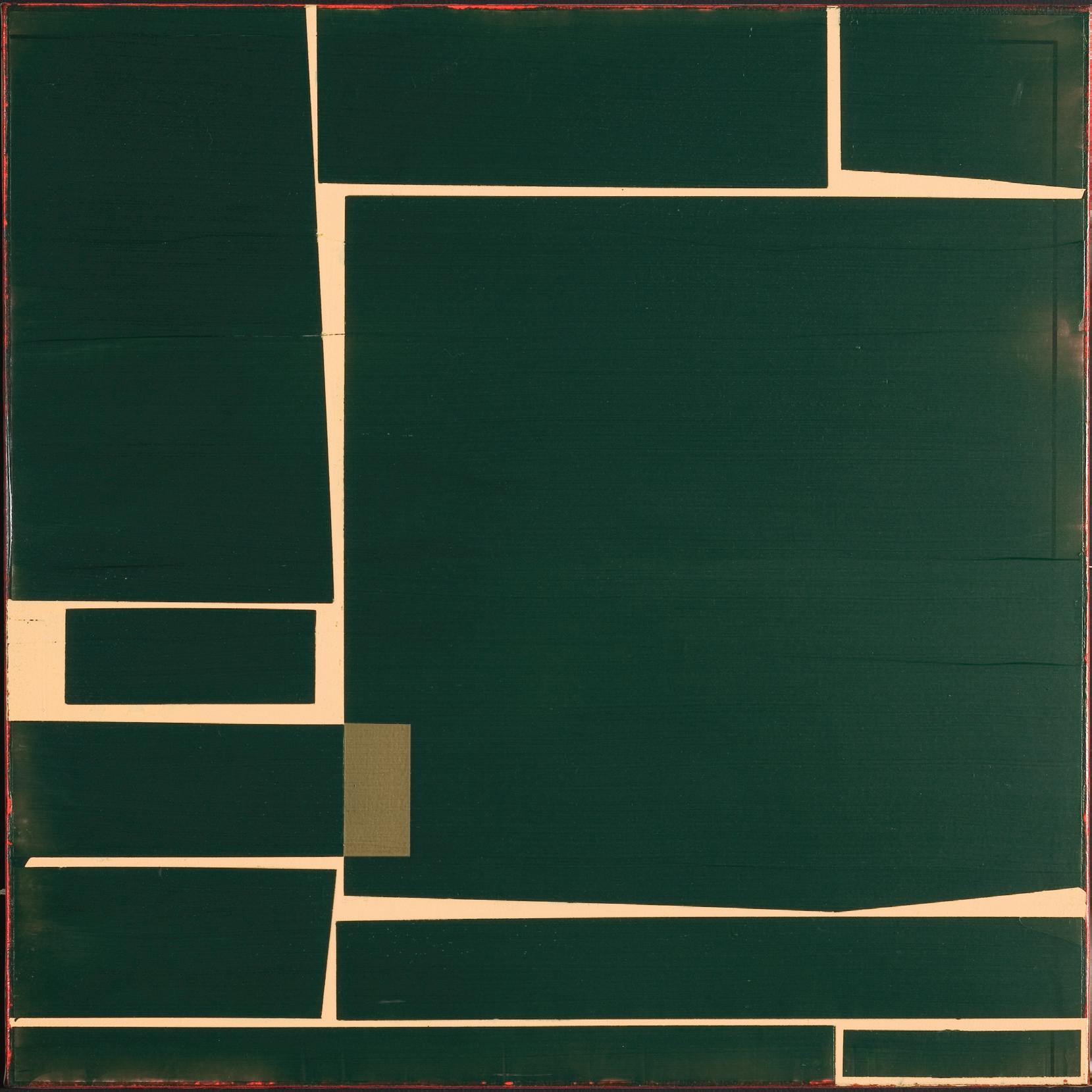
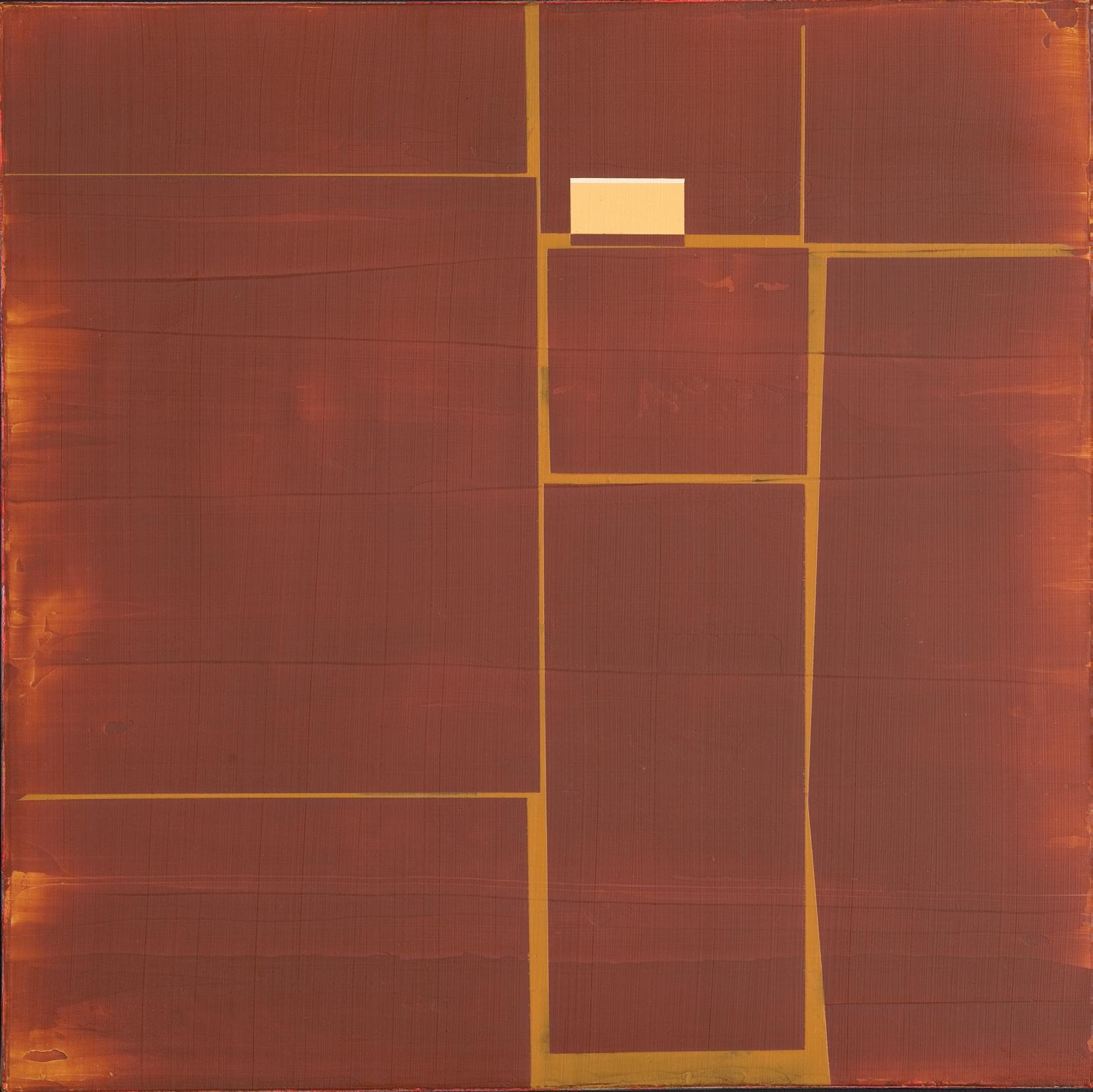
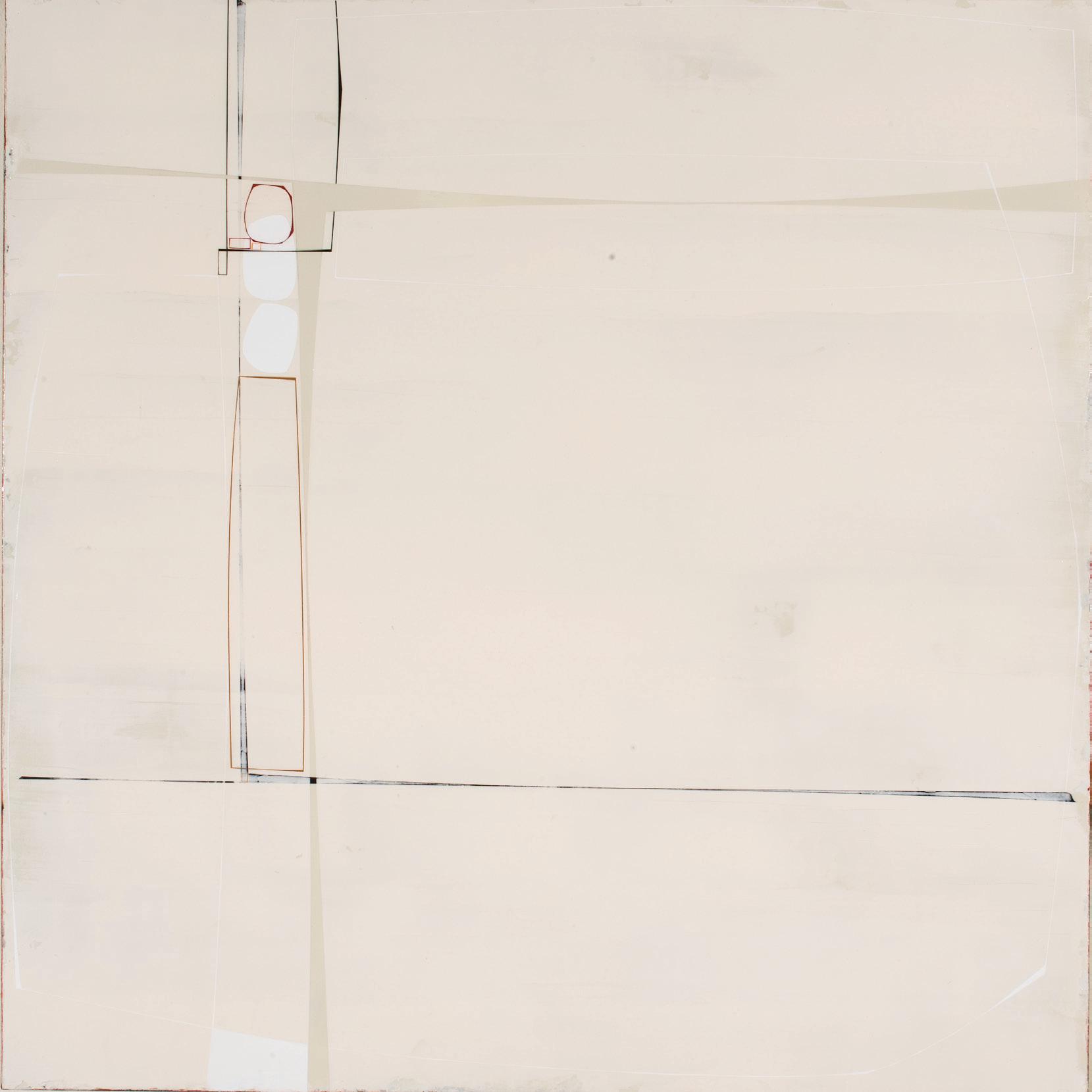
Over the past decade, as he has refined his painterly practice, Alex Couwenberg has maintained his balancing act between two kinds of composition, visual composition – the disposition of forms on a plane – and material composition – the substances used to comprise those forms. Couwenberg’s concern – his “obsession,” as he calls it – with process drives his practice; but he has always offset this concern with an equally keen interest in shape and color. Just as his involvement with process links him with his late- and post-modern predecessors, from the abstract expressionists of the 1950s to the post-minimalist painters and even the performance artists of the ‘70s and `80s, Couwenberg’s purely formal interests evince the heritage of earlier predecessors, specifically the abstract painters of the early 20th century – and their direct inheritors, the “hardedge” geometric artists of the 1960s.
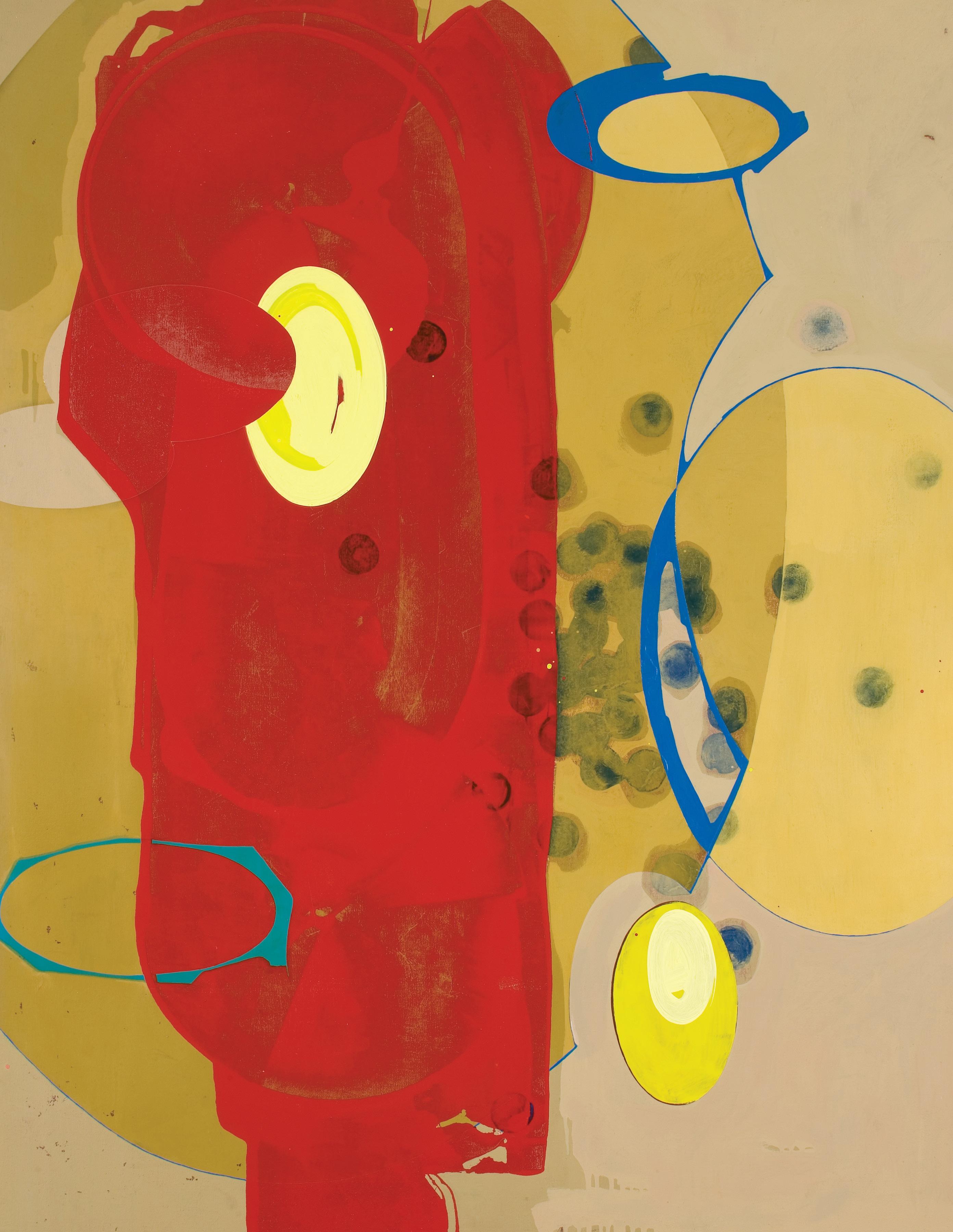
In his latest work, in fact, Couwenberg fairly embraces the tradition of geometric art that courses through the last century. Partially of Dutch extraction, the painter has always had a predilection for the clarity and rectitude we associate with painters such as Mondrian. But Couwenberg’s palette, vivid as it is, has not been limited to Mondrian’s formula of primaries; rather, the young American painter has acknowledged the aesthetically and emotionally affective power of color; the example of Van Gogh looms, of course, but so does the yet more complicated example of de Kooning, a Dutch immigrant to these shores whose sensibility became a touchstone of American painting. Furthermore, in its intricate interplay of large and small, regular and irregular forms, all created from the interplay of traditional (e.g. oil) and new (e.g. enamel) medium, Couwenberg’s previous work echoes the bumptious, sinewy lines and forms for which de Kooning’s work, early and late alike, is so well known.
We can describe de Kooning’s example in this context as “complicated” not only because of the Rotterdam-born painter’s dual acculturation, but because of the fact that, in the early 21st century, he appears to us Americans, one of the models of abstract painting. However direct or indirect de Kooning’s influence has been on Couwenberg, it has profoundly impacted how we view abstraction. De Kooning’s gestural expansiveness has suffused throughout abstract painting, especially in America; as clear and finely honed as Couwenberg’s art has been, it owes its breadth and its lush palette in part to his abstract expressionist forebear’s.
Couwenberg himself was born in southern California and has lived nowhere else. He professes a relationship notably closer to the “hard-edge” painters who historically succeeded de Kooning’s generation than to that generation itself. Among those geometric painters who emerged at the end of the 1950s, of course, were New York artists such as Ellsworth Kelly and Frank Stella; but the tendency’s presence was no less marked, and appeared no later, in southern California. Indeed, it was only a few miles from Couwenberg’s birthplace – and a few yards from his graduate studio – that the first exhibition of “hard-edge” painting, “Four Abstract Classicists,” had been formulated in 1959. The work of Lorser Feitelson, Frederick Hammersley, Karl Benjamin, and John McLaughlin – and other “abstract classicists” such as Helen Lundeberg and Jules Engel – has served ever since as a beacon for Los Angeles-area abstractionists, encouraging a spare and lucid formal vocabulary, a brilliant range of color, and a bold approach to new as well as traditional media. Couwenberg (who is personally close to Benjamin) willfully manifests all these characteristics, and sees himself as an inheritor and perpetuator of this recent but distinct tradition.
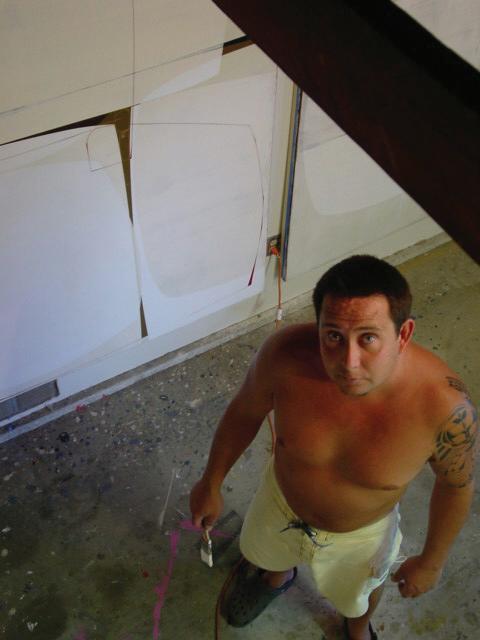
The eccentricities that enliven Couwenberg’s painterly formulae, even the relatively rectilinear formulae that characterize his latest work, derive from the same extra-artistic sources that have spurred many other southern California artists. He dotes on the detailing (especially the pinstriping) and high finish associated with the customizing of those two quintessentially Southland modes of transport, the car and the surfboard. (Not incidentally, Couwenberg is an accomplished surfer.) We might deduce that his work capitalizes not only on these techniques of surface finishing, but on the speed and grace such techniques are designed to exteriorize and amplify. Just as the high gloss and reflectivity of a latex finish infer the easy and rapid passage of a vehicle through
its course, so does it emphasize the smooth visual kinesis of Couwenberg’s forms – the forms in his earlier work that slide and burgeon against one another (as in Feitelson and Kelly – and, in a different manner, de Kooning) and that now seem to pass like films or windows across each other’s planes (as in McLaughlin – and, not dissimilarly, Mondrian).
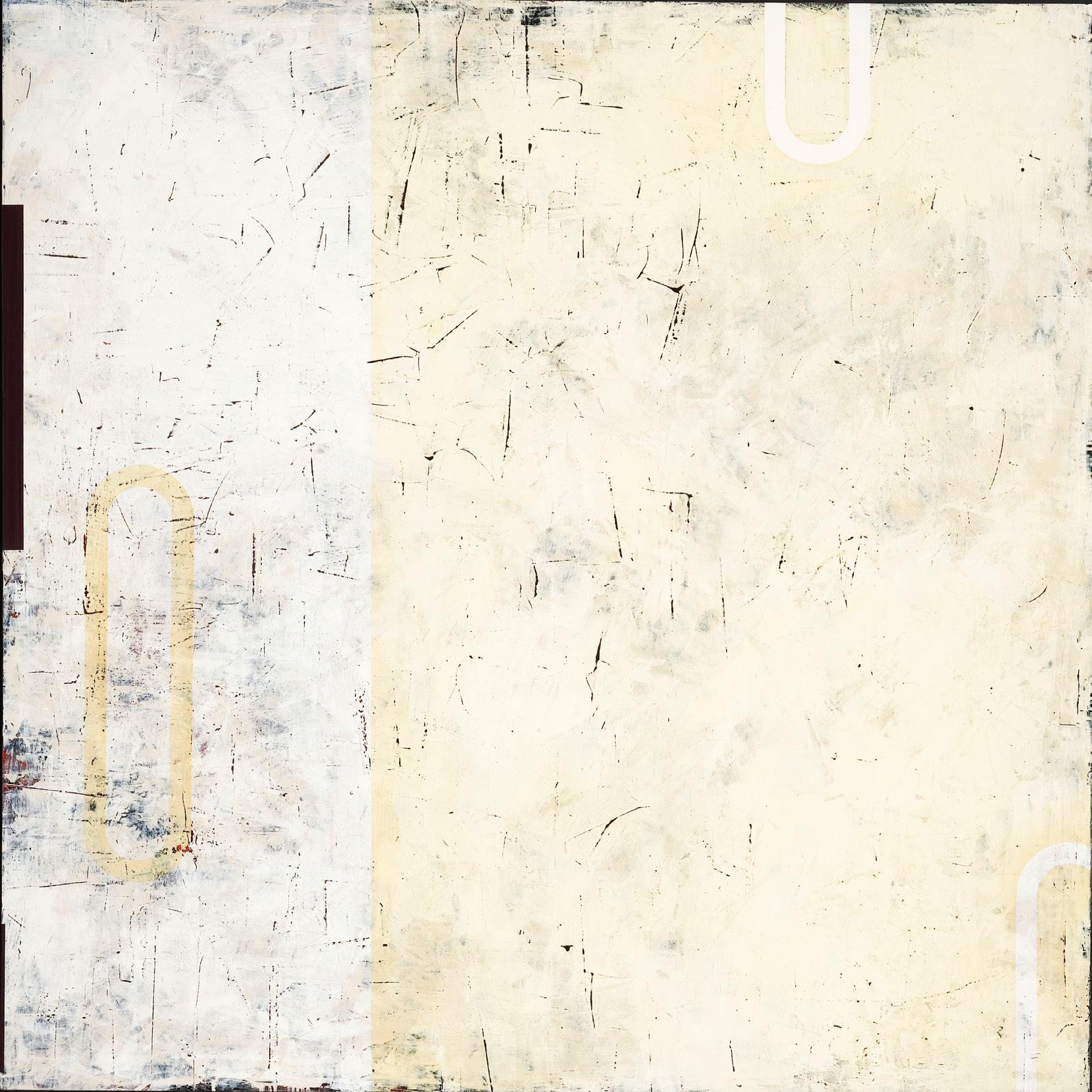
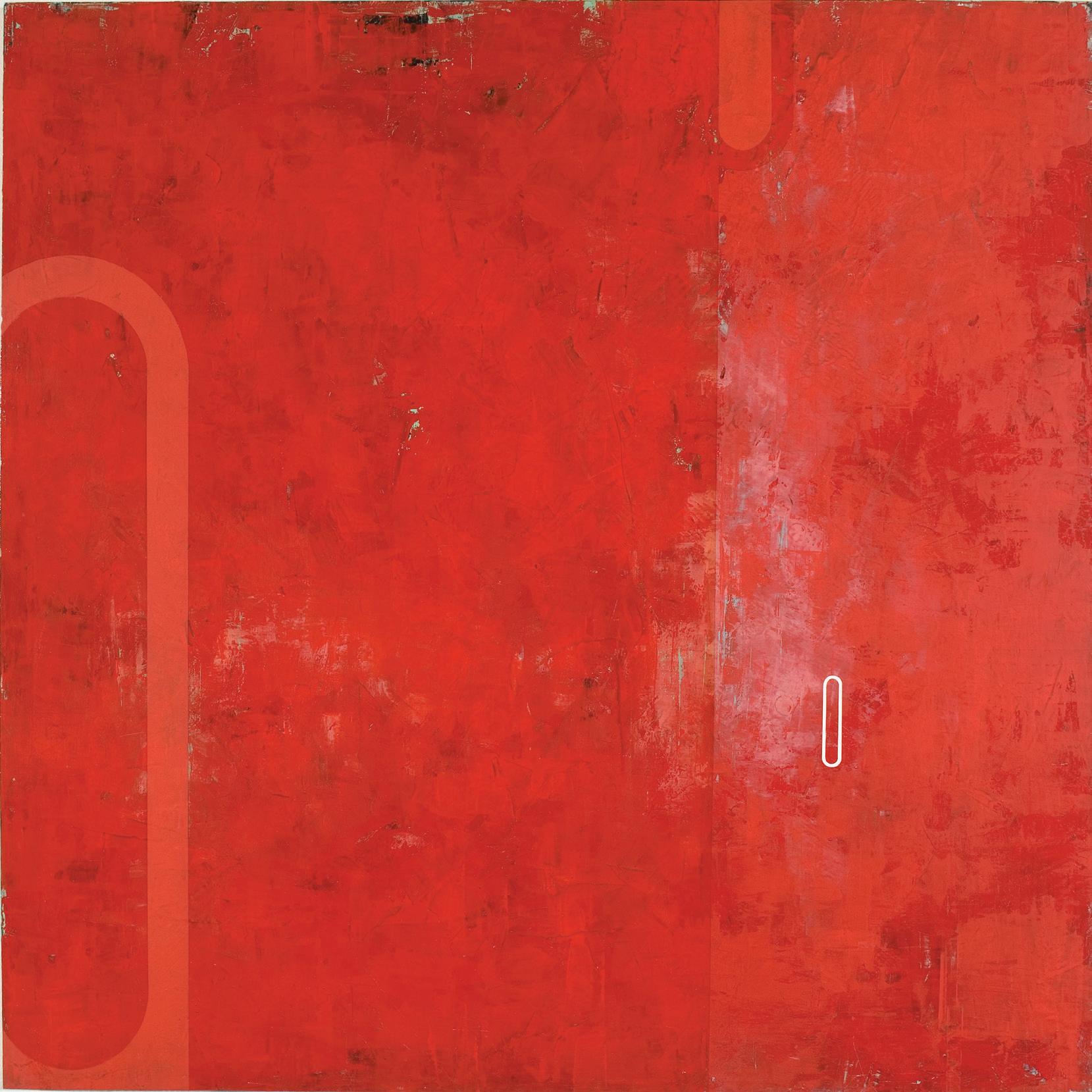
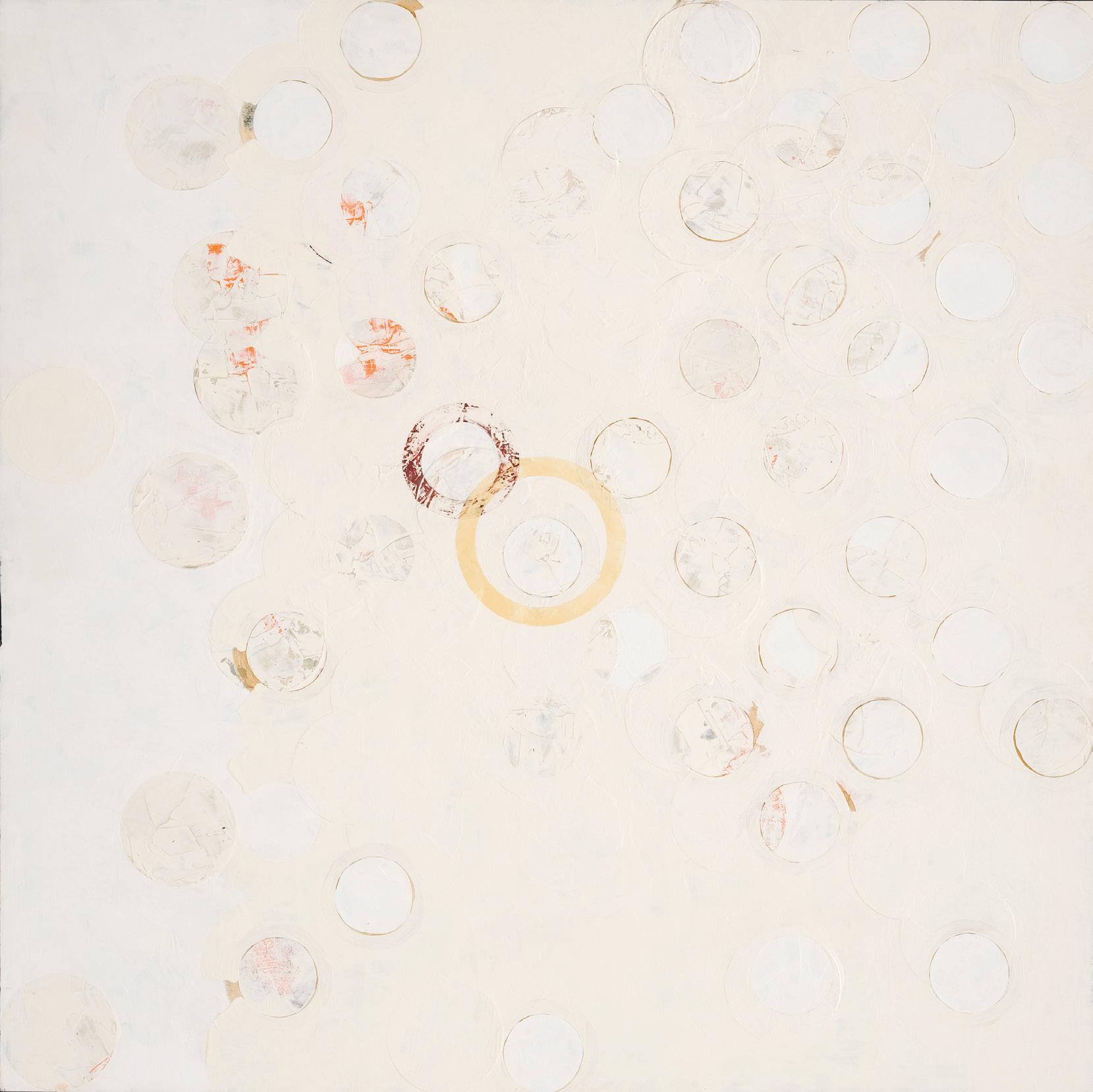
Couwenberg’s technique, as he attests, may gratify his working method, but from our vantage it finally serves to underscore, to make fully visible, the sense of light and motion the paintings convey to us. The composition of the paintings’ materials thus substantiates the composition of the paintings’ forms, at once binding them and getting them moving. The resulting “composed compositions” seem to be perfectly balanced and yet in a state of flux, their orbs and bubbles, panes and panels apparently only captured at a moment of particular poise. Couwenberg’s is a delicately choreographed dance of shapes, everything on point, ready for the next note of music, as it were. The paintings (and works on paper – which are not studies for the paintings, but “paintings” in their own right) can also be regarded as tenuous balancing acts between great and tiny forms that are themselves inanimate, but on which gravity is acting with furious insistence. Like desert rocks about to avalanche, huge boulders are held in place by the merest of pebbles – which on second glance seem part of those very boulders.
The result, then, of Couwenberg’s compositions of compositions is a remarkably tense but remarkably resolved composure. We see in these paintings the imminence of change, but – despite all the dramatic asymmetry – not of cataclysm. The change inferred by these painterly structures takes place in geologic or cosmic, not meteorologic or human, time. In this, Couwenberg’s art inheres another characteristic of the southern California ethos, the meditative serenity (if not quite the quality of meditation itself) associated with east Asian religion-philosophies. Here, too, the examples of McLaughlin and Feitelson, and de Kooning and Mondrian, affirm Couwenberg’s own aesthetic. Like them, he finds in the radiant present the inevitability of change, and thus the beauty of the fleeting moment. It could be the moment of a tubular wave or the glint off a passing hot rod, and it is certainly the moment in the studio when the artist is in perfect sync with his work; but it is our moment, too, the moment in which we see the composition as it de- and re-composes.
Peter Frank
Los Angeles
December 2006
I M A G E S
“Bilbao,” 1996
60” x 60”
acrylic, oil, and polyurethane on panel collection of Marty and Coen Couwenberg, Los Angeles, CA
“Lift,” 1996 60”x 60” acrylic, oil, and polyurethane on panel collection of the artist
“White with White Circles,” 1996
60” x 60”
acrylic, oil, and polyurethane on panel collection of Lisa and Karl Pedersen, Los Angeles, CA
“Sisters,” 1999
60” x 47”
acrylic and polyurethane on canvas collection of the artist
“Troublemaker,” 2001 66” x 60” acrylic and polyurethane on canvas courtesy of Dolby Chadwick Gallery, San Francisco, CA
“Roadrunner,” 2003 72” x 66”
acrylic and polyurethane on canvas collection of the artist
“Lily,” 2003 72” x 66” acrylic and polyurethane on canvas collection of the artist
“Rush, 26,” 2004 24” x 24” acrylic and mylar on canvas courtesy of Markel Fine Arts, NY
“Lexington,” 2005 47” x 47” acrylic and mylar on canvas courtesy of Dolby Chadwick Gallery, San Francisco, CA
“Goliath,” 2005 60” x 34” acrylic and mylar on canvas collection of Barbara Kerwin, Los Angeles, CA
“Tanuki,” 2003 30” x 30” acrylic and polyurethane on canvas collection of the artist
CA
“Van Boven, 13,” 2005 24” x 24” acrylic and mylar on canvas courtesy of d.e.n. Contemporary, Los Angeles,
“Van Boven, 18,” 2005 24” x 24” acrylic and mylar on canvas courtesy of d.e.n. Contemporary, Los Angeles, CA
“Van Boven, 31,” 2005 24” x 24” acrylic and mylar on canvas courtesy of d.e.n. Contemporary, Los Angeles, CA
“Van Boven, 33,” 2005 24” x 24” acrylic and mylar on canvas courtesy of d.e.n. Contemporary, Los Angeles, CA
“Comet,” 2006 47” x 47” acrylic on canvas collection of California State University, Stanislaus
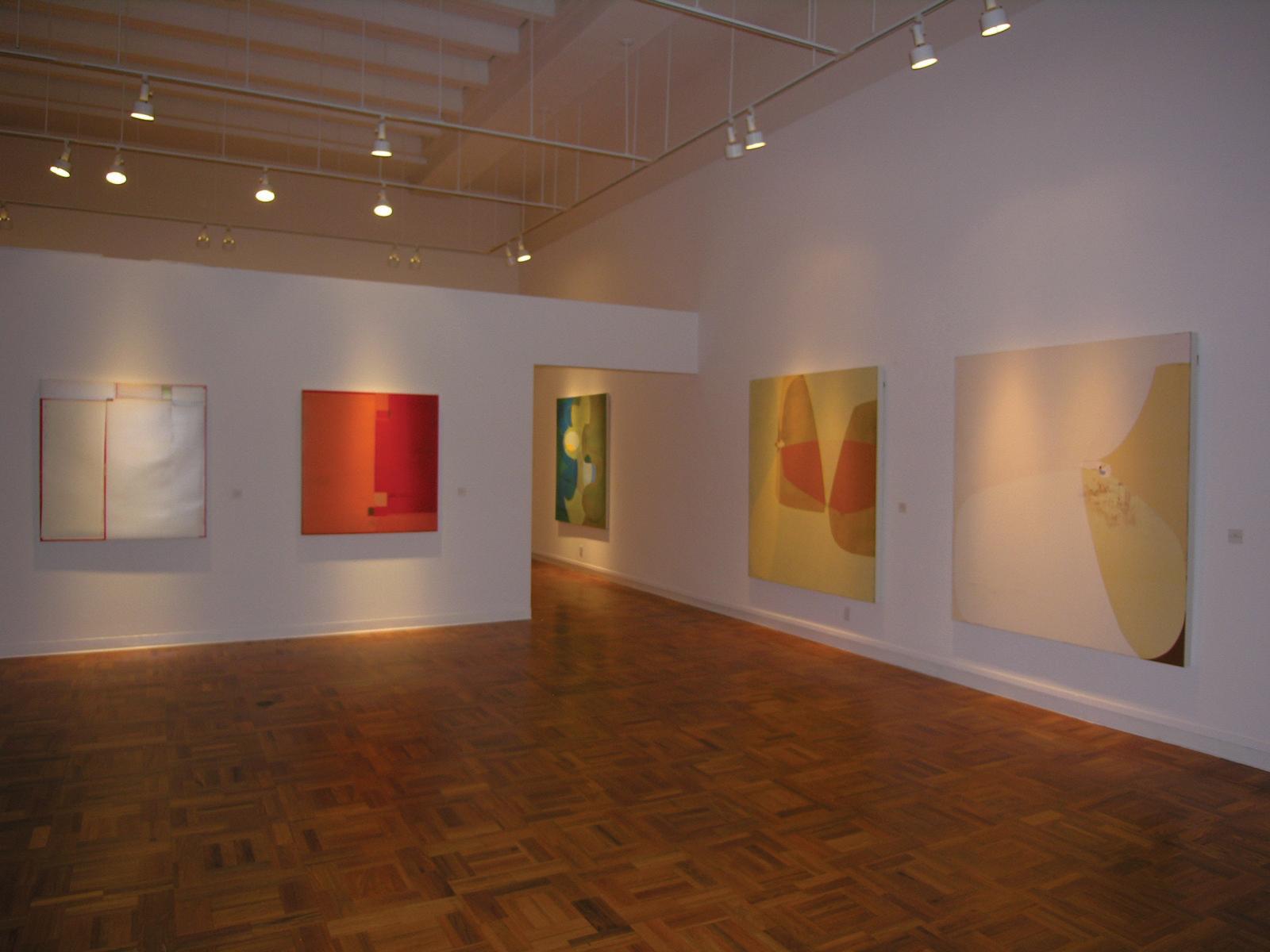
2006 installation
University Art Gallery
California State University, Stanislaus
Alexander Couwenberg: A Ten-Year Evolution
Artist Statement
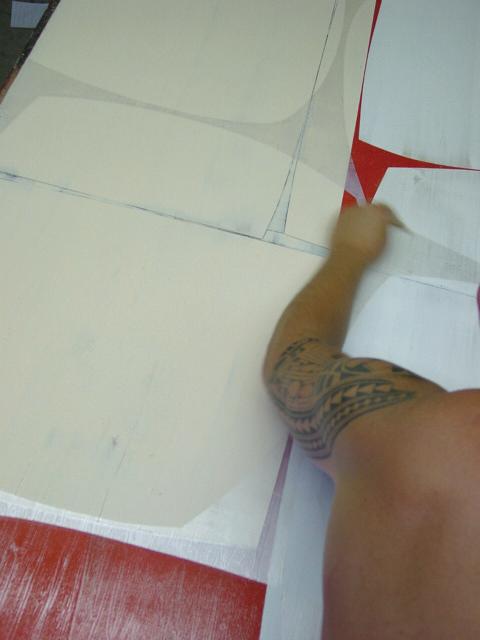
My paintings are a product of my obsession over process. Applying paint to a surface and the experiences and techniques that occur in creating an image are the purest form of motivation. The inspiration for my work is an appreciation for the paint, pinstriping, and finish associated with hot rod and car culture. Mid-century design, Geometric and Hard-Edge Abstraction and a love of craft and technique fuel the work as well. The paintings diagram the process of paint application and the interpretation of how these influences manifest themselves, in the form of color, shape, texture and space. Each painting becomes an experience of constantly juxtaposing elements and forms within a composition attempting to arrive at a relationship between balance, tension, and harmony. The ideas of geometry and the placement of forms within a picture plane are crucial in the picture making process, and expose themselves in the form of Hard-Edge compositions that suggest a complete and precise control of both medium and image. I am heavily influenced by history and the figures associated with Geometric and Hard-Edge Abstraction. Being conscious of what I bring to the table, and how these actions speak in a voice that contributes to the dialogue of contemporary painting are both extremely important parts of my work as an artist.
Alexander Couwenberg 2006
Alexander J. Couwenberg
b. 1967, Upland, CA
Education
1997 MFA, Claremont Graduate School, Claremont, CA
1995 BFA, Art Center College of Design, Pasadena, CA
Solo Exhibitions
2007 “New Paintings,” Peter Blake Gallery, Laguna Beach, CA
“New Paintings,” d.e.n. Contemporary, Los Angeles, CA
“New Paintings,” Gilman Contemporary, Ketchum, ID
2006 “New Paintings,” Peter Blake Gallery, Laguna Beach, CA
“Black Labeled,” Dolby Chadwick Gallery, San Francisco, CA
“Alex Couwenberg: a ten year evolution,” Cal State Stanislaus, University Gallery, Turlock, CA
2005 “de Stad,” Markel Fine Arts, New York, NY
“Metropolitan”, 455 Market Street Lobby Gallery, San Francisco, CA
“tussenruimte”, Ruth Bachofner Gallery, Los Angeles, CA
2004 “Primo,” Ruth Bachofner Gallery, Los Angeles, CA
2003 “New Paintings,” Gensler, San Francisco, CA
“Paintings; a seven year survey,” Riverside Art Museum, Riverside, CA
2002 “New Paintings,” Ruth Bachofner Gallery, Los Angeles, CA
2001 “New Paintings,” Ruth Bachofner Gallery, Los Angeles, CA
1999 “New Paintings,” Ruth Bachofner Gallery, Los Angeles, CA
1997 “The Hot Rod Series,” East Gallery, Claremont Graduate School, Claremont, CA
1996 “New Paintings,” Dillingham/Caples Gallery, Claremont, CA
Selected Group Exhibitions
2007 “Off The Grid,” William Turner Gallery, Santa Monica, CA
“Inagural Show,” Gilman Contemporary, Ketchum, ID
“Summer Group Show,” Peter Blake Gallery, Laguna Beach, CA “Inland Emperors,” DBA256 Gallery, Pomona, CA
“Ebb & Flow,” EastWest Gallery, Santa Barbara, CA
“Decade, A Retrospective,” Dolby Chadwick Gallery, San Francisco, CA
“Out of Line,” Cal State Stanislaus, University Gallery, Turlock, CA
“Grey Scale,” Peter Blake Gallery, Laguna Beach, CA
“Art Auction = Stimulus,” Laguna Art Museum, Laguna Beach, CA
“Let There Be Light,” Phantom Galleries, Los Angeles, CA
“Flow: Fine Lines on Water,” Frank Pictures Gallery, Santa Monica, CA
2006 “Aligning With Abstract Los Angeles,” d.e.n. Contemporary, Los Angeles, CA
“Landscape Perspectives,” Art + Industry, Palm Springs, CA
“Summer Abstraction,” Peter Blake Gallery, Laguna Beach, CA
“Monotype,” d.e.n. Contemporary, Los Angeles, CA
“2nd Gwang Hwa Moon International Arts Festival,” Sejong Center, Seoul, Korea
“Flow: Fine Lines on Water,” Peter Blake Gallery, Laguna Beach, CA
“Flow: Fine Lines on Water,” Lisa Coscino Gallery, Pacific Grove, CA
“Recent Acquisitions,” Riverside Art Museum, Riverside, CA
“Border Crossing,” Sopa Fine Arts, British Columbia, Canada
“Out of Line,” Parks Exhibition Center, Idyllwild Arts Academy, Idyllwild, CA
2005 “Inaugural Exhibition,” Sopa Fine Arts, British Columbia, Canada
“A Common Thread,” Soho Myriad, Atlanta, GA
“Out of Line,” Riverside Art Museum, Riverside, CA
“Out of Line,” Brandstater Gallery, La Sierra University, Riverside, CA
“Abstract Los Angeles”, Louisiana Tech University Galleries, Ruston, LA
“Art Auction 11”, Long Beach Museum of Art, Long Beach, CA
“Theories: LA Paint,” Post, Los Angeles, CA
“Venice Art Walk”, Venice, CA
“Monothon, 2005,” Riverside Art Museum, Riverside, CA
2004 “Luster,” Gensler, San Francisco, CA
“Abstract Work from the Permanent Collection,” Long Beach Museum of Art, Long Beach, CA
“Continental Divide: LA/NYC,” Planet Thailand, Brooklyn, NY
“Abstract Los Angeles,” Soho Myriad, Atlanta, GA
“20th Anniversary Exhibition,” Ruth Bachofner Gallery, Los Angeles, CA
2003 “No Chaser; Straight Ahead Abstract Painting,” Post, Los Angeles, CA
“Group Show,” Dolby/Chadwick Gallery, San Francisco, CA
”Black and White,” Ruth Bachofner Gallery, Los Angeles, CA
“New Paintings,” Soho Myriad, Atlanta, GA
“Venice Art Walk,” Venice, CA
“Art Auction 10,” Long Beach Museum of Art, Long Beach, CA
2002 “California Dream,” Il Museo I Magli di Sarezzo, Brescia, Italy
“Summer Group Show,” Ruth Bachofner Gallery, Los Angeles, CA
“Sam Maloof and Friends,” dA Center for the Arts, Pomona, CA
2001 “New American Paintings Group Show,” OSP Gallery/Open Studio Press, Boston, MA
“Homage: Roland Reiss,” Claremont Graduate School alumni show, dA Center for the Arts, Pomona, CA
“Art Auction 9,” Long Beach Museum of Art, Long Beach, CA
“Monothon, 2001,” Riverside Art Museum, Riverside, CA
“Sequence,” Mt. San Antonio College Art Gallery, Walnut, CA
2000 “Art 2000: Applauding Revolutionary Talent,” Millard Sheets Gallery, Pomona, CA
1999 “Faculty Exhibition,” Mt. San Antonio College Art Gallery, Walnut, CA
“Faculty Exhibition,” Chaffey College, Ontario Museum of Art, Ontario, CA
1998 “Six Gallery Artist,” Ruth Bachofner Gallery, Los Angeles, CA
“Synchronicity,” Mt. San Antonio College Art Gallery, Walnut, CA
“Contemporary Works of the Ruth Bachofner Gallery,” Antelope Valley College, Lancaster, CA
1997 “Convergent Abstraction,” Ruth Bachofner Gallery, Los Angeles, CA
“L.A. Emerging,” Marcia Wood Gallery, Atlanta, GA
“Art Auction 6,” Long Beach Museum of Art, Long Beach, CA
“3 Weeks in L.A.,” Richard Heller Gallery, Los Angeles, CA
“Recent Paintings,” Marcia Wood Gallery, Atlanta, GA
“Fringe of the Fringe,” dA Gallery Benefit Art Auction, dA Center for the Arts, Pomona, CA
1996 “42.2 - CGS to Paradiso,” Gallery Paradiso, Newport Beach, CA
“Painting and Sculpture,” Art Center Alumni Show, Thousand Oaks Municipal Art Gallery, Thousand Oaks, CA
1995 “Raw Data,” East Gallery, Claremont Graduate School, Claremont, CA
1994 “Recent Work,” Art Center College of Design, Pasadena, CA
“Youth Culture,” Lava Room, Costa Mesa, CA
Selected Public Collections
California State University, Stanislaus, Turlock, CA
Crocker Art Museum, Sacramento, CA
Georgia Tech University, Atlanta, GA
Long Beach Museum of Art, Long Beach, CA
Riverside Art Museum, Riverside, CA
Selected Corporate Collections
Apax Partners, Menlo Park, CA
Balboa Bay Club, Newport Beach, CA
Baoa Resort, China
Bellagio Hotel and Casino, Las Vegas, NV
Claiborn and Barksdail, Atlanta, GA
Filmore Heritage Center, San Francisco, CA
Fletcher Jones Mercedes Benz, Newport Beach, CA
Genentech, San Francisco, CA
Hotel Commonwealth, Boston, MA
Bank Julius Baer, Los Angeles, CA
Mandalay Bay Hotel and Casino, Las Vegas, NV
Mandarin Hotel, New York, NY
McKenna, Long, & Aldridge, Atlanta, GA
Metropolitan Hotel, New York, NY
MGM Grand Hotel and Casino, Las Vegas, NV
Mohegan Sun Casino, Uncasville, Conn
Museum Towers @ Centennial Hill, Atlanta, GA
Neiman Marcus Collection, Beverly Hills, CA / San Francisco, CA
Nishiumeda, Tokyo, Japan
Nordstrom, Honolulu, HI & Detroit, MI
Orrick, Herrington & Sutcliffe, Menlo Park, CA
Our Lucaya Resort, Grand Bahama Island
Red Rock Resort, Las Vegas, NV
Riverhorse Investment, Los Angeles, CA
Roll International, Los Angeles, CA
Suncal Inc., Irvine, CA
Verisign, San Francisco, CA
Selected Private Collections
Ruth and Herman Bachofner, Beverly Hills, CA
Karl Benjamin, Claremont, CA
Peter Blake, Newport Beach, CA
Martin Brest, Pacific Palisades, CA
Katherine T. Carter, New York
Antonella and Marco Casentini, Milan, Italy
Lisa Chadwick, San Francisco, CA
Billie Crockford, Bury St. Edmunds in Suffolk, UK
Evelyne Canus, Basel, Switzerland
Wes Dahlberg, Los Angeles, CA
Diana Daniels, Sacramento, CA
Dean DeCocker. Turlock, CA
Peter Frank, Los Angeles, CA
Jimi Gleason, Costa Mesa, CA
Mat Gleason, Los Angeles, CA
Jodi and Shannon Haddad, Aliso Viejo, CA
Scott Hall, Atlanta, GA
Sarah Hall, Atlanta, GA
Laila Abdul Jawad and Abdul Aziz, Jeddah, Saudi Arabia
Bernard Jazzar, Los Angeles, CA
Dean De Cocker – Extended Orders
Loretta and Victor Kaufman, Malibu, CA
2006 Installation
Barbara Kerwin, Los Angeles, CA
University Art Gallery
Robert Kingston, Altadena, CA
School of Fine and Performing Arts
Pamela Lauesen and George Goad, North Hollywood, CA
California State University, Stanislaus Turlock, CA
Beverly and Sam Maloof, Alta Loma, CA
Sue Mitchell, Riverside, CA
Donna and Michael Napper, Culver City, CA
Roland Reiss, Los Angeles, CA
Paula and Russell Rogers, Atlanta, GA
Camille Sanders and Tom Powell, Riverside, CA
Steve Schmidt, Long Beach, CA
Mr. and Mrs. Schoenfeld, Southampton, NY
Erica and Nathan Sevilla, New York, NY
Maria Sharapova, Los Angeles, CA
Sue and Rich Simonin, Riverside, CA
Holly Tempo, Los Angeles, CA
Wayne Thomas, La Jolla, CA
Francine Travers, Beverly Hills, CA
Jane and Bill Wells, Santa Ynez, CA
Jeff Widman, Hermosa Beach, CA
Alison Williams, Pacific Palisades, CA
Patrick Wilson, Los Angeles, CA
Bibliography
Jit, Fong Chin, SqueezeOC, “Grey Matters”, Walsh, Daniella, Orange County Register, “Shades of Gray”, January 14, 2007
Carasso, Roberta, Laguna News Post, “Artwaves” January 4, 2007
Walsh, Daniella, Riviera Magazine, “The Radar Art” January, 2007
Rupe, Cynthia, SqueezeOC, Picks of the Week, January 4, 2007
Mckenna, John Page, Palm Springs Life, Winter/Spring 2007
Melrod, George, Art Ltd., “Culver City: Chelsea West?” October, 2006
Cripps, Mick, Lifescapes, “Artist Profile,” September, 2006
Allen, Bobbie, Coastline Pilot, “Seven Abstractionists for summer,” July 6, 2006
Frank, Peter, LA Weekly, “Art Pick of the Week,” October 2005
Muckenfuss, Mark, Press Enterprise, Riverside Museum Monothon Event, September, 2005
Simou, Alexandra, New York Sun, January 26, 2005
Kugelman, Kerry, Art Circles, fall 2004
Cullum, Jerry, Atlanta Journal Constitution, Review, August 29, 2004
Gilbert, Debora, Greenline, March, 2004
Gleason, Mat, Artscene, February, 2004
Frank, Peter, LA Weekly, “Art pick of the week,” February, 2004
Novick, La Rue, Daily Bulletin, February, 2004
Litz, Paige, Los Angeles Times, “Going Beneath the Surface,” October 10, 2003
Moyle, Andrew, 210 Magazine, October, 2003
Nelson, Harold, Director, Long Beach Museum of Art, Statement, 2002
Alfred, E. Anne, Asst. Director, Riverside Museum of Art, Statement, 2002
Dennison, Lisa, New American Paintings, vol. 37, 2001-02
Roth, Charlene, Artweek, “Alexander Couwenberg at Ruth Bachofner Gallery,” March, 2001
Frank, Peter, LA Weekly, “Art pick of the week,” January, 2001
Johnstone, Mark, “ART 2000: Applauding Revolutionary Talent”, Millard Sheets Gallery Catalog
Visiting Artist / Lecturer
Paintings Edge, Idyllwild Arts Academy, Idyllwild, CA
Long Beach Museum of Art, Long Beach, CA
Riverside Art Museum, Riverside, CA
Otis College of Art and Design, Los Angeles, CA
California State University Stanislaus, Turlock, CA
Idyllwild Arts Academy, Idyllwild, CA
Millard Sheets Gallery, Pomona, CA
Acknowledgements
California State University, Stanislaus
Dr. Hamid Shirvani, President
Dr. William Covino, Provost/Vice President of Academic Affairs
Dr. Stephen Thomas, Acting Dean, College of the Arts
Ms. Rebecca Phillips Abbott, Interim Vice President for University Advancement
Gordon Senior, Chair, Department of Art
University Art Gallery Staff and Support
Dean De Cocker, Director
Lauris Conrad, Administrative Support Assistant
Bob Varin, Equipment Technician
The Artist Wishes to Thank:
Andi Campognone, Dean De Cocker, Gordon Senior, Peter Frank, Diana Daniels, Steve Scudder, Cooper Johnson, Smyth Johnson, Nani Couwenberg, and Maile Couwenberg.