SPILLING OVER FALLING OUT CARLA BENGTSON
IN COLLABORATION WITH PETER WETHERWAX
Art Space on Main
Department of Art
School of the Arts
California State University, Stanislaus
CARLA BENGTSON:
SPILLING OVER FALLING OUT
October 8 - November 21, 2015
Art Space on Main
School of the Arts
California State University, Stanislaus
One University Circle
Turlock, CA 95382
This exhibition and catalog have been funded by:
Associated Students Instructionally Related Activities, California State University, Stanislaus
Copyright © 2015 California State University, Stanislaus
All rights reserved. No part of this publication may be reproduced or transmitted in any form without the written permission of the publisher.
Catalog design: Jonathan Bagby
Catalog layout: Brad Peatross, School of the Arts, California State University, Stanislaus
Catalog printing: Claremont Print, Claremont, CA
Photographs: Jonathan Bagby and courtesy of the artist.
ISBN: 978-1-940753-14-0
ACKNOWLEDGEMENTS
I wish to thank my husband, biologist Peter Wetherwax, for changing the way I make art. And philosopher Ted Toadvine, for changing the way I look at other species. Thank you to my many other collaborators and consultants, including designers Jessica Swanson and Trygve Faste, biologists Robert Schofield, University of Oregon, David Scholnick, Pacific University, Tom Walla, Colorado Mesa University, Lynn Isbell, UC Davis, Emilia Martins, Indiana University, and Santiago Ramirez, UC Davis. I am deeply grateful to JayJay Art for their long-term support, and to CSU Gallery Directors Dean Decocker and Ellen Roehne for the invitation to share this body of work at Art Space on Main. I am also deeply appreciative of and grateful for the creative energy and skills of my studio assistants Bryan Putnam, Jonathan Bagby, and Jessie Vala.
California State University, Stanislaus
Dr. Joseph F. Sheley, President
Dr. James T. Strong, Provost/Vice President of Academic Affairs
Dr. James A. Tuedio, Dean, College of the Arts, Humanities and Social Sciences
Department of Art
Dr. Roxanne Robbin, Chair, Professor
Dean De Cocker, Professor
Daniel Edwards, Assistant Professor
Jessica Gomula, Professor
David Olivant, Professor
Gordon Senior, Professor
Richard Savini, Professor
Dr. Staci Scheiwiller, Assistant Professor
Meg Broderick, Administrative Support Assistant II
Andrew Cain, Instructional Technician I
Jon Kithcart, Equipment Technician II
University Art Gallery
Dean De Cocker, Director
DIRECTOR’S FOREWORD
This catalog, Carla Bengtson, SPILLING OVER FALLING OUT, represents a chance to view a compelling body of work. Carla Bengtson creates her site-responsive projects, inserting art objects and media into nonhuman worlds in an attempt at interspecies communications. It is these interactions between the natural world and her additions within these worlds that make her work so intriguing. We are privileged to exhibit her work at Art Space on Main.
Many colleagues have been instrumental in presenting this exhibition. First of all, I would like to thank Carla Bengtson for the opportunity of exhibiting her incredible work and for her dedication to the catalog and the exhibition, Brad Peatross for his work on the catalog and Claremont Print and Copy for their expertise in printing this catalog.
Much appreciation is extended to the Instructionally Related Activities Program of California State University, Stanislaus as well as anonymous donors for the funding of the exhibition and catalog. We are very grateful for their support.
Ellen Roehne, Interim Director
Art Space on Main
California State University, Stanislaus
ARTIST’S STATEMENT
Lately I’ve been tinkering with the idea of what falls out, or escapes, and what spills over, or returns, from every net of understanding we attempt to cast over nonhuman nature. My SPILLING OVER FALLING OUT projects invent a possible impossible space for interspecies communication by inserting art objects and media (photographs, paintings, sculptures, video, sound, technological devices) into the umwelten , or lifeworlds, of nonhuman others.
My aim is to create playful, open-ended situations that demonstrate both the desire and the impossibility of becomingother, while opening-up a potential site for nonhuman actors to perform an intervention on the hold that culture presently has on culture by returning unexplored perspectives, unfelt sensations, and unthought understandings from nonhuman culture to human culture.
-Carla Bengtson
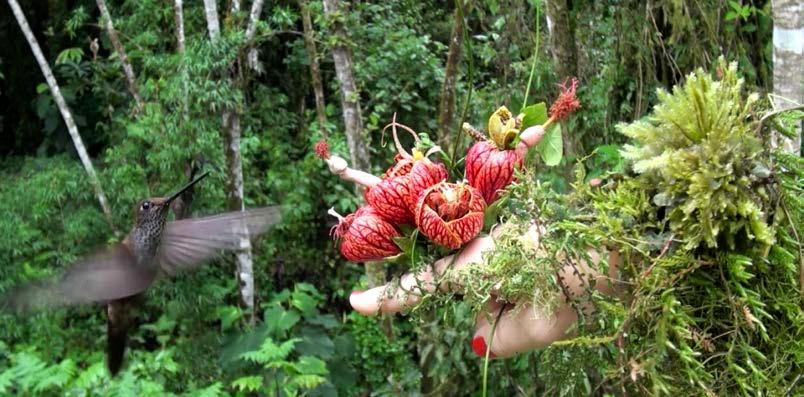
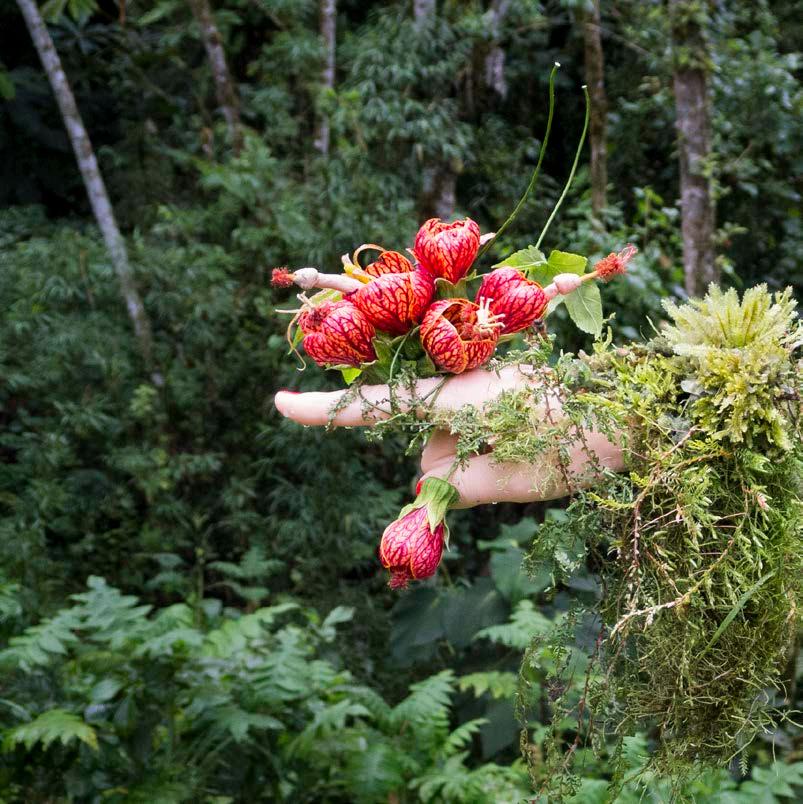
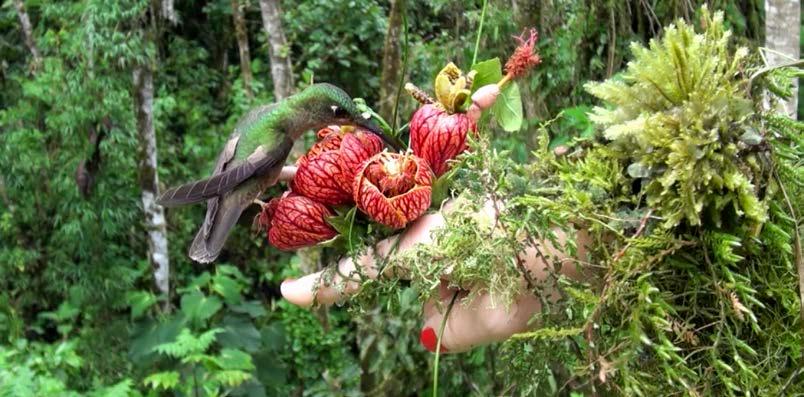
Multi-partner Pollination Event, 2014 Site- and species-specific intervention.
San Isidro, Ecuador. Silicone, wood, flowers, clay, moss, Bronzy Inca hummingbird.
FLICKER HORN
Mock-ups, 2015
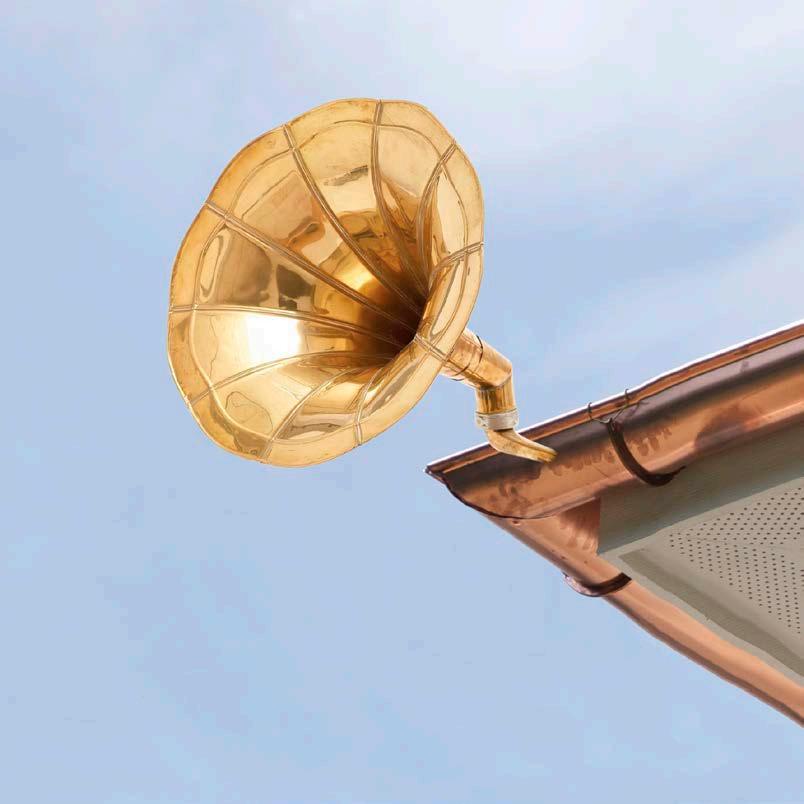
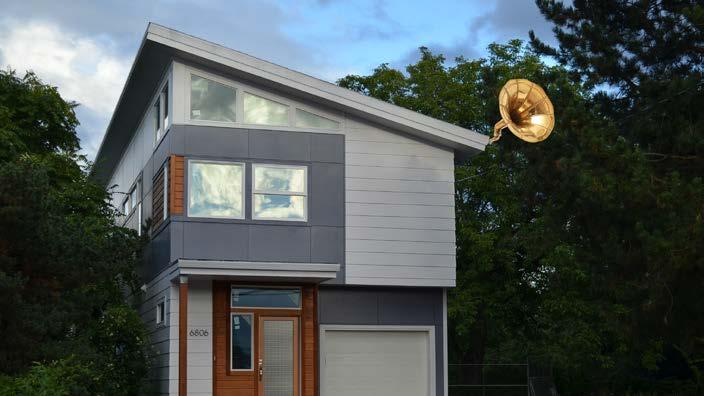
Flickers, a common woodpecker in semi-urban areas, make a loud, rapid drumming sound lasting about a second by hammering against trees or metal to attract a mate. But their hammering is often drowned out by human noise. These horns attach to gutters, their favorite sounding boards, to help them amplify their rhythms.
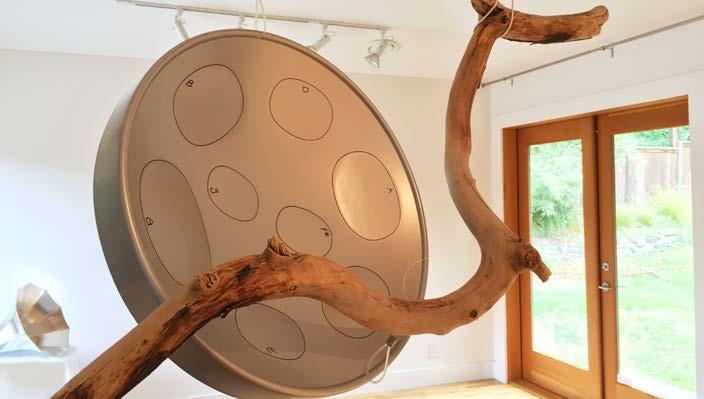
FLICKER DRUM
Wood, steel, rope, 2015
These steel drums attach to tree limbs and offer a range of bell-like notes for flickers to compose with.
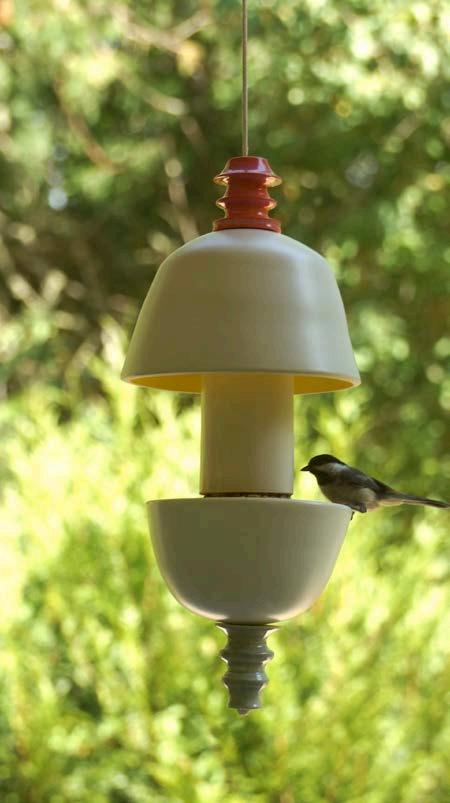
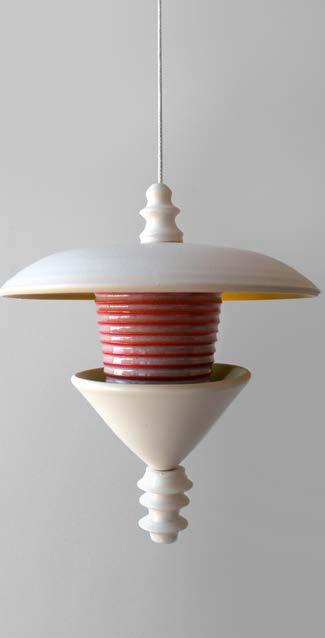
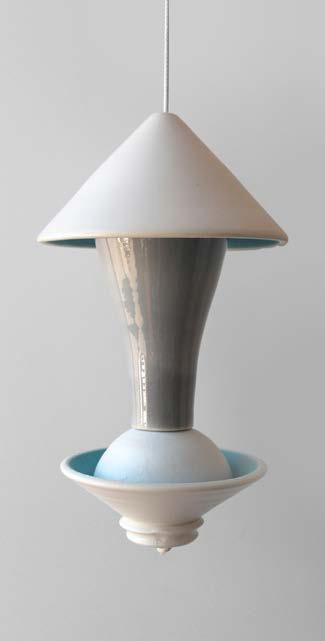
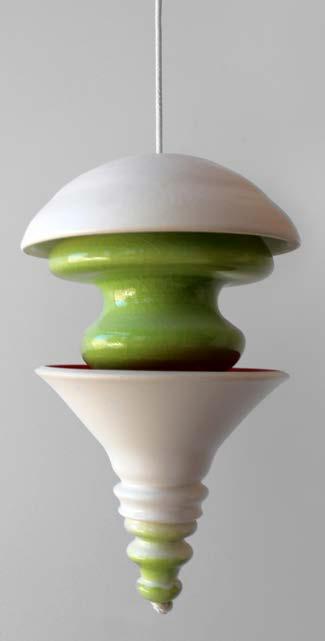
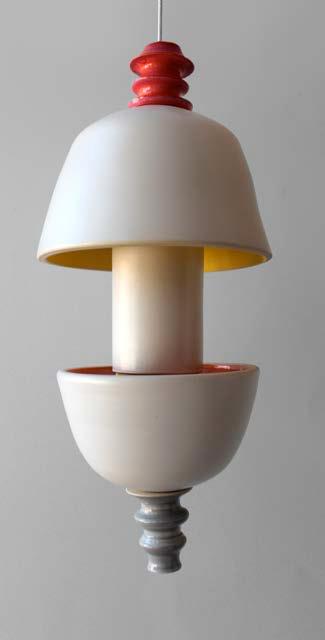
BIRD PENDANTS
Ceramic, rope, 2015
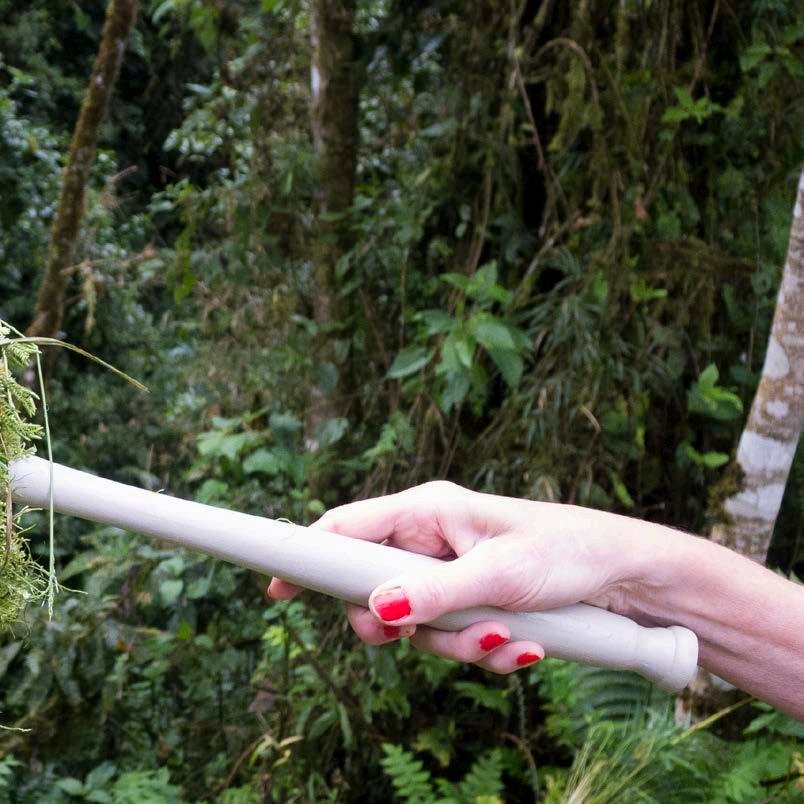
Bird pendants and handheld hummingbird feeders, in collaboration with Jessica Swanson and Trygve Faste.
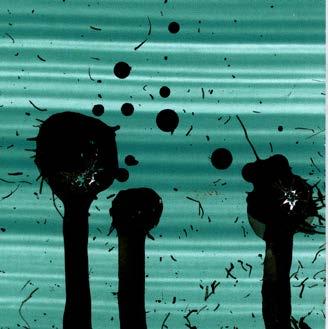
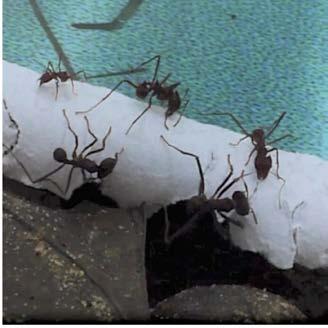
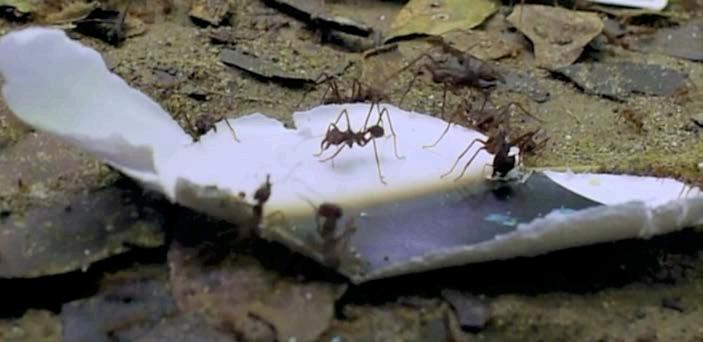
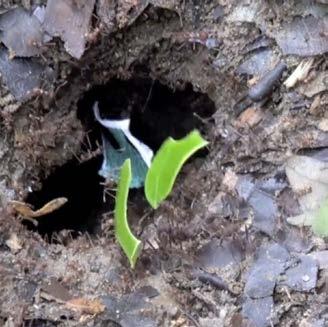
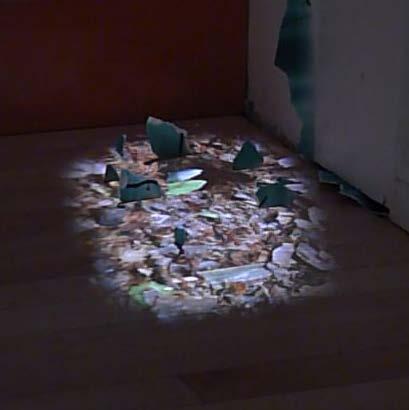
Clockwise from left: Z-68 Aqua Electra, Atta sexdens ant tracks in ink on Dutch Boy paint sample, 2.5” x 2.5”; Site document of ants cutting and collecting blown up print, Tiputini Biodiversity Station, Yasuní, Ecuador.
THE TASTE OF BLUE
During a residency at the Tiputini Biodiversity Station in the Amazon, I offered Dutch Boy Home Decorator series paint samples, along with non-toxic ink, to a colony of leafcutter ants.
The following year, I enlarged the print to human scale, which showed the dried ink and half-tone dots of the paint sample from the ant’s point of view, and returned with it to the original site, where I tore the 72”x72” print into pieces and “fed” it to the colony of leafcutters.
The ants quickly joined in and worked alongside me to cut and collect almost the entire print, while rejecting the color black.
The Taste of Blue, Video still, ants bring print into nest.
The Taste of Blue, Video projection of ants bringing print pieces into their nest, projected over print fragments. The White Box, Portland, Oregon, 2012
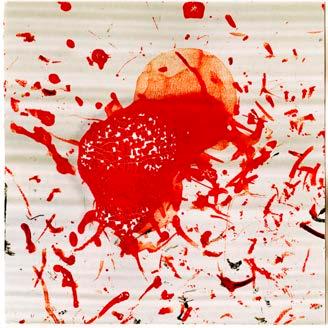
Dutch Boy N-43 Brushed Nickel
Atta sexdens ant tracks in ink on Dutch Boy paint sample, 2.5” x 2.5”
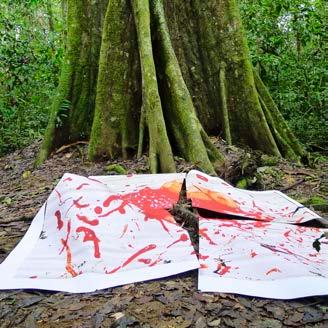
And Say the Animal Responded
Site intervention documents, Yasuní, Ecuador, 2013
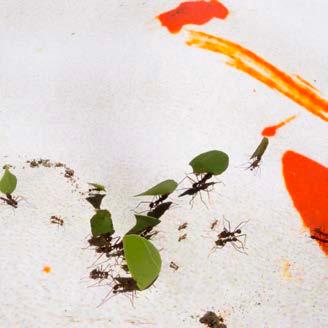
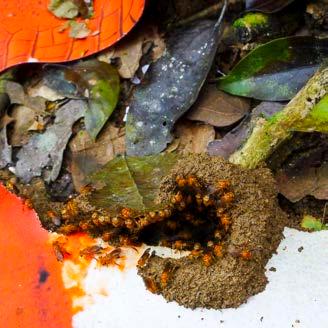
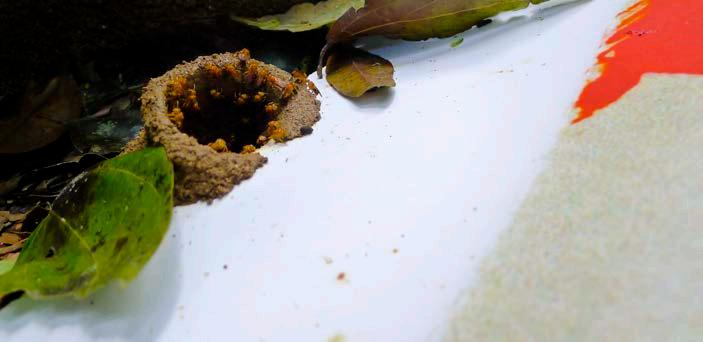
Day 1: print placed on ground near stingless bee and leafcutter ant nests.
Right, clockwise from left:
Day 2: ants explore surface of print while some begin to cut it up, overnight, stingless bees swarm the print
Day 3, ants stop cutting the print and relocate their harvesting trail to the print surface, stingless bees relocate their nest to underside of print and begin building entrance tunnels out of mud along edges.
Day 4: bees complete tunnels, leaf cutters establish multiple trails across print. The print is fully integrated into the local ecosystem.
AND SAY THE ANIMAL RESPONDED
During a later residency at the station, I placed an enlarged print of an ant track drawing near stingless bee and leafcutter ant nests. Although I found the ants’ gestural tracks to be curiously resonant with modernist abstract painting, my culturally specific meanings were lost on the ant authors themselves, as they and the bees explored, interpreted, and acted upon the surface’s materiality with entirely different sensory apparatus, spatio-temporal perspectives, social frames of reference, and agendas.
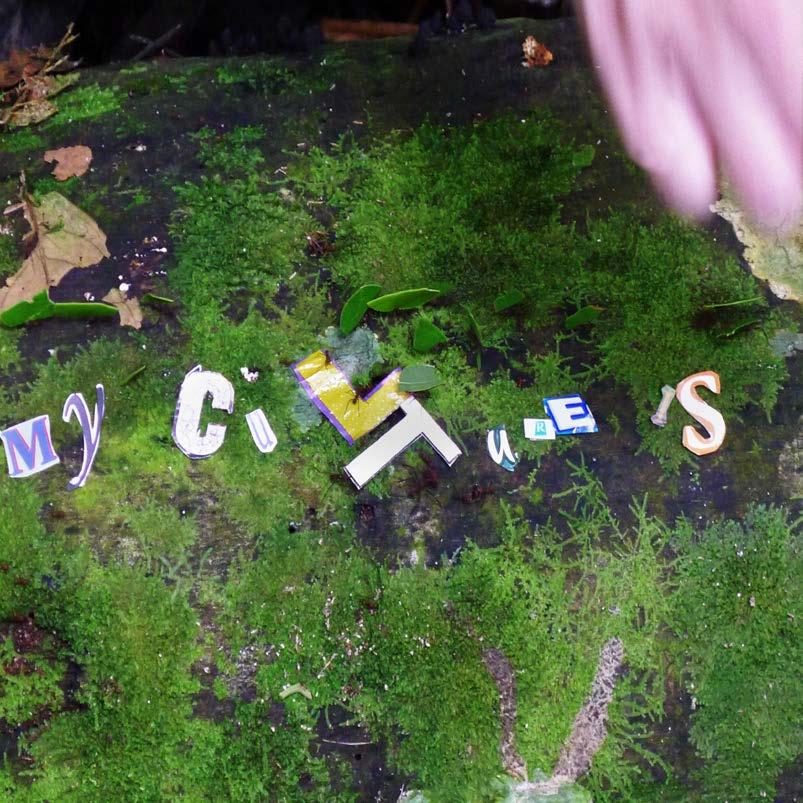
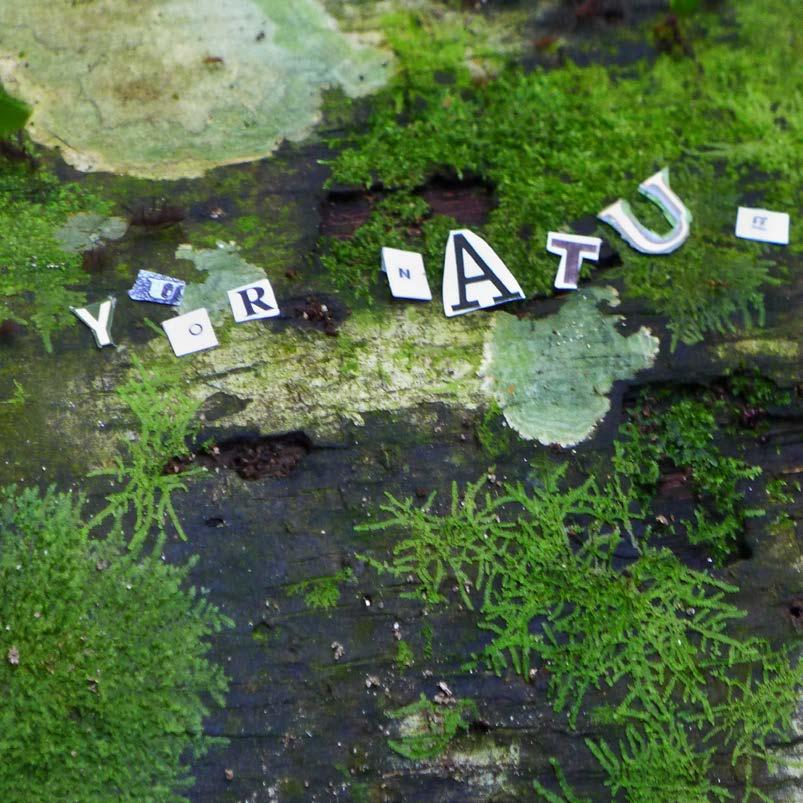
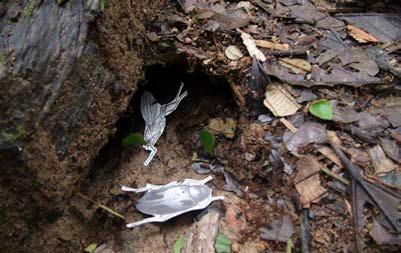
Letters appropriated from found material at the Tiputini Biodiversity Station, Ecuador arranged on a leafcutter ant trail to spell out MY CULTURE IS YOUR NATURE. A video of the site intervention captures the ants removing MY CULTURE IS, while inexplicably leaving YOUR NATURE.
My iS YoUR , Video Still, 2013
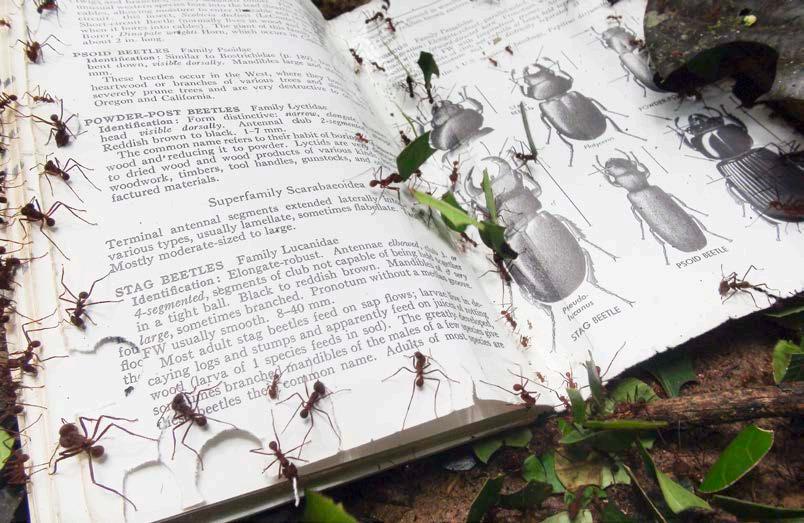
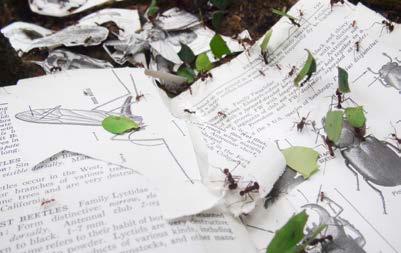
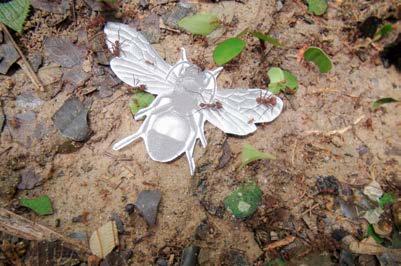
TEACHING AID
2014, Video stills: 2:20
Site intervention, Peterson’s Guide to the Insects, Tiputini Biodiversity Research Station, Yasuní, Ecuador.
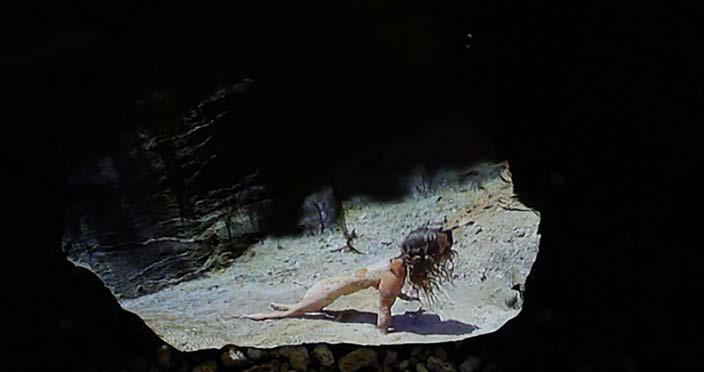
In The Heat of the Rock for the Lizard , a video of a woman enacting lizard territorial displays is projected onto a rock. Heidegger uses the lizard’s relationship to the rock on which it suns and displays itself as an example of the difference between humans and animals. Here the rock is reinterpreted as a site for cultural performance.
LEARNING LIZARD
Learning Lizard is a multi-component, ongoing project done in collaboration with biologists Peter Wetherwax and Emilia Martins, philosopher Ted Toadvine, and anthropologist Philip Scher. Lizards use head bob and push up displays to communicate with one another, to compete for territory, and to attract mates. These movements involve “hard-wired”, learned, and improvisational movements, resulting in a range of regional “dialects” and subtle individual embellishments. Learning Lizard represents an attempt at interspecies communication involving mirrored rocks, video projections, lizard robots, and finger bob movements that mimic lizard head bobs.
The Heat of the Rock for the Lizard Video projection still, looped video, 2014
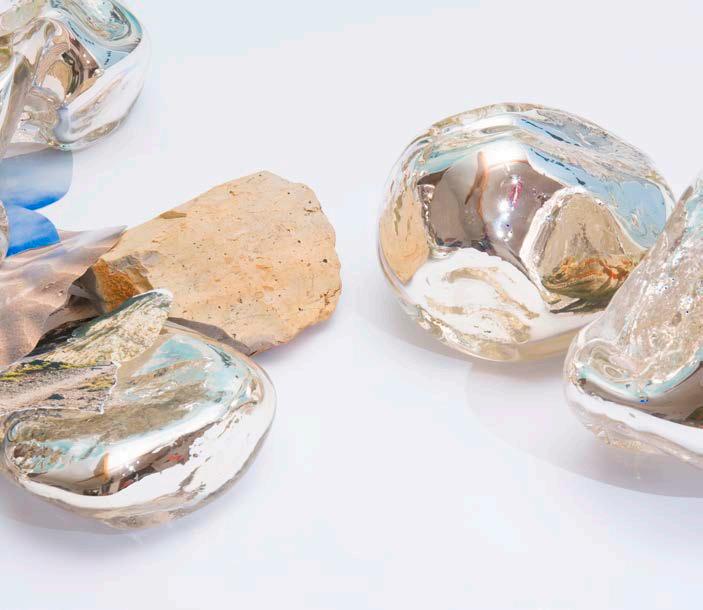
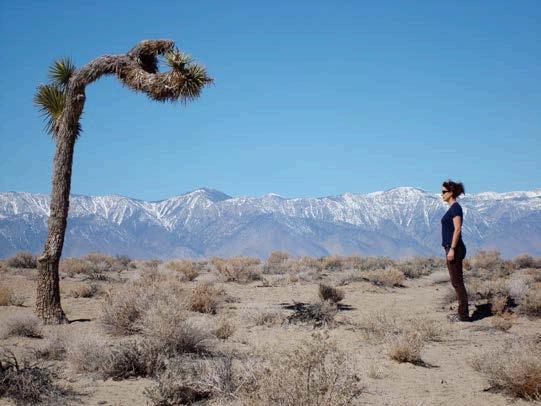
Mirrored rocks to be installed in lizard territory, Joshua Tree National Park.
Lizard Mirror Glass, rocks, paper, lizard, 2015
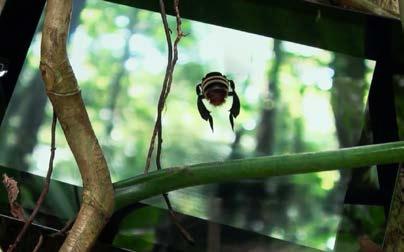
MIMETIC EXCESS
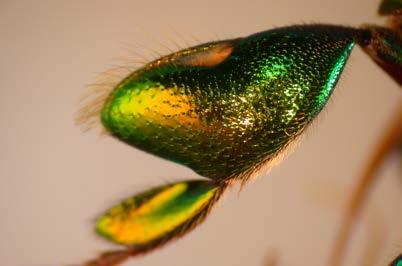
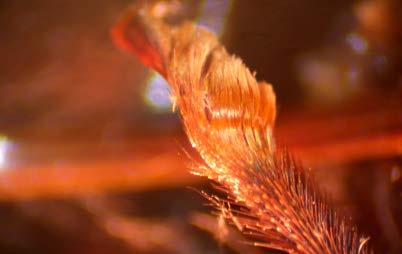
Each species of male orchid bee attracts females of his species with complex perfume blends he composes by collecting different natural fragrances. When a male releases his unique perfume mixture, consisting of over 30 scents collected over a lifetime, he is advertising his desirability to potential mates. For this site-and speciesspecific intervention, artificial scents were put out for male bees to collect, while a video of a bee performing a territorial display was played on an iPad hung in a tree. Multiple species of orchid bees responded.
Top: Mimetic Excess, video, 4:38, 2014
Center: Magnified Orchid bee leg showing leg sacks for storing scents.
Bottom: Magnified Orchid bee leg showing leg combs used to collect scents.
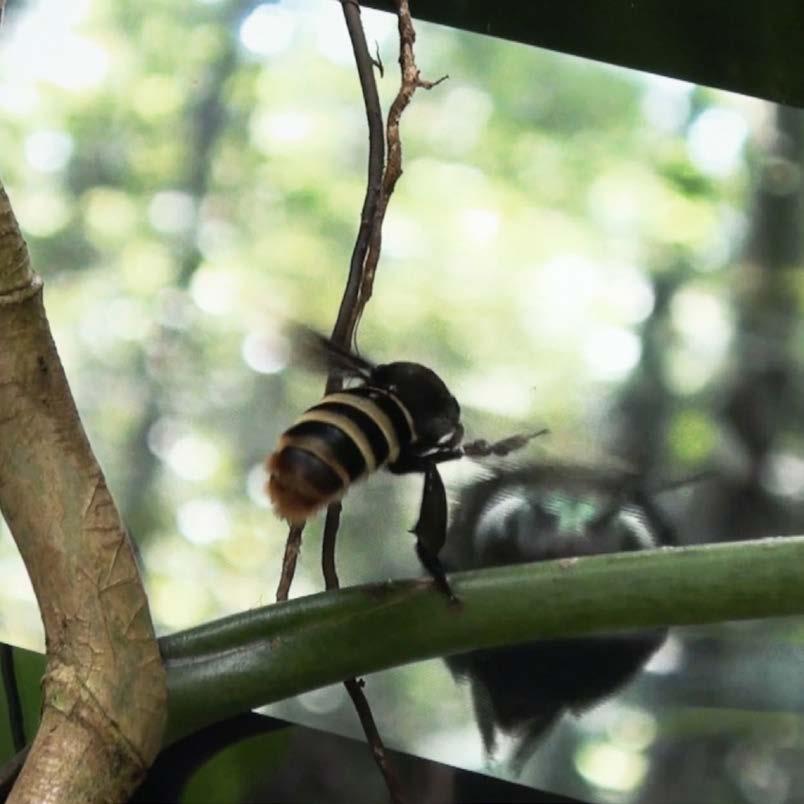
Mimetic Excess. 2014, video still
Site intervention, Tiputini Biodiversity Research Station, Yasuní, Ecuador
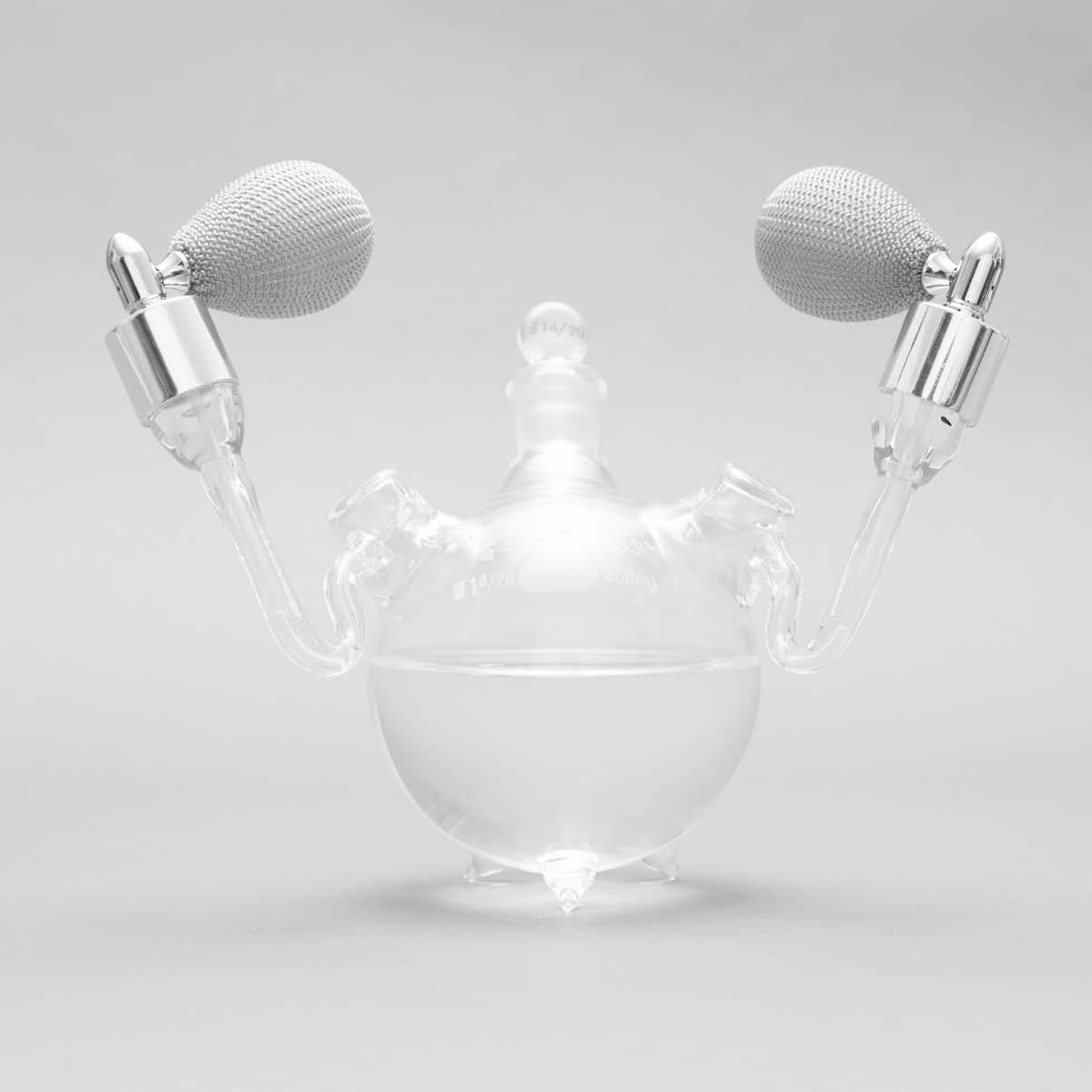
EUGLOSSA SP.
Hand blown bottle containing a reproduction of the perfume male orchid bees create to attract a mate.
Perfume in collaboration with Santiago Ramirez, UC Davis, bottle by Sky Glass.
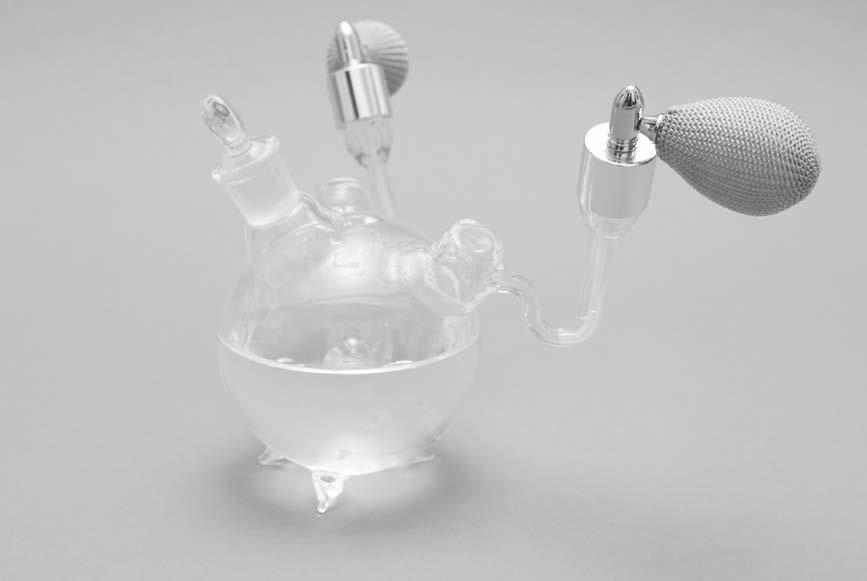
Euglossa sp.
Glass, metal, fabric, perfume, 5” x 9” x 6 ½”, 2015
Carla Bengtson’s site-responsive projects, situated in wild, domestic, and liminal spaces, create possible/ impossible situations in which to attempt interspecies communication. In these playful mediations between human nature and nonhuman culture, media act as surrogates for human action, interrogating what might be seen and what might be said between species, while revealing what signs and images can and cannot effect. Bengtson has received numerous awards, including an Oregon Arts Commission Integrative Sciences Award and an NEA Individual Grant for Artists, and has held residencies at the Ucross Foundation in Wyoming, the Tiputini Biodiversity Research Station in the Amazon, and a Signal Fire Outpost Residency at the Arizon/ Mexico border. Selected exhibitions include Gridspace, New York, Demo Projects, Springfield, Illinois; POP Gallery, Queensland, Australia; JayJay Gallery, Sacramento, California; San Francisco Fine Art Fair; Art Fair Miami; RKL Gallery, New York; the Painting Center, New York; the Portland Museum of Art, Portland; and the Holter Museum of Art, Helena, Montana. Bengtson has lectured on environmental thought at International Environmental Philosophy and Biodiversity Conservation Conferences in the US, Canada, and South America. She is currently Head of the Department of Art at the University of Oregon.
Peter Wetherwax is a pollination biologist in the Institute of Ecology and Evolution in the Biology Department at the University of Oregon, as well as an Associate of the Environmental Studies and Latin American Studies Programs. He has a past life as a professional musician, and is currently collaborating with artists on projects between art and science.