Tell Our Stories: Artifacts from the Assyrian Genocide
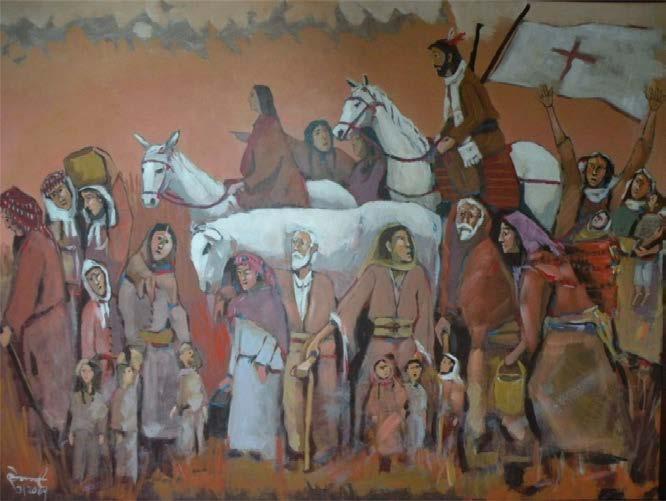

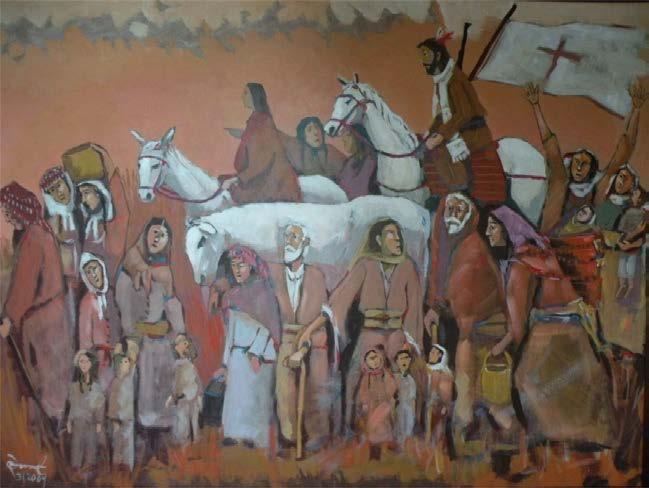
Tell Our Stories: Artifacts from the Assyrian Genocide - represents a unique opportunity to examine personal narratives and historical artifacts that explore the Assyrian Genocide era - roughly 1895 through 1924 in the Ottoman Empire and Persia. As time goes on we must not forget the countless people that have been claimed by genocide. In many cases, entire families have been erased from the face of the earth. This exhibit gives us the opportunity to remember the victims and ensure that they will not be forgotten.
Stanislaus State is fortunate to have exceptional faculty and departments that further the study of historical events. Understanding the successes and failures of the past help guide, and hopefully improve, our future. Our exhibitions generate meaningful discussions and lifelong learning and also support the faculty’s ability to provide more meaningful education to our students.
It is an honor to be able to exhibit these artifacts for others to experience. I would like to thank the many colleagues that have been instrumental in presenting this exhibition. Kathy Sayad Zatari, Ruth Kambar, Hannibal Travis, and Erin Hughes for the curation of the exhibition, with the support of Nora Lacey of the Assyrian Arts Institute, Brad Peatross of the School of the Arts, California State University, Stanislaus for the catalog design and Parks Printing for the printing this catalog. This project was made possible with support from California Humanities, a non-profit partner of the National Endowment for the Humanities. Our gratitude is also extended to the Instructionally Related Activates Program of California State University, Stanislaus, as well as anonymous donors for the funding of the exhibition and catalogue. Their support is greatly appreciated.

Dean De Cocker, Gallery Director California State University, Stanislaus
This project was made possible with support from California Humanities, a non-profit partner of the National Endowment for the Humanities. Visit calhum.org.
Any views, findings, conclusions, or recommendations expressed in this exhibition and catalog do not necessarily represent those of California Humanities or the National Endowment for the Humanities.
This project is also made possible with the support of California State University Stanislaus and the Sarguis Modern Assyrian Heritage Project, the Assyrian Arts Institute, and the Assyrian Studies Association.
Our sincerest appreciation to those who shared family stories, photographs, cherished memorabilia, and other items that helped make this exhibition possible and help to further document this crucial history.



In conceiving this exhibition, Tell Our Stories: Artifacts from the Assyrian Genocide, our aim was to use personal narratives and historical artifacts to explore the Assyrian Genocide era - roughly 1895 through 1924 in the Ottoman Empire and Persia - and the subsequent experience of resettlement in the US. Our hope was that it could provide members of the Assyrian diaspora the ability to participate in its creation through sharing personal histories and artifacts, and that this might help to build a collective narrative of genocide and survival.
The Assyrian Genocide is one of the lesser-known chapters of genocide. An estimated 250,000 Assyrians were killed in what is now Turkey and northwest Iran by Ottoman Turks and allied Kurds. 1The aftermath of any genocide is of course traumatic, and in addition to the loss of family and community, these horrors permanently forced survivors from their homes, tens of thousands of whom were never able to return. For Assyrians everywhere, the imprint of the Assyrian genocide has been devastating. It has informed many of the cultural and political experiences in the Assyrian community for more than a century.
Those who remained in the Middle East have continued to suffer to the present day. Several thousand Assyrians perished in a wave of ethnic cleansing in Iraq in 1933. Throughout the latter half of the 20th century, Assyrians endured and often fled state repression, persecution, and violence. Less than a decade ago, Assyrians were once again subject to ethnic cleansing in Iraq and Syria by the Islamic State of Iraq and Syria (ISIS). The WWIera genocide can, and should, be seen in the larger historical context of the ethnic cleansing of an indigenous population in the Middle East.
Today, more than 400,000 Assyrians live in the U.S., almost one-fourth of whom are settled throughout California. The Assyrian community has deep roots in the Turlock area in particular as the first farming settlement of Assyrians in the U.S., established by a group of families from northwest Iran in the early 20th century.2 After WWI, California also became home to Assyrian genocide survivors and refugees. Other Assyrian communities are found in Arizona, Connecticut, Florida, Illinois, Indiana, Michigan, New York, New Jersey, and elsewhere.
The oral histories of these dispersed families are central to this exhibition. The exhibition tells the stories of the survivors whose photos we see – survivors who lost countless family members to the genocide, who endured unspeakable hardship, and who built a future for their families. We hope this showcase will acquaint the larger Stanislaus community with these experiences and further an understanding of this important part of our region’s heritage.
Kathy Sayad Zatari
Ruth Kambar
Hannibal Travis
Erin Hughes
1 Hannibal Travis (2006) ‘‘Native Christians Massacred’’: The Ottoman Genocide of the Assyrians during World War I, Genocide Studies and Prevention, 1(3), http://www.aina.org/reports/togotadww1.pdf.
2 Arianne Ishaya (2010) Familiar Faces in Unfamiliar Places: Assyrians in the California Heartland 1911-1920. Xlibris Corporation.
Assyrians are amongst the indigenous people of the Middle East, descending from one of the region’s earliest cultures, and for millennia have been an ethnic, cultural, religious and linguistic minority in the region. The indigenous Assyrian homeland spans what was, prior to WWI, Persia and the Ottoman Empire - today, the modern states of Iran, Iraq, Syria, and Turkey.
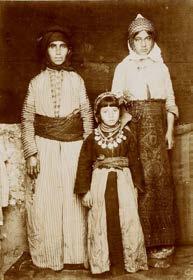
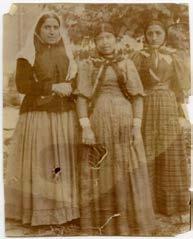
Image: Assyrian women in Midyad, Turabdin (southeast Turkey), beginning of the 1900s.
(Image courtesy of the Mesopotamian Library/Jan Bet-Sawoce)
Image: Assyrian teachers at the Fiske Seminary in Urmia, Persia, circa 1900. (Shedd Family Archives, Presbyterian Historical Society)
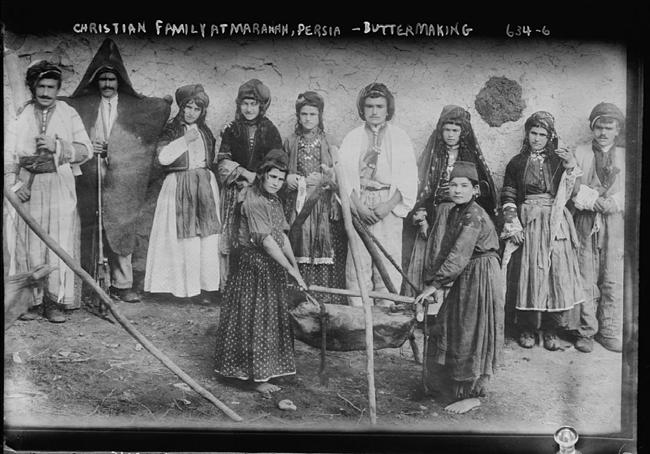
Image: Assyrian family making butter, Mawana, Persia (northwest Iran). (Library of Congress, undated)
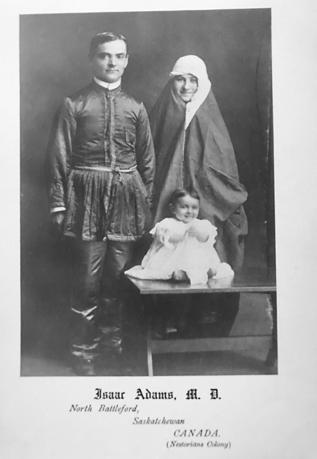
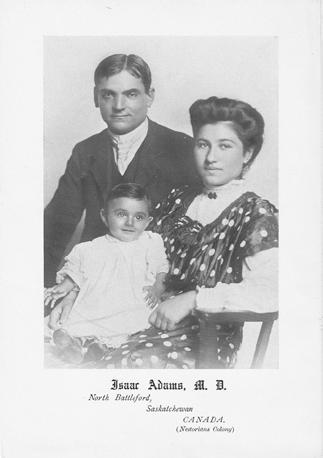
Assyrian migration between the MIdle East and North America began long before WWI. As one example, at the age of 17, Isaac Adams journeyed almost 6,000 miles from Persia to America to study both medicine and ministry. While he could have remained in America, he was determined to help his people and returned to Persia time and again. However, because of increasing persecution, in 1903, Dr. Adams brought a group of Assyrian families to start a new life in Canada. While California was his first choice because of its similar climate, sufficient land was not affordable at the time, and thus the decision was made to settle in Canada where land was more readily available.
Image: Isaac Adams, his wife Sarah, and son John in North Battleford, Canada. The family dressed in traditional clothing while lecturing to raise funds to bring Assyrians to North America.
Image: Isaac, Sarah, and John Adams in North Battleford, Canada.
(Images courtesy of the Isaac Adams/ Bennett/ Peterson Family Photos)
In 1914, the Ottoman Empire entered the First World War alongside Germany and Austria-Hungary. That same year, the Ottoman Empire began a campaign of genocide against Assyrians, as well as Armenians and Pontic Greeks. An estimated 250,000 Assyrians were killed, and witnesses to the genocide noted that an estimated half of the Assyrian nation died during this period, the result of murder, disease, starvation, and exposure.
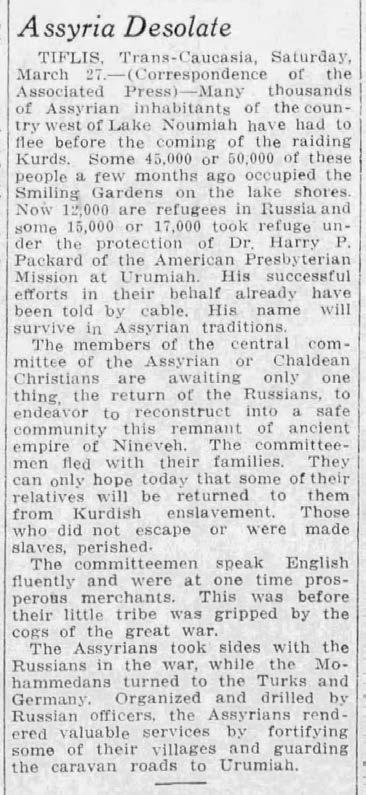
Image: “Assyria Desolate,” Fresno Morning Republican, 3 May 1915.
This article notes an attack on Urmia while also demonstrating how the fog of war can lead to not fully-accurate contexts, as seen in the last paragraph.
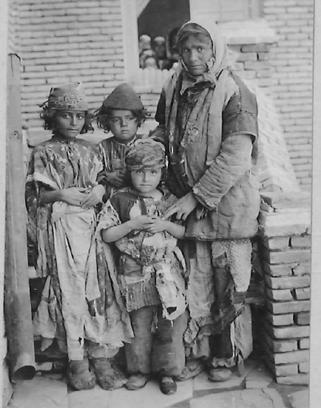
Image: Assyrian refugees from Hakkari
An Assyrian mother and children, refugees from the Hakkari region of Anatolia (Ottoman Empire), photographed in Urmia, Persia, during the fall of 1915.
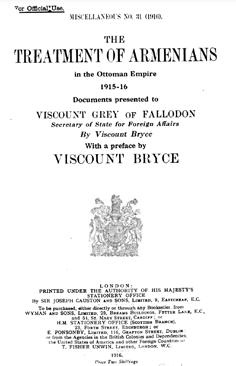
Image: The Treatment of Armenians
The infamous ‘Blue Book’ (officially titled The Treatment of Armenians in the Ottoman Empire, 1915-16: Documents
Presented to Viscount Grey of Fallodon, Secretary of State for Foreign Affairs, By Viscount Bryce ) was a report commissioned by the British government in 1916 on the atrocities committed against Armenians and Asssyrians by the Ottoman Empire. The report presented extensive eyewitness testimonies, letters, news reports, and other accounts documenting what would later be called genocide.
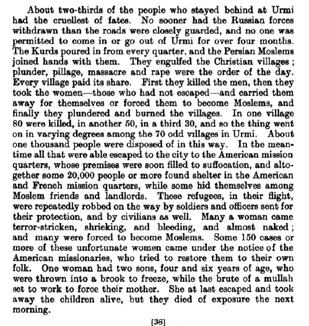
Image: Testimony from Paul Shimmon
An early account of the genocide by Paul Shimmon that was initially published in Arat in 1915. Excerpt from The Treatment of Armenians in the Ottoman Empire (HMSO 1916).
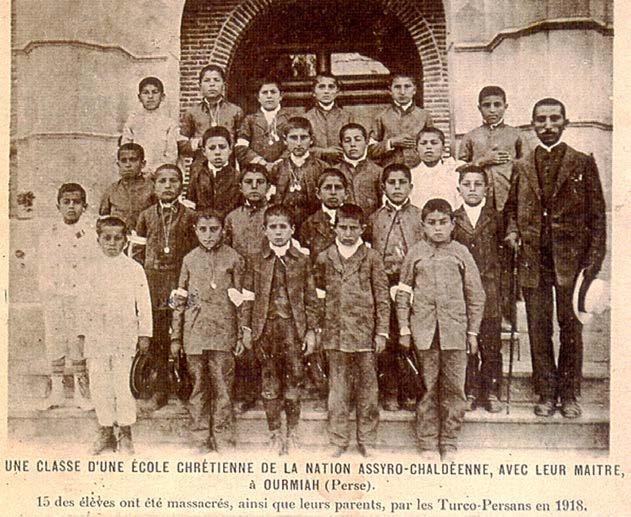
Image: Urmia Schoolchildren
A class of Assyrian (Assyro-Chaldean) students with their teacher in Urmia, Persia. The caption notes that fifteen of the students were massacred, along with their parents, in 1918.

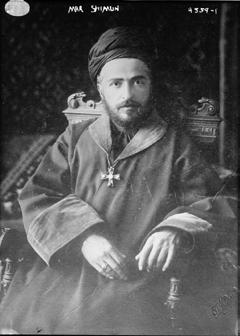
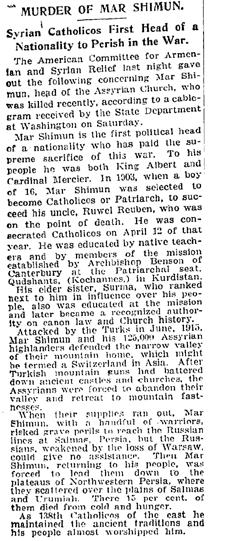
Mar Benyamin Shimun XXI was the 117th Patriarch of the Church of the East, serving as both a spiritual and temporal head of the Assyrian nation. He also served as a leader of the Assyrian armies during the First World War as Assyrians fought against Ottoman and Kurdish onslaught. He was murdered during treaty negotiations with a Kurdish chieftain in 1918.
Image: Mar Benyamin Shimun XXI (photograph estimated to be taken between 1915 to 1918) (Library of Congress)
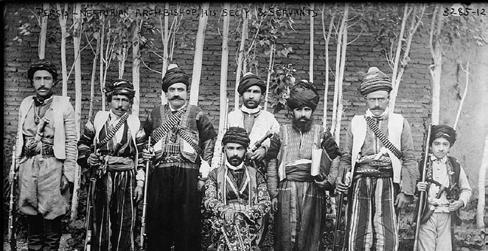
Image: Shemasha (Deacon) Ishai d’Mar Shimun (father of Mar Benyamin Shimun), seated with attendants, likely sometime between 1890-1895. (Library of Congress)
Image: Obituary for Mar Benyamin Shimun XXI published in the New York Times, 15 April 1918.
Thousands fled Anatolia and Urmia for refuge in southern Iraq, which was by then under British control. A camp was set up in Baquba, near Baghdad, to provide shelter and humanitarian aid to up to 40,000 Assyrian and Armenian refugees and survivors.
Image: Article from the Washington, DC, Evening Star, ‘Bagdad Refugee Camp Gives Succor to 34,000’, describes the opening of the Baquba refugee camp near Baghdad, Iraq, in October 1918.
Image: Map showing the mountainous trek made by Assyrians fleeing violence in Anatolia and Urmia to arrive in the Baquba refugee camp. (Image from Norman Solhkhah, & Sam Darmo Assyrians and Armenians in the Ba”Quba Refugee Camp , published by Dr. Edison Ishaya & AUA Foundation)
Image: Assyrian refugees who fled North Persia were photographed waiting beside a railroad in a Mesopotamian desert for a train to transport them to refuge. (Photograph by Underwood & Underwood, N.Y., Library of Congress)
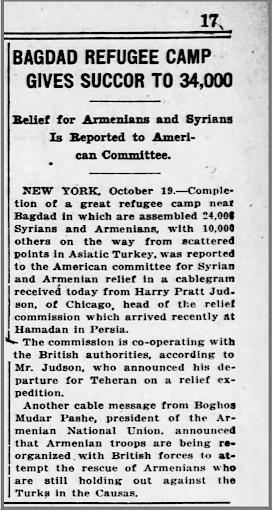
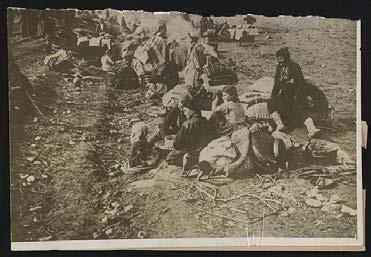
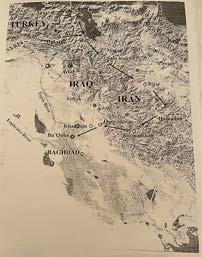
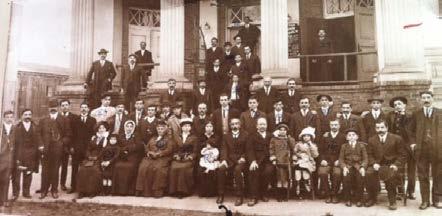
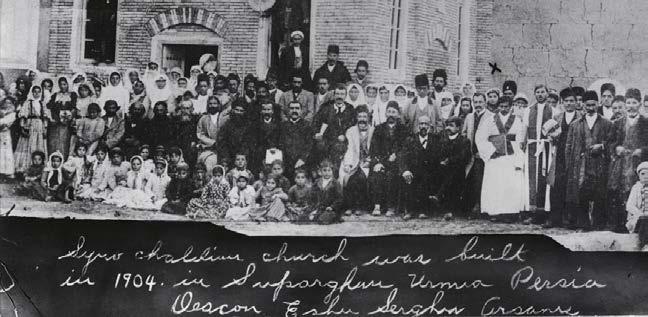
Image: 1904 Church in Urmia
Deacon Eshu Serghis Arsanis (the priest to the right) and Sophia Perokian Arsanis are pictured with members of the Syru Chaldean Catholic Church built in 1904 in Supurghan, Urmia, Persia. The family states this is the only known photograph taken before the massacres of 1915 and 1918.
Image: Assyrians of San Francisco Assyrians of San Francisco in 1915, including members of the Arsanis family.
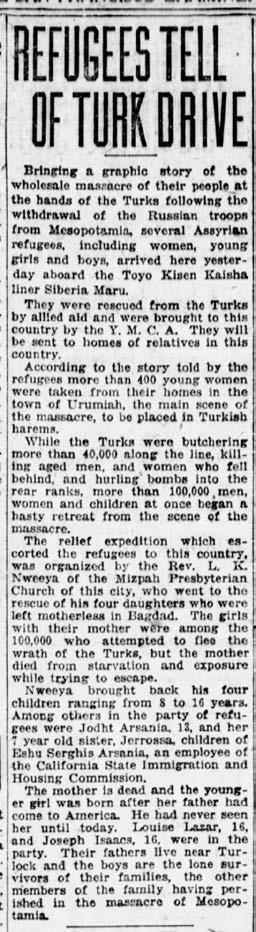
Image: “Refugees Tell of Turk Drive”
News article from the San Francisco Examiner on 28 August 1920, which details the rescue of several children who were later brought to San Francisco and Turlock to be reunited with family members.
(Photographs courtesy of Michael Arsanis)
The genocide left thousands of children orphaned. Orphanages were established, often with the support of the diaspora. In 1920, an urgent plea was sent to the Assyrians of New Jersey and New York by Paul Jean, who had been a Colonel in the French Army during WWI, that immediate financial help was needed to provide 35 Assyrian orphans in Adana (then under French Mandate) with food, shelter and clothing. A group of patriotic Assyrian women formed an association called the Assyrian National Relief to aid these orphans and others in need. However, within a few years, the League of Nations returned Adana to Turkey and, in 1923, the children of the Orphanage were moved to Beyrouth (Beirut), Lebanon, for greater safety.
Image: The Assyrian National Orphanage after relocating to Beirut, Lebanon.
Image: Teachers and Orphans at the Orphanage in Beirut, Lebanon. The image is from a memorial dinner booklet hosted by the Assyrian National School Association in 1937.
(Images courtesy of the Assyrian Studies Association Archive)
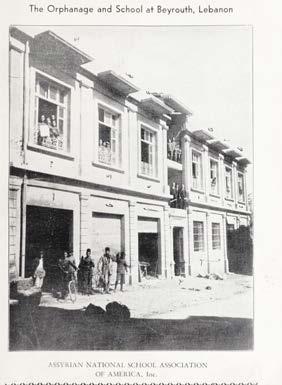
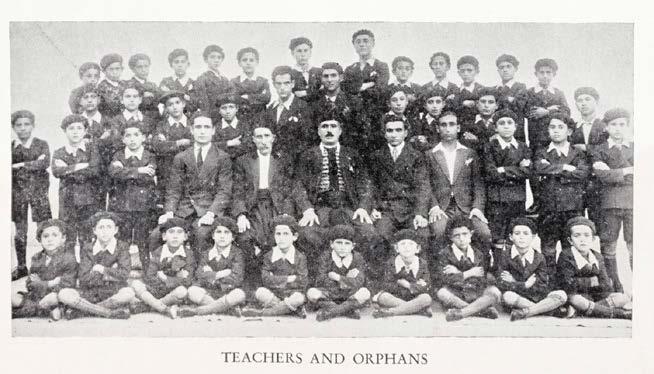
Image: Assyrians in 1925 Mosul
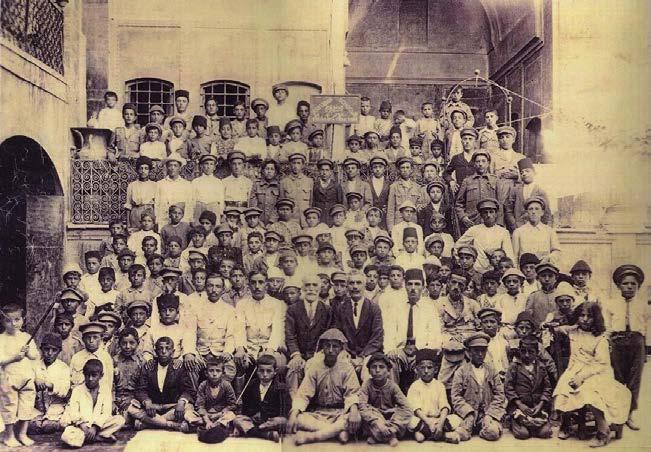
Assyrian schoolchildren in post-war Mosul in 1925. The school was established by Yosip Qelaita in 1921.
(Image belonging to Shemasha Yosip Zia from the Assyrian International News Agency/AINA)
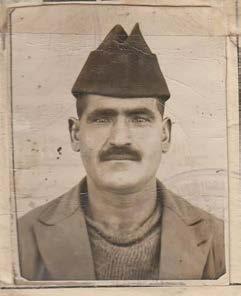
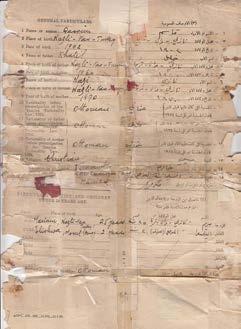
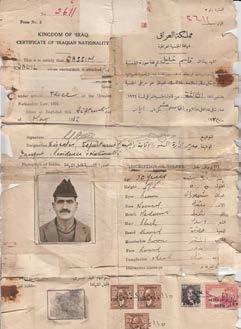
Pictured here are identity documents for Qasim Khalil Khamo from 1932 provided by his granddaughter, Shahen Kasem. Mr. Khamo fled Turkey sometime during the genocide and arrived in Iraq, where his family lost track of him. Like tens of thousands of Assyrians who lost track of family members from the genocide, his family would still like to know what became of him or the rest of his family.
(Images courtesy of Shahen Kasem)
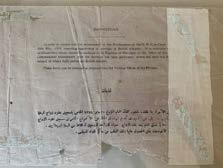
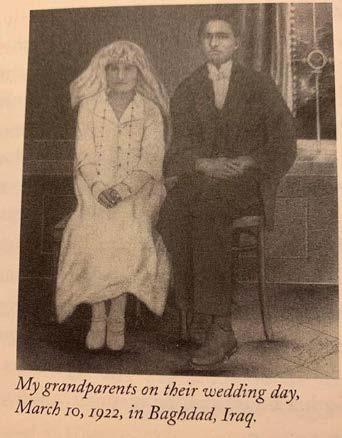
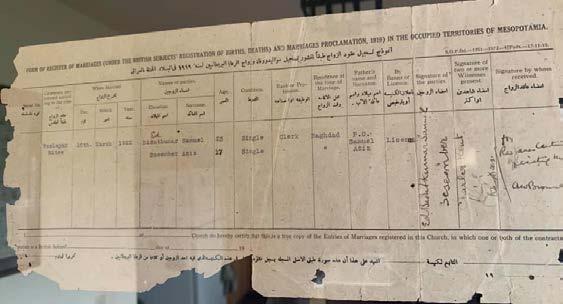
Sometime in 1914, during WWI, a young Indian British soldier headed to Iraq from India to fight for the British and Allied Forces. A year or two later, an Assyrian teenage girl made her way to the Red Cross Refugee camp in Baquba, Iraq. The soldier was also a member of the YMCA, which held prayer meetings at the refugee camp, where he saw this red-haired Assyrian girl and knew he had to marry her. Their names were Edward Benjamin Samuel and Susember Rasho, and they married in 1922 at the Red Cross Camp.
Image: The couple on their wedding day.
Image: A copy of their marriage certificate from the British Mandate of Mesopotamia.
(Images courtesy of Shabnam Samuel)
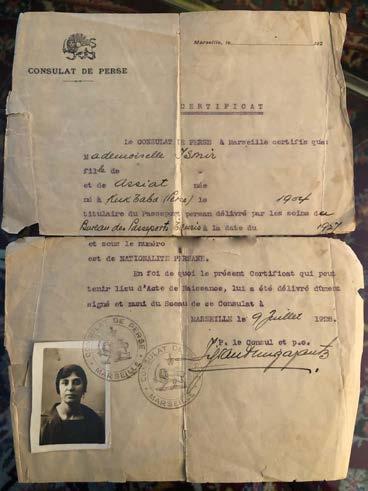
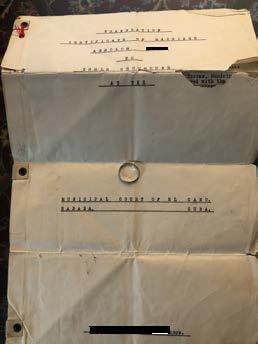
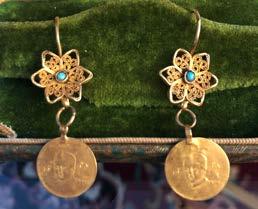
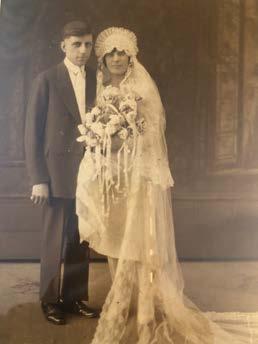
Pictured here are items belonging to Asmar, a young Assyrian woman who fled the Urmia region during the genocide. She was born in Persia in 1904, fled the genocide in 1915, and received identity papers from the Persian Consualte in Marseille, France, in 1927. She wore the earrings pictured here as she fled, and is shown wearing them again on her wedding day. She and her husband married in Cuba in 1929 while waiting for immgration restrictions to lift so they could settle in the United States.
Image: Identity Certificate
Image: Earrings
Image: Marriage Certificate and Wedding Ring
Image: Wedding Photo
(Images courtesy of Anonymous Lender)
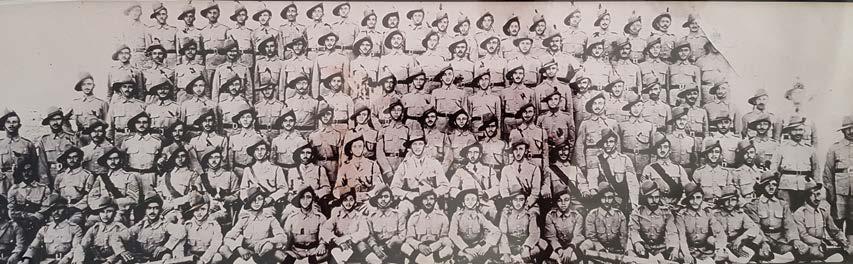
After WWI, the League of Nations placed Iraq under British Mandate. The British created the Assyrian Levy Battalion to serve as a professional military force within Iraq. The Levies provided vital assistance in protecting the Habbaniya Royal Air Force Base during WWII, and some members fought in Europe in support of the Allied effort.
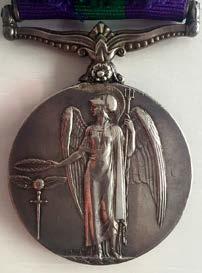
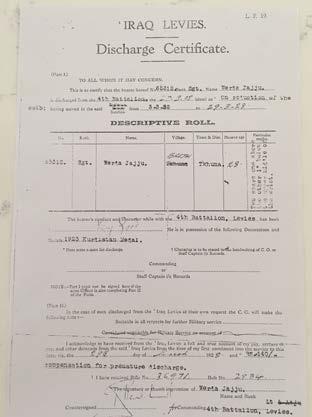
Pictured are items belonging to Werda Jajju, a genocide survivor who arrived at the Baquba refugee camp and later served in the Levies from 1922 until 1928.
Image: Mr. Jajju’s military medallion
Image: Discharge certificate
Image: Mr. Jajju’s Levy unit
(Images courtesy of Ramona Jajoo)
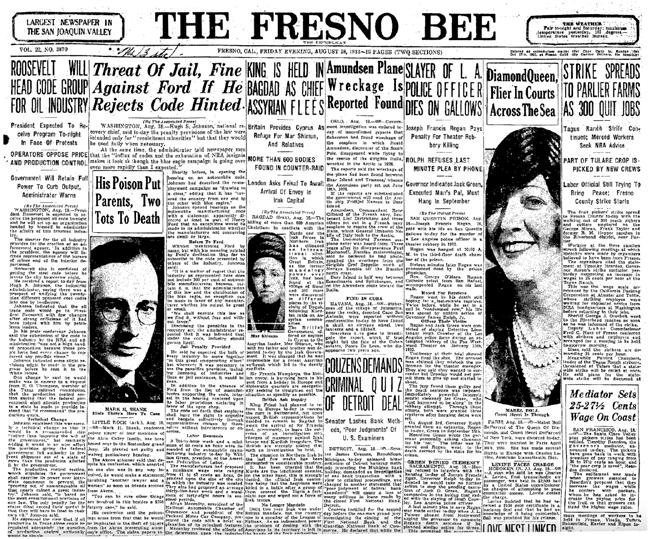
Assyrians in Iraq again experienced a rash of violence in 1933, when the newly-independent Iraqi state carried out massacres against Assyrians in northern Iraq. Roughly 3,000 Assyrians were killed and over 60 Assyrian villages looted and destroyed in what became known as the Simele Massacres. This article from the Fresno Bee demonstrates that news of these atrocities reached as far as California.
Image: Cover of the Fresno Bee , 18 August 1933
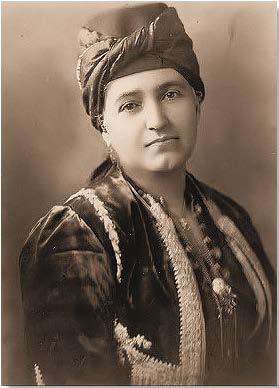
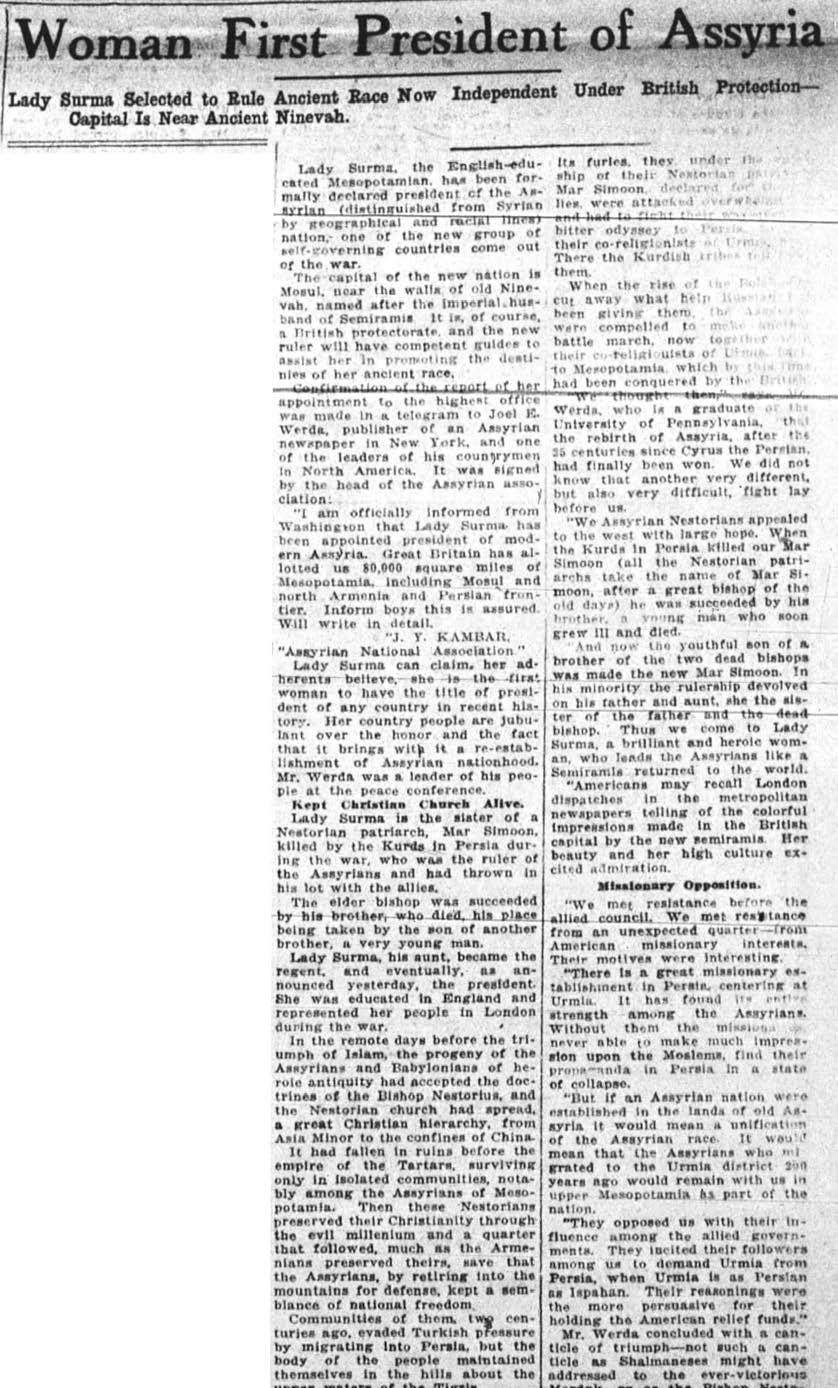
Lady Surma D’Bait Mar Shimun emerged as a leader and caretaker of the Assyrian nation during one of its most difficult periods in modernity. Her two brothers died during their successive roles as Patriarchs of the Church of the East: Mar Benyamin Shimun XXI was killed in 1918, and Mar Paulos Shimun XX died of illness two years later in Baquba. Her nephew Mar Eshai Shimun XXIII was only twelve years old when he was installed as Patriarch, and Lady Surma served as an ambassador of Assyrian interests as he prepared for his role.
In the aftermath of WWI and the remaking of state borders, there was an expectation amongst many Assyrians that the British would provide Assyrians some measure of autonomy. Newspapers eagerly profiled the woman who was to become the leader of an independent Assyria. However, Assyrian self-rule never materialized and Lady Surma, Mar Eshai Shimun, and their family were ultimately forced to leave Iraq, resettling in the U.S. She is buried in Turlock, California.
Image: Surma D’Bait Mar Shimun (Library of Congress)
Image: “Lady Surma On Visit To Aid Countrymen,” New York Times, 17 March 1926
Image: “Lady Surma is Likely to be President..,” Sunday Oregonian, Oregon, 21 August 1921
Image: “Woman First President of Assyria,” Springfield Leader and Press, Missouri, 7 August 1921
Image: “Assyrian Regent to Speak at High School in Turlock”, Modesto News Herald, California, 6 June 1926
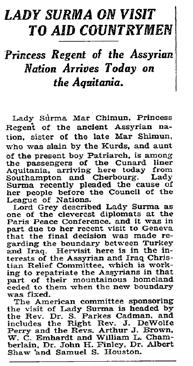
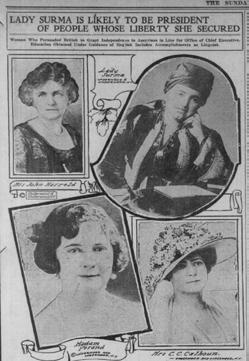
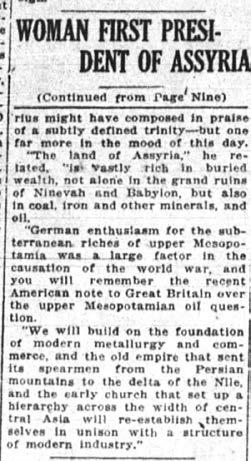
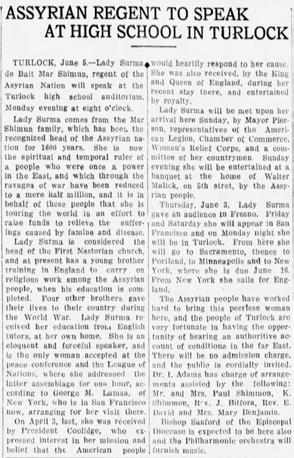
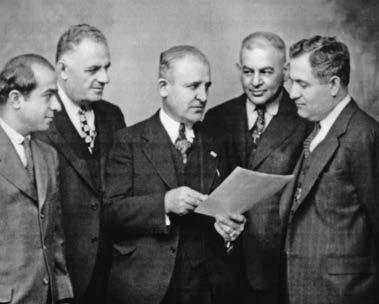
The Assyrian diaspora in the US has long been active in organizing to assist Assyrians in both the US and the Middle East. One example is the Assyrian National Federation, which formed as an emergency response to the 1933 Simele Massacres. Known later as the Assyrian American Federation and today as the Assyrian American National Federation, the Federation works to bring together domestic Assyrian organizations throughout the U.S.
Image: Ronald (Izzy) Yonan, David Jacobs, Joseph Durna, Sam Aslan, and David Perley.
Pictured are four of the founders of the Assyrian National Federation in 1933 conferring over the creation of the Federation Papers.
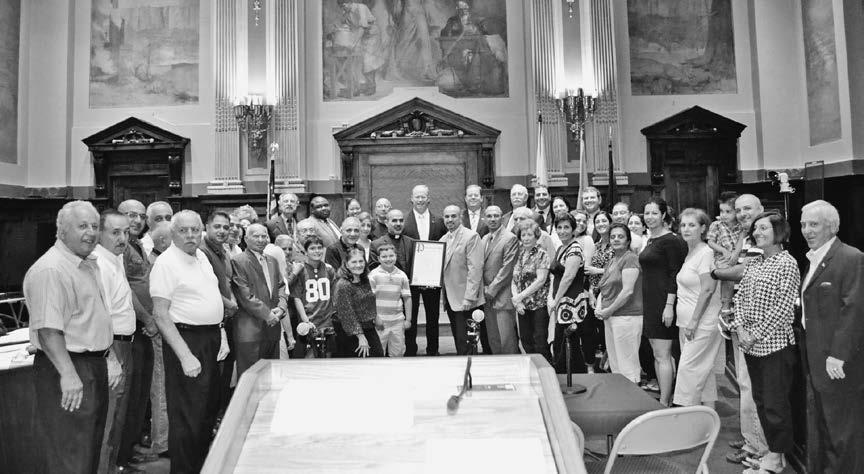
Image: 2014 Proclamation
This photo was taken at Yonkers City Hall, New York, on 10 September 2014, at the presentation of an adopted resolution supporting Assyrian Christians and condemning the inhumane crimes perpetrated by ISIS against the Assyrian community in Iraq and Syria, including the executions of priests, women and children.
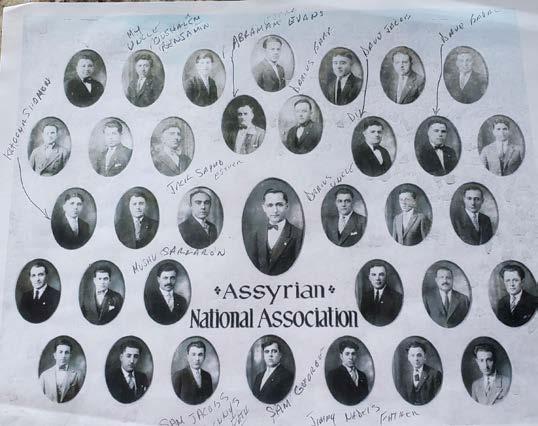
Image: Assyrian National Association Yonkers
Assyrian National Association Members, Yonkers (Image belonged to the late David Odishoo).
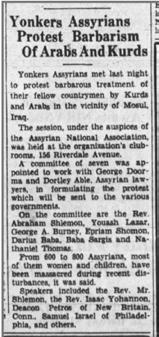
Image: “Yonkers Assyrians Protest”
News article from the Herald Statesman, Yonkers, New York, 19 August 1933, describing a session held by the Assyrian National Association to protest the massacres against Assyrians in northern Iraq.
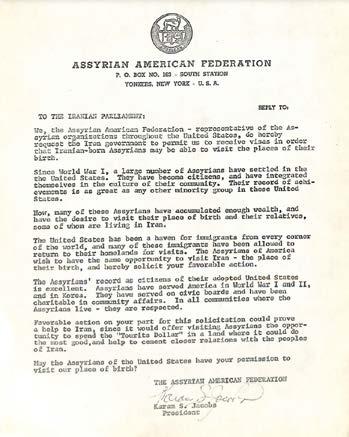
Image: Assyrian American Federation Advocacy Letter
This letter to the Iranian Parliament advocates for Assyrians originally from Iran to be able to return to visit their homes.
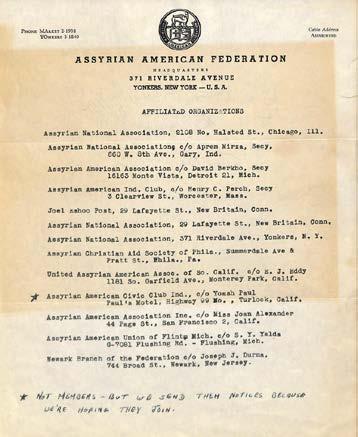
Image: Assyrian American Federation Affiliated Organizations
A listing of organizations across the U.S. affiliated with the AAF.
(Images courtesy of the Assyrian Studies Association and Ruth Kambar)
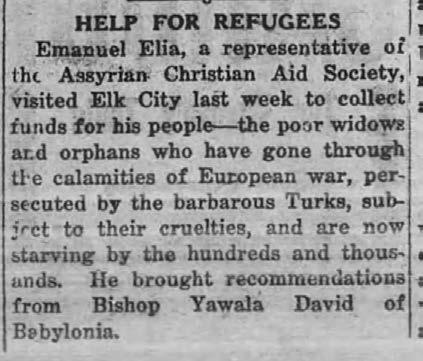
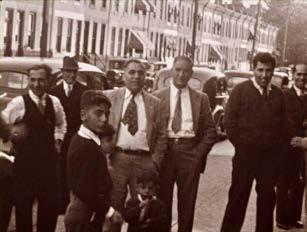
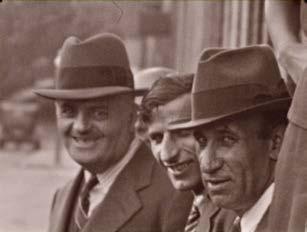
Another diasporic organization that raised humanitarian relief for Assyrians was the Assyrian Christian Aid Society of Philadelphia. The organization joined with others to form the aforementioned Assyrian National Federation in response to the 1933 massacres. The photographs here come from John (Aghajan) Baba’s 1937 film, now called Assyrians in Motion. Amongst the men pictured are Joseph Durna, Alex Gabriel, VP of the Assyrian Federation, and David Jacobs, Treasurer of the Federation.
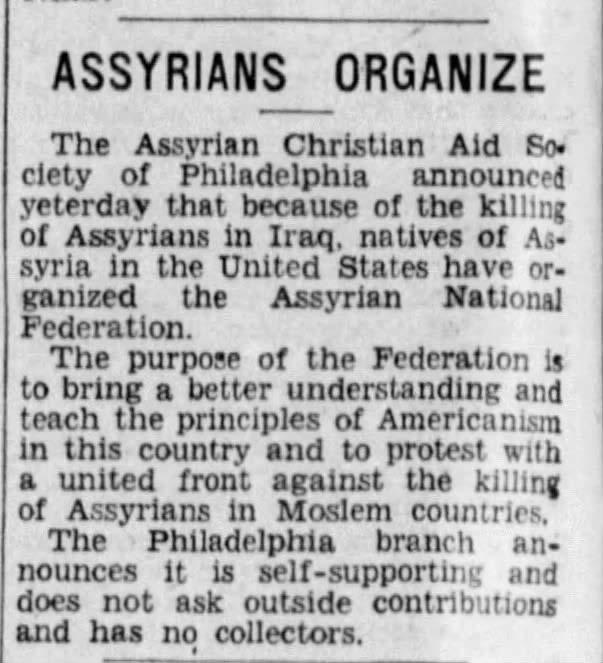
Image: “Assyrians Organize”
From the Philadelphia Inquirer, Pennsylvania, 2 January 1934
Image: “Help For Refugees”
From the Elk City News-Democrat , Oklahoma, 1918
Image: Alex Gabriel and Joseph Durna with friends in 1937
Image: David Jacobs outside Assyrian Christian Aid Society in 1937
(Images courtesy of Ruth Kambar and Annie Elias)
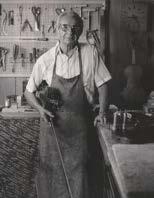
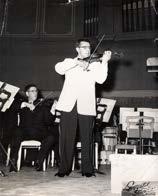
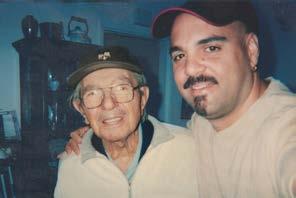
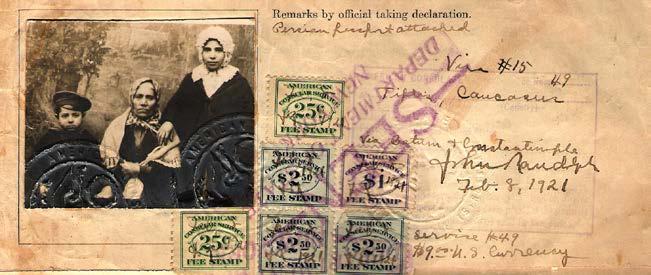
Escaping Urmia during the Sayfo, enduring the Russian Revolution, and serving in WWII as an American soldier, George Edgar (Sargis Georges Yadgar) found solace in playing the violin, a skill he learned from a Jewish Rabbi on a ship to the United States. He played from 1955 until 1985 in the Chicago Symphony Orchestra and later the Santa Barbara Symphony Orchestra. His grandson David A. Armstrong wrote Dragons & Violins: A Memoir of War and Music, in which he tells his grandfather’s story.
Image: Young George Edgar with his violin
Image: George in his workshop with his violin
Image: Geoge playing in the Chicago Symphony Orchestra, 1956
Image: George with his grandson David
Image: George’s visa from 1921
(Images courtesy of David A. Armstrong)

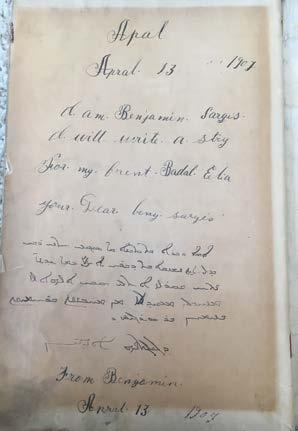
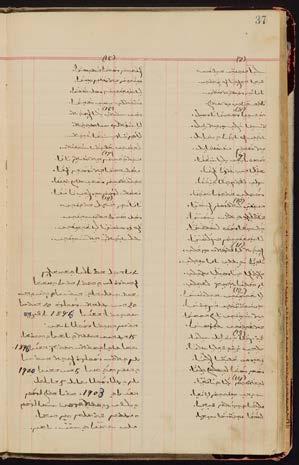
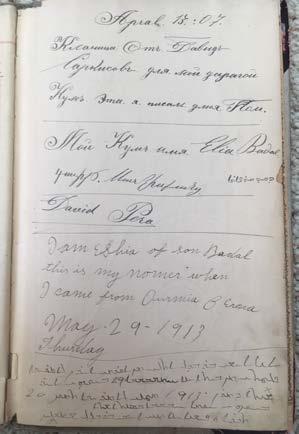
Badal Elias’s ledger explains the origins of the family in Persia and where they initially settled in the United States. The pages also include poems about the family, a letter from Binyamin Bar-Sargis of Gouytapa, and a note from Eshai Bar Badal of Shamshajian, with entries dating back to 1907. Eventually, the Elias family made its way to California.
Image: Badal Elias outside of the Carter Memorial Presbyterian Church in Chicago.
Images: Pages from the ledger.
(Images courtesy of Annie Elias and translated by Arianne Ishaya)
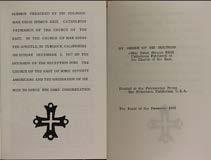
After being forced from Iraq following the 1933 Simele Massacres, Mar Eshai Shimun XXIII, Catholicos Patriarch of the Church of the East, ultimately settled in the United States, continuing to lead the Church from Chicago and California. The sermon pictured here was given in Turlock, California, on 3 December 1967. It was preached on the reception into the Church of the East of approximately seventy Americans and the ordination of six men to serve the same congregation. Printed at the Patriarch Press, California.
(Image courtesy of the Assyrian Studies Association Archive)
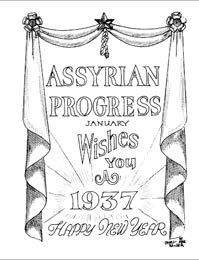
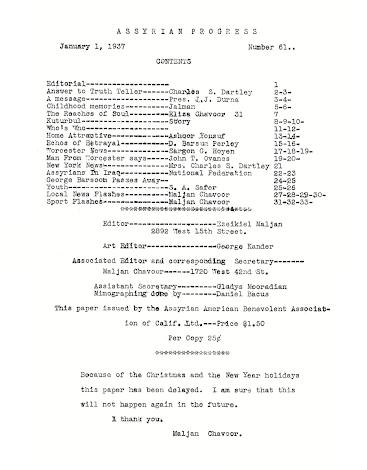
A 1937 New Year’s message from Assyrian Progress, published by the Assyrian American Benevolent Association in California.
(Images courtesy of the Assyrian Studies Association Archive)
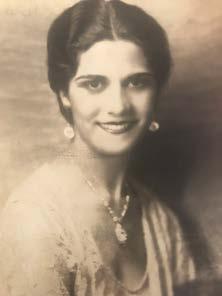
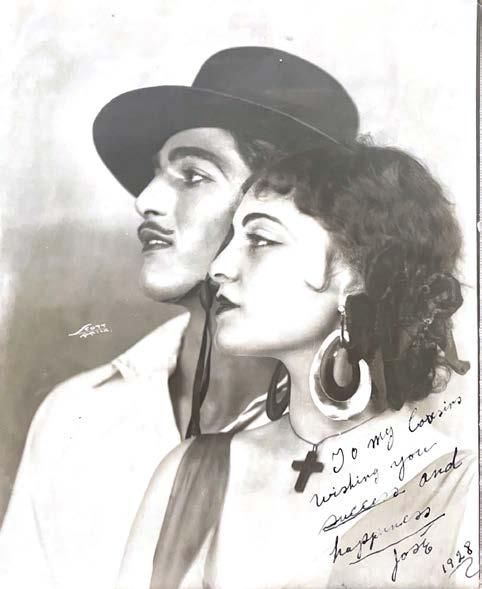
This 1928 photo was gifted to Nicholas Benjamin from his cousin Joseph “José” Shalitta, who performed with Janett Hackett, his vaudeville partner, for President Hoover and played in New York night clubs and at the Orpheum in Los Angeles. José also taught tangoes and ballroom dances at Roy Randolph studios in Santa Monica, California. His sister, Victoria Shalitta, was crowned Miss Assyria in 1921. The family lost one brother, Simon Shalitta, in WWI.
Image: Joseph Shalitta and Janette Hackett, Vaudeville Dancers
Image: Victoria Shalitta, photographed in Philadelphia
(Images courtesy of Ruth Kambar)
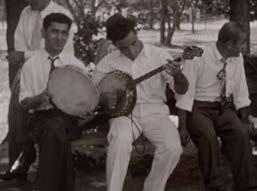
In 1937, John Baba filmed images of Assyrians at a park in Chicago for his film, later called Assyrians in Motion. Baba filmed East Coast settlements in Yonkers, New Britain, Philadelphia, Worcester, and Chicago to promote his business, the Assyrian Press. He operated the Assyrian Press from his basement space in Chicago, editing and publishing a monthly magazine Ktawuna (Assyrian Chronicle), in Assyrian, from 1932-1937. His studio was next to the Carter Memorial Assyrian-Persian Presbyterian Church, with the Carter Memorial Assyrian Church’s Sunday School classroom upstairs from his studio. Baba sponsored the Assyrian Press baseball team, which can be seen playing in the film footage at Chicago’s Lincoln Park.
Image: Jesse Elias, George Georges, Mary Jacobs
Image: Assyrian Press Baseball Team sponsored by John Baba
Image: Musicians in the Park
Image: Isha Abraham and Qasha
(Images courtesy of Ruth Kambar and Annie Elias)
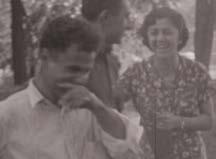
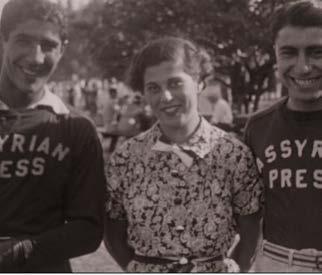
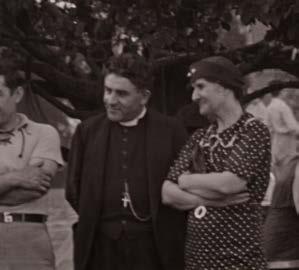
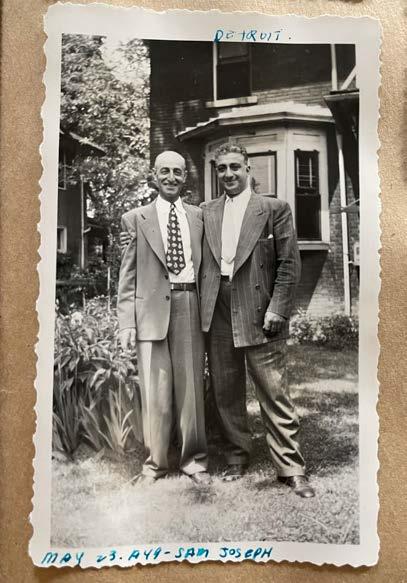
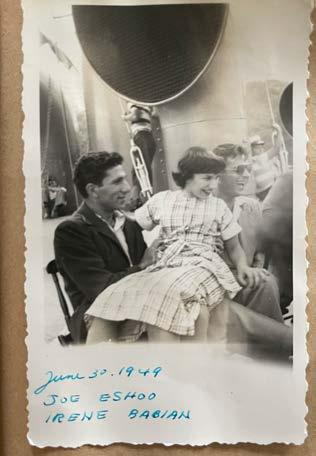
Margaret Yonan of New Britain and her spouse Clarence Jacobs of Yonkers traveled across the U.S. visiting Assyrians.
Image: Sam Joseph of Detroit, Michigan, with Clarence Jacobs, 1949
Image: Joe Eshoo (Yankee Baseball Player and Artist) with Irene Babian (Chicago)
Image: Elaine Sulliman (New Britain) and Vicky Aslan at “Ardashai” Lake Oscawana, New York
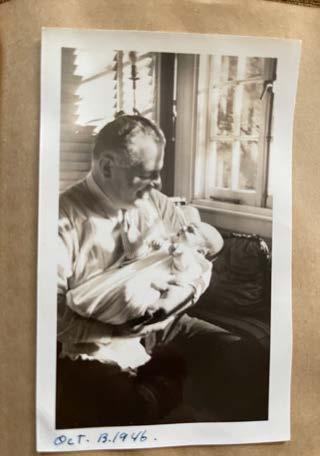
Image: David Jacobs of Yonkers with his first grandchild, David Samuel Jacobs
Image: Ruth Ardashier (Gary, Indiana), Blandina Benjamin, Almas Benjamin, and Louisa Benjamin (Yonkers) on Mother’s Day, 1950
(Images courtesy of Kenneth Jacobs.)
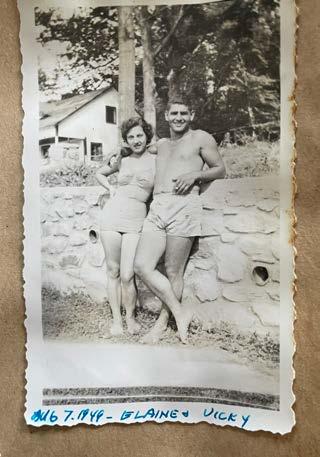
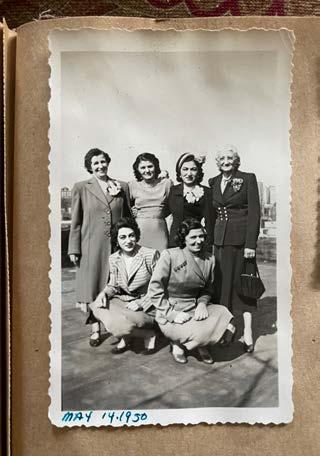
The legacy of advocacy and activism from the WWI and Simele massacre era has continued throughout the decades. The next generations have brought attention to this early work while continuing to build community in the diaspora.
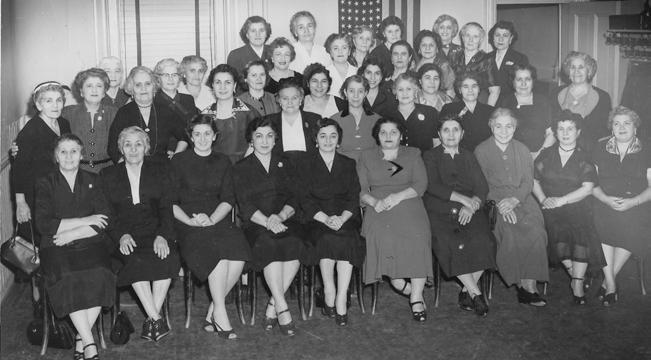
Image: Assyrian Women’s Association
The Women’s Association was an affiliate of the Yonkers Association, which was founded in 1914. Its members are photographed below in 1954.
Image: Assyrians in Yonkers Exhibit Opening Day
In 2017, Kathy Yacoe and Ruth Kambar co-curated a gallery exhibit that featured Assyrians in Yonkers and Assyrianinspired artwork. Valeh Sarkiso and Mayor Mike Spano join Ruth Kambar, Kathy Yacoe, and Fred Sarkiso, president of the Assyrian American Association in Yonkers, at the opening ceremony.
Image: Assyrians in Yonkers Opening Day at the Blue Door Gallery
Pictured are: Daisy Tatari, Rosa, Ana David, Josephine Eshoo, Janeet Yousif Francis,Valentine Shamoon, Samara Brakhia, Jacquie BabayiKunka, Reverend Francis Adday, and Ana Constantine.
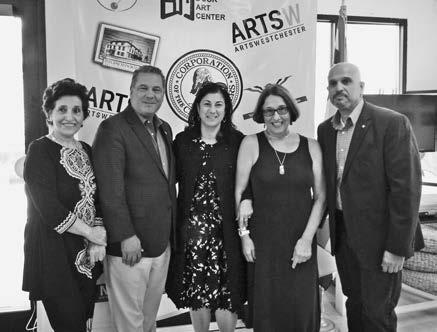
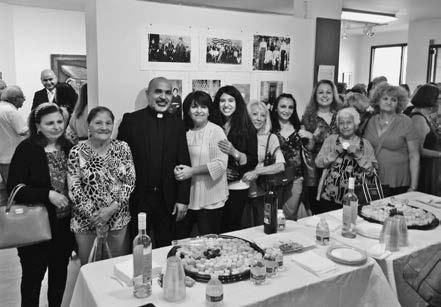
(Images courtesy of Ruth Kambar and Dr. Kambar’s Assyrians of Yonkers )
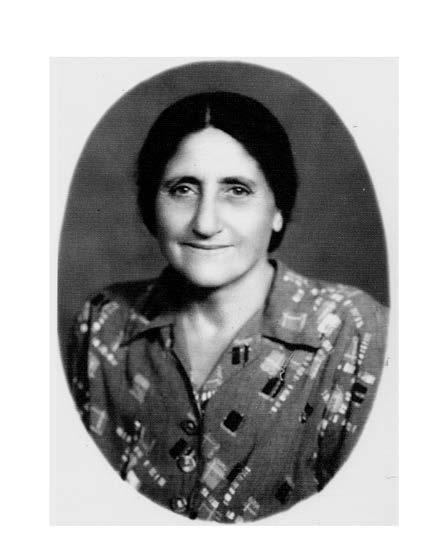
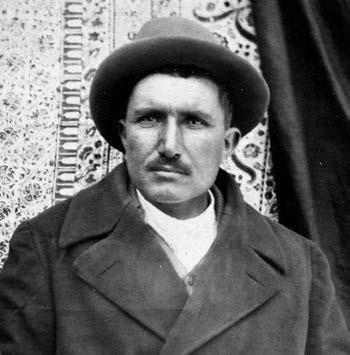
Elishwa and Lazar Issa’s story of survival is shared in the forthcoming The Story of Elishwa’s Heroic Journey . It is written by their son Shmouel Issa of England with their greatgranddaughter Adrenna Alkhas of Turlock, California:
“Some 80,000 men, women and children from Urmia, and mountaineers from northern Iraq joined the exodus led by Dr. William A. Shedd, and a group of Assyrian leaders over 500 miles from Urmia to Hamadan in Iran, and then to Bequbah in Iraq. Lazar joined the resistance at the rear of this exodus, Elishwa, and baby son Michael separated from Lazar, and marched with her sisters, parents, and Lazar’s family members. Elishwa had one thing in mind and that was saving Michael…Many died on route. Elishwa’s father, and brother were some of many. The route taken by the exodus was marked by dead bodies… The British set up a refugee camp for all 40,000 surviving Assyrians, and few thousand Armenians. Elishwa, her baby, and her surviving members of her family as well as Lazar’s family members settled in Bequbah Camp… She had no idea what her husband’s fate was. She kept nursing baby Michael in the hope that Lazar will turn up.”
(Images and excerpt courtesy of Adrenna Alkhas)
California State University, Stanislaus
Dr. Ellen Junn, President
Dr. Kimberly Greer, Provost/Vice President of Academic Affairs
Dr. James A. Tuedio, Dean, College of the Arts, Humanities and Social Sciences
Department of Art
Martin Azevedo, Associate Professor, Chair
Tricia Cooper, Lecturer
Dean De Cocker, Professor
James Deitz, Lecturer
Daniel Edwards, Associate Professor
Patrica Eshagh, Lecturer
Jessica Gomula-Kruzic, Professor
Daniel Heskamp, Lecturer
Chad Hunter, Lecturer
Dr. Carmen Robbin, Professor
Ellen Roehne, Lecturer
Dr. Staci Scheiwiller, Associate Professor
Susan Stephenson, Associate Professor
Jake Weigel, Associate Professor
Mirabel Wigon, Assistant Professor
Meg Broderick, Administrative Support Assistant II
Alex Quinones Instructional Tech II
Kyle Rambatt, Equipment Technician II
University Art Galleries
Dean De Cocker, Director
Kory Twaddle, Gallery Assistant
School of the Arts
Brad Peatross, Graphic Specialist II
Tell Our Stories: Artifacts from the Assyrian Genocide
June 30–August12, 2022 | Stanislaus State University Art Gallery, California State University, Stanislaus
300 copies printed. Copyright © 2022 California State University, Stanislaus • ISBN 978-1-940753-69-0
All rights reserved. No part of this publication may be reproduced or transmitted in any form without the written permission of the publisher. This exhibition and catalog have been funded by Associated Students Instructionally Related Activities, California State University, Stanislaus.