
DESIGN PORTFOLIO
Selected Work 2021-2025 Shengran Chang

Selected Work 2021-2025 Shengran Chang
Base in Milan, Italy shengran.chang@mail.polimi.it +39 3455098170
Education
2023.8-2024.1
Portfolio link : https://issuu.com/csr97/docs/2025_application_csr
Language: Fluent in English/ Native in Mandarin/ Beginner in Italian
Politecnico di Milano (POLIMI), Milan, Italy
Master of Landscape Architecture-Land landscape heritage, Grade 110 / 110
The Oslo School of Architecture and Design (AHO), Oslo, Norway Erasmus program, Ecoperformance in Architecture Studio, Grade A
Harbin Normal University (HNU), Harbin, North China
Bachelor of Landscape Architecture, GPA 89.4 / 100 (Rank1/47)
Work experience & Workshop
Internship and Trainee, LAND, Milan, Italy
Participated in EXPO 2030 Riyadh concept master plan design phase,gaining valuable experience in large scale landscape planning and interdisciplinary teamwork.
Junior landscape architect, T+M studio, Shanghai, China
Participated in 2022 China Resources Land Residential Standardization Manual, Assisted several high-end residential landscape design projects.
Junior landscape architect, FLO Landscape, Shanghai, China
Participated in Jinmao Commercial, SUSAS 2021 Shanghai Art Festival, and CIFI Apartment projects, using Rhino, QGIS, Photoshop, and BIM in complex residential and commercial landscape design.
Digital Future Workshop 2020, held by Tongji University,Shanghai, China
Exploring the integration of computational design, data visualization, and urban morphology through collaborative digital modeling and parametric simulation.
Intern, East China Architectural Design & Research Institute,Chongqing
Participated in the design of rural reconstruction project , Chongqing, China Use GIS and other adobe softwares to express concept design.
Internship, Yungang Grottoes Academe(World Heritage),Datong, China
Collaborated to develop a comprehensive 3D geographic information system for the Yungang Grottoes, integrating detailed spatial and heritage data for site analysis and management. 2022-2025
Honors and Awards
Multi-level path system to awaken historical castles
Architectural heritage protection,0.45ha
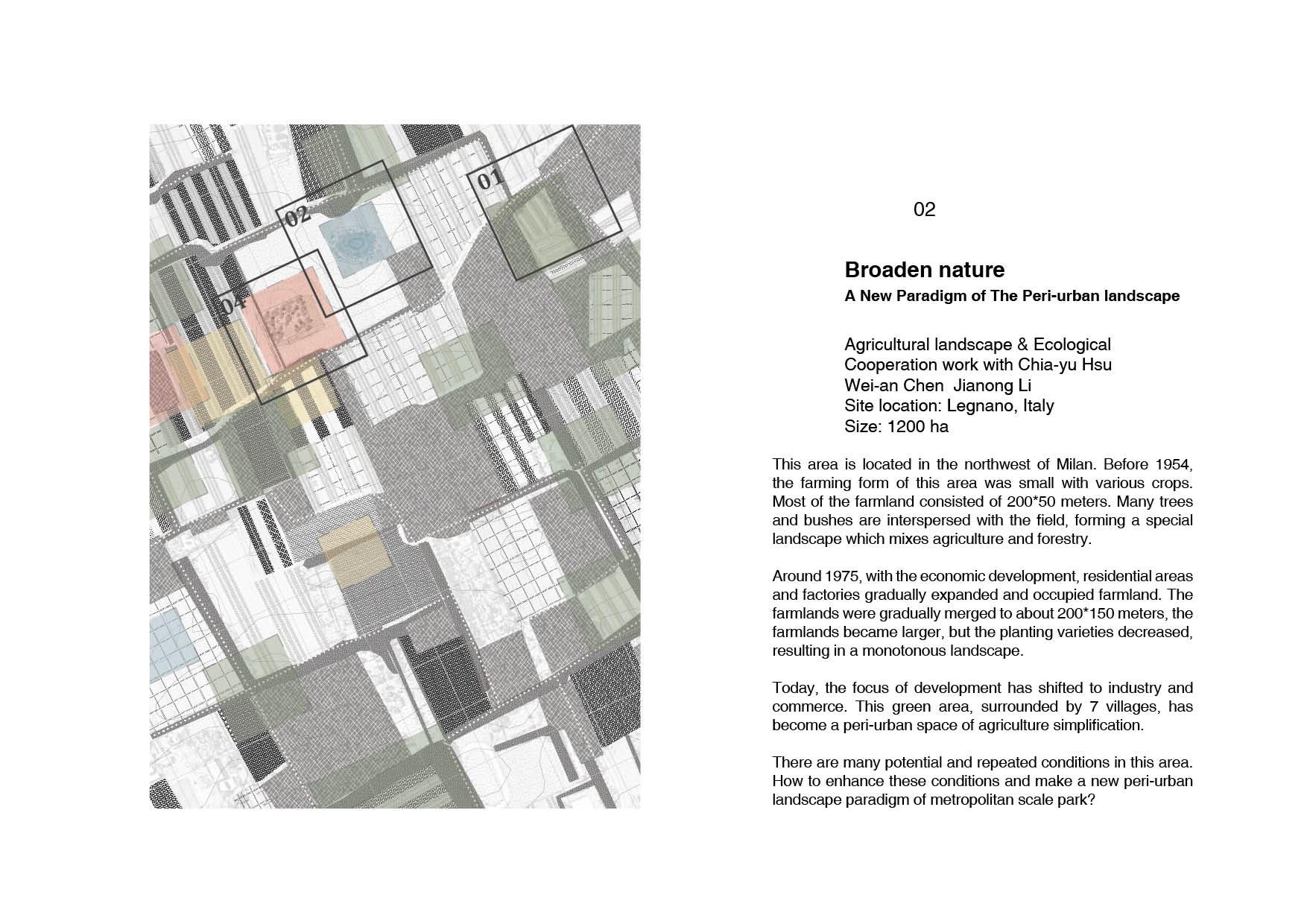
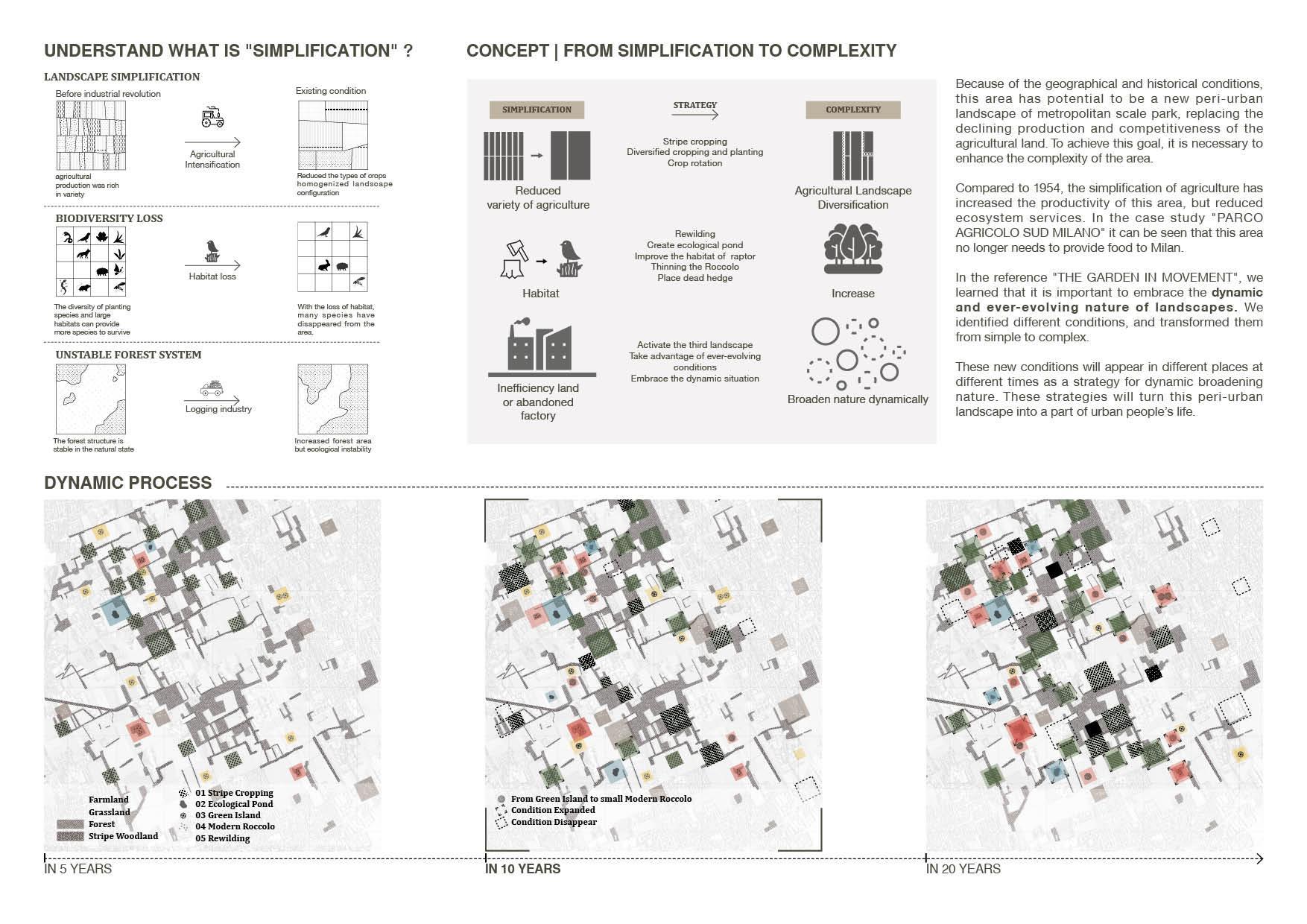
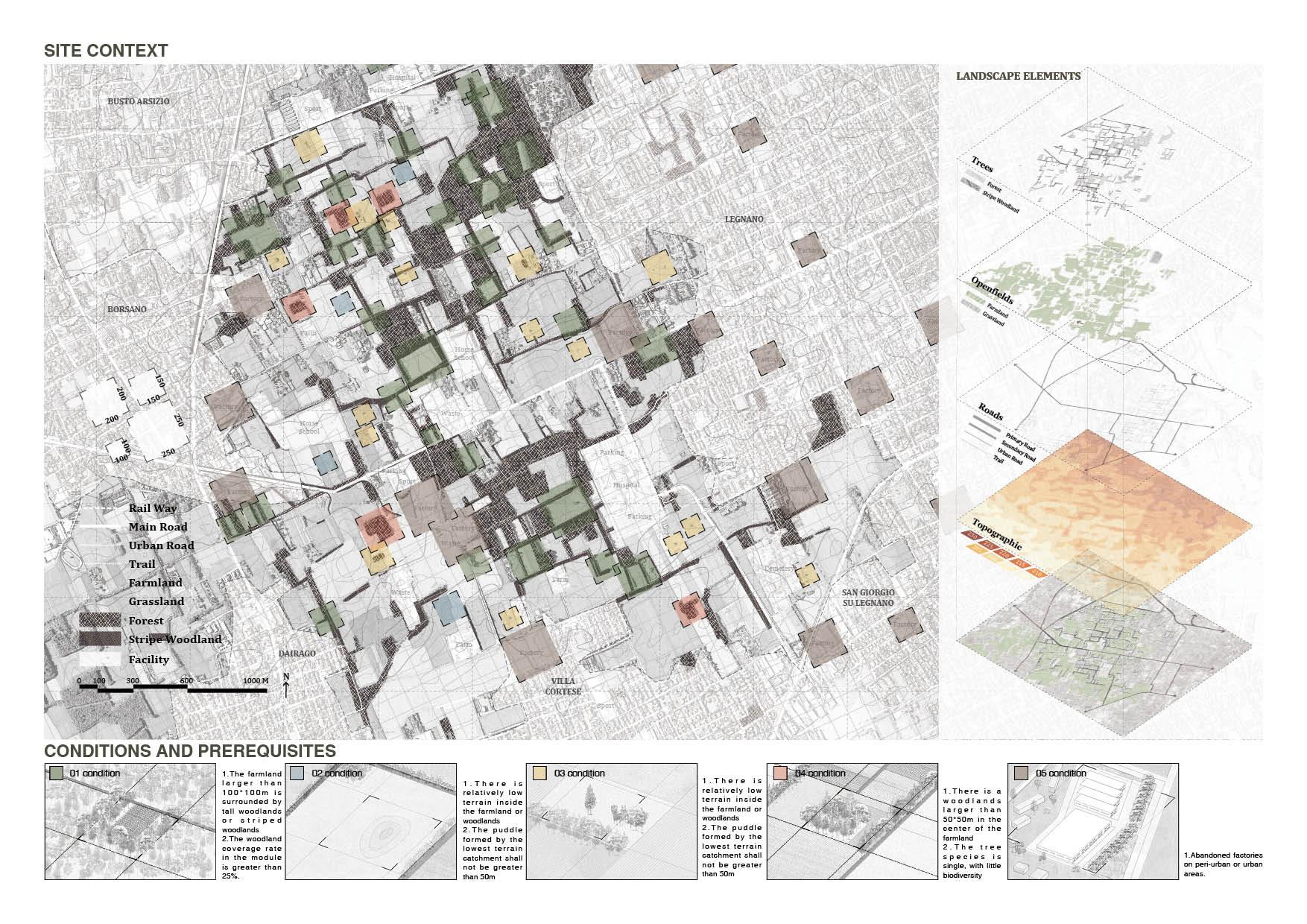
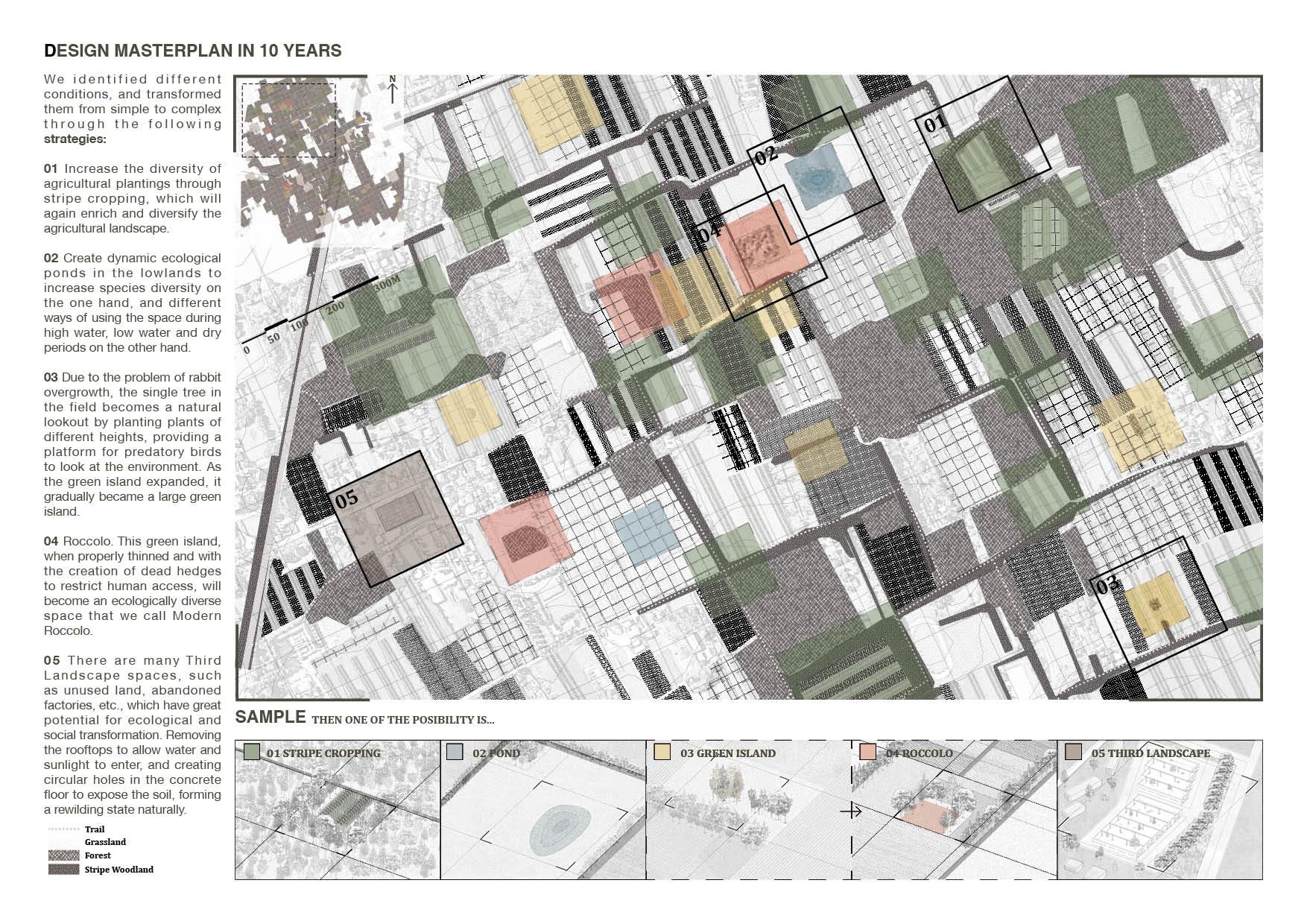
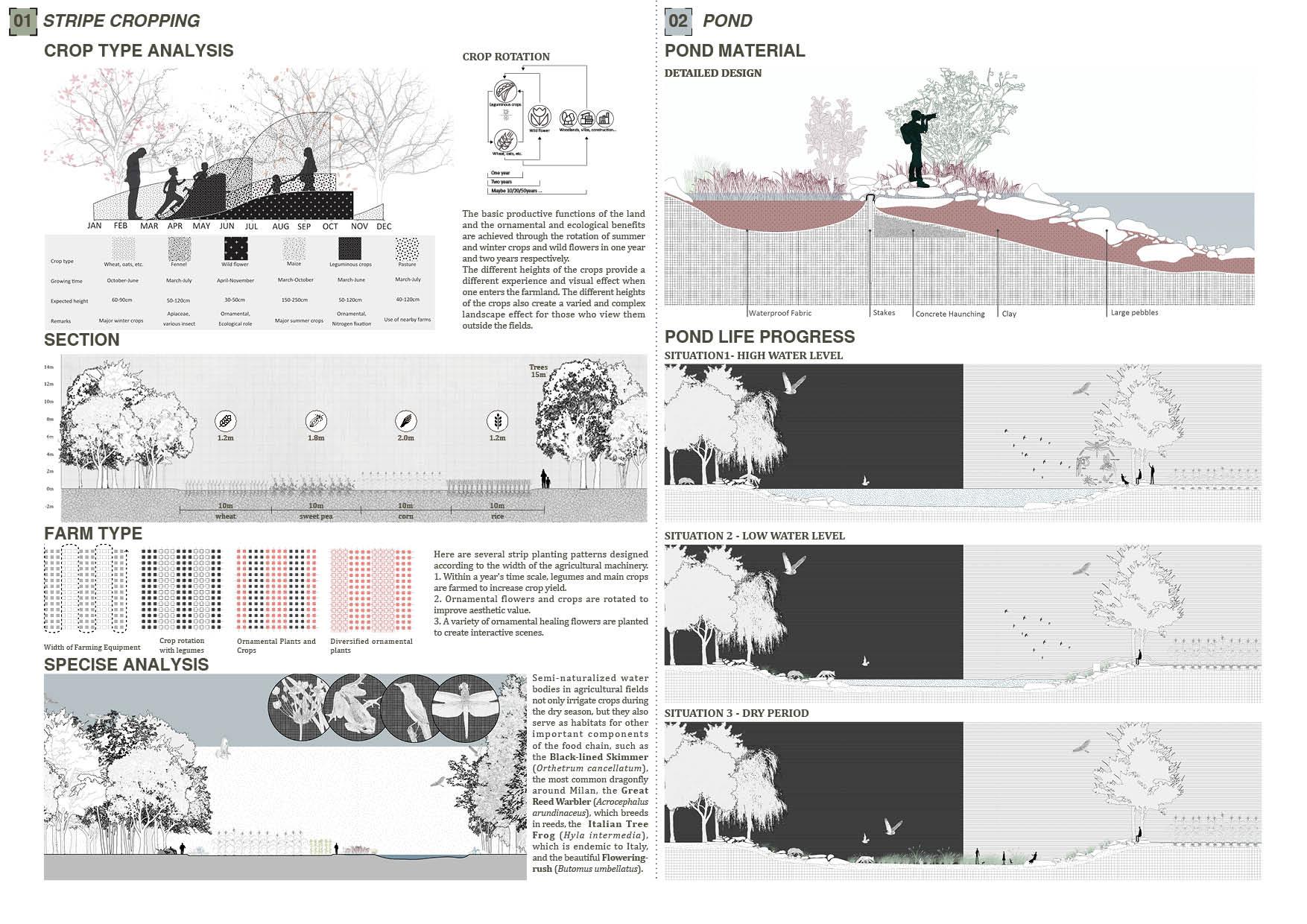
A New Paradigm of The Peri-urban landscape Agricultural landscape planning, 1200ha
Solve the contradiction between tradition and ecology
Ecological planning, 90 ha
04 Bamboo Forest Garden Playscape, Shanghai 06 Stable Diffusion Generation
Material Innovation & Modular Construction AI Generation & Stable Diffusion Application
Landscape installation design, 500m2 Architecture facade rendering
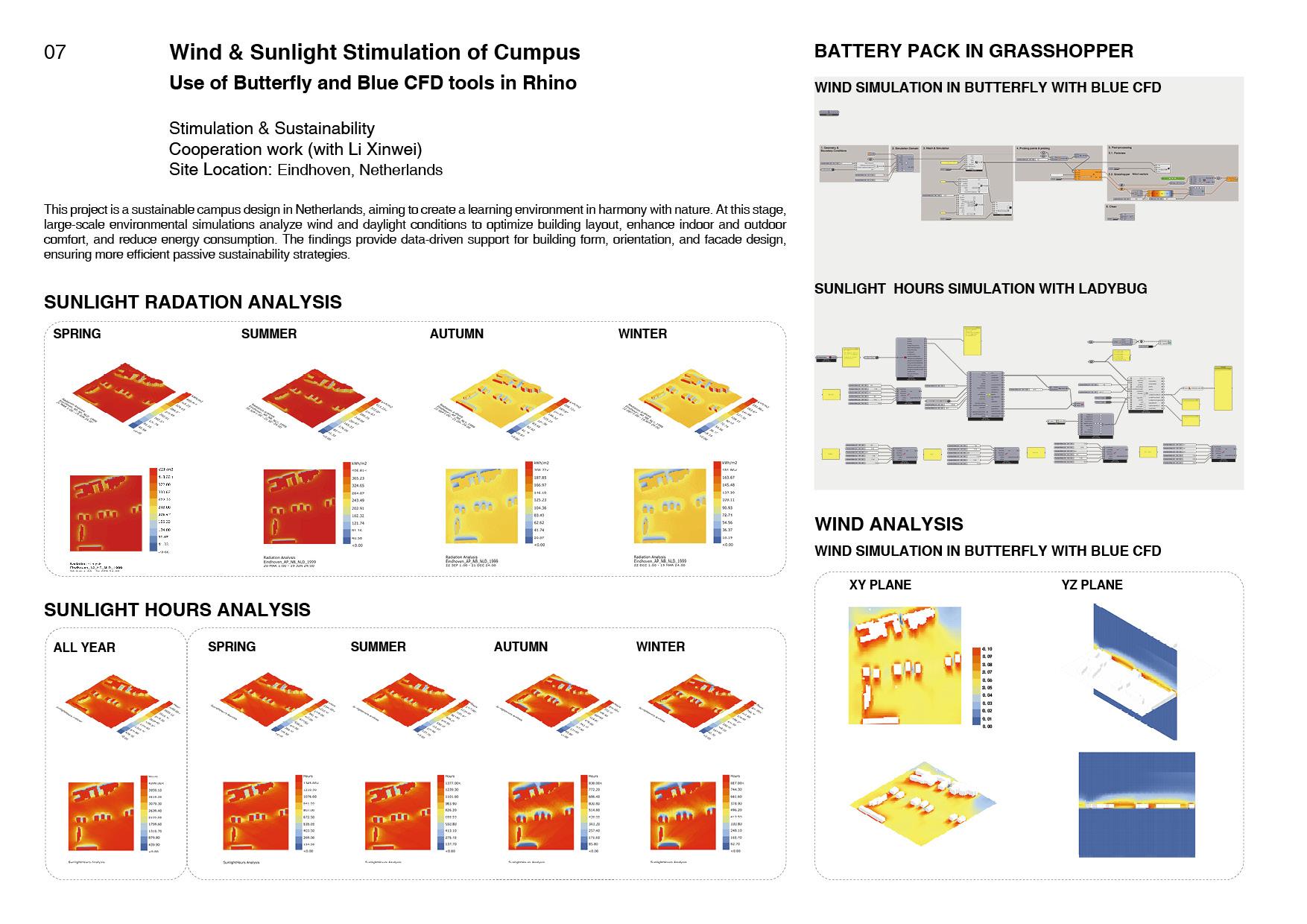
05 Jinmao Changshu Commercial, Suzhou 07 Sunlight and Wind Stimulation
Commercial Complex Stimulation & Sustainability
Commercial landscape design, 4 ha Use of butterfIy and blue CFD tools in Rhino
Re-use & Heritage protection
Individual Work
Site Location: Pisa, Italy
Size: 0.45ha
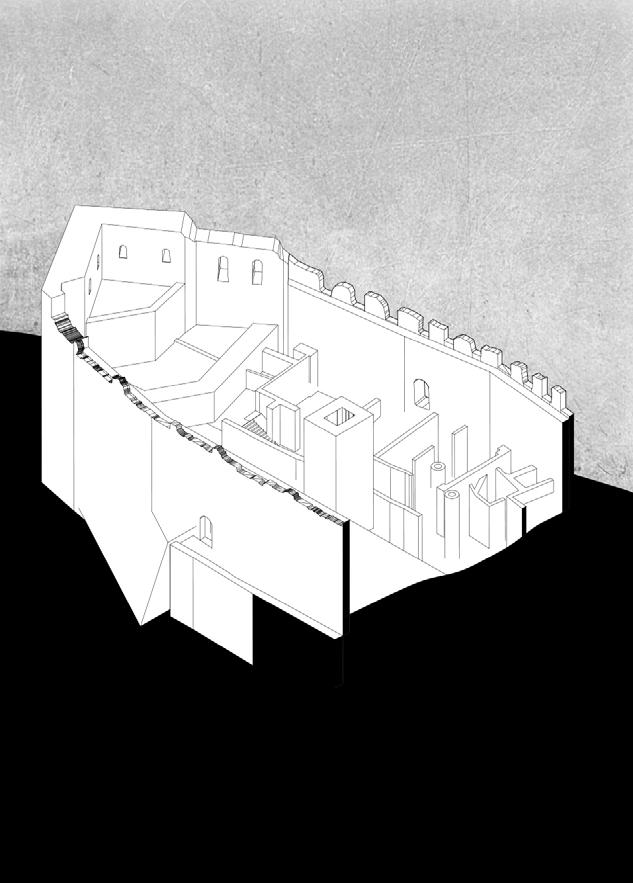
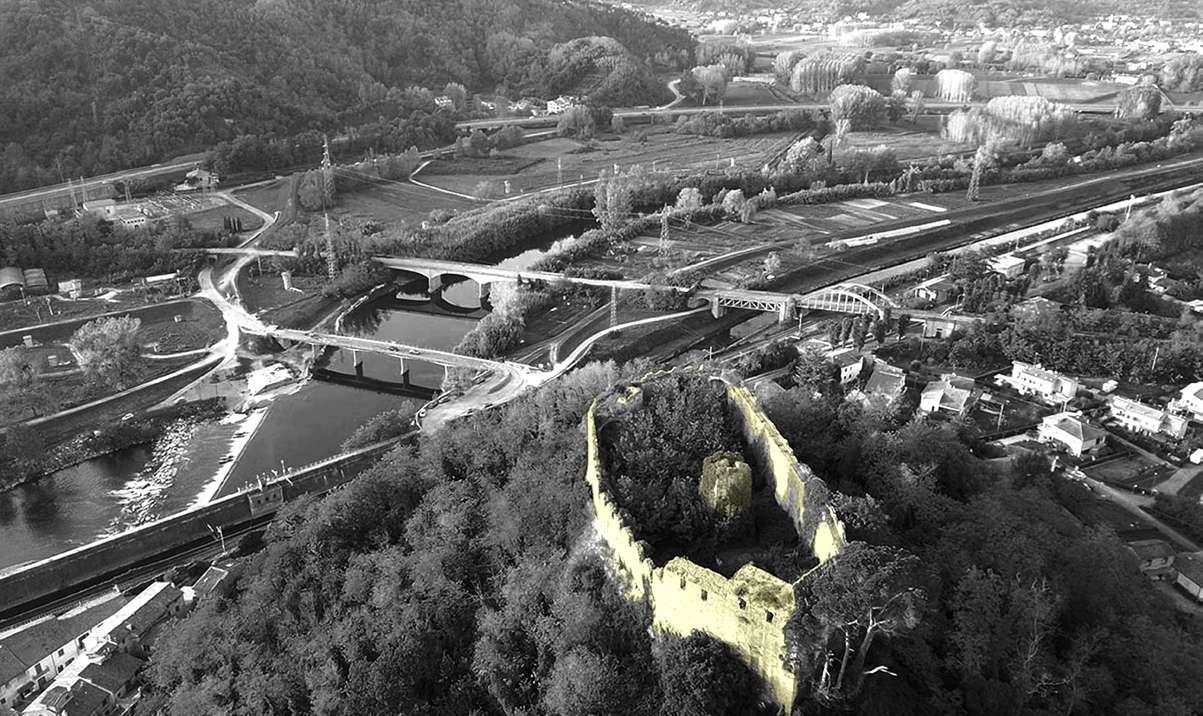
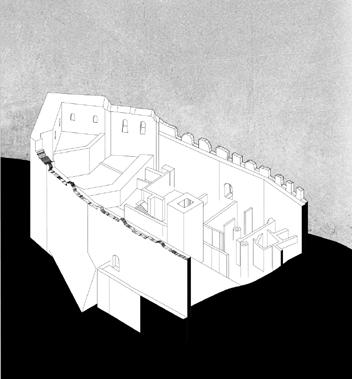
Castello di Ripafratta is a medieval castle in Pisa, Tuscany, Italy. Dominating a great extension of Pisan mountians, the castle has witnessed a series of historical events in the past one thousand years. The wars benveen Pisa and Lucca, the change of ownership and the passing of time transformed the firm fortress into an abandonment.
Since 2011, several demonstrations have been held by the locals askingfor preservation and restoration of the casle. It is possible to bring life back inside this medieval walls?
The objective of the project is to transform the ruin into a culural heritage park serving both the locals and tourists, without interfering the curent facade of the casle ruin. In order to achieve this goal, several conflicts berveen the space of ancien fortress and that of modern park need to be resolved.
The Fortress of San Paolino is part of the historicarchitectural heritage of San Giuliano Terme (province of Pisa). Originating in medieval times, it is located in the community of Ripafratta. It has for many years now been left abandoned and decaying.
Frequent confIicts between Lucca and Pisa push the Republic of Pisa to consolidate fortresses and villages and establish a broader defense system.
In the late fifteenth century, the great military architect Antonio da Sangallo worked with Leonardo da Vinci to develop a plan for the renovation and transformation of the Ripafratta fortress.
A century after these events, the fortress lost his military importance.In 1628 it was al-located for cultivation as orchard and vineyard.
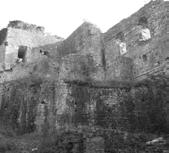
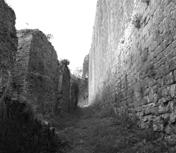
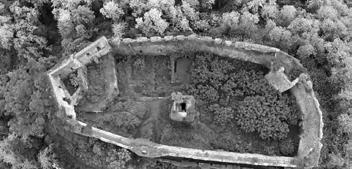

alongside the period of decadence its charm grew: it was visited by foreign romantic intellectuals, architects and poets, Mary and Percy Bysshe Shelley writing verses of Ripafratta or setting parts of their novels here). Due to the influence of time and nature, all these fortifications are now in severe disrepair. For safety reasons, the road to the fort has been closed.
Remaining structural wreckage
Large areas of the site are covered by weeds
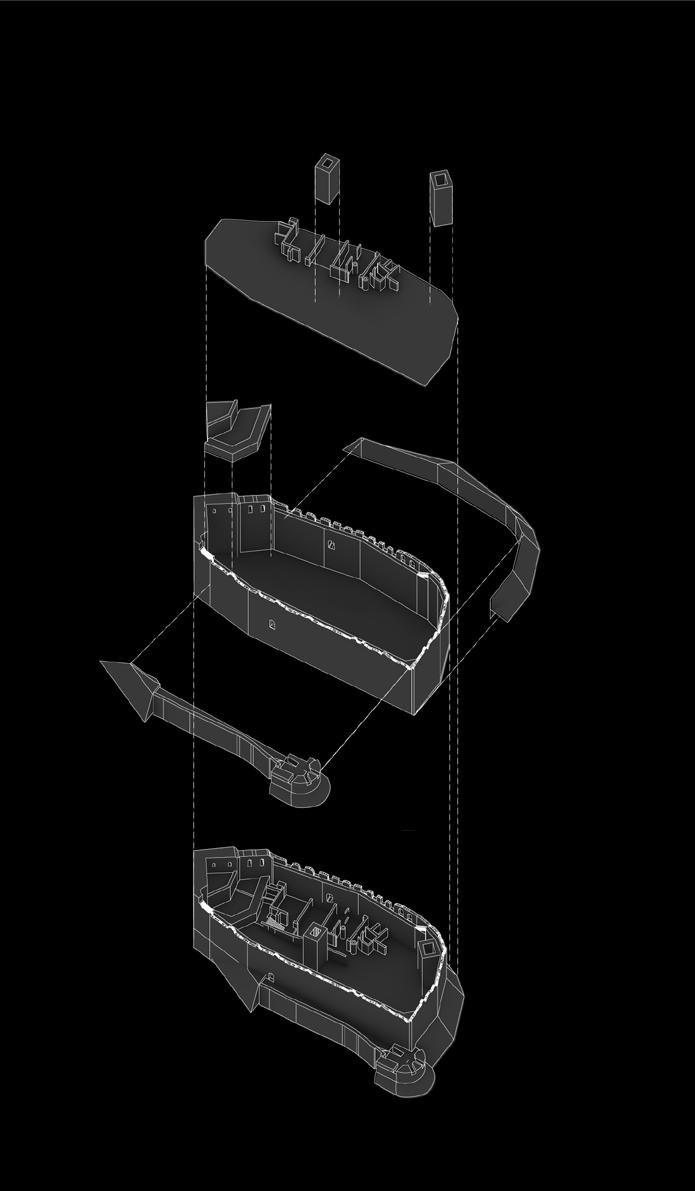
Current Situation
The fortress of San Paolino in Ripafratta represents the main structure of the ancient Pisan Republic defensive system towards Lucca. The fortress is the product of several stratifications dating back to the tenth century. It was built in the years between 1162-1164.
The terrain is steep and the path is difficult to navigate; the mountain soil collapses
STEP 2
Create entrance paths
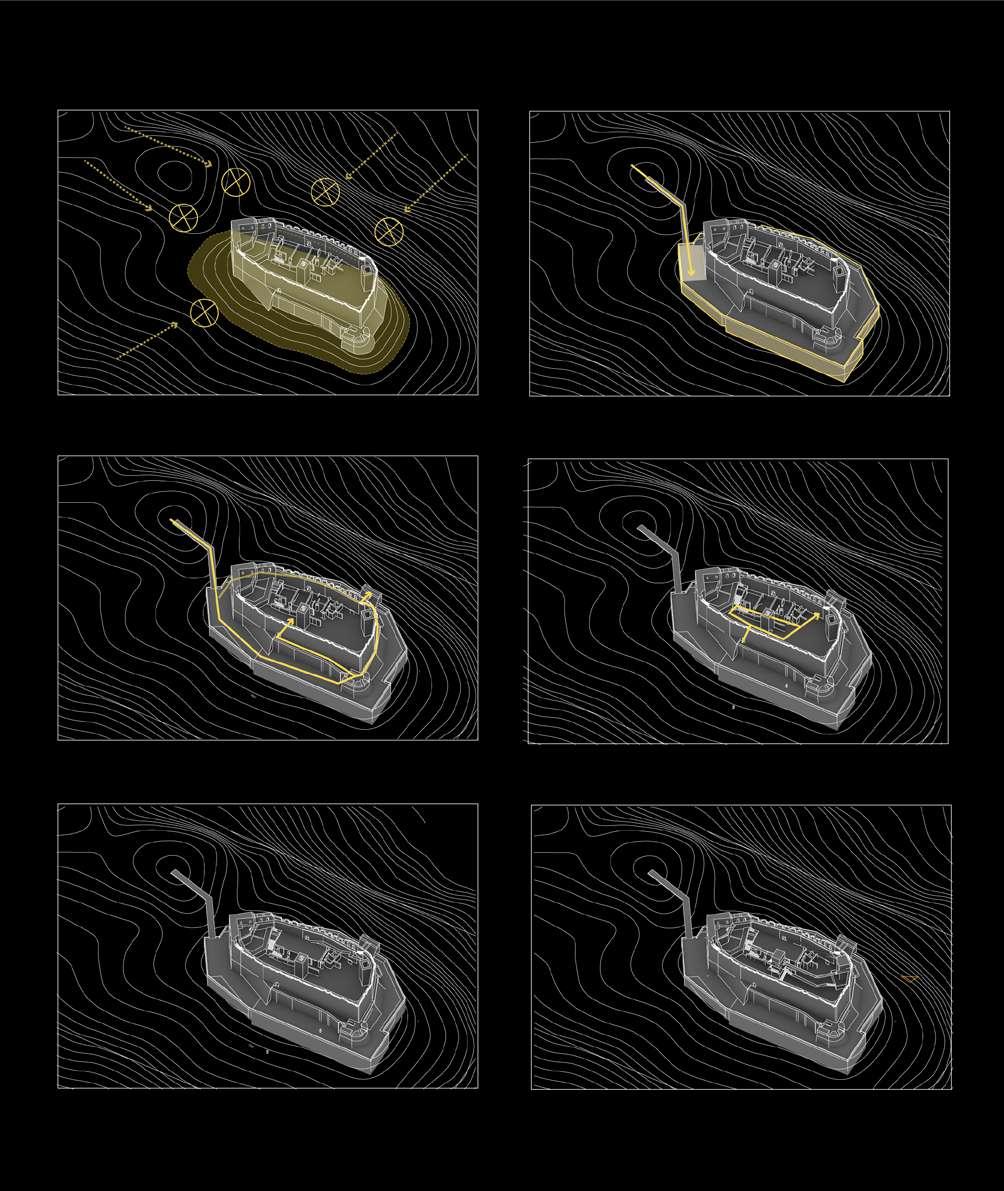
Create two paths from the entrance square to the inside of the castle.
STEP 4
Viewing corridor inside the wall
STEP 1
Build external paths
A viewing path running through the inner circle of the wall.
Increase external paths, build retaining walls and terraces, strengthen buildings.
STEP 3
Connect internal paths
Clear weeds and use the original steps to open up the space surrounding the central tower on the internal ground.
STEP 5
Link between towers
Create bridges linking the two towers, attracting people to climb the building to view the scenery
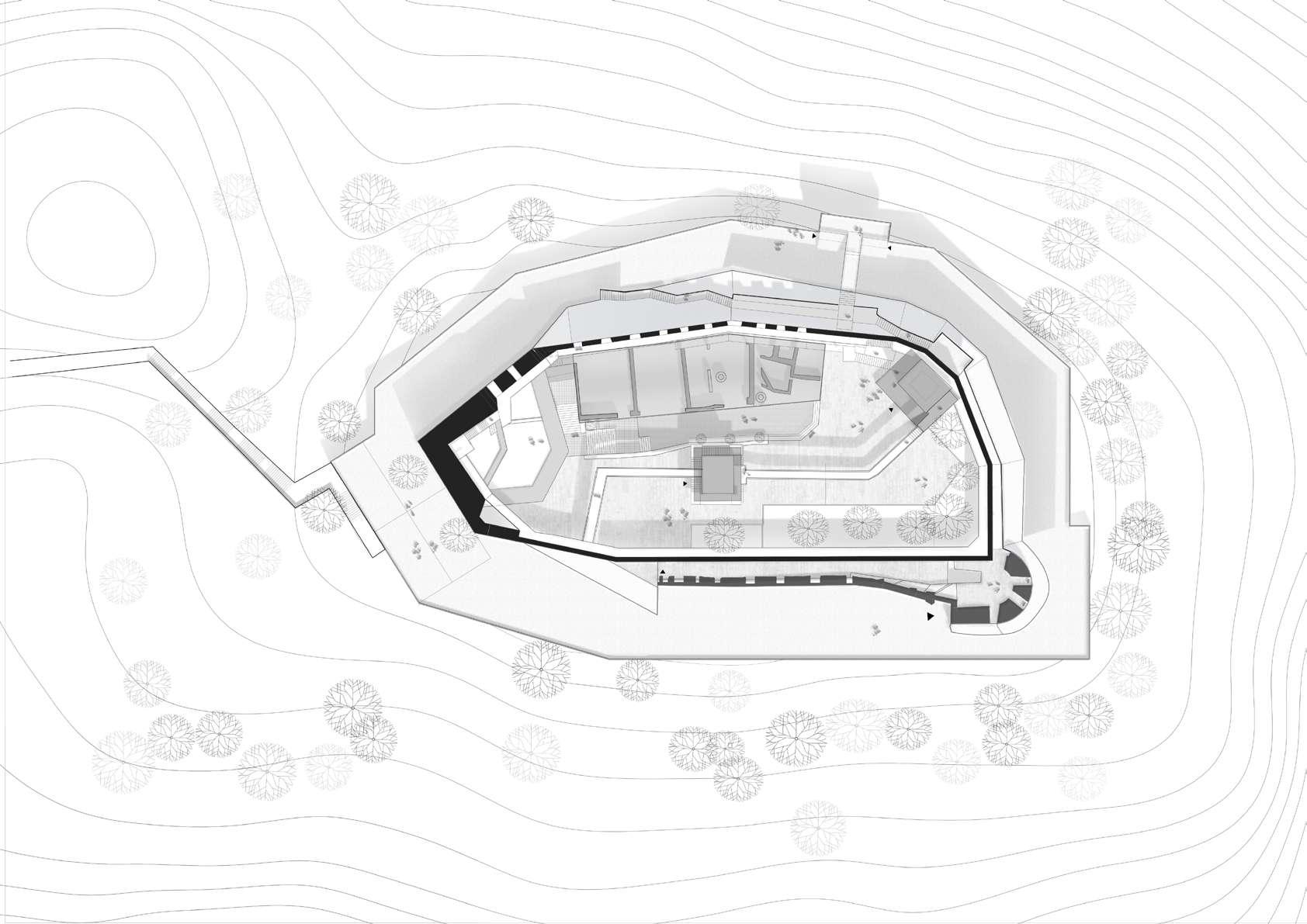

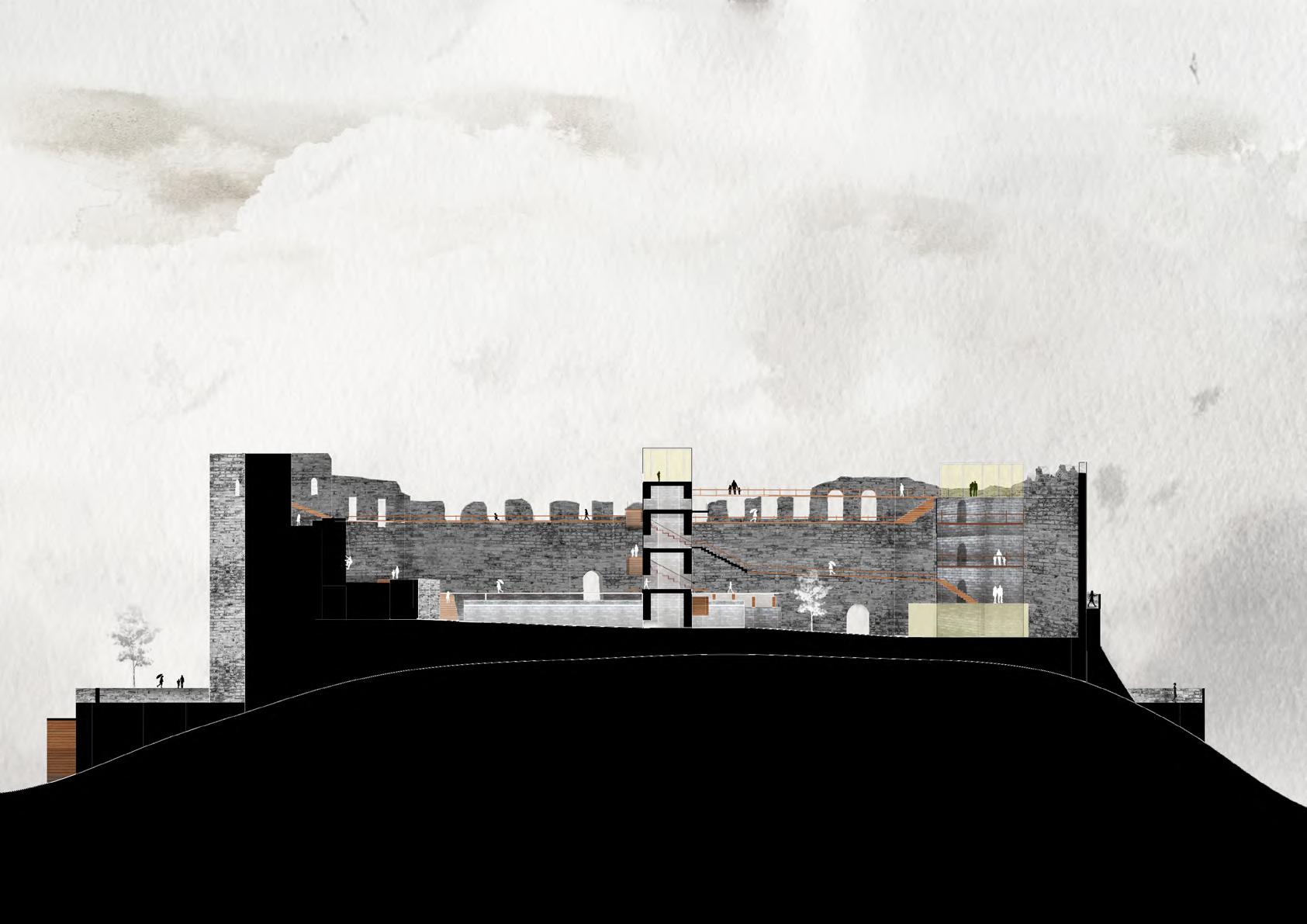
When walking along the Serchio river, the fost view of the hill is the ininal castle ruin.
A new trail leads though the existing forest and a path as well as one entance of the castle.
The northern entrance goes upstairs through a building and ramps into the main entrance of the castle.
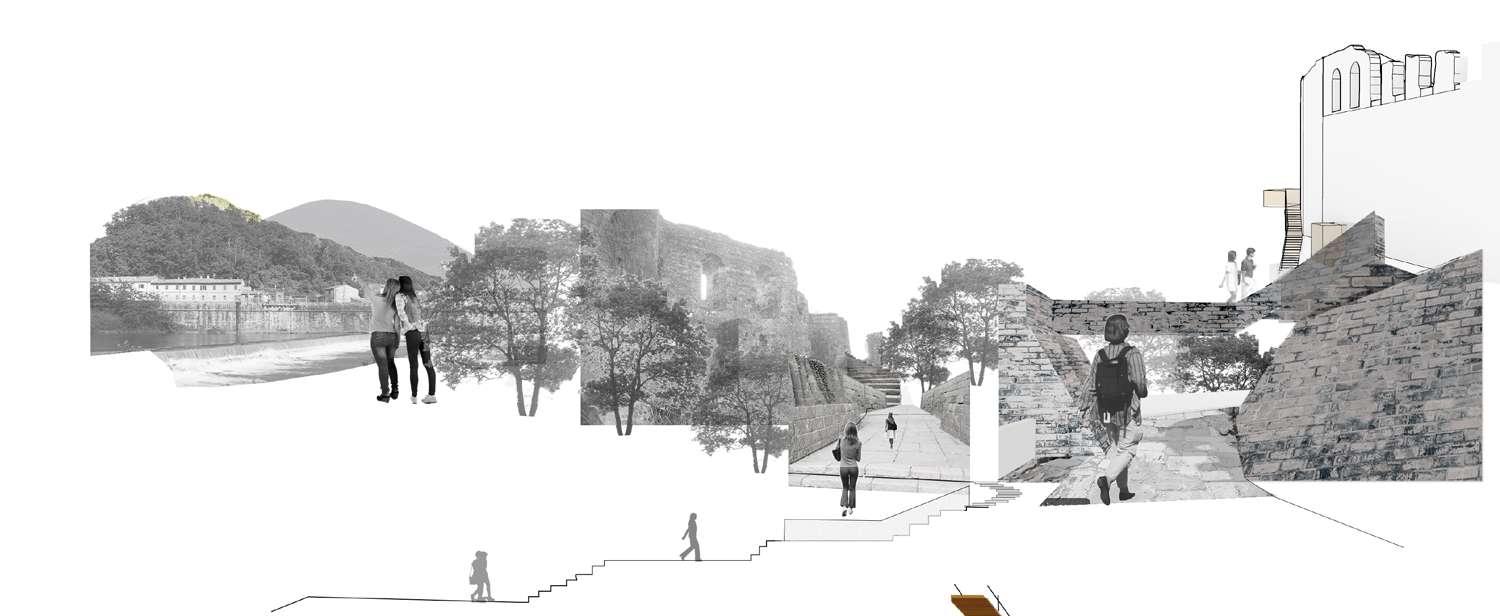
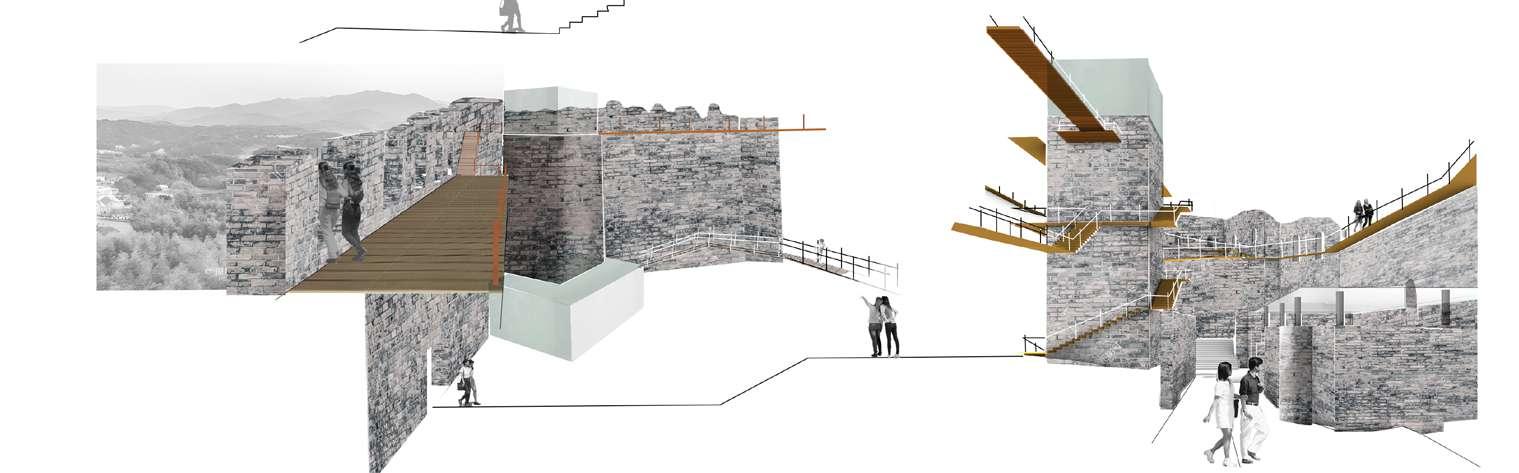
The glass roof not only does not block the line of sight, but also is a good way to protect the ruins.
The internal corridor bridge can not only overlook the surrounding cities, but also enjoy the architectural landscape of the ruins.
Coral protection & Ecotourism
Cooperation work with Jiang Ruomin
Site location:Unawatuna, Sri Lanka
Size: 90 ha
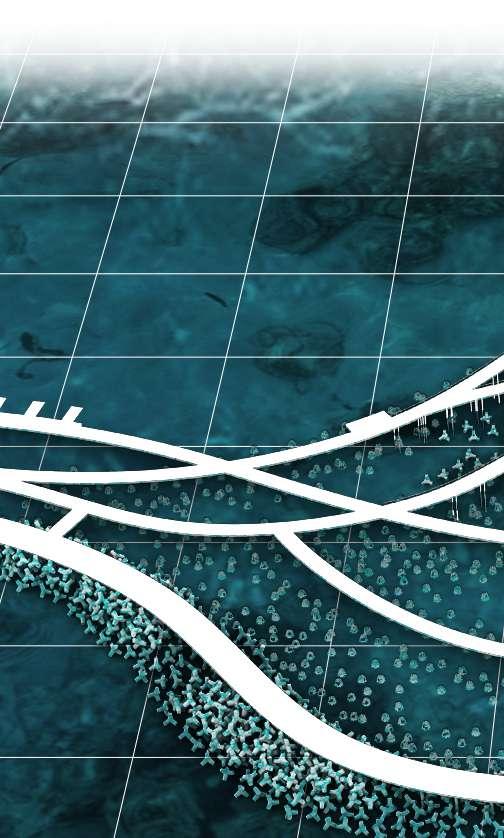
The global coral has been severely damaged, and the unawatuna gold coast in southern Sri Lanka has experienced tsunamis and other disasters in the past 30 years, but the continuous impact of human factors (diving, coral picking, cruises, shore pollution, etc.), unawatuna coral from 1997 in 2005 to 2013, only 8% is left, and the tourism industry continues to heat up, making this area not able to recover on its own like other nature reserves.
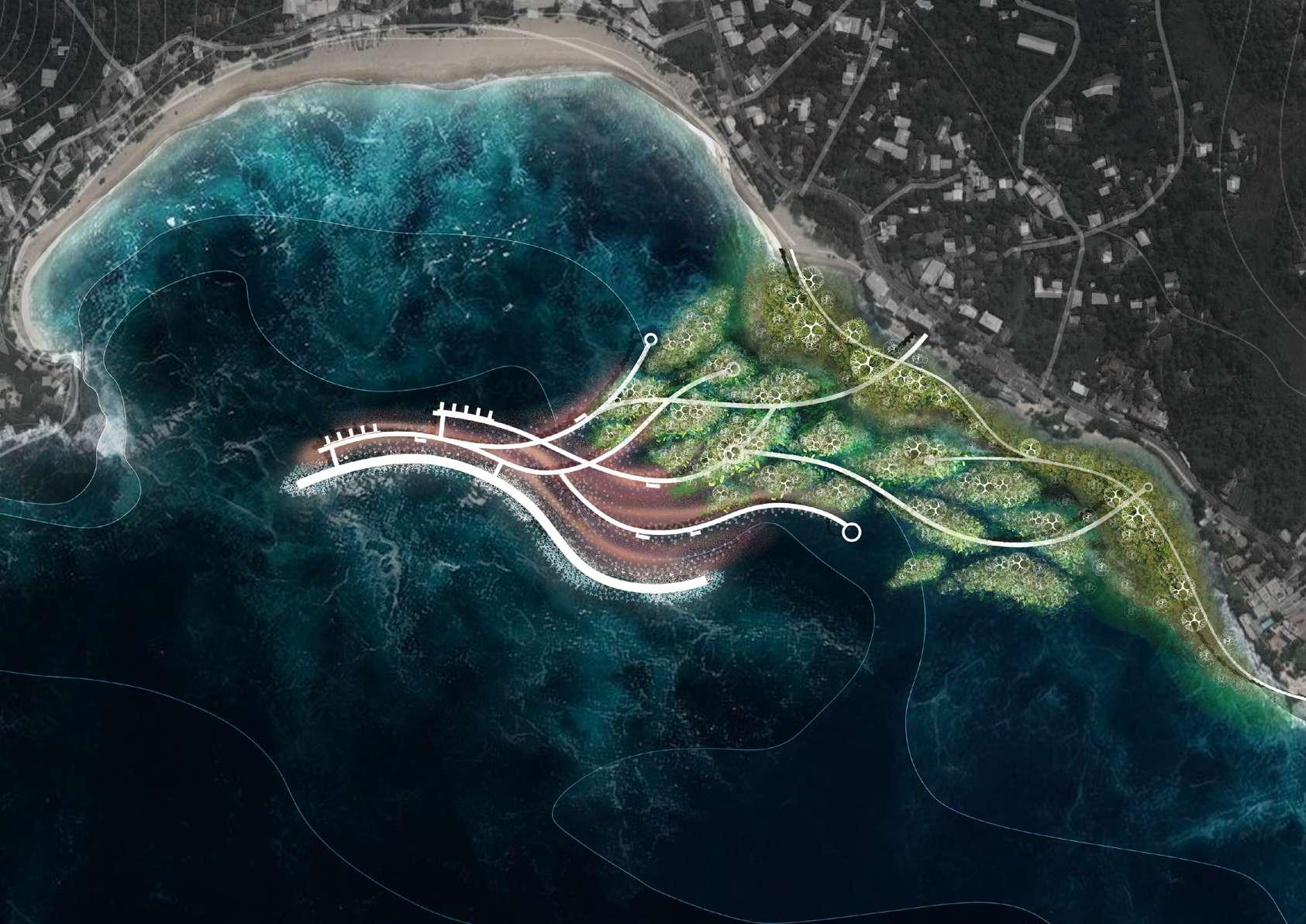
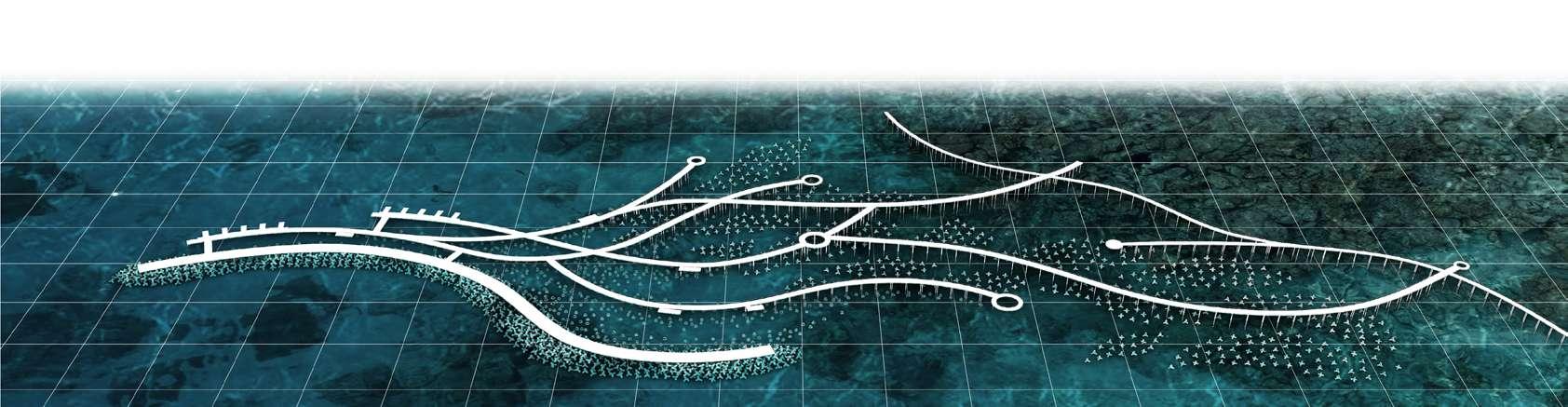
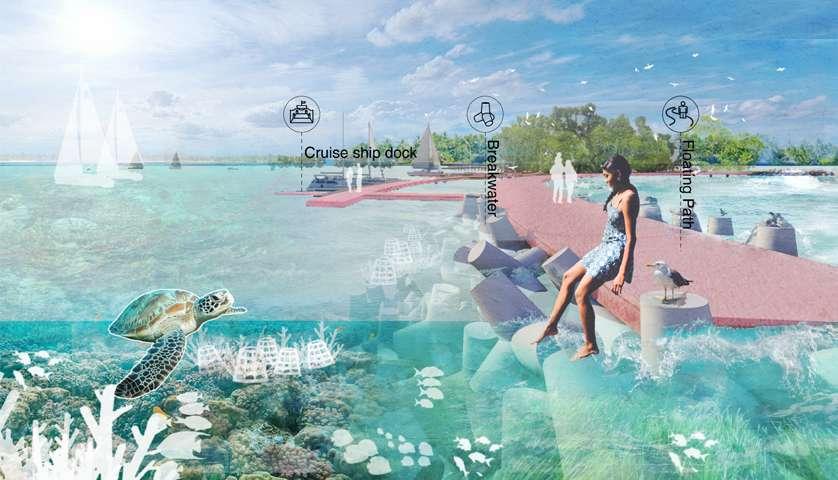
To do this, we have built breakwaters to relieve waves at sea (Biorock technology will help stabilize corals),fIoating trails that carry ecotourism (large amounts of coral frames are put in), and mangrove islands that purify pollution on the shore, among which Mangroves-corals-seagrass forms a more robust ecosystem to promote coral recovery.
Among them, the eco-tourism part is realized by diving tourists planting coral seedlings to the coral frame on the bottom of the trail.
Nature Resource
Seagrass
Mangrove
Coral Reef
Protected area
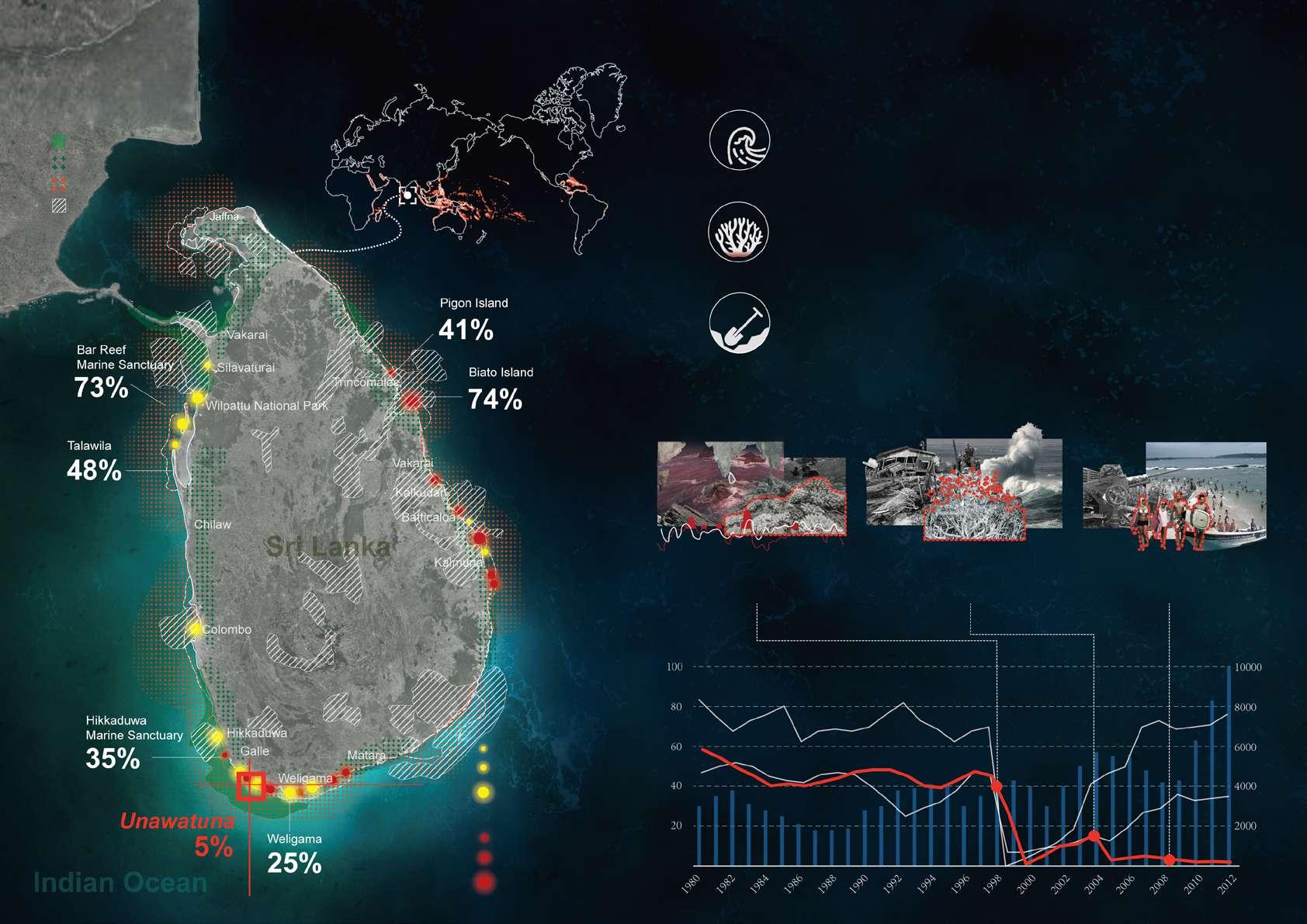
In recent years, coral reef in Sri Lanka has been mainly damaged by the El Nino phenomenon in 1998 and the Indian Ocean tsunami in 2004. Coral reef in Unawatuna was severely damaged in both disasters.
There are many kinds of coral reefs with high ecological and tourism value in Unawatuna. However, compared with other areas, the recovery of coral reefs in unawatuna is poor.
With a developed tourism, Unawatuna is a famous coral reefs tourism destination in Sri Lanka. But no marine protected areas have been established in Unawatuna. According to records, anthropogenic activities are the main cause of coral degradation.
2004 tsunami caused
After
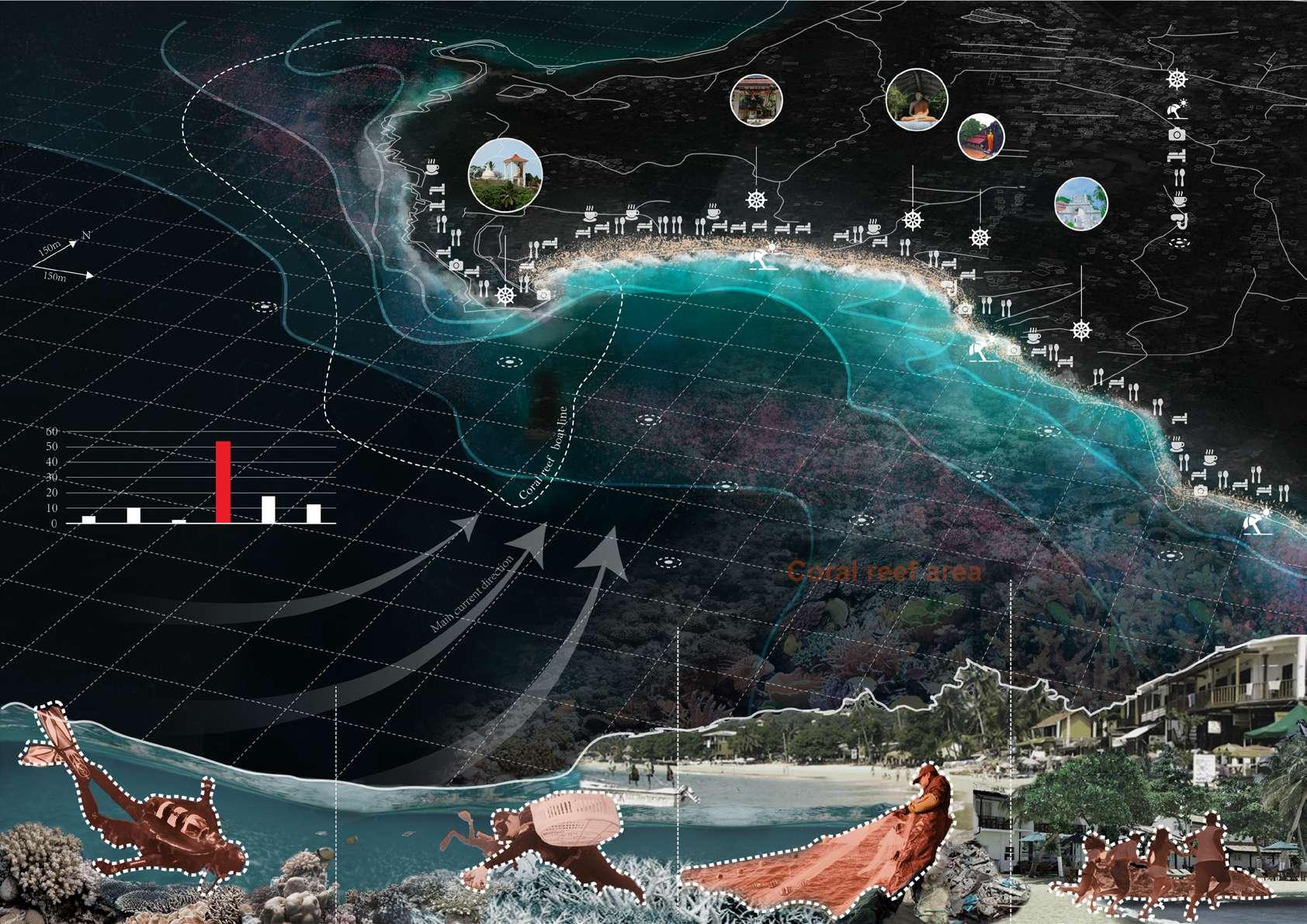
The main sources of local economy in unawatuna are fishery and tourism. Tourism has a greater impact on corals, including the direct damage to corals by divers, anglers and coral pickers, and the indirect damage to corals by the pollution of sea water from shore activities
Divers often touch and pick corals, and t he garbage and pollution they bring will a lso damage the living environment of corals
Divers often touch and pick corals, and t he garbage and pollution they bring will a lso damage the living environment of corals
Many businessmen pick corals for ornaments and tourist souvenirs, resulting in the decrease of corals
PROBLEMS
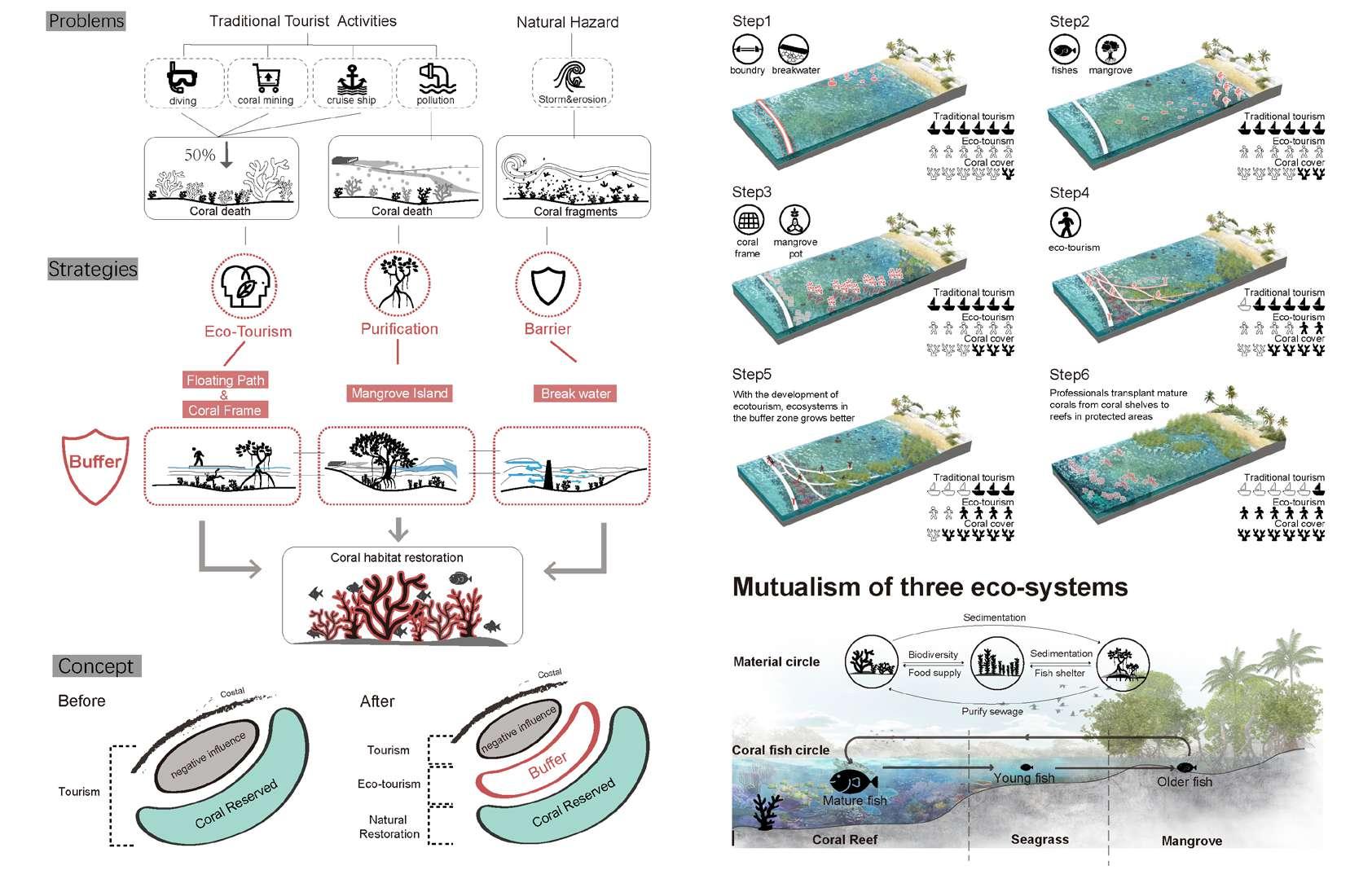
STRATEGIES
MUTUALISM OF THREE ECO-SYSREMS
The
Mangrove seedlings are
in
Sediments accumulate in the
through
forming
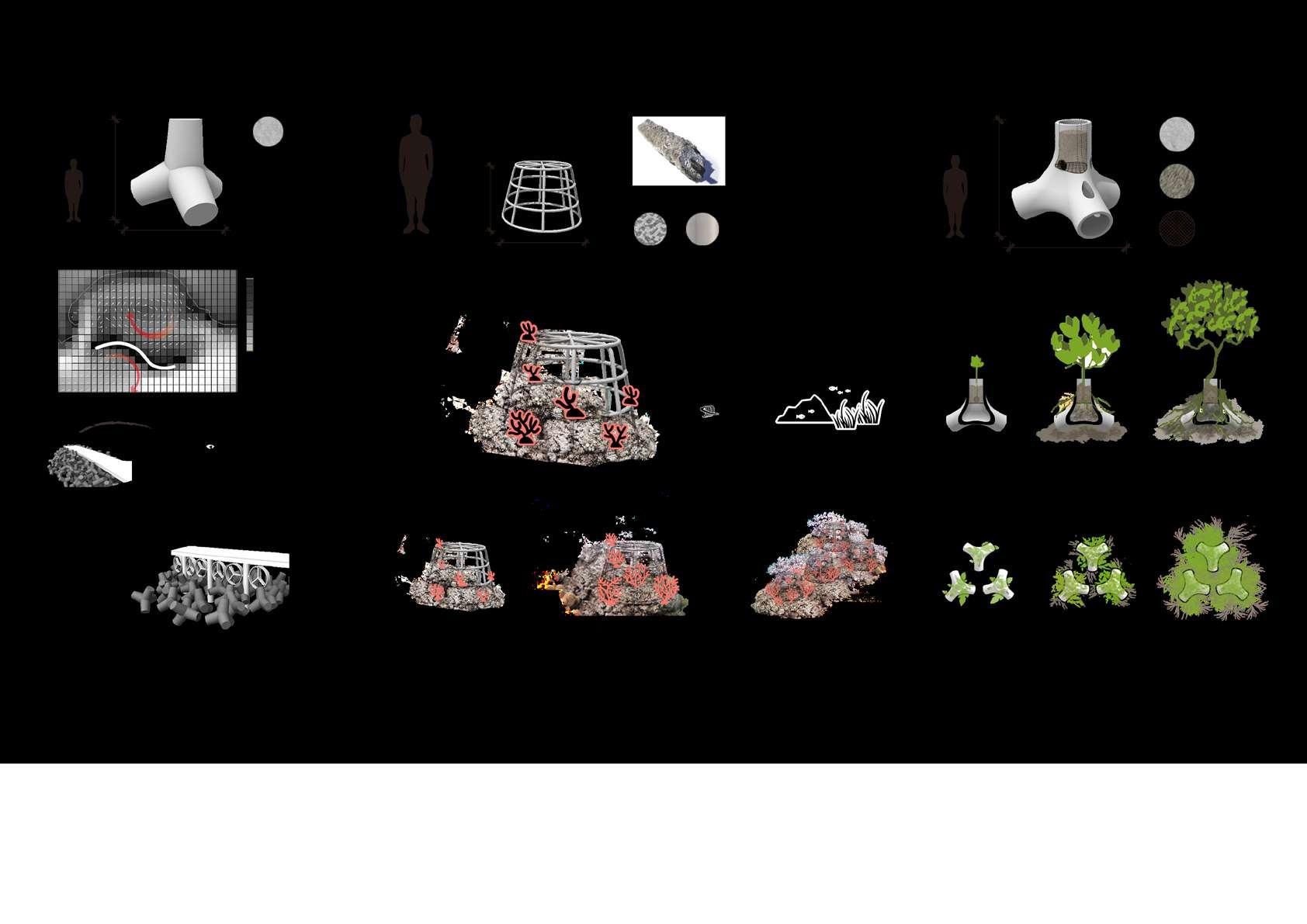
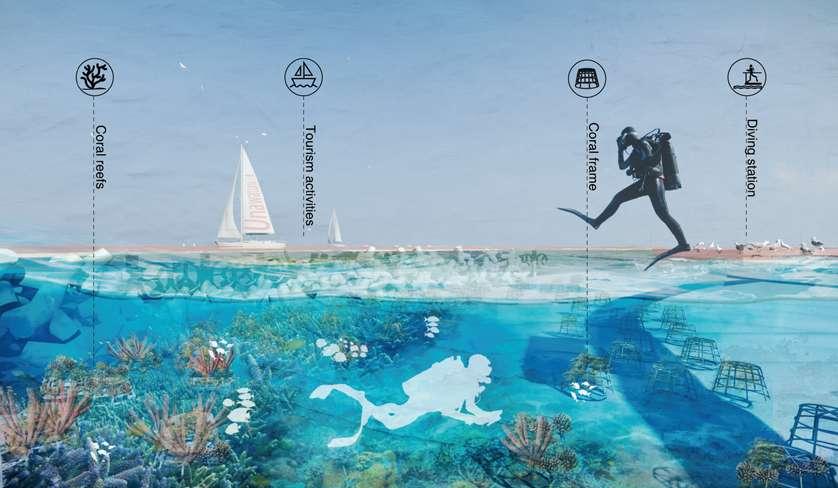
Tourists’ diving activities are combined with eco-tourism, and coral seedlings are planted in designated areas, and then the corals are monitored by professional monitors and transplanted to large-scale restoration areas. It has realized the recovery of corals in stages and gradually integrated with human tourism activities.
After the protection zone is divided, cruise ships will be moored at the pier through designated routes. The far sea is a breakwater piled up with prefabricated blocks, which is used as a tourist trail.Coral shelves are placed under the sea for tourists to dive and plant corals. A variety of marine life is restored here together.
Material Innovation & Modular Construction
Cooperation work (Already built)
Site Location: Shanghai,China
Size:500m2
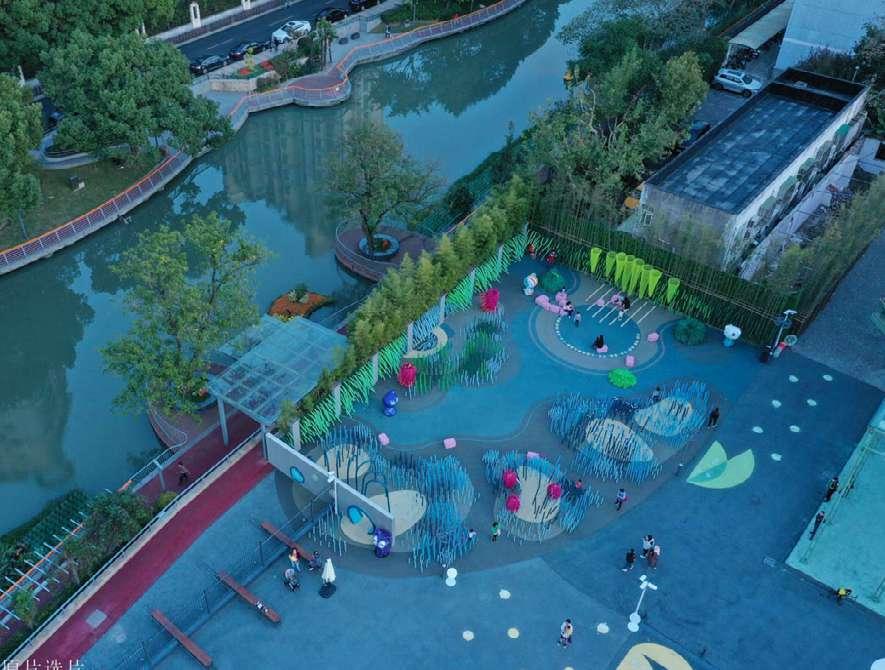
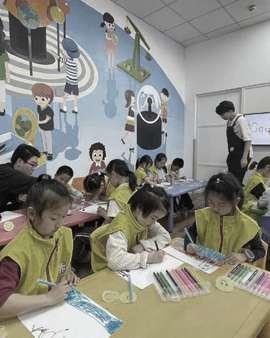
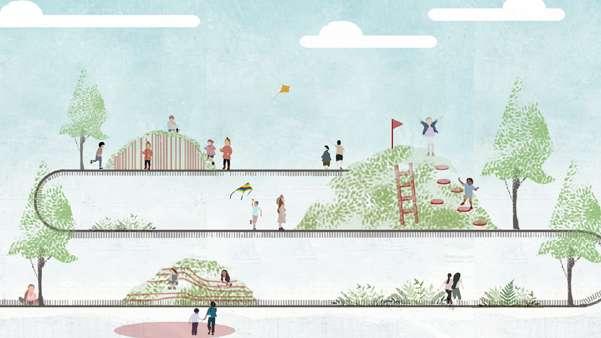
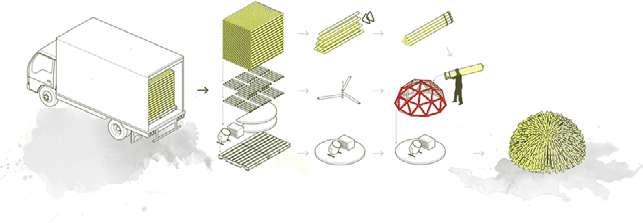
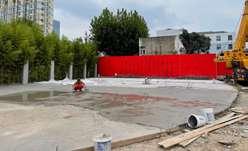
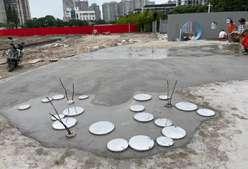
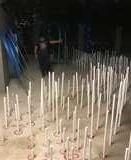
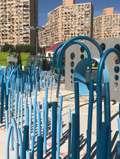
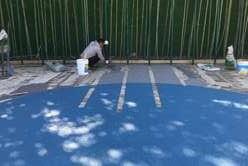
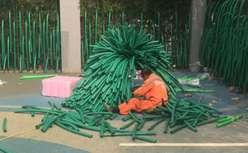
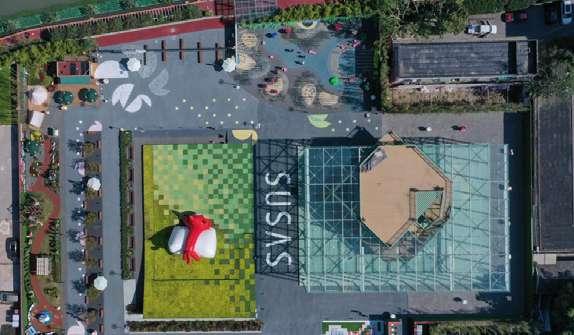
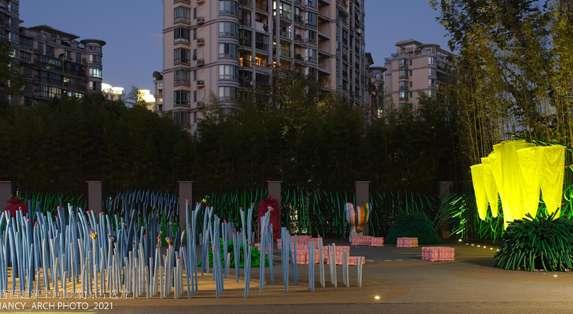
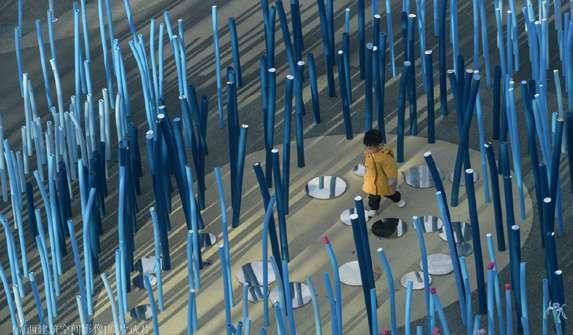
The design theme of Kid’s Garden in Bamboo Forest focuses on kids. FLO Landscape invited kid designers to participate deeply in the form of a “co-creation workshop”. The kid’s paintings in the first phase of the workshop are an important source of inspiration for garden design. While respecting the site’s dialogue with the surroundings, the design attempts to integrate fantasy elements such as the moon river, small bushes, and exotic flowers into the space, aiming to restore the play space imagined by the children. In response to construction period, season and budget constraints, designers introduced safe, cheap and recyclable foam stick materials.
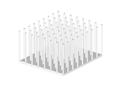
Spacing 20cm to reach the shoulder width of children aged 6-9
Children can slowly drill and squeeze sideways
Spacing 30cm to reach the shoulder length of children aged 6-9
Children can go straight through slowly
Spacing 40cm
Children can walk straight
spacing 50cm
Children can run straight
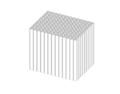
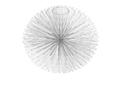


Interspersed-grass Strapping-seat Spherical-Dandelion Interspersed on both sides-wall interaction
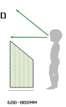
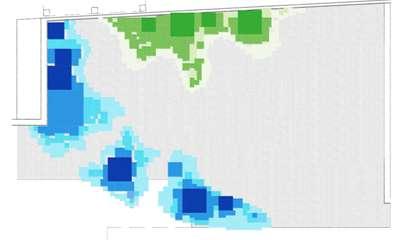
SIGHT AND HEIGHT ANALYSIS OF MODULE
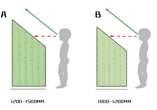
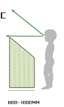
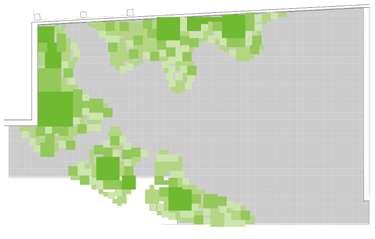
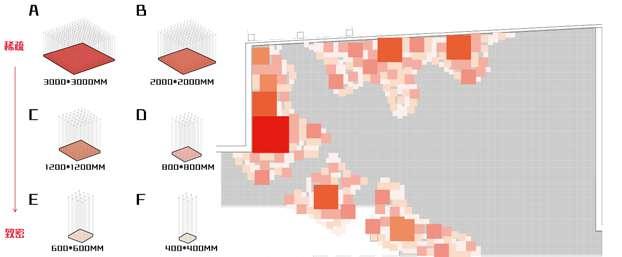
DENSITY AND SCALE ANALYSIS OF MODULE
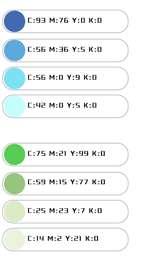
COLOR AND DISTRIBUTION ANALYSIS OF MODULE
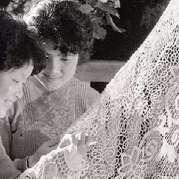
Extract Changshu intangible cultural heritage lace weaving methods to learn traditional craft
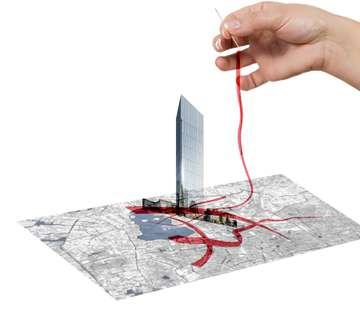
Build a new city in the future, weaving a city in multi-dimensional function, operation and ecology.
Taking human activity and behavior as the topic, landscape influences people's moving line and staying and gathering space, and refining the design method with the characteristics of lace.
Commercial Complex
Cooperation work (Plan deepening stage)
Site Location: Changshu,Suzhou,China
Size: 4ha
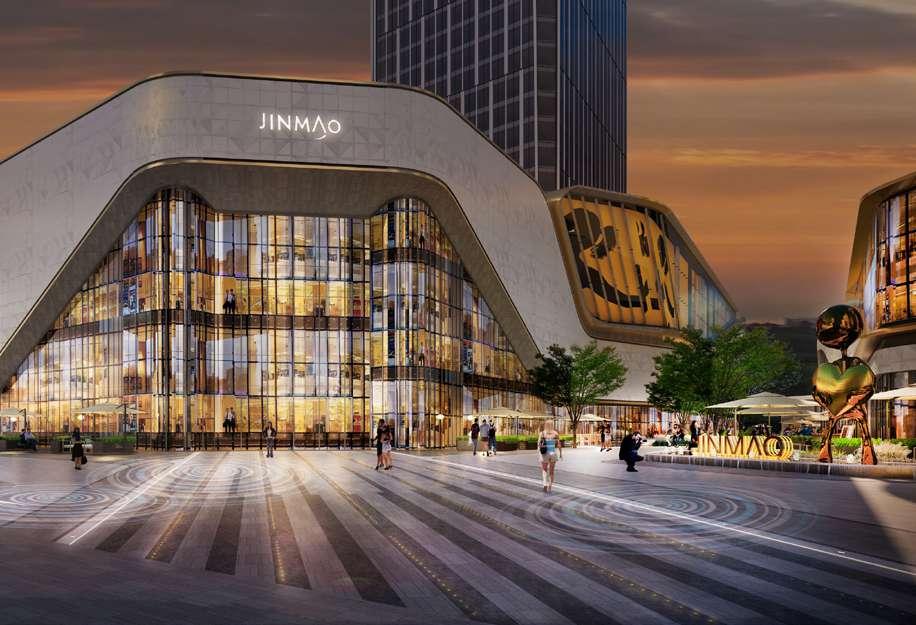
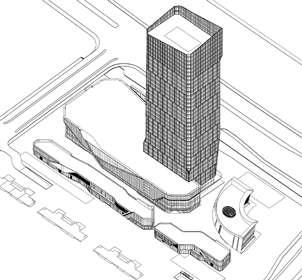
The retail mixed-use project is located in Changshu. There are three site features around the site: high-tech industrial park, Kuncheng Lake with good ecology, and residential areas. This project takes the historical intangible cultural heritage lace of Changshu as an opportunity, using people as needles and activities as threads, weaving into three axes of the city: life axis, health axis and ecological axis. Then the concept is translated into the site and specific functions are built to create a livable, pleasant, leisure and comprehensive composite commercial center.
Introduce the residential area from the south
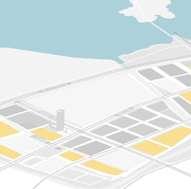
Introduce the technology zone from the north
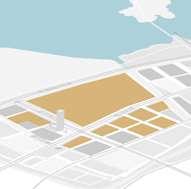
Lakeside natural ecological protection area
High-quality lakeside residential plot
"Using people as needles, embroidering and weaving space"
Introduce health corridor from east to west
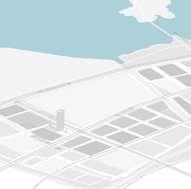
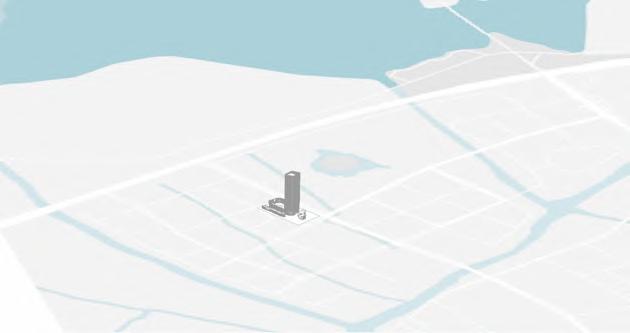
Commercial and office plot integrating technology and office
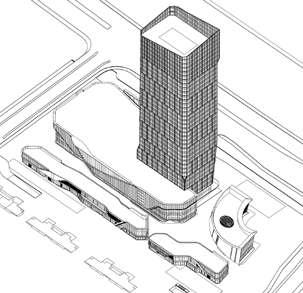
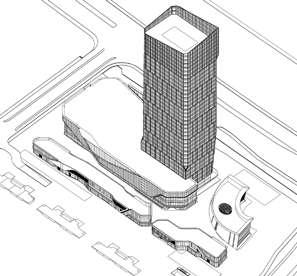
Four kinds of activity square
Multiple composite functions are superposed to create multi-point and multi-time commercial vitality space.
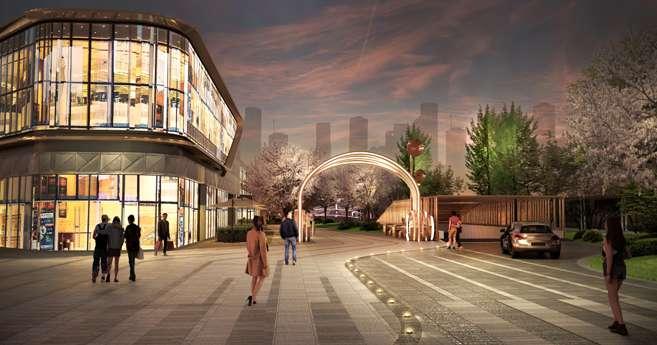
The entrance to the basement is cramped, and the integration of the pavement makes it visually larger.
Six converging people lines
"Flowing needle" LINE "Blooming needle" SURFACE
Multi-directional people connection Attract multiple people through the commercial space in series.
A core spot "Stacked Needles" POINT
The core site extends outwards to build the core explosion point and drive the vitality of the surrounding site.
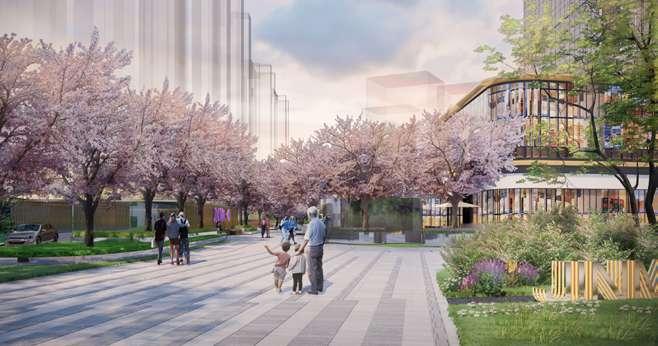
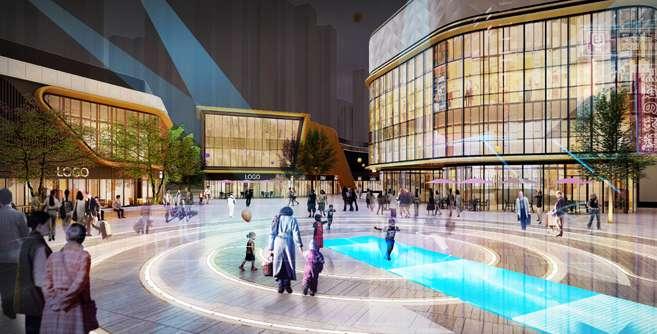
The residential road full of cherry blossoms creates a comfortable and pleasant atmosphere.
The immersive light and shadow attracts popular focus, carries commercial operation activities, and creates a cool light and shadow stage.
AI Generation & Stable Diffusion Application
Cooperation work (with Li Xinwei)
Site Location: Eindhoven, Netherlands
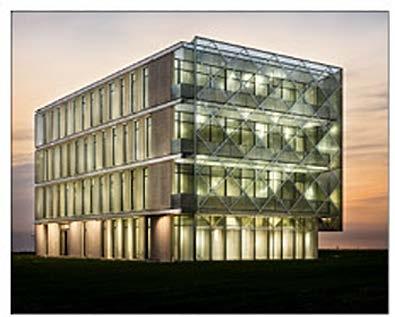
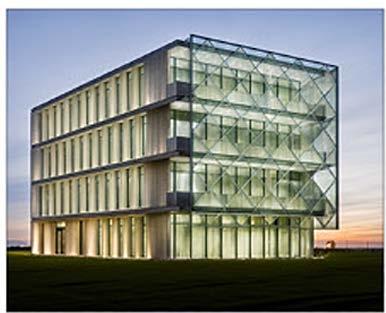
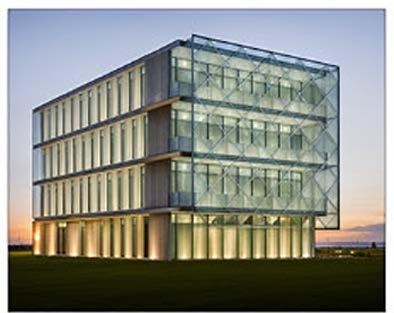
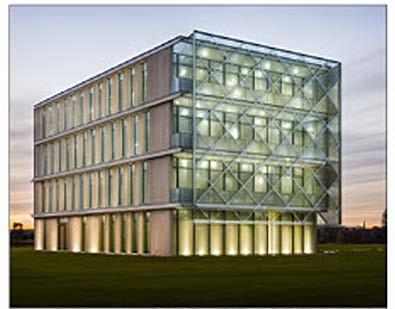
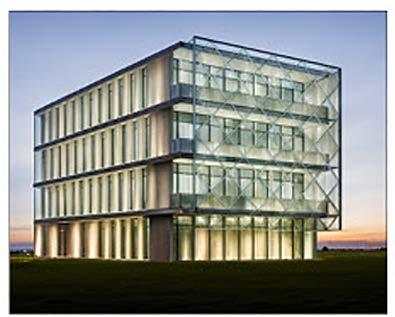
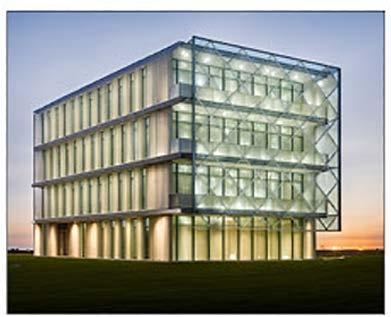
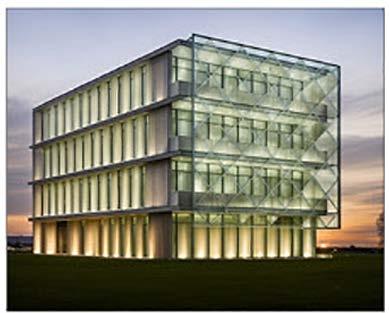
We used Rhino for architectural modeling and exported Segnet Picture, Lineart Picture, and Depth Picture as inputs. In Stable Diffusion, I applied ControlNet to retain structure and a custom LoRA to generate facade styles. I further refined details like windows and materials using Inpainting Mode, fine-tuning parameters for realism. Finally, I enhanced the output with Photoshop. This workfIow streamlines facade design testing and explores AI’s potential in architectural visualization.


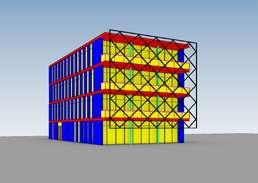
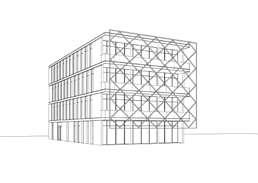
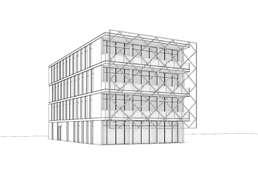
In this experiment, We explored the integration of Rhino modeling with Stable Diffusion to generate architectural facade renderings. We first created a base model in Rhino and exported various formats, including Segnet Picture, Lineart Picture, and Depth Picture as inputs. Then, We used ControlNet to retain the building’s structure while applying a custom LoRA model trained on a dataset of architectural images with specific materials, textures, and styles to ensure coherence in the generated facades. Additionally, We refined the details using Inpainting mode, adjusting windows, materials, and decorative elements to align with our design intent. Throughout the process, We experimented with CFG Scale, ControlNet weights, and other parameters to enhance the depth and realism of the generated results.



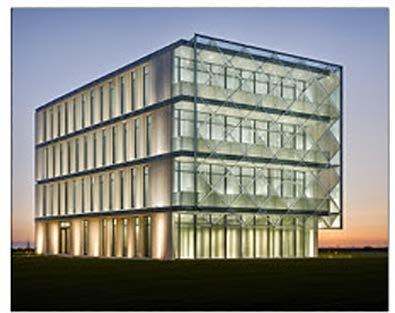
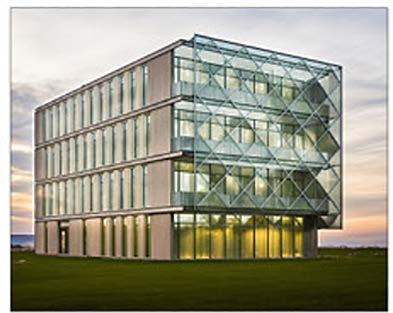
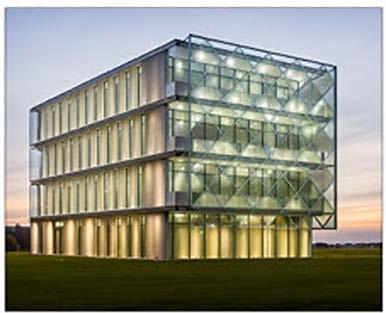
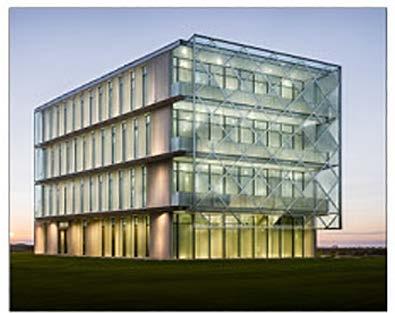
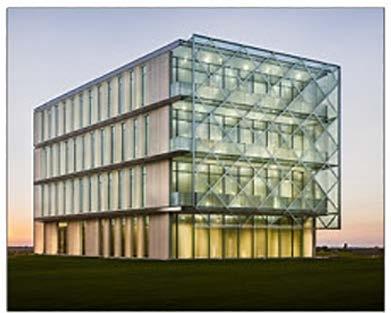
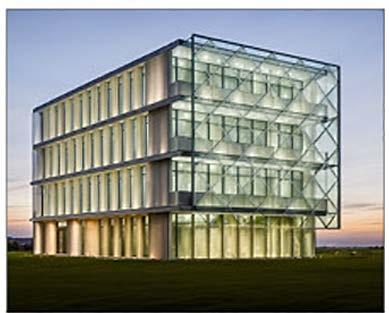
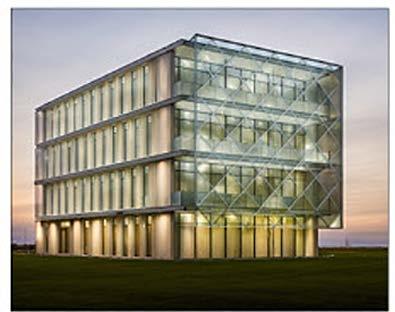
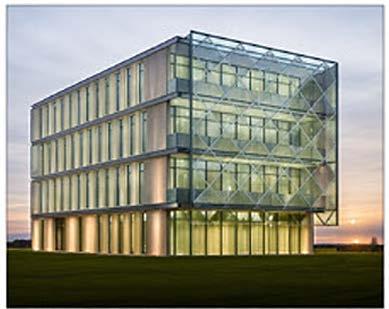
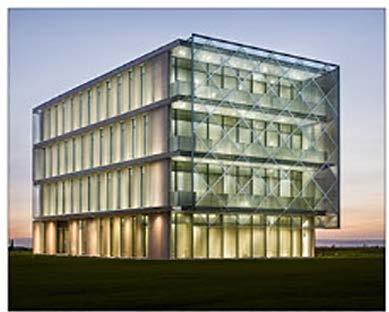
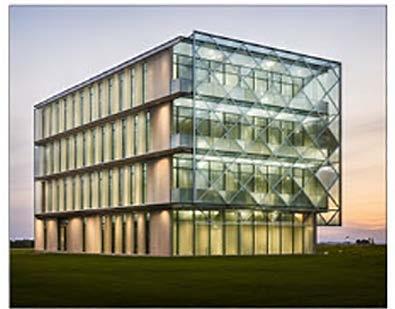
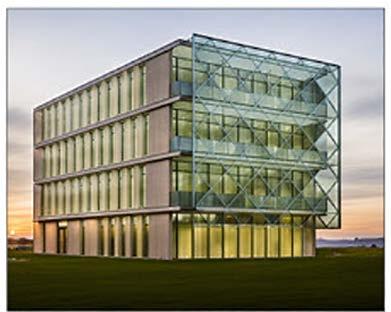
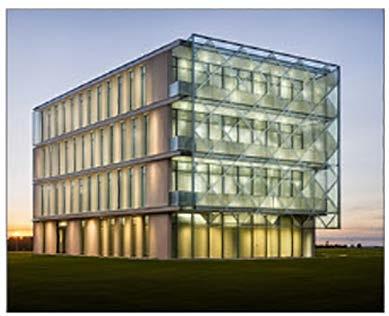
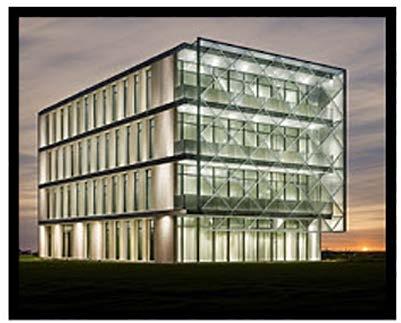
Theeffect closest to thedesireddesign
Thank you
+393455098170 Shengran Chang
shengran.chang@mail.polimi.it