CHOOSING BETWEEN THE ER, URGENT CARE, AND TELEHEALTH SERVICES
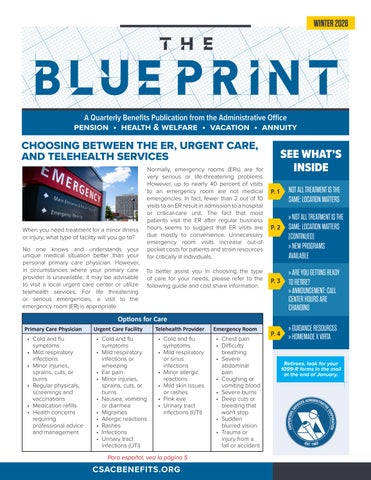
When you need treatment for a minor illness or injury, what type of facility will you go to?
No one knows and understands your unique medical situation better than your personal primary care physician. However, in circumstances where your primary care provider is unavailable, it may be advisable to visit a local urgent care center or utilize telehealth services. For life threatening or serious emergencies, a visit to the emergency room (ER) is appropriate.
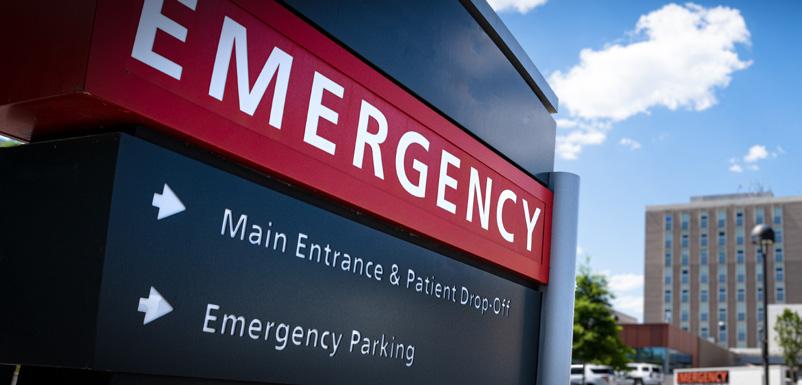
Normally, emergency rooms (ERs) are for very serious or life-threatening problems. However, up to nearly 40 percent of visits to an emergency room are not medical emergencies. In fact, fewer than 2 out of 10 visits to an ER result in admission to a hospital or critical-care unit. The fact that most patients visit the ER after regular business hours seems to suggest that ER visits are due mostly to convenience. Unnecessary emergency room visits increase out-ofpocket costs for patients and strain resources for critically ill individuals.
To better assist you in choosing the type of care for your needs, please refer to the following guide and cost share information.
Options for Care
• Cold and flu symptoms
• Mild respiratory infections
• Minor injuries, sprains, cuts, or burns
• Regular physicals, screenings and vaccinations
• Medication refills
• Health concerns requiring professional advice and management
• Cold and flu symptoms
• Mild respiratory infections or wheezing
• Ear pain
• Minor injuries, sprains, cuts, or burns
• Nausea, vomiting or diarrhea
• Migraines
• Allergic reactions
• Rashes
• Infections
• Urinary tract infections (UTI)
• Cold and flu symptoms
• Mild respiratory or sinus infections
• Minor allergic reactions
• Mild skin issues or rashes
• Pink eye
• Urinary tract infections (UTI)
• Chest pain
• Difficulty breathing
• Severe abdominal pain
• Coughing or vomiting blood
• Severe burns
• Deep cuts or bleeding that won't stop
• Sudden blurred vision
• Trauma or injury from a fall or accident
» ARE YOU GETTING READY TO RETIRE?
» ANNOUNCEMENT: CALL CENTER HOURS ARE CHANGING
NOT ALL TREATMENT IS THE SAME: LOCATION MATTERS
Primary Care
Physician Visit
Your Out-of-Pocket Cost By Plan (In-Network)
Active PPO Plan Kaiser Plan Bronze PPO Plan
$15 copay
Urgent Care Visit
Telehealth Visit
Emergency Room Visit
$50 copay
$5 copay
$20 copay 20% after deductible
$20 copay 20% after deductible
$0 copay
$250 copay 20% after deductible
$5 copay
$250 per visit then 20% (after deductible)
To locate an in-network urgent care facility, PPO Plan participants can visit IBX.com or log into the IBX app. Or, visit teladochealth.com to connect with a doctor in minutes by phone or video. Kaiser Participants can locate Kaiser facilities or connect with a provider virtually at kp.org
NEW PROGRAMS AVAILABLE STARTING JANUARY 2026 PROGRAMS
Many people with musculoskeletal (MSK) conditions experience significant pain and feel overwhelmed or confused when choosing the best care path to relieve their pain. If you are experiencing issues or pain related to your back, neck, knees, shoulders, or hips, don’t hesitate to reach out to Nimble Health! Nimble Health’s team of experienced clinical professionals are here to help participants understand, access, and optimize their MSK care options, so they can live their best lives. If you have any questions about Nimble
digital MSK platform
Sword’s care delivery solutions e ectively address any MSK condition, regardless of stage, acuity or whether the primary issue is pain, physical dysfuction, or pelvic floor issues.
ARE YOU GETTING READY TO RETIRE?
Are you thinking about your retirement in 2026? Here are some tips related to the benefits available under the Western States Carpenters Trusts to help you prepare.
Starting Your Monthly Pension Benefit
A completed application is the first step in the retirement process. Please apply at least 90 days before you want your benefit to start. If you are married, your spouse's notarized signature may be required to complete your application.
Be prepared to provide the following:
• Birth certificate or proof of age (you and your Spouse)
• Marriage certificate
• Divorce decree(s) and qualified domestic relations order(s) or QDRO(s)
• Spouse's death certificate, if applicable
Inform CSAC of pension credit with other funds Related credit in other carpenter or construction industry defined benefit plans may help you qualify for certain pension types. Be sure to also contact those other funds and file the necessary applications for retirement.
Know the rules for post-retirement work
Once retired, your monthly pension benefits can be suspended if you continue to work in the construction industry. The rules vary depending on your age and the pension plan. Contact CSAC if you have any questions.
Your Annuity Account At Empower
At retirement, you have the option to start taking distributions from your account or you can choose to leave it in the Plan for the future. If you leave it in the Plan, your balance will continue to be invested in the options you selected. You can continue to change how you want your money invested after retirement. Call Empower at (833) 569-2433 if you have questions about withdrawing your money at retirement. We suggest that you consult with your financial/tax advisor regarding tax implications.
Health and Life Insurance Benefits
If you are covered by the Western States Carpenters Health and Welfare Plan at retirement, the Administrative Office will apply your reserve bank hours to extend your coverage at retirement. After your reserve bank is exhausted, COBRA Continuation Coverage is available at a cost to you for up to an additional 18 months of coverage. A COBRA enrollment packet wil be mailed to you at the time your coverage is terminated. If you have an HRA balance at time of retirement, you can utilize those funds to help pay your COBRA premiums or continue to apply them to out-of-pocket costs post retirement.
Applying for Social Security?
You may apply as early as age 62. Contact the Social Security Administration at least three months before the date you want benefits to begin.
Applying For Health Coverage Under Medicare?
Medicare coverage is available at age 65 for eligible individuals. Applying for Social Security automatically enrolls you in Medicare Part A (covers hospitalization services) which is provided at no cost to you. However, you must apply for Part B before your 65th birthday to avoid a permanent premium penalty. If you have other coverage, you can delay enrolling in Part B by notifying the Social Security Administration (SSA), who might require proof of continous coverage to prevent the penalty. You can contact SSA at (800) 772-1213.
Effective Monday, March 2, 2026, the Call Center is extending its service hours to better meet the needs of our participants!
STRENGTHENING YOUR FINANCIAL CONFIDENCE IN 2026
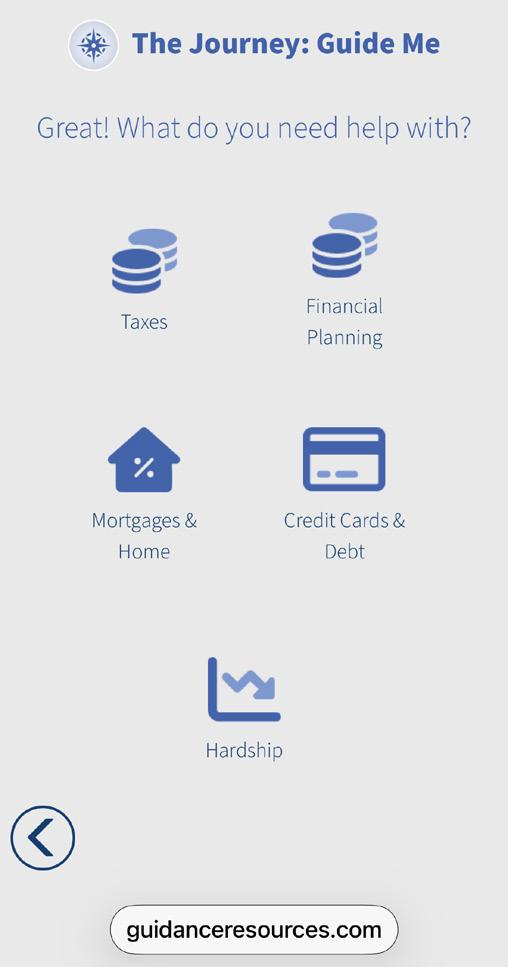
The Carpenters ComPsych Assistance Program (CCAP) supports the overall well-being of participants and their families. This includes their long-term financial health. Through Compsych GuidanceResources, members and their eligible family members have access to a comprehensive suite of confidential financial support services designed to help you make informed decisions and build financial stability. These are available at no cost to you.
Your Financial Guidance Team GuidanceResources connects you with certified, licensed financial experts who can assist with:
• Budgeting and debt management
• Saving and long-term planning
• Major purchases and life events
• Credit building strategies
• Managing financial stress
To Access: Visit guidanceresources.com or download the Guidance Resources app and log onto the site. Remember to sign up with the web code: SWCCAP or call (833) 792-2271 for more assistance.
Say hello to new flavors and fresh inspiration
Virta, your fully covered weight loss and diabetes program, has partnered with Chef Joel, founder of Homemade—the world’s largest livestream cooking community—to bring you easy, flavorful meals you can feel good about.
Whether you're looking for new ideas or just want to shake up your routine, these recipes are here to help you love what’s on your plate and reach your health goals!
Scan the QR code to join Virta today and access more tips and meal inspiration
Remember to notify us if your address or dependents change.
Phone/Teléfono: (213) 386-8590
Toll Free/Sin costo: (800) 293-1370
Email/Correo electronico: info@csacbenefits.org
445 South Figueroa Street, Suite 1500 Los Angeles, California 90071-3203
Office Hours/Horas de oficina: M-F 5:00 a.m. to 5:00 p.m. PT lunes - viernes 5:00 a.m. a 5:00 p.m. PT
Lobby Hours/Horas del pasillo: M-F 8:00 a.m. to 5:00 p.m. PT lunes - viernes 8:00 a.m. a 5:00 p.m. PT
Asegúrese de notificarnos si su dirección o sus dependientes cambian.
Una publicación trimestral de la Oficina Administrativa pensión • salud y bienestar • vacaciones • anualidades
ELEGIR ENTRE URGENCIAS, ATENCIÓN
URGENTE Y SERVICIOS DE TELESALUD
Cuando necesites tratamiento por una enfermedad o lesión leve, ¿a qué tipo de centro acudes?
Nadie conoce y entiende su situación médica única mejor que su médico personal de atención primaria. Sin embargo, en circunstancias en las que su proveedor de atención primaria no está disponible, puede ser recomendable visitar un centro local de atención de urgencias o utilizar los servicios de telesalud. Para emergencias graves o potencialmente mortales, una visita a la Sala de Emergencias (ER) es apropiada.
Medico de atencion primaria
• Síntomas de resfriado y gripe
• Infecciones respiratorias leves
• Lesiones leves, esguinces, cortes o quemaduras
• Reconocimientos físicos regulares, evaluaciones y vacunaciones
• Recambios de medicamentos
• Preocupaciones de salud que requieren asesoramiento y gestión profesional
Normalmente, las Salas de Emergencia (ER) son para problemas muy graves o que ponen en peligro la vida. Sin embargo, hasta casi el 40 por ciento de las visitas a una sala de emergencias no son emergencias médicas. De hecho, menos de dos de cada diez visitas a una sala de emergencias resultan en la admisión a un hospital o unidad de cuidados críticos. El hecho de que la mayoría de los pacientes visiten la sala de emergencias después del horario comercial regular parece sugerir que las visitas a la sala de emergencias se deben principalmente a la conveniencia. Las visitas innecesarias a la sala de emergencias aumentan los costos de bolsillo para los pacientes y agotan los recursos destinados para las personas con enfermedades criticas.
Para ayudarle mejor a elegir el tipo de atención que se adapte a sus necesidades, consulte la siguiente guía y la información sobre el costo compartido.
Optiones de atención
Centro de atencion de urgencias
• Síntomas de resfriado y gripe
• Infecciones respiratorias leves, sibilancies
• Dolor de oído
• Lesiones leves, esguinces, cortes o quemaduras
• Náuseas, vómitos, diarrea
• Migrañas
• Reacción alérgica
• Erupciones de la piel
• Infecciones
• Infecciones del tracto urinario (UTI)
Proveedor de telemedicina
• Síntomas de resfriado y gripe
• Infecciones respiratorias o sinusales leves
• Reacciones alérgicas leves
• Problemas leves de la piel o erupciones
• La conjuntivitis
• Infecciones del tracto urinario (UTI)
Sala de emergencia
• Dolor de pecho
• Dificultad para respirar
• Dolor abdominal intenso
• Tos o vómitos con sangre
• Quemaduras graves
• Cortes profundos o sangrado que no paran
• Visión borrosa repentina
• Trauma o lesión por una caída o accidente
VEA QUE ESTA ADENTRO
NO TODOS LOS TRATAMIENTOS SON IGUALES: LA UBICACION IMPORTA P. 5
» NO TODOS LOS TRATAMIENTOS SON IGUALES: LA UBICACION IMPORTA (CONTINUADO)
» NUEVOS PROGRAMAS DISPONIBLES P. 6
» ¿TE ESTÁS PREPARANDO PARA JUBILARTE?
» ANUNCIO: EL HORARIO DEL CENTRO DE LLAMADAS ESTÁ CAMBIANDO P. 7
» GUIDANCE RESOURCES
» HOMEMADE X VIRTA P. 8
Jubilados, busquen sus formularios 1099-R en el correo a finales de enero.
ELEGIR ENTRE URGENCIAS,
ATENCIÓN URGENTE Y SERVICIOS DE TELESALUD (CONTINUADO)
Visita al médico de atención primaria
Visita de cuidados urgentes
Visita de telesalud
Visita a la sala de emergencias
Su costo de bolsillo por Plan (dentro de la red)
Plan Activo PPO Plan Kaiser Plan Bronce PPO
$15 copago
$50 copago
$5 copago
$250 copago
$20 copago 20% despues del deducible
$20 copago 20% despues del deducible
$0 copago
20% despues del deducible
$5 copago
$250 por visita y luego 20% (despues del deducible)
Para localizar un centro de atención urgente dentro de la red, los participantes del Plan PPO pueden visitar IBX.com o iniciar sesión en la aplicación IBX. O visite teladochealth.com para comunicarse con un médico en cuestión de minutos por teléfono o video. Los participantes de Kaiser pueden localizar las ubicaciones de Kaiser o conectarse con un proveedor virtualmente en kp.org
NUEVOS PROGRAMAS DISPONIBLES A PARTIR DE ENERO DEL 2026
Muchas personas con afecciones musculoesqueléticas (MSK) experimentan un dolor significativo y se sienten abrumadas o confundidas al elegir la mejor vía de atención para aliviar su dolor. Si usted está experimentando problemas o dolor relacionado con su espalda, cuello, rodillas, hombros o caderas, ¡No dudes en contactar a Nimble Health! El equipo de profesionales clínicos experimentados de Nimble Health está aquí para ayudar a los participantes a comprender, acceder y optimizar sus opciones de atención médica de MSK, para que puedan vivir su mejor vida.
Educación para los miembros y apoyo en la toma de decisiones por parte de entrenadores de salud
Conoce
Acceso a herramientas digitales valiosas
Ayuda con la programación a proveedores de red de alta calidad
Un guía de confianza para los miembros durante todo su trayecto de atención MSK
Programas Solopara participantes delPlan PPO
Si tiene alguna pregunta sobre Nimble Health, visite www.Nimble-Health.com o llame al (833) 844-8556.
a Sword, plataforma
digital para MSK desde casa
Las soluciones de atención de Sword aborda eficazmente cualquier condición de musculo, independientemente de su estado, gravedad o si el problema principal es dolor, disfunción física o problemas del suelo pélvico.
Llame al (888) 346-0476 o escanee el código QR para empezar.
Satisfacción general de los miembros del 96%
Para apoyar a los pacientes con cáncer en su momento de necesidad, los Planes de Salud y Bienestar de Carpinteros de Estados del Oeste ofrecerá un nuevo beneficio opcional llamado CancerNavigator a partir del 1 de enero del 2026. No hay ningún costa para usted.
Los pacientes pueden conectarse directamente con un enfermero/a navegadora de oncología para entender su diagnóstico, conocer opciones de tratamiento, encontra centros de tratamiento, optener respuestas y recibir apoyo.
Visite www.cancernavigator.com/wscarpenters para más información: (213) 657-5282
Dolor Crónico
Prevención De Dolor Y
Prevención De Lesiones
Salud Pélvica
¿TE ESTÁS PREPARANDO PARA JUBILARTE?
¿Estás pensando en tu jubilación en 2026? Aquí tienes algunos consejos relacionados con los beneficios disponibles bajo los Fideicomisos de Carpinteros de Estados del Oeste para ayudarte a prepararte.
Comenzar su beneficio mensual de pensión
Una solicitud completa es el primer paso en el proceso de jubilación. Por favor, aplique por al menos 90 días antes de que desee que comience su beneficio. Si usted está casado, la firma notarial de su cónyuge puede ser requerida para completar su solicitud.
Esté preparado para proporcionar lo siguiente:
• Certificado de nacimiento o prueba de edad (tú y tu cónyuge)
• Certificado de matrimonio
• Decreto de divorcio y órden(es) de relaciones domésticas calificadas, o QDRO(s)
• Certificado de defunción del cónyuge, si aplica
Informe a la Oficina Administrativa de CSAC sobre crédito de otros fondos
El Crédito Relacionado en otros planes de beneficios definidos de la industria de la construcción o carpintero puede ayudarle a calificar para ciertos tipos de pensión. Asegúrese de comunicarse también con esos otros fondos y enviar las solicitudes necesarias para la jubilación.
Conozca las reglas para el trabajo después de la jubilación
Una vez jubilado, sus beneficios mensuales de pensión pueden ser suspendidos si continúa trabajando en la industria de la construcción. Las reglas varían dependiendo de su edad y el plan de pensión. Comuníquese con CSAC si tiene alguna pregunta.
Tu cuenta de anualidades en Empower
Al jubilarse, tiene la opción de comenzar a recibir distribuciones de su cuenta o puede optar por dejarlas en el Plan para el futuro. Si lo dejas en el Plan, su balance continuará invirtiendo en las opciones que seleccionaste. Puede continuar cambiando cómo desea que su dinero se invierta después de la jubilación. Comuníquese con Empower al (833) 569-2433 si tiene preguntas sobre cómo retirar su dinero en la jubilación. Le sugerimos que consulte con su asesor financiero / fiscal sobre las implicaciones fiscales.
Beneficios de seguro de salud y vida
Si usted está cubierto por el Plan de Salud y Bienestar de Carpinteros de Estados del Oeste al momento de la jubilación, la Oficina Administrativa aplicará sus horas de reserva bancaria para extender su cobertura al momento de la jubilación. Después de que su banco de reserva se haya agotado, la cobertura de continuación de COBRA está disponible a un costo para usted por hasta 18 meses adicionales de cobertura. Un paquete de inscripción de COBRA será enviado por correo a usted en el momento en que su cobertura sea terminada. Si tiene un balance de HRA al momento de la jubilación, puede utilizar esos fondos para ayudar a pagar sus tarifas de COBRA o continuar aplicándolas a los costos de bolsillo después de la jubilación.
¿Solicitando la Seguridad Social?
Puedes solicitar a partir de los 62 años. Comuníquese con la Administración de la Seguridad Social al menos tres meses antes de la fecha en que deseas que comiencen los beneficios.
¿Solicitando cobertura de Salud bajo Medicare?
La cobertura de Medicare está disponible a los 65 años para las personas elegibles. Solicitar el Seguro Social lo inscribe automáticamente en la Parte A de Medicare (cubre los servicios de hospitalización) y se proporciona sin costo para usted. Sin embargo, debe solicitar la Parte B antes de cumplir 65 años para evitar una penalización permanente de la tarifa. Si tiene otra cobertura, puede retrasar la inscripción en la Parte B notificando a la Administración del Seguro Social (SSA) que podría requerir prueba de cobertura continua para evitar la penalización. Puede comunicarse con SSA al (800) 772-1213.
ANUNCIO:
¡Se están extendiendo los horarios del Centro de Llamadas de la Oficina Administrativa!
A partir del lunes 2 de marzo del 2026, el Centro de Llamadas extenderá sus horas de servicio para satisfacer mejor las necesidades de nuestros participantes.
Nuevo horario del centro de llamadas*
Consultas telefόnicas: de 5:00 a.m. a 5:00 p.m.
Servicio en persona: de 8:00 a.m. a 5:00 p.m. *hora del PacÍfico
Carpenters Services
Administrative Corporation
445 South Figueroa Street, Suite 1500
Los Angeles, California 90071-3203
FORTALECIENDO SU CONFIANZA FINANCIERA EN 2026
El Programa de Asistencia de Carpinteros de ComPsych (CCAP) apoya el bienestar general de los participantes y sus familias. Esto incluye su salud financiera a largo plazo. A través de ComPsych GuidanceResources, los miembros y sus familiares elegibles tienen acceso a un conjunto completo de servicios de apoyo financiero confidenciales, diseñados para ayudarle a tomar decisiones informadas y construir estabilidad financiera. Estos servicios están disponibles sin costo para usted.
Tu equipo de Orientación Financiera GuidanceResources te conecta con expertos financieros certificados y licenciados que pueden ayudarte con:
• Presupuestos y gestión de deudas
• Ahorro y planificación a largo plazo
• Compras importantes y eventos vitales
• Informes de crédito y estrategias para construir crédito
• Gestión del estrés financiero
Para acceder: Visite guidanceresources.com o descarga la aplicación GuidanceResources y accede al sitio. Recuerda registrarte con el código web: SWCCAP o comuníquese al (833) 792-2271 para más ayuda.
Da la bienvenida a nuevos sabores e inspiración fresca
Virta, su programa de pérdida de peso y diabetes completamente cubierto, se ha asociado con el chef Joel, fundador de Homemade, la comunidad de cocina en vivo más grande del mundo, para ofrecerle comidas fáciles y sabrosas que le pueden interesar.
Ya sea que estés buscando nuevas ideas o simplemente quieres cambiar tu rutina, estas recetas están aquí para ayudarte a amar lo que tienes en el plato y alcanzar tus objetivos de salud.
Escanea el código QR para unirte a Virta hoy mismo y accede a más consejos e inspiración para comidas