ANNUITY: WHAT IS A TARGET DATE FUND AND HOW DOES IT WORK?
strategy for you. On the other hand, investing solely in more conservative options may be appropriate for short-term financial goals.
Managing Risk
The Southwest Carpenters Annuity Fund offers a range of options for self-directing the investment of your annuity contributions. These investment options can be divided into three asset classes:
1. Equities (stocks): Investing in equities means owning a piece of a company and sharing profits or losses. Historically, equities have the largest returns but also the greatest risk among the three major asset classes.
2. Fixed income (bonds): Investing in bonds is basically lending money to a government or a company in exchange for a fixed rate of interest. Fixed income investments are generally less volatile than equities, but some bonds are riskier than others.
3. Cash Alternatives: Short-term instruments like money market funds and Treasury bills are designed to maintain a stable value but offer lower returns.
Risk
vs. Reward
When it comes to investing, risk and reward go hand in hand. Stocks, for example, carry more risk than bonds and cash alternatives. The reward for taking on a higher risk is the potential for a higher return. If your financial goal has a further horizon into the future, then investing a greater portion of your assets in riskier investment options may be the
There are several risks that retirement investors face. One is the risk of outliving your money. Another risk is the potential for a significant decline in the financial markets. Finally there is inflation, which is the risk of rising prices eroding the purchasing power of your savings and investments.
Asset allocation is the process of deciding what percentage of your money to invest in stocks, bonds, and cash alternatives. Investing in a mix of asset classes can help balance the risk and return characteristics of your portfolio. Should market conditions cause one of your investments to perform poorly, not all your money will be adversely affected.
Once your asset allocation is determined, it’s recommended that you periodically rebalance your portfolio to maintain the desired percentage of assets in each class.
However, your asset allocation may need to change over time. For example, if you are 40 years from retirement, you might allocate 94% to stocks and 6% to bonds. When you are 20 years from retirement, you might reduce the stock percentage to 75% to minimize the impact of a potential downturn in the market, with 25% allocated to bonds.
Asset allocation and rebalancing are usually the responsibility of the investor. However,
» ARE YOU READY TO START USING YOUR HRA? » SEATTLE OFFICE CONTINUES TO SERVE NORTHWEST CARPENTERS
TARGET DATE FUNDS CONTINUED
not every investor has the knowledge, experience, and/or interest in managing their investments. If you are more of a hands-off investor, Day One Funds from Empower Financial may be a good fit.
Target Date Funds
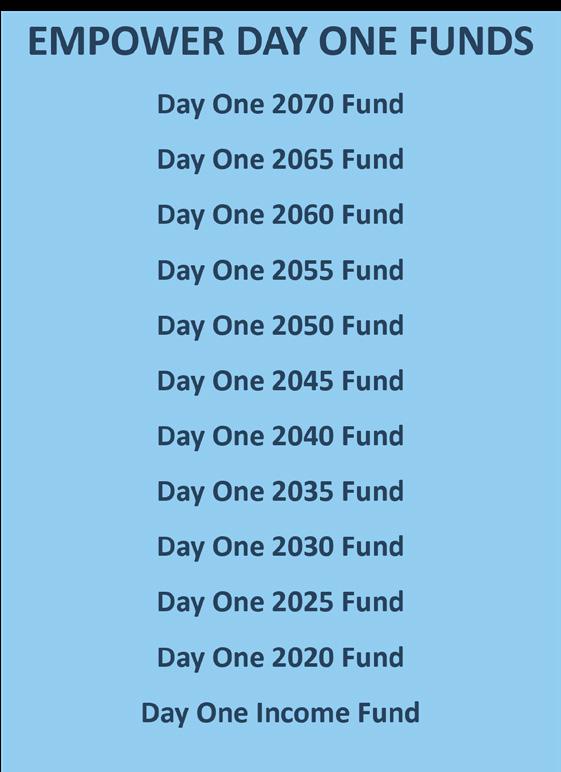
The Empower Day One funds are the default investment for participants in the Southwest Carpenters Annuity Fund. Day One funds are known as "target date" funds because each is built around a future date corresponding to a five-year window during which the investor is expected to turn 62 and begin withdrawing money from the account. For example, the Day One 2050 fund is designed for an investor who will turn 62 between the years 2050 and 2055. If you were born in 1970 and will turn 62 in 2032, your default investment would be the Day One 2030 Fund.
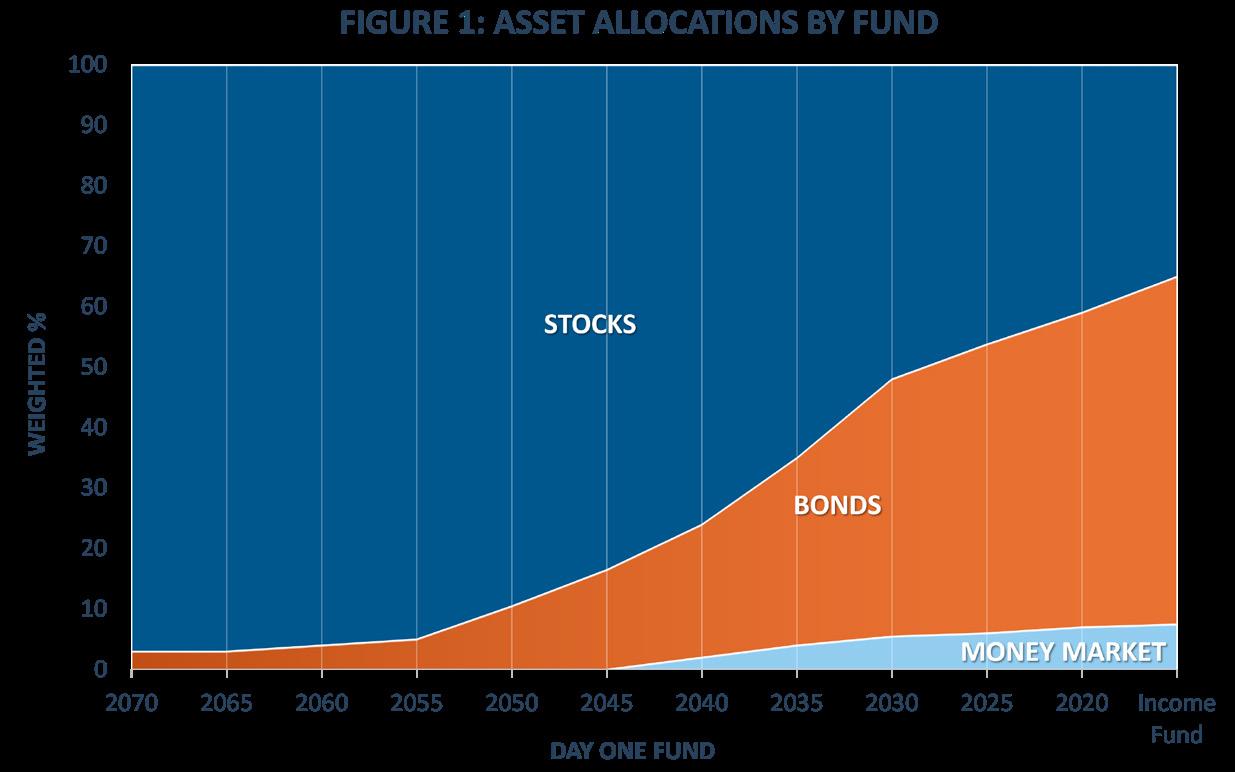
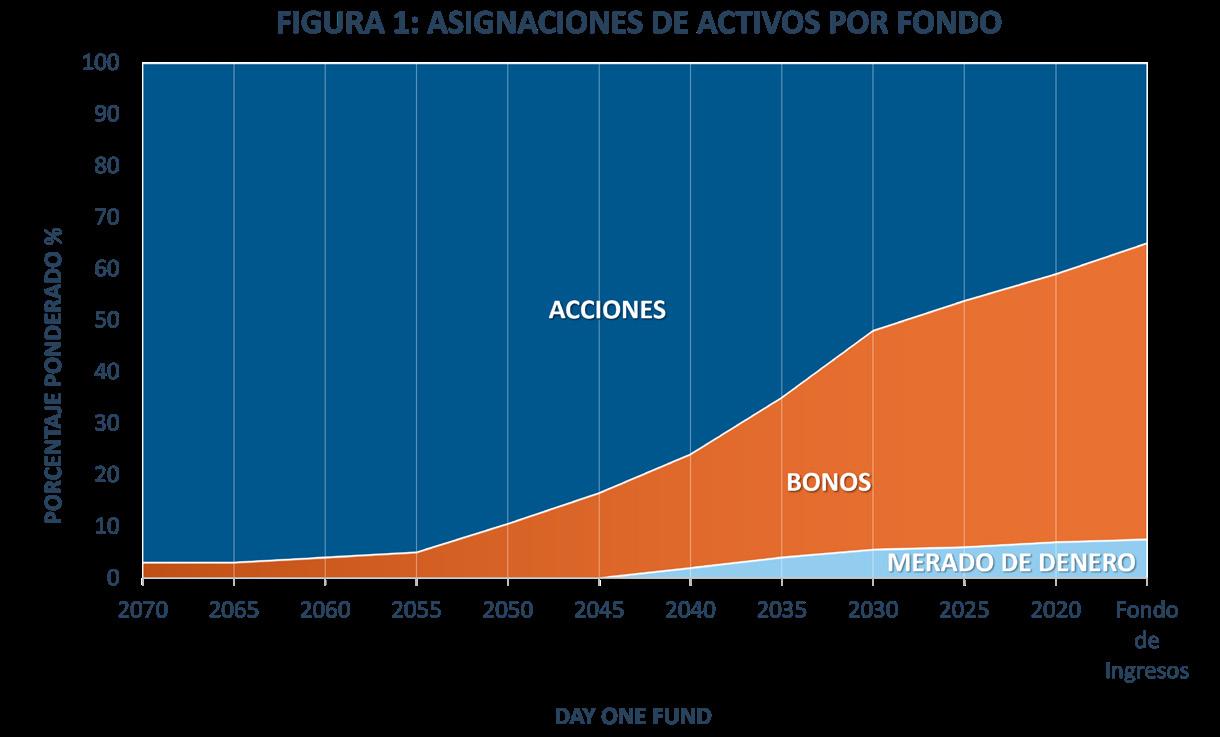
Because the Day One fund is based on your age at retirement, asset allocation and rebalancing occur automatically. The further you are from retirement, the more aggressive the asset allocation will be. The allocation will become more conservative as the target date approaches, and for 10 years after the target date, by decreasing the percentage of stocks and increasing the percentage of bonds and cash alternatives. (See Figure 1.)
You are not required to remain in the default fund selected for you. You can choose a different target date fund, a different type of fund, or a combination of funds from the available offerings. If you decide to change funds, just remember that a fund with a later date will be more aggressive and a fund with an earlier date will be more conservative.
Day One funds from Empower Financial can simplify investing for participants, but these funds do not eliminate investment risk, nor do they guarantee positive investment returns.
What's Right for You?
Determining how to invest your contributions plays an important role in the quality of your retirement. Information on all the available investment options offered by the Southwest Carpenters Annuity Fund, including historical returns and fees, is available at swcarpentersannuity.org. If you seek investment assistance, look for the Investing Help tab at the top of the webpage after logging in. You may also download the Empower app. To speak with an Empower representative, call (833) 569-2433 Monday through Friday between 5 a.m. and 7 p.m. (Pacific) and Saturdays between 6 a.m. and 2:30 p.m. (Pacific).
STAY CONNECTED AND FOLLOW US ON SOCIAL MEDIA!
ARE YOU READY TO START USING YOUR HRA?
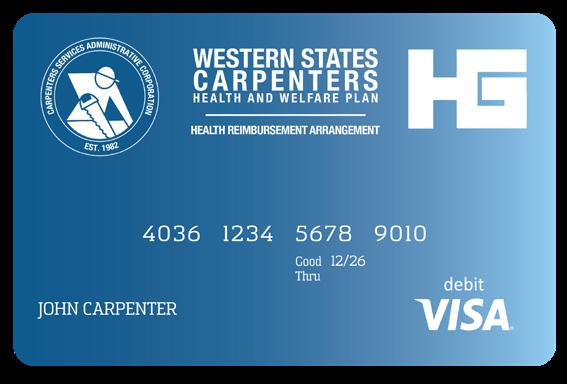
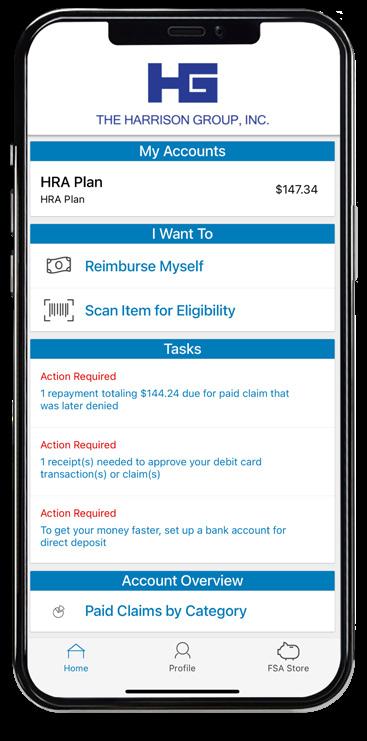
The wait is over! It is now time to start using your HRA benefit. Eligible participants should have received 2 Carpenters VISA debit cards in the mail. Although both cards are issued in the name of the plan participant, eligible dependents can also use the card at the point of service. For extra security, you may set a PIN for your cards. To do so follow the instructions provided by the Harrison Group when you receive your cards.
Eligible Items
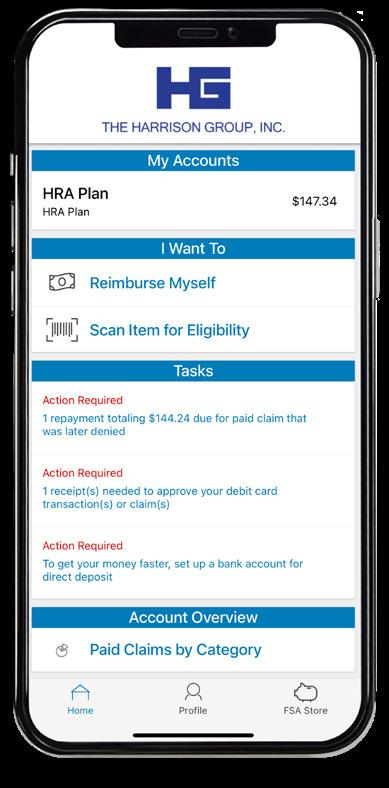
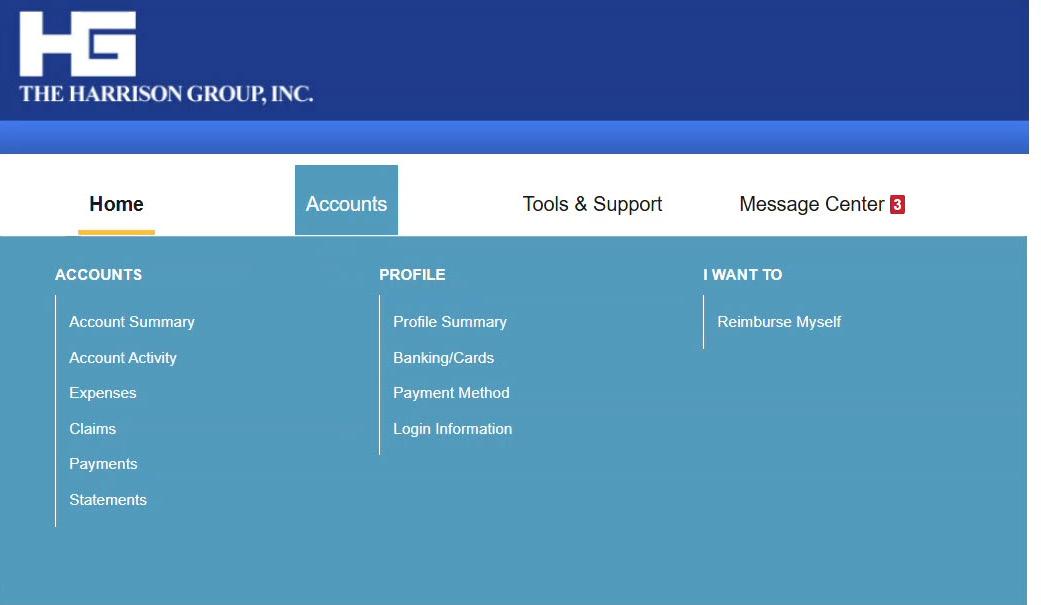
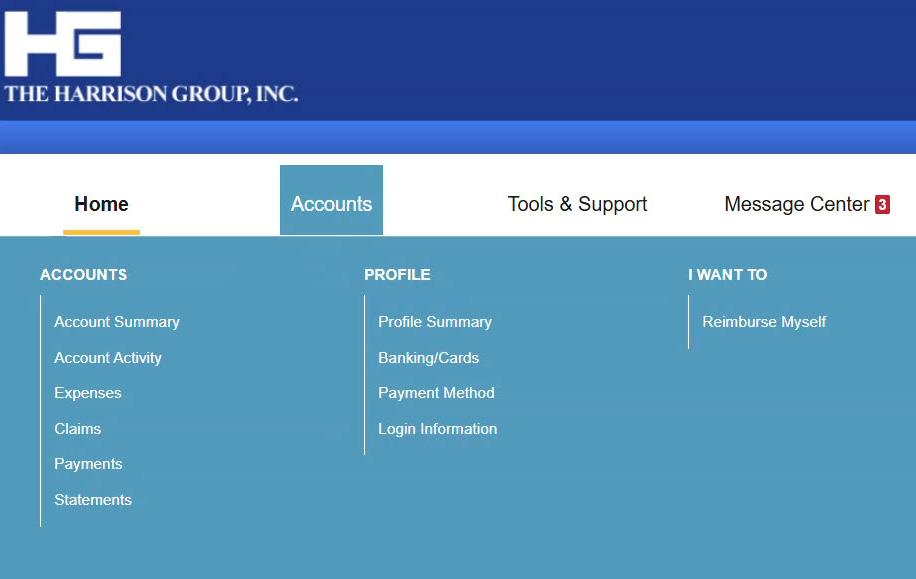
To access your HRA balance, log in to The Harrison Group website, at theharrisongrouponline.com, or download the app on your mobile device.
Submitting Claims
Your debit card will allow you to pay for eligible expenses at the point of service. However, if you need to a submit a claim on the go for previously purchased items or paid services, you may do so by using the “Reimburse Myself” tab on the website or app. You can submit claims for services that date as far back as July 2024, if you were eligible and enrolled in a medical plan at that time. You MUST submit a copy of your original itemized receipt. Screenshots of your bank statement will not be accepted for claim reimbursement purposes.
Expenses that can be paid using your HRA balance are listed and searchable through the website or mobile app. The mobile app also has a scan feature that allows you to check the eligibility of the item you want to purchase while you're in the store. Your debit card may only be used for eligible healthcare expenses.
For more information on how to submit claim forms and use your card, check out our latest HRA video on YouTube by scanning the QR on the previous page.
Please contact The Harrison Group at (855) 972-4721 if you have questions regarding your HRA balance or how to submit a claim. Their representatives can help!
SEATTLE OFFICE CONTINUES TO SERVE NORTHWEST CARPENTERS
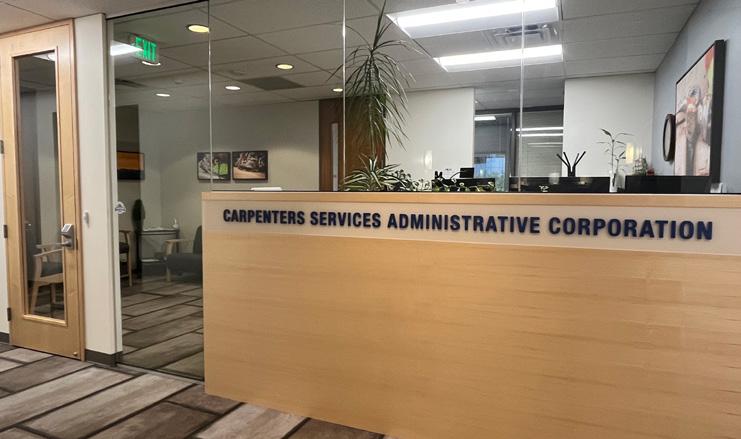
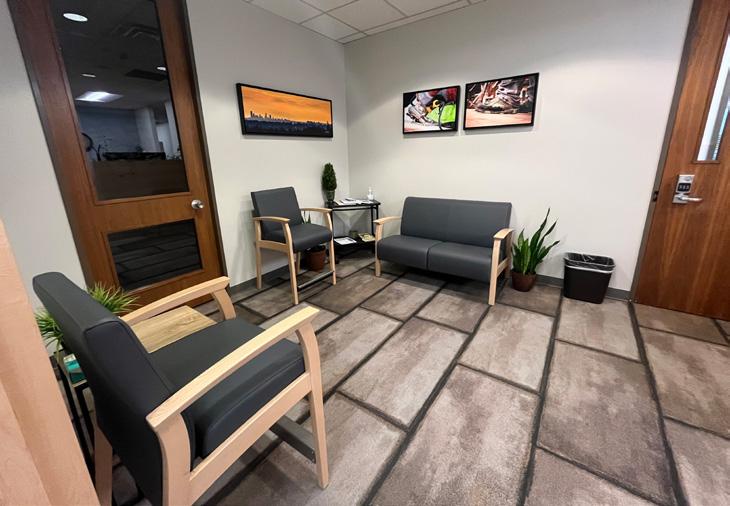
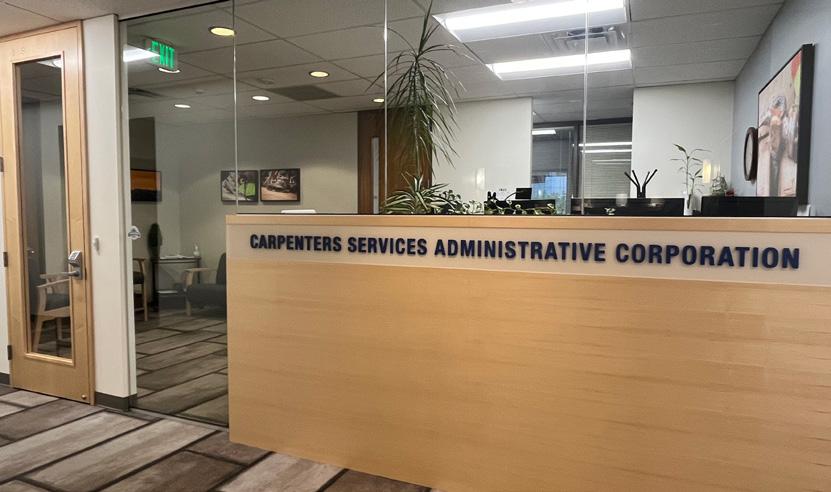
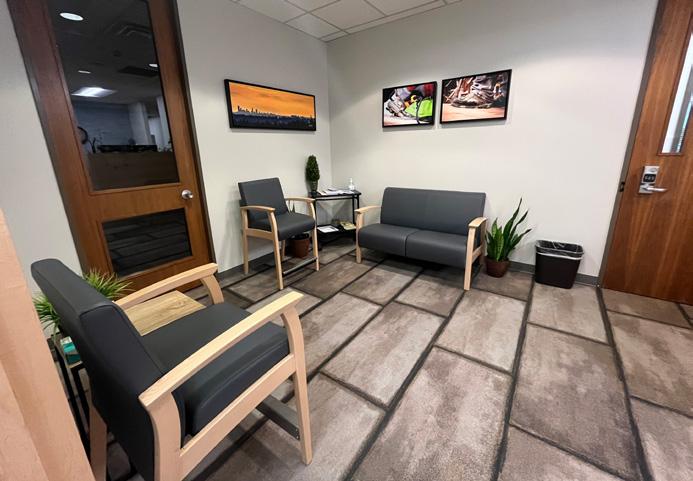
The former Northwest Carpenters trust office in Seattle is now a satellite office of CSAC. The office address has not changed. We are still located in the Denny Building at 2200 Sixth Avenue in Seattle. We are open Monday through Friday from 8 a.m. to 5 p.m. (Pacific).
Do you have a completed form or application to drop off? Do you need to make a COBRA payment or make a payment for Hours Buy Back? Would you like to talk to someone in person regarding your benefits? Participants and dependents are welcome to visit our office if they need assistance. Garage parking is available in the north side of the Denny Building. Validation is available.
THE NEW AND IMPROVED COMPSYCH EXPERIENCE
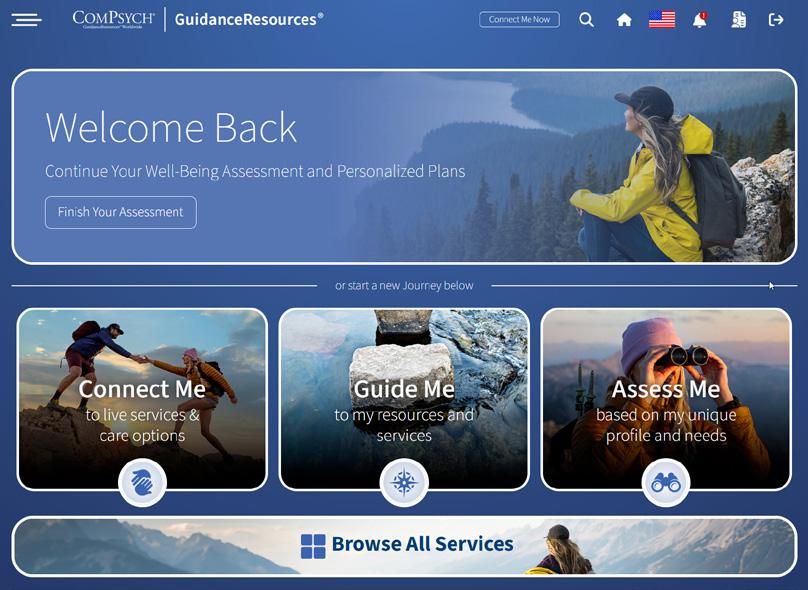
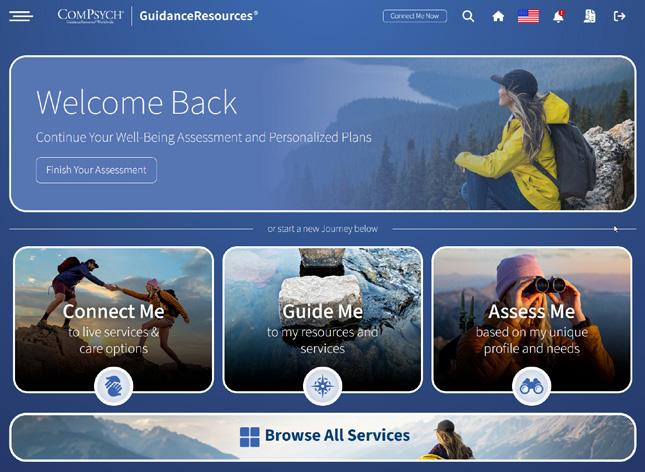
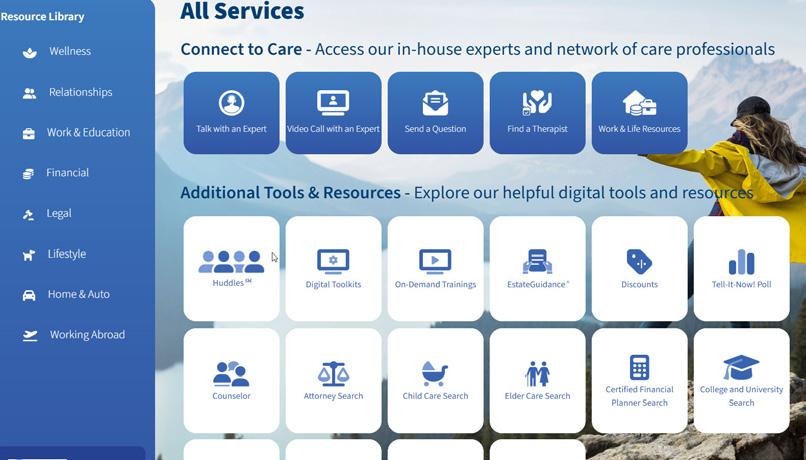
We are excited to introduce the ComPsych Carpenters Assistance Program's (CCAP) completely redesigned Guidance Resources website and GuidanceNow app. Geared towards an enhanced digital experience, it is designed to provide users with faster access to vital resources, a more intuitive navigation system, and a streamlined approach to well-being support. Explore resources on a wide range of topics available to you and your dependents using the web code below.
Whether seeking mental health support, worklife balance resources, or financial and legal guidance, you can now
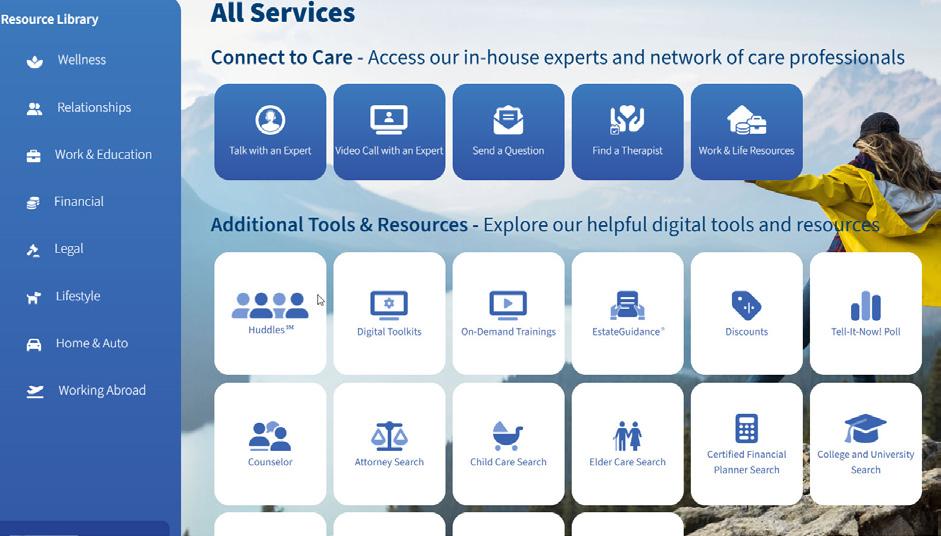
find what you need more easily. Use the Connect to Care services to access in-house experts and a network of care professionals at your convenience.
To Access: Visit guidanceresources.com or download the Guidance Resources app and log onto the site. Remember to sign up with the web code: SWCCAP or call 1 (833) 792-2271 for more assistance.
TRUSTEE PROFILE
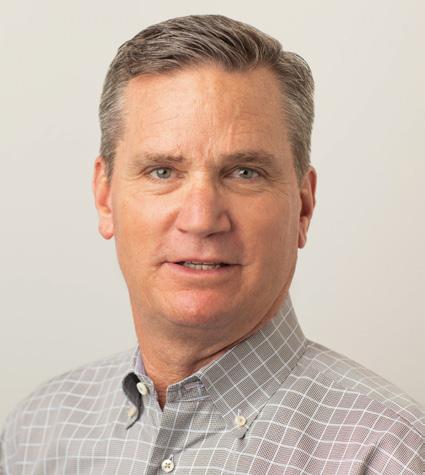
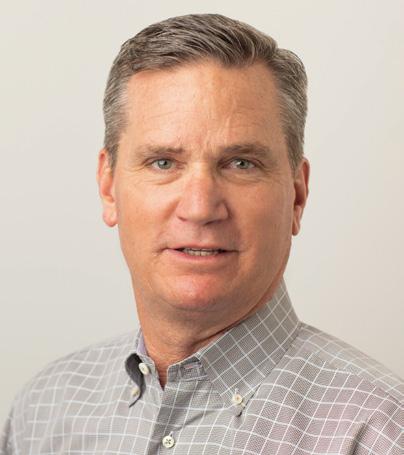
Greg Wilson
Greg Wilson always knew he wanted to run a business. After earning a degree in business and becoming a CPA, he found his way into construction through accounting. One of his first clients was Guy Yocom Construction, and nearly 30 years later, Greg now serves as their President (since 2011).
Though he never worked in the field with tools, his hands-on experience in sales, estimating, and project management has given him a comprehensive understanding of the business from the ground up. His leadership has helped guide the company through tough times and continued growth.
Beyond his corporate role, Mr. Wilson serves as a Trustee for the
CONTACT
Western States Carpenters Pension, Health and Vacation Trusts, as well as the Training Fund. His approach to this responsibility is grounded in stewardship and accountability.
“It’s important to me that all assets are handled correctly and to the benefit of the members,” he says.
Mr. Wilson values the strong benefits now available to Western States Carpenters, and hopes workers recognize their importance. “As an employer contributing to these benefits, I want to ensure they truly reach and support the workers.”
In addition to his professional commitments, he also serves on the board of the Yocom Family Foundation, supporting various charities. Whether in business or service, Mr. Wilson is committed to building a better future for his team and employees.
Remember to notify us if your address or dependents change.
Phone/Teléfono: (213) 386-8590
Toll Free/Sin costo: (800) 293-1370
Email/Correo electronico: info@carpenterssw.org
445 South Figueroa Street, Suite 1500 Los Angeles, California 90071-3203
Office Hours/Horas de oficina: M-F 8:00 a.m. to 5:00 p.m. PT lunes - viernes 8:00 a.m. a 5:00 p.m. PT
Lobby Hours/Horas del pasillo: M-F 8:00 a.m. to 4:45 p.m. PT lunes - viernes 8:00 a.m. a 4:45 p.m. PT
Asegúrese de notificarnos si su dirección o sus dependientes cambian.
Una publicación trimestral de la Oficina Administrativa pensión • salud y bienestar • vacaciones • anualidades
ANUALIDAD: ¿QUÉ ES UN FONDO CON FECHA OBJETIVO Y CÓMO FUNCIONA?
que elija en busca de mayores rendimientos. Por otro lado, invertir únicamente en opciones más conservadoras puede ser apropiado para objetivos financieros a corto plazo.
Gestión del riesgo
El Fideicomiso de Carpinteros del Sudoeste de Anualidad ofrece varias opciones para autogestionar la inversión de sus contribuciones a la anualidad. Estas opciones de inversión se pueden dividir en tres clases de activos
1. Renta variable (acciones): Invertir en acciones significa tener una parte de una empresa y compartir ganancias o pérdidas. Históricamente, las acciones han tenido el mayor riesgo entre las tres principales clases de activos.
2. Renta fija (bonos): Invertir en bonos es básicamente prestar dinero a un gobierno o una empresa a cambio de una tarifa de interés fija. Las inversiones de renta fija son generalmente menos volátiles que las acciones, pero algunas son más riesgosas que otras.
3. Alternativas en efectivo: Los instrumentos a corto plazo, como los fondos del mercado monetario y los bonos del Tesoro, están diseñados para mantener un valor estable, pero generalmente ofrecen rendimientos más bajos.
Riesgo v. Recompensa
Cuando se trata de invertir, el riesgo y la recompensa van de la mano. Las acciones, por ejemplo, tienen más riesgo que los bonos y las alternativas en efectivo. La recompensa por asumir un mayor riesgo es el potencial de un mayor rendimiento. Si su objetivo financiero está más allá en el futuro, entonces invertir una mayor porción de sus activos en opciones de inversión más riesgosas podría ser la estrategia
Hay varios riesgos a los que se enfrentan los inversores de jubilación. Uno es el riesgo de sobrevivir a su dinero. Otro riesgo es el potencial de una disminución significativa de los mercados financieros. Y luego está la inflación, el riesgo de que suban los precios erosionando el poder adquisitivo de sus ahorros.
La asignación de activos es el proceso de decidir qué porcentaje de su dinero invertir en acciones, bonos y alternativas de efectivo. Invertir en una combinación de clases de activos puede ayudar modificar las características de riesgo y rendimiento de cada uno. Si las condiciones del mercado hacen que una de sus inversiones se desempeñe mal, no todo su dinero se verá afectado negativamente.
Una vez que se determina su asignación de activos, se recomienda que modifique periódicamente su porfolio de cuenta para mantener el porcentaje deseado de activos en cada clase.
Sin embargo, es posible que su asignación de activos deba cambiar con el tiempo. Por ejemplo, si tiene 40 años de jubilación, podría asignar el 94% a acciones y el 6% a bonos. Cuando usted está a 20 años de jubilarse, puede reducir el porcentaje de acciones al 75% para minimizar el impacto de una potencial recesión en el mercado, con un 25% asignado a bonos.
La asignación de activos y la modificación es la responsabilidad del inversor. Sin embargo, no todos los inversionistas tienen el conocimiento, la experiencia y/o el interés en manejar de sus inversiones. Si usted es un inversor conservado,
¿QUÉ ES UN FONDO CON FECHA OBJETIVO Y CÓMO FUNCIONA? P. 5
» FECHA OBJETIVO FONDOS CONTINUACIÓN
» SÍGUENOS EN LAS REDES SOCIALES P. 6
» ¿ESTÁS LISTO PARA COMENZAR A USAR TU HRA?
» LA OFICINA DE SEATTLE CONTINÚA ASISTIENDO A LOS CARPINTEROS DEL NOROESTE P. 7
» LA NUEVA EXPERIENCIA COMPSYCH
» PERFIL DEL FIDEICOMISARIO P. 8
¡Mantente conectado y síguenos en las redes sociales! Pág. 2
FONDOS DE FECHA OBJETIVO
los fondos de Empower Financial Day One podrían ser una buena opción.
Fondos de fecha objetivo
Los fondos Empower Financial Day One son la inversión por defecto para los participantes en el Fideicomiso Del Sudoeste de Anualidad. Los fondos del primer día se conocen como fondos de "fecha objetivo" porque cada uno se construye alrededor de una fecha futura correspondiente a una ventana de cinco años durante la cual se espera que el inversor cumpla 62 años y comience a retirar dinero de la cuenta. Por ejemplo, el fondo Empower Financial Day One 2050 está diseñado para un inversor que cumplirá 62 años entre los años 2050 y 2055. Si nació en 1970 y cumplirá 62 años en 2032, su inversión predeterminada sería el fondo Empower Financial Day One 2030.
Debido a que el fondo de Empower Financial Day One es establecido en su edad de jubilación, la asignación de activos y las modificaciones se producen automáticamente. Cuanto más tiempo tengas de jubilación, más agresiva será la asignación de activos. La asignación se volverá más conservadora a medida que se acerque la Fecha Objetiva, y durante 10 años después de la Fecha Objetiva, al disminuir el porcentaje de acciones y aumentar el porcentaje de bonos. (Vea Figura 1.)
Sin embargo, no está obligado a permanecer en el fondo por defecto seleccionado para usted. Puede elegir un fondo de fecha objetivo diferente, un tipo de fondo diferente o una combinación de fondos de las ofertas disponibles. Si decide cambiar de fondos,
recuerde que un fondo con una fecha posterior será más agresivo y un fondo con una fecha anterior será más conservador.
Los fondos de Empower
Financial Day One pueden simplificar la inversión para los participantes, pero estos fondos no eliminan el riesgo de inversión, ni garantizan rendimientos positivos de la inversión. Es posible perder dinero en un fondo de fecha objetivo. Si está cerca de la jubilación o ya se ha jubilado, la exposición de capital del fondo puede resultar en volatilidad de la inversión que podría reducir sus activos disponibles para la jubilación cuando se necesiten. Si tienes más tiempo para la jubilación , existe el riesgo de que un fondo invierta demasiado en inversiones diseñadas para asegurar la conservación del capital y/o los ingresos corrientes, lo que puede impedir que cumpla con sus metas de jubilación.
¿Qué es lo adecuado para usted?
Determinar cómo invertir sus contribuciones es una decisión importante para la calidad de su jubilación. La información sobre todas las opciones de inversión disponibles ofrecidas por el Fideicomiso De Carpinteros del Sudoeste de Anualidad , incluyendo los rendimientos históricos y las tarifas, está disponible en swcarpentersannuity.org. Si necesita asistencia para la inversión, utilize la pestaña Ayuda para la inversión en la parte superior de la página web después de iniciar sesión. También puede descargar la aplicación Empower. Para hablar con un representante de Empower, llame al (833) 569-2433 de lunes a viernes entre las 5 a.m. y las 7 p.m. (Pacífico) y los sábados entre las 6 a.m. y las 2:30 p.m. (Pacífico).
ESCANEE PARA DESCARGAR LA APLICACIÓN
¡MANTENTE CONECTADO Y SÍGUENOS EN LAS REDES SOCIALES!
¿ESTÁS LISTO PARA COMENZAR A USAR TU HRA?
¡La espera ha terminado, y es hora de comenzar a usar su beneficio de HRA! Los participantes elegibles deben haber recibido sus 2 tarjetas de débito VISA de carpintero por correo. Aunque las tarjetas tengan el nombre del participante del plan, los dependientes elegibles también pueden usar la tarjeta en el punto de servicio. Para mayor seguridad, puede establecer un PIN para sus tarjetas, siga las instrucciones proporcionadas por The Harrison Group cuando reciba sus tarjetas.
Para acceder a su balance de HRA, inicie sesión en el sitio web de The Harrison Group, theharrisongrouponline.com o descargue la aplicación en su teléfono móvil.
Artículos elegibles
Presentación de Reclamaciones
Su tarjeta de débito le permitirá pagar los gastos elegibles en el punto de servicio. Sin embargo, si necesita enviar una reclamación artículos comprados anteriormente o servicios pagados, puede hacerlo utilizando la pestaña "Reembolsa a mí mismo" en el sitio web o la aplicación. Usted puede enviar reclamaciones por servicios que se realizaron a partir de julio del 2024, si usted era elegible y estaba inscrito en un plan médico en ese momento. DEBE enviar una copia de su recibo original detallado, capturas de pantalla de su estado de cuenta bancario no serán aceptadas para reembolsos de reclamaciones.
Los gastos que se pueden pagar utilizando su balance de HRA están listados y se pueden buscar a través del sitio web o la aplicación móvil. La aplicación móvil también tiene una función de escaneo que le permite comprobar la elegibilidad del artículo que desea comprar en la tienda. Su tarjeta de débito solo se puede usar para gastos de salud elegibles.
Para obtener más información sobre cómo enviar formularios de reclamo y usar su tarjeta, vea nuestro último video de HRA en YouTube escaneando el QR en la página anterior.
Si tiene alguna pregunta sobre su balance de HRA o como enviar reclamaciones, comuníquese con The Harrison Group al (855) 972-4721, ¡Sus representantes podrán ayudarle!
LA OFICINA DE SEATTLE CONTINÚA ASISTIENDO A LOS CARPINTEROS DEL NOROESTE
La oficina anterior del Fideicomiso de Carpinteros del Noroeste en Seattle es ahora una oficina satélite de CSAC. La dirección de la oficina no ha cambiado. Todavía estamos ubicados en el Edificio Denny en 2200 Sixth Avenue en Seattle. Estamos abiertos de lunes a viernes de 8 a.m. a 5 p.m. (Pacífico).
¿Tiene un formulario completo o solicitud para entregar? ¿Necesita hacer un pago de COBRA o necesita hacer una compra de horas cortas? ¿Te gustaría hablar con alguien en persona sobre tus beneficios? Los participantes y dependientes por igual son bienvenidos a visitar nuestra oficina en persona si tienen asuntos que hacer con CSAC. El estacionamiento cubierto está disponible en el garaje en el lado norte del Edificio Denny, y su recibo de estacionamiento será validado por la recepcionista.
Carpenters Services
Administrative Corporation
445 South Figueroa Street, Suite 1500
Los Angeles, California 90071-3203
LA NUEVA Y MEJOR EXPERIENCIA
DE COMPSYCH
Nos complace presentar el sitio web de recursos de orientación completamente rediseñado del Programa de Asistencia de Carpinteros de ComPsych (CCAP) y la aplicación GuidanceNow. Diseñado para una mejor experiencia digital, para proporcionar a los usuarios un acceso más rápido a recursos vitales, un sistema para navegación más intuitivo y un enfoque optimizado para el apoyo al bienestar. Explore fácilmente los recursos en una amplia variedad de temas disponibles para usted y sus dependientes utilizando el código web a continuación.
Ya sea que busque apoyo de salud mental, recursos para eventos de la vida o necesidades financieras y legal, ahora puede encontrar lo que necesita más fácilmente. Utilice los servicios Connect to Care para acceder a expertos internos y a una red de profesionales de la atención a su conveniencia.
Para acceder: Visite guidanceresources.com o descargue la aplicación Guidance Resources e inicie sesión en el sitio. Recuerde registrarse con el código web: SWCCAP o llame al (833) 792-2271 para obtener más ayuda.
PERFIL DEL FIDEICOMISARIO
Greg Wilson
Greg Wilson siempre supo que quería dirigir un negocio. Después de obtener un título en negocios y convertirse en un CPA, encontró su camino en la construcción a través de la contabilidad. Uno de sus primeros clientes fue Guy Yocom Construction, y casi 30 años después, Greg ahora es el presidente (desde 2011).
Aunque nunca trabajó en el campo con herramientas, su experiencia práctica en ventas, estimación y gestión de proyectos le ha dado una comprensión integral del negocio desde abajo. Su liderazgo ha ayudado a guiar a la compañía a través de tiempos difíciles y crecimiento continuo.
Más allá de su papel corporativo, el Sr. Wilson es un Fideicomisario para el Fideicomiso de Pension, Salud y Bienestar, Vacaciones y
Entrenamiento de Carpinteros de Estados del Oeste. Su enfoque de esta responsabilidad se establece en la administración y la rendición de cuentas.
"Es importante para mí que todos los fondos se manejen correctamente y en beneficio de los miembros", dice el.
El Sr. Wilson valora los fuertes beneficios ahora disponibles para los Carpinteros de Estados del Oeste, como la atención médica y las pensiones, y espera que los trabajadores reconozcan su importancia. “Como empleador que contribuye a estos beneficios, quiero asegurarme de que realmente lleguen y apoyen a los trabajadores”.
Además de sus compromisos profesionales, también forma parte de la junta directiva de la Fundación de la Familia Yocom, apoyando a varias fundaciones. Ya sea en negocios o servicio, el Sr. Wilson está comprometido a construir un futuro mejor para su equipo y empleados.