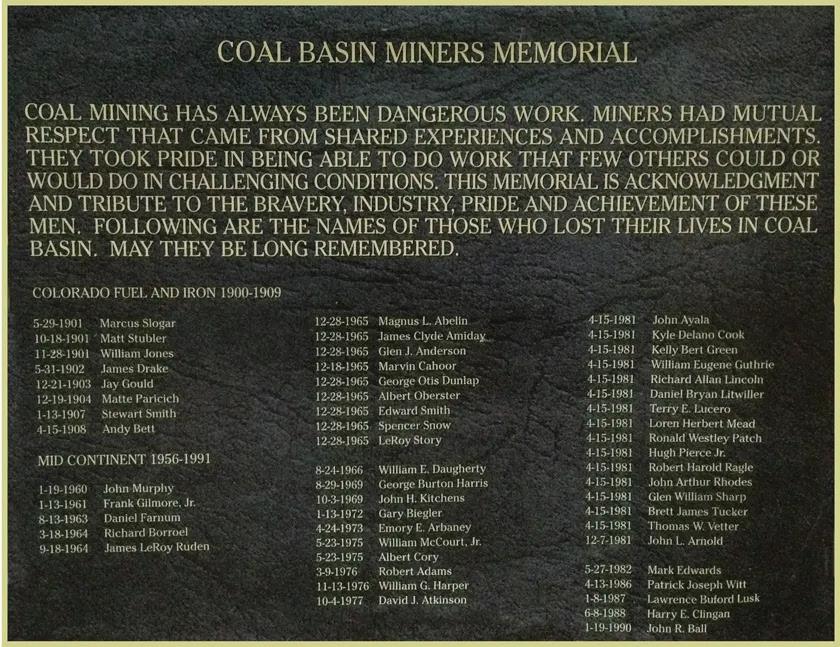
John Ayala, 40, Continuous Mining Machine Operator
Kyle Delano Cook, 43, Shuttle Car Operator
Kelly Bert Green, 25, Foreman
William Eugene Guthrie, 32, Undergound MechanicElectrician
Richard Allan Lincoln, 22, Experienced Miner
Daniel Bryan Litwiller, 21, Apprentice Miner
Terry E. Lucero, 28, Continuous Mining Machine Operator Helper
Loren Herbert Mead, 35, Continuous Mining Machine Operator Helper
Ronald Westley Patch, 34, Crew Foreman
Hugh Pierce Jr., 19, Apprentice Miner
Robert Harold Ragle, 29, Crew Foreman
John Arthur Rhodes, 29, Crew Foreman
Glen William Sharp, 31, Continuous Mining Machine Operator
Brett James Tucker, 30, Experienced Miner
Thomas Vetter, 24, Experienced Miner
April 2026 Community Happenings
April 3rd (5:00-8:00pm) Spring into Wellness by the Center for Human Flourishing. Carbondale Rec Center.
April 5th (9:00am-4:00pm) Closing Day @ Sunlight Mountain Resort.
April 6th (6:00-8:00pm) An Evening with Dr. Gordon Walker: "Fascinated by Fungi" @ Carbondale Community School
April 7th (1:00-3:00pm) Parkinson's Disease Support Group. The Orchard Church, Carbondale.
April 7th Andy Zanca Youth Empowerment Program Music Trivia: Spring 2026 Edition @ Carbondale Beer Works. (Doors 6:30, Trivia Begins at 7:00pm)
April 9th (6:00-8:00pm) "Legends of Mountain Fair" Presented by Carbondale Arts and Carbondale Historical Society at the Third Street Center, Carbondale.
April 10th (6:30pm) 4th Annual Legacy Dance Company Pre-Professional Revue.
April 10th (1:00-6:00pm) Elevate: A Forum for Women Bridgin Passion, Purpose and Community. CMC Morgridge Commons, Glenwood Springs.
April 10th (9:30-11:30am) Art bites-"Color Mixing" Bite sized classes on fundamental painting topics. Class is $55. Register online at www.joywylde.com
April 11th (8:00pm) Sweet Jessup & The Dirty Buckets Album Release Party @ TACAW in Willits.
April 12th (4:00pm) Hope is a Color Guitar Ensemble Concert @ Carbondale Branch Library
April 14th (3:00-4:00:pm) Alzheimer's and Dementia Caregiver Support Group @ Sopris Lodge, Carbondale
April 18th (7:00-10:00pm) Local Legends Lip Sync Battle @ Third Street Center, Carbondale.
April 18th (Dinner at 5:00. Movie at 6:30) Redstone Art Foundation Presents: Movie Night at the Redstone Inn. This Month's Film is Monuments Men. Call the Redstone Inn for Dinner Reservations.
April 22nd (7:00pm) Bryan Bielanski Live @ Steve's Guitars, Carbondale
April 23rd (4:00-6:00pm) Redstone Art Foundation: Artist Talk with artist and illustrator Larry Day @ Joy and Wylde/Redstone Gallery. Free.
April 24th (9:30-11:30am) Art bites "Understanding Value". Class is $55. Register online at www.joywylde.com
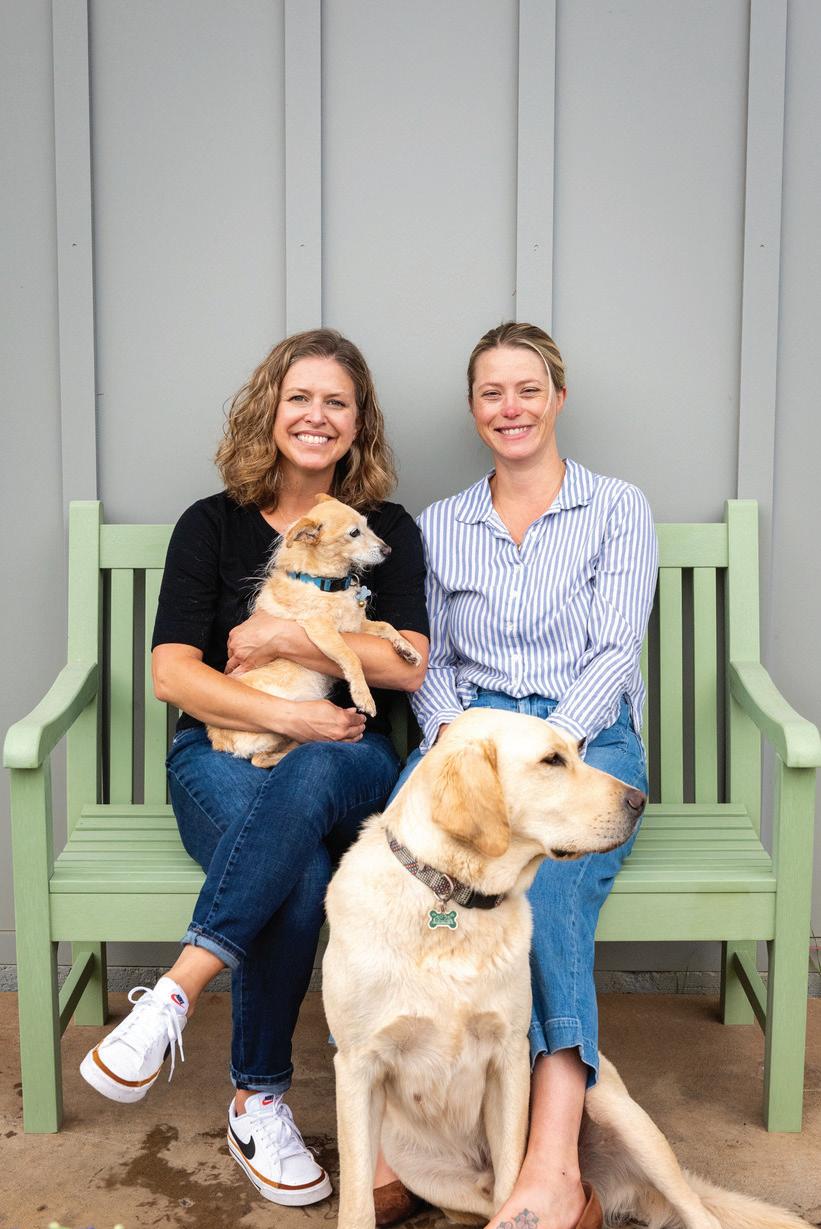
Personalized Care for Your Pets
To Submit Events for the Community Happenings Section, Email Details to editor@CrystalValleyEcho.com Include Date, Time, & Location
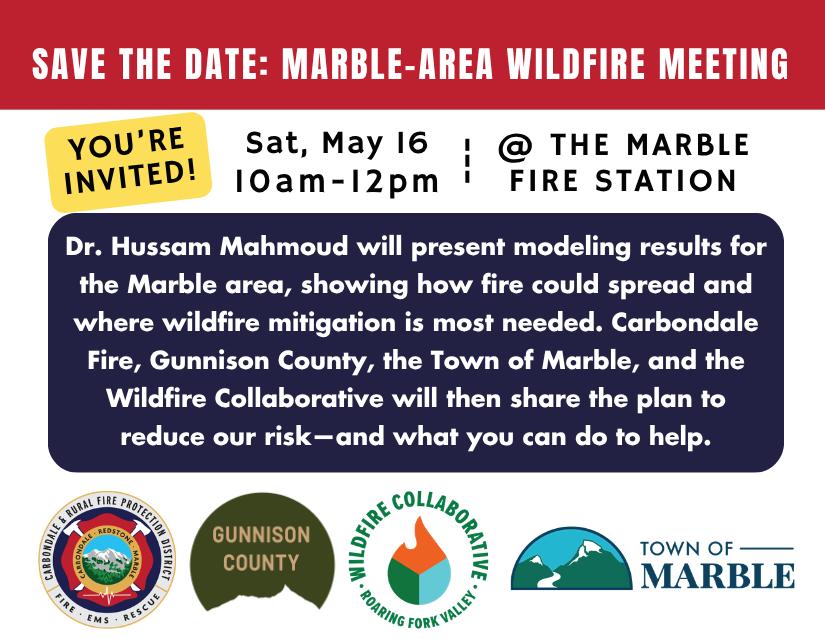
April 11th Carbondale and Rural Fire Protection District will host a meeting at the Marble Fire Station to present results from their wildfre modelling research.
MOUNTAIN PAWS VET
House Calls & In Clinic Appointments, Surgey, Denistry & Urgent Care 1058 CR 100, Unit D Carbondale CO 81623 970 309 2403 www mountainpawsvet com
Correction: In the March 2026 issue, the Echo erroneously reported that the project to replace the South bridge in Redstone was funded by Pitkin County Open Space and Trails. While Open Space and Trails is funding the trail portion of the bridge project, the project is being managed by the Engineering Department of Pitkin County who are overseeing budgets and funding for the project outside of the trail work.
The Crystal Valley Echo & Marble Times
Mission Statement: To provide a voice for the residents of the Crystal River Valley; to bring attention to the individuals and local businesses that are the fabric of the Crystal Valley region; to contribute to the vitality of our small town life.
Editor-in-Chief: Tucker D. Farris Editor@crystalvalleyecho.com
For advertising sales contact: Advertising@crystalvalleyecho.com Or visit our website
The Crystal Valley Echo is published monthly, And is distributed throughout the Crystal Valley.
The Crystal Valley Echo is 100% Human-Created And does not condone, elicit, perform, or implement creative, Journalistic, or logistical usages of generative artifcial intelligence.
No part of this newspaper may be used in the training Of artifcial intelligence, doing so will result in legal action.
All rights of works by contributing authors and photographers Remain the sole property of their creators in perpetuity.
www.CrystalValleyEcho.com
DR ONEAL BOGAN & DR LINDSEY BROOKS
By
Better to Light One Candle, Than To Curse the Darkness
45 Years Later and the Legacy of the 1981 Dutch Creek No. 1 Disaster Still Lingers
The Crystal Valley Echo Staff
Situated high above the village of Redstone, on a sheer rock outcropping over 10,000 feet from sea level lies the access portals for the Dutch Creek Mine at Coal Basin. Often discussed as a remnant of John C. Osgood’s Colorado Fuel & Iron Company, and a hallmark of the turn-of-the-century founding and boom town days of Redstone. For Roaring Fork and Crystal Valley locals, the days of MidContinent Resources’ management of the mines are far clearer in focus.
The thrum of mountain life, and the mountains themselves have been some of the most attractive aspects of our valleys since the earliest days of human inhabitation in the American West, for their natural beauty, and the many activities that they hold for all of us in all seasons. What has faded from tourism brochures and the daily lives of our residents as the years have passed and times have changed is the fact that for so much of the shared history in this valley, life was as much about time spent under the mountains, as it was about time spent on their slopes.
April 15th, 1981 began as a calm, clear spring day in Redstone, just as it did in Marble, Carbondale, Aspen, Basalt, Glenwood Springs, Somerset, or Paonia. Birds were no doubt singing, the gentle rhythm of the fow of the Crystal River churned its way from the high-altitude headwaters all the way to the confuence at the North end of Carbondale. In the warm spring sun, our communities slowly began to awaken and go about their days. Kids of all ages prepared for another typical Wednesday at school as the fun of summer vacation approached with each passing week. Snow still dotted the peaks of Sopris, Maroon Bells, The Elk Mountains and the faraway peaks surrounding the valley. Mail was delivered, cows, kids, horses, husbands, sheep, dogs and cats were fed, groceries were purchased. It was the idyllic picture-perfect day in the life that so many of us love to experience here.
Like all dark days, it began peacefully. By late afternoon disaster struck, deep in the Dutch Creek No. 1 Mine the ground shook, the air rushed and an explosion was heard and felt 18 miles below on Redstone Boulevard.
What would follow would be some of the darkest days our communities have ever experienced together. However, those days between the initial moments of the disaster and the rescue and recovery efforts undertaken would come to defne the threads of community that hold us all together even today, a line between teachers, parents, brothers and sisters, grandparents, friends, colleagues, and strangers, in our darkest moment held a community together through hope, grief, and care that transcended the differences that would otherwise have kept us apart.
The day at Coal Basin began as any other would have, with the incoming shift preparing to delve into the dark of Dutch Creek No. 1 for another day of extracting coal for Mid-Continent. Dutch Creek No. 1 was one of fve mines in the Coal Basin mining complex that mined coal from the Coal Basin “B” coalbed. It had six entries driven from the surface, numbered 1-4 and 6 and 7, with entry number fve beginning 1300 feet underground. Eighty-three people were employed at the mines, with 79 of them being underground workers. Two coal-producing shifts and one maintenance shift ran per day, fve-to-six days per week. On average the miners at Coal Basin produced 450 tons of coal daily. The roof of the mine was 10-15 feet tall and on a typical day, the continual din of ripper-type continuous mining machines echoed in the shafts that ran up to 2700 feet below the surface, boring coal out of the rock.
Once freed from the rock, coal was deposited at the surface in shuttle cars where it would be fed into a storage bin eventually to be loaded onto a truck for processing at the central preparation plant near
Redstone, before being trucked down the Crystal River to Carbondale, where it would eventually be loaded onto train cars at the Mid-Continent Resources station along County Road 100 (Catherine Store Road).
The morning of April 15th, 1981 started at 7:00 am as the A shift started their work that would carry them to the 3:00 shift change. Federal Coal Mine Inspector Louis Villegos accompanied them as he was working on an inspection of Dutch Creek Mine with the federal Mine Safety and Health Administration (MSHA) that had begun on March 30th. Earlier that day, he had noted that in the mine examiner’s record book that methane gas levels in the mine had been observed to have exceeded 1% concentration at least once per day between April 6th and April 10th. Before he completed his day at the mine, Villegos recorded a methane concentration of 0.7% at the face of the Number 1 Entry, and 0.6% in the section return. After making these observations, Villegos concluded his inspection and left the mine. Later, MSHA investigations would determine that a methane explosion would be the cause of the approaching disaster.
The A shift, after a day of maintenance on roof support structures in the mine had a last-hour run of roughly 40 tons of coal produced before the shift change at 3:00 that afternoon. At 3:00, B shift, comprised of 23 miners (22 of whom worked underground) began to enter the mine. The operation began in the No.4 entry and coal was actively being extracted as the shift began. Six or seven shuttle cars of rock and coal came up from the surface between 3:55 and 4:10 pm. Some of these cars had been previously loaded by A shift, with B shift beginning their days by loading two cars of coal. As the shift began, Lee McBride, Jack Anderson, Robert Randall, Brett Tucker and Dan Litwiller (bull gang workers, who worked in non-excavating tasks at the mine such as laying tracks, wiring and piping) helped Pat Menke load trash for removal. Art Cordova, the shift maintenance foreman and Darell Clark the electrician-mechanic were there with the others.
Later, Cordova telephoned miners to let them know that he and Clark would be in the 101 Longwall Section and that if they needed any maintenance that is where they would be. When Cordova hung up, he attempted to telephone the miners working in Section 102 and received no answer. Immediately after he started the call, he later told MSHA investigators that he felt a sudden rush of wind, heat and dust and was knocked off his feet by the force of the explosion, hitting his head and falling unconscious.
Elsewhere, Anderson and McBride felt a pressure buildup. McBride realized that the mine was “blowing up” and told Anderson to get into the crosscut shaft for safety. The two men dove into the crosscut just as the shockwave of the methane explosion passed by them. The shaft was flled with dust and the two men were unable to see, together in the dark they joined hands and began to walk out of the mine. They reached the moving conveyor belt of the mine shaft and rode it to the surface, fnally seeing sunlight at 4:10 pm.
On the surface, hoist operator Quentin Rees noticed the initial signs of the explosion while helping Menke unload the trash that had been hauled up, feeling a blast of air and seeing columns of dust expelled from the entrance and thrown over 75 feet into the air. Rees had experienced an earlier explosion at Dutch Creek Mine in 1965 and immediately took action, making calls for rescue, medical services and aid and trying to hail the underground crews by telephone. Immediately following Rees’ calls, mine rescue teams began preparing their response to Dutch Creek No.1.
Dutch Creek Continued Page 4...
Heroism Underground
Below the surface, David Chiarello, who worked as a pumper-beltman heard what he described as a sound like a gunshot. He was enveloped by the same rush of wind and dust for nearly 20 seconds, his hard hat being blown off by the explosion as he crouched down for safety. After the shockwave passed, he immediately ran to the telephone at the belt drive to call the surface. When he got there, the phone was already ringing, with Rees calling from the surface. Chiarello told Rees there had been an explosion and that he was going deeper into the mine to look for others who may need help.
After the dust cloud settled, Chiarello picked up his hard hat and began walking down the slope deeper into the mine. When he reached the mechanic’s desk, he heard labored breathing in the dark and found Cordova unconscious, but stable. Chiarello then proceeded further into the dark and soon found Clark sitting against the wall of the shaft, injured and unconscious, but again, stable. Further down the shaft, he discovered equipment operator Bob Randall, more severely injured, and unconscious. After some 100-feet he ran into air that burned his lungs and his mine-issued self-rescuer breathing apparatus, he determined, was not adequate to protect him to go deeper.
Retracing his path, he again checked on each of his fellow miners to ensure their conditions were not deteriorating. When he returned to the mechanic’s desk, he found Cordova had regained consciousness, and he telephoned the surface a second time to provide updates on the situation, detailing the conditions and locations of the three injured men. He was initially told by an A shift supervisor to return to the surface but refused, insisting on staying with the injured men underground.
Cordova and Chiarello then walked down the slope to where Clark had been, and fnding him conscious and dazed, Chiarello instructed Cordova to stay with him and went back to check on Randall further down the shaft. After checking Randall’s condition again, Chiarello helped Cordova and Clark to the mechanic’s bench where he instructed them to await incoming rescue teams.
At 5:17pm Tim Cole and Lee McBride entered the mine wearing oxygen masks to rescue Chiarello, Clark, Cordova and Randall. They had to clear debris on the tracks as they rode into the mine, and carried a stretcher to transport Randall. They met Cordova and Clark at the mechanic’s bench and supplied them with oxygen and took a stretcher deeper to rescue Randall. Chiarello helped to secure Randall, whose injuries were severe, and helped Cole and McBride carry him back up to meet the others at the mechanic’s bench. By 6:39 pm Chiarello, Cordova, Randall and Clark had been safely rescued by McBride and Cole and were transported to Valley View Hospital in Glenwood Springs for treatment for their injuries.
Chiarello’s heroism and decision to stay with his fellow miners despite being told to leave them, the frst aid he provided, and the aid in their rescue was reported on by the Valley Journal at the time.
He was released from the hospital with no injuries, Cordova and Clark were admitted in fair condition with minor injuries and Randall was admitted to the ICU in serious condition.
At this time, ffteen miners were still unaccounted for. The headline “15 Miners Trapped Underground” appeared the next morning on the cover of The Valley Journal newspaper. From the time of the accident, seven mine rescue teams worked tirelessly around the clock to reach the trapped miners. These teams included: two teams from Mid-Continent Resources, dispatched from Redstone, two teams from the Colorado-Westmoreland mine in Paonia, one from the U.S. Steel Mining Company in Somerset, one from Price River Mining Company in Helper, Utah, and one from Emery Mining Corporation in Huntington, Utah.
By 7:30 pm on the night of the explosion they were cleared to enter the mine and begin rescue operations. Working nonstop for 12 hours, mine rescue teams were able to clear debris and reach a space approximately 1000 feet from the men trapped underground, encountering heavy amounts of dust and smoke along the way and working to ventilate the mine. The efforts were slowed by water seeping into the mine but after over 20 hours of nonstop work, the tragic news of the loss of all ffteen miners and the recovery of their remains reached Redstone and from there, the wider community.
In the intervening hours between the accident and the recovery, the world stood still in the Crystal and Roaring Fork Valleys, up and down the banks of both rivers, a community’s heart felt the same tinge of pain, of uncertainty, and of the quickly diminishing sense of hope. Instead of retreating into the darkness, instead of allowing the weight of tragedy to linger, community members came together as one to support each other. The nature of small towns is such that there is very little chance that you do not know your neighbors, either closely or otherwise. In April of 1981, one would be hard-pressed to fnd someone who did not know one of the men at Dutch Creek No.1 in any community in the valley.
Across the valley, people from all walks of life stepped up to care for and offer support to the families of each of the men trapped in the mine. Teachers comforted children worried about their father’s fates, friends consoled one another as they waited for news about their brothers. The parents of the valley stepped up to care for their neighbor’s children as their mothers waited for the news. Across every community, a thread tied each resident together. One of collective hope, of a shared responsibility for one another, and a defant resolution that no one would experience this tragedy alone.
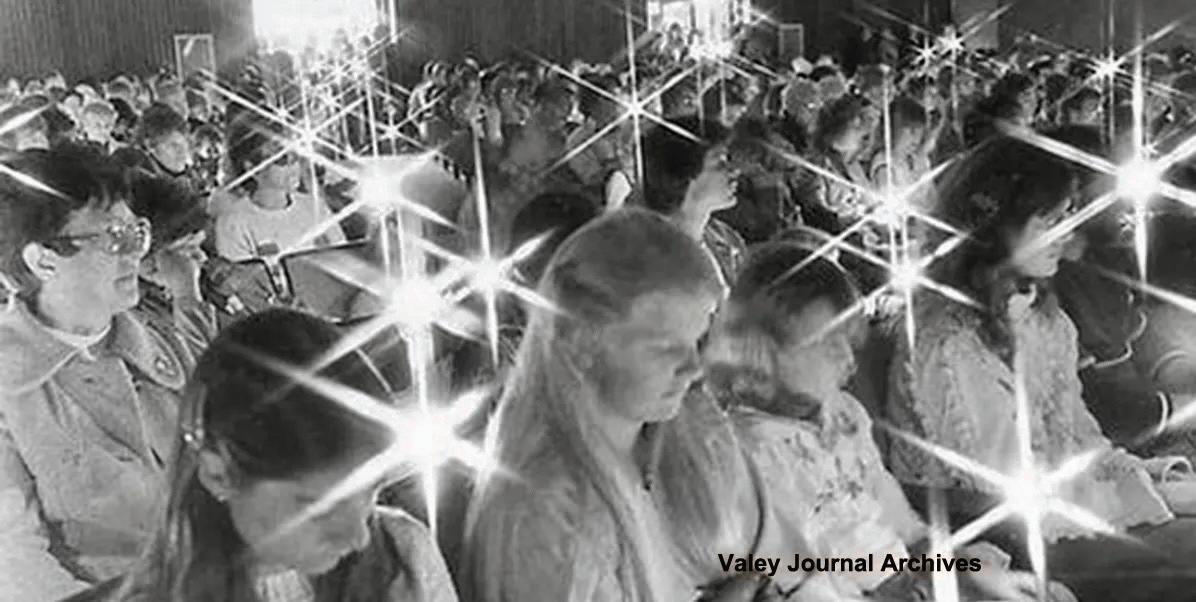
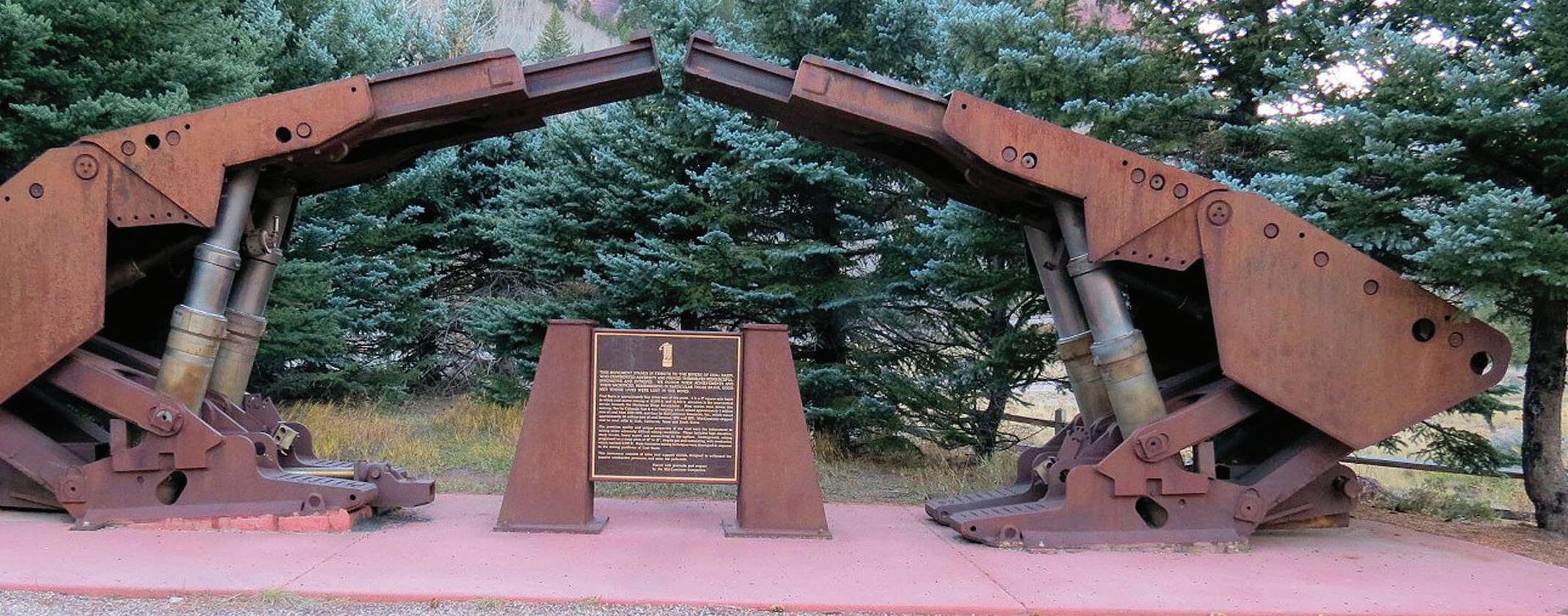
Vigils were held, prayers offered, and many tears were shed among hugs. When the news came that the ffteen had been lost in the accident, Carbondale, Redstone, Marble and many other towns stood in grief together. Over 500 people flled the Roaring Fork High School auditorium for a candlelight vigil. 500 candles to outshine the darkness. Carbondale Mayor Reed Harris approved the construction and dedication of a monument to the ffteen men lost in Dutch Creek No.1. Its inscription was printed the week after the tragedy in the Valley Journal:
Valley Journal File Photo by Patti Barry Levy of the candlelight vigil for the 15 lost miners held at Roaring Fork High School after the tragedy. Over 500 people were in attendance.
Dedicated in most fond and respectful memory to the Carbondale area coal mining industry employees who have tragically lost their lives pursuing excellence in their chosen occupation. This admirable, and often heroic, pursuit has beneftted their families, the mining industry, the state of Colorado, the United States of America, and the free world.
OUR APPRECIATION IS UNBOUNDED OUR SADNESS IS INDESCRIBABLE OUR MEMORY IS INDELIABLE OUR RESPECT IS FERVENT
The City of Carbondale on behalf of its citizens and friends.
Forty-fve years later, our darkest days still echo from the peaks of Coal Basin up to Marble, down Redstone Boulevard, to the memorial in Sopris Park in Carbondale, and beyond. No longtime local does not remember that day, the collective pain, and the infnite capacity of neighbors and residents for being there for one another. It still brings tears to many eyes, still represents deep losses felt, of lives permanently changed, childhoods interrupted, young lives ended far too soon. Where the darkness of those days can weigh on us even nearly half a century later, what also carries through the dust of time to the present is the shining example of our communities when faced with the most unimaginable tragedy. The capacity of all of us to exist in those moments with our hearts open and arms wide to embrace those carrying the most pain.
The story of the Dutch Creek Mine disaster is not one shared with readers in these pages to dwell on tragedy, but rather one to celebrate the endearing spirit of community that has been a hallmark of our towns for decades. To celebrate the teachers, who knew the worst depths of the darkness, who took on the role of caregiver for their students, the children of the lost miners, who knew that in that dark moment, all they could do was make sure those kids knew that they still had a community that would take care of them. It is to celebrate the neighbors, coworkers and friends who quietly came over to check on families grieving, who, without being asked, picked up the tools of fathers gone too soon and fnished backyard basketball courts in a solemn dedication to their fallen friends. It is to celebrate the neighbors who cooked meals, who offered hugs, and who truly stood by the promise to do whatever they could for whoever needed it. It is to celebrate the men and women of our towns who became parents to kids who needed an extra one, who would endeavor over the years to make sure that they always had someone there.
Ultimately what we may refect on in our collective loss is that despite the pain that still lingers, despite the tears that still fow, and the memories that still haunt us, we can also refect in pride for who we are as a community, for that unshakable sprit of camaraderie, of the small town spirit that saw cowboys, coal miners, and hippies stand together shoulder to shoulder and express compassion through grief, care despite pain, and community in spite of loss. This month we may refect equally on the souls lost below ground, and the countless moments of shared compassion that defned our communities during these harrowing hours on the surface.
As our communities shared these moments of compassion and tragedy together, their voices came together and were preserved in the Valley Journal for the families in the moment, and for us in the present.
Mrs. Verona Hill, a retired teacher from Carbondale Elementary and Roaring Fork High School, penned a letter titled "A Teacher’s Sorrow” in the April 23rd edition of the Valley Journal. She begins it addressed “To the families of Tom, Glen and Ronnie, Their Friends.” “Tears have been shed,” she writes of the crushing tragedy. “One does not teach in a small community without knowing students intimately.”
“They come to you with their confdences, their problems. You willingly share their joys of accomplishment; and their hopes and dreams are all in that pattern”.
She captured the sense of interconnectivity we still share in our communities, despite their growth in size. How we watch one another grow up here, how life takes its twists and turns from our days on the playgrounds out into the broader strokes of the larger world. This valley, these towns, these communities carry those of us that grew up here, and those of us that live here wherever we go. What has not changed from those days is that network of care. The idea that it truly does take a village to raise a child.
When these villages embody that spirit shown by Roaring Fork and Crystal Valley residents that horrible week in April, 1981, it proves to each of us here, and those far beyond the valley walls that what stands above all else in a world of uncertainty, tragedy and darkness is the depth of the human capacity for empathy, for taking care of one another, and ultimately, for standing up as one together in the face of tragedy to ensure memories, stories, and compassion ring out in contrast to the absence of light in darkness.
Also included in the April 23rd issue of the Valley Journal were two poems in memory of the lost miners.
The frst, titled “Where Mice Play” was reportedly found in the lamp house at Dutch Creek No. 1 the night of April 20th, 1981. Its author is unknown:
Where Mice Play
The night before, Kelly and I talked, Future plans, rock jams, Midnight dreams, long coal seams;
The day before, Patch, Brett and I, Talked children, bikes, Exhaust fans, new vans;
Teaching Bill to drive Elkhorns, Dan to ride belts, Talked of young loves, football, With backs to black walls; Delivering supplies, joking with Loren, Rich saying “You’ll shovel belts yet,” A dream home of Kyle’s As we rode the trip, up the cold mile;
How much coal John? Roof bolt all night, Hey Eugene, buggy’s down in 102, Glen and I talking of kids, Terry and Tom looking for Miner bids;
And Rags, we fed the mice, talking of life, You were taking me to Marble, To walk the trails, Getting high on sunny dales;
Everyone knew it was possible. It couldn’t be me. Now we ride the rubber Highway, FREE.
Beverly Hendrickson, in a Letter to the Editor, shared the following verse as well: April 15, 1981
Let there be a new tomorrow where yesterday has been. A margin of time to borrow, a chance to lose or win. May there be good friends among you still walking in the sun Who will keep in trust the memory of “Dutch Creek Number One.”
Ultimately, while the tragedy of April 1981 is a deep scar that is still felt in our valleys, and while scars never fully heal, what we may collectively take solace in as we remember those ffteen miners this month is that when tragedy struck and when hope slowly faded into grief, we did not shy away from the responsibility we all have to one another. We remember the lost, and celebrate the living who did everything they could that spring for those feeling the loss the most.
This story was written using information collected by the Mining Safety and Health Administration and published in their offcial report of the accident, stories and reporting from The Valley Journal newspaper, information from the Redstone Historical Society, The New York Times, and accounts from locals who recall the events to this day. This issue of The Crystal Valley Echo is dedicated to the memory of the ffteen miners who lost their lives in the 1981 accident, their families and friends who lost fathers, brothers, and friends, the mine rescue teams from near and far who worked furiously to try to rescue the trapped men, and the countless community members who stood together to support one another in the face of true darkness.
Left: The plaque honoring miners that died in the Coal Basin mines from their founding until the mines offcially closed almost a century later. Photo Courtesy of the Redstone Historical Society
Below: The Coal Basin Miners Memorial at the base of Coal Basin across Highway 133 from Redstone. Photo by Deb Strom.
Paw & Pen
A New Monthly Column About Animals, and Everything Else
by Dr. Oneal Bogan, DVM
I moved to Carbondale from Boulder on my 5th birthday. I have lived in the Roaring Fork Valley ever since, minus my time at Colorado State for veterinary school. There are a few constants in my life, a love for animals and a love for the mountain valley where we live. When I graduated vet school, I spent time traveling around, deciding where I would like to go next, and inevitably, I came home because I struggled to fnd a place that offered so much.
I now own Mountain Paws Vet, located on the once-quiet back road between Carbondale and El Jebel. My days are spent navigating the world of medicine, surgery and the ever growing and robust human animal bond. In this column, I hope to share with you advice about how to keep your pets as healthy as possible, but to start I thought I would share why animals are so important to me, and to the world.
I remember reading about life as a vet in my battered copy of All Creatures Great and Small by James Herriot My parents introduced me to these tales about an English country vet when I was young, and I continued to be drawn to them as I grew up. If you have never read James Herriot, I highly recommend his books. His stories are full of happiness and the delights of working with animals, but also of the profound sorrow that comes with being a vet. This dichotomy of emotion is ever-present in my work and many veterinarians and support staff end up leaving the feld for this reason.
For me, there is one solid fact that keeps me devoted to the feld: animals are the most unassuming, remarkable creatures and they are completely deserving of compassion and dedicated medical care. I will begin this column with a story about a patient who reminded me of this fact from the frst time I met him.
It was a snowy Saturday at the clinic. Saturdays are unpredictable at best, often riddled with sick pets that we have never met before. It was already a busy morning when an older gentleman called about his beloved golden doodle. The doodle had stopped eating, was acting off. It had started a couple days prior but today it was worse. We told him to head in as soon as possible. Often the impression that a pet owner gives over the phone does not match what we are confronted with when we see the patient and perform and exam, but in this case his owner had provided an accurate description.
Jake was simply not right. He has a fever and his body was painful. He was somewhat pale. Drained of energy. His big chocolate eyes peered up at me as I did his examination. Long eyelashes did not hide the fact that he was very ill. He allowed me to do everything while he lied at his owners feet. Even when I fexed his sore joints, he did not complain.
After years of being a vet, subtle changes alert you to an animal’s pain, even if its a simple holding of breath of a pause in blinking. Jake showed all of these signs, but still never tried to misbehave. I mentioned that he was a very good dog, and his owner smiled and told me “I raised him to be a good citizen.” He did indeed. We ran some blood tests and checked X-rays of his sore leg. X-rays were thankfully normal, but his blood work showed almost complete absence of white blood cells.
Regardless of what we had to do to him in a day, he gracefully allowed us to poke him, examine him over and over, take endless temperature checks. He did not resist. We got to know Jake’s owner well too, trying to keep his courage up even when Jake had setbacks. He would meet us with the same constant kindness, and he never complained.
Everyday when his dad came to collect him, Jake’s tail would wag more, and the love he had for his owner fowed out of him. This, the unwavering love and devotion animals demonstrate, is what makes veterinary medicine so special. Animals, even the less compliant ones, are here to love and be loved. They don’t ask or expect anything else. And we are so lucky to be able to have the privilege of being loved by them.
Not every case is a success, and many days we are adjacent to heavy loss. We walk side by side with bouncing puppies and pets at the end of their life, but we keep walking because being able to see Jake and his owner return to their life together is worth every minute of it.
I recently saw Jake when his owner came to get some food for him. His tail is up to a vigorous shimmy, and his energy is back. He still greets us with those benevolent eyes. He and his owner are back to their normal life, both being very good citizens.
Dr. Bogan's Column Paw & Pen appears monthly in The Crystal Valley Echo and covers topics of pet health, pet care and the bond between humans and animals.
This was an unusual case, as immune diseases typically are. Jake spent the next two months coming in to see us. For the frst few days, he needed to be admitted for intravenous treatments. Once he was stable enough to be on oral medication, he came in less frequently, but we’d usually see him several days in a week. As we got to know Jake, a resounding truth rang out. This dog, despite being very ill, would always greet us with a gentle tail wag and a kind gaze.
Participants of all ages can visit and pick up packets of vegetable, herb, and flower seeds! Speak with Library staff to choose up to 3 packets of seeds per person, per day, until June 30 or while supplies last r day ri i e day e
County Library, Aspen Redstone Inn, Redstone
Seasonal Closures Matter More Than Ever A
Column by Ted Benge
Though it has come too soon, springtime in the Rockies is a euphoric awakening. We revel in the long, sunny afternoons, enjoy slush skiing up high and hike on dry earth closer to the valley foor. As we shed our puffy jackets and head for the hills after the dark and cold winter months, we may be tempted to skirt winter closures and ride and hike our favorite summer trails. But even in this year’s unusually hot and dry climate, it is especially important to respect wildlife. For some of our valley’s most cherished residents, spring is a critical season, when they are especially vulnerable to the impacts of human disturbance.
Elk are a prime example; spring fnds females in the fnal terms of their pregnancies, relying on their reserves to deliver their young and lactate. Males, who had entered winter weakened by the frenzy of their fall rut, subsist on marginal feed on lonely slopes above larger herds of cows.
Females produce their calves in late May or early June, following an average gestation period of 250 days. The miracle of new life happens in seclusion as cows slip away from the herd, which attracts predators, to drop and nurture their spindly newborns alone. Calves are born nearly scentless and with mottled camoufage coats; they avoid predation by nestling, motionless, in ground cover.
Unfortunately, multiple studies show human recreational activity to have severe short- and long-term effects on these and other ungulates. Elk display fight responses to ATV and mountain-bike use at over 1,000 yards, and at around 750 to 500 yards to hiking and horseback-riding disturbances. They will avoid regularly used trails by a buffer of approximately 1,000 feet, which effectively eliminates much usable habitat. In fact, a Theodore Roosevelt Conservation Project analysis showed that over 40 percent of Colorado’s most important elk habitat is affected by trail use.
Curtis Tesch, Colorado Parks and Wildlife District Wildlife Manager for the Upper Roaring Fork, says trail use pushes elk into less favorable havens, with lower-quality forage and more susceptibility to predation. This displacement in the upper Roaring Fork is forcing elk to use oak-brush covered hillsides over traditional aspen and long-grass ecosystems.
Though our impact on elk and deer may not be evident - calves do not usually drop dead as we hike past - the long-term effects can be severe, says Tesch. Animals may show an immediate fight response when they detect humans, but even if they don’t bolt they still experience a fear response and disruption to normal feeding patterns. The caloric toll impacts pregnant or lactating females. “Down the road, that animal could abort or abandon their young,” Tesch says. Quantitative data from a large body of research supports these claims, and shows that human disturbance directly diminishes reproductive productivity.
In the Roaring Fork Valley, the Avalanche Creek elk herd (DAU-15) has seen calf:cow recruitment ratios nosedive since the 1980s. While formerly it was approximately 60:100, today the ratio stands around 30-35 calves to 100 cows, indicating a declining herd.
CPW is undertaking a long-term study to further explore causality, and the drivers are complex and interrelated, but recreation and winter/ springtime disturbances are emerging as leading causes of calf mortality. Complete study results have not yet been published.
Local critical winter habitat includes: the Crown, Light Hill, Williams Hill, Thompson Creek, the Lorax Trail, the Sutey Ranch zone and the Government Trail area by Snowmass Village. In aggregate, winter range is scarce and is a limiting factor; especially because there is strong overlap with prime real-estate development areas. Winter closures are not promulgated out of spite, they are a necessity. Many of the valley’s most popular summer recreation destinations intersect the most important winter range.
While some ungulate herds in the West migrate hundreds of miles between their summer and winter range, elk in the Roaring Fork Valley traditionally migrate locally. They descend from high-elevation summer range to southfacing hillsides just off the valley foor, where they subsist on grass and woody browse. With such a narrow movement band, maintaining access corridors is crucial, and groups like Roaring Fork Safe Passages are driving efforts to build road-crossing infrastructure to expand total available habitat. Closure dates vary by elevation, but are extremely important; it may feel hot in town and lower trail segments may be dry, but elk and deer have no escape while the high country remains snowed in.
Tesch says:
“Despite clear signage, gates and cameras, area closures are often violated.”
More times than I care to count, I have personally discovered tracks left by hikers, XC skiers and mountain bikers, often with dogs, blowing past closure signs.
The easiest way to reduce impact is to abide by seasonal closures. I have found myself caught up in springtime fervor, too, concocting mental justifcations to push “just a little further,” but it is not fair to wildlife. Even with restrictions, we are blessed with access to ample trails and recreational outlets that have less impact on wildlife.
As always, but in spring more than ever, leash dogs, use quiet voices, and turn back if you encounter wildlife herds. The baby animals will thank you.
Ted Benge was born and raised in the Roaring Fork Valley and is a lifelong hunter, skier, and hiker. He owns Capitol Peak Outftters and works as an AVSC ski coach. He lives in Carbondale with his fancée, Aisha Weinhold.
Mike Kennedy, Broker/Owner
970-379-3907
mikekennedy@sopris.net
ColoradoHomesRanches.com
In Print...
A Monthly Literature Column by Izzy Stringham
Libby Page has hit a nerve with her new novel This Book Made Me Think of You. The story centers around Tilly Nightingale, a young woman learning to navigate her life as a widow after her husband Joe passed away. When Tilly gets a call from her local bookshop telling her there’s a book for her to pick up, she is shocked to learn that her husband left her a year of books to pick up, one for each month, before he died. As the year progresses, Tilly is challenged to keep living, learning and growing, even though her loss threatened to drown her. With several excellent side characters including the earnest bookseller Alfe, and her plucky sister Harper, Tilly learns to live, and maybe even open her heart again to love. A feel-good novel without being corny, This Book Made Me Think of You is a poignant examination of grief, change, love and the power of books. If a pick-me-up is in order, this novel will ft the bill.
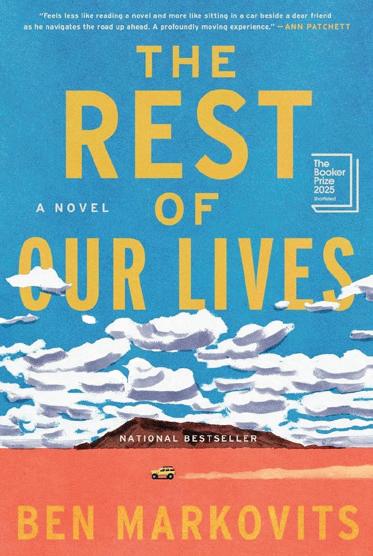
In The Rest of Our Lives, by Ben Markovits, Tom Layward drops his youngest daughter off at Carnegie Mellon to start college. Instead of going home to his wife in New York and deal with the widening gap in their relationship, he keeps just driving west. What unfolds is a road trip of revisiting the past, old friends, old loves and old dreams, to maybe realize that the future coming might be just right, and life is not over yet. The Rest of Our Lives is a funny and tender novel and Tom’s relationships with family and friends are noticed keenly. What does it mean to grow older, what happens to dreams set aside, is it even possible to ever know a spouse…or yourself?
Some family we are born with, and some family we choose. Tayari Jones’s newest novel Kin came out in February to much fanfare and a nod from Oprah’s Bookclub, and is a beautifully written refection on mothers, daughters, relationships and love. Two childhood friends, Vernice and Annie, are navigating growing up as chosen sisters. Both girls lost their mothers as babies and were raised as “cradle friends” by their aunts and grandmothers. Vernice heads to Spelman College with her dead mother very much on her mind, and Annie leaves with friends for Memphis to try and fnd her own mother who abandoned her in infancy. The drama builds in the second half as the girls struggle with school, jobs, frst loves and marriage. Set against the burgeoning Civil Rights movement, Jones writes with compassion and insight into her character's circumstances. Ultimately a book about love, Kin is a lovely slow-burn novel to savor and enjoy.
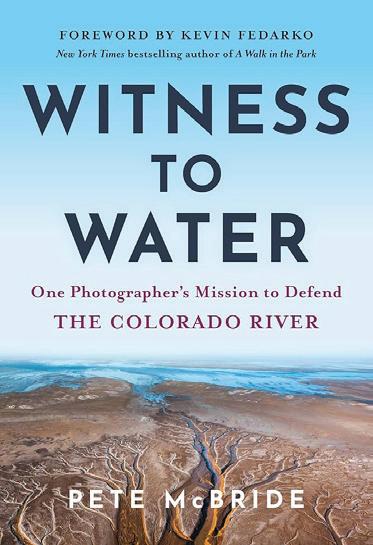
In local literary news, Basalt photojournalist Pete McBride has a brand new book out. Witness to Water is not one of Pete’s classic photo books, but a narrative on the Colorado River, the lifeblood of the American West. McBride has traveled the entire length of the river, from its headwaters in the Never Summer Mountains, all the way to its end as a trickle of water at the Sea of Cortez. Witness to Water recounts his trips paddling the length of the river and also hiking above the water through the Grand Canyon. For anyone who cares about water in the West, the Colorado River or just enjoys a good adventure, this new book is one to seek out. As Kevin Fedarko writes in his introduction, “none, to the best of my knowledge, has a longer, deeper or more passionate relationship with the Colorado than Pete McBride.” There is perhaps no one better to advocate for the river that we all depend on so much.
Carbondale's Top-10 Books in March:
Theo of Golden by Allen Levi
The Correspondent by Virginia Evans Heart the Lover by Lily King
Raising Hare by Chloe Dalton
The Way Out by Devon O’Neil
Go As A River by Shelley Read
Amazing Generation by Jonathan Haidt
Aspen Journey Past to Present by Susan Dalton
Four Seasons in Snowmass by Tamara Susa
A World Appears by Michael Pollan
Copies of all the titles mentioned in this column are available at White River Books in Carbondale.
At the Redstone Inn | RSVP: (970)920-5432
APRIL 14 & 28
11:00 a.m. – Yoga ($5)
With Anna Raphael. Open to all ages and abilities. 12:00 p.m. – Lunch ($10)
RSVP by noon the Friday prior – space is limited. Plated lunch served. Gluten-free option available. 12:45 p.m. – Program
• April 14: Watercolor Painting with Sarah Uhl
This introductory session will guide you through a playful exploration of color and texture. Beginners encouraged. Supplies will be provided.
• April 28: Beavers! With Sheehan Meagher and the RF Audubon Society Beavers are second only to humans in their ecological engineering abilities. Learn all about the amazing work they do for the Colorado Western Slope.
Ms. Sorting Hat sat on her very dusty shelf thinking about Mr. Sorting Hat. She jumped at the sound of the doorbell. Mr. Mailman opened the door and gave a box to Ms. Sorting Hat.
“Who's this from?” she asked.
“I do not know,” he explained, “you’ll have to open it.”
Mr. Mailman left saying, “Bye Sally.” Most people call Ms. Sorting Hat, Sally.
As soon as Mr. Mailman left, Sally picked up the box. The Box had a label which read: Use Them Wisely.
Sally wondered, “Who would have sent this,” as she fipped the box over it had in the same handwriting as the front label: Sincerely, Minerva
Sally searched her mind for the name Minerva; “not that one, not that one, here it is!”
“Minerva Mcgonagall,” She said out loud, “She works at Hogwarts with Mr. Sorting Hat.”
She opened the box with her little pocket knife. Inside was a magnifcent sight.
CHAPTER TWO
Sally stuttered as she looked at the fve things in the box. There were:
A never ending bag
A weird looking bean
A wand
And a love potion
The wand had a note with it. The note read: The wand is made out of phoenix feather, unicorn horn and troll hair.
“Troll hair,” she screamed, “eww!”
“That's disgusting.” she muttered, “I wonder what that weird looking bean does?”
“I'll have to test it,” she explained, “I’ll test it on……” she looked around the room and fxed her eyes on her kitty, “how about you Mr. Beans?” she asked.
“HISSSSSS,” Mr. Beans hissed at Sally which obviously meant no.
“Alright, alright gees!” she whispered, “ I'll have to go and fnd a squirrel.”
Sally went outside and found a squirrel. “EAT” she told him. She shoved the bean into his little mouth and the squirrel took a bite.
Nothing happened. Then the squirrel talked.
“What da you do tha for?” he said in a British voice.
“Umm sorry.” she explained.
“Ya you should be.” he said in an angry temper and walked away.
“That didn’t go as planned.” Sally said.
The squirrel came back instantly and said, “I don't like your face.”
“Well, I don't like your tail,” she answered.
“So I don’t like your dress,” he said.
“Well, I don't like your accent.” The squirrel gasped in horror.
Mr. Beans had taken a bite out of the jellybean and had started talking. The squirrel strutted away.
MCS Continued
“I’m coming out here tonight to rip him to pieces,” said Mr. Beans.
“NO you are not,” said a mysterious voice behind them.
Sally turned around and saw Snape (Severus).
“Go away, Severus,” hissed Mr Beans.
“By the way, why are you here in Hogsmeade in the dead of night?”
“Ummm ... .I'm meeting someone.” he replied.
“Who are you meeting Severus?” asked Mr. Beans suspiciously.
“No one, nowhere, nothing,” he said in a fast voice.
“Yeah right,” mumbled Mr. Beans.
“Well, we should be getting back now,” said Sally.
Mr. Beans tried to say no but the bean must have worn off and he couldn't. Sally picked him up and Mr. Beans looked back as they walked away.
Snape was talking to a hooded fgure. Mr. Beans was suspicious.
Who could that hooded fgure be?
Why would Snape be talking to him?
To be continued……..
Third and fourth graders at MCS have been writing creative stories. They learned to paragraph correctly and use dialogue. This has been one of them. From Marble Charter School Teacher Lani Houseman
Redstone Community Association March Meeting Brief
By The Crystal Valley Echo Staff
With thanks to RCA Secretary List Mattson for her help in supplying meeting notes to The Echo.
Easter Planning:
Redstone’s Easter event plans were reviewed and fnalized, with volunteer sign-ups now open to help the event. Community members are encouraged to apply to volunteer, with Easter events taking place Saturday, April 4th.
Traffc & Speeding amid the Ongoing Bridge Construction:
The RCA discussed ongoing concerns regarding increased traffc and speeding issues along the boulevard as it serves as the Highway 133 detour during the bridge replacement project. They have contacted Pitkin County and Pitkin County Sheriff’s Offce to request additional inpurt and support regard speed signs and other traffc control measures to ensure safe speeds are observed on the Boulevard as the spring and summer seasons get underway.
Fourth of July Planning:
The RCA confrms that Redstone’s 4th of July celebrations are confrmed to still be taking place this summer despite the changes brought by the bridge construction. They are currently in talks about how 4th of July celebrations will look, but are excited to hold them despite the changes.
The RCA is currently seeking volunteers to help with the following: Parking management
Pie sales
Ducky Derby ticket sales
Ducky Derby betting
People interested in volunteering for the 4th of July celebrations may reach out to the RCA to sign up.
Road Closure Notice for 4th of July:
Redstone Boulevard will be closed to all non-emergency and non-local traffc during the celebrations.
Looking Ahead to the April Meeting:
The RCA will meet Monday, April 7th at 5:30pm at the Redstone Inn, their agenda tentatively includes the following items:
Easter Events Recap
Continued 4th of July Planning and Discussion
Final Highway and Boulevard cleanup event planning and volunteer coordination
A potential wildfre preparedness presentation
Misc. Issues
Public Comment
Meetings and Legal Notices:
Town of Marble: The Marble Town Council meets the frst Thursday of each month at 7:00 PM at the Marble Community Church Fellowship Hall. This Month's Meeting will take place Thursday, April 9th.
Crystal River Caucus: Meetings are held on the second Thursday of odd-numbered months at 7:00 p.m. at the Church of Redstone Virtual attendance is available, and meeting links will be sent via email To join the email list, send a message to crcaucus@gmail.com.
Redstone Community Association: Meets the frst Tuesday of Each month at 5:30 pm in the Redstone Inn Library
Marble Dark Skies Initiative Save the Date for Dark Sky Fundraiser on April 17
From: Kelsy Been
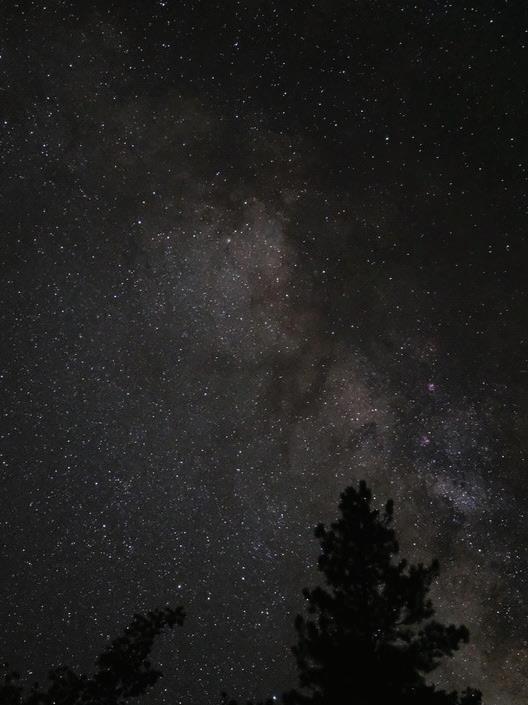
What’s the best part of Marble at night? If a clear, star-flled sky isn’t the frst thing that comes to mind, it’s probably near the top. The ability to see the Milky Way stretching above Mount Sopris, spot Venus rising over the valley, or trace constellations from your backyard is something many people no longer experience. According to DarkSky Colorado, a statewide nonproft dedicated to restoring the nighttime environment, more than 80% of Americans can no longer see a truly dark night sky.
Beyond their beauty, dark skies play an important role in environmental conservation and beneft both people and wildlife. Light pollution, the human-made alteration of natural nighttime lighting, has wide-reaching impacts. It blocks our view of the universe, disrupts natural wildlife behavior, and can negatively affect human health.
For species that evolved over billions of years with only natural light sources like starlight and moonlight, artifcial light can be especially disruptive. Migratory birds, nocturnal animals, and even plants rely on natural light patterns to guide feeding, reproduction, and seasonal cycles. The good news? Light pollution is one of the few environmental challenges that is relatively easy to reverse. Simple steps, like shielding outdoor lights, reducing brightness, and using warmer-colored bulbs, can signifcantly reduce impacts.
Marble is uniquely positioned to protect its dark skies. While nearby communities continue to grow and outdoor lighting increases across the region, Marble still enjoys exceptionally dark nights. Preserving this resource now helps ensure that residents and visitors can continue to experience Marble’s night sky for generations to come.
With support from the Crystal Valley Environmental Protection Association (CVEPA), the Town of Marble recently applied for technical assistance from DarkSky Colorado. A group of Marble residents is now working through the process to become a designated Dark Sky Community. This effort will include community education and outreach, lighting improvements, and long-term policy commitments to protect Marble’s night sky now and in the future.
To support this effort, the community is hosting a fundraising event during Dark Sky Week on Friday, April 17, from 6–9 p.m. at Raspberry Ridge Inn. The evening will feature a taco dinner, pie auction, and a keynote presentation by local astronomer Aaron Watson, who will share astrophotography and insights about Marble’s night sky. Telescope viewing will also be available outside at Millsite Park, weather permitting. All proceeds will support certifcation, education, and outreach.
Marble’s dark skies are part of what makes this place special. By taking small steps now, we can help preserve the beauty and benefts of a truly starry night for years to come. To learn more about lighting best practices and the impacts of light pollution, visit Dark Sky International or DarkSky Colorado.
You deserve a bank that fts your life. The kind of service only a Colorado community bank can ofer.
The Milky Way Galaxy as seen from Earth, Crystal Valley Echo File Photo
When a Community Shows Up: What the Recent Harvest Roaring Fork Hearings Revealed
Guest Column by Miriam Muniz-Fennell
Over the past few weeks, something remarkable happened in Garfeld County
Hundreds of residents from across the Roaring Fork Valley showed up to participate in the public review of the Harvest Roaring Fork PUD (development proposal). The February 25th Planning Commission hearing drew more than 500 people, a record-breaking turnout. Nearly 300 more attended the March 11th public input hearing, with hundreds more watching remotely on Zoom. Many waited hours for their turn to speak, then returned weeks later for three minutes at the microphone, sharing their concerns thoughtfully and respectfully.
The public response extended well beyond the hearing rooms. More than 1,300 community members signed a petition opposing the development, and Garfeld County received hundreds of letters and emails expressing concerns. Regardless of where people stand on the project, the level of engagement was astounding. These hearings showed just how deeply people care about our valley and how determined we are to have a voice regarding growth and its impacts.
Understanding the Project
At the center of these hearings was the proposed Harvest Roaring Fork Planned Unit Development (PUD), a 230-acre, dense new city located between Glenwood Springs and Carbondale along Highway 82. This land is the former Sanders Ranch/Bair Chase, a long-standing rural ranch land and the last open space between the two towns.
In a move that shocked many community members, the developer appears to expect Garfeld County to either rewrite its long-standing development standards and goals, or disregard them altogether, to approve a proposal that clearly fails to meet the county’s code and comprehensive plan.
The developer calls it a “village,” likely to make the project feel smaller than it is. In reality, it’s a full-blown new city. At full build-out, the proposal includes roughly 1,500 homes, 75 ADUs, commercial space, a 120-room hotel, and nine distinct residential neighborhoods connected by new roads and infrastructure. The development could add up to 5,000 new residents to a rural corridor currently outside Glenwood Springs city limits.
To put this in perspective, the entire town of Basalt, including the Willits development, covers just 1,280 acres and has about 4,000 residents. The Harvest Roaring Fork project alone could house more people than all of Basalt, making it the largest single development ever proposed in the Roaring Fork Valley.
For many in our community, the question isn’t whether housing is needed, most agree that it is. The question is whether a proposal at this scale, intensity, and location aligns with Garfeld County’s long-term planning goals and development standards. That’s what the Planning Commission needed to evaluate.
What County Staff Found
At the February 25th hearing, Garfeld County’s Community Development Department presented its offcial staff analysis, a required part of the PUD review process. Staff concluded that the proposal, as submitted, raises serious concerns regarding compliance with the county’s 2030 Comprehensive Plan and Land Use Development Codes.
Key issues staff identifed included:
*Density and compatibility with the rural character of the corridor
*Traffc and infrastructure capacity
*Wildlife impacts
*Water use
*Missing elements required for a PUD, including a detailed sketch plan showing lot layouts
Staff also noted that the developer’s “form-based structure” is not recognized under Garfeld County codes. This type of zoning is designed for urban areas like Denver. Staff warned that if approved, this approach could allow major changes later without the predictability required in the county’s process.
In short, staff concluded the application did not meet multiple county standards and recommended denial. While staff recommendations carry weight, the Planning Commission and ultimately the Board of County Commissioners make the fnal decisions.
Housing: The Heart of the Debate
At the hearings, the developer repeatedly emphasized workforce housing, pointing to 150 permanently deed-restricted “affordable” homes and 300 so-called “resident-occupied” units as a major community beneft. In reality, the 150 affordable homes are the only units with clear, permanent protections, aligning with Garfeld County’s existing 10% requirement. The remaining 1,350 homes, including the 300 “resident-occupied” units— function much more like market-rate housing. While these units are intended for individuals working in Garfeld, Eagle, or Pitkin County, they are not income-restricted and have no price caps. More importantly, there is limited clarity around how these occupancy requirements would be enforced over time or whether they are guaranteed to remain in place upon resale. Garfeld County staff have raised concerns that it’s unclear how these rules would be enforced or whether they would actually last over time. Without permanent deed restrictions and clear oversight, these units risk transitioning into the broader market over time. As a result, the “resident-occupied” designation raises serious questions about whether it provides meaningful, lasting workforce housing, or primarily serves as a way to present the project as a community beneft without providing a lasting housing solution.
At the February 25 hearing, the developer presented an example showing construction costs for a permanently affordable unit at approximately $412,000, specifcally noting this refected building costs only. That fgure does not include land, fnancing, taxes, insurance, HOA dues, or potential special district costs, all of which would signifcantly increase the total cost to homeowners. The developer also indicated that the 300 “resident-occupied” units could fall in the range of roughly $475,000 to $575,000. While exact monthly payments will vary, these price points raise important questions about whether these units will truly be attainable for the Garfeld County workforce they are intended to serve, particularly when considering the full cost of owning a home in today’s market.
Many residents pointed out that these price points would put the homes out of reach for teachers, sheriff’s deputies, healthcare workers, service industry staff, and small business employees in Garfeld County. Several speakers also noted that wages in Eagle and Pitkin Counties are higher, raising concerns that these homes could ultimately be occupied by workers from the Aspen and Vail areas rather than the local Garfeld County workforce.
For many in the community, the question is clear: who will this proposed new city actually serve?
The proposed site of the Harvest Roaring Fork Development at Cattle Creek between Carbondale and Glenwood Springs. Photo by Steve Kuschner
Traffc, Infrastructure, and Safety Concerns
Traffc along Highway 82 is already heavy. The corridor currently carries roughly 27,000 vehicle trips per day. At full build-out, Harvest could add an estimated 12,000 daily trips, bringing total traffc to roughly 39,000 trips per day.
Highway 82 cannot be expanded, therefore, to manage access, the Colorado Department of Transportation proposed a Reduced Confict Intersection (RCI), where drivers turning from side roads must frst turn right, accelerate, change lanes and then make a U-turn at a signaled median opening. While RCIs are used elsewhere, they’ve never been implemented in Colorado. Residents raised concerns about heavy trucks, school buses, and daily commuter fows using this system. Other traffc concerns included:
Existing intersections, including Cattle Creek Road, Highway 133, and Thunder River/Spring Valley/ CMC Road, are not addressed in the developer’s traffc analysis for improvements or upgrades.
Construction traffc over many years, gravel trucks, concrete mixers, and other vehicles, would traverse the corridor during the project’s lengthy phases Wildfre evacuation, Highway 82 serves as the primary route for thousands of residents. Adding thousands more raises questions about evacuation safety.
The developer assumes many new residents will relocate from west of Glenwood, particularly Rife, and rely on public transportation (RFTA). Speakers questioned this assumption, noting that incomes in those areas do not align with these housing costs. The developer also claimed the site is not in a wildfre hazard zone and that residents could “shelter in place” in case of fre, an assertion that many in the community found deeply concerning.
Water in a Drying
Valley Water is critical in the Western Slope’s arid environment. The developer has water rights from the Glenwood Ditch and the Roaring Fork River. Residential consumption alone is projected to consume 65.77 acre-feet per year, roughly 22 million gallons annually, permanently removed from the watershed after sewage is treated and returned to the river.
These 22 million gallons of water do not include water for landscaping, irrigation, commercial operations, or the proposed hotel, which would consume millions more gallons of water annually. More water gone forever. The proposal also includes a large sewer pipe across the Roaring Fork River and a new road and bridge over the Cattle Creek riparian area, permanent intrusions into sensitive river corridors and wetlands that threaten water quality, wildlife, and the foodplain.
Wildlife and Habitat
The property sits within a key wildlife corridor. Local experts and conservation organizations testifed that the development would fragment habitat used by deer, elk, bears, raptors, and other species that move through this stretch of the valley.
Some disagreement emerged between the developer’s wildlife consultant and local experts about the extent of wildlife activity. While the developer’s biologist suggested community concerns were “emotionbased,” residents and conservation groups presented observations and photographs showing real, current wildlife activity on this land.
For many speakers, the question isn’t just whether animals currently use the land, but how a large-scale development could permanently disrupt migration patterns and destroy critical habitat over time.
Community Voices
Public testimony on March 11th was powerful and wide-ranging, refecting just how much our community cares. Residents spoke passionately about traffc, housing affordability, wildfre evacuation, wildlife habitat, water resources, medical services, and the character of the Roaring Fork Valley. Experts from local conservation organizations and wildlife groups backed these concerns with data and observations, while the Cattle Creek Confuence Coalition highlighted how the project conficts with county codes and the comprehensive plan. Together, the hundreds of voices in the room and online, along with more than 1,300 petition signatures and countless letters and emails, made it unmistakably clear: this valley’s community members demand thoughtful, responsible growth that respects our land, our wildlife, and our community.
The Planning Commission’s Decision
After hearing staff reports, developer testimony, and public comments, the Garfeld County Planning Commission weighed the proposal. Commissioners raised concerns about:
*The form-based PUD structure, not allowed under current county standards
*Absence of a required sketch plan
*Infrastructure capacity
*Numerous unresolved details
Several commissioners noted that while they appreciated the developer’s effort to include workforce housing, the proposal relied too heavily on promises and commitments that were not clearly defned in the application. In the end, the Planning Commission voted 6–1 to recommend denial, citing misalignment with Garfeld County’s Comprehensive Plan and Land Use Development Code. In doing so, they underscored a core issue: the developer, audaciously from the start, has been asking the county to bend its well-established rules and standards to ft a project that, on its face, fails to meet those very codes — rather than bringing the project into compliance.
What Happens Next
The Planning Commission’s recommendation is just that, a recommendation. The Board of County Commissioners (BOCC) are not required to follow it.
At this stage, the developer can take the proposal, as it currently stands, to the BOCC, who will make the fnal decision. If minor changes occur, the project could still advance. If changes are signifcant, the developer must submit a new application to Garfeld County and restart the review process.
A Community Conversation
Whatever happens next, these past weeks have shown something inspiring. Our community showed up, spoke up, listened, and asked questions. We engaged in a diffcult conversation about growth, infrastructure, environmental stewardship, and the future of our valley.
Growth will continue in the Roaring Fork Valley. That’s not in dispute. But thoughtful growth requires careful planning, respect for standards, and honest evaluation of long-term impacts on infrastructure, natural resources, and the character of the place we live.
The Planning Commission’s recommendation refects a willingness to weigh these factors thoughtfully, but the process isn’t over, continued community participation remains essential.
Our voices truly matter. The future of this valley, its landscapes, wildlife, roads, water, and communities, belongs not just to Garfeld County, but to all of us across the Roaring Fork Valley and beyond. Decisions made here will ripple through neighboring counties and set precedents for how Colorado protects the places we love.
Now is the time to pay attention, speak up, and ensure that growth in our valley is responsible, sustainable, and refects the values of the people who call this place home. This is our valley, our water, our wildlife, and our future. We cannot afford to sit on the sidelines.
Find Your Community Outdoors: Roaring Fork Outdoor Volunteers Launches 2026 Stewardship Season
From:
Roaring Fork Outdoor Volunteers
Carbondale, CO March 26, 2026 - Spring has a way of bringing people outside and back together, and Roaring Fork Outdoor Volunteers (RFOV) is leaning into that momentum by launching the 2026 season with more ways than ever for the community to build skills in the outdoors, connect, and give back to the land they love.
More than just trail work, RFOV’s programs create meaningful opportunities for people to connect – to the land, to each other, and to a shared sense of purpose. Each season, volunteers of all ages and backgrounds come together to improve and maintain trails, restore habitat, and care for the landscapes that defne life in this region.
RFOV’s 2026 Community Project calendar offers a wide range of ways to get involved throughout the season. Signature projects include the popular Red Hill Trail Series with three evening volunteer opportunities in May, a return to Coal Basin Ranch for National Trails Day on June 6, and trail work at the Jr. Olympic Climbing Access Trail on June 21 and July 19.
Later in the summer, volunteers can explore new terrain through a frsttime project series at Babbish Gulch, or return to familiar places with meaningful trail maintenance work, including the Jess Weaver (No Name) Trail in Glenwood Canyon and the Thomas Lakes Trail on Mt. Sopris. Additional projects include a Beaver Dam Analogue restoration at Four Mile Park and celebrating Latino Conservation Week at Linwood Cemetery. Many community projects are designed to be accessible for all ages, and RFOV encourages families to volunteer together.
New this season, RFOV is launching a Trail Ambassador Program, offering a different way to engage on the ground. Trial Ambassadors serve as a friendly, knowledgeable presence on local trails – sharing information, promoting Leave No Trace principles, answering questions, and helping foster a culture of responsible recreation.
For youth, RFOV’s programs provide opportunities to build confdence, skills, and connection through hands-on experiences outdoors. Adventure Stewards, a summer program for ages 11-14, combines stewardship projects with outdoor adventure and teamwork across two weeklong sessions. For high school students, the Youth in Nature (YIN) internship offers experiential learning, professional development in leadership and ecology, and career exploration with outdoor professionals and natural resource managers. Applications for the 2026/2027 YIN cohort closes April 4. Through the Little Explorers program, kids 4 - 8 can engage in guided, stewardship-themed nature activities alongside select community projects while parents or guardians take part in hands-on work.
RFOV also offers custom projects for schools, businesses, and community groups creating opportunities for team building, conservation education, and shared impact.
With projects spanning the valley and opportunities designed for all experience levels, RFOV aims to make stewardship accessible, welcoming, and meaningful for everyone. Registration for members opened March 16, with general public registration beginning April 1. Spots are flling quickly—sign up at rfov.org/calendar
Volunteers
About RFOV
RFOV is a 501(c)(3) conservation organization that specializes in the planning and coordination of volunteer stewardship projects and in stewardship education. Since its founding in 1995, RFOV's work has provided signifcant enduring benefts for our regional public lands, wildlife, people and communities. These benefts include restoration of key habitat and wildfre sites, construction of and annual maintenance on beloved trails and the promotion of sustainable recreation practices. Over 30 years, RFOV has contributed more than $6.5 million dollars of volunteer in-kind donations towards the stewardship of regional public lands, built and maintained 800 miles of trail, restored 150 acres of habitat and open space, and empowered 16,668 youth to become lifelong stewards. RFOV serves adult and youth volunteers (including families), business and non-proft groups (as volunteers), and regional land managers at the local, state and Federal level. RFOV also serves a wide range of community partners, including schools, youth-serving organizations, and other nonprofts.
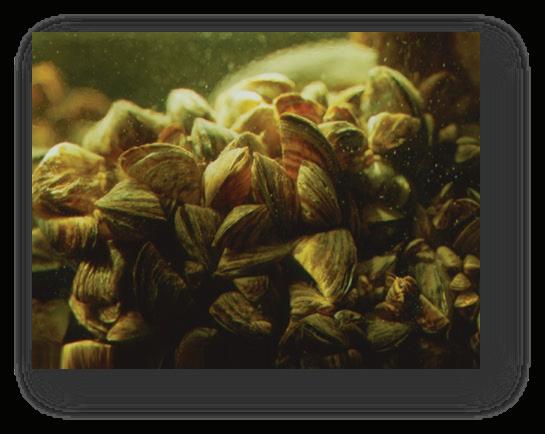
Our rivers have zebra mussels and New Zealand mudsnails. Only you can prevent their spread.
Don’t take them home with you and don’t bring any other invasive species here, either!
Protect our rivers Clean, drain, and dry all water-related gear.
eep your distance rom storm drains and new bodies o water while cleaning all e uipment.
emove all visible plant material, animals, and mud rom the board, in, and associated plugs
Clean all e uipment used including paddles, personal lotation devices, and leashes.
nsure all water is drained rom your watercra t ponge or towel dry areas where water is unable to drain
ind a place where the watercra t can continue to dry completely.
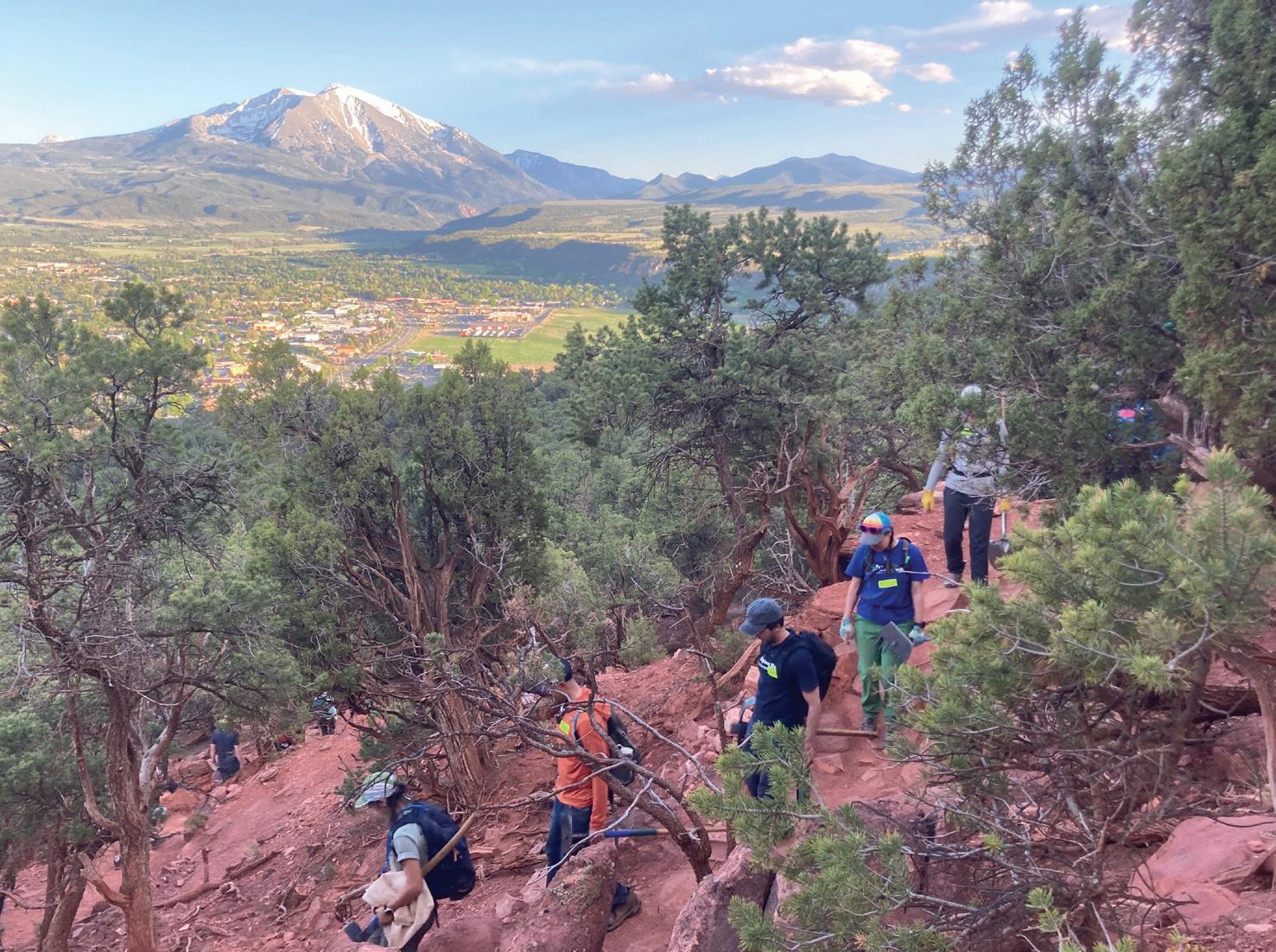
from RFOV Hike Down Red Hill in Carbondale after a day of work. Photo Courtesy of Roaring Fork Outdoor Volunteers
Punk Rock Journalism Amplifes Youth Music Scene
Local journalist captures the sights and sounds of the valley’s teen musicians
By The Crystal Valley Echo Staff
Carbondale- Roaring Fork High School student and Carbondale local Ash Bohmfalk, following in the footsteps of music journalists of the past has founded the new music journalism publication Amped Magazine which focuses on local youth bands and musicians from Aspen to Grand Junction and beyond. Amped provides readers a monthly look into shows, album releases, and an accompaniment of commentary. It will be publishing its sixth consecutive issue this month.
Bohmfalk, the editor, designer, beat reporter and lead author of the magazine began the odyssey after noticing a lack of coverage of the local music scene in the valley, and identifying the need to compile and share the stories of local musicians on their ways up from the garage to the stage. They stated that because of the nature of these shows, if people do not see them, they do not know they happened, and so in creating Amped, they strove to create a space where all of the pressing and insightful news of the month on all things local youth music could be shared, preserved, and read by all. The widening of the audience, and the growing of hometown support for youth musicians is at the heart of the philosophy of the magazine, as is cutting through the noise and sharing the stories that matter.
Speaking on the decision to create Amped Magazine, Bohmfalk stated that after being part of the scene, seeing their friends join bands and derive a lot of joy from it, they decided that they wanted to create a record of the local music scene in the valley so they can look back and pass the word around and get people interested and informed in local shows to increase the sizes of audiences attending performances. The goal was to create a monthly update on current events, refections on performances and editorial content on the nature of the intersection of music and society.
The interconnectivity of music, social reality and the state of the world is at the core of the magazine, where, in its pages readers can observe the ebbs and fow of modern life in real time as it ties to the local music being written, played and shared.
Amped began its life in the local skate scene, where punk rock and indie genres came to infuence of a new generation of musicians to pick up a guitar and start writing their stories in the world. Bohmfalk discussed how in the early days of social media, those platforms allowed for a stronger voice of resistance, of political and social engagement through music, but in the years since it has become so normalized that “We need to go back to the physical media, and reporting, and making a song, not just making a video, but making a song that lasts forever that can be interpreted.”
The magazine follows that thread of making physical media in the scene, being a full-fedged analog publication that is nearly 90% composed by Bohmfalk alone, where aside from an occasional article and graphic design, they are out in the crowds at every show they can attend, writing recaps and stories about them, taking photos and compiling all their work into a monthly magazine that distributes at the Carbondale Library, KDNK, and Roaring Fork High School at present.
Currently, aside from occasional arts and culture features in various local newspapers, and on KDNK and Colorado Public Radio, there is not a singular publication solely dedicated exclusively to the local youth music scene. Bohmfalk has stepped into that role, taking skills from a Colorado Mountain College English Composition course and applying them to fll the music journalism void in the valley.
Their self-taught background in journalism mirrors many of the punk-rocking icons of previous decades in both music and journalism, to a degree that Amped stands as our valley’s own equivalent to some of the monumentally important music journals from throughout music and popular culture history.
In an effort to expand the readership and engagement of Amped Magazine, and to continue to further its mission of spreading awareness and documenting stories of the local music scene, The Crystal Valley Echo is proud to announce a continuing partnership with Amped where, beginning in the May 2026 issue, Amped will be distributed as a separate publication folded inside every copy of The Echo which will see it on shelves and in newspaper racks from Marble to Glenwood Springs, and in the hands of many readers who deeply care about music, local bands and supporting youth music.
May’s issue of The Crystal Valley Echo will include a special collector’s omnibus back-catalog of Amped Magazine, including all of its editions published to date, so that readers may fully familiarize themselves with the local scenes and celebrate Bohmfalk's triumphs in youth music journalism.
The Crystal Valley Echo will also be helping to sell advertising and sponsorship spaces to support Amped which to date has been entirely paid for by its founder. All advertising revenue generated from these sponsorships goes directly to supporting Amped Magazine and its coverage of the local music scene, and its punk rock music journalism.
For more information about Amped Magazine, you can visit their Instagram page by searching “amped_zinee”, or email them at ampedzinee@gmail.com.
For more information on how to sponsor Amped Magazine, please reach out to editor@crystalvalleyecho.com for ad rates and to get on board to support local youth music.
Be sure to be on the lookout for the May issue of the Crystal Valley Echo containing a copy of Amped!
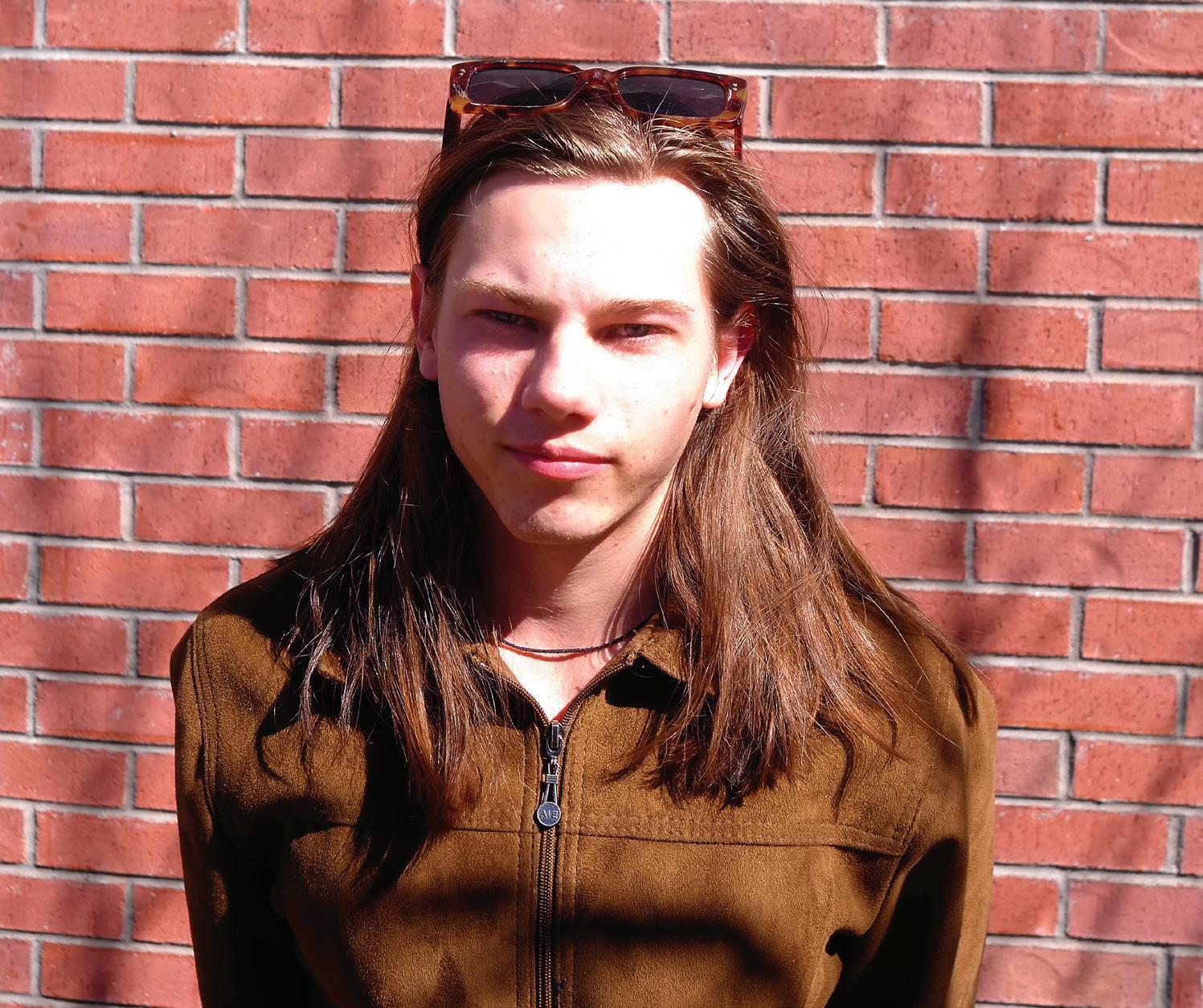
Amped Magazine Founder and Editor, Carbondale Local Ash Bohmfalk. Crystal Valley Echo File Photo.
The Newest Figure in Finance
The Redstone Historical Society's Vintage Valley
(Originally Published September 7th, 1902 in the New York Times. This article is the origin of Redstone's nickname "The Ruby of the Rockies")
Remarkable Career Of J.C. Osgood, Who Has Defeated John W. Gates—A Brooklyn Lad Who Started The Colorado Fuel And Iron Company With One Room And A Boy—Now Controls Giant Industries—Model Towns Of Swiss Chalets And An “Old English Inn” He Has Established In The Rockies—Workingmen Who Dress For Dinner And A Club Where No Treating Is Allowed.
Within the past ten days the sharp eyes of Wall Street have been raised for a few moments to contemplate a new fgure in the world of control—John Cleveland Osgood of Redstone, Col., who enjoys the proud distinction of having whipped the celebrated Chicago plunger, John W. Gates, in a desperate battle for control of the Colorado Fuel and Iron Company.
When New York and Chicago heard of the strategic move of the Osgood faction in having the election postponed, a general laugh went up in Wall and La Salle Streets, where Gates was best known. With them it was a case of ridiculing the shearer who went forth and returned shorn, but their glee was echoed in numerous Colorado cities and towns, and for an entirely different reason.
With the latter the discomfture of the Gates contingent was the glow of pride in the victory of a local captain of industry over a man who was associated in their minds with the high plays at Saratoga gambling tables, the wrecking of a railroad for the purposes of personal gain, or the cornering of thousands of shorts in a cereal deal. A victory by Gates meant to them the transfer of the now immense business of the Colorado Fuel and Iron Company to the United States Steel Corporation, or Steel Trust, and the word “trust” is still abhorrent in Colorado eyes, though Bryanism has almost disappeared.
In the views of the press of Colorado, irrespective of politics, backed Osgood in his confict which led that gentleman to remark humorously to some of the Eastern invaders:
“In ordinary times, gentlemen, almost every newspaper in the State is attacking us. Let an outsider venture to attack us, and every paper in Colorado joins in repelling the invasion.”
Some Wall Street wiseacres say compassionately:
“A fne bit of strategy, but when the injunction was dissolved and the meeting is held, as it must be, Osgood will be swamped by Gates’s majority holdings.”
But Mr. Osgood is said to be worrying a little about that; his recent move in again opening the stock books in New York for transfers has largely solved that diffculty, and while small holders of Colorado Fuel stock have been unloading Osgood brokers have been absorbing much of it. A different phase is also put on the affair by the knowledge that many of Gates’s proxies were rented literally until after the transfer books had closed, and they are now nullifed by the opening of the books. But that is another story.
Who is He?
Who is this Coloradoan who has so suddenly upset one of the most daring and persistent operators seen on the New York Stock Exchange? His fame in Colorado does not rest on his defeat of Hohn W. Gates, though that has added luster to his name, but to the manner in which he has built up an industry that excited the undisguised admiration of Gates, Lambert, Mitchell, and others when they carefully inspected the different plants and camps last December.
Even some of Osgood’s best friends in Colorado are under the impression that he is an Englishman by birth. But this is an error. He is an American of the true type for many generations back.
He was born in Brooklyn on March 6, 1831, and has consequently but recently passed his ffty-frst birthday. His father was in the wholesale drug trade but became infected with Western fever and in 1857 removed to Iowa, settling with his son at Burlington. The death of his father two years later caused the boy to return to the East and he lived with relatives and Providence, R.I., where he attended school until he was fourteen.
It was at this age that young Osgood was thrown on the world to earn his own living, and he left the roof of his Quaker relatives to become an offce boy in a Providence cotton mill. Business aptitude was not wanting, and two years later he went to New York City as a clerk for a Produce Exchange commission frm. Three years of this training, and then Iowa once more, and at nineteen he was the cashier of a coal mining company which is now in his control, the White Breast Fuel Company, with offces at Ottumwa. The upward path was plainly marked now, and his twenty-third year found young Osgood the cashier of the First National Bank of Burlington, Ia. Until 1876 he remained with the bank and then assumed the control of the White Breast Company.
First Visit To Colorado
It was not until February 1882, that John C. Osgood saw Colorado and investigated its possibilities. His trip was at the request of the offcers of the Chicago, Burlington, and Quincy Company to report on the coal resources of the State. Not a coal camp in the State escaped his searching investigation, and his knowledge of the business and his farsightedness caused a great infux of capital to Colorado.
John C. Osgood, CEO of Colorado Fuel & Iron Company and Founder of Redstone
Colorado was then in its infancy, and the rapidly developing humor of the Eugene Field in the Denver Tribune, and the marvelous poker playing of Senator “Tom” Brow were at that time of vastly more interest to the rest of the United States than the possibility of the Centennial State as a coal center. But Mr. Osgood, then about thirty-fve years of age, saw what might be developed, and set about acquiring coal lands on an extensive scale. In 1887, the Colorado Coal Company was formed. Many of Colorado’s leading businessmen remember the incubus of the Colorado Fuel and Iron Company in a small room, the offce force consisting of Mr. Osgood and a boy.
Mr. Osgood’s executive powers were here shown and the new company developed rapidly until, in 1892, it absorbed its rival, the Colorado Coal and Iron Company. This amalgamation brought under Mr. Osgood’s control the Bessemer iron plant near Pueblo, now known as the immense Minnequa steel plant.
A Giant Concern
The combination had a capital of $11,250,000. It has now $40,000,000. Eastern fnancial critics have asserted that the company is overcapitalized, that it cannot pay dividends on $25,000,000 common stock and $15,000,000 in bonds. But these critics overlook the fact that the Gates contingent advocated this action, and that just before the Easterners left Denver last December, after a thorough investigation of Colorado Fuel and Iron plants and camps, young Charles G. Gates, his father’s spokesman during the trip, said: “We were all surprised, I can tell you. If these people want any more money for development, we will furnish it.”
These same critics, not realizing the size of the Colorado plant, overlook the improvements that these $15,000,000 are to be [LOST TEXT] … [NEW COLUMN] … Vast Minnequa plant, which already over taxes the hauling facilities of fve railroads, the opening of new coal and iron lands in Colorado, Wyoming, and New Mexico, and the necessary construction of railroads, which is a part of the company’s plan of expansion.
Never was an employer more staunchly upheld than is John C. Osgood by the employees of the Colorado Fuel and Iron Company. He has not yet left them millions a la Carnegie, but he has done more, he has improved their condition of living, even in the coal camps high up in the mountains, at the coking plants and the iron works, and privileges are accorded them that few, if any, mining camps of the Pennsylvania region boast.
Care for His Men
There are schools for the children, libraries and clubs for the men, comfortable homes, and other little things that have appealed to the hearts of the miners. Magnifcent hospitals, supported partly by the company and partly by the men, but erected at the company’s expense, are there for the injured, and everywhere the name of Osgood is talismanic.
The credit or all this as well as the corporation’s fnancial stability is due to Mr. Osgood. He has been the head of the concern since its inception. He has built it up from the little one-offce affair to what it is, a commercial pearl coveted for many a crown, and it was this man’s brains that evolved the plan of campaign which proved the undoing of Gates and his army of adherents, “Peter Power” clerks, et al., which accompanied him to Denver recently.
The company hospital at Pueblo is probably the sociological triumph of Osgood. Costing many thousands of dollars, it is a thing of beauty as well as of usefulness. Built in the Spanish mission style, it embraces all the improved methods of medical science and comfort. But a hospital is an adjunct of every well-regulated large corporation, and the personal characteristics of John C. Osgood are better found in the little town of Redstone, his pet hobby.
Redstone, “The Ruby of the Rockies,” is a town to rave over from the standpoint of both beauty and philanthropy, and in it and his private estate, Crystal Park, half a mile above is centered the pride of Mr. Osgood. Fifteen months ago Redstone consisted of a little outside of some rude huts or “dug-outs,” to use the Western vernacular. Today, it is the most beautiful town in Colorado, a thriving little village of 250 to 300, connected with the outside world by the Crystal River Railroad, a company possession, with a hive of industry at its very doors, one of the company’s big coking plants, and with the source of supplies but twelve mils up in the mountains at Coal Basin.
Example Spreads
The standard set by Mr. Osgood in his construction of Redstone is being followed slowly in every other camp of the Colorado Fuel and Iron Company, and the social condition of the miners is benefted accordingly. The situation of Redstone is beautiful. About 285 miles from Denver, on the Colorado Midland, lies the little town of Carbondale at the confuence of the Roaring Fork of the Grand and the Crystal Rivers. Here the Crystal River Railroad commences, connecting the Redstone country with the transcontinental lines, the Denver and Rio Grande having a branch past Carbondale, and furnishing the outlet for the big coal mines. There are many beautiful valleys in Colorado, but the valley of the Crystal vies with any and all. Sixteen miles up the cañon lies Redstone.
A perfect picture of color it is, well built, harmonious with its surroundings, and prosperous, if not opulent, in appearance. On one side of the station are the coke ovens; across the river lies the town. There is practically but one thoroughfare. More than 100 frame cottages line the shaded street, and every one differs from the rest. A special architect is engaged in the work, and he is partial to the Swiss chalet effect, not inappropriate in a mountain town. But each residence is gayly though moderately painted in different colors, and the architectural style differs always in some manner.
Osgood Continued on Page 18...
Redstone Boulevard C. 1905, Redstone Historical Society Photo
In these cottages dwell the employees of the company at the coke ovens, the miners having a town of their own up in the hills. They are appreciative, too, these Italians, Huns, and Austrians, and decorate their homes according to their various tastes. What is of equal beneft, they are appreciative of the man who caused fne bath tubs, perfect sewerage connections, and electric lights to be put into the houses. “A waste of money,” say some people, but Mr. Osgood does not think so.
The Club
Then there is the Redstone Inn, a model little hostelry in the old English style, and the fne store of the Colorado Supply Company, a Colorado Fuel and Iron auxiliary, which supplies the employees with everything by the use of scrip. But the pride of the village is the new Redstone Club, also an idea of Mr. Osgood’s, which is now completed, at a cost of $25,000. This is the most pretentious of similar institutions of the company, and for completeness rivals many a city club.
There are plunge baths and shower baths for the men when they fnish the day’s work, with lockers in which they may keep their working clothes, thus effecting a change, for the appearance of the men in the town streets in their grimy garb is not encountered. There are also the reading rooms, with papers in different languages, the best of the weeklies and magazines; the library, with standard works, and on the top foor a small theatre, with stage, curtain, scenes, and all accessories. Could any coal camp ask more?
To be sure, there are some rules formulated by the management, but they are far from irksome. For instance, all gambling is barred in the club, but pennyante poker is permitted, and 10 cents a cue for pool is lawfully indulged in. And there is the famous “No treating” rule of Mr. Osgood, which forbids a member from buying drinks for any one but himself. The club bar has never been the scene of drunkenness.
Half a mile above Redstone lies Crystal Park, the estate of Mr. Osgood, where he spends many months in the year, and little wonder.
Biltmore and Dr. Webb’s celebrated country residence may be more elaborate, but for charm of location and beauty of architecture it is doubtful if there are many places in the country that are superior to Crystal Park.
There on the slope of the mountain, with the well-named Crystal fowing a few hundred yards away, is built the mansion with a pretty and carefully attended lawn in front and long drive leading to it from the tasteful little stone lodges.
“Oh it is only a small place,” say the Redstonians with perceptible pride, “it only cost about $50,000”
The Livestock
The mansion, magnifcent as it is, forms but a small part of the estate. There are the stables with accommodations for 25 horses, the blooded stock, horses, cattle, swine, chickens, and dogs, the miniature lake well stocked with fsh and boats. Across the river lies the game preserve with elk, deer, and even the much sought mountain sheep or “big horns.” Any one could be content with a pastoral existence could it be spent at Crystal Park.
There are a few more features of Redstone life. There is the wash house, where the Redstone housewives cleanse the linen of their lords and masters. There are the garden tracts full irrigated, on which the residents may grown their own produce, each being allotted a few acres. If a family pays no attention to this agricultural experiment, its little patch is taken away and given to more appreciate persons.
To show Mr. Osgood’s preciseness and interest in details, there is the Redstone band, the joy of Supt. T.M. Gibbs of the Crystal River Railroad, who but recently purchased full uniforms for the members, as a gift from Mr. Osgood. He it was also who presented the instruments to the band and ftted out the Redstone juveniles with the equipment for a most energetic drum corps.
Twelve miles up in the mountain lies Coal Basin. Which furnishes Redstone with its material for coke, and ships out thousands of tons for the world’s consumption. Coal Basin has the same neat cottages, artistically painted, a club on a smaller but equally comfortable scale, and this nearly two miles up in in the air.
The railroad to Caol Basin, known as the High Line, is a wonder, but that forms no great part of John C. Osgood’s personality. It is only an example of the way he has overcome the diffculties all his life.
The personality of the Colorado millionaire is striking, it personifes business sagacity. The shrewd eyes, the frm mouth, the neatly trimmed mustache, the high forehead and the concise manner of speaking all denote the leader.
Portrait of J.C. Osgood, Redstone Historical Society Collections
Funnies, Features, Puzzles and Oddities
The Fog & Folly Crossword Vol. 2
Across
3. Small fowing stream
4. Garden shelter covered with climbing plants
8. Form of poem popular in romantic spring verse
9. Festive pole used in spring celebrations
11. Bird known for its musical song
14. Early-blooming spring fower
15. Soft spring breeze (poetic phrase)
Down
1. Pale yellow fower of early spring
2. Glass structure for growing plants
5. Moisture seen on grass in the morning
6. Songbird heard in spring mornings
7. Small bouquet of fowers
10. Sunshade carried outdoors
12. Beginning to fower or develop
13. Relating to Spring
Madame Wyndrose’s Patented Mystical
Monthly Mono-Lexical
Meanderings
A monthly one-word horoscope to guide your hand...
Aries Mar 21-Apr 19 EFFULGENCE Taurus Apr 20-May 20 APRICITY Gemini May 21- Jun 20 DISCURSION
The Inky Ledger...
This Month's Inky Ledger feature is a daily single-panel comic strip titled "Out Our Way" by Canadian-American artist J.R. Williams. The strip ran from 1922-1977 and was featured in hundreds of newspapers over its long run. The strip was popular for its depictions of rural life in America, and tied a sense of relatability in the daily lives of its readers. This panel was featured in US newspapers 90 years ago in 1936.
Fog & Folly March 2026 Crossword Answers:
18 NOETIC
Pisces Feb 19-Mar 20 SUSURRUS
To submit art, features, or other oddities to adorn this page, Kindly send word to The Echo at: Editor@CrystalValleyEcho.com
All submissions considered. Few accepted.
A Tasting of Prose:
“My today and each of my yesterdays, my rises and falls, are so diverse that I sometimes feel as if I had lived not one, but several existences, each one different from the others.”
-Stefan Zweig, The World of Yesterday (1942)
The Inky Ledger is a monthly feature of historic comics and comic strips from the early 20th century. Each month, a new artist or series is featured as a way to refect on the timeless movements of satire, comedy, critique and caricature.