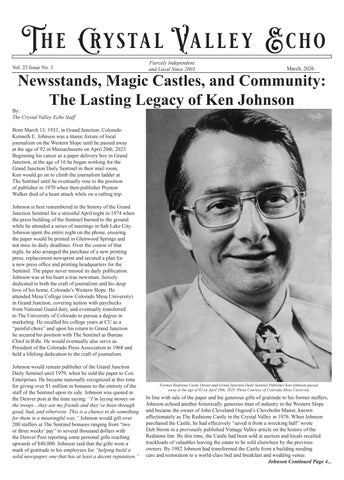
Newsstands, Magic Castles, and Community: The Lasting Legacy of Ken Johnson
By: The Crystal Valley Echo Staff
Born March 13, 1933, in Grand Junction, Colorado
Kenneth E. Johnson was a titanic fixture of local journalism on the Western Slope until he passed away at the age of 92 in Massachusetts on April 20th, 2025. Beginning his career as a paper delivery boy in Grand Junction, at the age of 16 he began working for the Grand Junction Daily Sentinel in their mail room, Ken would go on to climb the journalism ladder at The Sentinel until he eventually rose to the position of publisher in 1970 when then-publisher Preston Walker died of a heart attack while on a rafting trip.
Johnson is best remembered in the history of the Grand Junction Sentinel for a stressful April night in 1974 when the press building of the Sentinel burned to the ground while he attended a series of meetings in Salt Lake City. Johnson spent the entire night on the phone, ensuring the paper would be printed in Glenwood Springs and not miss its daily deadlines. Over the course of that night, he also arranged the purchase of a new printing press, replacement newsprint and secured a plan for a new press office and printing headquarters for the Sentinel. The paper never missed its daily publication. Johnson was at his heart a true newsman, fiercely dedicated to both the craft of journalism and his deep love of his home, Colorado’s Western Slope. He attended Mesa College (now Colorado Mesa University) in Grand Junction, covering tuition with paychecks from National Guard duty, and eventually transferred to The University of Colorado to pursue a degree in marketing. He recalled his college years at CU as a “painful chore” and upon his return to Grand Junction he secured his position with The Sentinel as Bureau Chief in Rifle. He would eventually also serve as President of the Colorado Press Association in 1968 and held a lifelong dedication to the craft of journalism.
Johnson would remain publisher of the Grand Junction Daily Sentinel until 1979, when he sold the paper to Cox Enterprises. He became nationally recognized at this time for giving over $1 million in bonuses to the entirety of the staff of the Sentinel upon its sale. Johnson was quoted in the Denver post at the time saying: “I’m laying money on the troops…they are my friends and they’ve been through good, bad, and otherwise. This is a chance to do something for them in a meaningful way.” Johnson would gift over 200 staffers at The Sentinel bonuses ranging from “two or three weeks’ pay” to several thousand dollars with the Denver Post reporting some personal gifts reaching upwards of $40,000. Johnson said that the gifts were a mark of gratitude to his employees for “helping build a solid newspaper, one that has at least a decent reputation.”
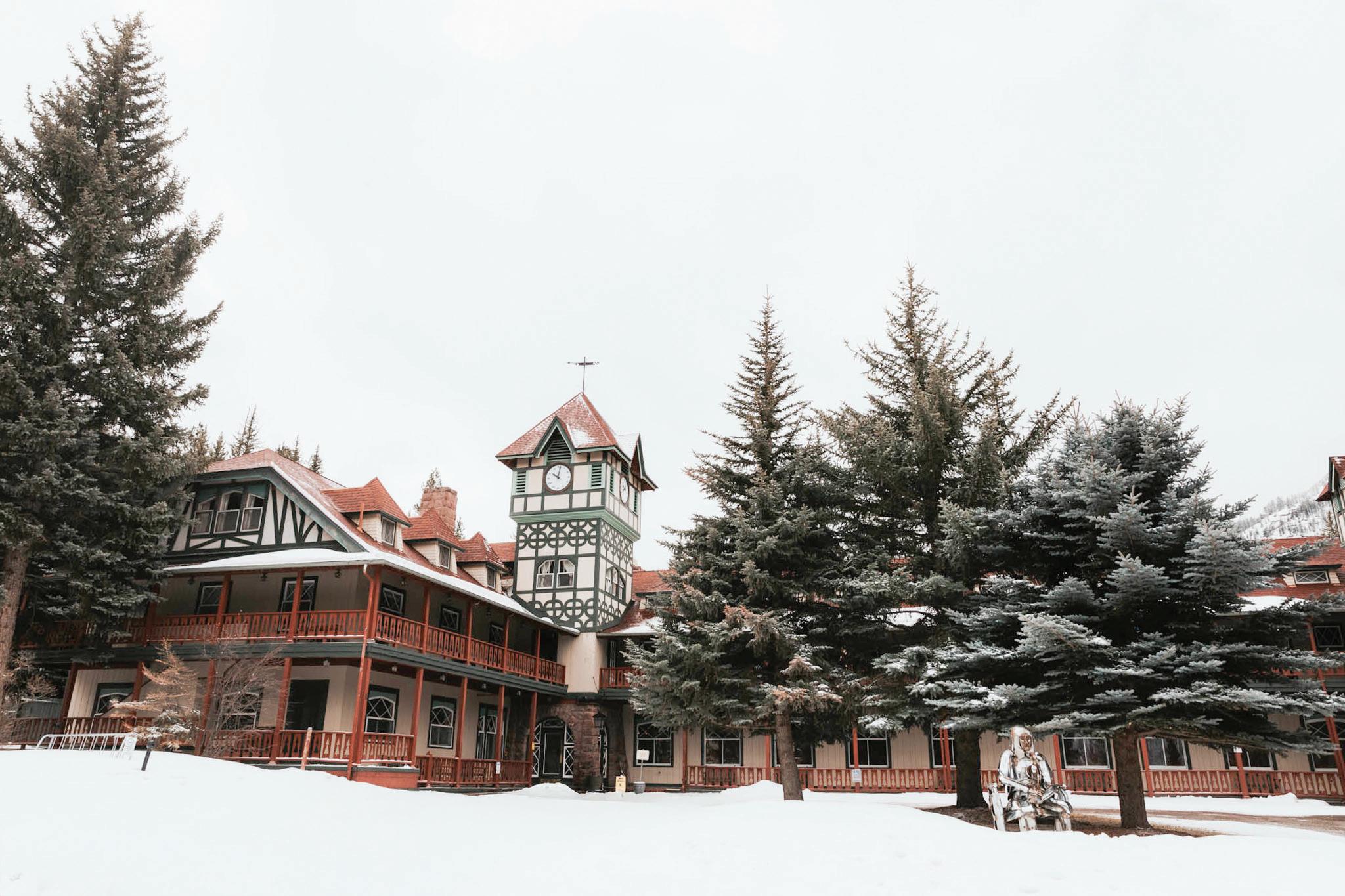
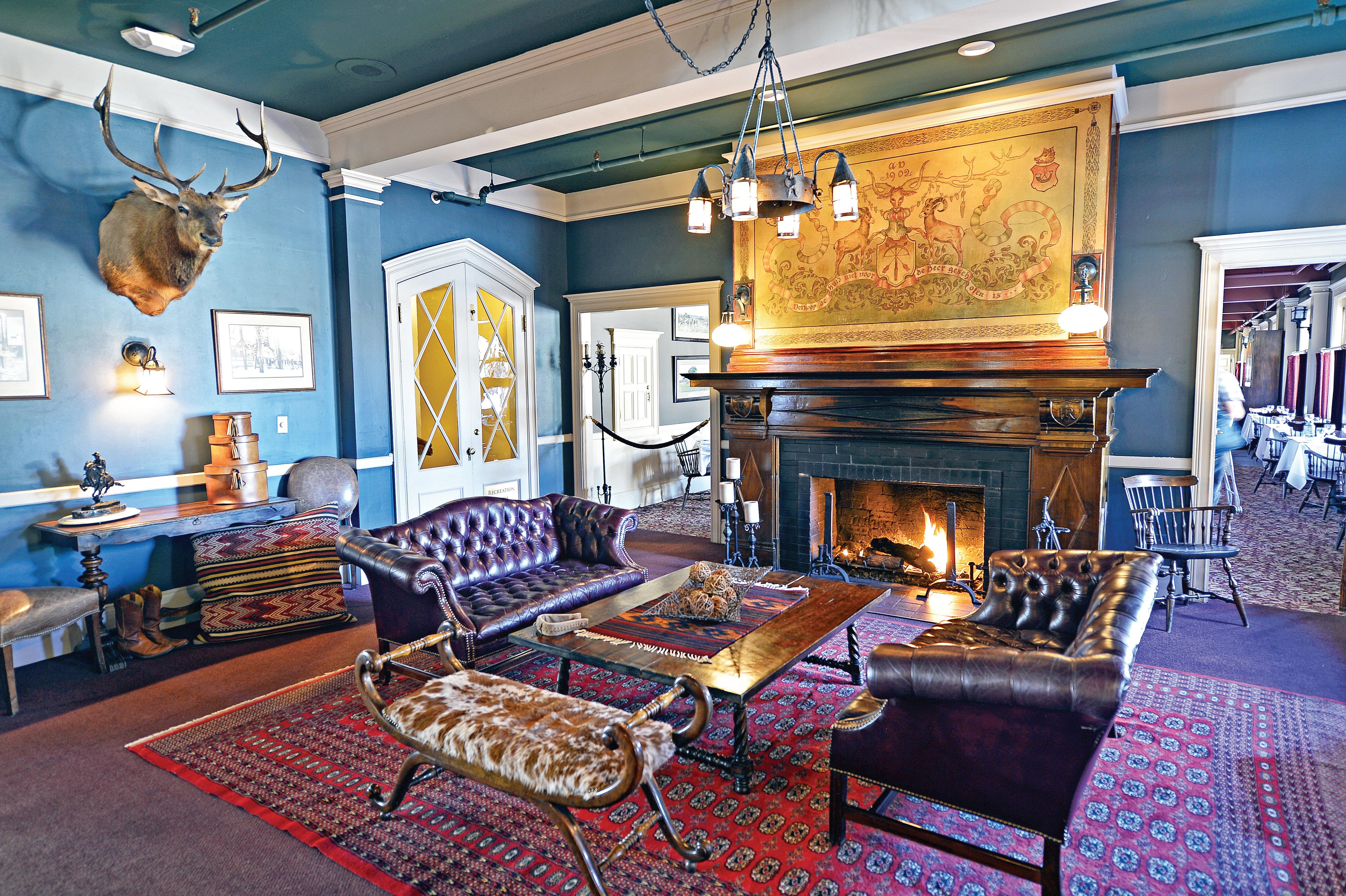
In line with sale of the paper and his generous gifts of gratitude to his former staffers, Johnson echoed another historically generous titan of industry in the Western Slope and became the owner of John Cleveland Osgood’s Cleveholm Manor, known affectionately as The Redstone Castle in the Crystal Valley in 1976. When Johnson purchased the Castle, he had effectively “saved it from a wrecking ball” wrote Deb Strom in a previously published Vintage Valley article on the history of the Redstone Inn. By this time, the Castle had been sold at auction and locals recalled truckloads of valuables leaving the estate to be sold elsewhere by the previous owners. By 1982 Johnson had transformed the Castle from a building needing care and restoration to a world-class bed and breakfast and wedding venue.
Johnson Continued Page 4...
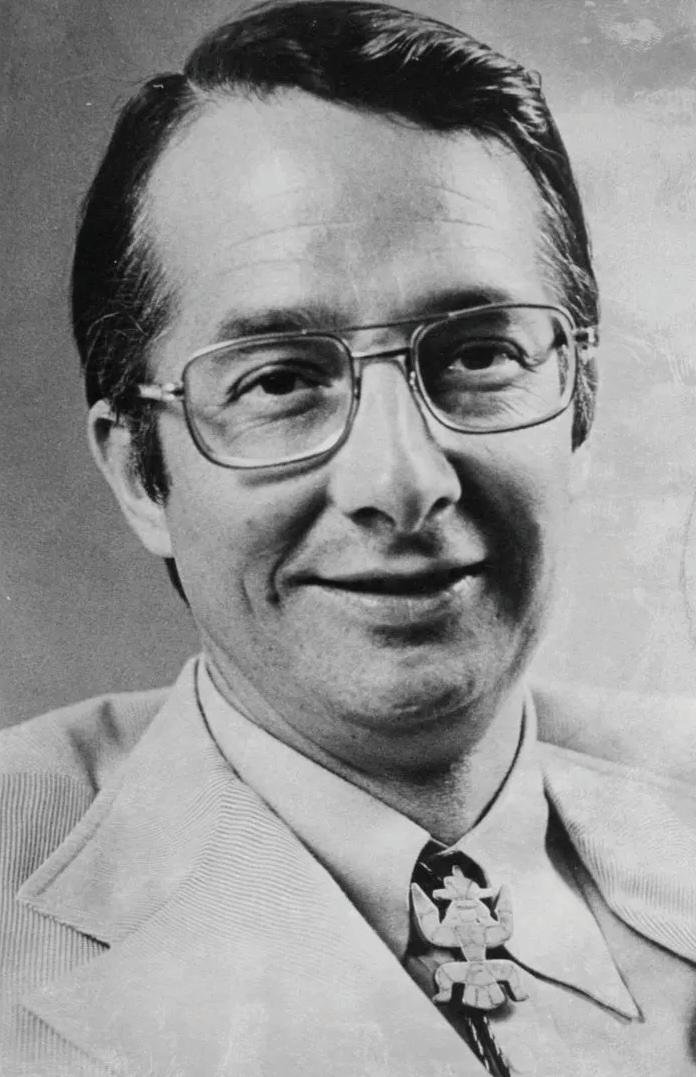
Former Redstone Castle Owner and Grand Junction Daily Sentinel Publisher Ken Johnson passed away at the age of 92 on April 20th, 2025. Photo Courtesy of Colorado Mesa University
March 2026 Community Happenings
Tuesday, March 3rd: VOICES Story Circle With Mitzi Rapkin, Basalt Regional Library 5:00-7:00
Wednesday March 4th: Sopris Lodge Death Cafe, 295 Rio Grande Ave. Carbondale 3:30 pm-5:00 pm
Saturday, March 7th: White River Books 4th Birthday Party Celebration, all day @ White River Books (65B N. 2nd Street Carbondale). Come for a raffle, bookmark design competition, treats and a paperback book sale.
Monday, March 9th: International Women's Day Uphill Champagne Lunch, Buttermilk Mountain Clifhouse 12:00-2:00 pm
Tuesday March 10th: KDNK Community Access Radio Fall Membership Drive Begins with a goal to raise $120,000. Call or go online to www.kdnk.org to renew or sign up for a membership.
Thursday, March 12th: Carbondale Arts Annual Fashion Show "Step Right Up" @ Thunder River Theatre 7:00-10:00 pm tickets required.
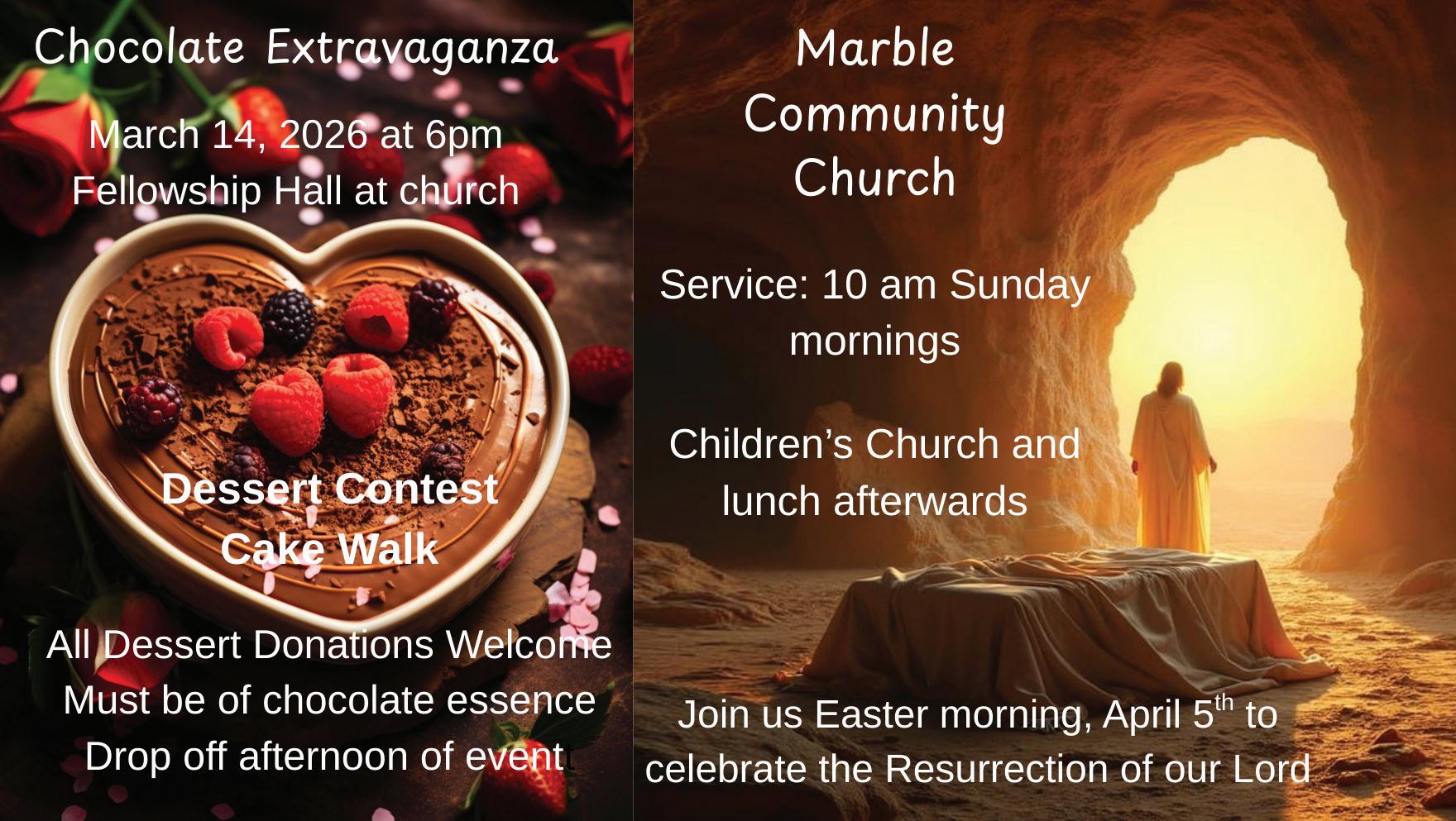
Saturday March 14th: Marble Community Church Chocolate Extravaganza 6:00 pm @ Fellowship Hall, Marble Community Church
Sunday March 15th: Poets & Writers Group @ Carbondale Library 3:30-5:00 pm
Friday March 20th: Blood Drive @ Sopris Lodge In Carbondale (295 Rio Grande Av,) 10:30 am- 2:15-pm
Saturday March 21st: KDNK Chili Cook off 5:00-6:00 pm @ KDNK Station (76 S. 2nd Street, Carbondale)
Friday, March 27th: Swan Lake Ball By Crystal River Youth Ballet Company @ Third Street Center, Carbondale 6:00-10:00 pm
1058 County Road 100 Carbondale, CO 81623

To Submit Events for the Community Happenings Section, Email Details to editor@CrystalValleyEcho.com Include Date, Time, & Location
The Crystal Valley Echo & Marble Times
Mission Statement: To provide a voice for the residents of the Crystal River Valley; to bring attention to the individuals and local businesses that are the fabric of the Crystal Valley region; to contribute to the vitality of our small town life.
Editor-in-Chief: Tucker D. Farris Editor@crystalvalleyecho.com
For advertising sales contact: Advertising@crystalvalleyecho.com Or visit our website
The Crystal Valley Echo is published monthly, And is distributed throughout the Crystal Valley.
The Crystal Valley Echo is 100% Human-Created And does not condone, elicit, perform, or implement creative, Journalistic, or logistical usages of generative artificial intelligence.
No part of this newspaper may be used in the training Of artificial intelligence, doing so will result in legal action.
All rights of works by contributing authors and photographers Remain the sole property of their creators in perpetuity.
Redstone South Bridge Replacement Project Begins Town to be “One Way In, One Way Out” Community Through Summer
By The Crystal Valley Echo Staff
REDSTONE—On Tuesday, February 24th, the Redstone South Bridge closed for a lengthy total replacement project that will see the old bridge entirely removed and rebuilt. Crews from Myers & Sons Construction began staging the next morning behind the coke ovens across Highway 133 from the bridge and on March 26th, demolition work on the old bridge began. The project to replace the South Bridge, built in 1947 (the oldest bridge currently in Pitkin County) was initiated by Pitkin County and paid for by Pitkin County Open Space and Trails. The main reason for the bridge replacement is to “improve safety and reliability and support long-term infrastructure needs in and around Redstone” according to the project information page on Pitkin County’s website.
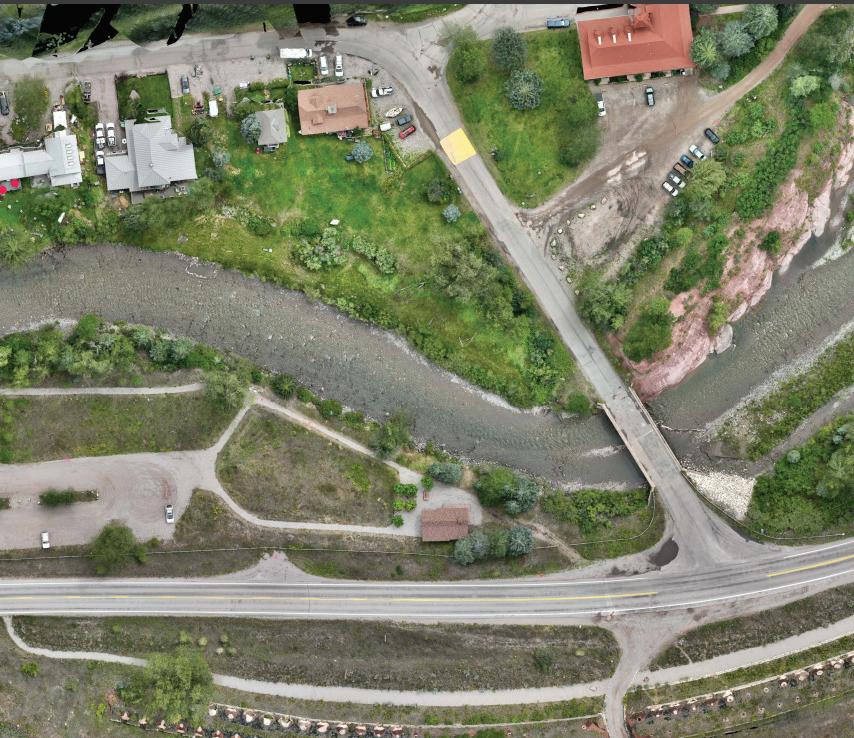
The proposed bridge improvements include a new 10-foot pedestrian walking path on the South side of the bridge which will include ADA accessible ramps beginning just over the bridge in town across the road from the lower parking lot of the Redstone Inn and in the Elk Park parking area on the Western side of the river, these will also be augmented with gravel walking trails. Other improvements include a boulder wall on the West bank of the Crystal River under the bridge, all-new asphalt paving, a new guardrail along the side of highway 133 between the downriver lane and the river, a new split-rail fence along the sides of the bridge. The new bridge will be a two-lane road like the current bridge, with the addition of the 10-foot pedestrian sidewalk on the North side.
The project was slated to begin early March and will continue through the summer. During that time all traffic will be detoured through the North Bridge near the Redstone Campground, with Redstone Boulevard becoming the main access road for the town. A proposed bus detour route over Osgood and Firehouse roads would allow school bus turnarounds to be less disruptive to the flow of traffic. Pitkin County will install signage and way-finding to help reduce confusion for drivers utilizing the detour. Visitors are also directed to use the Elk Park parking lot across the river and the pedestrian bridge to access town.
There are two main concerns among residents and business owners: congestion and the impact on the summer tourism season. With only one entrance and exit to town all necessary traffic from locals, delivery services and postal workers, propane trucks and other traffic will be forced to drive the entire boulevard and then turn around and drive back downriver to leave town, creating a bottleneck at the Southern end of town. As summer is Redstone’s busiest time of year for visitors, concerns are also swirling about the impact on business foot traffic and event attendance (such as Redstone’s 4th of July parade). Pitkin County states that it is aware of the concerns of the project on Redstone’s peak tourism season and is coordinating closely with Myers & Sons to ensure as little disruption as possible, including an early-completion incentive to accelerate the progress of the project. The Crystal Valley Echo will be following the bridge replacement and providing updates as they become needed.
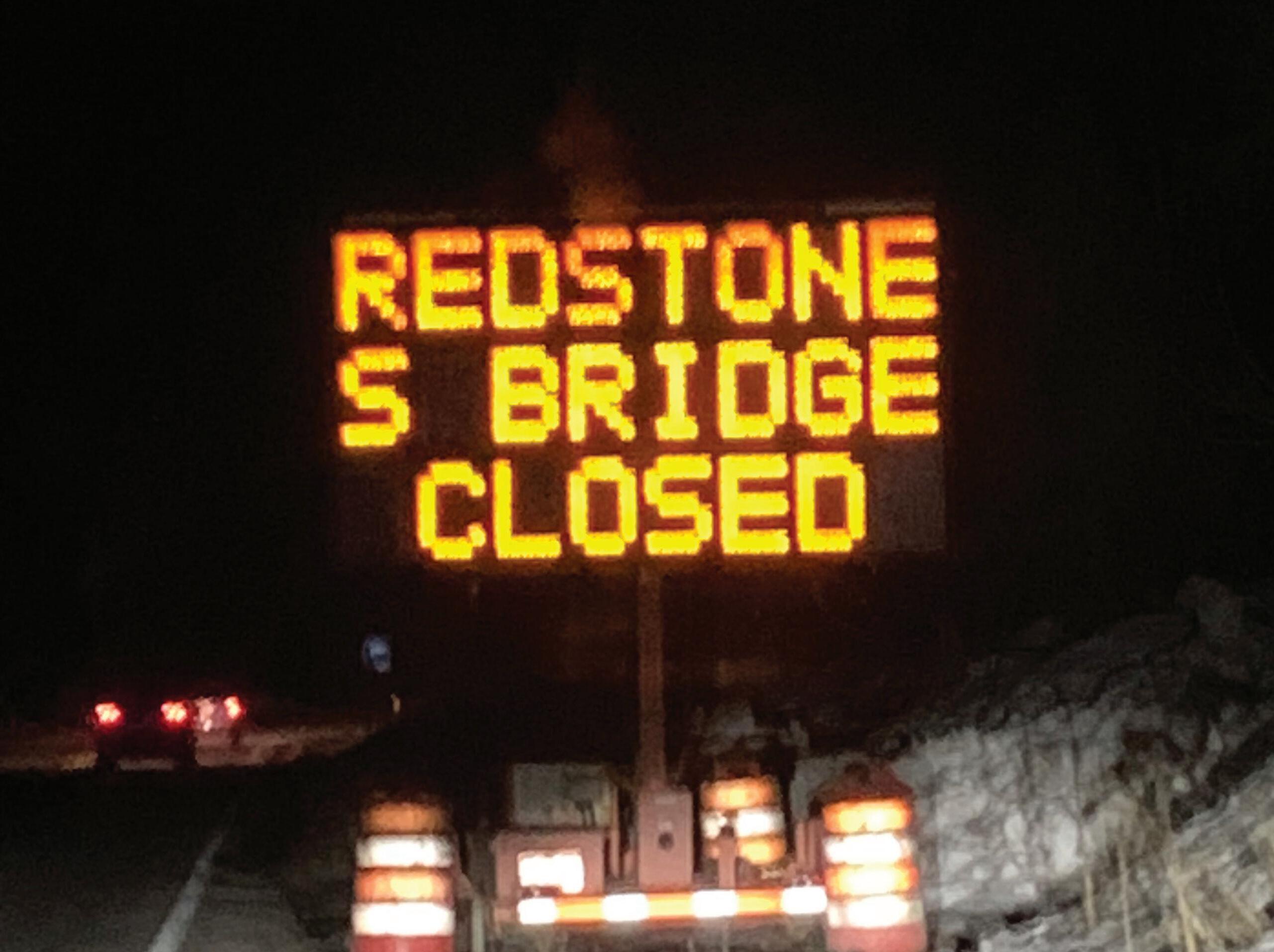
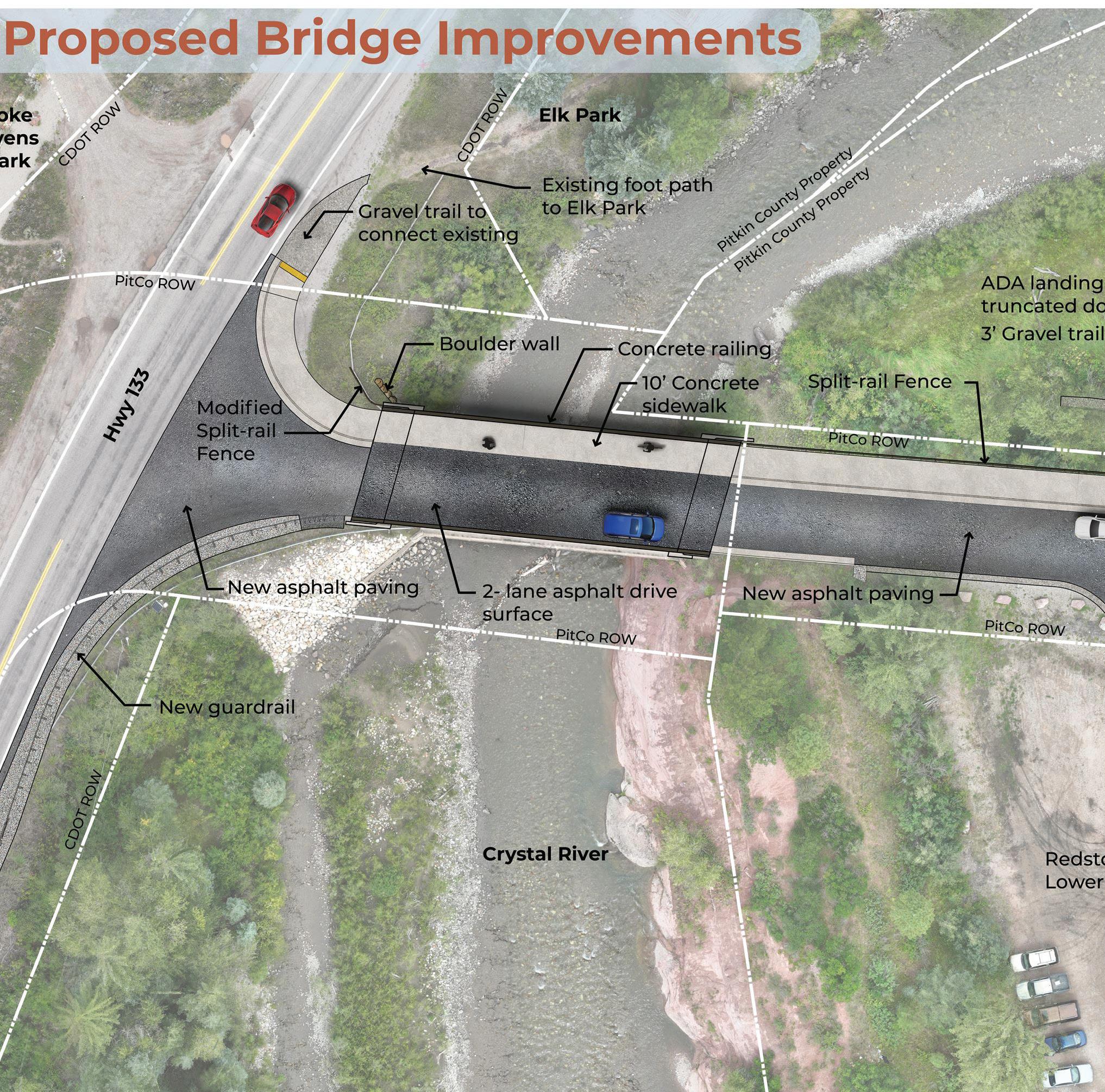
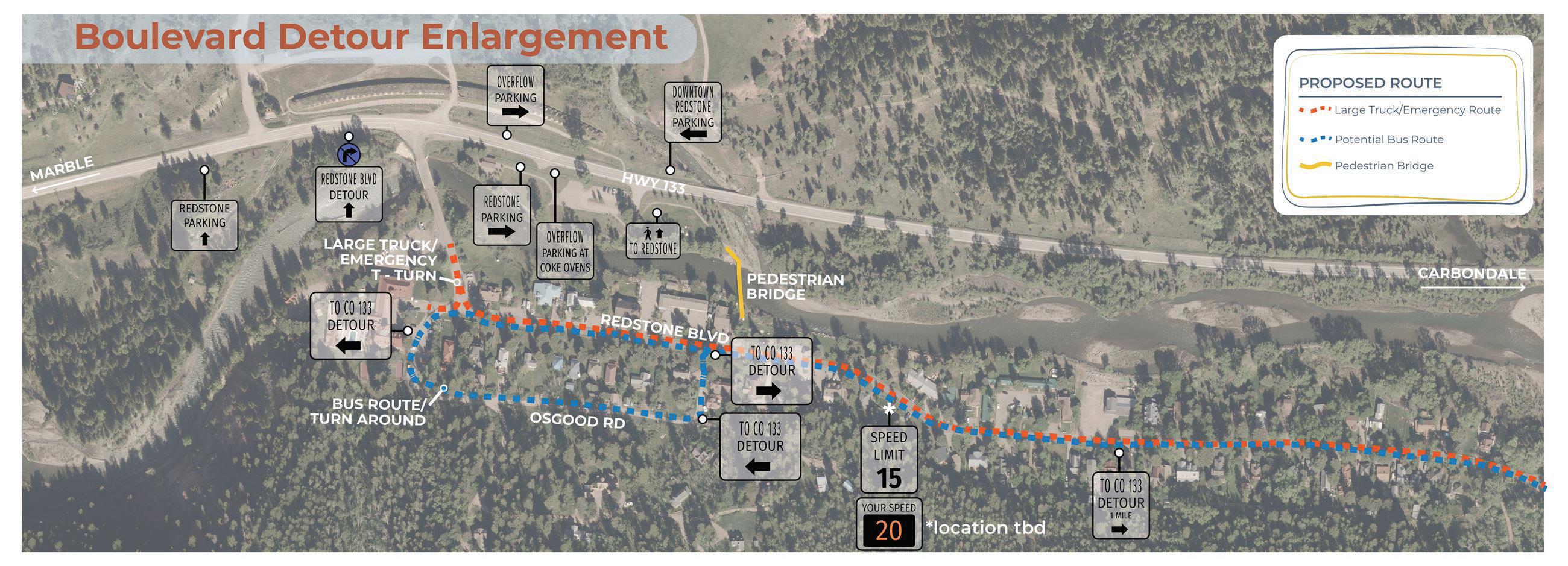
Top: Signage indicating the closure of the Redstone South Bridge, which will remain closed through summer. Photo from Deb Strom Middle: A graphic depicting the proposed bridge improvements from Pitkin County. Bottom: A Graphic detailing the detour through Redstone Boulevard from Pitkin County
Many high-profile weddings occurred on the Castle estate under his watch including Jimmy Buffet’s. Locals recall many other weddings taking place on the grounds during this era for locals and visitors alike. As an homage to his work in journalism, Johnson would also create unique wedding programs for events at the Castle titled “Redstone News” and resembling small format newspapers printed in ruby ink on card stock. The “articles” within would profile the wedding party with head shots and photos of the estate and headlines declaring the breaking news of the couple being wed in Osgood’s Ruby of the Rockies. Some of these wedding programs still exist today in the archives of the Redstone Historical Society
A cornerstone of Johnson’s ethos in owning and operating the Redstone Castle was what he called a need to furnish community trust. In letters referencing the Ponzi scheme dramas of the Castle following his sale of it, Johnson lambasted the line of succession of the estate as people incapable of recognizing the need to not only furnish community trust, but to cherish it. Much like his work at the Sentinel in Grand Junction, Johnson’s approach to owning and operating the Castle came from a love and respect for the communities he came from and lived in.
Former Pitkin County Commissioner Dorothea Farris, who worked for Johnson at the Castle for some years as an office manager, described his ethos and connection to Redstone as one built on “a good-hearted awareness of how to live in and enjoy Redstone while also trying to do as much for the community as he could.”
She recalls his dedication to the historical preservation of the Castle, paying out of pocket for appraisals, renovations, repairs and research studies on various elements of the history of the estate and of Redstone. One such research project involved Johnson contacting historians at multiple universities looking to piece together the storied history and legacy of John Osgood’s first wife, novelist and playwright Irene Osgood, arguably beginning the first formal biographical work on her storied career outside of Redstone (look forward to an upcoming edition of Vintage Valley in The Echo for a summary of this research).
Farris also recalls the integrity of Johnson as an employer, stating that after suddenly losing her job at Aspen Valley Hospital, she made a phone call to Johnson, and he told her to “Come on down this afternoon” and by that evening she had a job working with him at The Castle. “He was one of the very good ones” she told The Echo, and expressed a lasting gratitude for his kindness, eccentricities (including a fascination with medieval Bavarian castles, heraldry and coats of arms), and the warmth of his character as an employer at the Castle.
She recalls humorously that when she began working in a small bookkeeper’s office under a steep staircase in the Castle, that Johnson had told her some tales of ghosts and hauntings only to then mischievously tap the walls and ceiling of her office at all hours of the day to simulate visitors from beyond the veil.
Following his sale of Cleveholm, Johnson would remain engaged with its history as it passed from his hands onto the next ones. Commenting on the tumultuous era of its ownership following his 1996 selling of the property Johnson reflected on the sales between various groups of investors in a 2005 letter, writing:
“This unseemly rush to sell for “highest dollar” ignores the public trust. Instead, it favors those poor, innocent “investors” who ought to be whupped for being so greedy and then claiming they were defrauded.”
“There are no widows and orphans in that group,” Johnson further remarked, finishing his letter on the sale with a message to potential investors:
“This whole deal is a problem for all of you. I urge you to get involved with the folks in Redstone and sell the historic castle estate the right way. You will get the best dollar that way, and you will have treated the public the right way.”
Later, Johnson would return to the newsrooms of the Western Slope, creating the Grand Junction Free Press in 2003 which would run until 2015. During his time at the Free Press, Johnson continued his lifelong dedication to the craft, supporting hard hitting stories (including one that would end with a Glenwood Springs district attorney being sentenced to jail in a corruption trial).
He worked in various other realms of publishing at this time as well, helping to republish Academy Award winning writer and Western Slope local Dalton Trumbo’s novel “Eclipse” which took place in a lightly fictionalized Grand Junction with Colorado Mesa University
Ken Johnson’s legacies on the Western Slope, from the newsrooms of Grand Junction to the splendid halls of Osgood’s Castle left marks that will continue long after his passing. His examples set as a true newsman continue to inspire dedication across the modern news landscapes of the region, his ownership of the Castle shines as one of the best eras in the home’s history as being a place where locals and visitors alike could experience the wonder and magic of our own Castle in mountains.
In early 2025 Johnson was diagnosed with an aggressive form of cancer that spread quickly and he entered hospice care, passing away on April 20th, almost 51 years to the day that the Sentinel presses burned and he saved the morning edition over the phone.
WHAT’S NEW @
OPEN MIC
FRIDAY, MARCH 20 | 6:00PM-8:00PM
JOY & WYLDE, 173 REDSTONE BLVD, REDSTONE, COLORADO 81623


By:
Redstone Historical Society Welcomes First College Intern
The Crystal Valley Echo Staff
REDSTONE- The Redstone Historical Society has had a year of triumphs, securing a $250,000 grant from History Colorado, as well as a matching grant from Pitkin County to purchase an original Osgood-era cottage on Redstone Boulevard with the intention to convert the space into a fully-fledged history museum. This new space will allow them to exhibit their expansive collection of artifacts and documents from Redstone’s founding to the present. As they begin the process of archiving and cataloging their collections, they have reached another milestone: their first college intern.
Roaring Fork Valley local Corinne Bowker, an anthropology and archaeology student at Colorado Mountain College has become the first intern to work with the Historical Society, and has begun her tenure working in the museum to catalog collections and begin planning the physical staging of the exhibition space. Bowker has long been fascinated by history and archaeology and expresses a deep interest in the preservation of historical artifacts and documents as ways of keeping history alive. When asked what drew her to Redstone, she remarked that she has a lifetime of memories coming up the Crystal to Redstone to visit town, attend events and fish with her father. She has always held a reverence for the historical richness of Redstone and those fond memories, along with her academic pursuits make the connection all the more exciting.
Bowker will aid in the cataloging process (creating a dynamic record of all of the Historical Society’s collections with descriptions, photos and other important information) which is the first major step in the creation of the museum space. When asked about what inspires her about museum work, she stated that since it is something she has always loved, it feels like the best path forward for her saying: “If you love what you do, you’ll never work a day in your life”.
She will work with the Historical Society throughout the Spring semester to help prepare the museum for its opening sometime in the early summer. In addition to being able to help the Historical Society, Bowker will gain knowledge and hands-on experience that is very unique to Redstone, learning the intricacies of museum operation, exhibition and the presentation of history as a narrative story all while steeped in the local history that means as much to her as it does to the greater community.
As the Historical Society’s first college intern, Bowker represents another major triumph for the group as it navigates museum operations, and the new realm of community education for college students, allowing them to get a feel for museum work, historical preservation, and the pedagogical elements of presenting historical narratives.
While she is a trailblazer, Bowker feels no uncertainty moving into the role, expressing a deep excitement to begin and a strong love for our shared history and stories.


Following her completion of the RHS internship and her planned graduation from Colorado Mountain College with an A.A. in Anthropology, Bowker will then make the move to Colorado State University in Fort Collins to further hone her knowledge and skills in archaeology and museum studies. She hopes to work in museums following her graduation, and the Redstone Historical Society is proud to be able to help along her path towards these goals and is very grateful for her enthusiasm to further develop the museum to inspire that same passion for Redstone's history for generations to come.
Above: RHS Spring Intern Corinne Bowker poses in front of the original fireplace mantle of the Durett-Demaestri Cottage Musuem
Below: Bowker pictured among some of the original Gustav Stickley furniture in the RHS collections as she prepares to begin her archiving work
A New Augmentation Program for the Crystal River Basin
From Ed Olszewski, West Divide Water Conservancy District
The West Divide Water Conservancy District (“West Divide”) is pleased to announce the initiation of a new water augmentation program in the Crystal River Basin.
In response to the severe drought of 2018—during which senior water rights placed a call on the Crystal River—and at the request of the Division Engineer’s Office for Water Division No. 5, as well as several local water users, West Divide began studying the water supply and augmentation needs of the Crystal River Valley. This effort focused on developing a solution in the form of a plan for augmentation that would provide a legal water supply for the Basin.
A plan for augmentation allows out-of-priority depletions to be replaced with water from another source, enabling water users to continue diverting water when there is an active call on a creek or river. Many Crystal River water users currently have no means to augment out-of-priority depletions unless they have their own decreed augmentation plan. Without augmentation, senior water rights can be injured and out-of-priority uses may be curtailed. West Divide currently operates five separate augmentation plans that serve several hundred constituents in water-short areas, using a variety of tools including historical consumptive use credits, exchanges, and storage. Until now, there have been no regional augmentation programs developed for the Crystal River Basin.
In cooperation with the Colorado River Water Conservation District (“River District”), the Basalt Water Conservancy District (“Basalt District”), Colorado Parks and Wildlife (“CPW”), Town of Marble, and several private water users in the Crystal River Basin, West Divide developed an augmentation plan designed to provide legal water supplies to local users that employs every feasible physical and legal means to keep as much water as possible flowing in the Crystal River. Throughout the development process, West Divide con sidered input from the River District, Basalt District, CPW, lo cal environmental groups, and individual property owners. As with its other augmentation programs, West Divide remains committed to delivering low-cost, high-value water solutions to its constituents and water users in the Crystal River Basin.
As West Divide has formally and publicly stated on multiple occasions, it has no interest in developing a large water storage project or dam ming the Crystal River and is committed to maintaining its free-flow ing nature. In cooperation with CPW, West Divide has obtained the ability to use a small pool of water in Beaver Lake as an augmenta tion supply to satisfy senior calling rights on the Crystal River the calling right is outside the Crystal River Basin—such as during a “Cameo Call” originating near Grand Junction—augmentation wa ter will be supplied through West Divide’s program using water ex changes and releases from other sources, including Ruedi Reservoir
Given the unprecedented year water users are currently faced with, West Divide is excited to implement a physical and legal solution to this decades-old challenge in the Crystal River Basin. West Divide is confident this planned solution will ensure reliable domestic water sup plies, protect property values, and prevent injury to senior water rights.
Water users in the Crystal River Basin are encouraged to contact West Divide at (970) 625-5461 to learn more about the program.

REBUILDING REDSTONE’S FRONT DOOR REDSTONE BRIDGE PROJECT UPDATE
The Redstone South Bridge replacement begins construction in mid-February 2026, with the bridge closing in early March. The result will be a safer, more resilient and longer-lasting connection for the community with new bike and pedestrian facilities.




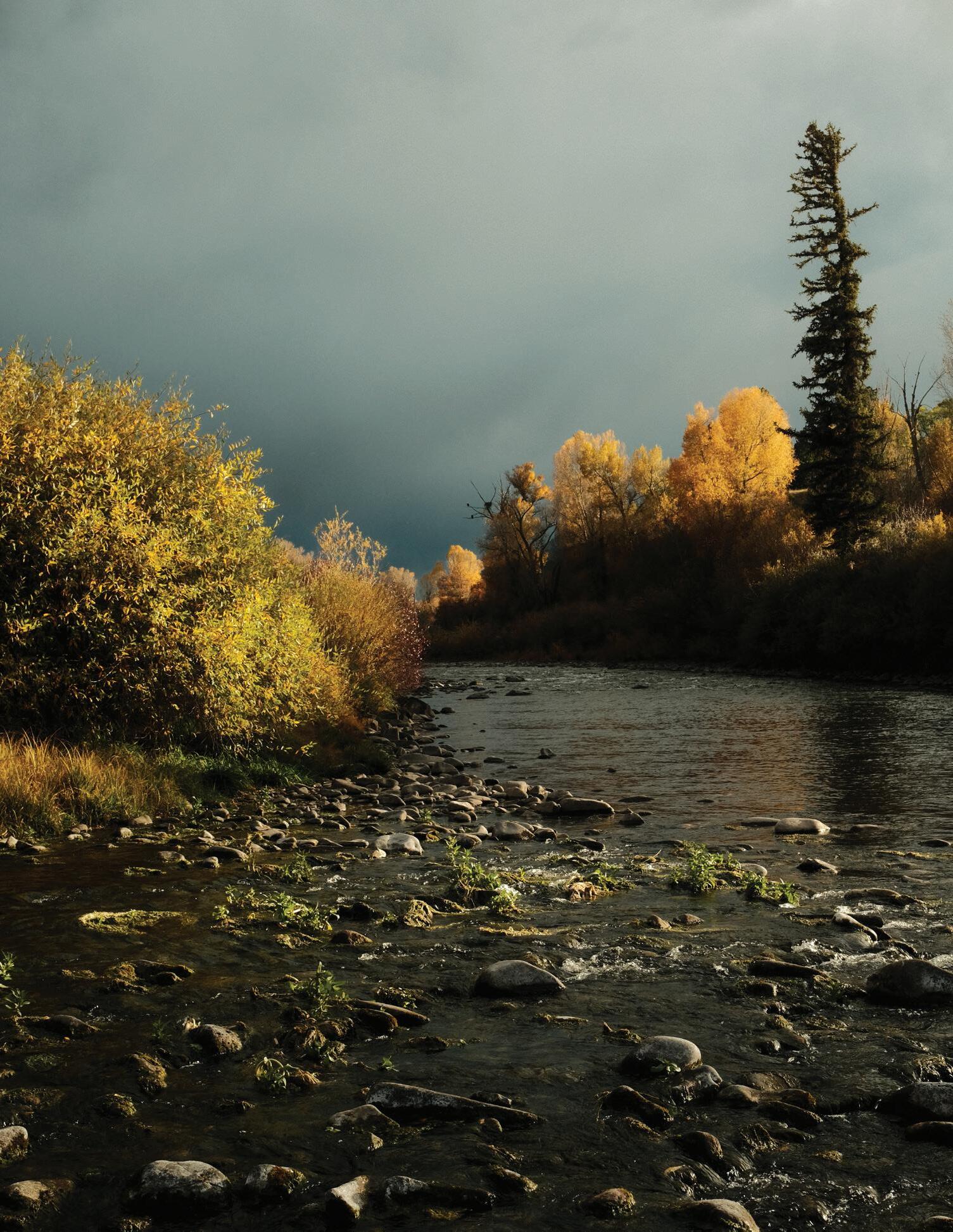
The Crystal River Just South of Carbondale, Crystal Valley Echo File Photo.
In Print...
A
Monthly Literature Column by
Izzy Stringham
Excellent new books have been coming out steadily since the start of the new year. One of the standouts includes Vigil, by George Saunders. The book opens with the main character, Jill Blaine, plummeting towards earth, ending up at the bedside of her latest charge, a dying man whom she must escort into the afterlife. As a spirit who has helped countless souls through their deaths, Jill is used to comforting and easing their pain. But this man proves a little different. As his various memories, life choices and possible regrets come to visit him, she is privy to a more villainous and complicated man, and a life where no decision had simple consequences. Readers have come to expect the strange and bizarre from George Saunders, and Vigil is no exception. It is also a funny book, imaginative and playful, while also driving home bigger, serious questions about how we live and what we leave behind. Saunders does not tie things up neatly, but uses humor to ask questions and leaves thoughts for readers to ponder when the book is finished.
If you prefer a more contemporary novel, Dandelion is Dead, by Rosie Storey, is worth a read. When Poppy looks at her dead sister’s dating app, she impulsively decides to respond to a match, pretending to be her sister. The only problem is, she ends up actually really liking the guy. A tragi-comic story about grief, love and mistakes ensues, as Poppy navigates her feelings, her life without her beloved sister and the honesty that her lie ends up requiring. It is a story with plenty of laughs amid the heartache, and an entertaining cast of characters. One of the most endearing aspects of Dandelion is Dead is the implicit understanding of how complicated emotions and connection can be, especially when colored with grief. It is a story that starts with an unlikely mechanism, but ends up feeling incredibly real and relatable.
Angel Down, by Daniel Kraus, and released in late 2025, is an absolute gut-punch of a novel. Written in one long, harrowing sentence, Angel Down is the type of book that gains momentum as the pages turn, and can leave the reader feeling almost physically uncomfortable, holding their breath. Set in the trenches of World War I, an angel is accidentally shot down by artillery fire, and a group of soldiers must rescue her. The five men involved end up reacting in different, often violent and depraved, ways to the angel’s presence, as well as to the larger war surrounding them. Kraus puts humanity's worst impulses right up against acts of real love and bravery. This powerful book is one that won’t soon leave your mind.
In other literary news, author Lily King stopped in Aspen for an interview in the Winter Words Writers Series, the annual author series put on by Aspen Words. She spoke for an hour with local moderator Mitzi Rapkin about her new book Heart the Lover King’s latest work is a literary gem involving the friendship, love and loss experienced by three friends who meet in college, and how each of their lives are changed by the decisions and relationships they embark upon both together and separately. What King does so brilliantly is write about universal experiences with so much raw emotion that any reader can be drawn into her story and feel like they too, have experienced the exact same thing as her characters. Her word choice is impeccable, and she does not waste time with long, flowery descriptions. Instead, her brevity drives right to the heart of the scene, leaving the reader with an “Oh wow, me too,” moment.
During her talk, King touched on the theme of writing to uncover emotion and how, as an author, she enjoys delving into the feelings and connections of her characters. Love triangles have played a role in King’s work in the past, and Heart the Lover employs a love triangle in the most real and empathetic terms. With a satisfying ending and the poignancy that King is known for, Heart the Lover is a book to drop everything else for, and binge on a weekend.
Copies of these and other titles are available locally at White River Books in Carbondale

Carbondale’s Top 10 Books sold in February 2026:
1. Heart the Lover by Lily King
2.On Tyranny by Timothy Snyder
3. The Correspondent by Virginia Evans
4. Theo of Golden by Levi Allen
5. Marriage at Sea by Sophie Elhurst
6. The Orchard by Peter Heller
7. Isola by Allegra Goodman
8. Dungeon Crawler Carl by Matt Dinniman
9. The Way Out by Devon O’Neil
10. Angel Down by Daniel Kraus



the Redstone Inn | RSVP: (970)920-5432
MARCH 10 & 24
11:00 a.m. – Yoga ($5)
With Anna Raphael. Open to all ages and abilities. 12:00 p.m. – Lunch ($10)
RSVP by noon the Friday prior – space is limited. Plated lunch served. Gluten-free option available. 12:45 p.m. – Program
• March 10: Tucker Farris
Tucker Farris, a fifth-generation local, teaches at CMC and CSU and is the new owner of the Crystal Valley Echo. He is excited to discuss his plans for The Echo and meet as many readers as possible.
• March 24: A Pioneer Woman’s History
At the age of 16, Hattie Thompson, daughter of Carbondale’s first homesteader, moved from Missouri to Carbondale. Join Sue Gray as she tells Hattie’s story; her youth, her rise to prominence in the Roaring Fork & Crystal Valley society & her life in the Thompson House (Museum) from 1888 until her death in 1944.
WANT TO BE KEPT IN THE LOOP? Send us your email address: (970) 920-5432 • seniors@pitkincounty.com
Reverence:
Mountains are More than a Playground
By Ted Benge
The runner looked up from his footfalls as he approached my horses in the trail. He tapped the AirPod in his ear to cease, for a moment, the music piping into his brain and paused Strava on his GPS watch. He snorted and hustled past without a word.
Daily I encounter some iteration of this new mountain athlete, and have done these very same things myself. Yet I wonder if, in our pursuit of the next physical challenge - in a world in which we have largely conquered nature - we have lost a sense of reverence for place.
Recreation has supplanted the mining and agricultural industries of yore to become a key driver of local culture and economy. Aspen’s famed ski resorts (and luxury living) have drawn global crowds for decades - but increased interest in mountain biking, climbing, trail running, hunting, backcountry skiing, motorsports, and other outdoor activities, combined with a booming population, has yielded an explosion in year-round backcountry recreation. Technological advances and information sharing (social media, etc.) mean many of these new recreationists are going bigger, faster, and farther, the sports themselves becoming increasingly competitive.
Long gone are the days we lived close to the land. Even those among us who hunt, garden, forage or fish rely on global industry for food, shelter and clothing. But we still seek connection.
For most of us in the Valley, interactions with wild places take a recreational form - we leave jobs and homes in a bustling town for a brief respite among the trees. With more focus on sporting performance, equipment, and social recognition, we seem to be alienating ourselves and missing the whole point. We pop into the woods, unload gear, exercise, and leave. I often hear people refer to the mountains as a “playground.”
As our forms of recreation become more complex and equipment-based, our technology increasingly overwhelms the senses and guides our experiences. These beautiful places begin to resemble the very society we are looking to escape.
In the winter, I am a full-time freeride ski coach for AVSC and though I spend five days a week sliding through stunning mountains, my interaction with the terrain and ecology around me feels artificial. Riding a chairlift to ski groomed snow on runs cut through the forest en route to a hot chocolate break at the Sundeck hardly feels natural. On most days, my attention is entirely directed to the movements of skiing and attendant human relations.
Does it really matter if we take time to smell the roses? Perhaps not. But we must acknowledge that our presence affects ecology. The recreational infrastructures we build and use cause direct habitat loss, and our presence on the landscape, especially in increasing concentrations, causes indirect habitat loss through fragmentation. Our recreation limits total and usable habitat - when we use a trail, we disturb natural animal movement patterns.
Numerous studies also show that our presence in wildlife habitat directly degrades animal health and increases mortality. When we run, hike or bike through habitat, our sound, scent and sight elevates animals’ adrenaline and boosts their caloric expenditure during flight. Animals with lower caloric reserves are more vulnerable to stress, which affects calving, lactation, winter survival and adolescence.
A CPW biologist once told me, “Habitat is a necessity, and recreation is an amenity.”
We need not burn every technical thread and walk naked through the woods. The first steps towards repairing our culture and relationship with our environment are simple. Pay attention. Try turning off the audiobooks and music. Listen to the birds. Sometimes, just be there. Beyond that, many tenets are simple. Abide seasonal trail closures and, for crying out loud, stop building and using illegal trails. In wildlife habitat, leash dogs (which are predators and whose scent is alarming to prey animals), clean up your trash, give wildlife a wide berth, and speak softly (no need to hoot and holler). Then advocate, in whatever capacity you can, for healthy public land.
Ted Benge was born and raised in the Roaring Fork Valley and is a lifelong hunter, skier, and hiker. He owns Capitol Peak Outfitters and works as an AVSC ski coach. He lives in Carbondale with his fiancée, Aisha Weinhold.
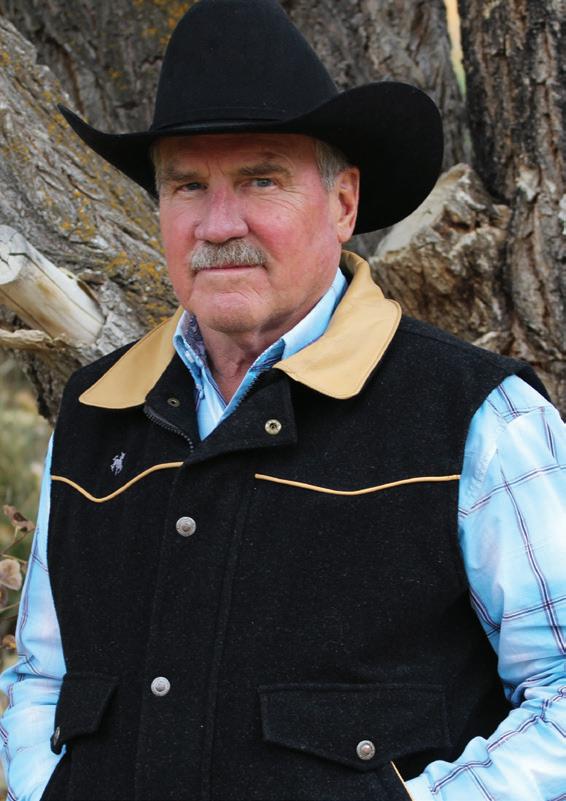
Mike Kennedy, Broker/Owner 970-379-3907 mikekennedy@sopris.net


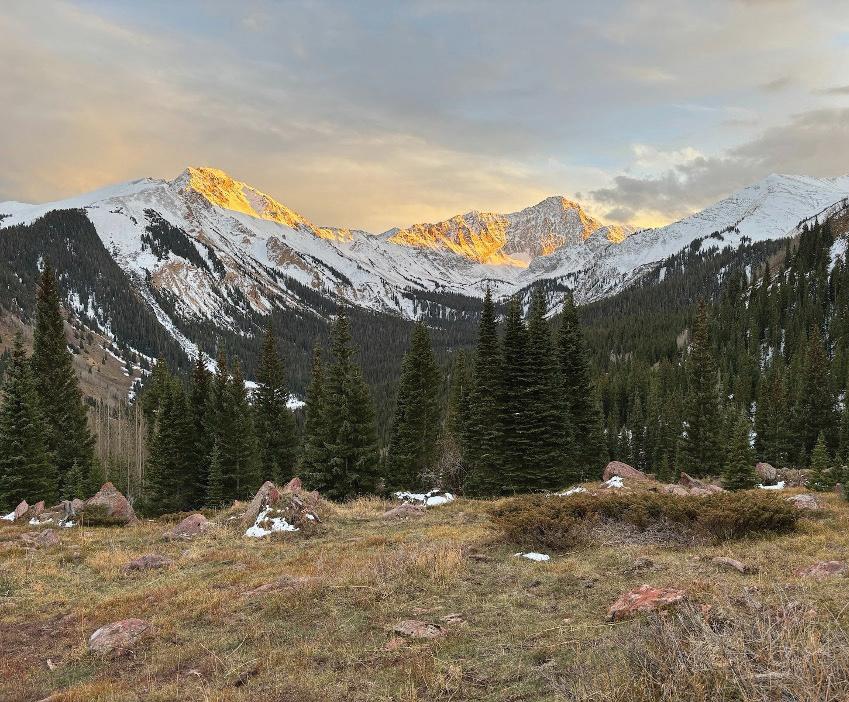
A photo of Capitol Peak taken by the author during a quiet moment on a weeklong horseback hunt.
Carbondale Launches Advanced Wildfire Modeling to Strengthen Community Resilience
From Carbondale and Rural Fire Protection District and Wildfire Collaborative Roaring Fork Valley
Carbondale, Colo. (February 9, 2026) — The Town of Carbondale, Carbondale & Rural Fire Protection District, and the Wildfire Collaborative Roaring Fork Valley have launched a new partnership to bring cutting-edge wildfire modeling to Carbondale, giving the community a more precise, science-driven understanding of wildfire risk and how best to reduce it.
The project partners with Dr. Hussam Mahmoud, a nationally recognized wildfire and infrastructure resilience researcher at Vanderbilt University. Dr. Mahmoud’s AGNI-NAR wildfire model is at the forefront of wildfire science worldwide. Using advanced graph-based modeling, it simulates how wildfire spreads not only through surrounding vegetation, but through neighborhoods, capturing how fire can move from structure to structure based on building materials, landscape conditions, and environmental factors. This is currently the only wildfire modeling approach that has been statistically validated against real wildfire events, demonstrating near-90 percent accuracy in predicting fire spread and building damage.
This effort builds on successful advanced wildfire modeling initiatives already led by the Wildfire Collaborative Roaring Fork Valley in Marble (with Carbondale Fire), Snowmass Village (with the Town of Snowmass), and two high-risk areas of Glenwood Springs. Data collection has been completed in all of those communities, with modeling results expected in early spring. The Carbondale project represents the next step in scaling this work across the Roaring Fork Valley, using consistent data and shared science to inform regional wildfire planning.
“This project represents a significant step forward in how Carbondale plans for wildfire,” said Ryan Hyland, Town Manager for the Town of Carbondale. “By applying the most advanced wildfire science available, we’re equipping Carbondale with better information to protect people, homes, and critical infrastructure in a very real and growing risk environment.”
Unlike traditional wildfire risk maps that provide broad, static assessments, the AGNI-NAR model produces community-specific, actionable insights. The results help local leaders and fire professionals identify the most critical wildfire pathways and prioritize mitigation, evacuation planning, and preparedness efforts where they will have the greatest impact, an essential advantage as communities face limited resources and increasing wildfire threats.
“From a fire protection and life safety standpoint, this level of modeling is a game changer,” said Carbondale & Rural Fire Protection District Chief Rob Goodwin. “It allows us to better understand how a fast-moving wildfire could interact with our neighborhoods, how smoke will travel and where it will settle, where evacuation challenges may arise, and how targeted mitigation could slow fire spread. That kind of clarity directly supports much safer operations for first responders and significantly better outcomes for the community.”
To support the modeling effort, residents in the broader Carbondale area are being asked to complete a short survey that collects basic information about their homes. These home-level data points are essential to accurately simulating wildfire behavior in the built environment. The information collected will be used solely for community wildfire resilience planning and will not be used for inspections, enforcement, or regulatory purposes. To incentivize participation, randomly drawn survey respondents can win a $100 Carbondale Chamber Gift Certificate, courtesy the Carbondale Chamber, or a family ride on a fire truck, courtesy of Carbondale Fire.
“This is the future of wildfire planning,” said Angie Davlyn, Executive Director of the Wildfire Collaborative Roaring Fork Valley. “For the first time, communities can see how wildfire would actually move through their neighborhoods and use that insight to focus limited resources where they will truly reduce risk and protect lives. By leading with science and data, we can move faster, smarter, and more strategically to build lasting wildfire resilience.”
The modeling results will inform future wildfire mitigation planning, evacuation strategy development, and cross-agency coordination in Carbondale and throughout the region. Community participation is critical to the success of the project, and residents are encouraged to complete the survey even if they are unsure about specific details of their homes.
About The Wildfire Collaborative Roaring Fork Valley:
The Wildfire Collaborative Roaring Fork Valley was founded to take on that challenge by uniting partners, lcoal data, and resources to build real wildfire resilience across the entire watershed. We’re the only organization focused on this work across the Roaring Fork watershed.Through long-term collaboration, innovation, data-driven decision-making, and on-the-ground action, we help every community take meaningful steps to protect what matters most. We can’t stop wildfire, but we can shape a future where our communities are prepared for fire
As we celebrate Women’s History Month, we recognize the generations of women whose vision and leadership have shaped our history and those who continue that work every day. We are so grateful for the impact you make and the example you set.
THE MARBLE TIMES
A LOOK AT LIFE AT THE MARBLE CHARTER SCHOOL
Lily’s Adventure
By Willa; 3rd Grader, Marble Charter School
Chapter One
One day in a nice pond, Lily was swimming around. It was almost winter and Lily and her family and friends were getting ready for their migration. It was time to take off to fly to a place Lily called the big, great lake. Lily was always a little lonely ever since the day Lily lost her parents; she lost her parents last fall when a pack of wolves came for their dinner and saw Lily’s parents, snuck up behind her and they pounced and killed Lily’s parents.
“Lily, you're going to be late for our migration,” cried Lily's friends Mia and Amilia.
“I’m coming,” Lily replied. Lily came over and joined in the v formation. The leader took off so did the formation behind. The formation took off, and started heading south, flapping their wings they rose slowly into the air and started south.
In the air Lily was looking back at her home. She was a little sad to leave her home, but yet she was very excited to find an amazing place to migrate. Lily and her flock saw some geese heading south in the distance. It was about night so the flock landed and walked to a nearby tree. As they huddled up around the tree they buried their heads in their feathers and went to sleep. Everyone was asleep except for Lily, who was cuddled at the end of the huddle. She was looking at the stars. Lily saw something in the stars, she connected them to make a swan that looked like her friend. Lily started to get tired, so she buried her head in her feathers and went to sleep for the night.
Chapter Two
When it was morning the swans awoke and caught their breakfast, and they ate. Lily saw a little frog jumping from rock to rock. Lily started following the frog. The frog led her to a nice little pond that was big enough for the swan flock to bathe in. Lily got her eyes off the frog and went over to the flock.
First she went over to her friends and she said, “Mia, Amilia” said Lily, “There is a nearby pond that is big enough for the flock to bathe in.”
“Let's tell the flock,” said Amilia.
“Come on, let's tell the flock right now before we take off south,” said Mia. They started toward the flock as they got there, they said, “there is a pond just around the corner. ” The swans started moving toward the pond.
When they got there, all the swans started swimming around with relief of the cooling water. The swans settled in the pond, and a few swans got up on the rocks that were on the side of the pond. It was almost time to leave the pond and take off to migrate. It was time to get out of the pond when there was a loud noise coming from the other side of the pond and over a small hill. Lily got up to see what was making such a racket. When Lily got over the hill, there was a boy and his father. There were tents behind the boy, and a fire smoking out. Lily got a better look at the boy and his father, but Lily still didn't know that they were humans.
She got closer to the humans.
“You know Billy,” said the boy's father, “camping is not so bad, we should do this more often in fact around this spot, it’s very nice and beautiful here.”
“You're right we should come back another time. Can we stay an extra night, it’s very nice here?”
“Sorry Billy I wish we could but we have to be home the day your mother arrives which is tomorrow, but we will still be here for one more night.”
“Okay,” said Billy, talking with sorrow in his voice.
Chapter Three
Lily started to get tired listening to Billy and Billy's father talk. It was almost time that the flock would leave so Lily started toward the flock, at the same time she saw an orange and tan tail and paws. It was a coyote and it was about to pounce on Lily and then the flock. Lily doesn't know what a coyote is, and she didn't know that the coyote was about to pounce. Lily still couldn't quite make out what the coyote was.
MCS Continued
The coyote was ready to make his move. Then to Lily’s surprise it pounced! Lily dodged to the left before it caught her. Lily took a little run and then took off, but a fox had scratched her wing and pulled out quite a bit of her feathers and she could barely fly out of the coyote's reach. Once Lily got out of the coyote’s sight, she landed next to a tree. Lily did not want to go back to the flock because the coyote would catch Lily for good, and Lily would lead the coyote to the flock and the coyote would catch many of the other swans and Lily did not want any of that to happen. She took a look at her wing and saw that the coyote had got hold of her wing. Lily got up and looked for a place to stay for the night. She knew that she could not go to the flock to migrate because her wing was now hurting and she couldn't catch up with the other swans, her wing hurt too bad. Lily tried to think of a way to find her flock again, but she couldn't and then she heard the call from the leader that lets the rest of the flock know that he’s taking off. Lily looked up and saw the flock taking off south, which was the opposite place from where Lily was. Lily tried to call loud enough so the flock would hear her and come down to help her, but it was no use.
Chapter Four
That night Lily was very lonely; she buried her head in her feathers and went to sleep. The next morning Lily was tired, she ate her food and looked around the forest. She decided she wanted to swim, so she started toward the pond. Lily again heard Billy and his father talking. She walked over the hill and this time she got very close to Billy and then Billy turned toward where Lily was and he saw her. Lily stared at the boy. The boy stared at Lily. He slowly started moving towards Lily. Lily started to get scared. The boy's father turned to ask, “Billy could you…” But then Billy's father saw the swan; he thought it was so beautiful, but the bad news was that he was a swan killer.
“Watch out,” said Billy’s father, grabbing his gun. Billy did not want his father to kill the beautiful swan, he had to do something.
“No, you can’t kill it,” yelled Billy.
“Son,” said Billy’s father, “I’m going to kill the swan and that’s final!" yelled Billy’s father back. Billy’s father was aiming his gun at Lily’s heart. Billy tried to grab the gun but he pushed his fathers finger on the trigger on accident.
“No,” screamed Billy’s father, as the bullet shot out of the gun. Billy fell to the ground, making a loud noise. Billy’s father burst into tears, he dropped down on his knees next to his dead son. Lily did not know what was happening when she saw Billy fall. Billy’s father stood up, he looked up at Lily and stared. Lily stared back at him. Billy’s father held Billy in his arms and put him in the back of his truck. Lily stepped forward. Billy’s father took the gun. Lily started moving backward thinking he would try to kill her, but he didn't. Instead he took out the bullets and put both the gun and the bullets in the back seat of his truck.
Chapter Five
Lily wanted to go for her swim in the pond so she started walking toward the pond when she heard footsteps behind her. “Come on in the cage,” said Billy’s father. Lily stopped and turned to see who was talking to her. He urged Lily into the cage gently, still crying he got her into the cage and locked it shut. Lily was scared and did not know what to do, or where he was taking her. He put her in the passenger seat next to him and drove onto a bumpy road. Lily let out a loud trumpeting call. He looked at her and then looked back on the road. After a while they got to a big building, it was a zoo. Billy’s father got out of the car, grabbed the top of Lily’s cage, went to the front gates, opened the big wooden doors and walked Lily to a nearby desk. There was a zoo manager sitting behind the desk. She was doing something on a computer that was in front of Billy’s father, she did not notice that he was there holding Lily. He cleared his throat to get her attention. That got her attention and she looked up and put her computer to the left of her desk and put her eyes on Billy’s father. “How can I help you,” she said.
He held Lily higher so she could see her.
She saw Lily and said, “you have it. ”
“Yes,” he said, “a swan for the zoo.”
“You can take her to the zookeeper,” she said back.
Billy’s father started walking down the hall and then he stopped at the zookeeper's office and knocked on the door.
“Come in,” said the zookeeper. He opened the door and showed the zookeeper Lily.
“Perfect,” said the zookeeper. “Follow me,” he said, walking out the door and going farther in the hallway. Billy’s father followed him and then they got to a big room. There were so many animals in the giant room.
The zookeeper walked over to an empty cage with a sign labeled, “swan,” on it.
Chapter Six
The zookeeper opened the door with a key that he had in his upper pocket. “Put her in,” he said. Billy’s father opened the cage
Lily was in and he tipped it to the big cage and Lily got out. The zookeeper shut the door of the big cage and locked it with his key
The zookeeper and Billy’s father started toward the other side of the hallway. Lily in the cage looked around scared and unfamiliar with all the other animals. She looked across from her and there was a red and orange fox and an elephant next to her.
“Hi,” said the fox, “my name is Luna.”
“Hellow,” said Lily back, “my name is Lily.”
“Nice to meet you Lily,” said Luna.
“Hi Lily,” said the elephant next to Luna, “my name is Emily.”
“Nice to meet you Emily and Luna,”said Lily.
“Do you both live here?” said Lily.
“Yes,” they said together, “but we weren't born here. We got taken from our home and lost our parents when we got taken away and then they brought us here.”
Lily got a little nervous and she said, “what are we here for, what do we do here?”
“Well,” said Luna, people come and visit us and stare at us.
“And sometimes the zookeeper comes and feeds us.”
Lily sighed and said, "Is it lonely staying here your whole life?”
“Well sort-of,” said Emily.
Lily walked around in her cage and checked everything out.
When the time came Lily started to wonder why she had no food in her cage but then, “boom boom boom,” the loud footsteps of the zookeeper were walking toward Lily’s cage.
“That must be my food,” said Lily, who was starving at the moment. Lily, hoping it was food, watched the zookeeper unlock the cage with the key that he kept in his upper left pocket. Luna and Emily were watching Lily get her food, as the zookeeper was pouring her food into a bucket that was low to the ground. Lily, who was watching, scrambled over to the bucket and started eating with relief. Lily started to think about her family. She wondered what her future would be like at the zoo.
Third and fourth graders at MCS have been writing creative stories. They learned to paragraph correctly and use dialogue. This has been one of them. From Marble Charter School Teacher Lani Houseman
Meetings and Legal Notices:
Town of Marble: The Marble Town Council meets the first Thursday of each month at 7:00 PM at the Marble Community Church Fellowship Hall. This Month's Meeting will take place Thursday, March 5th.
Crystal River Caucus: Meetings are held on the second Thursday of odd-numbered months at 7:00 p.m. at the Church of Redstone Virtual attendance is available, and meeting links will be sent via email To join the email list, send a message to crcaucus@gmail.com.
Redstone Community Association: Meets the first Tuesday of Each month at 5:30 pm in the Redstone Inn Library
By: Deb Strom
The Olympic Flame in Carbondale
The Redstone Historical Society's Vintage Valley
Twenty-four years ago, on its 13,500-mile journey to the 2002 Winter Olympics in Salt Lake City, the Torch Run passed through Carbondale. It is my guess that Redstone, per capita, had more 2002 winter Olympic torch bearers than any town in the country.
It was no coincidence that the flame lit in Greece and traveling through 48 states, found its way through Carbondale, CO. Our Redstone neighbor, Peter Bone, had first-hand experience when it comes to Olympic Torch relays. Peter, who worked for Alem International, was part of their team that managed the 1996 Atlantic Torch Relay. Alem International was also awarded the contract to plan and execute the 2002 Salt Lake City Torch Relay. Peter's role, as technical manager, was to help plan and manage the day-to-day movement of the flame.
Peter said it takes approximately two years to plan such a massive event, culminating in 65 straight days of runners moving the flame from Atlanta to Salt Lake City. Peter's planning for the 2002 Salt Lake Winter Olympics began in 1999. In 2000, each runner was vetted by their community. Folks submitted 100-word essays honoring local candidates. Each essay was then scored by a jury of local educators. June Spencer, Ron Sorter and Becky Bone were chosen to represent us.
Then came the September 11, 2001, terrorist attacks on New York's World Trade Center and Washington DC’s Pentagon. Peter shared that the Torch Run was almost canceled. Instead, in the shadow of the 9/11 attack, our nation rallied; we united with a strong sense of Patriotism (with a capital P).
The 13,500-mile run began on December 4, 2001 and involved 11,500 runners. The crowds forming as the torch passed through were huge. The Spencers had just relocated to tiny Nathrop, Colorado and June ran the torch on the Eastern side of Independence Pass. The flame arrived in Carbondale on February 2.
Ron Sorter wrote in his journal, "A guy handed me my torch, turned a hex wrench in it, and said, 'I'm turning on the propane. When the flame arrives, aim your torch at it, and it’ll fire up by itself.' A torchbearer ran up with the flame, and it jumped onto my torch. The road traffic was behind barricades. The media van was in front of me, filled with cameras, and I walked up the middle of the highway. I was the only person on Earth carrying the sacred Olympic flame."
Ron passed it on to Becky Bone, who was joined by her husband, Peter, who took a celebratory jog with her before he had to focus again on his duties and move on to the next station.
Tucker Farris, a second grader at Carbondale Community School, recalls his feeling at the time that the Olympics, which had once seemed like a faraway event that took place only on TV, was not only real, but tangible in the moment the torch was lit on the concrete basketball court in the same fields he played soccer on during daily recess.
This single sacred Olympic flame, lit in Greece, was relayed on to Salt Lake City and arrived just in time for the Opening Ceremony of the Winter Olympics on February 8, in a large part due to Peter Bone's efforts. As if this wasn't enough, Peter went on to be part of the 2004 Greece Torch Relay, which traveled around the world.
Our Redstone Torch Runners:
June Graham Spencer was a pioneer in the era of 'live television.' June performed in over 5,000 on-camera commercials and was the leading lady on "The Guiding Light" for seven years. June's life took an inspirational turn when she met Jim Spencer in 1975. Jim worked for the National Cancer Association. June and Jim began teaching seminars, as speakers, they were invited to dozens of organizations, including the United Nations. In 1992, they left NYC for the quiet of Redstone; June immersed herself in community work that allowed her to share her talents from theater, counseling, and public speaking. The "Let Go and Live" bench in front of our Log Cabin Museum on the boulevard is dedicated to June and Jim Spencer.
Ron Sorter is a Vietnam Veteran who lost his left leg in combat. He was awarded the Bronze Star and Purple Heart for his actions in the conflict. He went on to lead the Prosthetics Services for the VA and also earned a graduate degree. His groundbreaking thesis on artificial intelligence was used to help develop computerized prostheses. In 1993, after meeting his wife, Michelle, they moved to Redstone, where they were both very active in the community and the Redstone Historical Society. This includes their ten-year effort to protect and restore the Coke Ovens and the establishment of the Crystal Valley Caucus.
Becky Bone modestly says that she has spent most of her life following Peter around. They landed in Redstone in the 1970s to work briefly with the Marble Ski area developers; In 1996, they returned. Becky is very active in Marble Community Church as their Missions Chair and Choir Leader. For over a decade, she also worked for the developer of River Valley Ranch and then in their real estate office. Becky shared that "It was the adventure of a lifetime to work on the 1996 Atlanta Torch Relay along with our two sons. Then, carrying the Torch in Carbondale in 2002 was a true honor, bringing my Olympic experience full circle."
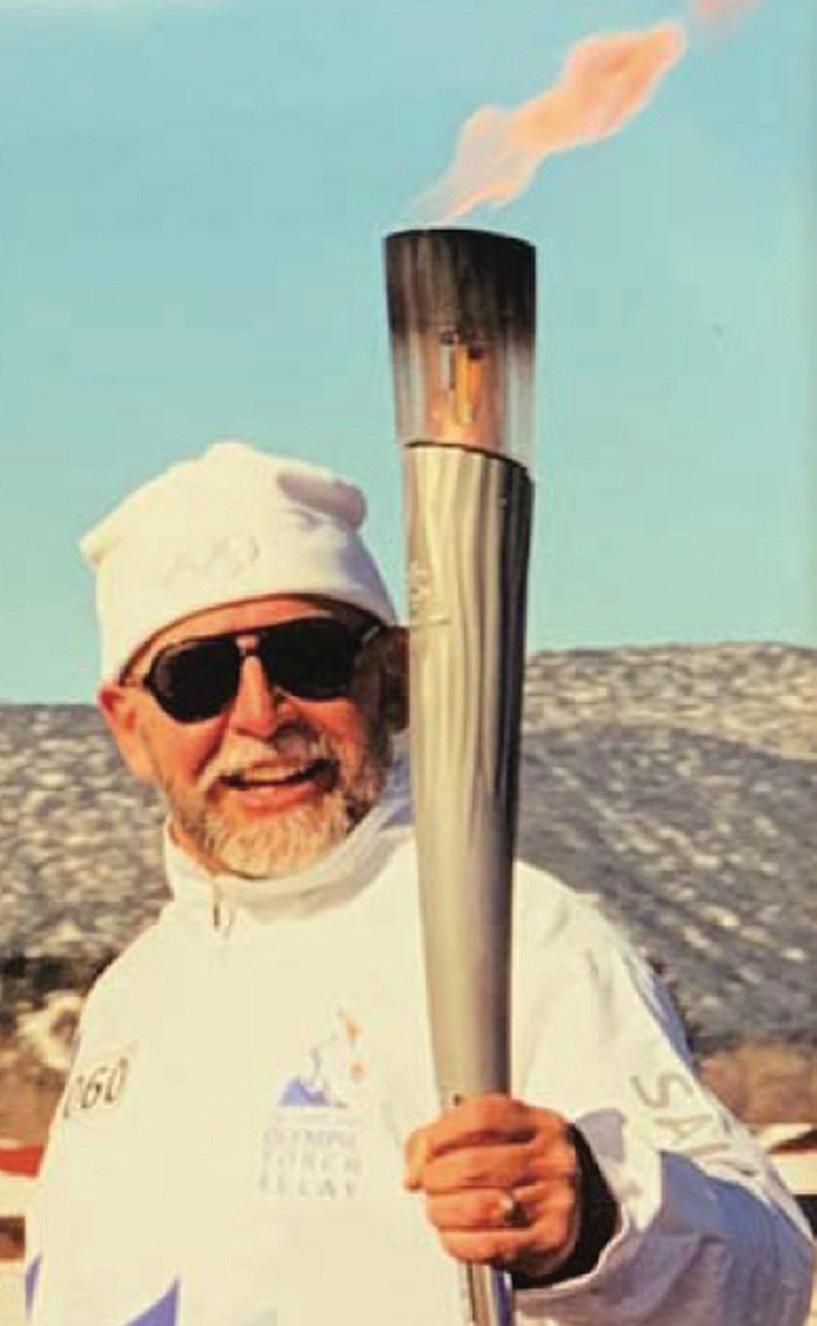
At this moment, I was the only person on Earth carrying the sacred Olympic flame.
-Ron Sorter
GarCo Staff Memo Gives Harvest Proposal a
Thumbs Down
Applicant feels ‘pretty good’ about Wednesday discussion; alternatives to denial include continuing meeting, addressing list of nine points
By Kari Dequine, Aspen Journalism, February 21
The Garfield County Planning Division staff recommended the Garfield County Board of County Commissioners deny the approval of Harvest Roaring Fork LLC’s application to build a 1,500-unit subdivision along Highway 82 between Carbondale and Glenwood Springs. The decision was posted Feb. 19 as part of the agenda for the public hearing that occurred Feb. 25 before the Garfield County Planning Commission. The recommendation for denial was based on numerous factors, according to the staff report, including concerns and noncompliance issues related to the developer’s proposed housing density and plans for commercial usages, water, wildlife, affordable housing, public transportation access, and impacts to traffic and other public infrastructure, among others.“Staff supports a finding by the Planning Commission that the Application as submitted does not adequately adhere to the Comprehensive Plan’s strategies and policies on growth, including growth in unincorporated communities. In particular, the plan does not adequately address the impacts of a project the scale of Harvest Roaring Fork including transit, recreation, fiscal impacts, schools, and related public needs such as fire protection and law enforcement,” according to the staff report.
Richard Myers, the Texas-based Realty Capital developer behind Harvest Roaring Fork and owner of the 283-acre parcel of land, said on Saturday he’s been in productive discussions with county staff since the staff report was released, including working on clarification on items that “weren’t definitive enough.”Throughout the process, Myers has emphasized the project’s ability to address the valley’s affordable housing shortage in a meaningful way. “This mixed-use community aims to address Garfield County’s needs for sustainable growth, environmental stewardship, and attainable housing options, consistent with the Garfield County Comprehensive Plan,” writes Harvest Roaring Fork Manager Tim Coltart at the beginning of the 572-page application Planned Unit Development application submitted to Garfield County. Myers said it’s “not unusual for staff to give county leaders different options.” Alternatively to voting to deny the application on Feb. 25, the staff report lists other options for the commission as continuing the hearing to March 11 and a list of nine topics “that could be considered for drafting as conditions of approval.”
Those conditions include a “reduction in density” and eliminating the 120-room hotel and “reducing the provisions for such a wide range of commercial uses,” among suggestions for numerous other changes and the provision of additional information and analysis. Acknowledging county staff took issue with a wide range of elements in the application, Myers said the staff also agreed with the vast majority of the plan presented. “We’ve probably come closer to adhering to the Garfield County Comprehensive Plan than almost any development since the plan was updated in 2020,” Myers said, adding he planned to make that point clear on Feb. 25. “We actually feel pretty good about the discussion on Wednesday.”
But according to the staff report, the application “is not in general conformance with the Garfield County 2030 Comprehensive Plan.” Many of the staff and referral agency concerns relate to a lack of detail provided on key issues. Staff concluded, “Applicant’s analysis is not complete on physical water supply.” A new fire station would be needed, according to the report. However, the application contained no specifics regarding timing and location. Planners want to see more de-tail on the phasing of the massive build-out “to confirm that the development will be logical and orderly.” Staff concluded the plan “doesn’t adequately address impacts of construction,” including on air quality, wildlife and traffic. The plan doesn’t adequately consider “geologic hazards” in the form of areas prone to sinkholes.
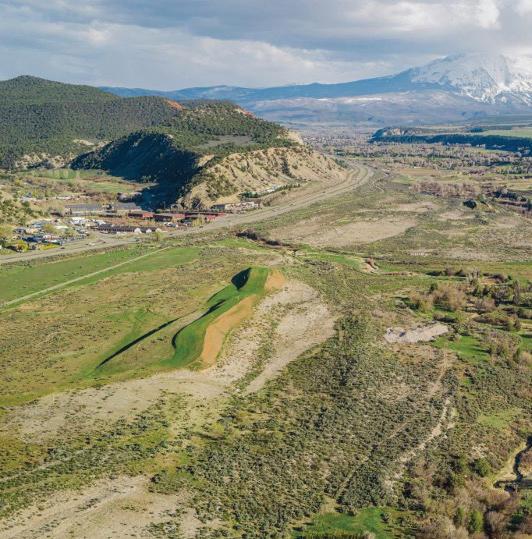
Regarding the 55-acre conservation easement at the confluence of Cattle Creek and the Roaring Fork River, staff concludes “Additional mitigation for impacts on wildlife are needed … including additional setbacks, buffering and separation from high density development.” Public access is prohibited to the easement governed by the Roaring Fork Conservancy, but a referral letter from RFC Director Rick Lofaro notes that the developer’s project narrative states that the easement will provide residents with access to “recreation and education” along the Roaring Fork River. “Harvest Roaring should be required to address with specificity how it intends to protect the Conservation Easements and the conservation values from negative impacts, including trespass on the easements, from such a large, dense development,” says the RFC letter. Lofaro continues, “The proposed application involves a significant change to a historically open landscape.While the conservation easement will remain intact, significant loss of habitat, feeding and migration corridors should be considered.” Among other changes, the RFC recommended moving the proposed hotel site. “Including elevation considerations, the proposed hotel could be between 80 and 90 feet tall, towering over the Conservation Easement and the Roaring Fork River. The ecological and aesthetic impacts of such a hotel would be extremely negative,” wrote Lofaro.
According to a referral letter from Colorado Parks and Wildlife Area Wildlife Manager Matt Yamashita, “The area proposed for development is currently used by a variety of species such as mule deer, elk, river otters, black bear, raptor species, herons, and other small mammal, bird and aquatic species. This area is directly adjacent to mapped elk and mule deer critical winter range across HWY 82 to the east, and other high priority habitat for deer and elk.” CPW also requests consideration of osprey nests, great blue heron colonies, the Gold Medal waters of the Roaring Fork, revegetation and mitigating against invasive species. He describes the site as “one of the last undeveloped parcels on the valley floor, and a winter refuge for deer and elk.”
“With the potential for 3,000 – 6,000 new residents there will be an increased appetite for recreation on surrounding public lands and resources,” Yamashita writes. “Overall, there are potentially substantial impacts to wildlife to be considered for the Harvest Fork PUD project. CPW has concerns for both terrestrial and aquatic species in the area proposed for development, along with high potential for degradation of riparian areas currently protected under a conservation easement.”
Harvest Continued on Page 14...
This 283-acre swath of land, shown here to the left of the Roaring Fork River looking up valley toward Carbondale, is subject to a proposal for a 1,500-unit development by Texas-based Harvest Roaring Fork, LLC. The first hearing before the Garfield County Planning Commission took place Wednesday, Feb. 25. Credit: photo by Dawson Gillespie
On density, staff recommended approval of revoking the last PUD application and reverting the zoning to “Residential Suburban.” But Harvest wants more units than what Garfield County allows. “The proposed density of the PUD as well as the proposed variations of building heights within the are not compatible with the surrounding uses in terms of nature, scale and intensity. … The applicant’s proposal of 1,500 units exceeds the maximum in the Comprehensive Plan,” according to the staff report. “The Application proposes a potential density that is at the very high end of the Residential High (RH) Range and appears to rely on affordable housing and a mix of housing types as the key public benefits.” In order to justify the request for increased density, the developer needs a “much stronger commitment to public benefits,” according to county staff, and the application does not fully comply with the county’s code on affordable housing requirements.
While Harvest’s plan includes 150 deed-restricted “mitigation units” as required by the county, “the unit mix, location categories are not clear,” according to the report. Staff also did not support the developer’s plan to phase in the affordable units with free market units, recommending to “front load” the deed-restricted affordable housing instead of one built per every 10 free market units. Staff also wanted more clarity, restrictions and enforcement guarantees on the proposed 300 “Resident Occupied” units, designated only for people working in Garfield, Pitkin, or Eagle County but carrying no income restriction or price cap. On new subdivision roads, the report states that the application “represents that all internal roads will be dedicated to and owned by the County. This is in clear conflict with County Policies that the County is not accepting any new County Roads.”
On public transit, staff concluded, in part based on comments from RFTA, that the two existing bus stops were not adequate and not close enough to homes to be easily accessible. They recommended adding a bus stop, which was not included in the application.
On traffic, a dominant concern given existing Highway 82 congestion staff concluded, “There appears to be a real potential for future unanticipated traffic impacts based on the size and scale of the traffic,” citing the plan’s “failure to adequately address transit needs.”
Based on a lengthy list of problems, the 49-page staff report concludes, “the request for PUD Rezoning for the Harvest Roaring Fork PUD is not in the best interest of the health, safety, convenience, order, prosperity and welfare of the citizens of Garfield County.” There are at least 67 written public comments attached to the report. Not a single comment was submitted in support for the development. The majority of commenters express opposition and “deep concern” about traffic, the health of the Roaring Fork River and increasing drought conditions, housing density, wildlife and environmental impacts, maintaining rural character, wildfire safety, and stress on public infrastructure and emergency services. The public hearing was held on Wednesday February 25th at 6 p.m. at the Colorado Mountain College Spring Valley Campus at 3000 CR 114 near Glenwood Springs. The meeting was live streamed.
Editor's notes: At time of publication, the February 25th meeting mentioned in this article will have passed. The decision was made to publish this article after the meeting to ensure our readers were able to access the important information it shares. The Crystal Valley Echo will continue to monitor the Harvest Roaring Fork developments and update our readers accordingly. At the time of publication, a recording of the live stream has yet to be made accessible.
This article was reproduced under a Creative Commons License from Aspen Journalism. Aspen Journalism is an independent nonprofit news organization. Visit www.aspenjournalism.org for more. The digital copy of the article may be found here: https://aspenjournalism.org/garco-planning-staffgives-harvest-proposal-a-thumbs-down/


Funnies, Features, Puzzles and Oddities
The Fog & Folly Crossword Vol. 1

Across 2. Acting with careful judgment 3. Indirect; not straightforward 6. False front; outward appearance 9. Come together from different directions 11. Spirit of friendly good fellowship 13. Subtle distinction 14. Sluggishness; lack of energy
Down
1. Officially revoke 4. Lasting only a short time 5. Persistence in holding on 7. Having a hidden meaning 8. Forefront of an action or movement
10. Showing great attention to detail 12. Boldness bordering on recklessness 15. Self-evident truth
Madame Wyndrose’s Patented Mystical
Monthly Mono-Lexical Meanderings
A monthly one-word horoscope to guide your hand...
Aries (Mar 21-Apr 19) IGNITE
Taurus (Apr 20-May 20) REVERIE
Gemini (May 21- Jun 20) PHANTASM
Inky
the early
is a
The Inky Ledger...
a
of
and
or
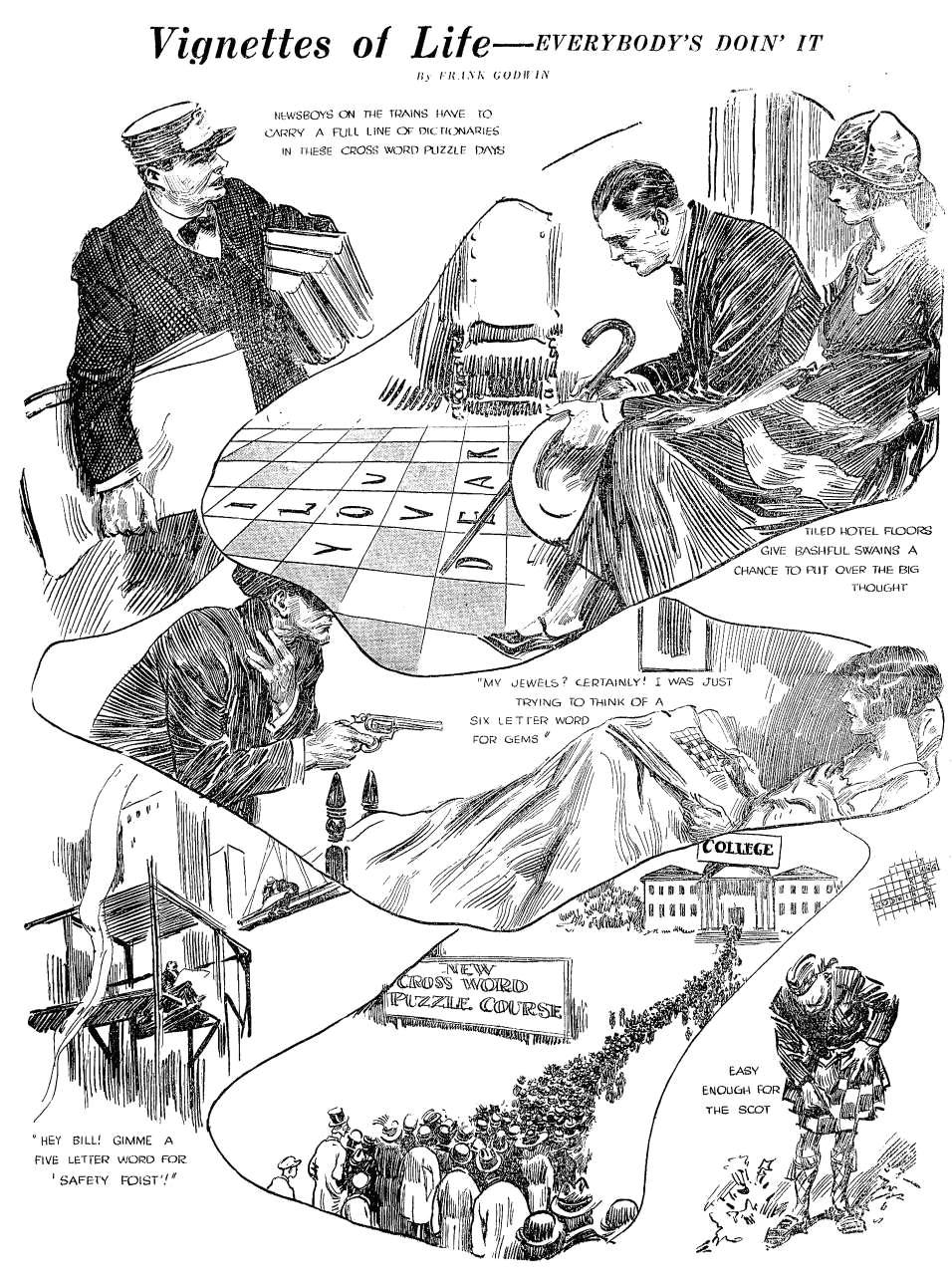
This month's feature titled 'Vignettes of Life' was a monthly comic strip drawn by Frank Godwin beginning in 1924 and continuing through The Great Depression, published in the Philadelphia Ledger. The series satirized various elements of everyday life from over a century ago. This month's excerpt is titled "Everybody's Doin' It" and is about the brand-new obsession with the newly popularized crossword puzzle after Simon & Schuster published the first book of them in 1924.

Cancer (Jun 21- Jul 22) LAMENT
Leo (Jul 23-Aug 22) CORONATE
Virgo (Aug 23- Sep 22) SCRIPTORIUM
Libra (Sep 23- Oct 22) EQUINOX
Scorpio (Oct 23- Nov 21) OBSCURA
Sagittarius (Nov 22-Dec 21) WANDERLUST
Capricorn (Dec 22- Jan 19) ASCENDANCY
Aquarius (Jan 20-Feb 18) ETHEREAL
Pisces (Feb 19-Mar 20) CHIAROSCURO
To submit art, features, or other oddities to adorn this page, Kindly send word to The Echo at: Editor@CrystalValleyEcho.com
All submissions considered. Few accepted.
A Tasting of Prose:
"In nonsense and impossibilities. This made a whimsical philosopher before the spacious world his tub prefer."
-Lord John Wilmot; A Satyre Against Mankind; June, 1674

The
Ledger
monthly feature
historic comics
comic strips from
20th century. Each month,
new artist
series is featured as a way to reflect on the timeless movements of satire, comedy, critique and caricature.