Photograph from Francis Grant McKinnon
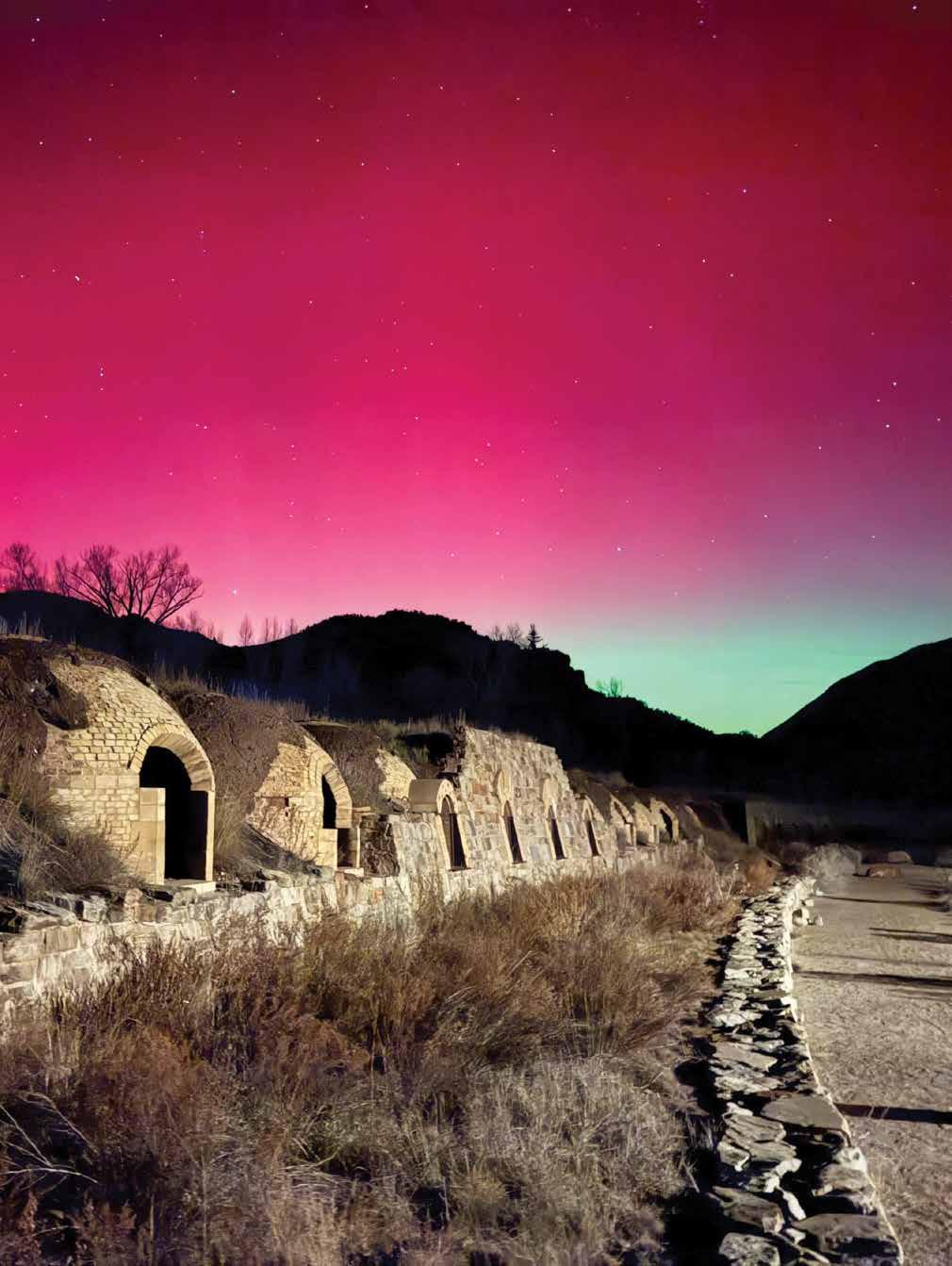
Ancient stone beneath a stellar storm. Francis Grant McKinnon captures the Redstone Coke Ovens last month illuminated by a rare crimson aurora.
By Gentrye Houghton
Last month, Colorado Parks and Wildlife (CPW) released a draft Beaver Conservation and Management Strategy and is seeking public feedback, a move that holds particular significance for the Crystal River Valley, where the industrious rodents are architects of vital wetland ecosystems. According to a CPW news release, the public has until December 17th, 2025, to comment on the plan.
The state’s focus on beavers as a key species mirrors long-held local appreciation for their role in the valley, from the lush Marble Wetlands to stretches of the Crystal River near Redstone. According to the Marble Tourism Association, the area upstream from Beaver Lake is one of Colorado's most verdant valleys, featuring numerous beaver ponds and waterfowl marshes. An article from Aspen Journalism has referred to the wetlands near Marble as "unquestionably one of the most important wetlands and riparian parcels in the valley."
The draft strategy can be viewed on the Engage CPW website, and the plan’s purpose is "to increase and sustain the prevalence of beaver and beaver-influenced wetlands in suitable habitats for the benefit of Colorado’s stream and wetland ecosystems and the array of wildlife species that utilize them." CPW notes that while it has managed beavers for decades, there have
been increased calls from staff, stakeholders, and the public for a more proactive and coordinated approach.
The strategy outlines several key topics for management, including population monitoring, harvest management, restoration opportunities, and translocation policy. One of the key topics, "Living with Beavers: Nonlethal Conflict Resolution," is especially pertinent to the Crystal River Valley, where human development and beaver habitats often intersect.
Local ecologists have previously underscored the consequences of losing beavers in the region. According to reporting by Aspen Journalism and Aspen Public Radio, ecologist Delia Malone has observed that the absence of beavers on certain stretches of the Crystal River has led to a tangible loss of wetlands and water storage. "When we lose beavers, we also lose the wetlands they create, we lose the water storage," Malone stated. She also noted that beavers can be a "simple but really important strategy to remediate the impacts that we've caused by changing our climate."
The benefits of beaver activity are well-documented. According to Defenders of Wildlife, beaver ponds and wetlands are biodiversity hotspots that provide benefits to over 75% of Colorado's species. These habitats are crucial for improving water quality and resiliency

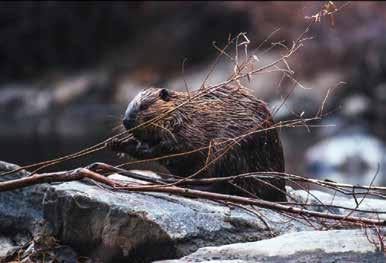
during times of drought.
CPW's draft plan is presented as a "higher-level foundational document for beaver management, articulating major goals, needs, and recommended actions." Following the public comment period, CPW anticipates releasing the final strategy in February 2026.
Residents of the Crystal River Valley and other stakeholders are encouraged to contribute their perspectives. The draft strategy can be found and feedback can be submitted through its engagement website, engagecpw.org/beaver-conservation-and-management-strategy. Public input will be accepted through December 17th, 2025.

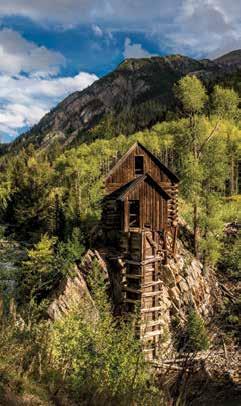
Editorial from Robert Anderson significantly alter both the scale and character of this fragile community. Their application begins with four single-family yurts and a 5,000-squarefoot storage barn, but it does not end there. Later phases envision a private ski area, a geothermal spa, a manufactured lake, and high-end housing — in effect, a year-round luxury resort built in the middle of a remote and historic settlement.
Crystal is one of those rare places that still feels untouched by time. Tucked high in the West Elk Mountains at the headwaters of the Crystal River, the town has remained virtually unchanged for generations. Its rugged access road, isolation, and five-hour distance from Gunnison have acted as a natural buffer, preserving a landscape and a way of life that many of us thought could never be recreated anywhere else.
When the Collins and Tidwell families purchased Crystal in the 1950s, they promised Emmet Gould — the elder who passed it to them — that they would protect the town and share it responsibly. They honored that promise for decades. In the 48 years I’ve owned my home here, the consistency of Crystal has been nothing short of remarkable. Very few places in Colorado have managed to avoid commercialization and overdevelopment the way Crystal has.
Crystal was never designed for this level of use, and the land cannot support it without losing what makes it special. The town has no modern infrastructure, no capacity for resort traffic, and no way to absorb the environmental impacts that come with intensive, amenity-driven development. Above all, the proposal contradicts the long-standing expectation of careful, light-touch stewardship that has defined Crystal since its earliest days.
Some supporters of the project argue that denying this application could lead the owners to sell the property, poten
would be properly capitalized, stable, and committed to long-term stewardship rather than short-term survival. Good decisions are never made out of fear of the unknown.
According to reporting in The Aspen Times, the current owners took on a substantial amount of debt to acquire the property. While I am not claiming they are insolvent, it is reasonable to recognize that this debt may be shaping their urgency to develop. That is precisely why Gunnison County has a land-use review process: to ensure that decisions are based on what is appropriate for the land, not the financial pressures of the applicant.
On Wednesday, December 4th, the Gunnison County Planning Commission will make a decision that will shape the future of Crystal for decades. This is a turning point. If you care about preserving the history, solitude, and integrity of Crystal, your voice matters now more than ever.
The Commission is accepting public comments until December 3rd. You do not need to be a Gunnison County resident, and you may submit more than one comment.

Please take a moment to express your concerns, and send comments to planning@gunnisoncounty.org
Crystal is one of a kind. Let us ensure it remains that way.
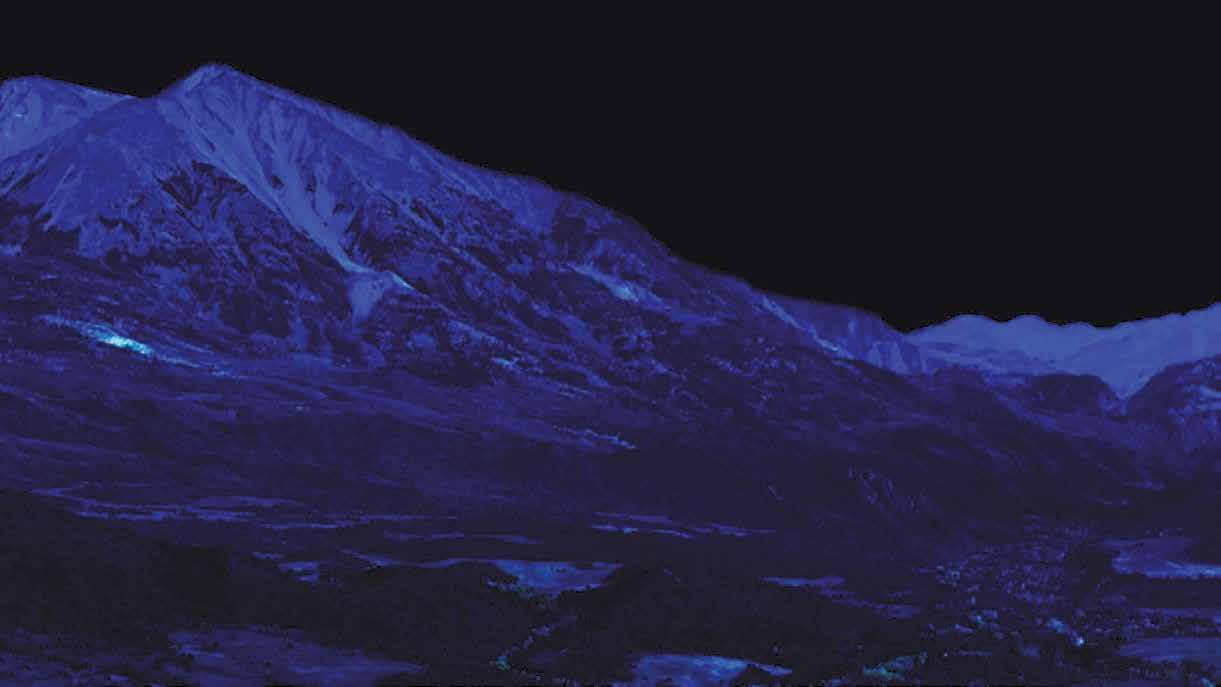

As the snows of another winter begin to dust the iconic peaks surrounding Marble, Colo., the residents of this idiosyncratic hamlet in the Crystal River Valley can look back on a year defined by civic wrestling matches, ambitious undertakings, and the kind of small-town political theater that keeps the rumor mill churning. It is a place of stunning beauty and fierce independence, a community where grand visions for the future often collide with the deeply entrenched realities of the present, and where the cantankerous civic spirit is as much a part of the landscape as the surrounding Ragged Mountains.
This is a town whose boisterous civic heart beats in the humble setting of the Marble Community Church Fellowship Hall, a room that has borne witness to a year of startling consensus and shocking schism. The Town of Marble Board of Trustees, a five-member council tasked with steering the town’s fortunes, has navigated a year of contentious debates over money, land, and the very soul of their community. From the first muddy steps of January to the crisp budget talks of autumn, this is the year in review, a chronicle of decisions big and small, as recounted through the witty, and often wry, lens of local columnist DJ Sugar Monkey, the town's indispensable narrator, in the pages of The Crystal Valley Echo.
This review kicks off on what DJ Sugar Monkey describes as an "uncharacteristically warm February evening," where the journey to the Fellowship Hall involves squelching through a "deep river of mud." The setting itself seems to be a metaphor for the messy work of local governance. Inside, the Board of Trustees begins its annual dance with dollars and cents. Treasurer Amy Rusby delivers a typically cheerful financial report, noting that while January revenues were slightly ahead, the real news is the Town’s paltry spending on snow and ice removal. A full $25,500 of the $30,000 budget was just "sitting there," a fact which, according to the February edition of The Crystal Valley Echo, "solicited an uncomfortable-sounding giggle from Councilman Dustin Wilkey, Marble's road-clearing commander-in-chief.”
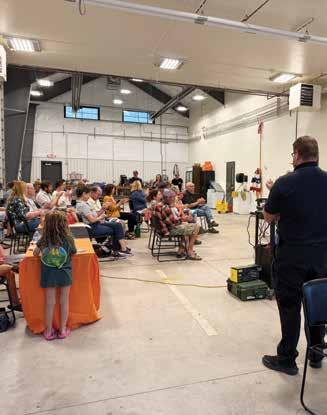
The relative harmony, however, is short-lived. The first real skirmish of the year unfolds over business and short-term rental license fees, a debate that exposes the first ideological fissure of 2025. A proposal championed by Mayor Pro Tem Larry Good to double the fees is swiftly undercut by Councilman Wilkey. He initiates a discussion, as published in March, suggesting a "whopping $5" increase for business licenses, from $50 to $55. The motion is met with what DJ Sugar Monkey calls "an uncomfortable silence." He is quick to point out what he believes is the absurdity of the motion, calculating that the additional revenue "would scarcely cover the cost of the paper they were written on, let alone the time taken up by the administrative staff to type them out."
Despite protests from the floor about the "derisory increase" in the face of rising town costs, the Board passes the review with a majority. Mayor Ryan Vinciguerra defends the decision, citing the "seasonal character of Marble's businesses and how tough it is to make money in the town." Our columnist, however, is not quite convinced. "Given that four out of the five Trustees all run (or are married to people who run) successful businesses in Marble," he writes.
Town of Marble meetings are open to the public.
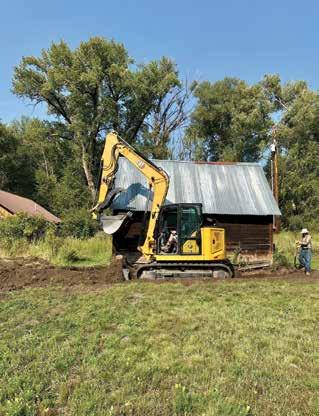
While the Board grapples with finances, a project nine years in the making reaches a triumphant milestone. The town celebrates the completion of Phase I of the Historic Marble Jailhouse preservation: A brand-new foundation for the nationally recognized landmark. This success offers a powerful counter-narrative to the bickering over license fees, showcasing a symphony of community will. The journey, as detailed in a special feature in the February edition, was a testament to community perseverance. After a state grant application was denied in 2020, then-trustee Emma Bielski volunteered to secure the necessary funds through private donations and in-kind work.
It took five painstaking years to gather the $56,000 required. The feature describes a complex ballet of community effort: Piffer Excavation donated the digging, Bailey's House Movers lifted the "incredibly fragile structure," and Grateful Builders shored it up while the new concrete cured.
The delicate operation underscored the urgency of the project, as the historic building likely wouldn't have survived another harsh winter. "Ultimately, the Historic Marble Jailhouse was saved to live on as part of our community’s history because of the patience,
Town of MArBle conTinued . . . perseverance, and generous financial support," Bielski writes, concluding with heartfelt gratitude, "Hats off to all of you who helped make this a real community success story.”
The seeds of conflicT: corridors And PArking woes
As spring arrives, new and recurring battle lines are drawn. At the April meeting, East Marble resident Kelsy Been takes the floor to champion the idea of Marble becoming a designated Dark Sky Community. She explains the path to certification and the benefits of protecting the town’s pristine night skies from light pollution. In a rare moment of unified vision, the entire Board is supportive, with Mayor Vinciguerra opining that the idea "fitted Marble well" and dovetails nicely with groundwork already laid by a former resident.
The goodwill, however, is immediately tested by the introduction of a topic that becomes a persistent thorn in the Board’s side: The idea of a commercial corridor through the heart of Marble. The concept, championed relentlessly by Councilman Wilkey, is to create a mixed-use zone along the town's main thoroughfare, granting property owners the option to run businesses out of their homes. This is more
than a zoning issue; it is a proxy war for the soul of Marble. As published in the May edition of The Crystal Valley Echo, the proposal is met with "some resistance, initially from the Mayor who repeated his insistence that the Town avoid spot-zoning." Wilkey, for his part, envisions a lively main street, a place where enterprise can flourish. The Mayor, however, sees a potential legal minefield, a Pandora's Box of "thorny questions about what kind of businesses the Town might wish to turn down.”
Meanwhile, the town’s plan to introduce paid parking descends into what DJ Sugar Monkey characterizes as a "farce." Having worked on a scheme for five years, the Board is stymied by a complete lack of collaboration from the Colorado Small Business Administration (SBA). This becomes a Sisyphean struggle against an invisible and indifferent bureaucratic wall. In the March recap, it is noted that Mayor Vinciguerra and Town Administrator Ron Leach have canvassed state senators to lean on the SBA, but to no avail. "We're really trying to be heard," a bemoaning Vinciguerra is quoted as saying.
By the May meeting, still no word has been heard from the SBA, and the Board’s patience has worn thin. The feeling of impotence in the face of a silent, faceless bureaucracy is palpable.
Frustrated by the bureaucratic stonewalling, Trustee Good finally declares, "We're about to go rogue." Trustee Amber McMahill promptly makes a motion to proceed without the agency's input. The motion passes unanimously, and paid parking, at a rate of $35 per vehicle per day, officially commences for the summer season. DJ Sugar Monkey aptly summarizes the Board’s overall reluctance to aggressively raise revenues as a "'Wiener dog' approach to raising costs.”
In the end, however, the rollout of the paid parking program ended the year as a positive for the Town’s coffers.
sequential debates, underscores the urgent need for a robust evacuation plan.
This concern catalyzed a major Town undertaking: The Marble Wildfire Risk Modeling Project. Rather than passively waiting for disaster, Marble chose to arm itself with data. As detailed in the October edition of The Echo, the Town partnered with Vanderbilt University and the Wildfire Collaborative Roaring Fork Valley on a cutting-edge data modeling project specific to the Marble area.
The AGNI-NAR model, which has been proven 85% accurate in predicting fire spread in past disasters like California's Camp Fire and Colorado's Marshall Fire, aims to give the town a crucial advantage. "For the first time, we'll have data specific to Marble that can guide how we protect our homes and evacuation plans," writes Kelsy Been, who is helping to lead the project. The community was called upon to participate by completing confidential surveys about their properties, with the promise that their input is "critical to shaping this project and improving our community's readiness for wildfire."
Amidst the political wrangling, a far more sobering issue comes to the forefront. During the June report, the Town learns of a recent evacuation planning conference attended by Administrator Leach and Terry "El Tel" Langley. The simulated scenario for Marble involved an acute wildfire, an exercise that left a chilling impression and made the abstract threat of fire a terrifyingly concrete reality. Leach, a 38-year veteran and ex-Fire Chief, admits, "You couldn't paint a more dire scenario." Langley is even more blunt: "The Marble part [of the simulation] was terrifying." The stark report, a splash of ice water on the often-heated but less con- conTinued on PAge 6
suMMer heAT And Boiling Tensions
The summer meetings see the temperature rise, both literally and figuratively.




Town of MArBle TrusTees conTinued. . .
The complex and contentious relationship with the privately owned Marble Water Company (MWC) bubbles to the surface in July. A discussion about the "inequitable" flat fee of $130 per annum that residents pay to service an MWC loan reveals deep-seated issues. The MWC’s lease on the town’s water rights is set to expire in 2028, a date that looms large over any discussion of water infrastructure. The potential for the MWC to extend its control for another 40 years, coupled with its "insistence on the use of a 'monopoly' contractor,” according to DJ Sugar Monkey, gives the Town Council "pause for thought.”
The August meeting proves to be the year's most dramatic. The air in the Fellowship Hall that evening was already thick with the accumulated grievances of the summer when Councilman Wilkey, not to be dissuaded from his commercial corridor ambitions, once again hijacked the meeting. According to DJ Sugar Monkey, he continues to push for his plan, under the mantra of "leveling the playing field." Then, according to the September edition of The Crystal Valley Echo, Wilkey "decided to throw the cat amongst the pigeons," by "calling out businesses that are not paying for use of Town right of ways." He specifically names businesses owned and operated by his fellow Board members, accusing them of encroaching on the public right of way.
The reaction is instantaneous and hostile. The accusation is a stunning breach of unwritten small-town code, transforming a policy debate into a personal attack. "Larry Good was first to react," DJ Sugar Monkey writes. "Visibly irritated by the accusation, he suggested to Wilkey that he (Good) pull up the documentation showing the exact boundaries of the Beaver Lake Lodge... which he said would prove the accusation baseless." The explosive confrontation lays bare the simmering tensions and accusations of self-interest that have bubbled just beneath the surface throughout this year of our Lord, 2025.
conTinued on PAge 7

From Gene Schilling
Dear Community Members,
On behalf of the Carbondale and Rural Fire Protection District Board of Directors, we extend a heartfelt thank you to everyone who participated in this year’s ballot decision. Your support for both the 1.5% sales tax and the $30 million bond demonstrates a shared commitment to the safety, strength, and future of our District.
Because of your trust in us, we will be able to increase staffing and retain more qualified emergency responders. This will help ensure faster and more reliable service across our growing community.
The new sales tax will replace lost property tax revenue and help build emergency reserves, which will allow us to respond to economic changes and continue serving residents, businesses, and visitors. The need for this sales tax arose from significant State of Colorado legislative changes that reshaped property tax calculations and sharply reduced revenue that voters had previously authorized for the District.
The apparatus and equipment replacement fund will support the ability to purchase necessary apparatus and equipment when needed,
which will help keep both responders and the public safe.
The bond will provide essential improvements to stations and responder housing at several locations. It will add new units and modernized facilities and will support long-term stability for volunteers and staff.
Through your contributions, everyday shopping or property ownership helps support public safety. Visitors and residents are helping share the cost to keep your fire department response ready.
Your support allows the district to provide enhanced services and improved infrastructure for many years to come.
Thank you for partnering with us to keep the Carbondale and Rural Fire Protection District safe, resilient, and strong. Your investment will make a meaningful difference in every response, and we are grateful for your support.
Sincerely,
Gene Schilling Board President Carbondale
and Rural Fire Protection District

Town
AuTuMn Push: BudgeTs And PrioriTies
. . beneficial first step — a piece of savvy political triangulation designed to find common ground.
Following the acrimony of August, the fall meetings became a deliberate act of fence-mending and refocusing. The focus returns to the 2026 budget. The September meeting is dominated by preliminary discussions, where Administrator Leach reports that "things are getting better in the fire world." At this meeting, Mayor Vinciguerra tasks each trustee with a crucial piece of homework: To arrive at the October meeting with their top three spending priorities for the Town. It is a savvy move to force a shift from personal conflict to collaborative governance.
This sets the stage for October's meeting and the finale of this year’s reporting. Each trustee presents their vision, revealing the different facets of Marble's identity. Larry Good, the pragmatist, steps up first, prioritizing the acquisition of the MWC, fire mitigation, and park restoration. Amber McMahill and Amy Rusby echo these priorities, with Rusby stressing the need for a comprehensive revenue plan. In a moment of creative brainstorming, the board even floats the idea of the Town starting its own excavation company or a water bottling operation.
With all the cards on the table, the Mayor surveys the landscape of requests and identifies what he considers the lowest-hanging fruit. A comprehensive review of the Town's zoning plan, he concludes, is the most achievable and
From mud-caked boots early in the year to the final budget showdown, this year has been one of forward momentum, community spirit, and political friction for the Town of Marble. Landmark preservation projects and critical safety initiatives have moved forward, even as the Board of Trustees has wrestled with itself over questions of growth, fairness, and finance.
The year has showcased the two faces of Marble: The acrimonious and the astonishingly unified. It is a place where a fight over a five-dollar fee can consume a meeting, and where a whole community can come together to save a piece of its history or arm itself against catastrophe. As Marble settles in for the frosting of winter, its residents are left to wonder what new dramas and triumphs the coming year will bring to their small corner of the Rocky Mountains, with DJ Sugar Monkey, no doubt, poised with pen and paper, ready to document it all.
The next Town of Marble Board of Trustees meeting is scheduled on December 4th at the Marble Community Church's Fellowship Hall beginning at 6 p.m. At the time of publication, the first meeting of 2026 is scheduled for January 1st; however, a date change will be discussed during December’s meeting. As always, the Town of Marble website, www.townofmarble.com, has the most up-to-date information regarding meeting dates, agendas, and minutes. See you next year!
Jasper Johns: a whole can be only a part is organized by Jessica Eisenthal, inaugural Jasper Johns Curatorial Fellow at the Powers Art Center. The Fellowship supports original research and curatorial work centered on the Ryobi Foundation’s collection of Jasper Johns’s works on paper.



Editorial
from
Gentrye Houghton
There is a silence in the Crystal River Valley that I have come to wear like a second skin. It is the silence of snowfall on Redstone Boulevard and the solitary quiet of a hiking trail in Marble. I traded the population of our mountain villages for a city of 20 million souls, and stepped into the humidity and kinetic chaos of Mumbai, India.
I traveled to India to attend the wedding of a dear friend, but the journey became something far more complex than a destination wedding. It's been a pilgrimage of redemption, a study in contrasts, and an unexpected mirror reflecting the values of our own valley from halfway across the globe.
To understand the weight of this trip, one must understand the failure that preceded it. Eight years ago, my first attempt to navigate India was a masterclass in frustration. Believing ourselves seasoned travelers, a girl friend and I were chewed up by a labyrinth of tourist scams and logistical nightmares in Delhi. We spent our days attached to wifi under the fluorescent buzz in fast-food chains trying to secure travel that never materialized. I left that trip with a deep sense of defeat, feeling untethered, and outmaneuvered.
This time, the script has been different. It’s not about tourism; it's about connection. And was forged in the fires of a friendship with the groom, whom I met
four years ago while hiking in Zion National Park.
Our friendship was cemented not in India, but right here in the nearby high country when I had the opportunity to share the Rocky Mountains with him. I recall taking him to Avalanche Creek during one biblical runoff of late May. Watching him stand in
“When a child in the community is healthy and thriving, their family is able to be healthy and thriving, and the schools are healthy and thriving, and that ripples into a larger community impact.”
-
Lindsay
Lofaro, Buddy Program Executive Director
The voter supported Healthy Community Fund assists the Pitkin County community by providing grants to nonprofit organizations that provide critical health and human services and community resources.
awe of Hell Roaring Creek’s raw power, I felt the dissonance of my previous Indian experience resolve. In that moment, at an intersection inside this valley’s wild beauty and his profound appreciation, I found the foundation for my return.
conTinued on PAge 10
Mission Statement: To provide a voice for the residents of the Crystal River Valley; to bring attention to the individuals and local businesses that are the fabric of the Crystal Valley region; to contribute to the vitality of our small town life.
EDITOR AND ADVERTISING SALES
Gentrye Houghton gentryeh@hotmail.com
CONTRIBUTORS
DJ Sugar Monkey
Amber McMahill
DISTRIBUTION AND LAYOUT DESIGN
Ryan Kenney
The Crystal Valley Echo is published monthly, and is distributed throughout the Crystal Valley.
NEWSPAPER BOX LOCATIONS: Third Street Center • Village Smithy Carbondale Post Office • Carbondale Park & Ride The Marble Hub • Redstone General Store
And silk conTinued. . .
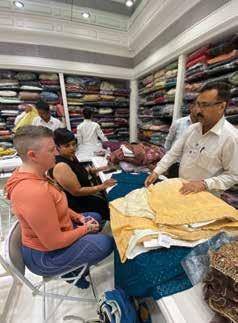
Stepping inside the Plaaneri dress shop, the effect was dizzying. Around me in this sterile cathedral of whiteness moves an army of men, all dressed in crisp white, their arms laden with explosions of color — saris and lehengas stacked so high their faces are obscured. Photograph by Gentrye Houghton.
However, leaving the sanctuary of the Crystal Valley for the sensory onslaught of Mumbai required a recalibration of the spirit.
The sYMPhonY of chAos
Mumbai does not whisper; it announces. Upon arrival last month, the city felt like a dense, layered symphony that initially registered as a physical assault. The air was a thick cocktail of
frying spices, jasmine, and the acrid tang of petrol, a smog that hangs heavily, blurring the edges of the skyline. The disorientation was totally real.
Yet, amidst the blare of horns, I found anchors. One evening, escaping the crush of a night market, my partner and I turned onto a quiet street where the aggressive glare was replaced by a soft glow. We watched three small boys in a park, tensed for a footrace. Though we couldn't understand their Hindi, the three-beat cadence was universal: Ready, set, go. They exploded into motion, shrieking with laughter. It was a square inch of familiarity, a reminder that same the play can be found in Redstone Park as across the globe.
It was in these small moments that the city began to reveal itself as a living, breathing organism of profound artistry. The most potent of these revelations occurred on Marine Drive, the "Queen’s Necklace" that curves along the Arabian Sea.
I was sitting on the seawall, feeling the otherness that comes with being a stranger in a foreign land. A trio of women approached, and an elder dressed in a sari the color of a peacock’s throat fixed her eyes on me. Not in judgment, but of searching curiosity. When I offered a small, tenta-
tive smile, her face dissolved into radiant warmth that felt like a benediction. In that silent exchange, the floating feeling of jet lag and displacement vanished. I was no longer a phantom suspended over the Pacific, but I was there, grounded by kindness.
A sArToriAl BAPTisM And The dYing ArT
In the West, we often view clothing as functional. In India, I learned, it is a language. To attend a traditional wedding, we must speak that language. This required a sartorial baptism, arranged by our local guides, the groom's cousins, at a legendary shop called Paaneri in the Dadar West neighborhood.
From the street, Paaneri was just another storefront in a chaotic row. Stepping inside, however, was like teleporting into a cathedral of commerce. Three stories of pristine white marble floors and mirrored walls reflected an army of salesmen carrying towers of vibrantly colored fabrics. The marble itself — cool, vein-streaked, and solid — pulled a string deep inside me, it was a tactile thread connecting this foreign bazaar to the quarries of Marble.

As we reflect on the year, we're reminded how deeply thankful we are to be your community bank. May your holidays be filled with light, laughter and lasting joy.
Yet, the true revelation in Paaneri was internal. I found myself in a tiny dressing room, being expertly draped in a alpinebank.com

lehenga by an attendant armed with binder clips. When I stepped onto the pedestal before the three-way mirror, my own internal critic was silenced. It was a moment of profound acceptance, realizing that this costume allowed me to see myself more clearly than I had in years.
However, this joy came with a sombre footnote. Our guides explained that this thriving institution faces a crisis of succession. The intricate skills required to hand-stitch these garments are dying out as the younger generation turns toward tech jobs. I thought of the artisans in our own valley, and the fragility of trades requiring human hands. The garments I carried out were relics of a dying art, holding together a history that is slowly unraveling.
froM The MeTro To The inTerior
Leaving Mumbai, we traveled by train to Aurangabad to visit the ancient caves of Ajanta and Ellora. The journey provided a stark look at the economic reality of the country. My partner, after falling down a research rabbit hole, noted that the average monthly income in India ranges between $125 and $250. The disparity between the wealth of Mumbai and the rural farmers we saw was jarring.
conTinued on PAge 11

11:00 a.m. – Yoga ($5)
Instructor Anna Raphael leads this invigorating class to reconnect your body and breath. With more than15 years of yoga instruction and massage therapy experience, Anna brings a deep understanding of movement and wellness. Open to all ages & abilities.
12:00 p.m. – Lunch ($10)
RSVP by noon the Friday prior – space is limited. Plated lunch served. Gluten-free option available.
12:45 p.m. – Program
• December 9: Holiday Music
With Dan Sheridan
Always a favorite, Dan Sheridan will entertain with holiday tunes and some of his popular original songs. Join us for lunch and festive music!

Submissions from the Crystal Valley Community
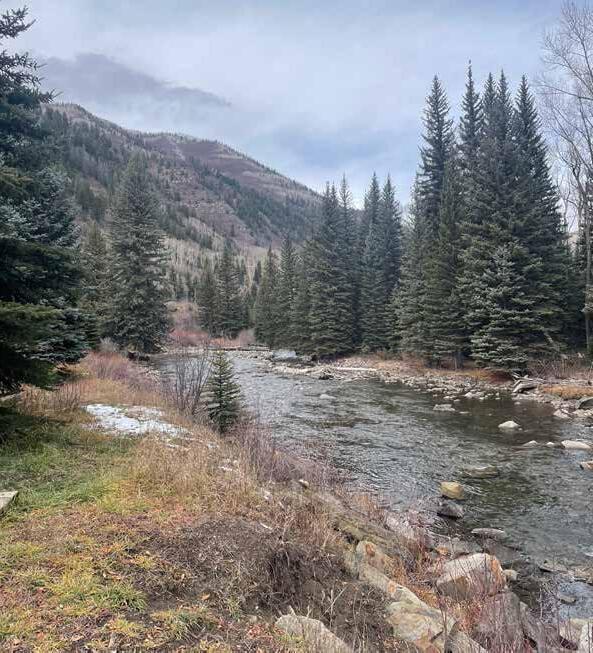
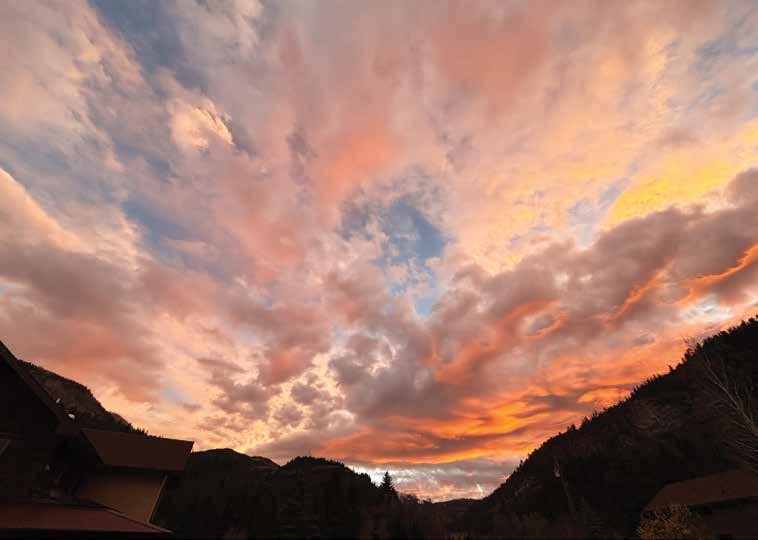
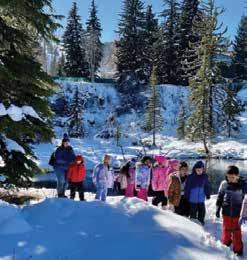
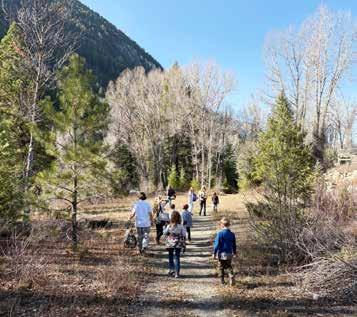
The Crystal Valley Echo asked to see the Crystal River Valley through the community’s lens, and you didn't disappoint. This month’s submissions perfectly capture the diverse tapestry of “Life up and down the Crystal River Valley.” From the historic red bricks of Redstone illuminated by a rare celestial light show to the fiery painted skies above our mountain homes, you caught the magic of our region. Yet, you also documented the quiet anticipation of the season, showing us the bare banks of Bogan Flats as we collectively hold our breath for winter. Here are a few of our favorite moments shared by you, our neighbors.
Snapped a great photo? Consider sharing it with your community and send it to our editor at gentryeh@ hotmail.com







. . India’s annual methane output is massive, and the rudimentary farming practices contribute heavily to the smoke that chokes the country. It felt like a reality slap. The millions of dollars proposed for local projects back home, designed to produce negligible global benefits, could fundamentally transform the quality of life if invested in basic clean air infrastructure in developing nations.
We arrived at the train station (Chhatrapati Shivaji Maharaj Terminus) early, a necessity given the insane chaos of the place. It was there, amidst the rushing crowds, that the warmth of the Indian people once again bridged a gap. Standing on the platform near a family of Muslim women sharing a meal, I noticed a teenage girl staring. When I smiled and waved, she did a seated hop of pure glee. When they left, she waved goodbye with a shyness that melted into a big, goofy grin. Embracing the stares, rather than shrinking from them, has transformed our experience from one of intrusion to one of connection.
Aurangabad is considered a small city, though it holds 1.7 million people. It was here, driving through the rural outskirts to the Ajanta Caves, that the environmental reality of the region hit me with the force of a physical blow. The air quality was visibly poor: A heavy, orange haze that tasted of smoke.
In rural Maharashtra, the environmental reality hit hard. In Pitkin County, we sit in boardrooms agonizing over topics like methane mitigation strategies to reduce microscopic fractions of emissions. Looking out the car window here, seeing farmers burning piles of crop waste because they lack machinery to mulch, the contrast was devastating. MArBle
This is not to say we shouldn't act locally. But traveling here, one realizes how far behind the game these developing regions are, and how disconnected our high-altitude debates can sometimes feel from global reality.
The echo of The PAsT
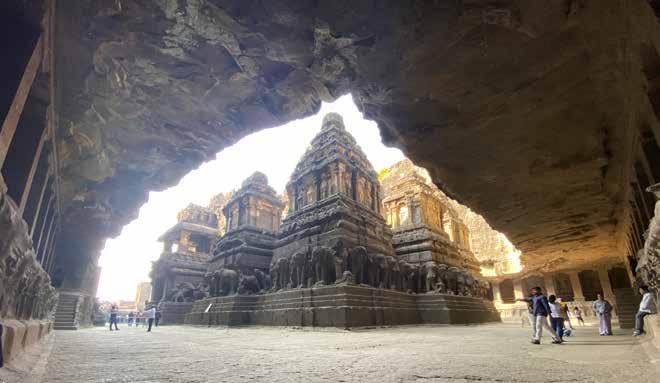
Despite the smog, the history of the region is breathtaking. The Ajanta and Ellora caves, carved by hand from basalt cliffs between the 2nd century BCE and the 10th century CE, stand as testaments to human will. At Ajanta, Buddist, Hindu, and Jain monks carved distinct living quarters and meditation halls without any evidence of local agriculture, suggesting a massive community effort to support them.
At Ellora, the scale was even grander. We climbed the Daulatabad Fort, a 12th -century military marvel, and later walked through the Kailash temple, which was chiseled from the top down

out of a single rock mountain and took 200 years to complete.
Yet, even at these ancient sites, the modern need for connection intruded in the most delightful way. We were inundated with requests for photos. "Selfies with strangers" has become a theme of the trip. At the fort, a school group surrounded us, resulting in a frenzy of photos. At Ellora, a family shoved their baby girl into my arms for a picture; she stared up at my strange face, fiddling with my hat string, unafraid.
Later, in Aurungabad, a group of teenage boys spotted my partner’s tattoos. They gestured to their own chests and stomachs, asking if he was covered in ink. When he lifted his shirt to show them, they shouted in unison, “WOW!”
It was a moment of pure, unadulterated joy, a shared language of enthusiasm that required no translation.
A recAliBrATion
As I sit here writing this, halfway through my five-week journey, I realize that my anxiety about returning to India and concerns with the political climate, is a shadow I had cast myself.
India is challenging. The poverty is visceral; the pollution is undeniable. The struggle to find a restaurant where we feel safe to consume their food is quite real in smaller towns. Yet, the spirit of the place is not found in the

logistical hurdles, it’s found in just one square inch of grace.
My first encounter with India was marked by the desperate desire for an exit. This trip is marked by a vast and breathless curiosity. I came here to witness a wedding, to celebrate the union of my friend and his bride, but I am also here to make peace with my own history while carrying the Crystal Valley with me.
The disorienting fog of arrival has lifted, replaced by a lens of heightened perception. I am miles from the coke ovens of Redstone, but I have never felt more grounded. India, in all its complexity, has welcomed me back — not as the naive tourist from before, but as a traveler ready to surrender to the current. This time, however, I am swimming.
Gentrye Houghton has been an independent journalist for over 18 years and is the owner and editor of The Crystal Valley Echo. In her new weekly email column, "Reflections from the Trail Within," she goes deeper into the stories and observations that shape our inner and outer worlds. You can read more of her work and follow more of her adventures in India with a newsletter subscription for free by visiting thetrailwithin.substack.com






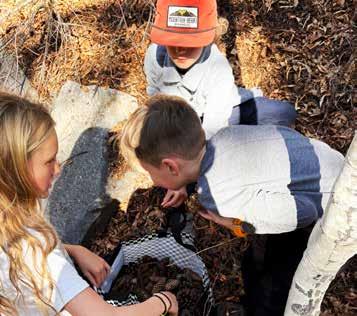
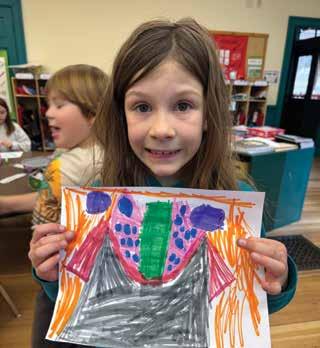
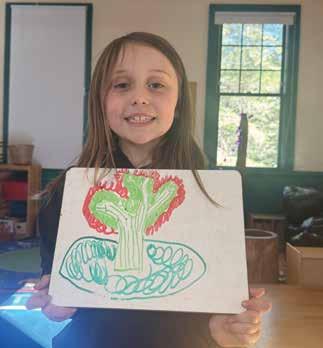
Third and fourth graders at MCS wrote and produced podcasts answering the question, would you rather be a parrot or an octopus. Here are two of their scripts.
ocTuPuses
By Amira Paris 4th grade
Host: Hi everyone and welcome to the Either / Or Explorers podcast. Today’s question is a tough one. Would you rather… be a parrot or an octopus?
Please welcome my guest today, Amira Paris. I’m curious to know, would you rather be a parrot or an octopus?
Guest: I would like to be an octopus because of their unique defense systems, and physical characteristics. They get to explore the sea all day long.
Host: A strong opinion! Tell me one reason why you chose that animal.
Guest: Well some defense systems that octopus have are they can change colors to hide from predators. In addition, if predators catch an octopus they can eject ink and escape. Octopuses use a siphon jet propulsion system to quickly swim away. They can also squeeze into tight spaces to get away from danger. When being chased they can go
onto land for up to two hours to evade danger.
Host: That makes a lot of sense. Is there another reason why you chose that animal?
Guest: Yes, because of its unique physical characteristics. One reason is that they have three hearts to pump blood through their body. In fact they have nine brains, one in the head and all of the others are in the tentacles. Furthermore, octopuses have very good eyesight and an excellent sense of touch. They have two rows of suction cups on each tentacle which help them attach to different surfaces. Another fact that most people don’t know is the octopus has a beak which they use to eat their prey such as crabs and shellfish.
Host: Well, you certainly have done your research. Are there any other interesting facts we should know about?
Guest: Yes. These are some other facts I would like to tell you about. There are about 300 species of octopus living in ocean waters. Another fact is the female octopus does not eat when she is pregnant and once she gives birth she dies which I think is pretty sad. But on a positive note, they can detach a leg to get away from harm and the leg can live on its own because it has its own brain.
Host: That is pretty convincing. Before we wrap up today’s episode, what would you like our listeners to remember?
Guest: Finally, after all my research on octopuses I can’t wait to get to the ocean to see one close up and personal. So you listeners out there keep your eyes open for octopus and all sea creatures on your next ocean visit.
Host: You’ve got me convinced! Listeners, this has been another episode of Either/ Or Explorers. Tune in to the next episode to hear… would you rather be a mouse or a snake?
PArroTs August Tardie 4th grade
Host: Hi everyone and welcome to the Either / Or Explorers podcast. Today’s question is a tough one. Would you rather… be a parrot or an octopus?
Please welcome my guest today, August. I’m curious to know, would you rather be a parrot or an octopus?
Guest: Thanks for having me today in your show. I would rather be a parrot.
Host: A strong opinion! Tell me one reason why you chose that animal.
Guest: The first reason I would like to be a parrot is because of its physical characteristics. First and foremost, the more colorful the more healthier, and the less colorful the less healthy. Furthermore, parrots are “zygodactyls”, which means that they have two toes in the front and two toes in the back. This helps parrots grip on to trees, branches and vines. It also helps them eat food. Another reason is parrots all share food with each other.
Host: That makes a lot of sense. Is there another reason why you chose that animal?
Guest: One reason why I like parrots are they can mimic the sounds we make. Parrots learn to talk from listening to their parents or us. Parrots have very loud voices. Parrots make different sounds which mean different things. Some parrots are at least as smart as dolphins and chimpanzees. Some parrots can count to six or seven. Some parrots can identify seven colors.
Host: Well, you certainly have done your research! Are there any other interesting facts we should know about parrots?
Guest: Here are some fun facts about parrots. Did you know there are over 350 types of parrots? Another fact is
From Jaime Fiske
Last month,



ocToPuses conTinued. . . that the fastest parrots can go up to 50 miles per hour. Parrots live up to 80 years old. Did you know that the smallest parrot can fit in the palm of your hand? The largest parrot can be over 90 cm from head to tail, have a wingspan of 125 cm and weigh as much as 1,700 grams. Did you know the fastest parrots can fly over 50 mph?. Did you know that a group of parrots is called a “pandemonium of parrots”?
Host: That is pretty convincing. Before we wrap up today’s episode, what would you like our listeners to remember?
Guest: One reason I wouldn't want to be an octopus is that octopuses can only live up to 2 years. Another reason is that a female dies right after giving birth to babies. The mother does not get to see her babies.
Host: how do you feel?
Guest: I feel sad.
Host: You’ve got me convinced! Listeners, this has been another episode of Either/ Or Explorers. Tune in to the next episode to hear… would you rather be a dog or a pig?

From Konstantine Iannios
It’s a crisp June morning in 1971. As the sun peaks over Whitehouse Mountain, hovering 4,000 feet above the historic town of Marble, Colo., it casts a large shadow upon this beautiful mountain valley, but none larger than my father’s, Thanos A. Johnson, “The Godpotter.” The distinct scent of freshly baked bread wafts from downstairs, nudging all awake, along with dad’s booming God like voice, “Breakfast is served, this isn’t going to eat itself.” A simple breakfast with local honey is laid out before us on the teak Scandinavian-style dining table.
On this particular morning, the Welch family, Walter, Judy, and kids, Tod, and Dana, join us, having just arrived the evening before from their home in Des Moines, Iowa, towing a pop-up Coleman sleep camper behind them. The camper sits at the edge of the reflecting pond of our large corner property, just a short walk to Beaver Lake. Heaven on earth is a gross understatement.
Willie Garcia, one of Dad’s hands, putters up in his rusty Volkswagen Bug, and our dog Sam greets him at the door. Garcia has a load of firewood, my two older brothers, Demetrios, and Aristides, jump from the table to help him haul it into the studio, and the main room of this old 1888 miner’s cabin, cobbled together over the years, as if a dream house for the dyslexic.
Dad bought the place for $141 in back taxes from Ida B. Carey in 1945, after finishing his stint as a 10th Mountain Soldier on skis during World War II. The division trained in the surrounding mountains. Carey was a prominent citizen of Marble during its heyday, having owned two ice cream parlors, was one of the only women to be involved in the town’s politics. She also owned the Carey Building, which was rented out for Town meetings, band practices, and dances.
Both fireplaces begin to roar in her old home. Summer mornings can be nippy at 8,000 feet high in the Rockies. My mom, Demetra, and sister, Thana, are in the kitchen, serving up coffee, tea, and Tang. My brothers grab and go, piling into Garcia’s bug. They drive off, Sam chasing behind. It’s my day for dish duty, so after a hem and haw, I get up to clear the table. Dana is kind enough to pitch in.
Philoxenia is an ancient Greek word, the definition translated into English means turning a stranger into a friend,
signifying a profound love and generosity towards strangers, embodying a tradition of warmth, hospitality, and welcome. People would always say, “Your father never met a stranger.” Evidence in part, the Welch’s,who drove up to dad’s studio one day, years back, noticed a sign that said, “Would you buy a used pot from this man?” with dad's hairy mug smiling back. Well, the whole family became lifelong best friends, eventually moving from Iowa to just down the road in Carbondale.
ThAnos Johnson sTudio: suMMer cerAMics workshoP wiTh colorAdo MounTAin college
This morning begins session one, week one, of dad’s first of three four-week sessions. Students begin at 8 a.m. and go until 5 p.m., Monday through Friday, 45 hours of rigorous instruction per week. Twelve students per session, from all over the country, and a few from overseas, line up at the sliding door of the newly built two-story studio, perched next to the pond, on a foundation of marble. The students shuffle in, and the studio, smelling of fresh-cut pine and Minwax stain, is quickly replaced by clouds of patchouli oil drifting behind, as if they all just returned from a Grateful Dead concert. After all, this was the 70s.
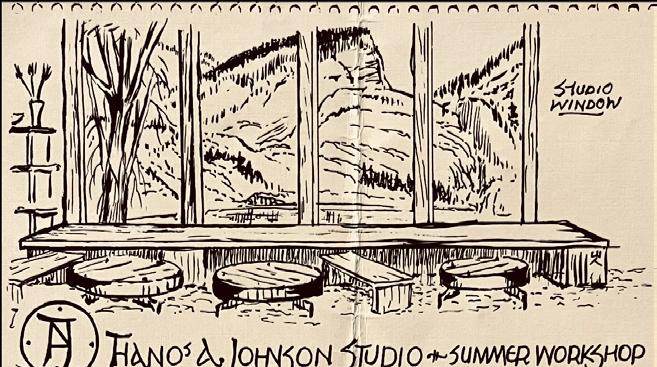
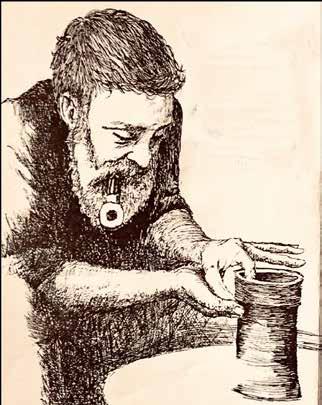
Dad invented his own potters wheel, evidenced in his sketch here of the studio view of Sheep Mountain. It has heavy leaded weights below, five spaced accordingly, on a round, thick slab of teak, with holes bored at the edge of the top, so one could spin it, and keep it going with the momentum provided by a makeshift drumstick. Dad insisted that this was a better way to throw, looking down into the clay while forming it, instead of across, which is the standard foot paddle method.
After a quick tutorial on how to use the wheel, he slaps a mound of clay on one and throws a vase in just three minutes, complete with the finishing rim detail at the top. He kept his pinkie nails noticeably long to get just the right feel instead of using a tool. Next, he humps five big slabs of virgin clay onto a kneading table, and asks his students to tell him something about themselves as they work the clay or “wake it up,” as Dad put it. He had a methodical way of drawing the best out of his students. He wanted to know where they were from, the light, the weather, the history, and the culture there. Dad was genuinely interested in them and challenged them. He didn’t want them just spending their parents’ money for a summer romp in the majestic Rocky Mountains.
ColoradoHomesRanches.com


One of dad's favorite students, and quite the potter to boot, was none other than actor Robin Williams. He took dad’s pottery course over two years at College of Marin, Calif., where dad was the Professor of Fine Arts for many years. I have vivid memories of Williams at a Raku Firing at Point Reyes National Seashore. He was funny even then, and as hairy as a man you’d ever meet, which he poked fun at, dragging his arms like an ape, snorting and scratching.
week four: The kiln firing
The students, after letting their clay pots, plates, cups,
vases, and bowls dry for the last three weeks, move them over to the gambrel kiln bar, just steps from the studio. No ashtrays, though, dad wouldn’t have it, even though he still smoked a pipe at the time.
Poof! The propane-fueled kiln fires up for the first time of the summer. The pop and fizzle of cobwebs, and whatever else called it home over the long winter, drifts into the deep blue mountain sky. The students carefully place their collective ceramic pieces on a large rack. Dad uses long thongs and places cones in various areas of the kiln. These will act as a thermometer, measuring the proper heat as they melt. He then moves his students to a tall metal antique postal letter chest, which he’s converted to contain his multitude of glazes. The students now begin their first lesson in mixing.
Dad had an Einstein brain when it came to mixing just the right powders, alumina, silica, sodiums, etc., to achieve the desired effect. His students are now schooled in mixing various glaze powder colors together with water, using a whisk to bring them to a smooth consistency. Now, the glaze application begins. It’s an art of its own. Some glaze is dribbled on, others dipped. A small paintbrush, a sponge, ladles, funnels, a syringe, and a pencil tip for finer details. “Less is more,” was Dad’s motto. “Where the glaze isn’t, is just as important as where it is.”
As the four-week session comes to a close, the students' fired pottery is critiqued, but not in the traditional sense. They would critique other students' work in a casual way, over coffee, tea, and Greek pastries. Dad would write out his individual plan for each student, not voice his opinion to the class. This would include: Comfort, shape, weight of cup, bowl, vase, or pot, the glaze color, and application choices, etc.
Dad embraced all facets of pottery, but was most inter-
“We walk alongside families and help get them where they want to go. We connect them to resources and referrals so that they can provide the most for their children while building a sense of community along the way.”

The voter supported Healthy Community Fund assists the Pitkin County community by providing grants to nonprofit organizations that provide critical health and human services and community resources.

Learn more at: pitkincounty.com/hcf
ested in Chinese, Korean, Japanese, and Greek/Byzantine techniques. He was a specialist in many of these arenas and a living treasure of South Korea, but was most proud to have studied under Japan’s Shoji Hamada, widely recognized as the George Lucas or Steven Spielberg of the pottery world. Dad was also a skilled pen-on-paper sketch artist, using a traditional fountain pen; he also worked in calligraphy, painting, watercolors, bronze, glass blowing, and large format photography, and was a brilliant lecturer and writer.
In 2004, shortly after Dad’s passing, I received a phone call from Greece. It was from a friend of his, Neofitou Keramik, who was a well-known potter from the Island of Crete. “Neo” was saddened to hear about Dad’s passing. He told me that dad and Mike Stranahan, dad’s close friend and travel companion, would visit Rhodes often. They’d sit at the local tavern, Taverna Yiannis, drink tea and sip ouzo, and catch up on life. Keramik told me that Dad was the most clever man he’d ever known. I was confused by this, clever like a badger, I thought, only to learn later that he meant smart. Greeks use the word clever to describe someone who is smart. Keramik was one of many that Dad truly touched during his travels across all parts of the globe, as an artist and a man, including Europe, Greece, South Korea, Japan, China, South Africa, Australia, New Zealand, and beyond.
Dad left a lasting impression and legacy that still inspires today, but most importantly, he never passed up the opportunity to “turn a stranger into a friend.”
Thanos Johnnson’s son and author Konstantine Iannios, and wife El, share their time between Marble and Grand Junction, Colo. They are currently restoring the property in Marble and converting Johnson’s studio into a museum of his many works, helping keep his rich legacy alive.
A
For years, you’ve read my work and the stories I’ve edited in these pages. Now, I’m sharing my more personal reflections in a new weekly email column. It’s a space for the stories behind the stories, on nature, adventure, and finding clarity in a noisy world.

free weekly column emailed directly to you; subscribe by visiting:
Beginning November 26th
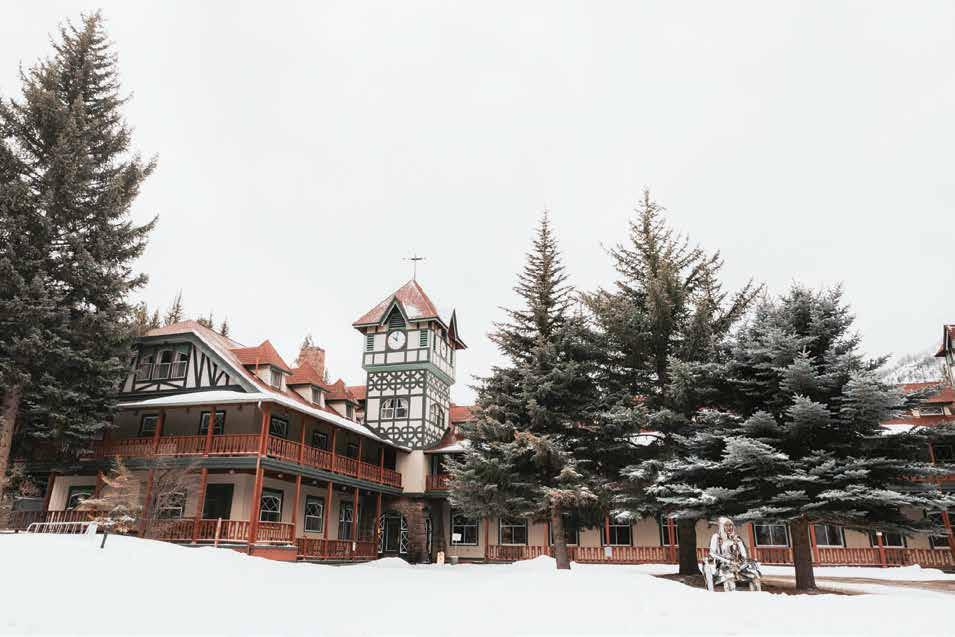
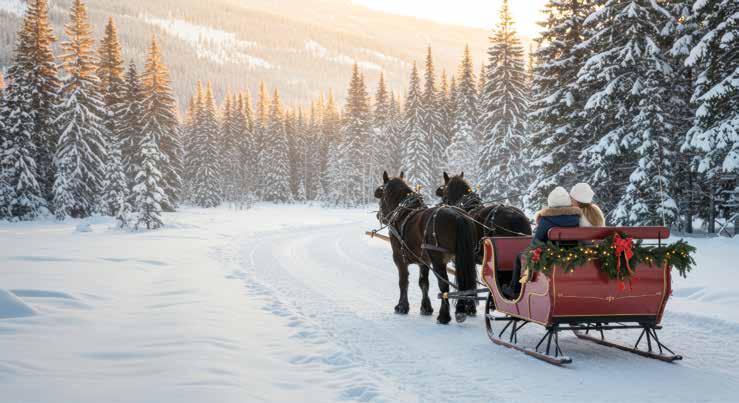
Enjoy the romance and majesty of Winter in Redstone with a Horse-Drawn Sleigh Ride! Sleigh rides are approximately 45 minutes from the Redstone Inn to the North Bridge. Prices are $50 per person for ages 11 and up, $25 per person for children ages 5 to 10, and free for ages 4 and under. For private rides please call 970-963-2526 or email