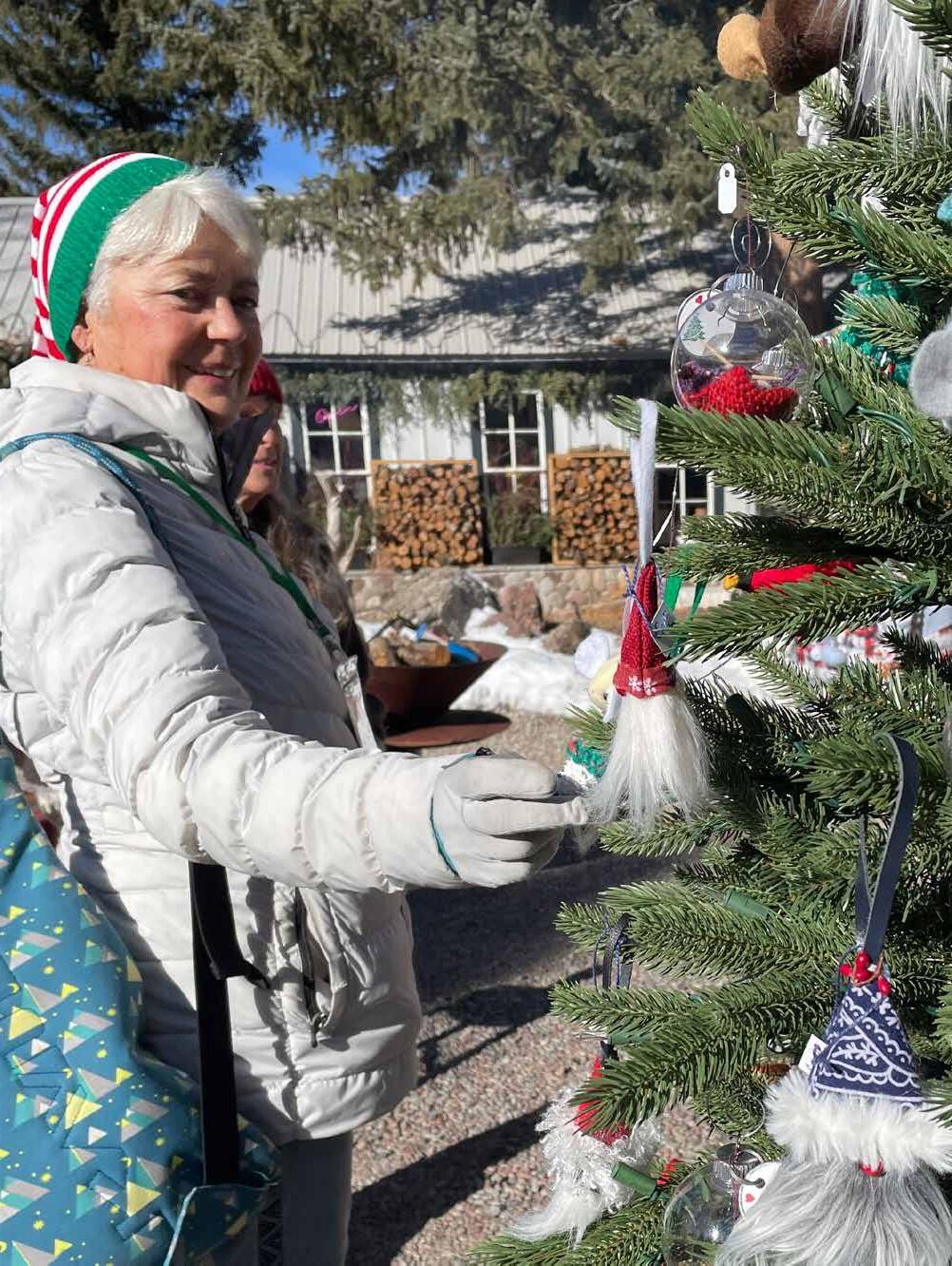
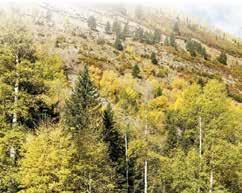
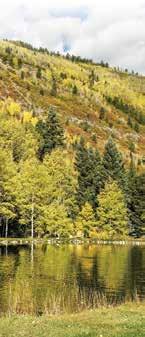
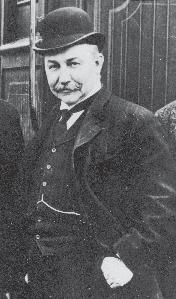
Photograph from Dione Holt.
From the Crystal River Caucus
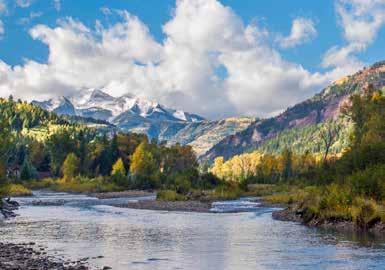
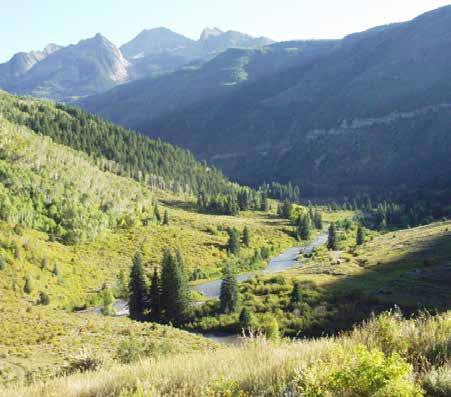
In the upper Crystal River Valley, a place where the pace of life seems gentler and the sense of community runs deep, there is a group of dedicated residents who are ensuring community voices are heard on matters that could shape the future of their home. This is the Crystal River Caucus, a grassroots body of local citizens who take an active role in advising Pitkin County on everything from land use to the presence of wolves.
For anyone whose primary home is in the Pitkin County portion of the Crystal River Valley, or for those who own property here, membership in the caucus is automatic. It’s a hyper-local form of democracy, one of 12 such caucuses in the county, designed to represent the unique priorities and values of this rural corner of Colorado.
"The caucuses represent the most local form of representative democracy," explained John Emerick, the current chair of the Crystal River Caucus. This is especially vital, he noted, in a county where the concerns of a small, unincorporated community like Redstone might differ significantly from those of a bustling resort town.
Over the past year, the Caucus has been a forum for a number of pressing and diverse topics. Residents have gathered to discuss the reintroduction of wolves to Colorado and what that might mean for their area. They’ve also weighed in on the possibility of a Wild and Scenic designation for the Crystal River, a federal title that would protect the river's free-flowing nature. The designation aims to preserve rivers with outstanding natural, cultural, and recreational values for the enjoyment of present and future generations.
Other conversations have hit closer to home, with discussions on Pitkin County’s regulations for short-term rentals, a topic of keen interest in a region popular with tourists. The Caucus has also kept a close eye on infrastructure projects, like the replacement of the Redstone south bridge and developments at the Crystal River State Fish Hatchery.
Looking ahead, the Caucus holds its Annual Meeting on November 13th at the Church at Redstone. The meeting, which begins at 7 p.m., will offer both in-person and virtual attendance options, ensuring that all members have a chance to participate. On the agenda are elections for open board positions and consid-

eration of any proposed changes to the group’s bylaws.
But the meeting will also delve into several exciting local initiatives with updates on the proposed Redstone to McClure Pass Trail, a project that aims to create a non-motorized recreational path for hikers and bikers. The Caucus will also hear about the local Emergency Alert System and the Dark Sky Initiative. This latter effort is part of a growing movement in Colorado to reduce light pollution, preserving the stunning celestial views for which the state is renowned and protecting the well-being of people and wildlife.




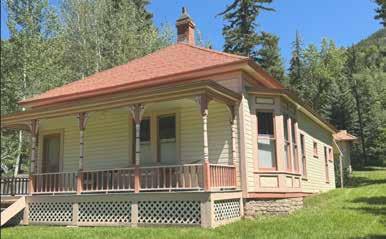
A particularly poignant topic for discussion will be the recent acquisition of the DeMaestri-Durrett Cottage by the Redstone Historical Society. This historic structure represents a tangible piece of the valley's past, and its preservation is a matter of great importance to many residents.
The Crystal River Caucus typically meets publicly six times a year, on the second Thursday of every odd-numbered month. These gatherings are an opportunity for neighbors to connect, share their perspectives, and collectively shape the recommendations that are passed on to County officials.
For those who are not yet on the caucus's email list and wish to be kept informed of meetings and discussions, a simple email to crcaucus@ gmail.com is all it takes. For any questions, John Emerick can be reached at (970) 9632143.
In a world that often feels disconnected, the Crystal River Caucus stands as a testament to the power of local engagement. It is a reminder that in the quiet valleys of Colorado, the voices of the community matter, and that by coming together, residents can play a crucial role in charting the course for the future of the places they call home.
A note from the Redstone Historical Society Board
The Redstone Historical Society is proud to announce that as of October 10th, we have officially purchased the DeMaestri-Durrett Cottage after over a year of hard work. We are very excited for the next chapter of this project, which will include transforming the cottage into a museum and community space for the Village of Redstone, where it, along with many other artifacts from the township’s history, will be preserved, protected, and shared for generations to come.
We are immensely thankful to the family who has preserved this cottage for the past 80 years, both for their stewardship and their generous donation in assisting with our purchase of the cottage.
Additionally, we were awarded a grant from History Colorado, as well as a matching grant from Pitkin County, both of which we are also extremely grateful for.
What helped us to seal the deal were the generous donations of our community, both near and far. We cannot fully put into words the feelings of gratitude for our community in supporting us with this project. So many of you came together in a shared love of where we live and where we have come from, and this is what
makes our community so special: Our shared love of this place and its stories.
As we move into our operational phase soon, more information will become available on how we plan to transform this space, news on future exhibits, and information on continued fundraising for operations.
With infinite gratitude, always.
For more information about the cottage, visit www.historyredstone.org/…/demaestri-durrett-cottage/
Thursday, November 13, 7-9 pm At the Church at Redstone on the Boulevard*
The agenda will include election of board members, discussions of the acquisition of Durett Cottage for the Redstone Historical Society, reduction of the maximum size for new houses in Pitkin County, and ballot measure outcomes, and updates on the Emergency Alert System, the Redstone to McClure Pass Trail, and the Dark Sky Initiative.
All registered voters whose principal residence is in the Pitkin County portion of the Crystal River watershed, or those who own property in that area, are voting members of the Crystal River Caucus. *Those members who cannot attend the in-person meeting may join via Zoom. A Zoom link will be sent to all members on the caucus email list. If you are not on the list and would like to be, email crcaucus@gmail.com. The caucus does not share its email list!
A concerted effort to protect one of Colorado's last free-flowing rivers is entering a new phase, with stakeholder groups hiring outside expertise to chart a course for the future of the Crystal River. Two subcommittees of the Crystal River Wild and Scenic and Other Alternatives Feasibility Steering Committee are bringing on consultants to develop detailed reports on potential protection measures.
The move marks a significant step in a multi-year process aimed at safeguarding the ecological integrity of the Crystal River, a vital waterway that has so far avoided the dams and out-of-basin diversions that have altered so many other rivers in the American West. The Steering Committee, formed in 2023, is a broad coalition that includes representatives from Gunnison and Pitkin Counties, the Town of Marble, and the Colorado River Water Conservation District, as well as landowners, recreationists, residents, ranchers, and river advocates.
This diverse group shares a common goal: To secure durable protections for the Crystal River that would prevent the construction of dams or projects that would pipe its water to other river basins. Early on, the committee established a set of shared values and criteria to guide their work, emphasizing a collaborative and community-driven approach to river preservation.
To delve deeper into the complex issues at hand, the Steering Committee formed three subcommittee workgroups early last year. These groups are each focused on a specific potential

protection measure: Federal Wild and Scenic designation, expanded instream flow water rights, and an intergovernmental agreement. After months of regular meetings that began in March 2024, the subcommittees are now poised to take their work to the next level.
The Wild and Scenic Feasibility Subcommittee, tasked with exploring the possibility of adding the Crystal River to the national Wild and Scenic Rivers System, has hired a third-party facilitator team from the Keystone Policy Center. Based in Keystone, Colo., the center is known for its fair and inclusive approach to natural resource planning and its ability to help diverse groups find common ground. The Keystone team will assist the subcommittee in summarizing its research and findings, incorporating community input and insights from agency officials and legislative experts. The ultimate goal is to produce a comprehensive report that evaluates a Wild and Scenic designation against the steering committee's shared values.
"Protection of the free-flowing Crystal River is clearly important to the community, as evidenced by the hundreds of hours that people have volunteered for this stakeholder process,"
said Michael Gorman, chair of the Wild and Scenic subcommittee. "We've taken a deep dive into Wild and Scenic policy and legislation and learned a lot from stakeholders along the river. We've got more work to do, and we're excited to have the skilled facilitators at Keystone to help us compile what we've learned about how Wild and Scenic legislation ties into our specific priorities on the Crystal River. We look forward to having a report that we can share with our community and inform future discussions.”
A Wild and Scenic designation is a federal protection that would preserve the free-flowing character of the river and its outstandingly remarkable values. However, the process for achieving such a designation can be lengthy and complex, requiring an act of Congress.
Simultaneously, the Instream Flow (ISF) Subcommittee is commissioning a pair of studies to identify and document the ecological values that could be protected by an instream flow water right. Colorado's Instream Flow Program, established in 1973, allows the Colorado Water Conservation Board (CWCB) to appropriate water rights for instream flows to preserve or

Crystal river ProteCtions
Continued. . .
improve the natural environment. This was a groundbreaking concept at the time, as it recognized the value of keeping water in rivers, rather than diverting it for other uses.
The Crystal River already has some instream flows to protect minimum flows during low water periods. However, the stakeholder group is now exploring whether higher flow rates are needed to protect the unique ecological values of the river. The two studies will examine how different flow rates support the river's natural fluvial regimes, riparian vegetative communities, and ecosystem functions.
The first study, focused on sediment impacts, will involve developing a comprehensive study plan and installing a suspended sediment monitoring station. Ecological Resource Consultants, Inc. (ERC), a firm specializing in stream restoration and water resource projects, has been hired to lead this effort. The second study will analyze woody riparian vegetation and identify the flows and sediment behaviors that create suitable habitat for the Crystal's plant communities. A team from Colorado State University, led by Dr. David Cooper, a Senior Research Scientist in the Department of Forest and Rangeland Stewardship, will conduct this research. Both studies are set to begin this fall
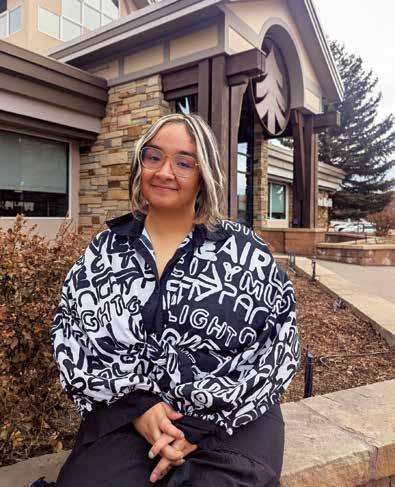
Mark Beckler, an ISF subcommittee member and a resident of Marble, Colo., emphasized the unique character of the Crystal River. "We know the Crystal River is unique in that it gets unrestrained high flows in the springtime," he said. "These studies we are undertaking will give us a better understanding of how the river's unique sediment functions and riparian communities are tied to the natural flow regime of the Crystal.”
The work of both the Wild and Scenic and Instream Flow subcommittees is being supported by a joint funding request that was awarded just last month. The funding comes from the Colorado Water Conservation Board's Wild and Scenic Rivers Fund, the Mighty Arrow Family Foundation, and Pitkin County's Healthy Rivers Board. The Wild and Scenic Rivers Fund was created by the Colorado General Assembly in 2009 to foster collaborative processes aimed at developing protections for rivers as an alternative to federal designation.
The third subcommittee is focused on drafting an intergovernmental agreement (IGA) between local and county governments in the Crystal River Valley. This agreement, which is nearing finalization, would memorialize the shared values and commitments to protect the Crystal River across governmental jurisdictions. The IGA is seen as a way to formalize the unanimous support from the Steering Committee to prevent new reservoirs or impoundments on the mainstream of the Crystal River and to oppose any water rights applications or trans-basin diversion projects that would remove water from the Crystal River Basin.
The collaborative and multi-pronged approach being taken by the Crystal River stakeholders reflects a growing understanding of the importance of protecting the West's remaining free-flowing rivers. As climate change and drought continue to put pressure on water resources, the value of rivers like the Crystal, which have so far been spared from major development, is only increasing.
The efforts on the Crystal River are not happening in a vacuum. Across Colorado and the West, there is a growing movement to protect and restore rivers. The work on the Crystal River is a testament to the power of community-based conservation. By bringing together a diverse group of stakeholders, the Steering Committee has been able to build consensus around the need to protect the river and to explore a range of potential protection measures.
The hiring of consultants and the commissioning of scientific studies represent a critical turning point in the effort to protect the Crystal River. The detailed reports that will be produced by these experts will provide the Steering Committee with the information necessary to make informed decisions about the best path forward for the river. The outcome of this process could have implications not just for the Crystal River but for other rivers across the West, as communities grapple with how to balance the competing demands of a growing population and a changing climate with the need to protect the natural environment. The work on the Crystal River is a hopeful example of how a collaborative and science-based approach can lead to a more sustainable future for our rivers.




From Pitkin County Commissioner Francie Jacober
In last year’s election, 67% of Pitkin County voters approved a ballot question for modernizing our airport. This mandate by the voters, the upcoming decisions by the Board of County Commissioners, and the Airport Advisory Board will not come easily. This is a huge task we are undertaking, and the hurdles and the opportunities are tremendous. The scope of the work needed to finally bring our airport into the 21st century is unprecedented, and the cost, to be honest, is staggering.
Fortunately, this investment in our future will not come from increased taxes for our citizens. The construction of a new runway, mandated by the Federal Aviation Administration, is well over $100,000,000, but these costs will be offset by federal grant dollars by up to 90%. The new terminal, however, will not be eligible for the type of grants that we anticipate will be awarded to the runway construction, and the design and construction may exceed $500,000,000.
The bottom line on your ballot? We need to secure bonding in order to finance the terminal. Our county charter requires the BOCC to seek voter approval in order to incur debt — even with an enterprise project as this one at the airport. The State of Colorado does not require voter approval for incurring debt for enterprise funds, but our charter is more strict than the State’s laws. So, we come to you to ask for the approval to secure bond funding.
The bonds we are seeking will not require taxpayer dollars. Because we will be issuing revenue bonds, the financing will
be repaid and supported by revenues from the airport itself. Due to our contract with Atlantic Aviation, we are confident that our revenues from both general and commercial aviation will support the repayment of our bond funding.
I traveled to Portland, Ore., to meet with the architects with ZGF, whom we have hired to do this project, along with our local architect Charles Cuniffe, who will be working with ZGF, to design our terminal — environmentally sound, beautifully designed, locally inspired, and future–ready. This visit was inspiring. The architects are creating designs and systems that are net-zero, are using Colorado materials, and reflect the history and culture of the Aspen area. Everything that is being planned is based on the Common Ground Recommendations. The components of these recommendations are available for viewing on the airport website, www.aspenairport.com. They were developed over several years by over 100 of our citizens, and they incorporate progressive, sustainable, environmentally-sensitive recommendations as well as a commitment to being true to Aspen’s history, both architecturally and socially. As we move forward towards a new runway and a new terminal, the Common Ground Recom-
T
mendations are at the forefront.
We will submit our applications for grants for the construction of the runway in the spring of 2026, and have recently secured the necissary NEPA (National Environmental Policy Act) approval and are now ready to move forward. Once runway construction begins, we can apply for funds for the terminal. This opportunity is short-lived. The window closes in July of 2026 for the terminal grant program. If we can secure the bond funding through this ballot measure, we will be able to apply for terminal funds in a timely manner. Our goal is to complete construction in nine months — meaning we will limit the duration of airport closures to this period.
The city of Aspen and Pitkin County don’t need a large airport, but we do need enhanced avionics, TSA and passenger security and comfort, and an airport that reflects the beauty, sustainability, and welcoming atmosphere that meets the needs of all of us. Please help us create the new Aspen-Pitkin County Airport by voting YES on 1A, approving bond funding without increasing property taxes.
Mission Statement: To provide a voice for the residents of the Crystal River Valley; to bring attention to the individuals and local businesses that are the fabric of the Crystal Valley region; to contribute to the vitality of our small town life.
EDITOR AND ADVERTISING SALES
Gentrye Houghton gentryeh@hotmail.com
CONTRIBUTORS
DJ Sugar Monkey
Amber McMahill
DISTRIBUTION AND LAYOUT DESIGN
Ryan Kenney The Crystal Valley Echo is published monthly, and is distributed throughout the Crystal Valley.

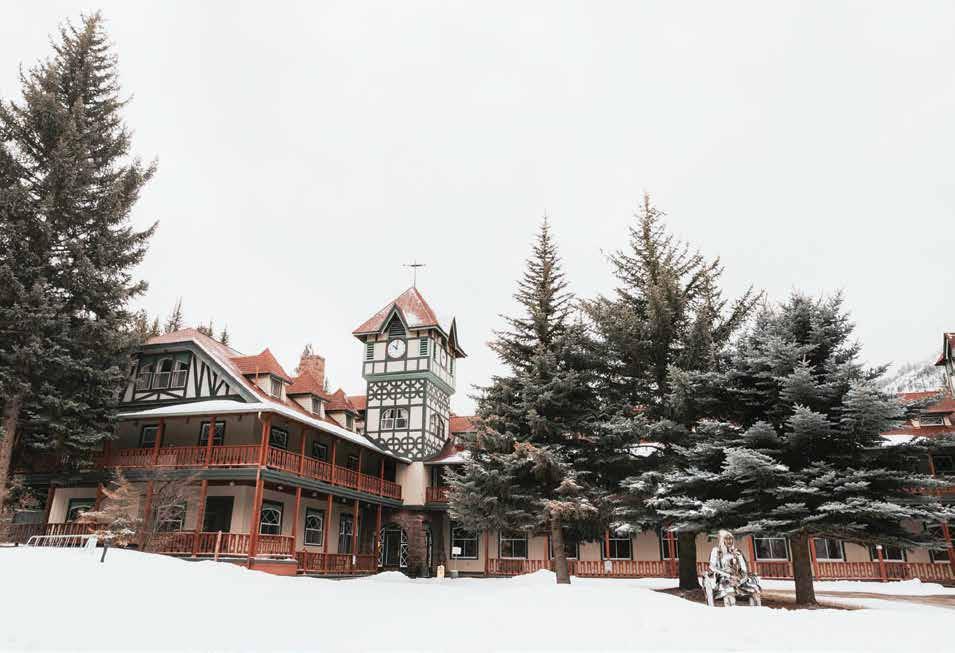
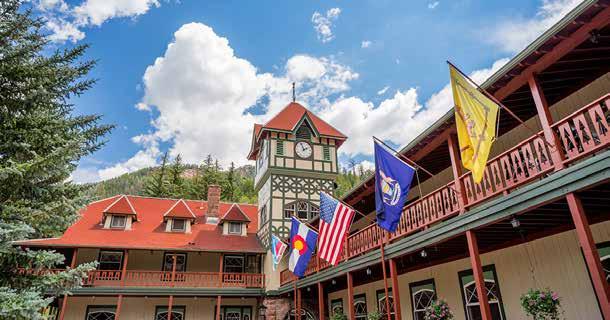
Nestled deep within the Crystal River Valley, the picturesque mountain Village of Redstone is set to transform into a winter wonderland for the Redstone Art Foundation’s Annual Holiday Market. From 10 a.m. to 4 p.m. on Saturday, December 6th, Redstone Boulevard will become a bustling, open-air marketplace, evoking the charm of a traditional European holiday celebration.
Visitors are invited to bundle up and immerse themselves in a festive atmosphere set against the stunning backdrop of majestic red cliffs, which give the historic town its name. The market is designed to be a full-day experience for families and friends, a chance to slow down and savor the spirit of the season.
The heart of the event stretches along the town's main thoroughfare, from the Historic Redstone Inn to the popular Propaganda Pie. This charming expanse will be lined with artisan booths and local businesses, creating a vibrant winter village. Shoppers can expect to find a unique array of handmade gifts, perfect for holiday giving. Festive decorations, along with delectable baked goods and sweets, will add to the sensory delights of the day.
NEW PRICE: $1,350,000
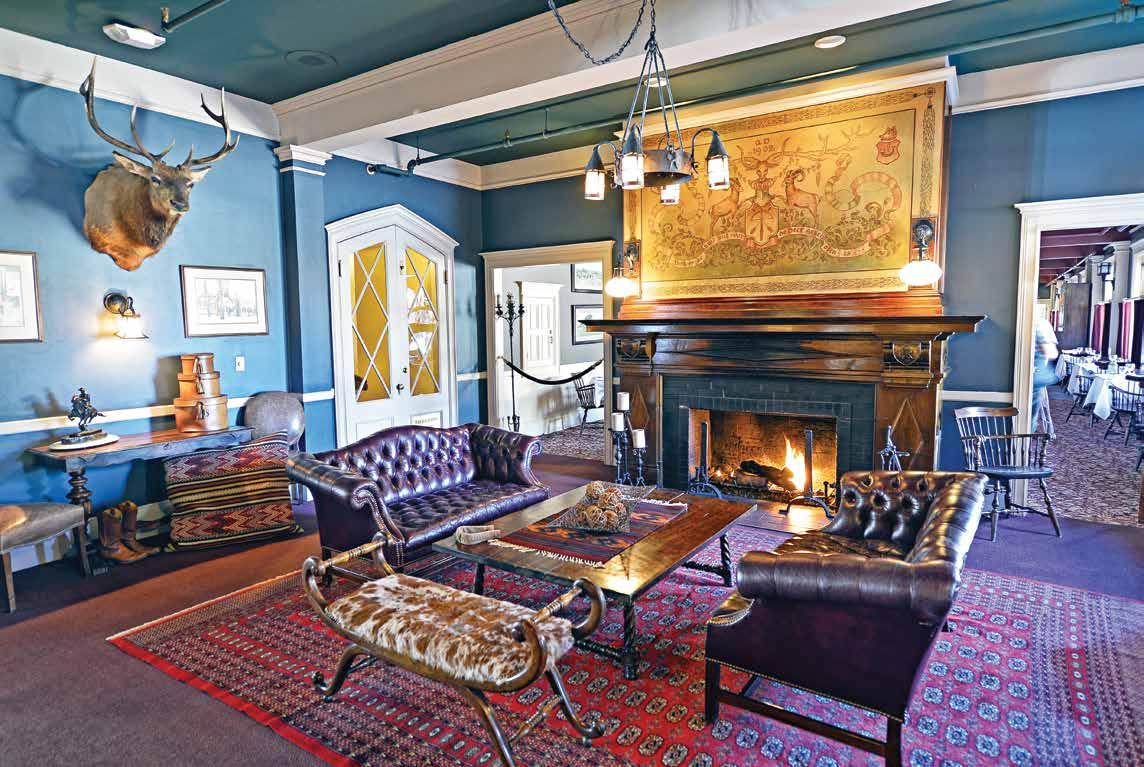
The Redstone Inn, a historic landmark icon was constructed in 1902, serves as a grand anchor to the festivities. Originally built as a dormitory for miners, its historic architecture provides a perfectly nostalgic starting point for a market journey. At the other end of the Boulevard, Propaganda Pie, known for its eclectic atmosphere and Detroit-style pizza, marks the lively conclusion of the market's span.
A host of classic Christmas traditions will bring the Boulevard to life. Santa Claus himself will be greeting visitors and listening to holiday wishes from 12 p.m. to 2 p.m. at the scenic Redstone Cliffs Lodge. This natural landmark, nestled along the Crystal River, promises a memorable and picturesque setting for a meeting with St. Nick. Throughout the day, the air will be filled with the harmonious sounds of holiday cheer as carolers stroll along the street, serenading shoppers and families.
The event is rich with activities designed for all ages. Families can delight in complimentary rides on the Horse-Drawn Holiday Express, offering a charming tour up and down the Boulevard. To ward off the crisp winter air, attendees can enjoy free hot cocoa while children engage in special crafts and activities.

Local businesses are an integral part of the celebration. Shops and eateries along the boulevard will be featuring special holiday menu items, offering an array of seasonal treats and warm beverages for shoppers to enjoy as they explore the market. It is, according to the RAF board, a day to "shop, sip, eat, and celebrate the joy of the season with your friends and neighbors."
The organizers offer a friendly reminder for attendees: While the holiday cheer is plentiful, some vendors may not be equipped to accept credit cards. Visitors are encouraged to bring cash or checks to ensure they can purchase unique gifts from all the local artisans.
As a blanket of soft white snow can offer a ground cover by early December, Redstone provides a dreamy and authentic winter paradise. The annual Holiday Market is more than just a shopping event; it is a celebration of community, tradition, and the enchanting beauty of a Colorado mountain village in its most festive season.
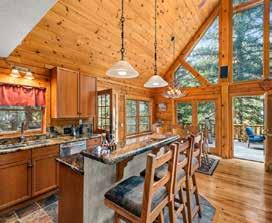
Secluded Alpine Retreat with views
REDSTONE Nestled in an evergreen forest, this alpine log home features a stunning great room with floor-to-ceiling windows, a custom stone fireplace, beautiful wood floors, and access to al fresco living on the generous deck. Three bedrooms, three baths, bonus room, and a generous garage compliment the one-acre site just one mile from the vibrant village of Redstone.
175 Bighorn Lane, Redstone | MLS #185777
Chris Lawrence & Jeff Bier 970.309.4605 | 970.379.0523 cbmasonmorse.com




NOVEMBER 4 & 18
11:00 a.m. – Yoga ($5)
With Anna Raphael. Open to all ages and abilities.
12:00 p.m. – Lunch ($10)
RSVP by noon the Friday prior – space is limited. Plated lunch served. Gluten-free option available. 12:45 p.m. – Program
• November 4: Fire Cider
With Sheehan Meagher
Fire ciders are an old remedy to ward off colds & flus and stay healthy during winter. They are made by infusing various vegetables, fruits, and herbs in apple cider vinegar. Learn how!
• November 18: Holiday Card-Making
With Terry Langley
Come make a special card (or two…or three) for the holidays. Choose from several designs. Pieces are cut and ready to assemble - no skill necessary!
WANT TO BE KEPT IN THE LOOP? Send us your email address: (970) 920-5432 • seniors@pitkincounty.com
By Gentrye Houghton
The air inside the Redstone General Store is thick with the aroma of simmering tomato soup and the sweet scent of old wood. It was a crisp October evening, and outside, the Crystal River Valley has settled into the quiet chill of autumn. But inside, there is warmth. Nearly 40 souls gathered, drawn from their homes by the promise of community and a story, or, more accurately, a lifetime of them.
They sit on mismatched chairs and hay bales, cradling warm bowls, their faces illuminated by the soft glow of the fire. All eyes are on Jeff Bier. Seated comfortably, as if holding court in his own living room, he is the reason we are all here. With a dry wit and a memory that serves as the valley’s unofficial archive, he begins to speak, and the murmur of shared greetings gives way to the crackling warmth before them. The stories, like the nearby river, begin to flow.
“Well, I first came to this valley in 1947,” he starts, his voice a calm current. “I was two.”
For the next hour, his words acted as a guide, leading his neighbors through the winding corridors of the past. He is the
keeper of this valley’s collective memory, a living bridge to the days of one-lane dirt roads, grand social experiments, and the rough-and-tumble characters who chiseled their lives into the hard-rock landscape. This fireside chat was more than a history lesson; it was a communion, a shared act of remembering what was, and what remains.
The following day, the air in Bier’s dining room carries the scent of fresh coffee. We sit at his table in the Gamekeeper’s Cottage, a historic home nestled under the same red cliffs that have watched over him his entire life. Sunlight streams through the windows, illuminating dust motes dancing in the air, acting as tiny, fleeting witnesses to a long history. This house, like the man himself, is steeped in stories.
Bier’s tale begins not with a bang, but with a bumpy ride. His family’s connection to the valley was forged through his great aunt, Nan, and Doc Tubbs. Tubbs was Carbondale’s only physician in the 1940s, a man who “set bones and delivered babies and did the whole gambit.” Their presence brought Bier’s family from Denver, Colo., to this rugged paradise.





“The first real recollection is driving up to Redstone, which took a while,” he recalls, his eyes looking past the window and into a distant decade. “This was before the mines had reopened, and it was a one-lane road. You really had to want to come up here.”
He paints a picture of a valley that is almost unrecognizable today. Where the KOA campground now sits, there was a “tunnel of cottonwoods,” a canopy so thick you’d “almost have to turn on your [car] lights.” Redstone itself was a ghost of its former glory, a town with maybe “four or five people living here.”
The valley in the 1950s and early '60s was a place of transformation, and a young Bier had a front-row seat to the spectacle. Refers to as the Kissler era, a time when entrepreneur Frank Kissler, a man of “renowned actuality,” descended upon Redstone with grand, almost fantastical, ambitions. Kissler envisioned a ski resort, a country club, a destination, a shared dream by many a Redstone investor. He bought the Redstone Inn, the Redstone Castle, and hundreds of acres, and for a time, Redstone was, according to Bier, kind of hopping.
Kissler held lavish dinner parties with “white tablecloths, and all the food was served under the cover of silver,” Bier remembers. “Men had to wear coats and ties, women wore dresses. It was very formal.”
Though, as a boy, he experienced this world from the periphery. While the adults, a mix of World War II veterans and hopeful investors, partied upstairs at the Inn, the kids were sent to the recreation room. “We’d play ping pong and just hang out downstairs,” he says, “but I remember it just got louder and louder upstairs.”
He skied the T-bar Kissler built, a gentle slope that was the first hint of a much larger dream. He remembers the Gamekeeper’s Lodge, part of the Castle’s old game preserve, where Osgood and his cronies would hunt elk from the veranda, and he recollects Kissler himself, an elegant, grandfatherly figure with a vein in his head and white hair, moving from table to table, an “outgoing force,” Bier describes, "selling a dream."
But the dream, like many in these mountains, was fragile. Kissler’s death brought the era to a quick close, the corporation bled out, and the grand plans dissolved.






Yet, the subdivisions he created — Crystal River Park and Elk Mountain — remained, a lasting footprint of his audacious vision.
Bier’s own path soon diverged from the valley’s quiet roads. At 19, while working as a laborer building the first condominiums in a still-basic Aspen, he received his orders for Vietnam. He refers to it with characteristic understatement as an “all-expense paid trip to Southeast Asia, compliments of the United States Marine Corps.”
There's evidence that experience left its mark, but he doesn’t dwell on it. Upon his return, he found himself adrift, eventually landing in Leadville, Colo., destitute, where he took a job as a hard rock miner at the Climax mine. It was a brutal education in a world far removed from Redstone’s fading glamour.
Yet, the mines eventually brought him back home to the Crystal River Valley, where he took a job with a contractor working in the Mid-Continent coal mines up Coal Basin, mostly performing maintenance. He describes the life of a miner back then as a pretty harsh existence, working 12-hour days, seven days a week, often shoveling feet of snow at 11,000 feet. The work was industrial, loud, and dangerous, a world of dynamite, bulldozers, and the constant hum of turbines circulating air into the deep shafts.
“Coal mines are just inherently more dangerous, particularly the methane,” he explains, contrasting it with his time in hard rock. “An open flame in a cold coal mine could kill you and everyone else.”
The valley, too, felt the mine’s presence. The trucks, 22 tons of coal each, rumbled along the road and on down through Carbondale. At night, the lights of the 24-hour operation were a constant glow in the distance. The community was shaken by two major explosions, one in 1965 that killed nine miners, and another in the early ‘80s that killed 15. Those tragedies left scars that have stayed with any resident present during those times.
“It was so impactful and even made national news,” Bier recalls of the later disaster. “It was huge, and it still lingers.”
For Bier, the mines were a stopgap measure, a way to get by. His future lay not deep in the earth, but on its surface, in the very land and homes that have given the valley its character. In 1969, he got his real estate license, a career that would allow him to finally plant deep, lasting roots.
His first sale is a story he tells with a grin. It was a lot in the Elk Mountain subdivision, sold for $750 to a Slavic miner from Somerset, Colo., who didn’t speak English and couldn’t write his own name. When it came time to sign the papers, the man simply made an “X."

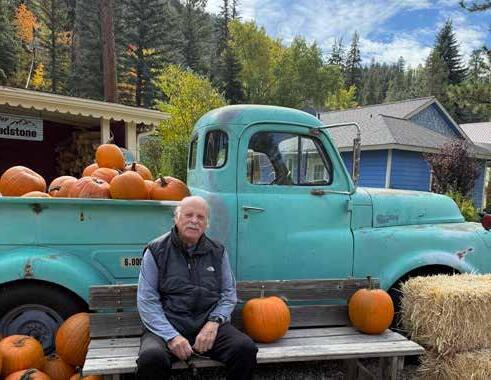
“Then, he reaches in his back pocket, pulls out a flask of whiskey, and unscrews it to take a drink, then hands it to me. So, I took a drink, and he said, ‘Now, it was good,’” Bier laughs. “That meant the deal was done. We shook hands and had a drink to seal it. I thought, What a great business this is!”
It was during this time that he and his former wife took over Avalanche Ranch. They bought it for $165,000, a collection of basic, rudimentary summer cabins
before there were hot springs. He commented that they were in over their heads, borrowing heavily, and facing a crippling 14 percent interest rate when the oil shale economy collapsed. The lender, an outfit from San Diego, Cal., was ready to foreclose.
In a moment of desperation, they sent a representative. “It turned out he was a Marine Corps fighter pilot in Vietnam. I was a

The
“We help each individual understand their wants, needs, and goals, then provide them with a road map and the resources to get there. We don’t prescribe solutions—we help families create their own pathway to success.”
- Katherine Sand, Aspen Family Connections Director
Aspen Family Connections is a family resource center, created to connect all Pitkin County children, youth and families with a wide range of community resources and is a grant recipient of the Pitkin County Healthy Community Fund.
voter supported Healthy Community Fund assists the Pitkin County community by providing grants to non-profit organizations that provide critical health and human services and community resources.


From Jaime Fiske
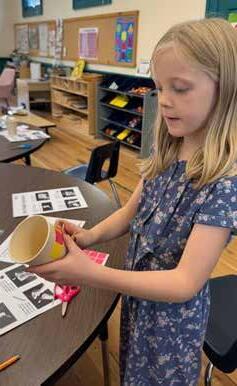
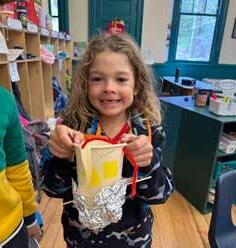
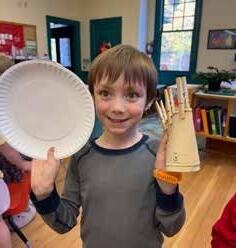
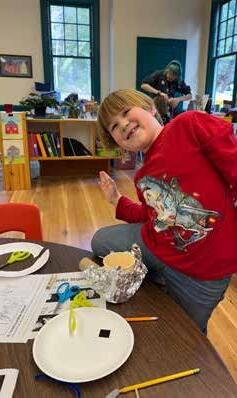
Last month, we learned about the different kinds of birds that are attracted to bird feeders. In our activity, the students designed their own bird feeders to attract seed-eating birds!
Here’s something fun you can do to-
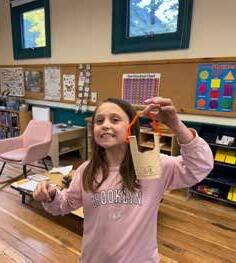
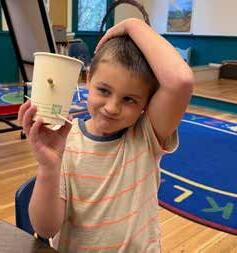
gether with your child at home: Try looking for birds around your neighborhood! Consider downloading the free bird app “Merlin” (http://merlin. allaboutbirds.org) for your smartphone, so you and your child can easily identify any bird you find.


Jeff Bier Continued. . .
Marine Corps grunt,” he says. “So we had that connection, and we got along pretty well.” The man asked what it would take for them to keep the property. Bier replied that they needed an interest rate under 10 percent. “He said, ‘How about six?’”
Quietly, Bier says that their shared service, a bond forged half a world away, saved them. They owned the ranch for 13 years, a place that became a starting point for many, a tiny foothold in a valley that was becoming increasingly hard to break into — a tale that continues today.
If a town’s soul can be found in its characters, then Jeff Bier is its most devoted biographer. His stories are populated by a cast of unforgettable figures who colored the valley with their eccentricities and passions.
There was Lucas Kovats, a captured German POW and guide who, after the war, hiked from Camp Hale, ended up in the Crystal Valley, and declared it reminded him of Bavaria. He built a house in Crystal River Park entirely of stone he carried, piece by piece, from the river in a specially made wooden backpack. (A side note from the author: Kovats’s home is the first residence I occupied upon landing in the Crystal River Valley. There were always rumors of Kovats's treasure — his mother's jewelry — hidden somewhere beneath the stones, but I never found it.)
Bier also recollects a man by the name of Tony Antonides, an artist and architect who, with his wife, was the “hub of the social scene in the ‘50s.” Antonides was a man of renowned capacity for life and liquor. Bier tells the story of the night Antonides left the Redstone Inn in his International Scout, “missed the bridge, drove right down in the middle of the Crystal River, and got stuck.” A search party was formed, but Antonides had simply walked home, climbed into bed, and didn’t tell a soul.
The stories spill out, one after another: The raucous hockey games between employees and guests at the Inn, a prank involving a fully garnished hockey skate served under a silver platter, the annual St. Patrick’s Day tradition of painting a green stripe down the Boulevard. This has always been a community that makes its own fun, sculpting its own identity in the shadow of the mountains.
“It was a younger, unencumbered crowd, you know, that seemed to be hanging out,” he says of the constant parties and get-togethers that defined the era.
But as the valley grew, it faced new pressures. The freewheeling spirit that defined Bier’s early years began to bump up against the realities of development. A proposal for a hot dog stand in the shape of a hot dog, and the potential for a 7-Eleven-style convenience store, spurred the community into action.
“That’s when discussions really started about how we need to protect this [place], and that’s when HPC [Historic Preservation Commission] got its feet off the ground,” he says. It was a recognition that the valley’s unique character was a precious and finite resource. For Bier, who had watched the valley evolve for decades, it was a battle worth fighting. His work in real estate gave him a unique perspective, a chance to be “influential in situations where people are going to do things that have been, if not abhorrent, certainly not in a consensus with our environment up here.”
Now, in the autumn of his life, Bier’s days are a bit quieter, but his connection to the wild heart of the valley remains profound. He is a man who finds solace in the backcountry, on the trails that snake up into the high country. It’s where he goes “to get right.”
It was on one of those solo trips, snowshoeing up East Creek, that he came face to face with an apex preditor. He had stopped to shed a layer, leaving his poles behind, when he heard a noise.
“I look over and all of a sudden these ears pop up and I could smell that there were elk,” he says, the memory still vivid. “It was a mountain lion, and it looked right at me!” Crouching just 50 feet away from him, the cat was gnawing on a carcass. Bier turned to leave, tripped, and fell flat on his face. “I thought, oh, God, I’m prey.
Here I am. I’m wounded prey.”
He scrambled up, raised his arms to look bigger, and backed away slowly, his heart pounding, the encounter a stark reminder of who truly rules these mountains.
Back around the fire at the Redstone General Store, the soup bowls are now empty, but hearts are full. Full of the stories of shared history, of a sense of place that Jeff Bier has spent a lifetime curating. He is more than just a storyteller; he is the valley’s memory, its conscience, the quiet voice that reminds everyone of the bumpy roads, the fallen characters, and the enduring beauty of this hidden place.
As the evening winded down and people begin to zip up on their coats, readying themselves to step away from the crackling fire, the warmth of the gathering lingers. We leave with more than just full bellies but with a renewed sense of our own place in the ongoing story of the Crystal River Valley. It is a story that is constantly changing, but thanks to Jeff Bier, it is a story that will never be forgotten as the whispers of heritage live on.
Gentrye Houghton has been an independent journalist for over 18 years and the publisher and editor of The Crystal Valley Echo. In her new weekly email column, "Reflections from the Trail Within," she goes deeper into the stories and observations that shape our inner and outer worlds. You can read more of her work and subscribe for free at thetrailwithin.substack.com

“It’s always good to acknowledge we’ve made it through another summer,” declared Mayor Ryan Vinciguerra, kicking off October’s meeting, adding that he was very happy with the direction in which the Town was moving.
The consent agenda was swiftly approved, Amber McMahill proudly announcing that the Town had received an unexpected donation of $500 from the glowing bride of a September wedding held at the Mill Site Park. Not so joyous, however, were the wedding party’s accommodations at the Retreat on Beaver Lake owned by Vince Savage, an experience which McMahill reported had left the bride in tears.
The Treasurer’s report, presented by “Money Honey” Amy Rusby, was reassuringly unremarkable; although, Town Administrator Ron Leach announced that he and Rusby had discussed spreading the Town’s cash holdings (currently held in a CSafe account) between that and a Colorado Trust account, to be decided upon during November’s meeting.
Then came the continuation of 2026 budget discussions, led by Town Administrator Ron Leach. He explained that his main consideration in putting together the draft budget was to address the concerns of Marble’s citizens, all the while maintaining a minimum cash balance of $400,000 (currently $446,000) in the Town’s coffers. Following a recent “scouting trip” around the town, Leach reported seeing “hundreds of trees in rights of way,” several of which he said would need to be felled. Seven thousand dollars has been budgeted for fire mitigation, a sum which the Mayor described as “a great starting point.” He envisaged a “synchronized day or two of clearing,” suggesting April as the best month to diarize the project, and the need for a wood chipper.
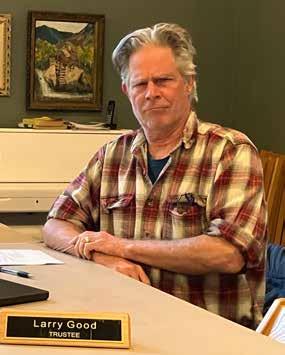
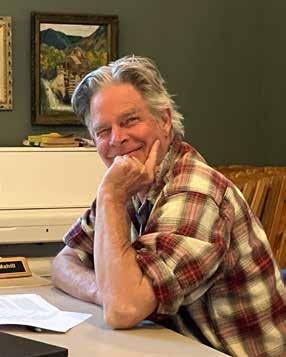
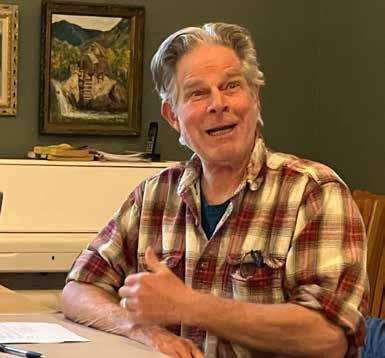
An additional $5,000 was then allotted to grant writing, up from $1,000. Frugal Mayor Pro Tem Larry Good (pictured above) suggested cutting the $1,000 earmarked for municipal court expenses, which received unanimous support from the Board. Turning to revenues,

The Marble Town Council meets on the rst Thursday of each month starting at 6 p.m. in the Marble Community Church’s Fellowship Hall.
the campground budget for 2026 was increased to $55,000, up 10% from 2025, and the general sales tax was increased to $174,000, a $14,000 increase.
Leach went on to suggest that the rate of sales tax levied by the Town be increased, explaining that this was “the only place we can really go to raise decent income.” This would be subject to a vote next year in November. He disclosed that designated special districts, like the Carbondale and Rural Fire Protection District, are able to raise sales taxes for themselves (again subject to a vote) and that the Town of Marble should “strike while the iron is hot.”
Mayor Vinciguerra explained the logic behind targeting sales tax was to place the onus of the increase on tourists rather than on Town residents. “We still have the lowest of every municipality around us,” he noted, referring to the city sales tax rate, which is currently 4%. The Town Administrator concluded the budget presentation, urging the Board to “think about it for 2026 as the competition for sales tax increases is going to pick up.”
During September's meeting, the Mayor had asked each Trustee to come along in October with their top three spending priorities for next year. Larry Good was first to express his views,
Town of Marble meetings are open to the public. 2025-2026
Starting at 6 p.m.
November 6TH December 4TH January 1ST
town of MarBle Continued . . .
recommending the Town’s proposed acquisition of the Marble Water Company, an initiative he characterized as being fraught with complexity and one that would require a huge amount of due diligence. The MWC’s lease of the Town’s water rights is due to expire in August 2028, and he proposed that legal and engineering services would need to be addressed in budget negotiations for the year ahead. Good’s other priorities were fire mitigation — East Marble has only one fire hydrant — and park safety and restoration.
Amber McMahill concurred with Good on the issues of parks and historic preservation and the acquisition of MWC, explaining that the Department of Local Affairs had offered the Town free third-party mediation services to assist in the matter. Her main priority, however, was to clean up the existing land use codes to “settle those issues that keep coming up.”
Amy Rusby echoed the views of her fellow board members, also stressing the need to develop a comprehensive revenue plan for the Town. This brought forth a couple of suggestions, including that the Town consider starting its own excavation company and set up its own water bottling operation. Larry Good floated (no pun intended)
the idea of environmentally friendly “gel” water bottles.
Councilman Dustin Wilkey was absent from the meeting, but you can bet your bottom dollar that he would have thrown the old chestnut of establishing a “commercial corridor” through Town into the mix.
The ever budget-conscious Mayor concluded that a review of the zoning plan represented the “lowest hanging fruit” of the priorities presented, and that a mixed-use designation would be most beneficial to the Town. On the issue of the takeover of the Marble Water Company, he raised question marks surrounding the longevity of the infrastructure, reaffirming his view that “red flags abound.” He recommended an executive session be set for later in the month to kick start the MWC process.
The next meeting of the Town of Marble Board of Trustees is scheduled for Thursday, November 6th at 6 p.m. in the Fellowship Hall of the Marble Community Church.
For years, you’ve read my work and the stories I’ve edited in these pages. Now, I’m sharing my more personal reflections in a new weekly email column. It’s a space for the stories behind the stories, on nature, adventure, and finding clarity in a noisy world.

free weekly column emailed directly to you; subscribe by
DJ Sugar Monkey is a resident of Marble. You can tune into his music show “Snack Time” on KDNK every other Thursday from noon to 2 p.m.


By Tucker D. Farris
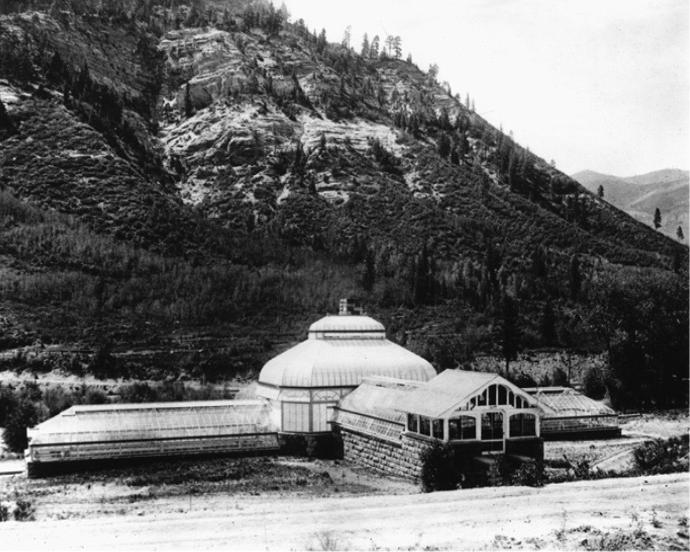
A feature of John C. Osgood’s Cleveholm Manor (otherwise referred to as the Redstone Castle) stands on the precipice of historic conservation 30 miles downriver in Glenwood Springs, Colo. The Lord and Burnham greenhouse, a staple feature of the grounds of the Castle, constructed for Osgood in 1903 is now in the hands of the Glenwood Springs Riverside Botanical Gardens, a nonprofit group seeking to deconstruct the historic structure at its current location on Highway 6 (at the former Glenwood Gardens) and relocate it to a new site where it will feature as the centerpeice of a new botanical garden for visitors to enjoy.
Moved to West Glenwood in 1939 by S. Floyd Chappel, the original greenhouse was a feature of Osgood’s estate during the Colorado Fuel and Iron days in the early 1900s through his return to Redstone, Colo., in the mid-1920s. It was located on the grounds of the castle and was state-of-the-art for the day. A sprawling oasis from the cold, dry mountain air, it provided a steady and stable fixture for the growing of vegetables, fruits, and exotics in Redstone. The greenhouse reflected the unique translation of Victorian elegance into the American West, wherein the holdovers of these architectural, social, and practical stylings remained fashionable as the Victorian era faded into history. Changing hands over the decades, the greenhouse has remained a working greenhouse for over 80 years.
Gardening and food cultivation were also a crucial component of the early days of Redstone, with married miners living in


the cottages on the Boulevard having been granted plots for gardening as a condition of Osgood’s company town. While large-scale agriculture was commonplace down the river in Carbondale, Colo., the ability to grow foods in one’s own yard was a luxury few, if any, other mining towns offered as a guaranteed option, rather than a move of necessity. Osgood’s greenhouse stood as a shining example of the idealism of the mining town of Redstone, the peak of aspirational luxury for him and for his miners.
The structure, a flowing river of steel and glass, still inspires the elegance and distinction of Cleveholm Manor, over 120 years later. The main center structure remains intact and original, which is rare for glass greenhouses of its age, especially ones that travelled 30 miles after their construction via railways. The extended wings of the greenhouse were dismantled and presumably sold for raw materials following the liquidation of Osgood’s estate, but the centerpiece remains a testament to the bygone era of Gilded Age opulence in the Ruby of the Rockies.
The Glenwood Springs Riverside Botanical Gardens is now working on the historical preservation of this unique gem of our shared history. With a new
affordable housing development on track to break ground in the same loca tion where the greenhouse now stands, they have been working tirelessly to find a new home for the greenhouse and their botanical gardens. The green house will again be disassembled and carefully relocated to a new location where it will serve as the centerpiece of the newly proposed botanical gar dens.
Carolyn Cipperly, of the Glenwood Springs Historical Society, is taking a lead on the project and has expressed in an interview the path of this project from inception to implementation. She described a deep love of the history of the valley, and we spoke of the unique connection that the greenhouse brings between Glenwood Springs and Red stone, connecting two western towns with intertwined and varied histories together again in new ways. We spoke of how the greenhouse is almost a confluence touchstone for our communities, once standing on the banks of the Crystal River, now on the banks of the Colorado, and soon, hopefully, near the confluence of the Roaring Fork and the Colorado River.

phase, which includes the dismantling, preservation, and restoration of the greenhouse structure before moving it to its new location, which is to be determined.
The Glenwood Springs Riverside Botanical Gardens are now in their first phase of fundraising to preserve the greenhouse and seek the community’s help in realizing their goals. They need to raise $75,000 for this first
More information about the greenhouse and The Glenwood Springs Riverside Botanical Gardens project may be found at www.glenwoodsprings riversidebotanicalgardens.com and tax deductible donations may be made via Zeffy at: https://shorturl.at/4AdBw One hundred percent of donations go directly to the project of historical
preservation of the greenhouse and the establishment of a botanical garden in Glenwood Springs.
Tucker D. Farris is a fifth-generation local of the Crystal River Valley, serves on the board of the Redstone Historical Society, teaches sociology at Colorado Mountain College and Colorado State University, and moonlights as a journalist where needed.

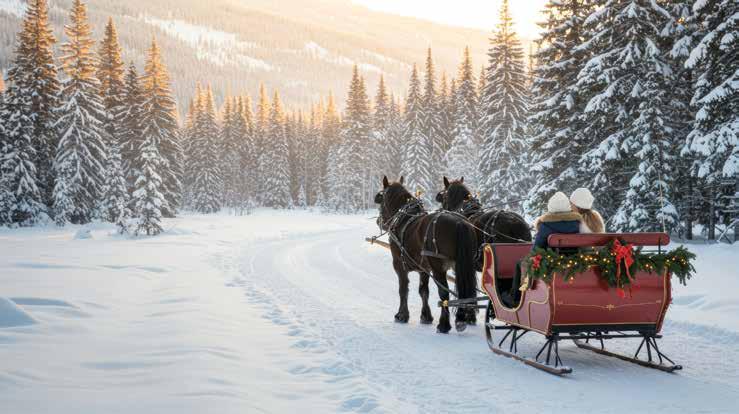
Beginning November 26th
Enjoy the romance and majesty of Winter in Redstone with a Horse-Drawn Sleigh Ride! Sleigh rides are approximately 45 minutes from the Redstone Inn to the North Bridge. Prices are $50 per person for ages 11 and up, $25 per person for children ages 5 to 10, and free for ages 4 and under. For private rides please call 970-963-2526 or email