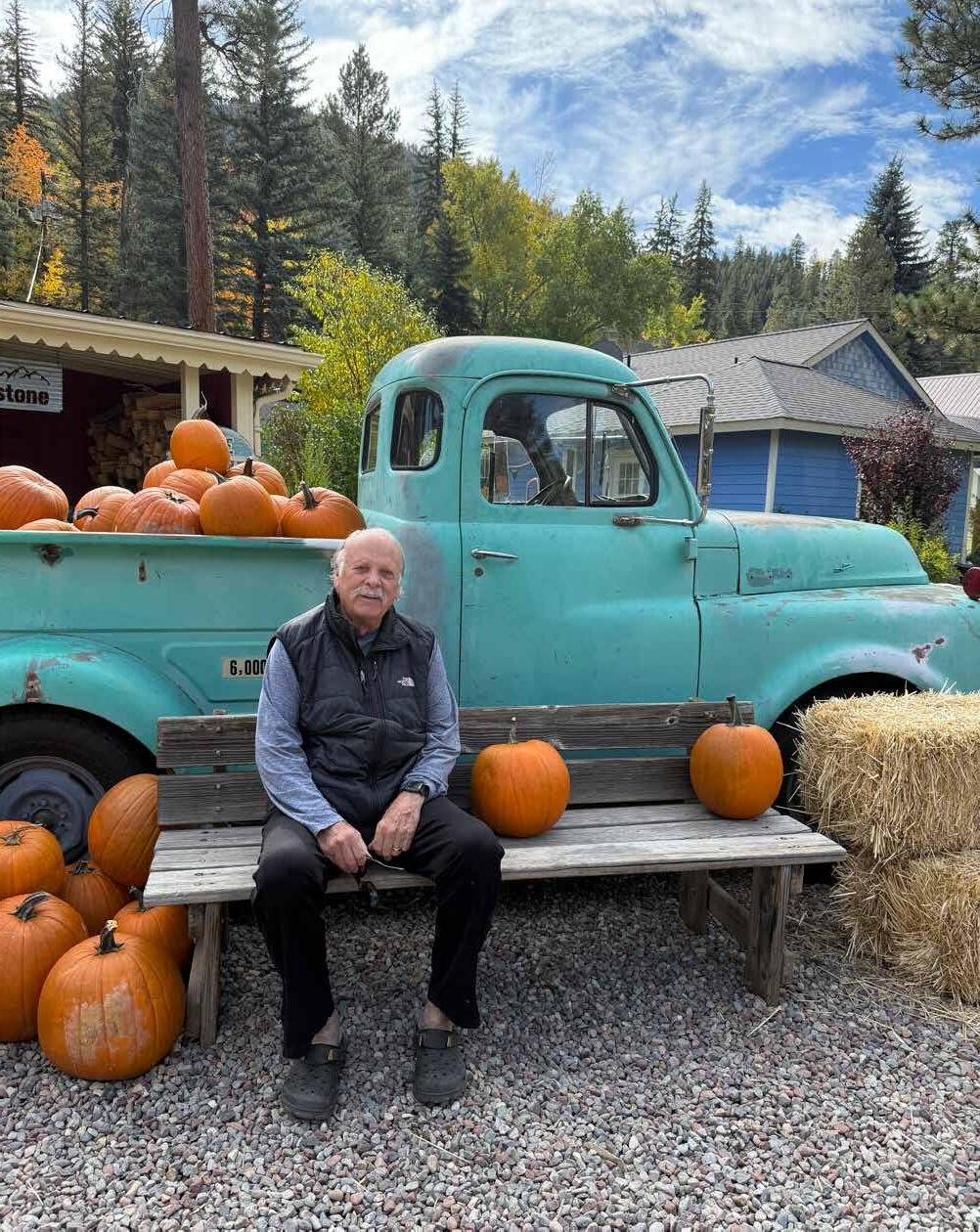
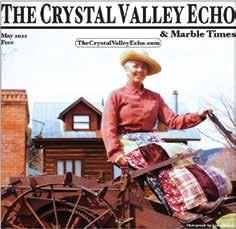
Photograph from Lisa Mattson
Op-Ed from Janelle Sohner
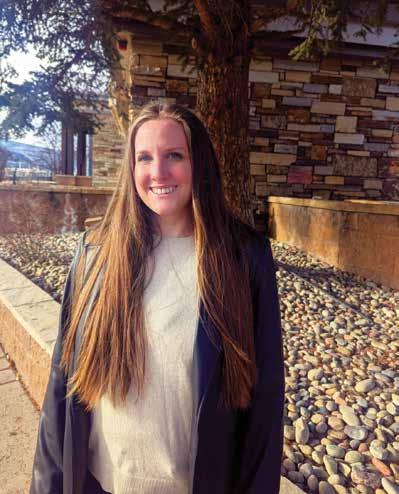
Six years ago this fall, my husband and I were excited to learn that we were expecting our first child, who was due in June 2020. I surprised myself when, after immediately telling Dan (said husband) that I was pregnant, our first phone calls weren’t to our closest family and friends to excitedly share our good news, but rather to local childcare providers so we could join the dreaded waitlists we had heard so much about from other parents.
We joke about this now, but the truth is that struggling to find and afford childcare is extremely stressful for working parents.
I later learned that only 44 percent of our local kids aged 0 to 5 have access to a spot in licensed childcare facilities. And of those spots, many are too expensive for most families to afford. The cost of having one child in care runs about $17,000 annually, from Parachute to Aspen. That’s more than the current annual tuition at many reputable colleges in the state, and given that we have had two children in fulltime daycare for the past three years, once our son joined our family, we’re still wrapping our heads around college savings!
We’ll be able to spend decades saving for college, but these high childcare costs in the first few years of our kids’ lives? We weren’t prepared. We didn’t know it would be like this, and there is not enough discussion about the heavy financial burden on new parents with kids in care.
It doesn’t have to be like this. Fortunately, this fall our community has a chance to make things better for young children and families with ballot measure 7A.
What is happening with the childcare crisis in our region, and why has it become so difficult for parents to find care? The answer can be boiled down to two main causes: Lack of availability and lack of affordability.
This is according to recent local research conducted by a coalition of parents and local leaders who have been working to get a measure on the ballot for several years. The data is there, and it supports what any working parent will tell you: Childcare is scarce and extremely expensive. Even middle-income earners struggle to afford their monthly childcare bill, especially if they have more than one child, as we do.
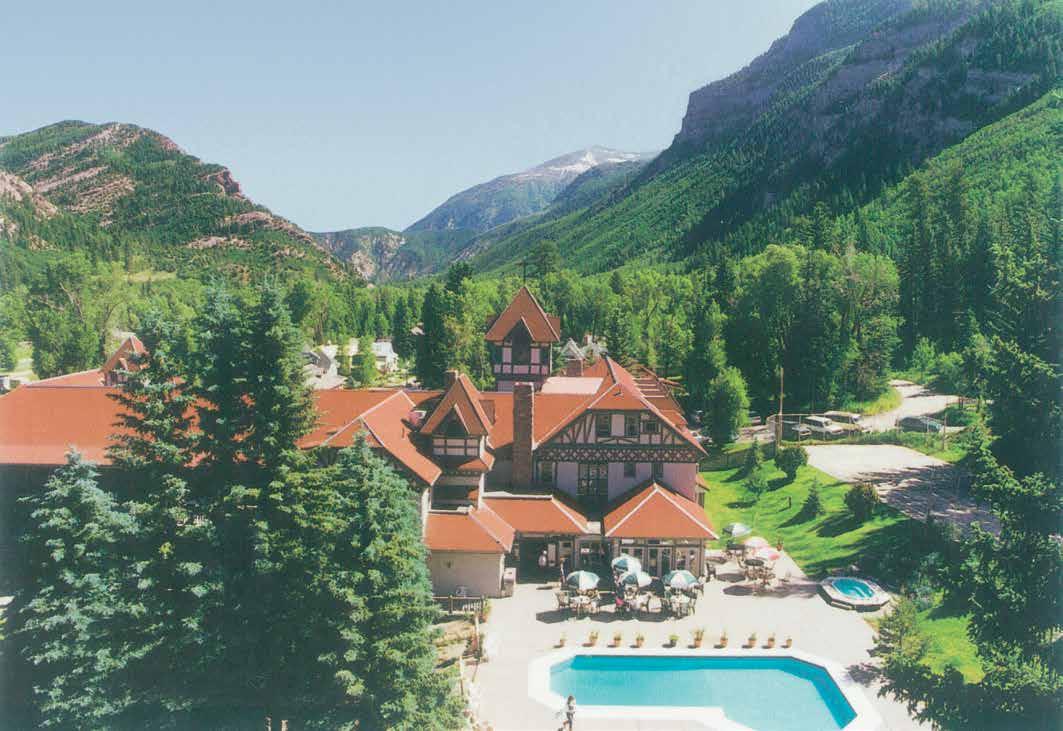
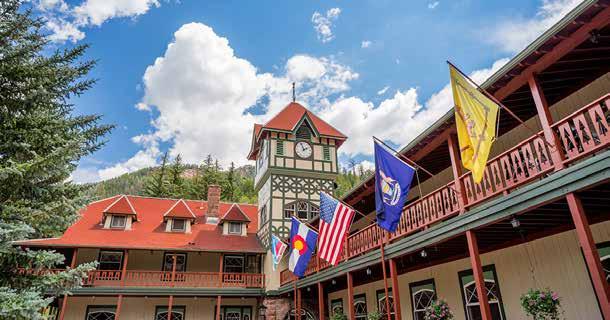
At the Redstone Inn
OCTOBER 7
Noon – Lunch ($10)
RSVP by the Thursday prior as space is limited. Plated lunch will be served. There will be a gluten-free option.
1:00 p.m. – Program Breath Class with Julie Paxton
Learn exercises to help you breathe more efficiently, which will help you to expand your lung capacity, stop holding your breath, sleep better, reduce stress, increase your energy and wake up your brain.
PLEASE RSVP: (970) 920-5432
TUESDAY,
BLIZZARD BOXES 9:00am - 2:00pm
• 3-day supply of shelf-stable food to have on hand in winter
• For Pitkin County seniors in rural areas, at no cost to you
• Order your Blizzard Box by calling (970) 920-5432
FLU & COVID SHOTS 9:00am - 12:00pm
• All ages welcome
• High Dose Flu Available (65+)
• Flu vaccines are covered by Medicaid, Medicare and private insurance – bring your card with you
• COVID vaccines offered
ROCKY MTN. AUDIOLOGY 9:00am - 12:00pm
• Hearing screenings available
• Offered on a walk-in basis
SMILES FOR SENIORS 9:00am - 4:00pm
• Call for an appointment (970) 920-5420
• Cleaning & Screening – $85 (financial assistance available)
ADDITIONAL SERVICES 9:00am - 2:00pm
• Consultations on Care Navigation, Economic Assistance, Financial Literacy, Veterans Services, Vintage (regional service provider) & Medicare
LUNCH 12:00 pm
• Please RSVP by noon the Friday prior: (970) 920-5432
• $10 – followed by dessert and Halloween treats
MEDICARE OPEN ENROLLMENT 12:45pm
• Medicare Open Enrollment information
• Individual assistance available 9am-2pm

All too often, those high costs force parents to make extremely difficult decisions — abandoning their careers to care for kids at home when the “math doesn’t math,” or, as we have witnessed many times over with close friends, moving away and leaving our community entirely for somewhere cheaper. This is not a good situation for the long-term economic or cultural vitality of our region.
Dan and I have lived in the Crystal Valley for nearly a decade, and our two children — now 5 and 3 years old — have attended Blue Lake Preschool since they were infants. We love raising our family here in Redstone, where our kids play in the street with neighbors and ski or ride their bikes out our front door. But behind that idyllic image is the constant stress of finding and affording childcare.
We’ve lost many friends to other towns and states because the cost of living and childcare here forced them out. We’ve juggled career choices, commutes, community, and tight budgets to make it work, but it’s not sustainable for many young families. We want more young families to move here and to thrive here — yet without affordable, reliable childcare, that dream is just that, a dream that is slipping further away.
Kids need high-quality care to thrive, and parents need affordable care they can depend on. That is where ballot measure 7A comes in. If it passes, a brand new early childhood district spanning from Parachute to Aspen would be created. Within that district, a 0.25% sales tax (25 cents on a $100 purchase) would be collected on non-essential goods. Everyday needs like groceries, gas, diapers, and medicines would be excluded from the tax, which is very important for working families like ours to understand.
About $12 million per year would be generated from the sales tax. Those funds would then go toward sliding-scale tuition assistance for families and grants to pay teachers more and create additional spots for kids.
This means that the monthly cost of care would come down for most families, and that early childhood educators and staff who work with our community’s youngest children would be better able to afford the cost of living around here. Stronger salaries help attract and retain the qualified care providers that we desperately need, and more providers mean more available spots for kids.
It’s clear that our kids in this region need our help, and we have a chance to come together on this issue at the ballot box in November.
Having experienced the stress and cost of our local childcare system first-hand, I see measure 7A as a lifeline. For my family, it means the possibility of more affordable tuition and more stability in our daily lives. For our friends and neighbors, it means fewer impossible choices, like sacrificing a job or moving, just to care for their kids. And for our community, it means attracting and keeping the young families who are the lifeblood of our schools, our businesses, and our shared future.
As a parent who loves raising my family in the beautiful Crystal River Valley that we call home, I urge my neighbors in this community to vote YES on 7A — for our kids and for the future of this valley we all cherish.
Janelle Sohner is an 8-year resident of Redstone, where she lives with her husband, Dan, and their two children. In their free time, they enjoy walking, biking, or skiing along the Redstone Boulevard and eating ice cream at the Redstone General Store.
By Gentrye Houghton
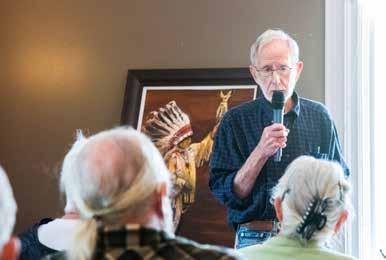
Four experts gathered before a crowd of nearly 50 at the Redstone Inn last month to illuminate the multifaceted history of Coal Basin for a two-hour interpretive lecture presented by the Redstone and Carbondale Historical Societies. The event provided attendees with a comprehensive overview of the region's history, from its original inhabitants to modern-day environmental restoration efforts.
The lecture featured a diverse panel of speakers who each addressed a different era of Coal Basin's history. Uncompahgre Ute elder Roland McCook opened the discussion with a poignant overview of his people's ancestral homelands, providing a crucial perspective on the area's pre-industrial landscape.
Following McCook, Becca Trembley delved into the late 1800s, an era dominated by the influence of investor and entrepreneur John C. Osgood. Osgood's Colorado Fuel and Iron (CF&I) opened the first Coal Basin mine portal in 1900.
The mid-20th-century history was covered by Jeff Bier, a former employee of Mid-Continent Coal & Coke Co. and long-time Crystal Valley resident. Bier shared insights into the 31 years of the company's production in the basin, which began in 1956. According to
the historyredstone.org article by Dorothea Farris, Mid-Continent's operations "dwarfed the early mining activities of the Osgood era.”
The lecture concluded with Mike Mechau, former president of the Crystal Valley Environmental Protection Association (CVEPA), who was instrumental in the Coal Basin Reclamation project. Mechau explained the extensive cleanup efforts that took place following Mid-Continent's bankruptcy in 1992. The bankruptcy left behind "a major environmental disaster," according to Farris. The subsequent reclamation, which lasted through 2002, helped transform Coal Basin from an "industrial waste dump into a respectable forest.”

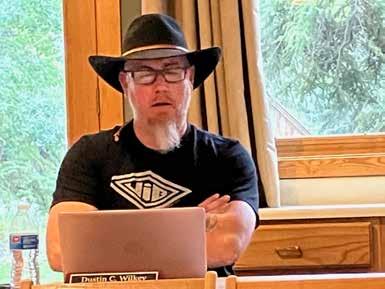
Four of the five Town of Marble Trustees sat perched behind a long trestle table at the far end of the Fellowship Hall as I strolled through the door and plonked my derrière down on one of the decidedly uncomfortable chairs arranged before them. Sitting at his usual spot on the left flank was Councilman Dustin Wilkey, conspicuously debonair under the brim of a fetching western chapeau.
Mayor Vinciguerra initiated proceedings, bidding the handful of residents in attendance a warm welcome and expressing his gratitude for the heavy rain that had doused the town in the few days prior to the meeting.
The consent agenda was swiftly approved. This was followed by the Treasurer's report, delivered by Marble’s very own “Money Honey,” the ever capable and fiscally vigilant Amy Rusby. The Town’s cash (and equivalents) position stands at $430,000, approximately $20,000 lower than at the same point in 2024. She cautioned that the “financial wildcard” could be the annual bill for snow removal. Fourteen thousand dollars have been spent year to date of the $30,000 budgeted. Town Administrator Ron Leach thanked Rusby for all her help with the Town’s finances, in particular for her assistance in calculating the costs and proceeds of MarbleFest, which, in contrast to previous years, had made a profit of $1,560.
Prefacing the preliminary budget discussions for the year ahead, Leach echoed the Mayor’s introductory remarks about the weather, happily reporting that “things are getting better in the fire world.” The Town of Marble’s budget does not have to be submitted to Gunnison County until December 15th yet Leach was keen to stress the importance of a methodical approach to its evolution and his predisposition to overestimate expenditures and understate projected revenue streams. He explained that “these municipalities (such as Marble) run on sales tax receipts.”
Larry Good was first to voice concern about the size of the grant writing budget, pencilled in at a meagre $1,000. He cited the potential future acquisition of the Marble Water Company and the need for a second thoroughfare to access the Town from the west, suggesting the amount allotted be raised to $5,000. Good’s idea received the support of the Mayor, who envisioned that any grant writing be undertaken by a third party, hoping that this would help the Board more easily identify the Town’s spending priorities.
Good went on to voice his frustration over the need to spend a total of $60,000 “year in, year out” on snow removal and road improvements. He described the campground, a significant contributor to Marble’s funds and run expertly by long-term West Marble resident Charlie Manus, as “a really nice place to stay,” adding, “we’re doing it with reduced overhead.” Another positive development for the Town has been the new paid parking scheme for ATV trailers managed by Mariah Villalobos. It is anticipated that a dedicated attendant will not be required in 2026, and it is estimated that the self-service scheme will bring in an additional $9,000 in revenue for the Town.
Three of the five Board members’ terms (Amber McMahill, Amy Rusby, and Larry Good) come to an end in 2026. The cost of a Town election in 2026 is estimated to be $2,000, up from zero in 2025 and $1,300 in 2024.
Larry Good also recommended that some funds be earmarked for fire mitigation in the form of brush removal that has accumulated over time on private land within Town limits, proposing that the work be done by young people home for the holidays at the start of summer. Dustin Wilkey proposed instead a volunteer-based system founded on neighbor-to-neighbor collaboration in order to save money.

The Marble Town Council meets on the rst Thursday of each month starting at 6 p.m. in the Marble Community Church’s Fellowship Hall.
Town of Marble meetings are open to the public.
Next on the docket was the discussion of the Town’s Master Plan. There was initially some debate about the survey conducted as part of the Plan, with individual Board members proposing their own preferences based on its results, but this approach was quickly reined in by the Mayor who encouraged his fellow Trustees to focus instead on the matrices of recommendations expressly spelled out in the Plan rather than the survey contained therein, adding that there was “nothing really urgent to be done.” Mayor Vinciguerra stressed the need to focus on grant writing in order to first establish what funds are available and for what purposes. He asked each of the Trustees to present their top three spending priorities at October's meeting. “It’s a long haul,” he concluded.
Once again, the thorny topic (championed by Trustee Dustin Wilkey) of multi-use zoning bordering a proposed “commercial corridor” raised its head. Wilkey described his vision of “pop stands” proliferating along the main roadway through Town, but the Mayor interjected, declaring “there’s not a lot of public outcry right now [to pursue the idea].”
He asked the Board for their views on changing the zoning code for properties along the main thoroughfare, describing the process as “low-hanging fruit” due to the affordability of its potential implementation. Larry Good described the existing zoning situation as “haphazard” and in need of both clarification and
simplification. The Mayor again recommended that the Town hire a third party to tidy up the code, admitting his main concern was that Marble does not expose itself to the possibility of being sued by a “disgruntled business owner.”
In an effort to solicit further clarity on the issue, the few residents in attendance were asked for their perspectives on the matter. Laura Walton articulated that she was not in favor of overtly marketing Marble to new businesses but was nonetheless supportive of growing the Town’s reserves. Her husband, Dave, opined that the survey included in the Master Plan lacked “granularity” and that to use it as a foundation for shaping future Town policy could prove misguided. Town Administrator Ron Leach wrapped up the discussion, describing the idea of spot zoning as “poisonous to this town.” The debate continues.
The next meeting of the Town of Marble’s Board of Trustees will be held on Thursday, October 2nd at 6 p.m. at the Marble Community Church Fellowship Hall.
resident of
You can tune into his
show “Snack Time” on KDNK every other Thursday from noon to 2 p.m.
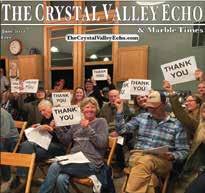
Event information and photograph from Lisa Mattson
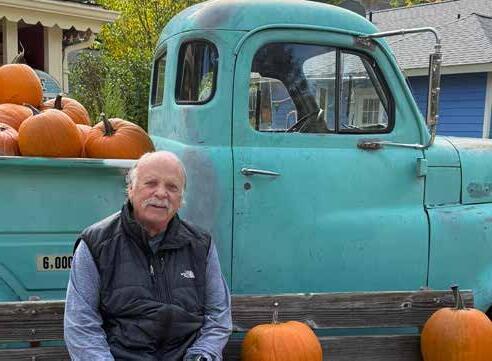
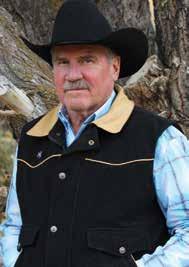
around the fire for stories about one of Crystal Valley's most notable residents: Jeff Bier (pictured) on Octber 16th from 4 p.m. — 6 p.m. at the Redstone General Store. Bier has been a full-time resident of the Crystal River Valley for 56 years, but began coming to the area in 1947 with his par-
For years, you’ve read my work and the stories I’ve edited in these pages. Now, I’m sharing my more personal reflections in a new weekly email column. It’s a space for the stories behind the stories, on nature, adventure, and finding clarity in a noisy world.
your phone's camera below to subscribe.

Gather for Cars and Coffee on October 19th along with Valley Cruisers Club and the El Jebel Autowash. All are welcome, 9 a.m. to noon.


From Kelsy Been
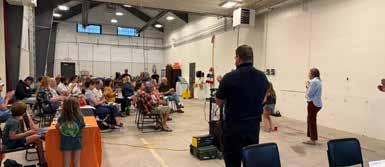
As both a Marble resident and the Director of Communication and Community Resilience for the Wildfire Collaborative Roaring Fork Valley, I’m especially excited about a project now underway in our town: Wildfire risk modeling led by a world-renowned researcher. For the first time, we’ll have data specific to Marble that can guide how we protect our homes and evacuation plans. But the success of this effort depends on you, our community. If you live in Marble — whether in town or along the CR3 corridor — we need your help.
The Town of Marble, Carbondale and Rural Fire Protection District, Gunnison County, and the Wildfire Collaborative are partnering with Dr. Hussam Mahmoud of the Vanderbilt Center for Sustainability, Energy, and Climate to model wildfire risk in the Marble area. This work uses AGNI-NAR (Asynchronous Graph Nexus Infrastructure for Network Assessment of Wildland-Urban Interface Risk), a cutting-edge model validated against real-world disasters, including California’s Camp Fire and Colorado’s Marshall Fire. In those cases, the model accu-



rately predicted fire spread and damage about 85% of the time.
Two community meetings have already been held to introduce the project and gather local insights. Now we need more information from residents to make the model stronger. Please take a few minutes to complete a short, confidential survey with basic details about your
home — such as roof type and nearby vegetation — at https://forms.gle/av66Gc8DT17BvD4c8
Your input is critical to shaping this project and improving our community’s readiness for wildfire. For more information, please contact me at Kelsy@RFVwildfire.org

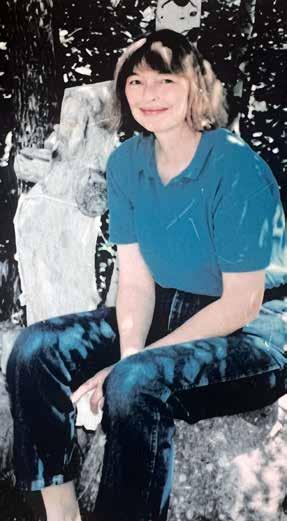
Mary Caroline “Carrie” Kellogg McDonald, age 83, died September 6, 2025, in Lawrence, Kan.
McDonald was born in Wichita, Kan., on September 15, 1941, to Robert Verne and Mary Martha Carson Kellogg, and was the eldest of nine children. She graduated from Wichita’s North High, attended Mills College in Oakland, Calif., and married William Getto McDonald. They divorced in 1977.
After 20 years in Denver, Colo., McDonald moved to the mountains in 1987. She was hired by owner Maggie Joy as a cook at the Townhouse Restaurant (now Propaganda Pie), and when told she was unable to make a consistent hamburger, she was offered the bartender job instead. The skill required was to pour beer and shots for coal miners on their way to and from their shifts.
Rob Delaney, the owner/manager of the Redstone Inn, hired McDonald as a bartender, and after John Gilmore purchased the Inn, manager Deb Strom promoted her to Banquet Manager. In the late 1990s, she was named the Food and Beverage Manager. Over the years, McDonald coordinated at least 100 weddings and was host, bartender, waitress, and busser as required. Her son Tom joined her staff as a bartender.

She served as the president and was a founding member of Redstone’s Art Foundation and chaired the Redstone Historic Preservation Commission. She was the president of the Redstone Community Association and assisted Kathy Piffer in the upkeep of the Redstone Park and public bathrooms.
McDonald considered her Redstone years as her best for the many friendships, the fun, and the fond memories. Touring and sailing through the western U.S. and Mexico with Bill Jochems was one of the highlights of her years in Redstone.
She moved to Lawrence, Kan., in 2004 and was an office manager for the Humanities and Western Civilization Program at the University of Kansas from 2005 until her retirement in 2011.
McDonald is survived by her loving sons, William, Robert, and Thomas; grandchildren, Ian, Alec, Devyn, and Kiran McDonald; daughters-in-law Kelly McDonald, Donna Ah Sue, and Naomi Binkley McDonald; four sisters and a brother. She is predeceased by her brothers, Thomas and Verne, and sister, Amy Kellogg. Her ashes will be buried next to them in the historic Eldridge Cemetery in rural Colwich, Kan., and some along the Redstone’s Crystal River.


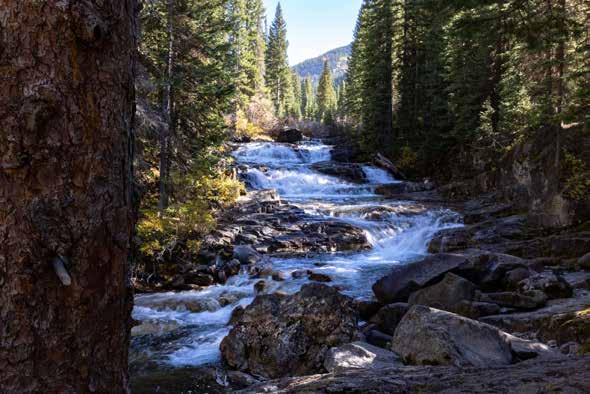
A new report released last month by Wilderness Workshop identifies the Crystal River Valley as one of ten critical landscapes across western Colorado facing mounting pressure from development, extractive industries, and short-sighted policies. The report, titled "Wild for Good," calls for urgent, community-led action to protect these areas, which are described as vital to the state's water supply, wildlife, and outdoor economy.
Released to coincide with National Public Lands Day, the report is being called "both a warning and a roadmap" by the Carbondale-based conservation group. It details increasing threats to the region's natural heritage, from along the banks of the Crystal River to the Thompson Divide and Roan Plateau.
"Public lands are part of Colorado's identity, and once they're gone, they're gone forever," said Will Roush, Executive Director of Wilderness Workshop. "This report identifies specific steps we can take now to keep our most treasured wild places intact for future generations.”
For residents in the Roaring Fork and Crystal River Valleys, the report hits close to home. The Crystal River, one of the state's last major undammed rivers, is highlighted for its importance to local fish, farms, and recreation, all of which remain vulnerable to new development. The report builds on a long history of local conservation, from the creation of the Maroon Bells-Snowmass Wilderness to more recent fights protecting the Thompson Divide.
The new analysis situates the next generation of land conservation in that tradition, highlighting opportunities for local com-


Local and regional leaders strongly support this sentiment. Jeffrey Woodruff, Vice-Chair of the Pitkin County Commission, emphasized the profound connection between the community
munities to unite for a shared vision. "We've been hearing loud and clear from our local communities a strong desire to take proactive action to protect the places we love,” said Michael Gorman, Campaign Director at Wilderness Workshop. “Permanent protection for the public lands and waters we care about is the best way to ensure these places remain wild for good.”





landsCapes threatened
Continued. . . The "Wild for Good" report details the threats and opportunities for the following ten landscapes:
and the surrounding wilderness. "We are here to protect nature, to cherish wilderness," Woodruff said. "When we hear the elk bugling, we know we are in a sacred place. We are stewards of this land. Protecting these landscapes protects our water, our communities, and the outdoor recreation we all depend on.”
The report outlines what is at stake: migration corridors for elk, mule deer, and Canada lynx; forests that store carbon and buffer against drought; and clean water that sustains towns and farms.
Geoff Grimmer, a Council Member for the Town of Eagle, spoke to the deep-seated value these lands hold for communities throughout western Colorado. "These places are more than scenic backdrops — they are the beating heart of our way of life and are deeply cherished by our community," Grimmer stated. "From the wildlife corridors that sustain elk and mule deer, to the rivers that feed our farms and towns, to the trails and open spaces that bring us peace and adventure, Western Colorado's lands sustain us all.”
1. Colorado River Valley: Critical for water supplies across the West, this area faces intense pressure from development.
2. Continental Divide: This vital wildlife corridor and source of clean water is threatened by development and recreation pressures.
3. Crystal River: A rare, undammed river whose watershed supports local economies but remains unprotected.
4. Dolores River Canyon Country: Threatened by mining and unmanaged motorized use, these canyonlands shelter rare plants and ancient cultural sites.
5. Greater Dinosaur: Bordering Dinosaur National Monument, this wild expanse is at risk from energy leasing.
6. Homestake Valley: Key for wildlife and water supplies, this valley faces proposals for new dams and water diversions.
7. North Fork Valley: Known for its organic farms, the valley's economy and environment are at risk from oil and
T he C rys Tal V alley e C ho & Marble Times
Mission Statement: To provide a voice for the residents of the Crystal River Valley; to bring attention to the individuals and local businesses that are the fabric of the Crystal Valley region; to contribute to the vitality of our small town life.
EDITOR AND ADVERTISING SALES
Gentrye Houghton gentryeh@hotmail.com
CONTRIBUTORS
DJ Sugar Monkey
Amber McMahill
DISTRIBUTION AND LAYOUT DESIGN
Ryan Kenney
The Crystal Valley Echo is published monthly, and is distributed throughout the Crystal Valley.
NEWSPAPER
gas leasing.
8. Red Table Mountain: This prime elk habitat between the Roaring Fork and Eagle valleys is threatened by logging and motorized expansion.
9. Roan Plateau: A fragile, ecological crossroads long threatened by oil and gas development.
10. Thompson Divide: Beloved for hunting and recreation, local communities have fought for years to protect it from drilling.
The fragility of these resources underscores the report's urgency. Mark Waltermire, an organic farmer and founder of Thistle Whistle Farm in Paonia, Colo., explained the direct link between public lands and local agriculture. "As an organic farmer in the North Fork Valley, I've seen that clean water, clean air, and a thriving ecosystem are what allow me to provide nourishing food to communities across Colorado," Waltermire said. "The public lands surrounding this valley supply our water and keep our air clean. Protecting these resources is essential to ensuring the future of organic farming in our region."
Delia Malone, a retired ecologist with the Colorado Natural Heritage Pro-
gram and Crystal Valley resident, highlighted the critical role of often-overlooked ecosystems, such as the Homestake Wetlands. “In the high desert that is Colorado, wetlands temporarily store the water that maintains stream flows throughout the year,” Malone explained. “Wetlands create the habitat that enables the survival of thousands of birds, the breeding grounds for the fish that bring our rivers alive, and the refugia for elk during calving season.”
Ultimately, the report is a call to uphold a legacy of conservation for the generations to come.
"Coloradans today enjoy public lands because earlier generations had the foresight to act for their permanent protection," said Soren Jespersen, Director of the Colorado Wildlands Project. "Without their hard work, places like the Maroon Bells or Longs Peak could look very different today. We have a responsibility to safeguard the wildlands that remain so that spectacular places like the Dolores River Canyon Country and the Colorado River Valley remain a part of a shared public land heritage for generations to come.”
The complete "Wild for Good" report, including maps and photos, is available at wildforgood.org

A column from Emma Bielski
Recently, I had a reader reach out asking for tips and strategies for dealing with anger and anxiety in direct relation to the current and arguably devastating state of our nation and the choices being made by our “leaders.” It is no secret where I stand on the issue, and also to make October’s mental health article inclusive to all, I will focus on an exercise that can be very helpful in turning the volume down on big, hard, and uncomfortable emotions like anger, anxiety, and sadness. It is important to name the feeling you are experiencing; we call this practice: Name it, to tame it. By identifying the emotion and calling it out, you are already beginning to gain some control and mastery over the feeling.
The following activity can serve as a powerful emotional management tool. When working with clients, this is a guided exercise. To do so by yourself, you can write down your answers or say them out loud, whichever you prefer. I will use anger as the example emotion, and know the exercise can be very useful with feelings of anxiety, grief/sadness, shame, and so on.
1. Take a minute and close your eyes, focus on and lean into the anger; where do you feel the anger in your body?
2. What shape is it?
3. What color(s) is it?
4. If you choose to, take a minute to draw a picture of your anger, its color(s), and shape(s).
There are no right or wrong answers, only your own personal experience and relationship with your emotions.
By giving the emotion a shape and color, and through identifying where in your body you are holding and feeling that emotion, it gives the feeling an almost tangible depth and dimension that makes it easier to accept, grasp, and work with.
Curious? Interested? Take a minute and try it for yourself; you never know what new activity or ritual might be exactly what your mental health exercise routine was missing. In addition to this exercise, I also encourage physical movement to give the anger and anxiety a healthy outlet, and, because we
store emotions in our bodies, exercise can help us move through the feelings. Our Feelings are a lot like Colorado’s weather and if you don’t like it, wait a short while for it to change.
As a side note: In regard to managing big feelings because of the current violent administration that is working so hard to gut our nation, don’t let it. Stay informed and limit the doom scrolling and news intake. Get involved; there are some amazing forms of resistance happening all over the world, and these acts spread hope and inspiration. I know, love, and respect many Republicans, and without a doubt, not even one of them supports sexual violence, physical abuse, wrongful detainment, or genocide.
Above all else, find ways to show kindness towards others and look for solidarity and unification. There is a middle path to be walked here where reason and human decency prevail, and where people live amicably with different beliefs, viewpoints, skin tones, and genders. Human decency is one essential path forward.
Thank you so much for the feedback and participation; please keep it coming. — Emma
Emma Bielski has lived in Marble for 15 years and, after nine years serving as a Licensed School Social Worker in the Roaring Fork and Crystal River Valleys, she is currently accepting clients to be seen privately and on a sliding scale. She is working towards her LCSW part-time while tending to the needs of her two-year-old daughter. For more information or inquiries, you can contact her at emmabielski@ gmail.com




By Deb Strom
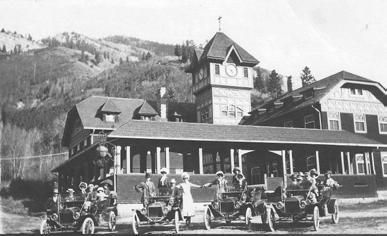
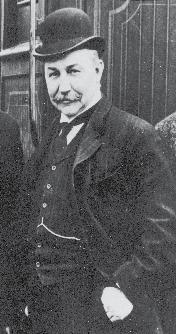
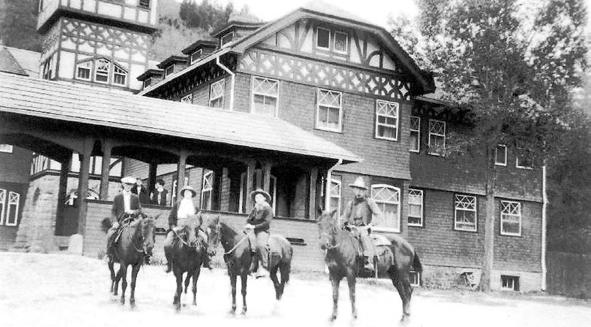
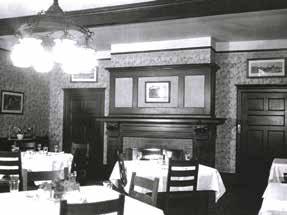
After being diagnosed with cancer, John Osgood went to Hot Springs, Ark., for the “cure,” where he met Lucille Reid. On October 20, 1920, they were married; he was 67 years old, and she was in her mid-twenties. In 1924, Lucille and Cleve, as she preferred to call him, returned to Redstone to reopen his estate, which had been boarded up for almost 15 years, and to reinvent the Redstone Inn as a resort. Nephew Charles Osgood and property manager John Kenney oversaw the project with over 200 workers.
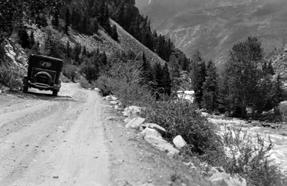
“TRIP TO REDSTONE,” read a headline in The Aspen Times on June 7, 1926. “If Aspen motorists would enjoy a most pleasant and scenic drive, they should roll down the valley to the busy little metropolis of Carbondale and then up the beautiful valley of Crystal River to Redstone, where they will be royally entertained by the management of the Redstone Inn, where the ‘welcome’ sign prevails at all times. An afternoon spent in the home-like atmosphere of the Redstone Inn, to be concluded with a dinner ‘fit for the gods,’ will long be remembered as one of unalloyed pleasure and happiness. Try it once and you’ll go again.”
These were the “Roaring Twenties,” and car travel had captured the nation, due to Henry Ford’s innovative mass assembly system. “The Model T Ford’s low price meant that no man making a good salary will be unable to own one — and enjoy with his family the blessing of hours of pleasure in God's great open spaces,” according to Ford. By 1925, it sold for $750 and lovingly became known as the “Tin Lizzie.”
And for the wealthy, a grand opening for Denver’s Society was planned at Cleveholm (aka the Redstone Castle) for December
All content sponsored and provided by the Redstone Historical Society.
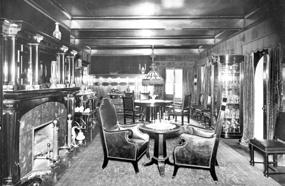
1925, but had to be canceled as John Osgood’s condition became critical. He died on January 2nd, 1926. His body was cremated, and his ashes were spread along the Crystal River near his beloved Cleveholm Manor. Lucille inherited his entire estate, and she was charged with burning all his records.
Unfortunately, the 1929 stock market crash, followed by the Great Depression and World War II, fairly guaranteed the failure of Lucille’s summer resort.
By Gentrye Houghton
To live in the strange physics of a slow departure is to become a citizen of a liminal state, a borderland between memory and momentum. You learn to exist in two temporal states at once: the meticulously organized present, a world of color-coded folders and deadlines that coexists with a shimmering, memory-saturated past that clings to the air itself. It's an alchemy that transforms the familiar into the fantastical, the mundane into magic.
I landed in this valley believing it to be a brief, incandescent chapter, a place to catch my breath for a year or two. And yet, more than a decade has passed, marking this as the longest I have lived anywhere as an adult. My roots, intended to be shallow, burrowed deep into the rocky soil, and the act of pulling them up is not a singular, painful tug, but a thousand tiny, deliberate unwindings, a patient deconstruction of a life I built almost by accident.
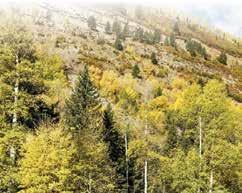
My world right now feels as though it has been re-illustrated by a kinder, more whimsical hand. A dear friend, upon seeing the impossible, theatrical blaze of the mountainsides, once declared this time of year the “Dr. Seuss Season,” and the name has stuck fast. It is more than just a clever nickname for autumn; it has become the perfect description for this surreal, in-between state of being. The landscape itself seems to have sprouted a strange and wonderful fuzz, its familiar contours softened and exaggerated. The aspens are not merely yellow; they are a violent splash of ochre and saffron, their leaves quaking like a million tiny golden hearts against a sky of the most impossible, cloudless blue. Nestled in the ravines and creeping up the hillsides are the scrub oaks, their deep-bellied, merlot reds providing a velvety contrast. The whole scene is punctuated by the last streaks of defiant green, Bob Ross's joyful mistakes in a world tilting towards sleep. To walk through it is to feel as though I’ve stepped off the map of my known world and into the pages of a beloved book, a place where the ordinary rules of color and shape have been cheerfully suspended.
This whimsical surreality makes the sensory memories of past seasons feel even more potent, as if they, too, belong to this slightly tilted world. I can still feel the feathery tickle of cottonwood seeds against my cheekbones, a silent, mid-July blizzard that descended without warning, transforming the deep green world into the inside of a snow globe. The air, thick with their floating fluff, muffles the voices of visitors strolling along our curving street, creating a profound, downy silence. Then
came the pollen, an invasion of the most vibrant, almost aggressive yellow, settling as a thick, gritty film on every conceivable surface. It coated the porch railings, the windowsills, my bike saddle, and the spiderwebs that hung in the eaves, turning them into intricate, golden nets.
That yellow dust can find its way into my morning coffee, leaving a faint, grainy bitterness on the tongue that no amount of sugar can mask. I can still conjure the scent of lemon dish soap mingled with warm water, the circular, squeaking motion of a towel in my hand as I scrubbed the relentless yellow film from the picnic tables of the Crystal Club's lawn, a task as futile and necessary as sweeping the tide. These invasions were maddening in their persistence, but now the memory feels tender, imbued with nostalgia. It was the very texture of a season, the tangible proof of a world so intensely, stubbornly alive it simply could not be contained.
The memories of the people who shaped this chapter leave a residue far more permanent than any pollen. They are baked into the very landscape, each peak and meadow a silent monument to a shared moment. That specific bend in the river recalls the deep, howling laughter shared around a crackling fire, the sound of our voices rising with the sweet, sharp scent of burning spruce into a sky so profoundly black it seemed to hold the whole of eternity. That high alpine meadow, an impressionist painting of columbines and lupine, is the echo chamber for secrets whispered between friends, a tribe of fellow runaways who, like me, had come to these mountains seeking solace and found, to our mutual joyous astonishment, each other. The air itself feels heavy with the invisible architecture of a community we built together, conversation by conversation, hike by hike, potluck by potluck.
It is only fitting, then, that the crystal-clear river that first carved this magnificent canyon should be the ultimate narrator of this story. Its constant, reassuring murmur has been the soundtrack to my life here. The violent roar of its spring runoff, the sound of boulders shifting under the force of the snowmelt, was the sound of rebirth. The gentle lapping in the low water of late August was the sound of contemplative peace. It has carried me from the nervous excitement of arrival, through the turbulent rapids of deconstructing an old life and the calm eddies of building a new one, to this present moment: standing on its banks, ready to follow its course out of the canyon and toward
a new, unknown sea.
Community members I cherish, people whose weddings, births, and losses I have tried to honor within the pages of this chronicle, stop me in the grocery store aisle, their faces etched with a gentle concern that both warms and wounds me. “I hope you’re leaving us in good hands,” they say, and the simple phrase is a knot of expectation and trust. It is a profound gift. “I’m so sad for us,” a friend told me recently over oatmeal cookies on her porch, her voice soft but her eyes direct, holding a kindness that still takes my breath away. I hold these words close, turning them over like smooth, warm stones in my pocket. They are a compass for whatever comes next, a reminder that the most important things we build are not made of wood or paper, but of trust and shared human experience.
The daily work of leaving is a physical, tactile thing, a profound tangle of logistical knots. My life here has been an anchor, like ones I've made while dangling from vertical rock faces out of a complex and reassuring web of attachments built for safety and belonging. Now is the time for the careful deconstruction of that system, piece by piece. It is all part of the meticulous process of re-threading a figure-eight follow-through, ensuring every loop is perfect and every line is clean, preparing for the moment I can call out, with absolute confidence, “Off belay.” I am untying myself from the rock face, not severing the rope, but coiling it with care and respect, ready for the next ascent.
At home, we are preparing the nest, an almost reverent act of making a space ready for its next inhabitants. The process fills the senses. It’s the sharp, clean scent of mineral spirits wiping away the scuffs and smudges of our tenure. It is the hollow, echoing sound a room makes as it empties, a sound that seems to amplify the spectral energy of the memories contained within its walls. I run my hand over the wooden countertop, feeling the faint nicks left by a slipped knife while chopping onions for a celebratory dinner, the deeper groove where a heavy pot landed with a clatter. These are not flaws; they are inscriptions. We are shoring up the soul of this place, hoping to leave it strong, welcoming, and humming with good energy for the life that will unfold here after ours.
And yet, this constant, frenetic motion, this ceaseless cataloging of a life lived, is a double-edged sword. The glorious, whimsical Dr. Seuss world exists just outside my window, but inside, I
am chained to the machine. There is a frantic, almost desperate hustle to get it all done, a race against the calendar and the inevitable arrival of faraway travel plans closely followed by the first snow, which will bury this vibrant world in a deep and final quiet. The insistent blue glow of the laptop screen late into the night, the incessant ping of notifications that jangles the nerves, the acrid, stale taste of coffee that has been reheated one too many times; these are the sensory realities of our departure. My nervous system is a frayed rope, screaming for a release from a culture that glorifies the grind, that demands constant forward momentum even as every fiber of my being wants to simply sit on the porch and watch the yellow leaves fall.
This relentless hustle robs the goodbyes of their proper ceremony, their sacred stillness. Just as a meaningful, soul-baring conversation begins to take root with a friend, I am pulled away by the insistent buzz of my phone, the next non-negotiable item on my color-coded spreadsheet. The sacred work of closure is perpetually postponed for the tyranny of the urgent. The texture of my days is not the rich wool of reflection, but the slick, synthetic, and slightly suffocating fabric of productivity.
But in the quieter moments, in the breaths between the frantic packing and the endless emails, there is this: the feeling of being profoundly, irrevocably full. This isn’t the mournful ache of homesickness I have known before; it is the vibrant, electric hum of a life thoroughly lived, of a place completely inhabited. The living, breathing archive of this valley, with its Dr. Seuss seasons, its cottonwood snow, its stubborn yellow pollen, and the powerful storytelling of a river, is not a place I am leaving behind. It is a place that has been absorbed into my very bones, a permanent part of my internal geography. This slow departure, with all its chaotic, messy, and bittersweet beauty, has become its own surprising adventure. It is a final, playful, and deeply loving dance with the benevolent ghosts of a thousand yesterdays.
Gentrye Houghton has been an independent journalist for over 18 years and is the current owner and editor of The Crystal Valley Echo. In her new weekly email column, "Reflections from the Trail Within," she goes deeper into the stories and observations that shape our inner and outer worlds. You can read more of her work and subscribe for free at thetrailwithin.substack.com
By Jade Schachter, 3rd Grade
When it’s Autumn, I like to grab my rake and go to the tree with the most fallen leaves. I start raking the leaves into a pile. Then, I get my sisters and we all jump in the fluffy leaves. The leaves go everywhere. After we do that I like to clean all the leaves up and put them under the tree that I got them from.
Another thing I like about Autumn is Halloween. Halloween is awesome because you can dress up in all types of costumes- scary costumes, animal costumes, funny costumes and crazy costumes. Another reason I like Halloween is because you can go down the streets and collect candy. After I do that, I like to sort all my candy with my sisters and trade with my sisters.
Lastly, I like Autumn because I can harvest veggies with my mom.. I can go outside and check the garden if there are a bunch of ripe veggies. After we harvest veggies, we think this day will be awesome and dinner is delicious because we put veggies in dinner.
By Freya Finch, 4th Grade
Autumn is amazing. The leaves are beautiful when it’s fall in Colorado. autuMn
One reason why I like fall is Halloween. I like Halloween because you dress up in cool costumes and you go door to door saying, “Trick or treat!” and folks give you candy. Also, you get to carve pumpkins! You can give them silly faces, scary faces, and even give them braces by threading pop tops through a certain type of wire. Also, when you are carving the seeds out they feel so squishy and slimy! It also feels so icky and gooey! You can also cook the seeds- sounds yummy!
Another reason I like fall is the cherry picking. I like cherry picking because you can eat the cherries while you pick them. They taste amazing! But beware of the pits! You have to spit them out and if you accidentally swallow one, you’ll be fine but it does not feel good. Also, you can make cherry pie, which is delicious. But, it's not the cherries or the pie, it’s the memories and love that makes it good.
The last reason I like fall is jumping in the leaves. I like to jump in leaves because when you jump you scatter leaves everywhere. It makes a crunchy, soft sound when you fall and when you land on the ground below the leaves, it’s so pretty! Also, the leaves are so pretty when they fall and change colors to red, yellow, orange and brown.
Now you know why I like fall. Enjoy it while it lasts. Winter’s coming! Happy Fall!



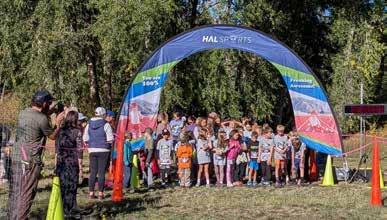
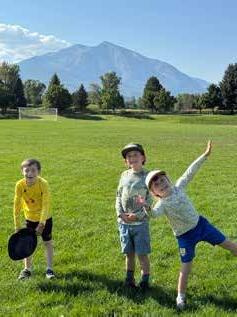
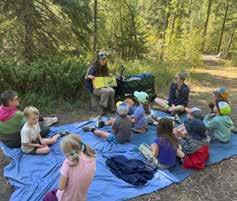
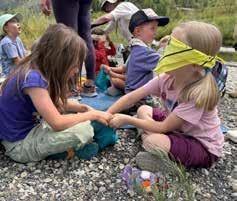
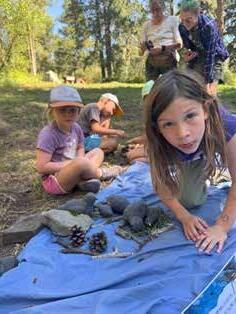
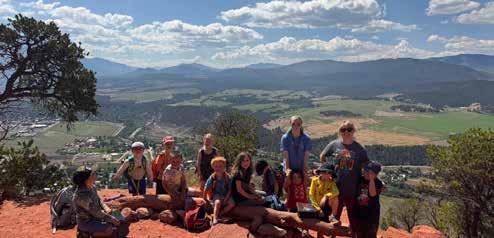
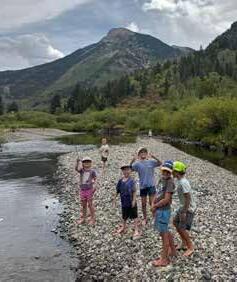
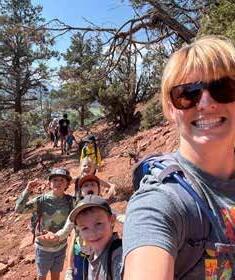
Photographs provided by Marble Charter School














Unwind