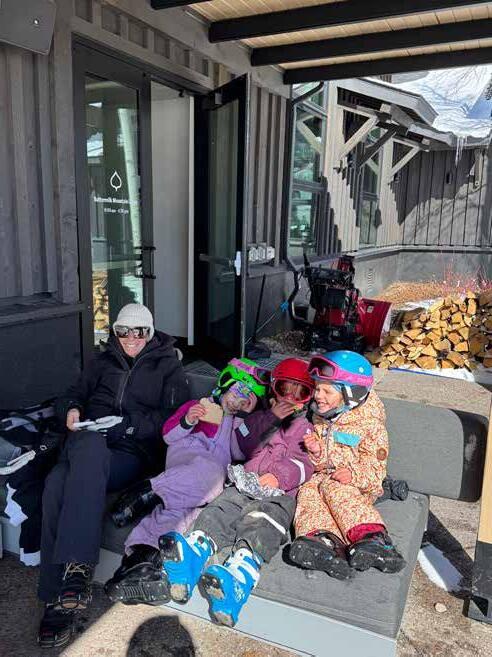
Photograph from Jaime Fiske








Dear Editor,
I am writing to encourage Redstone and all Crystal River residents to attend the Crystal River Caucus Meetings. The meetings happen on the second Thursday of every odd-numbered month, beginning at 7:00 p.m. at the Church at Redstone. You can attend in person or virtually via Zoom.
In Pitkin County, different geographical regions have at least one caucus – such as Crystal River, Emma, Woody Creek, Frying Pan River, Snowmass, East of Aspen, and Castle Creek. Below is a description from the Pitkin County website:
The word "caucus" may derive from an Algonquin [Native American] term describing their advisory form of representative democracy. In the Pitkin County experience, the word connotes representative democracy at the most local level where policies are formulated and recommended by the people whom they most affect. Once formulated at the local caucus level, these policies provide elected and appointed County officials with recommendations to enact just laws and policies.
Pitkin County Caucuses make recommendations directly to the Board of County Commissioners on matters that affect their residents. These may include the development of county laws, budgetary appropriations, land-use approvals, and other rules and regulations. For instance, several of the caucuses have made decisions about the maximum allowable house size. These caucuses voted to restrict house size within their boundaries to a maximum of 5,750 square feet (as compared with 9,250 county-wide). This is an important and highly effective mechanism for helping to control the culture of your community and is just one example of the type of influence a caucus can wield.
The caucus is YOUR opportunity to provide input into your community, which
Buying and Selling Real Estate in the Crystal Valley?
Deep Local Expertise:
40 years in the Crystal Valley means Edie truly understands the area, from its unique lifestyle to its property values.
Hands-On Property Insight: With landscaping, gardening, and contracting experience, Edie helps buyers and sellers maximize their property’s potential.


Dedicated and Responsive
Edie’s known for reliability, prompt communication, and consistently delivering on her promises. She advises throughout the buying and selling process.
Passionate Advocate: Edie’s genuine love for Redstone and the valley translates to effective representation and successful deals. Work with a Broker with a Proven Track Record of


cannot be done if you are not present. Redstone, as most of you know, has had several issues over the last few years which have created division among the residents. Some of you have felt your community has changed and your voice has been silenced. Some wanted the County to make rules about STRs in Redstone while others did not want to be told how to manage their home ownership.
When I first became a commissioner, during COVID, the caucus meetings were on Zoom. Usually, there were quite a few participants – maybe around 30, as a rule. Lately, however, attendance has dropped off considerably. At the last meeting, there were about 12-15 attendees, including the Pitkin County Sheriff, the County Emergency Response Coordinator, and your District’s County Commissioner (myself).
The caucus meetings are opportunities to visit with your neighbors, discuss issues, express your concerns, and be heard. Topics vary. For instance, during the last meeting, we discussed the pros and cons of Redstone incorporating as a municipality. We usually have a discussion or presentation about the reintroduction of wolves. The sheriff and other county representatives have come to the last two meetings to discuss safety plans, wildfire mitigation, the new south bridge plan, and other topics that affect the people of Redstone.
Please consider participating, and help steer the direction of the Crystal River Valley. If you would like to join the Crystal River Caucus mailing list for meetings agendas and Zoom links, please send a message to crcaucus@gmail.com The next meeting is Thursday, March 13th starting at 7 p.m. at the Church at Redstone. I’ll be there and look forward to seeing you.
Francie Jacober Pitkin County Commissioner, District 5


An Account from DJ Sugar Monkey
It was an uncharacteristically warm February evening as I squelched my way uphill through a deep river of mud to the Marble Community Church Fellowship Hall. Lucky enough to avoid taking a tumble in the unseasonal quagmire, I brushed off my boots, grabbed a cool Squirt, and took a front-row seat, eager to see whether the political chaos unfolding over the previous week in Washington, D.C., would be replicated on a smaller scale in lil ole Marble, Colo. I was not to be disappointed.
The meeting got underway shortly after 6 p.m. with a brief update from Treasurer Amy Rusby. Although only a month into the new year, she reported that we were 3.76% ahead of revenues for January and that the Town had incurred 10.53% of its annual expenses (or 2.2% in excess of its pro-rated budget). Rusby cheerfully announced that the Town was significantly under budget for snow and ice removal and that $25,500 of the $30,000 earmarked for the purpose was “sitting there” in the Town’s coffers waiting to be spent. This solicited an uncomfortable-sounding giggle from Councilman Dustin Wikey, Marble’s road-clearing commander-in-chief. At the time of writing, however, Marble has enjoyed significantly more snowfall which has been keeping him busy.
Next, the consent agenda was speedily approved, and the discussion moved on to the acceptance of the 2025 Master Plan. After a couple of gags regarding the spell-checking of the document (the original draft was littered with errors), it was agreed (following the suggestion of Mayor Vinciguerra) that there should be an “extremely minimal print run” save for a hard copy or two for the town’s records. The plan was adopted unanimously.
The next topic up for debate was the review of short-term rental and business license fees. Town Administrator Ron Leach explained that Councilman and Mayor pro tem Larry Good had spearheaded the drive to increase the cost of a business license from $50 to $100 per annum and that of a

The Marble Town Council meets on the 1st Thursday of each month starting at 6 p.m. in the Marble Community Church’s Fellowship Hall.
Town of Marble meetings are open to the public.
short-term rental license from $100 to $200. Good, who was unfortunately not present during the meeting, would, in my opinion, have been disappointed with the outcome reached by the Board.
Councilman Wilkey initiated the discussion by suggesting the cost of an annual business license increase by a whopping $5 to $55 in 2025 and thereafter annually in $5 increments. A total of 20 business licenses were granted in Marble in 2024. It was pointed out that the additional $100 raised in revenue would scarcely cover the cost of the paper they were written on, let alone the time taken up by the administrative staff to type them out.
Good’s suggested increase to $100 would have raised an additional, and much-needed, $1,000 for the town. Nevertheless, Wilkey made a motion for his suggestion which was met by an uncomfortable silence, after which Treasurer Rusby (seemingly reluctantly) agreed to second it. The Board passed the review with a majority, agreeing to raise business licenses to an eye-watering $55 and short-term rental licenses to $150.
There was some protest from the floor contesting the derisory increase in fees given the pressure the Town is under to meet the rising costs of tourism, maintenance, increased cost of living, and their attendant needs for higher wages for Marble’s administrative team. Mayor Vinciguerra defended the decision based on the seasonal character of Marble’s businesses and how tough it is to make mon-
ey in the Town. Given that four out of the five Trustees all run (or are married to people who run) successful businesses in Marble and that the fifth is employed by one of the other four, it was hard not to be dumbstruck by the apparent self-interest behind the decision, the awkward manner in which the motion was passed and the evident embarrassment felt by some of the Board Members. I will be paid more for writing this article than the funds raised by this measure.
The business progressed to the Parks Committee Report delivered by Treasurer Rusby. The Committee, which meets once a month, is looking for an additional member. Ron Leach added that a structural engineer has been engaged to examine the precarious state of the marble walls in Mill Site Park. Trustee Amber McMahill shared that she has been working with the Parks Committee to plan the restoration of the historic path that runs through the park and to further explore the idea of creating another pedestrian path to run alongside the road from the Raspberry Inn to Beaver Lake. She pointed out that a lot more discussion of these proposed projects would be needed and that a presentation would be organized at the June meeting of the Board of Trustees to gauge the reaction of the community.
Next came the discussion of paid parking in the Town. Regular readers of this column will remember that the introduction of a parking scheme is dependent on the collaboration of the Colorado Small Business Administration, which has to date been, err, uncollaborative.
2025 Meeting Schedule Starting at 6 p.m.
March 6th April 3rd May 1st
town oF MarBle continued. . .
Mayor Vinciguerra and Town Administrator Ron Leach have canvassed Colorado Senators Bennet and Hickenlooper and the State’s Commissioners and Representatives, encouraging them to lean on the SBA to move a parking scheme forward.
“We’re really trying to be heard,” bemoaned Vinciguerra, adding that a parking plan needs to be “thoroughly mapped out.” Councilman Wilkey declared that he favored a “slow roll-out” given the lack of truck and trailer spots (12) that currently exist in the town and that Marble needed to apply some foresight to avoid confrontation with upset tourists.
The Board was generally in favor of a gradual over an “iron fist approach” (Vinciguerra) to the introduction of fees. McMahill opined enigmatically that “a sense of entitlement comes with paying more.”
It has been five years since the Town started work on a paid-parking scheme and the Board is now leaning towards a windshield leafleting system as the best way forward, announcing the trial of a $35 per day fee commencing in 2026.
One resident, who was present at the meeting, pointed out that this would be peanuts to many visitors who rock up to Marble with $500,000 rigs adorned with multiple ATVs that cause extensive damage to the Town’s only paved road. I was left bemused by the Board's apparent reluctance to raise revenues in the face of dramatically increasing expenses. The Town of Marble is far from wealthy, and the Board risks impoverishing it further with what can only be characterized as a “Wiener dog” approach to raising costs.
Just when I thought the meeting could not descend into more of a farce, it did.
Councilman Wilkey had added an agenda item seeking to amend a provision in the Town’s Zoning Code governing business usage and home occupation. The clause in question states that “Home occupation shall not generate vehicular traffic in excess of ten one-way trips per day which begin or end at the use.”
Wilkey, who together with his partner Samantha, run Crystal River Jeep Tours from their palatial new home on West State Street, argued (in the interests of “leveling the playing field”) that there are several established businesses in Town that do not meet the Home Occupation qualifications due to the limitation/definition of “vehicular trips” in the contested clause. Therefore, he proposed to change the definition of “trips” to “monetary transactions” arguing there would be no further question whether a Home Occupation meets the code or not. Even though these businesses are zoned “Residential” they would meet the code standard for “Home Occupation.”
Immediately Mayor Vinciguerra jumped on Wikey’s case asking, “Are you doing this because you want to register your business as ‘home occupation’?” McMahill then waded in, asking Wilkey if he was seeking to “clarify” or, in fact, “loosen” the wording of the
clause. Things intensified from there. Accusing Wilkey of a conflict of interest, Vinciguerra insisted, “You can’t be up here (sitting on the Board) representing your personal interests,” adding that if he wanted to run a business then he should apply for a commercial license.
The next Trustees' meeting, and potential clashing of the titans, will be held at 6 p.m. on Thursday, March 6th at the Marble Community Church Fellowship Hall.
DJ Sugar Monkey is a resident of Marble. You can tune into his music show “Snack Time” on KDNK every other Thursday from noon to 2 p.m.










From Emma Bielski
It was in the early part of 2016 when I, not even six months into my career as a school social worker learned a very devastating lesson; I was in the business of saving lives and the “signs” I had been educated on watching out for don’t always look the way we were taught or told they would. I made sure from that point on that no student I worked with and cared for would lose their life to suicide on my watch. From M-1 holds to evidence-based programming like Sources of Strength, I went on to save a lot of lives in the years that followed losing a student to suicide. In the process, I learned a great deal about mental health, suicide prevention, and protective measures.
According to the Centers for Disease Control and Prevention (CDC) in 2022, one person died by suicide every 11 minutes in the United States. Thoughts of suicide like so many facets of living and being in the world occur on a spectrum or scale. Let’s unpack this in more detail. On a 10-point scale, zero is equivalent to never having thoughts of suicide and 10 would be considered a completed suicide. Whereas a nine on that same scale is an attempted suicide and an eight is someone who has a plan and a time as to how and when they will end their life.
Thoughts of suicide that require no action beyond thoughtful curiosity and tender self-care exist between mile markers one and four and are fleeting, rare, and occasional. Thoughts of killing oneself beyond mile marker five on the scale would include an increased frequency occurring several times a week, right on up to daily, and persisting for longer than a month.
This space requires more intense action and intervention that could include medical intervention combined with behavioral health therapy. Why? Because suicidality is a symptom of a treatable illness.

When a person becomes sick with Strep Throat, they require medical attention and are prescribed antibiotics for the infection. As I have told countless teens and youth over the years, and was taught by my supervisor, it is a very permanent solution to a temporary problem.
On one hand, it is important to normalize thoughts of suicide as most people will experience having them at one or more points in their lives. Creating safe spaces to talk about these thoughts is incredibly important, as is recognizing that these thoughts are a reflection of one’s personal pain. On the other hand, it is important to recognize the medical need that is being brought to light by these thoughts. On both hands, it is crucial that we as individuals, families, and communities, from schools to churches, talk about and become better educated on suicide and suicidality.
what can you do when you are worried aBout a loVed one?
Remember: Suicidality that falls between mile markers eight, nine, and 10 is considered a medical emergency; do not hesitate to call 911 for a medical response and/or a welfare check on your loved one. The Hope Center Crisis line does an incredible job of responding to people calling in distress and is available 24/7.
If you are in crisis or concerned about someone else experiencing a crisis, please call our 24/7 HopeLine:
Aspen to Glenwood Springs 970-925-5858
New Castle to Parachute 970-945-3728
My thoughts are with the family, friends, and loved ones grieving the loss of Casey Piscura, this was an incredibly sad event for our community. May he Rest in Peace.
Emma Bielski has lived in Marble for 15 years and, after nine years serving as a Licensed School Social Worker in the Roaring Fork and Crystal River Valleys, she is currently seeing clients privately and on a sliding scale. She is working towards her LCSW part-time while tending to the needs of her two-year-old daughter. For more information or inquiries you can contact her at emmabielski@gmail.com

By Gentrye Houghton
redstone castle easeMents
Last month, Pitkin County Open Space and Trails came before the Board of County Commissioners with a first reading for two ordinances regarding an easement for trail access to the Redstone Pillar, a winter ice climb, and a conservation easement. The Board unanimously passed the ordinances on to the second reading.
The Redstone Castle property is separated into three parcels: the Cleveholm Manor parcel (or the Castle parcel) which is 70 acres, and the Carriage House and Barn parcels, which are each 40 acres. Last year, the owner of the property was approved to amend the Redstone Castle Village Lodge Reservation Master Plan, and the resolution includes the following conditions:
1. A winter recreational trail easement to the Redstone Ice Pillar across the Barn Parcel is to be reviewed by the OST staff and Board with BOCC acceptance. Pedestrian access around or over the debris flow mitigation fence shall be required for winter use only, will be maintained in perpetuity, and requires climbers to register their presence on the property.
2. A conservation Easement for 88+ acres east of the Castle property for review by the OST staff and Board with acceptance of the BOCC is required.
The approval of these ordinances is per a requirement of a resolution passed last April and is a required condition for the approval of the property’s development. The second reading will be held on March 12th when the BOCC will accept public comments. If you would like to comment, you may do so online by visiting pitkincounty. com/publiccomment. To comment in person, follow the Zoom link or call the phone number found on top of the meeting’s agenda at pitkincounty.com/1001/events-agendas or by attending the meeting on the first floor of 530 E. Main Street in Aspen, Colo.
deMaestri-durrett cottage rhs acquisition
From the Redstone Historical Society
On February 11th, Redstone Historical Society President Jeff Bier made a presentation before the Pitkin County Commissioners in which they agreed to appropriate up to $200,000 in matching funds toward the purchase of the DeMaestri-Durrett cottage.
According to Pitkin County Historic Preservation Officer Suzannah Reid:
”The Durrett House is an unaltered example of an Osgood Era cottage ... the Durrett family has been careful stewards of the property since the 1940s ... This is an amazing and timely opportunity for the Redstone Historical Society and hopefully a way can be found to facili tate this acquisition.”
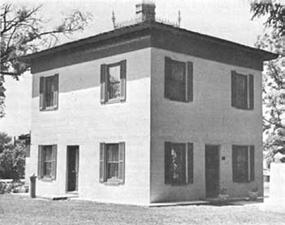
After 80 years of ownership, The DeMaestri and Durrett families have been careful stewards of the property located at 138 Redstone Boulevard and are now ready to part with their home. The family prefers to find a way to ensure that the property is in good hands, with ideally a public purpose. RHS held an open house of the prop erty last fall and has been diligently brainstorming resources avail able for acquisition. After losing the non-profit’s display space at the Redstone Castle, they do not have a place available to tell the broad er story of Redstone as well as a space for community meetings and events. This is a timely opportunity and unlikely to happen again.
However, they are under a tight timeline. The three owners need to sell the property and have generously offered it to the RHS at be low market value with one owner additionally donating $275,000, bringing the price to $550,000. Furthermore, Pitkin County is fund ing a professional team to submit a Historical Colorado Grant for up to $250,000 by April 1
financial support toward the $200,000 “match” by sending an email to historyredstone@gmail. com or calling (970) 379-0523.
redstone south Bridge rePlaceMent
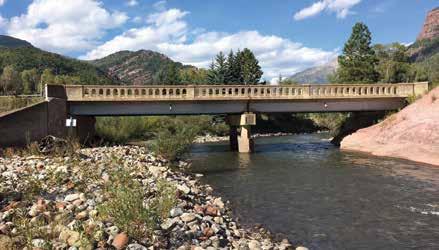
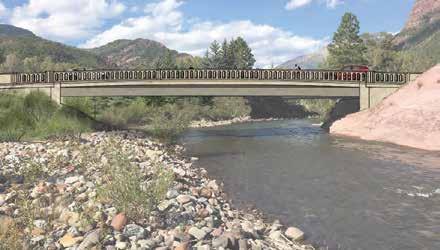
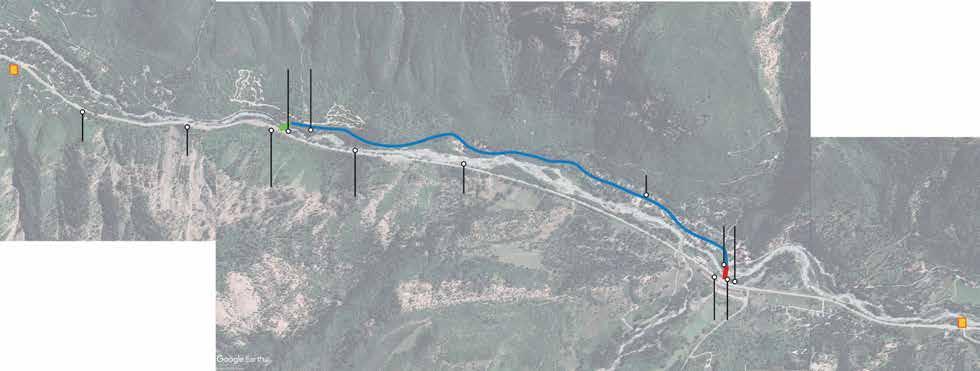
According to the Redstone South Bridge project website, a bridge asset management study was completed for Pitkin County in 2022. "The study estimated the remaining lifespans of all bridges, provided recommendations for future funding and maintenance, and prioritized maintenance recommendations." As part of that study, Redstone’s south bridge, near the Redstone Inn, was highlighted as the next in line for replacement.
The project is currently in the first phase of public outreach with the intent of connecting the community with the preliminary design. “We are preparing information related to the ‘why’ of the project,” said Jason Jaynes of DHM Design, “the evaluation of alternatives for alignment and bridge type, and the recommended alignment and bridge type. The project team’s materials will also include information about the overall anticipated timeline, detour routing, and initial conversations with emergency managers.”
In a meeting last month, the project team shared that the targeted timeline for construction is 2026, with hopes that demolition can happen before the high water season starts next spring. Then, the
construction phase for the new bridge will begin once water levels come back down, likely around very late summer or early fall. While Pitkin County's original plan for funding was to seek grants, the current uncertainty about the availability of federal grants has caused the County Engineer, Andrew Knapp, to re-examine other departments where he may pull funds so the project could be funded from within.
The project consultant team is led by SGM, Inc., which is handling all the technical aspects, DHM Design, which is providing public engagement and graphic illustration, and joining Knapp from the County’s end is participation from Roads and Bridges, Open Space and Trails, Communications, and others. The team will round out this first phase of public engagement with a presentation during the next Crystal River Caucus meeting on March 13th starting at 7 p.m. at the Church at Redstone. In the following pages, you will find the project informational materials.
For more information, please visit the project website: pitkincounty.com/1633/ Redstone-South-Bridge-Replacement. If you’re unable to join the team during the Caucus meeting this month and have questions or comments, please reach out to Knapp at andrew.knapp@pitkincounty.com



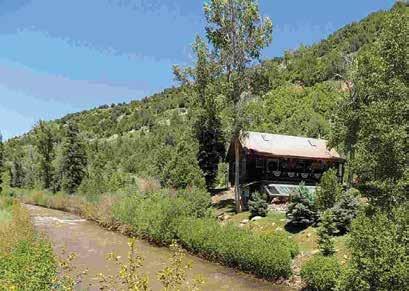



In 2022, the Redstone Bridge was designated as a top priority for replacement following the Pitkin County Bridge Assessment Management Study, which evaluated bridge lifespans, outlined maintenance strategies, and prioritized funding requirements.







Join us for the Redstone S-Bridge Open House at Propaganda Pie Feb 19th from 5–9 PM - Stop by to learn more about the upcoming bridge project, view plans, and share your input with the team. Enjoy a casual evening connecting with neighbors while getting the latest updates on this important community project.
Senior Center temporarily closed following burst pipe
The Pitkin County Senior Center is temporarily closed due to damage from a burst pipe during the recent cold snap, but services, including lunches and programming, will now be offered at the Pitkin County Human Services Building, 0405 Castle Creek Road. Call (970) 920-5432 with any questions.
Licensing your dog is required in Pitkin County Pitkin County has partnered with DocuPet to provide an enhanced pet licensing experience. Twenty percent of every tag purchased is donated to Aspen Animal Shelter. Pet licenses are required for all dogs living in unincorporated Pitkin County.
Pitkin County Vision 2050
Stay informed about the progress of Pitkin County Vision 2050 and how we're shaping the future of our community! Subscribe to the Vision 2050 newsletter for updates, insights, and opportunities to get involved.
Apply for LEAP assistance now
The Low-Income Energy Assistance Program (LEAP) is designed to help low-income households with their heating expense and water bills. The LEAP program typically accepts applications from November through April annually. Scan the code to apply.










• Better sight lines for turning onto Hwy 133
• Allows existing bridge to remain in use throughout construction period
• Greater wetland impacts
• Less freeboard to pass debris during high water
• Larger construction footprint
• Less staging area available
• Larger structure skew angle
•
•
•
•
• Longer span length










The C rys Tal V alley & Marble Times
Mission Statement: To provide a voice for the residents of the Crystal River Valley; to bring attention to the individuals and local businesses that are the fabric of the Crystal Valley region; to contribute to the vitality of our small town life.
EDITOR AND ADVERTISING SALES
Gentrye Houghton gentryeh@hotmail.com
CONTRIBUTORS
DJ Sugar Monkey
Amber McMahill
DISTRIBUTION AND LAYOUT DESIGN
Ryan Kenney
The Crystal Valley Echo is published monthly, and is distributed throughout the Crystal Valley.
NEWSPAPER BOX LOCATIONS: Third Street Center • Village Smithy Carbondale Post Office • Carbondale Park & Ride The Marble Hub • Redstone General Store





(L















March 3 10a - 1p Senior Center: 0275 Castle Creek Rd WHO is eligible for LEAP? A family of 4 making a monthly Gross Income of $6,505 or less could qualify. SCAN TO SEE IF YOU DO: JOIN US / ÚNASE A NOSOTROS for help with applying through 4/30. Open to All | Food Served | Spanish Translation
March 10 10a-1:30p Health & Human Svcs Bldg: 0405 Castle Creek Rd
Energy Assistance Program) LEAP puede ayudar a calentar su casa. (LEAP = Programa de asistencia energética para personas de bajos ingresos) ÚNASE A NOSOTROS para APRENDER sobre LEAP y CÓMO SOLICITAR antes del 30 de Abril.
- 2p



•
•
3.
4.


At the Redstone Inn
Redstone programs are open to all! RSVP: (970) 920-5432
MARCH 11 & 25
• 12:00 p.m. – Lunch ($10) RSVP by noon the Friday prior – space is limited. Plated lunch will be served. There will be a gluten-free option.
• 12:45 p.m. – Program
March 11: Power of Perspective with Atis Spuris – The power of the words we use daily with ourselves helps shape our daily reality. By addressing self-limiting beliefs, we can change how we remember personal experiences and how we shape new ones.
March 25: Spiritual Direction & Practices with Stacey Atkins – Consider your relationship with the Divine and explore spiritual practices to enhance that relationship. Stacey is a certified spiritual director, spiritual counselor and coach serving the spiritually independent.
WANT TO BE KEPT IN THE LOOP? Send us your email address: (970) 920-5432 • seniors@pitkincounty.com


We can’t do it without you. In an economic climate where many established news outlets continue to scale back or close, your support goes directly to writers living in the Crystal Valley!






Tune in every second Friday at 6 pm on KDNK for the monthly VOICES Radio Hour, where we share stories and conversations from community members of our collective history, tradition, and heritage.
January 10: Revisiting
March 14: Common Ground: Politics
April 11: Sober Living
May 9: Sage Stories
June 13: Common Ground: Faith
July 11: The Way Here (English/Spanish)
August 8: Our Land, Our Voices

September 12: Common Ground: Learning vs. Teaching
October 10: Nuestras VOCES (Spanish)
November 14: Coming Out for the Holidays
December

Crystal River Caucus Regular Meeting Thursday, March 13TH beginning at 7 p.m. at the Church at Redstone

The agenda will include a presentation on the Redstone south bridge replacement project, a discussion on the water/ice problem on CO133 near Swiss Village, a discussion by the Forest Service of the communications project on the old McClure Pass road, and an update on wild and scenic designation for the Crystal River.
All content sponsored and provided by the Redstone Historical Society.
Part i: the Back story
Just a few miles outside Meeker, Colo., a slim metal pole topped with a large copper ball marks the spot where Nathan Meeker fell. Nearby a simple plaque mounted on a granite stone solemnly lists the names of the ten men who were slaughtered with Meeker on that late September day in 1879. Standing at the spot today, with the vast stretches of hay fields and mountainous horizons in the distance, it might seem difficult to comprehend how such a tragedy could have taken place in this quiet setting.
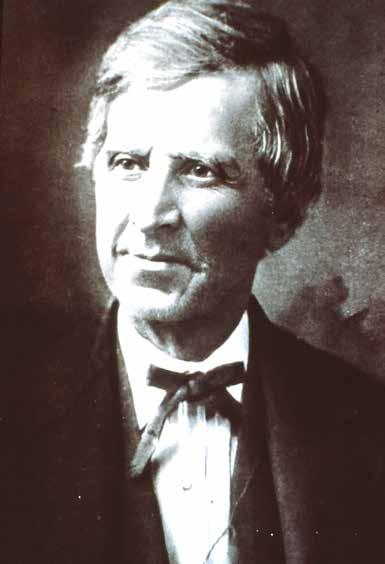
One hundred forty-five years after the tragic murders and kidnappings took place in the northwestern Colorado ranching town of Meeker, the founder, Nathan Meeker is still considered an enigma.
The irony of the Meeker Massacre is that it didn’t have to happen. If one man could have compromised a little more, opened his eyes a bit wider, and realized that you can’t change a group of people overnight, the Meeker Massacre would have never graced the pages of history books. That one man was Nathan Meeker.
Depending upon which historical reference you read, Nathan Meeker was either a charismatic, forward-thinking visionary who dreamed of turning rich soil into productive farmland or a puritanical, narrow-minded, egocentric who underestimated the power and resistance of the Ute [people]. Perhaps Meeker was a little of both. However, the latter attributes were certainly responsible for his gruesome and violent end.
To fully understand what happened on that fateful September day, one has to know what came before.
the ProMised land
Nathan Meeker was by account an educated man as well as deeply religious. He dreamed of building an ideal community, a promised land, in which his family and friends would live and thrive under his strict direction. He envisioned “temperant people of good moral character,” to be part of his community and quickly set about garnering support for his endeavor.
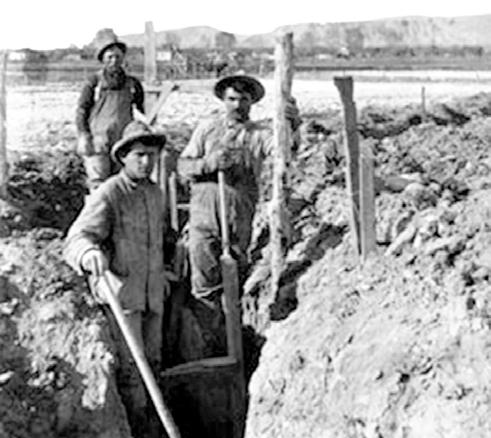
New York Tribune editor Horace Greeley, a friend of Meeker’s, encouraged the plan and allowed Meeker to use his paper to attract prospective families. By 1879, a site for Meeker’s community was selected — a barren, treeless expanse of flat land that bordered the banks of the Cache la Poudre River in northeastern
Colorado. Over 200 “colonists” responded to Meeker’s request in the Tribune and arrived at the site. However, 50 of them turned around immediately and returned home after surveying the blank landscape and dry land.
[Yet,] the rest remained determined to turn Meeker’s vision into a reality. Many of the colonists considered Meeker to be a tyrant because of his unyielding attitude towards them as well as his consistent habit of judging their moral character. But others revered Meeker, respecting his tireless hard work and dogged determination. His “Union Colony of Colorado,” which he soon named Greeley in honor of his most ardent supporter, was his sole devotion and he threw himself and his life savings of 10,000 dollars into the project. Oftentimes, Meeker spent his own money for the colony’s expenses, declining to collect any funds from the colony’s treasurer, Horace Greeley.
However, he finally did breakdown and asked Greeley for a loan of $1,000 to start the Greeley

Tribune (the paper is still published to this day). Horace Greeley agreed and Meeker set about writing stories about his colony which he sent back to Greeley to publish in the New York Tribune
One has to wonder how Meeker could ethically write such encouraging reports on his little town. While there were positive signs of slow improvement within the colony, there were other insurmountable problems. Between the barren land, the low rainfall, and the unexpected grasshopper plagues, the little community of Greeley was clearly not the nirvana that Meeker wrote about.
Still, the articles continued for two years until the unexpected death of Horace Greeley in 1872. With his death, came the ultimatum from the new ownership of the Tribune: Pay the $1,000 debt that was owed to the estate or face legal action. Meeker did not have the money and stalled the proceedings for years.
The financial pressure took its toll on Meeker and brought out the worst in his personality. His tyrannical qualities took on a sharper tone as he would routinely scold, berate, harshly criticize, and insult his fellow colonists when-
ever he felt they weren’t living up to his idea of “high moral character.” He preached constantly about drinking, smoking, and the like, causing many of his most ardent supporters to question their devotion and respect for him.
After years of ducking his debt to the Greeley estate, legal action was threatened again. This time, Meeker decided he should stall no longer and actively [sought] out a position that would help pay off the debt. That position would eventually seal his fate.
On a trip to Denver, Colo., in 1877, Meeker looked into the possibility of becoming an Indian Agent. While many felt Meeker was not suited to the position, on March 18, 1878, he received word that his appointment at the White River Ute Agency in northwest Colorado was approved. The position paid about $1,500 and, with his expenses being small, Meeker felt he could pay off his debt to Greeley’s estate within two years and then leave the agency. At the age of 61, Nathan Meeker looked at his new appointment as an opportunity to continue his mission for God. As far as he was concerned, the Utes were a savage breed and it was up to him to convert them from sin to salvation.


Author Laurel Dewey relocated to rural Colorado from California in the early 1990’s. She first worked as an investigative journalist and newspaper columnist. Since then she has authored several novels and investigative books on plant and alternative medicine. This article was first published in the November 1993 issue of the Old Roaring Fork periodical. It is being re-published with her permission.