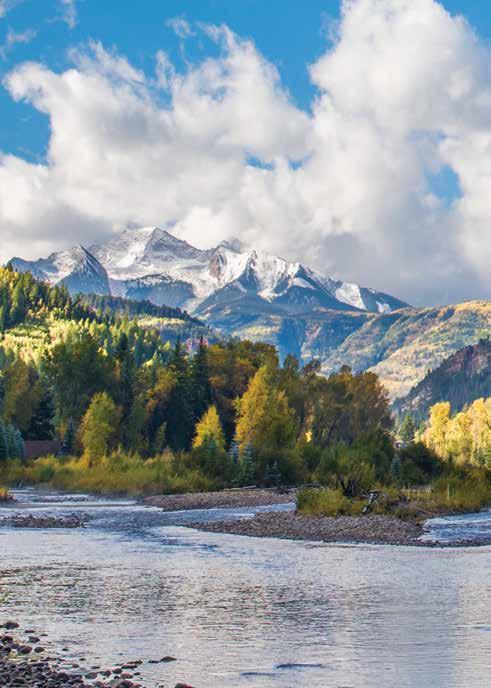
Photograph by Gentrye Houghton
The long-running speaker series Naturalist Nights is set to launch in early January. Addressing a variety of environmental topics, the series is a collaboration between Wilderness Workshop, Aspen Center for Environmental Studies (ACES), and Roaring Fork Audubon. These three organizations bring a great line-up of experts to explore topics of the natural world relevant to our community, such as fire mitigation on public lands and tribal engagement in the Colorado River Basin. The first lectures commence on January 8th and 9th
“Alongside our partners at the Aspen Center for Environmental Studies and Roaring Fork Audubon, Wilderness Workshop is excited to welcome another amazing group of speakers to our valley for our annual Naturalist Nights speaker series,” said Erin Riccio, Advocacy Director at Wilderness Workshop. “This winter’s series will feature a wide range of topics that are sure to resonate with our community. I’m particularly excited to hear from some of our expert speakers about the impacts of recreation on our public lands and managing wildfires in wilderness areas. We can’t wait to share another winter of Naturalist Nights with all of you!”
Each of the five speakers will present on Wednesday evenings in Carbondale at the Third Street Center (520 South Third Street in Carbondale, Colo.) and on Thursday evenings in Aspen in varying locations. The Thursday presentations will primarily be at the Pitkin County Library except during the first week, please
see below for specific location information.
Registration is strongly encouraged for each presentation, but not required; you can register for each event by visiting wildernessworkshop. org/naturalist-nights-2025/
Each presentation will be available to view, after the live events, on all three organizations' individual digital platforms.
“ACES is thrilled to once again launch Naturalist Nights with our partners Wilderness Workshop and Roaring Fork Audubon,” said Jim Kravitz, Director of Naturalist Programs at Aspen Center for Environmental Studies (ACES). “As always, we aim to bring timely issues and science education that impacts our lives and our region. We have a great lineup of diverse topics such as recreation impacts on public lands, climate complicity, beavers, fire as a restoration tool, and tribal engagement in the Colorado River basin. Come hang out with your community, enjoy free education, and get involved!”
The 2025 Naturalist Nights series includes experts speaking on a variety of pertinent topics and issues:
terrible beauty: reCkoning With CliMate CoMPliCity and redisCovering our soul With auden sChendler
• Wednesday, January 8th, 6 - 7 p.m., Third Street Center, Carbondale
• Thursday, January 9th, 6 - 7 p.m., Limelight Hotel, Aspen
Auden Schendler is the Senior Vice President of Sustainability at Aspen One. He is the author of the book Getting Green Done, and new this year, Terrible Beauty, which forms the basis of his talk.



• Wednesday, January 22nd, 6 - 7 p.m., Third Street Center, Carbondale
• Thursday, January 23rd, 6-7 p.m., Pitkin County Library, Aspen
Delia Malone works as an ecologist with the Colorado Natural Heritage Program, where she conducts biological surveys of upland, wetland, and stream habitats, and looks for rare plants, animals, and natural communities.





tribal engageMent in the Colorado river basin With Celene haWkins and izabella ruffino
• Wednesday, February 5th, 6 - 7 p.m., Third Street Center, Carbondale
• Thursday, February 6th, 6 -7 p.m., Pitkin County Library, Aspen
Celene Hawkins is the Tribal Water Partnerships Program Director at The Nature Conservancy. Izabella Ruffino is the Tribal and Indigenous Engagement Manager at The Nature Conservancy.
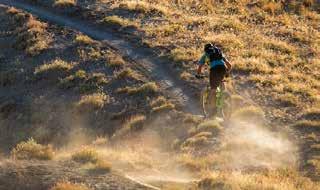
Wildland reCreation and eCologiCal disturbanCe: reCreation and PubliC land ManageMent iMPliCations for Western Colorado With ChristoPher Monz, Ph.d.
• Wednesday, February 19th, 6 - 7 p.m., Third Street Center, Carbondale
• Thursday, February 20th, 6 - 7 p.m., Pitkin County Library, Aspen
Christopher Monz is a Professor in the Department of Environment and Society and The Ecology Center at Utah State University, is an internationally recognized expert in the ecological implications of wildland recreation, and has authored 180 scientific papers and reports, and three textbooks.
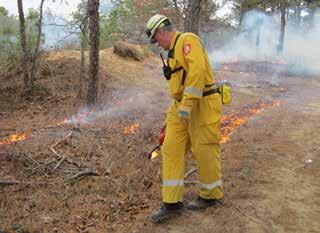
Untrammeling the Wilderness: Restoring Natural Conditions Through the Return of Human-ignited Fire with Clare Boerigter and Jonathan Coop, Ph.D.
• Wednesday, March 5th, 6 - 7 p.m., Third Street Center, Carbondale
• Thursday, March 6th, 6 - 7 p.m., Pitkin County Library, Aspen
Clare Boerigter is a Wilderness Fire Research Fellow for the Aldo Leopold Wilderness Research Institute. Jonathan Coop is a Professor of Environment and Sustainability at Western Colorado University.
Wilderness Workshop works across more than four million acres of public lands to ensure their ecological integrity. They have led efforts to designate more than half a million acres of wilderness and hundreds of thousands of roadless areas in western Colorado. Learn more at wildernessworkshop.org
Aspen Center for Environmental Studies (ACES), a non-partisan, nonprofit organization, provides enriching environmental literacy programs for kids, teens, and adults as well as community and business leaders. With three locations between Aspen and Basalt, ACES offers year-round programs focused on science, ecology, natural history, stewardship, forest health, regenerative agriculture, civic leadership, and more. For more information and a full listing of ACES offerings, visit aspennature.org
Roaring Fork Audubon promotes the enjoyment, conservation, and understanding of birds, other wildlife, and their habitats, through birding, education, advocacy, and fellowship. Learn more at roaringforkaudubon.org

An Account from DJ Sugar Monkey
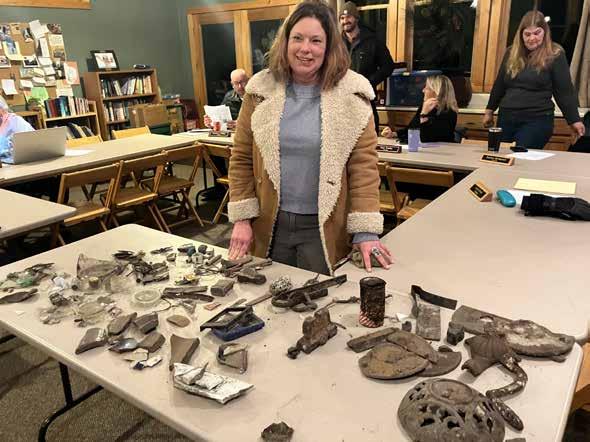
The last meeting of the year was mercifully short and sweet. Entering the Fellowship Hall, attendees were greeted by a smiling Emma Bielski standing behind a large table of swag recently unearthed from the foundations of the Historical Jailhouse building in Thompson Park, on the east side of town. Beaming Bielski was joined by her husband Mike Yellico and their delightful stringy and energetic toddler Evelyn, apparently an avid climber just like her father.
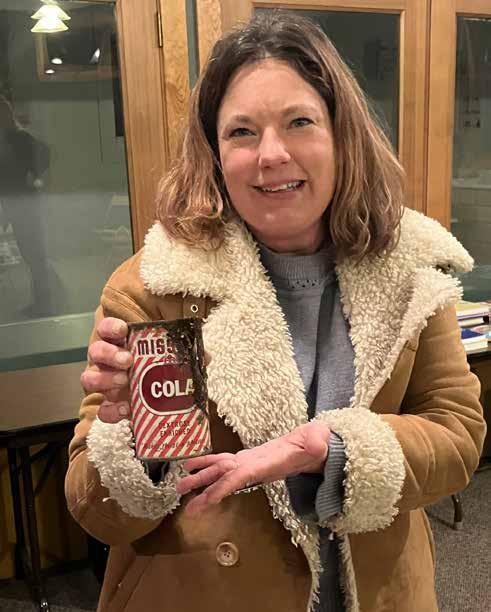
Unsurprisingly, anything of value had been taken long ago by the Jailhouse’s former light-fingered residents, leaving the beaming Bielski presiding over an array of dusty broken glass, fragments of an iron stove, the remains of a Nintendo Gameboy, and the pièce de résistance: a red and white striped can of vintage cola. It is envisaged that this collection of artifacts (now in the safe hands of the Town’s administrative staff) will be cataloged and put on display in the renovated Jailhouse once phase two of the project (the restoration of the building itself) gets the green light, which may

The Marble Town Council meets on the 1st Thursday of each month starting at 6 p.m. in the Marble Community Church’s Fellowship Hall.
Town of Marble meetings are open to the public.
be some time off. Bielski, who has worked tirelessly on the project with Yellico, announced that she was planning a “photo story” of the project, which she plans to publish on social media and compose a more detailed piece for The Crystal Valley Echo
Mayor Ryan Vinciguerra asked Bielski whether she planned to erect any interpretive signage at the site. Recalling that “numbers are not my strong suit,” the former Board member estimated the cost at $2,500. Mayor Vinciguerra and Councilman Larry Good offered their heartfelt thanks to Bielski and her husband Yellico for completing the foundation work for the historical structure. “There was a real risk we’d lose that building,” said Bielski, concluding, “I would love six to nine months of just not thinking about the Jailhouse.”
Due to an internet outage, Town Administrator Ron Leach stated that he had been unable to work
on a planned review of the Town’s fees (and fines) schedule, adding that “without enforcement or recourse to courts, it is a paper tiger.”
The next piece of business on the agenda was the discussion to approve a supplemental budget for the 2024 fiscal year. Revenues in the general fund are now expected to be higher than anticipated in the original 2024 budget by approximately $60,000. Likewise, expenditures are expected to be higher than originally anticipated by approximately $43,000. Notably, the Town received $20,000 in grant proceeds and spent $23,000 on the Jailhouse restoration project, both of which were not budgeted.
Additionally, revenue from the Campground exceeded the budget by $11,000 but the Town spent approximately $9,000 more than budgeted on maintenance and improvements. A public hearing at which the supplemental budget was approved, was held on December 12th
2025 Meeting Schedule
Starting at 6 p.m.
January 9th February 6th March 13th
The C rys Tal V alley e C ho & Marble Times
Mission Statement: To provide a voice for the residents of the Crystal River Valley; to bring attention to the individuals and local businesses that are the fabric of the Crystal Valley region; to contribute to the vitality of our small town life.
EDITOR AND ADVERTISING SALES
Gentrye Houghton gentryeh@hotmail.com
CONTRIBUTORS
DJ Sugar Monkey
Amber McMahill
DISTRIBUTION AND LAYOUT DESIGN
Ryan Kenney
The Crystal Valley Echo is published monthly, and is distributed throughout the Crystal Valley.
NEWSPAPER BOX LOCATIONS:
Mike Yellico asked the Board whether there were funds in the budget to build a path to run parallel to the main road through town. He pointed to the increasing number of children in Marble and voiced a concern for their safety, saying that “a walking path along the road would be a great addition.”
Additionally, Yellico said he would like to see more continuity in the speed limit signage throughout the town to enable law enforcement to “write more tickets.” The Board assured him that ticketing for traffic violations was not affected by this apparent inconsistency and that enforcement officers have been active all year both within town limits and on County Road 3.
A Master Plan Committee meeting will be held on January 16th to finalize the draft document prepared for the Town by Mark Chain, its architect. The Plan will be an essential reference document to assist the Board of Trustees in their challenge to iron out zoning issues within the town, an ongoing source of frustration highlighted by Councilman Dustin Wilkey who is eager to get the Town to a point where business licenses can be approved without delay and zoning decisions made with ease and transparency.
Amber McMahill advised that Gunnison County provides grants and offers its expertise to assist with these issues, but warned that this was a “huge undertak-
ing.” Mayor Vinciguerra admitted that the Town of Marble had a lot of projects on its plate and recognized the need to “prioritize and get organized” for 2025. McMahill promised to reach out to Gunnison County to seek their assistance.
Regular readers of this column will be aware that the Town of Marble is planning to initiate charging for ATV trailer parking opposite the Mill Site Park, an initiative that can only proceed with the collaboration of Gunnison County’s Small Business Administration. The SBA has, for several months, been embarrassingly unresponsive to the Board’s many requests to pursue the project, a potentially significant and much-needed new source of revenue for the Town. The Board of Trustees has now engaged the Town’s lawyer, Kendall Burgemeister, to shake the SBA from its stupor and fulfill its stated mission to “aid, counsel, assist and protect, insofar as is possible, the interests of small business concerns.” Answering the phone would be a good start.
The next meeting of the Town of Marble Board of Trustees will be held on Thursday, January 9th at 6 p.m. DJ Sugar Monkey would like to wish all readers of The Crystal Valley Echo a very Happy New Year!
DJ Sugar Monkey is a resident of Marble. You can tune into his music show “Snack Time” on KDNK every other Thursday from noon to 2 p.m.


Marble Hub • Redstone General Store

From Board Vice President, Suzy Meredith-Orr
The past year has been a bit quieter for the Crystal Valley Environmental Protection Association (CVEPA) in comparison with recent years. But looking back, some notable and positive events come to mind.
Congratulations to all of us for an early Christmas gift with the news that over 230 acres on the Crystal River flanks of Chair Mountain were donated in early December to Pitkin County Open Space and Trails! This gem was donated to the commonwealth by the Delaney Family.
Robert Delaney and John Reeves were principals in the Mid Continent Coal and Coke Corporation, which operated the Redstone mines in Coal Basin from the late 50s until the early 90s. The property is above the long decommissioned Genter Coal Mine just before the curve on the Marble Road at the Darien Ranch. The property is west of but not contiguous with the much-loved Darien Meadow Conservation Easement. The parcel has a varied forest and encompasses much of the abandoned Chair Mountain access trail. We are profoundly grateful to the Delaney Family and Pitkin County Open Space and Trails for protecting and preserving this beautiful part of
Marble Valley.
CVEPA’s stewardship of the 55-acre Marble Wetlands was assumed by the Town of Marble. Ron Leach, Alie Wettstein, and staff are monitoring this precious conserved riparian area which quietly becomes more popular. Roaring Fork Outdoor Volunteers worked diligently to control invasive weeds on the land during the Marble Extravaganza weekend. Thank you, RFOV.
In September, Colorado Stone Quarries hosted Suzy Meredith-Orr, Dale Will, and John Armstrong on a tour of the quarry at Yule Creek. CVEPA could not have been happier that the quarry, owned by Red Graniti of Carrara Italy, was willing to show us their operation. Giuseppe Telara, supervisor, and lead geologist Katie Todt were gracious and informative during the tour — both above and below ground — that far exceeded our imaginations. The expanse, beauty, and technology of the quarry were reflected in the passion these people have for the resource that is their profession. This ushers in a new era of cooperation and communication with CSQ.
In the fall, the US Forest Service presented

their plan for a parking lot at the foot of Daniels Hill above Marble. The gateway to Lead King Basin and Crystal City has long needed an area for forest users, hikers, equestrians, snowmobilers, and cyclists to park or turn around. The design was vetted by a diverse group of stakeholders and neighbors, some of whom use the adjacent ditch for their domestic water.
CVEPA and other groups were adamant that no ATV/UTV units, trucks, or trailers be accommodated at this lot. The USFS promised that this use would not be allowed and that they would work closely with Gunnison County to ensure such.
Ron Leach, Marble Town Manager said that the inundation of off-road vehicles has reached an unsustainable level during peak times which threatens the safety of residents. CVEPA has always maintained that the USFS is not responsible for catering to this motorized use which is the cause of so much negative impact and division in the Marble Valley. We have yet to see the ability or the will to be enforced by the County or the USFS.
CVEPA's position is that the Gunnison County Commissioners need to lift the exemption allowing this use on County Road 3 which is disallowed by state law.
On August 25th, CVEPA celebrated its 52nd annual meeting at the Raspberry Ridge Cafe in Marble. The cold, rainy afternoon forced the 50 attendees inside, which created a cozy and genial atmosphere. The engaging keynote speaker, Gunnison County Commissioner Jonathan Houck, was complimented by Colorado River District’s Zane Kessler and local treasurer, Bill Jochems. Slow Groovin’ hosts Amber McMahill and Ryan Vinceguerra helped make the afternoon that much more special.
In late September, our dedicated CVEPA Board engaged in a four-hour retreat at the Redstone Inn. The retreat was facilitated by Rob Stein, recently retired Roaring Fork School District Superintendent and lifelong educator. Stein’s expertise and relations skills gave our trustees many tools to work better and smarter. We thank Stein for sharing his time and talents with the board.
After serving CVEPA as treasurer for well over a decade, John Hoffman retired from the CVEPA board last summer. We thank Hoffman for his dedication and devotion to the Crystal River Valley.
Veteran Bill Jochems has come out of CVEPA retirement to fill out Hoffman’s term! Having been on the ground floor of CVEPA since the battle of the Marble Ski Area in the early 70s, Jochems has always stayed engaged in the environmental defense of the valley and the river, most recently sitting on the Pitkin County Healthy Rivers and Streams Board. Jochems is a wonderful compliment to a young CVEPA board of trustees. For those interested in learning more about Jochems over 50 years of tenure in the Crystal River Valley, visit thecrystalvalleyecho.com
CVEPA continues its vigilance in its role as the environmental watchdog for the Crystal Valley. We would appreciate your support as we look forward to continuing our work during our 53rd year. Please visit cvepa.org/cvepa-membership to donate.
By Gentrye Houghton
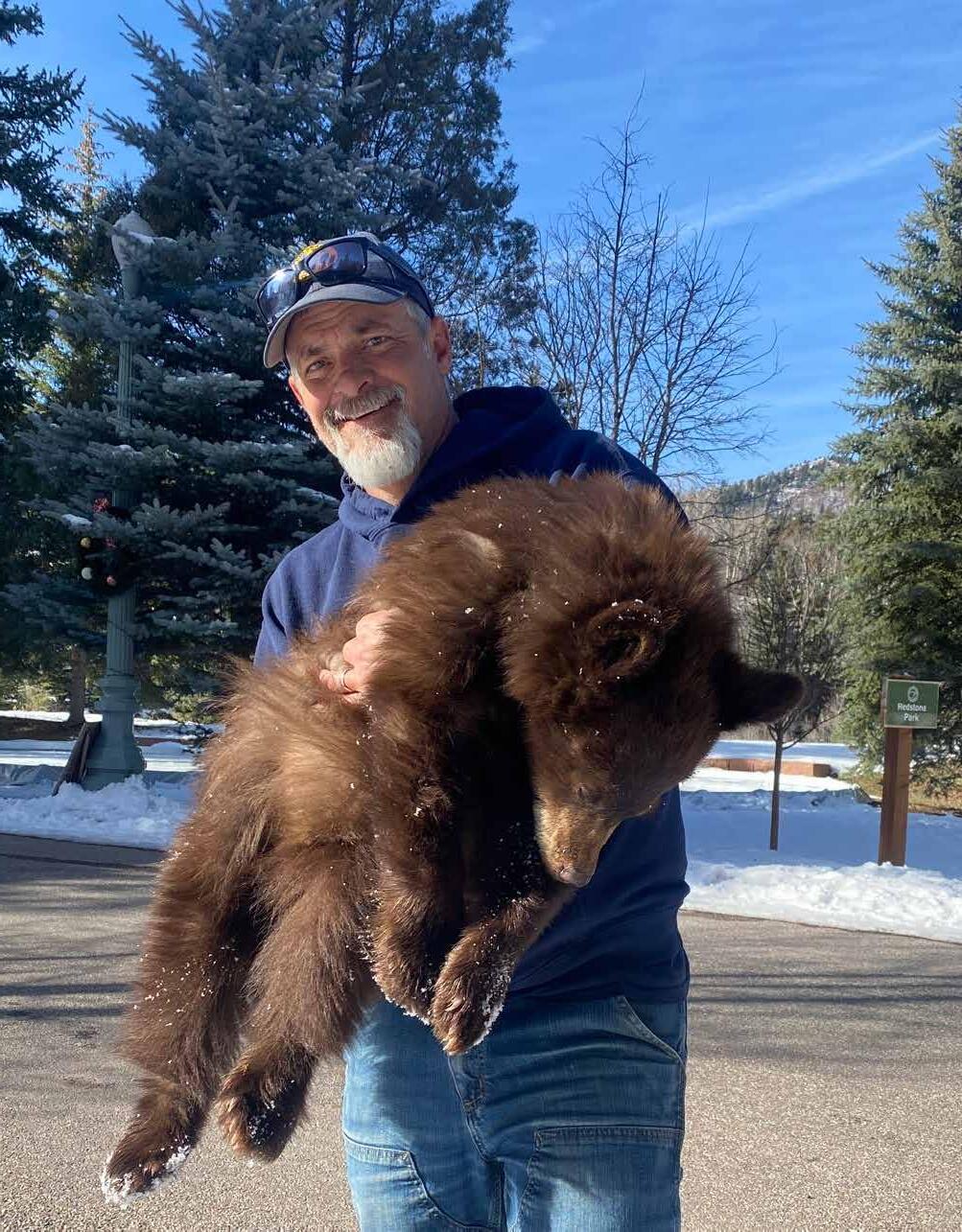
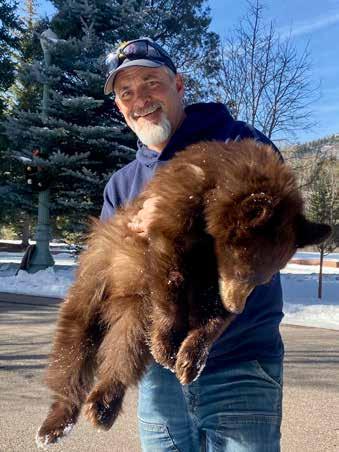
"This little guy should be hibernating already," said Colorado Parks and Wildlife District Wildlife (CPW) Manager John Groves. Pictured, Groves is holding a sedated male cub he chased behind The Crystal Valley Echo's headquarters, just across from Ron's Rink.
bears maintain their inherent fear of humans.
The second method involves using dens, which can be either man-made or natural. In this case, cubs are sedated and placed into the dens by CPW staff. Once inside the den, they receive a reversal drug and the den is then sealed off with tree branches and other natural materials. The cubs will wake up and emerge from the den when they are ready in the spring. This takes place during late January and February.
“The decision to relocate a cub largely depends on the time of year and the cub's health at the moment,” said Rachel Gonzales, CPW’s Public Information Officer for the northwest region. “If a cub is captured later in the fall and it is determined that it may survive on its own, CPW will most likely relocate it then. However, if the cub is not healthy enough to survive, it will be taken to one of our rehabilitation facilities.”
She explained that in recent cases, the cubs have been taken to Frisco Creek in southwest Colorado, where the staff focuses on restoring their health and preparing them for release, all while minimizing human interaction.
Gonzales illustrated that release can occur in a couple of different ways. The first method is known as a "hard release." In this approach, a CPW officer opens the trap in which the cub is transported and lets it free right on the spot. This method is often combined with hazing techniques, such as making loud noises, to help ensure that the
Gonzales explained that the location where animals are released depends on several factors. First, there must be sufficient food, suitable habitat for shelter, and access to water, as these are essential for their survival. Second, CPW considers the likelihood of bears coming into conflict with humans. The goal is to find an area with the lowest chance that such disputes may occur. However, bears may still travel in search of food, and they have observed cases where bears return to the original locations from which they were found.
A common misconception about bears and hibernation is that they go to sleep once winter arrives or the first snow falls, only to wake up in spring. While these events often happen concurrently, it is the lack of available food that triggers hibernation. If a bear can find a stable food source throughout the winter, it may not hibernate.
In November, a Coal Creek resident contacted CPW regarding a cub trying to make a den under their porch. Groves recommended playing a radio loudly, and the cub moved on within a day or two. While holding the groaning cub in the photograph, Groves told The Crystal Valley Echo that he'd received calls about motherless cubs in three areas surrounding Redstone, and was not sure if it was a single cub roaming around or multiple bears.
It is also not unusual for a bear to awak-
en from hibernation, leave its den, and take a quick stroll to check for food. If it finds nothing, the bear may return right back to hibernation. This is why CPW emphasizes the importance of using bear-proof trash cans, removing attractants year-round, and other living in bear country best practices.
“We are still receiving a high number of bear reports, mainly involving cubs, in the Crystal Valley,” Gonzales explained. “Most adult bears have gone into hibernation, and we believe the remaining cubs are searching for food.”
She said that the past year has been categorized as a "food failure" year, meaning that natural food sources, such as acorns and berries, were scarce or, in some areas, nonexistent. “As a result, some mother bears may have pushed their cubs out of dens or abandoned them before entering hibernation. This leaves the cubs to find food on their own so they can fatten up for the winter, which sometimes leads
them into towns or neighborhoods in search of food,” explained Gonzales.
This is a great reminder to Crystal Valley residents to remain diligent with their bear awareness this time of year. “It is crucial to maintain effective bear-proofing practices, even during the winter months,” said Gonzales.
You can find some great resources for living with bears on the CPW website by visiting cpw.state.co.us/living-bears
If you continue to have issues with bears around your property or see a motherless cub, please report them to CPW's Glenwood Springs office by calling (970) 947-2920.


Join the Citizen Grant Review Committee
Help shape Pitkin County’s community impact by scoring grant requests and recommending funding for local nonprofits. Terms are 4 years, and are renewable. For more information, please contact Lisa Yorker at lisa.yorker@pitkincounty.com
Pitkin County Needs Foster Families!
Provide a safe home for children in need and make a lasting difference in their lives. Join us in supporting our community’s most vulnerable. For more information, contact Pitkin County Human Services keli.kirkpatrick@pitkincounty.com.
Licensing your dog is required in Pitkin County Pitkin County has partnered with DocuPet to provide an enhanced pet licensing experience. Twenty percent of every tag purchased is donated to Aspen Animal Shelter. Pet licenses are required for all dogs living in unincorporated Pitkin County.
Food Sites in the Roaring Fork Valley Pitkin County Human Services would like to remind everyone about food assistance options available in our valley. This document has a list of food distribution sites, farmers markets, WIC retailers, and SNAP approved vendors. The list is updated regularly. https://bit.ly/44E1GDz
Citizen Board Vacancies - Planning & Zoning Commission
The Planning & Zoning Commission is looking for volunteers to fill a vacancy . Submit your application at www.pitkincounty.com/citizenboards by 5:00 PM on Friday, January 10th


From the United States Forest Service
forest serviCe seeks CoMMent on an uPdate to Wildlife habitat ProjeCt Project uses prescribed fire and mechanical treatments to improve winter range
The White River National Forest seeks public comment on a proposed update of its 2011 Aspen-Sopris Wildlife Habitat Improvement Project.
The project uses prescribed fire and mechanical treatments of pinyon-juniper, shrublands, aspen, and grassland vegetation to improve wildlife habitat in areas of the Roaring Fork Valley, Crystal River Valley, Fryingpan River Valley, and Glenwood Canyon. The work also prioritizes an effort to reduce fuels for wildfires.
Since 2011, the White River has conducted 12 prescribed fires totaling 12,000 acres and eight mechanical treatment projects totaling about 900 acres under the project decision. Mechanical treatments, such as motorized equipment to chop or mulch vegetation and crews to thin areas with chainsaws, are more expensive and limited by terrain, but they can be more desirable adjacent to developed areas.
“Currently, the decision allows specific areas to be treated with either prescribed fire or mechanical treatments. We are now hoping to update the project to give us more flexibility to use a

blend of the two broad techniques across about 7,500 acres on Aspen-Sopris District near Cattle Creek, Sopris Creek, west of Marble, and north of Woody Creek,” said Aspen-Sopris
At the Redstone Inn Redstone programs are open to all! RSVP: (970) 920-5432
JANUARY 14 & 28
• 12:00 p.m. – Lunch ($10) RSVP by noon the Friday prior – space is limited. Plated lunch will be served. There will be a gluten-free option.
• 12:45 p.m. – Program
January 14: Change your Breathing, Change your Life – Taught by Julie Paxton, singer & voice teacher. Based on the research by James Nestor, author of the New York Times bestseller, “Breath,” who claims, “There is nothing more essential to our health and well-being than breathing.” Julie will demonstrate proper posture and the most effective way to breathe. The class will last for 30 minutes.
January 28: Ask a Librarian Library staff will be on hand to share resources, answer questions and provide tech assistance.
WANT TO BE KEPT IN THE LOOP?
Send us your email address: (970) 920-5432 • seniors@pitkincounty.com
District Ranger Kevin Warner.
The larger objective of the project is to increase the amount of winter range for big game, which
We can’t do it without you. In an economic climate where many established news outlets continue to scale back or close, your support goes directly to writers living in the Crystal Valley!

Considering signing up for a subscription, $60 for print or $35 for digital, or making a monetary contribution online or by sending a check to
The Crystal Valley Echo
364 Redstone Blvd., Redstone, CO 81623
www.thecrystalvalleyecho.com
has been significantly reduced in these areas over past decades by both development and suppression of wildfires. Moderate intensity fires such as prescribed burns as well as mechanical treatments improve wildlife habitat by triggering new, nutritious growth of vegetation and creating a mosaic of openings within the older vegetation.
The update is being analyzed through a supplemental environmental assessment, which is available for a 30-day public comment period. More information, including how to comment, is available at www.fs.usda.gov/project/ whiteriver/?project=67247
Comments need to be received by January 17th
after signifiCant trail Work CoMPleted in 2024, hanging lake trail to reMain Closed this Winter
The Hanging Lake Trail will remain closed throughout this winter following a successful field season of trail reconstruction in 2024. Work on the trail will resume when the weather allows in the spring, with an anticipated reopening this summer.
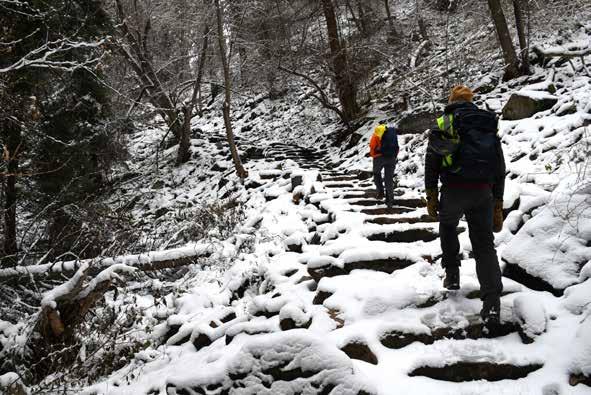
Trail reconstruction began last year in early May to make the 1.2-mile Hanging Lake Trail more sustainable and better able to handle high water. This season significant rock work was completed on the trail surface and the replacements for the trail’s seven bridges were put in place. In 2025 crews plan to finish the bridges and final trail work as well as construct a boardwalk at Spouting Rock and rebuild the trailhead area.
“The trail looks amazing with significant stonework completed, including rock steps and retaining walls,” said Eagle-Holy Cross District Ranger Leanne Veldhuis. “With the new bridges still needing to be stabilized and the final climb to the lake still under construction, we will keep the trail closed through the winter for public safety.”
In early November, materials were flown by helicopter to each of the seven bridge locations. Each bridge required two flights, with a single load weighing up to two tons.
The Forest Service was able to keep the trail open intermittently through the summer while construction continued. However, once the project reached the point at which bridges needed to be removed in October, the trail was closed.
The trail and associated bridges suffered significant damage following the July 2021 debris flows in Glenwood Canyon. A temporary trail was completed in June 2022 until this larger reconstruction could be planned and implemented.
The Hanging Lake Reconstruction Project is being funded through Great Outdoors Colorado, Colorado Parks and Wildlife State Trails Program, the National Forest Foundation, the City of Glenwood Springs, and the USDA Forest Service.
“This important work to repair and improve this iconic trail would not be possible without the significant support of our partners,” Veldhuis said. “We appreciate the public’s patience as we work to construct a trail to last for decades.”
forest serviCe glenWood offiCe Closed until further notiCe
The White River National Forest Supervisor’s Office in Glenwood Springs will be closed to the public until further notice because of a lack of staffing.
“We regret any inconvenience this may cause,” said White River Forest Supervisor Scott Fitzwilliams. “At this time, we do not have an estimate for when the Supervisor’s Office will be reopened.”
The Supervisor’s Office public room began restricting hours in the fall due to limited personnel. With the last seasonal position departure last month, the office has closed. "We are looking for solutions to our staffing issues," said Fitzwilliams.
Fuelwood, mushroom, post and pole, and transplant permits need to be obtained in person at a ranger district office. The closest district office locations to Glenwood Springs currently are the Rifle Ranger District and the Eagle-Holy Cross Ranger District in Minturn.
The Aspen-Sopris District Office in Carbondale is expected to remain closed until summer 2025 while its new building is constructed.
Camping reservations are available at www. recreation.gov.
reCyCle ChristMas trees at rio grande reCyCle Center
From the City of Aspen
The city of Aspen in partnership with Aspen Tree Service is offering free Christmas tree recycling. Trees will be accepted until February 14th at the Rio Grande Recycle Center.
Prior to recycling the tree, remove all ornaments, lights, and decorations. Wreaths and garlands are not accepted due to the danger of metal wiring when chipping the trees. Recycled trees will be turned into mulch for future planting.
For more information about the Rio Grande Recycle Center, please visit aspen.gov/345/ Rio-Grande-Recycle-Center


By Stephanie Deaton
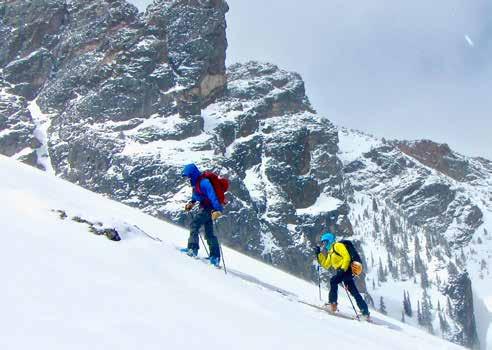
It’s the time of year when snow is beginning to accumulate. People are dusting off winter gear, firing up snow machines, and looking toward the mountains. Winter is calling!
Up here in the West Elks, it is the season many enjoy the most. We live in a place where the mountains are literally in our backyard. We see a lot of people pass through on their way to or from epic, snow-filled adventures. Our towns see a great deal of backcountry use from people in our community and the surrounding area.
More people are choosing to recreate in the backcountry now than ever before. Snowmobile sales were up 6.6% in 2019 and are expected to rise further in the coming season.
Backcountry gear sales have been on the rise for the past few years. Since COVID-19 prematurely shut down ski resorts in the spring of 2020, that trend continues to skyrocket. Our area will likely see many experienced backcountry users along with a fair share of novices, and that has many people concerned. Not everyone venturing off-piste is familiar with the ruggedness of the terrain. Are people recreating in the backcountry aware of the risks?
More avalanche fatalities happen in Colorado than in any other state, and most of these accidents are triggered by backcountry skiers and snowmobilers. Brian Lazar, Deputy Director of the Colorado Avalanche Information Center (CAIC) said this is due to our snowpack and our access to terrain.
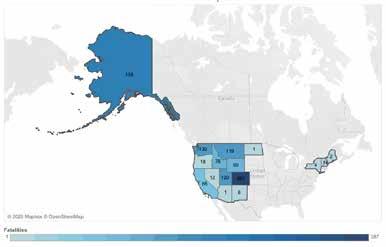
In Colorado, we have continental snowpack, a type of snow that is characterized by less frequent storms, very cold nights, and low snow water equivalent. This is what makes skiing and snowboarding so enjoyable - that light, dry snow that is perfect for carving turns.
Since there is less snowfall in a continental snow climate, it might be presumed that there is less avalanche risk. Unfortunately, this is not the case. Because we get shallow storms and our nights are so cold, there is a greater temperature gradient within the snowpack. It changes the snow into crystals called facets. These facets create a weak problem layer. Most avalanches in Colorado are caused by persistent slabs. These form when a weak layer is buried by additional layers of snow. The problem persists even after snowstorms have subsided, sometimes even after weeks or months. These types of avalanche problems are dangerous because they are hard to predict, they can be triggered at a distance, and they can cross terrain features.
Another key to Colorado’s high avalanche fatality rate is that we live in an area where the backcountry is easy to access. Often, we can be in avalanche terrain minutes after stepping out of our cars or homes. Pitkin County has the highest avalanche fatality rate in the state, while Gunnison County has the
rate. It is important for anyone who lives on or near the mountains to know about avalanche conditions and how to avoid exposure to avalanche terrain.
This is not a warning to stay inside this winter. On the contrary, if we become aware of our surroundings, we should be able to take part in many winter activities. We can still stay safe in our beautiful mountain community as long as we stay avalanche aware. We must consider our risks and take into account how our actions impact ourselves and how they impact others. A skier or snowmobiler can set off an avalanche remotely from a distance causing harm to someone who is below or adjacent to the initial trigger.
Several members of the outdoor community have expressed safety concerns. Scott Messina, the Rescue Leader Coordinator for Mountain Rescue Aspen warns us to “expect to see a surge in backcountry use.”
Mountain Rescue Aspen is the first responder organization for this area. When asked what they are doing to prepare for this season, Messina stressed that the organization is striving to maintain the health of the team so they can respond effectively as needed.
Mike Wagner from the Carbondale and Rural Fire Protection District echoed his sentiment and stated that even though they expect more backcountry use, they are “not doing anything beyond the heightened awareness that already exists.”
neW to the baCkCountry and not sure Where to begin?
Lazar suggests first getting the forecast. The CAIC offers free avalanche forecasts for Colorado through their website or smartphone app.
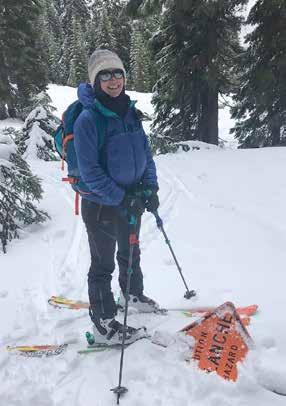
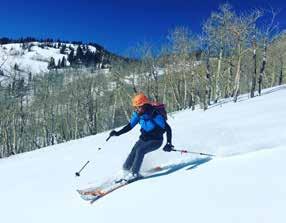
Learn more at www.avalanche.state.co.us/.
He also suggests traveling with the minimum essential avalanche rescue gear: A transceiver, probe, and shovel, and to avoid traveling solo. Most importantly, get the proper training. Sign up for an avalanche safety course at www.avtraining.org, or a Know Before You Go course through CAIC. Many of these courses are offered online.
Lazar suggests to “start learning before you even sign up by doing online training.” Mountain Rescue Aspen offered a snow science virtual event a few years ago that is still available to stream on thier website, mountainrescueaspen.org. Messina, of MRA, encourages you to take extra gear. If a member of your party is injured, you might have to stay the night before rescuers can get to you.
If you have recently joined the growing group of uphill skiers in the valley but are still uncomfortable in the backcountry, there are other options in the area. Sunlight Ski Resort and all four Aspen Mountains offer uphill access. Check with each resort, cost, designated hours, and blackout dates vary.
Some mountains may require a pass for uphill access. There are a variety of groomed cross-country ski trails in the area as well. Bluebird Backcountry, near Steamboat Springs, is the only in-bounds backcountry ski area in the U.S. They make it safer and easier to learn on their avalanche-evaluated and ski-patrolled terrain.
As a community of backcountry users, we can spread the word about avalanche awareness and safety. Friends of CAIC is a non-profit organization that supports avalanche forecasting and education throughout Colorado, find out how you can get involved by visiting friendsofcaic.org
Read the avalanche forecasts frequently, learn the trends, and have a better sense of what happens in our area. Lazar asks that you report any activity you see to CAIC. The more that is known, the better they can predict.
“We appreciate and rely on observations sent to CAIC from the community” Lazar explains. “You don’t have to be an expert to submit an
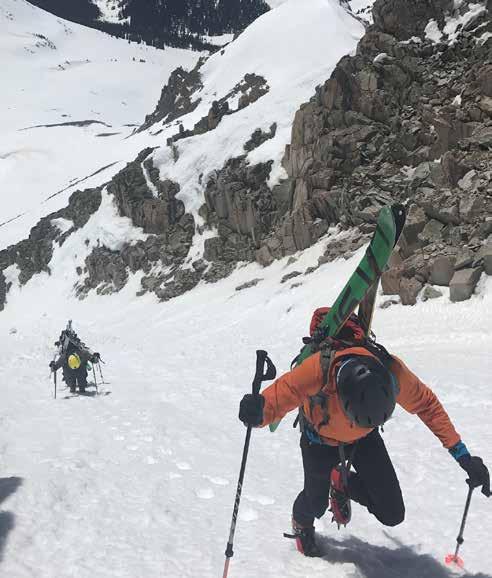
observation on the website or your smartphone.” By gathering more data, they can provide the best avalanche forecast so you can make the best decisions.
It is important to mention that many organizations that help us recreate safely rely heavily on support from the community, consider becoming a member of the Friends of CAIC to further avalanche forecasting and education or donate to Mountain Rescue Aspen, an organization that is entirely funded by donations and grants from the community. All their rescuers are unpaid volunteers.
CAIC offers free virtual Know Before You Go avalanche awareness programs. Visit www.avalanche. state.co.us/education/caic-programs/ know-before-you-go-colorado/ for access.
If you’d like to learn more about avalanche safety or snow science, check out the Colorado Avalanche Information Center (CAIC) at www.avalanche. state.co.us/, Mountain Rescue Aspen mountainrescueaspen.org/, The American Institute for Avalanche Research and Education (AIARE) avtraining. org/, and Open Snow opensnow.com



LEAP is for families and individuals with limited incomes who need help in paying their utility bills. Families of 4 making less than $6,505 are eligible for support. The program is open from November 1 through April 30 and can provide up


From Paige Meredith
While conducting a survey, 45 years ago, before building our home in the Crystal Valley, the surveyors showed us a map of the area from the 1880s. It indicated a spot about three-quarters of a mile upriver from us labeled “Mobley’s Corral.” This was new to us because the local name for that spot was, and still is, Janeway.
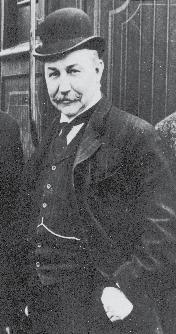
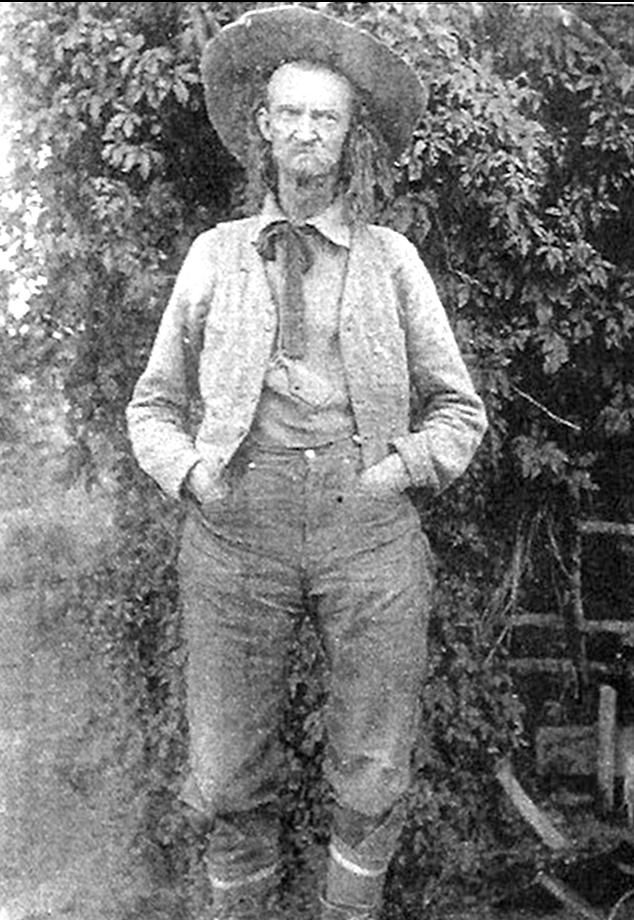
Some 30 years later, our daughter stumbled onto a photo of Mr. John Mobley in a textbook describing him as a resident of the Crystal River Valley. As you can see, that photo is worth a thousand words. Several of his descendants are still in the area including his 92-year-old grandson Carl Mobley of Silt, Colo., who we interviewed four years ago. Here are some highlights of John’s story.
Born in Ohio, Mobley lied in 1861 about his age and joined the Union Army at 16 years old. Afterward, he moved west and served two terms as sheriff of Julesburg, Colo., probably between 1870 and 1880. The next thing we found was that in 1880 he was exploring the Schofield Pass area and awaited his wife, Julia, and four children who arrived by mail stage via Gunnison and Crested Butte, Colo. They then proceeded over Schofield Pass.
Some reports say he had to dismantle their wagon and pack it in pieces on burros to complete the trip to what is now considered Marble, Colo. One child was riding in panniers on a burro that spooked and ran down the trail, but it was stopped by William Woods, a miner who became known as one of Marble’s founders.
That year, the family wintered at what would become the town of Marble. Mobley plotted some home sites and called them “Clarence.” Wood plotted some adjacent sites and called it
”John Mobley liked to grow his hair long and one day after doing some trading in Glenwood, he was having lunch with a friend at the Hotel Colorado. While eating dinner he became aware of stares and jeers from a nearby patron. The man persisted in making loud comments and referring to Mobley's hair as 'Sissy.'
The long-haired, long-bearded Mobley finished his meal, dabbed his chin, and walked over to the heckler's table. He bent over close enough for the strands of his hair to dip into the man's soup and then he said with serious intent, 'Son of a b****, would you care to pull it?' A long, anxious moment of silence ensued. Years later Mobley told one of his boys, 'No one seemed inclined to take up my offer, so I left.'”
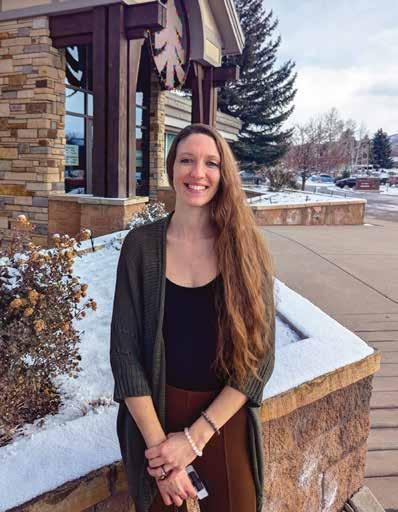
She is passionate about access to healthy, a ordable and safe foods, which is why you’ll see her volunteering at UpRoot Colorado.
vintage valley Continued... 25 miles northeast of Rangely, Colo., along Wolf Creek, and, as Mobley was getting a few years on, he decided to settle nearby. Still today, topographic maps show a “Mobley Place” near Wolf Creek.
“Marble.” Eventually, the two areas were consolidated. Marble was at the confluence of Carbonate Creek, which substantially flooded in 1941, and Rock Creek, which was, apparently, unilaterally re-named the Crystal River by the soon-to-be-defunct Aspen and Western Railway in 1886. It wasn’t officially re-named as the Crystal River, however, until November 22nd, 1901.
Within a year, Mobley had the itch to move again and by 1881 had moved his family to the confluence of the Crystal River and Avalanche Creek where he established a small settlement called “Mobley’s Corral.” Here, he petitioned for a Post Office commissioned on August 16th, 1887. By 1888, about 50 people had settled there. This was too crowded for Mobley so he sold out and hauled the family down the valley to a quieter spot near Carbondale, Colo., where he took to ranching. At that time, only about 20 families lived in Carbondale.
Sometime between 1897 and 1902 (different accounts are recorded), he got the itch to move again and sold the ranch; taking the cash to purchase 75 horses and over 100 head of cattle, and headed, family and all, for Nevada. A bad winter stopped them about
There isn’t room here to tell about their encounters with some of the natives, but John’s grandson, Carl, informed us that both Mobley and his son Chester learned to speak the Ute language. Different dates of his death are claimed: Some say 1902, a family tree account on the internet states 1906, and a 1980 account in the Rifle Tribune states “sometime in the 20s.”
About the author: Paige Meredith was our Crystal Valley rural route postal carrier for over 35 years. His family has lived continuously on a property along the Crystal that his parents bought in 1949.
From the Redstone Historical Society

Kudos to all that made Redstone Historical Society's December 9th Fireside Chat a success, despite a considerable snowstorm: Many thanks to author Larry Meredith and his daughter Suzy Meredith for
Thursday, January 9TH beginning at 7 p.m. at the Church at Redstone
The agenda will include discussions on the potential benefits of incorporating Redstone, and an emergency evacuation and communication plan for Redstone and the Crystal River Valley. It will also include updates on Wild and Scenic designation for the Crystal River and the Crystal Valley recreational trail.
Participants may also attend the meeting on Zoom. Links are sent to those on the Crystal River Caucus e-mail list. If you are not on the list but would like to be, please send a request to crcaucus@gmail.com.
an excellent presentation; to Tucker Farris for audio recording the event; to the very engaged audience; and the setup-cleanup crew — that included the audience members. Photograph from Lisa Mattson.





Cat Cafe
By Luna Schachter, 5th Grade
In Marble, there are only a couple of places to go out for food, but I can assure you there are no cat cafes. A cat cafe is your everyday cafe that serves food, drinks and snacks, but all cat cafes serve as homes for cats as well. Yes that's right- many cats without homes are adopted by cat cafes.
Cat cafes are great public foster homes and they are a place for people, and cats to relax and socialize. When someone goes into a cat cafe and falls in love with a cat and they would happily adopt it, they can! The text states, ”We view the Cat Cafe as kind of a public home for adoptable cats who have
the personalities to benefit from it.”
In Marble, there are no pet stores. If you live in this small town you have to drive at least an hour to get to the nearest pet store. If we built a cat cafe in Marble, you will have a local, animal loving place to go to if you want to adopt a cat . Cat cafes are also a place for friends, families and people just in general to hang out. If you are lonely or sad, the cats can comfort you. Marble needs a place like a cat cafe and I think it would be a great opportunity for many people who live in this small town. After school is over, kids could go to the cat cafe and order drinks and snacks.
When you go to a normal shelter most animals are scared from the experience

that they had. Whether it was tragedies from when they were living on the streets or abuse from their former owners. According to the text, ”The environment at a cat cafe gives our feline guests a chance to feel at home. They get used to interacting with a lot of people. This means that cats adopted here won't be the ones who hide when visitors arrive.” If you ever adopt a cat from a cat cafe they probably had experience with people beforehand and (in most cases) are very friendly and great companions for someone who is lonely or sad. So if you are a parent to a kid or many kids and you decide you want a loving, kid friendly cat, cat cafes are the place to go.
You might have some complaints about cat cafes like maybe you are allergic to cats or you might have concerns about if the cats have a place to rest or take a break from humans. Well don't worry, I can assure you that the cats definitely have been vaccinated and the text states that ”We provide the cats with an area to retreat into when they no longer want to interact with customers.” If you are allergic to cats, maybe the cat cafe isn't the place for you but if you have minor allergies, that problem can be solved. If we ever build a cat cafe in Marble the cafe will have lots of plants to clear out the air and there will not be lots and lots of
cats, only about five to seven so it will not be too chaotic.
I think that adding a cat cafe would be a great change for this community and if we ever do want to install a cat cafe in Marble, I think people would be very happy and enjoy the space. Kids would have a safe enjoyable place to go to after school and if someone is lonely or needs a friendly companion the cat cafe would be a welcoming place to go. The many benefits that a cat cafe would bring to this community are endless. I think that a cat cafe would bring this community together and build relationships, bonds and relaxation throughout the mind and body. Undoubtedly, I think that we should build a cat cafe in Marble and let ALL people have a safe, comfortable and welcoming place.
By Hazel Schlichter, 5th grade
In your town, is there somewhere safe to go after school? If not, your town may be in need of a skatepark. A skatepark is a safe place to go and get some exercise subsequent to school. People of all genders, races, religions and ages are welcome to come hang at the skatepark. Maybe a skatepark is close,





yet too far to walk to. This is the case for Marble. To solve this problem, I propose we build a skatepark in Marble.
Going to skateparks is a great way to exercise and get fresh air. You can get a FUN cardio workout by rolling around the skatepark. Skateparks are great places to be active and encourage just that. The article says, “skateparks are great because they encourage people to be active." At skateparks, there’s great opportunities to get exercise and have fun.
In addition, skateboarding and other activities that are available in skateparks improves brain function. First of all, being active in skateparks helps to develop your cognitive skills, which is very important for a fruitful education. To show this, the text states, “Kids at the skatepark learn how to ignore distractions.” Skills like this are very useful in everyday life. Cognitive skills are super important.
Also, skateparks can help out any child’s social life. When they are old enough, they can go to the skatepark after school with their friends. They could also go to the skatepark and make new friends, too. Skateparks serve as social centers. At skateparks, kids learn social skills like sportsmanship, respect and empathy. The article said, “Skateparks offer a supportive community where kids can learn from and motivate each other.” Skateparks are busy and fun areas to be in.Therefore, get out there while the getting is good.
As you can see, a skatepark would be a great addition to Marble. Skateparks are healthy opportunities for all. Skateparks also improve brain functions like cognitive skills and balance. I even learned that skateparks can even
just be places to hang out. Hurray for skateparks!
By Amira Paris, 3rd Grade
What is your favorite skate park? I can tell you mine. Mine is in Telluride. It is lots of fun because you can skate around, there’s a bunch of little bumps you can skate on, and you can go down and up ramps. I want a skate park in Marble because I think that kids can have fun, adults can talk, and it will bring the community together. That is why I think we should have a skatepark in Marble.
In fact, I think that we should have a skatepark because I think it will bring the community together. The text states that Atita, a professional skateboarder, built a skatepark for people to play at, have fun and do tricks. A skatepark is a safe place for “building meaningful relationships”.
I think that it will also teach kids how to skate and “requires the mastery of fine and gross motor skills’’. It is fun to learn how to skate even though you fall a lot. Of course even if you fall you won’t want to stop learning how to skate. Then one day you will be great.
Skateparks are an opportunity for kids to exercise and stay healthy. First of all, you’re using your muscles to push, balance and even do tricks. In fact, it strengthens your heart, lungs and muscles. According to the text it’s great for improving your balance.
Overall, I think we should have a skatepark here in Marble because I think the kids can have a lot of fun, adults can talk, and people can just have fun.