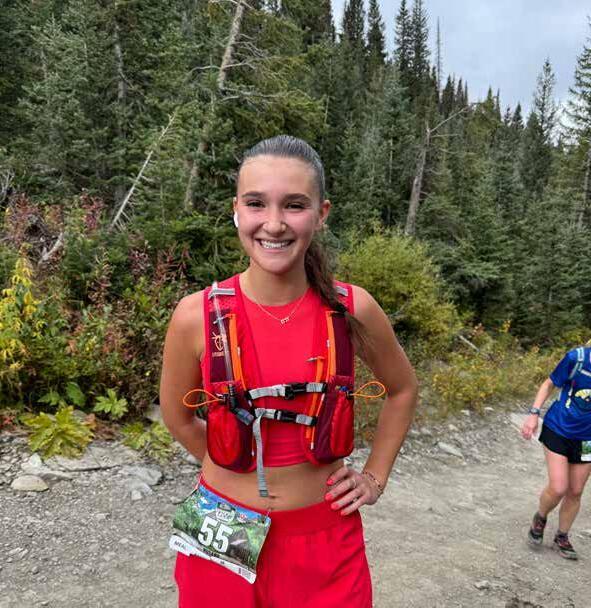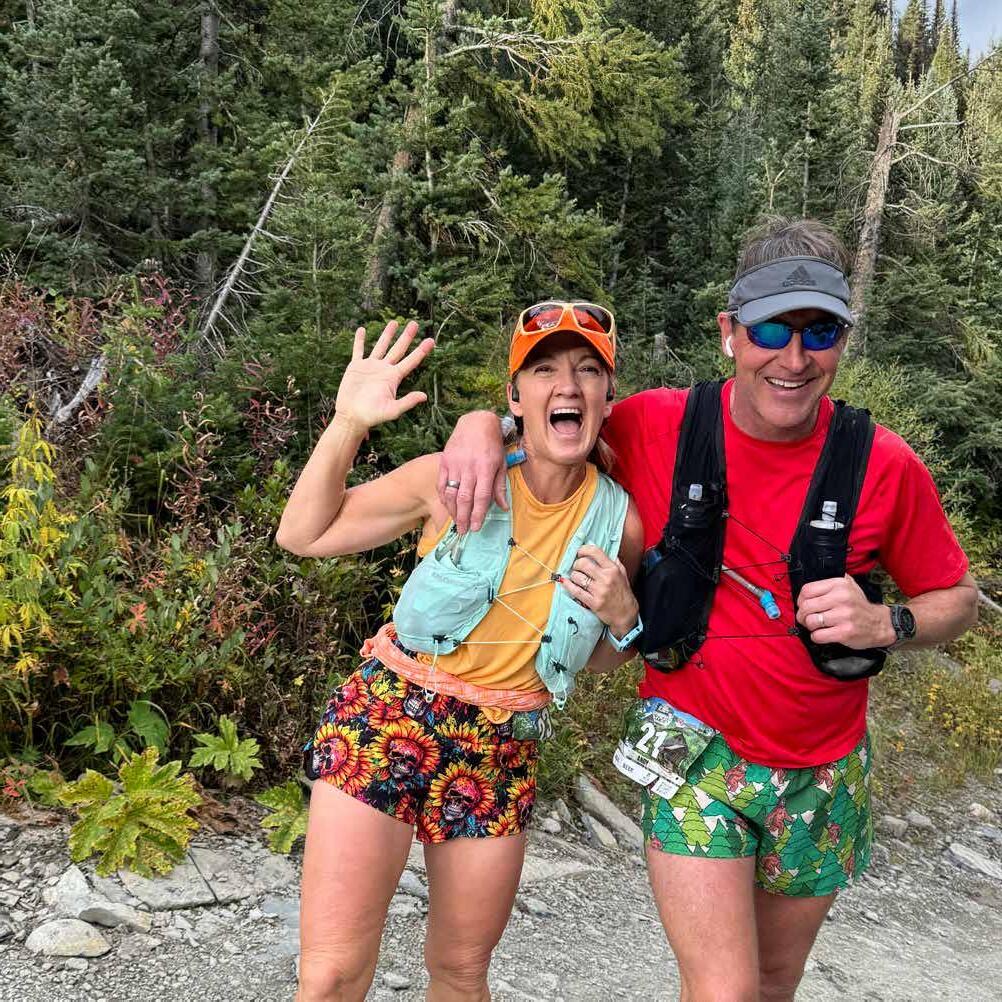
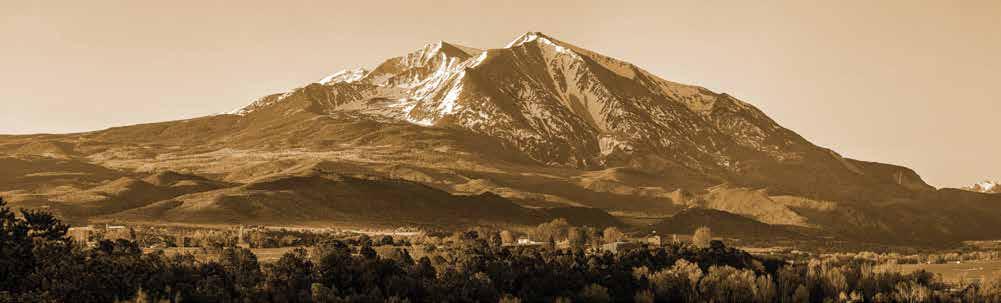
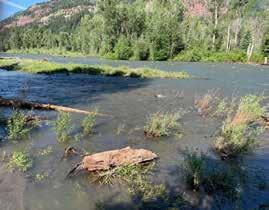
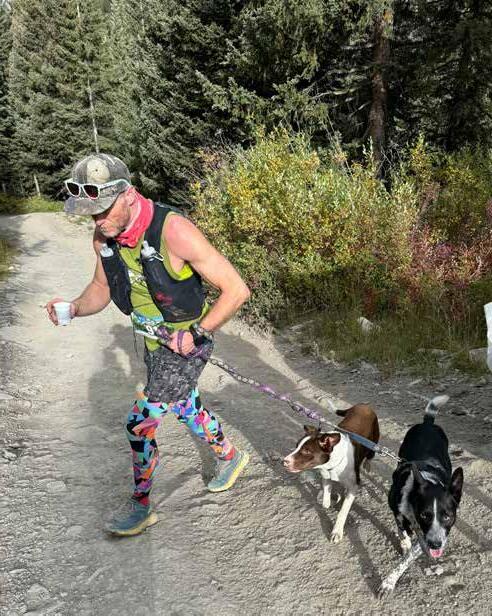
Photograph from Jaime Fiske.
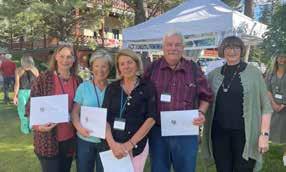
As opposed to the torrential rain encountered during last year’s show, the weather from August 30th to September 1st was beautiful. Supported by over 50 volunteers and a very dedicated Redstone Art Foundation Board of Directors, the 28th Annual Art Show was another great success.
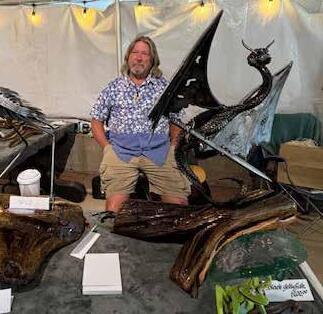
One of the key features of the show this year was the diversity of art presented. In addition to some very talented old friends, several new artists joined the show this year. They introduced several new art forms including lapidary, flint knapping, gouache, fused glass, and cold wax.
The show once again featured the People’s Choice Awards. Patrons were asked to vote
for their favorite 2D artist (painters, photographers, graphic artists) and their favorite 3D artist (potters, jewelers, sculptors, basket makers).
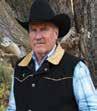
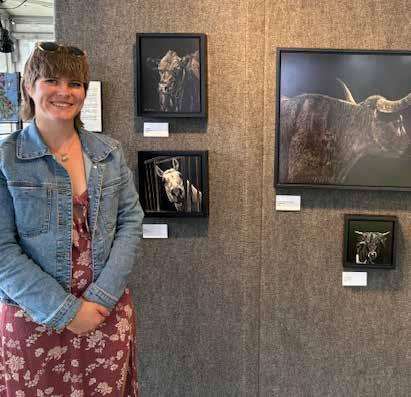
With a very high caliber of artists represented at the show, RAF is pleased to announce Megan George and Judy Milne as the co-winners of the 2D Award and Will Handville as the winner of the 3D award.
In our ongoing efforts to promote art and artists in the valley, the Blooming Artist Program was introduced. Working as a group, four emerging artists joined the show. Mentored by Connie Hendrix, a seasoned instructor and well-known artist, the group was given a masterclass on the business of art, marketing your work, and displaying your work professionally.
The RAF board would like to extend their sincerest thanks to the Redstone Inn for hosting the show, the wonderful volunteers, and of course, participating artists, who made this year's show such a success.





oPPortunity for Verizon Wireless serViCe in the redstone area
The Redstone Water and Sanitation District has had an interesting opportunity come its way. The District was approached by a cell tower company, that partners with Verizon Wireless, to provide cell service to the Redstone area.
The company is interested in leasing land just North of the Redstone fire station and the wastewater treatment plant. This lease would be good for a term of 40 years and would provide $7,200 of additional revenues for the District per year, with the amount increasing by 5% every five years to help battle inflation.
The additional revenues would greatly help to keep the budget in balance and could keep rate increases for District users to a minimum for the next several years. With interest rates coming back down over the next year, the Redstone W&S District will need to find additional ways to fill in budget gaps that the interest income from the District's capital reserves have been providing. This land lease could be an answer, otherwise, rate increases are a very real possibility.
Another key point to make is that the cell tower could make life in the Redstone area a safer place to live. Whether it is a forest fire, a heart attack along
the OST trail, or a vehicular accident on Highway 133, having access to cell service could make response times in the area dramatically faster, potentially saving lives. While many residents love the aspect of being able to “unplug”, the added safety that could be added to the area should not be overlooked.
As the District manager I am interested in hearing what the account holders of the Redstone W&S District think about this proposal. I am seeking comments by October 15th and will take this information to the Redstone W&S District board to help them make an informed decision.
Please send any questions or comments to ryan.e.kenney@gmail.com
Ryan Kenney RWSD Manager
Mountain lions are ProVen to be the ethiCal deer and elk hunter’s best friend
Dear Editor,
The ballot measure to protect mountain lions from trophy hunting and bobcats from baiting and fur trapping for their pelts is a crucial step towards protecting the state's billion-dollar deer and elk hunting and wildlife-watching industries from the devastating effects of chronic wasting disease (CWD).
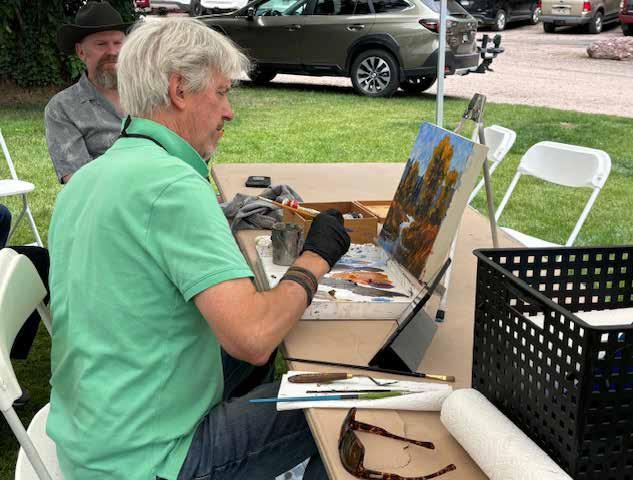
CWD is a neurodegenerative disease posing a significant threat to Colorado’s deer, elk, and moose. It is transmitted through direct contact or exposure to contaminated environments (42 of 51 deer herds and 17 of 42 elk herds in the state are infected).
Mountain lions and bobcats play a vital role in regulating ungulate populations and in cleansing them of CWD. Continuing to sanction highly commercialized trophy hunting and commercial fur trapping of native cats in Colorado will mean 500 fewer lions and 2,000 fewer bobcats to cleanse CWD-infected cervids and ultimately strengthen the health and viability of deer and elk populations.
Over the 50-year horizon, if we keep these commercial kills of native cats going, CWD mortality may increase to the point that hunting of deer and elk in parts of Colorado will no longer be possible. Given that all human attempts to control CWD have failed, mountain lions are a deer and elk hunter’s best friend.
In the coming decades, CWD will be-
come a bigger and bigger national issue far beyond Colorado, especially if it becomes zoonotic, an infection that can be spread between humans and animals, and infects people or livestock, as CWD's first cousin, Mad Cow Disease did 25 years ago.
By protecting mountain lions and bobcats from wasteful trophy hunts and fur traps, Colorado is taking a proactive approach to prevent the spread of CWD. This decision aligns with the growing consensus among wildlife experts and conservationists that the health of our ecosystems depends on the preservation of all species, including predators.
Sincerely,
Jim Keen, DVM, Ph.D. Director of Veterinary Sciences for The Center for a Humane Economy, which is one of 100 organizations endorsing the Cats Aren’t Trophies measure based in Grand County.


In an agreement announced on September 13th between Colorado Parks and Wildlife and the British Columbia Ministry of Water, Lands, and Resource Stewardship, the Canadian province will be a source for up to 15 wolves for the continued Colorado gray wolf reintroduction effort. These wolves will be captured and translocated between December and March.
Overall, CPW plans to release 10-15 gray wolves on the Western Slope per year, for a total of 3 – 5 years, this being the second year, as outlined in the Colorado Wolf Restoration and Management Plan.
“We are grateful to the B.C. Ministry of Water, Lands, and Resource Stewardship for working with our agency on this critical next step in reintroducing gray wolves in the state,” said CPW Director Jeff Davis. “Their willingness and ability to work with another jurisdiction to support our conservation priorities, as they have in past translocation efforts, demonstrates their long-shared commitment to seeing this species succeed.”
CPW will begin capture operations this winter, with B.C. providing assistance in planning and carrying out the operation.
“We learned a great deal from last year’s successful capture and transport efforts and will apply those lessons this year as we work to establish a self-sustaining wolf population in Colorado,” said CPW Wolf Conservation Program Manager Eric Odell.
Just as last year in Oregon, CPW will be responsible for all costs associated with the capture and transport of wolves:
• CPW staff will work with biologists from the B.C. Ministry of Water, Lands and Resource Stewardship to capture wolves.
• Wolves will be tested and treated for the disease at the source sites to ensure individuals meet the require-
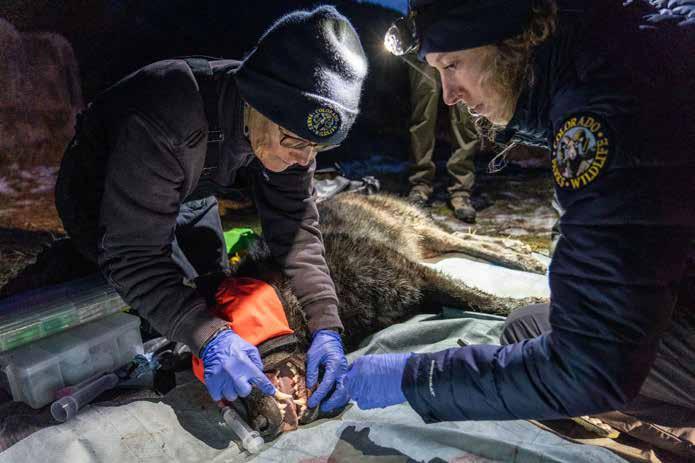
ments for reintroduction.
• Collars will be placed on wolves, which will inform CPW on the behaviors and survival of reintroduced animals.
• Wolves will be transported in sturdy aluminum crates to Colorado either by airplane and/or truck.
• Wolves will be released at select sites in Colorado as soon as possible once they arrive in the state to minimize stress on the animals.
Wolf selection will follow the guidance of the Colorado Wolf Restoration and Management Plan. Animals with major injuries — things like having several broken canines, missing eyes, fractured or missing limbs, mange or lice infection — will not be chosen for reintroduc-

tion. CPW will not translocate wolves from packs that are currently involved in situations of repeated livestock depredations.
“We are looking forward to working with B.C. and bringing together our combined experience and expertise in an effort that’s a win for both agencies,” said Odell. “Gray wolves from the Canadian Rockies were used for reintroduction in Idaho and Yellowstone. There are no biological differences between wolves in British Columbia and the wolves released in Colorado last year, and the new source population will provide additional genetic diversity to our state’s small but growing wolf population.”
On September 10th, CPW became aware that male wolf 2307OR had died. The gray wolf is one of the 10 wolves reintroduced last year in December in Grand County, Colo. As a federally listed species under the Endangered Species Act, CPW is in direct consultation with the U.S. Fish and Wildlife Service about the next steps.
“We received a mortality signal from the GPS collar on wolf 2307 on September 9th, and our staff confirmed he was deceased the following day," said Davis. "While this is sad news, these types of restoration efforts consider anticipated mortalities in our planning and a degree of wolf mortality, just like for any wildlife, is expected both during restoration efforts and on an ongoing basis."
The Colorado Parks and Wildlife Commission approved the final Colorado Wolf Restoration and Management Plan last year in May, clearing the way for CPW biologists to reintroduce gray wolves west of the Continental Divide and meet the voter-approved deadline of reintroduction by December 31, 2023.
For more information on CPW’s Wolf Restoration efforts, visit: cpw.state.co.us/learn/Pages/Wolves-Stay-Informed.aspx
From Dan Ashe, Former Director U.S. Fish and Wildlife Service
I’ve hunted practically as long as I can remember, pursuing small game, upland birds, waterfowl, deer, elk, and caribou. It’s been a lifelong passion and helped shape my values as a career wildlife conservation professional in the U.S. Fish and Wildlife Service.
I was privileged to lead America’s 570-unit National Wildlife Refuge System, the world’s largest system of lands and waters dedicated to wildlife conservation, at nearly one billion acres. I was honored to be nominated by President Obama and confirmed by the U.S. Senate as the 16th Director of the U.S. Fish and Wildlife Service, serving as director for nearly six years.
Today, I am one more wildlife professional, and hunter, proudly adding my name and voice to support Proposition 127 — Cats Aren’t Trophies.
I readily admit, that I’ve never been much for so-called “trophy hunting.” Especially so, when the animals are chased to exhaustion by commercial outfitters, using dogs and GPS tracking, and then shot by a “hunter,” while perched helplessly in a tree. It violates a foundational value for “fair chase” that I was taught as a child. I was also taught that hunting is a form of harvest, yielding “free range” delicacies that reconnect us to the land and water. Part of that connection is a learned respect for the game we hunt, not a desire to dominate or eliminate them.
But hunters are predators, and as a community, we have long harbored a bloodlust for competitors, like mountain lions. We have contributed to societal mythologies and fears, and despite the wisdom of mid-1900s conservation scholars like Aldo Leopold, we have continued to scapegoat and brutalize these creatures in the name of game management.
Maybe we do this to hide our inadequacies. It is much easier to blame declining elk or deer populations on mountain lions or wolves than to grapple with habitat loss and fragmentation, drought and water scarcity, and changing climates. Those would require that we deal with humans and our ever-expanding desires for more, cheaper, easier, and now.
Even more nonsensical, emerging science is telling us that these apex predators aren’t the enemy, but rather, allies. They are likely providing an important ecosystem service in checking the spread of Chronic Wasting Disease (CWD), an existential threat to healthy deer and elk populations.
Forty-two of Colorado’s 51 deer herds and 17 of 42 elk herds are infected with this 100 percent fatal, brain-wasting malady. The disease started in Colorado and spread across the Midwest and Rockies. It has killed hundreds of thousands of elk, deer, and moose, and it’s getting worse.
The pathogen is not a virus or bacteria but a prion — a protein that slowly and painfully destroys brain tissue in deer and elk. There is no evidence that these CWD prions are zoonotic and can infect humans, but public health officials warn against eating CWD-infected game in precaution.
Prions aren’t living things, so they can’t be killed with antibiotic or antiviral medications. They can only be “deactivated,” and amazingly, science is telling us that they are deactivated in the digestive systems of predators like lions and wolves. So again, these animals are our natural allies.
As a scientist, I know that correlation is not causation, but sometimes it can be a powerful indicator. There is good science that lions will selectively prey on CWD-infected animals,

and that makes sense because infected animals would be weaker and easier to kill. What we can observe is that where there are no lions, there are higher rates of CWD-infected animals, and where there are lions, there are
low levels of CWD infection or none at all. Killing 500 lions, every year, in Colorado is not simply unscientific and unethical, it is interrupting their vital work as a bulwark against CWD.
For as long as there have been hunters, and as long as hunters have been managing wildlife, we have scapegoated and persecuted apex predators, like mountain lions. It’s time for change.
Mountain lions are our friends and allies. Let’s start treating them that way. Voting yes, in support of Proposition 127, is a great beginning.
Dan Ashe has worked for 41 years in the field of wildlife management and conservation. He served for 22 years in the U.S. Fish and Wildlife Service and is currently President and CEO of the Association of Zoos and Aquariums.


Methane is a naturally occurring hydrocarbon, the primary component of fossil gas, and a potent greenhouse gas. It can be found in geologic formations, including some sandstones, shales, and coals. This massive contributor to global warming, which is 86 times more damaging to our environment over a 20-year period than carbon dioxide, is leaking in large quantities into our atmosphere from coal mines in our area.
For almost two years, the Community Office for Resource Efficiency (CORE), in partnership with Delta Brick & Climate Company, has been investigating the methane emitted from Coal Basin, the abandoned coal mines situated west of Redstone. CORE led a study last summer that shows that just under 2,000 metric tonnes of methane leak from Coal Basin each year. This is about one-third of all the other combined greenhouse gas emissions in Pitkin County. Mitigating the methane at the Coal Basin presents a significant opportunity for climate action.
CORE recently submitted an application to the U.S. Forest Service (USFS) proposing to mitigate the methane
emissions coming from Coal Basin. If this project is approved, it will signify a major step in the years-long effort to protect our climate from this dangerous pollution. While we don’t know exactly how much gas could be destroyed, our research indicates we can destroy between 300-500 metric tonnes of methane per year, the lower end of which is equivalent to taking 5,300 cars off the road.
At the outset of this project, we stated that we wanted to facilitate community-driven climate action. We are proud to say that we have been doing just that. This proposal was shaped by community input. We heard that people wanted the most remediation with the least impact. We heard that improving the road to the LS Wood Mine was a non-starter for some, so our proposal avoids impacts on that road. We listened to some people say that they wanted electricity to be generated from the methane, and other people said that electricity generation was inappropriate.
Our analysis shows that electricity generation is not technically feasible and this option will not be pursued. We
heard a lot of excitement about water manufacturing and a lot of excitement about bioremediation. Our proposal includes these concepts.
What else We inCluded in the ProPosal:
• Improving one existing road up to the Dutch Creek #1 and #2 Mines.
• Drilling into the mines and sealing existing leaks.
• Capturing methane with pipes into the mine void.
• Installing a regenerative thermal oxidizer (RTO) to destroy methane.
• Running a powerline up the road to power the RTO.
• Water manufactured from methane oxidation can be used to improve vegetation recovery on the old mine sites.
• Using experimental bioremediation at smaller leak sites to increase the climate benefit.
next stePs:
There will be discussions between
CORE and the USFS as the USFS screens the application and ensures it has all the information the USFS needs to decide on the proposal. Should the USFS determine that the proposal meets its screening criteria for possible projects, it will move into a rigorous analysis phase prescribed by the National Environmental Policy Act (NEPA).
When does the PubliC get to CoMMent?
You can share your thoughts with CORE anytime by emailing Mona Newton on the project team at monalouisenewton@gmail.com. You can find more information about the project at aspencore.org/coalbasin-methane-project
The USFS will take comments if and when they proceed to the NEPA analysis. In the current phase of the process, the USFS is working internally and not taking comments from the public. Be assured that CORE will communicate to the community if and when the USFS opens up public comment.






Thank you to all of the partners and volunteers who helped gather research data last summer and to all the community members who attended community meetings this past year to share their comments about the project. Your input and support helped us frame our project and submission.
We at CORE are driven by the moral dimension of this project. We have wrestled with the question of positive global climate benefits versus negative local impact. We believe that we have a duty to act on climate change while stewarding our other natural resources. We believe this proposal strikes the appropriate balance.
Normally, this is the point where we’d say, “We owe it to our children to act.” But climate change is no longer a distant threat — it’s here, now. You can see it in the tree mortality in Coal Basin and McClure Pass. You can see it as unprecedented fires that ravaged Jasper, Louisville, and Rocky Mountain National Park. You can find climate change as smoke days that start as early as the spring and run all the way through fall.
We are all in this together, and at this stage of the game, small efforts won’t cut it. We need to work together, act fast, and go big. It’s time to open our minds to bold solutions that will help us tackle the climate crisis head-on. We love this place — so damn it, let’s fight for it.
We look forward to your continued collaboration and feedback as we continue the fight.


Noon – Lunch ($10) RSVP by the Thursday prior as space is limited. Plated lunch will be served. There will be a gluten-free option.

BLIZZARD BOXES 9:00am - 2:00pm
• 3-day supply of shelf-stable food to have on hand in winter
• For Pitkin County seniors in rural areas, at no cost to you
• Order your Blizzard Box by calling (970) 920-5432
FLU & COVID SHOTS 9:00am - 11:30am
• All ages welcome
• High Dose Flu Available (65+)
• These Vaccines are covered by Medicaid, Medicare and Private insurance – bring your card with you
• Vaccine programs available for the uninsured
SMILES FOR SENIORS 9:00am - 4:00pm
• Call for an appointment (970) 920-5420
• Cleaning & Screening – $85 (financial assistance available)
ADDITIONAL SERVICES 9:00am - 2:00pm
• Consultations on Care Navigation, Economic Assistance, Veterans Services, and Medicare
LUNCH 12:00 pm




1:00 p.m. – Program Power of Perspectve With Atis Spuris. In this writing and discussion workshop we will explore how, with the mindful use of everyday language, simple shifts in perspective can change how we remember personal experiences and how to positively shape new ones. ALL are welcome!
PLEASE RSVP: (970) 920-5432
• Please RSVP by noon the Friday prior: (970) 920-5432
• $10 – followed by dessert and Halloween treats
MEDICARE PRESENTATION 12:45pm
• Medicare Basics and Open Enrollment Info
• Individual assistance also available
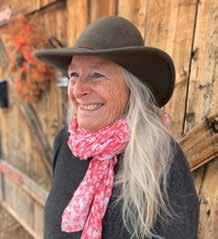
Along with pumpkin spice lattes and golden aspen leaves, election season in is the air. Next month, registered voters will cast their ballots to decide on some important issues not only for our country but the ballots will also be filled with state and local initiatives. Pitkin County District 5 Commissioner weighs in on upcoming ballot issues.
ConserVation in Pitkin County
Pitkin County remains one of the most beautiful places in America, primarily because of our open spaces:
• Our conserved spaces and agricultural lands provide habitat for our incredibly varied wildlife.
• Land which is kept open, and often wild, provides recreational opportunities and restorative refuge from the modern world.
• Conserved open spaces protect our scenic views forever.
• 86% of Pitkin County lands are public — Forest Service and Bureau of Land Management (BLM). The rest is our responsibility.
• Once open land is developed, there is no going back. It is lost forever.
To date, Pitkin County has conserved 24,000 acres of open space. On those spectacular lands, we can regularly witness the beauty of our wildlife, including:
• Predators — bears, mountain lions, coyotes, bobcats, foxes, and badgers.
• Ungulates — deer, elk, moose, and bighorn sheep
• Raptors & other birds — red-tailed hawks, peregrine falcons, bald and golden eagles, herons, waterfowl, songbirds, magpies, ravens, and so many more.
• Fish — rainbow, brown, brook, and cutthroat trouts as well as whitefish.
• Marmots, pikas, chipmunks, squirrels.
• Beneficial insects, soil microorganisms, and river invertebrates.
Agriculture preserves open space, keeps land irrigated, produces food, and provides thousands of acres of lush wildlife habitat. Just some agricultural lands protected here:
• Snowmass Falls, 650 acres of pristine wilderness and ranch land abutting the Maroon Bells Wilderness Area.
• Tommy Moore’s breathtaking ranch with open pastures, often full of elk, gracing everyone’s view as they approach Aspen.
• Cold Mountain Ranch and Sunfire Ranch in the Crystal River Valley with over 2,000 acres of agricultural production providing food for our valley.
• The Child’s and Harvey’s Ranches in the Snowmass Valley.
• The Arbaney Ranch on Thompson
Creek, a riparian and forested ranch that has been in the same family for five generations.
Conservation is a primary mechanism for keeping our mountain waters in the Roaring Fork, Frying Pan, and Crystal Rivers:
• Pitkin County conservation easements keep our waters on the ranches and properties that currently possess water rights.
• Ranches put our Colorado River headwaters to beneficial use and thereby prevent them from being diverted elsewhere or claimed downstream.
• Colorado River waters, including the Frying Pan, Crystal, and Roaring Fork Rivers, are threatened by developers, downstream water users, and investors. Conservation easements deter all of these threats.
Why i suPPort affordable housing on the ballot
This year, I know a new tax might be a hard pill to swallow with the recent increase in evaluations and assessments on many County properties, mine included. However, I believe we should support Ballot Measure 1A because all our communities include commuters, and, for many, the cost of housing is debilitating.The cost of this ballot measure for property owners is about $121 per million dollars of home value.
Wages & housing costs are completely out of whack:
• The mean salary in Pitkin County is $79,300; the median is $50,700, which is around $5,000 - $6,000 per month.
• The average home sale price in Pitkin County is over $7,000,000, $1,200,000 in Carbondale, $900,000 in Glenwood, and $870,000 in Redstone
• A typical mortgage on a house in Glenwood or Redstone is over $5,000 per month.
• Simple Math — A worker buying a house down valley would have no money left over after paying their monthly mortgage.
Rental Housing is unattainable:
• The Average rental in Carbondale is $4,807; Redstone is $4,500.
• The necessary income to afford a two-bedroom rental in Carbondale equates to $16,023 per month or $192,280 per year.
• In Redstone, the income needed for a two-bedroom is $15,000 per month or $180,000.
• The working class cannot afford these prices — in Carbondale, Redstone, Glenwood, and even further
away from Aspen (where most jobs are generated).
Commuting Issues:
• TRAFFIC.
• 60% of the workforce in Aspen commutes, many at least 30 minutes.
• Cars, trucks, and buses are 15% of all Pitkin County Greenhouse Gas emissions.
• There are 10,000 commuters daily!
• Some days, the commute from Glenwood is two hours while some workers commute further away. The average commute from Redstone is over two hours per day.
• This is a quality of life issue.
Workers vs. Available Housing in Pitkin County:
• There are 17,407 jobs in Pitkin County;
• With 13,607 homes and 41% of those are not primary residences.
• There are 3,545 affordable or deed-restricted units in public inventory.
• There is not enough affordable housing for those who want to live closer to where they work.
• Businesses are losing employees or cannot hire workers because of the housing shortage and unaffordability.
• Without increasing the availability of affordable housing, the upvalley workforce will continually erode or the quality of life for the workforce will be severely affected by longer and longer commutes.
There are two ballot measures about the airport: Ballot Measure 1C and Ballot Measure 200. If you vote for 1C, you affirm the authority of the Board of County Commissioners to modernize our airport, greatly improve our environmental standards, attain compliance with the Federal Aviation Administration (FAA), and become eligible for federal funding to build a new runway and a new terminal. Ballot Measure 200 asks for the public to vote before modernization can occur. 1C is your vote to begin our process of future-proofing our airport and ensuring increased safety.

Money:
• A new runway will cost $120,000,000.
• A new terminal will cost a little less than $120,000,000.
• With revenue bonds (bonds guaranteed by airport in-
he
come from Atlantic Aviation at $18,000,000 per year), our bonding limit is $102,000,000.
• Without money from the FAA, we clearly cannot afford a runway, not to mention a new terminal, and we cannot receive any funding for the terminal until construction on the new runway has been initiated.
• With an approved airport layout plan, the FAA will fund 90% of our runway and we will be eligible for grant funding for the terminal.
• Our airport is out of compliance with FAA safety standards.
• Our runway has deteriorated to the point where it can no longer be repaired. It must be entirely replaced.
• The FAA has allowed the airport to operate with Modifications of Standards (exceptions to their standards) which are no longer acceptable because of safety considerations.
• Without increasing the distance between the taxiway and the runway, and
Mission Statement: To provide a voice for the residents of the Crystal River Valley; to bring attention to the individuals and local businesses that are the fabric of the Crystal Valley region; to contribute to the vitality of our small town life.
EDITOR AND ADVERTISING SALES
Gentrye Houghton gentryeh@hotmail.com
CONTRIBUTORS
DJ Sugar Monkey
Amber McMahill
DISTRIBUTION AND LAYOUT DESIGN
Ryan Kenney
The Crystal Valley Echo is published monthly, and is distributed throughout the Crystal Valley.
NEWSPAPER BOX LOCATIONS:
Third Street Center • Village Smithy Carbondale Post Office • Carbondale Park & Ride
The Marble Hub • Redstone General Store
without widening the runway, we cannot comply with FAA safety regulations.
• FAA safety regulations are the backbone of safe aviation in the U.S. Why would we not want to comply?
• The County has submitted an Airport Layout Plan which is forward-thinking and in compliance.
What about bigger planes? What about the environment?
• A wider runway is about wider wingspans, not bigger planes.
• Wider wingspans are the future of all new airplane designs and construction.
• Airplanes with wider wingspans are more efficient — consuming less fuel, emitting fewer emissions, and flying more quietly. This is not conjecture; it is fact.
• Airlines predict that commercial jets with greater passenger capacity and more efficiency will reduce the number of flights, which reduce the number of takeoffs and landings and shorten travel times.
• Modern aircraft with wider wingspans are quieter,
cleaner, and more efficient.
• To accommodate new aircraft, our airport must modernize! Only with funding from the FAA can we build an environmentally sustainable terminal.
Election Day is November 5th; mailin ballots go out to voters on October 11th and October 28th is the last day one may register to vote and still receive a mail-in ballot. You may still register to vote on Election Day and cast an in-person ballot at any polling center; all ballots must be received by your county clerk by 7 p.m.
For information on State of Colorado ballot initiatives, you can find the booklet by visiting: leg.colorado.gov/ sites/default/files/bluebook_ english_2024.pdf
Polling locations include the Pitkin County Administration Building (early voting available) as well as the Basalt Public Library and Snowmass Village Town Hall on Election Day; 24/7 ballot drop boxes are available at the Pitkin County Administration Building, Snowmass Village Town Hall, and the Basalt Town Hall. The Basalt Public Library and Church at Redstone will serve as additional ballot drop-off locations on Election Day only.

By Dorthea Farris
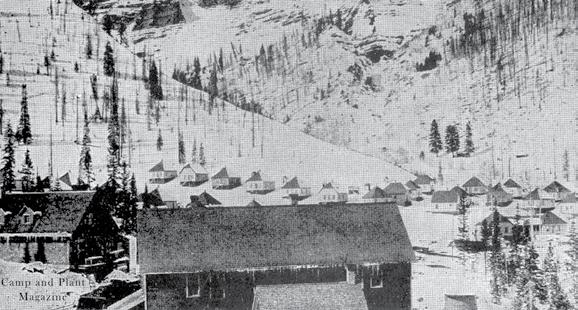
The September 13, 1902, issue of Camp and Plant, [the weekly publication by the Colorado Fuel and Iron (CF&I) Company's Sociological Department], describes Coal Basin as “one of the most picturesque little coal camps in Colorado.”
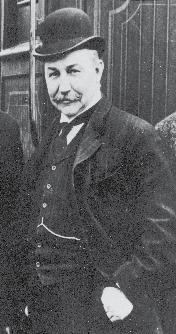
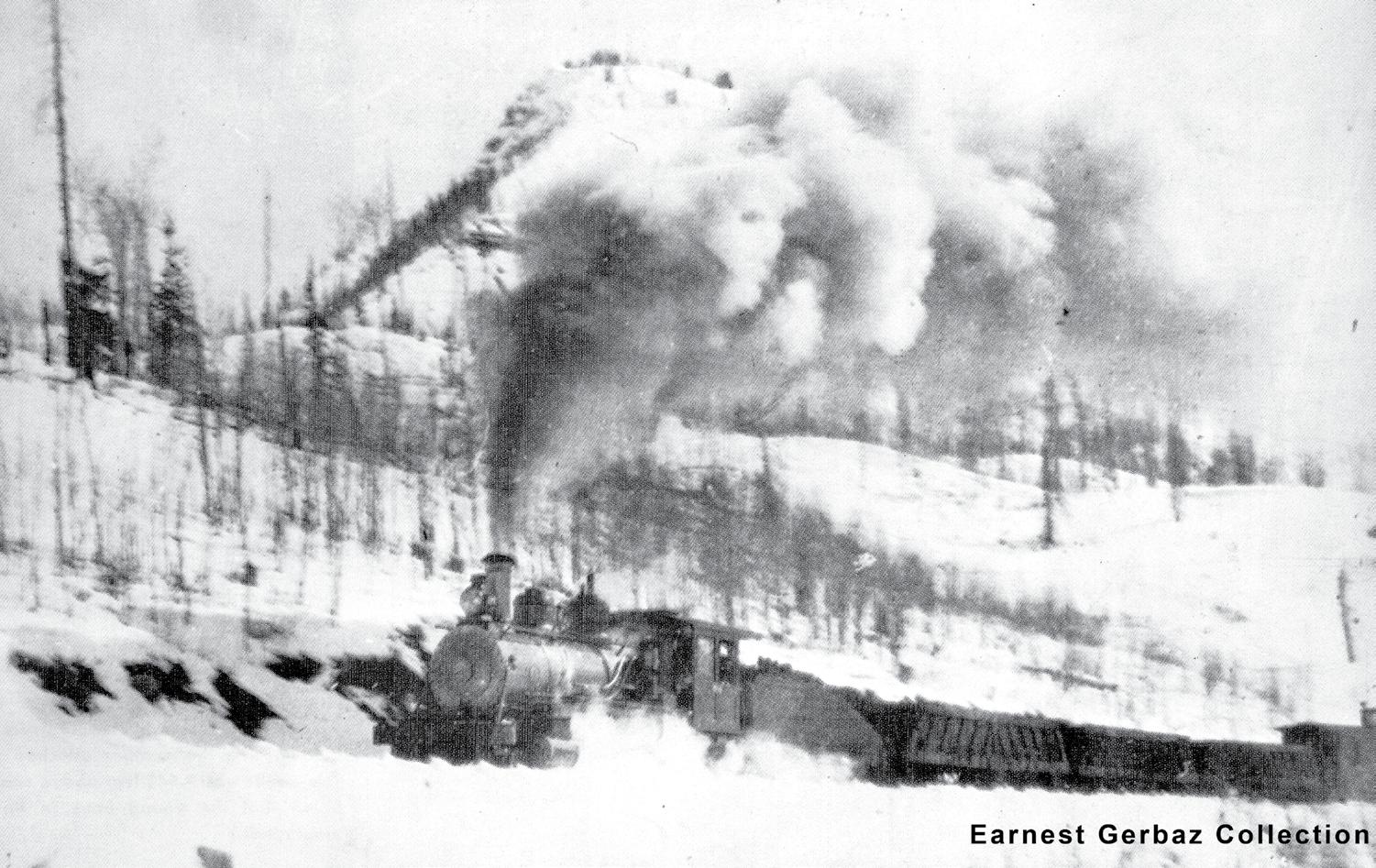
Located 12 miles from Redstone on the eastern slope of the West Elk Mountain Range, Coal Basin was situated on the High Line, a narrow gauge branch of the Crystal River Railroad. In 1882, the area was prospected and claimed by miners whose interests were eventually transferred to CF&I ("the Company"), owned by John C. Osgood, designer, and builder of Redstone and Cleveholm [now known as "The Redstone Castle"]. The popular story is that the prospectors were disappointed upon finding after a slide exposed a vein that coal, not silver, was the discovery. The claim was sold to Osgood, who was looking for coal to be used for railroads, for $500.
The coal of Coal Basin was extremely valuable for coking and steam fuel. The first tunnel to the vein of valuable coal was completed in 1892, but work was suspended in 1893, the year of the panic, and the mine remained closed until 1898. In 1902, the output reached 800 tons daily, but 2,000 tons per day were anticipated with new hoisting machinery. [Three years later], 25,000 tons of coal came out of the mine. In 1909, the mine produced [over 1,000,000] tons of coal.
Coal was hauled to Redstone, to be screened. Lump coal was shipped to railroads, mining, and smelting operations. Slack went to the oven at Redstone to be made into coke. Horses and mules were used inside the mine to haul equipment and sup-
All content sponsored and provided by the Redstone Historical Society.
plies through the tunnels. A large fan placed at the opening of one of the entries kept the mine free of gas; safety lamps were used; and water pipes were installed in the entries and rooms so that the dust, very dangerous and potentially explosive, could not be sprinkled. A telephone system connected the mine tunnels to the central office.
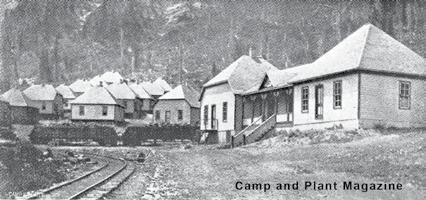
Two hundred sixty-five men, Americans, Austrians, and Italians, were employed at Coal Basin. Many workers earned $105 to $135 [a month] in 1902. The town had a surgeon, a pit boss, a clerk, an agent for the railroad, and a telegraph operator, [who were] all employees of the Company.
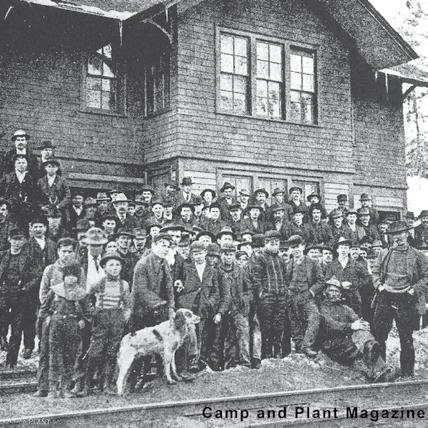
The Colorado Supply Store, owned and operated by the Company, was built in 1900 and remained in operation until January 1909, supplying the town's needs for dry goods, boots and shoes, groceries, and hardware. To meet the growing needs of the community, the Company also built a boarding house. In 1905, the town boasted a population of 150 people.
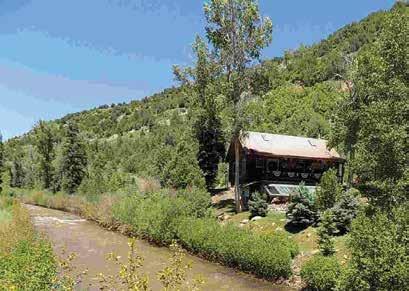
CO Flat and nicely wooded, this secluded lot offers unique river access, excellent views and an easy walk to all Redstone has to offer. Water and sewer taps paid. Web# 185226
The first house in the camp, a log cabin, was built in the fall of 1883 by William Batt, a member of the early prospecting party. In 1901, the Company erected 70 cottages with 3-5 rooms, lathed and plastered, painted finish, modern, and innovative in coal camps. Houses were set about on streets both for order and the economy of building. Two reservoirs above the camp, filled with abundant and pure water, provided water delivered through pipes to the homes and tapped at convenient intervals by hydrants and fire plugs, providing unusually good fire protection.
Boxing clubs, orchestra and glee clubs, baseball, and ice skating were the recreations of the day. The Coal Basin Club House, built in 1902, provided a billiard room and a card room, both very well equipped; a reading room, with the latest English, German, Slavonic, and Italian periodicals; and a bar room, although neat and well furnished was not so attractive as other parts of the club. Bottled goods were kept in the large and cool cellar where icing was not necessary. Beer was forced from the keg in the cellar, by hydraulic pressure furnished by water conducted from the hydrant through a very ingenious pump producing compressed air, through a pipe that led to the faucet behind the bar.
The Coal Basin Club was organized in 1902 by Osgood and was managed by a board of seven

directors. The 200 members paid monthly dues of [50 cents]. Rules of the Club were rigorously enforced. Only the Club could sell or handle liquor in the camp. No treating was allowed, no profane or vulgar language was permitted in the clubhouse, and gambling or drunkenness was not tolerated. Women and children could not enter the club except by permission of the board of directors.
The obvious object of such rules was to promote temperance and good morals in the camp. To further these objectives, the Sociological Department of the Company established a circulating library, required the local surgeon to deliver monthly lectures on anatomy, physiology, and hygiene, and provided artwork at the school. Approximately 30 children attended the grade school in Coal Basin.
Extending from Redstone to Coal Basin, the "High Line" traveled through the grand scenery of rugged canyons, parks, and forests. Considered by engineers a remarkable exhibition of skill, the road had an average grade of 4.5% and serpentine 40-degree curves.
The camp was among the highest coal mining camps in the state with an elevation of 9,500 feet. Coal Basin was said to have three seasons: July, August, and winter. [Encircled] by the Elk Mountain range on the north, west, and south, the camp was protected from the most severe storms, winds, and blizzards. The trees, scrubs, and flowers of Colorado's mountains were well represented in the area, and game of all kinds found in the Rockies was there. For this reason, Coal Basin was considered one of the prettiest and most healthful camps owned by CF&I.
All that remains of Coal Basin Camp today are remnants of buildings and foundations. The mine is closed and, [at the time of original publication], restoration work is ongoing.
Dorothea Farris has been a Crystal Valley resident since 1957; she served as a Pitkin County Commissioner for 12 years. Farris's actions, work, and dedication reflect her commitment to protecting our environment, history, and freedoms. This article was originally published in the Old Roaring Fork periodical in 1993 and reproduced with Farris’s permission.






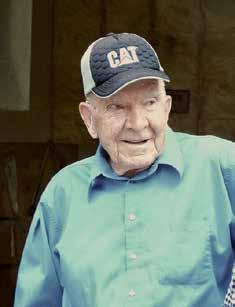
Victor Nathan Sundquist passed away on August 21st, 2024, in Cortez, Colo., at 104 years of age. He was preceded in death by his father, Victor “Jumbo” Anders Sundquist, and mother, Barbara; wife, Bertha Sundquist; son, Vic Sundquist; daughter, Laurel Lee Haverkate; and Ken Long, Jenny Sundquist, Aspen Ashby, and J.D. Minor. He is survived by his daughter, Anita Long, and grandkids, Victor Chris Sundquist, Beth Richardson, Lori Sundquist (Troy), Jack Minor (Danielle), Jesse Nathan Minor (Shandra), and Andy Long (Lani), 19 great-grandkids, 25 great-great-grandkids, as well as nieces and nephews.
Graveside services were held on September 22nd at Summit Ridge Cemetery in Delores, Colo., with a memorial service held immediately following at the Dolores Community Center.
Sundquist was born in El Vado, N.M. on June 15th, 1920, to Victor “Jumbo” Anders Sundquist and Barbara Catherine Sundquist (Johnson). He was the only boy with four sisters: Lena Mary, Lucille Althea, Loraine, and Barbara Louise.
Sundquist attended school in various logging camps like the one on Beaver Park above Dolores and in Durango, Colo. He graduated from Dolores High School in 1938 and was an incredible athlete at everything he did. Wearing the #7 jersey in football; in the days with a leather skull cap, no face mask, and very little padding.
Sundquist's parents moved him and his sisters to McPhee with the Montezuma Lumber Company where his father was a well-known figure. As a small child, he saw his grandfather Nathan Johnson logging in with upwards of 15 teams of horses and watched as the horses were replaced by machines. His father was one of the first to begin logging with trucks. It was with one of those first trucks that he took his first load of logs to the lumber company.
Sundquist said his dad told him when he was 13, “Take this load of logs into the mill.” From then on Sundquist had a love of logging. He told other stories of being a teenage boy and taking his truck to the deck of logs, where he slept on the ground, to be one of the first loaded the next morning. That way he could get an extra load of logs


Pitkin County Vision 2050 Survey
The Vision 2050 project aims to provide a roadmap of progress toward a sustainable, and equitable community in Pitkin County Be Part of the Conversation: Take the survey
Licensing your dog is required in Pitkin County
Pitkin County has partnered with DocuPet to provide an enhanced pet licensing experience Your pet’s license now includes DocuPet’s free HomeSafe™ 24/7 lost pet service and designer license tags. Twenty percent of every designer tag purchased is donated to Aspen Animal Shelter Pet licenses are required for all dogs living in unincorporated Pitkin County Visit pitkincounty docupet com to get a license
Senior Services welcomes you!
Want to know more about happenings in Pitkin County and its departments delivered straight to your inbox? Scan the QR code to subscribe to the Pitkin County Press, sent out every other month
Pitkin County and City of Aspen unveil community compass tool for navigating substance use recovery
Pitkin County Public Health, with support from the City of Aspen, is excited to announce Community Compass, a new, online navigation tool available to the public that was created as part of the Region 5 Opioid Abatement Council’s 2022-2024 initiatives Region 5 is composed of Eagle, Garfield, Lake, Pitkin and Summit counties
to the mill that day.
He married the love of his life, Bertha Elizabeth Lynch in Vancouver, Wash., on January 5th, 1943, while on leave from the Army Air Corps. Sundquist was always the example of a loving husband. They were the proverbial newlyweds. It was common, even after their 50th wedding anniversary, to see him holding her hand on evening walks or her sitting right by his side in the pickup. Many women expressed envy at their relationship. He would often stop on his way out of the woods to pick flowers for his “new” bride. They were blessed with three children, Victor David, Laurel Lee, and Anita Elizabeth; six grandchildren; 19 great-grandchildren; and 25 great, great-grandchildren.
Sundquist was a Staff Sergeant in the Army Air Corps, during World War II, assigned as a waist gunner/mechanic on a B-29 Super Fortress. He enlisted on June 28th, 1941, in Fort Logan, Colo., and was honorably discharged on November 7th, 1945.
After the service Victor worked at various jobs: A plywood mill in Ashwood,
June 15th, 1920 - August 21st, 2024
Ore., hauling ore in Madras, Ore., then to Feather Falls, Calif., where he fell Sugar Pine for a Lumber Company. He moved to Nampa, Idaho, for a time before returning to his beloved Dolores, Colo. He said, “If we are going to starve, we are going to starve in Colorado.” Sundquist worked several jobs in Colorado including working for Jim Stephens on the reservation before returning to logging. Sundquist logged





the mountains of Southwest Colorado and Northern New Mexico for the rest of his life until he retired and spent his time with family and friends.
Sundquist was always active even later in life. It was common, even at 100 years of age, to find him cutting wood, hauling pellets, working on his truck, and even on the roof cleaning his chimney. He had promised his wife he would not allow himself to get overweight. You could often show up at his house in the evening to find him lifting weights or exercising with an inner tube.
Sundquist took his role as a family provider very seriously. Never a lazy man, he was vigilant in his work, not just to make a living for his family, but also to care, nurture, and provide true love for his wife, children, and grandchildren. His family was his treasure.
He was described as a true gentleman. Definitely from the old school, he stood up straight, walked with a purpose, looked you in the eye when he spoke, opened doors for others, and seated women first. He had manners and was as comfortable at a formal dinner as he was sitting on the ground in the woods eating lunch. He was mindful of how he spoke and encouraged others. He was also truly a gentle man, one who was known for his even temper and loving nature.
Sundquist leaves behind a legacy of what his descendants want to be; one said, “He was like Superman, we were always just trying to keep up.”
From the Redstone Art Foundation
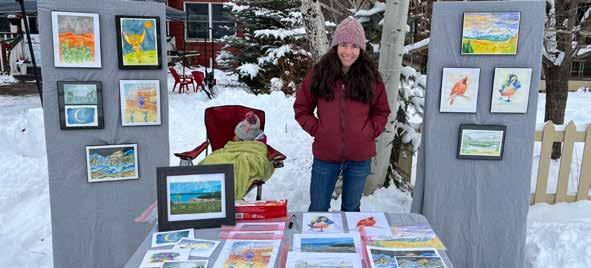
Come and stroll down the Redstone Boulevard to enjoy the work of over 35 crafters and artists including unique gifts, greenery, decorations, and gourmet holiday food. There will be carolers, hot chocolate, and a visit from Santa. The Holiday Express will be available to provide heavy-laden shoppers rides up and
down the Boulevard.
If you are interested in being a vendor at the show, please contact Frances Bogle at (970) 963-1713 or email us at info@redstoneartfoundation.org
We can’t do it without you. In an economic climate where many established news outlets continue to scale back or close, your support goes directly to writers living in the Crystal Valley!



The Marble Town Council meets on the 1st Thursday of each month starting at 6 p.m. in the Marble Community Church’s Fellowship Hall.
Town of Marble meetings are open to the public. 2024 Meeting Schedule Now at 6 p.m. Oct 3rd Nov 7th Dec 5th