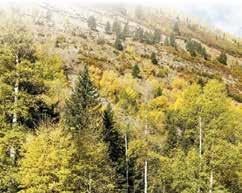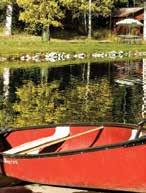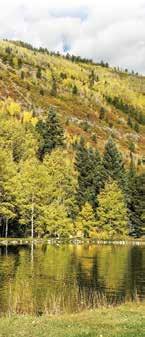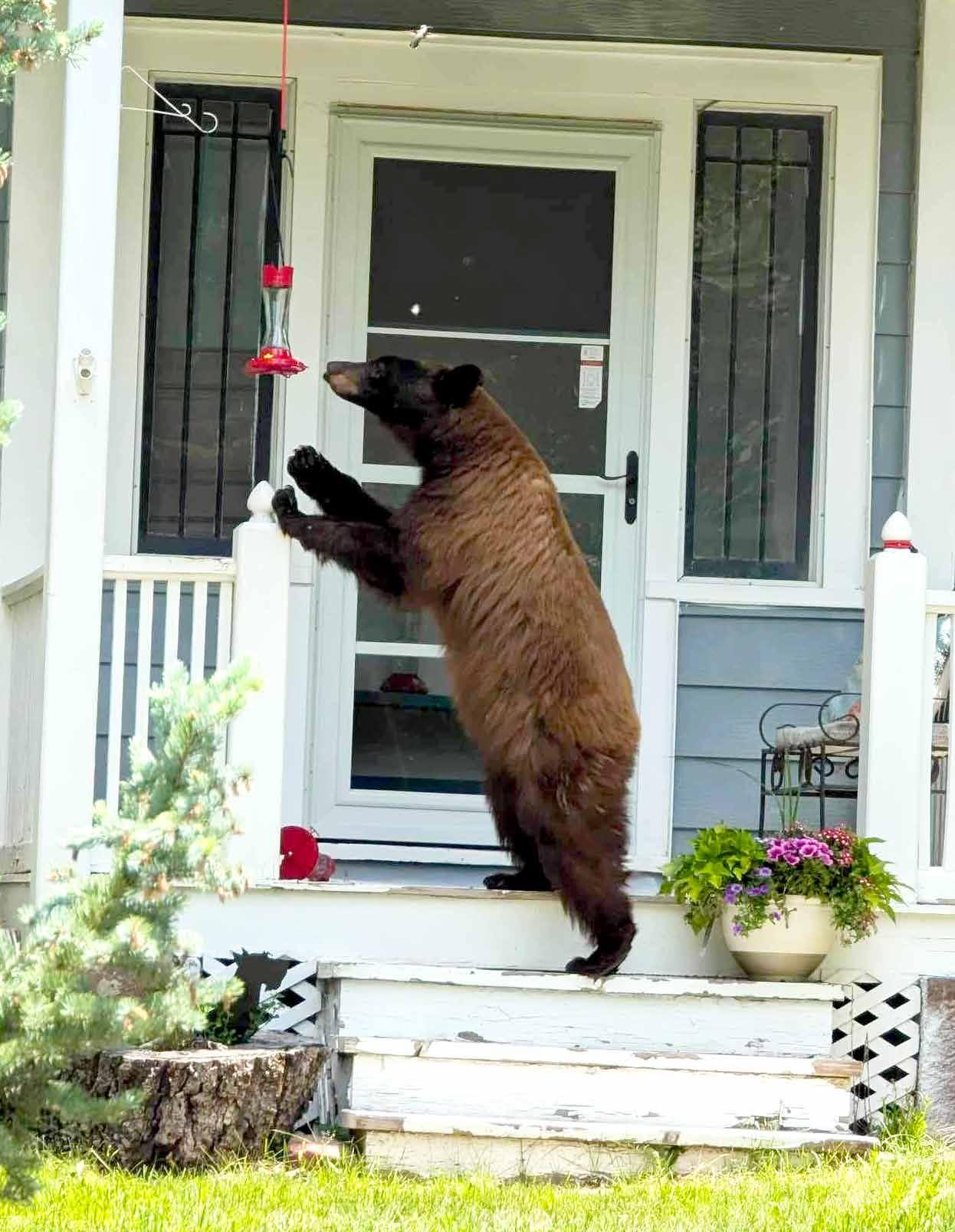
Photograph from Isabelle Donnelly
From Monique Villalobos
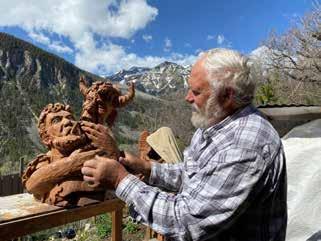
The Crystal River valley has a way of bringing you here. Rex and Vickie Branson are excellent examples of the mountains of Marble calling them both here. Beginning their life together in Branson, Mo., Rex would do wood carving on his back porch. His neighbor was Vickie and their five kids would play together. She got hooked on woodcarving because he asked her to start carving one day.
They became the best wood carvers on the trade show circuit in the 1980s, winning blue ribbons and first-place awards across the United States. They stopped competitions and started selling Santas, horses, native and Western art, and teaching wood carving. Rex became known for Wood Carvers Cor-
ner on VHS and teaching classes in tradeshows and schools across the country. Now you can find Wood Carvers Corner on YouTube with Branson showcasing his skills and talents while entertaining us with his sense of humor and wit.
Life changed forever in 1988. It was like the wood carving prepared them for the next step in their new life. Branson went to Walsenburg, Colo., for a pottery class, where he met Bill Snow, who invited him to the first MARBLE/marble Symposium.
In a tricky turn of events, Snow’s truck broke down. Branson found himself headed back to Missouri to get Snow’s motorcycle just one week before the start of the Symposium. He was only 50 miles from Branson, Mo., so he went back to pack Vickie up and bring her along to Colorado. The kids were taken care of by family and friends, and the two journeyed to the tiny mountain town of Marble, Colo.
Upon arriving in this paradise, Vickie explained that she had an overwhelming feeling of being home. They settled with their children in northeastern Oklahoma and began coming to Marble every summer to carve, teach, and learn from masters who gathered from all around the world. The pure white stone enchanted them, and sculpting the Yule marble became their favorite thing to do.
In 2005, The Marble Gallery opened and they
met the owner, Christy Villalobos. She sold Vickie’s set of marble horses in 2006, as well as Rex’s wood carvings and large Native American carvings. It wasn’t long after that Rex completed his marble “Puzzle Piece” for the front of The Marble Gallery. With the increased sales and their children grown, they moved to Marble in 2009 and finally had time to put their talents to work on marble masterpieces, sculpting wildlife, horses, bears, and human figures.
They express deep gratitude for the local support over the last 20 years and are very grateful to have art in many local homes around the valley.
“Marble has this community where art is the center of our world, and we are very lucky to be part of that,” says Vickie.
The Bransons are a testament to the dream of starving artists to the rooted artists of the Marble community. The Marble Gallery proudly hosts the works of Rex and Vickie Branson, sharing their art with the world.
Their award-winning wood carvings will be showcased this month; this series will feature their western pieces of woodwork, horses, Native Americans, cowboys, and mountain men. So come out to see a showcase of the phenomenal talent from Branson Artworks as well as many other artists found at The Marble Gallery.
To learn more about the Crystal Valley Environmental Protection Association, the environmental watchdog of the Crystal River Valley since 1972, visit cvepa.org CVEPA thanks our members and friends for their support at our annual meeting Aug 25.
Congratulations to the winner of CVEPA’s 2024 Founders Award, Bill Jochems, for his years of environmental stewardship on behalf of the Crystal Valley!
Thanks also to Gunnison County Commissioner Jonathan Houck and the Colorado Water District’s Zane Kessler for their remarks.
From Daniela Standley
If Flowers Could Talk follows the journey of Petal, a remarkable flower, as she navigates the challenges of surviving through the four seasons. Resilient and determined, Petal never gives up, facing the harsh winter cold and the intense summer heat with unwavering perseverance. Through her experiences, readers 6 and up learn about the beauty of resilience and the power of enduring hardships.
This unique story is based on author Daniela Standley’s true-life events, spun into a fantasy. Standley has a deep passion and love for flowers and has worked with them in every aspect for more than 42 years. She has a degree in horticulture and worked for the Forest Service as a wilderness protector.
Standley owned, opened, and operated her flower shop for 15 years, which this story is loosely based on. She opened The Floral Boutique, now Flowers on Main Street, in downtown Carbondale in 1990. Before selling the shop, the building owner decided to tear out the flower garden running the length of the building, readers will see a parallel to her life here when reading the book. In a way, If Flowers Could Talk resembles Stanley’s remarkable journey through life spun into a flowery fantasy.
She built a home in Marble 20 years ago and
decided to focus on landscaping, as she no longer wanted to commute during the winter months with the unpredictable weather. After selling her shop in Carbondale, Standley started a floral landscaping business. You’ll see her beautiful handiwork at places like Alpine Bank.
As Petal travels through the seasons, she forms unique bonds with other flowers, each possessing distinct personalities and skills. Together, they face obstacles and support one another, showcasing the strength of friendship and community. This enchanting story highlights the importance of working together and the enduring spirit of nature.
Like Esme, Standley still lives in her cabin and has been managing her floral landscaping business for 16 years. She hopes to inspire younger generations with this story to bring awareness to nature and flowers, as it is an industry she fears is overlooked in today’s cyber world. She said she wants to show that flowers and nature have struggles similar to those of human beings who are unable to help themselves.
Readers can purchase If Flowers Could Talk on Amazon or locally at White River Books and Flowers on Main Street in Carbondale for $11.95.






• 12:00 p.m. – Lunch ($10) RSVP by noon the Friday prior – space is
Plated lunch will be served. There will be a gluten-free option.
• 12:45 p.m. – Program
September 10: Jan Patenaude, RD, CLT
Learn about personalized nutrition to reduce inflammation and speed recovery, including pre/post surgery nutrition guidance. Jan is a Registered Dietitian/Nutritionist.
September 24: Awake, Alive & Aware: Exercises for the Brain, Breath & Body Learn exercise to maximize brain energy and efficiency using memory, imagination and movement. With Julie Paxton and Mary Barbour.
From Ted Williams
What are wildlife advocates — including fair-chase hunters — to make of Colorado’s November 2024 ballot initiative to ban hunting of cougars and trapping/ hunting of bobcats?
As a lifelong hunter and former game and fish bureaucrat, I have consistently argued that ballot initiatives shouldn’t be necessary and that management decisions should be made by well-trained wildlife professionals.
That’s not to say that ballot initiatives aren’t necessary. They can be because management decisions are frequently made by clueless politicians, lay-populated wildlife commissions, and ill-trained wildlife professionals who appear to have been body-snatched by ecologically challenged outfits like the U.S. Sportsmen’s Alliance and Safari Club International.
Thomas Jefferson believed that Americans should be more active in governing themselves. In contrast, John Adams warned about the “tyranny of the majority.” I’m more worried about the tyranny of the self-serving, ill-informed minority.
Maybe the best example of a necessary ballot initiative is Colorado’s 1992 ban on bear baiting. For years Colorado’s wildlife commissioners insisted on letting hunters bait bears with garbage, a practice anathema to wildlife advocates, especially fair-chase hunters whose reputations were tarnished by this abomination. With “garbaging for bears” (still legal in some states) there’s no “thrill of the chase” because there’s no chase. It’s assassination.
The nation’s leading critic was a trained wildlife professional and fair-chase bear hunter named Tom Beck, Colorado’s then-bear biologist. “There’s no sport in knocking off a bear with its head in a bucket of old jelly donuts,” he told me.
In an opinion piece on bear baiting assigned by Outdoor Life magazine, Beck wrote: “To continually brand all criticism as anti-hunting rhetoric and all critics


as anti-hunters only serves to paint us into an ever smaller corner. Black bears are naturally wary, instinctively avoiding close contact with humans. But large amounts of tasty food, easily obtained, defeats this wariness. By baiting, we create lazy bears who have been rewarded, not punished, for overcoming their fear of humans."
Although the Ohio-based U.S. Sportsmen’s Alliance (then called the Wildlife Legislative Fund of America) hadn’t read Beck’s yet-to-be-published piece, it accused him of revealing facts hunters shouldn’t know and expressing opinions hunters shouldn’t hear. It instructed them to complain to Outdoor Life’s publisher, Times Mirror Magazines.
Times Mirror responded by pulling Beck’s piece at the last possible instant — July 24, 1996. Outdoor Life’s editor-in-chief Stephen Byers called the spike “gross cowardice in the breach.” He and executive editor Will Bourne quit in disgust. "You don’t lose readers by pissing them off," Byers told me. "You lose readers by boring them."
In 1990 California voters passed a ballot initiative that banned cougar hunting. Large elements of the hunting and wildlife-management communities were apoplectic, proclaiming that the cougar population would explode and that the loss of livestock and wild ungulates would be catastrophic.
California cougars haven’t exploded or even increased. In fact, a 2024 University of California Davis study amended the statewide population estimate from 6,000 to 4,500.
Nor has the California ballot initiative increased losses of livestock or wild ungulates. The state’s deer population has been relatively stable for 35 years. Elk and desert bighorn sheep populations are increasing. And Sierra Nevada bighorns were doing better until they took a hit from heavy snow in 2022.




The meeting agenda will include a discussion on how to increase attendance at caucus meetings, an update on Wild and Scenic designation for the Crystal River, and an update on bylaws changes to be voted on at our annual meeting on November 14th. The slate for board positions also to be voted on at the annual meeting will be presented. If you or someone you know would be interested in running for a position on the caucus board, please contact the caucus at crcaucus@gmail.com for consideration by the nominating committee.
Participants may also attend the meeting on Zoom. Links are sent to those on the Crystal River Caucus e-mail list. If you are not on the list but would like to be, please send a request to crcaucus@gmail.com.
This from Dr. Rick Hopkins who has researched California cougars for 45 years and who currently serves as board president of the Cougar Fund: “For the long-term average, 100 to 120 California cougars have been killed annually via depredation permits. That’s a tiny fraction of what sport hunters kill in other states and Canada. California arguably supports more high-quality habitat than most western states (if not all) and Canadian provinces. We also support more people (nearly 40 million) than any other state. And we have more cattle and sheep than all western states and Canadian provinces, other than Texas. If cougar hunting were a ‘wildlife management tool,’ one would assume that California would have substantially greater human-cougar conflicts when compared with other western states and Canadian Provinces that all support aggressive sport hunt seasons. Yet California ranks ninth or tenth out of 15.”
While depredation numbers haven’t changed, California’s approach to them has. In 2020 the “Three Strikes” law required landowners whose pets or livestock are attacked by cougars to attempt non-lethal deterrence. After the third try, a landowner may request a depredation permit. Last year only 10 depredating cougars were killed.
Colorado has a different approach to cougar depredations. It ignores them. Deanna Meyer, Executive
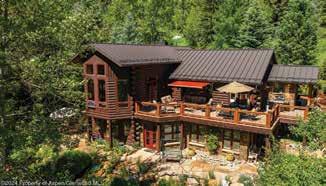
The quaking aspen and lush gardens surrounding this lovely log home lend privacy and a ‘treehouse feel’. Situated to best enjoy vast views, this beautiful 3 bedroom, 3 bath home has been remodeled from end to end with high quality doors, windows, and finishes that include countless upscale features.
3 BD | 2.5 BA | 3,118 Sq Ft | Redstone, CO
$1,995,000 | MLS#: 182736
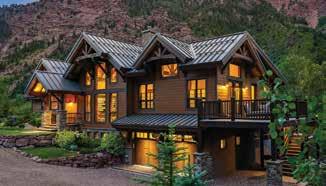
Director of Prairie Protection Colorado, complains as follows:
“I wrote a Colorado Open Records Act (CORA) request — the state’s version of the Freedom of Information Act — to Colorado Parks and Wildlife asking for cougar-depredation data. They don’t have any. ‘Did I write this wrong?’ I asked. ‘Are you really saying CPW has never gone in on a goat kill, cow kill, or a sheep kill?’”
When Coloradans vote this November they need to understand these facts:
• 1. Fair-chase hunters eat what they kill. Despite claims to the contrary, predator hunters almost always waste the meat;
• 2. Unlike traditional game, predators can’t compensate for mortality with fecundity. They self-regulate. They don’t require killing;
• 3. Cougar hunting and bobcat hunting/trapping is hunter-and-trapper management, not wildlife management;
• 4. Bobcat trapping/hunting is a vestigial form of market hunting, regulated not by science but by fur prices;
• 5. There’s not a shred of evidence that killing cougars creates more game or decreases depredations;
• 6. There’s abundant evidence that because cougar hunters target large trophies, age structure is disrupted with the result that younger, inexperienced animals — particularly males — disperse to developed areas, causing increased depredations.
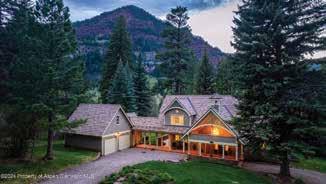
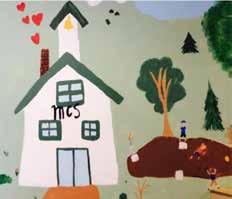
The charm of historic Redstone inspired the design of this stunning 4 bedroom/4 bath home built on the site of the original Redstone schoolhouse. Complete with a replicate belltower and details that mimic the European design of Osgood architecture, this home exudes thoughtfulness and quality throughout.
4 BD | 4 BA | 3,271 Sq Ft | Redstone, CO
$1,950,000 | MLS#: 183765

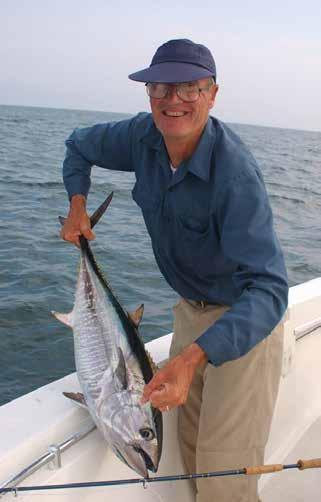
Williams is a former information officer for the Massachusetts Division of Fisheries and Wildlife. He writes exclusively about fish and wildlife.
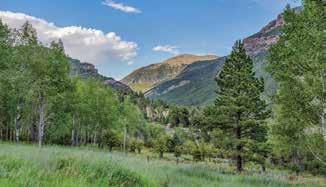
30 gorgeous acres perched above historic Redstone, Colorado and bordering National Forest with panoramic Crystal Valley views and lush alpine meadows. Ready for your dream home with private well, buried utilities, and activity envelope in place. Just a short walk to Redstone’s charming shops, galleries, and restaurants. No HOA.
30 Acres | Redstone, CO
$895,000 | MLS#: 181543


By Gentrye Houghton
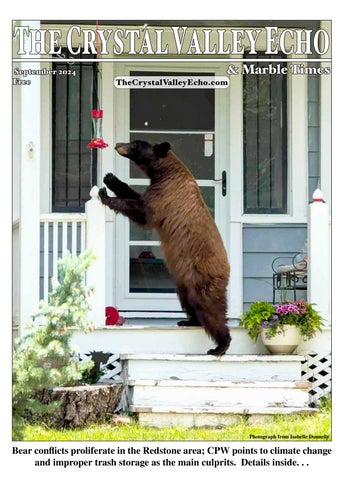
Last month, nearly 50 community members gathered at the Redstone Inn to discuss an increase in bear conflicts with John Groves, Colorado Parks and Wildlife District Wildlife Manager, Emily Casebeer, Pitkin County Community Response Officer, and Daniela Kohl, founder of the Roaring Fork Valley Bear Coalition. With what CPW is currently seeing in the Redstone area, Groves warned that between now and October, when bears often go into hibernation, the human-bear conflict will only increase.
Groves explained that bears typically hibernate because of the availability of food, or lack thereof. He said, “If they’re not fat enough, they’ll continue to push it as long as they can before hibernating, and if they’re continuing to find food sources, they’ll continue to eat into December or even later.”
According to CPW’s black bear management plan for the B-11 area, covering the Roaring Fork and Eagle valleys, the last five out of 10 years have been low foraging years for the bears and this year is no different. Groves stated this to be from the effects of climate change, and several backcountry trailblazers have reported evidence of fungal rot on this year’s wild berry crop. A lack of foraging only push-
es bears to seek alternate food sources and the likelihood that they will turn to easy scores found amongst humans.
Groves said that CPW has seen the bear population increase since the 80s, and today, they’re tracking around 60 problem bears in the Crystal River Valley alone.
The bear management plan also attributes the increased human-bear conflicts to improperly storing and handling of rubbish. During the meeting, Emily Casebeer responded by stating, “Deep down at its root, this is a community problem and we need the community to step up; hold your neighbors accountable, and if you see trash that’s not locked, hold that business accountable.”
Pitkin County code outlines the regulations for trash management and the standards of wildlife-proof refuse containers, the full guidelines can be found online in section 6.44. Casebeer summarized that containers need to follow these standards and/or be securely locked inside a building, lids need to lock, they need to have metal lids, and users have 48 hours to repair a damaged bin. She also said that under the code, trash haulers are required to provide refuse containers if a

customer requests one, but may charge a monthly rental fee. However, it has come to her attention that some trash haulers are not adhering to this provision and she’s working with a team on how to enforce this on the county level.
Groves encouraged the community to call CPW at the first sighting of a bear in the spring, and certainly now if anyone is experiencing an escalation in conflict. “Don’t call CPW, we hear it all the time,” Groves said, “I didn’t get into this job to kill bears, my goal is to help you.”
Groves said that he does site visits to help provide ideas of weak points or ways in which you may be attracting bears, as well as provide ideas to help mitigate and work through some of those problems. For many bears, once a pattern and reliance on humans is established, the habit is difficult to break. Thus, especially as bears begin to break into homes or become aggressive towards humans, CPW will trap and relocate them or, depending upon the behavior, euthanize them.
The Roaring Fork Valley Bear Coalition is a non-profit organization dedicated to reducing human-bear conflicts. According to their website, “Our citizen groups respond to community needs by reduc-
ing attractants, educating residents, and working alongside stakeholders such as CPW, municipalities, and trash haulers to achieve common community goals, enforcement, and actions that protect black bears.” They help provide bear-resistant trash containers and other deterrents, such as bear-resistant straps for trashcans and electrified mats away from entrances to your home. These items can be found by visiting their website at roaringforkbears.org.
“To put it in the grand scheme of things,” said Casebeer, “bears are incredibly smart, and they’re going to figure out a way to get food. They figure it out and then adapt, and then we have to change our habits. It’s this never-ending cycle of living in the woods where our wildlife adapts, and we adapt too.”
For more information on living with bears, visit cpw.state.co.us.
To report a bear conflict, you can reach John Groves by calling the CPW Glenwood Springs Office at (970) 947-2920; Emily Casebeer may be reached through Pitkin County’s dispatch at (970) 9205300.
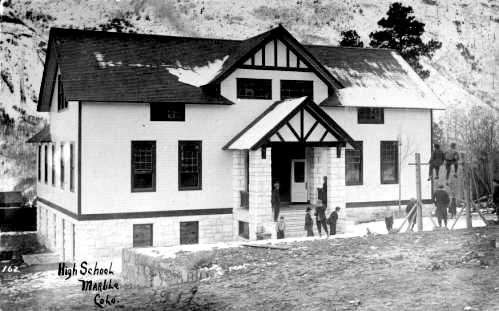
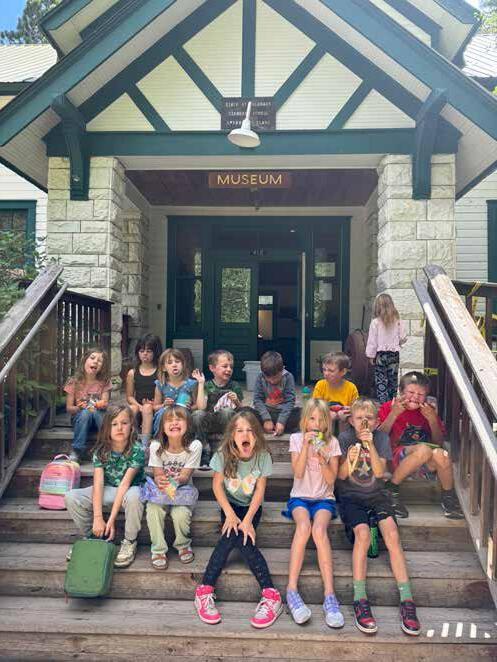
The Marble Museum is open Saturdays and Sundays 11 a.m. to 4 p.m. through September. Adults are $5, seniors 65 and over are $2, and kids 12 and under are free.
The museum is located at
By Michael Gorman, Lea Linse, and Hattie Johnson
Development is at a fever pitch in Colorado. As a result, animal herds are stressed, our National Forests are witnessing record numbers of visitors, and our rivers and streams are feeling the pressure of climate change. Because of this, we have to fight to protect what we have, and what we have is one of the last “free-flowing” rivers in the state: the Crystal River.
Conflict is easy to find; consensus is less so. This is why it’s worth noting that communities along the Crystal River all agree that the river’s free-flowing condition is unique and something worth protecting for the future.
This is also why the stakeholder group known as the Crystal River Wild and Scenic and Other Alternatives Feasibility Collaborative Steering Committee has been working over the past year and a half to find durable protections for the Crystal River, so the river can remain wild and free. With an ongoing drought and climate change impacts escalating, demand for the Crystal’s water will only increase.
Last fall, there was a series of public presentations on the various methods available to protect the Crystal. One of
those methods was a Wild and Scenic designation, which protects a river’s free-flowing condition and “Outstandingly Remarkable Values.” Our community has been discussing a Wild and Scenic designation for over 40 years and now we’re taking this opportunity to sit down together, regardless of opinion on Wild and Scenic, to hash out how to develop a proposal that could best incorporate our shared values.
The public heard from experts about how a Wild and Scenic designation works as a tool to safeguard those values. We also learned how a Wild and Scenic designation can be adapted to fit a community’s specific needs, and so we spent time gathering input to identify what those needs look like for our community. We agreed that these needs ought to be addressed for any approach to move forward.
In March, the Steering Committee reached a consensus on a recommendation to form subcommittees on options that have generated community interest and each will take a deeper dive into possible interim or alternative protection tools, specifically an in-stream flow right, Wild and Scenic designation, or local government agreement.
As part of this ongoing second phase, the Wild and Scenic Subcommittee is researching how a Wild and Scenic proposal could be specifically tailored for the Crystal River. Each month our subcommittee looks closely at a value or topic we’ve identified through public input and determines how it could be incorporated into a proposal. We are looking at examples from other Wild and Scenic bills, and speaking with Forest Service staff and other experts with experience who can provide perspective and interpretation of policy and legislation.
Our goal is to develop a draft Wild and Scenic proposal that would protect the Crystal River while making every attempt to address the group’s questions, values, and any additional reservations identified along the way. We intend to bring this proposal back to the larger Collaborative and the broader community for discussion. While we’d all like answers sooner rather than later, this collaborative process is complex and we are moving at the speed of trust.
Our subcommittee is made up of Steering Committee members from up and down the valley with different backgrounds, political leanings, and opinions
on the best ways to protect the river, but we are connected by our shared values and appreciation for the Crystal. The dedicated members of this group have volunteered countless hours of their time and sat down with each other over hundreds of slices of pizza to work on a vision for a future where the Crystal River remains free-flowing.
For many in the room, this effort comes on the heels of previous decades of involvement, and as co-chairs, we often reflect on our gratitude for the commitment and expertise embodied in this group and the willingness to listen to others’ opinions.
Hattie Johnson, Lea Linse, and Michael Gorman are co-chairs of the Wild and Scenic Subcommittee which generally meets every 4th Thursday of the month at 5 p.m. at the Third Street Center in Carbondale. Community members are welcome to listen in on these meetings in person or on Zoom. For questions, more information, or to provide input, email michael@wildernessworkshop. org and visit thecrystalvalleyecho.com/ wild-scenic-stakeholder.




The Marble Community Church Fellowship Hall was a veritable bustle as I took my seat, Squirt in hand, at one of the dozen or so trestle tables. There were a total of 11 residents milling around and a full complement of trustees, two of whom (Dustin Wilkey and Mayor Ryan Vinciguerra) sported aggressive summer haircuts. The last of the evening sun’s rays danced on the latter’s shiny pate.
The meeting began at 7:05, hot on the heels of another executive session called to discuss, among other things, the Town’s response to the Marble Water Company’s funding proposal to extend its service to the East of town. For details of this proposal and its potential ramifications, please see the last two issues of The Echo.
Town administrator Ron Leach announced that a letter was being prepared by the Town in conjunction with its lawyer, Kendall Burgemeister to send to the Marble Water Company. In this letter, the Town of Marble reiterates its shared desire with the MWC to preserve the integrity of the Town’s water supply and to expand water provision to East Marble. However, the Town proposes that working with the Department of Local Affairs to explore other (and potentially more attractive) funding options as a municipal entity might better serve the interests of the Marble community compared to the current deal the MWC has been pursuing with the United States Department of Agriculture (USDA) as a private entity.
When asked to comment on the situation, Mayor Vinciguerra appeared wary of the MWC’s proposal in its current form and expressed reluctance to encumber the Town with more debt. Also, when quizzed by Mayor pro tem Larry Good on whether the MWC had given the Town access to the document outlining the proposed agreement between the USDA and the MWC, Tom Williams (a member of the board of the MWC) said, “You wouldn’t want to read it, it’s over 1000 pages long.”
This was followed by an awkward silence. Whether the comment was made facetiously or not, the suggestion the Town saddles itself with a further $600,000 of debt without doing the necessary due diligence will do little to improve the fragile relationship between the Town
and the privately owned Marble Water Company.
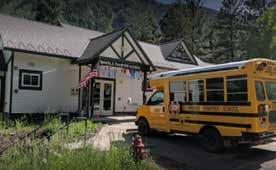
The newly appointed Director for the Marble Charter School, Sam Richings-Germain, was present to announce that the school is looking for volunteers to help out at its biggest fundraiser, the annual Lead King Loop race, scheduled for September 15th with over 250 participants. The Town’s “Booze Tsar,” Dustin Wilkey enquired whether the school was planning to apply for a liquor license ahead of the event. To which, the answer was no, this year’s event will be a teetotal affair. Richings-Germain informed the board that the Gunnison School District had just renewed the Charter School’s five-year operating license and that “aggressive” grant-seeking was underway to ensure the facility is “safe and secure.”
The next item on Town Administrator Ron Leach’s report was a discussion on the budget for 2025, which does not have to be finalized until December 15th. His report highlighted that the lion’s share of the Town’s revenues comes from sales tax (44% estimated for 2024), the campground (13%), property taxes (12%), and the quarry lease (9%). Revenues on the whole are projected to be flat for 2025.
Councilman Wilkey suggested the introduction of a tourism tax as an extra source of revenue for the Town, which could be applied to non-lodging businesses (which already apply a levy). This idea was met with general approval and Leach agreed to assemble a memo for the Town’s attorney.
The discussion then turned to expenditures. Failing to explain his reasoning, newly appointed and recently (self) shorn Wilkey expressed a desire to start a fund for a Town vehicle, in contrast to the flowing-locked Amber McMahill who proposed that the Town initiate a fund for grant writing to access a pool of abundant Federal and State programs currently available for small towns such as Marble.
Ron Leach reported that the Parks Committee had requested $7,000 to install a water fountain near the Millsite Park restrooms. Amy Rusby, reported that as of July 31st, Town revenues stood at 49% of the budget. Bringing the Administrator’s Report to a close, the Raspberry Ridge Café’s liquor license was renewed.

The Marble Town Council meets on the 1st Thursday of each month starting at 6 p.m. in the Marble Community Church’s Fellowship Hall.
Town of Marble meetings are open to the public.
There was a short break after which, Konstantine Iannios (son of the late and celebrated artist and Marble resident, Thanos Johnson) was given the floor to present his vision for the development of the property at 118 Silver Street, Johnson's former residence.
Iannios was apologetic for allowing the property to have descended into its current state. The one-acre overgrown plot consists of three dilapidated buildings that have been neglected for 21 years. Those years have not been kind. One of the buildings has a tree emerging from its roof, of which Iannios joked he would take photos and produce postcards.
An animated and enthusiastic man, he had driven from Grand Junction with a handful of colleagues to present his vision of a campsite featuring an artist in residence and consisting of 16 inflatable tents arranged around a creek (currently a ditch and stagnant pond), each perched on a deck with its own veranda and its structural integrity assured by a “silent” air compressor. “You’re not going to hear it,” he assured those present.
Each tent would measure 12 by 20 feet and could accommodate up to 6 people. The three buildings would be converted into a coffee shop, a bathhouse, and the “main house” which he said he may “Airbnb.” When quizzed by Councilman Wilkey about his plans for staff housing, smooth-talking Iannios, a developer from Tennessee, admitted that there remained a few details of his plan for a “Garden of Eden” that was “Indigenous to the community” that still needed to be ironed out.
Larry Good pointed to possible insurance snags around Iannios’s plan to incorporate wood-burning stoves in the accommodations and Wilkey alluded to potential problems with wildlife, mentioning the risk of guests leaving “snacks in the bed” and trails of Cheetos for marauding bears, he emphasized the risk of intrusive wildlife puncturing the inflatable structures by raising a clawed hand and making a hissing sound.
Undeterred, Iannios underscored the importance of keeping his father’s dream of creating “a living studio” alive. “Not everyone loved him, but he was a cool cat,” Iannios eulogized.
2024 Meeting Schedule Now at 6 p.m. Sept 5th Oct 3rd Nov 7th
His goal is to put a metal roof on each of the three buildings before the snow flies, with a target opening date of the campsite in August 2025. The Board thanked Iannios for his animated and enthusiastic presentation, and we all hope he will return soon with another upbeat presentation accompanied by some visual representations of his project.
The next meeting of the Marble Board of Trustees will be held at 7 p.m. on Thursday, September 5th at the Marble Community Church Fellowship Hall.
By Gentrye Houghton
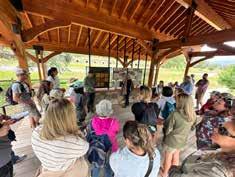
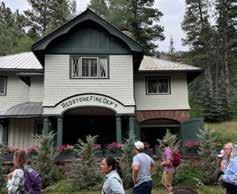
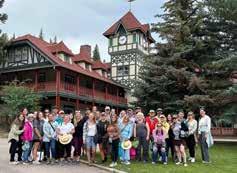
teachers on a tour focusing on the history of Redstone and the original community that John Osgood built. She said they also learned of the financial hardships that the Redstone Historical Society faces today and combined the knowledge they gained after last year’s tour with the Glenwood Historical Society and learning of the difficulties they face.
Trembly provides Historic Walking Tours of Redstone every Saturday starting from the Redstone Inn at 10 a.m.; she leads groups of up to 10 people and tickets are available for $15 per person.
DJ Sugar Monkey is the host of “Snack Time” every other Thursday after- noon from 12-2 p.m. The music show features mostly jazz with a mix of funk and, according to DJ Sugar Monkey, a "smattering of world music thrown in, mostly from Africa." You can find him on KDNK (88.1 FM), Carbondale’s public access radio that connects community members and the world.
On Friday, August 9th, over 35 teachers from the Two Rivers Community School joined guide Becca Trembly for a walking tour of historic Redstone, Colo.
The staff was working on defining the word community. “We all come with different ideas of what makes a community,” said Dean of Instruction, Lixandra Alcorta, “and what elements are needed to make a healthy, vibrant community.”
With this intention in mind, Alcorta asked Trembly to lead the group of
The
Mission Statement: To provide a voice for the residents of the Crystal River Valley; to bring attention to the individuals and local businesses that are the fabric of the Crystal Valley region; to contribute to the vitality of our small town life.
EDITOR AND ADVERTISING SALES
Gentrye Houghton gentryeh@hotmail.com
DJ Sugar Monkey
Amber McMahill
DISTRIBUTION AND LAYOUT DESIGN
Ryan Kenney
“[The teachers] came away with many thoughts and ideas of connecting what they learned to what they will potentially teach this year,” said Alcorta. “A big takeaway for the group is the importance of preserving history and the financial challenges that historical societies face. How do we, as educators, influence our youth on the importance of preserving history?”
Alcorta complimented Trembly’s efforts and RHS's work and said they connected Redstone to what they wanted to focus on: community. However, she said, “Osgood's idea of a community certainly contrasted with the kind of community we want to build here at our school.”

The Crystal Valley Echo is published monthly, and is distributed throughout the Crystal Valley.
NEWSPAPER BOX LOCATIONS:
Third Street Center • Village Smithy Carbondale Post Office • Carbondale Park & Ride
The Marble Hub • Redstone General Store






By Lisa Erickson, Ashton Durrett, and Anthony Durrett
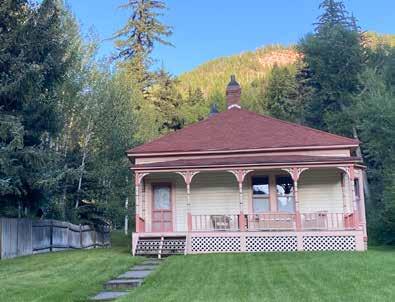
We are Lisa Erickson, Ashton Durrett, and Anthony Durrettcousins and the current owners of the Osgood-era cottage at 138 Redstone Boulevard. We have struggled to attach a name to the home that will honor the diverse members of our Italian family who have owned it over the years. But that is too cumbersome. The simplest way to honor them is to let people know all our relatives who owned and preserved the home through the years.
It was first purchased by our great uncle (Lisa’s great-great uncle), John Persano, in late August of 1944. He intended to keep the home for the family as a retreat, as it has been for 80 years. Persano was the youngest child of Salvatore and Rosa Persano, who came to Leadville during the 1880s silver boom from their home in Liguria, Italy. Persano was the brother of Dominic and of our respective grandmothers (Lisa’s great-grandmother), Josephine, and Letitia (the grandmother of Ashton and Anthony).
After the silver boom, the entire Persano family found their way to New Castle, Colo., and Glenwood Springs, Colo., where they established permanent roots. John Persano delivered the mail to the Crystal River and Frying Pan River valleys and was an avid fisherman. It was said that he could throw water out of a pail onto the floor and catch a fish from it. So it was a natural thing for him to buy the cottage in Redstone, alongside the Crystal River in 1944.
Upon his death in 1963, John bequeathed the home to his niece,
All content sponsored and provided by the Redstone Historical Society.
Rose DeMaestri, who worked for the Garfield County Clerk and Recorder. She died soon after in 1964, and the cottage was left to her brothers and sisters, Roma, John, Albert, and Josephine (Lisa’s grandmother).
In the administration of Rose’s estate, Albert acquired the cottage from his siblings. Albert and his wife, Katie, were successful restauranteurs in Glenwood Springs, Colo., where they owned and operated the Buffalo Valley Inn during the 50s and 60s. Like John Persano, Albert and Katie opened the home to all of us. Albert DeMaestri’s first cousin was Flora Durrett of Glenwood Springs, Colo., and the three oldest of her four sons, Dick, Gregory, and Ashton, worked for years alongside Albert and Katie at the Buffalo Valley Inn.

In 1984, the Redstone cottage was given to Gregory Durrett, who restored and maintained the cottage for the next 33 years. Durrett will be remembered among other things as one of the founding members of the Crystal Valley Environmental Protection Association (CVEPA). He lived in Glenwood Springs, Colo., and operated the Italian Underground restaurant for decades, but frequently stayed at the Redstone home during the summer months. Upon his
death in 2017, we three cousins inherited the cottage, and since then have endeavored to care for it as all our relatives have done previously.
We each have fond memories of our times at the cottage, here are a few:
Lisa Erickson:
When my great uncle Alby (Albert DeMaestri) owned the home on the Boulevard my father, sister, and I often spent summer vacations in Redstone. I was born and raised on the coast of Los Angeles, Calif., so getting out of the smog and congestion of the city and into the Rockies was a blessing. Our cousins would take us hiking, mushroom hunting, river rafting, fishing, etc. Our grandparents would rent horses for us that we would ride through the forests and up to the Redstone Castle.
In 1968 Uncle Alby opened the home one winter for our family. There, in that little cottage next to the Redstone Inn, I spent my most favorite Christmas. Warm memories are ingrained in my heart – like trudging through the snow to find the Christmas tree left by Santa. We were told it was the one with the red ribbon tied around it. We put the tree on a sled and brought it back to the house.
Another memory is taking turns sledding down the driveway and riding on a snowmobile to the Castle.
One of my earliest memories is that the paved road ended at the fish hatchery and it was a hard dirt road all the way to Redstone. That kept the tourists away so it was like our own private playground. In the 70s Mid-Continent Coal Mine was still operational and the Redstone Inn was closed, except for the Moose Head Saloon in the corner of the Inn. The coal
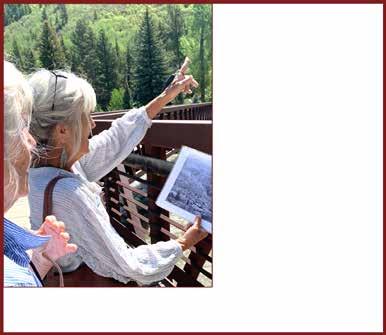


miners would gather there at the end of the day. The Town House (now Propaganda Pie) was a great place to listen to live music and one cannot forget the legendary Fireman’s Ball.
Although Redstone has changed throughout the decades, it remains my favorite place on Earth. Saying goodbye to the cottage will be, for us, like the loss of a relative. But we were fortunate to have it for a lifetime. Always there, just waiting for us.
Ashton Durrett:
I began going to the home in Redstone in the late 40s, along with relatives of our extended family. My great uncle John was an avid fisherman. As he worked the Crystal River upstream from the bridge, I would trail him from a distance. I played at the Band Box on the mound near the Inn and would pretend it was my fort, which I would defend against my imaginary enemies.
Later, as I spent time with my two older brothers, we explored the community, its water courses, the coke ovens, and the old unoccupied firehouse with its fire pole. What was so evident in those times was the absence of ambient noise and the small number of children such as ourselves. Apart from family activities,
we would celebrate Labor Day and the 4th of July holidays with employees, relatives, and friends.
The house is still abundant with warm memories, and a bit of sadness for the loss of simpler and quieter times.
Anthony Durrett:
In the 1950s, I was a kid growing up in Glenwood Springs, Colo. My first recollection of the Redstone home was driving up the dirt road in a huge black Packard automobile driven by our cousins, the LaDonne’s from Southern California.
The Packard was like a limousine, and we didn’t own a car, so it was quite memorable to ride in one that huge or fancy. The Crystal River had just then recovered from a huge flood that had overcome its banks and washed out huge portions of the dirt road. I had never before seen such devastation.
Our mom was a nurse at Valley View Hospital in Glenwood Springs, Colo., and often when she had more than a day or two free she and I would stay in the cottage. My mom would spend her time relaxing and reading and visiting with the Kinneys next door while I, like every other kid who stayed there, explored the town and played both on the bandstand on top of the Redstone bluff next to the bridge.
We can’t do it without you. In an economic climate where many established news outlets continue to scale back or close, your support goes directly to writers living in the Crystal Valley!

Considering signing up for a subscription, $60 for print or $35 for digital, or making a monetary contribution online or by sending a check to
Other lasting memories include my first taste of beer next door where Mr. Kinney gave me a sip under the watchful eye of our mom, and my brother, Ashton, being an altar boy for Sunday mass at what is now Joy & Wylde and the Redstone Art Gallery.
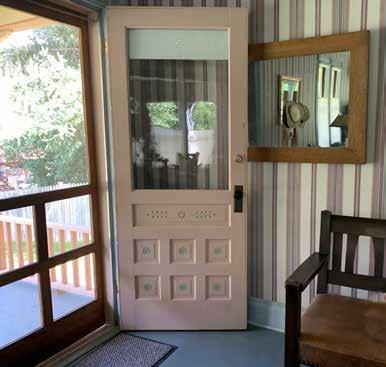
Redstone Historical Society (RHS) update: After 80 years of ownership, the DeMaestri-Durrett families are ready to part with this property and prefer to find a way to ensure that the property is in good hands, with ideally a public purpose. RHS is brainstorming resources to purchase this property. Having lost our Redstone Castle display space, we have no place to tell the broader story of Redstone as well as a space for community meetings and events. This is a timely opportunity and unlikely to happen again.


to get as much done as possible in a full day or half day session!








By Nina, written in the 6th grade
I interviewed my father Sasha Paris on January 6, 2024 as my first step to answering this question. He has run the Grand Canyon many times now and this is what he says: “Well, danger is relative. If you have a really good skill level it makes things a lot less dangerous. The Grand Canyon can be dangerous and it has some exciting rapids but if you are very well skilled you can do it…What’s the point of life if you don’t take risks? It is a great opportunity to run the Grand Canyon so why not take it? Life Is completely pointless without risks.” I agree with my dad’s philosophy on this particular risk.
In a novel I read recently entitled “Downriver” by Will Hobbs, eight teenagers stole some rafts and rafted down the Grand Canyon. These kids were sent to a camp by their parents because of trauma and other emotional problems. They made it almost all the way through in just ten days. Why did they do this? Because

it was fun. How did they do it? They drove a van all the way to the place where most rafters enter the canyon and went all the way down the river running through the craziest rapids and the worst of storms. Most people raft this canyon with a river map, a permit and some friends, but not these crazy teens!
Outdoor adventures were their own therapy. By going into the wilderness, you can leave all the stressful parts of your life behind because you have to focus on survival. The therapy nature provides isn't like any other. Nature is calming and kind in its own way. It is important to experience good things as well as bad things in life. These kids are in some ways helping the environment of the area by just being there and appreciating the beautiful canyon.
Many real people, not just fictional ones, have run this river before and humans are starting to destroy it. Cli-





mate change is affecting many places like the North Pole, the ocean, the United States, etc. but we are affecting the Colorado River by rafting it, leaving our trash there and polluting the river. Why are so many people rafting this river when it is very dangerous and so many plants and animals depend on it? Many would say, “Because it is fun.” “Who wouldn't want to raft the Canyon?” Well, sure, for awhile it was okay for people to run this river, when they weren't ruining it, but more and more wanted to run this river so many people are hurting it, and we have also created a dam on the Colorado, which has affected this area too and it is getting to be hot, dry and dead.
Luckily, some people actually do care about the Grand Canyon. Some are actually trying to save it. They have developed a permitting system that you have to get so that less people will raft this river. This mindful group of people is also writing pa-
pers, telling stories and educating others about the horrible pollution of the Grand Canyon. Currently, many people are going to the Grand Canyon and picking up trash, saving injured animals and just doing their best to help.
The Grand Canyon is an amazing place, but it does have some problems: there are hard challenges and dangers, lots of pollution and more, but there are good things, too; it helps many people through their hardships and has so much wildlife. If you could, would you raft the Grand Canyon?



By Elsie, written in the 7th grade
Everyone has heard about volcanoes, but did you know that roughly three-quarters of all volcanic activity happens deep underwater? Most underwater volcanoes go unnoticed, but some that are in shallower water or closer to land can destroy human civilization. If you were to see an underwater volcano, the water would be extremely hot, but you wouldn’t see steam. But if the water is shallow enough, the lava starts to heat the water, and a large volume of steam will be seen on the surface of the water, often accompanied with a violent explosion. Scientists try to prevent any volcanoes from damaging any buildings by guessing when and where the next volcano will erupt.
Back in 2015 a strange yet popular phenomenon was observed. Hundreds of sharks were living in one of Earth’s most active underwater volcanoes. Sharks may be drawn to volcanic rocks because they are attracted to magnets.. Many scientists now believe that sharks can use volcanic trenches throughout the world to help navigate across the extensive oceans. The scientists were eager to go back and learn more about them, but a mix between many sharks and an active volcano could easily kill you; however, there was a solution; Robots!
Brennan Phillips, National Geographic explorer and ocean engineer, teamed up with scientists whom he worked with before to travel twenty miles into the ocean to the Pacific’s Kavachi underwater volcano. When asked by a National geo-
graphic interviewer: “Why send robots into one of the most active submarine volcanoes on Earth?” He stated, “Because it’s cool. But also, as a scientist, it's about getting that last data point, right before the eruption- pH, carbon dioxide, temperature fluctuations, acidity. If you can do this at this one volcano, you can do it at every volcano.”
After anchoring at a safe distance from the volcano, they launched a few robots into the water. Steering the robots from a computer toward the volcano, Phillips and his crew watched the superheated volcano get closer. As a result, they also discovered how close the sharks could get to the volcanoes, too.
Sharks, a species that’s been around since the age of dinosaurs, are amazingly adaptive. They can survive pretty much anywhere. Great white sharks, which are endothermic (where their blood is warmer than the surrounding temperature) have a wide range, including cold southern waters. Some sharks are specially adapted to live in cold environments, like the Greenland shark. Yes, there are many different types of sharks that all thrive in different environments, but it still
leaves me amazed to think about all the different types of sharks that have been living across the planet for hundreds of thousands of years.
Phillips was amazed when he took his first look at the hammerhead swimming through the scorching hot waters. There were a few different kinds of sharks in the volcano including the scalloped hammerhead and the silky shark. Not only was the water hot, but it was also extremely acidic.
No one really knows why the sharks decided to live in the acidic, boiling waters of Kavachi, but we all know that they can and did survive there. Studying volcanoes and the sharks that are called to them using the most modern technologies available, we can simultaneously be in the past, present and future all at once.