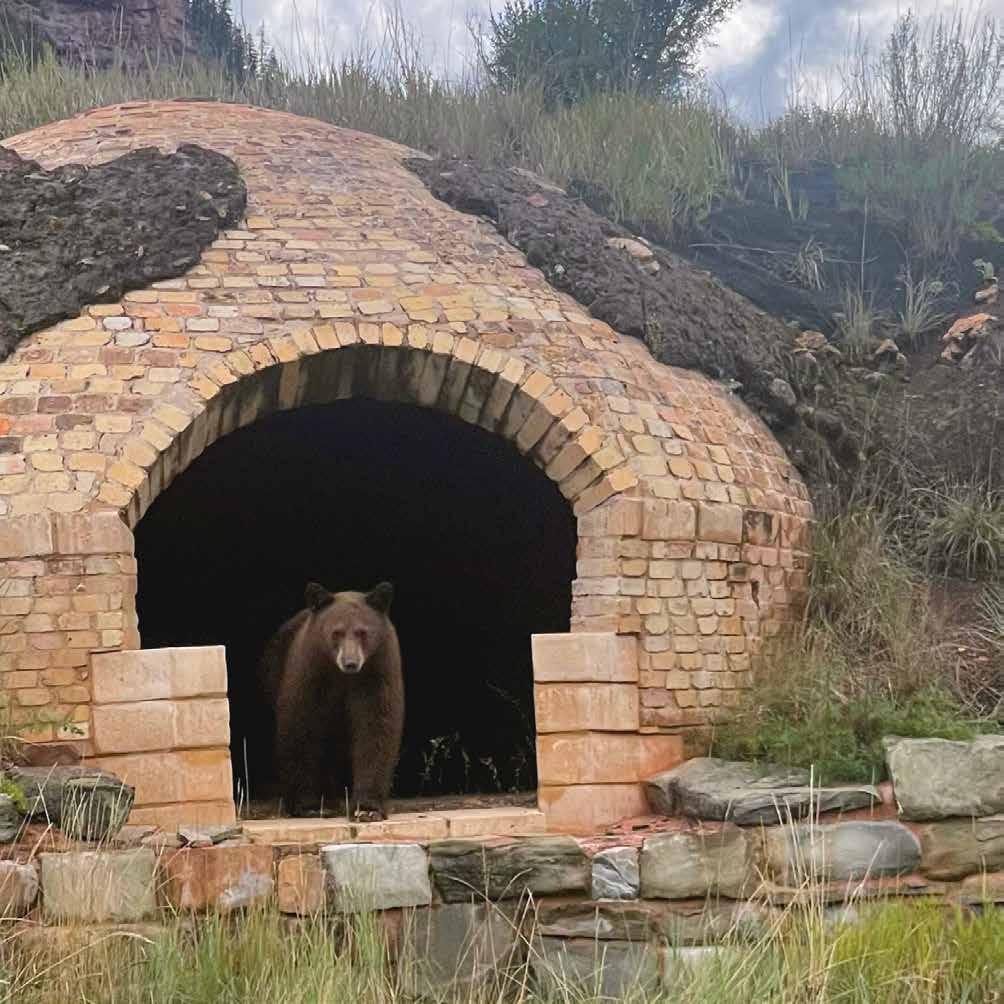

Photograph from Samantha Smith Wilkey
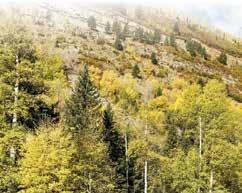
From Gregory Staple
Along with striking scenery, the Crystal River watershed — stretching 35 miles from the heights of the Elk Mountains to the sagebrush country around Carbondale — is a haven for flowering plants.
Inspired by the area’s biodiversity, Gunnison County resident Gregory C. Staple has written a 310-page guide to local blooms. Titled, Get Out There — Crystal River Valley Wildflowers, the book covers over 260 different flowering plants and includes the author’s original photographs for each species.
“The mix of wildflowers in Crested Butte and Aspen-Snowmass has been chronicled for years,” said Staple. “This is the first book to give the Crystal River watershed its due. It benchmarks the area’s amazing range of flowers — at least 6% of Colorado’s 3,300 native species — which I hope will encourage more people to help conserve our local ecosystems.”
He continued, “I also wanted to craft a guide that lets people see how evolution works right here in the Valley. That’s why this book goes beyond typical field guides that focus on matching up a bloom you might spot on a hike. You can use Get Out There for that, but it also includes several mismatches, flagging different flower color forms (e.g., white instead of blue) and chance floral mutations, along with the special flower-pollinator interactions, that can drive change.“
“It’s all about learning to see because we see with our minds, not our eyes. And our minds are shaped by what we have learned.”
Get Out There begins with a magazine-like introduction to the wildflower world. It includes an illustrated primer on the origins of flowering plants; why size, shape, and color matter; the co-evolution of pollinators and flowers, with an aside on paleobotany (can we revive the scent of extinct flowers?); why so many roadside flowers are non-na-
tives (hint: they escaped from pioneer gardens in the 1800s); how Colorado monitors and protects endangered species; the likely impact of climate change on area blooms; and an essay on what to do about “noxious names”, that is, flowers whose names honor 19th-century collectors who were “bad actors” because, for example, they participated in military expeditions that wantonly killed Indians.
Get Out There also has several other user-friendly features to help readers find and identify local blooms:
• It simplifies flower identification with unique pictograms for key characteristics (leaf shape, petal counts, plant size, habitat, and bloom time) for every species pictured in the book;
• It maps 10 ”flower-rich” trails in the Crystal River drainage for short walks to day hikes;
• It indexes all plants by common and scientific name and features a “quick look-up” section with over 260 thumbnail flower photos.
Get Out There is available from local coffee shops and bookstores including the Marble Hub; the General Store in Redstone; White River Books, Bonfire Coffee, and Flowers on Main Street in Carbondale; and Explore Books and Carl’s Pharmacy in Aspen. For more information, visit www.gotwildflowers. com





Aug. 18: Back to School Bike Bash – BBQ & Dance Party w/ live funk-groove-pop by Hand Turkey. 4:00-6:00 pm.
Sept. 29: Volunteer restoration work day w/ Roaring Fork Outdoor Volunteers. Register: www.rfov.org
TBD in September – Ute land acknowledgement, volunteer trail work day & ribbon-cutting for Phase 2b new trails
Oct. 5: Take A Kid Mountain Biking Day w/ Roaring Fork Mountain Bike Association and Revel Bikes. Register: www.rfmba.org



Redstone, a Place Nestled deep in a forest Silence with life
It has been our Place, the Crystal Valley, for 31 years.
Married on McClure Pass. A party underneath the stars.
Raising two boys in the mountains alongside a crystal clear river flowing north. We have shared so many friendships along the way. Our volunteering expanded and widened our lives. Learning about our capabilities and interests not known before we dove into those areas. Ten years President of the most important entity: good water. Fifteen years upholding historic guidelines for the community. Heartfelt. Being thanked for purity.
Being a voice for the Castle's history and seeing people smile made all the differ-


ence.
Being a bookstore owner and independent reading is my best memory. Laughing on a Friday night at the Inn with the old timers and bartenders, 1980's. Sitting in the Crystal Club on a February night, watching the Red and Green show packed with patrons, and snow falling. Sitting on porches telling stories. Going to Caucus meetings and being a voice.
Raising over $25,000 for Pearlington, Hurricane Katrina, with our fearless leaders Billy and Kim, bringing Tab Benoit and Anders Osborne. Dancing the night away, under the stars.
Dancing outside at the fire station on July 4th til the wee hours.
Holding a first grandchild three days old in Redstone.
Redstone is a Place to cherish, remember, and be grateful to be a part of. Not to change drastically. Grow with it, let it surround you. Gently.
We are grateful beyond words for our time in Redstone and now we are onto our next journey.
More Bears.
More laughing.
More Stars.
And most importantly, family love.
Cheers, Nancy and John Chromy

GaRy MoRRis coMMunity conceRt
Dear Editor,
My wife, Donna, and I are hosting a concert by singer/songwriter, actor, and outdoorsman Gary Morris on September 20th at the Marble Community Church. (His most recent accolade was just being named a “Living Legend” by the Texas CMA!)
This is the second community concert he’s done for us, this year to celebrate our second anniversary and again to thank the townspeople of Marble for their warm
welcome into the community (we actually purchased our house here on our honeymoon).
He performed for us and our wedding guests for the first time the day before our wedding as a surprise wedding gift to Donna. We have since become friends with him and his wife, Paula.
The concert will be at the Marble Community Church at 6:00 p.m. on September 20th
Thanks! Bob Kulick
From the United States Forest Service
Public comments sought on the proposed Daniel’s Hill parking area in Marble
The White River National Forest seeks public comments on a proposal to build a parking area in partnership with Gunnison County at the base of Daniel’s Hill in Marble. The proposed parking lot would address parking issues related to the recreational use of the Lead King Loop and nearby Crystal Mill.
The proposed parking area would accommodate up to 15 vehicles and would include space for vehicles with trailers to turn around before reaching the Lead King Loop.
The relatively flat area would be graded and graveled, and some trees would be removed. Signs would be installed at the forest boundaries to clarify where it is legal and illegal to park.
“This proposal will help address residents’ concerns about congestion, safety, and environmental damage from people parking illegally along the road,” said Jennifer Schuller, Aspen-Sopris Deputy District Ranger. “This is one of the recommendations from the stakeholder group formed by the Town of Marble, Gunnison County, and the White River National Forest to look at the management of the Lead King Loop and surrounding area.”
The Lead King Loop stakeholder group hosted three public listening sessions attended by 123 concerned citizens between December 2021 and June 2022.
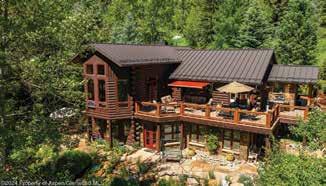
The quaking aspen and lush gardens surrounding this lovely log home lend privacy and a ‘treehouse feel’. Situated to best enjoy vast views, this beautiful 3 bedroom, 3 bath home has been remodeled from end to end with high quality doors, windows, and finishes that include countless upscale features.
3 BD | 2.5 BA | 3,118 Sq Ft | Redstone, CO
$1,995,000 | MLS#: 182736
The Forest Service is hosting a public open house on August 13th from 5 p.m. to 7 p.m. at the Marble Fire Station, 300 W Park St., to provide information and answer questions.
Comments will be most helpful if received by August21st More information, including a map and instructions on how to comment, is available at: www.fs.usda.gov/project/whiteriver/?project=65794
Forest Service issues final decision approving Redstone to McClure Pass Trail
New trail to be constructed and managed by Pitkin County
At the end of June, the White River National Forest announced a final decision authorizing Pitkin County to construct and maintain the Redstone to McClure Pass Trail across National Forest System land.
“The trail will improve public access and provide a safer alternative to hiking and biking along Highway 133,” said Acting White River National Forest Supervisor Heather Noel. “It will also help meet the growing demand for local and regional trail connectivity within the upper Crystal River Valley.”
The 7-mile trail will be a natural surface, non-motorized, multi-use recreation trail from Redstone to the summit of McClure Pass. It will be constructed within the State Highway 133 right-of-way and along the historic Rock
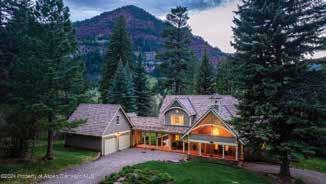
The charm of historic Redstone inspired the design of this stunning 4 bedroom/4 bath home built on the site of the original Redstone schoolhouse. Complete with a replicate belltower and details that mimic the European design of Osgood architecture, this home exudes thoughtfulness and quality throughout.
4 BD | 4 BA | 3,271 Sq Ft | Redstone, CO
$1,950,000 | MLS#: 183765

Creek Wagon and Old McClure Pass roads.
The Forest Service’s decision covers the approximately five miles of trail that cross National Forest System land.
The decision also takes into account prevalent informal, unmanaged public use currently occurring along portions of the approved trail corridor. The formal trail approval ensures design and management measures will be in place to mitigate adverse impacts and ensure long-term sustainability.
The approved trail incorporates proper trail design to reduce physical impacts as well as a seasonal closure to all visitor use from December 1st through April 30th to mitigate potential impacts on wintering elk. Trail construction will also be limited to operations between July 15th and November 15th to minimize impacts on elk, nesting songbirds, and lynx.
The final decision and Finding of No Significant Impact are available by visiting: www.fs.usda.gov/project/?project=56913
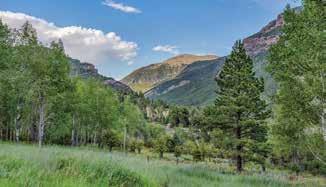
30 gorgeous acres perched above historic Redstone, Colorado and bordering National Forest with panoramic Crystal Valley views and lush alpine meadows. Ready for your dream home with private well, buried utilities, and activity envelope in place. Just a short walk to Redstone’s charming shops, galleries, and restaurants. No HOA.
30 Acres | Redstone, CO
$895,000 | MLS#: 181543
4 BD | 4 BA | 3,720 Sq Ft | Redstone, CO
$3,999,000
2 BD | 3 BA | 3,355 Sq Ft | Marble, CO
$1,485,000 | MLS#: 184682


Coalition of Roaring Fork Audubon and Roaring Fork Sierra Club an ecoloGical PeRsPective
The Redstone to McClure Pass section of the Carbondale to Crested Butte [Bike] Trail development project will pass through some of the most ecologically important and beautiful breeding bird habitats remaining in the Crystal River Valley. While this is exciting for bikers, it is an ecological tragedy for wildlife that call the area home. The proposed bike path through the Crystal River corridor to Crested Butte has been met with opposition from many environmentally concerned individuals and groups including Roaring Fork Audubon (RFA) and Colorado Sierra Club. RFA and Sierra Club presented the County and the Forest Service with decades of scientific evidence documenting that recreational trails are a major culprit in the continuing decline of wildlife, chipping away at now scarce, undisturbed wildlife habitats; and they persisted in their decision to sacrifice essential wildlife habitat for human recreation in the face of the formal objections that we and others filed. We ultimately negotiated a settlement of our objections in exchange for several commitments from Pitkin County aimed at mitigating some of the damage from the development of this and future trail segments. Although we waived our right to sue over the Redstone to McClure section of the trail, this in no way implies support for or an endorsement of this or any future proposed sections of
the Carbondale to Crested Butte Trail.
Commitments made by Pitkin County for the protection of wildlife in the development of future trail segments as a result of our formal objections include:
• Cumulative Impact Assessment: Future development of any portion of the Pitkin County Carbondale to Crested Butte Trail will trigger a requirement for the entire trail to undergo a Cumulative Impact Assessment — an assessment of the impacts from, potential alternatives to, and necessary mitigation for the development of the entire 83-mile trail, instead of the piecemeal assessment that was conducted on the Redstone to McClure Pass segment.
• Habitat Preservation: A 1.3mile section of the Redstone to McClure Pass Trail segment’s habitat will be preserved for wildlife.
• Construction Timing: Construction of the Redstone to McClure Pass Trail segment will be halted during the bird-breeding season.
Despite these commitments by Pitkin County, there remain significant concerns associated with the approval of
this trail segment, including:
• Inadequate Wildlife Surveys: Initial surveys by the environmental consultant (ERO) and the U.S. Forest Service (USFS) failed to include avian species and did not consider the broader impacts of habitat fragmentation on other native wildlife including elk, mule deer, black bear, and others. The disregard for scientific evidence is troubling, particularly given that many bird species in the area are declining and of conservation concern.
• Ignored Scientific Insights: The failure to account for cumulative impacts associated with the entire Pitkin County-approved Carbondale to Crested Butte Trail, of which this segment is only a part, undermines the integrity of environmental stewardship. Recreational trails have been shown to negatively affect breeding birds, many of which are already in decline. North America has lost over a third of its bird population (2.9 billion birds) in the last 40 years — a crisis that the proposed trail could exacerbate.
• Limited Protections: The promise to save a small patch
of habitat, while beneficial, is insufficient. Viable alternatives to trail construction through natural, intact habitats exist; and these trail alternatives have not been chosen by the County. The priority for "user experience" over ecological sustainability is disappointing and undermines the ecological integrity of the Crystal Valley.
Decades of scientific research recognize recreation as a leading factor in the endangerment of plant and animal species on federal lands. Seasonal trail closures that the County will institute on the Redstone to McClure Pass Trail section during winter to protect one species, elk, will not protect the more than 45 species of birds that have been documented to breed in that area during spring and summer, 18 of which are highly vulnerable to extinction from climate warming.
a call to action: conseRve and PRotect native Wildlife

RFA and the Sierra Club remain steadfast in our commitment to protect native wildlife and their habitats through science-based conservation efforts. As a result of the objection resolution agreement we negotiated with the County and the Forest Service, we now have more legal





tools available to fight any future proposals to build out the Carbondale to Crested Butte Trail that will impact wildlife and their habitats; and we are committed to that fight. We call on our community to prioritize the preservation of these invaluable native wildlife species and the ecosystems upon which they depend. By halting the ongoing "death by a thousand cuts" from recreational trail-induced habitat fragmentation and disturbance, we can begin to reverse the loss of biodiversity.
The Sierra Club’s mission is “to explore, enjoy, and protect the wild places of the earth; to practice and promote the responsible use of the earth’s ecosystems and resources; and to educate and enlist humanity to protect and restore the quality of the natural and human environments.” Similarly, RFA aims “to promote the enjoyment, conservation, and understanding of birds, other wildlife, and their habitats through birding, education, advocacy, and fellowship in Eagle, Garfield, and Pitkin Counties.”
Our missions demand that we continue to oppose development in remaining wildlands. Please join us in advocating for responsible, science-based conservation to protect our natural heritage for future generations. Together, we can make a positive difference.
By Gentrye Houghton

Colorado have seen a considerable increase in human-bear conflict in July, a worrisome trend well ahead of hyperphagia, which is the abnormally strong, incessant sensation of hunger that bears possess.
According to the Colorado Wildlife Council, black bears consume up to 20,000 calories per day when preparing for hibernation, which is approximately the equivalent of 40 Big Macs. In the fall, they will spend up to 20 hours a day foraging for food to build up their fat reserves; they're

smart and remember all the best places to eat. As one Crystal Valley local, Nancy Chromy, has said over and over, "They live for their noses."
These conflicts are certainly something residents are experiencing right here in the Crystal River Valley, specifically in the Redstone Historic District and surrounding subdivisions.
“We are having to handle a lot of bears right now,” said CPW Area Wildlife Manager Adrian Archuleta of Durango. “It’s been hot and heavy here for the last two or three weeks, and it’s not showing signs of slowing down.
“We know people hear this from us all the time, but we really need the public to do their part right now. Properly securing your trash and removing attractants is the first thing people can do to help.”
Redstone is no stranger to the human-bear conflict. In the August 2019 edition of The Crystal Valley Echo, Diane Owens, who resides on Redstone Boulevard, described one such encounter: “As I opened the pantry door, I thought: Oh, what a beautiful bear! But you don’t belong in my HOUSE!.” She explained that a bear
had ripped a window out of her home and helped itself to her refrigerator and other pantry items.
After making some noise, she scared the bear away and crawled back into bed. But it came back! At this point, she decided to call 9-1-1 and was then visited by John Groves, District Wildlife Manager for Colorado Parks and Wildlife. Groves decided the best course of action was to bait and trap the bear, which proved successful the following night.
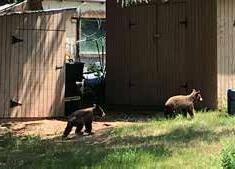
Today, conflicts have risen to the point where officers from the Durango area have had to set significantly more traps compared to the same date a year ago. CPW will not trap bears in every conflict situ-


Explore the stunning natural beauty of Pitkin County with our guided summer tours! Experience the serene landscapes, rich biodiversity, and unique conservation efforts that make our open spaces so special
Whether you're a nature enthusiast, a curious learner, or looking for a peaceful escape, our tours offer something for everyone Scan more upcoming Open Space tours
Temporary Rental Assistance Grant
The Colorado Department of Local Affairs recently implemented a NEW Temporary Rental Assistance Grant Program Residents of Colorado who are currently renting but at risk of eviction due to a substantial life event may qualify Use your smartphone to scan the code and learn more
Food Sites in the Roaring Fork Valley Pitkin County Human Services would like to remind everyone about food assistance options available in our valley This document has a list of food distribution sites, farmers markets, WIC retailers, and SNAP approved vendors The list is updated regularly https://bit ly/44E1GDz


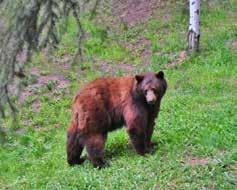
ation but will instead aim to start with an assessment of potential attractants, education, and discussions of ways to prevent conflict in the long term.
“We always want to intervene before it’s necessary to set a trap, but too often we are getting reports weeks after the initial conflict and once problems escalate to the point where human health and safety is at risk,” Archuleta said. “If we can get reports the first time there is an incident, we can proactively work to educate, remove attractants, and give advice on securing attractants so that a trap may not need to be set.”
During most years, bear activity ramps up in late summer and fall as bears enter hyperphagia; so the early conflicts already reported have wildlife managers concerned about the forecast for upcoming months.
“It’s weird because things are green, we’ve
had decent moisture and natural food is available, so it’s hard to explain why we are having so many issues,” Archuleta said. “But what we know is that it’s critical for people to call our office when they first start having conflicts with bears so we can try to solve issues before they become conflicts.”
Conflict in La Plata and Montezuma counties have primarily been centered around juvenile bears that likely have not carved out their territory in the high country or drainages. Conflicts in the high country have been relatively few, as there is a good supply of natural forage this year and conditions suggest a strong acorn crop in the fall.
But bears living in marginal habitats can lead to increased human-bear conflict, making it even more important for humans to remove attractants from their homes or keep a clean camp.

“Incidents start with a bear getting into one cooler at a campground, and then a few weeks later, we have a bear getting
into a tent or leaning on hard-sided campers,” Archuleta said.
Sound familiar?
“Or,” Archuleta continued, “you have a bear that gets into the trash, pet food left outside, or a bird feeder, and then a week later, bears are getting through screen doors and windows or walking into a house through an opened sliding door. The incidents people think are small – like that cooler or pet food – lead to behavior that presents a danger to human health and safety.”
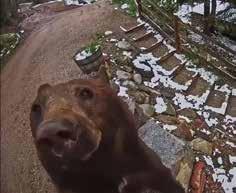
Issues elsewhere in the Southwest Region of CPW have been primarily related to livestock.
“We’ve had a lot of food-source issues so far,” said CPW Area Wildlife Manager Rachel Sralla out of Montrose. “We are really encouraging people to protect hobby livestock, even when it’s close to home, with electric fencing. Electricity is an excellent bear deterrent. Electric mats or ‘unwel-



come mats’ can help keep bears out of unattended cabins and homes.”
Kevin Bryan, District Wildlife Manager in Cedaredge, said it is up to all of us to do our part to keep bears wild and away from human development. He recommends always cleaning a BBQ grill after use, safely securing trash, and taking down bird feeders.
“When you live in a bear habitat, there should be an obligation to mitigate conflict. It’s not asking too much to get rid of or bring in bird feeders at night, including hummingbird feeders,” Bryan said. “Multiple people I have spoken with this year do not realize that bears are attracted to hummingbird feeders. Of course, trash remains our state's No. 1 cause of human-bear conflict. Making sure you are securing your trash and not putting it out on the curb until the morning of pickup is always the most important thing you can do.
“As this year is proving, just because you haven’t seen a bear in several years, doesn’t mean that one won’t show up this week and take advantage of a human food source. Make those food sources unavailable and a bear will move on.”
One concern CPW is aware of from the public is a reluctance to report bear activity over a belief it will lead to the bear being put down. Data shows that of the 3,526 reports wildlife managers received on bears in 2023, only 1.8% led to euthanization. The vast majority of conflict reports led to wildlife officers getting involved early enough to intervene, reduce conflict, and



To
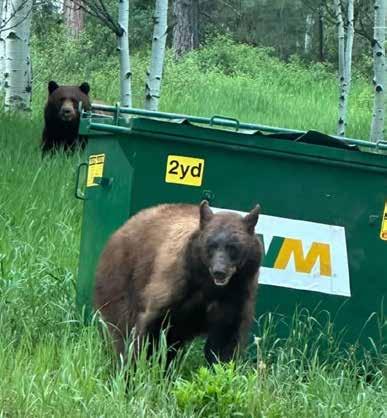
Colorado Parks and Wildlife reminds people to take simple precautions to avoid human/wildlife conflicts and help keep bears wild.


Bear-proofing your home:
• Keep garbage in a well-secured location. Only put out garbage on the morning of pickup.
• Clean garbage cans regularly to keep them free of food odors: ammonia is effective.
• Keep garage doors closed. Do not leave pet food or stock feed outside.
• Use a bear-resistant trash can or dumpster.
• Bird feeders are a major source of bear/human conflicts. Attract birds naturally with flowers and water baths. Do not hang bird feeders from April 15 to Nov. 15.
• Don’t allow bears to become comfortable around your house. If you see one, haze it by yelling, throwing things at it, and making loud noises to scare it off.
• Secure compost piles. Bears are attracted to the scent of rotting food.
• Clean the grill after each use, and clean up thoroughly after cookouts.
• If you have fruit trees, don't allow the fruit to rot on the ground.
• Talk to your neighbors and kids about being Bear Aware.
Cars, traveling and campsites:
• Lock your doors when you’re away from home and at night.
• Keep the bottom-floor windows of your house closed when you're not at home.
• Do not keep food in your vehicle; roll up windows and lock the doors of your vehicles.
• When car-camping, secure all food and coolers in a locked vehicle.
• Keep a clean camp, whether in a campground or the backcountry.
• When camping in the backcountry, hang food 100 feet or more from the campsite; don’t bring any food into your tent.
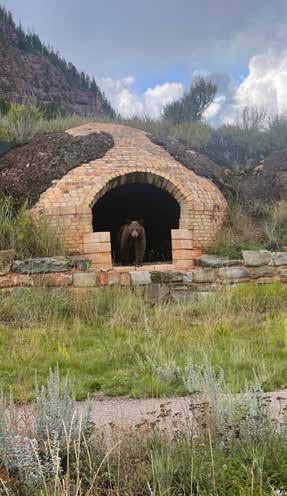
• Cook food well away from your tent; wash dishes thoroughly.
For more information on living with bears, visit cpw.state.co.us







Rushing on foot with a belly full of a pulled pork platter is probably not a good idea at the best of times (it’s not called Slow Groovin’ for nothing), but that was the state I found myself in as I made my way to the Marble Community Church Fellowship Hall on a truly splendid Thursday evening, a week later than usual due to the 4th of July holiday.
As it happened, I turned up a tad early, allowing some time for a pleasant little chat with Richard Wells. Many may know that Wells is responsible for many things around Marble, such as managing the campground. The campground is a popular summer tourist destination that now allows canine companions; it has been made all the more popular with Wells’ friendly and welcoming demeanor. The site looks to be having a good season, which is a credit to Wells and his hard work. We enjoyed a few minutes relaxing together on the Marble benches in the Church’s idyllic shadowed gardens.
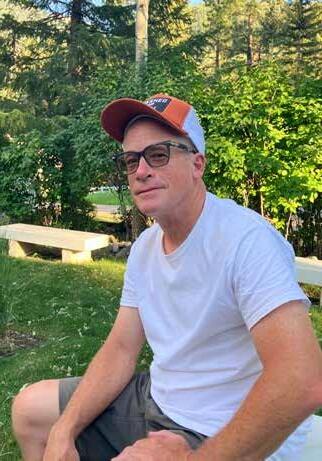
July’s meeting came hot on the heels of an Executive Session, which had begun only an hour before the regular Trustees' meeting. This was called in the aftermath of June's working session held at the Redstone Inn between the Marble Water Company (MWC) and the Town of Marble, at which the MWC presented a new proposal to provide Town water to East Marble. Gentrye Houghton, The Echo’s cherished editor, attended that meeting in June and published a detailed editorial in the July edition of the newspaper.
The meeting raised several questions from Marble residents, so it was fortunate that Tom Williams, one of the board members of the MWC, attended the Town Council meeting to address some of the concerns regarding the Company’s plans. On top of the tasty pork platter, I figured I’d need a Squirt or two to get me through this one, and fortunately, the cavernous fridge obliged. Word Up to Marble’s generous Church Pastor, Mike Mackenzie, and his cohort of assistants for keeping the fridge well-stocked and the Sugar Monkey functional.
The panel of Trustees was present in its entirety. From left to right; Dustin Wilkey, Mayor Ryan Vinciguerra, Amy Rusby, Amber McMahill, and Larry Good, Mayor pro tem. The Town’s administrative team of Ron Leach, Alie Wettstein, and Terry “El Tel” Langley sat poised for action. In addition, I counted ten or so residents in attendance.
After a warm welcome from the Mayor, the discussion quickly moved on to the potential agreement to fund an extension of MWC’s infrastructure to the East of Marble. The following is a summary of the answers and information furnished by Tom Williams of the MWC both at the Town Meeting on July 11th and from notes taken from a subsequent meeting I had with him a few days later. The Board of Trustees, having freshly emerged from their Executive session, were mostly silent and all the questions to Williams came from residents.
The MWC has been offered a loan by the US Department of Agriculture to expand its main water lines into East Marble and to connect two existing lines in West Marble. The net result of the project (if completed), will be to connect two fully enclosed loops of the entire water system within the Town’s limits.
The term of the proposed loan needed to complete the project is 40 years, carrying an interest rate of 2.125%.
The USDA estimates the project budget at $1,650,000 of

The Marble Town Council meets on the 1st Thursday of each month starting at 6 p.m. in the Marble Community Church’s Fellowship Hall.
which they (the USDA) are making a grant to the MWC of $455,000. The MWC has already committed $37,000 of its funds to the planning phase, leaving a balance of $1,158,000 to be funded by the loan.
Williams explained that the MWC, with its current roster of 75 existing tap holders (with a total of 90 taps) would be unlikely to be able to service the full amount of its obligation to the USDA without the financial assistance of the Town. The MWC therefore proposes to enter into an agreement with the town such that each party shoulders 50% of the debt burden.
It is worth noting that the MWC owns the existing infrastructure but leases its water rights from the Town. This lease, dated October 1983 and signed on behalf of the town by then Mayor, Charley Parker, is due to terminate on August 8th, 2028, at which time the Town of Marble will (subject to legal interpretation - see below) regain full control of the Town’s water rights. The current loan entered into by the Town to finance the initial build-out of the existing infrastructure matures in 2043 and, as of June 2024, has an outstanding balance of $238,000. This loan is fully serviced (both interest and principal) by an annual charge of $130 levied against each of Marble’s 225 property owners, regardless of whether they have access to town water or not.
The USDA provides loans to rural communities to address health and safety concerns. Williams estimates that the proposed extension will add five or six new fire hydrants to the Town and relieve the burden on those residents reliant on wells with unsafe drinking water. Mayor Vinciguerra, who serves up MWC’s water to his customers at the Slow Groovin’, attested to its good quality, which is tested by a third party every three months.
While the 2.125% interest rate of the USDA loan is optically very attractive compared to current Federal overnight rates of around 5.25%, the question arises of whether the Town itself could access even cheaper funding via a combination of grants and loans using its municipal status. Currently, Federal and State funds for infrastructure development are readily available; Marble residents have, for example, benefitted from the recent rollout of broadband internet service, financed for the most part with government funds.
So what would be the cost of the MWC’s proposed new scheme?
Town of Marble meetings are open to the public. 2024 Meeting Schedule New Time: 6 p.m. Aug 1st Sept 5th Oct 3rd
toWn of MaRBle continued. . .
Existing tap holders pay a $65 monthly service fee to the MWC plus an annual assessment fee (which goes to service the existing loan) of $130, a total cost of $910 per annum. Under the new scheme, the monthly service fee would increase to $92, and the annual assessment to $260, increasing the total outlay to tap holders to $1,364 per annum, an increase of $454. For those property owners not on Town water, the annual assessment fee would increase from $130 to $260. Should a resident wish to buy a new tap, the cost is currently $7,500.
The MWC’s terms and conditions for those considering tying into the existing service stipulate that any excavation work must be undertaken by an “approved” contractor. Currently, the only excavator to be designated as such is PifCo. Although other contractors may be approached to do the work, each has to be bonded and insured (to the tune of $2,000,000) and the MWC has the final say on who does the work.
To summarize, the MWC’s proposal in its current form would increase the debt burden of the Town of Marble by a further $579,000 for 40 years. Although Williams was keen to point out that the median income of Marble residents has doubled in the ten years to 2020, the additional cost of the MWC’s scheme will add to the financial strain being experienced by residents already reeling from large property tax hikes and is likely to be particularly felt by retirees, many of whom rely on a fixed
The
In addition, it is not clear where any future financial liability will lie for fixing issues with the infrastructure, and the proposal in its current form seems to saddle the Town with an increased debt burden without the promise of a share in revenues. Excavation costs may also be artificially elevated due to a near monopoly situation that exists on approved providers. On the plus side, few can argue with the increased fire protection offered by the provision of new hydrants, and those with undrinkable water and the money to buy a tap and pony up for the excavation work will undoubtedly benefit.
I walked the proposed path of the new pipeline and counted roughly 20 properties within the connecting distance of the proposed new infrastructure. A few of these already have access to Town Water and some of those on wells will be happy with their current situation, although there are a few who would greatly appreciate an upgrade. Williams admitted that the MWC had yet to conduct thorough market research to ascertain the precise demand for their proposed extension of service.
Finally, Legal-minded readers might be interested in the termination provisions of the 1983 lease that conferred the Town’s water rights to the MWC. Section 2 of that lease reads:
“The term of this lease shall commence at midnight on August 8th, 1983, and terminate at midnight on August 8th, 2028, or for such an additional period of time as shall be required for the lessee (MWC)
Mission Statement: To provide a voice for the residents of the Crystal River Valley; to bring attention to the individuals and local businesses that are the fabric of the Crystal Valley region; to contribute to the vitality of our small town life.
Gentrye Houghton gentryeh@hotmail.com
DJ Sugar Monkey
Amber McMahill
Ryan Kenney
to fully discharge any obligation it may have to the United States Department of Agriculture, Farmers Home Administration, or any successor to it.”
The Town of Marble Board of Trustees may well wish to seek a legal opinion on the enforceability of the 2028 termination date of this lease should any future loan agreement be entered into with the USDA.
In other business, there was a public hearing to review the application for the construction of an Accessory Dwelling Unit (granny flat) made by Abby Eygle for her property opposite the Raspberry Ridge Café and Inn at the West end of town. Eygle had come meticulously prepared with building plans and drawings which appeased her neighbors and elicited praise from Larry Good who opined, “I always like it when people come to these meetings better prepared than me.”
Ron Leach then provided an update on the Jailhouse restoration project being championed by former Trustee Emma Bielski. He reported that the foundation plan drawing had been completed and signed off and agreed upon by the building inspector, and that he (Leach) was now ready to issue the building permit, but that there were still various budget items that required greater clarity before the work could begin in earnest. Bielski and her husband Mike Yellico are aiming to break ground on August 15th, although Leach emphasized that there was still a “lot to get done” ahead of that date.
Approval was granted for the renewal
application of the Slow Groovin’s liquor license and that of the Raspberry Ridge Café was tabled pending a review of the documents. The need for a special counsel engagement letter for the Town was also discussed with Mayor Vinciguerra pointing out that for its protection, “the Town needs to lawyer up for human resources issues.”
The next Town of Marble Board of Trustees meeting will take place at the new (to be regular) time of 6 p.m. on Thursday, August 1st at the Marble Community Church Fellowship Hall.
DJ Sugar Monkey is the host of “Snack Time” every other Thursday after- noon from 12-2 p.m. The music show features mostly jazz with a mix of funk and, according to DJ Sugar Monkey, a "smattering of world music thrown in, mostly from Africa." You can find him on KDNK (88.1 FM), Carbondale’s public access radio that connects community members and the world.

The Crystal Valley Echo is published monthly, and is distributed throughout the Crystal Valley.
NEWSPAPER BOX LOCATIONS:
Third Street Center • Village Smithy Carbondale Post Office • Carbondale Park & Ride
The Marble Hub • Redstone General Store








By Luna Schachter, 4th grade
Sea turtles are amazing creatures! Many of them have been around since the dinosaurs. The biggest sea turtle is the Leatherback, and they can be up to 2000 pounds and their shells can be 7ft wide. But these amazing creatures are in danger. Most of the sea turtles' threats are caused by humans. So we can make a big impact.
One of the big threats for the sea turtles is fishing. Normal fishing with a rod doesn't harm the sea turtles at all, but the big fishing companies are bad. Longline and trawl commercial fishing can kill over 650,000 turtles a year. When big nets drift behind boats, sea turtles can swim into the nets and get stuck. Most sea turtles can only stay underwater for 30 minutes up to 1 hour. The highest time a sea turtle can stay underwater is for 5 hours, but fishing can take so long, so unless the fisherman pull up their nets every 30 minutes to an hour the sea turtles will drown. Some ways we can help in this situation is by using circle hooks instead of J hooks. TED (Turtle Excluder Devices) are much safer nets, but most companies don't use them. So please try to support companies that do.
This second threat points to the baby sea turtles. After a little baby sea turtle has hatched they will dig their way out of the sand at the dead of night and follow the moon light to the ocean. Artificial lighting can look a lot like the moon so the baby sea turtles might wander off in the wrong direction. If the baby sea turtles go the right way to the ocean there are more obstacles. This might sound silly but a sand castle or a hole that you made at the beach will seem massive to a little sea turtle. So if you go to a beach and dig a hole
or build a sand castle, fill in the holes and wreck your sand castle. Next time you go to the beach please leave the beach how it was or even better.
Another big reason sea turtles are in danger is because they are eaten in lots of countries. Many of those countries consider turtle meat as a delicacy and eat turtle on special occasions or holidays. At night, poachers scope out the beach for female sea turtles who are laying their eggs. Some of the poachers will take the meat of the female, and others will take just her eggs. Sadly, there aren't any laws against poaching in most countries.
This last threat is the biggest threat to sea turtles- marine debris and plastics. This threat can kill 1 million ocean creatures including sea turtles. There are 100 million tons of plastic in oceans around the world. Plastic moves from place to place like wildfire. Plastic washes out from storm drains, beaches, streets and highways. Plastic even the size of a fingernail can kill a sea turtle. Plastic can also lead to trapped gasses, which cause sea turtles to float and not be able to catch their prey. This is called bubble butts. So if you go to the beach and sea plastic or trash on the sand do a big favor to the sea turtles and pick it up.
Sea turtles bring diversity to marine life. They are also responsible for cutting down sea grasses, which allow many marine animals to flourish and survive.
Imagine you were a sea turtle and your kind was dying every day. How would you feel, when all you do is help sea life? So try to help these creatures in any way you can.



All content sponsored and provided by the Redstone Historical Society.
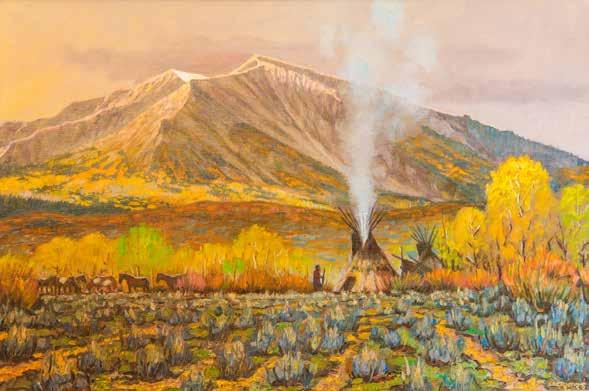
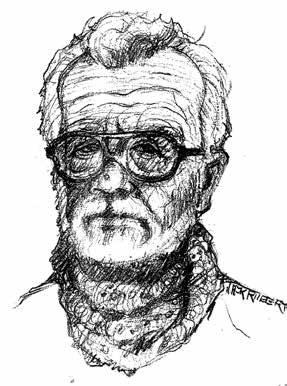
Jack painted the truth and legend of Colorado frontier history. Raised in Oklahoma, he came to Colorado to be a cowboy. Based on these experiences, he began his lifelong art career. In 1969, he built his Redstone studio where he painted for 31 years, turning out as many as 50 paintings a year depicting the frontier spirit. His paintings are in the Anschutz Collection, the Museum of Western Colorado, Redstone Castle, and many private collections. Gary Miller, his son, shares his insight into Roberts' artistic career.
By Gary Miller
Jack Roberts always knew he could draw. As early as 8 years old, possibly earlier, Roberts was drawing detailed cartoons. The characters all had speaking parts. These were done in a cartoon style, and the story theme was usually about crimes being solved. These might have had a 1930s theme, or they might have been stories of the Old West. But they were amazing. Trust me, these were not stick figures. He could draw people from many angles, and they seemed to all have names.
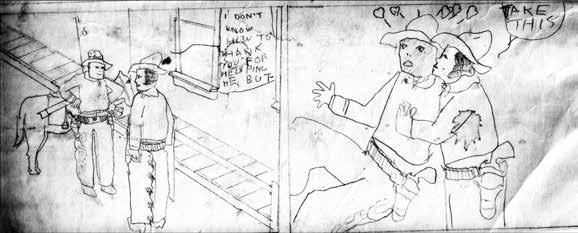
One example of Roberts' early artistic skills was a grade school experience. He was in a class where they were possibly studying biology. Without warning, the teacher asked Roberts to come up to the chalkboard and draw a grasshopper, which he did with accuracy. Without a doubt, you could probably even see the little spikes on the grasshopper’s legs. I bet all of Roberts' teachers knew that he could draw just about anything.
So, this is a good time to point out something about gifted artists. After college in Oklahoma and while back east attending a couple of art schools, Roberts also studied under the great Harvey Dunn. He idolized Harvey. One of the many things that Dunn taught, Roberts had already been using for years. Dunn taught that “it was more important to paint from imagination!” Roberts already had this ability, but this helped emphasize it. He could paint Mt. Sopris, for example, from memory, just like he was looking at a photograph.
Roberts continued to draw cartoons well into his adulthood. Oil paintings were his main focus and occupied most of his time. But sometimes he could not help but express his frustrations. He often expressed his humor with drawings of things he thought were funny, things he experienced. But his artistic editorial expression was in full bloom for the local newspaper. These were very controversial, and usually, they were about political and environmental subjects.



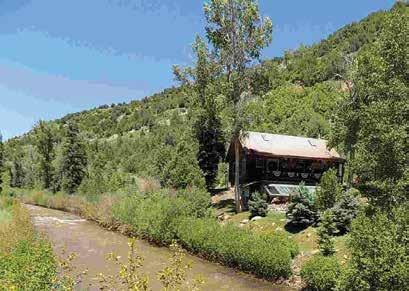
9 ACRE CREEKSIDE LOCATION
32 miles from Carbondale over McClure Pass
$850,000
2136 sf log home, 3BR, 2 BTH, art studio, 30x40 shop, 3 car carport, horse pastures




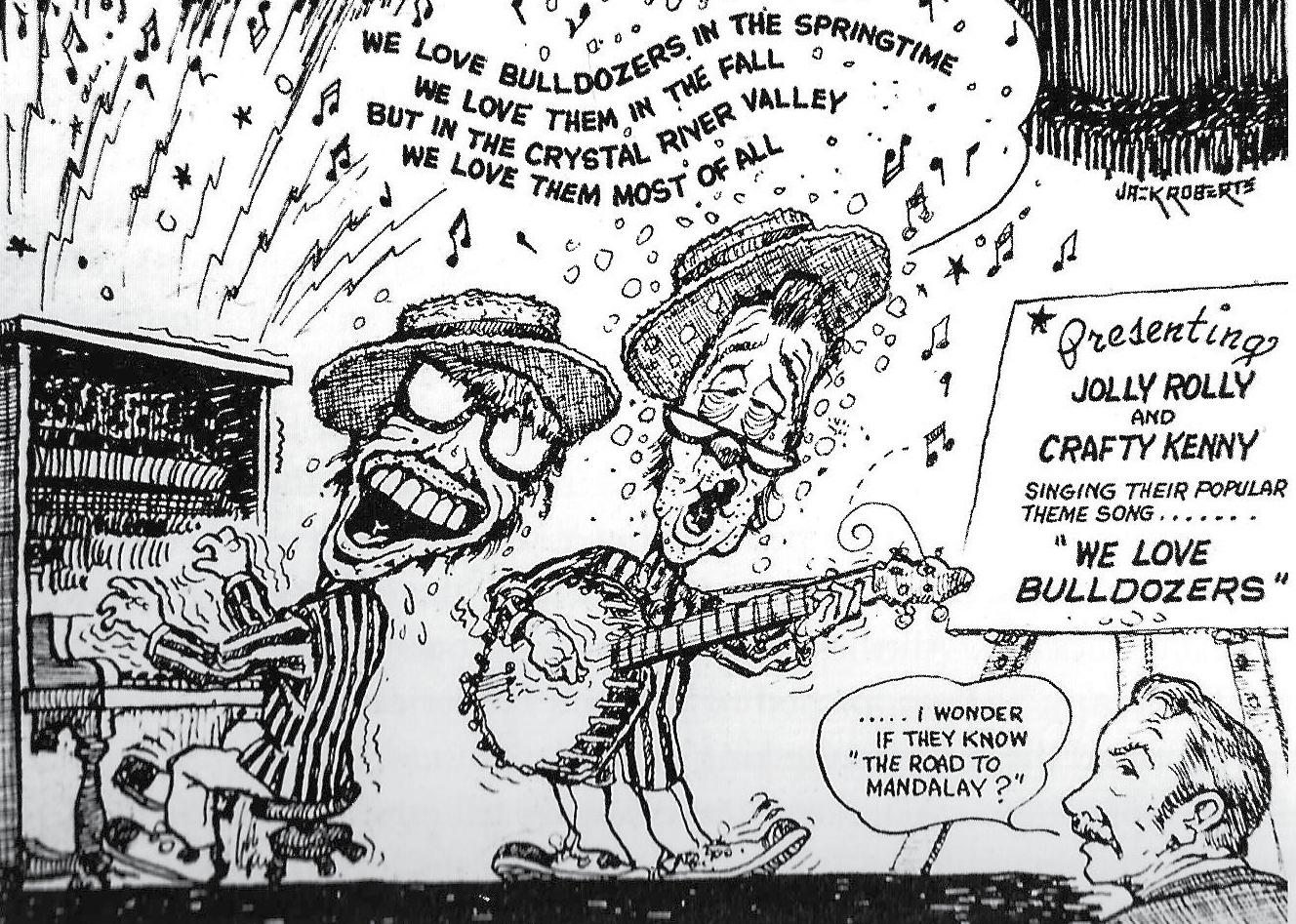
Two major issues he took on were the proposed Marble Ski Area Development and the Placita Dam/West Divide Water proposal. Both threatened the outdoor environment along the Crystal River, and both became targets of his satirical cartoons. Real names became recognizable spoofs: Crafty Kenny, Jolley Rolly, & Shifty Scotty. Although the cartoons provoked anger in some circles, they were also credited with making effective points against the developments. The Crystal Valley Environmental Protection Association (CVEPA) still uses some of these cartoons.
Roberts' oil paintings demonstrate his artistic abilities in many ways. But his early drawings and later cartoons best reveal his quick wit and delight in expressing his convictions.
RHS’s note: Gary Miller’s personal accounts of his father’s work capture the artist’s exuberant personality. Jack meticulously researched the historical background of his work and kept a copious collection of photographs, correspondence, clippings, and early drawings in his studio. Gary has been very generous in sharing these for research purposes. For additional information on Jack’s work, see F. Darrell Munsell, Colorado Artist Jack Roberts: Painting the West, available at the Redstone General Store.
We can’t do it without you. In an economic climate where many established news outlets continue to scale back or close, your support goes directly to writers living in the Crystal Valley!


Considering signing up for a subscription, $60 for print or $35 for digital, or making a monetary contribution online or by sending a check to
CO 81623
SATURDAY, AUGUST 31
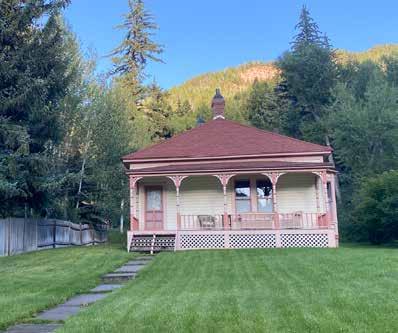
With the blessing of Tony and Ashton Durrett, Redstone Historical Society President Jeff Bier has been working behind the scene to acquire the Durrett House as a museum.
According to Pitkin County Historic Preservation Officer Suzannah Reid:
”The Durrett House at 138 Redstone Boulevard is an unaltered example of an Osgood Era cottage ... the Durrett family has been careful stewards of the property since the 1940s ... This is an amazing and timely opportunity for the Redstone Historical Society and hopefully a way can be found to facilitate this acquisition.”
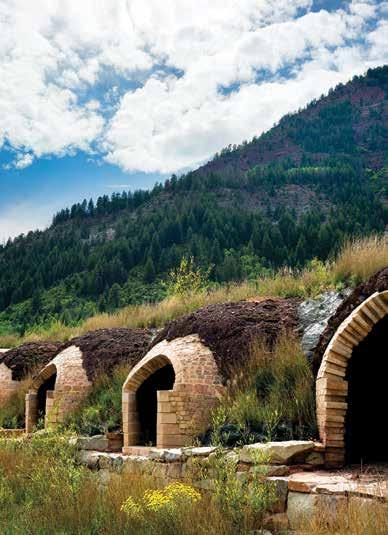
At the Redstone Inn Redstone programs are open to all! RSVP: (970) 920-5432
AUGUST 13 & 27
• 12:00 p.m. – Lunch ($10)
RSVP by noon the Friday prior – space is limited. Plated lunch will be served. There will be a gluten-free option.
• 12:45 p.m. – Program
Aug. 13: Magical Storytelling with Doc Eason
Hear anecdotes you’ve never heard before and relive memories you don’t want to forget. Doc will sprinkle in some magic — but you’ll have to bring your own drinks. He’ll read excerpts from his new book—Cocktails & Doc Tales.
Aug. 27: Plant ID with Sheehan Meagher
Take a walk outside to learn first hand how to identify the many local medicinal and edible plants. Both native and non-native species will be covered. We’ll look to meet: Mullein, wild mustards, Horsetail, Aspen, Serviceberry, Chokecherry, Yarrow, Dandelion, and many more!



Sat. June 22 • 6-8pm