





From Gentrye Houghton
The Town of Marble Board of Trustees meets monthly in the Marble Community Church's Fellowship Hall to discuss a litany of issues facing the governing body. From land use and zoning to acquisitions, new business, and a bustling parks committee, here’s a look at some of the major themes discussed in 2023.
At the tail end of 2021, a last-minute heroic effort by CVEPA resulted in 55 acres of precious wetlands being protected from development and entering the public domain. The Marble Wetlands runs along the back side of Beaver Lake and the Crystal River. As the site of the old Hoffman Smelter, it was a tricky and, at times, nail-biting tale to get it to a new owner. The Trust for Land Restoration stepped up and took ownership of the donated property and worked during the warmer months of 2022 to clean up the somewhat toxic smelter site.
Discussions began early in 2023 regarding transferring the ownership of this property, now owned by Aspen Valley Land Trust, to the Town of Marble by the end of the year. However, as the leaves began to change, hiccups began to ensue and the year culminated without transfer. Town attorney Kendall Burgemeister highlighted that the property is not located within the Town of Marble boundary but the Town, nevertheless, would be expected to manage the land with no enforcement capability. Other legal concerns remain about the details of the management agreement and, not least of these is, the issue of who would be responsible for taking out the necessary insurance policy required for the area.
Discussions continued over the last year in the assumed control of the Marble Water Company; Marble is one of only a tiny handful of towns in Colorado in which all the utilities are not run by the Town itself. The Water Company was established in 1979 by a small group of families under the Town’s jurisdiction, and the two have enjoyed a good working relationship over the last twenty-five years. The Town owns all the water rights and takes responsibility for the collection of the annual dues used to pay down the original loan taken out by the Company. However, there was much discrepancy between the two parties in the expected amount to be paid; negotiations continue into 2024.
The potential transfer of the Historic Marble Bank building (home to The Marble Hub) began last October. Administra-

The Marble Town Council meets on the 1st Thursday of each month starting at 7 p.m. in the Marble Community Church’s Fellowship Hall.
Town of Marble meetings are open to the public.
tor Ron Leach explained that there had been a discussion about The Hub building (currently owned by Gunnison County) during the August County Commissioners meeting. However, it was reported that the County had deferred much of the maintenance needed over the past several years and the Town would be on the hook for all necessary repairs upon transfer. While the council expressed concerns, Leach is continuing the conversation with the County since the entire Board seemed interested in potentially acquiring the building.
It has been 22 years since Marble last updated its Master Plan; in 2023, the Town took on the process of updating the plan which should be finalized in the coming year. A facilitator was put out for formal bid last spring, and the Town appointed Mark Chain of Mark Chain Consulting, LLC., to take on the task. A stakeholder group capped at 14 members held their first meeting in May. The themes being addressed are land use, staffing, parks and rec, capital projects, roads and bridges, annexations, financial development, infrastructure, and enforcement; the committee identified infrastructure (in particular water), taxation, enforcement, and environmentally sensitive growth as major issues and sent a survey out to residents this past summer.
Speaking of land use, land use and zoning were a major topic of discussion for the Council in 2023, particularly an application from Dustin and Samantha Wilkey with the Crystal River Jeeps Tours. While the issue first reared its head in 2022, the Wilkeys once again approached the board in March regarding their request for a zoning change to the property they intended to develop at 575 Park Street with a three-bedroom home as well as an office to run the long-standing tour business. Ultimately the discussions erupted over mixed-use allowances
under Marble’s current master plan with many a resident voicing both support and concerns for such during public hearings that began in April; the issue continued to be tabled month after month as the council was hesitant to make a decision with Marble Master Plan update process under way. The Town lifted its stopwork order in June, yet discussions continued into the fall. During the Trustees’ September meeting, the Wilkeys pulled their zoning application in an act that visibly shocked attendees, Town Staff, as well as Council members; although, that didn't squash the discussion of Marble’s mixed-use zoning issues and the need for employee housing.
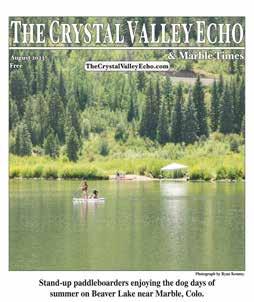
Last spring, there was broad consternation at the Colorado Parks and Wildlife’s proposed restrictions around usage of Beaver Lake, to the East of Marble. CPW proposed a broadbased ban on recreational activities including dog-walking, bicycling, and all on-water recreation not actively linked to fishing, at the time, all activities already require a hunting or fishing license.
Cyndi Fowler expressed her indignation at the proposed changes, highlighting the threat to Marble sales tax receipts from her stand-up paddleboard business. CPW allowed a narrow window courting public opinion, in which the Marble community’s voice comprised just over a quarter of the comments received. Both Fowler and her daughter, Jaime Fiske, expressed their skepticism over CPW’s desire to take better care of the Lake, and their apparent failure to enforce their rules and regulations in the past.
Ultimately, the regulation went into effect for all State Wildlife Areas (including Beaver Lake) on August 1st, which stipulates the use of the properties for “fishing purposes only.” John
January 4th February 1st March 7th
town of MaRBle continued...
Groves with CPW attended the Trustees’ September meeting to address issues surrounding Beaver Lake specifically.
He explained that the level of activity on the lake is of such high use that the banks are now eroding. Things have now come to a head and restrictions needed to be put in place. CPW has a clear mandate to protect parks and wildlife and, according to Groves, the organization was in danger of straying away from that mission.
Groves said that CPW remained open to listening to management options for Beaver Lake, but when quizzed by Mayor Ryan Vinciguerra about potential future non-compliance with the CPW’s new rules, Groves replied, “We will step up enforcement in the face of noncompliance.”
This recap simply discussed major themes addressed throughout the year during the Town of Marble Board of Trustee meetings, and many issues did not make the cut due to space constraints. Marble Trustees are comprised of a board of volunteers taking on a variety of issues; meetings are held at 7 p.m. in the Marble Community Church’s Fellowship Hall on the first Thursday of every month and agendas can be found before the meeting by visiting www.townofmarble.com
A huge shout out to The Crystal Valley Echo’s regular contributor DJ Sugar Monkey for braving these long-winded, democratic meetings and bringing these issues to light for our readers!
& Marble Times
Mission Statement: To provide a voice for the residents of the Crystal River Valley; to bring attention to the individuals and local businesses that are the fabric of the Crystal Valley region; to contribute to the vitality of our small town life.
EDITOR AND ADVERTISING SALES
Gentrye Houghton gentryeh@hotmail.com • (806) 374-0055
CONTRIBUTORS
DJ Sugar Monkey
DISTRIBUTION
The Crystal Valley Echo is published monthly, and is distributed throughout the Crystal Valley.
NEWSPAPER BOX LOCATIONS:
Third Street Center • Village Smithy Carbondale Post Office • Carbondale Park & Ride
The Marble Hub • Redstone General Store www.thecrystalvalleyecho.com




We can’t do it without you. In an economic climate where many established news outlets continue to scale back or close, your support goes directly to writers living in the Crystal Valley! Considering signing up for a subscription, $60 for print or $35 for digital, or making a monetary contribution online or by sending a check to
Redstone Art Foundation's Annual Holiday Market along the Redstone Boulevard went off without a hitch on a beautiful wintery Saturday early in December.
Starting at the Redstone Inn, patrons were able shop and stroll to Crystal Dreams Bed & Breakfast taking in the old-fashioned ambiance and picking up unique holiday gifts while shopping locally and supporting thirty-five community artists.







You prioritize your health. Your HSA is there when you need it. And when you don’t? You watch both your family — and your savings — grow.
A Poem by N.B., October 2023
A vision
It was my first
A small yet wide man in the shape of a messy triangle
He was biking towards me I saw him clearly on the road that passes the one-room schoolhouse on the corner
He was biking towards me wearing a navy blue coat, European in style, the bike as well
My heart was afraid to leap, and so, in that moment, he was gone disappeared into the ether that had illuminated him
I saw him as sure as this primavera dia en Colonia, en Uruguay, a la
estancia de Pablo, mi novio a la escuela de los Estados Unidos cuando nosotros éramos jóvenes, veintisiete años, cincuenta-dos ahora
Where is he now?
Must be in la sala, a separate building in the center of the farm
We are finished with almuerzo, carne, por supuesto
Toh-mah-to Toh-may-to
Jorge, the manager of agricultura, with Jewish roots, his father’s side, Polandic - Polish - roots, only one letter differentiates our surnames, sits to the left of me.
The table is a giant trunk of a Redwood tree that once stood at the en-
trance to the estancia — cut now to sitting length’s height, adorned with attached glass mats, squirmy and nebulous in shape.
We are eating here.
The man of the estancia has returned. I am finished with my lunch now? he asks, suggestively.
La vida es extrano, I say to Carmen, the server, the maker of jam, when we are alone.
She does not understand that I am trying to say in Spanish that, “Life is strange.”
All she can understand is tranquila, that life is tranquil, peaceful, quiet here.
That’s not what I meant. What I meant to say is that life is strange, unexpected, raggedly circular, but I must have the wrong word, or pronunciation.
Strange — yet also similar — Concurrently familiar I know this man well, very well (or so I believe)
How is it possible… posibile?
How is it possible that this life is so familiar, that he is so familiar? (could it be real?)
Our school changed his life, his daughters tell me. Not that he would say so, they interpret, but that’s what they have inferred.
Once a man enters, he remains.
learn more CrystalWild.org
The Crystal River has been part of my life for the nine years since I moved here and I grow to love it more each day. My hope is that it can remain free flowing and undisturbed so that the beauty of the river and the sound of moving water can be part of the lives of future generations.”

This is how it’s impossible to no longer know, this is what this moment has shown me,
and, also, y también posibile to know for sure.
On second thought, I wonder,
perhaps Carmen did understand, and I was the one who was not understanding her, perhaps what she was explaining to me was that the peaceful, tranquil life, this life, on this quiet farm, that is what’s strange as strange, if not more so, than the idea of life itself.
(did it even happen at all?)
From Colorado Parks and Wildlife

“Today, history was made in Colorado,” said Colorado Governor Jared Polis on December 18th. “For the first time since the 1940s, the howl of wolves will officially return to western Colorado.
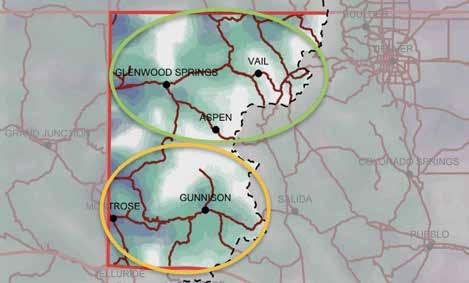
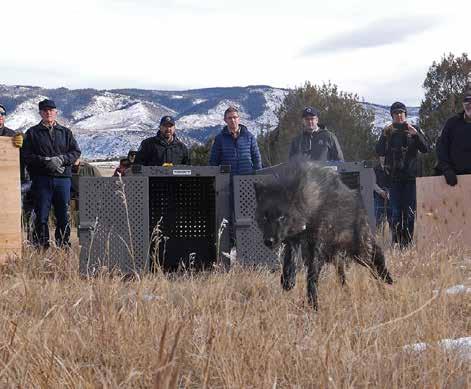
Last month, Colorado Parks and Wildlife (CPW) experts released an initial five gray wolves onto public land in Grand County. Less than a week later, another five gray wolves were again released onto the Western Colorado landscape in an undisclosed location. This is a historic effort to create a permanent, self-sustaining wolf population and fulfill voter approval to re-establish gray wolves in Colorado.
Polis told the Associated Press last month that, wolves “have larger-than-life places in human imagination, in the stories we all grew up with and tell each other. To see them in their natural habitat, and turn around to look curiously at us is really, really a special moment that I will treasure for my entire life.”
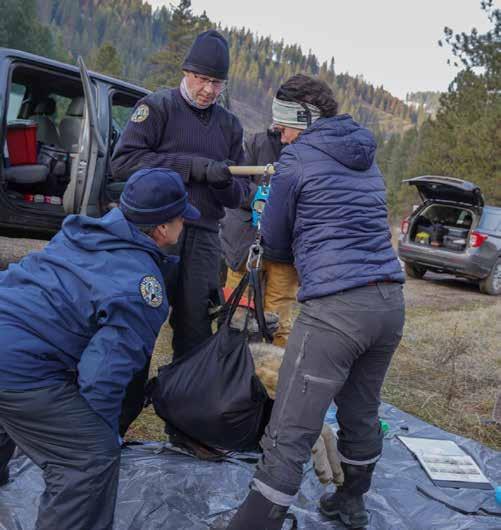
The gray wolves were captured in Oregon where CPW veterinarians and biologists evaluated them to determine if they were fit for relocation to Colorado. Criteria for release included the age, sex, health, and body condition of each animal.
Colorado Parks and Wildlife biologists were careful to select yearling and adult wolves that are mature enough to hunt prey on their own. Wolves are typically born in April of each year, and a wolf that was born in April of 2022 would be almost 20 months old now. That animal is called a yearling. That animal is capable of hunting on its own. Yearlings were candidates for translocation and the majority of the animals CPW translocated were yearlings (previously termed “juvenile”).
“It was an honor to participate in this historic effort,” said CPW Wolf Conservation Program Manager Eric Odell. “We were thrilled to have great conditions for capture and early success in Oregon. Weather conditions and information on pack locations provided by Oregon Department of Fish and Wildlife staff combined to help us capture five gray wolves on day one of the capture operations in northeast Oregon and release them [in December] on Colorado’s Western Slope.”
Each gray wolf was weighed and measured. Staff collected genetic material — tissue and blood samples — before fitting each with a GPS satellite collar for tracking upon release. Then, the wolves were given vaccines, placed in crates, and flown to Colorado for release back into the wild.
“Pulling off a successful first wolf release in Colorado touched all corners of our agency,” said CPW Aquatic, Terrestrial, and Natural Resources Assistant Director Reid DeWalt. “This has been two years of work to approve the plan plus another year of work to secure our first source population and get us to this release day. We are grateful to the Oregon Department of Fish and Wildlife for working with our agency on an agreement for up to 10 wolves and for all the CPW staff who contributed to this historic day.”
As outlined in the Colorado Wolf Restoration and Management Plan, CPW hopes to release 30 to 50 wolves over the next three to five years using wolves captured from nearby northern Rockies states from several different packs by trapping and darting them in the winter.
Gray wolves are listed both state and federally as an endangered species in Colorado by the U.S. Fish and Wildlife Service (USFWS). The USFWS has designated the Colorado wolf population as Experimental under Section 10(j) of the Endangered Species Act. This provides management flexibility that would otherwise be prohibited.
“We want to thank the U.S. Fish and Wildlife Service for their work to complete and approve the 10(j) designation that lists wolves in Colorado as a nonessential, experimental population,” said CPW Director Jeff Davis. “This helps us to follow all of the conflict mitigation plans we accounted for in the final Colorado Wolf Restoration and Management Plan. Having the rule in place in early December helped CPW to stay on track to reintroduce wolves in 2023 with the ability to use the appropriate management tools. We’ll continue releasing animals based on our plan to have wolves not just survive but thrive in Colorado as they did a century ago.”
CPW’s reintroduction program builds on work started by the USFWS in 1995
• Available for ages 6 months and up
• Formulated to fight this season’s Flu & Covid variants.

• You can receive your Flu and Covid vaccines at the same time.
• Covered by most insurance.
Find vaccine locations at PCHealthNews.com or scan here:



when that federal agency began restoring gray wolves in the Western United States, starting with an experimental population released in the Yellowstone National Park area located in Montana. Wolf reintroduction efforts eventually spread to Wyoming, Idaho, New Mexico, and Arizona.
The Oregon wolves released represent CPW’s determination to fulfill the wishes of Colorado voters who, in 2020, directed the agency to begin reintroducing wolves by December 31, 2023. The new wolves will be managed by CPW using the Colorado Wolf Restoration and Management Plan, approved by the CPW Commission in May 2023, after more than two years of extensive statewide stakeholder meetings and outreach via a series of public hearings.
“The return of wolves fulfills the will of voters, said Governor Polis, “who passed an initiative requiring the reintroduction of wolves. What followed were three years of comprehensive listening and work by Colorado Parks and Wildlife to draft a plan to restore and manage wolves that included public meetings in every corner of the state, was inclusive of all points of view, and weighed the needs of a wide range of communities with a deep interest in the thoughtful outcome of this effort.”
He continued, “I am proud of the Colorado Parks and Wildlife staff for their hard work to make this happen. The shared efforts to reintroduce wolves are just getting started and wolves will rejoin a diverse ecosystem of Colorado wildlife.”
Ultimately, CPW plans to recover and maintain a viable, self-sustaining wolf population in Colorado while balancing the need to manage interactions between wolves, people, and livestock.
This project marks another milestone in the long CPW tradition of species recovery in Colorado. These include the black-footed ferret, one of North America's rarest mammals, the 1999 effort to reintroduce the lynx, the Rocky Mountain bighorn sheep, the greenback cutthroat trout, and many more.
“[December’s] reintroduction of the gray wolf is a tremendous accomplishment for Colorado Parks and Wildlife and the citizens of Colorado,” said Dan Gibbs, Executive Director of, the Department of Natural Resources. “This would not have been possible without the tireless work of CPW staff and the Parks and Wildlife Commission, the members of both our advisory boards, and the citizens and stakeholders who engaged and weighed in to make our wolf management plan the best for all Coloradans and for wolves that once again grace our Colorado landscapes.”
ResouRces foR the agRicultuRal coMMunity
Colorado Parks and Wildlife staff will conserve and manage wolves in concert with the rest of our state’s native wildlife. That will involve active management to address conflicts between wolves, people, livestock, and other wildlife species.
When wolf-livestock depredations occur, CPW will work closely with ranch-
ers and the U.S. Fish and Wildlife Service to recommend approved hazing methods. Some methods include, but are not limited to carcass management, physical barriers (i.e., fencing and electrified fencing), guard animals, auditory and visual scare tactics (i.e., fladry, lights, or sirens), and increased human presence/vigilance.
CPW and the Colorado Department of Agriculture (CDA) signed a Memorandum of Understanding (MOU) in November 2023 outlining how the agencies will collaborate to manage the reintroduction of gray wolves and work to prevent wildlife and livestock conflicts. The MOU will help the agencies to coordinate in support of Colorado's livestock and landowner communities in advancing non-lethal predator management and help prevent wildlife and livestock conflict.
CPW personnel have received wolf-livestock depredation field identification/ investigation training from Wyoming Game and Fish. CPW personnel are also skilled in identifying/investigating livestock depredations caused by other depredating species.
On December 22nd, Colorado Parks and Wildlife (CPW) experts announced that they’d completed capture work in Oregon, finishing their work in the state. As a result of the CPW team’s work in Oregon, the agency released a total of 10 gray wolves onto state-owned public land in Summit and Grand counties. This total completes the agreement with Oregon for the December 2023 — March 2024 capture season to provide up to 10 wolves to Colorado — no further releases are planned this calendar year.
“We are grateful to the Oregon Department of Fish and Wildlife for working with our agency in providing these 10 wolves,” said CPW Director Jeff Davis. “We have now completed our work in Oregon by capturing those gray wolves per our agreement with ODFW. We will continue our plan to release animals for the next few seasons in order to ensure that wolves don’t just survive but thrive in Colorado as they did a century ago.”
If you’re interested in learning more about wolves, Taylor Rabe, a Wildlife Technician on the Yellowstone Wolf Project, kicks of Wilderness Workshop’s Natural Nights lecture series on January 10th at the Roaring Fork High School from 6 p.m. — 7p.m. Rabe’s talk, “Yellowstone Wolves: A Quarter Century of Research and Observations,” highlights the struggles, successes, and social dynamics within wolf families — all gathered through visual observations from the ground and air. In this presentation, Rabe hopes to share the stories, data collected, and controversies surrounding Yellowstone Wolves over nearly three decades and their future going forward.

As a science educator, landowner up the Crystal River and my family’s business of Avalanche Ranch and a grass-fed beef operation, the Crystal and its free-flowing beauty are at the core of my both my career and my family’s livelihood.”



A lot of projects took center stage in our valley throughout 2023 and many of these projects revolved around environmental and land use concerns. Along with environmental threats, last year the Crystal River Valley saw new and renewed businesses, updates to Master Plans, and the retirement of one very beloved Pastor. Luckily, things all played out against a backdrop of a renewed and flourishing art and music scene that helped bring the community out and strengthen the ties that bind us all together.
Business highlights
Home is where you choose to plant your heart and soul, where you grow your roots in the community. Some of us spend years searching for that place we can call home, while others find a home in the places where we grew up. For Erica and Chris DeMeyer, Redstone residents and the owners of Redstone Trading Station, it’s a little bit of both.
“Living on the Boulevard in Redstone is a first for my husband and me, but we both grew up in the area and it is our home,” Erica explained. “My grandparents Edwin and Ella Schilling built The Redstone Manor, which is now Crystal River Villas, in the 1960s.”
She continued, “We fell in love with the house and the location. The store was a part of the package and we said yes to taking it on and making it our own over time.”
Redstone Trading Station offers antiques both rare and fun to

look at, as well as local gifts, children’s toys, and Redstone souvenirs. In addition to antiques, the DeMeyers are open to displaying the works of local authors and artists and selling locally handcrafted products.
Stop by and you might just find something vintage to bring into your own home. After all, home is where you grow your roots and make your memories, and antiques remind us of the memories of the past and the homes that came before our own.
The Redstone Trading Station is located at 386 Redstone Boulevard. You can reach them at (970)-963-7256 or find them online at www. redstonetradingstation.com
cally,” Wettstein said. “I sell my rotating inventory at outdoor markets, holiday events, and community events. I travel from Marble to Carbondale, Basalt, Glenwood Springs, and Paonia.”

By Gentrye Houghton
Alie Wettstein opened Nightshades Plant Shop in February 2022. “I have always had a connection to plants and the magic of growing. I have a history in farming, landscaping, and working farmer's markets,” she continued. “I knew I wanted to start a business and I wanted to start small. I combined what I knew and what I liked, and ran with it.”
At the Redstone Inn
Redstone programs are open to all! RSVP: (970) 920-5432
• 12:00 p.m. – Lunch ($10) RSVP by noon the Friday prior – space is limited. Plated lunch will be served. There will be a gluten-free option.
• 12:45 p.m. – Program
January 9: Stay Safe, Stay Warm Pablo Herr, Carbondale & Rural Fire Protection District. Information on emergency services, home safety and more.
January 23: Learn About the Library
Monique Rodriguez from Pitkin County Library will share information on library services, databases, and using the Libby & Hoopla apps.
WANT TO BE KEPT IN THE LOOP?
Send us your email address: (970) 920-5432 • seniors@pitkincounty.com
In Nightshades Plant Shop, Wettstein sells tropical foliage, succulents, cacti, and other indoor plants. She drives to Denver and hand-selects the healthiest and most beautiful plants she can find. In addition to selling a variety of plants, Nightshades also provides services including on-site potting, maintenance, repotting, plant-sitting, and full design and plant installations for both homes and offices.
“Nightshades Plant Shop is fully mobile. I don’t sell from my home but I do deliver lo-
Wettstein can be reached by phone at (970) 274-2190 or by email at nghtshdsplantshop@ gmail.com. To see Nightshades Plant Shop’s impressive inventory check out the website www. nightshadesplantshop.com or @nightshadesplantshop on Facebook and Instagram, where all upcoming events are posted.
In July, Redstone Castle owner, Stephane De Baets, and land planner Glenn Horn, of Davis Horn, Inc., appeared before the Crystal River Caucus to present attendees with their developmental proposal and wellness concept.
They are seeking to amend the 2018 Master Plan, which laid out land-use plans for the property under the previous ownership. De Baets would like to move away from the B&B vision and instead invite guests to the resort for a minimum five-night therapeutic and medicinal wellness retreat.
During the Caucus meeting, Hank van Berlo, who sits on the Redstone Water Board, expressed concern regarding the possible stress this development could place on the Historic District’s wastewater system with the yearround activity of nearly 80-something people.
“[The Redstone Water and Sanitation District] may not be able to handle all of the sewer capacity needed without an expansion,” said RWSD Manager Ryan Kenney. “If development triggers an expansion, the cost would fall on the developer.”

The issue was not yet resolved when De Baets and Horn appeared before the Pitkin County Planning and Zoning Commission last month. While the board requested further information on the plans and for a few things to be ironed out, including the sewage capacity issue with RWSD, they seemed in favor of moving forward with the proposal. The Restone Castle will once again come across their desk this month and negotiations with RWSD continue into 2024.
Over two decades ago, residents of Marble came out in force to participate in a series of public meetings to voice their opinions on the future of Marble. These ideas and discussions were put together into a Master Plan. Last year, the Board of Trustees once more gave the residents of Marble and those in the surrounding area a chance to weigh in on what matters, what direction they want their community to work towards, and how they feel about specific topics such as enforcement and infrastructure as they work to update the original plan.
Mark Chain was awarded the job as a facilitator, and according to his proposal, "The Master Plan will quickly review the history of the town, summarize its present population base and land-use activity, identify existing and de-
sired community values, and most importantly provide a framework via a series of goals and objectives for dealing with existing issues as well as those concerns that may arise in the next decade.”
Chain laid out his plan and timeline for the project, setting an ambitious estimate of 12 months for completion, and selected committee members for an initial meeting last May.
Pitkin County Open Space and Trails also facilitated an update to two Master Plans: Redstone Parks and Open Space and Filoha Meadows. The original Redstone Parks and Open Space Management Plan, adopted in 2010, addressed the management of both Redstone and Elk Parks, and Redstone Boulders Open Space. Since then, Elk Park has been developed into the park that exists today and Redstone Park has seen significant improvements.
The 2023 plan addressed the management of both Redstone and Elk parks and Redstone Boulders, as well as other open spaces near Redstone including the 70-acre Coke Ovens parcel, Sawmill Hill, and The Drool, a popular ice climb. The OST board adopted the 2023 Redstone Parks and Open Space plan on November 2nd; as a result, the Coke Ovens parcel was put out for open bidding for a 10-year agricultural lease. Four applicants threw their hats in the ring by early December, and the selection committee continued the evaluation process at the time of publication. A recom-
mendation will be made to the OST Board during their February 1st meeting, which is open to the public.
Open Space and Trails also updated the management plan for Filoha Meadows Nature Preserve this year but followed a slightly different schedule; the OST Board reviews the draft plan on January 4th at the Redstone Inn at 9 .m., this meeting is also open to the public.
Last spring, several Crystal Valley residents expressed concerns upon spotting heavy equipment near the Redstone Inn’s fish ponds. According to the Crystal Valley Environmental Protection Association (CVEPA), “Pitkin County and the US Army Corps of Engineers have issued permits for this project which is designed to prevent further erosion and imminent capture of the fishing ponds by the Crystal River.”
Pitkin County’s Community Development Director, Suzanne Wolff, told CVEPA that erosion resulted from natural hydrology. “The main channel of the Crystal River in this area has migrated laterally approximately 150 feet to the north and west since August 2005.”
Environmental Excavation, in Carbondale, Colo., owned by Peter Blake, was hired to perform the work for this project that stabilized the eroding bank in place with a boulder toe wall, cobbles, logs, and native vegetation.
At the end of January last year, the White River National Forest issued a final environmental assessment and draft decision authorizing Pitkin County to construct and maintain the proposed Redstone to McClure Pass Trail.

The seven-mile trail would be a natural surface, non-motorized, multi-use recreation trail from Redstone to the summit of McClure Pass. It would be constructed within the State Highway 133 right-of-way and along the historic Rock Creek Wagon and Old McClure Pass roads.
The Forest Service’s draft decision covers the approximately five miles of trail that would cross National Forest System land.
“The trail would improve public access and provide a safer alternative to hiking and biking along Highway 133,” said White River National Forest Supervisor Scott Fitzwilliams. “We worked with Pitkin County to mitigate potential impacts from the trail.”
However, this decision was not met without opposition throughout the remainder of the year, specifically from Wilderness Workshop and nearly 30 others. In an editorial The Crystal Valley Echo published in April 2023, Wilderness Workshop’s Executive Director, Will Roush writes:
"When this new trail proposal was submitted, Forest Service officials had a chance to develop a holistic plan for the Crystal River Valley and comprehensively analyze the impacts not just of this seven-mile trail but also of the dozens of other miles of trails being proposed and discussed. This trail segment is part of
the much longer 83-mile [Carbondale to Crested Butte] Trail, but the Forest Service ignored that broader plan as well as other foreseeable recreation developments, including illegal user-created trails and their impacts.
As our objection highlights, the Forest Service should holistically analyze and plan for recreation impacts throughout the Crystal River Valley and along the entire CCB Trail; no future trails should be approved until this is complete. Instead, the agency is considering just one segment of the trail, without a comprehensive plan that weighs recreational proposals alongside the ecological integrity and capacity of a stressed forest."
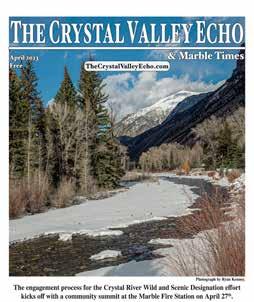
The push for a Wild and Scenic Designation continued this year with the formation of a facilitated steering committee that explored options for the protection of the Crystal River. Last spring, Representatives from the Town of Marble, Gunnison County, Pitkin County, and the Colorado River District formed the Wild & Scenic Feasibility group and announced the selection of Wellstone Collaborative Strategies and P2 Solutions to facilitate and lead a stakeholder process.
The Collaborative along with Co-Facilitators Wendy Lowe and Jacob Bornstein organized the initial Community Summit in April to gauge interest and form the steering committee. Over 140 people filled the fire station in



Marble, and the 25-person steering committee was selected. Over the summer, the group developed criteria for evaluation and identified seven protective options that were presented during an October Community Summit.
Surveys were presented to the greater Crystal River Valley, in which the data continues to be analyzed by the facilitators and steering committee throughout this month. For more information on this entire process, including minutes, educational webinars, and information on the seven protective options discussed, visit our website at www.thecrystalvalleyecho.com
The discussion of methane emissions in Coal Basin gained more traction in 2023. Chris Caskey an entrepreneur with the Delta Brick & Climate Company received approval from the US Forest Service in June to perform a Flow Test; the study’s equipment was pulled from the sites late in October.
Caskey reported that their “aircraft took four snapshots in time. Those snapshots averaged 223 kg of methane per hour with large error bars. On-the-ground measurements showed methane quality generally below 20% methane.” Joe Von Fischer, a researcher from Colorado State University, confirmed that measurement to be the equivalent of 1950 metric tonnes of methane per year; a much lower estimation than the 10,000 tonnes per year toted by the Environmental Protection Agency.
Von Fischer and his team began studying methane emissions out of Coal Basin in what he terms a “bottom-up” survey in 2022. They’ve performed an exhaustive walking survey involving the use of high-sensitivity methane analyzers. While they made several discoveries over the last two years, they also say there’s a lot of uncertainty surrounding not only the environmental and global impacts but also the science itself.
While his findings are resulting in much lower emissions than


Caskey's study, Von Fischer says he can get behind Caskey’s findings of 1950 tonnes per year and understands that his team may have missed some things while only studying emissions from the surface. Caskey said, “Based on the data collected this summer, methane quality and quantity indicate a regenerative thermal oxidizer and an enclosed flare would be the appropriate technologies for any remediation activity.”
Von Fischer agrees with that recommendation, but also meets it with a little more skepticism: "I hope you don’t hear me suggesting that we do or don’t do this, I don’t have a preconceived notion of where we should end up at all. But there’s a lot we can be reflective about here in this decision while trying to piece it all together. There’s a significant amount of methane, and the landscape is really erosion-prone. In light of that, maybe it’s not such a bad idea that we do this. Maybe there’s potential for this effort to bring about greater reclamation of the damage that was left behind by the retreat of the coal mine. On the other side, maybe we do put equipment up there for flaring: They’re super noisy, they’re ugly, they detract from the landscape, and they scare the elk away. There are just as many reasons why we may decide not to move forward with this project. I think we’ll just have to walk through this carefully as a community."
coMMunity
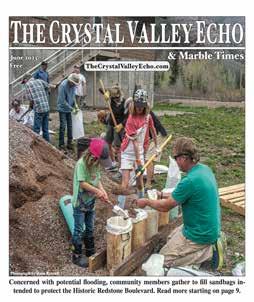
As warmer weather gave way to last year’s spring, the weight of the season's substantial snowpack began to raise concerns about flooding within the Redstone community. Rob Goodwin, Fire Chief, equated last year’s snowpack levels to what they saw during the spring runoff season in 1995 when they saw a signif-
icant amount of flooding in the Redstone area.
Early in May, the issue crossed the Pitkin County Commissions desk in which the County decided against providing sand and bags to residents to prioritize the protection of infrastructure, should the need arise. However, this didn’t sit well with many of the Boulevard residents in Redstone.
Later, the Carbondale and Rural Fire Protection District held a community meeting to discuss the issue as well as options for protecting property; the evening erupted into a discussion of where responsibility lies regarding the protection of property. Lisa Wagner said, “It seems Pitkin County is passing some of its responsibilities on to the Carbondale Fire Department and the Redstone Water and Sanitation District.”
Stephanie Helfenbein, who sits on RWSD’s volunteer board, was a passionate organizer in this cause. She relentlessly approached various members within the County demanding resources as well as organizing two sandbagging events so that residents may proactively prepare for flooding.
Valarie MacDonald, the County’s Emergency Manager, told The Crystal Valley Echo after that meeting that she’d return to her office carrying the Restone message back to the County loud and clear. “While it's sometimes hard to take,” she said, “I love connecting with residents who really care!”
Several factors caused the County to change the direction of its stance. Pitkin County Public Works delivered sand and additional sandbags before the initial sandbagging event where 1500 bags were filled. A second event was held at the end of May and was made possible by RWSD and CRFPD.
When Jon Stovall agreed to become the Marble Community Church Pastor, it was only for a one-year trial. Last year, after 12 years in that role, Stovall decided it was time to try something new. However, he refused to say he was “retiring,” but rather that he was “refiring.”
Stovall and his wife Peggoty moved to a townhouse they own in Myrtle Beach, S.C., but just for a little while. They hope to move back to Marble before too long, to live in the community and area of mountains they've come to love.
When Stovall announced his intention to retire in February 2022, the Marble Church quickly formed a search committee to find a new pastor. Last summer, the Church declared that Michael MacKenzie would return from Florida with their two sons to fulfill the role. He and his wife, Kari of 21 years, had been co-directors of the Marble Retreat since 2013, and have been with the Retreat full-time since 2011 in several different roles.
Cheers to a warm and bright 2024!

Contract type: Full-Time
Starting Salary Range (negotiable): $89,908 - $94,015
Closing date: January 30, 2024
location
Marble Charter School (MCS) is located in Marble, Colo., in the picturesque Crystal River Valley, home to the famous Crystal Mill, Yule Marble Quarry, and the Maroon Bells-Snowmass and Ragged Wilderness areas. The Town prides itself in being a family-based community with a rich history and offering diverse outdoor recreational opportunities.
Position
Marble Charter School is currently seeking an experienced Director with expertise in managing schools’ academic and financial performance while creating a nurturing environment.
aBout MaRBle chaRteR school (Mcs)
Marble Charter School teaches a growth mindset in a unique and nurturing environment while exceeding state standards.
Our vision for the school is one where students are educated through a collaborative effort among parents, staff, students, and the community. Our unique setting provides alternate opportunities for outdoor experiences that encourage students to take risks and creative, self-directed, lifelong learners.
MCS is led by a full-time director who is responsible for the daily operations of the school and serves as the financial manager responsible for the overall budget and reporting finances to the Board.
MCS is a Colorado Charter School authorized by the Gunnison Watershed School District (GWSD). MCS serves grades Kindergarten through 8th grade.
Desired Start Date: August 1, 2024
Employment Type: Full-time, Exempt
Benefits availaBle:
• $25,000 Life Insurance policy paid by the district.
• Group health insurance - 100% of employee premium covered by the district. Dependent coverage is available at a cost.
• Access to additional voluntary benefits such as dental, vision, and health care FSA/HSA
• Membership in Public Employees Retirement Association (PERA)
• Employee Assistance Plan through Triad
• Professional Development opportunities
• Paid time off
• Significant experience and education in school leadership
• 5-years or more classroom experience
• Exceptional organizational skills, and experienced management skills
• Excellent interpersonal, oral, and written communication skills, and the ability to effectively articulate information and issues
• Understanding of Marble Charter School’s mission and vision and a commitment to the growth and expansion of education
Education requirement: Bachelor's Degree required.
For additional information and/or if interested please send a cover letter of interest and resume to Hawkins Siemon, President, Board of Directors at hlsiemon@msn.com

content sponsored and provided by the Redstone Historical Society.
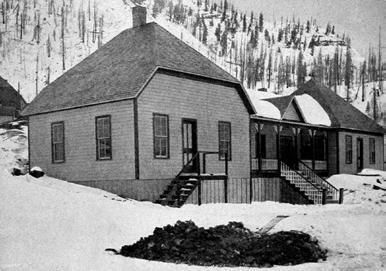
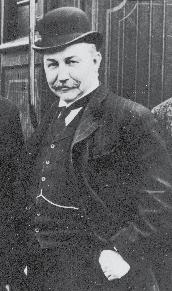
Another keystone of Osgood's Sociological policy was the provision of clubhouses for his men where they might find ample refreshment and recreation but where neither drunkenness nor brawling would be tolerated. This was adopted as corporation policy for all the camps, but Osgood put it into effect most promptly and elaborately at Coalbasin and Redstone using his own personal funds.
Campt and Plant Magazine gave the following description of the clubhouses in 1903:
cluBs at coalBasin and Redstone
Around these club houses centers the social life of the camps. Begun as experiments over a year ago, they have amply justified their existence, and will doubtless be the models for other similar clubs to be erected in the future at the more important of the Company mining camps.
The Coalbasin Club was organized by John C. Osgood in 1902. It is managed by a board of directors, elected for one year. The club has a membership of about 200... The monthly dues are fifty cents. No treating is allowed, no profane or vile language is permitted and gambling and drunkenness are not permitted.
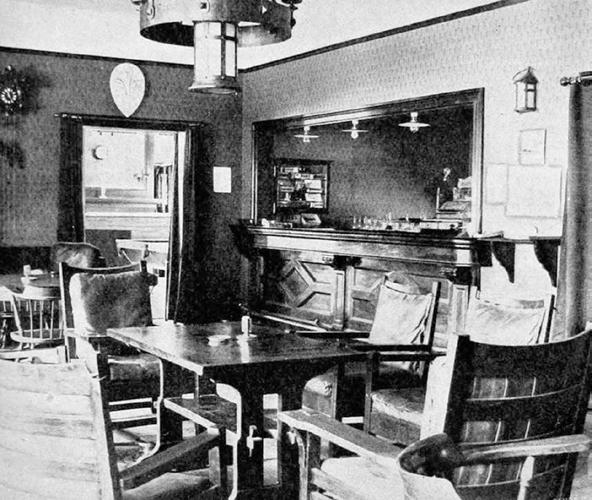
The Coalbasin Club House is a one-story frame building of four rooms, with a front veranda. Immediately in the rear of the porch is a barroom. To the right is the billiard and pool room. The first room to the left is the card and game room, while on the extreme left is the reading room, equipped with magazines and periodicals.
The Club will sell to its members in accordance with the rules of the Club,

wines, beers, and liquors, but in order to promote their temperate use and believe that each member or visitor has the intelligence and ability to buy what he wants when he wants it without suggestion or aid from anyone, no 'treating' will be allowed.
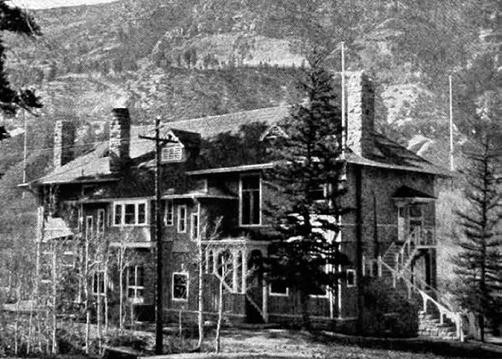
The Redstone Club is much more elaborate than the one at Coalbasin, and embodies a number of features lacking in the latter. The Redstone Club is perhaps as finely appointed a clubhouse
Scott Wilson, Owner and ASE Master Technician
Import and domestic car specialist
Pick up and delivery available 35+ years of experience
Monday - Friday 8 a.m. - 5 p.m.
333 E State St. Marble, CO 81623
marblemotorworks@gmail.com (970) 366-0708
as is to be found in Colorado this side of Denver. If any criticism could be offered, it would be that it is almost too elaborate, for J.C. Osgood, the generous founder of the club, has spared neither time nor money in making this a beautiful and attractive place for the men to spend their leisure hours.
The Club is incorporated for social purposes and is governed by a Board of Directors composed of thirteen active members... Active members are required to pay an initiation fee of one dollar and six months dues in advance, at fifty cents a month. The amount is as small as compared with the expense of maintenance of the club, but still, the member is made to feel that he is paying for what he gets, and may, therefore, enjoy perfect freedom in taking advantage of the privileges.
The commodious lounging room is most inviting. with its big leather cushioned armchairs and settees placed conveniently about, and tables for serving refreshments. A generous fireplace at each end of the room adds cheer and comfort on winter evenings, and a large Regina music box and gramophone furnish music and entertainment.
All kinds of the best grades of liquors are served at rea-
sonable prices from a wellstocked bar. A 'No Treating' rule operates to promote the temperate use of liquors... All soft drinks, as well as sandwiches, hot chocolate, and cake, are served at cost.
Adjoining the lounging room on the north is a large, well-lighted billiard room...
On the south is the reading room, supplied with popular weekly and monthly magazines and daily and weekly newspapers, the latter in English, Italian, and Slavonic. A small reference library is found on the shelves. The card room and reading rooms adjoin...I the basement are numerous shower and tub baths, dressing rooms...also the secretary's office and the board of directors' room.
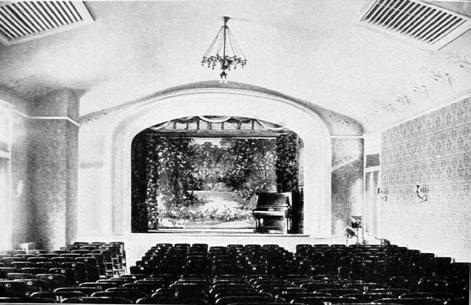
On the third floor is the theater, equipped with stage scenery and drop curtains painted by good artists, dressing rooms, electric lights, and an arc illuminant stereopticon.
A much-appreciated feature which must not be overlooked is the Ladies' Evening at the club. Although women are not eligible for membership...Whist and euchre parties, billiards, pool, and light refreshments, together with instrumental music, combine to make these evenings pass away all too quickly.
In addition to these ameni-
ties, Osgood donated a large library for the use of the schoolchildren and adults and donated fine new instruments for the town's brass band and for the Fife and Drum Corps, both of which were quite active, as was a mandolin club, a drama club, and baseball teams at both Coalbasin and Redstone.
Author Mary Boland (1936-2017), moved to Carbondale in 1973. She was Glenwood Bureau Chief for the Grand Junction Daily Sentinel, a Professor at Colorado Mountain College, and a prolific writer for many national and local publications. This is one article, reprinted with permission, from her publication The History of the Crystal Valley. Excerpted text and photos are from Camp and Plant Magazine, Vol. IV, No. 19, November 21, 1903 (shortly before John Osgood lost control of CF&I to John D. Rockefeller, Jr., and George Jay Gould ... but Osgood held on to Redstone).



Photographs provided by Lisa Wagner


Pitkin County Open Space and Trails Update
The Pitkin County Open Space and Trails Board plans to meet at the Redstone Inn on Jan 4 at 9 AM A review of the draft Filoha Meadows Management Plan update will be on the agenda
Snowy Driving Reminder
As snow begins to fall in earnest and the winter season ramps up, the Pitkin County Road & Bridge department requests traveling with caution on our local roads Expect plows on county roads during every snow event and please give the plows room to work (3-4 car lengths) Plan ahead and allow extra time to reach your destination We ask for your patience and plenty of room as we work to clear the roads
Pitkin County Public Safety Council launches internet safety campaign
The Pitkin County Public Safety Council, in partnership with the Aspen School District, is launching an internet safety campaign targeted at young people and their families The campaign focuses on the problems of online fraud and financial sextortion – two crimes affecting young people nationwide, including in the Roaring Fork Valley

Starlink internet connectivity to be added to Pitkin County Sheriff Office Vehicles
PCSO Vehicles will have added Starlink connectivity to improve community safety and enhance communication capabilities in responding to emergencies The internet connectivity means faster response times, improved coordination, and enhanced situational awareness when responding to emergencies in the hwy 133 corridor, McClure Pass, and beyond
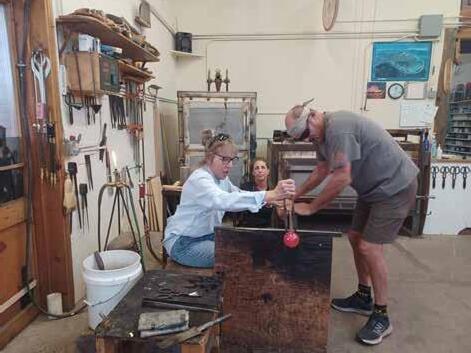
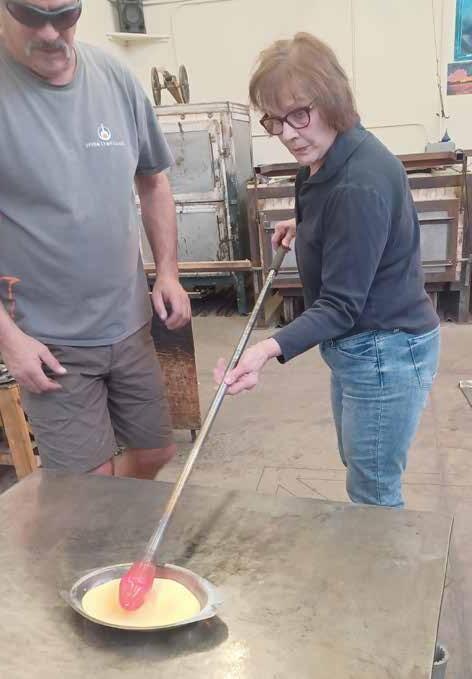
Last month, the Redstone Art Foundation participated in the Spiro Lynn Glass Blowing class in Carbondale, Colo. Each participant made a glass ornament and chose their own colors.
According to Lisa Wagner, "It was a great time!"
Follow RAF on Facebook to learn of more outing opportunities and art related field trips.