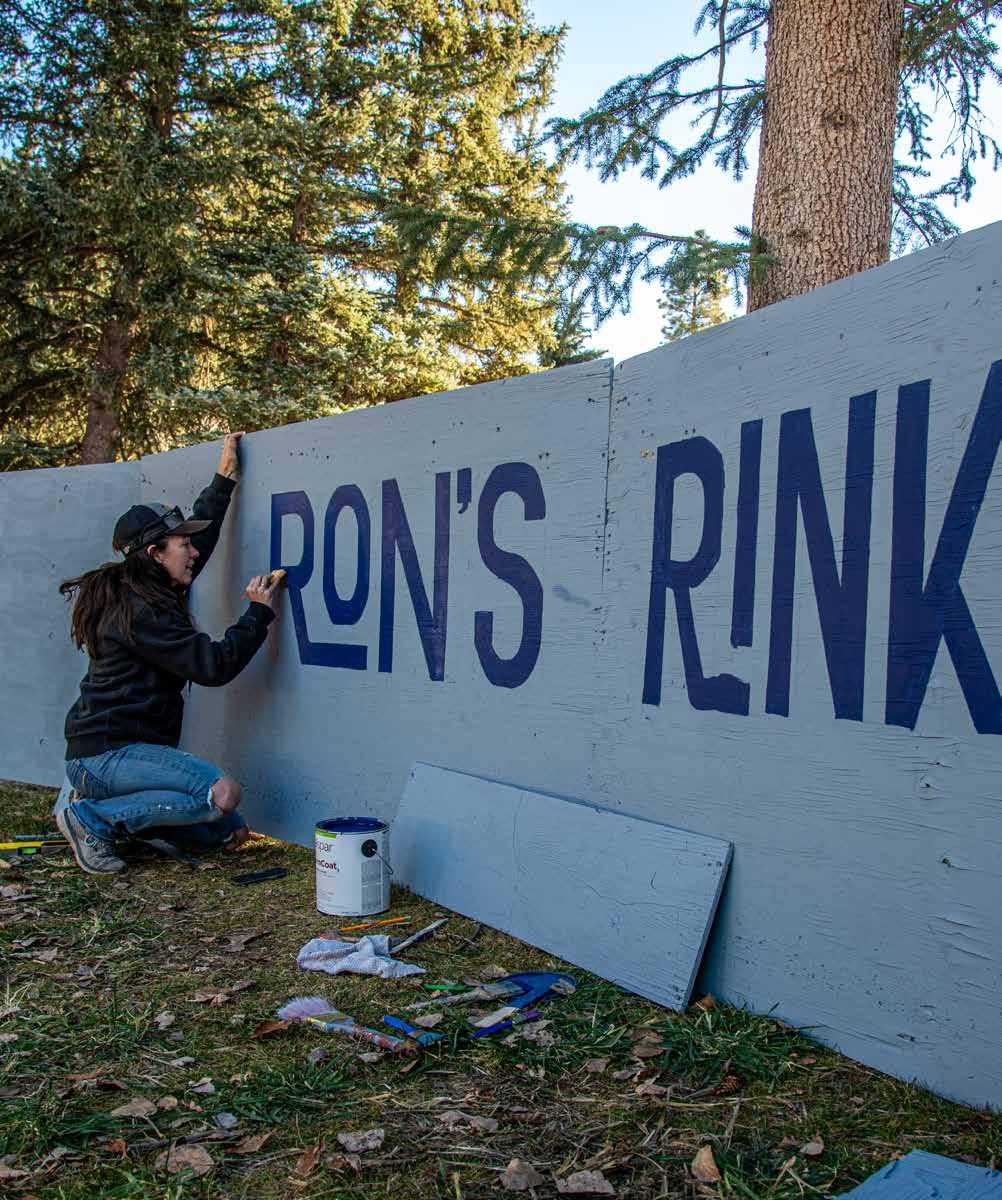
Photograph by Gentrye Houghton.
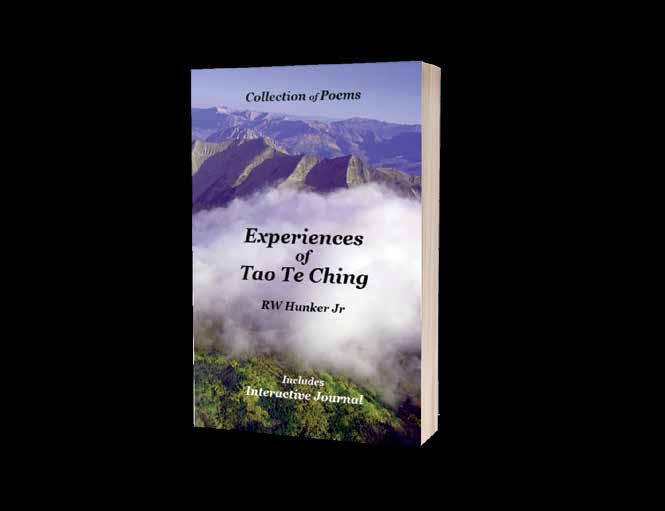
Embark on a profound journey of self-discovery and spiritual awareness with RW Hunker Jr's unique interpretation of the 81 verses of the Tao Te Ching. Through a collection of deeply personal and paradoxical poems, Hunker invites readers to engage with the Tao in a way that transcends the written word. His work is a testament to a lifetime of experiences, reflections, and a deep-seated connection with Nature. This book is an invitation to visualize, reflect, and journal your own experiences with the Tao, offering a transformative path to understanding and embracing the essence of this ancient wisdom in your everyday life.
Read his poems and enjoy them, but also use them as a steppingstone to your own soul’s poetry. Walk this path of Tao for yourself and see what emerges.
William Martin, author of The Sage’s Tao Te Ching
Available Now on Amazon and Bookshop.org
AUTHOR: RW Hunker Jr.
ISBN: 979-8-218-21335-0
GENRE: Poetry/Philosophy/Personal Growth FORMAT: Paperback
My soul is forever grateful for the texts and experiences that inspired this book. My hope is that Tao Te Ching will enhance your life with Nature, as it has enhanced mine.
RW Hunker Jr
RW Hunker Jr has experienced a lifetime of adventure and work with Nature in the snow, water, and air. Hunker studied Buddhism in 1969, engaged with Transcendental Meditation (TM) in 1974. He earned a BA Psychology degree from Western State College of Colorado in 1992. He connected with the written Tao Te Ching in 2010 and began Qigong practice in 2015.
RW Hunker Jr is author of Tao Te Ching Card Readings (2016) and Wellness Living Card Readings (2021). He is also author of two aviation books: The Flights of Red Hill, Volume 1 (2012); Volume 2 (2021). Experiences of Tao Te Ching is his first book of poetry. Hunker lives in the West Elk Mountains of Colorado.
PRICE $22.95
PUBLISH DATE: 7/1/2023
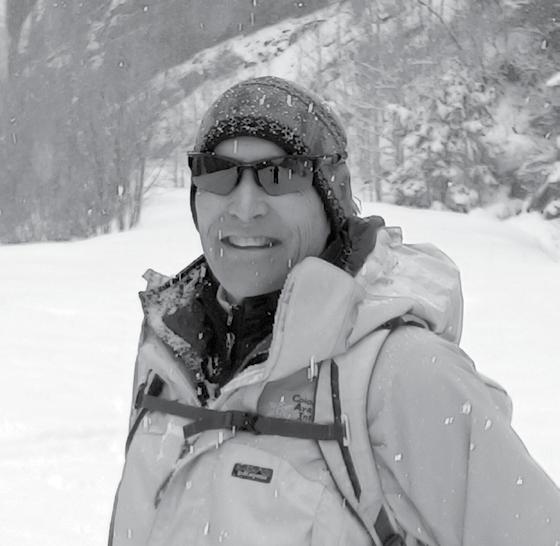
RW Hunker Jr. rwhunker@gmail.com
A new group of volunteers spearheaded by Jake Marine are getting Redstone's beloved skating rink up and running for the season.
“The idea for the rink was originated by Stephanie Askew and Janette Bier in November 2013,” said Ron Phaneuf in 2021, “They obtained skates, and obtained permission from Open Space and Trails to use the site for that purpose.”
Phaneuf continued, “Ivo Bensch was enlisted to design the rink structure and purchase needed supplies and a group of us local volunteers was organized to build the support structure. Gary Nelson, who was remodeling the Franke house at the time, helped us to level the site. That winter I helped Bensch to set up and maintain the rink and gradually assumed more responsibility for it in subsequent years since I was retired and had more free time.”
Due to the massive amount of love and work Phaneuf gave every year to the skating rink, it was dedicated "Ron's Rink" in the spring of 2021. The community has grieved immensely with Phaneuf's passing earlier this year, but a new group of volunteers are dedicated to seeing the rink continue. Infused with funds from Pitkin County Open Space and Trails, users will find a slightly larger rink with a brand new liner.
The rink is typically open for skating from December until March, although sometimes longer or shorter as the weather allows. Skating usually subsides by early March due to warm daytime temperatures.
Those wishing to run for Mayor at the regular election of the Town of Marble on April 2, 2024, may pick up a Nomination Petition beginning on January 2, 2024 from the Town Clerk, (970) 963-1938.
The Mayoral seat up for election is 1 four-year term.
Qualifications: All candidates must be a qualified elector of the Town of Marble, a citizen of the United States, at least 18 years of age, and must have resided in the Town of Marble for one year immediately prior to the date of the election.
Petitions must be returned to the Town Clerk no later than 5:00 p.m. on Monday, January 22, 2024.
The Town of Marble is a non-partisan body of local government, therefore, there is no party affiliation designation.
For more information contact the Town Clerk at (970) 963-1938.

& Marble Times
Mission Statement: To provide a voice for the residents of the Crystal River Valley; to bring attention to the individuals and local businesses that are the fabric of the Crystal Valley region; to contribute to the vitality of our small town life.
EDITOR AND ADVERTISING SALES
Gentrye Houghton gentryeh@hotmail.com • (806) 374-0055
CONTRIBUTORS
DJ Sugar Monkey
DISTRIBUTION
The Crystal Valley Echo is published monthly, and is distributed throughout the Crystal Valley.
NEWSPAPER BOX LOCATIONS:
Third Street Center • Village Smithy Carbondale Post Office • Carbondale Park & Ride
The Marble Hub • Redstone General Store www.thecrystalvalleyecho.com



Pitkin County Open Space and Trails Update
The Pitkin County Open Space and Trails Board plans to meet at the Redstone Inn on Jan. 4 at 9 AM. A review of the draft Filoha Meadows Management Plan update will be on the agenda.
Snowy Driving Reminder
As snow begins to fall in earnest and the winter season ramps up, the Pitkin County Road & Bridge department requests traveling with caution on our local roads. Expect plows on county roads during every snow event and please give the plows room to work (3-4 car lengths) Plan ahead and allow extra time to reach your destination. We ask for your patience and plenty of room as we work to clear the roads.
Public Satisfaction Survey, Open to the Public
A biennial survey meant to gather feedback on county services and community issues is now open for anyone to fill out. The survey results are an important measurement of how the county is doing and provide an understanding of programs that are working well and others that need attention.
Seasonal vaccines available for flu and Covid-19
Contact: (970) 920-5070, publichealth@pitkincounty.com
Everyone over the age of 6 months is encouraged to receive their seasonal vaccinations. Flu and Covid-19 vaccinations can be administered at the same time and should be scheduled in November in order to provide maximum protection ahead of the peak of respiratory illness season and the busy winter and holiday seasons. Learn where vaccines are available


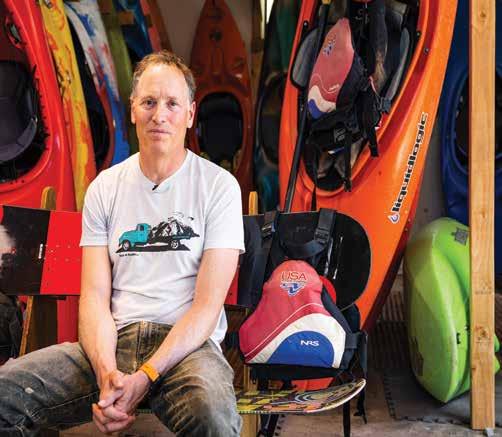
Kayo Ogilby Teacher, Boater, Angler
As a science educator, landowner up the Crystal River and my family’s business of Avalanche Ranch and a grass-fed beef operation, the Crystal and its free-flowing beauty are at the core of my both my career and my family’s livelihood.”
Dear Editor,
Many thanks to everyone who generously donated their time to the Crystal River Wild & Scenic Collaborative.
After months of exploring the various alternatives for preserving the Crystal River, it is clear that the Wild and Scenic designation is by far the strongest option to ensure the Crystal will forever remain a free-flowing river.
With the designation comes federal funding and management that will permanently protect the Crystal River from dams and trans-basin diversions. Wild and Scenic will protect water quality, ecology, and wildlife, as well as increase property values and enhance the quality of life for everyone who is fortunate enough to live in the Crystal River Valley. It will have no effect on existing water or property rights, and Wild and Scenic is incredibly flexible, allowing our community to custom-tailor a proposed plan for the Crystal.
We do not own the river; it is only passing through. But as residents, we have a rare opportunity to make a lasting contribution to this beautiful valley by securing the Wild and Scenic designation. The Crystal is one of the last undammed rivers in Colorado — with Wild and Scenic, we can keep it that way.
If you live in the upper Crystal River Valley, please consider reaching out to the Gunnison County Commissioners at bocc@gunnisoncounty.org and the Marble Trustees at leach@townofmarble.com to let them know you support Wild and Scenic.
There is no better gift for future generations than the legacy of a free-flowing river.
Teri Havens Marble
Dear Editor,
If we residents, of the Crystal River Valley, really want to keep our beloved River free flowing and really want to keep dams from strangling the life out of our River, then we should all support the Federal Wild and Scenic River designation of the upper 39 miles. That is the best way to preserve what we all cherish.
Various alternatives have been put forth and discussed, but none of them are as clean, simple, durable, and effective as a Federal Wild and Scenic River designation, which would prohibit dams on the main stem of the Crystal River and prohibit trans-basin diversions, and nothing more.
The alternatives are less certain. They are measures either pursuant to state law or simply county ordinance, which can easily be repealed. Voluntary agreements can also easily be nullified.

The only management would be by the White River National Forest of the land it manages. Forest Supervisor Scott Fitzwilliams considers Wild and Scenic Designation essentially a way to “preserve the status quo”. The only restraint on any private property owner would be that the owner could not dam the main stem. And so far, no owners have said they want a dam. There is nothing to fear.
So, the designation gives us what we want and costs us nothing. This is the right thing to do.
Bill Jochems Carbondale
“Annual income twenty pounds, annual expenditure nineteen and six, result happiness. Annual income twenty pounds, annual expenditure twenty pounds ought and six, result misery.” — Mr. Micawber, from David Copperfield by Charles Dickens.
That’s right folks, it is budget time again in Marble, a process that tends to drag on for a few months as cents are shaved from here and donated there; hitherto cherished causes unceremoniously dumped and necessities embraced.
Shamefully, the meeting was in full swing as I arrived just before 7 p.m. Others had also been caught off guard by the earlier-than-expected starting time of 6 p.m., including (thankfully) the Mayor for the day, Emma Bielski, who was flanked by Amber McMahill and Larry Good.
A giant screen had been set up in the Marble Community Church Fellowship Hall and Town Administrator Ron Leach pored over an elaborate spreadsheet entitled “2024 Budget.” Terry “ El Tel ” Langley struck an impressive figure with her wizardlike Barnet (cockney rhyming slang, Barnet Fair, aka hair) accompanied by Alie Wettstein, elfish in a forest green hobbity hoodie. What an enchanted triumvirate, I thought. There were an additional seven Marble residents in attendance.
Feeling a little bamboozled by the combination of the sea of numbers on the screen and my late arrival, I made a break for the fridge and grabbed a cool can of you-know-what to soothe my fried nerves. A glug or two later, calm was restored and I was up to speed.
Unlike almost everywhere else in the world, the Town of Marble has no debt and has been successful over the last several years in running a balanced budget. Kudos to Leach and his team for this wonderful achievement. Budget setting is also generally the time of year when Town Council Members try to secure funding for their pet projects.
Amber McMahill explained that the $25,000 allotted for Parks’ Funds was just about enough to cover their maintenance costs but allowed no room for future growth. This exposes one of the downsides to ”growth via grants.” Inevitably, grant-funded projects sooner or later (sooner, mostly) incur maintenance costs that cannot be met with future grants.

To avoid the debt trap of build now, pay later, the Town is forced to cut back on other line items, running the risk that it becomes ever more scantily funded in areas that may require more firepower in the future.
Mayor (for the day) Bielski recommended that current projects be finished before new ones get started, including the foundation of the Jailhouse. Regular readers of this column will know that this project has only a fraction of the funds needed for its completion.
The 2024 Town Budget estimates that gross revenues will grow by $10,000 next year, but that the Town’s wage bill will increase by $20,000 ($15,000 of this is to be allotted to a new role — that of a “peace officer” — in an attempt to appease the clamor for an enforcement presence in town, with the remaining $5,000 earmarked for a 5% raise for those on the Town’s payroll).
The search was on to find $10,000 to square things off. McMahill suggested taking a scythe to the “Office Improvements” number in the spreadsheet. She was supported by Sue Blue, who commented that the Old General Store (for years earmarked for the Town’s office) had “been around (unused) for such a long goddam time.”
Larry Good had been eyeing the "Legal Expenses" number as a possible target but wisely asked whether the Master Planning Committee was going to make any recommendations that might soak up some of the funds available. Leach replied that as 2024 was an election year, there may be extra costs of that nature to be considered. Legal costs for 2024 are currently budgeted at $20,000; they came in at $12,000 for 2023. It was suggested that $5,000 could be cut from next year’s number.
The debate circled back to "Office Expens-
es." The issue was raised that the money spent on computers/tablets for the administrative staff earlier this year was a one-off expense and could be cut for 2024. No one was sure where this expense was to be found, however, and more research was needed. Leach pointed out that no money was spent last year on Road Maintenance since the Town was so over budget on snow and ice removal.
Mayor (for the day) Bielski was clearly enjoying her time in the hot seat. She reveled in “her time to shine,” proclaiming, however, that serving on the Town Council was an arduous but largely thankless task and that she looked forward to stepping down in 2024.
Incredibly, four of the five members on the Board of Trustees are up for reelection in the coming year, Amber McMahill being the sole incumbent. I was left wondering whether this would leave the Town vulnerable to a coup of some sort given that it seems to be all the rage elsewhere...
The next Town of Marble meeting is on Thursday, December 7th starting at 7 p.m. in Marble Community Church's Fellowship Hall.
I'm signing off by wishing Happy Holidays to all our readers with a big thank you to the Board of Trustees and Administrative Staff whose hard work makes Marble such a wonderful place to live. See you in the New Year!

From Wendy Boland
The final presentation at the October Summit on the Crystal River was on the Wild and Scenic River (WSR) designation. The speaker, Ms. Jennifer Back, was the National Park Service Program Lead for Wild and Scenic Rivers and a member of the Interagency Wild and Scenic Rivers Coordinating Council. Since retiring in 2021, after 20 years of service, she has continued to provide training and technical assistance on wild and scenic rivers.
A slideshow of her presentation is available online at www. thecrystalvalleyecho.com. The November Echo featured alternative options for protecting the Crystal River that can be done either alone, in combination, or in conjunction with Wild and Scenic River Designation. This article provides information we learned about WSR from expert, Ms. Back.
Back highlighted three key benefits of WSR designation:
• WSR is the strongest, most robust, form of river protection (especially with local/federal partnerships);
• WSR protects existing conditions, values, and uses while encouraging improvement and enhancement of the resource;
• WSR brings federal resources (staff and funding) to manage rivers, including managing recreational river access and capacity.
She concluded her presentation by noting that the designation of a WSR does not place any restrictions on private lands or on state and local jurisdictions in their zoning processes. The water
Those wishing to run for a Marble Board of Trustee seat at the regular election of the Town of Marble on April 2, 2024, may pick up Nomination Petitions beginning on January 2, 2024 from the Town Clerk, (970) 963-1938.
There are three Board of Trustees seats (1 four-year term and 2 two-year terms) up for election.
Qualifications: All candidates must be a qualified elector of the Town of Marble, a citizen of the United States, at least 18 years of age, and must have resided in the Town of Marble for one year immediately prior to the date of the election.
Petitions must be returned to the Town Clerk no later than 5:00 p.m. on Monday, January 22, 2024.
The Town of Marble is a non-partisan body of local government, therefore, there is no party affiliation designation.
For more information contact the Town Clerk at (970) 963-1938.
rights associated with WSR designation are junior to existing water rights — in other words, they can not supersede or override existing water rights. The quantity of water involved is based on the amount of water necessary to support the “Outstanding Remarkable Values.” State jurisdiction over water rights is unaffected by designation.
Back answered several community queries about WSR designation. Her responses are recorded below in italics.
What are the advantages to Wild and Scenic designation over the other alternatives mentioned?
WSR designation is the strongest protection a river can receive. It establishes a water right (albeit a junior water right), which provides legal standing and a voice at the table in terms of trying to work to maintain existing flows. It also is the most comprehensive, since it addresses all aspects of river management. It provides access to technical assistance and federal resources, including funding. Finally, it provides a great deal of adaptability and flexibility — most of the suggested alternatives could be included or addressed as part of the river management plan.
Is it true that Wild and Scenic Designation would provide funding for implementation and technical assistance? Do any other of the alternative options discussed at the October summit provide funding, infrastructure, and technical assistance?
For congressionally designated rivers, Congress provides funds for operations and maintenance through annual appropriations to the relevant agencies. The Wild and Scenic Rivers Act also authorizes federal agencies to provide technical assistance to states and their political subdivisions (such as counties, townships, and others), landowners, organizations, or individuals in planning, protecting, and managing WSRs. This is usually done through cooperative agreements. I cannot speak for all of the alternatives, but generally, federal funding and technical assistance for wild and scenic rivers are because a federal agency is a cooperating agency/partner.
Some landowners along the Crystal are concerned about how a Wild & Scenic River designation could impact their private property.
The federal government has no authority to regulate or zone private lands under the Wild and Scenic Rivers Act (WSRA).
Any restrictions or controls on private lands that might occur would be through state or lo-
cal zoning processes, and designation does not affect state or local zoning processes. Designation does not create any binding provisions on state or local governments, and the federal government has no authority over private lands.
How would a WSR designation impact activities like riverbank stabilization or flood mitigation? (Background note: all rivers and wetlands have some protections through the Federal Clean Water Act, section 404, state laws, and county regulations. Permits are needed for some work on rivers, even if it has no other protection. Your local county can provide further information.)
Regardless of the Wild and Scenic designation, all streambank stabilization activities that occur below the ordinary high water mark of all US waters are subject to Section 404 of the Clean Water Act requiring a permit from the Army Corps of Engineers. The federal permitting under Section 404 then triggers a review under Section 7 of the Wild and Scenic Rivers Act.
So, streambank protection activities that fall under Section 404 of the Clean Water Act and that are below the ordinary high water mark on a wild and scenic river would be subject to review to ensure that the river values are not impacted. If river values are not impacted, then the activities can go forward.
Note that Section 7 applies only to activities below the ordinary high water mark that also require some kind of federal permit or funding (that is, only federally assisted projects that occur below the ordinary high water mark require Section 7 review).
Note that Congress can include language in the legislation designating a river that addresses potential flooding or emergencies. For example, in the bill designating Squaw Creek in Oregon (Public Law No. 100-557 Sec. 102) there is a clause that states “... Provided, that nothing in this Act shall prohibit the construction of facilities necessary for emergency protection for the town of Sisters relative to a rapid discharge of Carver Lake if no other reasonable flood warning or control alternative exists.”
In addition, flood protection activities can be addressed through the river management plan.
I’ve also heard some concern around eminent domain or condemnation if a river is WSR designated. Is there a way to make sure that doesn’t happen?
In the early years of the WSR Act, there were a handful of instances where the federal government used eminent domain or condemna-
tion authority to acquire lands within a wild and scenic river corridor; however, since the 1980’s and the passage of an amendment to the Wild and Scenic Rivers Act that limited how or when federal agencies could apply it, the use of eminent domain or condemnation has not been used.
However, it remains a concern of private property owners, so in recent years to address this concern, Congress has sometimes added language prohibiting the use of condemnation in the specific legislation designating individual river segments. For example, below is language that was included in Public Law No. 117-328 Sec. 401 designating the York River in Maine in 2022, “NO CONDEMNATION — No land or interest in land within the watersheds of the covered segments may be acquired by condemnation.”
Several landowners have water rights on the Crystal River. Would a WSR designation affect their ability to continue diverting and using water as they are currently doing? Would they be able to maintain or improve their headgates?
Designation does not affect existing water rights or existing infrastructure. Any headgates may continue to be used and may continue to be maintained. All existing uses and structures are considered the baseline condition or existing condition of the river and can continue.
You mentioned at the summit that each WSR designation is unique to its area and there are lots of options for local control, can you give an example of these?
There are numerous examples of local participation in the management of a wild and scenic river, and many of the best examples are administered through cooperative agreements between the National Park Service and local communities as Partnership Rivers. Examples include the York Wild and Scenic River in Maine, and the Wekiva Wild and Scenic River in Florida. These rivers generally have no federal lands but provide great examples of how communities can work together with a partner federal agency to administer segments flowing through non-federal lands.
Other examples that represent rivers flowing through both private and U.S. Forest Service lands include the Allegheny Wild and Scenic River [in Pennsylvania] and the Wildcat Wild and Scenic River [in New Hampshire]. Segments of the Allegheny WSR pass through non-federal land, so Congress specified that these segments be "administered by the Secretary of Agriculture [meaning the US Forest Service]... the Commonwealth of Pennsylvania and counties of Warren, Forest, and Venango" (16 U.S.C. §1274(a)(133)).
Similarly, the bill creating the Wildcat Wild and Scenic River includes the following language “... those segments located outside the boundary of the forest shall be administered by the Secretary through a cooperative agreement with the Board of Selectmen of the town of Jackson and the State of New Hampshire pursuant to section 10(e) of this Act. Such agreement shall provide for the longterm protection, preservation, and enhancement of the river segments located outside the boundary of the forest …” (Public Law 100-554 Sec 1).
What are the best resources for people to learn more about wild and scenic designation?
The Interagency Wild and Scenic River Coordinating Council website has all kinds of information and guidance. See www.Rivers.gov. In addition, the River Management Society has lots of great information on wild and scenic rivers, including a Partnership River Toolkit, that helps communities figure out how to come together to designate and then manage a wild and scenic river in partnership with a federal agency.
Thanks to Ms. Back, and all of the presenters at the October Summit for teaching us about options to protect the Crystal River.
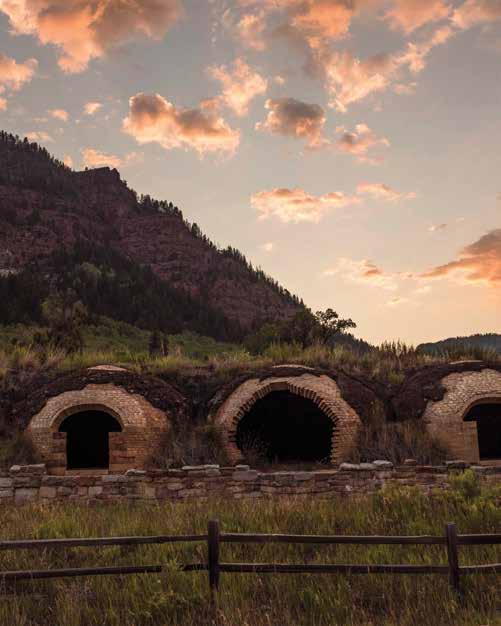
Pitkin County Open Space and Trails seeks proposals to lease agricultural land at Coke Ovens Open Space. Public bids are open from November 3rd through December 4th . The lease area includes 26 acres of pasture with flood irrigation and a corral with several small buildings. The lease rate is $650 per year.



While the Environmental Protection Agency estimates 10,000 metric tonnes of methane to be emitted annually from the five abandoned coal mining portals in Coal Basin, two studies have collected data that shows the emissions to be much lower. As these studies try to analyze the puzzling behavior of these emissions, the quest continues for an answer to a philosophical question: Would a remediation project aiming to ease climate change be worth the environmental impact that could undo 30 years of reclamation?
Early in 2022, the Crystal Valley began to hear whispers of a potential Methane Capture Project proposed to clean up emissions leaking from the mining sites in Coal Basin. Several engagement opportunities brought about mixed feelings that rose to the surface from the Redstone community.
While the discovery of significant coal deposits were found in 1886, mining operations didn't begin until a wealthy entrepreneur named John Osgood became involved, and opened the first portal in 1900. The Osgood mines operated for less than a decade; plagued with financial problems, he lost control of Colorado Fuel and Iron (CF&I), the company that was the sole benefactor of the coking operation happening then in Redstone. Financial problems continued for CF&I's Coal Basin operation along with a decline in the demand for coke that triggered the mine’s bankruptcy and closure in 1909.
As Dorthea Farris writes for www. historyredstone.org, the mine sat “idle for four decades from 1912 to 1956 when MidContinent Resources (MCR) gained ownership, undertook a major upgrade and expansion of the operation, and resumed mining.”
Operating at nearly 10,000 feet in elevation and a highly erodable landscape, the mines were riddled with problems. The terrain was difficult causing the portals to bore into the hillsides at steep grades and were particularly known to be “extra gassy” causing several explosions. MCR’s activities dwarfed the early mining days of the Osgood era, but their operation ceased in 1991, the company declared bankruptcy just a year later and marked the end of coal mining within the basin, in which 58 million tons of coal that had been removed starting at the turn of the century.
consider an environmental hazard that should be cleaned up as promised.”

Because of the bankruptcy, MCR was rendered financially ineffective in the cleanup effort; so, the Colorado Department of Reclamation, Mining and Safety took on a $4 million restoration effort from 1995 through 2002 that included the removal of underground storage tanks, diesel-soaked soils, stabilizing slopes, cleaning water that drained from the mines and into the Crystal River. However, the restoration effort left much to be done, and revegetation of the area continues to struggle today.
“The bankruptcy left behind an area of almost 6,000 acres that was essentially abandoned,” writes Farris, “leaving massive scars from a century of intense mining, as well as a number of buildings, various pieces of mining equipment, and two enormous piles of coal debris. What was left was a major environmental disaster.”
In Protecting a Valley and Saving a River, Darrell Munsell quotes Cameron Burns of the Aspen Times Weekly on what he saw during a 1993 flight over Coal Basin, “What remains [of a once grandiose enterprise] is a scarred mountain basin of ugly mine shafts, crisscrossing utility roads and giant piles of seeping coal refuse, all strung out over 100 acres of Forest Service land. It was a picture of ecological blight that many valley residents increasingly
Farris also explained that “environmental groups pressured Mid-Continent to enter into a series of land trades with the US Forest Service to bring 5,600 acres of the basin into the public domain. It was one of the largest land trades in Colorado history and opened the basin to the public.”
As whispers turned more into public engagement surrounding a potential methane capture project early last year, one Coal Basin private property owner began questioning the project and its impact. “The Catena Foundation as concerned citizens and owners of Coal Basin Ranch (CBR) is an interested private, local landowner that would be directly affected by any project impacting the water quality at CBR and downstream,” said Steve Matous, Interim Executive Director and Chief Operating Officer at Catena. “Additionally, our privately funded restoration and recreational trail work that we have engaged in over the years for the




public good could also be affected.”
When Catena started asking about who could help them with some of their methane questions, a mutual connection at the Environmental Defense Fund led them to a professor at Colorado State University. “Joe von Fisher and his team from CSU are nationally recognized experts and leaders in this field. As such, we decided to support his scientific work through a grant from our foundation,” explained Matous.
In an email, he said that the main goal of CSU’s work is to take measurements of methane emissions at the mine, and, based on those measurements, provide scientific support in the evaluation and decision-making around the proposed coal mine methane capture project at Coal Basin.
Starting in 2022, the CSU team has performed an exhaustive walking survey involving the use of high-sensitivity methane analyzers. “From that, we’ve made detailed emissions estimates from every location where there is active methane venting from the ground,” said von Fisher. He said they’re calling it a “bottom-up survey” of emissions.
They’ve made several discoveries over the last two years and say there’s a lot of uncertainty surrounding not only the environmental and global impacts but also the science itself. During the wintertime, the LS Wood site showed some concentration levels that could be flammable, meaning that it might support methane “flaring,” but during the summer months, it was below the flammable limit.
Logistically, it’s very difficult to perform survey work during the winter months. Von Fisher said they are hypothesizing that emissions are relatively consistent throughout the year, but changes in the atmospheric conditions cause the exchange of mine air with the atmosphere to vary over daily to weekly timescales.
“At the emission locations that we have found, we see that the rate of emission does vary from
winter to summer,” he explained. “We think this is largely due to layers of snow and ice blocking the mine-atmosphere air exchange from some points, and confining the flow to a smaller set of more active locations.” He continued to say that they are still making determinations to see if this hypothesis is consistent with the data collected.
Overall, his data supports an estimated emissions rate of 400 metric tonnes a year. “I don’t feel like we have seen data that helps me understand what the total emissions are and where they’re coming from, and I think we need to understand that before we can put in a remediation station,” said von Fisher during an interview at the end of October.
He continued by saying that he does not think “we can make a good decision about putting in a methane destruction system until we know where the gas is coming from, at what concentrations, and how much gas is coming out.”
While the Catena grant has largely been exhausted, which was meant to support the first year of fieldwork, he said that CSU is currently in discussion with Catena and the Community Office for Resource Efficiency (CORE) about jointly funding a continued effort; however, Matous said there has not been a formal request yet made to Catena.
Chris Caskey, a self-proclaimed “climate guy” and entrepreneur with the Delta Brick & Climate Company, is leading another study that received approval for a Flow Test from the US Forest Service in June; the study’s equipment was pulled from the sites late in October. To date, this project has been backed with funding from Pitkin County, the Department of Energy, CORE, and Atlantic Aviation.
Over the summer, Caskey and a team of volunteers measured methane from three levels:
• With aircraft, which provided snapshots of the total flux of methane coming out of the site,
• With on-the-ground sensors, which monitored individual leak

sites for weeks at a time and provided methane quality data, and
• With drones, which provided snapshots of individual leak sites and searched for leaks that were not accessible by foot.
When asked what level of emissions, in terms of both quantity and quality, his data suggests to be coming from the portals, Caskey replied in an email, “The aircraft took four snapshots in time. Those snapshots averaged 223 kg of methane per hour with large error bars. On-the-ground measurements showed methane quality generally below 20% methane.”
Von Fisher provided The Crystal Valley Echo with a conversion calculator developed by CSU colleague, Tom Fox, which

DECEMBER 12
• 12:00 p.m. – Lunch ($10) RSVP by noon the Friday prior – space is limited. Plated lunch will be served.
There will be a gluten-free option.
• 12:45 p.m. – Program
Holiday Carols
Tom and Julie Paxton have been making music together in the Roaring Fork Valley for over 40 years. They have a large selection of Christmas music in their repertoire since they spent three decades spreading holiday cheer in the Dickens Carolers.

equated 223 kg per hour to approximately 1950 metric tonnes of methane per year.
Caskey explained that CSU’s study is complimentary to his, and von Fisher echoed his hopes to continue working with them. Scientific Aviation is analyzing the aviation data collected this summer with Delta Brick and CSU analyzing the remaining data. Both von Fisher and Caskey will continue to collaborate with hopes of publishing a singular report in an academic journal.
Von Fisher said that the original emissions number provided to the community, which was based on the EPA estimations of 10,000 tonnes per year, is quite high, and neither study has collected data to support that estimation. “Now that we have an updated estimate from the flyovers from Scientific Aviation that average out to 1950 tonnes per year — that’s much more believable,” he explained. “I can imagine that my team may have not found all the sources, and there’s uncertainty around it, so we’re converging on something that makes sense to me.”
Previously, Caskey has stated that a remediation project may be able to capture, at best, around 50% of emissions for a project that would continue for a minimum of 20 years. Based on the data collected this summer, he said that the “methane quality and quantity indicate a regenerative thermal oxidizer and an enclosed flare would be the appropriate technologies for any remediation activity,” to which von Fish-
er agreed. Caskey asserted that the methane quality was too poor to support electrical generation.
Caskey and his team will present their findings to the CORE board this month, at the time of publication the meeting was scheduled for December 18th. “Pending the board's direction,” said Jami McMannes, CORE’s PR and Communications Manager, “we hope to present our findings and proposed mitigation options to the community by early spring.”
A menu of options will be presented for community evaluation; dates for the public engagement events are still to be determined. Caskey assured that their presentation will have a handful of variations on possible mitigation projects along with the cost and both positive and negative impacts of each variation. However, since the property is in the public domain and managed by the Forest Service, the decision is ultimately up to that agency.
Jennifer Schuller with the USFS, stated that it was her understanding that Delta Brick and Climate Company intends to move forward with pursuing a full-scale project at Coal Basin based on the data they collected this year. She explained that they will make an application to the Forest Service, where they will provide details on what they are proposing.
“The Forest Service will review the application to determine if we can accept it, which is based on screening criteria such as whether the proposed use is consistent with federal, state, and local laws, regulations, orders, and policies,” she said. “Once a project has been accepted we would conduct a National
Environmental Policy Act review.”
When asked if the CSU team’s data and analysis would be utilized during the application review, Schuller replied, “We would look at any relevant information in our decision-making process.”
Von Fisher said that part of sophisticated environmental thinking has to be comfortable with the fact that there is uncertainty and making decisions in the face of that. “The question is really philosophical to a large degree,” he said during a phone interview, “how much damage might this cause, how much good might it bring about, how do we deal with the fact that the damage is local but the good is global?"
"These are real societal issues," he continued," and I think we can all do a good job of trying to be selfaware as we evaluate these things and walk through this carefully as a community”
Stay up-to-date with the Coal Basin Methane project by visiting CORE’s website at aspencore.org/ coal-basin-methane-project or sign up for their regular e-updates by contacting McMannes at jami@ aspencore.org
Follow The Crystal Valley Echo on Facebook and pick up paper copies in Carbondale, Redstone, or Marble to continue following reporting on this issue.

When you see the bursting colors of the trees in your backyard, you know it's fall. A chill in the air makes everyone put away their bathing suits and get out their warm clothes. I love waking up to the frosted grass and a cold breeze.
In fall there are tons of ways you can entertain yourself like picking apples for baking apple pie or going outside and enjoying the little patches of snow, but my favorite thing to do is going to the pumpkin patch and picking pumpkins. There are so many more ways to have fun at the pumpkin patch. Last time I went there was a petting zoo with little baby rabbits. They were so cute. If you're looking for something a little more active there are orby gun fights. If you don't know what orby guns are, they are like nerf guns but shootout orbeez. The biggest reason that I like the pumpkin patch is that's where I met my best friend Maddie. I vaguely remember it but I do remember us both swinging on the tire swing and saying we should be friends. Then a month later I moved into their neighborhood and now look at us- we go to the same school. So I guess I'm trying to say the pumpkin patch also brings back memories too.
Since I live in Redstone, the colors are phenomenal in fall. The aspen trees in my yard turn bright yellow and orange, my maple tree becomes a deep purple and then all the leaves fall. People from all over come to see the colors of autumn. Everyone works so hard to get a glimpse of Redstone and Marble in fall but every morning I get to just wake up to the gorgeous colors without driving or riding an airplane for hours like most people do. Fall is so beautiful!
Out of all the wondrous things that happen in fall the holidays are my
favorite! There is Thanksgiving, Halloween, Dia de Los Muertos, and a couple more. First let's start with Dia De Los Muertos. It's cool that people celebrate the dead with a holiday. I love the theme of skulls and flowers, it's fun to draw. Next is Thanksgiving- My family and I have a big feast with turkey, stuffing, gravy and so many other foods. All of these holidays are awesome but my favorite holiday is Halloween! Last year I was a goblin but this year I was a cat. I had red contact lenses and a black fur coat. My friend and I went trick or treating in Redstone and when I got home I had bags of candy!
Some people might want to convince you that there are better seasons than fall but I can give you reasons why winter, spring and summer aren't as awesome as fall. There are cons about spring. For example, that's when the ticks come out and the mosquitos. I love winter but it just gets too cold and when you go outside you have to put on layers of warm clothes. Summer is nice too but for parents and kids it is so rushed with work, summer camp and sports and on top of all of that it's way too hot! Fall is right in the middle, not too cold, not too hot, not too rainy, just right ! So if you don't like fall you should think again!
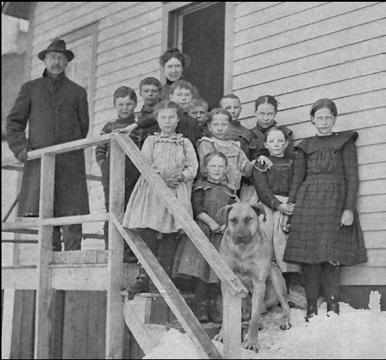
By Mary Boland
Much has been written about the fact that Osgood spent a great deal of time and money trying to make both the Coal Basin and Redstone model, indeed almost Utopian, communities. Undoubtedly, his motive for doing this was largely related to the fact that he considered the Crystal Valley his home and spent as much time as possible there. But it was also true and has been less often observed by local historians, that these efforts by Osgood to demonstrate what he considered to be the proper method to achieve social progress were undertaken in a larger context.
Not long after Osgood's Colorado Fuel and Iron (CF&I) company had weathered the hard times following the 1893 silver panic and had achieved considerable reorganization and refinancing, the corporation embarked on a truly remarkable "sociological" program, a program that received much attention throughout the nation from other industrialists, journalists, sociologist, intellectuals, and reformers. A Sociological Department, headed up by the company's chief surgeon, one Dr. R. W. Corwin, was
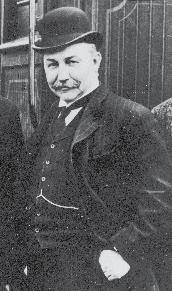
established in 1901 at corporation headquarters in Pueblo, Colo., and the department supervised an ambitious program of social uplift at all 38 of the company's coal camps, rolling mills and steel works in Colorado, Wyoming, and New Mexico, which by this time together employed over 15,000 men.
Whether most of the ideas for this work originated with Osgood or Dr. Corwin, the fact is that Osgood controlled the corporation and obviously supported the sociological work strongly or he would not have allowed the company to spend considerable money and effort on it.
The Sociological Department promoted and helped with the establishment of all the camps' kindergartens, night schools, circulating and permanent libraries, cooking and sewing classes, hygiene classes, clubs, and musical organizations for all age groups. To aid this work, the department published and distributed throughout all the camps, including Coal Basin and Redstone, a newspaper called Camp and Plant
The papers carried news of the doings, both industrial and personal, at the various camps and plants, some fiction, and a considerable amount of humor, both good and bad, along with advertisements for a variety of products, from corsets to correspondence courses. However, the paper's main purpose was education and social betterment, with the most space devoted to long articles on health and hygiene, proper nutrition, child psychology, child-rearing, the virtues of education and healthful recreation, etc.
The articles were far from superficial or a matter of "talk down" to the miners. They were clear and concisely written and easily understood, but were also thorough and detailed. The series on health and hygiene, for example, in-

cluded exhaustive discussions and diagrams on human anatomy and the functions of the various organs and causes of disturbances in their functions, along with lengthy and intelligent discussions of the pathogenic microorganisms and their role in transmitting disease.
Similarly, the articles on child psychology contained thorough discussions of the more advanced ideas of the time. A good example is an article titled "The Education of Wayward Children," which was a reprint of an address delivered by a Colorado College professor to the Colorado State Federation of Associated Charities. Particularly notable were also a number of quite sophisticated articles. Most of them reprinted from the various sociological journals of the day, about happenings elsewhere. Examples of these included an article titled "Social and Industrial Betterment in Sweden" reprinted from the "Weekly Newsletter of the League for Social Service," and an article titled "Public School Gardens, a Russian Idea Worthy of General Adoption in America," composed by Campt and Plant staff from various sources.
It is in this larger context that one can best appreciate Osgood's effort to turn both Coal Basin and Redstone into showplaces, demonstrating his vision of a better life for everyone.
Company-built housing was provided, both for the miners up at Coal Basin and for the coke oven and other employees down at Redstone. Indeed, it became policy under Osgood to replace the shacks typical of coal camps at that time with company-built houses at all the corporation camps. For the ones at Redstone, Osgood used his personal funds and went all out, employing architects to design the 84 cottages so that no two were alike but were in a Swiss chalet style. They were all brightly painted in various colors, served with electricity and running water, and laid out with proper yards
Scott Wilson, Owner and ASE Master Technician
Import and domestic car specialist
Pick up and delivery available 35+ years of experience
Monday - Friday 8 a.m. - 5 p.m. 333 E State St. Marble, CO 81623
marblemotorworks@gmail.com (970) 366-0708

along a tree-shaded street. Each cottage was from two to five rooms, lathed and plastered, and had matching outbuildings and sheds.
Also at Redstone, and with his own funds, Osgood had built, for his bachelor employees, a positively elegant frame and sandstone Inn in the style of a Dutch tavern. The Inn had 40 rooms, electric lights, a barbershop, a laundry, telephones, reading rooms, and steam heat.
Both at Coal Basin and at Redstone, Osgood saw to it that modern bathhouse facilities were provided to all his miners and coke oven employees so that their homes and the public facilities of the communities would not be grimy with coal dust. He even enforced the rule that employees were not to appear on the public streets after their shifts until they had bathed and changed clothes.
To be continued in The CrystalValley Echo's January 2024 edition.
Author Mary Boland (1936-2017), moved to Carbondale in 1973. She was Glenwood Bureau Chief for the Grand Junction Sentinel, a Professor at Colorado Mountain College, and a prolific writer for many national and local publications. This is one article, reprinted with permission, from her publication The History of the Crystal Valley.
A note from RHS: The policies of "Social Betterment,” also referred to as “Welfare Capitalism,” effectively incentivized Osgood's CF&I employees and Colorado not to participate in the 1903 United Mine Workers of America 10 month strike, effectively keeping the union out of Colorado. Research by Redstone Historian Darrell Munsell, author of From Redstone to Ludlow, clarifies that Osgood's "Social Betterment" philosophy was rooted in his opposition to unions. Notably, Osgood abandoned this philosophy after he lost control of CF&I in 1903 and went on to develop his privately owned very anti-union Victor Coal Company in Colorado's southern coalfields.





Editor's note: If you are interested in perusing the pages of Camp and Plant, five volumes which contain almost all of the editions from December 1901 - April 1904 may be found in pdf format by visiting: www.steelworks.us/ education/primary-sources/camp-and-plant/
is here... and so are seasonal vaccines for Flu and Covid-19!
Everyone over the age of 6 months is encouraged to receive their seasonal vaccinations.
Flu and Covid-19 vaccinations can be administered at the same time.
Learn where vaccines are available at PitkinCounty.com or scan below:


Brought to you by Pitkin County Public Health.

Classic Sci-fi: The beauty and grandeur of Nature, and the Demon-Haunted world of the AI.
Nature versus Machine. Set in the near future, a powerful quantum AI computer offers people an illusion of reality in a world suffering from the excesses of Humanity’s wants and desires. Ten-year-old Jake is faced with choosing the natural world or a mirage presented by the Machine. He doesn’t yet know it, but the boy is at the crossroads where his choice affects the outcome of the world.
On Jericho Flats is a synthesis of science fiction and nature story solidly grounded in quantum physics, evolutionary biology, and philosophy. A memorable camping trip as seen and experienced by Jake. The story unfolds in the Colorado Rockies with the wonders of nature that only a child can discover. This is coupled with an AI that has evolved to prey on humans. The story pushes the boundaries of reality, belief, and what it means to be human.
The novel may be purchased locally at White River Books and Bonfire Coffee or online at through Amazon.
learn more CrystalWild.org
The Crystal River has been part of my life for the nine years since I moved here and I grow to love it more each day. My hope is that it can remain free flowing and undisturbed so that the beauty of the river and the sound of moving water can be part of the lives of future generations.”

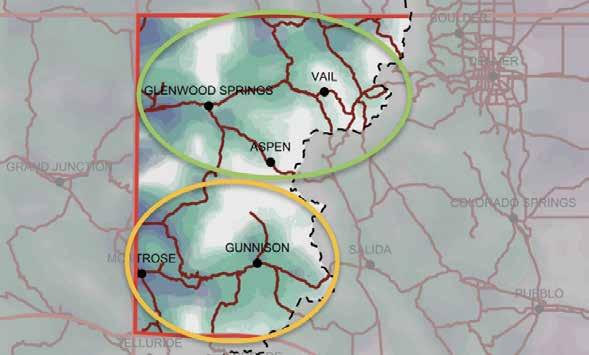
In a one-year agreement announced in September between Colorado Parks and Wildlife (CPW) and the Oregon Department of Fish and Wildlife, Oregon will be a source for up to 10 wolves for the Colorado gray wolf reintroduction effort. These wolves will be captured and translocated between December 2023 and March 2024.
The CPW Commission approved the final Colorado Wolf Restoration and Management Plan in May, clearing the way for CPW biologists to introduce gray wolves in the Western Slope area and meet the voter-approved deadline of reintroduction by December 31, 2023.
“In 2020, Colorado voted to reintroduce wolves to our great state by the end of 2023. Colorado Parks and Wildlife and our administration have worked tirelessly to safely reintro-

duce wolves consistent with that voter-mandated deadline," said Colorado Governor Jared Polis.
He continued, "To that end, we have met with many stakeholders, held public meetings, and collected feedback from more than 3,400 Coloradans. The Colorado Parks and Wildlife Commission voted unanimously in support of the wolf reintroduction plan. We are deeply grateful for Oregon’s partnership in this endeavor, and we are now one step closer to fulfilling the will of the voters in time.”
“We are grateful to the Oregon Department of Fish and Wildlife for working with our agency on this critical next step in reintroducing gray wolves in the state,” said CPW Director Jeff Davis. “This agreement will help ensure Colorado Parks and Wildlife can meet its statutory


mandate to begin releasing wolves in Colorado by December 31, 2023.”
“Oregon has a long history of helping other states meet their conservation goals by providing animals for translocation efforts. Some of our wildlife populations were also restored thanks to other states doing the same for us, including Rocky Mountain elk, bighorn sheep, and Rocky Mountain goat,” said Oregon Department of Fish and Wildlife (ODFW) Director Curt Melcher. “The wolves will come from northeast Oregon, where wolves are most abundant in the state and where removal of 10 wolves will not impact any conservation goals.”
CPW will begin capture operations this month, with ODFW providing some assistance by sharing wolf location information and best practices for wolf capture. CPW will be responsible for all costs associated with the capture and transport of wolves.
• CPW staff will work with contracted helicopter crews and spotter planes to capture wolves.
• Wolves will be tested and treated for diseases at the source sites.
• Collars will be placed on wolves and physical measurements will be done in the field in Oregon.
• Wolves will be crated in sturdy aluminum crates and transported to Colorado either by truck or airplane.
continued...
Animals with major injuries — things like having several broken canines, missing eyes, fractured or missing limbs, mange or lice infection — will not be chosen for reintroduction. CPW will make efforts to transplant wolves that have not been involved in repeated depredations.
“The wolves will be released at select sites in Colorado as soon as possible once they arrive in the state to minimize stress on the animals,” said CPW Wolf Conservation Program Manager Eric Odell. “CPW will aim to capture and reintroduce an equal number of males and females. We anticipate that the majority of animals will be in the 1- to 5-year-old range, which is the age that animals would typically disperse from the pack they were born in.”
For more information, visit CPW’s Stay Informed page at cpw.state.co.us/learn/ Pages/Wolves-Stay-Informed.aspx. You can also find the Colorado Wolf Restoration and Management Plan by visiting cpw.state.co.us/ Documents/Wolves/2023-Final-CO-WolfPlan.pdf
regulatory uSe cHangeS at Beaver lake
Hello Marble (or nearby) Citizens,
We are writing to inform you of changes to allowable uses at Beaver Lake.
Colorado Parks and Wildlife (CPW) updated their management plan, making it illegal to use Beaver Lake for several historic uses, including:
• Dogs. “Dogs are only allowed while actively hunting, training for hunting, or during Division licensed field trials.”
• Water contact activities. “Swimming, wading (except for the purpose of fishing or hunting), waterskiing, surfing, sail surfboarding, scuba diving, and other water-related activities which put a person in contact with the water” are forbidden at Beaver Lake.
• “To launch, or take out vessels, except those being actively used for fishing and/or hunting.” A vessel “means every description of wa-
tercraft used or capable of being used as a means of transportation of persons and/or property on water. This includes but is not limited to single and multi-chambered stand-up paddleboards, float tubes, and tubes.”
• Biking. It is illegal “to operate any form of vehicle, or bicycle (motorized or non-motorized) except on established roads open to public motor vehicle use or within designated camping or parking areas.”
• Unlicensed occupation. It is illegal “to enter, use or occupy any State Wildlife Area or portion thereof for all persons 16 years of age and older without: a hunting license valid for the current license year, a valid fishing license, or a valid Colorado State Wildlife Area pass.”
We are currently in a year’s ‘grace period’ during which CPW personnel will periodically patrol the shores of Beaver Lake, and, if not fishing, people will be told that their usage is, in fact illegal. Illegal use will be enforced next year.
If you have opinions about allowable uses at Beaver Lake, you can contact CPW by emailing Matt Yamashita at Matt.Yamashita@state.co.us.
Thank you!
The Marble Crystal River Chamber “It’s just our nature!”