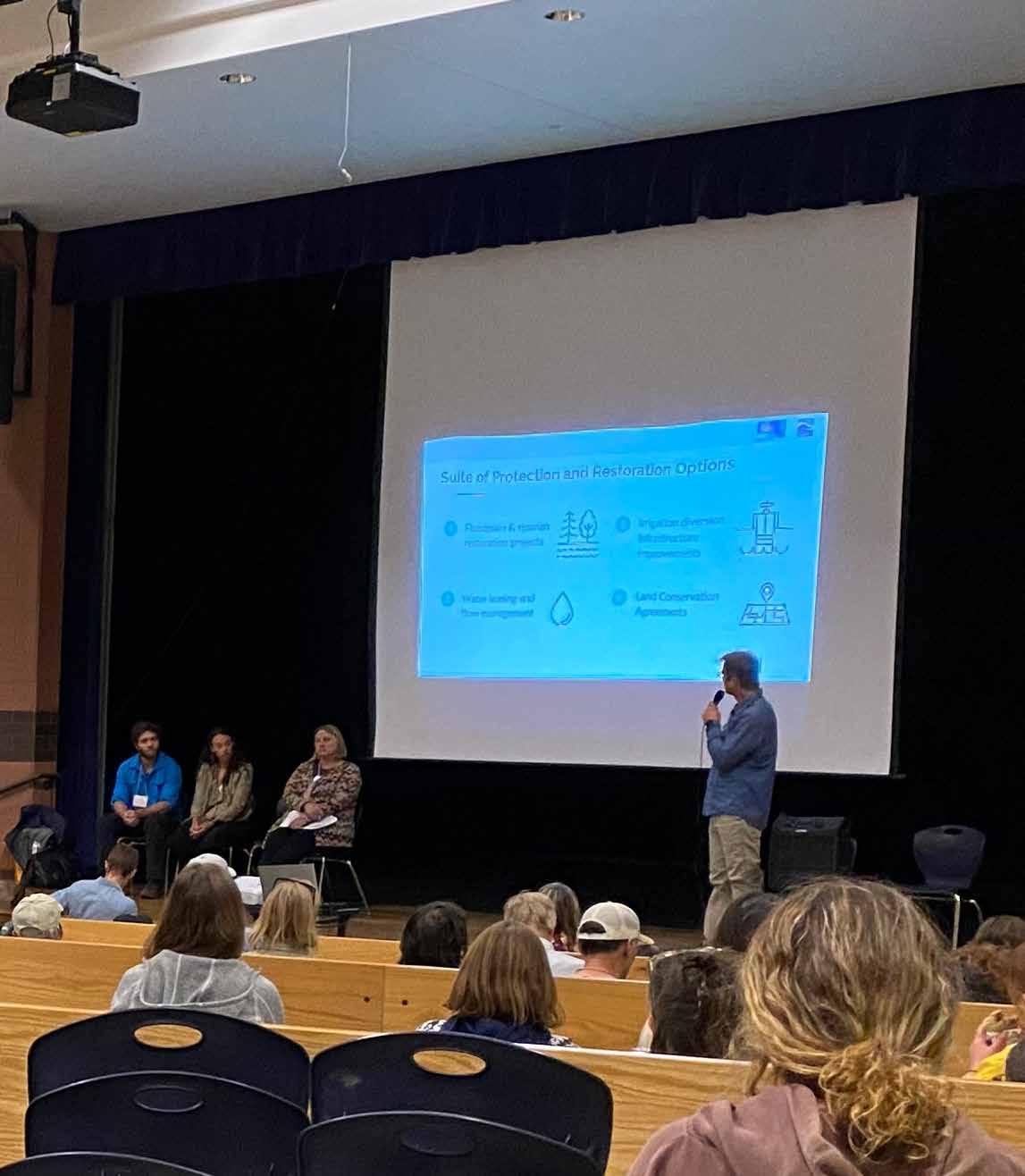
Photograph by Gentrye Houghton.
Through the summer months, a group of local residents have been studying a range of tools that could be used to protect the Crystal River from dams and out-of-drainage diversions. This group is an advisory body consisting of Gunnison and Pitkin County residents of the Crystal that will report their findings in January 2024 to the respective County commissioners.
At the Crystal River Community Summit held at the end of October in the Roaring Fork High School auditorium, residents of the Crystal met and had a chance to learn about the various options available to protect the Crystal River. Residents were asked to look at a range of legal tools that could be used to protect the river and to score them against a set of criteria that included durability, respect for local water and property rights, protection of a healthy river corridor, and prevention of dams and out of drainage diversions. Wild and Scenic Designation stands out in each one of these categories.
The Wild and Scenic Rivers Act, a federal legislation adopted by Congress in 1968 to protect premier American rivers is considered the gold standard to protect rivers. It has all the words you want to hear: your river must have no dams, must not divert water out of the drainage, and must allow the river to continue to flow its natural course. So, this is exactly what we need if we want to give the Crystal River the best chance of remaining free-flowing in perpetuity. We need Wild and Scenic protection for the waters of our river and we need it now!
Chuck Downey Redstone Wild & SceNic deSigNaTioN
Dear Editor,
I was excited to see so much enthusiasm for protecting the Crystal River at the Community Summit last week. Thank you to the experts who presented information on the different tools we have available to us to help keep the Crystal River as it is today. Each of these different policies and regulations could provide us with good opportunities for protecting the river for future generations, but one of them rose to the top: Wild and Scenic designation. In a time where water is becoming more and more valuable, the pressure to tame and control our rivers will increase. That is why we need to use the most robust tool available to ensure a free-flowing future for the Crystal. The Wild and Scenic Rivers Act is the “gold standard” of river protection because it is flexible enough to include our community’s specific needs, while ensure it remains as it is now, well beyond our lifetimes. We should think in terms of future generations and pursue a Wild and Scenic designation for the Crystal River.
Sincerely,
Denny Meredith-Orr Redstone
& Marble Times
Mission Statement: To provide a voice for the residents of the Crystal River Valley; to bring attention to the individuals and local businesses that are the fabric of the Crystal Valley region; to contribute to the vitality of our small town life.
EDITOR AND ADVERTISING SALES
Gentrye Houghton gentryeh@hotmail.com • (806) 374-0055
CONTRIBUTORS
DJ Sugar Monkey
DISTRIBUTION
The Crystal Valley Echo is published monthly, and is distributed throughout the Crystal Valley.
NEWSPAPER BOX LOCATIONS: Third Street Center • Village Smithy Carbondale Post Office • Carbondale Park & Ride
The Marble Hub • Redstone General Store www.thecrystalvalleyecho.com
We can’t do it without you. In an economic climate where many established news outlets continue to scale back or close, your support goes directly to writers living in the Crystal Valley!


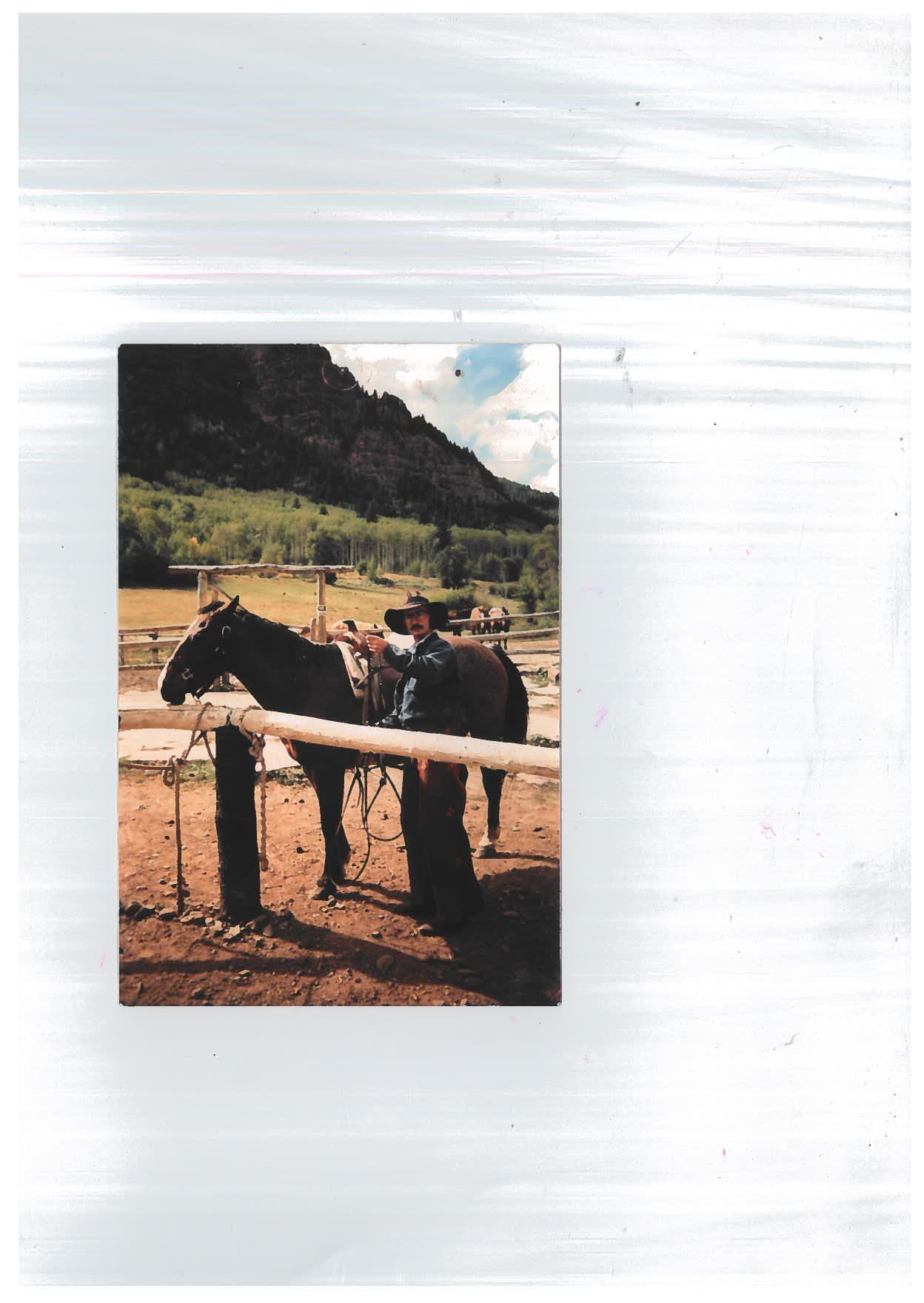
He passed away in August of 2023 at the age of 61. Jerome is missed dearly by his family and close friends Kevin Mainer, Claudette Mainer, and the entire Mainer Family.
Fond memories of our time working, laughing, and enjoying the mountains will be with Chris and

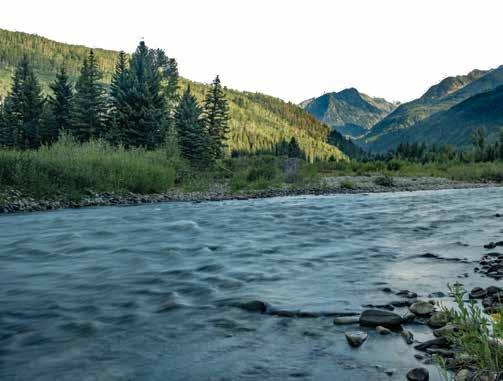
The Crystal is our lifeline up here. It’s been an important element to the Redstone Inn, to our hospitality, our heritage tourism, and our entertainment. This is one of the important places in time that should not change.”
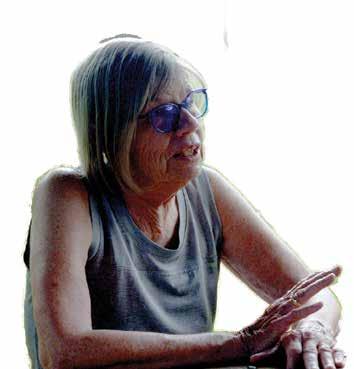
Deborah Strom Former General Manager, Redstone Inn

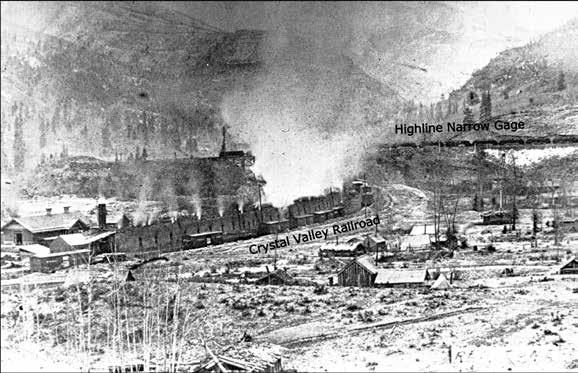
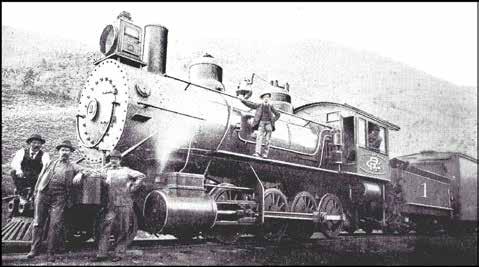
Redstone in 1900 consisted of the coke ovens, the adjacent shack and tent encampment, and the rail depot, all to the west of the Crystal River. The Highline Narrow Gauge brought the coal mined in Coalbasin to be "cooked" in the coke ovens into high-grade coking coke, then shipped by the
[According to H Lee Scamehorn’s Pioneer Steelmaker in the West, The Colorado Fuel and Iron Company 1892-1903, John C.] Osgood now controlled this industrial giant of the west, Colorado Fuel & Iron (CF&I): the company's fuel lands included 69,000 acres containing estimated 400 million tons of steam, domestic, coking, gas, smithing, or anthracite coals; 14 mines were operating though the state and producing some 12,000 tons daily; there were 800 ovens in different localities producing about 25,000 tons of coke monthly; iron lands amounted to
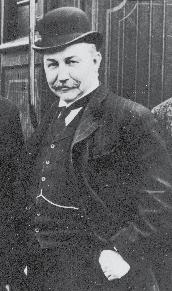
2,311 acres and iron mines in production were turning out 900 tons daily; the company owned and operated the only integrated Bessemer plant in the west, with three blast furnaces having a combined capacity of 400 tons of foundry pig, or ferro-manganese iron daily; the rolling mill had a capacity of 500 tons of blooms and 300 tons of rails daily, and the merchant mill could turn out 40 tons of merchant iron daily, plus a quantity of light rails; the cast pipe foundry yielded 40 tons, and the spike mill 5,000 pounds in a shift.
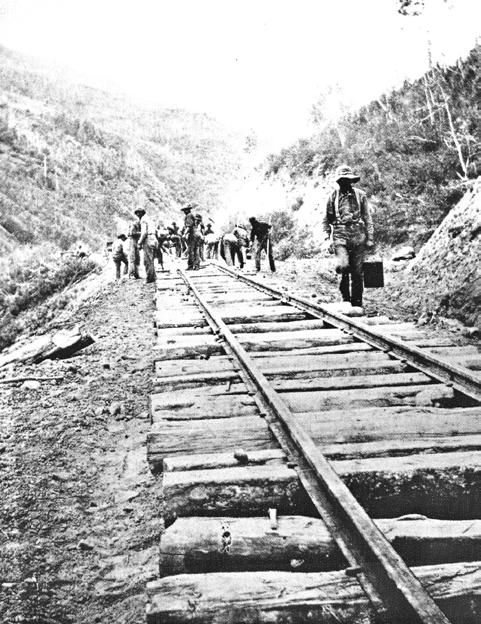
The same year that Osgood gained control of the great resources of this new corporation, he began with characteristic alacrity the development of the Crystal Valley's high-quality coking coal at Coal Basin, the claims to which he had acquired some years ago and then sold to the corporation he now controlled. Under his direction, the CF&I Company caused the incorporation in 1892 of the Crystal River Railroad (CRR), which took over the equipment and right away of a number of companies that had already tried, without success, to provide adequate transportation along the Crystal. Construction of the line began the same year, as did development of the mines at Coal Basin, some 12 miles up Coal Creek, west of Redstone, and construction of the beehive coking ovens at Redstone.
However, this development was suspended, along with most of the corporation's other expansion projects, for five years after the crash of silver prices in 1893. The closing of many smelters throughout the state caused an immediate reduction in the demand for coal and coke. In fact, the depression in its business was so severe that the corporation struggled from month to month for the next two years barely able to ward off insolvency. At the same time, a coal miner's strike lasting over two months also took its toll, as did difficulties Osgood ex-
perienced in marketing iron and steel manufacturers.
However, after fuel demand had picked up again and the corporation had managed to raise substantial new capital, work on the whole Crystal River project resumed in 1898. The railroad consisted of a single-track standard gauge rail line running 16.6 miles from Carbondale to Redstone and 4 miles further on to Placita, where an anthracite mine was run for a short time.
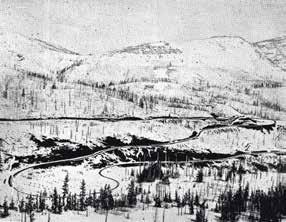
At Redstone, the narrow-gauge "High Line" was quite an experience; the line climbed over 2,200 feet in the 12 miles by curving constantly, some of the curves being as sharp as 40 degrees. Osgood liked to call the line the "Columbine Road" after the outstanding flower displays along the way, but "High Line" was the term more generally used.
At 9,500 feet, Coal Basin was one of Colorado's highest mining camps and afforded the miners living up there spectacular scenery with a lot of beautiful as well as some very rugged
NOTICE IS
that, pursuant to § 32-1-1001(2)(a), C.R.S., the Board of Directors for the Redstone Water & Sanitation District will consider fixing and/or increasing fees, rates, or charges for broken meter fees and tap fees at a public meeting to be held on December 12th, 2023, at 7:00 P.M, in-person at the Redstone Inn. Any interested member of the public may attend the public meeting.
weather. The railroad and other development work necessary to open the mines at Coal Basin and the coking ovens at Redstone was completed by 1900 and production went into full swing.
To be continued in The Crystal Valley Echo's December edition.
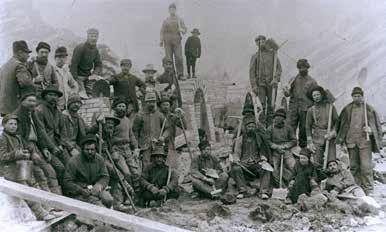
Author Mary Boland (1936-2017), moved to Carbondale in 1973. She was Glenwood Bureau Chief for the Grand Junction Sentinel, a Professor at Colorado Mountain College, and a prolific writer for many national and local publications. This is one article, reprinted with permission, from her publication The History of the Crystal Valley. Mary Boland's article is enhanced with photos found in The Crystal River Pictorial by Dell McCoy and Russ Collman.
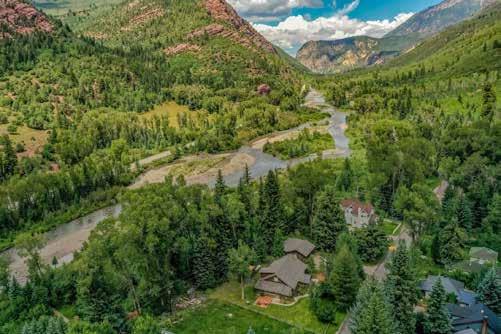

Priced under current appraised value of $1,380,000. Highly sought after property on the Crystal River Offering 2,200 SF, 3 BR/2BA, open floor plan, large rock wood burning fireplace.All new kitchen, baths, flooring and paint. New windows, new boiler and new roof. Oversized 2 car garage & additional storage/workshop Direct and easy access to 200+ ft of privately owned river frontage. Quiet end of town on almost an acre. ADU potential and ability to park/store all your toys All Colorado recreational activities are steps away from this one-of-a-kind property


Another month, another meeting of the Town of Marble Board of Trustees. A slight Fall chill to the air freshened me up as I sauntered my way up the hill to the Marble Community Church Fellowship Hall. Soon, I imagined, there would be a plush carpet of yellow leaves to pave the way. Alas, not for another couple of weeks or so.
I grabbed an obligatory can of Squirt! from the fridge and took a seat next to Paul Wahlbrink who glanced at the drink disapprovingly and mentioned something about the dangers of high blood sugar as I placed it on the floor next to my chair. I thanked him for his concern, noting how jazzy he looked in a cozy-looking multicolored Pendleton wool hat and Carbondale and Rural Fire Protection District sweatshirt combo. Sadly he declined my offer to take his picture, fearing that if it were published he would be coerced into buying his entire team of fellow firefighters ice cream. This was a shame because he looked really dashing.
Present for the meeting were Mayor Ryan Vinciguerra, Amber McMahill, Larry Good, and Tony Petrocco, with just Emma Bielski absent. Also present were Town Administrator Ron Leach, Administrative Assistant Alie Wettstein, and the indispensable Terry “El Tel” Langley taking the minutes. There were a dozen residents in attendance, together with Ryan Kenney who sits on The Marble Hub board and manages its books, and John Armstrong from the Crystal Valley Environmental Protection Agency (CVEPA).
When I greeted Good he asked me how he looked. I offered up “snazzy” but this fell a little short of the “resplendent” he had been fishing for. Either way, he cut a fine figure in a longsleeved blue cotton shirt worn over a white t-shirt, his magnificent head of silver hair tied back in a signature ponytail. Not to be outdone, Tony Petrocco sat next to him looking studious in a pair of black spectacles with sequined temples and a gray hoodie.
I wondered if “Two Bags” has as many pairs of glasses as Richard Wells has baseball caps (10+ Dickie claims, but I think the real number is much larger). Managing to take a quick photo of the Mayor, I scurried back to my seat before the meeting got underway just 10 minutes past the hour.
The first piece of business was a discussion with Ryan Kenney about the Marble Bank Building (home of The Hub), and its potential transfer to the Town of Marble. Ron Leach explained that there had been a discussion about The Hub building (currently owned and "maintained” by Gunnison County) at the August County Commissioners meeting. When asked about the state of the building, Ryan Kenney reported that the County had deferred much of the maintenance needed over the past years.
In 2022 the County spent about $5,100 for propane, electric service, and insurance. If controlled by the Town, Marble would be on the hook for all repairs. The building requires a new roof and a fresh coating of paint both inside and out. Good added that there are structural issues with the upper floor and a thorough assessment of the condition of the building would be necessary, for which there may be grants available.
McMahill said she was in favor of continuing the conversation with the County over the transfer of ownership but voiced a concern that the septic system might be shared with the adjacent County building. Kenney clarified that the County building and The Hub building are on one lot and that this issue would indeed need to be addressed. He added that he “would welcome the opportunity for the town to own it.”
Good pointed out that it was Marble citizens who had restored the building in the first place; Petrocco informed those present that in 2008 a
quote had been sought for its complete renovation and that the estimated cost had come in at an eye-watering $200,000. He pointed out that “things change” with each County administration but the current team seemed to be more willing to work with the Town.
Mayor Vinciguerra also expressed an interest in the transfer but was concerned with the potential cost of renovation particularly in light of it being a historical structure. Leach agreed to continue the conversation with the county since the entire Board seemed interested in potentially acquiring the building. When asked whether this would be a transfer or a purchase, he said the conversation, so far, with Gunnison County had centered around a free transfer.
The meeting then moved on to the continuation of the discussion to hammer out the language of a draft ordinance approving residential structures in a business zone (as yet, to my understanding, not designated) in the Town of Marble, the intent of which is to better provide employee housing via the prioritization of long-term over short-term rentals. There was a brief exchange over whether short-term rentals should be actively discouraged.
The Town has been struggling somewhat with how to move forward with mixed-use zoning issues when faced with a strong need for employee housing and a dearth of real estate ordinances, particularly relating to rentals. Good opened the bidding at a minimum one-year lease term but settled gracefully at six months after Mayor Vinciguerra highlighted that most businesses in Marble are seasonal and that it would be unrealistic to expect employees to sign a lease for a period longer than that.
The consent agenda was rapidly approved, and the meeting moved on to Land Use Issues. The first of which was the Parker/Collins proposed lot line adjustment, which was tabled once

again by Leach pending the provision of proof of title and necessary paperwork.
The second item on the Land Use agenda was the consideration for approval of the draft Marble Wetlands Preserve Management Agreement. The draft contract involves the Town of Marble, Trust for Land Restoration (TLR), and Aspen Valley Land Trust (AVLT) and stipulates that the Town take care of the maintenance and enforcement of the Wetlands area for an initial period of five years.
Leach voiced some concerns over the red-lined agreement and had spoken with Pat Willits from TLR, in particular over the change extending the initial management period from one year. Willits had explained that AVLT felt the five-year term would keep them from coming back every year if the conservation easement work took more than 12 months to complete.
Town attorney Kendall Burgemeister also raised some concerns, particularly, as Good pointed out, that the property is not located within the Town of Marble but the Town is nevertheless expected to manage the land with no enforcement capability. John Armstrong, from CVEPA, informed the Board that the Town would have the same power as a private property owner, so could rely on the Sheriff’s office for enforcement. He said a Town employee could check on the property and the Sheriff could be brought in for more serious issues. They would be backed, he assured, by the 33 enforcement code specifically designed for outdoor recreation.
Good emphasized the interim nature of this concern given that the legal transfer of the Wetlands area to the Town is yet to be completed. Petrocco asked whether the current owner (AVLT) could go ahead and apply for annexation to ensure the process is underway when the Town signs the agreement and eventually takes ownership.
Armstrong said that the goal was for it to be annexed simultaneously upon transfer. He added that the conservation easement was still in draft form and that it required a manager to be appointed before the easement could be completed. He said Burgemeister had expressed a concern that the Town had not been part of the conversation around the easement and had deferred to AVLT because of the expertise they bring to the process. Armstrong said that he hoped to have the management agreement signed by November 15th, claiming that the three groups involved in the agreement were “in this together” and that he felt that trust between the parties would grow through cooperation.
Be that as it may, legal concerns remain about the details of the management agreement and I began to feel that no amount of sugary drinks could serve to anesthetize me from the ensuing saccharine and largely vacuous mumble about just how nice and trustworthy everyone thought everyone else was. Not least of these concerns was the issue, voiced by the ever-vigilant Amber McMahill of who would be responsible for taking out the necessary insurance policy required for the area.
In its current form, the agreement allows for AVLT to host events at the Wetlands but leaves the Town on the hook to provide insurance for those events without knowing what they entail. McMahill felt that it would be more equitable to insist that whichever group uses the property carry the insurance. Good steered the debate back to the draft agreement suggesting the Town opt for an initial one-year management period with an automatic renewal clause requiring any party who wants to end the agreement to communicate that desire.
Ron Leach insisted that any agreement reached
needs to make it clear that the Town is not indemnifying any other party. Suffice it to say, there is plenty to be hammered out before the November 15th deadline rolls around.
The next item on the agenda was Committee Reports. A discussion of the use of flowcharts for municipal governance was tabled due to Emma Bielski’s absence; although, she provided an update on the jailhouse restoration project which was presented by Alie Wettstein. Since the last meeting the Board of County Commissioners have donated $5,000 from their discretionary funds and AVLT donated $100. The total received to date is just under $24,000, approximately a quarter of the sum needed to complete the project. Bielski is also seeking an extension on the GOCO grant ($10,000).
The Parks Committee report was presented by Brent Compton -- he introduced Lindsay LaCour as the newest member of their team. LaCour has offered to pursue grants on behalf of the Town. Her first goal is a Peer Grant Preservation Fund for the jailhouse for between $1,000 and $10,000 which does not require matching funds. Approval is needed from the Town to submit the application before the February 1st, 2024, deadline. Also on her radar are three other historical preservation grant opportunities including one that is from $100,000 up to $3 million.
Larry Good asked LaCour if she expected to be compensated for her work but she explained she would be volunteering her time. Thank you, Lindsay!
Brent Compton reported that the Parks Committee had received several requests for memorial benches and plaques to be placed in the Mill Site Park. He expressed his concern for how many there might be and what form they might take. As a consequence, the committee has announced a moratorium on accepting memorial requests until they have agreed on specific guidelines. In the meantime, he suggested people might ask to plant trees instead.
When Amber McMahill asked whether this would affect the Symposium sculpture garden, Compton said it did not and mentioned work



that had been carried out on the border with the Symposium property. The committee has installed “Closed for Revegetation” signs as well as boulders marking the trail, some of which have shockingly been pulled down in an act of vandalism and tossed into the river using a skid steer. Good chimed in, “That’s a big city problem we’ve got here in Marble.”
There was one new business item, a business license application from Chris Palmer, owner of Palmer Builders. Palmer explained that he would be looking to establish a snow removal and construction services business, assuring the Board that all work would be done and any building materials stored on his customers’ premises, thereby minimizing congestion around his house. The motion to approve his application was passed unanimously.
The last item on the agenda was a review of the draft 2024 Budget from Town Administrator Ron Leach. Leach thanked Ryan Kenney, who is also the Town’s bookkeeper for being present. He pointed out that property valuation appraisals have soared by about 50% year on year so associated tax revenues should go up from $30k to $41k in 2024. He estimated total revenues of $362,000 for the coming year with expenses at $352,000, explaining that the budget remains fairly static from year to year.
When quizzed by McMahill about the increase in wages listed in the draft spreadsheet, Leach clarified he had contemplated a 5% raise for employees. McMahill felt that compensation costs would probably come in higher than budgeted given the increased management responsibilities (e.g. the Wetlands) the Town will be taking on.
Park expenses have been separated from the general fund for 2024 and are budgeted at $25,000. On the subject of anticipated
expenses for the campground, Leach said that in the past there had been an unwritten agreement with The Marble Hub for handling campground reservations, with The Hub receiving a 20% cut of all reservations. Leach proposed that that agreement was no longer necessary on account of there being a full-time campground manager and the availability of other more cost-effective booking solutions.
He suggested that the Town continue to use The Hub as an information center and subsidize their operation in some way other than paying them 20% of campground bookings. The Hub currently generates approximately $1,500 in sales tax for the Town and the Board spoke to the importance of it as an information center. Kenney stated that ownership of the building might open up some potential for
more revenue but that the business will probably not be self-supporting. He added that The Hub’s biggest expense is payroll due to the lack of volunteers.
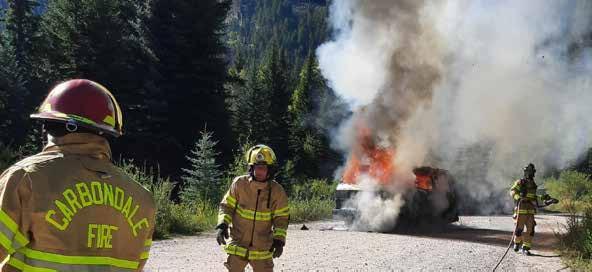
In closing, Leach praised the service that the volunteer fire department provides, including the recent vehicle fire at Hermit’s Hideaway and its response to a medical emergency that resulted in a saved life. Thank you to all involved!
The next meeting of the Board of Trustees will be held on Thursday, November 2nd at the Marble Community Church Fellowship Hall at 7 p.m.

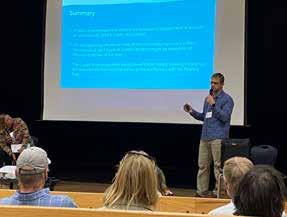
Nearing a decade of discussions, a Wild and Scenic designation on the Crystal River is one topic that elicits an array of responses. Many are uncertain how this federal designation may affect water rights, property rights, land management, and tourism. A steering committee was formed earlier this year, and has identified six additional alternatives for protecting the river; on the first of many cold, drizzly evenings during the end of October, over 200 residents from Carbondale to Marble gathered at the Roaring Fork High School to learn about these options.
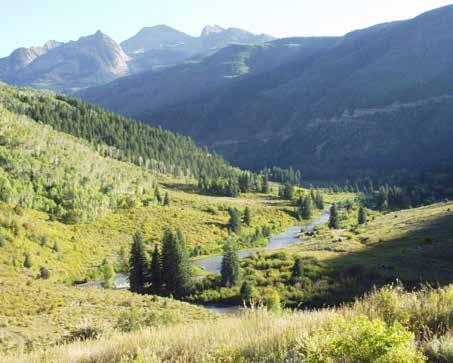
The Crystal River is celebrated as a free-flowing, wild river that is admired by all for its wildlife habitat, ability to sustain local agriculture and residences, recreational opportunities, and of course, its scenic beauty. While there may not yet be a consensus for how the river can be protected, there is a consensus that it should be protected.
previouS ThreaTS: The dam affair
In Protecting a Valley, Saving a River, Darrell Munsell writes, “The West Divide Project was a multipurpose water resource development in Pitkin, Garfield, Mesa, and Gunnison counties for agricultural, municipal, and industrial uses.” Last year, Bill Jochems, a retired attorney, and long-time Crystal Valley resident, explained that the expressed purpose of the project was to pump water out of a Placita reservoir over Huntsman Ridge to irrigate hayfields in an area called West Divide, near West Divide Creek south of Silt, Colo.
“Those were amazing proposals,” he said. “Redstone would have been under a couple of hundred feet of water, with the top parts of the Redstone Castle, I think, being above the water line. It was just insanity.”
The Redstone plan, or the so-called Osgood reservoir, would have been located just north of Redstone Village and was originally proposed to be 129,000 acre-feet that would have backed
water up to Placita. Another tall dam was proposed at Placita to be 62,000 acre-feet. The Colorado Water Conservation District (River District) filed the original water rights during the late 50s and was adjudicated by the water court in 1958.
Jochems explained that in Colorado, one would have to go to water court every six years for a showing of diligence. The legal test is that you can and will build the project. “‘Can’ meant that you have the money, and ‘will’ meant that you have the intent,” he said. “You also have to show that you’ve made progress.”

By Gentrye Houghton
Jochems never believed the River District was trying to push the project forward and said that the progress they’d shown during court hearings was constantly shifting around as new drawings: New engineering drawings and then fancier drawings — all things that could be done from a desk.
“The only thing that was ever done on the ground,” he said, “was the drilling of one hole up there by Placita to get a characterization of the rock to see if it could properly support the dam. Other than that, everything was on paper.”
During the late 2000s, groups like the Crystal Valley Environmental Protection Association (CVEPA) and the Crystal River Caucus wanted to push opposition to the project, and Jochems reinstated his law license to represent them. According to Protecting a Valley, Saving a River, the group called the River District’s bluff and “filed a motion in water court asking the judge to rule that the planning period (50 years) for the West Divide Project had expired and that the water district had not been diligent in perfecting their water rights.”
NOTICE is hereby given that proposed budget has been submitted to the Redstone Water & Sanitation District for the ensuing year of 2024; a copy of such proposed budget has been filed in the office of The Redstone W&S District, where the same is open for public inspection; such proposed budget will be considered at the regular meeting of the Board of Directors to be held at the Redstone Inn on December 12th, 2023, at 7:00 pm.
Any interested elector of the Redstone Water & Sanitation District may inspect the proposed budget and file or register any objections thereto at any time prior to the final adoption of the budget.
In August 2013, “the end of the dam affair” was celebrated in Redstone Park. The River District settled out of court and relinquished all water rights to the Crystal River Valley. Thus, the push for a Wild and Scenic designation began as what many felt was the best approach to protect the river from any potential damming projects, but continued to be met with resistance from some Marble and Gunnison County residents.
In 2018, due to exceptionally low river flows, a Call was put out in August and September as there was not enough water at the Sweet Jessup Canal diversion — meaning that all junior users' access to their water rights would be cut off. However, that’s not exactly what happened becuase there had never been a call on those particular water rights before, the junior users weren't prepared with an augmentation, or water storage plan.
Water law in Colorado is governed by the Prior Appropriation System. This is the main system used to manage water rights throughout the western United States where water resources are sparse. In this system, a water right that is legally established is given a date and an administrative number. During periods of water shortage, this administration number is then used to de-


termine which water rights holders get to use water and which ones don’t.
“Senior water rights are those that have a higher priority administration number, in which the earlier the date of adjudication the more senior a water right becomes,” says Ryan Kenney, Manager for the Redstone Water and Sanitation District. Adjudication refers to the court proceeding in which a judge validates your water rights.
“A ‘Call’ on the river occurs when a senior water user is no longer receiving their appropriated amount of water at their headgate,” Kenney said. “The harmed senior user initiates a ‘Call’ to the Water Engineer who then implements a process to restore the appropriated amount of water to the user’s headgate.”
The Water Engineer will begin telling junior users, in order of least priority, that they must cease use of their water immediately, and will continue down the list until the appropriated amount of water is returned to the senior user’s headgate. The cease and desist remains in effect until there is enough excess water in the river to reinstate their usage.
In 2018, there were several neighborhoods identified, as well as the Town of Marble and Carbondale, affected as well as many other junior users who could not use their irrigation ditches. “Accesses to water was not shut off for anyone affected by the 2018 Call,” said Bill Blanton, local real estate agent and resident of the Crystal View Heights subdivision, “but they wanted to see that efforts are being taken in the way of an augmentation plan."
Today, Wendy Ryan, Project Manager for Colorado River Engi-
neering, continues to work on a plan solution. “We are exploring several new and existing storage facilities to be used for augmentation as well as the Janeway ‘natural infrastructure’ project,” she explained. “Our target is around 50 acre-feet of total supply. For comparison, Beaver Lake is about 100 acre-feet when full.”
She explained that you can think of the acrefoot volume in terms of flow rates. So, to store 50 acre-feet, that would be 1 cubic foot per second (cfs) for 25 days, or 2-cfs for 12.5 days, or 3-cfs for 8.4 days, and so on.
crySTal river Wild & SceNic aNd oTher alTerNaTiveS commiTTee
In 2002, The U.S. Forest Service found the Crystal River eligible for designation under the Wild and Scenic Act of 1968. This federal protection can be customized for the needs of each river and is introduced as a bill on the congressional floor; however, Congress favors bills that have widespread support and consensus amongst surrounding residents.
As the designation struggled to meet much traction from upper Crystal River residents, a $35,000 grant was awarded to Wilderness Workshop by Pitkin County Healthy Rivers in 2021. The goal was to launch a public outreach and educational campaign for the designation.
Just a year later, representatives from the Town of Marble, Gunnison County, Pitkin County,
and the Colorado River District formed the Wild & Scenic Feasibility and announced earlier this year the selection of Wellstone Collaborative Strategies and P2 Solutions to facilitate and lead a stakeholder process.
The Collaborative along with Co-Facilitators Wendy Lowe and Jacob Bornstein organized the initial Community Summit in April to gauge interest and form the steering committee. Over 140 people filled the fire station in Marble, and the 25-person committee was selected. As the group identified other opportunities for protection for the Crystal River, the name morphed into Crystal River Wild & Scenic and Other Alternatives Committee.
“We’re going for the longest name ever,” joked Lowe as she opened last month’s meeting.
There are four segments of the Crystal River deemed eligible for designation and include both the north and south forks of the river, beginning at their headwaters and then downstream to the Sweet Jessup headgate. This is approximately 39 miles, which encompasses approximately 7,500 acres of National Forest Service land and 4,500 acres of private land.
The outstandingly remarkable values that are recognized in managing the Crystal River are scenery, historical, and recreational.
According to the Steering Committee’s documentation, much of the Wild and Scenic dis-
T he a genda will include election of board member s and changes to the bylaws, as well as a r ecap of various topics discussed by the caucus this past year, including Wild and Scenic designation f or the Cr ystal River, shor t-ter m r ental policy, the Cr ystal Valley r ecr eational trail, and methane r elease in Coal Basin, among other topics. All r egistered voter s whose principal residence is in the Pitkin County por tion of the Cr ystal River water shed, or those who own pr oper ty in that area, ar e voting member s of the Cr ystal River Caucus. *Those member s who cannot attend the in-per son meeting may join via Zoom. A Zoom link will be sent to all member s on the caucus email list. If you ar e not on the list and would like to be, email . T he caucus does not share its email list! crcaucus@gmail.com
cussion among current committee members centered around questioning how much local flexibility exists, while others worried about the level of durability if Congress can change the protective status.
criTeria for evaluaTioN
Lowe explained the importance of understanding the eight criteria outlined by the Committee evaluating protective approaches. She said, “The questions for figuring out what the best course of action lies in that criteria, and they’ve tried to capture everything that matters.”
Steering Committee’s Criteria for Evaluation:
• Durable and effective protection: enduring, permanent, effective protection
• Prevention of dams and out-of-basin diversions: no jurisdiction, entity, or person could build an on-channel dam or out-of-basin diversion
• Sustainable recreation and tourism: recreation is better managed or upgraded to protect the river corridor
• Local agriculture & water rights: incentives are in place to keep water rights tied to land ownership
• Local control and property rights: current level of private property rights and water rights control, subject to local and state governmental regulations
• Healthy river corridor: opportunity exists to improve and enhance the resiliency of the natural hydrograph, water quality, ecosystem health, and riparian health
• Limited future development: prohibitive of future development near the river
• Implementation capacity and funding: resources, including funding, staff, and time, are dedicated and available for implementation, management, and maintenance. alTerNaTive
This is the “do nothing” option, as existing 1041 regulations allow local governments to identify, designate, and regulate areas and activities of state interest through a local permitting process. The general intention of these powers is to allow local governments to maintain their control over specific development projects even if the project has statewide impacts. In the past, these regulations have been enacted to halt, mitigate, or modify water projects.
Members of the Steering Committee expressed concern that this existing option may not be fully reliable as it depends on elected officials.
National Conservation Area designations are made by the Bureau of Land Management and designations for Special Management Areas are made by the U.S. Forest Service. These designations can vary widely and are adaptable to local interests.
Designations can be administered by the Secretary of Agriculture or designated by an act of Congress but allow for a local level of control. “While it has federal oversight, there can be more inclusion of local stakeholders in the process,” said Hattie Johnson, Southern Rockies Stewardship Director for American Whitewater, during an August educational webinar found on The Crystal Valley Echo's website.
She went on to explain that no two of these legislations are alike, there's new legislation every time, and gives a local stakeholder group a lot of room to compromise and work on the specific language. However, she said, “That can take a while; all of these processes take a while.”
“One disheartening thing is that the process for the Delores River has taken forever to put in place,” Lowe said. After two decades of discussion, the proposed
Pitkin County Open Space and Trails Announces Coke Ovens Open Space Agriculture Lease Out for Bid November 3rd - December 4th
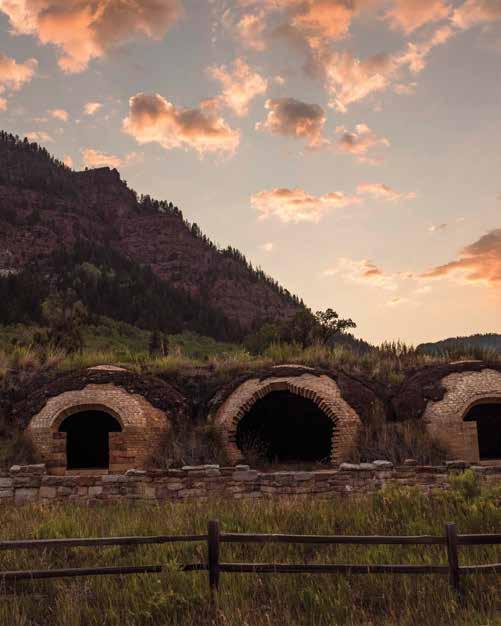
Pitkin County Open Space and Trails seeks proposals to lease agricultural land at Coke Ovens Open Space. Public bids are open from November 3rd through December 4th . The lease area includes 26 acres of pasture with flood irrigation and a corral with several small buildings. The lease rate is $650 per year.

bill was finally introduced to Congress this past March but remains in the proposal stage.
Local Management and Intergovernmental Agreements
Water rights holders or local governments could enter into a mutual agreement that requires high barriers, such as consensus, to change agreed-upon river management. Management options could include actions water users would take in times of drought to keep the river whole.
During the Steering Committee's discussions, some members thought this solution would not be very durable while others were concerned because it would only include current diverters and would not be protective enough.
Other localized protection and restoration options
During the Summit, Seth Mason of Lotic Hydrological presented on the subject and stated, "Projects and management options are available to supplement or provide an alternative to Wild and Scenic Designation."
The Steering Committee’s documentation states that other localized protection and restoration options are available, such as a combination of conservation easements, recreational

The Outstanding Waters designation can be awarded to streams with high water quality and exceptional recreational or ecological attributes, and the intent is to protect the water quality from future degradation. This program was established as part of the federal Clean Water Act and can be administered through the state’s water quality control commission. An Outstanding Waters designation does not affect current uses on streams; it only protects against activities with new or increased water quality impacts.
access projects, restoration, water conservation projects, and management work.
Mason's presentation states that "previous planning efforts can help direct community members in their thinking about what types of actions or projects might be beneficial on different stretches of the river."
The 2016 Crystal River Management Plan was mentioned during Committee discussions as a place to look for some of these opportunities. However, there was some discussion that these opportunities, such as conservation easements, could be tied to other actions working to protect the water itself or be paired with some of the other options.
Wilson, Owner and ASE Master Technician
Import and domestic car specialist Pick up and delivery available 35+ years of experience
Monday - Friday 8 a.m. - 5 p.m.
333 E State St. Marble, CO 81623 marblemotorworks@gmail.com (970) 366-0708

The Crystal River currently has four instream flow (IFS) rights, two appropriated in 1975 and two appropriated in 1980. These water rights holders could initiate a call should the in-stream flows go below a certain point for anyone with a junior water right.
Concern amongst the Steering Committee was expressed for junior water rights, but others mentioned that adding a water right for peak flows could prevent future diversions. It was noted by one participant, in particular, that because these are water rights, they are very durable and cannot be taken away once established.
Instream flows are at their most critical levels during July and August. In discussing an augmentation plan, Wendy Ryan explained that augmentation would further protect the ISF water rights from injury by having a local replacement supply when the decreed rates are short. “Replacements will be made for those users junior to the ISF,” she said. “Having augmentation available for existing users will empower the ISF given the

At the Redstone Inn Redstone programs are open to all! RSVP: (970) 920-5432
NOVEMBER 14 & 28
• 12:00 p.m. – Lunch ($10)
RSVP by noon the Friday prior – space is limited. Plated lunch will be served. There will be a gluten-free option.
• 12:45 p.m. – Program
November 14: Bring Your Favorite Holiday Dessert
Bring a desert for all to sample, and the recipe if you are willing to share it.
November 28: Homecare and Hospice of the Valley
Informational presentation with Sylvia Allais, Executive Director of HCHOTV.
WANT TO BE KEPT IN THE LOOP? Send us your email address: (970) 920-5432 • seniors@pitkincounty.com
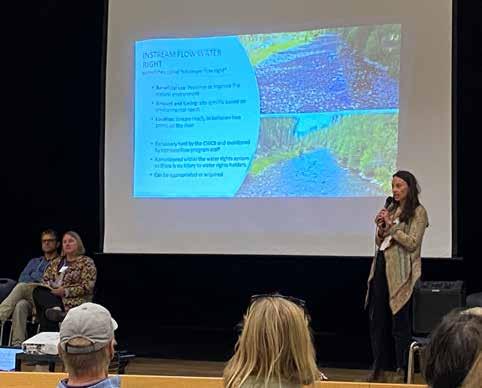
small amount of supply.”
When asked how these protective measures could affect augmentation, Ryan replied that while the proposed augmentation solutions would not impact a wild and scenic designation or any of the other alternatives, the issue for augmentation would be a federal or state-reserved water right for the amount needed to support the outstandingly remarkable values, which are not currently defined.
“That could easily be all remaining unappropriated water, which would limit the ability to develop additional water in the basin,” she said, “not only for augmentation, but any unanticipated future needs as well."
That could impact the ability to develop augmentation supplies, "Although," Ryan continued, "we would likely file conditional water rights needed before any designation. Though, I’m uncertain how wild and scenic designations handle conditional water rights.”
When we spoke to Wendy Lowe after the Community Summit, she’d just finalized inputting initial survey results and trying to flush out any clear patterns she could see. At the end of October, she wasn’t yet seeing any clear consensus as a way forward.
“It’s my impression that even the people who favor a Wild and Scenic recognize that it won’t meet all the criteria. At this point, the solution may be a combination of approaches bringing together everything that matters to all people,” she observed. “There’s an appreciation in the steering committee that a simple answer will not meet all their needs.”
Lowe and her co-facilitator, Jacob Bornstein, will analyze the data they receive and present the findings during the next Steering Committee meeting on November 16th
They’re encouraging people to do their research on the approach and fill out the surveys by November 14th. Surveys, along with additional information, can be found online by visiting www.surveymonkey.com/r/7FP7M3B; the educational webinars and information on each steering committee meeting can also be found at www.theycrystalvalleyecho.com/wild-scenic-stakeholder
“With so much division right now in the United States, it’s really great that so many people are willing to come together on this issue,” said Lowe. “It’s very clear that people think it’s a very special place that needs protection, but the question is how to do so.”
Fall is
and so are seasonal vaccines for Flu and Covid-19!
Everyone over the age of 6 months is encouraged to receive their seasonal vaccinations.
Flu and Covid-19 vaccinations can be administered at the same time.
Please talk with your Doctor about your recommended vaccinations and how to best protect yourself this winter.
Learn where vaccines are available at PitkinCounty.com or scan here:



Brought to you by Pitkin County Public Health.
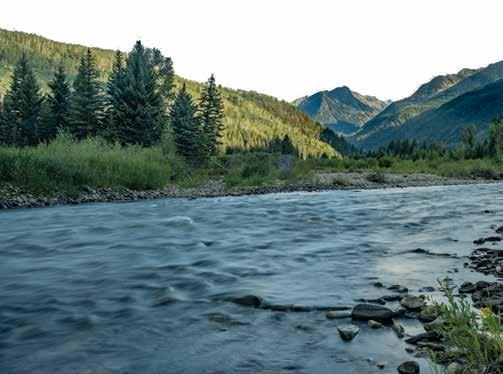
We get to hear the Crystal River every night through our windows. It’s soothing, it’s magic… There’s so much pressure on the Crystal and as one of the last undammed rivers, we need to protect places like this. My hope for the future is that the Crystal continues to stay as it is.”


In the fall of 2023 a few classmates and I boarded the bus to Cedaredge, Colo., a small town a few hours away from Marble. We stayed there for three and a half days learning all about the river and getting to know everyone from kids our age to retired people. One common theme that we all had was we wanted to help protect Colorado Rivers. We learned about chemistry, biology, and how to mildly electrocute fish. All in all it was an awesome experience. Everyone was so welcoming and kind and I would definitely come back next year. Thank you Pitkin County Healthy Rivers for making this opportunity and many more to come possible for our school.
As stated in the River Watch Manual "Colorado River Watch" program is a statewide volunteer water quality monitoring program co-sponsored by Colorado Parks and Wildlife (CPW) and River Science (RS). River Watch brings together education and environmental protection in a meaningful, hands-on program for Colorado students and volunteers.”
This opportunity was made available by Pitkin County Healthy Rivers.
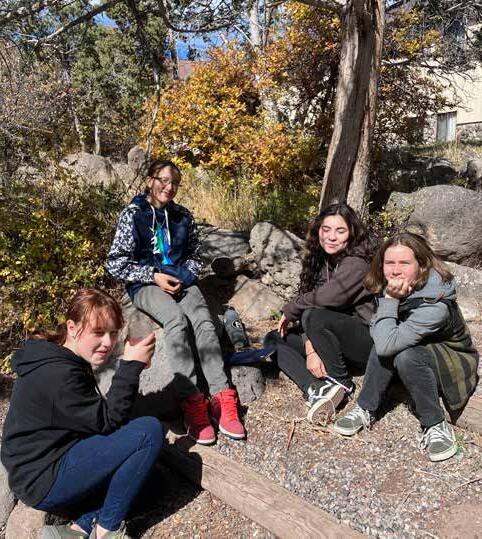
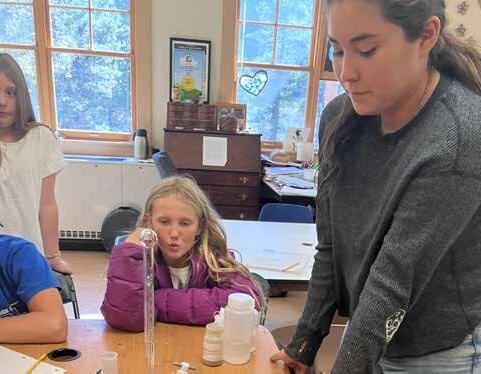
Sarah Johnson from Wild Rose Education came to teach us how to see the world through a different lens—the lens of Curiosity and Wonder.
According to their website, "At Wild Rose Education, we teach people 'how to see', to become better observers, and how to take action in the world through our participant-centered learning experiences. Wild Rose Education goes beyond what has been and facilitates becoming what can be with environmental education program design, climate change empowerment, and experiential education trainings and workshops."













The Pitkin County Sheriff’s Office is urging the public to take precautions to prevent thefts from mailboxes after deputies have responded to an increase in this type of crime. The thefts have occurred across the county including in urban and rural locations.
“We are seeing an uptick in mail thefts and we need the public’s help to prevent mail and packages from being stolen. Because Sheriff’s Office deputies cannot be everywhere all the time, we’re asking residents to be the eyes and ears in their neighborhoods and report suspicious activity,” said Pitkin County Sheriff Michael Buglione.
• Promptly pick up mail. Try not to leave letters and packages in your mailbox or at your door for any length of time.
Public asked to take precautions to prevent mail and packages from being stolen
The public is being asked to report instances of individuals loitering or behaving strangely, looking into or opening mailboxes and removing mail. Suspicious activity may include people walking from mailbox to mailbox, or driving in a car from mailbox to mailbox and attempting to open and remove mail. If you see suspicious activity or believe your mail was stolen, call 911 and report it.
Follow and share these tips to help protect yourself and others against mail and package theft.
• Don’t send cash. Be careful about what you send. Don’t risk sending cash in the mail.
• Inquire about overdue mail. If you don’t receive a check, credit card, or other valuable mail you’re expecting, contact the sender as soon as possible and inquire about it.
• Switch to paperless billing and statements to reduce the amount of sensitive mail you receive.
• Buy a lockable mailbox. A lockable mailbox requires a key to open and retrieve mail.
• Talk to your neighbors. Alert your neighbors if your mail was stolen so they can be vigilant about their mail. Watching out for your neighbors builds relationships and helps keep your neigh-

borhood safe.
• Arrange for prompt pick up. If you cannot be home to receive a package, make another arrangement or use the United States Postal Service Hold Mail option.
For more information about mail and package theft, visit www.uspis.gov/tips-prevention/ mail-theft