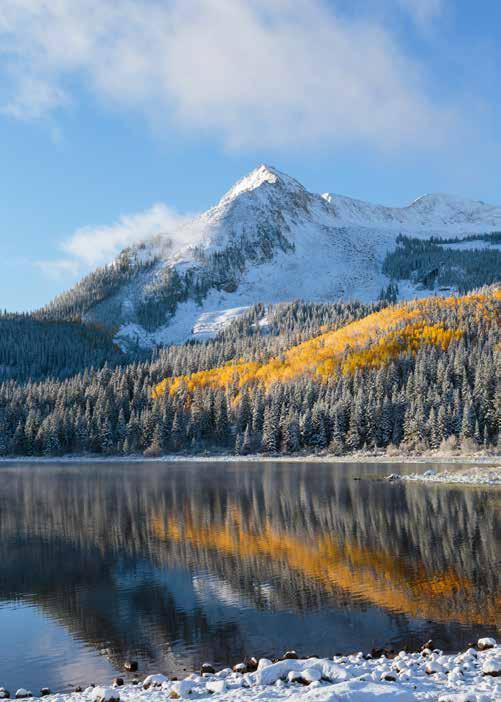

Due to my love of the Crystal River, as well as that of my friends and neighbors, and my desire to ensure it is protected, I am happy to see Gunnison County, Pitkin County, the Town of Marble, and the River District working together to find ways to do just that. The river is extraordinary in that it is still connected to its source, the headwaters up beyond Marble. It is kept alive and flowing by spring runoff each year, which means flushing flows along the banks and saturated riparian wetlands in the upper and middle reaches. Most other rivers have already been dammed somewhere on their main channels, cutting off the natural cycle of peak springtime flows. The uniqueness of the Crystal is worth preserving for us and for future generations. As water continues to become a more valuable resource in the West, there will inevitably be more and more pressure to store, divert, or develop every last drop, and there will always be demand for more. Damming the Crystal would forever change the nature of the entire valley, severing the river’s direct connection to its source. My family has had property in the upper Frying Pan River for more than 70 years. I have seen and experienced what Reudi and the water diversion have done to that river, and I would hate to see the same thing on the Crystal. One option for the Crystal, Wild and Scenic designation, recognizes the benefits and creates durable protections from similar threats. I am happy to see that the collaborative stakeholder group is looking at Wild and Scenic designation as an option for long-term protection for the Crystal. I encourage attendance and learning more at the community summit being hosted on October 26th at the Roaring Fork High School from 5 p.m. to 8:30 p.m.
Mission Statement: To provide a voice for the residents of the Crystal River Valley; to bring attention to the individuals and local businesses that are the fabric of the Crystal Valley region; to contribute to the vitality of our small town life.
EDITOR AND ADVERTISING SALES
Gentrye Houghton gentryeh@hotmail.com • (806) 374-0055
CONTRIBUTORS
Larry Good • Editorial
DJ Sugar Monkey
DISTRIBUTION
NEWSPAPER BOX LOCATIONS:
Valley.
Update on Crystal River Wild and Scenic and Other Alternatives Collaborative
The first overflowing community meeting was held at the Marble Firehouse last April. Community members contemplated what their concerns and desires were for the future of the Crystal River. You might wonder, what has happened since then?
Many people applied to be on a steering committee, from which a cross-section of Crystal River Valley residents were selected. The Steering Committee has met monthly to consider the different options for protecting the Crystal River. Each of these alternatives is being examined for the level of protection it provides, attached monetary resources for implementation and maintenance, durability, local control, and other considerations. Notes from each meeting and educational webinars are available at The Crystal Valley Echo’s online Wild and Scenic site. The next community meeting to educate about these options is scheduled for October 26th Due to the need for a larger venue, it will be held in Carbondale at the Roaring Fork High School. Please check The Crystal Valley Echo’s online site for the date and location [https://thecrystalvalleyecho.com/wild-scenic-stakeholder].
Wendy Boland
We can’t do it without you. In an economic climate where many

I knew we were in for a fun time when I clocked Tony Petrocco wearing a Mardi Gras t-shirt, perspex framed sunglasses dangling from the collar; a look that screamed cool, calm, and collected. Some refer to him as T.P. but, personally, I find that a little vulgar. The man I know and respect is all about the legalese and he’s easy with it.
It was a full turnout with five board of trustees so I won’t attempt to pad out the word count listing all their names. In addition to the council members, there were two representatives from Colorado Parks and Wildlife in attendance, plus 15 Town residents, and a welcome return in the form of Brian Shepard from Visionary Broadband, venturing back into the lions’ den of the Marble Community Church Fellowship Hall to update us all on the Town’s broadband internet ambitions.
The first order of business was to continue the public hearing to consider the allowance of residential structures in business zones. Larry Good suggested that manufactured homes be included in the wording of the ordinance, while Petrocco recommended including a contingency for “employee housing.” Mayor Ryan Vinciguerra also emphasized the need to establish long-term employee housing in the Town; Emma Bielski also voiced her support, urging the need for a proper debate on affordable housing, stating that it was tough to get people to work at the Marble Charter School when the town does not have any homes for people to live in. It was agreed that the ordinance should be drafted to ensure that any new commercial builds with residential apartments attached should be restricted to employees within the town of Marble.
There was a question from the floor concerning Scott Wilson’s motor repair business on East State Street, which is zoned for residential use only. Mayor Vinciguerra deftly dodged the issue saying “There is some grayness” on this issue.
Next on the agenda was the administrator's report. Ron Leach, beautifully attired in a fetching lilac and mint green checked shirt happily informed us that as of September 2023, we stood exactly at 75% of our projected budget for the year. Perfect, we’ll done Ron.
Brian Shepard from Visionary Broadband then took to the floor to update those present on the progress of the Town’s internet ambitions. Regular readers of this column will remember how

The Marble Town Council meets on the 1st Thursday of each month starting at 7 p.m. in the Marble Community Church’s Fellowship Hall.
Town of Marble meetings are open to the public.
Shepard braved the icy roads back in winter to detail ambitious plans to string fiber optic cable all the way to Marble from Carbondale, a seemingly huge project involving close cooperation with Holy Cross Energy. Shepard admitted the cost for the project was running $500,000 over the budget he had originally estimated and that his initial “guess” had been “grossly low.”
He reported that the middle section of the project was now complete but that the State Historical Society had been “throwing up a ton of roadblocks.” Marble is still on track to get broadband service by the end of the year, however. The centerpiece of which will be a 40-foot tower situated by the fire station. Residents are encouraged to seek more details on the Town’s website and provide their information if interested.
The cost of service will be approximately $100 per month for the one-gigabyte service, $70 a month for 300 megabyte service, and $55 a month for 100 MB service, all with no data cap. Shepherd’s presentation was very informative but his confident demeanor was shattered somewhat when Councilwoman Bielski asked, “Are these rates going to be fixed?”
This elicited an affirmative response from Shepard, although some accompanying shrugs and stutters left me with a few doubts as to its veracity. He closed out his presentation by offering his thanks to Holy Cross for their collaboration in the gargantuan project. Mayor Vinciguerra gave a shout-out to the late Bart Weller for spearheading the initial thrust to bring the internet to Marble.
Next up was John Groves from Colorado Parks and Wildlife, who has been working closely with Amber McMahill on the issues surrounding the use of Beaver Lake. Such is the level of activity on the lake that the banks are now
eroding. Things have now come to a head and restrictions are needed to be put in place. CPW has a clear mandate to protect parks and wildlife and, according to Groves, the organization is in danger of straying away from that mission, hence the need for usage restrictions. “These are areas that have been bought and paid for by license payers;” and adding, “You’re not putting a boat on the water unless you’re fishing from it.”
Groves said that CPW remained open to listening to management options for Beaver Lake, but when quizzed by Mayor Vinciguerra about potential future non-compliance with the CPW’s new rules, Groves replied, “We will step up enforcement in the face of noncompliance.”
Jamie Fiske was then given the floor to speak up for Marble’s SUP business, one of 10 paddleboard companies in the Roaring Fork Valley. She spoke eloquently about nature and the power of water to bring a lot of serenity to people in the valley and wondered whether a permit system could be made to work for her customers.
Groves had already stated that he saw “multiple complications” with a permitting system. I felt that her pleas were falling on deaf ears and the writing was, well, truly on the wall. When comments were sought from the floor, Petrocco echoed McMahill‘s earlier comments stating that we were “overrun up here,” adding that he was now picking up two bags of trash a week from all the increased activity around the lake.
The meeting then took a brief lurch to the absurd when (if I heard correctly) Dustin Wilkey asked if CPW would grant him a bear trapping license. I don’t know if this was meant as a joke or if he was testing the waters ahead of his next bombshell announcing that he was withdrawing his request for a zoning change for his
property/business on West Park Street.
This constitutes a significant flip-flop on a process that the Wilkeys have been aggressively pursuing for well over a year and has taken up a huge amount of the Board’s and Town Administrator’s time and energy, involving legal threats and plenty of headaches. The abrupt change of heart came as a complete surprise to Leach, who, having bent over backward to help the couple in their endeavors, was visibly shocked.
Once all murmurings had died down, it was the Council’s turn to debate the Parker lot line adjustment. Carol Parker was pres-
ent to inform the Board that the title work was still being done. Tony “two bags” Petrocco repeated his demand to see the original deed in order to understand how the Town acquired the property in the first place. “I’m certainly not blowing you off,” assured Leach, and the issue was tabled until the proper paperwork and title search was completed.
The business then moved on to the consideration of approval of the Marble Wetlands Preserve management agreement. The original deal had made provision for a one-year trial period but eagle-eyed Ron Leach had spotted that the draft contract to be approved stated a management period of five years. Tony Petrocco was quick to point out that the Aspen Valley Land Trust “can be aggressive in their negotiations.” It was agreed that more work needed to be done around the management plan and the associated conservation easement. Richard Wells insisted he be allowed to ride his bicycle over the area.
Next came the portion of the meeting earmarked for committee reports. Emma Bielski repeated her concerns about reporting and hierarchy within the town and between committees, offering to produce a flow chart (if everyone was on board) showing who reported to whom. Larry Good, offering his apologies for “mansplaining” and quipped, “We’re discussing this again without the benefit of visual aids.”
Bielski continued with an update on the jailhouse restoration project saying she had received in-kind service offers from Matt Piffer and Grateful Builders to do the work. When asked by Good what constituted “in-kind services” she explained that these were in-kind donations (of labor) that could be used for tax write-offs.
The whole jailhouse restoration project is set to cost $99,000, but so far funds raised constitute only a small fraction of that. Despite Bielski’s desire to proceed with the project without having the means to pay for it, the majority of the Board insisted on holding fire until all the funds were in place.
At this point, I noticed Petrocco leaning back on his chair gazing wistfully into space. Using a perhaps unfortunate “Muskian” expression, he recommended no work begin until “funding (is) secured.” Mayor Ryan Vinciguerra, forever the diplomat, declared the jailhouse preservation a “great project for a grant.”
As I poured the last drop of Squirt! down my throat, I noticed a large cobweb hanging from one of the lights in the vaulted ceiling above. I made my exit, wondering how much of the nebulousness wafting up from below it had managed to trap.
The next Meeting of the Town of Marble Board of Trustees is on October 5th.
At the Redstone Inn
OCTOBER 17
Noon – Lunch ($10)
RSVP by the Thursday prior as space is limited. Plated lunch will be served. There will be a gluten-free option.
12:45 p.m. – Program History’s Mysteries With Christi Couch featuring Marble’s History.
PLEASE RSVP: (970) 920-5432
TUESDAY, OCTOBER 31st at the Redstone Inn
BLIZZARD BOXES 9:00am - 2:00pm
• 3-day supply of shelf-stable food to have on hand in winter
• For Pitkin County seniors in rural areas, at no cost to you
• Order your Blizzard Box by calling (970) 920-5432
FLU SHOTS 9:00am - 11:30am All ages welcome!
• Regular: $30, High-dose: $75 (recommended for age 65+)
• Covered by Medicaid, Medicare and some insurance; bring your card
• New COVID boosters also available
SMILES FOR SENIORS 9:00am - 4:00pm
• Call for an appointment (970) 920-5420
• Comprehensive Cleaning and Screening – $85 (financial assistance available)
ADDITIONAL SERVICES 9:00am - 2:00pm
• Consultations on Care Navigation, Economic Assistance, Veterans Services, and Medicare
LUNCH 12:00 pm
• Please RSVP by noon the Friday prior: (970) 920-5432
• $10 – followed by dessert and Halloween treats
MEDICARE PRESENTATION 12:45pm
• Open Enrollment Info
• Individual assistance also available


It was at Bibia Station, in pygmy territory, that our experience deepened, that we left behind the frenetic chaos that represented West African city life. We had crossed the countryside, passed through the mountainous and idyllic Lolodorf, and entered the heartland of the Presbyterian Missionary movement. First, Elat, where my grandfather, Albert I. Good had presided as pastor and teacher.
Elat had fallen into hard times but was the site of the biggest church and school complex. Inside the church, we found the grand balcony closed off, and the bell had fallen from the spire to lie in eternal repose at the bottom. The Elat pastors weren’t available that day but a tiny and ancient man who had known my grandfather was waiting for us, and he took us to the missionary graveyard, which had been cleared and mowed.
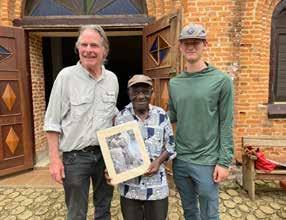
Here, we came upon a gravestone inscribed “Okanaben” after a Bulu legend. This marked the grave of Lucy Hammond Cozzens, a missionary wife. It was said that she was so beautiful that her sickness was her beauty, and so for that reason, God had taken her. Because in Bulu “Okan” is sickness and “Aben” is beauty, she would be known in death as "Okanaben," as were the noted beauties of Bulu lore. We gave our ancient guide a matted portrait of
Adolphus Good, and as he left us to walk to his forest hut, he said “Now I can die [happy!]”

Bibia Station was next. It was a full mission complex with a church, schools, and hospital. We toured the still-operating ruins of the hospital, including the maternity ward
where my father, Edwin Marshall Good, was born in 1928. Indeed, there was a rusted gurney in the corner that looked like it might have been the very place of his birth!
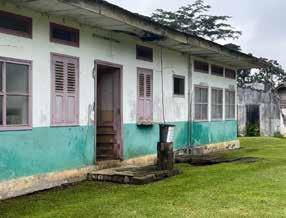
Then, we hiked through an agrarian space with bananas, cassava, and rubber and into the jungle to find the site of our father’s childhood home so we could spread his ashes there. We had brought a historic photo of the rambling shack with an old Model T parked in front, and we were able to recognize the site by triangulating some prominent palm trees in the photo with those left in the present day.
Digging into the jungle foliage we uncovered

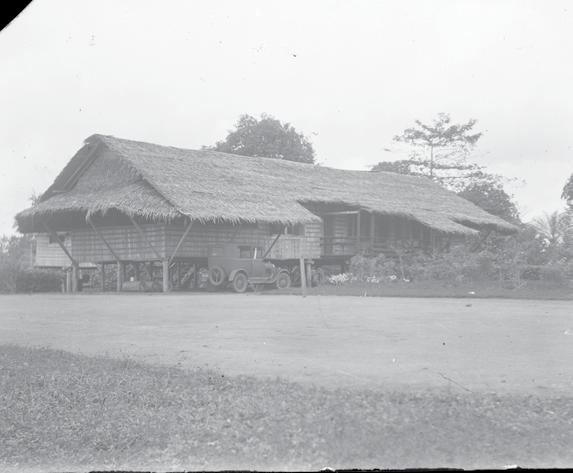
the cracked concrete steps to the long-gone front porch. As we delivered our father’s ashes to the jungle, we were overcome with an uncommon grief. We’d had time to grieve, as his death was eight years ago, and he had left Africa at the age of six, so this wasn’t such a meaningful site to him in life. On the several occasions that he talked about his forebears and the work they did in Africa, it was with a questioning or critical edge. He had gone into the "family business" as a young man, was ordained as a minister, and toured with his father on mission fundraising trips.
But the tragedy before us, which we wept over while stirring his ashes into the soil, was not our loss, but rather his loss. He should have been here. The tragedy was that he missed it, and turned his back on it. And so we were struck by a grief that should have been his.
As a seminary student told us that the auditorium at the Bibia Station Seminary was formally named “The Edwin Marshall Good Auditorium” I kind of scoffed at the notion. “Why wasn’t it named for the pastor Albert Good, the missionary?”
It was named after my father because they found the words, “I want to see Jesus” scrawled on a desk in the room, signed Edwin Marshall Good. The founders of the seminary thought it would be more inspiring to the pastors-in-training to name the audito-

your Alpine Bank Loyalty Debit Card* and help us raise $2.5 million to support Colorado community causes in 2023. Learn more at alpinebank.com/50YearsYoung.



rium after the young person’s curiosity in the Lord.
Having known the young vandal only as our grownup father, John and I felt that this story could hardly be completely true unless the young fellow was giving voice to his early skepticism, meaning, “I want to SEE Jesus” as kind of a petulant demand in trade for his devotion.
Bibia Station was right in the heart of pygmy country and was opened as McLean Station in 1897, named after a fallen missionary whose sister Margaret had endowed the mission in his honor, specifically to minister to the pygmy population of the outlying area. My grandfather, Albert Good, and his colleagues made every effort to carry out McLean’s sister’s wishes for the prescribed proselytization of the pygmies, but they were a tough crowd for Christ, so, McLean Station became Bibia Station, a ministry to all, and the pygmies remained uninfluenced by the McLean endowment.
I had read in Days of Our Years in Cameroon, West Africa, a memoir by Anna McLaughlin Lehman who was a missionary wife and a contemporary of Albert Good's, that the pygmies were preyed upon by Africans who put them into slavery in the late 19th century. I brought this up, delicately, among our UNESCO crew and was met with a forcefully plausible denial of this practice, which also illuminates something of the pygmies’ reticence to hand over their children to the Lord for re-education in the 20th century.
The pygmies had a reputation going back throughout their civilization as a mystical, magical, elusive people, and this was how they protected themselves. Our interpreter, Carole, explained vehemently that it was the Africans’ fear of pygmy witchcraft — "black magic," curses, charms, and the like — that kept them from enslaving the "Little People" who were so mystically empowered.
And, as their voodoo or 'black magic" had protected them from slavery and other interferences for eons, the pygmies weren’t going to take lightly the missionaries’ edict that anyone joining the church must first renounce their previously sacred idols, their charms, and witchcraft. No, the pygmies weren’t having it.
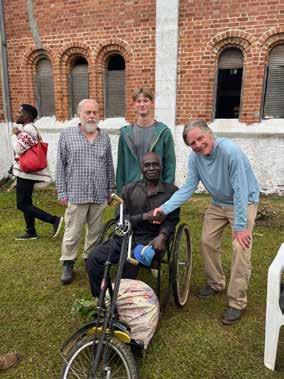
After spreading our father’s ashes, after church, we were called into a meeting of the pastors and elders of the church. Therein was a retired pastor and professor, the Reverend Samuel Ebane’. After introductions by the current pastor of the church at Bibia, the Reverend Ebane’ got right down to business. He was a
tough man.
“Why are you here?” he started. “And what do you bring us?”
I explained that we were here, not on a mission trip, but in search of a story, one that might prove to be beneficial to his people if it were to be told in English, French, and Bulu. It was the story of "Ngote Zambe" (Adolphus Clemens Good) but also the story of the mission movement in Africa and those, including the Rev. Ebane’ and my grandfather, Albert, who carried on the work.
“But since the time of your grandfather, we have been forsaken. Are you going to forsake us, too?”
“Uh,” this had to be a big learning moment, one I would carry into every meeting yet to come, with pastors and elders and with village chiefs, mayors, and police chiefs.
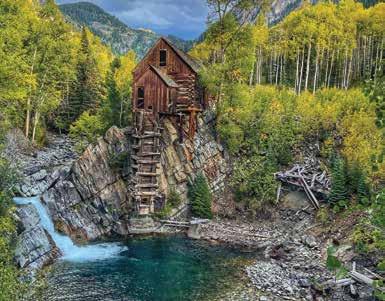
But at this charged moment there was a disturbance at the door, as an elder who I recognized as the man I had just been shaking hands with outside, the man whose grandfather had donated the land to the McLean Station Mission — this man was dragging himself noisily up the steps up to the rectory, pulling his entire body over the stone threshold, his smile at once a joyous greeting and an apology for being late, an apparition of Jesus’ paralytic of Bethesda, the biblical, Gospel character incarnate!
The arrival of the afflicted was a distraction from the moment, and I didn’t answer Rev. Ebane’s question, but at subsequent meetings, the same curiosities persisted, the same questions were asked, and when the tough questions came out, I replied that Rev. Ebane’ had asked me the same and that my answers were evolving, every day, in every town, and at every church. Name-dropping the Rev. Samuel Ebane’ was effective, as the Reverend had trained virtually every pastor currently working in the Presbyterian Church of Cameroon. But my answers, while evolving, remained true, and honest, as I was hit by that train I wrote about last month, the train of "Ngote Zambe" and the Presbyteri-

an Church of West Africa. Boom!
We were off to Kribi, a coastal resort town, and then to Batanga, where "Ngote Zambe’" began his legendary tramps through the jungle in 1892. We were looking for a church, and the remains of a church-house where I have a photo of a gaggle of missionaries and their equally missionary wives lounging on the porch, seaside, including my great-grandfather, "Ngote Zambe," and his wife, Lydia Belle Walker.
We found the church, and on the sign outside the church, in pictorial form, was the story of Ngote Zambe’s arrival, by canoe, and his dispersal to the interior of Cameroon to spread the Word. We met a pastor there, and as word of our arrival got out, more and more pastors joined us, and they took us out to the site of the "mission house" and we gazed thoughtfully upon a garbage pit which the pastors believed went all the way back to the time of "Ngote Zambe."
Upon Good’s arrival in Batanga, he was immediately introduced to Chief Ngombayo Nsim, who was at the coast looking for trade partners
to equip his village 52 miles east into the interior. Nsim was known as a mystical man, and a great Chief, and the two hit it off so well that Nsim directed Adolphus Good to go immediately to his village, Ngongmekak, and he would make a nice piece of land available to Good for his mission.
"Ngote Zambe" left the next morning. It was reported that he would accost villagers on the trail and speak to them in Bulu about the Word of God. He was preaching from day one. Immediately upon his arrival at Ngongmekak, he got himself into hot water, literally.
Translated by Courtney from "Histoires et Chroniques des Tribus du Sud Cameroun":
“Upon his arrival in the territory of the formidable Chief of the Yesoks of Nyabitande, Ngemezo’o Nyabe, he (Good) was arrested and tied to a palm tree. After having examined him, Ngemezo’o Nyabe ordered his execution and skinning. It was then that Dr. Good began to cry and called the name of Ngombayo Nsim, arguing in the Fang language that he was his friend and guest. Having heard this, Ngemezo’o Nyabe called Ngombayo Nsim on the drums.” (Talking drums, the African Wireless)
So, Nsim came to Good’s aid, the story being that he commented that Good was so skinny that Nyabe would get a better meal from a pair of goats, and so traded for his friend’s life. Probably not entirely true, but, certainly a part of the legend of "Ngote Zambe." Nyabe’s village, Nyabitande, being one of the seven villages of Ngonmekak, was set upon by a curse at the time of this story, and it has remained the visibly poorer and more downtrodden village of the seven sister villages until this day. It is said that the author of that curse was the mystical chief and friend of "Ngote Zambe" — Ngombayo Nsim.
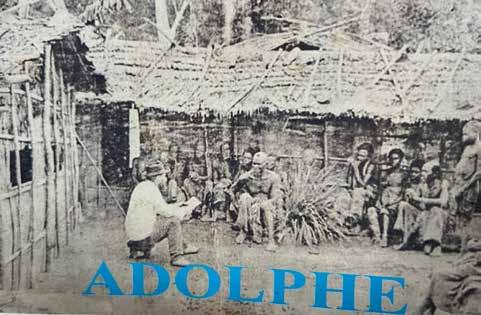
And what about this joke, this "Ngote Zambe’" legend, and this "Tomato of God?" Why, you ask?
Well, the legend has it that when AC Good first arrived in Batanga, on September 8th, 1892, he said his name was "Good," and he spoke of God, and brought with him the fruits of the forest. The natives knew a Bulu word that sounded like "Good" and also like "God;" that word was "Ngote," which means "tomato."
Here was this strange white man offering them fruit, and some knew enough English to know that the name "Good" meant what the word means, and some only knew that the name "Good" sounded a lot like the word "God," of which he was speaking. So, the jumbled wordplay of all these elements led to the legendary name, ‘Ngote’ (tomato) ‘Zambe’ (of God) for the man named Good.
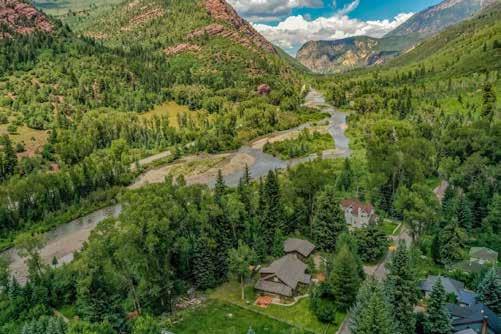

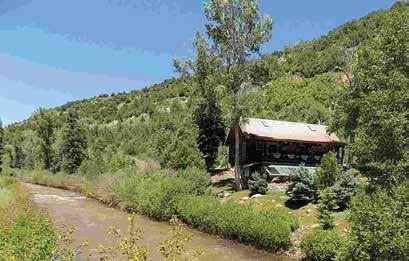
Priced under current appraised value of $1,380,000. Highly sought after property on the Crystal River Offering 2,200 SF, 3 BR/2BA, open floor plan, large rock wood burning fireplace.All new kitchen, baths, flooring and paint. New windows, new boiler and new roof. Oversized 2 car garage & additional storage/workshop Direct and easy access to 200+ ft of privately owned river frontage. Quiet end of town on almost an acre. ADU potential and ability to park/store all your toys All Colorado recreational activities are steps away from this one-of-a-kind property



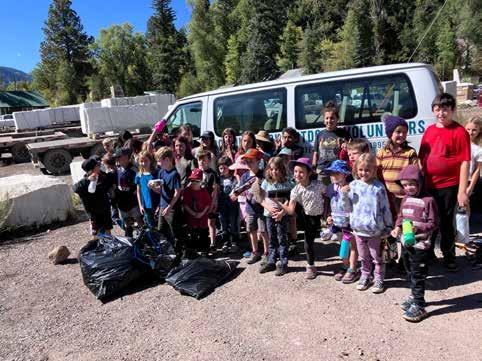
MCS students worked hard weeding noxious weeds from the Marble wetlands with Roaring Fork Outdoor Volunteers. They also laid down some native seed to fill on bare patches.
This project is part of MCS’s Water Theme funded by a grant from Pitkin County Healthy Rivers.
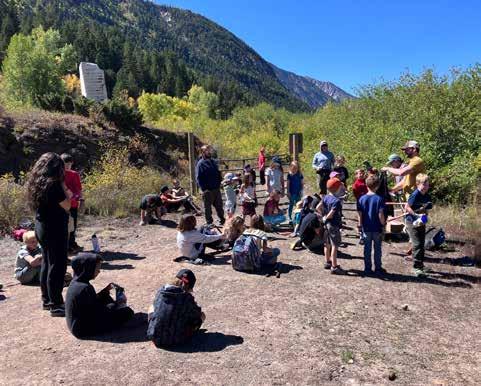
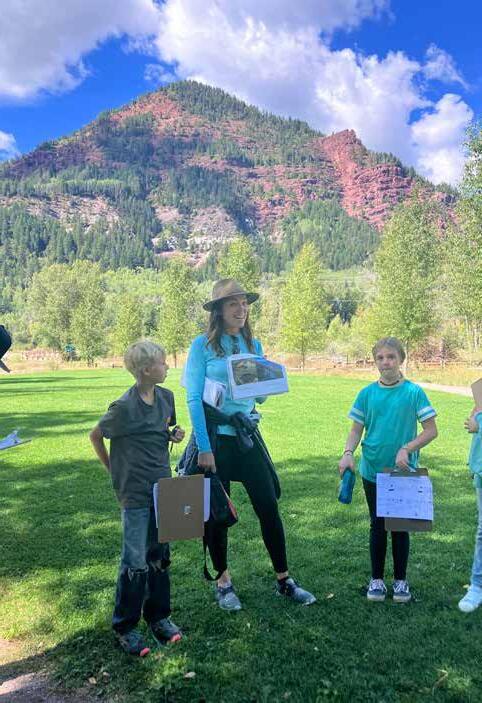
"On Tuesday September 12th the 5th-8th graders went on an adventure with the Roaring Fork Conservancy. They rode the bus to Redstone and met Megan and Jayla from RFC. Every one split into groups and chose an animal and surveyed the area around Coal Creek and Placita to see if the animals would be able to live in that area. They tested ph. of water, took the temperature of the water and investigated the different types of plants and human impacts. They discovered that these two Riparian Zones offered different animals ideal habitats." - Elsie Mile
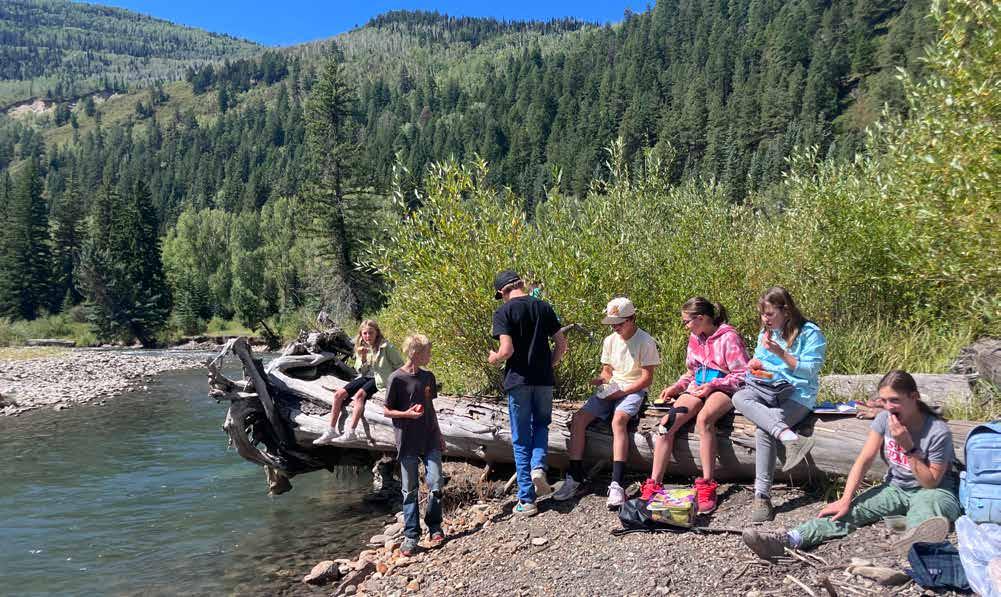
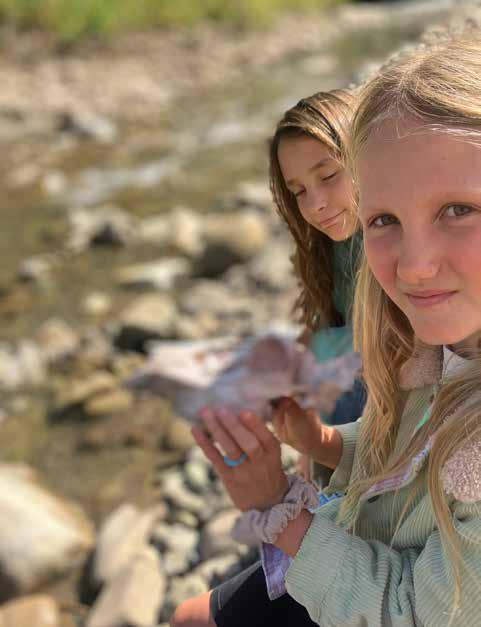
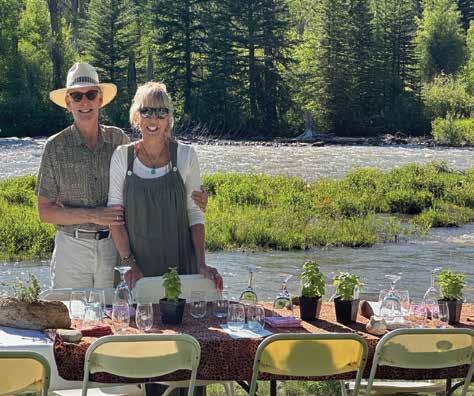
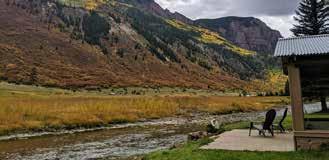
The bank of Crystal River is a significant location for our business. It’s where the mountains meet the river and nature flourishes. Our guests travel here to flyfish the Crystal, which is a natural free-flowing river, rich with an abundance of fish. There is no other place in Colorado to experience the beauty of the White River National Forest and this pristine river. It is a gift to be shared and protected.”

While the following article focuses on the Pikes Peak Bighorn herd, dwindling numbers persist across the entire state and can be seen right here in the Crystal River Valley.
On August 10th, I rose groggily from my bed at 2 a.m. to join 43 others – 17 staff and 26 volunteers – at Colorado Parks and Wildlife’s Southeast Region Office in Colorado Springs for the annual bighorn sheep count on Pikes Peak, held on two days every summer for the last 35 years.
But this is no routine biological exercise. Much is at stake for Colorado’s bighorn sheep herds and the Pikes Peak herd, in particular, in the face of increasing pressure from the state’s growing human population and the demands of outdoor recreation.
Bighorn sheep nearly succumbed, a century or so ago, to unregulated market hunting and from the introduction of domestic animals and the diseases they brought into the state. Keeping a close eye on Colorado’s state mammal is one of the pillars of the agency’s terrestrial biology work.
Against that backdrop, wildlife officers, staff and volunteers gathered that chilly morning outside the office in the dark, drinking coffee and grabbing the manila folders from CPW Area 14 Wildlife Biologist Ty Woodward. Each packet held trail maps and data collection directions to help them classify the sheep they spotted that day.
“We’re not counting all of the bighorn sheep in the population,” Woodward explained. “We are surveying them and classifying (keeping track of males, females, and young) the bighorn we observe. The goal is to observe and classify a representative sample of the whole population. We do count the total number observed for the day.”
by Travis Duncan
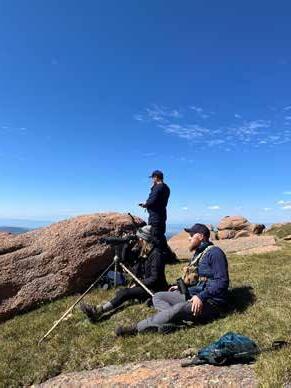
It’s an important distinction. It would be simple to just count bighorn. Woodward and his team are doing a more sophisticated survey. They look at demographic ratios that measure the health of a population; studying lamb-toewe ratios, they work to establish an age ratio for the herd.
“We look at how many yearlings to ewes we have to see how many individuals were ‘recruited’ into the adult population,” Woodward said. “And the sex ratio, the number of males to females. That tells you how the herd is doing in general.
“And it can clue you in if something is going on. We want to know if we have variables that are causing reductions in the herd and issues with overall herd health.”

Around 3:30 a.m., the CPW caravan left for the mountain. With Woodward at the wheel, we drove west up U.S. Highway 24, following the same path Native Americans – especially the Ute Natives – used to traverse the pass in the 1800s. Then we headed up the Pikes Peak Highway toward the mountain’s 14,115foot summit.
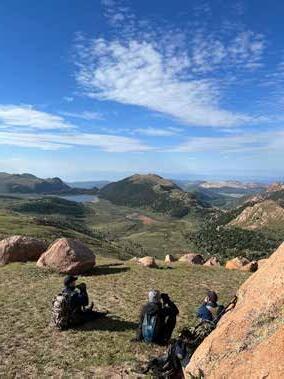
We had been assigned the route known as West Beaver Ridge –an approximately 4.5-mile loop route that would give us excellent views of Pikes Peak’s south slope. The route also provides a great view of Wilson and Bighorn reservoirs, the Pikes Peak Highway, Devil’s Playground and an area within it that staff and volunteers have taken to calling “the Nursery” because it’s a place where the lambs and ewes always hang out.
There is a group of ewes (called a “ewe band”) from this area that has been migrating to Dome Rock State Wildlife Area for years.
“West Beaver Ridge is a great route because it’s very central,” Kroening said. “And we typically see a fair amount of animals. It’s also a security blanket route. Because it overlaps with other routes, it helps us get a good count before other hikers get in close and maybe spook the bighorn off.”
The CPW team dispersed to find their trailheads. They parked, turned on their headlamps and hiked off into the dark so they’d be in position to see bighorn when the sun pierced the eastern horizon.
Our West Beaver Ridge group waited a few minutes in the cold, watching the fiery sunrise at 13,000 feet, then started our hike.
Woodward and Kroening were excellent hosts as they taught us how to classify bighorn and how to size the curl ratio on rams (full, three-quarters, half, etc.). They also helped us find the bighorn hiding in plain sight on the mountainsides. They blended in so well with the granite outcroppings and high alpine tundra.
They also explained all the moving parts behind the scenes of the annual bighorn sheep count. It requires cooperation with multiple partner agencies: the U.S. Forest Service, Colorado Springs Utilities, the City of Colorado Springs, the Pikes Peak Highway, the Cog Railway and The Broadmoor, the City of Cripple Creek, and the City of Victor.
32 miles from Carbondale over McClure Pass


MICHAEL R. KENNEDY
mikekennedy@sopris.net ColoradoHomesRanches.com
They all contribute to the success CPW has on the mountain each year. At the end of the day, our group had seen about 50 bighorn, including one large group of 32 spread out on the slope beneath the highway, but other CPW hikers weren’t so lucky and only saw a handful of bighorn. In all, the team reported viewing less than half the approximately 100 bighorn that are normally seen on this count.
That lack of visibility concerns Woodward. And there are bigger issues on the mountain that trouble CPW experts.
“I’ve done that count every year since I was a local DWM in Teller County in 2015,” Kroening said. “The fact is, we’re just seeing fewer lambs and recruitment into that population, especially this year.”
Fewer lambs signals big trouble.
laMbs are The Key
“We’re keeping track of lambs, seen and observed,” said CPW Terrestrial Section Manager Brian Dreher. “In the bighorn sheep realm, lamb survival is very much an indication of health or disease-related issues. Lamb productivity gives us some overall picture of herd health.
“When disease outbreaks occur in these populations, we see a loss of lambs throughout the summer months. In some counts, we’ve seen lambs on their deathbeds.”
Where CPW finds the bighorn on the mountain – their distribution – also is important data, Dreher said.
Bighorns face a variety of threats (increased recreation pressure, habitat fragmentation, etc), but the primary threat to bighorns in Colorado are respiratory pathogens that can result in pneumonia outbreaks in wild bighorns. One source of pathogen transmission can be through commingling with domestic livestock. Pneumonia infections can result in acute allage die-offs in bighorns, or more frequently, chronic low-lamb survival, as the adults can often survive it but the lambs cannot.
CPW biologists have had an eye on the Pikes Peak herd and have been closely monitoring for disease. The migratory behavior of the ewe band from Devil’s Playground that migrates down every year to “lamb” (give birth and raise their young) on Dome Rock State Wildlife Area also creates concerns for disease transmission.
Woodward said monitoring the population of the Pikes Peak herd has provided good lessons in how fragile populations are.

“We historically had numbers much higher than we have today,” Woodward said. “Portions of that population have seen significant decline over the years. Until recently it had a pretty stable population on Pikes Peak proper.
“That herd includes an historically migratory section of the population. We don’t see that a ton anymore, where some of the herd migrates annually for reproductive purposes. That segment of the population used to be much stronger and there used to be many more sheep in that group.
“In the past decade, that group has been on a decline where there’s not too many sheep left that do that still. The concern on my end: once we lose that migratory behavior in the herd, then it’s gone forever. We won’t be doing like we do with geese where we teach them to migrate.”
“The migratory behavior is really unique,” Kroening said. “We don’t know exactly why they started it. Maybe life is a little easier down there. But when they go down, they’re more likely to come into contact with domestic sheep or goats. We have a lot of different hobby and small-flock farms and ranches in the area. The concern is that our wild sheep can actually get bacteria from domestic sheep or goats. That happens during a nose-to-nose interaction or if the domestics sneeze, it can infect another animal that way. But it’s from their intermingling.”
Woodward said the migratory behavior does create disease concerns for the herd.
The Pikes Peak herd is no stranger to disease. The first documented disease related die-off in the Pikes Peak herd began in the fall of 1952 and took a heavy toll during that winter and spring, when “verminous pneumonia” (the lung nematode Protostrongylus stilesi) was found to be the culprit. Wildlife biol-




bighorn sheep ConTinued . . .
ogists monitor the herd closely. Biologists have detected pneumonia a couple different times more recently in the herd. One was from a sheep hit by a car and killed on the highway.
“The other one we had to euthanize last year on the sheep count when we saw that it was sick,” Kroening said. “That sheep was from the ewe band and typically hangs out on Devil’s Playground. Our pathologist documented pneumonia in her tissues after she died. It does definitely seem like we’ve had an increased amount of pneumonia in this population. They can spread it to each other, so it’s possible that the whole herd on Pikes Peak is passing this back and forth.”
Kroening said there have been small victories during his tenure with CPW, which started back in 2014. While still a DWM in Teller County, Kroening worked with the Rocky Mountain Bighorn Sheep Society to get a $10,000 grant for a secondary fence that would create a 5 - 10 foot buffer between wild sheep and domestic goats.
“When our wildlife managers identify problem spots, they work with landowners to create separation,” Woodward said. “That’s the best thing we can do. We don’t have vaccines that work at the efficacy rates that would be necessary. Separation is the best thing that we can do.”
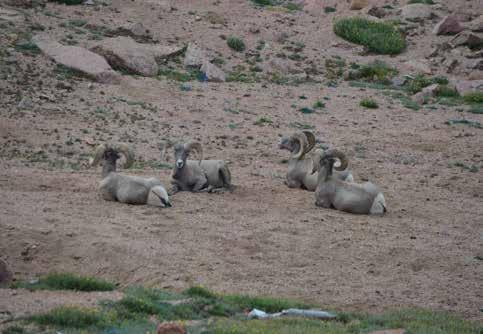
Despite its iconic status and current prominence, the bighorn sheep was near extinction at the turn of the century. Unregulated hunting and diseases introduced through European livestock had decimated populations throughout the West, and only a small number of the native bighorn sheep remained in Colorado in the early 1900s.
CPW has led the effort to restore bighorn in Colorado, along with its partners. In cooperation with organizations like the Rocky Mountain Bighorn Society, CPW has spent decades rebuilding bighorn populations through trapping and relocation efforts.
CPW conducted the first bighorn sheep transplants in the 1940s, including planting bighorns between Georgetown and Silver Plume. Known simply as the “Georgetown Herd,” this population of 250-350 sheep is one of the largest herds in the state and the area has become one of the most popular bighorn viewing sites in the nation.
Since Colorado’s restoration efforts began, CPW has completed more than 100 bighorn sheep transplants, most of which took place in the 1970s and 1980s.
Gore Canyon in northwest Colorado is one of the most recent transplant locations.
CPW closely monitors bighorn sheep herds and maintains healthy populations through controlled hunting and ongoing trapping and relocation. Thanks to de-
cades of dedicated conservation efforts, Colorado’s iconic bighorn sheep are once again abundant with an estimated statewide population of 7,000 animals, although bighorn populations are not at the levels they were before European expansion.
That’s why the work CPW does isn’t just about transplanting animals.
“There’s no doubt that bighorns are not at the numbers that were here when settlement occurred,” Dreher said. “It’s one of the only big game animals we haven’t been able to recover to the population levels we’d like. It is an extremely complicated issue because of disease.”
Andy Holland, CPW’s Big Game Manager, said it’s not as simple as growing bighorn sheep herds to a stable level.
“We have robust bighorn sheep management, research and disease programs and our hunting licenses are extremely regulated and get more scrutiny per license than any other species in the state,” Holland said. “The conundrum with bighorn sheep is: the larger a population gets, the more likely it is to have a disease event.
“This is because as populations get larger, they are more likely to come into contact with domestic sheep and goats and densities of bighorns are higher so respiratory pathogens spread more quickly.”
Holland said the most important factor in bighorn sheep health is to maintain separation between bighorn sheep and domestic sheep and goats on the landscape.
“It doesn’t mean that people can’t have grazing allotments or private flocks,” Holland said. “But the idea is to not have them together in the same place with wild bighorns.”
As Wood and her team work in the lab, people like CPW’s Kroening try to protect bighorn sheep by patrolling local domestic animals and talking with “hobby farmers and ranchers” about the critical importance of maintaining control of their



Buying or selling, let Redstone Locals and the Henry / Vannice Team show you how our unique team approach can work for you!
Springs New Castle Silt Rifle Parachute WILL VANNICE Broker Associate 970.379.2055

goats and sheep.
“It’s frustrating because we just can’t get to them all,” Kroening said. “There are so many other landowners who may have a few domestic goats or sheep. And they get out of their pens. We need these folks to understand that a domestic animal mingling with wild bighorn sheep can easily transmit pathogens and wipe out a legacy herd like the bighorn on Pikes Peak.”
It’s a problem common across the West. Many different state wildlife agencies and organizations like the Bighorn Society are working to see what’s the best solution to this issue.
“We all want to figure out how to prevent disease-causing pathogens from spreading and killing an entire population of bighorn sheep,” Kroening said. “The solution will be working together and collaborating on the issue.”
Recreation and tourism present a similar challenge that requires a delicate balance.
“Each year there are more and more people in the mountains recreating,” Woodward said.
“Pikes Peak is a great example. They have the highway and the train. We routinely encounter people hiking, often off trail, on our dawn survey hikes. There are more mountain bikers and off-trail use. It’s becoming a really big issue up there.
“Besides educating ranchers, we need to educate the public, the tourists, just how critical it is for them to help us protect the bighorn,” Woodward said. “We must find a way to co-exist or future visitors may not have a bighorn sheep herd to observe here.”
whaT is Cpw doing?
Besides all the research by Wood and her team, the intense biological surveys and management in the field by Dreher’s team and Holland’s focus on regulated hunting, CPW is attacking the issue in a variety of other ways, too.
• CPW has been working with the Western Association of Fish and Wildlife Association’s Wild Sheep Initiative for more than 20 years. This working group brings together 24 state fish and wildlife agency directors and organizations: https://wafwa.org/initiatives/wsi/
• CPW is heavily involved in commenting on federal land management. CPW recognizes the increasing desire for outdoor recreation, but advocates for ways that minimize the impact to the natural resources, including wildlife.
• On the education front, CPW is working to identify private property small flock operators to talk to them about the issue of respiratory disease transmission. The lack of separation between wild and domestic sheep is the biggest issue.
• Habitat development is another critical area to improve bighorn sheep range. The agency is thinning forests or using prescribed fire to create the open landscapes bighorn sheep need to avoid predation. If an area is too timbered, bighorn can more easily be ambushed by mountain lions.
• Finally, CPW engages in intensive Herd Management Planning projects using the coordinated ground surveys and extensive helicopter inventory flights.
Despite all the concern, there is optimism within CPW that the multi-pronged approach will pay off in healthy bighorn sheep herds protected from disease and offering hunters and wildlife watchers recreation opportunities well into the future.
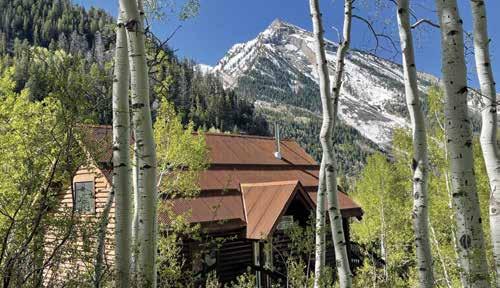
3 BEDS | 1.5 BATHS | $900,000
MARBLE, CO Overlooking the Marble Valley and two Wilderness Areas, this stunning location is impossible to duplicate. A charming 3 bedroom, year round cabin captures the essence of its alpine setting with extensive decks, outbuildings, floor to ceiling windows, full kitchen, 1.5 baths and two large living areas. Seven acres bisected by Lost Trail Creek and bordering National Forest add to the overall experience. Water, power, electric and internet are all available at this remote location. Snowmobile, ski or snowshoe access in winter and well worth the effort. Wilderness and backcountry adventures are just steps away $900,000 with possible owner financing. Web# AN179817




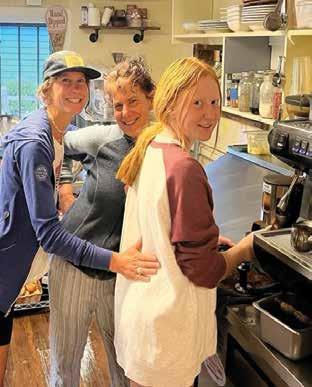
The Crystal River is a reflection of Redstone & Marble: Undammed like veins, pure like our hearts, healthy like our community. Love for the Crystal runs in our family, we hope it will be protected for many generations to come.”
learn more CrystalWild.org
All content sponsored and provided by the Redstone Historical Society.
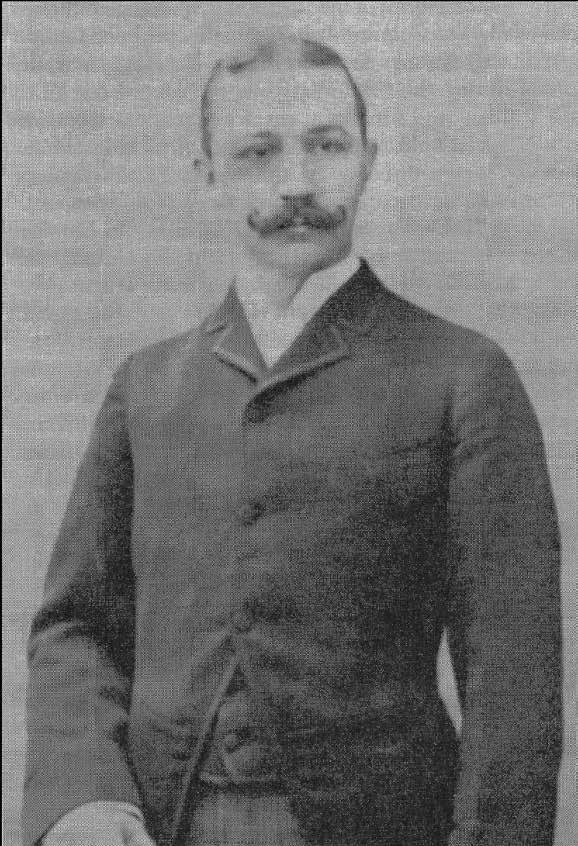
By Mary Boland
John Osgood was born in Brooklyn, on March 6, 1851, to Samuel Warburton Osgood and Mary Hill Cleveland Osgood. The family was already distinguished in America, his paternal forebears having been among the __17th__ century founders of Andover, Mass., and his maternal forebears having included the founder of Cleveland, Ohio.
However, John Osgood found himself orphaned at the age of seven when his father died of a fever, and his mother died early in his infancy. He was taken in by relatives in Rhode Island and educated at a Quaker school in Providence, R.I., until the age of 14, when he struck out on his own, beginning as an office boy in a Providence cotton mill.
He headed for the big time just two years later, going to New York City, N.Y., and obtaining a job as a clerk in a produce exchange commission firm and attending night school at the Peter Cooper Institute. By the age of 19, he had been recommended for an important position as a bookkeeper to an Iowa mining company. In succeeding years, he held increasingly responsible positions, finally acquiring an interest in a coal company that was a major supplier to the Chicago, Burlington and Quincy Railroad company.
It was at the request of that railroad that Osgood came to Colorado in 1882 to survey the state's coal potential. It is said that he visited every known actual and potential coal property in the state during his 1882 tour. Certainly, he recognized the potential value of the state's seemingly unlimited coal resources and determined that he had the opportunity here to build himself a veritable empire. He began this work the very year of his first Colorado tour by entering into an agreement to supply coal to the Burlington and Missouri rail, a Chicago, Burlington and Quincy subsidiary that operated between Omaha, Neb., and Denver, Colo.
During the next decade, he expertly cultivated his contacts with the Chicago, Burlington and Quincy, and other railroads, and also assiduously cultivated the friendship and support of the Denver and Iowa capitalists who had funds to invest in his growing Colorado coal empire. He also recruited, mainly from among his former business associates in Iowa, a very able management team, including Julian Abbot Kebler, Alfred C. Cass, and David C. Beaman. These men, along with two Denver lawyers whom Osgood recruited to his cause, came to be known as the "Iowa Gang."
Thus by 1892, Osgood had developed a record that contrasted sharply with that of the management of the older Colorado Coal and Iron Company, based in Pueblo, Colo. During the past 10 years, that company's earnings had not been commensurate with its very large investment. While the company's coal and coke operations had been profitable, as had been its real estate activities, the large investment in and small return from its iron and steel manufacturing had kept overall results down to a level that resulted in much dissatisfaction among investors.
As Osgood's firm grew, so did the potential for competition between his outfit and the Pueblo company that would be harmful to both. Thus, negotiations for a merger had begun. Initially, Osgood planned to combine only the coal and coke operations of the rival enterprises. But after obtaining considerable expert advice, he came to the conclusion that with better management and some additional investment in improvements, iron and steel manufacturing could also be made profitable.
After long negotiations, the consolidation of the two companies was approved by the stockholders on October __21st__, 1892, and the Colorado Fuel and Iron Company was born with Osgood as president and Osgood's associates holding most of the key posts.
To be Continued in November . . .
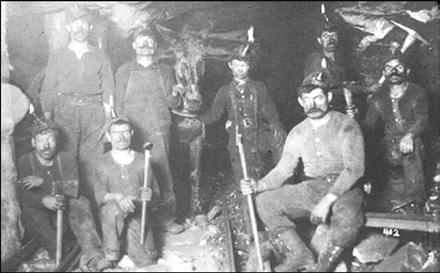
Author Mary Boland (1936-2017), moved to Carbondale in 1973. She was Glenwood Bureau Chief for the Grand Junction Sentinel, a Professor at Colorado Mountain College, and a prolific writer for many national and local publications. This is one article, reprinted with permission, from her publication The History of the Crystal Valley.
From Josh Vogt
The Crystal River Valley is full of big personalities and strong opinions, and few topics bring out those personalities, opinions, and emotions more than a discussion on the possibility of a Wild and Scenic Designation on the Upper Crystal River.
Earlier this year, a group of stakeholders was assembled into the “Crystal River Wild & Scenic & Other Alternative Feasibility Collaborative,” (for simplicity, I’ll just refer to it as the Collaborative) to study not just the question of a Wild and Scenic designation on the Crystal River, but also other alternatives that could help protect this natural resource. The Collaborative has been busy discussing potential futures for the Crystal River, how to compare different types and levels of protection, and how those potential futures could affect our unique valley and community.
I like to think of myself as an engaged and informed citizen, but I realized upon joining the Collaborative how little I actually knew about the Wild and Scenic Rivers Act, as well as other available types of protection. We are studying six alternatives and how each impacts the Crystal Valley, its residents, and those who rely on the Crystal’s water. I imagine I’m not the only person who needs to learn more.
While participating in the Collaborative, I have also learned there is a shared love for the river and lands that feed it; no one wants to see the Upper Crystal degraded. In the past, our community has been hung up in camps of “yes or no'' on the question of Wild and Scenic, but when you dig deeper, our collective goal has been the same: Ensuring a healthy future for the river and its inhabitants.
The Collaborative is trying to determine the best future for the Crystal River and what protections make sense to ensure that future. Even though the Collaborative is comprised of a diverse group of stakeholders, we need to hear from the whole community to help guide us. Also, when the Collaborative completes its work, any type of protection will only be a recommendation. For protection of any kind to occur, the public and publicly elected officials must also understand and support the proposed protection.
A Community Learning Summit is scheduled for October 26th from 5:00 p.m. to 8:30 p.m. at the Roaring Fork High School in Carbondale. If you love the Crystal River and want to learn more, come to the summit.
If you are concerned about how protections can affect your property or water rights, come to the summit.
Have you been stuck in a “Yes” or “No” camp on Wild and Scenic, come to the summit. We want to hear from you in person, but if you are unable to participate on the 26th, the Collaborative is working on additional ways for people to learn and provide feedback.
I hope that if we all look at the question of “what to do about the Crystal River” with curiosity and mutual respect, we can move beyond personalities and opinions and have a meaningful conversation based on facts that just might result in a lasting healthy future for the Crystal River that we all can be proud.






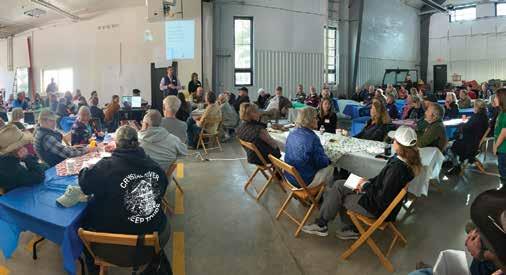
Please join the Crystal River Wild & Scenic and Alternatives Feasibility Collaborative Steering Committee to hear about the range of opportunities to protect the Crystal River. Please come and share your thoughts about the future of the Crystal River. Dinner provided

Take a Stand for the Crystal River
Pitkin County Healthy Rivers & Streams is part of a coalition working to gain permanent protection for the free-flowing nature of the Crystal River through federal Wild & Scenic River Designation
Register, Verify or Update our Voter Registration
Contact: Elections at (970) 429-2732 - www pitkinvotes com

Now is the time to register to vote, verify, or update your voter registration information You may also register by submitting a paper application to Pitkin County Elections, 530 E. Main St., Aspen, 81611. If you are out of town, out-of-state or out-of-county and have questions please contact us
Food sites in the Roaring Fork Valley
Pitkin County Human Services would like to remind everyone about food assistance options available in our valley. This document has a list of food distribution sites, farmers markets, WIC retailers, and SNAP approved vendors The list is updated regularly
LEAP (Low-income Energy Assistance Program)
Contact: (970) 920-5235 LEAP is a federally funded program that helps eligible Colorado families, seniors and individuals pay a portion of their winter home heating costs Scan to learn more
Subscribe to Pitkin County newsletters


Want to know more about happenings in Pitkin County and its departments delivered straight to your inbox? Scan the QR code to subscribe to Pitkin County supported newsletters

Pitkin County Press Aspen Airport Newsletter