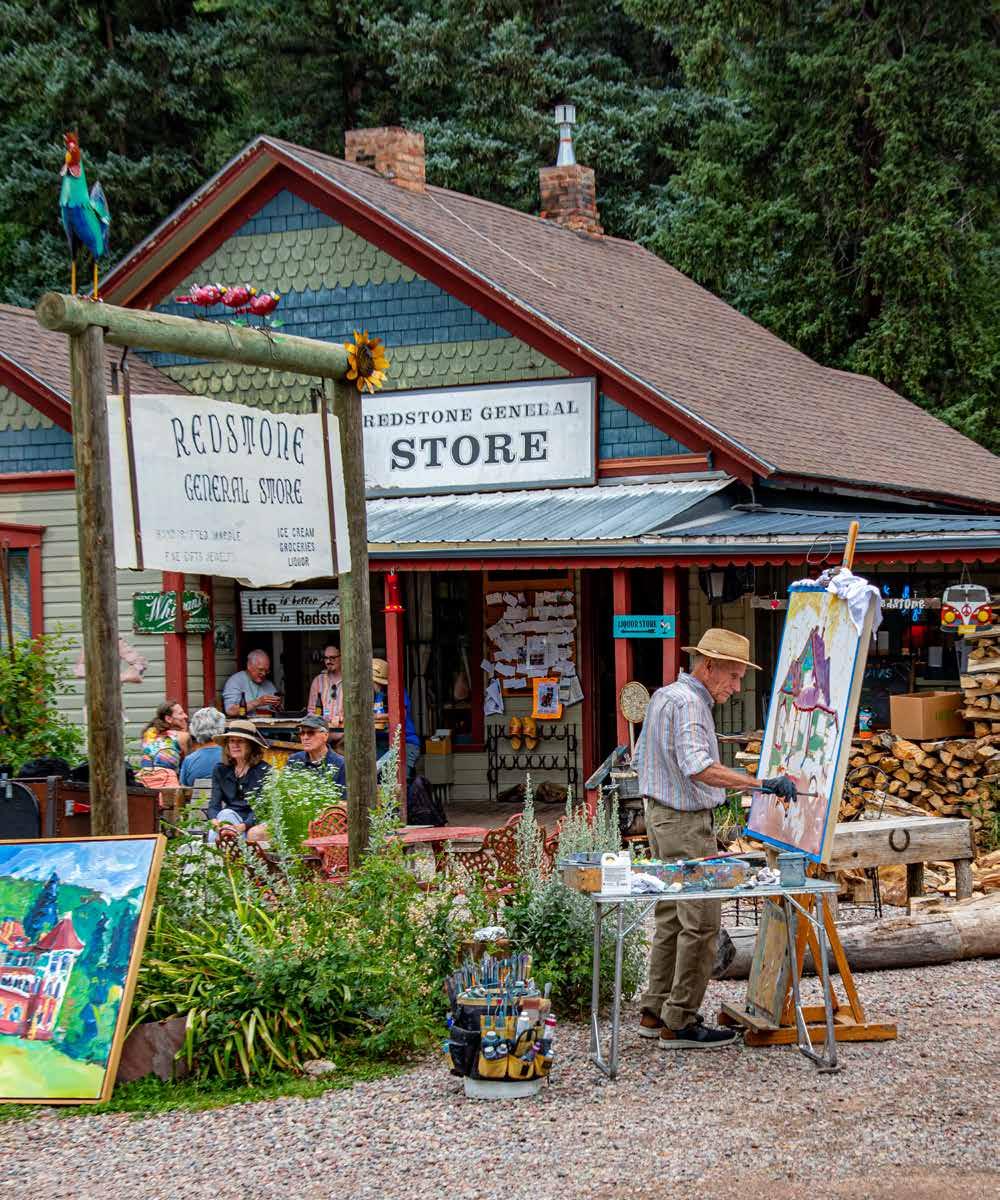
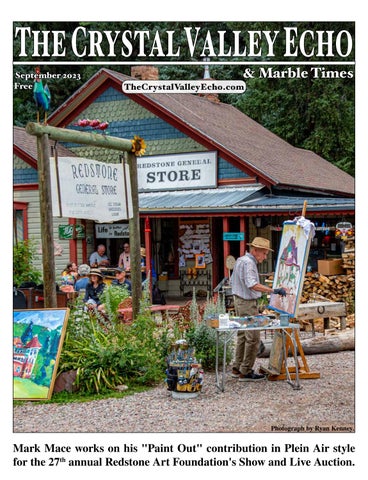
Photograph by Ryan Kenney.


Summer Concert Series, 2023
Sat. June 24 • 6-8pm THE QUEEN BEES
Female fueled music for the heart and soul: weaving Americana Country, Folk and Bluegrass
Sat. July 1 • 6-8pm MOORS & MCCUMBER Celtic Bluegrass, Blues, true Americana, singer-songwriters The next Simon and Garfunkel
LISA WAGNER 970-963-8240 redstonecolorado.com
Located: Avalanche Outfitters (Behind the coke ovens) 17843 Highway 133, Redstsone

Sat. July 8 • 6-8pm
BILLY BOWER BAND
Rock ’n Roll, Blues and Country with originals
Sat. July 15 • 6-8pm
MAD DOG BAND
High-energy acoustic blues jam band with influences including Jazz, World Music, Blues, Folk and Americana
Sat. July 22 • 6-8pm
STEVE MANSHEL BAND
Sat. August 12 • 6-8pm PETER KARP
Insightful songwriter, slide guitarist, Americana Blues, tours in Europe and US, an exceptional concert of music and entertainment; not to be missed!

Sat. Aug. 26 • 6-8pm
BLUE RIVER GRASS
Mind blasting, energetic, rocking Jazz Bluegrass; wowing crowds with their magic on stage
A Redstone Favorite, Steve performs super fun originals and groovy versions of your favorite hits
Like us on Facebook SPONSORED BY:


BigHorn Toyota, Inc • Redstone Community Association • KMTS Alpine Bank • Glenwood Springs Ford • Redstone Cliffs Lodge • Crystal Dreams B & B Avalanche Ranch Cabins & Hot Springs • Red Hill Animal Health Center


Redstone Art Foundation • Light of the Moon, Inc.
Friends of Magical Moments s







By Gentrye Houghton
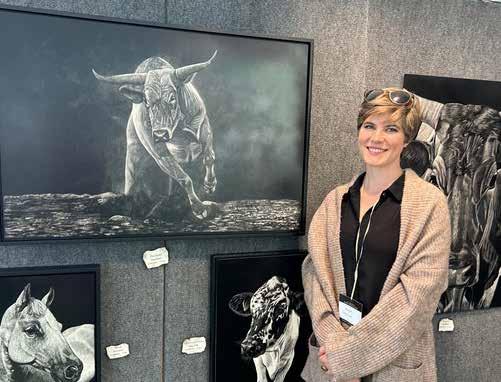
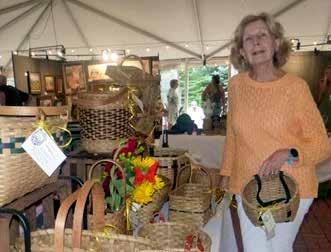
The Redstone Art Foundation's 27th annual art show was held over the last weekend in August this year. They had 32 high caliber artists of all varieties participating in the show, and are honored to announce Megan George and her scratchboard art featuring cows and horses as the winner of the People’s Choice 2D award, and Karen Alldredge with her ever-popular baskets as the winner of the 3D award.
While trying to navigate continued COVID restrictions, the RAF’s Plein Air event was born a couple of years ago over a weekend in May and now has become a permanent feature of the annual Art Show. This year, artists were asked to complete an outdoor painting capturing the beauty of
Redstone. Fifteen participating artists contributed to the “Paint Out” with a live auction accompanied by hors d'oeuvre and a wine tasting held Sunday afternoon.
As Cathy Montgomery, event coordinator and RAF Board Member, so often says, “It takes a whole village to make our annual art shows possible.” This year, the board navigated flooding rains a few hours before the show opened and again just at the close.
The Foundation would like to express many thanks to the volunteers who helped make the show a great success, particularly an ad hoc sandbagging crew Friday afternoon.
Thank you for putting up with our dust and temporary closures while we restore the landscape and build trail
UPCOMING EVENTS: Follow us on Instagram and Facebook for updates
Sept. 16–Volunteer restoration work day w/ Roaring Fork Outdoor Volunteers. Register: www.rfov.org
TBD in September – Ute blessing & ribbon-cutting
Oct. 1–Take A Kid Mountain Biking Day w/ Roaring Fork Mountain Bike Association. Register: www.rfmba.org
Oct. 14–Defiende Tierra Nuestra & Revel Bikes demo day
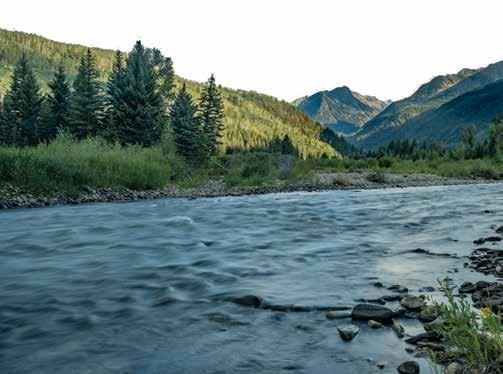
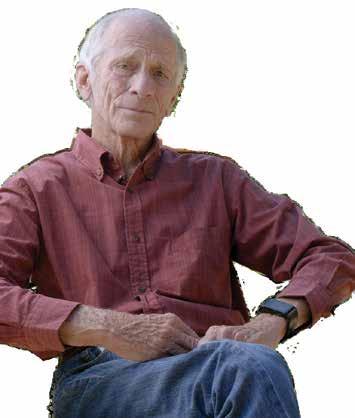
What in the late 1800s was gold, today that gold is called water. Go look at what has happened to other valleys that were not protected and ask, would you be ok if that happened here on the Crystal? We need protection for the Crystal and we need it now.”

“Ngote Zambe” is the name given to my great grandfather, Adolphus Clemens Good, soon after he arrived in Batanga, Cameroon, West Africa, on September 8th, 1892. Translated, literally, from the Bulu language, it means ‘The Tomato of God.”
That date is celebrated annually in central and southern Cameroon, to this day, and the road from Batanga to Ebolowa, passing through the seven villages of Akom II is called the “Ngote Zambe” highway. It is not really a highway, but it is a road, much like the Lead King Loop is a road. For much of the year, the treachery of the Ngote Zambe highway involves bottomless mud bogs, as it traces (roughly) the route Ngote Zambe tramped through the jungles of Cameroon to establish Presbyterian missions at Efulan, Elat, and Bibia/Lolodorf.
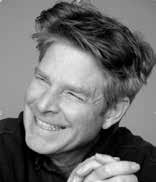
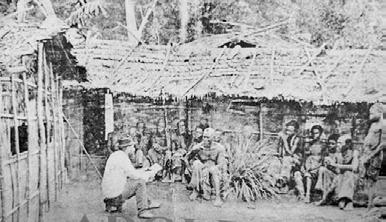
“ghost.” Then he would stop, turn around, be seated, and motion for them to gather around and listen to what was important they heard.
Again and again, he would return to their villages, or speak with them from the trail. Some made a point of traveling miles from their scattered villages to hear Ngote Zambe speak, and his words took root in their souls and lives. The legend grew in Cameroon, and he is credited with bringing Christianity to Cameroon, and along with it — schools, hospitals, and more churches.
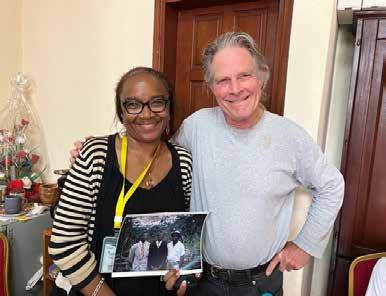
For example, I brought matted, historical photographs shot by my grandfather in the 1940s. Shots of churches and places and people — a bride and groom in front of the church at Elat; a group of elders; a pastor and his family; a Christian Youth group on retreat — these were to be gifted to those who received us or had any special interest.
And much like the Ngote Zambe highway is a joke of a highway (imagine insisting on calling the Lead King Loop a highway!), the moniker “Ngote Zambe" began as a joke on this strange man with “hair like corn silk” who stepped unannounced out of the jungle, speaking fluent Bulu, in countless villages along the route, to bring the word of God to those who would listen.
Now, we Goods didn’t know all this. What information we had about Adolphus Clemens Good came from a short biography, A Life for Africa by Ellen C. Parsons, published in 1897, and from two research visits to the Presbyterian Historical Society in Philadelphia, Penn.
There was no mention of Ngote Zambe there, but when word got out earlier this year that the descendants of Ngote Zambe were coming to Cameroon on a trip sponsored by the United Nations Educational, Scientific and Cultural Organization (UNESCO), the descendants of these same Christian converts who had traveled to listen to Ngote Zambe made plans for the people to come out in their finest clothes, cook, and they put on a show. They scheduled meetings and speeches and dancing parties; choirs sang and bands played, and they welcomed us as we have never been welcomed before, anywhere. Ever.
For me, it was like getting hit by a train. Every day. Several times. Never expecting it, never seeing it coming, and then boom. It happens again. Impact.
While waiting outside on the portico of the Ministry of Arts and Culture, I was showing these photographs to a lady, Chantal Mveh, when she saw something recognizable in the face of one of three elders. He reminded her of her mother. She snapped a picture of the photo and texted it to her mother, who wrote back that the man was Chantal’s grandfather — whom Chantal had never met. Boom! Gifting her this photo brought me closer to my own grandfather, who knew Chantal’s grandfather, bringing us closer. Chantal’s family didn’t have any photographs of her grandfather — until now. Boom!
You may not remember from my preview article printed in the July edition of The Crystal Valley Echo that we were bringing historic cultural items to repatriate. Among these artifacts found among my father's things when he died — six life-size bronze masks; a witch doctor’s charm made out of a leopard’s tooth and filled with hair, spices, frog toes, and I don’t know what all; and two heavy bronze “neck stretchers,” which my stepmother referred to as “abominations”.
When we took these restitution items to Professor Emeritus Chris Mbida at the Ministry of Arts and Culture in Yaounde, he identified the masks as valuable cultural artifacts from a specific area of Cameroon, and the witch doctor’s charm as what I said it was (but not the frog toes part), and then when he got to the neck stretchers he paused.

“These are slave auction cuffs used to identify the owners of the slaves being sold on the block”, he said. Boom! Primitive bar codes. I began to glimpse my great-grandfather’s world and understand a little of what Ngote Zambe was up against, and what he stood for. Boom. Impact. That train hit me hard.
Now, imagine that somebody is talking your face off in a language that you don’t speak, on and on, and you trance out until you forget that you are listening, forget that you don’t speak Bulu, and then you begin to feel what they are saying, and you understand perfectly. Hit by the train. Boom! But you forget how to not listen.
Also, imagine that you are being introduced like a rock star in another language you don’t understand (French) in a major African city (Douala), and it is prime time on Saturday night at a gospel festival. You might feel like a fraud because until last week you had never played in a gospel group and you don’t think you really deserve the prime-time slot because you aren't even all that Christian. Then, you hear the words Ngote Zambe somewhere in the MC’s introduction, and you get onstage with your gospel band-mates and your son where you are met with cheers and expectations you can hardly meet.
Then, your son breaks into a verse in Bulu, his voice is strong, and the joy in the audience is palpable and visible, and the tent rises. You can hear the pride that this huge crowd feels as your son sings in their language, the fifth-generation descendant of Ngote Zambe. You share in that pride, and you just got hit by the train. Again. Impact. And you begin to wonder: Just what is Ngote Zambe up to now? With me?
But, let's back up, and introduce you to our people. First, there was Carole Obam Abo’o. Just runs off the tongue, doesn’t it? Carole was our main interpreter and a lecturer in economics at the university. She knows people — she intervened in getting our visas processed or we wouldn’t have made this trip at all. Very few Americans got into Cameroon this summer. I
didn’t see any.
It might have had something to do with a military coup in neighboring Niger, but more likely people all over the world had changed their travel plans in frustration at a dysfunctional government website that utterly failed to grant visas. This is okay with Cameroon, because, as the mayor of Akom II told us, Cameroon doesn’t really want the responsibility of tourism these days.
Now we have Carole’s sister, Dorcas Obam Abo’o, the greatest gospel singer this side of Mahalia Jackson. She is an HR director at a company in Yaounde, but she can’t hide her singing success for much longer, because... Mike David Nwachukwu (bangs off the tongue like a load of stereos falling off a truck) has her front and center in his gospel group, Mekena Gospel (follow on Facebook).
Mike is the choral director for Winners Chapel International, music director and songwriter for Mekena Gospel, and the CEO of a live events company. Beyond that, Mike is the most positive, loving, humble, inspiring, and talented man that I have ever met in my whole life.
Then, we have Henri Okono Nnomeko’O. Henri is the director of engineering for Nestles Corporation, Cameroon. When we contacted him about our tour, he took the idea to UNESCO and they clearly ran with it!
Lastly, we have Paul Mbia, owner of a large accounting firm in Douala but a seminary student on the side with plans of being ordained as a pastor within the next few months. Paul has five kids and is about to turn 60 and follow his lifelong dream. He was our frequent interpreter and also held services around the two occasions we spread my father’s ashes.
Yaounde. As we made an impromptu nightclub appearance in Yaounde with a Congolese band (We played “Oh, Happy Day” by the Edwin Hawkins Singers, and “Zambe" by Mike Nwachukwu and Mekena Gospel); we didn’t know that we were being primed and vetted to embark on a church tour with the Cameroonian

gospel choir, to rehearse in hotel rooms at night, and perform in different locales over the next two weeks, finishing with the tent-raising, prime time Gospel Festival in Douala. They snuck that onto the tour, but my son David and I were proud to oblige.
Our last stop in Cameroon’s capital city of Yaounde was to exchange money at a street-side shanty, among thousands of open-air shacks from which everything from furniture to phone minutes can be purchased. There are no signs, no parking — you see what you want on the street and just pull over, get out, and get your minutes, or your money, or your bananas or fish and traffic goes around you and everybody has a nice day! It’s a cool chaos.
Bargaining, bidding, and begging are the three ‘B’s of business in Cameroon. Kids walk through traffic holding up bunches of bananas, boxes of cookies, baskets of fruit, chickens, it’s all for sale. Every day in the city is one of rampant entrepreneurial activity, no corporate culture on the streets, it’s every man for himself.
Then we hit the road south in our two black Toyota Landcruisers, to Ebolowa (Eh-bol’-oh-vah), a small, historic crossroads of a city, where tribes, languages, and countries mix. We ate snake, and “rat”, (really they were moles, and I didn’t have any because of their little hands and feet and toenails, but David and my brother John said it was a lot like beef). The snake was a delicious viper with the consistency of halibut but with bigger bones. Saltier than chicken, but, I guess it tasted kind of like... you know.



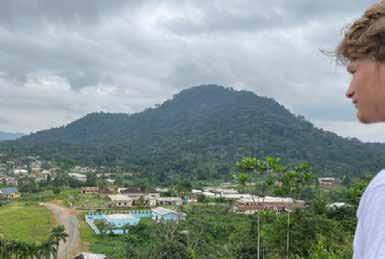
We ate everything made of gran nuts, plantains, and avocados as big as grapefruits, but learned to eat nothing made of cassava because we just didn’t like cassava in any form (and there were many forms). I read that Westerners don’t generally take to cassava because of the distinct odor it gives off, which isn’t at all like the taste, but still . . . odor.
From Ebolowa we headed for Lolodorf (a small city about the size of Carbondale) and nearby Bibia Station, where my father was born and where my grandfather, Albert Irwin Good, spent much of his career. It was here, in pygmy country, where the Goods’ Roots Tour really took flight. Here we spread my father’s ashes at the site of his childhood home, and I learned that
because our father was born here, my brother John and I are Fang!
After church, and after an inquisition meeting with a lot of pastors, a pygmy band performed for us and a hundred church people. Pygmy performers are locally famous for four things — their size, their wonderful music, their innate shyness, and their requirement that a 5-gallon jug of palm wine be onstage with them so that they may overcome their innate shyness. And overcome it they did.
While performing with our new gospel choir (the pygmies "opened" for us!), my brother John drove the pygmies back to their village deep in the jungle in one of our Toyota Landcruisers. There were automotive problems and he was late getting back but the pygmies were in no hurry, continuing the party, playing with John’s hair and his beard as he contemplated his mechanical difficulties.
“There were 16,” John told me.
“Mmm. All in one trip?” I asked.
“Yup.”
“Mmm.” Sixteen pygmies in the back of a Toyota Landcruiser.
Continued next month: To the deepest part of the jungle, where we pick up pantloads of army ants at a public party.




Thursday, September 14 starting at 7 p.m. at the Church
The Crystal River Caucus regular meeting starts at 7 p.m. on Thursday, September 14 via Zoom. The agenda will include: an update by Carly O’Connell, Pitkin County Open Space and Trails, on the Redstone Parks and Open Space Draft Management Plan; a discussion on the rockfall abatement work along Highway 133, led by Joshua Cullen, Colorado Department of Transportation; a discussion led by Sherriff Buglione regarding emergency response times, patrol frequency, and other matters concerning the Pitkin County Sherriff’s Department in our valley; and proposed bylaws amendments.
Meeting Zoom links are sent to those on the Crystal River Caucus e-mail list. If you are not on the list but would like to be, please send a request to crcaucus@gmail.com.

& Marble Times
Mission Statement: To provide a voice for the residents of the Crystal River Valley; to bring attention to the individuals and local businesses that are the fabric of the Crystal Valley region; to contribute to the vitality of our small town life.
EDITOR AND ADVERTISING SALES
Gentrye Houghton gentryeh@hotmail.com • (806) 374-0055
CONTRIBUTORS
Larry Good • Editorial DISTRIBUTION
The Crystal Valley Echo is published monthly, and is distributed throughout the Crystal Valley.
NEWSPAPER BOX LOCATIONS:
Third Street Center • Village Smithy
Carbondale Post Office • Carbondale Park & Ride
The Marble Hub • Redstone General Store
www.thecrystalvalleyecho.com
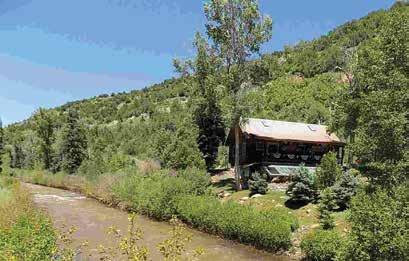
Redstone - 635 Redstone Blvd - $1,360,000

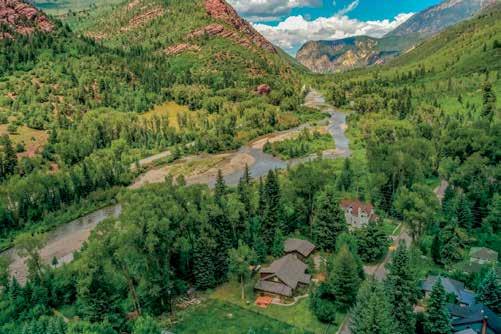
Priced under current appraised value of $1,380,000. Highly sought after property on the Crystal River Offering 2,200 SF, 3 BR/2BA, open floor plan, large rock wood burning fireplace.All new kitchen, baths, flooring and paint. New windows, new boiler and new roof Oversized 2 car garage & additional storage/workshop Direct and easy access to 200+ ft of privately owned river frontage. Quiet end of town on almost an acre. ADU potential and ability to park/store all your toys All Colorado recreational activities are steps away from this one-of-a-kind property
Lynn M Kirchner 970 379 4766
Written in May 2023 by Eli sorensen, Grade 8
Nature versus nurture; the debate that has been ongoing for more than a century now since 1869 when Sir Francis Galton popularized the term that questions every person’s personality and characteristics. Is it genes? Is it our environment in which we were raised? Or is it an even balance of both? Most believe that one or the other is ultimately superior, and nevertheless there’s evidence. But the closest to a definite answer I, personally, have ever gotten to, is a 50/50 balance between the two. I believe that there are too many variables in each that balance each other out, yet differ from each other, to have a complete conclusion besides their both having the same impact on one’s personality.
Personality tests can be great factors in the nature versus nurture mystery. The quizzes that introduce you to yourself through a series of questions that, if answered honestly, reveal your personality. According to the 16personalities online test, I am a “Defender,” consisting of the Introverted (69%), Observant (67%), Feeling (53%), and Judging (63%) personality traits (ISFJ). After reading through the introduction of my personality results, I can agree completely with what it has to suggest. It relates to me in almost every aspect. This is the outcome of the way I was treated/raised as well as my biological traits that I have gained from my parents and grandparents — nature and nurture.
As we know, nature and nurture both affect someone in different ways. Your genes carry most of your parents’ and/or grandparents’ biological traits that make you who you are with your emotions and actions that you make. At the same time, however, the way you are treated and raised as you grow up affects that same factor. “Genes do not specify behavior directly,” says Gene E. Robinson, Russell D. Fernald, and David F. Clayton, authors of Genes and Social Behavior, “but rather encode molecular products that build and govern the functioning of the brain through which behavior is expressed.”
Nurture doesn’t necessarily mean “your personality is affected by the way in which you were raised and treated.” It’s more about the environment in which you are dropped into that affects how you act. The Stanford Prison Experiment, for instance, was an experiment conducted by a college researcher and professor at Stanford University who put an ad in the newspaper offering payment to college students who would participate in the experiment. He gathered seventy (70) students and went to work on conducting the experiment for the behavior of prison guards, trying to see whether they are particularly violent or “mean” towards prisoners specifically because of their personality or because of the prison environment. He split the students into groups of fake prisoners and guards and the experiment started. On the first day, the guards already started oppressing the prisoners and by six days, one prisoner started believing that he was actually a real prisoner until a reminder that it was only an experiment. According to the “prisoners,” a third of the guards were stern but abided by the rules, one third of them were kind, but the last third were appalling and cruel. These were just ordinary college students, but it comes to
show that the environment you’re in can actually visibly affect how you act or feel.
Moreover, another Stanford study showed that teenage brains aged faster during the COVID-19 pandemic. “The study, which measured brain age after about 10 months of lockdown, showed that teen brains had aged at least three years in that time.” Ian Gotlib, a psychology professor at Stanford University, is the director of the Stanford Neurodevelopment, Affect, and Psychopathology Laboratory who started a longitudinal study of “better understanding gender differences in depression rates among adolescents.” When the pandemic hit, all in-person research at Stanford shut down, preventing the scientists from continuing on in their studies. After seeing it as an opportunity, Gotlib’s team went to work on a different question: how has the pandemic affected the “physical structure of the children’s brains and their mental health”? Using the data they gathered in the previous six years of the study, they took MRI scans of children’s brains and matched children with the same gender and age, and subgroups of other factors such as socioeconomic status and exposure to childhood stress. “That allowed us to compare 16-year olds before the pandemic with different 16-year olds assessed after the pandemic,” said Gotlib. “[Gotlib’s results] found more severe symptoms of anxiety, depression and internalizing problems in the group that had experienced the pandemic.”
Genes or the “nature” of your character isn’t directly made as a set of “rules” or “blueprints” as some people put it. They can easily be changed or unaffected due to the nurture factor. Say you are born with obesity associated genes and you don’t grow up in a healthy diet environment so those genes are triggered. However, if you eat healthily and have a fairly athletic life, you’re not as likely to have those genes wake up and affect you. Therefore, the combination of genes and environment affect each other and on their own.
There is much evidence to suggest that the nature/nurture debate only has one answer. Some of that evidence can even be life experiences that can change how one feels about it. But when it comes down to it, there are tons of factors that cancel each other out yet add on to each other. There are so many things that can make it non-concludable, but it all depends on what someone thinks about it. There will likely never be a complete conclusion on which is dominant. Therefore, I believe there is only a 50/50 balance between them.
In my opinion your personality is influenced 45% by Nature (your biology) and 55% by Nurture (your environment). This is because the environment includes your upbringing, home, country, religion, school, and other aspects that seem to be able to change whereas your biology, including
looks, disabilities, and other genetic benefits or disadvantages, are completely out of your control. However, your environment does not completely make a personality; each person's personality is very unique. Whether you come from the slums or riches only makes a slight difference because there are plenty of happy optimistic people from each place along with angry and depressed people.
I believe our siblings are a leading factor of our personality; our siblings really are the only ones who have been with us the whole time that we love and hate but nearly always explain. Even our parents don’t share that with us, but for all children, I think their parents affect them in both positive and negative ways. Household norms that we live by without realizing it completely change us. They make us believe and do things without thinking.
We took an online personality test using www.16personalities.com this year in Science. I am an “INFJ-A”, which means that I am an “Introverted, Intuitive, Feeling, Judging, and Assertive” person. Out of the sixteen personality types, INFJ-As are called the Advocates; they are people like Martin Luther King Jr. and Mother Theresa. Advocates are “thoughtful nurturers with a strong sense of personal integrity and a drive to help others realize their potential.” Something that I found very interesting is that my dad and I both have the same personality types. It is the rarest in males and third rarest in females. That is one of the reasons I believe that Nature affects you. I notice it a lot that my dad and I are very similar-minded people and that my mom and my brother are also very much alike.
Nature refers to our genetics, the genes that we have from birth and hereditary factors that may impact the way we develop in ourselves. Your genetics can include things like obesity, depression, some cancers, birth defects, hair color and texture, eye color, skin tone and sometimes even blood type. Nurture encompasses the environmental factors that impact who we are and will be; these are our
childhood experiences, our social relationships, the way that we were raised and other surrounding culture.
Nature has impacted me in little things, like having my dad’s eyes, mom’s two-toned hair and same freckles/moles. My dad and I understand and get along better than my mom and me. Both my dad and I are very organized, clean people whereas my mom and brother are always losing things and have messes everywhere. Nurture is how I was raised. I grew up in a Christian family that rarely was around technology and read a lot of books. My siblings made me more caring and changed my preferences in things. They have made me who I am today. All my memories are with them. Memories are Nurture and your memories affect you self-consciously.
There was a study about twins that we recently looked at. In the study it told you about DNA, which is Nature. I found it amazing that the person whom you share most of your genetics with is your siblings and not your parents. Fraternal twins have 50% of the same genes and identical twins have 100% of the same genes. In 1979 the director of the Minnesota Center for Twin and Family Research found a pair of twins separated at birth. These twins reunited at the age of 39 to find out that they both married women named Linda, divorced then married a woman named Betty. One twin named his son James Allan and the other twin named his son James Alan and they also both had a dog and named it Toy. That is one of the rare scenarios that show Nature being more domineering.
A Class Divided is another famous study, but instead this one shows how Nurture affects you. Third grade teacher, Jane Elliot, wanted to teach her class about discrimination, so she separated them into two groups, blue-eyed and brown-eyed. The blue-eyed people were in the beginning the “superior” people. Surprisingly, the “superior people” started to act as though they really were better than the brown-eyed people. The blue-eyed

children got better grades on their tests and started to bully the brown-eyes. Then Elliot changed their positions to brown-eyes being superior. This made both realize how bad it was to be considered inferior. When those children were grown up, they came to visit their third grade teacher. All of them from that day forward had never discriminated against others and were overall more considerate. From one childhood experience their personalities were forever changed.
A similar study is the Stanford Prison Experiment A researcher made a fake prison and hired 70 people to be in his experiment. His study was designed to see why guards at prisons are mean, and if it’s because of their personalities or the prison environment. The fake prisoners were arrested knowing that it was part of the experiment. The fake guards on the first day started to oppress the prisoners and by day six a prisoner actually thought that he was deserving of this treatment and became disturbed. It took a lot of constant reminders that it was just an experiment before he finally believed he was innocent of any crimes. That shows how these people were just being influenced by the prison environment, and it changed their personalities.
It is scientifically proven that your brain can change itself. Neuroplasticity is the scientific phenomenon that the brain can change itself, its own structure and function based on mental intention or experience, both intrinsically (inside) and extrinsically (outside). Lauryn Maloney-Gepfert, MFA, PA-C, founder and director of Neuroplastic Functional Institute started a program that helps paralyzed and hurt people heal. Her method is very simple; she just makes them believe that they can do it. In reality if you believe that you can do things and tell yourself that every single day, you are changing your mindset and your brain function. Neuroplasticity and Nurture are correlated because it’s your environment and it is changing your personality


and overall self.
Three Identical Strangers is a movie about three triplets separated by an adoption agency as an experiment. Eddy, Robert, and David found each other coincidentally when they were in college and immediately knew that somehow they were the same. Everything from looks, expressions, movements, voices, and style to the brand of cigarettes they smoked and tastes in women was the same. They became famous as triplets and were on many TV shows and interviews. Eventually they used their fame to start a restaurant business together. Then they had another thing that made them even more famous. It turned out that they had been separated as a twin experiment, but they weren’t the only ones who had been separated. The Louise Wise adoption agency in New York City had been separating many twins for their studies. Strangely, all the separated twins had something in common: mentally ill biological parents. This didn’t stop the triplets from continuing with their restaurant. Things then started going downhill. Since they had not grown up together and become used to each other as children like most siblings, they started to fight and eventually their business broke up. Though all of the triplets were sad, Eddy took this a lot harder than the others and became depressed. Not too
far into the future he committed suicide and that was the end of the story. When scientists later looked into this suicide, they saw that the only drastic difference in the boys was their adopted parents. Eddy’s father wasn’t very warm towards him and was very strict. Just having a slightly different upbringing made him commit suicide; this shows just how much the environment that you grow up in forms and changes you.
Two things that I found interesting while researching this topic were Down Syndrome and Pradar Willi Syndrome. These are both genetic conditions that you are born with that have no cure. Down Syndrome is where you have an extra chromosome; babies are typically born with 46 chromosomes but with Down Syndrome you have something called chromosome 21. Down Syndrome affects things like physical appearance, your development, intellectual disability, and sometimes thyroid or heart disease. Yet, strangely, people with Down Syndrome are often very bright and happy people. Pradar Willi Syndrome is also similar in the way that it affects your personality and outlook on life. Only instead of being an optimistic person like what Down Syndrome does to you, Prader Willi creates lots of behavior problems and a less enjoyable personality. Instead of adding a chromosome,


it partially deletes chromosome 15, which is passed down by the father. This is living proof that your personality is affected by your genetics.
In our class survey of fifty-six (56) people of all ages, it showed that many other people agreed with my opinions on Nature vs. Nurture: 41.1% of the people said that Nurture influenced your personality the most while 41.1% of the people said that Nature and Nurture had an equal influence, leaving Nature with only 17.9%. This survey also showed that 29.1% said that their biological parents were the #1 determining factor of their personality, and in second place, 9.1% said that the time in history of their youth was the most important factor. My personal opinion is that your siblings are the leading factor, but I wish there had been an option on the survey that just said “family.” This shows that my hypothesis of Nurture being most important was correct.
You are created as you grow. You are how your environment, siblings, parents, and your culture make you. Every day's decisions and events change your brain and the way you grow. It is because our traits are learned that Nurture is more important. Certain genetic factors can increase the likelihood of diseases and behaviors, but how that person develops is often dependent on their environment. While Nature generally considers the impact of neurotransmitters and physical approaches such as genome sequencing in development, Nurture focuses on aspects such as peer pressure and social influence. Unknowingly, we are influenced by nearly everything we run into.


the Redstone Inn Redstone programs are open to all! RSVP: (970) 920-5432
SEPTEMBER 12 & 26
• 12:00 p.m. – Lunch ($10) RSVP by noon the Friday prior – space is limited. Plated lunch will be served. There will be a gluten-free option.
• 12:45 p.m. – Program
September 12: Veterans Services & Economic Assistance
The representatives are from Pitkin County but the information is generally applicable wherever you reside.
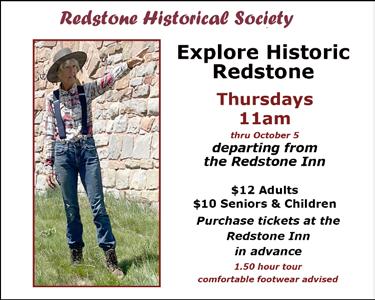
September 26: Tour of Redstone
With Becky Trembley from the Redstone Historical society.
WANT TO BE KEPT IN THE LOOP? Send us your email address: (970) 920-5432 • seniors@pitkincounty.com
By Ellamae Siemon, 6th Grade
I love the way you made me love you since first grade
The way your beautiful plays and lyrics call to me in the middle of the night
I remember when I was in my first play
As if it were yesterday I remember feeling like I belonged for the first time in a long time
When I was at my biggest lows
I felt like I was falling off a cliff and you caught me before I hit the ground
I will try hard to achieve my dream to have you as a fulltime job
You have changed my life for the better
When I was going through one of the biggest lows in my life You saved me like a guardian angel I never want to let you go and I always want you by my side
You are my best friend till the end I hope one day you will love me back
And I hope I can love you till the end of entirety I will never forget you
Sometimes you have to work hard to see the most beautiful things in life
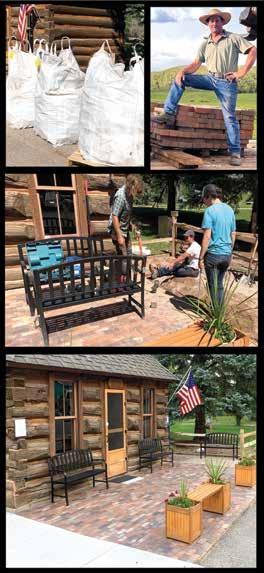
The recent Redstone Park project left our museum with a very messy and unattractive pea gravel entry, worse with rain and snow. Enter Peter Blake of Environmental Excavations, who headed the recent Redstone Park project.
Peter generously donated old bricks from the Paepke house in Aspen and hauled them from storage at his Somerset ranch. With his able crew, Jules Campbell, Jack Cody and Raul Silva, the bricks were meticulously installed. Pitkin County pitched in to finance the installation and our Redstone Historical Society members funded the benches to complete the project.
By Elsie Mile, 6th Grade
Every time I go to Denver with my family we go to sports plus It is where I found you
Two years ago my dad bought you for $40 but to me you are worth much more I broke you in just the way I like it
Not too floppy but so I could still catch the baseball easily
Now after 2 years you are like an extension of my arm
When I slide my hand into the pocket it feels so familiar and soothing
A year or so ago I found out that inside the hand pocket there is the message “I will” stamped into the soft black leather
Every time I put on my mitt I am reminded of the message and to do my best no matter what I’m doing
I loved you so much I now have a catchers mitt just like you
Thank you for letting me learn and reminding me who I really am





We need to know if you're watching TV on
Pitkin County operated free platform that's
in the Roaring Fork, Crystal and Frying Pan Valleys simply by using an antenna The service includes channels like PBS, Grassroots TV, and CGTV Call the translator l ine at (970) 920-5395 to speak with a representative about your TV usage or email translator@pitkincounty.com
All content sponsored and provided by the Redstone Historical Society.
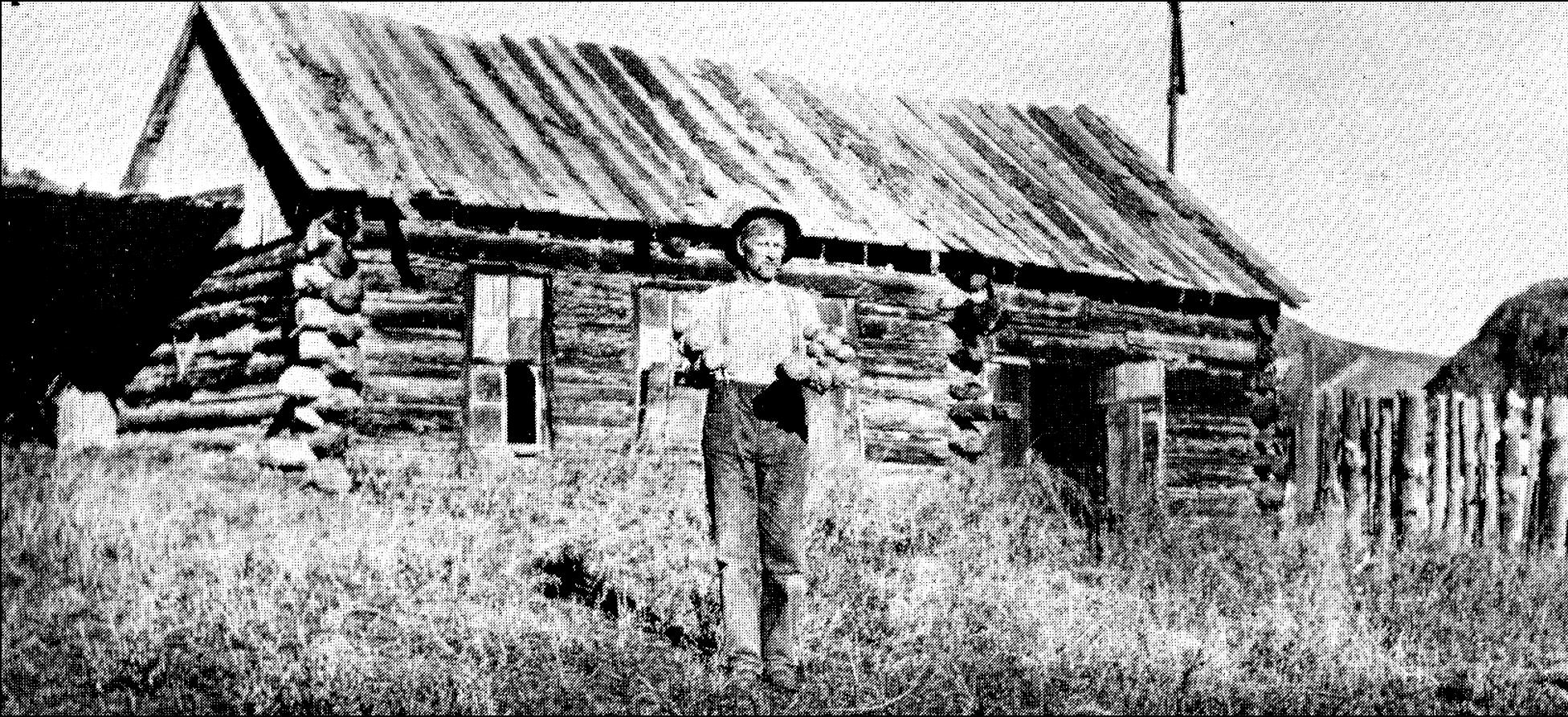
This excerpted article is reprinted with permission by Mary Boland.
Settlement of the Crystal Valley downstream of Marble, Colo., all the way to Carbondale was contemporaneous with Marble's beginnings and with the removal of the Utes after the Meeker massacre. In fact, almost all of the desirable ranch land in the valley was taken up during the early 1880s.
With prospectors touting the mineral resources of the entire valley, including the vast coal deposits downstream as well as gold, silver, lead, zinc, slate, and marble upstream, there was much clamor for interest in the construction of railroad facilities.
At first, there was talk of a railroad into the valley from Gunnison County to the south, as almost all the valley's earliest inhab-
itants had come in from the south. But by the second half of the 1880's, attention had turned to the north. As soon as the Denver and Rio Grande railroad reached Glenwood Springs, Colo., from the east in the fall of 1887, that railroad pushed construction on up the Roaring Fork Valley to Aspen, then in the midst of a real silver-mining boom. Of course, the D&RG trains stopped in Carbondale, as did those of the Colorado Midland railroad, which arrived in the valley shortly thereafter. Thus from the late 1880s the Crystal Valley turned around, as it were, and looked to the north rather than to the south in its connections with the rest of the world.
The first railroad facilities actually constructed in the valley were built in 1886-1887 from the Denver and Rio Grande's planned Carbondale depot to the new coal mines being opened about eight miles up Thompson Creek, which flows into the Crystal some five miles above Carbondale. This Aspen and Western Railroad was built by the Colorado Coal and Iron Company, the very large company organized by General William Palmer that was responsible for the early development of the mining and steel industry on the Eastern Slope, particularly in the Pueblo region.
These first Thompson Creek mines and the railroad serving them were no sooner built than abandoned. Apparently, the Colorado Coal and Iron Company discovered after building the
railroad that their mines up Thompson Creek could not be developed, economically; the enterprise was officially dropped in 1889 and the Aspen and Western equipment was sold to a railroad organized shortly thereafter by John Osgood.
Later in the 1940s new mines were opened up in Thompson Creek by Thompson Creek Coal and Coke Company and were operated until 1967. These mines were then reopened by Anshutz Coal Corporation in the mid-1970s and sold to Snowmass Coal Company in 1978.
The stage was set for the young entrepreneur John Osgood to arrive in upper Crystal Valley in 1882: Colorado became a state in 1876, the Utes were expelled to reservations by 1881; growth was starting to come from the North following the discovery of silver in Aspen in 1879; the land around Carbondale was offered to homesteaders beginning in 1881; railroad access was being mapped including plans for the first five miles of railroad tracks up the Crystal; and potential coal deposits had been identified in the Crystal Valley,
To be continued next month...
Author Mary Boland (1936-2017), moved to Carbondale in 1973. She was Glenwood Bureau Chief for the Grand Junction Sentinel, a Professor at Colorado Mountain College, and a prolific writer for many national and local publications. This is one article from her publication The History of the Crystal Valley.

Open Space and Trails Updates
A draft management plan for Redstone Parks and Open Space is now open to public review and comment Please find both the draft plan and a survey link at www.pitkinostprojects.com
Pitkin County TV Service

The Pitkin County Telecommunications Dept is reviewing how it uses money from a property tax that funds free over the air TV in our region We need to know if you're watching TV on this Pitkin County operated, free platform that's available in the Roaring Fork, Crystal and Frying Pan valleys simply by using an antenna The service includes channels like PBS, Grassroots TV, and CGTV Call the translator line at (970) 920-5395 to speak with a representative about your TV usage
What's happening at the airport?
The Aspen/Pitkin County Airport launched a newsletter for airport users, community members, and anyone else interested in news and information from the airport Read staff awards and recognition to need-to-know information for passengers, updates about the airport’s capital improvements program, and more DMV2GO now at Pitkin County Admin

Next pop-up DMV service is September 11 Contact: Department of Revenue, 303-205-5600 The Colorado Department of Revenue has begun hosting a popup service once a month in the Pitkin County Administrative Building, 530 E Main St “DMV2GO” offers renewal and/or replacement of a driver’s license, ID or permit Appointments are highly recommended Go to Pitkincounty com, click on the Clerk & Recorder tab, then the Motor Vehicle tab, to reserve a time Food sites in the Roaring Fork Valley Pitkin County Human Services would like to remind everyone about food assistance options available in our valley This document has a list of food distribution sites, farmers markets, WIC retailers, and SNAP approved vendors The list is updated regularly

The Crystal is a freestone river, not dammed at any point of its journey. This has become a rare thing for rivers in the West, and the watershed therefore still holds on to some vestige of its original state. The very core of who I have become as an artist and fly fisherman is predicated on the well-being of this river.”
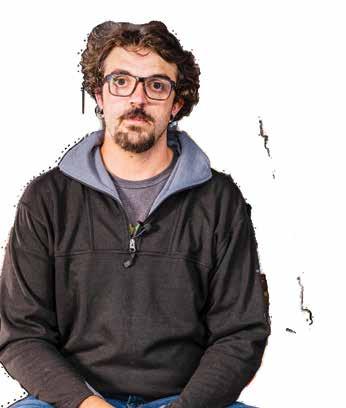
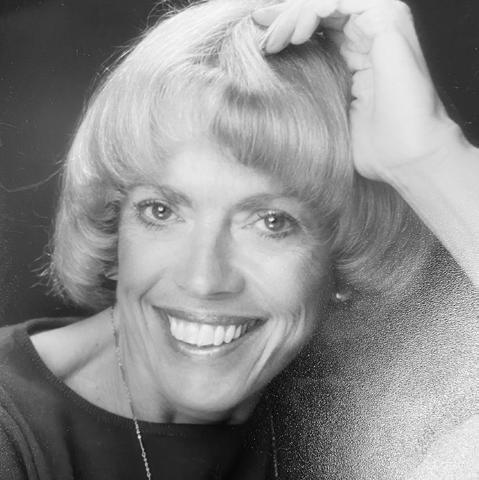
August 7, 1935 — August 8, 2023
Beverly Ann Goss – mother, artist, community builder, tennis player, businesswoman, lover of mountains and rivers, and animals – died on August 8, 2023, one day after her 88th birthday.
Goss was a woman who held much in her life: her sons’ and grandsons’ hands; her pencils, brushes, and palette knife; her chisels and sanders and the texture of smoothing marble under her fingers; her portfolio swinging by her side in 1950s Chicago, Ill.; her tennis racket; her unwillingness to occupy only those spaces deemed acceptable for women; the soft fur under her cat’s chin.
Born in Wichita, Kansas, in 1935 to Maurice and Reba Van Dusen, Goss attended East High School and went on to earn a Bachelor of Arts in Studio Art at the University of Kansas, where she joined the Chi-Omega sorority. Following college, she married Jerry Goss, lived in Chicago, Ill., and set about getting a job in the graphic art and design world.
One of her favorite stories was how she went to her job interviews, carrying her portfolio, and sensing repeatedly that the men felt she didn’t belong there. Often they'd just say out loud, “We don’t need her.” But, as she told everyone, ”I didn’t care what they thought; I knew I could do the work as well as or better than they could.” She was hired by Montgomery Ward and proved that true for several years.
After her two sons, Peter and Bryan, were born, Goss focused her energy on motherhood but never gave up her creative life, always drawing and painting, while also crafting the best Halloween costumes any child could ever ask for.
After living in Cleveland, Ohio, Denver, Colo., and Silver Spring, Md., Goss moved with her family to Albuquerque, N.M., in 1968 and to the village of Los Ranchos de Albuquerque, in the north valley, in 1974. She drew and painted in her studio, kept up a lively social life, and served as a
Los Ranchos Village Trustee and on the Board of Trustees of Albuquerque Academy.
Goss always created social engagement and community wherever she lived. The 4th of July block parties, hosted at her home in Dietz Farms were beloved annual gatherings, with a parade, potluck, and endless fireworks that were a “must be there” for all in the area. So too, was her annual Christmas Eve party, often featuring local music, that gathered friends from all around.
A late-blooming athlete, Goss became a tennis fanatic, playing recreationally and competitively as a 4.0 USTA player around Albuquerque, N.M., including at Los Ranchos, the Tennis Club of Albuquerque, and Tanoan. She loved the outdoors, hiking, and biking at every opportunity.
After her divorce, Goss rejoined the workforce, devoting many years to the KNME-TV graphics department, creating both print and on-air graphics. It was the dawning years of digital technology and Goss adapted her skills to these new tools, loving the challenge and the additional dimension and power it could add to her visual art and graphics.
In the late 1990s, with her sons off living their lives, Goss attended a sculpture workshop in Marble, Colo. She returned home telling everyone that there was a gallery with a huge studio for sale in Redstone, Colo., and that she thought she would buy it. Despite a lot of polite nodding, and echoing her attitude from those early days in Chicago, Ill., she did just that, becoming the proprietress of The Redstone Art Center (now the Redstone Art Gallery), a stunningly beautiful place with the Crystal River running behind her home and business.
She built a successful business and a circle of deep community connections that made the Art Center the hub of Redstone. Visitors and locals alike enjoyed and purchased art from the wide array of artists whose work filled the gallery. There were also frequent opportunities to watch Goss sculpt in marble and alabaster or to attend workshops by other artists. Of course, there were the frequent social gatherings she hosted, including her annual Christmas party, another essential thread she wove into the fabric of the township. And, her much-adored cat, Mocha, was always nearby.
Goss reluctantly sold the gallery and returned to Albuquerque, N.M., due to health concerns and lived her final years near the Sandia Mountains she loved. In the end, it was a gentle exit to a bustling, meaningful life. Her positive presence in so many lives, along with her many paintings and sculptures that adorn walls and gardens across the country, is her legacy.
The family would like to offer their deep gratitude to the caregivers at Beehive Building B and to Lynn Brennan for their devotion to Goss in her final year of life.
Goss is survived by son and daughter-in-law Peter Goss and Christina Griffith of Santa Fe, N.M., and grandson Liam Goss of Chicago, Ill.; son and daughter-in-law Bryan and Lara Goss and grandsons Spencer Goss and Alex Goss of Albuquerque, N.M.; and her brother, Maurice Van Dusen of Tulsa, Okla.
The family will host a private celebration of life and asks that donations be made in her memory to KHFM Radio, Goss’s omnipresent audio companion for all her years in New Mexico. Donations can be made online at www.khfm.org or mailed to KHFM, 8009 Marble Ave NE, Albuquerque, NM 87110.
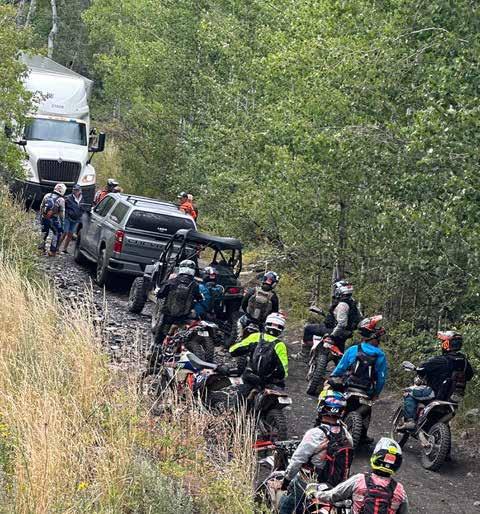
Two race course: 25k Lead King Loop & 2.5k Kids Race
September 17, 2023
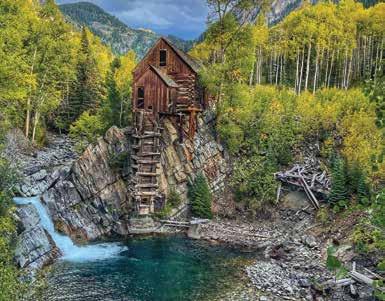
Get ready for a great day of running through the spectacular fall colors in the heart of Colorado’s Elk Mountain range. Run, walk, or hike the 25k loop around Lead King Basin, zipping past the Crystal Mill, and ghost town of Crystal.
For more information or to register visit: