


Dear Editor:
What a magical 12th Anniversary Celebration of The Marble Hub held at nearby Marble Community Church Fellowship Hall on June 24th
Part of that could be because The Hub volunteers – Sabrina, Becca, Alton, and Annie each brought us their special brands of magic; be it costuming, lawn games, or even magic snow cone spoons! Children of all ages were loving those snow cones.
The Hub baristas Cyndi and Sarah helped General Manager, Nicole Farrell, who organized and headed up this year’s fundraiser for The Hub, Marble’s only “for the commons” non-profit.
We are so appreciative of the Marble/Crystal River Valley businesses and entrepreneurs who supported our silent auction and raffle drawing: OutWest Guides, Roger Neal, Sabrina (of The Parry House), Sawtooth Carving, Crystal River Jeep Tours, Marble Gallery, New Jammies, Nicole Ludlow, Marble Mo Creations, Chris Solomon, Vicki Branson, Bonfire Coffee, Charlotte Graham, Ernie Bradley Family, Farrell Family, and Marble Candle Company.
Nicole also arranged eye-catching baskets for the raffle, which drew lots of excitement and action from the crowd.
Yummy food catered by Paige Gibbons & Angus Barber.
Homemade Pies by Terry Langley, Nicole Ludlow, Francis Bogal, and Alie Wettstein. Music provided by Joint Chiefs -- John Riger and Doug Whitney, two of the most talented musicians in this valley.
So, if you don’t see yours, or your business’s name in the list above, not to worry! There is still time to donate … because, frankly, … from its inception a dozen-plus years ago, The Marble Hub has been primarily funded by grants and donations, with additional support from the Marble Crystal River Chamber and the Town of Marble.
& Marble Times
Mission Statement: To provide a voice for the residents of the Crystal River Valley; to bring attention to the individuals and local businesses that are the fabric of the Crystal Valley region; to contribute to the vitality of our small town life.
Editor • Gentrye Houghton gentryeh@hotmail.com • (806) 374-0055
CONTRIBUTORS
Amber McMahill • Melissa Sidelinger
ADVERTISING SALES
Gentrye Houghton gentryeh@hotmail.com • (806) 374-0055
The Crystal Valley Echo is published monthly, and is distributed throughout the Crystal Valley.
NEWSPAPER BOX LOCATIONS: Third Street Center • Village Smithy Carbondale Post Office • Carbondale Park & Ride The Marble Hub • Redstone General Store
The Hub literally serves the daily needs and questions of people from all over the world, especially during summer/fall. We offer pour-over coffee, pastries, and snacks, plus gifts from local artists and vendors. We also have the only public 24/7 WiFi as well as a landline phone when The Hub is open.
After COVID and attrition, we lost a number of volunteers. Now, even though we run a tight ship, to keep The Hub doors open seven days a week, we need to hire and thus, more payroll. Which is the biggest expense we have.
By the same token, we are proud to be able to provide easy, fun, and educational part-time paid jobs for young teens to seniors so that they may work locally. In fact, if you know anyone who might enjoy such a rewarding summer job, send them over!
Over the years, during our voluntary staff days, The Hub could generously donate back to our other local non-profits. Now to keep our doors open, we seek support near and far.
If you have enjoyed and appreciated our public services these past 12 years, please know that we depend on your financial donations. Contact us today at: themarblehub@gmail.com for more information.
We have a great summer planned ahead! Stop by anytime.
Oh, and did I mention our Summer of ’23 “Talk Story” series with local storytellers on Friday evenings beginning in July? Details to come soon!
Charlotte Graham, The Marble Hub Chair
P.S. While not a necessity per se, our “big ask” this __12th__ anniversary is for a special, super-duper nice Hub Benefactor to set us up with StarLink! And also, monthly donors to sign up “in the memory of” or “on behalf of,” etc. July is always the biggest drain on our oh, so, slow satellite wifi service. THANK YOU!

Press Release from the United States Forest Service
The White River National Forest has approved a proposal to inventory and study the quality and quantity of waste methane gas venting near inactive coal mines in Coal Basin west of Redstone using aircraft and surface instruments.
The decision authorizes Delta Brick and Climate Company, LLC., to use ground-based monitoring units as well as aircraft to gather data about the volume, concentration, and location of methane gas being emitted into the atmosphere from vents, mining adits, and other surface features. This information will help identify the type of methane gas mitigation projects to pursue in the future.
“This current project is about gathering data regarding methane venting in Coal Basin,” said Aspen-Sopris Deputy District Ranger Jennifer Schuller. “Any future mitigation projects in Coal Basin would be analyzed separately and would include additional opportunities for public involvement.”
Delta Brick and Climate Company plans to place up to 10, 8-foot tall, tripod-mounted methane identification instruments in 50 separate locations starting last month through October. The instruments would be accessed and moved by foot and horse.
Aircraft work includes overflights from fixed-wing aircraft or helicopters as well as instrumented drones.
More information is available at www.fs.usda.gov/project/?project=64062
At its June 22nd meeting in Alamosa, Colo., the Parks and Wildlife Commission unanimously approved changes to regulations that standardized and clarified language for permissible activities on State Wildlife Areas (SWA) and will affect recreational access on Beaver Lake near Marble, Colo.

The new regulations will go into effect on August 1st, 2023; of specific interest to those accessing Beaver Lake is the restriction of any watercraft from being launched or taken out except those actively being used for hunting or fishing.
“These revisions will help Colorado Parks Wildlife protect critical wildlife habitat across the state for current and future generations,” said CPW Director Jeff Davis.
Public comment was held between April 12th and May 24th in which 191 total comments were submitted. Of those comments, 110 dealt with the use of recreational vessels with 51 of those specifically concerning Beaver Lake.

The regulation change is in keeping with the original sale agreement that stipulated the property is for “fishing purposes only,” a common theme among the comments opposing the regulation was that SWAs should be managed as public lands open to all visitors regardless of their intended use of the property. Sixteen of the
51 comments agreed with restricting watercraft use to fishing only.
This is the next phase of work that began in 2020 to address impacts on SWAs due to increased visitation and the impacts on wildlife habitat. In December 2019, the Area Wildlife Managers, in consultation with CPW staff managing the SWAs, began analyzing what negative impacts were occurring and coming up with ideas and solutions to these problems.
To help manage increasing recreation at SWAs, CPW began requiring either a valid hunting or fishing license for anyone 16 or older accessing most SWAs, including Beaver Lake. CPW manages about 350 SWAs, which are paid for primarily by sportspersons and managed for the benefit of wildlife.
While these new regulatory changes will go into effect next month, CPW wildlife officers will also be implementing an education campaign for the first year to ensure everyone is aware of how new regulations may be affecting their favorite SWA before handing out citations for any violations of new regulations.
The 2023 Colorado State Recreation Lands Brochure has all the updated regulations for SWAs and will be available online and in CPW offices starting in early August.
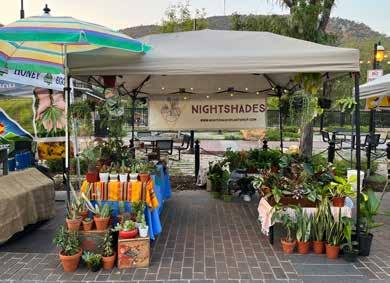
One of the most interesting aspects about writing for The Crystal Valley Echo is having the opportunity to discover your neighbors’ stories and getting to share those with the community. In the case of Nightshades Plant Shop and owner Alie Wettstein, the neighbor part of the equation is quite literal — she and I live just a few blocks from each other. So I was excited to have a chance to catch up with her and learn the history of her homegrown (no pun intended!) mobile plant shop.
“I moved to Marble in the spring of 2021 to be closer to my family, who live in Carbondale. I was born and raised in Aspen but spent my adult life on the West Coast,” Wettstein told me. “I always wanted to come back to the mountains. Marble is totally my speed and a place where I have found inner peace. I love the people here. Everyone is so deeply passionate about their community, and they show it in their lifestyle.”

Wettstein describes Nightshades Plant Shop as, “A mobile indoor plant shop that provides a unique, vibrant, and healthy variety of house plants for all. From beginners to rare species collectors, and for those on a budget or those wanting to live in a jungle. Nightshades brings the joy of caring for plants into homes, businesses, and our community.”
By Melissa Sidelinger
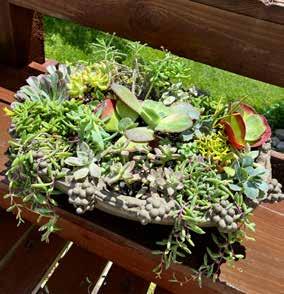
Wettstein opened Nightshades Plant Shop in February 2022. “I have always had a connection to plants and the magic of growing. I have a history in farming, landscaping, and working farmer's markets,” she continued. “I knew I wanted to start a business and I wanted to start small. I combined what I knew and what I like, and ran with it.”
She added, “I like to challenge myself and to learn new things. I believe first-hand experience is the best educator. I’m just happy others like what I’m doing!”
In Nightshades Plant Shop, Wettstein sells tropical foliage, succulents, cacti, and other indoor plants. She drives to Denver and hand-selects the healthiest and most beautiful plants she can find for her business. In addition to selling a variety of plants, Nightshades also provides services including on-site potting, maintenance, repotting, plant-sitting, and full design and plant installations for both homes and offices.
“Nightshades Plant Shop is fully mobile. I don’t sell from my home but I do deliver locally,” Wettstein said. “I sell my rotating inventory at outdoor markets, holiday events, and community events. I travel from Marble to Carbondale, Basalt, Glenwood Springs, and Paonia.”
Some of Nightshades Plant Shop’s most recent events included Dandelion Days during May in Carbondale and a Mother’s Day plant sale at the Marble Hub. “This was my second year participating at Dandelion Days,” Wettstein told me. “It’s such a great event to celebrate spring and to kick off the growing season. I hope to be accepted there as long as Nightshades exists.”
“The Mother’s Day plant sale was well received by the Marble Community,” she continued. “It was really fun to meet new people, plus it was the shortest commute I’ve ever had! I would love to do more events in Marble, including something at MarbleFest (when I’m not working the MarbleFest merchandise tent, that is!).”
“Mountain Fair in Carbondale would also be great to participate in, but then I would have to give up going as a patron and entering the pie competition. I support a healthy work-life balance,” she concluded.
I asked Wettstein where she found the gray van that houses Nightshades Plant Shop. In case you haven’t
Mike Kennedy, Broker/Owner 970-379-3907
mikekennedy@sopris.net ColoradoHomesRanches.com

seen it around, it’s unique because the driver is on the right side of the vehicle instead of the left.
“I found the van in Denver (it was originally imported from Japan) when winter was approaching and I was in need of a year-round delivery vehicle. Conveniently, it is 4-wheel drive so I can get out of my driveway in the snow!” Wettstein said.
Anyone who has seen Wettstein around town has probably seen her walking or driving with her furry canine companion, Barley. When asked if Barley accompanies her to any events she replied, “Barley came into my life as a puppy last September, when I found him through Mountain Pet Rescue. Early on, he came to Potato Days in Carbondale with me, but since then he has grown and his energy has exploded. Currently, he’s not allowed to join me at the markets, but hopefully, one day soon he will!”
I asked Wettstein what her goals for Nightshades Plant Shop were in the coming years. “That is a tough question,” she replied. “I would love to go with the flow and let the business grow like the plants. I love the size and the amount of business I do currently, but if the market for plants and the services I provide grows then I will adapt to that change. Of course, there is only so much that one person can do.”
You can find Nightshades Plant Shop at the Carbondale Farmers Market on Wednesdays from 10 a.m. — 3 p.m. and the Basalt Farmers Market on Sundays from 10 a.m. — 2 p.m. throughout the summer and into September.
Wettstein can be reached by phone at (970) 274-2190 or by email at nghtshdsplantshop@gmail.com. To see Nightshades Plant Shop’s impressive inventory check out the website www.nightshadesplantshop. com or @nightshadesplantshop on Facebook and Instagram, where all upcoming events are posted.

Editorial from Larry Good
When my father died, after his Celebration of Life, when I returned to his home in Eugene, Ore., and went through some of his earthly artifacts I was struck by several things. One, his glasses. Something about the old man’s glasses fascinated me as if I could maybe look through them one last time and see the life that he saw through them. But, of course, I couldn’t see a thing through old Ted’s blurred prescription. Indeed, he was so blind by that time that he could no longer read music and was in the process of selling off his prized Bluthner piano.
Two, his birth certificate. It gave his place of birth as Lolodorf, French Cameroun. I knew he was born in Africa, but hadn’t given much thought to what this meant, the "where" and the "why" hadn’t intruded on the "who" that was my father, and I couldn’t remember having heard of this Lolodorf place.
Three, the bronze African masks and the heavy, bronze, neck-stretching rings. My step-mother, Anita Sullivan, published poet, author, deep thinker, and soul mate to my father for the last decades of his life, said of the neck-stretchers, in a voice tinged with disgust, “What are we going to do with these . . . abominations!” It was mostly in teasing appeasement that I said: “Maybe, um . . . return them to the people they belong to?”
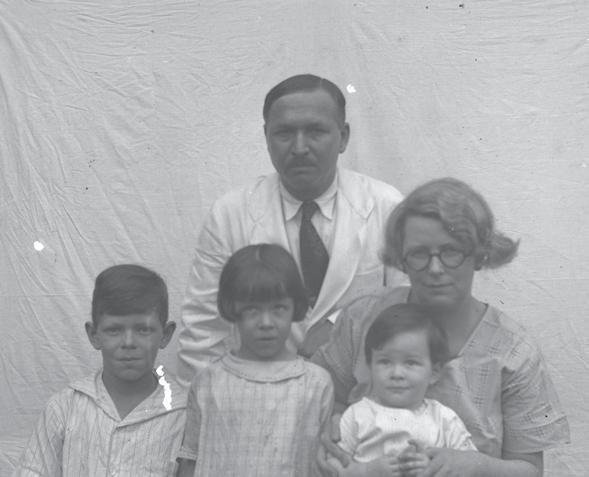
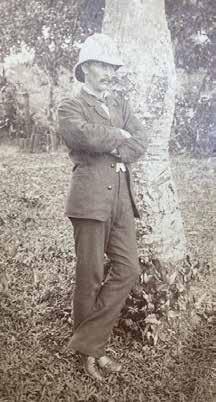
That is when the idea for the Good’s [Ancestral] Roots Tour of Africa first came to light. The neck-stretchers, in particular, were artifacts from a much darker time of West African culture and history. This was when my Great-Grandmother Lydia, and then my Great-Grandfather Adolphus Clemens Good arrived in a land of tribal warfare and slavery, a polygamous patriarchy wherein wives could be bought, sold, and traded for favors and fortune; they could presumably im-
prove on their beauty, and so increasing their value to their husbands, by wearing these heavy bracelets, stacked one upon another, to stretch their necks and their spines.
"Abominations" indeed! There were also talismans of peace — whimsical bronze masks with lizard hair, antelope horns filled with a mysterious powder, and a child-sized, wooden mbira, or 'thumb piano," all to be returned to the culture from which they came. That is what the “Goods' Roots Tour” is about.
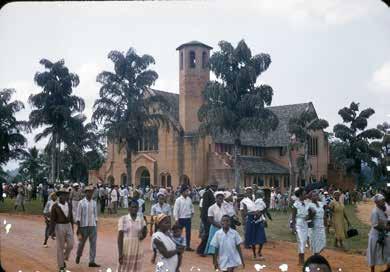
And what had three generations of Goods been doing there? They were missionaries, sent with the tide of the late 19th-century missionary movement to spread the word of God and the story of Jesus Christ.
They were explorers, and couldn’t help but be, as they delved into shadows and cracks of the cultures that they found there — from the skeptical Kang culture of Gabon to the Bulus of central Cameroon, to the little shadow people, the Pygmies — all were found, souls were "saved," and native pastors were educated and trained to take their posts to spread the Presbyterian Christian faith, teaching, starting schools and medical facilities, and establishing Christian communities.
As the churches thus formed, the white missionaries moved further into the interior, leaving the churches they founded in capable native hands. And they did this! All of it!
The native women, of course, immediately saw the value of this road not traveled. A safe haven of faith. They came "inquiring" when their husbands would let them. Some took to “sneaking around” to attend illicit prayer meetings, attending the rigorous "inquiry" and educational aspects of their confirmation into full membership in the church. Some were rigorously beaten once they were found out.
At that time in Cameroonian (Bulu) village society, the women marched off together early every morning to work in the gardens all day, which were situated a mile or more outside of the village. They left their men at home, to hunt, and sort out palavers.
Men who wished to become members had to first
give up their "wealth" of multiple wives’ and choose just one "keeper." Somehow, many Bulu men decided to make the supreme lifestyle sacrifice, give up the bulk of their labor force, and become part of the movement as "inquiring' Christians.
They freed their "extra" wives, and some found a calling as teachers and pastors. As the education of a people took place, Christianity spread and thrived. Between my great-grandfather’s arrival in Cameroon in 1892, and my grandfather’s retirement in 1950, these churches that Adolphus Clemens Good founded went from just six members to 60,000! Pretty epic calling, don’t you think?
But, that is not the story I learned, initially. The story I was told was set in the 1960s, when, in this country, the missionary movement was held up alongside the institutions of slavery and the genocide of Native Americans as an example of colonial might, wherein a docile, primitive culture was exposed to the germs and parasites of power and aspiration and their human nature was then polluted



. . .
forever. And my ancestors were a force in that.
That is the story I grew up with, one that carried a weight of guilt and oppression. And that story landed on the fourth generation of my cousins and my brothers and me because the third generation before had broken the chain of the "family business" of missionaries. In many ways, it was a messy break.
But, I didn’t know about this then. I was just a selfish little kid. I didn’t know about the lives of my ancestors until the "Goods' Roots Tour" idea had taken flight and I began to research these forebears on two trips to the Presbyterian Historical Society, in Philadelphia, Pa.
There I was presented with carts loaded with boxes of photos, diaries, sermons, papers, letters, articles, mission records and applications, and all manner of accounts of the lives of these people — and I was hooked!
My great-grandmother, Lydia Walker was the first to go to West Africa. An orphaned Native American Onondaga tribesperson, she was adopted and raised in a Christian family in upstate New York. She was drawn to mission work at a young age. After attending Cooper Seminary in Dayton, Ohio, she was posted to a teaching position at a Presbyterian Mission boarding school for Native American children in Odessa, Wis., at the age of 17.
Then, she was posted to the West African Mission, Baraka, in Libreville, Gabon (it was called Gaboon back then) in 1877. The passage, by ship, took nine weeks, and she arrived at Libreville in early 1878, at the age of 20! She had to sign a contract not to marry for three years or she would be billed for the mission-borne expenses of sending her to the field, and feeding her!
My great-grandfather, Adolphus Clemens Good received the calling just a little later in life, attending college, seminary, and then striking out for West Africa on his great adventure in 1882. At the Baraka mission in Libreville, some few miles from the Kangwe Mission outpost (which became famous as the Lambarene center of the independent work of surgeon, linguist, musician, theologian, philosopher, and author Albert Schweitzer), Adolphus C. Good found Lydia Belle Walker, already a five-year veteran of the good work being done there. And he married her!
Presumably, with Lydia’s help, A.C. Good learned the language of M’Gangwe (or Kangwe) and
was preaching in this new language after just two months in his new world. The language was Good’s superpower in this work, a power passed down to his son, Albert, who translated the entire New Testament of the Bible into Bulu.
My father, Ted, also received the linguistic gift, though not the fervent calling, and after a difficult false start as a minister, he became a Hebrew scholar, noted for his annotated translations of the Old Testament stories from the original Hebrew text. Then, with my generation, the chain of multi-linguistic prowess was broken, with a clang.
On June 21st, 1883, Adolphus Clemens Good and Lydia Belle Walker were married aboard the U.S.S. Quinnebaug, in Corisco Bay, off Libreville, Gabon. In the spring of 1884, my grandfather, Albert Irwin Good (possibly named for Albert Schweitzer), was born in Libreville, Gabon.
Adolphus Clemens Good died of Black Fever in 1896 upon returning from one of his epic, jungle trips to the interior of West Africa, searching for the mission sites which eventually, posthumously, became the missions of Elat, Bibia, and Efulan. Albert was 12, and like his mother before him, he was something of an orphan.
I can understand if all this biographical material seems dense and remote to you. It did to me as well, for much of my life, but it came to lend me an understanding of myself, and parenting, as the third generation of Good men who grew up with remote, or absent fathers. My father, "Teddy" was returned to the United States with his brother and sister to be raised and educated in Ohio. With Albert doing the Lord’s work in Africa, my dad didn’t see his father for six years as a teenager because the man couldn’t rely on safe furlough passage home from Africa during World War II.
In fact, my Grandfather Albert had also been held in Africa during World War I, and the war came right up to his mission doorstep! Kamerun was under German power when the Great War came. Native armies had been raised by both the French (Fang) and the Germans (Bulu), but the French took control (the Fang were a fierce people!).
Soldiers from both armies passed through my grandfather’s coastal Batanga mission over just a few days in 1916 — 30,000 armed refugees from a conflict being waged on a different continent, in a different world, but somehow caught the people of West Africa up in it. Cameroon (named for the coastal shrimp) was reborn under a new flag, with a new spelling, and French has been the official lan-



guage ever since.
I would like to ask my grandfather about that time, about going through two world wars during his adult life and not having to fight in either of them; about his world travels, first by ship, and finally by airplane; about the culture clash faced by a half-Native American boy in Ohio, who had spent his entire childhood in Africa; about his memories of his revered father who started the whole thing.
Albert remained dedicated to his mother for her entire life. They returned to the African mission together when he was posted to Cameroon in 1909.
And, that is right where the "Goods' Roots Tour" is headed! On July 2nd, on a project officially titled "The Road of the Missionaries of the American Presbyterian Mission," and by the invitation of the "Eglise Presbyterienne Camerounaise Sinode Municam Consistoire Corisco-Kribi," I; along with my younger brother, John Good; my son, David Walker Good; and friend, Jeffrey Evans, will begin our most epic mission trip to Cameroon, West Africa.
This isn’t your typical mission trip. We are not going to West Africa to spread the Word. We are looking to receive the Word, to engage with the story of our ancestors, who spent their lives in Cameroon, and in Gabon before that. We will share our music in church and at other gatherings, and the Cameroonians, and perhaps the Pygmies, and the Gabonians will share theirs.
We will spread the ashes of my father at the place of his birth — Lolodorf, and at the tomb of his grandfather Adolphus at Efulan. We will return the neck stretchers and the bronze native masks to their present-day cultures, and we will bring gifts of historic, matted photographs of the missions, the churches, the towns, and of all of our ancestors, to be named and remembered together, as they once shared this very place on earth!
Yesterday, a day in June as I sit here writing this, I received a text from the Reverend Ebane Ango Samuel, who writes, “We remember un beautiful family Good in Cameroun. I was a teacher at Bibia Seminary Dager, we call it now Institut Superieur de Theologie Dager. I have ambitions to write in French for Albert Irwin Good. I want some informations about.”
So, what started as an urge to return misgotten artifacts to the culture from whence they came, has turned into a cross-cultural dialog, and a shared history, wherein I can provide some “informations about” my family to a man who knew my grandfather, Albert, and the Reverend Samuel will replay his memories for me of my ancestors’ part in his utterly changed world.
And we, of the "Road of the Missionaries of the American Presbyterian Mission Tour," or the "Goods' Roots Tour," go into this with our eyes, ears, and our hearts open to these people who share a past. We have no clue as to what we will learn and experience, but that is as it should be, don’t you think?
We will keep you posted on our “Roots Tour” with several more articles on these pages of The Crystal Valley Echo, (Lord Willing!)
Editorial from Cristina Malkhassian-Akers
Sometimes it takes someone on the outside looking in to see things in a clear light. Many have lost sight of the rich history that our founding fathers fought for, and the beautiful country that they passed on to us. To once again shine light back onto their and previous generations' sacrifices, let me tell you a story about why my family loves America, and why we love the 4th of July in particular.
As a young child, I remember asking my mom a simple question, "Mom, when is your birthday?" The answer she gave me confused me, not necessarily because of the date she told me, but because of how she answered the question. It wasn't a straightforward answer, it came after a long pause and deep thought. When she finally answered me she said, "July 4th." Naturally, as a child I thought that was a weird day for someone's birthday to be on, but stranger things can occur. So I didn't think twice about it and said, "Ok, 4th of July, that's weird," and moved on.
But, in reality, the story behind her answer begins much earlier than my childhood, it started in 1977, in Soviet Armenia. A young Armenian girl, my mother, lived in the capital city of Yerevan under the control of the Union of Soviet Socialist Republics, along with her parents and six brothers and sisters. They had been trying to flee from the Soviet Union for nine years but fought a horrible battle against a corrupt government that didn't want its people to leave. During that time, they would apply for visas which would be issued for everyone in the family but one; usually, it was one of the children who were excluded — any military-aged males.
Things finally changed for my Mom's family when an American journalist visited Armenia to report on conditions in the Soviet Union. The 1st Amendment was a far-off fantasy in Armenia, but not for the Americans.
The pressure to try and convince the journalist that conditions were good ensued. Nevermind waiting in long breadlines every day and not guaranteeing any food would still be available to you; Nevermind food rations; Nevermind the fear that if you politically dissented and spoke out against the government, there was a good chance you would mysteriously "disappear."
Against such a government the people are powerless to run their own lives. But, thanks to the pressure of impressing the journalist, conditions were temporarily loosened, and my Mom's entire family was finally given visas to come to the United States.
My Dad also immigrated here from Iran, but that's another story for another day.
Fast forward another 30 years or so during the time of the Iraq war. My brother was in the Marine Corps, serving overseas on his second deployment in April 2004. Being young and self-absorbed like I was, I didn't give much thought to my brother during his first deployment — I didn't write, didn't send him any packages, and didn't even think about him much while he was away.
However, his second deployment was very different. I had a strong sense that I needed to pay more attention this time, that I needed to write and send him letters, send him care packages, and that I needed to pray. And I did, and I made sure every time I had the opportunity that I asked my friends to write him letters, send him
care packages, and they would also pray for him. I truly believe God was nudging me because He knew something was going to happen. I got the call one evening from my Mom, who was sobbing hysterically, and I could barely understand what she was saying, but I knew what was coming. Someone from the Marine Corps had informed her that my brother had been critically injured and, at that moment, he was being flown to Germany, the closest military base where he could undergo surgery to stabilize him enough to survive a flight back to the U.S.
My brother's unit was in Fallujah, Iraq, during a time of escalating enemy conflict. He was a 50 cal machine gunner and sat on top of a Humvee, where he was shot in the hip during an ambush. Several other Marines in his convoy were also injured, in fact, the gunner who took my brother's place in the turret was immediately shot as well.
As the corpsman began administering care to my brother in the Humvee, he opened up his flack jacket, and a bullet that was headed straight for my brother's head ricocheted off the jacket — it would have been a direct hit to his face. Thankfully, by God's grace, he survived and is alive and well to this day living in Texas with four beautiful children and his wife.
Had I lost my brother that day, his body would have come home in a casket covered with a flag. I think of others who weren't fortunate enough to see their loved ones come home, and that the folded-up flag serves as a reminder of their service to our country which cost them their lives.
As a nation, we honor the fallen every Memorial Day, but I personally don't think that's enough. Our loved ones are gone from us forever, and the flag is an honor to their memory. Without our brave men and women, we would have no flag, no nation, no independence, no freedom from tyranny. The old cliche rings true, and always will — freedom doesn't come free.
The 4th is a celebration of our independence, but let us not forget that that independence came and still comes to us at a high price.
As I've grown up, I've come to understand my
Mom's answer about her birthday. She didn't know her actual birthday (being one of seven kids and living in the chaos of the Soviet Union), so she chose the day they arrived in America — July 4th — as her birthday. The day this country declared its independence and established that our rights are God-given and unalienable, and the government’s role is to secure these rights and not exploit them — this is the day she became free.
For many immigrants it's the same story, they fled from tyranny for a chance at freedom and to live their lives in peace, as they determine to live it — for Life, Liberty, and the pursuit of Happiness. This is a beautiful country we live in, and we are blessed to live here. I've traveled around the world, and although there are many wonderful places to visit, there is nowhere I'd rather call home than here in America.
As our second president, John Adams, said about celebrating the 4th of July, "It ought to be solemnized with pomp and parade, with shows, games, sports, guns, bells, bonfires, and illuminations, from one end of this continent to the other, from this time forward forever more."
Any excuse to put more flags around my house is a good excuse, kind of like having throw pillows. Every year I try to put together a dance float for the Redstone Parade, and this year's theme is "Liberty."
Let's cherish the liberty we have in this country because it comes at a high price. Let's revere our flag as a symbol of the brave men and women who have made this country what it is, as a symbol of the memories of those that did not come home, and as a symbol of hope to all who see it.
Let's honor the fallen, who died to give us liberty. Let us show gratitude to our veterans and active duty military, who continue to preserve our freedom. Let us celebrate when we rebelliously declared our Independence in 1776. And let us, this 4th of July, come together to celebrate the freedoms that we are so blessed to enjoy.
In liberty.

By Delphi Badgett, 7th Grade
Imagine being sent to multiple schools and study groups for 12-16 hours; there you have the average South Korean school day.
South Korea is a rather small but rich country in East Asia. It is a relatively peaceful country other than their dispute with the North. Although the Korean War is over, North and South Korea still hate each other and are separated by an impenetrable border. You might be surprised that 51 million people live in this country, which is a bit smaller than the US state of Pennsylvania. All South Korean students come out of this stressful school system that has a great sense of importance in their life with lots of knowledge.
In the US our education is a privilege that we often take for granted. Not in Korea, a good education is the most important thing to most Koreans. Often your whole future is very influenced by your test results. Your parents want you to succeed and push you harder, your teachers are relentless, and you and your classmates are all being stressed to beat each other. Each year 15 year old Korean students take a nine-hour test that sets their future in stone.
The Suneung is a national-level exam for Korean high school students. It determines whether they can get into college or not. It’s known as one of the most stressful exams in the world. “For Koreans, this is more than just a vital exam they should pass to get into the college they desire. There's the belief in society that the college one attends shapes their future. Not only does it determine which college they can get into, but a Korean's life depends on the scores of this one examination – from college to work, income and even one's romantic life.” (Tsui, Larissa) Succeeding to one of the country's top colleges is a very high priority to Korean families and it is crucial to your socioeconomic status in society.
The importance of education is influenced by a big cultural norm; respect. South Korea is a very Confucianist country. “Confucianism supports group harmony, respect for elders and authority, the importance of family, friendship and ancestors, also tradition.” (Cawley, Kevin) You might be wondering about why that would affect your education. In reality this is the most striking difference between the US and Korean education systems. “Teachers are held in very high esteem in South Korea. They are generally treated with more respect than their American counterparts by their students and society and are addressed with the honorific term.” (Factsanddetails.com) In the US teachers are not given the same respect and some students have even called them rude names; that would be unfathomable in Korea. Even with all their work they still clean the school and consider it as sort of a second home. The USA is a very individualist country; we just don't have the same sense of community.
A South Korean school is a lot different than what we Americans are used to. “A typical day finds high schoolers studying before school begins at about 8:00 A.M. Classes run for 50 minutes each, with a morning break and a 50-minute lunch period. The afternoon session resumes at about 1:00 P.M., and classes continue until about 4:00 or 4:30, followed by the cleaning of the classroom. Students may then take a short dinner break at home, or they may eat at school. Teachers typ-
ically move from room to room, while students stay in one place. Students return to the school library to study or attend private schools or tutoring sessions until between 10:00 P.M. and midnight.” (Asia Society) As if that day isn’t bad enough, the official Korean school days were originally Monday-Saturday but the students and teachers decided that was too much and since 2010 the public school system has 2 Saturdays of each month off. (grrrltraveler.com) The parents of South Korean children also invest a lot in education, but not their time, their money. You see, those private schools (Hagwons) and tutors cost a lot if you want your child to succeed. “Elementary, middle and high school students spent 20.99 trillion won ($17.6 billion) on private education..”(Yonhap) That may not seem like alot compared to the 232 billion that the US spends every year, yet Korea is the size of Utah. The Korean school experience certainly costs a lot of money.
Coming from one of the world's most demanding education systems, Korean students have most likely found purpose in their life and have nearly mastered many subjects. Do you think America could do better if it had more respect for its people? Should we spend more days in school, work harder, and spend more money? If our culture put more emphasis on our education and our students valued school more, would everything change? These are small things, sure, but they make all the difference.

Times is sponsored by david PaRks and LauRie FaRbeR beaveR Lake LodGe (970) 963-2504 www.beaverlakelodge.com
Summary Provided by Hattie Johnson, American Whitewater
On April 27th, the Town of Marble, Gunnison County, Pitkin County, and the Colorado River Water Conservation District (Stakeholder Group Co-Chairs) hosted a Community Summit at the Marble Fire Station, where 140 people plus staff were in attendance.
This serves as a reduced record of discussions that occurred.
Stakeholder Group Co-Chairs hired facilitators, Jacob Bornstein and Wendy Green Lowe, for this meeting. Lowe shared the objectives for the summit, which included: one, providing a bit of background about the history of the Crystal River and efforts to protect it, and two, beginning a conversation with interested community members about what is most important about the river, aspirations and concerns for the future, and how to ensure that community interests are considered in evaluating options for future protection. Lowe explained that Community Summit had been designed to include a diverse set of perspectives to inform work going forward for the Crystal River Wild and Scenic Feasibility Collaborative.
It was explained that the Crystal River has been under consideration for protection under the Wild and Scenic Rivers Act since the 1980s. Efforts to move forward with that status have not been successful to date as some fear the potential ramifications of that approach. The Crystal River and Wild Scenic Feasibility Collaborative was formed to consider the situation once again, to host a broad range of perspectives in the discussion, and an aspiration that agreement can be reached on how best to provide long-term protections for the Crystal River into the future.
Everyone was invited to respond to a series of three questions at their tables. The first invited participants to discuss, “What is most important or valuable to you about the Crystal River at this time?” Tables were given chartreuse colored Post-it notes on which to summarize their conversations.
The second question invited participants to discuss, “What are your long-term aspirations for the future of the Crystal River?” Tables were given pink-colored Post-it notes on which to summarize their conversations.
For the third question, participants were asked to discuss, “What are your biggest concerns about the future regarding the Crystal River?" Tables were given orange-colored Post-it notes on which to summarize their conversations.
Before reviewing the responses, all participants enjoyed a lovely meal provided by the Redstone General Store.
Lowe and Bornstein presented the results of their
efforts to sort responses to the first three questions with all participants.
The responses to the first question, “What is most important or valuable to you about the Crystal River at this time?” were organized and pink Post-it notes were used for category labels. The results were organized into 11 categories: Mindful development, free flowing/no development, natural hydrology, scenery, local control, access, recreation, water quality, ecosystem/wildlife, water rights, and the natural character of the river.
The responses to the second question, “What are your long-term aspirations for the future of the Crystal River?” were organized into categories. With category labels written directly on the butcher block paper on the wall, the results were organized into 10 categories: Recreation, water quality, wildlife, water rights, ethics, development, local control, private property, flow and protection, and a final group that included three unique responses.
The responses to the third question, “What are your biggest concerns about the future with regard to the Crystal River?” were organized; green Post-it notes were used to label 11 categories: Dams/diversions, pollution, over-use/over-development, excessive government, habitat use, drought/climate change, access, water speculation, population growth, inadequate water, loss of rights.
Following the report on the results of the first three discussions, it was observed that there was much agreement in the room with patterns that connected what people currently value about the Crystal River, their aspirations for the future, and their concerns about the future.
Lowe explained that a Steering Committee would be formed to carry the work forward. The cochairs hoped that the membership of the Steering Committee will reflect the diverse perspectives contributed by the participants at the first summit.
It is planned that the Steering Committee will meet throughout the summer to identify options for future management of the Crystal River, including the option of doing nothing different from what is being done currently and the option of moving forward with seeking Wild and Scenic River designation. It is hoped that other options will be identified as well so that all interested community members will feel like every feasible option will be given consideration.
The steering committee held its initial meeting on June 22nd. The goal is that the community will find a way forward that everyone can support.
The fourth and final question for discussion asked participants to consider what criteria might be used to evaluate long-term management options in a way that would reflect the values, aspirations, and concerns of the community. Tables
were given blue-colored Post-it notes on which to summarize their conversations.
The responses to the fourth question were organized into 12 categories and labels were written directly on the butcher block paper on the wall: Natural environment, water flow, and quality, prevents dams, water rights, local control, enforcement and management, protection, buy-in, public access, prevent overuse, and information.
Each of the co-chairs – including Gunnison County Commissioner Jonathan Houck, Zane Kessler from the Colorado River Water Conservation District, Pitkin County Commissioner Kelly McNichols Kury, and Town of Marble Administrator Ron Leach thanked everyone for their participation. The facilitators added their appreciation for the respectful conversations and generous participation of everyone in attendance.
Special thanks to the Carbondale and Rural Fire Protection District for providing the space used at the Marble Fire Station, to the Town of Marble staff for setting up tables and chairs, and to the Redstone General Store for the lovely food.
Mayor Ryan Vinciguerra wasted no time in calling June’s meeting to order. He, and I believe everyone else in the sparsely populated Marble Community Church Fellowship Hall, were all hoping for an early exit to catch the fourth quarter NBA playoffs. Alas, that was going to prove to be a pipe dream.
Board members present were Vinciguerra, Emma Bielski, Larry Good, and Tony Petrocco, the latter sporting a trendy pair of chunky white sneakers. Are there no bounds to this man’s stylish contemporary look? Amber McMahill joined the meeting on speakerphone. Alas, I was hoping that she would be there to woo us with one of her fetching floral blouses with puckered lace shoulders and give Petrocco a run for his money. In addition to the Town’s administrative staff, Ron Leach and Alie Wettstein, I counted 10 Marble residents.
The minutes of the Board of Trustees meetings held on May 4th and 18th were swiftly approved along with the current bills, and the discussion moved on to Land Issues.
First of these was the consideration for approval of a short-term rental application submitted by Jim Goherty. The Gohertys would like to “Airbnb” their red and white Victorian home on the corner of 4th Street opposite Millsite Park. Goherty assured those present that the property would be rented to no more than four guests at any one time, and that no trailers be allowed.
Mayor Vinciguerra was insistent that the correct taxes would have to be paid and that any rental agreement would have to be accompanied by a Statement of Compliance, requiring (among other stipulations) an insurance policy to the value of at least $1M, the provision of a landline, and the availability of an on-call person able to respond to issues within the space of an hour. The issue of short-term rentals is a new challenge for the Town, with only six applications approved to date.
In a rare appearance, Charlie Parker was present to seek approval for a lot line adjustment to his property which meets at an irregular intersection with Town property close to 1st Street. He proposed a “land swap” to render both pieces of land more “useable.” Mayor Vinciguerra observed that 1st Street had become overgrown and emphasized the need to maintain clear access to the river.
Concerned about the apparent lack of benefit Parker’s “swap” would bring to the Town, Vinciguerra hinted that as a condition of any agreement, Parker would agree to maintain the public thoroughfare. Tony Petrocco highlighted that Parker’s plan would be in contravention of the Town’s 2000 Master Plan which stipulates that the Town of Marble should only become involved in real estate transactions where the Town is expanding or acquiring land. The issue was tabled pending further discussion, Vinciguerra and Parker have agreed to meet at the location to discuss all the possibilities.

The Marble Town Council meets on the 1st Thursday of each month starting at 7 p.m. in the Marble Community Church’s Fellowship Hall.
Town of Marble meetings are open to the public.
Just when I was starting to think that we might have all been in for an early finish, the issue of the Wilkeys’ “Guided Tours Business” and its inherent re-zoning headaches leaped from the abyss and quashed all hope. Dustin Wilkey, a towering figure rendered all the more imposing by an ensemble of high-viz vest and white cowboy hat, explained that he had walked the boundary between his property and the Evanses’ with Town Administrator Ron Leach, and the two had discussed the erection of a six-foot fence along a portion of the boundary between them.
The issue boils down to the wording of the ordinance needed to enact a zoning change, igniting an incendiary debate over spot zoning. Petrocco repeated his concerns that such activity is not compliant with the 2000 Master Plan and would open up the Town to legal action from the Evanses. At the time of writing, the Wilkeys and Evanses had not entered a dialogue over the proposed boundary between them.
“Once you zone it commercial, you open the floodgates,” insisted Petrocco. I reached for my can of Squirt. When Larry Good attempted to find some middle ground suggesting a “one-time deal,” Petrocco pounced, insisting “That’s called Spot Zoning.”
Mayor Vinciguerra diplomatically intervened, proposing that the Wilkeys be granted a zoning change contingent on the use of the parcel of property being restricted to a Guided Tours Business. “This is not allowed!” retorted an increasingly frustrated Petrocco, firmly anchored to the current zoning provisions of the 2000 Master Plan, unlike his chunky sneakers which I sensed were starting to bounce and squeak under the table.
“This is egregious what we’re doing," insisted Petrocco, "willfully spot zoning!” I pounded down the rest of my Squirt.
Mayor Vinciguerra, accepting perhaps the validity of Petrocco’s perspective, urged the Town Council to make “the right decisions, not those based on whether we’re going to get sued or not.”
An increasingly assertive but even-handed Vinciguerra recommended the Wilkeys hire a General Contractor to help them “streamline” the sizeable
project that is located on the main thoroughfare into Town, a provision for which the couple has not budgeted. Together with the building of a restroom for their customers, the Mayor was insistent that a professional third party would help the situation, particularly around managing the timeline of the project.
He and his fellow Town Council members are clearly frustrated over the process, which has been dragging on for a year. Good, a long-standing and respected member of the Council, delivered an eloquent lament on the difficulties of being on the Town Council when faced with the realities of people often running roughshod over their decisions. He cited as an example Scott Wilson, who has established an auto repairs business at his East State Street property which is zoned residential only.
Samantha Smith Wilkey announced that her business would henceforth be classified as a “Guided Tours Business and Gift Shop.” Apparently, the bean counters at Fiat Chrysler are becoming more vigilant around small businesses that incorporate their “Jeep” brand into their names. I was going to need a second can of you know what to get me through this. As I raced to the fridge, the question of establishing a natural barrier between the Wilkeys and Evanses resurfaced.
The Mayor insisted that the erection of a barrier be one of the first considerations before the building work could proceed in earnest. Sue Blue, long-time Marble resident, landscape gardener, and horticulturalist suggested that bushes and shrubs might serve just as well as trees as a barrier between the neighbors. The Mayor thanked her for her input.
In a valiant effort to move the meeting forward, Leach suggested that the Town give the Wilkeys a building permit and let them “get going.” He agreed to lift the existing stop order on the project and to issue new building and camping permits to the couple so they have somewhere to stay when the work gets underway. To everyone’s great relief, a motion was passed to approve the draft ordinance at a public hearing set for the next Town Council meeting on July 6th
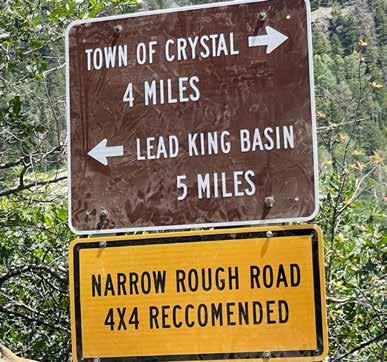
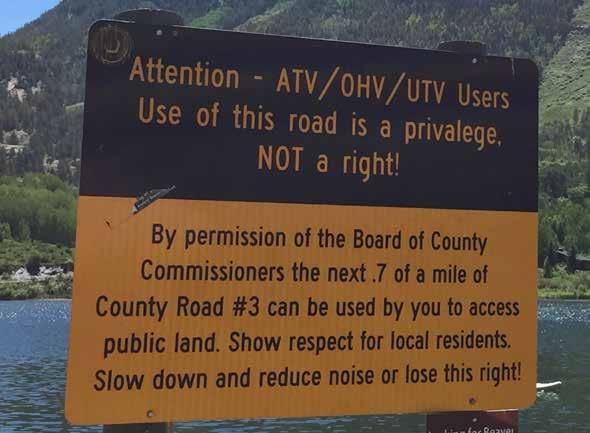
Amber McMahill appealed for help to install the new signs that she has so painstakingly worked on in conjunction with the Colorado Tourism Office.
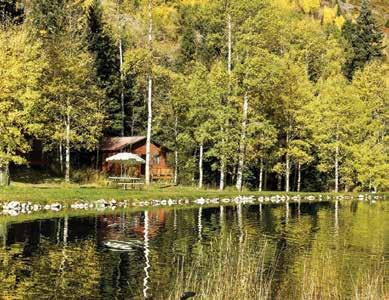
It is hoped they will be of a higher standard than those positioned at Beaver Lake (pictured right) and the top of Daniels Hill (pictured below).
The last piece of business discussed was the Town’s parking control plan. Ron Leach spoke in support of signs and physical barriers to deter parking on some of the Town’s busier streets, historically a guerilla tactic, noted Good. In an apparent change of heart, the Town is now advocating the softer approach of “passive enforcement” of parking over recent suggestions that it might become a useful revenue stream. I chugged the rest of my Squirt and headed home.
The next meeting of the Town of Marble Board of Trustees will be held on Thursday, July 6th at 7 p.m. in the Marble Community Church's Fellowship Hall.






All content sponsored and provided by the Redstone Historical Society.
Redstone inn owneRshiP undeR Mid-Continent ResouRCes
From Jeff Bier
During the Korean War, Mid-Continent Resources re-opened the Coal Basin mines to meet the growing demand for coal. MCR soon became the largest employer in Pitkin County, surpassing Aspen Ski Company, running three shifts a day, expanding to six portals, and removing 28 million tons of high-grade bituminous coal over the next 35 years.
In 1978, two of the principals from the Mid-Continent coal mines just up the road in Coal Basin were having lunch at the Redstone Inn. The current owner, Ann Van Dis, informed them that she was closing the Inn and probably putting it up for sale as they were under-capitalized and unable to continue operations and upkeep. John Reeves and Bob Delaney, President and Vice-President, (Mr. Delaney was also the company attorney) quickly put together a corporation to purchase the Inn and did so in 1979.
They had a couple of reasons for this endeavor, one being that the Redstone Inn was the historic cornerstone of Redstone and was the center of most activities for locals and tourists. The company also owned considerable real estate in the Redstone area and was exploring additional housing for its expanding workforce. They wanted to keep the Inn viable and open for the community.
In 1981, The Historic Redstone Inn Corp. embarked on a two-year, much-needed, top to bottom renovation/restoration project using local contractors for the work. The construction of the new addition during the Kistler era was of dubious quality and many systems were failing. Without the completion of this major project, the Inn may not have physically survived much longer.
Over the years, MCR was a good friend to Redstone. When they first re-opened in the 50s, the coal trucks went through town using Redstone Boulevard as partial access to their facility on the railroad near Carbondale. Through their efforts, the highway was established and upgraded to a significant gravel road, bypassing the village. The highway was ultimately paved to the mine entrance.
When Redstone’s water system failed, the mine provided men and equipment to repair and establish a storage tank to get the water system operational. They also donated the old lamp house from Coal Town to the Redstone Historical Society and County, which is the current museum, located at Redstone Park.
Bob Delaney provided the legal framework for the establishment of the non-profit Redstone Community Association which is still very active today. In addition, the LS Wood Trust, established by the founder of Mid-Continent, has provided scholarships to local students for many, many years and continues to do so today even though the mines have closed.
After the extensive remodeling, the partnership had managers operating the business including family members over the years. On October 1, 1988, they entered into a management contract with John Gilmore and ultimately sold to his group in 1989.
Redstone inn owneRshiP undeR the GiLMoRe FaMiLy
From Deb Strom
This transaction was only feasible because the building had been newly renovated and because John Gilmore (respectfully called JFG) secured low-interest private financing. Bank financing was very tight and very expensive. Furthermore, it was a messy process since the Historic Redstone Inn Corp. (not Midcontinent) was in bankruptcy, the Chicago bank holding the mortgage collapsed, and it was in the hands of the FDIC.
I became the general manager and partner of the Redstone Inn for the next 20 years. I had previously worked for JFG at the Hotel Jerome for 12 of his 17-year ownership. I stayed on to work for the new owners of the renovated Hotel Jerome for another two years while JFG, CPA Mike Otte, and I searched for a new Colorado opportunity.
Our goal was to re-develop the Inn operations by emphasizing the Food and Beverage operation and adding resort amenities. This we did by adding the Bar-Grill-Patio addition with a more casual feel and menu. This opened the building up to the south and the stunning views of the upper Crystal Valley. Partner Jim Jenkins came on board to over-
see the construction. To improve resort amenities, we added a pool, hot tub, and fitness center and updated the tennis court.
Fortunately, the Redstone Castle, owned by Ken Johnson was already successfully operating as a wedding site since 1976 and as a Bed & Breakfast since 1982. Johnson, the former owner of the Grand Junction Sentinel, had “saved the Castle from the "wrecking ball” in 1974.
We were able to build on its reputation, as it has been the site of many high-profile "I do's" including Jimmy Buffet; the venue for concerts with the likes of pianist Peter Kater and events like the annual Sweetheart Ball. Unfortunately, Johnson first sold it in 1994 but had to re-sell it four times due to failed contracts. There was a chain of fumbled ownerships for almost 20 years (including a Ponzi scheme) until April and Steve Carver purchased it at auction in 2016 -- owning a Castle isn't for everyone!
The Castle shied away from food service and the Inn filled in this gap with Chef Jeff Spiroff, 1989 - 1994. Then, we hit our stride with Chef David Zumwinkle, 1995-2000, Food and Beverage Manager Carrie McDonald, and Dining Room Manager Linda Graham followed by Becky Trembley and Cherie Morton.
The dining room was open seven nights a week with the Grill open 15 hours a day. We replaced the old pool-greenhouse footprint with a 60-foot by 40-foot event canopy and banqueting became another revenue stream. Chef Marco Diaz, 2001 - 2005, took over and developed a talented kitchen crew who stepped up as a team to manage the kitchen with Cesar Garcia as Chef.
Though the Mid-Continent mines closed in 1992, Redstone had successfully transitioned to tourism. The Crystal Valley Echo reported in 1996 that there were 36 businesses in Redstone, including as many as four restaurants and four art galleries. Redstone was again in its Heyday.
Crystal River Caucus Ice Cream Social & Hybrid Regular Meeting Thursday, July 13 starting at 6 p.m. at the Church at Redstone
The Crystal River Caucus invites you to an ice-cream social beginning at 6 p.m., followed by their regular July caucus meeting, which is also available to attend virtually, beginning at 7 p.m. The agenda will include a Wild and Scenic video presentation, an update on the Coal Basin Methane Capture project, OST Management plan for the Redstone Stables, development of future plans at the Redstone Castle, and an open forum asking caucus members what they would like the caucus board to address.
Meeting Zoom links are sent to those on the Crystal River Caucus e-mail list. If you are not on the list but would like to be, please send a request to crcaucus@gmail.com
I retired on my 20th anniversary, September 30, 2008 (and on the eve of the 2008 stock market crash). The Gilmore Collection, based in Grand Rapids, Mich., would take on a more active role. During the past 24 years in Western Michigan, the Gilmore Collection, now headed by JFG’s son Gregory Gilmore, had preserved 12 historic buildings by re-developing them into over 18 successful restaurants, bars, and nightclubs. As part of the transition, in 2008, Greg oversaw the construction of the first proto-type chalet on the banks of the Crystal River.
Nicole Richardson of Grand Rapids, Mich., became General Manager with a twoyear management contract. Cherie Morton transitioned to the front desk, Becky Trembley continued as Food and Beverage manager, and the kitchen team stayed solid. Together they saw the Inn through the worst of the 2008 recession.
In 2010, Sara Stanaszek became General Manager. It was the perfect fit. Stanaszek’s parents brought her and her sisters to Redstone as children. Redstone and the Inn quickly became her second home. While earning a Bachelor of Arts in finance at the University of Colorado, she worked summers and busy winter weekends as a Dining Room server and Grill bartender. After graduation, she opened Café Redstone in the former Dorlie’s restaurant on the Boulevard. Cherie Morton had become the heart and soul of the Redstone Inn Front Desk as Guest Services Manager and the core culinary staff was equally dedicated.
With this committed staff and the backing of the Gilmores, the Redstone Inn successfully emerged from the recession and withstood the challenges of the COVID lockdown. Notably, the Redstone Inn is one of only three continuously operating historic properties in the greater Roaring Fork Valley. Through thick and thin, day in and day out, the Redstone Inn has welcomed guests since 1902.
Jointly authored by Jeff Bier and Deb Strom, Jeff is newly elected President of the Redstone Historical Society and Deb Strom is the Treasurer. — Many thanks to Diane Delaney, Rob Delaney, Bob McCormick, and Sylvia Morrison for their assistance.
The MARBLE/marble Symposium is back with three sessions this month!
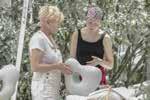

1st Session: July 2 - 9
2nd Session: July 15 - 22
3rd Session: July 29 - Aug 5
Come carve beautiful Colorado marble with scultors from around the world, or come check out the carvings from students and instructors alike -- many works will be o ered for sale.
We welcome every experience level and artistic style. The 8-day Symposium provides everything including marble, tools, carving sites, workshops, demos, and private instruction.
Registration available online, or come spectate by stopping in at The Marble Gallery for directions.

www.marbleinst.org info@MARBLEmarble.org

Open Space and Trails Updates
Open Space and Trails will host an open house to review community feedback and share draft ideas for the future of Redstone Parks and Open Space on Wednesday, July 12th from 4-7pm at Redstone Park Meet us at the gazebo!
Open Space and Trails staff will attend the Magical Moments Concert on Saturday, July 15th to chat about the future of Redstone Parks and Open Space Catch us at a table at the Coke Ovens parking lot before the show!
Aspen/Pitkin County Airport is launching newsletter
The Aspen/Pitkin County Airport launched a newsletter for airport users, community members, and anyone else interested in news and information from the airport Learn staff awards and recognition to need-to-know information for passengers, updates about the airport’s capital improvements program, and more
Wildfire season is here
Red flag warnings have already been issued in Pitkin County this summer. Head to pitkinwildfire.com to learn about emergency preparedness, protecting your home, and more
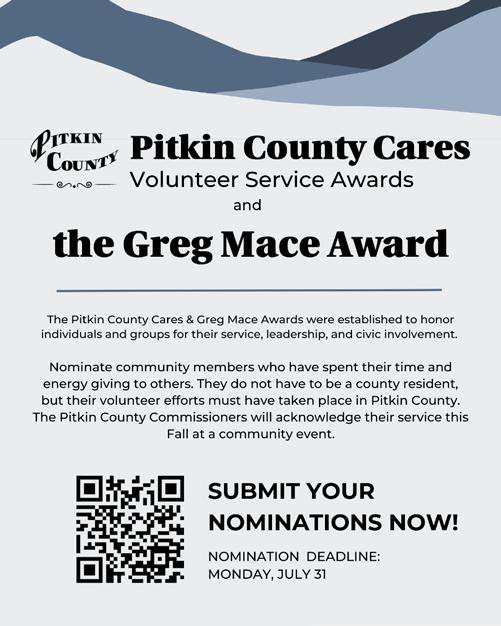
Pitkin County Cares Awards
Nominate your favorite community volunteer for the Pitkin County Cares Awards and Greg Mace Award! These special awards recognize service superstars who give back in Pitkin County Nominees do not need to live in the county but their service should have taken place there
Pitkin County Public Health Public Health Improvement Plan
Pitkin County Public Health has completed its Public Health Improvement Plan It’s a five-year strategic plan that all local public health agencies in Colorado are required to complete Public Health focused on two priorities: 1) pathways to care, including mental health, and 2) climate change and health





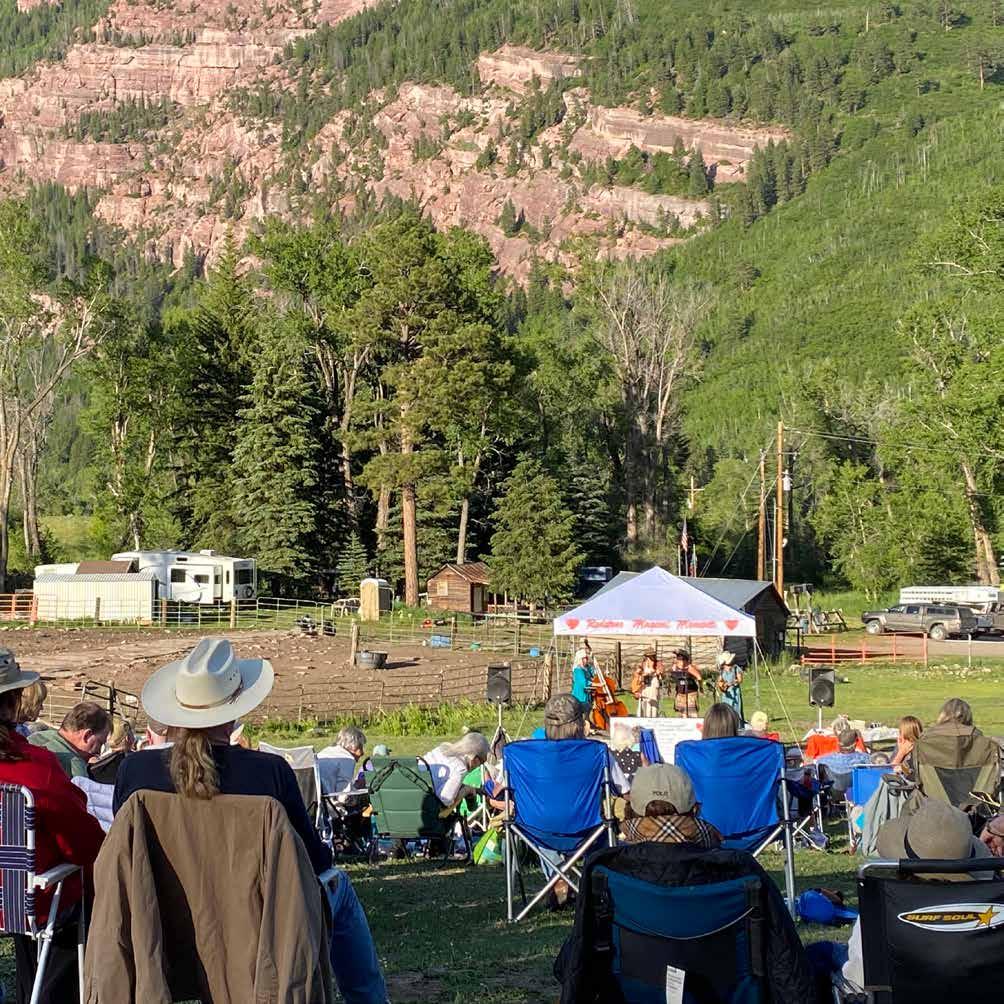
Sat. June 24 • 6-8pm
THE QUEEN BEES
Female fueled music for the heart and soul: weaving Americana Country, Folk and Bluegrass Sat. July 1 • 6-8pm MOORS & MCCUMBER
Celtic Bluegrass, Blues, true Americana, singer-songwriters
The next Simon and Garfunkel
Located: Avalanche Outfitters (Behind the coke ovens)
17843 Highway 133, Redstsone

Sat. July 8 • 6-8pm
BILLY BOWER BAND
Rock ’n Roll, Blues and Country with originals
Sat. July 15 • 6-8pm
MAD DOG BAND
High-energy acoustic blues jam band with influences including Jazz, World Music, Blues, Folk and Americana
Sat. July 22 • 6-8pm
STEVE MANSHEL BAND
Sat. August 12 • 6-8pm
PETER KARP
Insightful songwriter, slide guitarist, Americana Blues, tours in Europe and US, an exceptional concert of music and entertainment; not to be missed!
Sat. Aug. 26 • 6-8pm
BLUE RIVER GRASS
Mind blasting, energetic, rocking Jazz Bluegrass; wowing crowds with their magic on stage
A Redstone Favorite, Steve performs super fun originals and groovy versions of your favorite hits