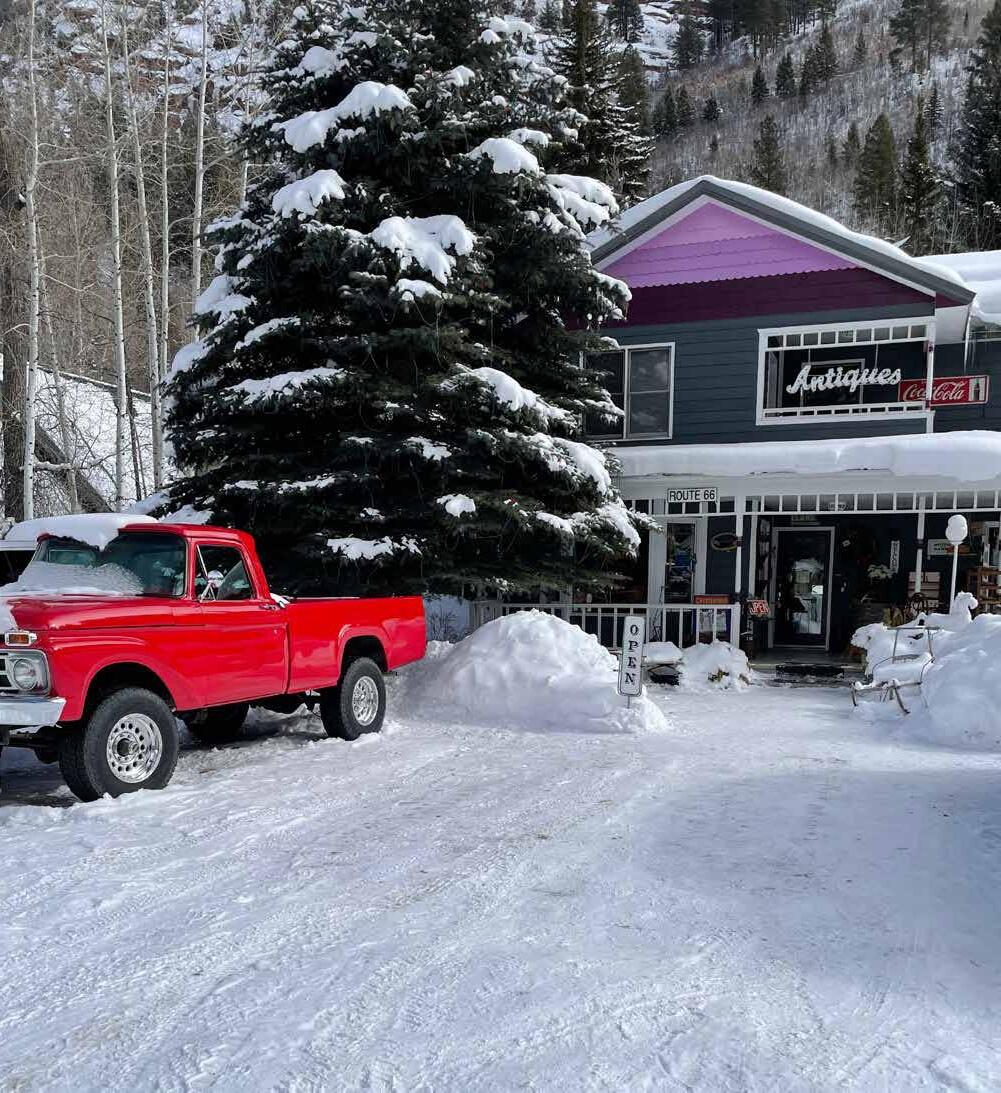




Home is where you choose to plant your heart and soul, where you grow your roots in the community. Some of us spend years searching for that place we can call home, while others find a home in the places where we grew up. For Erica and Chris DeMeyer, Redstone residents and the owners of Redstone Trading Station, it’s a little bit of both.
“Living on the Boulevard in Redstone is a first for my husband and me, but we both grew up in the area and it is our home,” Erica explained. “My grandparents Edwin and Ella Schilling built The Redstone Manor, which is now Crystal River Villas, in the 1960s before selling and moving to Carbondale. So my family has lived in Redstone before.”
She continued, “Chris and I love the valley and the community for all the same reasons everyone else does, for its beauty and for getting us further away from all the busyness in the world. All of our extended family live nearby. We are grateful to be able to raise our kids here.”
The DeMeyers purchased the Redstone Trading Station last autumn and moved to the Boulevard with their three children: Ella, Ryker, and June.
“We fell in love with the house and the location. The store was a part of the package and we said yes to taking it on and making it our own over time,” DeMeyer said. “We don’t really see ourselves as business owners, but as a family committed to this community and gaining experience along the way.”
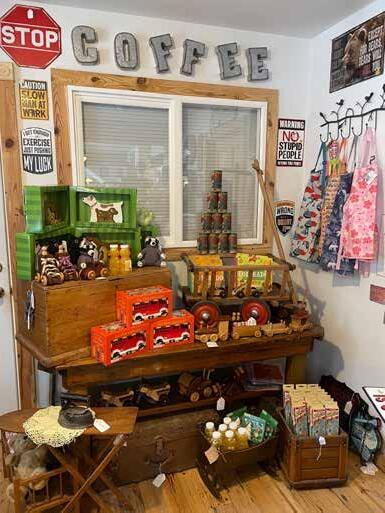
Redstone Trading Station offers antiques both rare and fun to look at, as well as local gifts, children’s toys, and Redstone sou-
venirs. The DeMeyers work with a professional antique picker and are therefore able to help customers who are searching for something specific to find what they seek. In addition to antiques, the DeMeyers are open to displaying the works of local authors and artists and selling locally handcrafted products.
“Our goal is to create our own vision of Redstone Trading Station and this property. We want to bring in more local products and create a smaller-scale boutique space that includes antiques,” DeMeyer explained. “We have a wide range of antiques and a wide range of prices. Someone could easily walk in and find a piece of vintage memorabilia to take home with them. We can also arrange delivery for larger items like furniture.”

December, and my daughter enjoyed playing Santa’s Elf at Santa’s Workshop over the holidays. Chris works as a first responder with the Carbondale and Rural Fire Protection District, so you’ll often see him out helping at events like the Illumination Bonfire or setting kids up for the 4th of July water fights.”
By Melissa Sidelinger
Some of the antiques currently on display at the Redstone Trading Station include a 1980’s round oak parlor stove, a vintage dog sled, and a 1934 Coca-Cola soda fountain dispenser. Redstone Trading Station’s winter hours are 11 a.m. to 4 p.m. Thursday through Sunday. With the return of spring, the store will once again be open as many as six days a week. Customers are also welcome to call (or ring the doorbell) to schedule a private appointment to view the antiques on display, and they also offer a special local discount for residents of the community.
“Our goal is to support the Redstone economy and to compliment other businesses on the Boulevard,” DeMeyer said. “We plan on continuing to do that for as long as it makes sense for our family.”
She continued, “We are also looking forward to being involved with more community events over the coming year. We hosted a couple of vendors for the Redstone Holiday Market in

Stop on by and you might just find something vintage to bring into your own home. After all, home is where you grow your roots and make your memories, and antiques remind us of the memories of the past and the homes that came before our own.
The Redstone Trading Station is located at 386 Redstone Boulevard. You can reach them at (970)-963-7256 or find them online at www. redstonetradingstation.com.




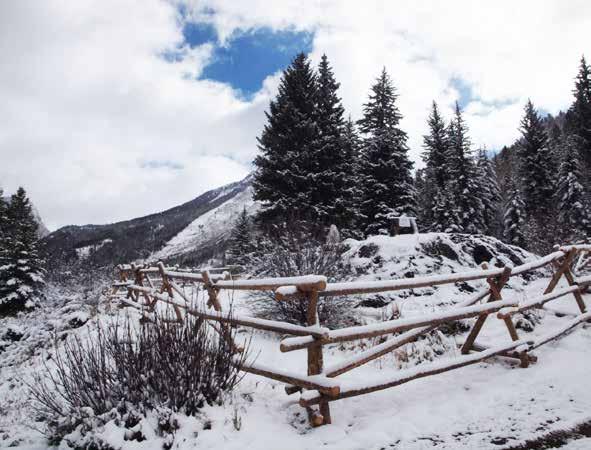
In partnership with the Crystal Valley Environmental Protection Association (CVEPA), the Trust for Land Restoration (TLR) received a generous donation of 8.5 acres from longtime Crystal Valley residents, Jeff and Janette Bier. The parcel sits upland of the recently conserved Marble Wetlands and sets into the process the long-term conservation of one of the last highly-visible private land puzzle pieces in the area.
This donation comes just a year after the dramatic, last-minute conservation of 55 acres of pristine wetlands adjacent to Beaver Lake that was compromised by the liability potential from an obsolete smelter slag pile located on the property.
To ensure the necessary environmental mitigation that took place at the wetlands and ensure the acceptance of the deed, CVEPA President John Armstrong engaged the resources of Pat Willits with TLR, Aspen Valley Land Trust, and the Colorado Department of Public Health and the Environment (CDPHE). CVEPA’s diligence and TLR’s swift action meant the deed was recorded on December 31, 2021, within two hours of the donor’s deadline.
Since then, TLR has worked with the CDPHE and Trout Unlimited to clean up the slag pile to standards set by the State of Colorado’s Voluntary Clean-up Program. Loose slag was buried and the hardened slag pile was capped with an inert road base. Visitors to the wetlands will notice new fencing and signage nearby to dis-
courage walking on the site.
“We felt the development of this claim would be detrimentally visible from East Marble, the Ski Area road, Lake View Estates, and various properties along County Road 3. In our minds," said Bier, "the protection of the lower part of Raspberry Ridge outweighed any modest funds generated by a sale, hence the donation.”
This is not the first parcel donated by the Biers. Several years ago, they donated two old mining claims on Sheep Mountain to the Trust for Public Lands for their High Elk Corridor program. A conversation with the donor of the Marble Wetlands inspired the additional contribution of the adjacent 8.5-acre parcel which also lies alongside lands owned by both the United States Forest Service and Colorado Parks and Wildlife.
Approximately one mile of the Crystal River riparian corridor from Beaver Lake to the historic Marble Mill Site is now protected, and it is anticipated that the Town of Marble will become one of the partners engaged with the preservation and management of the wetlands. CVEPA and TLR join with residents of the Crystal Valley in thanking the Biers for their generosity and commitment to helping preserve a part of Colorado we all know and love.
By Gabriel Lopez, Sixth Grade
Many people worry about Jiu Jitsu being dangerous but there are lots of everyday activities we do that are more dangerous than Jiu Jitsu. For example, any moment of your life you can injure yourself doing the simplest activities. Many might say that Martial Arts are extremely dangerous but Jiu Jitsu has mental and physical benefits and no major injuries, that’s why Jiu Jitsu is worth the risk.
The reason why Jiu Jitsu is worth the risk is because it will ONLY cause minor injuries. To explain, Brazilian Jiu Jitsu or BJJ doesn't use any type of striking techniques. This is because when doing BJJ you do not hit or kick, just choke and try to be on top of your opponent so that they can’t get out and that's how you win a sparring session. Also, most of the time you are on the ground. Furthermore, there are 308 injuries per every 1,000 BJJ athletes (www.nih.gov). Whereas, driving is much more risky. For example, in 2020 there were 42,338 deaths driving and only 308 INJURIES (not deaths) in BJJ (nsc.org).
In fact, there are benefits of practicing BJJ. To explain, one of the benefits is problem solving because you train, learn techniques and do sparring sessions. When you're sparring you have to get out of situations by remembering ways your sensei taught you. Another benefit is confidence because when you do Jiu Jitsu you build confidence knowing that you can get out of an arm bar for example or a rear naked choke. To further explain, you also develop mental toughness because BJJ sharpens focus and concentration. The ability to focus and concentrate on a particular task is an important life skill just like any Jiu Jitsu skill you'd learn in class. Furthermore, Jiu Jitsu improves self-discipline and also it can be fun and rewarding. Another
advantage of participating in BJJ is it can manage negative thoughts (teamrhinoidaho.com). The last benefit is that BJJ creates friendships because in my experience training together, sparring and of course talking is a good way to make friends in Jiu Jitsu.
Lots of people may argue that Jiu Jitsu is really useless or too dangerous. To explain, people say that it complicates moves or escapes when they can be done easier, but that's what makes it martial ARTS — that's why it looks complicated and cool. Also many say that it doesn't work in real life, though, that's why you use it in the sport. They also argue that there is a simpler way to get out of the situation and that it isn't helpful when you're in a fight. However, most of the time you end up on the ground when you fight and need to defend yourself from the threat. Jiu Jitsu teaches you how to defend yourself on the ground. People say it's too dangerous but unlike MMA and boxing it has only nose bleeds when there has been an accidental hit to the nose, which are still very rare.
Overall Jiu Jitsu can help you defend yourself when you're in a situation that is on the ground or will end up on the ground and dangerous. The main reason why Jiu Jitsu is worth the risk is because it is fun and beneficial.


David Parks & Laurie Farber



Marble Times
Mission Statement: To provide a voice for the residents of the Crystal River Valley; to bring attention to the individuals and local businesses that are the fabric of the Crystal Valley region; to contribute to the vitality of our small town life.
Editor • Gentrye Houghton gentryeh@hotmail.com • (806) 374-0055
CONTRIBUTORS
Amber McMahill • Melissa Sidelinger Alex Menard
ADVERTISING SALES
Gentrye Houghton gentryeh@hotmail.com • (806) 374-0055
DISTRIBUTION
The Crystal Valley Echo is published monthly, and is distributed throughout the Crystal Valley.
NEWSPAPER BOX LOCATIONS:
Third Street Center • Village Smithy
Carbondale Post Office • Carbondale Park & Ride
The Marble Hub • Redstone General Store
CReek faRm
We are writing to thank all of those in the community who have supported us after our house burned to the ground the day before Thanksgiving.
The outpouring of love and practical help has been amazing and we feel so very grateful to all of our friends, family, neighbors and the Roaring Fork Valley community for caring for us in our time of need.
Thank you to everyone who brought by clothes, shoes, toys, toothbrushes, diapers, food and other essentials in those first few days. Thanks to everyone who sent notes of condolence and encouragement and to all those who donated money to help us rebuild.
We are in awe of the generosity of this community. Both acquaintances and total strangers alike have reached out to help.
We ran our family business, Dooley Creek Farm, from our home and a lot of equipment and supplies were destroyed in the fire. But we want to continue to produce food for this community and so we plan to continue on with the farm at full capacity and will be able to do that for the 2023 season thanks to the generous gifts sent our way.
The plan is to rebuild our home. We can’t replace all that was lost but we can move forward with hope and new dreams.
Thanks to all who have been a part of our journey of recovery.
Gratefully, Jake and Mollie Shipman
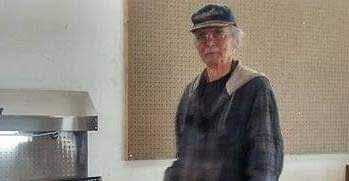
Jonathan “Josh” Stapelfeldt, a long-time Marble resident, passed away at the age of 77 on January 9th at the Paonia Care and Rehabilitation Center. He lost his life due to respiratory complications.
Stapelfeldt was best known for his electrical and electronics capabilities. He is survived by his dog, Cecilia, and his best friend Craig Blevins. His wish was to be cremated and his ashes returned to Marble.
This coming spring, there will be a Celebration of Life date to be announced after snow melts. Anyone desiring to help with costs can contact Taylor Funeral Service at (970) 874-9988.

Over two decades ago, residents of Marble came out in force to participate in a series of public meetings to voice their opinions on the future of Marble. These ideas and discussions were put together into a Master Plan. This summer the Board of Trustees is hoping to once more give the residents of Marble and those in the surrounding area a chance to weigh in on what matters, what direction they want their community to work towards, and how they feel about specific topics such as enforcement and infrastructure as they work to update the original plan.
During a special session on January 19th, the Board voted to approve a proposal to facilitate the project from Mark Chain, a long-time valley planner, and a familiar face at Town of Marble meetings as he has worked with the Town on various smaller projects in the past. The Town is applying for a grant from the Department of Local Affairs that will help pay for the project.
According to the proposal written by Chain, "The Master Plan will quickly review the history of the town, summarize its present population base and land-use activity, identify existing and desired community values, and most importantly provide a framework via a series of goals and objectives for dealing with existing issues as well as those concerns that may arise in the next decade".
During the work session, Chain laid out his plan and timeline for the project, setting an ambitious estimate of 12 months for completion. The first step is to form a Master Planning Com-

The Marble Town Council meets on the 1st Thursday of each month starting at 7 p.m. in the Marble Community Church’s Fellowship Hall.
Town of Marble meetings are open to the public.
mittee comprised of Marble area residents, including those who live within the limits as well as a three-mile radius of the town boundary. The application is available on the Town website and the deadline for return is the March 2nd Regular Board Meeting.
Members of the committee are asked to commit to one to two monthly committee meetings and three to five annual public meetings, the majority of which are expected to take place during the summer months. Members will also be asked to engage with as many residents as possible through conversations to learn about ideas, opinions, and concerns. On top of this, there will be independent reading and research throughout the course of the project.
and geologic constraints in the area, focus on desired physical and cultural amenities, and more," stated Chain.

By Amber McMahill
He continued, "One of the goals of the master plan will also be to facilitate the community members in designing what is critical to them. We can review other examples of Master Plans for layout and sample direction, but the Town of Marble is unique and the community should find its own direction and path for the near future. Besides identifying basic goals and objectives for the Town, the Master Plan should also give guidance and perhaps lead by example in how to deal with identified community concerns or issues that may unexpectedly come up in the future."
According to the proposal, the committee will set to work gathering data, mapping, identifying areas, and more after being selected by the board in March. Then, the group will work on identifying what topics are the most important to the community and the future of Marble. Examples of topics range from roads and bridges to dealing with potential future open spaces and parks.
This summer, as the weather turns warm and part-time residents return, the bulk of the public input portion will take place as a series of public meetings to discuss and work through these topics. The hope is to engage as much feedback as possible from the community as to the direction Marble will move towards.
"A Master Plan can give guidance to the town’s citizens, volunteer boards, and Board of Trustees on items such as where/if the community wishes to expand in area or population (and if so, where), identifying community assets, determine infrastructure needs, identify areas to preserve or acquire, summarize environmental
If all goes according to schedule, by this time next year the Board will be presented with the updated plan for adoption. The ultimate result will only be as good as the engagement from the community.
"We need everyone to show up at these meetings. I want this to be a living document, not something put on a shelf. I want it to inform us as to what the community wants from us when we are out there making decisions that affect them," commented Town Administrator, Ron Leach. "We need to know, what do the people of this town want?"
If you are interested in joining the committee you can access the application at www.townofmarble.com or by contacting Alie Wettstein at wettstein@townofmarble.com
2023 Meeting Schedule
February 2nd March 2nd April 6th
As I headed up the icy road under a pitch-black starless sky to the Marble Community Church Fellowship Hall, I wondered to myself if I wasn’t rather wasting my time in coming along to the first Town Council meeting of 2023. What could there possibly be to discuss so early on in the New Year?
After a few days of heavy snow, I had been half expecting the meeting to be canceled or postponed, our beloved Council members preferring to put their feet up at home in front of the fire. In the event, I was very glad I went along. The meeting was an action-packed humdinger of an affair. Squirt in hand, I took my place at the back of the room and waited for the action to begin.
The panel consisted of Mayor Ryan Vinciguerra, Larry Good, Amber McMahill, and rocking up a few minutes behind schedule, Emma Bielski, to whom I would like to extend my congratulations on the arrival of her new baby. Terry Langley was on the minutes, basking in the praise of her fellow Marble residents all of whom had enjoyed her picture in last month’s Echo. Ron Leach, looking swanky in a very posh-looking Grateful Dead cap, sat beside her. I was one of eight townspeople present. Mayor Vinciguerra kicked off proceedings by wishing everyone a Happy New Year.
The minutes from December’s meeting were approved and then some bills. The cost of computers for the members of the Town Council came in at less than the $5,000 budgeted. Phew. Then, followed a period of chatting and general murmuring while the conference call dingus was set up.
Attending the meeting remotely was Pat Willits from the Trust for Land Restoration. He expressed his gratitude for the help of the Town of Marble in cleaning up the old smelter site. You may be relieved to know that the area around the “slag toe” is now fenced-off and the toe itself sealed and shielded from the environment. The final project bill of $94,000 was picked up by the State of Colorado. Wil-
lits went on to say that the ultimate goal of the Marble Wetlands project was to work with the Aspen Valley Land Trust to transfer this strip of land to the Town of Marble by November 2023, stressing that the terms of the final conservation agreement should stipulate the priority for “quiet enjoyment.”
Expect limitations on vehicle usage, camping, and hunting. As for access to the land, a deeded easement will be needed for foot traffic. The intended location of the path is to the left of the road leading to the quarry, immediately after the bridge, and will have to pass through Colorado Parks and Wildlife land. Ron Leach is the designated “point person” on the Marble Wetlands project.
Next into the lion’s den came Brian Shepard from Visionary Networks. He had braved the inclement weather to make the journey from Carbondale to update the Town Council and all present on the Marble Broadband Project.
This is a thorny issue for a lot of Marble residents, who had been promised high-speed internet would be installed and available to them by the end of 2022. Shepard, fresh from a meeting with Holy Cross Energy, explained that the project was primarily being funded by the Federal Government’s recent infrastructure spending bill, and the remaining 25% from Visionary Networks.
Fiber optic cable will be run from CenturyLink’s exchange in Carbondale to a proposed 30-foot tower located at the Marble Fire Station. From there, those not hard-wired to the system en route and living within 2-3 km (less than two miles) of the tower will have their service beamed to them. For the most part, the cable will be hung on existing Holy Cross Poles.
In total, more than 200 poles will be affected, between 40 and 50 of which will need to be replaced as they are not suitable for the purpose. Holy Cross is working on a “make ready” process on their poles which is expected to be completed in June or July. The whole project is now scheduled to be completed by late Summer/early Fall of this year.
Shepard estimated that the cost to the consumer will shake out at $86 per month for unlimited internet. When asked by Marble resident Sue Blue how long it would take Visionary Networks to break even on their investment, Shepard estimated about 14 months assuming a 30% take-up rate on the part of residents. Given the cynicism around the failure to deliver against the original deadline and the subsequent number of residents who have since resorted to signing up with other providers, this may prove
to be an unrealistic target. In any event, we are grateful to Brian Shepard for making the effort to bring us “up to speed.”
Residents of and visitors to Marble, the Town would like to hear from you!
It has been 22 years since Marble last updated its Master Plan. Ron Leach, Town Administrator, clearly jazzed up at the prospect of shaping Marble’s future, presented his intention to create a new Plan with a 10-year time horizon.
What do you want your town to look like in 2033? What needs to change with respect to Land Use, Staffing, Parks & Rec, Capital Projects, Roads and Bridges, Annexations, Financial Development, Infrastructure, and Enforcement? Now is your chance to make your voice heard.
The Town Council’s goal is to fashion a cohesive Master Plan to address these and other issues over the next 12 months. In addition to hiring an experienced facilitator, a “Stakeholders Group” of five to seven volunteers will be established to seek out opinions and ideas from residents and visitors alike to encourage “heavy public participation” in the project. If you would like to be part of shaping Marble’s future, you can find a 2023 Master Plan Committee Application on the town’s website, www.townofmarble.com, or by emailing Alie Wettstein at wettstein@townofmarble.com.
It is anticipated that volunteers will have to commit to around 15 hours per month for the project. The deadline for applications is March 2nd
At a special meeting of the Board of Trustees on January 19th, the Town engaged Mark Chain of Mark Chain Consulting, LLC, a longtime friend of Marble and experienced town planner, to be the facilitator of the Master Plan. Chain has worked closely with Leach and Amber McMahill in the past. Welcome on board, Mark!
Tune in next month for an update on town signage, and fans of El Tel may be interested to know her latest suggestion, “Marble: Too small for a town drunk, so we all take turns.”
If you’re needing assistance stretching your food budget, Gunnison County Officials currently have bags of food available through the Marble Community Church.
There is no charge and no reservation needed; boxes are available for an individual or a family up to of four, and contain enough meals for approximately three days.
To arrange a pickup, please call the Marble Community Church at (970) 963-1464.
The Gunnison Board of County Commissioners (BOCC) held a work session on January 17th and discussed extending an exemption allowing Off-Highway Vehicle (OHV) use on a section of County Road 3 (CR3) from Beaver Lake to the top of Daniels Hill.
County Attorney Matthew Hoyt explained that the exemption is a policy decision made by the board. He said that under Colorado law, OHVs, ATVs, and UTVs are prohibited on county roads “unless you positively allow it.”
During the 2022 tourism season, an ordinance existed allowing for limited use of OHVs on just a portion of CR3; however, Commissioner Jonathan Houck explained, “The reason we timed out that ordinance during the beginning of January was a good-faith effort to demonstrate to the folks in and around Marble that we are not just doing this forever.”
ing management, he said they have created “something more organized and recognizable that is limited in its nature and scope.”

By Alex Menard
Last year, the Town limited truck and trailer parking available at the Mill Site park. Brad Kline was employed to manage the parking last summer and was often joined by Town Administrator, Ron Leach. During regular Trustee meetings last year, Leach commented that people often got very agitated when they were told there was no space for parking. Kline said, "The 12 sites fill up immediately, and I turn away another 40 trucks and trailers to park elsewhere illegally.”
Daniels Hill. “What we heard, and what [Schmidt] and others reiterated, was that that was not a preference from the Stakeholder Group and so, at this time anyway, we are not moving forward with that. We are moving forward with talking with [Schmidt] about other options that are available at the base that are more just along the roadside.”
County Road 3 resident, Teri Havens told The Crystal Valley Echo, “It is apparent that the land managers believe the only appropriate strategy for mitigating the impacts of the excessive volume of motor vehicles that funnel through Marble and onto the Lead King Loop is to develop a large parking lot that will accommodate OHV truck/trailer parking and staging. It makes no sense that the land managers would consider such a project before they have taken any steps to determine whether the majority of the community actually supports legalizing OHV use in Marble and on County Road 3.”
Per the Lead King Loop Stakeholder Group (LKLSG) final recommendations, which are available on www.thecrystalvalleyecho.com, Houk said the top three action items that were identified are: Parking lot management plan, implementation of a reservation or permit system, and education outreach.
Houk explained that it was his understanding that the Forest Service, so far, had not seen the necessary impact numbers to warrant a reservation or permit system, and therefore was not at the forefront of the actionable items to be happening anytime soon. He stated that the educational outreach program was ongoing and would continue; therefore, the work session focused on parking management.
Houk acknowledged the “significant lift” the Town of Marble has done to work on park-

In terms of parking available at the base of Daniels Hill, the BOCC has identified some opportunities to provide that; however, Houk said, “There seems to be some consistent split within the community that would just promote more use, while others feel it could be a welcomed amenity.”
Martin Schmidt, Public Works Director, talked about the possible improvements for parking within the county road right of way at the base of Daniels Hill and would like to work on putting a plan together along with the Forest Service. “We don’t want to jump in and start pushing things down with bulldozers, we want to have thought this through and potentially bring in a parking engineer to ensure we’ve thought of everything like parking radii. We think there is a road forward within the County right of way but it may be less than expected because of our constraints,” said Schmidt.
Kevin Warner, USFS District Ranger for the Aspen-Sopris District, commented that there is land available completely owned by the Forest Service to create parking at the base of

Commissioner Liz Smith commented that she feels the conversation has mostly settled on how to safely provide access to the Lead King Loop trailhead. “What I’ve heard from community residents is that allowing this use on County Road 3 has increased the demand, a ‘build it, and they will come’ type of mentality. At the same time, we still have two entities that are beyond the control of the County, which are the National Forest and also the Town of Marble, that are allowing this use and we are just a very short connection point between those two.”
She also noted that some residents want a ban on ATV use on CR3 as a solution. However, that is not consistent with the community as a whole. Victor Mamlin told The Crystal Valley Echo, "As a resident of the Crystal Valley, I believe restricting recreational use of ATVs and similar vehicles would have a long-term, detrimental effect on local businesses as well as limiting what the residents themselves can choose to partake in. The criminalization of OHV use would simply create outlaws and prevent honest people from enjoying where they live, and that's not to mention the parking nightmare scenario it would create.”
Marble Mayor Ryan Vinciguerra was hopeful that the Forest Service and County would continue to explore the parking issue at the base of Daniels Hill. “I think it is a responsibility of theirs to offer the proper infrastructure to such an amazing trail; it feels like almost all trails in Colorado have some sort of

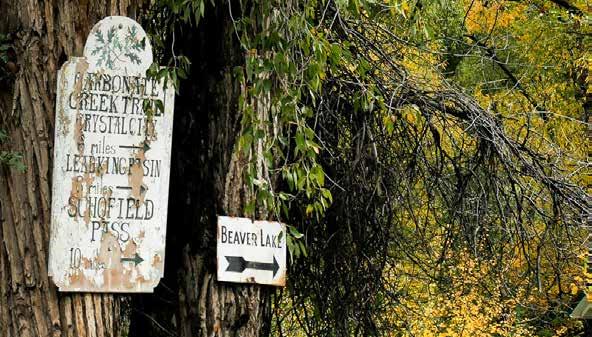
parking, signage, and infrastructure that come along with access. I believe that the Town is shouldering a lot of the parking responsibility whether or not we want to, and I’m hoping that we can continue to do so in the interim.”
Houck explained that enforcement is necessary for any solution but has also been one of their greatest challenges. “This Board has and continues to provide the funding necessary for the Sheriff’s department to have two deputies in the northern part of Gunnison County. Like other law enforcement agencies in other counties, they have been challenged in finding and retaining certified law enforcement in that area. We had, for a small bit of time, two Sheriff’s deputies in the area and now we’re back down to one,” he said.
Ron Leach echoed that safety and enforcement are some of the most important issues. “Having served as the Fire Chief for this area for the Carbondale Fire District for 38 years, I do understand access and egress for emergency vehicles. Due to the number of trucks and trailers that are parked on the road here in Marble over a weekend, emergency vehicles cannot access the Lead King Loop, the town of Crystal, or the residents on Daniel’s Hill for that matter, and that includes our ambulance,” he explained.
“Regarding lifting the exemption,” Leach said, “I think it is premature to do that when we have not solved the problem of enforcement. Other issues have not been solved or addressed either, such as commercial enterprises that access the Loop or Town of Marble residents who like to access the Loop as well. These issues can be solved with enough study and input, but have not at this time.”
He urged for the Lead King Loop Stakeholder Group to be reinstated, saying that they came up with numerous suggestions and recommendations, but the Town is simply struggling with the implementation of those strategies. Leach would like to see the LKLSG continue working through the problems presented as a group, even if that means bringing in a facilitator.
The OHV exemption on CR3 still requires a vote, should the BOCC decide to implement another ordinance allowing use, during a regular meeting but it does not require a public hearing. At the time of publication, the vote has not yet been scheduled. Let the Commissioners know your thoughts by sending them an email to bocc@gunnisoncounty.org, letters will be disseminated to the entire BOCC if sent to that address.
















Beginning in December, we started digging into the life and times of Bill Jochems, who landed in Redstone in 1971 and moved to Carbondale last summer. In our first installment, we learned about Jochems' early days as a young adult traveling to Africa, how he made his way to Redstone, and the rise and fall of the Marble Ski area development, which lead to the creation of the Crystal Valley Environmental Protection Association (CVEPA).
Last month, we took a look at his stories with Lucille Osgood MacDonald, the massive Meyer Boiler that was created in Jochems’ garage, how a tornado led to the commissioned paintings of Mona Lisa on the side of his house, and the creation of the Redstone Historic Preservation Commission. In our final installment, we’ll hear about Redstone’s Mid-Continent years, Jochems’ boat-building phase, the Dam affair, plus his reflections and memories.
the mid-Continent yeaRs
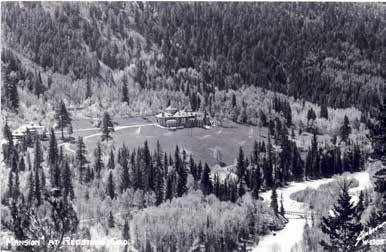
The mining history in Coal Basin began in the late 1880s with the original Osgood mines only operating until 1909. In 1956, according to the CVEPA website, “Mid-Continent Resources gained ownership, undertook a major upgrade and expansion of the operation, and resumed mining,” which led to the paving of Highway 133 in the late 50s, and eventually the Redstone Boulevard as well.
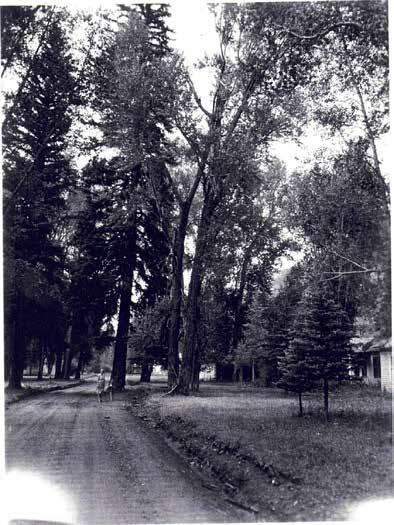
By the time Jochems arrived in the early 70s, there was, undoubtedly, a heavy influence by Mid-Continent’s Coal Basin mines that continued for the couple of decades that followed. “Because of the mines, [the population] in terms of the Redstone Boulevard may have been greater when I moved in than there is now,” Jochems said.
However, growth today has largely been limited by the Pitkin County Open Space acquisitions from Jochems old Restone home (at 654

Redstone Blvd.) to the Brian Olesen Sanitation Station (at 1091 Redstone Blvd.); the area above the Redstone Inn to the Redstone Castle, which is also known as Sawmill Hill; behind the Coke Ovens, which also includes the Redstone Stables; and past Dorais Way to Filoha Meadows.
By Gentrye Houghton
Redstone was very much a mining town during the 70s and 80s. John Osgood’s third wife, Lucille MacDonald (after remarrying Huntley MacDonald) had sold off the majority of the original houses. Mid-Continent owned the Redstone Inn, where many miners were able to pay board. The mine supported families in houses and single men in motels and apartments. The Redstone Manor (now Crystal River Villas) was built just for miners by the Shilling family.
As Jochems wrote for The Crystal Valley Echo in April 2021, the end of every day’s shift brought a line of pick-ups to the General Store, buying six-packs for the drive home. At Mid-Continent’s zenith, several hundred miners produced up to a million tons of metallurgical, or coking, coal a year. Two shifts of 30-ton trucks, one every four minutes, hauled coal to the unit train at Carbondale.
Back then, miners patronized and socialized in the Inn and Townhouse (now Propaganda Pie). “Most of the guys were single with big paychecks for the time, and didn’t want to cook dinner,” said Jochems, “they probably frequented the Town House more because, especially in those days, it was much less formal than the Inn.”
When asked if the Town House was a “rough crowd,” Jochems chuckled and replied, “Well,

I was a part of it myself!” John Ely chuckled making the comment that Jochems was always friends with all the great drunks. He described the explosion that occurred in 1981 in The Crystal Valley Echo’s April 2021 edition:
Thwap… thwap… thwap, followed by the echoes of helicopters woke all of Redstone at dawn on April 15 — it was [over] 40 years ago but seems like yesterday. Then, “and this morning, in Redstone, Colorado…” broke through from Tom Brokaw on the national news as an intense and tragic story unfolded locally.
Pitkin County Open Space seeks community input during the March Crystal River Caucus Meeting on Thursday, March 9 at 7 p.m.
They will be discussing an update to the 2010 Redstone Parks and Open Space Management plan; the plan will expand from the Redstone Boulders and Redstone & Elk Parks to include the Coke Ovens/Redstone Stables, Redstone Beach, Sawmill Hill, and several riparian parcels
Meeting links are sent to those on the Crystal River Caucus e-mail
The gas blew, early during the swing shift, that fateful morning in 1981, and frantic rescue efforts continued for two days. Some miners were able to call out and rescue team members Tim Cole and Lee McBride went in within a couple of hours. They helped six injured miners out, but the devastation kept them 800 feet from the explosion, and 15 men were still missing.
Heavy gloom weighed our town down; we all knew these men.
Access to the explosion site was difficult. The portal was located above Redstone at 10,000 feet in Coal Basin. And then the tunnel extended access 6,000 feet into the mountain, following the coal seam down the 10-degree dip, and ending an extraordinary 3,000 feet under Huntsman’s Ridge. That was the site of the explosion.
Gas had to be cleared and human safety insured before
JoChems Continued... bond was their loading facility in Carbondale, which was not in the bankruptcy because it was already segregated and pledged for reclamation,” he said.
rescuers could access the site on the second day. Sadly, they confirmed that all 15 men had been killed by the explosion.
During the late 80s, Jochems was appointed the Town of Marble judge. At the time, the Town thought they would move forward with gaining police enforcement and a court system.
“I was a judge with no cases,” he said proudly. “This was useful to me because I performed a lot of marriages at the Redstone Inn and the Redstone Castle.”
Jochems, unfortunately, did not wed Jimmy Buffet at the Redstone Castle, he commented that that took place before he was appointed a judge. He later went on to become a Carbondale municipal judge in the mid-90s until he retired completely in 2000. He heard cases about prohibitions of the Town’s code, such as misdemeanor offenses, disturbing the peace, and dogs at large.
Just eight years following the tragedy from the 1981 explosion, Mid-Continent's demise began. As a founding member, Jochems and the rest of the CVEPA board were always an acting watchdog in terms of water quality coming down Coal Creek, but in February 1989 there was a significant offense that caused both the Crystal and Roaring Fork Rivers as far as Glenwood Springs to run “as black as India ink,” according to Jochems.
He explained, “The wastewater got away from
them, and that was a one-time event and truly an accident. They had bulldozed something like 30 miles of road with all the switchbacks and whatnot. The maroon formation of the [Coal] Basin there is very soft anyway, and when you start bulldozing roads out of it, you really create huge sediment flows out of Coal Creek. It was said at one point by the Division of Wildlife that there was no evidence of any natural reproduction of trout in the whole Crystal River from Coal Creek to the Roaring Fork, that the blanket of sediments would suffocate various insects that the trout live on.”
MCR was fined for the incident, and eventually shuttered the mines in 1991. In Protecting a Valley and Saving a River, Darrell Munsell quotes Cameron Burns of the Aspen Times Weekly on what he saw during a 1993 flight over Coal Basin:
“What remains [of a once grandiose enterprise] is a scarred mountain basin of ugly mine shafts, crisscrossing utility roads and giant piles of seeping coal refuse, all strung out over 100 acres of Forest Service land. It was a picture of ecological blight that many valley residents increasingly consider an environmental hazard that should be cleaned up as promised.”
When the mine shut down, CVEPA felt there were not adequate provisions to reclaim Coal Basin, so the board became quite active in pushing for adequate restoration. Jochems explained that with that process, MCR was required to put a bond that was supposed to guarantee that MCR would pay for the reclamation work. “Well, Mid-Continent went bankrupt and they couldn’t do it. The security for their
“The problem was,” Jochems continued, “that its value was a transshipment place where the train continued to run up until 1992. When the mine shut down, the property became essentially worthless.”
Upon CVEPA’s urging, Pitkin County, the National Forest Service, and the Colorado Department of Reclamation, Mining and Safety became involved. In 1995, a $4 million restoration effort took place until 2002; however, the area still struggled with revegetation in many areas and the effort largely continues today.
“It’s a fair statement that the current state of reclamation is way less than what’s hoped for today,” said Jochems, “that’s why the methane capture project is so alarming. The question is, how sustainable is the project? The coal is not the same as in Paonia: it's tighter, harder, less permeable, and probably harder for [methane] to move. The gas will be in the deposits still sitting there, but once you start drawing it out, how able is the coal bed to replace it? Then, if they start drilling and essentially fracking it to stimulate gas flows, I can see the ‘re-industrialization of Coal Basin.’”
boat buildeR of Redstone
Jochems built the hull of two boats in his Redstone garage; he and his father first built a row boat in Kansas in the 1940s, and the second boat, Citizen P, was a lug rig that was started in his garage in the early 90s. “A lug rig is not fixed to the mast, the mast serves to lift the top and bottom spars,” he explained. “It’s quite a primitive rig.”
At the Redstone Inn
Redstone programs are open to all! RSVP: (970) 920-5432
FEBRUARY 14 & 28
• 12:00 p.m. – Lunch ($10)
RSVP by noon the Friday prior – space is limited. Plated lunch will be served. There will be a gluten-free option.
• 12:45 p.m. – Program
February 14: Right At Home – Informational presentation about In Home Care & Assistance. Holiday Desert Exchange – Bring treats to share if you wish.
February 28: Library Lunch & Learn Learn about Pitkin County Library online resources you can access from your computer or phone.
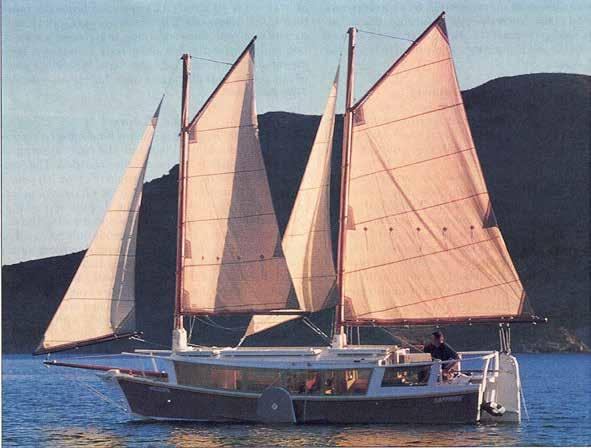
“Sapphire” was his third and final hull to build, which was started in May of 1996. The 27-foot ketch has two masts, is seven feet wide, and has a cabin that runs nearly stern to bow. He told Lynn Burton for an August 1997 Roaring Fork Life article that he suspected the neighbors were highly skeptical of the project, but that they’d been most generous and tolerant of the noise.
Burton writes, “Jochems went to Philip Bolger, one of America’s best small boat designers, to design the schooner. Bolger [was] in his 70s [at the time], and has designed 639 boats, including the one he calls the ‘William D. Jochems.’” When he asked Jochems why he started such a difficult project, Jocehms replied that he just had the urge to do it, and part of that urge was creating something with his hands.
Jochems told The Crystal Valley Echo that Sapphire took two years just to build the basic hull, then she was moved down the valley to one of the big buildings which the mining company wasn’t using. Burton quotes him as saying that building inside his garage was “like doing a painting in a phone booth… you can’t step back and look at it.”
“I just couldn’t come up with a name for the boat,” Jochems said last fall, “and I was painting the hull up to the last moment. Looking down at the paint can the color was called ‘Sapphire,’ so that’s how she got her name.”
Sapphire first splashed in Lake Mead, and then was in the San Francisco Bay Area for a while before Jochems took her to the Sea of Cortez. He said that she’s currently in a port in Texas; however, the current owner told us she’s now kept in a marina on a small estuary that feeds into Buzzards Bay in Bourne, Cape Cod, Mass.
We caught up with Rob Gogan, who told us he and his wife, Frann Addison, are the current owners of 'Blue Moon,’ née Sapphire. “After Bill, she went to Wisconsin and Texas before moving to her current home,” he said. “She’s a terrific, distinctive boat on which my wife and I have had many adventures in the waters of
Cape Cod and Martha’s Vineyard.”
Gogan continued, “Bolger designed the boat with leeboards. Very few boats around here have them. So, many people who see the boat ask me what they are for and I tell them they enable sailing in much shallower waters than most cruising boats. We can easily sail to kneedeep waters for landing. Sailing her is a little challenging as she is what Bolger calls 'tender,' or tipsy. Though we cannot sail in winds over 15 knots, we love the 360° views, hatches for sky views and fresh air, and interior space aboard. My wife and I are grateful to Bill Jochems for inspiring, and constructing, such a fun, distinctive schooner that we’ve been sailing since 2015."
the dam affaiR
“Bill came out of retirement for me during the West Divide opposition,” said John Ely, Pitkin County Attorney, “and I really appreciate that!”
In Protecting a Valley, Saving a River, Munsell writes, “The West Divide Project was a multipurpose water resource development in Pitkin, Garfield, Mesa, and Gunnison counties for agricultural, municipal, and industrial uses.” Jochems explained the expressed purpose of the project was to pump water out of a Placita reservoir over Huntsman Ridge to irrigate hayfields in an area called West Divide, near West Divide Creek south of Silt, Colo.
“Those were amazing proposals,” he said. “Redstone would have been under a couple of hundred feet of water, with the top parts of the Redstone Castle, I think, being above the water line. It was just insanity”
The Redstone plan, or the so-called Osgood reservoir, would have been located just north of the Village and was originally proposed to be 129,000 acre-feet, and would have backed water up to Placita. Another tall dam was proposed at Placita to be 62,000 acre-feet. The Colorado Water Conservation District (River District) filed the original water rights during the late 50s and was adjudicated by the water court in 1958.
Jochems explained that in Colorado, one would have to go to water court every six years for a showing of diligence. The legal test is that you can and will build the project. “‘Can’ meant that you have the money, and ‘will’ meant that you have the intent,” he said. “You also have to show that you’ve made progress in getting it done.”
He expressed great concern for the River District’s proposed intent of irrigation. “Hay is not valuable enough of a crop for the millions of dollars necessary in getting the water over there,” he explained. “What was really behind all this was oil shale development.”
Jochems never believed the River District was trying to push the project forward and said that the progress they’d shown during court hearings was constantly shifting around as new drawings: New engineering drawings and then fancier drawings — all things that could be done from a desk.
“The only thing that was ever done on the ground,” he said, “was the drilling of one hole up there by Placita to get a characterization of the rock to see if it could properly support the dam. Other than that, everything was on paper.”
When groups like CVEPA and the Crystal River Caucus wanted to push opposition to the project in the late 2000s, they neither had an attorney nor the funds to pay for one. Ely suggested Jochems, who reinstated his license and joined the fight. According to Protecting a Valley, Saving a River, the group called the River District’s bluff and “filed a motion in water court asking the judge to rule that the planning period (50 years) for the West Divide Project had expired and that the water district had not been diligent in perfecting their water rights.”
On August 25, 2013, “the end of the dam affair” was celebrated in Redstone Park. The party was put together by Jochems, “He can throw a party!” exclaimed Lisa Tasker, Administrative Specialist for Pitkin County’s Healthy Rivers board.
The River District settled out of court and relinquished all water rights to the Crystal River Valley. It is the threat of these dams that led to the mid-2010s effort to gain national protection of the Crystal River, and the attempt to for a Wild and Scenic Designation continues today.
RefleCtions on the futuRe of Redstone
Lisa Tasker first got to know Jochems while carpooling to Healthy Rivers board meetings. Jochems has been a member of the board since its inception in 2009 and continues his involvement even after moving to Garfield County. She said she is impressed at his ability to stay in contact with his people, he
speaks with Peter and Ann Martin weekly who left Redstone a few years ago and uses that as an example in her own life.
Tasker also expressed her appreciation for his measured way of speaking. “He has a way of picking things up and making them move a bit,” she said. “Bill makes things happen.”
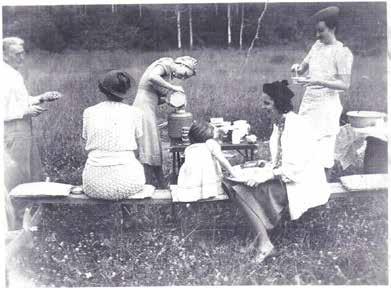
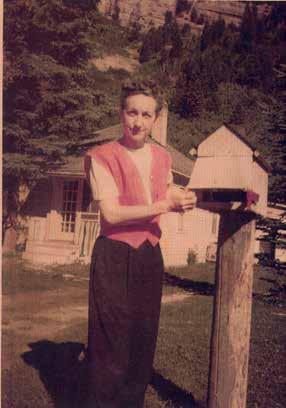
Jochems said some of his fondest memories were getting together with friends on his back deck for summer dinners. “Watching the sun climb up, the shadows and the sun rising as it set behind me on the cliffs,” he commemorates, “they were just incomparable experiences.”
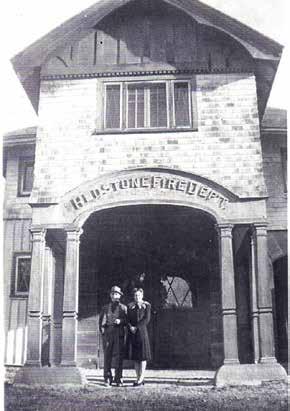
When asked about the future of Redstone, he replied, “Of course, it has its marvelous protection by Open Space and Redstone's Historic Preservation Commission, so I think everyone can look forward to the rest of their lives there with very little change to the surroundings. That’s a marvelous advantage that very few people have.”
He was a board member of CVEPA from the very beginning but parted ways over their support for the Crystal River bike trail proposals. “At that point, I decided that I could not see how the building of the trail was in favor of protecting the environment,” he explained. “I do believe a form of the trail is necessary, but as proposed by Pitkin County Open Space with a dozen or so bridges between the BRB (now the KOA) to Redstone would totally change the character and puts bicycles in areas important to wildlife.”
As Micheal Kinsley wrote in his Letter to the Editor last month, Jochems' move from Redstone to Carbondale truly marks the end of an era. We hope you’ll join us and Kinsley in raising a glass to a great guy. Cheers, Bill!
If you’ve enjoyed reading this feature on Jochems, but would like to see the installments in their entirety as well as a full gallery of the photos he shared, head over to our website www. thecrystalvalleyecho.com
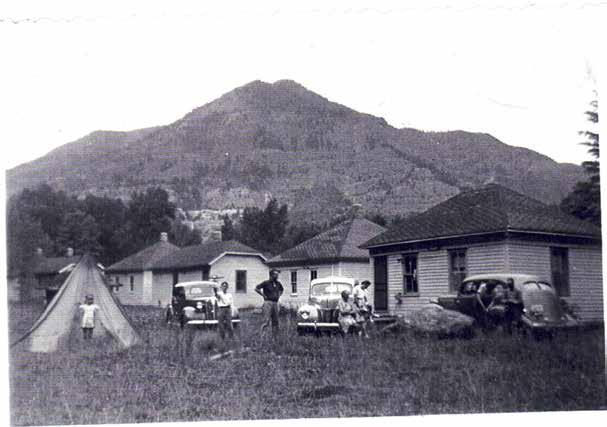




From Deb Strom
In February, we said goodbye to Castle owners April and Steve Carver. We thank them for their extraordinary dedication to restoring the Castle to its original grandeur. The Carvers sold four valley properties and retired to Denver to be close to their grandkids. — check out PBS's 2019 Colorado Experience YouTube video of the Redstone Castle.
In April, we welcomed the new Castle owners Stephane & Sabrina De Baets. They immediately embraced the Redstone Historical Society (RHS). Board members Jeff Bier and Nancy Chromy became part of their operation which includes Castle Tours. The De Baets intend to develop the 145-acre property as an upscale spa retreat. They see “Wellness” as the future of luxury travel and are working with RAKxa Wellness which recently opened a premier spa retreat near Bangkok.
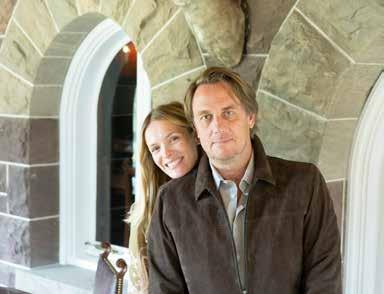
On April 27, Pitkin County Commissioners granted Historic Designation to John C. Osgood's original Ranch House. In 1942, it became the home of the artist Frank Mechau and his family has meticulously loved, preserved, and maintained it since then. RHS sponsored this application.
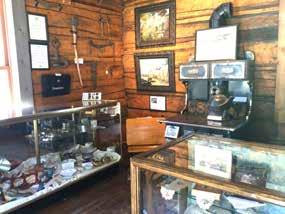
In early May, we re-opened our little Log Cabin Museum on the edge of Redstone Park. Lady Bountiful's Redstone Waltz plays gently in the background while a video slideshow loops con-
All content sponsored and provided by the Redstone Historical Society

tinuously in the corner and guests enjoyed our expanded exhibits from 9 a.m. to 6 p.m. daily through October. Many thanks to Board members Becca Trembley and Stephanie Askew for their efforts.
On June 27, we held our annual Membership Appreciation Event featuring CJ Brafford, Director of the Ute Museum in Montrose, Colo. Over 90 friends and members attended this event held under the Redstone Inn's South Canopy.
During the summer, Pitkin County finally embarked on the long-anticipated Redstone Park expansion project. It was very messy and resulted in limited access to the museum. The project will resume in 2023 spring and we will be working with the County to improve our exterior footprint.
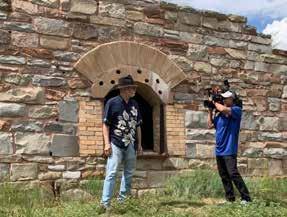
In August, the Society commissioned Versatile Productions to collect a full day of raw video footage featuring Redstone historians Ron Sorter, Jane and Darrell Munsell, and Larry Meredith. We are thankful to these four for donating their time to this effort and for Pitkin County's financial support. This is a work in progress — the next step will be to seek grant funds to turn this raw footage into two or three educational videos.
In September, Board Member Stephanie Askew produced and performed in her Historical Musical Revue honoring Redstone Artist Jack Roberts at the Ute Theater in Rifle.
In November, on behalf of Redstone, we honored Board Member Emeritus Peter Martin's 90th birthday.
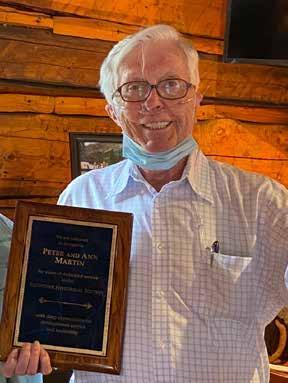
In December, regretfully, our Board President John Chromy announced his intent to step down in the spring of 2023. We are grateful for his exceptional leadership for over nine years. As president and architect, he was actively involved in guiding the Castle's restoration projects.
Every Month, Board members Larry Meredith and Deb Strom provide these Vintage Valley articles for The Crystal Valley Echo. Old timers, please share your stories by emailing us at HistoryRedstone@gmail.com
• John Chromy, President
• Chrissy Strom, Vice President
• Nancy Chromy, Secretary
• Deb Strom, Treasurer
• Stephanie Askew
• Jeff Bier
• Alyce Meredith
• Larry Meredith
• Becca Trembley
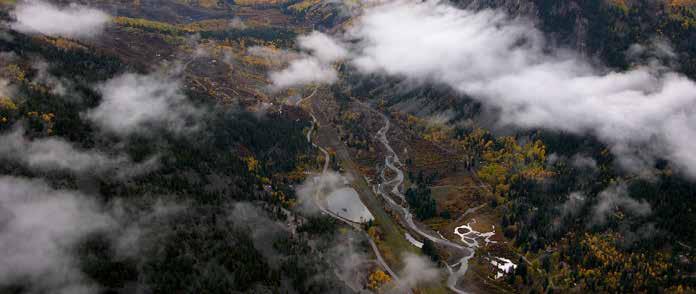
Last month, the Town of Marble, Gunnison County, Pitkin County, the Colorado River District, and American Whitewater, also known as the Wild and Scenic Feasibility Collaborative, announced the selection of Wellstone Collaborative Strategies and P2 Solutions to facilitate and lead a community engagement and stakeholder process that will consider the feasibility of a federal Wild and Scenic River designation for the Crystal River in Gunnison and Pitkin Counties.
Wilderness Workshop is a member of the Crystal River Wild & Scenic Coalition, a group of neighbors, stewards, and enthusiasts of the Crystal River who seek Wild and Scenic status for the Crystal River. The convening of the stakeholder process by the Collaborative is an important step to identifying shared community vision and goals for the Crystal River and its corridor. We look forward to a process that is transparent, welcoming, and educational for all participants.
Below are statements from Wilderness Workshop and other coalition members on the selection of a facilitator to lead a community engagement and stakeholder process:
“Community support for protecting the Crystal River is at an all-time high. I’m thrilled to see local municipalities and diverse organizations seizing this opportunity, working collaboratively, and finding ways to keep the Crystal as it is: free-flowing and free of dams. The process provides an important opportunity for our community to jointly learn about ways to protect a treasured part of our Valley’s ecosystem, the Crystal River.”
— Will Roush, Wilderness Workshop Executive Director
“The health of the Crystal River has been at the heart of all the Crystal Valley Environmental Protection Association (CVEPA) does. We absolutely support the protection of the river and are excited to see the forward progress of the stakeholder process. CVEPA encourages our members and supporters to participate in, engage, and learn more about how they can help this important ef-
fort to protect the Crystal.”
— Suzy Meredith-Orr, CVEPA Board Vice-President & Crystal Valley Resident
“Flyfishing the Crystal River in its natural state drives my commitment to keep it wild. Under persistent pressure from drought impacts due to undeniable climate change, demand for the Crystal’s dwindling water supply will likely increase making it more important to protect the survival of this vital stream. I’m pleased to learn about steps being taken to safeguard this breathtaking resource we’re blessed to have running through our backyards.”
— Lani Kitching Owner, Proudline Guided Flyfishing
”It’s great to see community members up and down the valley coming together for a common cause. Protecting the Crystal River from dams and out-of-valley water diversions is not only important for our generation but for generations decades into the future, where the demands for water will intensify dramatically.”
— Chuck Downey, Redstone Resident, and longtime Wild & Scenic Supporter.
The initial phase of the stakeholder process will bring together a robust and representative cross-section of interested individuals to provide informed input; examine, explore, and investigate river protection; access and rely on experts in the river and riparian health; engage experts to provide factual information relevant to protective designations; agree upon rules of engagement; be a process grounded in the highest integrity and inclusiveness; and result in the identification of shared principles for protection of the Crystal River. The stakeholder process will kick off in the first quarter of 2023.
Wilderness Workshop is a nonprofit advocacy organization based in Carbondale, CO, that engages in research, education, legal advocacy, and grassroots organizing to protect the ecological integrity of nearly four million acres of public land in Western Colorado. Learn more at WildernessWorkshop.org
Naturalist Nights are brought you in partnership between Wilderness Workshop, Aspen Center for Environmental Studies (ACES), and the Roaring Fork Audubon. Speakers are in Carbondale on Wednesday evenings, starting at 6 p.m., at the Third Street Center and in Aspen at ACES Hallam Lake facility on Thursday evenings.
Three Upcoming events in Carbondale:
• February 8th — The Science of Co-existing with Black Bears in Colorado.
• February 22nd — The First Ascent: Over 10,000 years of Native American Occupation in the Colorado Mountains.
• March 8th — Ancient Wetlands: Their Essential Value and Threats in our Warming World with Dee Malone.
Folks can RSVP on the Wilderness Workshop website, at www.wildernessworkshop. org. Facebook events are available with more information for each event. Presentations will also be available to watch via Facebook, Grassroots TV, and other local media outlets.
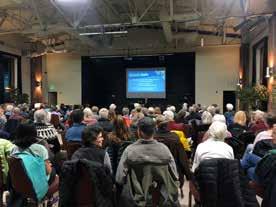
The first Naturalist Night's presentation of 2023 fully packed Community Hall at the Third Street Center. In the photograph to the left, participants listened to the presentation on "Birds of Aspen and the Roaring Fork Valley."
Photograph provided by Grant Stevens, Communications Director for Wilderness Workshop.

The goal of this workshop is to create the greatest shifts possible by combining art, movement, and the power of Sacred Embodiment to:
Mobilize stagnant and calcified energies, Remove attachments to any distorted programs and patterns
Deepen your connection to your Self as Source thereby embodying self-sovereignty, Reveal new gifts, and Expand both physical and energetic opportunities

This workshop is meant to assist you in not only initiating powerful change in your life experience, but actually embodying new energetic shifts at the physical level
This process includes three complementary activities: energetic alchemy, intuitive rhythmic movement, and the creation of intuitive art