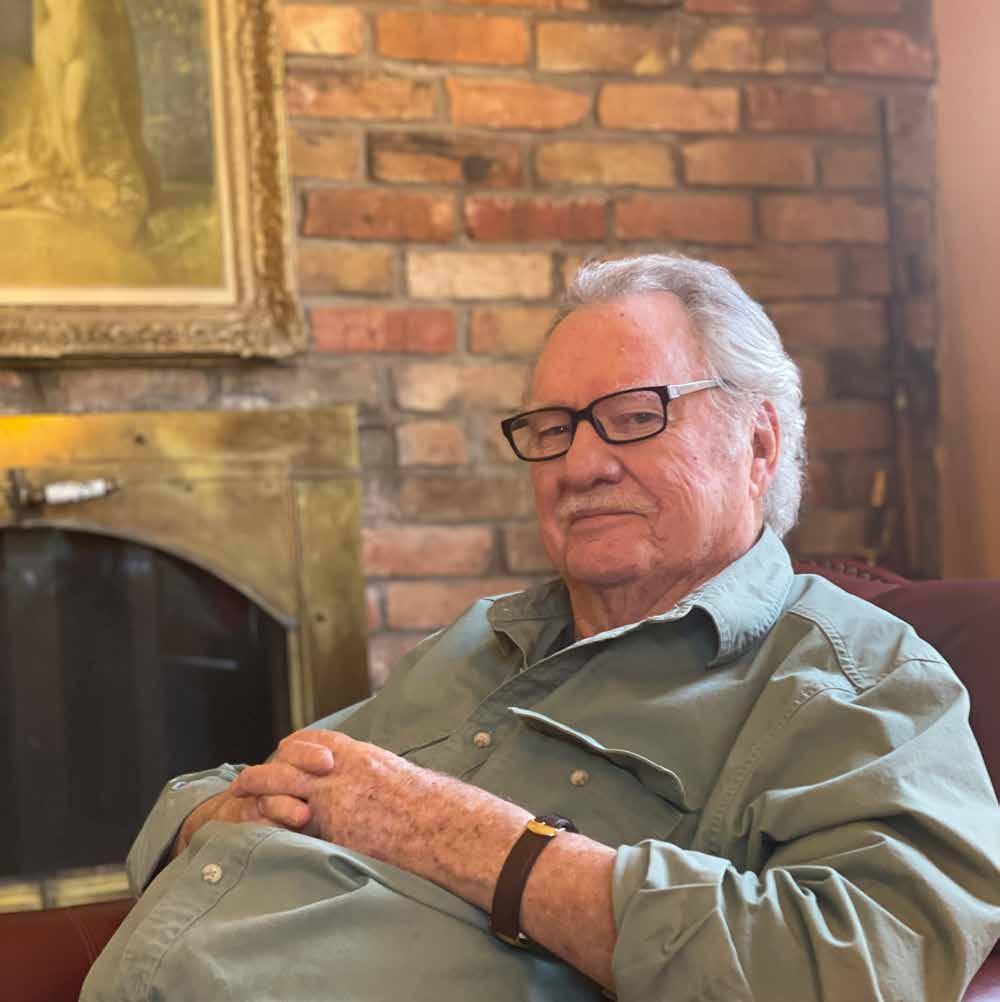

Photograph by Elizabeth Key.

The earth took hundreds of millions of years to develop into its present-day topography. In the name of extractivism, man permanently alters the landscape in a spec of time by hollowing out minerals and natural resources with heavy equipment. This greed ravishes Colorado’s idyllic and irreplaceable vistas for its fuel-rich bowls, clear-cutting for access roads, destroying critical wildlife habitats, and releasing methane into the atmosphere.
We are witnessing the backlash of large-scale environmental destruction in the form of catastrophic climate change. Scientists are battling each other to find ways to thwart the earth’s rising temperature, there are now environmental refugees, and the concept of six degrees of separation is coming into play with natural disasters. The doomsday preppers feel vindicated, and society seems off-tilt with a severe case of vertigo.
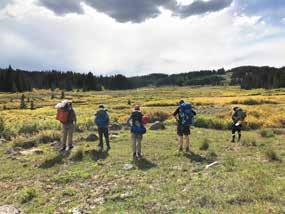
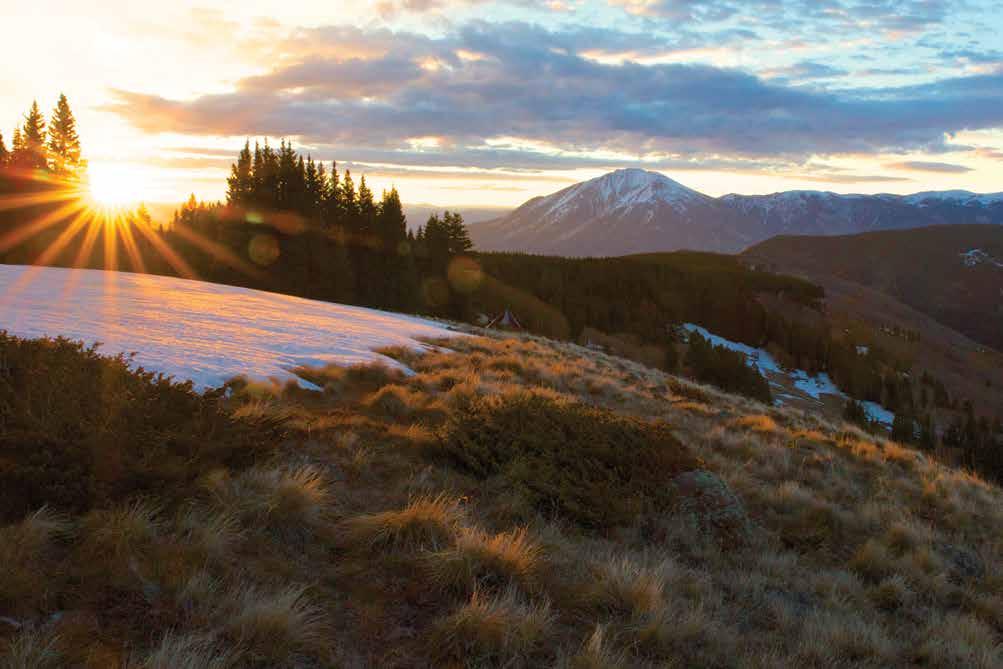
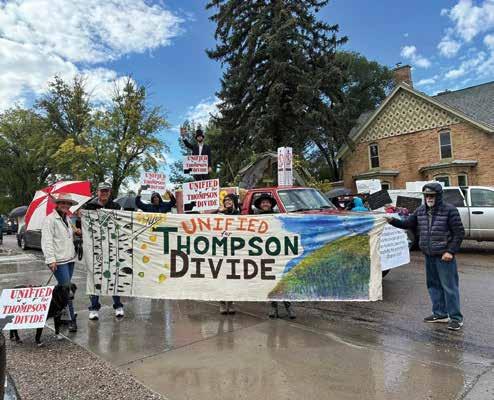
In the middle of the environmental chaos resides a decade-long campaign to ensure the 220,000-acre Thompson Divide area is protected from the threat of oil and gas development. Located between the Roaring Fork and the North Fork valleys, this vast public land possesses some of the largest Aspen tree forests in the state. The biologically diverse landscape offers a variety of activities from world-class backcountry recreation including mountain biking, climbing, and backpacking to fishing, hunting, and grazing.
“It is kind of the quintessential multiple-use national forest landscape,” said Will Roush, Executive Director of Wilderness Workshop.
If the oil and gas leases are approved and developed, pipelines and roads will fragment wildlife habitats diminishing the ecosystem. Compressors and wells will dot the landscape leaking methane into the atmosphere and the chemicals used to maintain the wells will pollute the water tables and streams.
“Some of the big rural oil and gas operations have some of the worst air quality in the country, even worse than big metropolitan areas,” said Roush.
The heritage grazing lands that have been in operation for over 100 years will be at risk of being revoked by ranchers. Much of the recreational activities that help fuel local economies will be made inaccessible. The community-building experiences and family day trips will be minimized.
Protecting the Thompson Divide has been one of Wilderness Workshop's highest profile, biggest priority issues in their mission to protect public lands. They have put significant staff time and resources into it and the community has “responded in kind,” according to Roush. The special characteristics of the Thompson Divide continue to captivate the community. Advocates have shown up at public meetings, written letters, and donated to support this effort.

By Elizabeth Key
“The broader coalition working to protect the Thompson Divide, which we are a key member of, is thinking about protecting the local economy, protecting towns from the impacts of oil and gas development, which include traffic and boom and bust economic cycles. The goals are really quite a bit broader than just environmental,” Roush said.
The value that the Thompson Divide provides to the local population has spurred the community to actively engage in its protection for the last decade. Wilderness Workshop has spearheaded a coalition of “strange bedfellows” consisting of ranchers, hunters, farmers, fishermen, recreationists, and business people to ensure this Colorado treasure remains undeveloped. Some of the key players to protect this area have essentially been the descendants of the original homesteaders.
Over the years there have been many hard-won battles enabling temporary protection of the area but still, the fight looms for the permanent protection afforded by a Congressional withdrawal. The goal is for Congress to pass an act that says this area will no longer be available for any future oil and gas leasing.
“Making change on federal public lands takes time. It has been a complex challenge and there were about half a dozen companies that held oil and gas leases,” Roush said.
make a di erence and encourage you to keep shopping locally this holiday season, using your Alpine Bank Loyalty Debit Card. Every time you use it, Alpine Bank donates 10 cents to nonpro ts right here in Pitkin County.
Learn more about our featured small businesses at alpinebank.com, with a search for #SmallandMighty.
*Alpine Bank debit cards are available with no annual fee to individuals with an Alpine Bank checking account.


“The current opportunity to protect the Thompson Divide is this administrative mineral withdrawal, which would prevent any oil and gas leasing of the Thompson Divide for the next 20 years,” said Roush. “To put that in place, the Department of Interior, BLM, and Forrest Service need to go through a fairly extensive environmental review of that action.”
Presently, the effort is in the middle of a 90-day comment period. The coalition is asking the public to submit comments in support of protecting the Thompson Divide area. Additionally, on December 14th at 7:00 p.m., there is a public meeting at the Carbondale Fire Department where people can learn more, submit comments, and talk with agency officials. It has been many years since there has been a “big inflection point” and Roush encourages the community to show up and take this important opportunity to support the Thompson Divide mineral withdrawal.
For more information, please visit the Wilderness Workshop page at wildernessworkshop.org/thompson-divide/

At the Redstone Inn
Redstone programs are open to all! RSVP: (970) 920-5432

DECEMBER 13
• 12:00 p.m. – Lunch ($10) RSVP by noon the Friday prior – space is limited. Plated lunch will be served. There will be a gluten-free option.
• 12:45 p.m. – Program
December 13: Kindred Spirits Beautiful songs to celebrate the holidays.
PLEASE SHOW YOUR SUPPORT FOR THE
WEDNESDAY, DECEMBER 14 | 4:30-5:30 P.M.
Community Hall at the Third Street Center | 520 South Third St., Carbondale

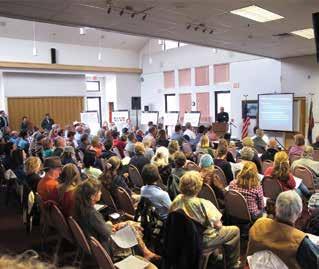
Gather with fellow supporters in advance of the public meeting about the proposed Withdrawal! We’ll make signs and buttons and write supportive comments before heading to the public meeting to show our community remains “Unified for the Thompson Divide.” For more information, scan the QR Code, visit wildernessworkshop. org/events, or email erin@wildernessworkshop.org to learn about other ways to participate.
















& Marble Times
Mission Statement: To provide a voice for the residents of the Crystal River Valley; to bring attention to the individuals and local businesses that are the fabric of the Crystal Valley region; to contribute to the vitality of our small town life.
Editor • Gentrye Houghton
gentryeh@hotmail.com • (806) 374-0055 CONTRIBUTORS
Amber McMahill • Alex Menard
Melissa Sidelinger • Elizabeth Key
ADVERTISING SALES
Gentrye Houghton gentryeh@hotmail.com • (806) 374-0055
The Crystal Valley Echo is published monthly, and is distributed throughout the Crystal Valley.
NEWSPAPER BOX LOCATIONS:
Carbondale (old) City Market • Village Smithy
Carbondale Post Office • Redstone General Store
The Marble Hub
Please send $50 for print or $35 for digital editions along with address information to: The Crystal Valley Echo 364 Redstone Blvd. Redstone, CO 81623
Thank You from newlY elecTied commissioner, laura PuckeTT daniels
Dear Gunnison County,
Thank you for electing me your next Gunnison County Commissioner. This experience of running for public office has been such an honor. I have been welcomed and trusted by so many of you, some of whom I knew prior to this process and some of whom I was able to meet because of the campaign. Thank you to every person who took the time to meet with me and share their experience in the county and thoughts on our future. I am continually inspired by the thoughtful, hard-working, passionate people of our county.
Thank you to the organizations that welcomed me into their board rooms, listened to what I had to say, and asked questions. You helped me refine my own ideas, and gave me new ones, which became cornerstones of my campaign. I am excited to work with you to tackle our common challenges going forward.
Thank you to each of our volunteers – I am amazed and humbled by your hard work and dedication. Thank you to the folks that donated to the campaign so we could effectively get the word out; I would not be here without you. Thank you to the Crested Butte News and Western Colorado University for hosting public forums, and to KBUT for broadcasting, so our citizens could learn more about the issues. Thank you to the tireless staff and volunteers at the County Clerk’s office for running a timely, efficient, and accessible election. Democracy is a team sport, and it takes all of us to make a fair election happen.
Finally, thank you to each and every voter–your participation in the democratic process is so important. Thank you for taking the time. Whether the election went the way you wanted it to or not, I encourage you to stay involved or get involved. Volunteer with an organization you care about. Dig into tough issues and conversations. Join a board or committee. Reach out to me and your other elected officials. Your voice matters and our community is better when we all do our part.
Looking back over the last 11 months – all the people I’ve met, places I’ve been, and experiences I’ve had – I feel more deeply connected to this community than I have in the 14 years I have lived here. I could not be more grateful to live in Gunnison County and to share this beautiful place with all of you. I look forward to continuing to work hard for this County and for you for the next four years.
Onward!
Laura
Five dead and many more injured
On a Saturday night in November
Another shooting in another city
Another story in the morning news.
Why America? Why?
Why do you perpetuate this hate?
Who you love or who you are
Should not leave you dead on the ground.
A rainbow of tears falls
For every life lost to a gun
For every soul in America
Who fear to be themselves.
Enough America. Enough.
Enough tears for the innocent
Who never harmed anyone.
We are brothers and sisters
Who should be holding hands And not holding Onto a gun.
Melissa Sidelinger
From David Boyd, Public Affairs Officer for the U.S. Forest Service
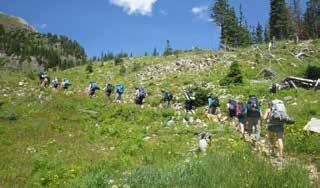
The public is invited to participate in a workshop on Wednesday, December 7th in Aspen to provide input and hear about progress made on the development of the Maroon Bells Comprehensive Recreation Management Plan.
The planning effort was launched in February 2022 to address challenges posed by increased visitation to the Maroon Bells Scenic Area. Challenges include maintaining a quality visitor experience while minimizing impacts on natural resources.
“Over the last 10 years, there have been more visitors to the Maroon Bells. We saw visitation peak just before the COVID-19 pandemic and it has been rebounding since.
Also, many more people are accessing the Bells with electric bikes. These additional impacts require a management plan with a robust public planning process,” said Brian Pettet, Public Works Director for Pitkin County.
In September, the Forest Service approved a special recreation permit fee for overnight camping in the most heavily impacted areas of the Maroon Bells-Snowmass Wilderness to better manage and protect this iconic wilderness destination.
Beginning in 2023, the most visited areas of the Maroon Bells-Snowmass Wilderness will require an overnight permit year-round. A $10 per night, per person fee will be required for these areas from May 1st through October 31st. No fee will be required for children 16 years old and younger or approved school groups. A $6 processing fee per permit will be charged by recreation.gov
Revenues generated by the fee program will provide a sustainable source of revenue for restoring heavily damaged areas, increasing ranger presence and public education, and improving trails.
Only the most heavily used areas now require the overnight permit and fee, including Conundrum Hot Springs, the “Four Pass Loop” (which includes Crater Lake and Snowmass Lake), Geneva Lake, and Capitol Lake. Together these areas make up about 28 percent of the Maroon Bells-Snowmass Wilderness.
Pitkin County, the City of Aspen, the White River National Forest, Roaring Fork Transportation Authority, Aspen Skiing Company, and the Aspen Chamber Resort Association are partnering on the development of the Maroon Bells Comprehensive Recreation Management Plan. With the public’s input, the plan aims to identify sustainable levels of access to and recreation in the Scenic Area while accounting for local economic and other community impacts. All modes of transportation and types of access are being considered as part of the planning process.
”We’re about halfway through the planning effort and we are starting to develop some alternatives for managing the area, so it’s important the public stay involved in what will become the final recreational plan,” said Kevin Warner, White River National Forest Aspen-Sopris District Ranger.
The public is invited to stop by anytime between 5 p.m. and 7 p.m. on Wednesday, December 7th at the Pitkin County Building at 530 E. Main St. in Aspen. Hear about progress made on the plan over the past six months and provide input on initial findings and recommendations for the future of the Maroon Bells.

CVEPA is grateful for our local free press who is dedicated to providing a forum for a variety of voices.
We salute the CrystalValleyEcho for its ongoing coverage of the important issues facing the Crystal River Valley.
To learn more about the Crystal Valley Environmental Protection Association, the environmental watchdog of the Crystal River Valley since 1972, visit cvepa.org
By Melissa Sidelinger

The first sparks of artistic inspiration are often kindled by a mentor who encourages one at a young age. For textile artist Christine Sidelinger, several key individuals ignited a passion for her craft.
“I grew up on a farm in a farming community in South Central Pennsylvania,” Sidelinger said. “All the women made clothes for their kids, and many of them taught in 4-H. These women were good at their craft because they
were perfectionists.”
She continued, “My first teacher was a friend of my mother’s. I was eleven years old, and she taught me beginner knitting techniques, how to cast on, knit, purl, and cast off. Then I had several ladies with our local 4-H club, who taught me how to sew, knit, and crochet.”
Sidelinger enthusiastically dove into her 4-H classes, earning blue ribbons at the annual fairs for her knitted scarves, hats, and sweaters over the following years. She also earned blue ribbons for her projects in sewing, crocheting, and leather tooling.
“It was the only creative outlet for a kid with four siblings living on a farm,” Sidelinger said with a laugh.
At age 16, she spent a year working at a local sewing factory. She continued to sew her clothes back at home, including skirts, dresses, coats, and even the sundress she wore in college on the day she met her future husband, Hal. In college, she stayed busy with classes and work but took the time to knit occasionally.
After graduating from Pennsylvania State College, Sidelinger married and moved with her husband to New Jersey and then Maryland. She set up a sewing room off of the living room of their apartment and began taking sewing classes at a local community college.
“It was 1983 and we had this friend named Joey,” Sidelinger recalled. “We were at a party together when Joey saw my sewing room and got excited. He asked me if I would make
a Dr. Strange costume for him. He showed me the comic books, and we went to the fabric shop together.”
Sidelinger used cardboard to construct the costume’s collar so the fabric would stand up straight around the neck. She used blue satin for the cape and red, blue, and gold fabrics for the tunic.
“After that, Joey would dress up in his Dr. Strange costume to go to parties,” Sidelinger said with a grin.
Once Sidelinger had her two daughters, she started visiting a local yarn shop in Maryland, where she was asked to teach knitting lessons. The classes she taught led to her taking on knitting consignment work for many of the shop’s patrons, including custom Christmas stockings, children’s garments, women’s sweater coats, men’s waistcoats, and scarves.
Sidelinger knitted for her young daughters and taught them how to knit, crochet, and sew after the family relocated to Colorado. She taught her daughters’ friends these same handcrafts and went on to teach afterschool knitting classes at the Marble Charter School and private knitting lessons at the Marble Community Church.
Sidelinger now spends her time designing her own unique knit and crochet garments, which she has on display at the Marble Gallery. “I enjoy creating fabrics with texture, such as cable patterns and textured stitches,” Sidelinger said, adding, “I enjoy my craft because it soothes my spirit, and allows me to express myself by creating beauty and function for someone else to enjoy.”


What would it be like if an award-winning author discovered family roots in your hometown and was inspired to write a historical fiction novel about the town? Will the Crystal River Valley see an increase in attention should Gilded Mountain earn national accolades? Will this book go beyond becoming a best seller to a box office hit? You can meet the author and find out the answers for yourself on December 3rd in Redstone and December 4th in Aspen.
Kate Manning, the author, describes the novel on her website as a historical fiction novel set in the small mining town of Moonstone, Colo., situated at 9,000 feet. It’s the story of young Sylvie Pelletier trying to find her voice and place in the world while navigating the ways of a hostile company town.
Gilded Mountain flips the Cinderella story upside down and offers an illuminating portrait of the American West where, according to the novel, "the paradise of the rich are built from the hell of the poor."
Moonstone is seized by robber barons while their gluttony is built by immigrants’ infinite toil. Manning offers a portrayal of life in the Crystal River Valley during the early 1900s, her gritty observations of life during this period keep one turning the pages for more of the author's eloquence.
Moonstone is easily identified with Marble and action also takes place at the baron's castle in Ruby, obviously Redstone.
—there’s also a love triangle, gorgeous sentences, and a driving plot that keeps the pages turning. Her descriptions of the Colorado mountain town where the story takes place are breathtaking, and readers will root for the complicated heroine.”
In an interview last month for Thoughts from a Page, a podcast with Cindy Burnett, Manning describes her protagonist as living "in fairly severe conditions. Her father is a laborer in a marble quarry, and she's very drawn to the luxury of the coal mining magnate that lives nearby and the household there."
A review by Shelf Awareness describes the book as "an expansive novel of passions: love, beauty, suffering; struggles for labor rights, women's equality and the rights of formerly enslaved people... it contains... high-minded thinking on important issues, [with] lovely writing about the natural world."
credible history in this little town and borrowed a lot of it and changed some of it around, for the purposes of fiction."
You can see that family photo and meet Manning in Redstone on Saturday, December 3rd
In a letter written last month, Manning said that the book has become an Editors' Choice at The New York Times, The New York Times Group Text bookclub pick, an Apple Best Books pick, an Amazon Editors' Choice, one of Amazon's Best Books of 2022, and has landed a spot on the November 2022 Indie Next List! "That's all well beyond my wildest dreams," she wrote.
Pelletier is the daughter of French Canadian immigrants, who finds a way to leave her snowbound cabin and apprentice with a very feisty and fierce woman editor. She also lands a job in Ruby at the local manor house.
The editor, of course, is Sylvia Smith; thus, Manning includes one of the most fascinating real-life historical characters in Marble's history. To learn more about Smith's true story, check out the January 2022 issue of The Crystal Valley Echo, you may obtain a digital copy by sending a request to gentryeh@hotmail.com
During Burnett's interview for Thoughts from a Page, Manning explores how she came up with the idea for this novel.
"Well, the story of how I found it, it's really something," Manning said. "I was foraging around in my parents' attic, and found a long panoramic photograph of some people standing in front of a mountain range, and it said, National Retail Monument Dealers in Marble, Colorado.
She continued, "I carried it down and dusted it off and said to my dad, 'Why do we have this, and who are these people, and what is this?'"
Manning is also the author of the critically acclaimed novels My Notorious Life and Whitegirl A former documentary television producer and winner of two Emmy Awards, she's written for The New York Times, The Washington Post, the Los Angeles Times Book Review, Time, Glamour, and The Guardian, among other publications. She taught creative writing at Bard High School Early College in Manhattan, N.Y., and lives with her family in New York City.
Manning will be signing her novel from 11 a.m. to 4 p.m. as part of the Redstone Holiday Market on December 3rd. At 4:30 p.m. all are invited to attend an audio-visual program at Crystal Dreams Bed & Breakfast at 475 Redstone Boulevard, where Manning will relate the background behind the book.
On Sunday, December 4th, Manning will be signing books at Explore Bookstore and Coffee House in Aspen, starting at 4: 30 p.m.
The New York Times Book Review claims that “In Gilded Mountain, Manning deftly explores labor rights, women’s rights, and immigration, but somehow the story doesn’t feel overburdened by issues
He replied that he didn't really know. He thought one of the men in the photo was his grandfather who had something to do with quarrying marble for the Lincoln Memorial. Manning was astonished as she didn't know this tale from her family's past. Her father didn't know much more as his father had died at a young age, and therefore many of the stories had been lost.
So Manning started to look around more. She said, "I just liked the picture, and I just discovered this in-
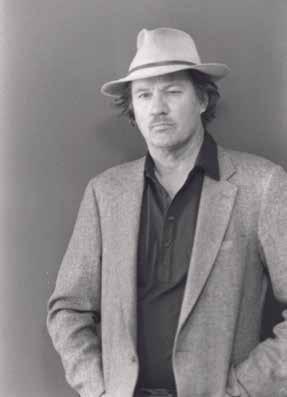
At just 84 years old, William D. Jochems has prospered in protecting the Crystal River Valley for over 50 years. He fought against the Marble Ski area, was a founding board member of CVEPA and the Redstone Historic Preservation Commission, built both a sailboat and a massive boiler in his garage, retained John Osgood’s third wife as a legal client, experienced the final mine explosion from Coal Basin before Mid-Continent went bust, was around for the first and only tornado recorded in Redstone history, and maintained a legal practice in Glenwood Springs.
As Jochems’ eyesight slowly worsened, making the drive along Highway 133 became rather treacherous, so he moved to Carbondale over the summer. If only the walls of his Redstone home could talk, they’d share the vast stories and observations over the decades. However, Jochems’ is not so far away these days, and, lucky for all of you readers, he’s more than willing to tell his tales.

He went on to say that they also had to file a plan with the government, and if they failed to make a check-in, the bond would be used to send a plane out looking for them. His group didn’t have the money for the bond, so they sold the car, and two of them went down the Nile River on a steamer. “What a life-changing trip!” he exclaimed.
By Gentrye Houghton
Jochems grew up in Kansas and graduated with an undergraduate degree from Stanford in 1960. The year before graduating, he says he took a remarkable trip with a couple of other guys.
“From San Francisco, we flew out to Cape Town, South Africa, as soon as classes were done. Our plan was to drive from Cape Town to Paris — we didn’t make it,” he says with a laugh.
He and his buddies started driving north in Africa through British East Africa, as it was known then but hit a major obstacle with the Sahara desert. “In order to cross the Sahara,” Jochems explained, “you couldn’t go alone, you needed another car with an inventory of parts and other things, plus money to put up a bond.”
After graduating from Stanford, Jochems landed a job with the Aspen Institute where they put on various talks and programs. One of the speakers was D.R.C. Brown, then the president of Aspen Ski Corporation. He talked about what an unusual county Pitkin County was and mentioned some features around the Aspen area but said that the county also included Redstone.
“He said to get to Redstone, you must go through two other counties and it takes an hour to drive there; and I thought, I’ve got to see that place,” said Jochems. “It was a dirt road out of Carbondale, and there was no bypass — back then, the Redstone Boulevard was just the road that went over McClure and up to Marble.”
Jochems described his first visit on a hot, dry afternoon when people were out with hoses trying to sprinkle the road in front of their houses to keep down the billows of dust. Then, the Town House (now Propaganda Pie) and the Redstone Inn were the only establishments in operation.
He only spent a year working in Aspen before going on to Georgetown University and earning his Juris Doctorate in 1964. Jochems immediately took the bar exam in Colorado following graduation and practiced law for a time in Denver before ending up back in California working for a mining business.
“In California, the environmentalist were a hindrance to almost everything that we wanted to do, and then I moved here and immediately was concerned with protecting this environment. I suppose I then became a hindrance to what other people wanted to do here, but I suppose that’s the way it went,” he chuckled.
As he got ready to leave California, he wanted to be in another beautiful area and knew he didn’t want to practice law in Denver. After practicing there,

he’d handled several matters in the court system in Glenwood Springs and settled on setting up a practice there as it was the next familiar courtroom scene from Denver.
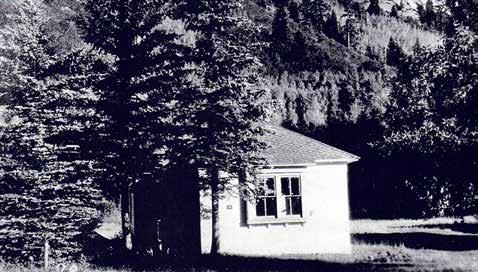
“My then-wife came back to find a place to live with my sister, who was already and is still in Carbondale. She called to tell me she found a place in Redstone, and the price was quite low, way less than anything she’d said she wanted, so I bought it sight unseen but had an image in my mind since I’d visited the area years before.”
He was 33 years old when they moved to Redstone Boulevard in 1971 and brought a family with him, a wife and two daughters; though the marriage dissolved soon after but his daughters continued to live in Carbondale and Glenwood Springs, so they spent lots of time in Redstone.
His youngest daughter, Gretchen, was in Redstone over the summer preparing Jochems’ home for the move to Carbondale. She said living in Redstone was pretty great until she hit her teen years and then it was “snooze-ville.”


The first person he spoke to upon moving to Redstone was Paula Mechau, the widow of famed artist Frank Mechau. She wanted him to vote against the Water and Sanitation District, at the time, it was just an idea that hadn’t moved to the point of presenting anything to voters yet. Some time passed between their meeting and the actual vote, in which Jochems ended up voting for the special district.
Not long after this initial greeting, Jochems caught wind of a large development proposal that would have drastically changed the character of Redstone. Norman Smith, a retired air force colonel, was proposing a string of condos that would have been built behind the Village along Big Horn Ridge, through Saw Mill Hill, and to the Redstone Castle. “Nothing was going on at the Castle when I moved here,” he said. “There was a caretaker who would let you in, and it was an easy place to go and look around. I think his name was ‘Wood,’ and I think he also had something to do with the [Redstone] Inn, which was an on-again, off-again endeavor during those days.”
The development didn’t happen; Smith was unable to acquire the Castle property needed for the idea to come to fruition. “He just developed other ideas, and went from Redstone to a ski area in Georgia,” chuckled Jochems.
Yet, as this chapter came to a close, another valley threat was becoming much more prominent.
The sheer scale of the proposed Marble Ski area drew Jochems' attention. He explained that it would have been larger than the first filing of Snowmass, which was a functioning entity by 1971.
According to Darrell Munsell’s book Protecting a Valley and Saving a River, a ski area in Marble renewed talks of building a great winter sports area to include Aspen, Crested Butte, and Marble. “The ambitious plan proposed linking an entire area by a tramway connecting the three points of the triangle with chairlifts and T-bars scattered throughout the mountains,” writes Munsell. “It would be the largest winter sports area in the world.”
The developers were planning to have the area completed by 1975, just in time for the Winter Olympics (which Colorado voters ultimately opposed). Jochems said, “I was attracted to Redstone as it was, a quiet place, and to have that much growth and development a few miles up the valley, as I saw it, was going to drastically change the character of Redstone. I just did not want that to happen.”
He explained that there were bitter battles over the ski area development because quite a few people, like realtors and carpenters, thought their lives would be substantially improved should the project receive approval. One of the developers, John Zakovich, asserted, “We are trying to develop the valley as God would have if he’d had the money.”
The project seemed to divide the marble community, and a small group came together to form the Crystal Valley Environmental Protection Association (CVEPA) to oppose the development. Munsell writes that the organization posed two major details of opposition, “it would encroach on National Forest land that was being proposed for inclusion in the Snowmass-Maroon Bells Wilderness, and it would degrade the environment by upsetting the delicate ecological balance of the Crystal River Valley.”
Jochems and Michael Kinsley, who went on to become a Pitkin County Commissioner
and now resides on the Open Space and Trail board, made a couple of trips down to Gunnison to make these arguments. Kinsley told Munsell, “Bill always wore a vest, and he would stroll around with his thumbs in the arm openings of the vest just like he was Abe Lincoln talking in broad philosophical terms, and then J.E. [DeVilbiss] would take over. He would slam them with technicalities, kill them with legal technicalities.”
Unfortunately, they didn’t make much progress with Gunnison County and Jochems assumes it was simply due to the potential tax revenue the ski area could have generated. So, they took matters up with the real estate commission instead and went to a couple of hearings in Denver. “Ultimately,” Jochems said, “that’s what did them in because they were so poorly financed.”
Essentially, the project was banking on lot sales. Jochems explained one example; one property owned then by Gus Darian (and today by his son, Larry) was sold to the Marble Ski area where they platted and started selling lots. A buyer paid a third of the sale amount as a downpayment, and then get a loan for the remaining two-thirds. However, Darian wasn’t being paid, so he took the land back; therefore, the lot owners didn’t own an actual piece of real estate anymore but still owed money to the bank, which was theoretically an innocent party.
“That didn’t happen to everybody, though,” he said. “That was just one property that was a fairly small part of the whole picture, but that was the property to cause the real estate commission to say, ‘Hey, your practices are illegal, improper, and fraudulent,’ and that shut ‘em down on all sales.”
Jochems also said he ended up representing a lot of bamboozled folks in bankruptcy court. “I’d go down into the filing room for the bankruptcy court in Denver, and the Marble Ski area bankruptcy must have been a pile that was four feet of shelves or something. It was a disaster!”
The developers never did pay off any of Jochems' clients, but he was able to successfully reduce or obtain total forgiveness for some of those fraudulent loans.
Due to space constraints, Jochems’ tale is to be continued. Pick up The Crystal Valley Echo’s January issue to learn about his client, Lucille Osgood, the art that came about because of a tornado along the Redstone Boulevard, Jochems’ boat building phase, the one-time Pitkin County Attorney John Ely asked Jochems to come out of retirement, and much, much more.
See you in the new year!

By John Stephenson
More of Old West Disappears With the Subdivision of Redstone
Fabulous Osgood Estate Is Sold 2 Swank Resorts will be Developed
Colorado saw another tie to its fabulous past raveled (sic) yesterday as Mrs. Huntley MacDonald, chairman of the board of Victor American Fuel Co. — “I pinch hit on the switchboard, too”… — announced the subdivision and sale of Redstone, baronial estate of her late husband, John C. Osgood, founder of the Colorado Fuel & Iron Co.
Redstone, on the Western Slope on the Crystal River, 25 miles south of Glenwood Springs, was once the focal point in Colorado for the expansive men of the Old West and the visiting nobility of Europe who came to see what they were like. The 42-room mansion, the 40-room “inn,” built of native red stone, sat in grandeur on their wooded eminence, the model pastel mining village beneath.
Yesterday, Mrs. MacDonald, a forthright businesswoman who obviously runs things in a big way, sat at her desk in the E. & C. Bldg. with files and account books and stenographers all about her and told how these things came to pass.
The mansion — “a small-large place in which two people would really rattle around,” said Mrs. MacDonald — was sold to Mr. and Mrs. H. R. Hibbert, who operated the LaRay Hotel at Golden, which name they made of their own names Lila and Ray.
They sold the LaRay Hotel at Golden to Leonard DeLue, who operates armored trucks. Then Mr. Hibbert died and now Mrs. Hibbert is going to run the mansion as a guest ranch. The Hibberts also formerly ran Hillcrest Inn at Morrison.
The Inn, a copy of a Dutch inn, was sold to Dr. Russell M. Gray, who sold it to Adolph Friedeberg of New York City, a dealer in iron and steel rails, who will operate it as an inn. Neither of these projects is scheduled to be ready for guests this year.
All content sponsored and provided by the Redstone Historical Society
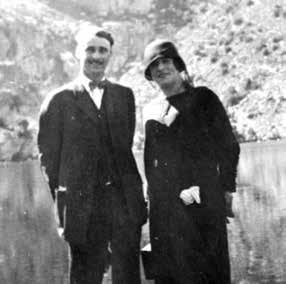
The 80 cottages — “I tore out 25 of them so as not to spoil the view of the Crystal River,” said Mrs. MacDonald — have been sold to individuals, among them Cmdr. Michael G. O’Connor, Cmdr. C. B Stevens and Frank Mechau Jr., the mural artist.
“We tried an art colony there in those pastel cottages once,” said Ms. MacDonald, between telephone calls, “but I couldn’t stand horses without eyes, so that didn’t go. Mechau will be mad at me, but I can’t help it. I can’t stand horses without eyes.
“How did the cottages get to be pastel? Well, my sister, who is Mrs. Reid Kip, and I used to mix up all kinds of paint we could find, and what came out, orchid or maybe violet, we would give to the painter and tell him to paint that day’s cottage that color. The days he didn’t quit we fired him, but we got the cottages painted, and there are no two alike.”
Mansion Started in 1903
Tell about the original mansion.
“Well, it was built in 1900 to 1903, and it cost $2,500,000. No, I won’t tell what it was sold for, but it wasn’t anything like that. I just didn’t want it idle,
thought it ought to be put to some use, and that’s the reason I sold it. Besides, places like that are out of date. I couldn’t get to it once in five years, and what was the use in keeping it up?
“But it was something in its day. Those were the days when men built things. The entrance and the private roadway were electrically lighted by hammered iron lanterns; the living room was oak-paneled, with the walls hand-stenciled, and a cut-stone fireplace; the library had green tooled-leather walls, with gold leaf ceiling* and solid mahogany woodwork; the dining room had ruby velvet walls and a gold leaf ceiling.”
Can’t you see the poetry in a man’s soul, in the soul of John C. Osgood, that he would go out into that wildland and carve a place like that out of it for himself?
“I can.”
More Notes From the Past: 1947
Submitted by Christeene Bostron, Sterling, Colorado
The “million-dollar mansion” near Redstone built in 1900 by Osgoods — owners of the CF&I town of Redstone – was so surrounded by trees and shrubs that it was hidden from the highway. The company town of Redstone is located at the foot of rocky red cliffs from which it got its name. The almost deserted town of attractive workmen’s houses is in a grove of aspens. The Swiss-German clubhouse with its clock tower and furniture and massive woodwork dating from 1900 was built for the workmen of the town. Recently it was reopened as the Redstone Inn.
A Note from the Redstone Historical Society:
Unable to sell the other grand buildings, Mrs. [Lucille Osgood] MacDonald ultimately destroyed the Redstone Clubhouse, Big Horn Lodge, and the Redstone schoolhouse. Furnishings from these buildings were piled into the Company Store. The Greenhouse was moved to West Glenwood & the South Gatekeeper's house was relocated to Grand Junction. Lucille, who lived mostly in California, kept one cottage and kept a connection to Redstone. She died in 1984.
*Editor's Note: The gold leaf ceiling at the Redstone Castle that is mentioned in this article is actually an aluminum leaf ceiling; during the very early 1900s, when the Castle was built, aluminum was much more expensive and much more sought after than gold leaf, and John C. Osgood spared no expense.
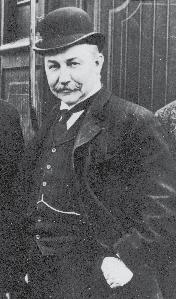
What a lovely little town Marble is! Despite the November chill, last month’s meeting was a truly warm and convivial affair, taking place as usual in the Marble Community Church Fellowship Hall. Though, the setup was rather different from normal.
Seating had been arranged on a diagonal, angled towards a large silver screen in the center of the hall upon which Ron Leach, Town Administrator, projected and manipulated the Town’s 2023 proposed budget, in the form of an Excel spreadsheet. Unusually for a meeting dominated by such turgid detail, the atmosphere was one of hope that numbers could be agreed upon quickly and that we could go home without too much of a headache.
As it turned out, that is exactly what happened. What a relief. All helped by a refrigerator resplendent as usual with a dizzying array of sugary beverages.
Larry Good was the first member of the Town Council to appear, looking cheerful and cozy in a sky-blue puffer jacket. Terry Langley sat behind her computer, taking the minutes, and sitting beside her a large pint glass of what she thought looked suspiciously like bourbon masquerading as iced tea. Leach, a consummate professional to the last, tinkered with his spreadsheet.
Emma Bielski, Mayor Ryan Vinciguerra, Larry Good, and Amber McMahill took up their usual seats side by side along the top table. Checked shirts featured prominently among the gentlemen. Sadly, stylin’ Tony Petrocco was not in attendance, a lone can of 7up occupying his usual spot. This was soon snapped up by Leach before it could announce itself as “present.”
It was a shame Petrocco had not been there because I had been planning to quiz him about the “theft from the log house” incident he had alluded to in October’s meeting. I counted roughly a dozen residents, including Mike Yellico, a popular and much-welcomed face, not to mention an entertaining addition to proceedings.
The meeting began in earnest at 7:09 p.m. with an update from the Mayor about the Town’s proposed acquisition of the Marble Water Company. Vinciguerra gave details of a very preliminary Zoom meeting with State representatives that was set up to discuss the matter after the October Board of Trustees meeting. He felt the call had been encouraging, the State indicated its interest in seeing the project through, emphasizing its mandate to empower small communities in Colorado.
This was followed by a string of approvals for minutes from previous meetings, a well-deserved slug of tea for El Tel, confirmation of Marble’s involvement with the Roaring Fork Valley Wildfire Collaborative, and approval for $5,000 to dredge Carbonate Creek where it meets the Crystal River. This section of the river is at risk of bursting its banks, and the excavation was given the green light. Leach confirmed that no permit would be needed to proceed with the work.
General Sales Tax revenue for 2022 is estimated to come in at $140,000, down from an audited $160,000 for 2021. The major contributor to the Town’s revenue remains the Slow Groovin’ restau-
rant. Its owner, Mayor Vinciguerra, admitted that 2022 had been a “slow burner,” with business only picking up to more normal levels later in the season.
Then came the main event, the discussion of the 2023 preliminary budget, and the setting of the public hearing thereof. Richard Wells, looking sharp in one of his many trademark baseball caps (this one embroidered with the word “Hawaii”) and toting a can of Coke, distributed the Parks and Rec budget for the year ahead, amid amicable warnings from the Mayor to prepare for a “shakedown.” He was immediately robbed of $5,000.
There was a little friction around the $9,000 budgeted for tree removal, with Mike Yellico pointing out that “the volunteer base is pretty huge in this town.”
Five thousand dollars was earmarked for the preservation of the jailhouse and was struck off the Parks and Rec budget, the Mayor suggesting that the Town was “jumping the gun” with that particular project. McMahill remained confident that this expenditure could be met with a grant from the Colorado Tourism Office (CTO). Vinciguerra, perhaps capitulating on his position, praised his fellow Town Council member for her impressive grant writing “batting average.”
Marble resident Chris Palmer pointed out that there were perhaps missed revenue opportunities from the Marble Campsite. This ignited a lively discussion encompassing suggestions that the season could be extended to accommodate fall hunters and Marble’s competitive position vs the KOA just down the valley.
No dogs are allowed at the Marble campground and, unlike the KOA, Marble has no marketing budget for its operation. Bielski, recognizing that we were getting sidetracked, thankfully called time on the subject. Palmer turned to me with a shrug. “Rabbit hole, sorry.”
The budget discussion continued with a few dissatisfied murmurings from the back of the room and a large yawn from Sue Blue. Mike “Pythagoras” Yellico, a calculator in hand, disputed a few of the numbers, but eventually, his concerns were assuaged and before long the meeting was back on track.
Amidst all the wrangling, the ever-cool-headed Leach excelled with Excel. Another big yawn, this time from El Tel. Larry Good, straining to see the papers in front of him, turned to McMahill observing “the lighting in here is so bad.” He was right, I almost tripped up on the way to and from the bathroom. Perhaps Pastor Jon Stovall, fresh from working his magic on the contents of the refrigerator might be cajoled into summoning up some extra illumination from above.
The figurative spotlight then fell on McMahill, taking to the floor to present her report on the Lead King Loop working group’s final findings. There are six broad recommendations:
1. With regards to parking: Clean up the base of Daniels Hill and reduce the number of parking spots to 12 from the current free for all of two dozen or so and add 12 spaces across from the Mill site park.
2. To educate visitors about the environmental
impact of their trips to Marble via increased signage.
3. To enforce compliance with the new rules.
4. To introduce and enforce OHV noise regulations.
5. Install a “gatekeeper ramp” or sign depicting the dangers of driving off-road in a vehicle not designed for the purpose. This could take the form of a sign placed on the side of the road depicting the vehicle clearance and driver competence level required to negotiate the road successfully or utilizing a physical ramp (built to the height of the most challenging parts of the road ahead) at the bottom of Daniels Hill. The authorities are less keen on the latter option, although there was general agreement among those present that this would provide the most entertainment.
6. A suggestion that a separate hiking trail is constructed, but this was thought to be unfeasible. Residents of the town of Crystal have asked to be kept in the loop (no pun intended) of all progress as it is their only way to get home.
With the 2023 budget negotiations (mostly) hammered out, Yellico took to the floor to make a reasoned and polite appeal to Vince Savage, the largely absent owner of the Marble Lodge on Beaver Lake, to encourage his guests to switch off his lights when they have retired for the night.
This would reduce light pollution, save Savage some money, and ensure his neighbors’ enjoyment of the celestial bliss of Marble at night, in adherence to the Dark Sky Initiative. Yellico also requested that Savage ensure noise is kept to a reasonable level when his guests are awake. Failure to comply, Yellico expressed, might result in him having to procure a 500 watt, 70,000 lumens, LED Stadium Light to illuminate their shenanigans, and nobody wants that.
The highlight of the meeting, at least for me, was the discussion of new Town entrance signs, to be paid for with an $11,000 grant from the CTO, secured by McMahill. Locals will be familiar with Redstone’s tagline as the “Ruby of the Rockies.” Mayor Vinciguerra indicated a liking of the Hotchkiss approach: “The friendliest town around.” Three other ideas were put forward before the subject was closed without a decision.
“Marble, the love child of Crested Butte and Aspen” (suggested by Good), “Marble, in Gunnison County but not part of it” (El Tel), and “Marble, the red-headed stepchild of Gunnison County (Good, again). When asked if there was money available for a sign for Clarence (or East Marble), McMahill quipped, “Yes, but it will probably have to be made of cardboard.”
As the meeting drew to a close amidst much laughter, Good publicly thanked Leach for all his hard work for the Town of Marble and asked what the secret formula was for his success, to which Leach replied, “Perpetual effort. Keep working on it.”
On any given weekday during the school year, the streets of Marble are filled with the laughing, singing, and shouting of little voices accompanied by the calls of teachers navigating them safely along as they explore the forests and streams. The preschool's Director and Lead Teacher, Kelly Wilson, ushers her sprouts along like a mother duck singing for the sun to come out or tipping over rocks to hunt for bugs.
Operating much as a forest school, the students who range in age from 2.5 years to 5 spend the majority of their time outside come rain, snow, or sunshine. In the warm final days of summer they play in the natural sandboxes and waterway of Carbonate Creek, autumn finds them building slides in the gravel surrounding the bell tower or collecting acorns and leaves in the forest. In the spring they hop from mud puddle to mud puddle as they hunt for worms and the first signs of flowers. In between, they play, bundled up like colorful snowmen, in the fresh white powder exploring icicles and creating hills to slide down.
the recent surge in young families moving to the upper Crystal Valley coupled with a lack of childcare options in the region has led to the preschool space once more being filled with singing and laughter.
When Kelly Wilson reconnected with her high school sweetheart and owner of Marble Motor Works, Scott Wilson, she left her life in California to move to the mountains of Colorado. She started as an aide in the Kindergarten classroom at the Marble Charter School. When the need for reliable childcare came to her attention she stepped in to bring a licensed preschool back to the area.

By Amber McMahill
Wilson has always been surrounded by groups of children. She took on nannying positions as she raised her kids. Even then, she was always outside. "I'm a big believer in getting kids out in nature and the community. The kids are more confident and eager to learn outside," she said.
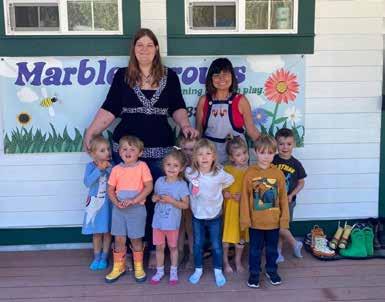
"It was tight timing," Wilson explains. "We couldn't do the advertising typical of a preschool or even really get our name out there because we weren't fully licensed yet. Now, suddenly, we have all these open slots to fill, which is better than no slots to fill."
When not outdoors, the class occupies the Marble Sprouts Preschool space adjacent to the Marble Charter School. A space recently improved by an Emerging and Expanding Grant awarded to the preschool through Gunnison County. The grant helped pay for more cots for naptime, a more diverse range of books and toys, a science center, an art center, and a reading nook. The funds also helped update the aging playground behind the preschool, a requirement for Marble Sprouts to become licensed.
Luckily, the space was originally built to be a preschool. In 2005, a group of parents and educators got together and brought to life Marble's first preschool called the Crystal Valley Preschool. It started in the Fellowship Hall of the Marble Community Church before they were able to get the grant funding needed to build a permanent home for it.
Working closely with the Marble Charter School, as their growing enrollment led to the need for additional space, they helped create a spot adjacent to the school for Marble's younger residents to play and learn. Although the original Crystal Valley Preschool eventually closed due to a lack of need,
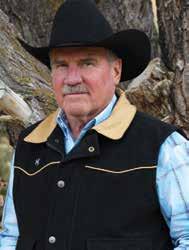
Community is another thing Wilson thrives at and builds into the preschool. She explains, "I think it is important that our kids see each other outside of class and see the families working together and the teachers working in the same group. It is so good for them to realize we are all on one team together: kids, parents, and teachers."
She is often referred to as the Marble "welcomer," helping new residents and new parents find their feet and friendships.
As Wilson puts it, "Kindness is everything. If there is one thing that's really important to me for the kids to take away from our school is how to be a good friend. Once they know that and other social-emotional skills, they are ready to learn academically."
The licensing process was a long one that required extra training, inspections, and updates to both the building and playground. Aided by parents, and community members and saved at the last moment by many hours of volunteer work from Adam Shaw and the Branson Family, the school passed all the hurdles and received its license this fall.

One blessing the Marble Charter School has is its location. The close working relationship between the school and preschool remains as strong as it was when the Sprouts predecessor, the Crystal Valley Preschool, was in operation.
As Wilson put it, "We couldn't do this without the school. They help so much with everything from snow removal to hot lunches for the sprouts. Recently, Amy Rusby helped connect us with special services from Gunnison County to make sure that if any of our kids need special services they can access them. We try to help the school by bringing in new students and working to integrate them into the culture of the school before they start kindergarten."
It has been a big year for Wilson and the Marble Sprouts Preschool with both the licensing process and the grant award, all while teaching and running a business. She isn't done though.
"We are participating in the Colorado Shines Quality Rating Program and working towards the next rating level," she said, "just to assure we are doing the best for our kids."
She continued, "We are also in the process of being able to accept CCAP funds so we can make childcare more accessible to lower-income families. Universal Childcare is getting ready to start next fall and we are getting on the list for that as well. Just all the things we can think of to make sure our Valley's families can get the child care they need and our kiddos can thrive.”
If you’re needing assistance stretching your food budget, Gunnison County Officials currently have bags of food available through the Marble Community Church.
There is no charge and no reservation needed; boxes are available for an individual or a family up to of four, and contain enough meals for approximately three days.
To arrange a pickup, please call the Marble Community Church at (970) 963-1464.
A note from Kelly Wilson: Just to let everyone know, I could not run Marble Sprouts without Amber McMahill. She should also be credited for everything we do.
marble sProuTs Praised bY ParenTs
"Sprouts welcomed Ada Rose with wide open arms. Since she started attending Sprouts her social, verbal and physical skills have flourished. Kelly and Amber have a special talent for teaching our little ones about life lessons, being kind, and of course having FUN!”
— Carrie Bradford
“Marble Sprouts is the perfect place for our daughter. The kids get to explore outdoors year round. They are caring, creative and incredibly thoughtful.
“To Kelly and Amber: Thank you for taking the BEST care of our daughter! She has learned so much at Sprouts. I appreciate the focus on building respectful relationships and learning to communicate with one another.”
— Marja O’Conner
“Marble Sprouts has been instrumental in our lives and a wonderfully enriching experience for our daughter. This is her third year attending. She stays safe and is well cared for by Kelly and Amber. The kiddos all spend 75% of their time exploring the outdoors and playing in nature. Marble Sprouts is an absolute gem here in Marble for parents and kids alike.”
— Karly Anderson
“Our son transitioned from a Carbondale school to Marble Charter School a couple of years ago, and our daughter has now made the same transition as member of the Sprouts program. It’s been so great for her to ride the bus from Redstone with her brother; I don’t worry about her getting there and getting back home, and apparently, there is oftentimes a line of teachers or other students to help her from the bus to the school.
I was a little worried she’d miss her buddies at her old school, but everyone’s really nice there. She made friends quickly and doesn’t come home occasionally saying so-and-so hit me. We love Marble Sprouts!”
— Heather Marine
From Larry Meredith
Alyce Meredith, pianist, and vocalist, will present a program of Christmas music on Monday, December 12, from 2:00 p.m. to 3:00 p.m. in the Carbondale Public Library. The program is free and open to all as part of the library district’s public events programming.
Meredith, who presented a similar program of Lenten music in April, will be assisted by Suzy Meredith-Orr and the Marble Community Church handbells.
“Christmas is a time of rejoicing,” she said, “as reflected in the beautiful music of the season.“ She also mentioned that caroling will be a part of the festivities, and light refreshments will be served.
The Library staff invites all who are interested to attend the program.
Meredith, who now lives near Redstone, has degrees from Wichita State University and Grand Canyon University. In the Department of Music at Western Colorado University in Gunnison, Colo., she was a collaborative pianist working with music faculty, ensembles, and individual students. She also taught in the Gunnison School System at all levels.
She was a founder and music director of the Gunnison Opera Study and Performance group and provided piano and vocal solos for many churches in the Gunnison Valley.
Since moving to the Crystal River Valley she has sung with the Aspen Choral Society, provided music for the Renew Senior Living facility in Glenwood Springs, and is actively involved in the Marble Community Church where she has organized a handbell choir. She has always been involved in animal welfare organizations including C.A.R.E. in Glenwood Springs.


SUNDAY, DECEMBER 18TH
Join us at the Redstone Inn, Osgood Room from 4-8 pm
You bring the GIFTS, I’ll supply the wine, snacks and wrapping supplies!

By Agemian Badgett, Eighth Grade
Provided that you are a smart person, you can certainly tell that modern technology has been heading downhill at an alarmingly rapid pace. The product used to power car batteries, electric cars, computers, and solar panels is lithium, a rare earth mineral, which is quickly becoming overused and is disappearing at a rapidly increasing pace. This is just one of an ever expanding list of problems that modern technology has spawned. Despite this all being bad enough, there is another pressing problem for us. Children have become increasingly reliant on cell phones and other devices to the point that a real fear is youth going into adulthood with none of the experience and work ethic required to have productive lives. It is crystal clear to my mind that technology has gone too far and shouldn’t be allowed to continue eroding society as we know it.
Although all of these things are real problems to our world, there are many benefits to having revolutionary technology like the computer. If I didn’t have a computer, then the writing of this essay would probably not be finished until two weeks from now, not to mention the waste of trees to make paper and pencil. In the same fashion, technology has allowed us to save lives. One teenage inventor created a device that alerts parents' phones when babies in hot cars become in danger of heatstroke. First, the device notifies the parent’s phones that their car is a little too hot, and as the car becomes hotter, it sets off the car alarm. If the baby becomes in imminent danger of heat stroke, the device calls the police (Narducci). During the COVID-19 pandemic, our modern technology allowed us to make a vaccine incredibly quickly, one year to be exact (Solis-Moreira). Usually, it takes us five to ten years to develop a vaccine. Adding on to the topic of COVID, lockdown technologies. When lockdown was ordered, many businesses were in danger of shuttering up their windows for good; however, someone smart started selling their wares online. Girl scouts sold their cookies online and saved their institution during an emergency situation using modern technology(San Diego Union-Tribune). These are all examples of technology doing what it is supposed to for human civilization.
Now that the allotted “good things” about technology have been written up, it can be criticized to my heart’s content. Of the many things wrong with technology, perhaps the most pressing is addiction to cell phones. Children nowadays are so addicted to cell phones that they care little about anything else. In schools, kids play on their phones and text each other when they are supposed to be learning the skills that are necessary to live a successful life. Some kids who are not on their devices at school make up for lost time by using their devices when they should be doing homework. The developers of these phones and computers intentionally have created devices so addictive that teenageres experience symptoms of withdrawal when deprived of their devices. Sometimes when developers are not even developing devices for nefarious purposes, they accidently create a breeding ground for huge problems for humans. A potential example of this is the smart toilet. These are being developed to detect viruses, bacteria, and possibly cancer in your poop (Parker). Sounds like a good idea, right? Maybe not. Naturally, the toilet needs to know who is using itself, so it scans your anus in order to find out just who is sitting down. The human anus is like a fingerprint, no two of them are the same, so this creates an easy and efficient way to figure out who has to go poop. A problem: nobody knows just exactly where those images go after identifying you. One would hope that they are destroyed thereafter, but it is hard to track digital data coming out of a toilet. These toilets are also being developed to take DNA and RNA samples from poop. The intention of this is to detect cancer and some viruses that are easier to detect early in the DNA; however, the thought of DNA being taken and stored is disturbing to some because of the implications if your DNA is stolen and used against you for various nefarious purposes, notably the possibility of cloning, which is right around the corner.
Ray Bradbury has written excellent stories of technology gone too far. In his short story, “The Veldt'', he masterfully creates a disturbing world in which children have become reliant solely on technology and no longer care whatsoever for their parents. In the story, the children have been spoiled thoroughly by their parents, who have bought them a virtual, “nursery”, a room with screens on the sides which puts to life whatever the children desire to see. Eventually, the parents become distured by the screams constantly coming from the room and decide to turn off the entire house, meaning the father will have to do real work for the first time, the mother will cook and clean, and the children will have to go without the nursery, which they are hopelessly addicted to. They decide to trick their parents, and lock them into the nursery, which they have asked to kill the parents. The nursery does so, and the children go on living their lives in their house of endless comfort. This short story, despite being written in 1950, contains haunting echoes of modern children addicted to phones and fighting their parents for more screen time.
Heading back to the “green” Tesla. According to the Wall Street Journal, if all states adopt the Californian style of car laws, by 2050, 1.8 million tons of cumulative rare earth minerals will have been used up by the Tesla’s lithium-ion battery, compared to the cumulative forty thousand of 2019. They will also use up 993.5 billion kilowatt hours of electricity. Although these circumstances sound dire, cumulative greenhouse gas emissions would fall down to 35.4 gigatons. This is pretty good, but if new car production laws and encouragement to buy hybrids increases, as well as building cars with higher mileage, then cumulative greenhouse gas emissions will fall even lower than if just EVs were used. The strategy here would probably work very well for everyone, if it weren’t for technologies like facebook constantly putting out posts from both sides which almost always advocate for just gasoline or just EVs. The environment created by the very polar political system has led to new technological or society progressing ideas never being taken seriously by the other side. Social Media in general has been steadily putting functional society under immense strain as it pits human willingness to cooperate with each other against depression, confirmation bias, and wild lies. Adolescents using social media have high chances of being depressed, or in some cases, suicidal. How this happens is a multiple-pronged process. One prong is found in the social media app Instagram, where photos of unrealistic beauty are frequently taken and lead to people to think that if they do not look like that, then they are ugly. Another mental issue of Instagram is known as “Instagram Dysmorphia''. Instagram Dysmorphia is a mental disease, often found in teenagers and twenty-somethings, which leads people to be compelled to get body modifications that they see frequently in filters on social media (Germany). In 2019, one million people aged 13-20 received plastic surgery for cosmetic reasons. This is an alarming waste of money for an incredulously ridiculous and dangerous operation for people of this age.
When most people see these shocking things that social media causes and creates, they probably think along the lines of “this is completely unacceptable,” but unfortunately, many people are blinded and uneducated of the harms that this technology does to humans by corporations like google. Many of these companies defending their technology prop it up on the flimsy stilts of what they call “overwhelming benefits”. In reality, anyone who closely discerns what that same technology is doing underneath the glossy faux finish of helping the human race can easily see that unless it is calmed to an actually well-developing pace it will slowly and silently dismember human civilization.
David Parks & Laurie Farber
By Sky Couvreux, Seventh Grade
Technology; is it helping or harming society? The short answer is obvious: technology has gone waaaaay too far! The long answer is a little more complex. Except for a few good technologies, technology is getting worse and worse! Children and adults are now glued to screens, minerals are quickly getting rarer, and the planet is all over the place! Technology does have some good parts like curing diseases, enhanced communication, and more fun and advanced outdoor equipment. That said, it has many negative effects, like overpopulation, over accessibility to millions of places in the outdoors, and environmental destruction, to name a few. When all is said and done, technology is MOSTLY harming our society.
While technology is most definitely harming us, there are many advantages. In 1966, it would take months to deliver a letter to the other side of the world. Your letter would probably never even arrive. But today, it takes about as long to send an email to China as it does to read these few words. Phone calls give instant communication to people an unlimited distance away. And if you need to be there in person to sign some important papers or take part in a debate, it might take a few days to get to the other side of the world. Back in the days, it would take months, if you got there at all. The journey would be by sailboat. You could be caught in a bad storm and sink with no hope of rescue, or you could get the fever that was circulating and die before you could get to port and get some treatment. Today, you could most likely be rescued, wherever you were. Whether it be out in the ocean on a sinking ship or out in the middle of the mountains in a storm, there is usually a way for you to communicate your position, and if you need it, to be rescued. Or if you are sick, you can get a cure for most diseases. Say you need to get across the country, you could take a plane or a car to get across real fast. The internet gives us easy access to music, information, and easy purchases of anything. Look around. Your clothing, your house, your car, your bike, skateboard, chair. It’s all made by technology. In factories, on computers, that’s where most of your stuff is made. Technology also makes many cool things for our entertainment. Bikes, skis, surfboards, instruments, and many other things. Technology has also allowed for science to progress in amazing ways. We can predict the weather and make more and more advanced things. If you really think about it, we humans really are dependent on technology.
On the other hand, technology has many HUGE disadvan-
tages. Online, it’s easy to set up a scam website or to steal money from someone or invade their privacy. Technology is addictive and keeps people glued to screens for hours, days, years, or their entire lives! Technology keeps people inside, machines are ripping up forests, digging up mountains, and destroying anything that gets in their way. Social media addicts people and gives a fake sense of reality and loads and loads of fake information. Countries fight in pointless wars with bigger and bigger guns. The population of the world is increasing to a point where there are too many people for the earth to hold. For animals, on the other hand, it’s the reverse. Did you know that the times we live in are sometimes called “the 5th great extinction.” . There are not enough resources to feed this growing population everything it wants. Technology is responsible for nearly every major problem you can think of. Overpopulation? Technology. Nuclear War? Technology. Pollution, environmental destruction, and global warming? TECHNOLOGY. If you really think about it, technology is at the root of most evil. Of course, as stated, technology helps much, and our lives would be way less interesting without it. But, as stated, technology has much evil in it. In this sense, humanity is trapped. We must figure out a way to get a reliable source of sustainable energy. People are sitting around on couches in front of TVs because technology allows them to and even sometimes doesn't give them many more options. Cities are graveyards of nature and human sensibility. Innocent people are getting cheated in millions of ways, forcing them to live in cities. The rich spend their cash on gold toilets and silver mansions and dozens of fancy eco-destroying cars, while environmental organizations are out there begging for donations to protect OUR HOME PLANET
“The doctor was thinking: All this fantastic effort—giant machines, road networks, strip mines, conveyor belt, pipelines, slurry lines, loading towers, railway and electric train, hundred-million-dollar coal-burning power plant; ten thousand miles of high-tension towers and high-voltage power lines; the devastation of the landscape, the destruction of Indian homes and Indian grazing lands, Indian shrines and Indian burial grounds; the poisoning of the last big clean-air reservoir in the forty-eight contiguous United States, the exhaustion of precious water supplies—all that… labor and all that backbreaking expense and all that heartbreak-

ing insult to land and sky and human heart, for what? All that for what? Why, to light the lamps of Phoenix suburbs not yet built, to run the air conditioners of San Diego and Los Angeles, to illuminate shopping-center parking lots at two in the morning, to power aluminum plants, magnesium plants, vinyl-chloride factories and copper smelters, to charge the neon tubing that makes the meaning (all the meaning there is) of Las Vegas, Albuquerque, Tucson, Salt Lake City, the amalgamated metropolis of southern California, to keep alive that phosphorescent putrefying glory (all the glory there is left) called Down Town, Night Time, Wonderville, U.S.A."
- Edward Abbey, The Monkey Wrench Gang.
Mountains that, a long time ago, the sun rose upon, far far away from any human settlement whatsoever. Covered in mist and whipped by wind to it’s impressive solid rock core, completely clean and beautiful, are now looking over four-lane highways, with lookouts for any passing tourist to plop down on and leave trash all over the place. Where once were untouched slopes are now paved paths and cities. TVs control our information.
"People across the globe are Glued to their screens, whether full- sized or portable. In the meanwhile, the environment is being destroyed by motorized lumps of steel and iron."
- Edward Abbey, The Monkey Wrench Gang.
Many people would say that without technology, we would have no cars, planes, ski lifts, comic books, emails, phones, none of that. And this is true. Without technology there would be no CDs, no books, nothing. The point is not to argue that all technology is “bad.” That would be total nonsense and hypocrisy. The point is that technology has and is going too far! We find new, more effective ways to cut down 1000 year old trees and to flatten mountains. Social media is giving out fake info faster than a machine gun gives out slugs. The honest hardworking folk are now a minority, along with those who make up the outdoor community of runners, climbers, pro skiers, and other outdoor lovers. Technology is a runaway truck, with humanity in the back.

By Gentrye Houghton
“This is not an email I ever thought I’d write. Our house went up in flames yesterday,” wrote Mollie Shipman in a Dooley Creek Farm newsletter last month.
On November 23rd, the day before Thanksgiving, the 122-year-old farmhouse burned to the ground; now, the Shipman family navigates the road to rebuilding.
Shipman said she had the oven on self-cleaning mode while she was going over a pork cutting sheet with a customer. She turned around to see black smoke billowing from behind the stove. They headed outside where Shipman handed over her 2-year-old son to their customer while she tried to extinguish the fire.
him, like his laptop and cell phone. It all happened so fast, Shipman said she didn’t have time to save anything, including things like a laptop, phone, driver's license, and all of the business’s records and inventory.
Fire Chief Rob Goodwin stated, “Firefighters from Carbondale and Roaring Fork Fire worked together to keep
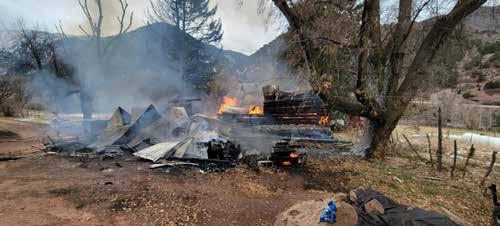
“I didn’t feel like we were in real danger, we had time to get out,” Shipman said. “When I went back in flames were climbing up the wall behind the stove and I emptied a fire extinguisher on them, but they came back.”
Luckily, her two older boys were away at Grandma's house for school, and her husband, Jake, was working a job in Austin, Texas, and had several personal necessities with
the fire from spreading to any other structures. We are thankful there were no injuries in this fire.”
Now, however, Shipman says she’s kicking herself for not grabbing a few things; things like her grandmother’s violin, journals, oil paintings, quilts, and “my Grandma’s
teacups are gone forever.”
As the snow begins to fly, the family looks forward to rebuilding. At the end of November, they were scrambling to get necessities back for their livestock to survive the winter.
The Crystal Valley community has gone above and beyond to offer aid to the Shipmans through clothing, technology, and monetary donations. Shipman says she’s humbled by the community response and thoughtfulness of their needs.
“Thank you to everyone,” she said. “There are people who we don’t know who are sending money, people are bending over backward to offer help, we’ve even been gifted an iPhone and a MacBook. It’s been encouraging how the community has responded.”
Currently, the Shipmans are residing with her parents, which are also on the Dooley Creek Farm property, and have begun the daunting process to try and rebuild their home in Pitkin County.
More needs will continue to emerge in the coming weeks and months, donations can be made by visiting gofundme. com and searching for “Help the Shipman’s Start Over” or ask how you can help by shooting an email to dooleycreekfarm@gmail.com