
MONDAY - FRIDAY: 12PM - 8PM SATURDAY & SUNDAY: 11AM - 9PM


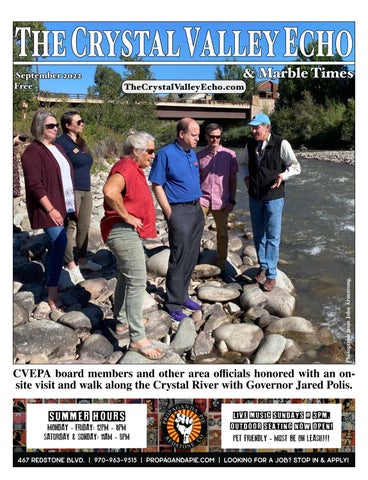
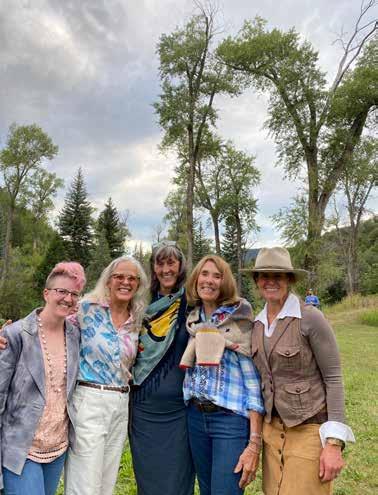
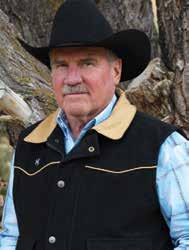
Photograph from John Armstrong.
MONDAY - FRIDAY: 12PM - 8PM SATURDAY & SUNDAY: 11AM - 9PM
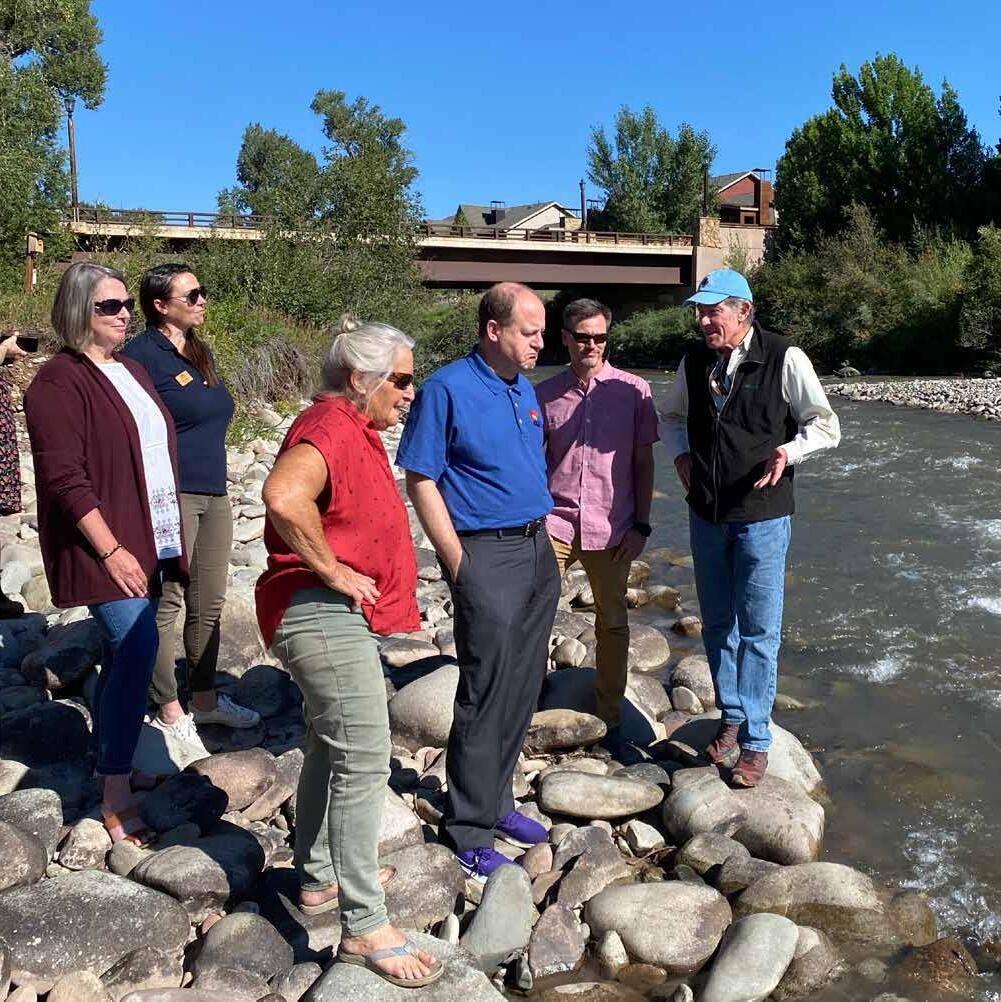
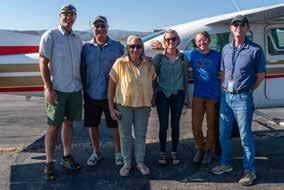
The Crystal Valley Environmental Protection Association (CVEPA) had a very eventful August. On the 23rd of last month, CVEPA President John Armstrong, and Vice President, Suzy Meredith-Orr, were honored with a visity by Governor Polis. The two were joined by Carbondale Mayor Ben Bomfaulk, Juli Silvka from Wilderness Workshop, and Pitkin County Commissioner Francie Jacober (all pictured on the cover).
Armstrong reported that Polis also congratulated CVEPA on 50 years of enviornmental activism, and they discussed protection of the Crystal River.
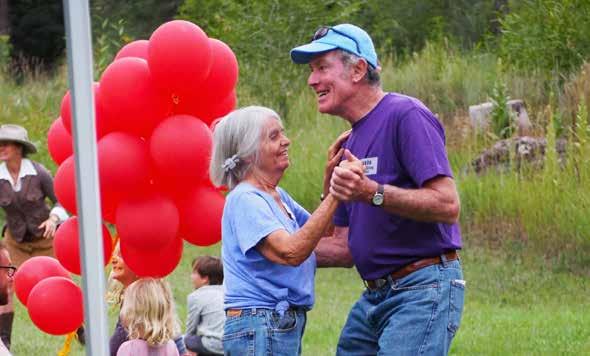
CVEPA hosted their 50th Anniversary celebration at Sunfire Ranch last month as well. They were joined by keynote speaker, Maggie Fox, founding member Karin Lindquist as well as Michael and Blakely Mechau, and Darrell and Jane Munsell. Photos from the celebration are found below.
Marble Times
Mission Statement: To provide a voice for the residents of the Crystal River Valley; to bring attention to the individuals and local businesses that are the fabric of the Crystal Valley region; to contribute to the vitality of our small town life.
Editor • Gentrye Houghton gentryeh@hotmail.com • (806) 374-0055
CONTRIBUTORS
Amber McMahill • Alex Menard Melissa Sidelinger
ADVERTISING SALES
Heather Marine at Elephant Mountain Creative heather@elephantmountaincreative.com (970) 718-5848
The Crystal Valley Echo is published monthly, and is distributed throughout the Crystal Valley.
NEWSPAPER BOX LOCATIONS:
Carbondale (old) City Market • Village Smithy Carbondale Post Office • Redstone Inn
Propaganda Pie • The Marble Hub
FOR SUBSCRIPTIONS
Please send $50 for print or $35 for digital editions along with address information to: The Crystal Valley Echo
the Redstone Inn
Redstone programs are open to all! RSVP: (970) 920-5432
SEPTEMBER 13 & 27
• 12:00 p.m. – Lunch ($10)
RSVP by the Thursday prior – space is limited. Plated lunch will be served.
There will be a gluten-free option.
• 12:45 p.m. – Program
September 13: Acoustic Music With Dan Sheridan
September 27:
How to Keep Your Brain Alive
More tips and tricks for a sharper mind with Julie Paxton and Mary Barbour
Send us your email address: (970) 920-5432 • seniors@pitkincounty.com
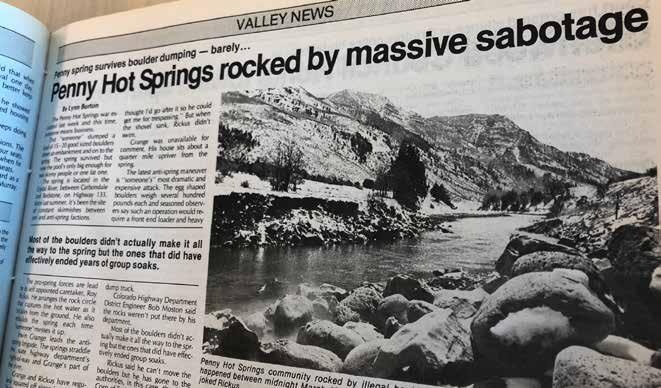
A six-week public comment period on options to improve the parking and access at Penny Hot Springs near Redstone is now underway.
In addition to an online survey, Pitkin County Open Space and Trails (OST) will host several outreach events in the coming weeks to explain the potential changes to com-
munity members and seek their feedback. Outreach began during the end of August with an open house at the Third Street Center in Carbondale that offered a brief presentation. Attendees were also welcomed to stop by and spend as much time viewing the materials as they’d like with OST Staff available to answer questions.
OST staff will also have a booth at the September 2nd First Friday in downtown Carbondale and set up onsite at Penny Hot Springs on September 3rd, 8th, and 14th. The survey is open through September 19th
Two alternatives for addressing the parking area and access paths to the hot springs are under consideration. One leaves the parking much as it is, but focuses on enhancements to the steep and, during the winter, slick pathways between the parking area and the springs, located along the Crystal River north of Redstone. The second option proposes improved trail access, as well as riverbank and parking improvements. A short, stone retaining wall would be required to create a level parking platform and prevent further erosion of the parking surface. A benefit of constructing a wall is the reduction of the slope steepness on the downhill side, adjacent to the river and hot springs, which allows for some degree of riverbank restoration to occur.
Potential changes to the parking area and improvements to the trail access were envisioned in a management plan for Penny Hot Springs that was adopted in 2020. The goal is to address the safety and accessibility challenges within this constrained CDOT pullout. These were two of the community’s top concerns, as identified during the management planning process.
Find the management plan, the proposals now under review, and links to the online survey (in both English and Spanish) at www.pitkinostprojects.com/penny-hot-springs-management.html
Editorial from Amanda Leary @healbydesign_
If you’ve ever walked the streets of Redstone, you know it makes you feel some type of way. But the truth is, everyone feels something different. We’ve all walked different lives, we’ve all had different experiences. Every one of us has our own point of attraction that changes with our energy throughout the day.
Redstone changed my life. And I most definitely am not saying that lightly. As an Energy and Mindset guide, my time in Redstone has been nothing short of a miracle.
My sister, Rochelle, is one of the Redstone General Store owners. I’ve spent almost every day for the last three weeks on the property. It’s really something special to be able to show up, and go to work, and expect $0 from the business owner in return. Every moment I can take the load off of one of their paid employees, I step in. I’ve been running the register, scooping ice cream, making coffees, and talking with visitors from all over the world. The community that surrounds my sister’s store is unlike any I’ve ever experienced.
I’ve gotten the luxury of watching her move through the world in the most beautiful way. I wish people could see my sister the way I see her. I know she is incredibly loved and appreciated by everyone that meets her, but the way that woman gathers community is next level.
After years of studying tribal dance at the University of Ghana and with a cultural dance group — Africana Dance Ensemble — whose sole purpose is to capture cultural drumming and dancing as well as evolve the collective consciousness of the world through interactions with all global citizens as an energy exchange of being seen as equal with each of us having innate gifts to bring forward in the world. She’s taken her time, money, and energy and poured them back into the root chakra of the world. She’s purchased land in Ghana for the dance company to utilize and thrive upon. She’s created a space for humans from all walks of life to come together and pour their gifts into the roots of the collective, it’s an incubator of healing power that pulsates throughout the world with each intentional heart and drum beat.
her employees, her community, and her world. I see a single mother, sister, daughter, and friend showing up in her power every single day. This woman inspires me.
In my time and admiration here, I’ve found a community that my heart won’t leave. This place my sister lives in has made every single one of my dreams come true. I’ve shown up to work each day, with no intention of being paid. And somehow, I’ve completely replaced mine and my husband's income and then some just by being me. Always in the right place at the right time. This community has called me home.

She’s there multiple times a year, a part of her community, a village she’s created in a country that sees beauty in the lives they live and not the money in their pockets. She’s an angel, taking every step of aligned action pouring through her sacral intuition. That woman is part of healing this world.
I see her go to her store at 6 a.m. even though she isn’t scheduled until noon. I see energy move through the store and her all day long. I see her pour into herself, her daughter, her family and friends,





Five years ago, I tried to move here. I was pregnant, alone, and searching for stability. I saw a life then that felt incredibly unattainable to my 22-year-old self. I saw a community in Carbondale of really incredible doers. People who just got up every day and moved their bodies in a way that fueled their souls.
The power of the red rock, the root chakra. It takes you back to your roots, energetically speaking. Where did you come from? Where are you now? As someone with an undefined root chakra, I feel everything from the ground up. Five years ago? I received so much clarity hiking up these red rocks, that I wasn’t ready for this place. I had more life to experience before I could hold myself up in such a powerful energy field. My emotions took me away to find myself, my husband, and two more babies.
Standing here now, fully aware of mine and everyone else’s point of attraction. I understand why so many people are drawn to this place.
And by the way, if you were triggered by any of the recent events in this unincorporated town. Feel free to schedule a human design healing session with me to understand how much energy you are taking in and giving to others that isn’t yours to hold.
This space is bringing every healing modality to the world. Our next project is a nude calendar of incredible humans that show up every day in their power. As energetic beings, we walk this earth as a light board projecting our truth with each step. Fully owning yourself down to each positive and negative projection gives you the ability to move through this world solely in intuitive power.
Each individual will be taken down to their human designs, their energy fields will be understood fully to the powerful gifts they are here to share. Each individual will be photographed in nature, where Mother Earth projects the beauty that they came here to embody.
If you are interested in taking part in this work of art, you know where to find Rochelle.
And by the way, this is not a fundraiser. The proceeds will go to the individuals photographed to travel the world together. By this magic, a group traveling at such a high frequency, our impact will be immeasurable. Our ripple of collective beings fully owning their gifts will have an immense impact that we are incredibly excited to witness the unfolding over many years to come.
Our first scheduled trip is to Ghana, to Rochelle’s village, the root chakra of the world. The Africana Village of Peace Project, in short, The Land of Peace, A.V.O.P.P.
You can help the cause by attending Amy Kimberly’s ReWirement Party and buying one of the 11 pieces that will be strutting down the runway, designed by Rochelle and The Land of Peace.
Editorial from Gentrye Houghton
There has been a rather colorful array of responses after The Sopris Sun published the article “Redstone incident exposes local prejudice” in their August 18th edition, with the involved businesses' names appearing in one of the many letters published the following week (the article and letters are available at www.soprissun.com). So far, I’ve heard demands for details I simply was not given, calls for boycotts, and some have shared a fear to go to work but those responses are far outweighed by the incredibly meaningful conversations that have been cultivated. I’ve learned so much about the culmination of experiences from our community.
Here’s what has happened since the issue publicly came to light: On August 24th, the Redstone Community Association Board of Directors issued a letter of apology to the Head of Colorado Rocky Mountain School, Jeff Leahy. According to the letter, RCA also extended “an invitation to meet with teachers, directors, and any students willing to sit down face to face as a community and speak freely about how the Redstone community can become more culturally sensitive and inclusive.”
Members of the RCA board notified both the Redstone General Store and Propaganda Pie of the reports from High School High Scholar “[HS]2” students early in July. Rochelle Norwood from the General Store immediately issued an apology as well as gifted a pair of earrings and a painting she created. According to [HS]2 Program Director, Annie Oppenheim, this gesture was incredibly pro-
found for both students and staff.
According to the reports, Propaganda Pie refused service to [HS]2 students during Redstone’s July 4th celebration. While a board member spoke with Nial O’Connor in person, Propaganda Pie has yet to contact the school and did not respond for comment.
Nearly 70 students visited the Redstone community that day and were continually treated so poorly that they left the event within two hours and held a restorative circle that evening to process their trauma. Some of the slurs uttered during the event could have come from any of the couple of thousand visiting participants, comments could have just as easily been spoken by a local, but those are details we simply do not have.
In the 1940s, a husband and wife research team used dolls to investigate how children view racial identities and the results were significant to the US Supreme Court ruling in Brown v. Board of Education of Topeka that desegregated schools. Then, they used a black doll and a white doll and asked children to identify which doll was “nice” and which one was “bad.” This test was recreated with variations just a couple of years ago, and the researcher found that the same anti-black bias still exists among children crossing all racial lines.
It is important to recognize that we all have racial biases — including me. In a community full of mostly white people, it is up to each of us to seek
out and expose ourselves to diversity. A great first step is to educate yourself on America’s racial history, and I would recommend starting by watching “Who We Are” with civil rights attorney Jeffery Robinson and picking up a copy of Let Me Retort: A Black Guy’s Guide to the Constitution by Elie Mystal.
Sadly, it’s human nature for the pitchforks to come out and witch hunts to ignite, but I’d like to challenge each of you to instead approach this sensitive subject with an attitude of support instead of one of punishment, to cultivate conversations and understanding instead of discounting experiences of harassment.We cannot change the events of the past, we be can attempt to heal and have an opportunity to come together as a community and reassess how we may be more inclusive to all.
Join the Crystal River Wild & Scenic Coalition for the Wild Rivers Film Tour at the Crystal Theater in Carbondale on Thursday, October 27 at 7:00 p.m. The film tour, presented by American Rivers, celebrates the human connection to wild rivers and raises awareness about work being done to protect these irreplaceable waters, including the Crystal! Films will feature recreation, adventure, river conservation, Indigenous perspectives, and more.
Look for additional information in the next issue of The Crystal Valley Echo!
Editorial from Bill Argeros
It was almost 50 years ago when I first waded into the pristine, sparkling waters of the Crystal River. I was a shaggy-haired 19-year-old in cutoff jeans communing with nature. I dreamed of living along the shores of the Crystal one day.
Back then the water was plentiful and the sides of Highway 133 had four to five-foot snowbanks during winter. In the spring the rush of snow melt water thundered down the valley and you could hear big rocks bouncing along the bottom of the river bed. During summer we would slide down upper Hayes Creek Falls, jump off dinosaur rock into a deep hole just north of Redstone and, for some of us, take off our clothes and slip into the healing, warm waters of the “Hippie Dip” (now more popularly known as Penny Hot Springs).
It was Wild! It was Scenic! And thankfully, it still is today. The Crystal River is one of the last free-flowing rivers in Colorado. But now, more than ever, it is in danger of forever changing. Most of the world is heating up and people are seeking places where they can still enjoy a getaway to a cool mountain stream in a lush green valley. Our Crystal River Valley has been discovered.
Water is now a hot commodity. Water rights in Colorado have for many years been sacrosanct. But as the temperatures rise, the water evaporates, and
the thirsty population increases, we risk losing our precious waters. Even Wall Street is in on the take. Large investment companies, who are governed solely by the money market, are buying up orchards and leasing them back to the farmers, solely to obtain the water rights. They know that one day the water will be a valuable commodity.
So what is to stop these companies from damming up the Crystal to create a reservoir or diverting the waters to quench the thirst of the growing population?
For me, the dream came true. We have lived on the banks of the Crystal for 25 years now and have the privilege of raising our children in the valley. But what about our grandchildren and the future generations yet to come?
Will the waters of the Crystal be reduced to a small stream adequate only to provide water to the few thousand or so residents it currently serves? Will agriculture be reduced and the farms dry up? Will you still be able to float the river and fish from its banks?
For those of you who have known our Valley for a long time, you have seen the dramatic changes that have occurred in our climate in only the last 20 years. We have gone from an area with plentiful rain flow and flowing waters to near drought conditions that are the “new normal!”
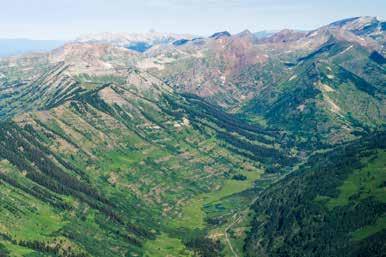
I was very fortunate last month to have the opportunity to join two Gunnison county commissioners and our local Commissioner Francie Jacober on an EcoFlight over the Crystal River and surrounding areas. It was truly an eye-opening experience to see our valley from the air. It made me realize how fragile the environment is and how important it is to preserve it in its natural state. Hats off to EcoFlight for their involvement!
There are those of you who may believe that any governmental regulation is a bad thing and that laissez-faire is the only viable governmental policy. The interesting thing is that once you become aware of the benefits and limitations of the Wild and Scenic Act you will realize that it can be customized to suit the needs of all who value the treasured waters
of the Crystal River.
There is some misconception about the provisions available under the Wild and Scenic Act, but research and careful reading will show you that we can tailor the wording to protect the rights of the landowners and stakeholders, put limitations on any perceived government intervention that may affect your property rights, and at the same time preserve the river by keeping the potential for dams and diversions out of play.
You might think that because growth is inevitable that things will continue to change. But it doesn’t have to be so in our valley. There is an opportunity right now to preserve the wild and scenic nature of the Crystal River before it’s too late. A Wild & Scenic designation has the support of virtually every environmental group as well as most folks who are “in the know.”
So what can you do? Educate yourself and others! Spread the word! Sign a petition to have the Crystal River designated as “Wild and Scenic” and be tailor-made to benefit our local community under the National Wild and Scenic Rivers Act.
Go to this website and make your voice heard: crystalwildandsceniccoalition.org!
Bill Argeros is a local attorney who first came to the valley in 1973 and 21 years ago moved to Redstone with his wife Rebecca to raise their family on the banks of the Crystal River.
Crystal River Caucus Regular Zoom Meeting Thursday, September 8 at 7 p.m.
The agenda will include: An update on Penny Hot Springs Parking and Access Improvements; an update on natural infrastructure/watershed restoration opportunities in the Crystal Valley; and an update on Wild and Scenic Designation for the Crystal River.
Meeting links are sent to those on the Crystal River Caucus e-mail list. If you are not on the list but would like to be, please send a request to crcaucus@gmail.com
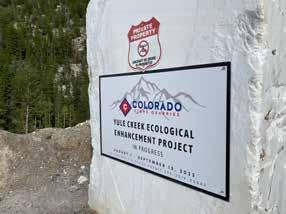
Colorado Stone Quarries (CSQ) moves forward on compensatory mitigation requirements by a retroactive permit issued by the US Army Corps of Engineers (USACE) this past February. The marble quarry is scheduled to begin reclamation work of Yule Creek as well as making major improvements to a culvert and bridge to aid in stream flows of Mud Gulch this fall.
According to the quarry, they will drastically improve the drainage of Mud Gulch by increasing the current three-foot culvert to one that is 10 feet in diameter. “Ten feet is the width of the actual drainage, so this should make a notable impact in returning it to its original flow,” said Jean St. Onge, CSQ General Manager.
Mud Gulch is approximately six-tenths of a mile downhill from the CSQ operation; it is a common cleanup site for mudslides and slid significantly on August 2nd which the quarry cleaned up.
Since Colorado Parks and Wildlife (CPW) is concerned about the effects of fish spawning in Yule Creek, rehabilitation work of the area takes place between August 1st and September 15th “We’ll begin vegetation reclamation next summer,” said St. Onge.
it won’t be a sterilized canal like the L.A. river. It will take time to plant willows in crevasses around the structures they’re putting in, and there should be enough little critters living upstream to repopulate.” The permit acquired in February is an after-thefact permit, which is a rarity for the Army Corps, and was quite a long process. A permit is required by the USACE anytime a project includes the discharge of fill materials.

By Gentrye Houghton
“The quarry showed us their plans, and we’re very pleased,” said Dale Will, Crystal Valley Environmental Protection Association (CVEPA) Vice President. These plans have been approved by the USACE, CPW, and Gunnison County.
Will continued, “It sounds like it will be really beautiful. The micro invertebrates will get reestablished with the willows they’ll plant, and
According to the technical revision approval letter from the Department of Reclamation, Mining, and Safety (DRMS), the quarry applied for and was approved by the State to divert Yule Creek to the east side of Franklin Ridge in 2018 to temporarily open a mining road under a USACE permit excemption. However, after a diesel spill in 2019, it was deemed by the Army Corps that they had illegally diverted Yule Creek and violated the Clean Water Act.
“CSQ received approval for the diversion before the diesel spill in October 2019,” explained Katie Todt, a consultant for the engineering and environmental company Lewicki and Associates. “After disassembling the McIntyre’s cabin, fill materials from the blasting of Franklin ridge went into the west side of the creek. The spill went into the fill material, and we believe the creek was saved due to the diversion.”
The quarry has been monitoring water quality by taking samples uphill from the spill site. “First we took weekly samples, then monthly, and now quarterly samples are taken in perpetuity. The water quality results improved during our monitoring, and we feel confident that there was no impact on Yule Creek,” said Todt.
She also said that the USACE required them to choose mitigation that is “in-kind” to the impacts of Yule Creek and as close as possible to the affected area.
Ron Leach, Town of Marble’s Administrator, declined to make specific comments regarding the compensatory measures the quarry is now required to fulfill. “The Town of Marble has a great relationship with the quarry,” he said.
He went on to explain the many projects in which CSQ offers aid to the Town, including sending down equipment for various projects around town and supplying blocks of marble for a Mill Site park project.
“Greg Tonozzi sculpted the blocks that will be used for curved seating in front of the Marble Fest stage in the park. Greg should be installing them this fall,” said Leach.
St. Onge also explained that the quarry keeps County Road 3c (the “Quarry Road”) open in the winter for their operations but this also allows for recreational skier access to the area. They also shut the gate providing avalanche notice to users when the risk becomes too great.
CSQ also supports the Marble Charter School’s summer program, the public restrooms in the Mill Site park, the Marble Museum, and the Marble Historical Society. They help water the road through town for dust mitigation and donate approximately 90 tons of marble, broken into manageable chunks, to the MARBLE/marble symposium every summer.
“We are really proud to be part of the MARBLE/ marble symposium, and donate around three dump truck loads of marble every year. A piece of marble is provided to every participant, and allows the symposium to profit completely from the sales of additional pieces,” said St. Onge.
He added that he has been the General Manager of CSQ for a year and a half now, and has never turned down a project or community request thus far.
Dale Will said he spoke to St. Onge and Todt last month as a means to repair the quarry’s relations with CVEPA. “They weren’t very happy with us, and we weren’t very happy with them earlier in the year, but we’re hopeful we can start fresh. They’re not going to disappear anytime soon,” he said.
Will shared that he feels confident in the quarry’s commitment to mitigation. He said, “When [St. Onge] looks you in the eye and says he appreciates the need for people to care about their environment, I believe him.”
“We are working really hard on the creek restoration project,” said St. Onge, “We’re trying to do it the right way, and spend the money to do it properly. Nature and the wildlife are important to us too, and we take it seriously.”
Under the USACE permit, the compensatory mitigation requirements are to be completed by February 2024.

The Redstone Historic Preservation Commission (RHPC) has been working for some time on an update to the Village of Redstone Design Guidelines (Guidelines) adopted in 2004. The need for revisions came primarily from the desire to codify RHPC policies that had been developed since the 2004 Guidelines, clarify existing Guidelines, fill gaps in the Guidelines, and create a sign code that was tailored to businesses on the Boulevard.
For the full text of the Guidelines and Code Amendments, visit: pitkincounty.com/1364/Community-Development and follow the link under “announcements.”
These revisions to the Village of Redstone Design Guidelines will appear before the Pitkin County Board of County Commissioners on September 14th. Public comments will be taken during the meeting or by visiting: pitkincounty.com/publiccomment.
A Call to Rewild is a fundraiser to benefit local artists, organizations and the Oniya Bison Rewilding Project as well as indigenous groups and initiatives.
Rewilding is a form of ecological restoration with an emphasis on recreating an area's natural uncultivated state - land with Bison and biodiversity! The Bison are considered a 'Keystone species' as they can quickly revitalize the soil, slow global warming and heal “Grandmother” Earth.
During the early 1800s, there were approximately 30 to 60 million Bison in North America; by 1890, only 1,100 remained.
According to The Nature Conservancy website, www.nature.org, “Today their numbers have rebounded to around 350,000 — about 1% of their original herd size — but enough to keep them out of the dangers of extinction. Approximately 15,000 animals can be found across the public lands of the United States. Remaining bison populations are in private herds such as those maintained by The Nature Conservancy.”
The Oniya Bison Rewilding Project aims to increase these populations to their original peak.
A Call to Rewild will include a full farm-to-table course meal, several live performances, music and dancing, including Native American drummers, under the stars and at the base of Wemagooah Kazuhchich, which means “Ancient Mountain Heart Sits There,” otherwise known as Mount Sopris. In
honor of youth and with respect for the integrity of the movement, we will not be serving or selling any alcohol at this event.
The majority of 7th and 8th grade students and their families from the Marble Charter School will be servicing the fundraiser and thereby also receiving a portion of the proceeds. Every year, they raise money for their spring trip to a major American city. The city has yet to be decided, but the students are very excited to participate in and collaborate in this fundraiser and movement!
Participants and sponsors for A Call to Rewild include: 13 Moons Ranch; Art of Air (Ariana Gradow) and Convergent Circus performers; Bonte Lane (Pam Rosenthal); BreatheLab; Daisy Glasser; Dria Thornton & Jimmy Byrne; Dustin Eli; Marble Charter School; Oniya Bison Rewilding Project; Porcupine Singers; Redstone General Store; The Serious Type; Sustainable Settings; Sweet Root and Wild Mountain Seeds.
A Call to Rewild encourages attendees to ride bikes to the event or take our complimentary shuttle from Roaring Fork High School. More details about this to follow. For those who will be driving and parking at 13 Moons Ranch, we are requesting a donation of $11 (or more) to support a nonprofit (TBD) that supports environmental restoration. Thank you!
Tickets/Donations: www.eventbrite.com/e/a-callto-rewild-tickets-394475556007

Mike Kennedy, Broker/Owner 970-379-3907 mikekennedy@sopris.net

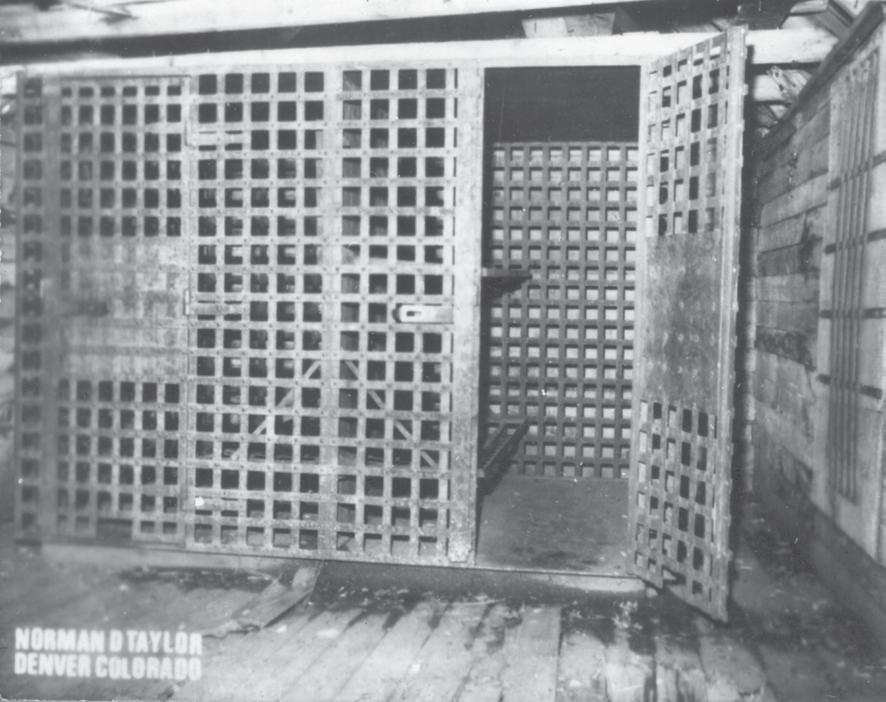
Phase one for the Marble Jailhouse Preservation Project will begin work next spring. This initial phase will cost a total of $38,000 to complete.
A great many thanks go out to the Aspen Valley Land Trust, Town of Marble, and Colorado Stone Quarries for getting us this far. This phase will include the most essential component of the preservation effort; the jailhouse structure itself needs a foundation to assure it will remain for another one hundred years.
The building remains intact in the same spot it was built in 1901. For a new foundation to be installed the building will need to be moved to allow for the excavation work, construction of the foundation, and pouring of the concrete.
In addition, the ground surrounding the Jailhouse needs to be graded, angling away from the building and a French drain will need to be installed. The

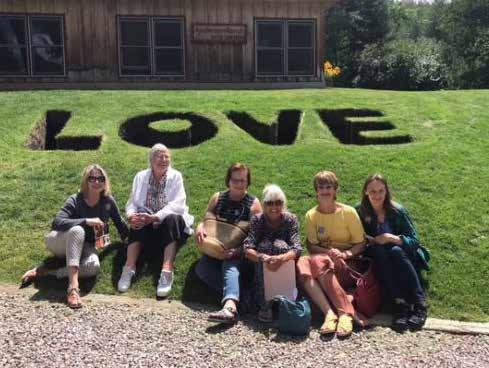
Last month, the Redstone Art Foundation (RAF) and friends went to Anderson Ranch for a tour and lecture by Maysha Mohomedi as she shared how she creates her fabulous abstract art. They enjoyed a great lunch and wandered around the grounds ending at the gift shop.
RAF will be visiting The Apple Shed in Cedaredge, Colo., on October 2nd. The Apple Shed has a kitchen store, apparel, handmade furniture, and of course, apples! They also have a wine tasting room from Williams Cellars, which provides the wine during the annual Labor Day Art Show.
The group will leave the Redstone Inn at 10 a.m. with lunch in Cedaredge, followed by an artist tour. If you are interested in joining, please contact RAF at info@redstoneartfoundation.org
grading and drainage system will be done to assure that water will flow away from the building, so that the original wood materials can remain preserved.
The Town of Marble needs your help in preserving this historic town treasure. The project has already secured $18,000 but still needs to raise $10,000 more to complete this critical phase of preservation work. We are asking our valley-wide community for this support, from residents and businesses alike please help us reach this goal. Thank you so much for your support and interest in the Town of Marble’s continued efforts to preserve its historical treasures.
For more information, please contact Emma Bielski at emmabielski@gmail.com or mail contributions to the Town of Marble, with the word Jailhouse written in the memo, to: 322 West Park Street, Marble, CO 81623.


For anyone needing help stretching their food budget, Gunnison County Officials currently have boxes of food available distributed through the Marble Community Church.
There is no charge to the recipient and no reservation is needed; boxes are available for an individual or up to a family of four and contain enough meals to last approximately three days.
Please call the Marble Community Church to arrange a pickup time, (970) 963-1464.


Redstone Community Association Board Elections will be held on Tuesday, October 4th during the regular RCA meeting that is open to the public.

A reminder to the community that bears are active right now and there has been evidence of mountain lion along the Boulevard and other areas. Keep yourself, children and animals safe especially at
The Redstone Art Foundation will be holding their 26th annual Labor Day Art Show from Friday, September 2 to Monday, September 5.
It will be a wonderful weekend of art, workshops, and demonstrations for adults and kids.
Many of our favorite artists are joining us along with some exciting new talents.
Friday evening Artist Reception at the Redstone Inn with drinks and hourve d’oeuvres.
The Redstone Art Foundation is in constant need of support and cannot function without community volunteers and donations. Learn more on our website at redstoneartfoundation org
Redstone, Colorado, is an unincorporated village that relies completely on donations and volunteerism spearheaded by the Redstone Community Association (RCA). Your membership dues and donations directly fund RCA projects and events.
Thank you for your support!
Scan the QR code to be taken directly to a payment screen for easy Membership Sign up or renewal
You may also write a check and drop it off at the Redstone Inn or mail it to 303 Redstone Blvd Redstone, CO 81623.

REDSTONE COMMUNITY ASSOCIATION BOARD MEMBERS
Steve Pavlin - President
Nate Helfenbein - Vice President
Katie Lowery - Treasurer
Sara Lewis - Secretary David (DJ) Johnson, Heather Marine, Josh Wambold t, Ron Phaneuf - Board Members
Cathy Montgomery - Alternate
From Larry Meredith
Thanks to a current area resident and two former residents the Redstone Historical Society (RHS) has several more items of historical interest to add to its collections.
Donations have recently been received from Ken Johnson, former owner of the Redstone Castle, Vince Savage, a Marble business owner, and Peter Martin, a former Redstone resident. Ken Johnson
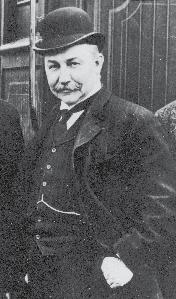
Ken Johnson, who owned the Redstone Castle from 1977 until 1999, has given the RHS several boxes of material related to the Castle, some of which date from the 1880s.
Included are two “Mineral Certificates” from the General Land Office of the U.S. for “property in the Rock Creek area” (Rock Creek was later named the Crystal River). One was dated 1888 in Gunnison, Colo., when Benjamin Harrison was President and the other dated 1881 in Glenwood Springs when Grover Cleveland was President.
All content sponsored and provided by the Redstone Historical Society
Also included was a small book of rhymes dated 1906 to Bessie R. Jordan “as a memento of a Merry Christmas House Party this little book of rhymes is most cordially dedicated by her collaborators.” The box also contained two laminated placemats advertising early Redstone with a bit of copy about the village and photos of the Redstone Inn.
A master’s thesis by Howard K. Wilson at the University of Denver dated March of 1967 and titled “A study of Paternalism in the Colorado Fuel and Iron Company under John C. Osgood 1882-1903” is also included, along with a copy of hand-written music for “The Redstone Waltz” written by Alma Osgood in 1904.
The box also contained many thank you notes, photos, and brochures along with scanned photos of Ute leader Buckskin Charlie and his wife To-Wee, an early-century potato farmer, and “the trapper Bertie.”
Vince saVage
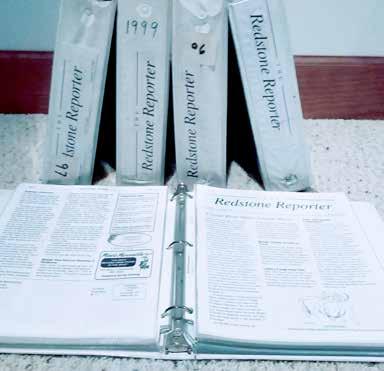
Vince Savage, a long-time Marble and Aspen resident, has donated several years’ worth of copies of “The Redstone Reporter.” The publications are in five three-ring binders, each three inches thick and containing laminated copies of the publications. They are from the years 1994, ’95, ’96, ’97, and ’98. The publications appeared twice a month during those years.
Peter Martin
Before moving to the Front Range with his wife, long-time Redstone resident Peter Martin donated a box of newspaper clippings relating to the Redstone area from several regional newspapers. The Martins moved just a couple of years ago to be closer to their children.
Both John Chromy, RHS president, and Deb Strom, a Board member who is the recipient of the most recent box of historical items sent by Ken Johnson, have expressed their appreciation for the gifts.
“These donations are most appreciated and welcomed by the Redstone Historical Society and are now valuable parts of our historical collections,” Chromy said. “We thank all three of these individuals for recognizing the significance of each item and giving them to the association.”
Deb Strom also spoke for the RHS when she said: “the fact that these individuals took the time to save these items and recognized that they would be welcomed as important archival materials make us all very grateful to them.”
Ken Johnson, who owned the Redstone Castle for many years, has been a newspaperman who owned and edited 22 newspapers from Florida to Grand Junction to Cleveland. He's developed magazines, has been a graphic arts consultant and is now researching Redstone and the Crystal River Valley.
He is the co-author, along with Paul Andersen, of Elk Mountains Odyssey which is the West Elk Loop Scenic and Historic Byway guide.
Johnson continues to write books on Grand Junction history. In fact, his latest, a history of Grand Junction, will be published later this year. Another book, The Life and VERY Good Times of John Cleland Osgood and His Redstone Castle, will also be published later this year.
He now lives in the village of Cotuit, Mass., on Cape Cod.
Vince Savage has lived in Marble for the past 35 years. He also has a home in Aspen.
Savage was Publisher and Editor in Chief of Marble Chips, a publication of the Marble Historical Society, and served as president of that group. He was also Mayor Pro Tem of Marble and served as the Director of a Drug and Alcohol rehabilitation center.
Savage grew up in Indiana where his father was a member of the Journalism faculty of Indiana University; Savage earned his Bachelor of Arts degree from Indiana University, but also went on to earn both an MFA and Ph.D.
He continues to live in Aspen and owns and operates the Marble Lodge at Beaver Lake Retreat.
Peter Martin moved to Redstone in 1984 from Kansas where he was the 38th mayor of Olathe after serving on the city council. During his tenure, he helped initiate many major city services including expanding the city’s boundaries, passing the area’s first fair housing law, initiating a high rise for the elderly and low-income housing, and implementing a Model Cities Program.
In Colorado, he served as a county commissioner and chair of the Pitkin County Planning and Zoning Commission.
In Redstone, he led the effort for the Redstone Master Plan and was vice chair of the Redstone Historical Preservation Commission. He was also President of the Redstone Historic Society.
He says he has always followed the family slogan: “Your community rent is never paid; it’s a continuing obligation.”
Larry Meredith is the author of This Cursed Valley, Cast a Giant Shadow: Hollywood Movie Great Ted White and the Evolution of American Movies and TV in the 20th Century. Both books available on Amazon.com in print or Kindle. Also "Real, Rural: Growing Up Rural in the 1950s," available on Amazon.com but only in print. He and his wife Ally live near Redstone.
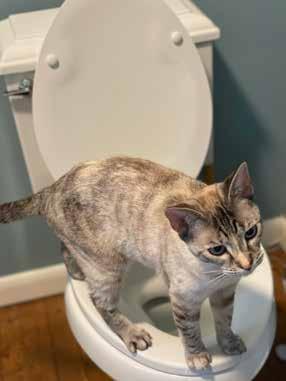
There has long been stigmatization regarding some of our more natural bodily functions, but historically our daily salutations have derived from the origins of the chamber pot. “Cheerio” evolved from the custom of servants calling ‘Chair below” as they transported chamber pots on chairs through the streets during the Middle Ages, hoping to avoid disaster. Some variations, such as "Gardi loo,” translate to "Watch the waters,” a common phrase shouted to warn pedestrians before tossing the contents of a chamber pot out the window onto the streets below.
Thankfully, sanitation has come a long way since then. Still, Redstone was reliant on the medieval practice of cesspools as recently as the early 1970s, before the development of the Redstone Water and Sanitation District (RWSD).
Dwane Piffer started working for the RWSD in 1974 and lends his insights into the inner functions of Redstone’s historical plumbing.
in the valleys along the mountains, often next to streams. Many people took shortcuts when installing water and sanitation facilities for their homes. The chance of waterborne illness was high in the Wild West of unregulated sanitary standards in the Crystal Valley before 1970.

By Elizabeth Key
“Obviously, in the old days, they had outhouses where they added lime and it would decompose a little bit there. A leach field is just gravel or something that just leaches it back into the earth,” he said.
Michael Mechau, who is the son of artist Frank Mechau, grew up in and near Redstone during the 1940s. He recounts how there was a lack of a formal sewer system for the families of coal miners in the village, even though Osgood ensured each residence was built with the luxury of running water.
“All those cottages would have had outhouses; they did not have flushable toilets. They did have running water from the reservoir with a pipe system for the village,” said Mechau.
Much of Redstone’s original plumbing remains from the Osgood era, installed during the village’s inception in 1902. The original, datestamped, cast iron pipes and lead fittings run from East Creek carrying fresh water, now through modern filtration, to the Redstone Inn. Many water and sewer systems depend on gravity, and Redstone’s location and topography are ideal for minimizing the type of pumping stations employed in the flatter regions, such as Glenwood Springs.
“It is these cast iron pipes, I’ve even got a piece stamped 1901 or 1902 … that had lead joints; the lead wasn’t really a problem because there was hardly any of it exposed to the water,” Piffer said, “believe it or not that pipeline is still in place.”
He continued, “It is interesting to think that it is over a hundred and twenty years old and has a couple of hundred pounds of water pressure going to the Redstone Inn. Every other pipeline that Osgood put in place has been replaced, I know because I did a lot of the work.”
During Mechau’s childhood, scattered residences appeared nestled

Mechau recounts working to repair the original Osgood village water lines that ran the length of Redstone Boulevard. He remembers working outside the Coonhousings residence, the Northernmost miners’ cabin on Redstone Boulevard. He helped in digging a trench through the rocky riverbed dirt. It was an informal project that lacked the official oversight of a contract job and instead asked community members to pitch in for manual labor.
“Some of the small pipes that distributed water to the village corroded and sprang leaks, so those pipes had to be rebuilt,” he said. “I was very young then, but I did some of the work there, and they paid us 50 cents an hour. It wasn’t a rich sum.”
Decades after Mechau helped repair the water lines, Bill Jochems, an attorney who regularly dealt with water and mineral matters, purchased the Coonhousings’ house in 1971. The sanitation infrastructure in his new community immediately came into question. Before he finished unpacking, Mechau’s mother, Paula, approached him at his new home. She implored him to vote “No” on developing a water and sewer district in Redstone.
“What she was very clear about was she did not want the water and sanitation district formed because it would enable, in her mind, huge and very character altering development: A line of condos above Redstone,” Jochems said. The developer was buying the land above Redstone, stretching from Jochems’ house to the Redstone Castle, with plans to construct a shoulder-to-shoulder condominium development.
In Jochems’ yard, his predecessor had fashioned a septic tank by excavating a large hole and fashioning a box made of cottonwood logs. When the spring high water season came, Jochems would experience logs of another sort floating in his yard.
The waterline from the Redstone Inn narrowed to a half inch at Jochems’ house, rendering the pressure almost nonexistent for lawn watering and his hot water needs. At the back of his house, Jochems placed a 50-gallon drum to catch the water drainage from the kitchen sink. He expanded the ad hoc sewer system, but it was evident that something less rudimentary was needed.
“Primarily in the septic systems, there are sinkers and floaters. In the springtime, anything that was floating would come right out onto the ground because the groundwater would push everything up,” Piffer said.
Elsewhere in Redstone, residents were similarly creative in constructing their sewer containers and cesspools. Jochems said, “There were no septic systems, people would even bury automobiles… A Volkswagen was considered really good. You could get a backhoe and bury a Volkswagon, knock one of
the windows out for a pipe from your toilet, shower, and kitchen, and then you would fill it up.” To this day, there probably exists a graveyard of automobile skeletons from the VW “sewer system” lining Redstone Boulevard.
Jochems described how Redstone’s makeshift sewer system was efficiently flushed clean by the high groundwater that flowed just feet below the surface. Unfortunately, the drainage leads the untreated sewage to flow into the Crystal River. “We might as well just have piped our toilets directly to the river,” Jochems said. At that time, Pitkin County health official, Lamont Kincade, threatened to shut down Redstone's commercial businesses due to health and sanitation concerns.
During the governorship of John Love, state laws were passed, giving counties the responsibility to implement “official sanitariums.” The new regulations enabled counties to enforce a permitting process requiring official septic tanks, leach fields, and other modernized sanitation practices.
“I could see the wisdom and necessity of treating our sewage in such a densely populated, although very small area with houses quite close together. We had to do it,” Jochems said. Regardless of his alarm over the condo development, Jochems voted “Yes” to the establishment of the RWSD along with a vast majority of the community.
In 1974, the RWSD began operating the 50,000 gallons per day sewage disposal plant, located near the current firehouse, fed by the new mainline sewer running down the length of Redstone Boulevard. This construction was made possible with a combination loan from the Federal Housing Administration and grant money provided by the Environmental Protection Agency for $453,000. An article on the waste treatment plant that appeared in Colorado Country Life Magazine in June 1976 quotes the president of the board at the time, Dr. A.T. Waski, “We’ve got one of the most efficient disposal operations in the state, the effluent we return to Crystal
River under our EPA license is 95% pure.”
Jochems said with the installation of proper water and sewer lines, he experienced “A huge increase in the availability of water and nothing more backing up in my yard. I had significant and immediate benefits.” In 2013 the sewer system was modernized once again to our existing treatment plant, located just adjacent to the original facility.
Luckily, the condo development never came to fruition, and the developer moved on to projects out of state. Eventually, Peter Martin bought part of the developer’s property and created the four existing lots on Big Horn Ridge.
According to eofficial.org, in 1984, Dr. Lewis Thomas summed up the essential role of the sanitary systems we often disregard when he said, “There is no question that our health has improved spectacularly in the past century. One thing seems certain: It did not happen because of improvements in medicine, or medical science, or even the presence of doctors; much of the credit should go to the plumbers and sanitary engineers of the western world.”
This statement elevates the importance of plumbers, although a common image is that of a plumber crouched below the sink dealing with the outcasts of human grime. Will there come a day when society will wash their hands and plumbers will replace doctors as trophy husbands?
While society might yet wrinkle their noses at the potty talk, we may want to rethink the value of the modern-day sewer and the engineers that keep the poop flowing. Jochems summed up this sentiment by saying, “Pure water is necessary for our health, and I would think that the greatest danger to pure water is human sewage. To keep them separate is so important to world health and it is so poorly done in so many places” — but not in Redstone.
CMYK: 0, 84, 100, 0
HEX: #F05123
RGB: 240, 81, 35
CMYK: 100, 33, 38, 0
HEX: #008498
RGB: 0, 132, 152
CMYK: 0, 0, 0, 100
HEX: #231F20
RGB: 35, 31, 32
It was a hot night by cool Marble standards. I took a seat at the back of the church hall where I could enjoy a clear view of the town council and help myself to one of the colossal 36-pack of Squirt within easy reach. I wondered if there were any in the fridge but did not have the nerve to get up and have a look.
Mayor Ryan Vinciguerra presided as cool as a cucumber behind his thick dark beard and baseball cap. He was flanked by a lively Emma Bielski on his right, the eminently capable Amber McMahill on his left, and the forever stylish banana t-shirted and teal sweat-panted Tony Petrocco enjoying a good swing on his chair to McMahill's left. Larry Good, was alas not present.
The meeting started on a somber note. Popular Marble resident Tim Hunter talked eloquently about his great friend and neighbor Dave Jones, who recently passed away. A “fair and friendly man” who “walked it as he talked it,” Jones first visited Marble in the 1950s and for a while was the owner of the general store. In 1979, he built the campground which was expertly engineered and always “as clean as a whistle.”
Jones was a regular churchgoer and sat on the Marble Water Board until as recently as a couple of years ago. To the amusement of all present, we learned that during his tenure as owner of the general store, he would frequently deploy his own “speed bumps,” flagging down approaching vehicles on the road outside, using his body as a bollard if necessary, and teasing motorists about the perils of the Lead King Loop. Jones will be sorely missed.
Next on the agenda was an update on the Marble Wetlands and smelting site clean-up, from Pat Willets of the Trust for Land Restoration, out of Ridgeway, Colo. It appears that the State of Colorado has given its verbal approval to pay for the clean-up and beautification of the slag “toe” and its surrounds. The operation is out to bid for more localized contractors (including at her insistence the legendary Marble earth shifter, Sue Blue) and it is hoped that the work (contingent on final approvals of course) is to be completed by the time the first snow flies in mid-October.*** Soil and plants are to be brought in to restore the site to its natural beauty, and an enclosure is to be built around the slag heap itself to deter would-be campers.
At this point I noticed Petrocco leaning forward on his elbows over the desk, eyes scrunched shut, pinching the bridge of his nose, presumably in an effort to numb the pain that was rapidly building in his head. I don’t think he was the only one suffering.
Next up was the thorny issue of the renewal of Vince Savage’s business license for his events venue, the Marble Lodge at Beaver Lake Retreat. Incredibly, he has been operating without one since January 2021. There was lots of confused and indignant mumble from the largely absent business owner about the new signs he made to enable guests to find his venue without further upsetting the rest of the town, and plenty of excuses were offered for his continued flouting of the town’s noise curfew, mostly under the pretext of honoring commitments to his existing bookings.
After throwing an embarrassing hissy fit during July’s meeting, including threats to get “nasty, really nasty” if he wasn’t treated fairly by the Town Council, Savage was visibly relieved to be granted his license. The Marble Town Council is to be praised for the patience, good humor, and restraint it has shown in dealing with this situation.
There then came a flurry of approvals for shelling out $1,500 for portable toilets for Marble Fest, $4,000 for the purchase of some super sturdy rubber-coated top-notch metal picnic tables, and a further two grand and some change for a Town of Marble pop-up tent, measuring 8x12 feet. For town use only we were informed. Expect lots of “Town of Marble” marketing blurb splashed over its impressive surface area, or “real estate,” as Mayor Vinciguerra put it. Probably not large enough to cover the slag toe, alas.
For my money, Petrocco’s zesty sense of style stole the show. Teal sweatpants (or were they turquoise?) combined with an unrelenting zeal for the legal process should form the bedrock of all town councils. There I was foolishly thinking that July’s baby blue terry cloth ensemble would be an impossible act to follow. You nailed it, Tony!
A big thank you to the indefatigable Terry Langley, typist of the minutes, and Ron Leach, for all the administrative headaches he selflessly takes on for his fellow residents.
Rest in peace Dave Jones.
*** Editor's note: The Marble Wetlands slag heap clean-up project is still contingent upon the approval of the Intergovernmental Agreement with the State and a contract with Trout Unlimited. A draft of both agreements will be reviewed during the next Town of Marble Board of Trustees meeting on September 1st
By Melissa Sidelinger
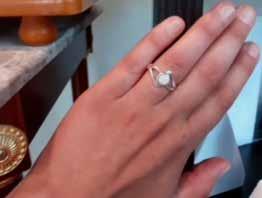
Morande is one of those rare artists residing in the Crystal River Valley whose work has been for sale in shops and galleries in Marble and Redstone for the past 25 years.
Her unique pendants, earrings, and rings catch the eye from their displays with their delicate designs embracing tiny spheres and ovals of marble in colors ranging from the purest snow white to pinks, purples, coppers, and grays. Her work is currently on display at both The Marble Gallery and Abstract Marble, and I was lucky to have a chance to catch up with her in her cozy cottage/artist studio tucked away in the woods.
Morande got her start in jewelry making when she took beading classes from another local Marble artist in the early 1990s. Then in the late 1990s, the owners of the shop at the street corner across from the historic bank building in Marble (where Slow Groovin' BBQ currently resides) asked Morande if she could design something they could sell to the tourists traveling through town.
She made pairs of simple post earrings with tiny pieces of marble glued to them and sold them for five dollars a pair. They quickly took off in popularity and were even purchased by two members of the Broncos football team.
“After a couple of years, I wanted to shape my pieces more,” Morande explained as we sat together around her kitchen table. “I started using fingernail files and nail clippers to cut and file the marble.”
She would also use jewelry cutting pliers for the bigger pieces of stone. For a hardener to seal the stone she turned to clear fingernail polish, and she found that Gorilla Glue was the absolute best for attaching the marble to the various fittings.
Another friend introduced Morande to sources for higher-quality jewelry-making materials, and she made the transition to working with sterling silver and gold-plated earring wires and pendants to pair with her marble.
“Over the years I’ve sold my work at three shops in Marble and three in Redstone,” Morande said. “One time I sold a necklace to a journalist who worked at Channel 9
out of Denver, who purchased it at The Marble Gallery. I watched the news for weeks afterward, and sure enough, she wore it on air one evening!”
Morande focused on designing pendants and earrings for years. Then about five years ago, she decided to try her hand at creating rings as well. She purchased a silver ring with a daisy design from one of her jewelry catalogs but didn’t put a stone into it for almost a year.
Now she has six designs that she regularly makes, and she wears each and every ring for a couple of weeks to confirm that it passes her quality test before she puts it up for sale. She also makes and sells approximately 40 different designs of pendants and earrings that combine her signature marble pieces with sterling silver, gold-plated, and polished wood findings.
“My jewelry has the smallest pieces of marble of any artist in the area. The hardest part about that is shaping and cutting the stone. One out of five pieces shatters because they are so small and fragile. The stone is soft so it’s easy to work with, but also easy to break,” Morande explained.
“I’ll be working with the dog and the cats, and pieces will break or go flying through the air and the animals just watch them,” she adds with a laugh. “There are so many pieces caught under the porch that have fallen through, but I can’t crawl under there to go get them!”
Morande only sells her jewelry at local shops, galleries, and art fairs, despite her success as an artist. “I don’t do

Morande
online sales. I want to sell my work to particular people. The tourists want something small to take home with them, and they want it made out of marble,” she said.
Many of the marble chips she uses in her jewelry Morande collects following the annual MARBLE/ marble stone carving symposium held in town over the summer. This gives her work a truly local and unique energy to each pendant, ring, or pair of earrings.
“It started off as a fun thing. Over the years I’ve tried to keep it that way,” she said.
Twenty-five odd years after her first sales, Morande plans to continue for as many years as her hands will let her. She will, however, enjoy taking it easy this coming winter after spending all summer busily crafting jewelry on her back porch.
A compilation from The Crystal Valley Echo staff


Evidence of plump, ripe berries apear everywhere one looks, which means, it's bear-y season!
Bears pass down the knowledge of opening doorknobs and car doors to their cubs. So, it is importatnt to keep your house and car locked at all times. Be aware that bears are attracted by anything that smells remotely like food. Be scrupulously clean in the outdoors; pet food, bird feeders, barbecue grills, fruit trees, trash cans, compost piles with meat scraps, and non-food items like lotion and toothpaste can all attract a bear's interest.
Backpackers in the White River National Forest are required to use bear-proof food canisters. Campers at established campgrounds are required to store all food and attractants in steel bear-proof lockers. Residents and visitors should practice similar principles.
It is fun to watch bears, but it is important to not let them get close enough to find human food sources. Bears will retreat if threatened, so if you care about the bear, scare it away and definitely do not give them food. Stand tall, yell, and throw rocks at them. This is how you keep them alive.
After all, a fed bear is a dead bear.