THE CRYSTAL VALLEY ECHO
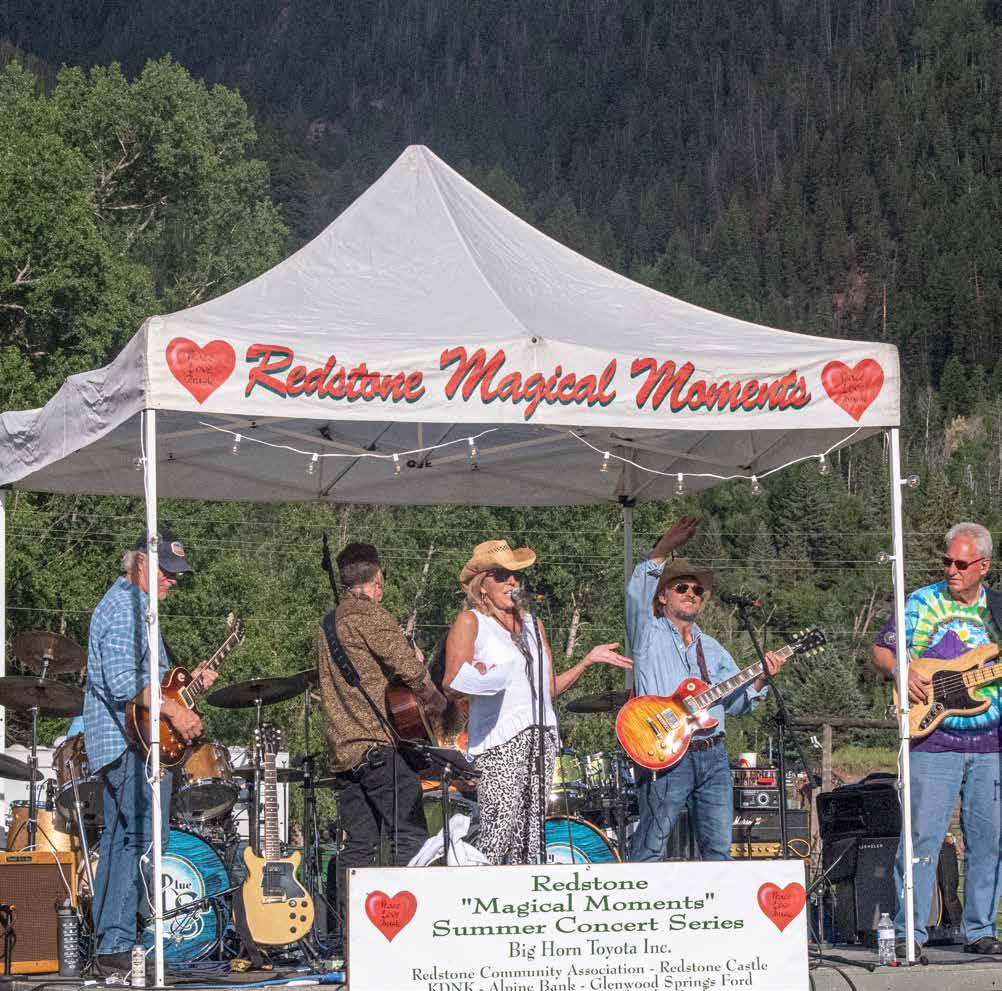


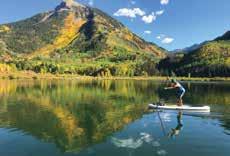
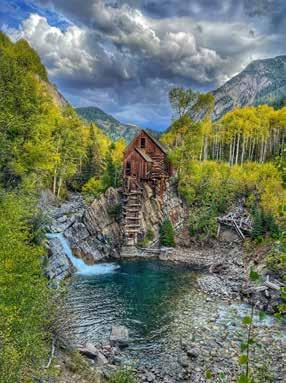
Photograph by Gentrye Houghton.
Media Mapping and enviornMental CoMMuniCation
Dear Editor,
The Roaring Fork Valley and surrounding areas is a complex ecosystem – one that would be unrecognizable without its mountain vistas, rivers, recreationists, and of course, the people that call it home. There are so many things that make the valley unique and I have been grateful to have spent the last few weeks speaking with and interviewing folks in the region.
Given the importance and role that the natural environment plays in the Roaring Fork, I have been diving into how people talk about environmental events (the “environmental news”) in the region. As part of my senior thesis at Colorado College, I am identifying where and what information channels exist in the Roaring Fork Valley for environmental news, as well as, the implications of the environmental news landscape itself. My research encompasses the consumption of a wide range of media – think everything from this local newspaper to email newsletters
and phone calls between neighbors. Environmental events include both acute and long-term impacts: from information regarding immediate wildfire or landslide risk to news about long-term conservation efforts, for example.
Media mapping and environmental communication have rarely come together in academic research. While I hope to fill this academic gap, I also hope that my research will reveal if any communication gaps exist in the region, to ensure that areas of the community are not adversely impacted by environmental events.
The Crystal Valley is in itself a unique region and I am excited to learn more about it. I am currently seeking interviewees for my study and welcome any inquiries. I can most easily be reached at c_barber@ coloradocollege.edu
Cheers, Claire Barber
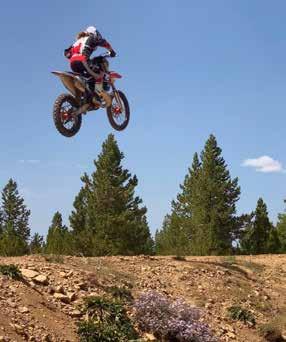
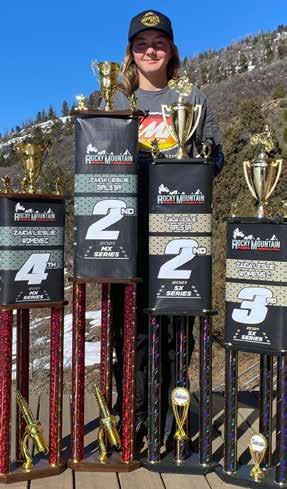
An update on Zaida Leslie’s summer racing provided by her father, Alan Leslie: Zaida is 16 years old and a Junior at Roaring Fork High School. She’s raced motocross and Supercross in 10 different states in the last year, and, this summer, has so far placed 7th in the Pala, Calif., Regional Championship, 5th in the Bunkerhill, Utah, Regional Championship., and 15th in the Texas Regional Championship.
For the second year in a row, she's been selected as an Alternate racer for the Loretta Lynn’s National Amateur Championship that takes place in August in Tennessee. Zaida is currently in 2nd place overall in Girls Class and 4th overall in the Women’s Class in the Colorado State AMA Series.
& Marble Times
Mission Statement: To provide a voice for the residents of the Crystal River Valley; to bring attention to the individuals and local businesses that are the fabric of the Crystal Valley region; to contribute to the vitality of our small town life.
Editor • Gentrye Houghton gentryeh@hotmail.com • (806) 374-0055 CONTRIBUTORS
Elizabeth Key • Alex Menard
ADVERTISING SALES
Heather Marine at Elephant Mountain Creative heather@elephantmountaincreative.com (970) 718-5848
The Crystal Valley Echo is published monthly, and is distributed throughout the Crystal Valley.
NEWSPAPER BOX LOCATIONS:
Carbondale (old) City Market • Village Smithy Carbondale Post Office • Redstone Inn
Propaganda Pie • The Marble Hub FOR SUBSCRIPTIONS
Please send $50 for print or $35 for digital editions along with address information to: The Crystal Valley Echo 364 Redstone Blvd. Redstone, CO 81623





Summer Concert Series, 2022

Sat. June 25 • 6-8pm
MY BLUE SKY, Allman Brothers Family of Bands Honoring the music of the Allman Brothers considered the founders of Southern Rock
Sat. July 2 • 6-8pm MOORS & MCCUMBER
Celtic Bluegrass, Blues, True Americana, singer-songwriters, the next Simon & Garfunkel
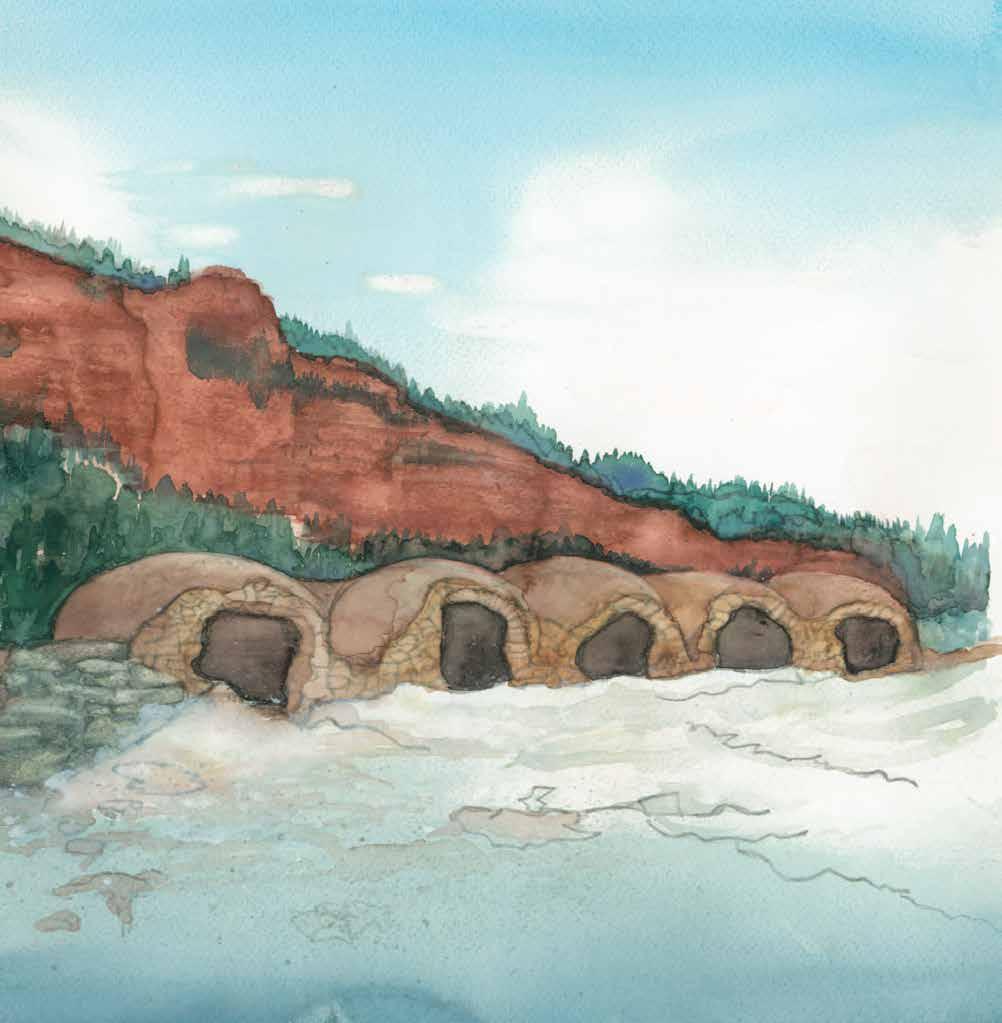
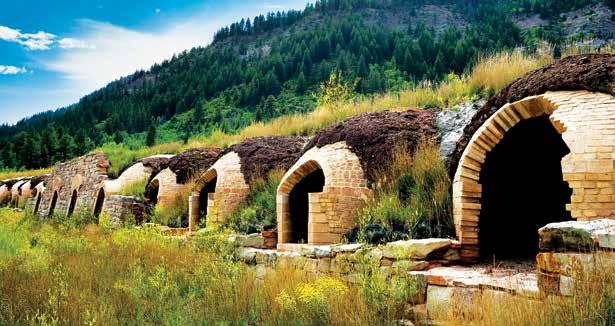
Located: Avalanche Outfitters (Behind the coke ovens) 17843 Highway 133, Redstsone

Sat. July 9 • 6-8pm BIRDS OF PLAY
A Telluride-Based Americana, Bluegrass & Folk roots quartet, singer songwriters weave together a unique tapestry of genres.
Sat. July 16 • 6-8pm
THE DELTA SONICS
Chicago Blues base music with a season of Swing, Delta, N’awlins, R&B and Rock & Roll
Sat. July 23 • 6-8pm THE QUEEN BEES
Female fueled music for the heart and soul; weaving Americana, Country, Folk and Bluegrass
SPONSORED BY:
Sat. Aug. 20 • 6-8pm
A BAND CALLED ALEXIS Western Colorado’s Rockin’ Country Band, they will get your boots dancing
Sat. Aug. 27 • 6-8pm
RUPERT WATES
Singer-songwriter, a gifted Folk musician who has released 10 solo albums and received accolades, tours in US, Canada and Europe
Sat. Sept. 3 • 5:30-7:30pm WOODEN ROCK
A Marble based band, a local’s favorite of Americana, Rock, and down-home fun music FOR MORE INFORMATION CONTACT
LISA WAGNER 970-963-8240 redstonecolorado.com
Like us on Facebook


BigHorn Toyota, Inc • Redstone Community Association • KDNK Alpine Bank • Glenwood Springs Ford • Redstone Cliffs Lodge • Avalanche Outfitters Avalanche Ranch Cabins & Hot Springs • Light of the Moon, Inc. • Red Hill Animal Health Center Crystal Dreams B&B • Redstone Art Foundation • Warren Turner Appraisals Friends of Magical Moments







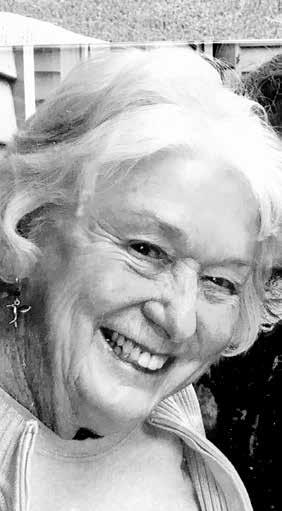
Lee Ann Smyth King Eustis lived a full life and passed away peacefully at the age of 87 with her two children, Leslie Eustis Hallowell and Evan Eustis by her side. She was in her home, a few yards away from the Crystal River, underneath the majestic force of Mt. Sopris, and in the beautiful Roaring Fork Valley, which she loved so dearly and called home for over 60 years.
Eustis will be remembered as both an advisor and an educator in the infancy of Colorado Rocky Mountain School, at Aspen Country Day School, Colorado Mountain College, Carbondale Public Schools, Montessori schools, and others. When not educating, she focused on the arts, entertainment, and the environment, including the early days of the Carbondale Council of Arts and Humanities, Crystal Theatre productions, Mountain Fair, and the Aspen Valley Land Trust.
She did all of this with passion, wit, and a contagious smile that caused many others to want to follow in her footsteps. It is both her many contributions and this legacy of love she leaves eternally behind.
Eustis was born April 26, 1935, in Philadelphia, Pa. She attended the Shipley School and Vassar College, and, in 1962, married George Pomeroy Eustis. The young couple moved shortly afterward to Colorado, ultimately landing in Carbondale in 1965.
She is survived by her daughter Leslie and son Evan; grandchildren Cody, Tyson, and Logan; great-grandchildren Coby and Logan Jr.; and her trusty feline “Lewis.” She also leaves many friends behind.
The family plans to celebrate her life at a date and time to be scheduled for midsummer 2022 in Carbondale, Colo. In lieu of flowers or other gifts, the family asks that you donate to the preservation of the valley she loved. Donations can be made to her memorial through the Aspen Valley Land Trust.
From CVEPA's Crystal Clear Newsletter
On the morning of May 26th, members of the Trust for Land Restoration (TLR), Trout Unlimited, and the Colorado Department of Public Health and Environment (CDPHE) met with the Crystal Valley Enviornmental Protection Association (CVEPA) to tour the Marble Wetlands Property and discuss options for its conservation. CVEPA is inspired and honored to be working with such an upbeat and talented group of doers who are clearly committed to environmental health and conservation.
An afternoon site visit included members of Aspen Valley Land Trust, Roaring Fork Outdoor Volunteers, and the Town of Marble. Everyone was excited that such a stellar property is being preserved for posterity. A meeting with neighboring Colorado Parks and Wildlife will take place soon. The property remains closed to unauthorized motor vehicles and the public is asked to avoid the immediate smelter site until a mitigation can be completed.
Pat Willits, TLR’s executive director, reported that they are working with the CDPHE and Trout Unlimited to develop a plan to clean up the smelter
slag pile to standards approved by the State of Colorado's Voluntary Clean-Up Program. It is expected this will include sweeping up and burial of the loose slag, capping the hardened slag pile with an inert road base, constructing a catchment basin at the toe of the hardened slag pile, constructing a ranch-style three-rail pole fence around the site, and installing signage interpreting past activities at the smelter site and discouraging walking on the covered site.
TLR will be the applicant to the State for the Voluntary Clean-up Program. Trout Unlimited will be the clean-up general contractor and will hire and manage subcontractors as needed.
The cost is yet to be determined but, subject to review and approval by the Marble Town Council, it is anticipated that CDPHE will enter into an intergovernmental Memorandum of Understanding (MOU) with the Town of Marble designating the Town as the fiscal agent to receive CDPHE funds to reimburse Trout Unlimited for all costs associated with the clean-up.
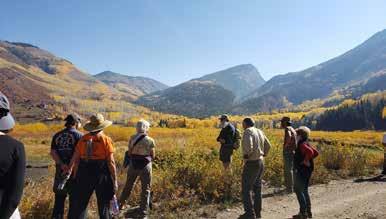
The goal is to complete the MOU and contracting this summer so that cleanup can be completed this fall. TLR anticipates donating the cleaned-up property to a public or non-profit entity in 2023. CVEPA fully supports the plan and anticipates enjoying many peaceful walks in the area this summer.
The headwaters of the Crystal River lie above the ghost town of Crystal City. Crystal City and the iconic Crystal Mill once thrived, and the Crystal River ran through them. Coal mines, marble quarries, and railways never stopped the current of the Crystal River. Back then the Crystal River was wild and free. In spite of it all, today it still is. The Crystal is one of only a few rivers in Colorado that remain undammed.
The Crystal River has withstood the test of time to become one of Colorado’s last untamed natural wonders. A jewel that all of us who live in the valley named after it, or come to enjoy all that it has to offer, want to protect and preserve. And there is a way for us to do that, without affecting anyone’s property rights. That is through the 1968 National Wild and Scenic Rivers Act, designed to preserve certain rivers and streams with outstanding natural, heritage, or recreational features in a free-flowing condition for the enjoyment of present and future generations.
In 2012, the Crystal River was listed as one of America’s 10 Most Endangered Rivers because of the ongoing threat of two dams on the river, at the time. Although those particular proposals were defeated, the possibility of dams or diversions impacting our cherished river remains to this day. We must take action now before it is too late.
There are two steps before a river can be included in the National Wild and Scenic Rivers System. The first is an evaluation of a river's eligibility. To be eligible for inclusion in the national system a river must be free-flowing and have at least one outstandingly remarkable value. In 1992, the White River National Forest evaluated all rivers within the forest for eligibility under the Wild and Scenic Rivers Act, and found both the north and south forks of the Crystal River, from their headwaters to the Sweet Jessup headgate, to be eligible based on the Crystal’s outstandingly remarkable values for the scenic, historic, and recreational character. The second step is to evaluate eligible rivers for suitability. Congress
can then act to designate suitable rivers recommended for inclusion in the system.
Wild and Scenic Designation will protect the Crystal from dams and diversions while not affecting private property or water rights. Designation DOES NOT prohibit development, give government control over private property, or effect existing water rights or the existing jurisdiction of states and the federal government over waters as previously established by law.
Join us, a broad range of community members and local and county government representatives, in supporting Wild and Scenic protection for our much valued and loved Crystal River.
Please join us in taking action to protect our Crystal River at crystalwildandsceniccoalition.org
Kate Hudson is a resident of the Crystal River Valley and member of the Crystal River Caucus.
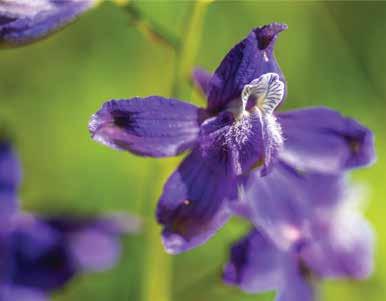
By Melissa Sidelinger
My introduction to wildfires in Colorado was abrupt and tragic. My family moved into Canyon Creek Estates on the outskirts of Glenwood Springs in June of 1994. On July 2nd a lightning strike hit Storm King Mountain and ignited a wildfire that smoldered slowly for days before spreading more than 100 acres on the slope below Hell’s Gate Ridge.
On July 6th a helitack crew, 16 smokejumpers, and 20 hotshots from Prineville, Ore., were dispatched to tackle the blaze, now known as the South Canyon Fire.
At 5 years old, I stood in my parents’ front yard and watched the firefighters gather their gear and fly out of Canyon Creek Estates in helicopters headed towards the mountain. A couple of hours later a cold front moved in; then, at 4 p.m., the fire flared and the blowup raced up the slopes of the mountain toward the firefighters working the fire line above. Out of the 49 defenders on Storm King Mountain, 14 were trapped by the flames and did not return home, including the nine Prineville Hotshots, as well as three smokejumpers, and two helitacks.
Too young to understand the implications of that moment in the world of wildland firefighting but old enough never to forget, I watched the plume of smoke envelop the mountain and thought, Those firefighters aren’t coming home
I’ve carried the memory of that day with me in the 28 years since the Storm King 14 lost their lives on the slope beneath Hell’s Gate Ridge. The South Canyon Fire gave me respect for firefighters and emergency responders and taught me of the risks we all take while living in Wildland-Urban Interfaces (WUI). Though the threat of wildfires is increasing across the American West, many of us will
not be joining the ranks of hotshots, helitacks, or smokejumpers. However, if you are interested, there is an option more easily obtainable, and that is volunteering with our local fire district.
The Carbondale and Rural Fire Protection District (CRFPD) provides fire, emergency, and rescue services to 300 square miles of the Crystal River and Roaring Fork Valleys spanning across Eagle, Garfield, Gunnison, and Pitkin counties. This area includes the towns of Marble, Redstone, Carbondale, part of Glenwood Springs, and also includes a portion of Missouri Heights. With five fire stations (#81-85) spread throughout the district, CRFPD relies on both paid and volunteer firefighters to carry out its mission.
CRFPD desperately needs more individuals from the communities of Marble and Redstone to join the volunteer fire district to serve our communities for the years to come.
Back in May, I attended the CRFPD volunteer information meeting held at Propaganda Pie; there, Fire Chief Rob Goodwin and Volunteer Coordinator Kat Bernat explained the process of applying and training for the district's volunteer branch. Classes for the New Member Academy include Emergency Medical Responder (EMR), Basic Firefighter, and Wildland Firefighter.
These classes are free and provided to applicants by CRFPD following acceptance into the volunteer firefighter program. The New Member Academy takes approximately 40-45 hours per class to complete, or 120-130 hours of classes. Plus, there are 24 shift hours per month required with the fire district. Those shift hours would be completed through the Carbondale Fire Station while volunteering with the paid firefighters. It takes six months to complete classes and the probationary period.
At the Redstone Inn
The Redstone programs are for residents & visitors of the Crystal Valley. RSVP: (970) 920-5432
JULY 12 & 26
• 12:00 p.m. – Lunch ($10) RSVP by the Thursday prior – space is limited. Plated lunch will be served. There will be a gluten-free option.
• 12:30 p.m. – Program
July 12: Michelle Amyot & John Riger
Jazz Piano, Ukulele & Vocals
A modern and fresh spin on Vintage Jazz
July 26: Skip’s Sundae Social
With Skip Bell’s homemade ice cream
WANT TO BE KEPT IN THE LOOP?
Send us your email address: (970) 920-5432 • seniors@pitkincounty.com
The first step in the application process is scheduling a Ride Along, a day at Station 81 in Carbondale where the potential applicant follows one of the firefighting shifts as they respond to emergency calls and go about their daily tasks.
Wondering what I was getting myself into, I signed my name to the Ride Along list. After living in Marble on and off for the past 25 years, and watching friends and neighbors who volunteer with the district respond to fires and emergencies in my community, I decided to see what it takes to join them.
I scheduled my Ride Along for Memorial Day, May 30th, with B Shift at Station 81. Upon arrival, I was introduced to the firefighters, EMTs, and paramedics, given a CRFPD t-shirt, and assigned a pager for the afternoon. Over the next eight hours, I had the opportunity to experience a day in life at the fire station.
Although B Shift did not receive any emergency calls that afternoon (surprising for Memorial Day), I did get to ride in one of the fire engines, perform equipment checks, and receive a tour of the fire station, fire trucks, and ambulances. Afterward, I filled out an application and contacted Kat Bernat about possible New Member Academy class schedules.
Bernat has been involved with the volunteer firefighter program since 2004 and has been the volunteer coordinator at CRFPD since 2018. “As the needs of the communities we serve have grown, so has the fire department. With the changing urban interface and community growth," said Bernat, "we need the volunteer first responders to grow with it. Not just for the wildland response, but also for all of the emergency responses we get dispatched to including medical, rescue, and auto accidents,” she said.
“We need people who can commit to the training and the time it takes to become a volunteer first responder,” Bernat continued. “I would like to see more people who live near the outlying stations in our district, including Redstone and Marble, commit to this. We’ve made it easy for people to find out more by putting everything about the New Member Academy, the application process, and volunteering in general on the district’s website. They can also reach out directly to me by phone or email if they prefer.”
I also had the opportunity to speak about the volunteer fire district with Marble Fire Captain and former Fire Chief Ron Leach and with volunteer firefighter Paul Wahlbrink, who both gave me a tour of Station 83 in Marble.
“This is my fifth summer in the volunteer fire district, and I’ve lived here in Marble for almost 53 years,” Wahlbrink told me as he showed me around the station. “I enjoy doing the work as a volunteer firefighter and helping people and serving my community. I enjoy working with everyone at the fire district, and the camaraderie, teamwork, and excitement of answering calls.”
I’m hoping that I, too, will soon have the opportunity to experience that camaraderie. With only four volunteer firefighters in Marble and three in Redstone, the Crystal River Valley needs more individuals to join and serve.
As Captain Ron Leach so perfectly put it, “Volunteer firefighters are very special people.” I couldn’t agree with him more.
For more information on the South Canyon Fire:
• Fire on the Mountain: The True Story of the South Canyon Fire by John N. Maclean
• 1994 South Canyon Fire on Storm King Mountain: https://m.youtube.com/ watch?v=ZzGTjfTHihU
For more information on the Carbondale and Rural Fire Protection District:
• www.carbondalefire.org
• Kat Bernat, Volunteer Coordinator:
• Phone: (970)-963-2491
• Email: Bernat@carbondalefire.org
By Gentrye Houghton

Michigan resident, Alan Brown returns to the MARBLE/ marble Symposium (M/m) to share his unique style with both students and spectators.
“I majored in illustration at the College of Creative Studies (CCS) in Detroit,” explains Brown, “but I never worked as an illustrator.”
During his time at CCS, he started working for the Michigan State Parks and was a ranger for 39 years before retiring in 2019. “I decided I didn’t want to leave this world without giving the art thing a go,” Brown chuckles.
He says his drawings are mostly black and white illustrations using pen and ink but was always really drawn to the stone. Brown’s drawn to a challenge and says the stone is about as difficult of a challenge as he could find.
“I started carving here [at the Symposium] 18 years ago, and once I started carving, I knew that’s what I wanted to do,” he says, “but I really wanted to carve the way I draw.”
So, Brown started experimenting with different tools and said a tile cutting bit is something he picks up often to get the illustration detail he desires. He says he's constantly exploring and tries to facilitate growth.
“I love a challenge and problem solving, and really feel that our greatest growth happens when we get out of our comfort zone,” says Brown.
After retiring as a park ranger in 2019, he began instructing at the Symposium. “I always came out here during the second session,” says Brown, “and people started to get to know me. They were curious about my work and started asking questions, so I was already sharing an exchange of

JUNE 10th - 12th
MARBLE/marble SYMPOSIUM
JULY 2nd - AUGUST 5th
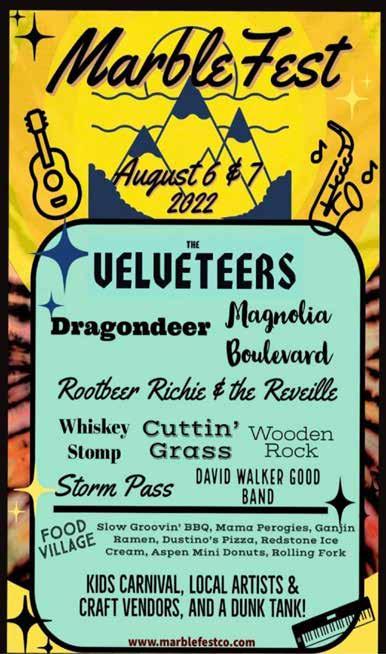
MARBLE FEST
AUGUST 6th - 7th
SEPTEMBER 10th
information with my peers. I like to see people succeed in their artistic endeavors, so when I retired, Madeline [Wiener, M/m’s Executive Director] really encouraged me and invited me out to teach that year.”
He says instructing has brought up another set of challenges with his communication skills, and he learns just as much from his students as they do from him. He adds, “When things don’t go quite right, that’s when you find out how creative someone really is. That’s when people have to get creative to figure it out and I love helping them figure it out.”
Brown finished our interview by saying, “I keep coming back to MARBLE/marble because of the pace, the atmosphere, the people waving to you when they don’t even know you, and the mountain lifestyle — I just love it. The creative juices that come out of this mountain are like nothing nowhere else on earth. I owe a debt of gratitude to this Symposium; I don’t know what I’d be doing without it.”
M/m is open to curious spectators and welcomes visitors who are not participating in the workshop. There are three sessions where you can check out this summer’s carvings: First session, July 2nd — 9th; Second session, July 15th — 22nd; and the third session, July 29th — August 5th. For easy directions, stop by The Marble Art Gallery.


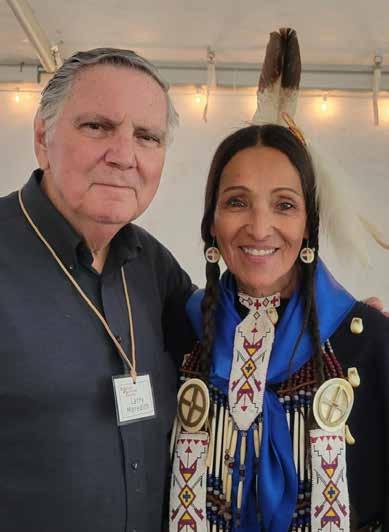
Over 100 history lovers came together under the Redstone Inn's event tent Sunday, June 26th to learn about the history of the valley's original inhabitants, the Ute or Nuuchi people. The presentation was given by CJ Bradfford, director of the Ute Indian Museum in Montrose, Colo., and a member of the Oglala Lakota Sioux.
Bradfford, who has received multiple awards including the Governor’s Award for Excellence in Public Service, spoke on Ute history and Ute culture in current times. She took questions from the audience ranging from land rights to boarding schools.
Since becoming the Ute Museum's first Native American director in 1996, Brafford has worked with the three Ute tribes to transform the museum into one that reflects the current Ute people and the fact that they are still very much present with a vibrant culture and traditions. The museum incorporates Ute stories and speakers with hands-on learning exhibits to bring the knowledge of the Ute people to a wider audience.
Most recently, the museum has secured a GOCO grant to create a "Naturescape" playground on the museum grounds including bear dens and giant climbable spider webs to strengthen visitors' connection to the land. Bradfford invited everyone to visit the nearby museum to learn more.
The Ute Indian Museum is located at 17253 Chipeta Road in Montrose and is open Monday — Saturday 9 a.m. — 4:30 p.m. and Sunday from 11 a.m. — 4 p.m.

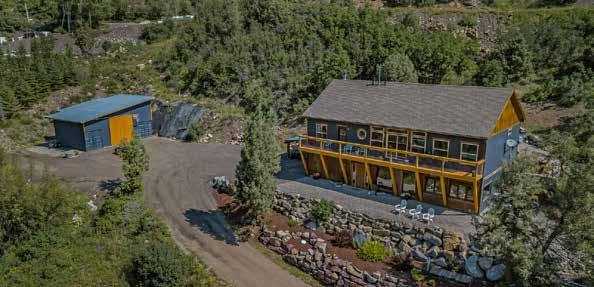
Enjoy pristine views, storage for all your recreational equipment and—best of all—no HOA. This home offers a spacious layout and plenty of room to entertain. A potential 5th bedroom is currently used as a home salon. There are several outdoor entertaining areas including a patio off the kitchen, hot tub for soaking after a day of skiing, and deck for taking in the views. The property offers an additional building site for a home or guest house. There is also a shop complete with pellet stove to continue your handiwork throughout the winter months. With so much potential, don’t miss the opportunity to make it yours.


By Gentrye Houghton
After the discussion began in January 2021, the Pitkin County Board of County Commissioners (BOCC) finally passed a short-term rental (STR) ordinance during the fourth reading on June 22.
This ordinance only applies to unincorporated Pitkin County and will go into effect 90-days after last month’s vote. While the BOCC strives for agreement before voting, Commissioner Kelly McNicholas Kury said, “Maybe it makes sense to have a divided board to represent those [different] perspectives.”
In the end, Kury joined the majority to vote 4-1 with Commissioner Francie Jacober opposing.
The regulation requires those interested in operating an STR to apply for a license; applicants are expected to prove rental history before May 1, 2022. The approved ordinance calls for 120 maximum rental nights annually, and a minimum 4-night stay to prevent nightly turnover.
The County is still working on the licensing fee, and County Manager Jon Peacock explained that it will most likely be a graduated percentage of property values — roughly equaling the amount of rental income incurred from 1-1.5 nights’ stay.
Currently, the approved ordinance will regulate the STRs in the Redstone Historic District; however, commissioners are committed to engaging with the community to discuss
special treatment within the village. A public meeting in Redstone will be scheduled for later this summer.
Redstone residents and STR owners alike have vigorously participated in the public hearings. Supporters for STRs state they are a vital component of Redstone’s ability to expand the tourism economy, while critics are quick to explain how STRs destroy the community.
Commissioner Greg Poschman supports regulation to urge longer-term housing options and to ease the impacts on infrastructure. He said, “It’s changed the DNA of the culture of our community and how our community functions.”
According to Board Chair Patti Clapper, the BOCC will revisit the regulation within a year for a thorough assessment.




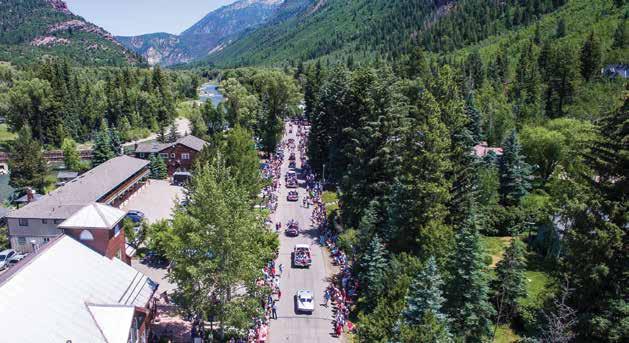
TIMES SUB JECT TO CHANGE
9:00am Pie, Baked Goods & Ducky Sales at the Redstone Museum
10:00am Bike Decorating at the Inn
11:00am Boulevard closed to vehicles. Limited Parking at Elk Park
11:00am Parade participants gather at the Lower Parking lot of the Redstone Inn
TBD Colorado Air National Guard Flyover (no exact time.....Look up!)
12:00pm Redstone Parade - The only Parade you get to see TWICE! After Parade Water Games at Propaganda Pie, Ducky Derby - TBD
Redstone, Colorado, is an unincorporated village that relies completely on donations and volunteerism spearheaded by the Redstone Community Association (RCA). Your membership dues and donations directly fund RCA projects and events.
Thank you for your support!
Scan the QR code to be taken directly to a payment screen for easy Membership Sign up or renewal. You may also write a check and drop it off at the Redstone Inn or mail it to 303 Redstone Blvd. Redstone, CO. 81623

REDSTONE COMMUNITY ASSOCIATION BOARD MEMBERS
Steve Pavlin - President
Nate Helfenbein - Vice President
Katie Lowery - Treasurer
Sara Lewis - Secretary David (DJ) Johnson, Heather Marine, Josh Wambol t, Ron Phaneuf - Board Members
Cathy Montgomery - Alternate
From Ron Sorter
In 2003, the IRS seized the Redstone Castle to help repay victims of an investment scandal, a Ponzi Scheme, estimated to have scammed $56 million from investors. The future of the Castle seemed doomed. The IRS was charged with liquidating all assets to repay investors until our "little but mighty" Redstone Historical Society (RHS) parlayed forces to save this historic treasure.
RHS helped arrange a local meeting in May 2003 to meet the state and federal players and learned from the IRS that disposal of a seized property where "historic preservation is not a priority" could likely result in an auction of the property, including the fixtures and furnishings. The agent admitted that the local IRS office, based in Grand Junction, had never seized anything as large as the Redstone Castle. Another Castle lien-holder had already acquired the right to dispose of the interior furnishings, whereby the Tiffany lamps and Stickley furniture could be auctioned to the four winds. Not a great scenario.
Allowing the Castle interior to be gutted, subdividing the front lawn, or losing the momentum effect of Castle tours on Redstone's economy would not be good. Dan Corson, bless him, of the Colorado Historical Society, was at that meeting and described Section 106 of the National Historic Preservation Act.
Most of us, including the IRS, had never heard of it. But that arcane, bureaucratic reference is the reason the Castle isn't a smoking ruin. It basically requires federal agencies, whenever they happen to get control of a "historic property" to allow public input (in the form of consulting parties) with the aim of reaching an agreement on ways to avoid or reduce adverse effects on that property.
That rule became our Louisville Slugger, and all we needed were some legendary swingers. RHS and their partners had several so, in the bottom of the ninth, many years later, bases were loaded and we won the World Series. The Castle was able to be protected as a historic jewel by some bulletproof conservation easements when it was bought by Ralli Dimitrius at the IRS auction in 2006, conservation easements and all. There was kicking. There
was screaming. Isn't there always?
All content sponsored and provided by the Redstone Historical Society.
The IRS eventually agreed to be bound by Section 106. And they eventually agreed that they had no experience writing Memorandums of Agreement (MOA), which are maps of how, in detail, to preserve big castles. They let the preservation groups, including the RHS, do that. There aren't enough words in the dictionary to describe U.S. Attorney Jim Russell's work in getting that to be a fact.
The SEC? Now that's a different story. The Security and Exchange Commission is a federal agency but their top lawyer ruled that Section 106 didn't apply to them. Then (for some reason) the case was transferred from Colorado, where we'd been given "standing," to Florida where the largest group of "victims" lived and where we didn't have "standing."
Did I mention our group had no legal fund at all? RHS Board member and former president, Peter Martin, acting as our pro bono attorney, traveled there at his own expense, got the judge to admit him (and RHS) to the case, and (somehow) persuaded him to order the SEC to comply with Section 106. Seems simple, right? It wasn't.
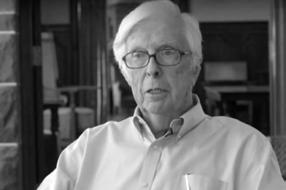
Darrell Munsell, RHS president during this adventure, spent more time talking, cajoling, traveling, and meeting with people than can be described here. Two years in one sentence? No way. But effective, you bet. In the end, Munsell and Martin were jointly awarded Redstone's Community Service Award.
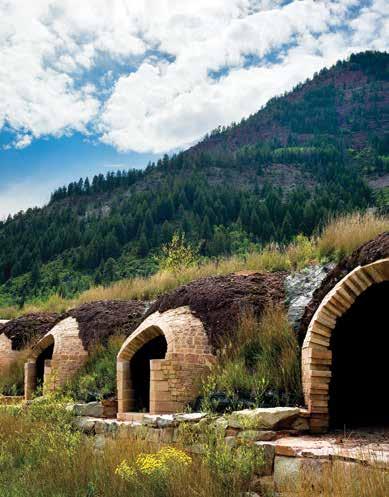
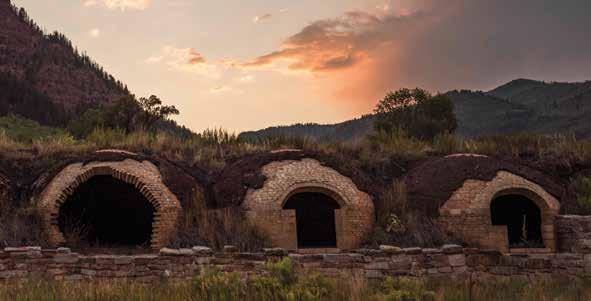
In honor of the Crystal Valley Enviornmental Protection Association’s 50th anniversary, the Redstone Historical Society is sponsoring a tour of the iconic coke ovens led by Ron Sorter. Coffee and donuts will be served.
Join us on Sunday, August 21st at 11 a.m.
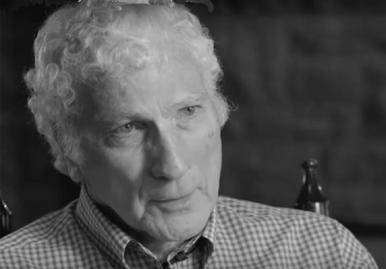
Nancy Taylor, our next RHS president, worked with Colorado Preservation Inc. to have the Castle designated by them as one of the most endangered places in the state. Lots of attention, lots of press, and more help from more people.
Munsell went to the 2006 ceremony in Washington, D.C., at his own expense, to receive our Partnership award on behalf of the RHS along with a representative from our other partners: Colorado Preservation, Inc., The National Trust for Historic Places, Colorado Historical Society, and Pitkin County. One of the things that impressed him most was how much national attention there was regarding the successful preservation of the Castle.
Obviously, both the Castle and the Redstone Inn are huge drivers of the social and economic life surrounding Redstone. It's critical for them to remain historically valuable and economically viable, especially for the heritage tourism market.
We were the group that needed to make that happen and there it is. In the end, there is no way to describe all the work and effort that went into it but to share the credit: Barb Albin, Jill Briggs, Marty Fiala, Bev Goss, Ann Martin, Sue McEvoy, Michelle Sorter, Debby Strom, and Pat Zollinger. Thank you.
Author Ron Sorter is a former RHS board member extraordinaire. He now lives in Washington State but still actively involved in the Society.
Children are known for their magical thinking but it is unfortunate when some children believe that the food they eat originates in the grocery store. Those city children certainly haven’t had the privilege of eating the country farm-to-table meals we enjoy in agricultural Colorado.
From seed to stalk many Coloradans are savvy when savoring their food but what about that glass of water? Did it fall from the sky? Probably but what is the process of getting it from sky to glass? In Redstone, many of us take for granted turning on the tap and filtered water spilling out.
Rochelle Norwood, the part-owner of the Redstone General Store, is well aware that drinking water doesn’t originate in the glass. For the past 17 years, Norwood has been traveling to Ghana where the local population gets its filtered water from the top of someone’s head.

By Elizabeth Key
She explains, “It comes from a water filtration place. They package it in these 12-ounce plastic bags that you buy from somebody vending it off their head. They have ice in a bucket and it's like five cents. You tear the corner off with your teeth and drink it.”
Initially, Norwood was introduced to Ghana through a study abroad program at the University of Ghana. While there, she was inspired to collaborate on the creation of a sustainable eco-village. Since then, the Africana Village of Peace Project (AVPP) was formed and acquired a three-acre parcel of land on the Volta River near Senchi in West Africa. This sustainable arts village focuses around keeping the traditional arts and culture alive through education. The island is inhabited by three local farmers and welcomes people from across the globe.
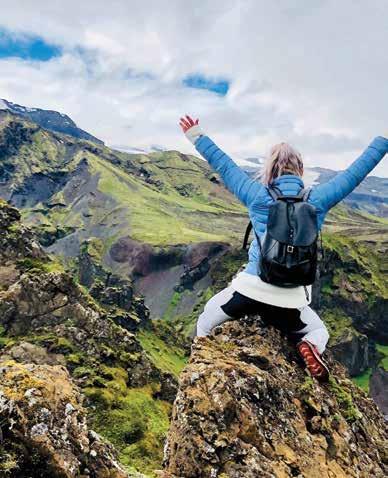
Larger scale water filters are paleolithic with their mimicry of nature. The Redstone Water and Sanitation District (RWSD) filters the water for its 144 taps in Redstone and Crystal River Park through layers of increasingly smaller rocks. Ryan Kenney, Manager of the RWSD, describes the filter, “It’s different sizes of gravel. Essentially you start with the size of a quarter and it goes down to the size of really fine sand.”
The industry jargon for these specially formulated filtration stones is media. This process filters out bacteria and other materials just like the earth naturally filters groundwater.
The RWSD spent $20,000 last year on new media to replace the current filter. Large filters, like Redstone’s, have a fifteen-year lifespan and require monthly cleaning. Kenney explains the backwashing process, “Because we are forcing water through all this material, the things we are filtering out stay in the media. Over time that fills up, and you want to flush it out, so you send water in reverse through the filter, and you pump that water out into the lagoon. It helps clean the filter and remove some of the bacteria, and then it is good to go again. Then you run it back through in the normal direction.”
RWSD has two sets of filters located in the water treatment facility that's on the way to the East Creek trailhead. They can switch between the two filters during cleaning, so the water keeps flowing.
These filters are constructed of paper or plastic. Both Ghana and Redstone’s filters rely upon elevated water tanks that use the force of gravity to push water through the filters.
Norwood personally purchased the $12,000 filter system. She has successfully raised $5,500 to cover the cost but is still seeking donations. She says, “We can now do bigger projects on the land because we can offer fresh water.”

They don’t have to go to the bathroom in the fields because they have built a rudimentary compostable toilet, and although much of the island is still primitive, it is now hygienically equipped.
CMYK: 0, 84, 100, 0
HEX: #F05123
RGB: 240, 81, 35
CMYK: 100, 33, 38, 0
HEX: #008498
RGB: 0, 132, 152
CMYK: 0, 0, 0, 100
HEX: #231F20
RGB: 35, 31, 32
AVPP’s island is a short canoe paddle across the Volta River from Senchi. Locals come to the island to aid with cooking and various other projects on the island. They use the Volta River water for all their needs, from washing their bodies, cars, and clothing, to drinking. Unfortunately, just upstream from the central water hub, a banana plantation sits directly on the river, and Norwood suspects it is not organic.
She inquires about the local’s health, ”When I ask, everyone is like our stomachs hurt. We have diarrhea.” Still, the locals have yet to connect their illnesses with the possible parasites and chemicals in the Volta river.
During their trip to Ghana in May, Norwood and her daughter Ruby, brought along a water filtration system. The filters had to be compact and light enough to fit in their suitcases and travel across the Volta river in a wooden canoe.
In Redstone, no factories are polluting the water source. Kenney says, “We are one of the few places where no humans are living above our water source, so the only things that can get bacteria and contaminants into the water are wild animals.”
Redstone also doesn’t have to contend with possible chemicals from the farmland runoff from the fields below. ”It’s got to be some of the cleanest water in the state,” Kenney says.
Redstone’s water filters are located in the treatment facility just below the East Creek trailhead and the water intake is a couple of hundred yards above that. The four-square-mile basin of East Creek provides ample snow runoff to support Redstone’s water demands. RWSD can process 300 gallons a minute and has several holding tanks.
To offset the fluctuation in seasonal demand, RWSD implements a monthly base rate of $46 per tap for

10,000 gallons of water, whether it is used or not. A single tap can support a four-bedroom house without extra living spaces. People rarely go over their allotment except for the high-demand days of the tourist summer season around the Fourth of July.
The state and federal governments require public water systems to add chlorine and monitor the appropriate contact time for the chlorine to kill anything in the water. The low dose of chlorine naturally dissipates with time. The RWSD tests the water before the first tap on Firehouse road to ensure the water is clean. RWSD does not add fluoride to the water system for dental health like some other communities.
During the spring runoff, the river churns harder creating more turbidity, sediment, and particles in the water. Due to the introduction of more elements into the water, the RWSD increases chlorine so it can permeate effectively. “At these times, the water comes out of the tap slightly cloudy,” Kenney says.
On the Africana Village Peace Project island, there are several clay block huts with metal corrugated roofs and bamboo structures. Norwood says the villagers use “...coconut for lumber. The wood from coconut is really hard.”
Food is specific to each region and especially found in Senchi are the snail and shrimp kebabs. The locals fish for tilapia in the Volta using baskets and nets. Refrigerators are rare in ghana, so eggs are a natural staple for protein. The island also houses goats and chickens and just acquired a new pig pin with three pigs.
The farmers grow okra, cassava, cocoyam, corn, tomato, peppers, onions, garlic, bananas, plantains, mangos, av-
ocado, lime, orange, papaya, and more. During the dry seasons, they can irrigate fields using a poly tank and pump that looks like a generator. It runs on gas and oil and pumps water to the fields.
The RWSD encourages residents to irrigate around their homes because of the high fire danger in the area. “It’s a lot easier to fight fires if you have open space that is green around your house.” Kenney says, ”A little prevention goes a long way.”
“One of the advantages of living in Redstone is that we have superior water rights,” Kenney says. Redstone’s water appropriation date is 1902 and there are very few users with more senior rights.
In the Western United States, water rights are first come, first serve. If there is severe drought, water taps are shut off or “called” according to the appropriation date. Some of the agricultural ditches downstream from Redstone have extremely senior water rights.
If the water runs low at their headgates, they can report it to the Colorado engineer. The engineer then pulls and starts shutting off taps according to the newest dates on record and continues to the next date until the issue is resolved. In Colorado, when there is a water shortage the burden is not shared equally.
Norwood has partnered with Aspen Dance Connection to bring tribal dancing into our valleys’ schools. The program is called Dance for Water. Recently, when she was in Ghana, they did two live Zoom tribal dance sessions for valley students. Children got the opportunity to get their heart rates up and see the island in Ghana while learning cultural dance and drumming. Norwood says, “We want it to become a bigger project where kids from our valley go to the island.”
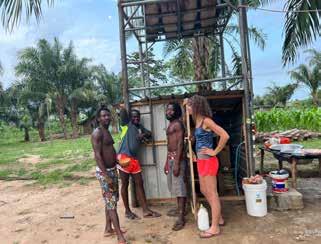
She needs people to help steward the Africana Village Peace Project into the next phase. Even with a rudimentary infrastructure, Norwood says, “On the happy index, Ghana is the happiest African country.”
It seems that, so far, Redstone’s water infrastructure is superior during this climate crisis, which should put our community high up on the happiness index as well. We can all raise a glass of water to that.
For more information or to contribute skills or funding to the AVPP, please contact Norwood at rochellenorwood@hotmail.com
events in redstone/marble; ad for june, july, aug other ways to get involved in trails, restoration, fire mitigation youth education thanks to partners

July 16 & 17
Generations of middle schoolers have camped at the Marble Basecamp, near the North Lost Trail above Marble. We’ll learn and practice conservation and outdoor education skills to get this conserved property ready for the upcoming school year. Join us!
Recreation is growing near and above Coal Creek, and we want to ensure that trails, plants, and streams get along! You can participate in landscape restoration that will enhance the publicly accessible Coal Basin Ranch property above Redstone. Join us!

Come for the scenery, stay for the barbecue! Enjoy a weekend campout in Marble full of stewardship projects, learning opportunities, and plenty of time to just hangout. Overnight camping provided. Project sites include: Beaver Lake, the Historic Mill, and Raspberry Creek. Join us!
What is a weed? There are many ways to answer this question. A weed is simply a plant out of place, or a weed may be an uninvited and unwanted visitor with undesirable features. A weed is a vigorous plant that can take over an area, described by the phrase, "growing like a weed." The suffix "weed" is added to many common native plants like fireweed, sneezeweed, and others.
The word "weed' is also a technical term with a clearly defined meaning. The Colorado State Department of Agriculture protects our natural and agricultural environment by controlling the spread of noxious weeds. The Colorado Noxious Weed Act, established in 1990, accurately states what is a noxious weed. This is done not by a description or definition, but a noxious weed is simply one that is included on the state noxious weed list.
agement strategy is to stop the continued spread of these species. These are plants that you would recognize and should learn to identify and control.
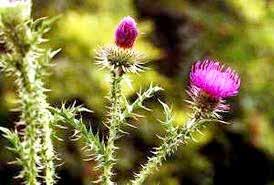
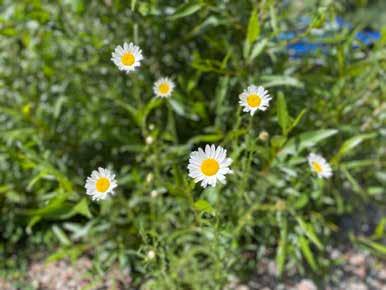
Local examples include Absinthe Wormwood (Artemesia absinthium), Bull Thistle (Circium vulgare), Chamomile (Anthemis cotula), Tansy (Tanacetum vulgare), Houndstongue (Cynoglossum officinale), Oxeye Daisy (Leucanthemum vulgare) and Yellow Toadflax (Linaria vulgaris). Remember that the scientific name is used for identification rather than the common name because it is unambiguous. The vulgare and vulgaris species names mean that it is the common variety of that genus.
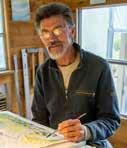
By Alex Menard
The Colorado Noxious Weed Act establishes four different subheadings: Lists A, B, C, and the Watch List. The purpose is to provide separate management strategies for differing plants.
List A contains species that must be eradicated wherever they are found. The plants on this list are uncommon or even unknown in Colorado. For this reason, control is feasible. The undesirable features of these plants are known from their behavior elsewhere. This list could be described as threats that can be controlled. You're probably unfamiliar with most plants found in List A.
List B plants are already established here. The man-
Plants found in List C have established weeds that may be controlled by the choice of local governments. The State management strategy is to assist local governments if they choose to try to control the spread of these weeds. You could say that the state does not consider eradication at the state level feasible.
There are familiar weeds on this list: Burdock (Arctium minus), Mullein (Verbascum thapsis), Bindweed or Morning Glory (Convolvulus arvensis), and Puncturevine (Tribulus terrestris). Burdock seeds stick to your socks, while puncturevine gives your bike a flat tire.
The Watch List is a recent addition, which serves only to identify plants that should be watched should they become problems. The weed list is updated regularly, and a county weed list would contain all the plants listed on the state lists A and B, but may differ on List C plants.
Some weeds are escaped ornamental plants from gardens; in Marble, Oxeye Daisy and Toadflax are present in large numbers, while Dame's Rocket (Hesperis matronalis) is spreading in only one site. There is always the potential for some vigorous ornamental plants to become invasive. A safe strategy is to emphasize native plants when planning a new garden.
Other weeds were brought here on purpose and went out of control. Absinthe Wormwood, a relative of sagebrush, is the source for the alcoholic beverage Absinthe. It was brought to Colorado by the earliest European miners for that purpose.
Dandelion and Salsify are not on any list because they are so well established that control is not feasible. Plants like this appear in Colorado flora books and are called naturalized or introduced. They have permanently established parts of our plant communities.
Besides the economic costs of weed control imposed on gardeners, farmers, and ranchers, weeds impact our native plant communities. Wildflower lovers should learn to identify and control weeds, which impact the health and diversity of natural landscapes. Oxeye daisies can take over a whole hillside, crowding out rare beauties like the Red Columbine and Gentians.
Weeds take over a natural community because they can outcompete the natives. This may be because of the lack of natural controls, prolific seed production, longer growing season, or other factors. The most important control factor is prevention.
Weeds get their foot in the door whenever an area is disturbed and not immediately restored. Redstone has very few weeds because Pitkin County regulates and minimizes ground disturbance during construction.
Pitkin County's Land Use Code protects the native landscape in many ways. First, a construction site plan is not approved until an activity envelope is established. This envelope delineates and minimizes the area that is disturbed. Before any excavation begins, areas of vegetation to be saved are protected with fencing.
Second, any disturbed area must be revegetated during the first growing season after a disturbance with complete recovery by the second season. Finally, areas of special concern such as wetlands and unsta-
ble slopes have special regulations.
In contrast, unregulated Marble has serious weed problems. The Town of Marble passed a weed ordinance several years ago, but enforcement by the Town or Gunnison County is absent. As a consequence, there are large amounts of weeds in Marble, especially at Beaver Lake, the Mill Site Park, and on private lands. Even the new Marble Wetlands parcel has an issue with multiple weed invasions.
Disturbance of native vegetation by recreational vehicles provides another opportunity for weed establishment. Tires can carry weed seeds to these newly disturbed locations.
The first step in prevention is identification. Your county extension agent can give you a free Noxious Weeds of Colorado handbook, which contains photos and descriptions. Weed management guides are also available online through Colorado State University Cooperative Extension. Learning to identify weeds when they are small makes them easier to control.
The Marble Hub and Marble Museum are cosponsoring a free weed identification and control workshop this month. You can learn to identify all the common local weeds, and we will discuss control strategies for each plant. Each participant will receive a free weed handbook.
For those interested, meet at The Marble Hub on Sunday, July 10th from 1 p.m. to 4 p.m., and, we will, of course, also see lots of wildflowers.
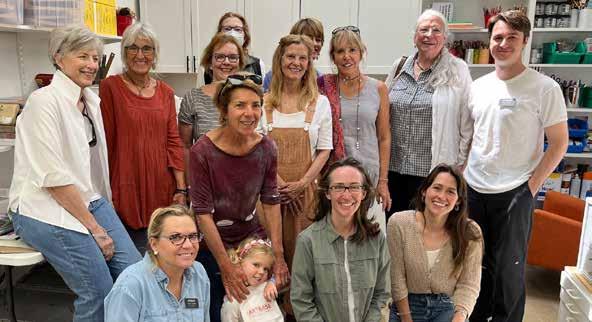
Last month, on June 3rd, the Redstone Art Foundation hosted a tour of the Ann Korolous Gallery and the Art Base in Basalt. The group went on to Aspen for lunch at the Aspen Art Museum rooftop café and a tour of the Mountain Time exhibit at the museum.
Highlights of the tour include one artist's work telling the story of Bruno the Bear at Ann Korolous Gallery. The Art Base is exciting as an up-and-coming, not-for-profit art center for children to adults. They offer many interesting classes in a variety of mediums along with several art exhibits. Mountain Time at the Aspen Art Museum’s movies provided lengthy conversations about current issues.
Join the Redstone Art Foundation on August 4th for a for at Anderson Ranch.
Sign up at the RAF website at www.redstoneartfoundation.org


After six months of work, the Lead King Loop Stakeholder group is finally drawing to a close and fleshing out recommendations for the County, Town, and Forest Service. I admit when I first joined the group last January I never imagined it would be such a lengthy and involved process. I now see how naive I was in thinking there was an easy solution to the problem of off highway vehicle (OHV) overuse and vehicle congestion. I've come to appreciate just how complex of an issue this really is.
No one seems to argue the fact that the increase in OHV use has lowered the quality of life in Marble and the surrounding area, not even the majority of OHV users who find themselves riding on dustfilled, busy trails. How to fix this, however, gets tricky.
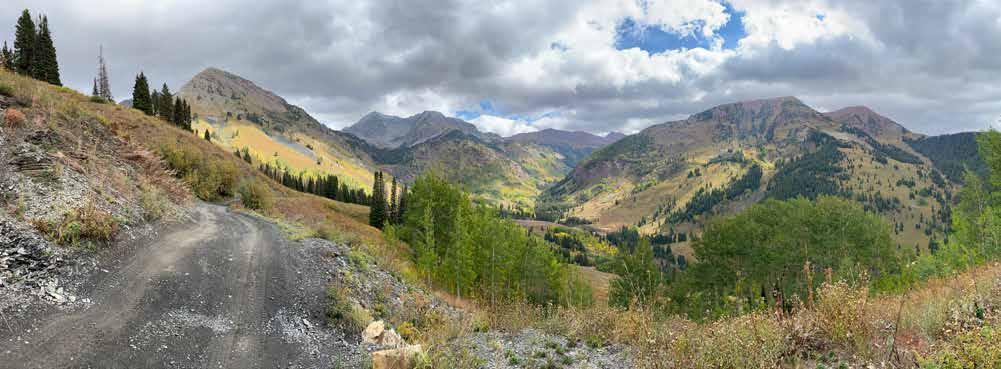
The road to Crystal and around the Lead King Loop is, in fact, a road. It is also a road rated for an aver-
age of 400 vehicles a day. Even on the busiest day, only about half that number travel it. This takes the possibility of the Forest Service permitting and restricting the use of the road off the table. In addition, the Forest Service has the responsibility to keep the National Forest accessible for multiple uses where it is designated for multiple uses. There is also the fact that the National Forests belong, in essence, to all individuals in our nation and we don't really get to decide who enjoys them in a superior way.
There is still the possibility of the Town of Marble or Gunnison County restricting travel. This has its own set of complications, though. The Town could strike the ordinance allowing for OHV use on Town roads either through a trustee vote or by voting to place the issue on the ballot for the residents of Marble to decide. If passed, this would make quads, side by sides, rangers, dirt bikes, etc illegal to drive around town…or through town…or beyond your driveway. Regardless of if it passed or not, I fear the conversation alone would rip our town apart and be, overall, impossible to enforce.
We could take a softer approach and allow travel on Town roads only with a permit, but who gets a permit? It is generally considered illegal to issue permits only to residents; although, that is being fought in court by Ouray County and could change the conversation. Currently, though, it is an all-ornothing system where some residents might not get permits and we will have a mess of OHVs and no one to stop each person looking for a permit. Once again, how would this be enforced without a court system and Town cop? Is this a step Marble is ready for? Is a change in our Town structure the needed step for quiet roads?
It is much the same with Gunnison County lifting the exception that currently allows OHVs on the few miles of road from Beaver Lake to the top of Daniel's Hill. The County can't currently increase enforcement of the simple lack of applicants for another deputy. Do we believe residents will load their OHVs on a trailer, drive a mile, and unload? Will visitors, already knowing they are violating the law by driving through that mile stretch, care even less about any other restrictions we try to place on them?
Parking seems to come up time and again as the best way to regulate the use, truck and trailer parking to be precise, especially when paired with a res-


ervation system. Already, as a town, we have gone from unstructured and "free for all" truck and trailer parking to a more organized and limited approach. Through a push for education and enforcement with "parking attendants" there is a noticeable drop in some of the behaviors locals find most obnoxious. A new kiosk at the Millsite Park is in the process of being built and at the last Town meeting, the Board voted to restrict parking at the Millsite park to about half of the current volume.
But, even these efforts become complicated. If we limit parking in town, where will parking go? The seemingly obvious answer of banning truck and trailer parking everywhere but at trailhead style parking at the base of Daniel's Hill was met with heavy opposition from residents at the base of Daniel's Hill. Continuing to allow parking at the Millsite park, even at reduced levels, is equally unpopular. We could ban all parking, in essence blocking OHV access to the National Forest except for those lucky enough to live here, but what would hunters, equestrians, guides, and residents that have cabins in Crystal do? Not everyone is physically able to hike that road and the idea of every OHV on the road being replaced by a full-sized vehicle is alarming. At the end of the day, OHVs are the safest way to drive that road.
Truck and trailer parking restrictions and reservations for the few allowable spots go hand and hand, but if the parking located at the Millsite Park holds deed restrictions that hinder the Town from collecting money for it. This leaves the possibility of a free reservation system, something that will work to alert visitors when there are no truck and trailer parking spots available. A reservation system and the need for additional staff do not come cheap, however, and a free reservation system creates a potentially large sinkhole for our already small Town budget. There is, of course, also the possibility of the parking moving to the base of Daniel's Hill, but then you get into murky water with the neighbors who (understandably) don't want chaos around their prop-
Over the past six months the LKL Stakeholder group, comprised of representatives from the Town of Marble, Crystal, Daniel's Hill, user groups, Crystal Valley Enviornmental Protection Association (CVEPA), and business owners as well as constituents from the Forest Service, Gunnison County, and Colorado Parks and Wildlife have gone over all these tangled options trying to fit them together like a twisted jigsaw puzzle into a list of recommendations that will help address the issue of OHV overuse.

Throughout the process, I've been impressed at the length the constituents especially have gone to create a solution that best fits the desires of our community as a whole. The ideas flowing around are tested against public feedback, and then altered or dropped based on that feedback. I must admit, I went into the process with a slightly confrontational attitude. I soon learned that we all had the same common goal: To bring a bit of peace back to Marble while allowing access to the National Forest.
It is increasingly becoming clear that there is no single "silver bullet" that will solve all our problems, at


least not one that comes with a myriad of unintended consequences. Instead, it will likely take a combination of actions and a well-rounded approach that incorporates education, restrictions, noise-control ordinances, and reservations. I'm excited for the end of this group, not only for the increased free time I will now have, but also because I have faith in the group, their intentions, and in the quality of the recommendations that we are working so hard to flesh out.
If you have any feedback or input on any of the proposals or issues surrounding the Lead King Loop please feel free to reach out to me at amcmahill81@gmail.com.
For anyone needing help stretching their food budget, Gunnison County Officials currently have boxes of food available distributed through the Marble Community Church.
There is no charge to the recipient and no reservation is needed; boxes are available for an individual or up to a family of four and contain enough meals to last approximately three days.
Please call Pastor Jon Stovall at the church to arrange a pickup time for your box today, (970) 963-1464.


Middle Schoolers studied the Great Barrier Reef to determine if people are doing enough to protect it and if not, what
Great Barrier Reef will continue in The Crystal Valley Echo's August edition.
Essay By Eli Sorensen, 7th grade
The Great Barrier Reef is the largest reef ecosystem in the world. And it is r apidly dying. Each coral has a symbiotic relationship with a microscopic algae called zooxanthellae that lives within the coral’s shells. Millions of this algae produce pigments throughout one square inch of coral and these pigments are the amazing colors we see on coral. Huge expulsions of zooxanthellae make coral appear white because their tissue is clear and their skeletons are white. This is called coral bleaching. Once the coral bleaches, it starts to starve. It is an independent way of life. Although, if conditions return relatively quickly, corals will regain the zooxanthellae and survive. As of November 5, 2021, 98 percent of all the coral in the Great Barrier Reef is bleached. This is a major problem because we are currently at risk of losing a major ecosystem. There will be financial consequences on top of that; less fishing and less tourism.
It is believed that the Great Barrier Reef will be dead by 2050; 30 years into the future. One cause is due to deforestation. It makes soil go into the water which pollutes the reef blocking sunlight. People are overfishing and polluting. The reef has gone through five mass bleaching events in 1998, 2002, 2016, 2017, and 2020 all caused by rising temperatures. Hurricanes make the waves go crazy and destroy corals’ shells, severely harming the reef. Snorkelers, boats, and scuba divers scrape the coral. People sell the local fish.
We are trying to save this economic catastrophe. We’ve invested $3-4 billion committed to protecting the reef. We’ve been creating sanctuaries. We’ve also come up with protective ideas like: Shock Treatment - running an electric current through metallic structures allowing limestone to build up on the metal. Corals then latch onto the limestone. Furthermore, we have been neutralizing waters: adding silicates and other chemicals to the water, helping to neutralize the increased acidity of the ocean’s waters. Another idea to help the Reef is Breeding and Engineering: People have thought about selectively breeding corals to withstand all those natural harms including over increase in temperature.
We have been trying as hard as we can to preserve the Great Barrier Reef. It is a very devastating thing to watch. All we can do now is hope. Coral bleaching is taking over the reefs and destroying wildlife. The 2 percent of coral that remains safe from the horrible disaster is all we can count on to withstand the infection. The Great Barrier Reef is officially endangered and will be for as long as we can try to save it.
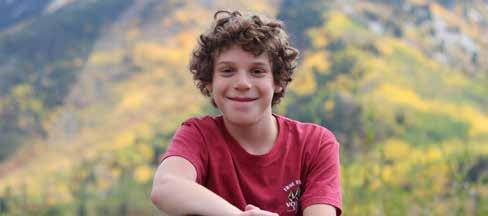
David Parks & Laurie Farber
be doing. More essay about

The Great Barrier Reef is an amazing ecosystem in Australia. It is twice the size of Florida and is the size of 2,900 normal reefs and has over 600 different types of coral. Furthermore there are 1,600 different species of fish in the Great Barrier Reef. The Great Barrier Reef matters to our earth because we get a lot of fish from it and some people have jobs that rely on the Reef for money. We could also lose an entire ecosystem which would not be sustainable for our earth. The Reef is important because we rely on it for jobs, food, and money.
Humans are conserving the reef in many different ways. For example, the Australian government spent 3-4 billion dollars on reef conserving companies. We are creating sanctuaries that are limiting human use of the reefs; those help because they prevent overfishing and the use of boats which causes pollution. One crucial part that affects the Great Barrier Reef is erosion. Right now we are trying to prevent erosion. We also are trying to prevent carbon emissions which cause coral bleaching. Coral bleaching is caused by global warming and the temperatures of the water increases and the coral gets stressed and turns white. For some people this looks like enough, but is it?
Are we doing enough to protect the reef? Should we be doing more? The Shen Neng ship had nearly 1,000 tons of heavy fuel oil on board when it crashed full speed onto Douglas Shoal, a protected area of the world's largest ecosystem. Coral shredded one part of the ship and 3-4 tons of oil oil leaked from the boat into the reef. One thing that we should be doing more of is to not allow high machinery boats in the reef. One crucial part that we could be doing is not overfishing.
When coral spreads it needs a symbiotic relationship with algae. Algae gives coral its color and when the temperature of the water rises the algae leves the coral and the coral dies. We could help prevent carbon emissions and pollution, stop global warming, and help our world survive.

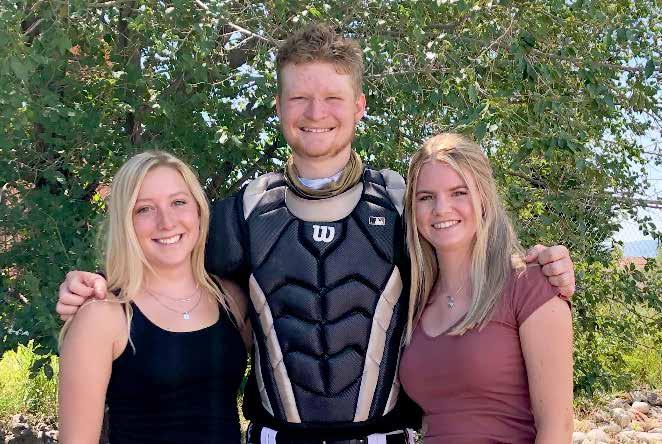
Familiar faces lead the MCS Summer Program this year! Can you believe these three have known each other almost their entire lives? Recent college grads and Marble Charter School Alums Megan Rusby, Bella Uhlrych, and Ralph Good are busy at work planning funfilled and enriching activities with young ones this summer. Having grown up in Marble, they know all the fun things to do! Please direct all Summer Program inquiries to Megan Rusby at meganrusby@gmail.com

By Gentrye Houghton

As soon as the news rolled in that Roe v Wade had officially been overturned Jaclyn VerHulst, Grace McNaughton, and Marlie McDonald immediately began working on signs to join the protest outside the Colorado State Capitol in Denver.
“We felt so uncomfortable making our signs at the Redstone Inn,” McDonald says, “the level of support for women’s rights is the total opposite compared to back home. But, we gained more confidence as more and more people offered encouragement for what we were doing.”
“Once in Denver, we turned a corner and I started crying when I saw the capitol,” McNaughton says.
VerHulst adds, “Everyone was outside the capitol, and it felt so amazing to be around other passionate young women who were upset and angry.”
The trio spent as much time as possible during the protest and returned to Redstone around 1:30 a.m. so VerHulst could open the Bar and Grill by 7:30. These women are working seasonally at the Redstone Inn and will have to return to Michigan in August to attend college.
Before wrapping up the interview, I asked if they were worried about their return.
McNaughton was the first to answer, “We live in a really conservative town, and I know peo-
Noise: Quiet please after 10PM. A little sound goes a long way here.
Wildlife Awareness: Do not feed, chase or touch the wildlife. That goes for your pets too.
Fire Safety: When visiting Marble please know our current fire regulations posted on the firehouse chalkboard.
Back-Country Driving Etiquette: When you meet a vehicle face-to-face, the uphill vehicle reverses uphill to a safe, wide area for passage.
ATV Etiquette: ATVs must be driven by licensed drivers. In-town speed limit is 15MPH.
Bathroom Etiquette: Bathrooms (Millsite Park, the Hub) and porta-potties are available at public venues around town.
For information about events, lodging and local businesses visit:
marbleartguild.com mcrchamber.org
ple at work or the grocery store are not going to support me. Instead, they support forcing me to have birth.”
“In Michigan, there’s no support,” says McDonald. “It looks nothing like it does here, my views are in the minority.”
“I’m scared of my spirit being broken,” VerHulst says, “I’m worried about being gaslighted by my family and becoming complacent because that’s what they want to happen, and everything is not ok.”
She continued, “I’m also really excited because it seems like my generation is here to fight! We’re getting over the brainwashing, and women in Michigan need us — we are going to be the voices for our sisters and younger women.”
McNaughton, VerHulst, and McDonald headed back to Denver with new signs after our interview. Stop by the Redstone Inn this month and ask them about their experience.


Wilderness Etiquette: The wilderness rule is "Leave no trace." Bury waste or pack it out. Stick to trails and roads, don't take anything but photos.
Equestrian Etiquette: When you meet horses on the road or trail, slow wa-ay down and anticipate sudden movements. Saying "hello" puts both horses & people at ease.
Beaver Lake: Boats cannot be left overnight. Motorized watercraft are prohibited. Take all trash with you. A valid hunting or fishing license will be required for everyone 18 or older attempting to access any State Wildlife Area or State Trust Land leased by Colorado Parks and Wildlife. This includes Beaver Lake.
Cellphones and Safety: Marble is a cell-free zone. There is a 911-only phone at the fire station.
High Altitude Planning: Carry water and hydrate excessively. Emergency services are an hour away by car.