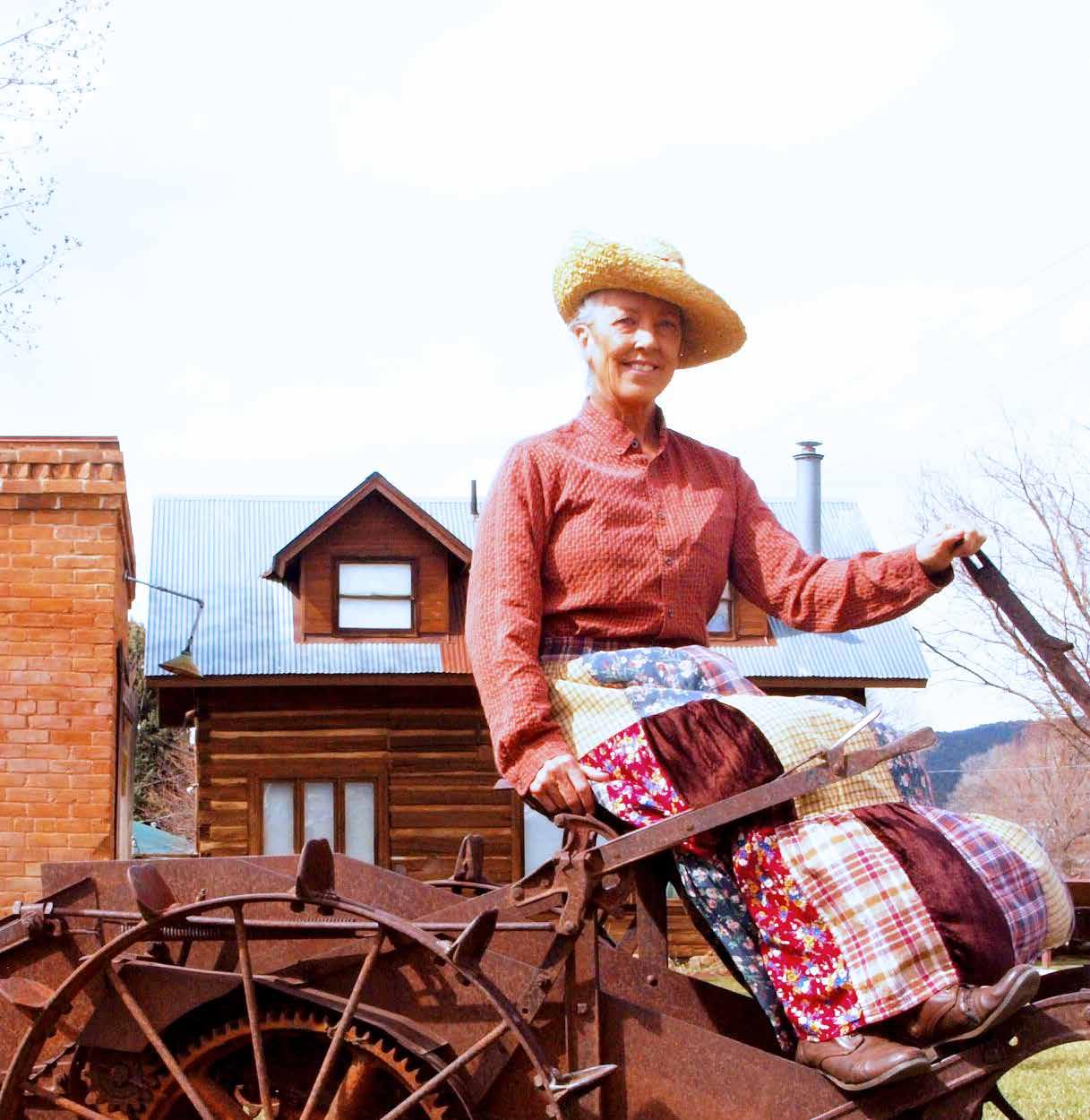



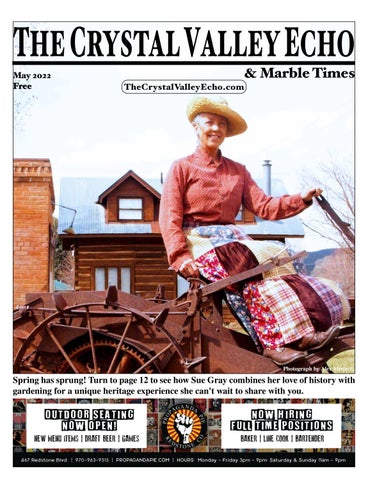
Photograph by Alex Menard.
the
Dear Editor,
Tourism is a key component of the Redstone Master Plan along with keeping the character of The Boulevard and focusing first on residents and then on tourists. Limiting excessive commercial development is highlighted often, along with the idea that "expansions of lodge facilities within separate buildings or cottages may be more compatible with the land use character of the Village than additions to existing buildings."
To me, this speaks to vacation rentals being allowed in existing residential buildings, rather than the expansion of hotels and the creation of new commercial buildings. Allowing vacation rentals in a percentage of homes would allow Historic Redstone to keep its character, limit commercial development, and create a harmonious balance between residents and tourists. The only way to accommodate tourism without increasing density is through existing accommodations, which residential vacation homes fulfill.
My client in Redstone took a home that was in sore need of care and turned it into a vibrant, beautiful cottage for themselves and other families to visit. They are out on their hands and knees picking weeds in the summertime and putting together baskets of local goods from The Redstone General Store for guests to get a true "Taste of The Crystal Valley.”
However, they feel like villains in their community for allowing tourists in their homes for a portion of the year — this angers me. I don't agree that we should allow vacation rentals to grow unfettered throughout any of our communities, I also don't agree that a restriction to only primary residences is the answer.
The Redstone Master Plan calls for a balance, which I believe other comparable communities in Colorado have achieved (Pagosa Springs, Ridgeway, Salida, Glenwood Springs) successfully. The negligence of the Board of County Commissioners lies in not looking at these comparable communities we have presented and what they have done, but rather looking towards Denver and Boulder for a solution.
Many people in the commercial community of Redstone I have spoken to remember a time when businesses on the Boulevard struggled to keep up with the ever-increasing Pitkin County property taxes and low tourism numbers. Now we are seeing a surge and we can act responsibly to create a symbiotic balance between the residents and commercial interests or create a community where business owners will continue to struggle. I hope the BOCC takes ALL of Redstone into consideration.
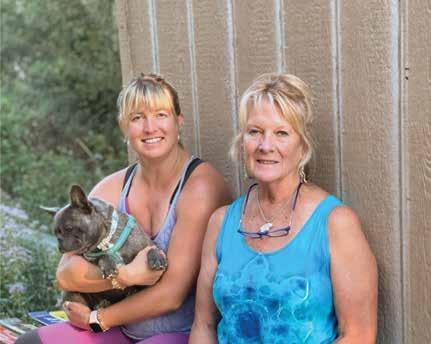
Brittany Hailey Founder, Cactus Vacations

Dear Editor,
After spending 30 hours serving as a stakeholder in the latest iteration of the Lead King Loop Working Group (LKLWG), I still have questions:
• The traffic counts commissioned by the Forest Service last summer indicate that the traffic on the Lead King Loop (LKL) is well below the capacity level of what the road designation allows; the traffic would effectively have to double or triple before the Forest Service would consider a permit system or any management changes. Yet all this traffic must funnel through Marble and County Road 3 (CR3) to get to the Loop. Does the Town or [Gunnison] County consider the traffic threshold as defined by the Forest Service to be acceptable for the health and safety of the community?
• The Town of Marble has decided to ban truck/trailer parking within the town limits. Since this will push the truck/trailer parking to the base of Daniels Hill (CR3), where the traffic and parking issues are most problematic, would the County also consider banning truck/trailer parking on CR3?
• Would the County or Forest Service consider requiring mandatory spark arrestors on ATVs?
• Would the County or Forest Service consider requiring mandatory liability insurance on ATVs?
• Would the County, Forest Service, or Town consider a noise ordinance? How might this work? What might be a reasonable decibel limit?
• Does the majority of the community support ATVs being legal in town and on CR3?
• Could a survey or a ballot initiative help clarify if the majority of the community supports ATVs being legal in town and on CR3?
• If the County decides to sign the Resolution legalizing ATVs on a portion of CR3 on May 3rd, would they consider reviewing the Resolution at regular intervals?
• If the County allows a parking lot to be developed on private land in an area zoned as residential, how might this influence future developments of private parking lots?
• Although developing two parking lots would certainly help with the parking issue, how would it help mitigate noise, congestion, speeding, dust, and volume of vehicles in town, on CR3, and on the LKL?
Thanks, Teri Havens



Dear Editor and thank you for your support.
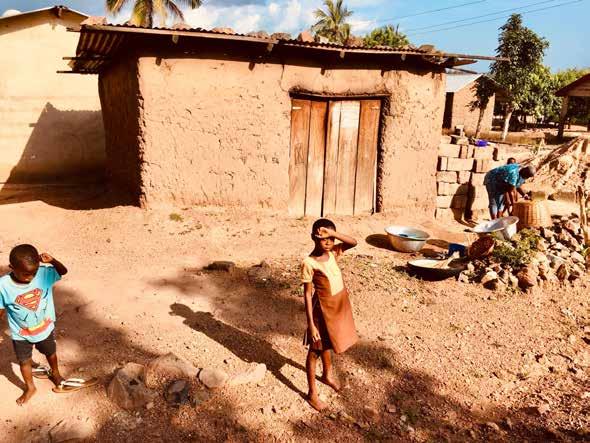
Ruby, my 12-year-old daughter, and I are going to Ghana on May 7th, this time bringing over on the airplane, then by tro tro, and finally by a leaky wooden canoe, a really nice water filter to the Village of Peace.
We are supplying drinking water with this $12,000 water filter, enough water for our village and neighboring villages. This filter eliminates parasites and amoebas as well as enhances the frequency of the water back to its purest vibration. I have personally purchased the filter with the faith that our community will believe in this project and help to donate funds. By helping others we help ourselves. Yay!!!!
If you’re interested in helping, you may Venmo me @Rochelle-Norwood or write a check to “Rochelle Norwood” and drop it by The Redstone General Store. We also have a donation jar going that’s sitting on the front counter at the store. As of April 26, we have raised $3,000 so far with only $9,000 to go in two weeks!
Thank you Crystal Valley, Rochelle Norwood

& Marble Times
Mission Statement: To provide a voice for the residents of the Crystal River Valley; to bring attention to the individuals and local businesses that are the fabric of the Crystal Valley region; to contribute to the vitality of our small town life.
Editor • Gentrye Houghton gentryeh@hotmail.com • (806) 374-0055 CONTRIBUTORS
Elizabeth Key • Alex Menard
ADVERTISING SALES
Heather Marine at Elephant Mountain Creative heather@elephantmountaincreative.com (970) 718-5848
DISTRIBUTION
The Crystal Valley Echo is published monthly, and is distributed throughout the Crystal Valley.
NEWSPAPER BOX LOCATIONS:
Carbondale (old) City Market • Village Smithy
Carbondale Post Office • Redstone Inn
Propaganda Pie • The Marble Hub FOR SUBSCRIPTIONS
Please send $50 for print or $35 for digital editions along with address information to:
The Crystal Valley Echo 364 Redstone Blvd. Redstone, CO 81623

MEET OUR BOARD OF DIRECTORS
STEVE PAVLIN
NATE HELFENBEIN
KATIE LOWERY
SARA LEWIS PRESIDENT VICE PRESIDENT TREASURER SECRETARY
DAVID (DJ) JOHNSON HEATHER MARINE
JOSH WAMBOLT
RON PHANEUF
CATHY MONTGOMERY ALTERNATE MEMBER
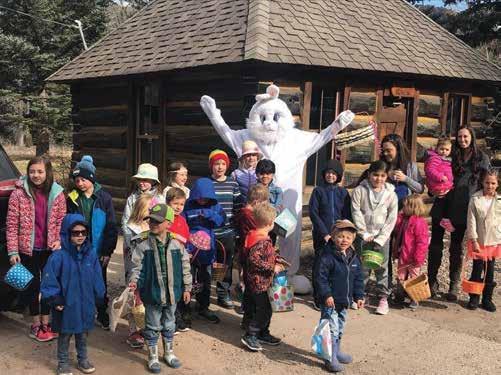
The RCA would like to thank everyone that helped put on this year's Easter hunt at the park. This is one of the largest events that the RCA puts on and we couldn't do it without the help of volunteers. Thank you to Sara Lewis, Julio Maciel, Georgia Wempe, Andrea & Bruce Garr, Steve Pavlin, Lindy Morton, Katie, BrookLynn & Sawyer Lowery, DJ Johnson, and many others. Thank you to all who donated to help purchase the supplies for the baskets. We unfortunately did not have enough baskets for all the children that participated this year. The RCA accepts donations all year long for events. You can help by scanning the QR code at the bottom of this page, mailing a check to 303 Redstone Blvd. Redstone, Co 81623, or dropping off an envelope at the front desk of the Redstone Inn.
Please slow down while driving on the Boulevard! Children are out playing!
Redstone is an unincorporated village that relies completely on donations and volunteerism spearheaded by the Redstone Community Association (RCA) Your membership dues directly fund RCA projects and events. Thank You for your support!
Scan the QR code to be taken directly to a payment screen for easy Membership Sign up or renewal. You may also write a check and drop it off at the Redstone Inn or mail it to 303 Redstone Blvd. Redstone, Co. 81623. Family/Individual $45 Business $150 Multi Business $230

From Carolyn Servid
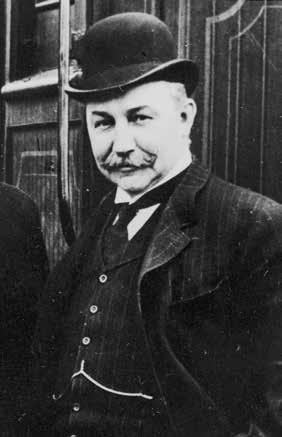
The Crystal Farm House was legendary in my mind months before my first visit. The petite fivefoot elderly woman who welcomed me with open arms into her kitchen was also legendary. Paula Mechau, who became my mother-in-law, was the widow of acclaimed Colorado artist Frank Mechau.
On one of my first dates with their elder son, Dorik, he enthralled me with stories — of his father’s all-too-brief artist career and of Redstone, the place that has served as a touchstone for the Mechau family ever since that summer day in 1937 when Frank took Paula and visiting Paris friends to see the virtually abandoned village alongside the Crystal River.
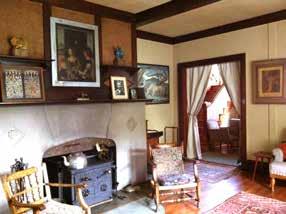
The small kitchen was toasty from the fire burning in the cast-iron stove that amply filled one corner of the room. Paula was just as feisty and charming as I’d been told. On a corner shelf, stood an over-sized-postcard image of “Tom Kenney Comes Home,” one of Frank’s bestknown paintings. Seeing it there, in context, in the Mechaus’ Redstone kitchen, brought Dorik’s stories home — to the remarkable place, house, artist, and family.
When the Mechaus and their friends arrived in Redstone that fated day, they were dumbstruck to find the Redstone Inn open and serving lunch. Inside, they were surprised to be greeted by Lucille McDonald, the widow of Redstone’s founder John Cleveland Osgood.
Osgood, one of the wealthiest industrial capitalists of his time, created Redstone around 1900. He envisioned a model industrial community that would provide significant comforts and amenities for its workers. His goal: eliminate threats of unrest, unionization, and potential strikes against Colorado Fuel and Iron (CF&I), the parent company in which he held a key position.
Two hundred forty-nine coke ovens were built at Redstone to bake coal extracted at the nearby mining camp of Coal Basin. The finished coke
All content sponsored and provided by the Redstone Historical Society.
was used to fuel CF&I’s steel mills in Pueblo, Colo.
Osgood’s social experiment at Redstone lasted only 10 years. He was squeezed out of CF&I when East Coast partners took control of the company’s Colorado coal operations, leaving him the village of Redstone and some adjacent properties. When Osgood died in 1926, his third wife, Lucille, inherited all of Osgood’s Redstone holdings.
McDonald tried, unsuccessfully, to sell the property as a whole. When the Mechaus came for lunch, she was quick to tell them there were individual houses for sale.
Paula was smitten by Redstone and the Crystal River Valley. Frank, who grew up in Glenwood Springs, understood why. By the end of the summer, they scraped together a down payment on the house McDonald had shown them — CF&I’s Manager’s Residence near the Redstone Inn.
In Spring, 1938, they moved in, joining Redstone’s few other residents — two caretakers and their families. Evidence of Osgood’s vision surrounded them — an elaborate Club House, a School House, the Inn, a commissary, his Cleveholm mansion, and dozens of individually unique cottages for workers and their families.
In 1944, the Mechaus worked out a land swap with Mrs. McDonald. They traded the Manager’s Residence for Osgood’s Crystal Farm House, two miles upriver on a ranch that supplied the community of Redstone.
No ordinary farmhouse, it was Osgood's temporary residence while Cleveholm, now called the Redstone Castle, was being built on a hillside overlooking the Crystal River. Boal and Harnois, the architects who designed Cleveholm and other Redstone buildings, also designed the Crystal Farm House. The Mechaus became its second owners.
In the wake of Frank Mechau’s devastating, untimely death in March 1946, the house became the bedrock for Paula and their four Mechau children.
Though they left Redstone periodically so Paula
could work, they returned at every possibility. She lived most of the rest of her life there, welcoming visits from her children and grandchildren, and becoming a respected, well-loved teacher, and vocal advocate for the environmental protection of the Crystal River Valley.
The beautifully designed historic Redstone home remains an icon for the extended Mechau family. Weekend visits and longer sojourns bring past and present together.
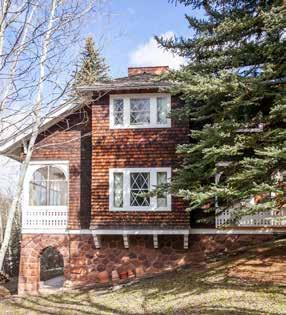
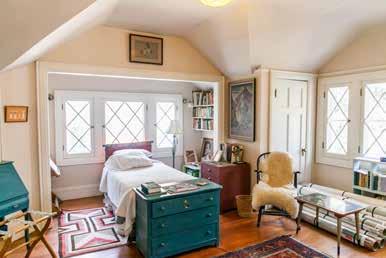
Its elegantly tooled stone chimney is a work of art. Its charming diamond-paned windows hold the original glass. A newer downstairs bathroom replaced a pantry, but the architects’ blueprints show how little else has changed. What is evident is more than seven decades of the Mechau family’s loving care.
The 116-year-old house is in excellent condition. It remains part of John Osgood’s legacy, but it has also become a treasury of family memories and stories left by the legacies of Frank and Paula Mechau. Its status as a significant Redstone landmark was confirmed on April 27th when the Pitkin the Board of County Commissioners added the Crystal Farm House to their Historic Register. Many thanks to the Redstone Historical Society for their support.
Author Carolyn Servid moved from Sitka, Alaska to Palisade, Colorado in 2017 with her late husband, Dorik Mechau. Her books include a memoir, Of Landscape and Longing, and three anthologies. Her essays have also appeared in various collections and literary journals. She also works as a book designer through sitkawillow.com
By Gentrye Houghton
The Coal Basin methane capture project has been a hot topic for the last several months; Chris Caskey, of Delta Brick & Climate Company, and Mona Newton, from CORE, engaged the community in April with a presentation at Propaganda Pie. As April flowers sprung, this project rolled on with a permit application through the US Forest Service.
The first step in the project is to perform a Flow Test, in which Caskey’s team will take measurements of the mines and their portals to determine actual emissions and the future potential for methane capture. Initially, they’d hoped to reopen and regrade the old mining roads for the necessary equipment to perform measurements up near 10,000-feet.
“The Forest Service is still evaluating and getting more information from us about our proposed flow test. We are working to incorporate some of the feedback we received from the community meetings,” says Caskey. “Specifically, we are exploring options to minimize our impacts on the roads.”
Jennifer Schuller, Deputy District Ranger USFS, told The Crystal Valley Echo that depending on what level of NEPA the FS determines is needed, there may be an opportunity for public comments in the coming month. Follow us on Facebook for the latest updates.
According to Newton, CORE will be hosting another opportunity for community engagement May 11th at the Pitkin County Public Library and will also be available via Zoom. If interested in attending via Zoom, please contact our editor at gentryeh@ hotmail.com for the link.
By Gentrye Houghton
“It’s a contentious issue!” said Town of Marble Administrator, Ron Leach, about the bike trail proposal from Roaring Fork Mountain Bike Association (RFMBA). The trail system around and near the Town of Marble was brought to the Council during their March meeting and the community showed up with lots of concerns last month.
A spokesperson from the Marble Bike Association (MBA) said, “The Marble Bike Association will not support any plan that skips the important first step of interacting with the Marble community at large before drafting a proposal. It is disappointing that the Roaring Fork Mountain Bike Association funneled their time, effort, and misguided good intentions into a polished 16-page proposal that clearly lacks meaningful local input. We hope, in the future, they will redirect their resources to the work of actually getting to know the residents and the roads.”
“We are currently revising the proposal based on feedback from the earlier concepts — some supportive, but agreed, some also very concerned), and more importantly from our recent ground-truthing and fieldwork,” said RFMBA Executive Director, Mike Pritchard.
RFMBA plans to present the results from the public survey during the May 5th Town of Marble meeting, at the Marble Community Church's Fellowship Hall starting at 7 p.m. “Then, RFMBA will present a reduced scope trails proposal, that remains in a draft version, before opening up to comment,” Pritchard said. “This meeting will help to evolve the proposal towards a next, possibly final, version that would be presented for Parks commission, Board of Trustees, and public feedback over coming months.”
Leach explained, “The Town Council wants to hear from all the citizens of Marble and the surrounding areas about the issue. The Council is not ready to approve anything at this time and plans to provide plenty of opportunity and space for everybody to have their say.”

Do you still know your “neighbors?”
Look to your left. Now, look to your right. If you still know your “neighbor,” you are unusual on the Redstone Boulevard. The Boulevard is being overrun with Short-Term Rentals (STRs) and it is happening so quickly, you may not have even noticed.
What is a neighborhood? Until recently, we would have said Redstone Boulevard, a community where neighbors know one another and have an interest in the quality of life of all who live there. In Redstone, which has almost no outside resources, residents are especially dependent on each other.
We know Redstone Boulevard is unique, historic, and charming. Incredible natural beauty. A very desirable place to visit… and to live full-time. But to live here, as a rural community with no local government and limited local services, we look to our neighbors and our neighborhood association for support.
The Redstone Community Association (RCA) is 100% supported by volunteers and donations. This organization provides the financial compensation and labor for all of our events that create the spirit of Redstone enjoyed by residents and visitors. These events include Grand Illumination, July 4th parade, Easter Egg Hunt, Magical Moments Summer Concert Series, the skating rink, holiday wreaths and lights, highway 133 trash pickup, community picnic, and more.
We have many organizations for people to get involved with, including the Redstone Historical Society, Redstone Art Foundation, and the Redstone Water & Sanitation District Board -- all run by the limited, and an ever-shrinking pool of, Redstone volunteers and donors. Incredibly, things get done around here, but that’s one of the things that makes this community so special.
We are already feeling the effects of a Redstone volunteer shortage, including at our Redstone Firehouse, previously staffed by volunteers, and is presently unstaffed. The Carbondale Fire Chief has attributed this to a shortage of volunteers and housing.
All of our resources, except natural, are limited by our rural location. Redstone has no local government, no Chamber of Commerce, no visitors center, and no administrative staff to depend on. Businesses and residents have worked together and co-existed in this special village for decades.
Our only communication links are the locally-owned and operated The Crystal Valley Echo, our website, down valley newspapers, and the Pitkin Alert system. Many years ago, through private donations, a Redstone website was created to connect neighbors with
For anyone needing help stretching their food budget, Gunnison County Officials currently have boxes of food available distributed through the Marble Community Church.
There is no charge to the recipient and no reservation is needed; boxes are available for an individual or up to a family of four and contain enough meals to last approximately three days.
Please call Pastor Jon Stovall at the church to arrange a pickup time for your box today, (970) 963-1464.
what’s happening locally. This site provides a link to all Redstone organizations.
Following considerable work and other resources donated by five local businesses, the antiquated website was recently redesigned with seed money from a state of Colorado grant, donations from the five local businesses, and a grant from Pitkin County. This website now also helps visitors to acquaint themselves with natural resources, support local businesses, and enjoy events.
A group of new STR owners, along with their local property manager, appeared during an April BOCC session to explain why their recently acquired STRs are really their “forever” and retirement homes, not just investments and moneymakers. One couple, who recently acquired a second Boulevard STR, even shared their plans to retire here, which left us wondering which home they plan to occupy.
Investors insist they need to run an STR in their second, third, or fourth homes so they can defray the costs. A second home is a luxury, especially in Pitkin County where so many locals cannot afford a first home or find an affordable rental. These non-local investors, who spend little or no time in Redstone and are not involved in the community, had a lot to say about what a great place Redstone is, to live and for their guests to visit.
The master plan designed expressly for Redstone Boulevard created “village” zoning, the only such special zoning in Pitkin and perhaps in the state. It was designed to protect and preserve the character of the Boulevard for its residents, and specifically not for “tourists.”
Part of the Boulevard is zoned “Village Residential” and part “Village Commercial.” Legally, and by Pitkin Code, businesses may be located in the Village Commercial zone and are taxed at a commercial property tax rate, about four times higher than the residential tax rate.
According to the Pitkin Code, businesses may not be located in Village Residential. STRs are
businesses and are viewed as such by the IRS and the State of Colorado. They are required to report rental income, collect and pay sales tax, and otherwise comply with requirements for any other business.
The voice of full-time residents of Redstone Boulevard is clear. We do not want rentals for fewer than 30-days on the Boulevard. On February 2, 2021, a petition signed by nearly every full-time resident of the Redstone Boulevard was submitted to the BOCC supporting this 30-day minimum on the Boulevard.
Despite these considerations, non-resident STR investors, so concerned about their investments, out-numbered Redstone residents by two to one during the Pitkin County Board of County Commissioners hearing on April 13. We urge all Redstone residents to attend in-person or virtually, and/or to call in and write letters that will become part of the public record at the next BOCC hearing scheduled for May 11. All past written communications on this matter may be viewed at:
https://records.pitkincounty.com/WebLink/ Browse.aspx?id=343626&dbid=0&repo=LFRecords
Our Redstone voices need to be heard! Please tell the BOCC that STRs on Redstone Boulevard should be limited to Village Commercial zones and occupied by the principal owner.
Crystal
Thursday, May 12 at 7 p.m.
The agenda will include: Pitkin County’s STR ordinance; an update on Wild and Scenic designation for the Crystal River; and a discussion about the Coal Basin methane mitigation project and its potential impacts .Meeting links are sent to those on the Crystal River Caucus e-mail list. If you are not on the list but would like to be, please send a request to crcaucus@gmail.com
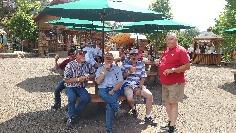
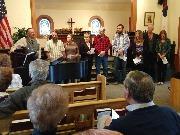


Redstone has experienced substantial property turnover in the last few years. Its small population magnifies the effect of this demographic change. The sizzling housing market has created a proliferation of short-term rentals (STRs), many of them with absentee owners. Some longtime residents fear these STRs will compromise Redstone’s community by replacing locals with tourists and empty houses.
My hometown of Aspen is one of the original cautionary tales. Its community wiped out by wealth — a foreshadowing? Guards stand sentry at the stores, local bar menus have disappeared, and the historic preservation is a facade. Only a glimpse of my community endures, many locals having been priced out long ago. There’s just a snapshot left of the once vibrant ski community, just enough for a selfie standing on the historic bricks of the Hyman Avenue Mall, slated for demolition.

by Elizabeth Key
I think it is interesting when I tell people I am from Aspen and they remark that they have never met anyone who is actually from Aspen. As housing inflation propels me farther from home, I have become a valley nomad, priced out of Aspen, then Basalt, and now just affording Redstone. Is Redstone insulated from the same fate as Aspen by its narrow topography or will big money wash out the Crystal Valley the same as it's flooding the banks of the Roaring Fork? I decided to ask my new neighbors what they think about the STRs and if they are going to put the community underwater.
Redstone, like Aspen, was built on exploitation, the mining of resources. Coal magnate, John Osgood, developed the town for the coal miners as a way of fending off the unions. He pitched the concept of the town as for “the social betterment of workers.” While his intentions may have been underhanded, Osgood’s experiment did forge a community of coal miners with the fabrication of the “Ruby of the Rockies,” as Redstone is still affectionately known.
Bill Jochems has lived in Redstone since 1971. He says that STRs leave houses vacant and displace the community that makes Redstone home. He says people moved to Redstone because it was affordable but he sees that changing, ”A lot of miners lived here. It was an inexpensive place to live, so there were a lot of young people here, as well as artists. It was less expensive than Glenwood or Carbondale, which is probably still the case today, but on a far lower scale. I remember two sales in ‘71 of less than $10,000.” People are indeed still coming to Redstone because it is slightly more affordable than the Roaring Fork Valley but, as Jochems figured, the housing gap has tightened. Today, houses sell for nearly
$700,000 in Redstone.
Jeff Bier is a local realtor and one of Redstone’s longest residents. He says housing inventory is scarce, “Right now, there is no inventory. There is one property in Redstone for sale.” The price increase has not deterred a massive amount of home sales in the last few years.
After scouring the market for six months without a rental in reach, I looked at the possibility of being forced to move to Fort Collins. I purchased my house in October, finding, viewing, and putting in an offer in less than 24-hours. It is a desperate scramble for those without stable housing in our valleys. Some buyers engage in brutal bidding wars in today's market and make purchases sight unseen. This is a daunting prospect for what is the most significant investment of a lifetime for many.
Bier says the housing market is untenable, ”With the prices the way that they are, I just don’t know how people are pulling it off. I mean, you can’t find anything down valley for under a million dollars unless it’s attached living,”
He adds, “The values, costs, and prices are becoming restrictive, and that’s almost going to a market of people moving from urban areas or to a second home market for someone with more wherewithal who can afford it.” Some Redstone residents are supplementing their mortgages with income from STRs.
I saw my West-end neighborhood in Aspen go from a Halloween hangout to a ghost town of second homeowners. The emptiness echoes through the manicured gardens and the homeowners act more like tourists than residents. The kids first migrated to Cemetary Lane to trick or treat, and now one of the most popular candy communities is the “affordable housing” neighborhood of North 40.
Since 2020 there have been over 14 single-family homes sold in Redstone proper. STR companies are eager to take advantage of this inflated housing market. Bier says that five homes recently sold in Redstone to function solely as STRs, or
“mini-hotels” as they are more disparagingly known.
Rural STRs are especially sought after during the pandemic because of their low density and escapism. This may be why STRs have become disproportionately more widespread in Redstone. Today, about 25% of the 67 parcels on Redstone Boulevard cater to STRs, according to Pitkin County data. Redstone may be a valley apart, but it is part of the same county as Aspen, sharing government and taxes. How is my new community going to choose to navigate between community and commodity?
Shelle Debeque, a Carbondale native, sees many families being driven to Redstone because of the housing inflation in the lower valley. She mentions that her daughter moved here because it was more affordable. She says, ”The community of Redstone used to be a lot of retired people, a lot of summer owners, and I think now there are more families and part of that is a result of the high cost of housing and also just growth in the upper valley.“
Debeque ran an STR in her previous home in Carbondale. She says, ”In Carbondale, they had an owner-occupied regulation, which I think worked well. The unit we had was an ADU. Nobody was likely to throw a huge party, or if they were loud, we were there to tell them to be quiet. Most of these up here are not. I think it’s absentee owners, which is concerning because they aren’t a part of the community; they don’t contribute to what really makes a community work.”
“Three Dog Mike” Warren has lived in Redstone for ten years and worries about the impact of STRs on the community, “The houses have been sold, and they have been turned into Airbnb absentee owners. The sense of community in town has really cratered badly in the last three years.”
He says, ”I don’t think the county commissioners pay as much attention to the surveys as much as they do to big money. I would be in favor of something to limit the short-term AirBnB thing to longer-term rentals. Frankly, I would get rid of
Community on StRS Continued...
them completely. It destroys the sense of community in town. People come in here on an Airbnb, and my impression is that they treat Redstone like Cabo or Disneyland.”
People tend to treat places and things better when they have a personal connection to them and some accountability.
It is interesting how the rich travel to a place because of its unique landscape, character, and community only to transform the landscape, drive out the community, and gut the character. Then they rebuild it to mirror their own, possessing instead of appreciating the place. Look at the Aspen high-end chain stores, restaurants, and hotels also found in New York, Los Angeles, and Las Vegas.
Matthew Betcher and his partner Alisa Kreynes split their time between L.A. and the home they purchased in Redstone nearly two years ago. They use their home as an STR, when they are not in town, to help pay for the housing costs. He sometimes stays up to 200 nights a year in hotels for work, and says, “We use the STR here until ... we want to make the move here full-time.”
He says, “I don’t think that we or our guests should be considered any less part of the community. We offer our home to families so that they can come. A large majority of our guests have been coming to Redstone for years, and I am actually really proud of that.”
Betcher continues, ”I don’t want to have that sort of ‘not in my backyard’ attitude. Stay away, stay away. I think opening it up to new people to come and experience Redstone only benefits the community. Greater diversity in demographic, people, and lifestyle. I think the opposition here with STRs is kind of short-sighted.”
He also agrees that absentee owner STRs are not an asset to the community and emphasizes that this is his primary residence, he’s registered to vote here, and Redstone is his home.
Diane Owens has lived in Redstone for 11 years. She has a more open position regarding STRs but says that she doesn’t want the community to be taken advantage of, ”This speaks to the Airbnb issue, too. If they are just coming here to make money and not be part of the community, then that’s disrespectful.”
Owens warns, ”When the Utes were run out of this area, and the country, the legend is that they left a curse on the valley. I don’t view it as a curse. I view it as anybody that comes here to exploit the resources and show disrespect for the land and nature … won’t make it.” I hope this curse extends to corporate greed across America.
It seems like the residents of Redstone value the community and do not want it taken over by mini-hotels but are divided on the issue of STRs in general. Participation, dialogue, and the decisions made along the way will shape the future of this community. Please engage to keep your community strong, so it is not passively swept downstream by big money.
The last word goes to Betcher, “The wonderful thing about Redstone is that it is still fairly off the grid. It doesn’t have the resort infrastructure that Aspen has, so Redstone is never going to become an Aspen. We don’t have three ski areas right here.”
I hope he is correct. Let’s see if the BOCC decides to get out the sandbags during their next vote regarding STRs on May 11th
Next month’s The Crystal Valley Echo I’ll feature a community portrait and discuss what community means to the residents of Redstone.

by Gentrye Houghton

Last month, I sat down with Marble Charter School’s (MCS) art teacher, Karly Anderson, on a beautiful spring Friday afternoon at the school. Students had just finished a week of state-mandated testing and were out enjoying the sunshine, celebrating with some much-needed ice cream sandwiches, and building a mock river from the building’s runoff.
I followed Anderson through the kids, both of us being stopped by one child or another as we made our way through to the art room. Anderson grew up in Fort Collins, Colo., and attended Colorado State University. She came to the Roaring Fork around the mid-2000s and was the bar supervisor and bartender for the Little Nell. She and Ryan Vinciguerra came to Marble around 2010 to start Slow Groovin’ BBQ; although they’ve now split, they’ve both stayed close by to co-parent their son, Tobin.
“I do have teaching in my background, but not as formal of education as the other teachers. I did mostly Art History in college and taught gymnastics and skiing,” her face suddenly lights up, and she continues, “I was only the bus driver here for a

SECOND SATURDAYS
Artists featured at local businesses. MAY 14th | JUNE 11th | JULY 9th
MARBLE CITY-WIDE YARD SALE MAY 14th -15th
MARBLE GEM & MINERAL SHOW
JUNE 10th - 12th
MARBLE/marble SYMPOSIUM
JULY 2nd - AUGUST 5th
MARBLE FEST
AUGUST 6th - 7th
LIVING HISTORY - WALKING HISTORY TOUR
SEPTEMBER 10th
while!”
Through the years, Anderson’s worn many hats and taken on varying responsibilities; this seems to be the case with the entire staff at MCS, the school is more of a community where everyone rolls up their sleeves and takes on whatever needs to be done regardless of it fitting into your job description.
She says that art is the best way to connect, laugh, and express yourself, and she enjoys involving elements of history or some sort of meaning for the kids. “So many people, adults included, think they can only create art that’s within their abilities, but I teach the students to open up and just try. We really hinder ourselves the most, but you can create anything if you just open up and try,” says Anderson.
Today, Anderson continues her education with Trauma-Informed Training. She first received training through the school and became really interested in it. She says, “I’m hoping to serve more of a role that helps kids with behavior. Especially with the pandemic, I think we’ve learned how important it is to focus on behavior.”
This is Anderson’s last year teaching art at MCS; next year, you’ll find her in an administrative role as the Assistant Head of School, and she says she’s excited to continue doing art personally thats fallen a little to the sidelines while she focused on her students instead.
“The art and the bus are a big part of my identity here [at MCS],” says Anderson, “but I’m really looking forward to moving into admin with Gina [Mile] and taking more of a supportive role here.”



From Vickie Branson
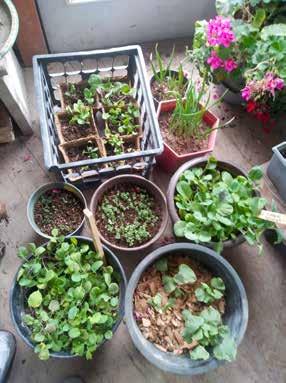
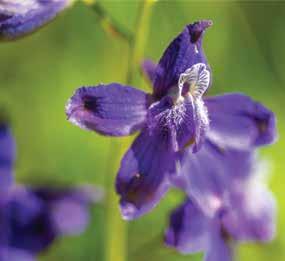
Wow! Spring has finally climbed its way up the mountain. As the snow melts away, the warm earth starts bursting with life. My first flower of the year was a little blue-violet peeking out from under some dried leaves; no matter what's going on in society, mother nature always marches on.
We spend our lives wrapped up in our houses, our clothes, and our shoes, and sometimes miss an opportunity to connect with the earth, which gives us everything we need. Step outside, take a big breath of fresh air, pull your shoes off and play in the river, and take a moment to enjoy our beautiful spring days.
Our bodies are our gifts and do so many wonderful things. The better we take care of it, the better our life experience will be. Growing your food is one of the best ways to improve the quality of your health. Science is telling us to eat a diet rich in fresh vegetables and leafy greens, and that is the stuff that grows best in our valley.
Start small with one or two beds around 4-feet by 8-feet. The more you improve the soil with sand and compost the better your results. New and old gardeners, check out the videos on notill methods. It is the microbes in the soil that turns water, sunshine, and old plant material into the nutrients your garden needs.
I like to cover the beds with leaves and mulch for the winter, and come spring, rake back the mulch. Dig a shallow trench for the seeds, and then cover lightly with compost. No digging! Once the plants are big enough, I mulch well, with wood chips, to hold moisture and keep out weeds.
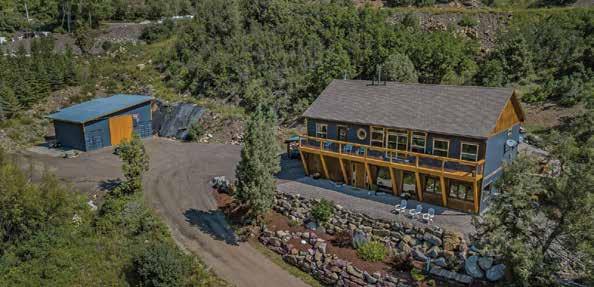
Enjoy pristine views, storage for all your recreational equipment and—best of all—no HOA. This home offers a spacious layout and plenty of room to entertain. A potential 5th bedroom is currently used as a home salon. There are several outdoor entertaining areas including a patio off the kitchen, hot tub for soaking after a day of skiing, and deck for taking in the views. The property offers an additional building site for a home or guest house. There is also a shop complete with pellet stove to continue your handiwork throughout the winter months. With so much potential, don’t miss the opportunity to make it yours.


Following are some of the plants I would recommend to gardeners in our neck of the woods, they're easy to grow, cold-hardy, and ones the critters find less appetizing. Onions and garlic bulbs can be planted in a permanent bed. Leave the bulbs in the ground and just harvest the leaves for cooking and salads. Kale is not only one of the most nutritious plants and but it is also very beautiful. The flowers are very tasty and the seeds are easily saved for next year.
Mustard greens are my new favorite. They really add some zest to our meals. I like the variety package, that way you can see which ones you like best. Turnips are also easy and can grow quite big here. We mix them in with potato dishes for a little extra flavor. Beets are expensive at the store, but grow well here and are great with greens too.
If you are adding new plants or trees to your yard this year, remember we live in a wildfire zone. Consider options other than evergreens or conifers; recent storms brought a lot of our big trees down across the valley. Native plants often do better and can be good for the wildlife.
Be sure and plant some flowers for the pollinators. Perennials can be less work and more budget-friendly.
Through the pandemic, many Americans started catching up to what we valley residents already knew: fresh air and sunshine are so very important for our health. Now, get out and enjoy your spring!
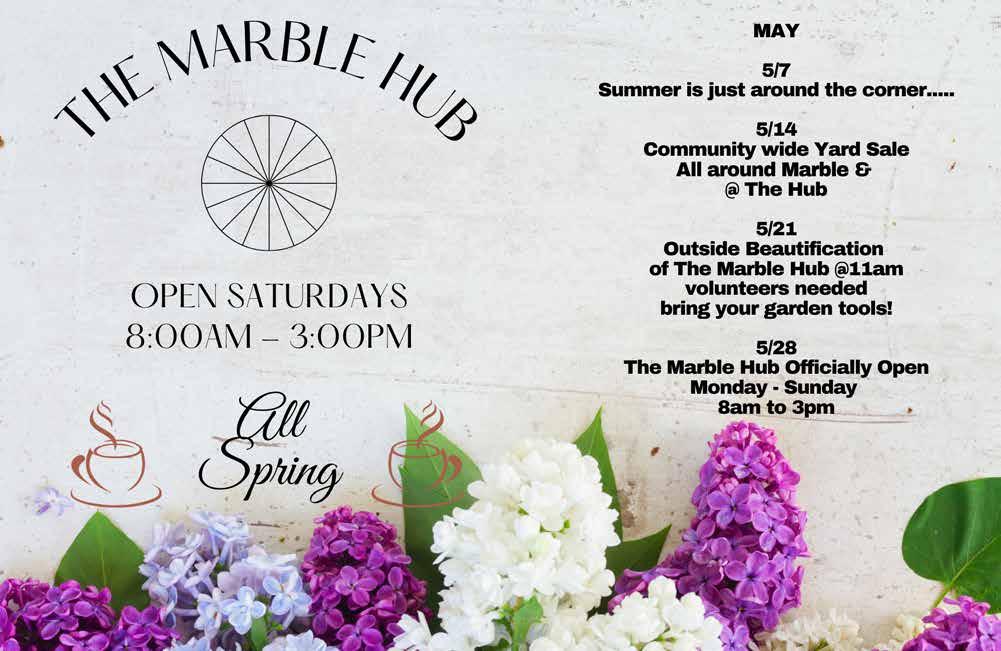
At the Redstone Inn
The Redstone programs are for residents & visitors of the Crystal Valley. RSVP: (970) 920-5432
MAY 10 & 24
• 12:00 p.m. – Lunch ($10)
RSVP by the Thursday prior – space is limited. Plated lunch will be served.
There will be a gluten-free option.
• 1:00 p.m. – Program
May 10: Game Day
All are welcome! The group will decide what games to play – choose from a variety.
May 24: Dessert Potluck
Guest speaker TBD.
Not all the valuable resources in this valley are natural. Some would be considered cultural, which includes the arts and sciences. Cultural resources help us to understand and appreciate our natural world. These resources take the form of the written word, works of art, artifacts, and sometimes even assume human form. A cultural resource in human form named Sue Gray has much to offer to valley residents.
Gray is both a historian and gardener and even a historian of local gardening. Her projects have included: The creation of the Dinkel Mercantile, a recreation of a historic store from Carbondale history; demonstration gardens of heirloom plants, collecting and making seeds from these plants available for sale, and creating salves and tinctures from these plants; teaching gardening classes for Colorado Mountain College (CMC); writing Carbondale history articles; and preparing a historic walking tour of Carbondale.
The Master Gardener Program information is available to gardeners in several forms. County extension agents from Garfield County in Rifle, Colo., and Eagle County in Eagle, Colo., are available to answer your questions on any garden or home landscape subject. These agents or Master Gardeners can visit your site to give recommendations. The Master Gardener handbook is as big as an unabridged dictionary. This information is available both at libraries and online, and you can find a copy at the Marble Museum.
by Alex Menard
But Gray did not stop there with her gardening education. She combined her local history and gardening interests and turned her attention to local historical gardening, identifying and acquiring pioneer heritage plants. Gray defines an heirloom plant as a purebred non-hybrid over 50-years-old.
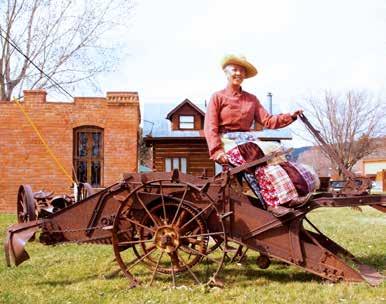
Gray came to Carbondale a quarter of a century ago from Huntington Beach, Calif., — aka Surf City, USA. She gardened there but had quite the learning curve to adapt to the very different conditions in Colorado.
Most of coastal southern California never experience frost. Gray had to learn what first and last frost dates mean for garden planning. She also needed to adapt her garden techniques to the extreme aridity of Colorado, with its low humidity and drying winds. Another change was the alkaline nature of most soils in this region. Finally, she needed to learn to protect her crops from browsing deer.
For people like Gray, or for you and me, there is a helpful program for gardening education, the Master Gardener Program. Colorado State University offers training to become a master gardener, who both receives and passes on an encyclopedia of garden information. Through this program, Gray quickly learned to garden like a multi-generational native and now spreads this information and much more through her demonstration gardens and CMC’s gardening classes.

The next time you visit an old homestead in the valley, look around to see what you find growing. Traditional flowering plants include lilacs, peonies, hollyhocks, Harrison's Yellow Rose, irises, and tulips. Historic gardens contained mint, basil, horseradish, rhubarb, raspberries, strawberries, potatoes, chives, onions, apple trees, and carrots. Greens grown included spinach, lettuce, and chard. Besides a sense of nostalgia, you can take away a list of what plants grow well in this area.
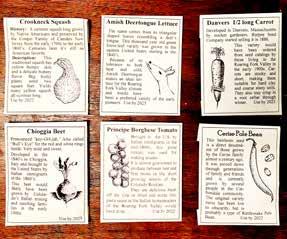

Gray's investigations led her to focus on 10 plants for the heritage gardens. Some were acquired from pioneer families, others were chosen for their adaptability to the local conditions. The Cerise family was the source of a pole bean which is named for them. Gray traced the source of the Chioggia Beet to the Aosta Valley in Italy, the birthplace of early Italian immigrants to the valley. Other Italian and Austrian immigrants brought the Principe Borghese tomato, a variety adapted for drying.
Gray chose other plant varieties to match, as close as possible, what was grown historically. This includes the Connecticut Field Pumpkin, a winter squash, and the Yellow Crookneck, a summer squash.
The Jemez Pueblo in northern New Mexico is the source of Jemez corn, which is ground into cornmeal. It is interesting that the third plant of the native three sisters group, beans for drying, was not a feature of local historic gardens. Could this point to a disconnection with Hispanic garden culture from the south or to the fact that the Utes were not agriculturalists?
Gray has developed two gardens: The “Pioneer Heritage Garden” is located at the Jail and Cabin History Park and “Hattie's Kitchen Garden” is located at the Thompson House History Park. Both demonstration gardens are designed to show how new and traditional methods can produce an organic and sustainable model for local gardeners. Hattie's Garden is an attempt to recreate the historic plants that would have been grown by the Thompson family.
Besides education, the main purpose is to save and promote these chosen garden varieties. Gray collects the seeds and offers packets for sale at the Thompson House and Dinkel Mercantile. In the fall, bulbils of the Ferguson Walking Onion are dug and sold.
The Carbondale Heritage Apothecary is a line produced from heritage plants. This includes comfrey salve, a skin balm, and Motherwort tincture, which is a tonic taken internally. At the Thompson House, Hattie's Tea Garden is the source of Lavender and Chamomile Teas.
No account of Carbondale garden history would be complete without mention of potatoes. At peak production, Carbondale was one of the largest producers nationally. Two varieties deserve mention: The Russet Burbank, the main crop locally, and the Red McClure.
The McClure is named for Thomas McClure, for whom the pass to Paonia is also named. This local variety of potato disappeared from the valley but was recently discovered growing in the San Louis Valley of southern Colorado. Gray is planning to help rein-
CMYK: 0, 84, 100, 0
troduce it here. For the Potato Days celebration this fall, Gray plans to invite Marble residents to participate, in honor of the centennial anniversary of the dedication of the Lincoln Memorial. The Memorial, as you should know was quarried and fabricated in Marble. Gray calls the theme of the event “Marble Mash.”
THERAPEUTIC MASSAGE PROXIMA NOVA BOLD
Headlines:
BODEGA
- All Caps
Sub Headlines:
Historic gardens were not just a hobby. In the fall, winter storage was a project to preserve the summer bounty. This took the form of canning pickling, drying, and root cellar storage. Pickling was done for cabbage, beets, and carrots. Gray dries her tomatoes, corn, and beans. Of course, commercial root cellars for potato storage still exist throughout the valley. At the Thompson House root cellar Gray stores potatoes, pumpkins, corn, and beans, which keep all winter.
PROXIMA NOVA BOLD - All Caps
Text:
Gray's garden ethic involves treating the soil as if it were a living organism. She advocates a no-till, no turn technique and also adds organic matter to the soil each year. This produces, she says, “Living soil, not dead dirt.” Her preferred weed control method is solarization: Covering the garden area with clear plastic to kill weeds before planting. Heavy mulching with compost after planting discourages weeds as well.
HEX: #F05123
RGB: 240, 81, 35
TEAL
CMYK: 100, 33, 38, 0
HEX: #008498
RGB: 0, 132, 152
BLACK
CMYK: 0, 0, 0, 100
HEX: #231F20
Lorem ipsum dolor sit amet, consectetuer adipiscing elit, sed diam nonummy nibh euismod tincidunt ut laoreet dolore magna aliquam erat volutpat. Ut wisi enim ad minim veniam, quis nostrud exerci tation ullamcorper suscipit lobortis.
Proxima Nova - Medium
If all this talk gets you excited enough to grab a shovel, hold on a minute. Don't forget that the last frost can occur in June. For Carbondale, Gray recommends the second week of June for outdoor planting, with an exception for a type of lettuce or spinach that is started in May and can be harvested in June.
Use row covers or cold frames for frost protection or your start plants indoors. Although the heritage gardens contain only heirloom plants, Gray does recommend hybrids for some situations. For example, in order to produce tomatoes in our short growing season, the “Early Girl” variety
Gray is the Vice President of the Carbondale Historical Society and writes articles about the town's history. Check out Carbondale Magazine's current edition for her article on the history of William Dinkel, the founding father of the town. In the cabin at the historical park on Weant Boulevard, Gray has recreated the Dinkel Mercantile Store, which operated at 4th and Main between the 1890s to 1930s. The merchandise on display came from local families’ donations.
Schools and other groups can arrange for a guided garden tour from June to September with Gray by visiting carbondalehistory.org. The Colorado Rocky Mountain School annual plant sale takes place from Friday, May 13th through Sunday, May 15th, and is another good source of flowers, veggies, and perennials, all especially suited for our area. The Redstone General Store has a rack of seeds for sale from Seeds of Change, this company exists to promote valuable heirloom varieties.
Grab a hoe and plant a row… happy digging!

RGB: 35, 31, 32

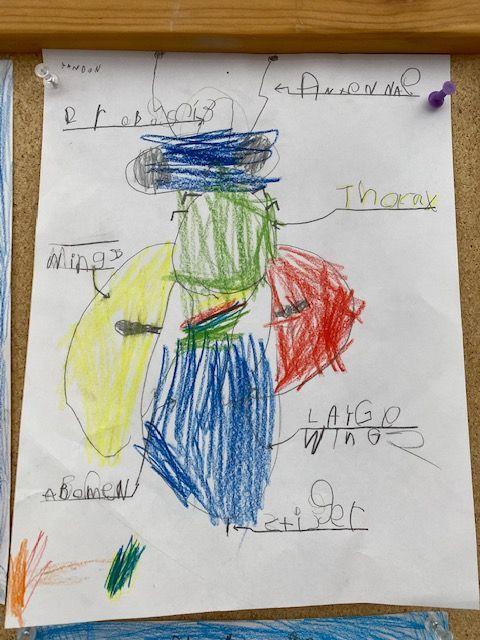

By Amyah Clayborne, 8th Grade
3rd - 8th graders studied the pros and cons of Animals in Captivity. They then answered the question, should animals ever be kept captive? The following is a report and response from Amah Clayborne.
Imagine you come upon an injured bird on the side of the road. Would you help it to a refuge or let it die? There is an ongoing debate about “Should animals be in captivity or not?” For example, at zoos, circuses, and aquariums animals are put into cages or tanks for human entertainment. Some starve the animals if they don’t get a trick right. Not to mention, animals become depressed or frustrated when held in captivity. As might be expected, they attack other animals, or don’t have enough energy. Animals shouldn’t be held in cages or tanks. Animals should have the right to live in their natural environment.
Can there be pros to having animals held in captivity? Shockingly, yes there can be. Journalists and reports say people are motivated to help endangered or injured species so they take them to conservations where they will train the animals then return them to their habitat. Zoos and other parks help educate the public on what animals they are seeing. They give them facts about each animal at each station. Not only have they educated the public but persuaded some to start fundraisers for endangered animals. The workers have explained how there were 10,000 tigers in the wild but now there are less than 5,000. Furthermore, conservation biologists helped to save those tigers. The biologists bred them in captivity, but for the good, to release them back in the wild. Comparatively, in the 1940s there were only twenty to thirty Amur tigers in the wild. In that case, the conservation biologists took action and bred them in captivity. Now there are over 500 Amur tigers back in the wild. Thanks to the biologists we now have more Amur tigers and they are a little bit further from extinction.
You might think placing animals in captivity has no effect on them but in actuality it does. Let me elaborate, when placed in captivity animals often become bored, so they start plucking their hair, pacing, and becoming more aggressive towards other animals. Furthermore, animals can’t live a full life when being held at a zoo or a house and they don’t know how to live on their own in the

wild. Not to mention, some aquariums and zoos starve animals for not doing a trick right. That makes the other animals want to hurt the untrained one, not to be surprised, the trained animals attack the untrained ones. There was this Orca Whale named Tilikum, the workers at SeaLand would starve him and he was being attacked by the other whales. They transported him to SeaWorld but over his years active at the two parks he killed three trainers. With this in mind, SeaWorld and SeaLand covered up the deaths and blamed the trainers who had died. In addition, the trainers that had died were not there to defend themselves; knowingly, the workers knew it was not the trainers fault and they wanted to keep their parks open. On that note, male orca whales often become depressed and float at the tops of their pools. This causes their dorsal fins to flop over. While at an aquarium, just notice those whales aren’t very happy in their environment. Now I’m not saying go to zoos and aquariums and start protesting, but think about what you’re paying your money towards.
There are many illegal places to buy and sell exotic animals. It’s important to realize that not all animals want to be placed in houses, zoos, or aquariums and are forced there, specifically, exotic animals such as tigers, lions, monkeys, and snakes. These animals live a lot longer in the wild than in captivity, they have no companion and want to be with their own species. Animals also have feelings and emotions just like humans. To elaborate, elephants die in captivity due to high stress levels and not enough exercise. To continue, Chimps have mental issues and tend to begin to lose interest in eating or even begin biting themselves. At these buying and trading events, they are only being sold so people can make a lot of money. Furthermore, keeping wild animals in your house can be very dangerous. The animal can get loose and kill you and or other civilians; if they become frustrated they have nowhere to vent themselves.
There are certainly pros and cons to having animals in captivity; however, we should be allowing animals to roam freely in their natural habitat and only hold them captive if they are endangered or are injured. Animals have their own feelings, emotions, and don’t go into homes or zoos voluntarily. Comparatively, they should be treated as humans,

just because they can’t speak like humans doesn’t mean they can’t have freedom of speech. Some may argue that animals don’t have feelings or emotions and are not as intelligent as humans. Others will say that animals do have feelings, emotions, and some are more intelligent than humans. The debate is between having animals in captivity and not having animals in captivity. For reasons being, animals should only be in captivity for being treated then being released back into the wild and they should not be held in captivity for our entertainment. What do you think? Should animals be held in captivity, should they not be, or do you have a middle ground?
To briefly summarize, animals should have their own rights and humans should do better to protect them. Over thousands of years we’ve driven animals to become extinct and didn’t realize what type of impact we had. Imagine one day you wake up and there are no more tigers or elephants to see in the wild. If animals didn’t exist we probably would not have the same quality of life and we would not have house pets such as dogs and cats.
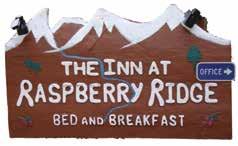



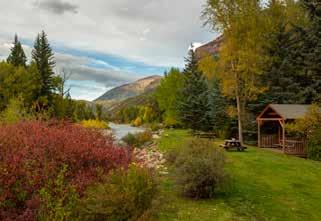
The redesign of Redstone Park, including the construction of a new Gazebo and other elements, is scheduled to begin on June 1st with the mobilization of materials at the site.
Pitkin County Open Space and Trails (OST) has selected contractor Environmental Excavation of Carbondale to construct the park improvements, with Aspen Carpenter Services to install the gazebo, brace, and move the warming shack (next to the ice skating rink), reset picnic tables, and handle other facets of the project.
A local steering committee and public survey helped shape the redesign of the park – a process that began in 2020. The park plan calls for a “less is more” approach
that emphasizes the preservation of the natural and rustic character of the park, and the need to balance its active and passive uses.
The improvements focus on improving access and circulation, replacing and enlarging the shelter to serve community events and summer concerts, and improving/incorporating the northern/Meredith parcel (where the ice rink is located during the winter) into the park. Additional improvements include:
• Reconfiguring the playground.
• Earthmoving to lift the sinking, marble picnic tables, and level the lawn and picnic/event area.
• Improving and formalizing the informal ice rink; it will be a turf area in the summer.
• Improving the existing levee’s edge.
• Creating ADA access to the bridge connecting to Elk Park.
• Improving the parking area along Redstone Boulevard and remodeling the existing shed with an adjacent trash enclosure.
• Limited/strategic tree removal for the gazebo and ice rink, to be mitigated with on-site tree plantings.
The construction schedule calls for the delivery of most materials by June 15. Work will be phased to complete individual projects, with construction taking place between the riverbank and the boulevard. The goal is to keep portions of the park accessible to the public.
Completion of the majority of the work is expected

by July __31st__, with a final inspection on Augugust __31st__. Construction work will occur on weekdays between 8 a.m. and 5 p.m., with the potential to add Saturday hours if necessary. In addition, changes in price or availability of materials could impact the construction schedule.
“Open Space is looking forward to breaking ground at Redstone Park and improving the park for residents and visitors,” said Carly Klein, Senior Planner with Open Space and Trails. “We’ve heard so much from the community about the appreciation for this park through the public process for the park improvements.”
The County’s Open Space and Trails Board and County Commissioners gave the park project the go-ahead in late 2021. This spring, the County Planning and Zoning Commission found the proposed Redstone Park improvements to be in conformance with the Crystal River Master Plan. In addition, the project was affirmed through presentations to the Crystal River Caucus, Redstone Historic Preservation Commission, and Redstone Community Association. The Redstone HPC will remain involved in the final material selections for lighting and fencing.
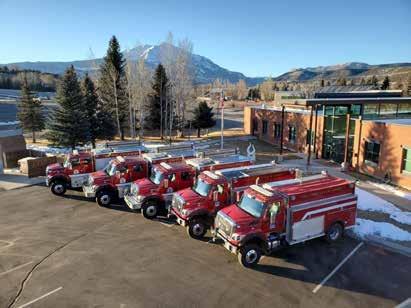
If you live in the communities of Redstone or Marble, the Carbondale & Rural Fire Protection District needs you to volunteer. We will talk about some of the free training we provide to volunteers, the basic expectations, and the bene ts of volunteering for your local re department.
If you are interested, we can sign you up for a “Ride Along Day” so you can see what volunteers do BEFORE you join – that way you can learn what volunteering is all about. Your Ride Along Day mentor will take you through a typical day, where you will get some hands-on experience training, responding to an emergency call for service and see what volunteering in Redstone or Marble would be like for you.
14! For more information, visit www.carbondale re.org and click on “Volunteer” or call Kat Bernat (970) 963-2491
on