
In the Fortune 500 corporate world, mindfulness has become the new buzzword. Yet, I recently asked people here in the Roaring Fork Valley, do you know what mindfulness is? The first response is no. Then, a second response, well is it? Most people have an understanding of the word. It seems everyone has their own personal definition of mindfulness.
According to mindful.org, mindfulness is the basic human ability to be fully present, aware of where we are and what we are doing, and not overly reactive or overwhelmed by what's going on around us,
This definition uses the word ability. This is where it gets tricky. Some of us were taught to be nice people when we were young and decided to go through life being nice, but this is not mindfulness. Mindfulness requires a practice. There are many to choose from. My first practice, which I still use today, came from the Monastery in Old Snowmass, called Centering Prayer. Centering Pray is simple and requires no money, just choosing a couple of sacred words. This practice began a wonderful journey for me, and that is why I am sharing it.
To me, mindfulness is the practice. This practice has to be daily. There is no single perfect practice. All include a meditation and or yoga. The Covid experience has changed my world in a soothing way. I had a daily practice before the shutdown, but with the extra time, I added a 31-minute meditation into my schedule in March of 2020 and have not missed a day since. That is the reason for this story. Everyone needs a practice. Mine has increased my mental clarity and internal sense of stability, allowing me to be better equipped to assist my fellow humans.
Do you agree yes or no? Mindfulness is the way to healthier communities and our planet. If yes, write to the paper and ask any questions, and I will respond. Also, community meditation groups are showing up. If interested in starting a meditation group, don't hesitate to get in touch with me.
Roop Khalsa findmymind99@gmail.com
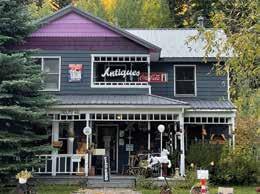
Exciting Opportunity in Redstone
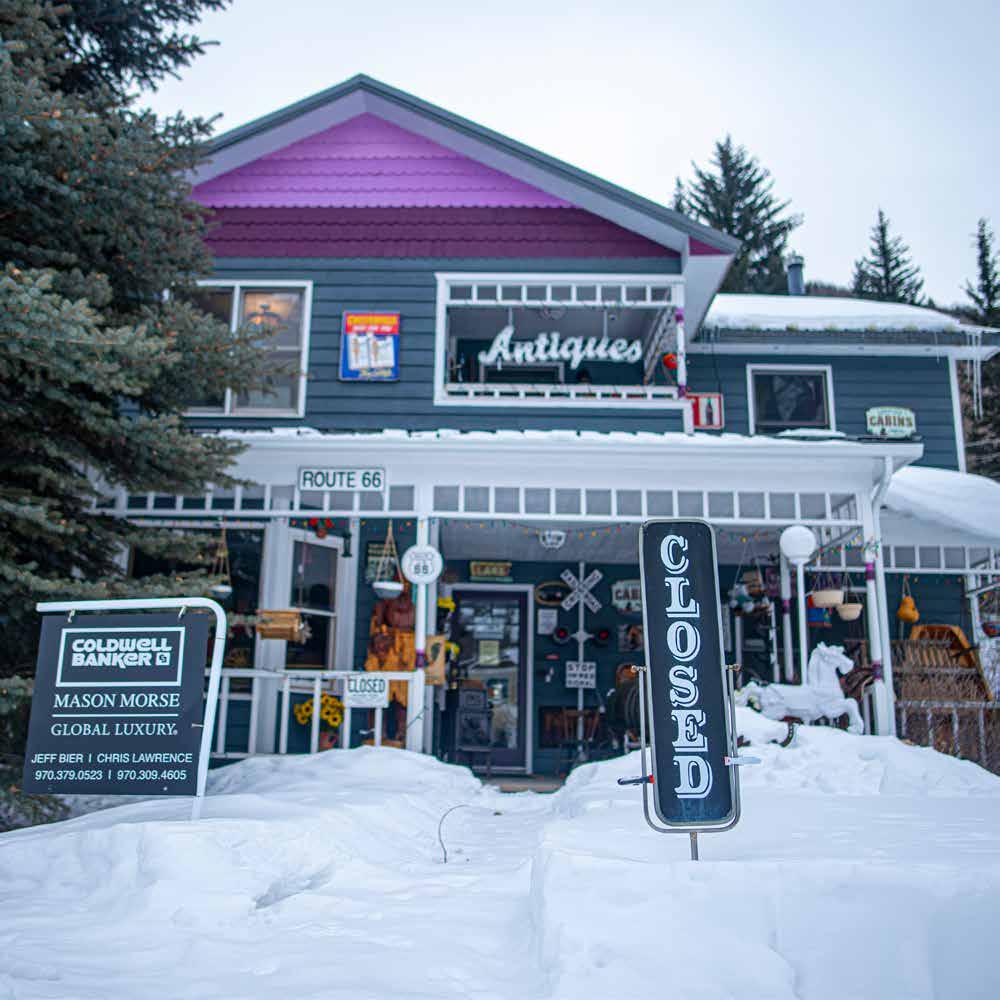
Combined three-bedroom, two and a half bath home and retail business on the Boulevard. Antique and gift store with full inventory included in price. Oversize lot with large storage shed, one car garage and in excellent condition.
Listed at $1,100,000




Marble Times
Mission Statement: To provide a voice for the residents of the Crystal River Valley; to bring attention to the individuals and local businesses that are the fabric of the Crystal Valley region; to contribute to the vitality of our small town life.
Editor • Gentrye Houghton gentryeh@hotmail.com
CONTRIBUTORS
Stephanie Deaton • Amber McMahill Alex Menard • James Steindler
ADVERTISING SALES
Heather Marine at Elephant Mountain Creative heather@elephantmountaincreative.com (970) 718-5848
The Crystal Valley Echo is published monthly, and is distributed throughout the Crystal Valley.
NEWSPAPER BOX LOCATIONS:
Carbondale (old) City Market • Village Smithy Carbondale Post Office • Redstone Inn Propaganda Pie • The Marble Hub FOR SUBSCRIPTIONS
Please send $50 for print or $35 for digital editions along with address information to: The Crystal Valley Echo 364 Redstone Blvd. Redstone, CO 81623

FEBRUARY 8 & 22
• 12:00 p.m. – Lunch ($10) RSVP by the Thursday prior – space is limited. Plated lunch will be served. There will be a gluten-free option.
• 1:00 p.m. – Program
February 8: Love Songs with Tom & Julie Paxton
Acoustic Vocals & Guitar
February 22: What About My
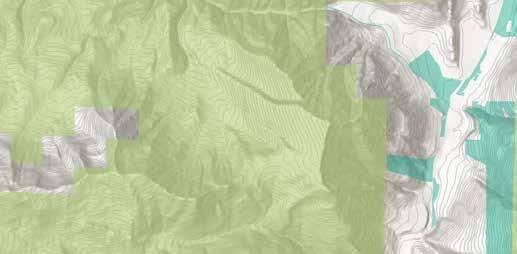



The White River National Forest released a draft environmental assessment (DEA) of the proposed Redstone to McClure Pass Trail project for a 30-day public review.
The environmental assessment analyzes the potential effects of Pitkin County’s proposal to construct and maintain a natural surface, non-motorized, multi-use recreation trail from Redstone to the summit of McClure Pass.
“This is the second opportunity for the public to provide comments to the Forest Service about this proposal,” said Kevin Warner, Aspen-Sopris District Ranger. “The most effective and helpful comments at this stage will focus on the analysis in the draft environmental assessment.”
The proposed 7-mile trail would be located within the State Highway 133 right-of-way and along with the historic Rock Creek Wagon and Old McClure Pass roads. The Forest Service’s decision covers the approximately 5 miles of the proposed trail that would cross National Forest System land.
The trail is being proposed to help meet the growing demand for trail connectivity within the upper Crystal River, to address the existing unmanaged recreational use along the historic roads in the area, and to improve safety for pe-

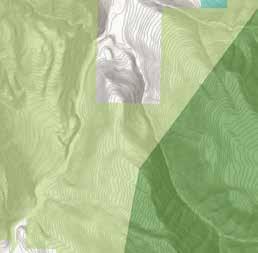

destrians and cyclists along Highway 133.
According to the Draft Environmental Assessment, the summary of effects for are described as followed:
“Within this context of existing use, impacts on wildlife would occur under the No Action alternative, adversely affecting elk winter range and general wildlife habitat due to continued year‐round recreational use. While the Proposed Action would increase the frequency and magnitude of recreational use along the trail corridor, the incorporation of seasonal trail closures would limit the effects of recreation disturbance on elk, and may potentially benefit the species. Both the No Action alternative and the Proposed Action would have insignificant effects on the Canada lynx, the only federally threatened or endangered species with habitat in the project area.
The Proposed Action would benefit recreation management, access, and use by establishing a framework for proactive management of recreational use, improving regional trail connectivity, and providing a new opportunity for mountain bike access. This improved management and access, however, would displace
some current visitors due to increases in overall visitation, increases in bike use, or seasonal restrictions. The effect on community character and values would be mixed since the trail would follow natural design principles to improve access to public lands, but would also facilitate increased visitation and bike use in the Crystal River Valley.
Construction activity associated with the Proposed Action would result in short‐term minor impacts on water resources, vegetation, access and transportation, air quality, scenery, and noise. No long‐term impacts on these resources would occur.”
What are Crystal Valleyites saying?
“So long as it stays along 133 and doesn't cut through Ranch Acres, I'm okay with it.”
—
Cynthia Roberts
“Terrible idea! Makes my blood boil.”
— Nicole Farrell
“I personally don’t want to see more bicyclists on 133 or more parking lots I deliver mail on prince creek and I have seen the effects of that trail and all of the parking issues and trashed parking lots.
Summer bicycling is always a nuisance on the highway and people already don’t have respect for the valley and it shows! For the people that live up there which I know several wouldn’t want a bike path in their backyards.
“I just don’t really like it or the idea of it there are several places to go ride your bike… why do people want to impact more of our National Forest and the animals that live there.
“Let’s be happy with the trails we already have!”
— Crystal Chambers
Wilderness Workshop also issued the following statement: The science is clear that current and increasing recreation is negatively impacting wildlife in our region, and it’s time for our land managers to start scrutinizing those impacts more closely when considering new recreation development. This environmental study provides an important opportunity for the Forest Service to analyze cumulative impacts to wildlife and other public lands resources, and help our communities have an informed conversation about the tradeoffs of expanding recreation on public lands. Instead, the Forest Service is taking an overly narrow approach to evaluating this trail that continues the “death by a thousand cuts” outcome that trail development has had on our landscape.
— Juli Slivka, Wilderness Workshop Policy Director
The Forest Service is hosting a public meeting to answer questions and provide more information about the environmental assessment and proposal on February 7th from 5-7 p.m. at the Third Street Center.
The environmental assessment including maps and information about how to comment is available at: https://www.fs.usda.gov/ project/?project=56913
In an effort to keep information and news flowing from Marble The Crystal Valley Echo will include a short summary of happenings from the Town of Marble meeting each month. These are not the official minutes, and we encourage everyone to attend meetings and to speak with their representatives about anything of interest.
There were some exciting updates during last month's meeting. Due to the rising concerns of COVID cases in Marble, the regular Town meeting was held via conference call.
The revised On-site Wastewater Treatment System (OWTS) regulations, that deal with septic and wastewater, are still being discussed and will hopefully be presented to the public during the February meeting. Once the trustees approve, it will be sent to the state to assure the regulation is in compliance with state regulations before coming back to the council for a final vote.

by Amber McMahill
For those who haven't been keeping up on the OWTS story, this will allow possible variances for non-conforming lots within the Town limits. The exact details of the plan have not been agreed upon by the board, and therefore have not yet been made public.
Dave Erikson from Aspen Valley Land Trust (AVLT) spoke about the upcoming improvements for Thompson Park. The land was donated to AVLT to be forever used as a children's park for the Marble Charter School students.
AVLT was awarded a Great Outdoors Colorado (GOCO) grant to be used for park improvements. The first stage is securing water for irrigating the park. They will be working with the Town to run a pipe from the river to the park. Other park improvements and the plan can be found at the townofmarble.com under the Parks tab.
John Groves spoke to the board about how the land donor for Thompson Park has also been trying to donate the large riverfront swath of land commonly known as Marblehenge. This is the property where the old Hoffman Smelter once stood, and the slag heap left behind from processing the ore still stands.
CVEPA stepped in to secure funds for the environmental study and the site passed stage one. Unfortunately, AVLT needed further studies before acquiring the land and had to pull out sud-
denly.
The land donor needed to complete the land transfer by the end of the year, and in the span of 48-hours (during the holiday break) CVEPA pulled off a New Years' miracle and found another organization to take the land and rallied everyone away from holiday activities to get the title transferred. This saved the area from a looming private sale and preserved it in the public hands. For the full story see Alex Menard's story starting on page 6 and check out CVEPA's website at cvepa.org
The Parks Committee is still working on a permit for event use of the Mill Site Park. As both the town and the park have grown in popularity, they feel that steps need to be put in place to assure the park stays available to residents and does not get overused. Mayor Ryan Vinciguerra and Larry Good offered to meet with the Committee for a special work session. Hopefully, the permit system will be approved during the February meeting.
Josh Vogt found a grant from the Colorado Department of Transportation (CDOT) that could provide funding for street improvements in Marble. Proposed improvements include: paving Main Street, widening Park Street, bringing existing signage into compliance, increasing walking and bike trails, and a pedestrian crossing of Carbonate Creek.
There was a discussion about how the Town's allotment of the America Recovery Plan could be spent. However, there are restrictions on how the funds can be used and are intended to address the negative impacts of COVID on the community and town. This author suggested that the funds be given to the school to address the increased need for mental health. Other ideas include giving funds to essential workers who worked during quarantine, using the funds for roads, and improving water systems.
The Wild and Scenic Designation (W&S) discussion is still gaining traction in almost every area outside of Marble. A few months ago the
Pitkin County Commissioners wrote a letter to the trustees asking them to join a stakeholder group to discuss how the W&S would look in our area. The trustees agreed to participate in the stakeholder meetings to stay informed but have not yet stated opinions for or against the designation. Vogt and Good stepped up to participate and report back to the board.
Nominations were due January 24th with four people returning their nomination petitions: John Vogt, Larry Good, Tony Petrocco, and your's truly, Amber McMahill. With three open seats, Good's, Vogt's, and Tim Hunter's, and four candidates there will be an election on April 5th
The Marble Town Council meets regularly on the first Thursday each month at the Marble Community Church's Fellowship Hall starting at 7 p.m. The February meeting is scheduled for Thursday, February3rd



by Gentrye Houghton
Pitkin County’s Short-Term Rental (STR) ordinance has been tabled after a contentious second reading Wednesday, January 26. After listening to a couple of hours of public comments, a clear division arose regarding the Board of County Commissioners (BOCC) support for the ordinance.
A visibly flustered Kelly McNicholas Kury expressed her shock for the wavering support of the ordinance after hearing second homeowners complain about the primary residence clause.
“I am incredibly frustrated,” she stated, “in the direction this conversation has taken today… and would like to recognize that doing primary residence is a way of getting out of the [rental day] quota and giving more fairness to the people who live here.
She continued, “The comments we’ve received from the people who elect us have overwhelmingly been in favor of this, and the ones we have received who feel that they maybe have been treated inequitably don’t live here or only live here part of the time.”
To which, Francie Jacober replied, “I really feel that it is not in the interest of all our constituents, we also represent people who have two and three and four, five houses. I don’t think we can necessarily say that what’s good for a certain group of people is the only thing we need to look at.”
Kury again shared her frustration, “A lot of the conversation [regarding STRs] comes around to, how do we protect the gen-
eration of wealth for second, third, and fourth homeowners when we have entire populations of our community who cannot access a rental or afford to buy a home here?”
Kury challenged her fellow commissioner with a few questions, including asking what the benefit to the community is to ignore zoning as well as asking each commissioner to consider their goal for the ordinance.
Many commissioners responded in support of regulating and licensing STRs to, as Greg Poschman put it, preserve community as its been for decades and to preserve the quality of life for the residents and constituents who have elected them.
While the ordinance was seemingly approved by commissioners in December, several stated that they would not vote for it as it stands during the second reading.
“We ask for creative solutions for the workers here to gain housing, yet we can’t ask second-home owners to come up with creative financial solutions to keep and maintain their home here?” Kury said. “What I’m saying is that we put different burdens on different classes of people who live in our community about how they access and hold on to homes and where they live.”
The discussion will resume on March 9th. In the meantime, commissioners will continue taking public comments for consideration and attempt to address problematic themes they saw arise during January’s regular meeting.
Patti Clapper ended the meeting by stating that they appreciate and want more comments from the public.
You may join the conversation by writing to the BOCC:
• Mail written comments to 530 E. Main St. Suite 302, Aspen, CO 81611
• Email a letter to Francie Jacober at francie.jacober@pitkincounty.com, Steve Child at steve.child@pitkincounty.com, Kelly McNicholas Kury at kelly.mcnicholas@pitkincounty.com, Pattie Clapper at patti.clapper@pitkincounty.com, and Greg Poschman at greg.poschman@pitkincounty.com
• There is also a new comment feature available on the County’s website: PitkinCounty.com/PublicComment
The Crystal Valley Echo would also like to hear your comments, please send Letters to the Editor at gentryeh@hotmail.com
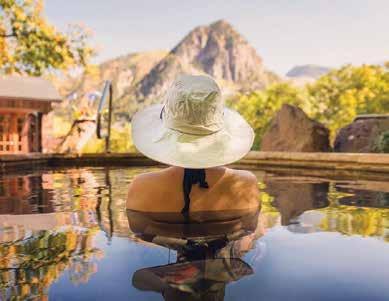



The Marble wetlands, located just over the Quarry Road bridge and across the Crystal River from the Town of Marble, is officially in public hands. Per the wishes of the land donor the area will be managed for wildlife protection and non-motorized visitor use.
The story of how this came to be is a story of hard work and persistence with an exciting photo finish. Though, a disclaimer is necessary here: Your author was the instigator of the renewed efforts to protect this parcel. This is not to seek any praise for my minimal efforts, but rather to show how having a group of effective people in your Rolodex file can get things done. This article is a tribute to those hardworking visionaries.
The benevolent property owner had previously tried to donate this parcel for open space and wildlife refuge. The stumbling block was a potential liability for cleanup of the slag heap left by the historic Hoffman Smelter. Several potential recipients of the land donation declined
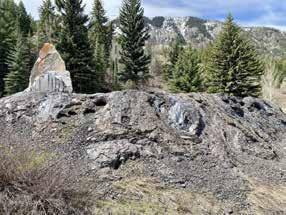
for this reason.
The property owner should also be recognized for other land donations. The Marble Kids Park, formerly known as Thompson Park, was transferred to Aspen Valley Land Trust (AVLT), which is presently working on development plans for the parcel. She also donated the former Marble General Store building and the Campground to Colorado Parks and Wildlife (CPW). For the wetlands parcel, The land owner also paid for the survey and transfer fees.
The Crystal Valley Environmental Protection Association (CVEPA) followed through on all details of the acquisition from start to finish with their President, John Armstrong, at the helm. Armstrong has a long history with Marble since the 1970s as a former operator of the Prospect Ranch cabins.
AVLT worked long and hard with Armstrong in their reevaluation of acquiring the wetlands. Executive Director Suzanne Stephens and Land Acquisition Manager Erin Quinn facilitated the process, which ultimately was rejected by their Board of Directors at the last minute. In the long run, AVLT may end up as the owner of this property after remediation is complete.
CPW also participated in the planning process as the wetland area is a great place to see eagles, osprey, beavers, moose, and even bears.
Though the key player, and last-minute savior in this drama, is the Trust for Land Restoration (TLR), located in Ridgway, Colo. According to their website, restorationtrust. org, TLR “is dedicated to understanding and overcoming environmental liability issues so that abandoned mines in the west can be remediated and restored.” Because of their experience with these efforts, Director Pat Willits was willing to accept ownership of the parcel.
by Alex Menard
The Colorado Department of Public Health and Environment is a state agency that provided technical support. Mark Rudolph was in charge of the environmental assessment.
"Their recommendations include scrapping the road to remove tailings which were scattered from the tailings pile by road grading. They also suggest installing a split rail fence around the pile, which has both visual and historic interest,” says Armstrong.
Peter Westcott, a CVEPA member, pulled some strings to get the analysis of the tailings pile done at no cost, and the money originally raised for that purpose by CVEPA is now available for other site projects like interpretation. The analysis showed elevated levels of arsenic and lead, which only pose a hazard if ingested, so the split rail fence may be adequate protection.
Pitkin County Open Space and Trails (OST) along with the Board of County Commissioners acted as advisors to AVLT. OST Acquisition and Special Projects Director, Dale Will, was especially involved. Will has worked on many Crystal Valley projects including the lower valley bike path and the Darien Conservation Easement.
"TLR plans to clean up the contamination on the property and then transfer ownership to a suitable agency for management,” Willits explains. “There is legislation at the State and Federal levels to protect buyers of contaminated sites from liability. The purpose of these laws is to encourage restoration and reuse. TLR's proposed action is considered Phase 1 of a Total Brown Field Program, which means that after all appropriate inquiries and repairs are complete, they and any future owners are protected from further liability.”
The late Dr. Dave Clark, Professor of Botany at Colorado Mountain College, conducted nature walks on the property for many years. Under his direction, he created a plant list of over 100 species found on the site. In his honor, the establishment of Dr. Dave's Nature Trail, a self-guided walk has been proposed.
Now is the time to thank those who will certainly help in the future. Colorado Stone Quarries has already been on-site inves-
GIVEN that an election will be held on the 3rd day of May, 2022, between the hours of 7:00 a.m. and 7:00 p.m. At that time, three (3) directors will be elected to serve 3-year terms. Eligible electors of the Redstone Water & Sanitation District interested in serving on the board of directors may obtain a Self-Nomination and Acceptance form from the District Designated Election Official (DEO): Ryan Kenney 1091 Redstone Blvd. Redstone, CO 81623 (970) 963-1495
The Office of the DEO is open on the following days: Monday - Friday from 8 a.m. to 1 p.m.


The deadline to submit a Self-Nomination and Acceptance is close of business on February 25, 2022
Affidavit of Intent To Be A Write-In-Candidate forms must be submitted to the office of the designated election official by the close of business on February 28, 2022
NOTICE IS FURTHER GIVEN, an application for an absentee ballot shall be filed with the designated election official no later than the close of business on Tuesday preceding the election, April 26, 2022
tigating how to mitigate runoff from the Quarry Road onto the parcel. History Colorado has expressed interest in funding an archeological assessment of the historic aspects of the site, including the Smelter, Crusher, and Treasure Mountain Railroad Bed.
Roaring Fork Outdoor Volunteers will be asked to share expertise with trail construction and weed management as they have done several Marble projects in recent years. Thanks to the Town of Marble for planning for user parking at the Mill Site Park. And thanks to the inholding landowner, who is using the parcel for access, for working on a cooperative agreement.
Can you believe this long list of contributors? All deserve our thanks for a new Marble amenity that will exist in perpetuity.
We want to see your photos! Send "Out and About" photographs to gentryeh@hotmail.com
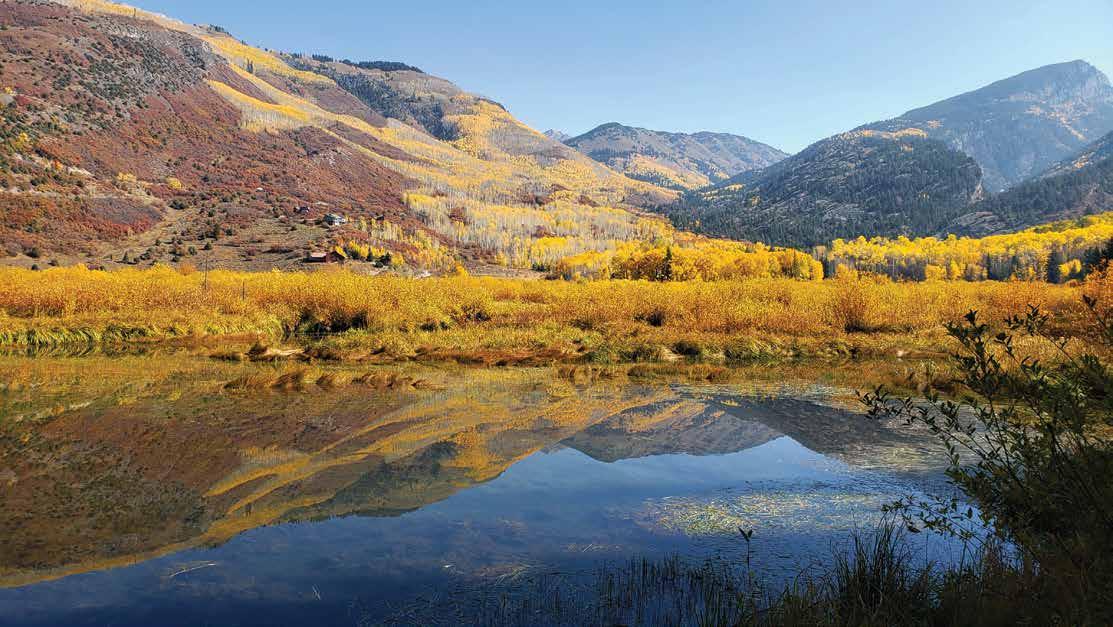


Thanks to the support of our members and friends, the Crystal Valley Environmental Protection Association and the Trust for Land Restoration have conserved 55 acres along the Crystal River in Marble. Wetlands, wildlife and public access are now protected for future generations.
For more information, please visit cvepa.org and restorationtrust.org


From Nan White
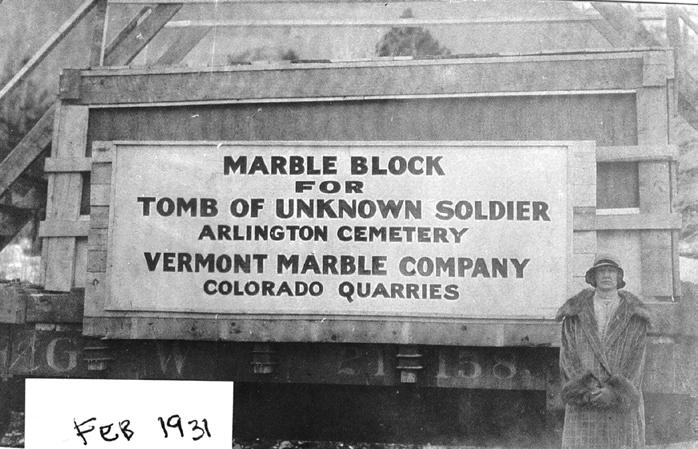
Augusta “Gussie” Sours loved animals, lilacs and quite likely had an affection for Old Henry [Johnson] too. At least she spent the better part of 23 years with him in Marble, up until the end of her life.
In December, The Crystal Valley Echo ran the first installment of a two-part series about Sours’ potential companionship with Marble photographer Henry Johnson. Bob and Kathy Ezra, of Carbondale, took a particular interest in Johnson’s life and continued to dig deep into his rich history only to find that he may not have been quite the lone wolf many thought him to be.
Through postcards, photos, a letter from Johnson to Sours, and the Ezras' research, we have a portrayal of Sours that makes the second occupant of Johnson’s home a real person, with a fascinating personality.
To learn more about Sours, the Ezras contacted a nephew and several Marble old-timers who had known her. One amazing story came from Esther Baumli Sanchez. Sanchez, at age 12, was picking lilacs south of the little house occupied by the pair, and Sours chased her out of the yard and across Carbonate Creek, which, logically, would have had a cascading heavy runoff flow at the time the lilacs were blooming.
Sanchez also recalled that Sours and Johnson did not mingle much in Marble, even though Sours was a member of the Ladies Aid Society. She and Johnson also served on the school board when there were still enough students to operate in the 1940s.
Sanchez said that Sours kept goats and sheep and sold goat milk. In an old, faded, and damaged photo in Sours’ collection, there appeared to be several outbuildings on the property. They were likely used as a shelter for these animals and chickens.
Johnson once wrote Sours a letter in which he told her that the chickens were alone all day and not faring as they should. He
followed that oblique plea for her return with the comment that he had seen a pretty chicken who'd smiled at him, and that he might find a new housekeeper. The letter greeting was to his “niece.”
Sanchez and Thanos Johnson both mentioned Sours’ many cats. They would have been an asset because mice love that corner of Marble, or at least later occupants had to throw away quilts and blankets that had been occupied by a pair of mice and many of their relatives. Humans have long competed with mice for the occupancy of that little house.
Bob and Kathy Ezra met with Judy Hughes, who said that Gussie had a goat named Maxine that liked to head butt visitors. She also mentioned the cats and said that after visiting Sours and her many animals, Hughes’ mother dusted her with louse powder.
Studying the collection of cards and photos in Sours’ collection, one sees that she wrote to her family back in Nebraska quite often. She once sent a Christmas card and enclosed $5, which is notable because $5 was a significant amount 100 years ago. From the fact that the card was in an envelope with a stamp and postmark and addressed to her family in Red Cloud, Nebraska, it seems reasonable that what she had mailed was later returned.
While she had connections in Red Cloud, he had connections in Omaha, Nebraska. Whether that had something to do with her going to Marble to his home is a mystery someone else may so desire to solve. It would have been an all-day trip between the two places when she was young.
From photos, it is noted that members of her family visited Sours in Marble.
The message on the back of the photo of Sours with the lilacs refers to herself as “homely” and just wanted the recipients to see the lilacs. She said she would paint a larger one and send it. The rest of the inscription says that “H.L. had company from Omaha drive out and stayed four days. I never have got rested up yet. You have to take them places and you are so tired when you get back you want to sit down but we had to eat.” This was dated June 30, 1928.
It is hard to imagine transportation and how they must have moved around back in 1928, and what a job it was to prepare food with no refrigeration while cooking on a wood stove. In June, they may have eaten rhubarb from the yard, but what a task to make rhubarb pie! Who knows? It is fascinating to contemplate what life was like in H. Johnson’s tiny house in the years that Sours was there. Quite obviously, she loved Marble.
Sours died in Marble in 1946, and Johnson followed her just 13 months later. He was about 20 years older and died at age 82, and they are both buried in the Glenwood Springs cemetery.
Mike Kennedy, Broker/Owner 970-379-3907
mikekennedy@sopris.net ColoradoHomesRanches.com

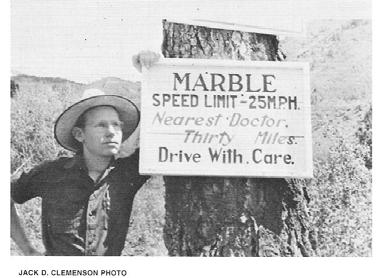
Oscar D. McCollum, Jr., aged 100 years, passed away peacefully on January 3, 2022, in Lakewood, Colo.
Oscar was born March 18, 1921, in Kansas City, Missouri, and grew up first in the city and later on a farm between Lee’s Summit and Blue Springs. He received a degree in geology and geography from the University of Kansas City in 1943 and worked for the rest of WWII as a cartographer for the Army Map Service. He served in the Army Corps of Engineers in 1946-47, achieving the rank of Technician Fourth Class (Sergeant). In 1950 he began a 25-year career with the Central Intelligence Agency, working as an instructor in various types of







Lois Ann preceded Oscar in death in 2015. He is survived by his sons Duncan (Sally) and Peter (Masumi), grandchildren Ian McCollum, Amy Martell, Aileen McCollum, and Colleen McCollum, and great-grandson Owen Martell. intelligence tradecraft.
Oscar married Lois Ann (Hill) McCollum, in 1955 after meeting her at the CIA. Their life together included many adventures, including living four years on Saipan in the Mariana Islands, spending summers in a log cabin in Marble, Colo., and traveling extensively. During his long and successful life, Oscar held a strong Faith, was an avid historian, a genealogical researcher, and had a positive influence on everyone he met.
Oscar first visited Marble while on a college Geology field trip in 1941, and saw the quarry and mill in operation. He knew some of the original old-timers, such as Marjorie Orlosky, Francis Herman, the Ramsey’s, and the Williams brothers (who had run the General Store that stood where Slow Groovin’ BBQ is now). He bought property at West 3rd and Silver streets and built a cabin in 1955, using logs from the area that is now the airstrip.
Oscar and his family moved to Marble fulltime in 1976, where he served as Mayor for several years, helped establish the town water system, was instrumental in creating and operating the Marble Historical Society, and wrote a two volume book, Marble: A Town Built on Dreams, about the history of Marble and the
quarry operations. In 1989 he and Lois Ann moved to Glenwood Springs.

From Darrell Munsell
Several major events paved the way for the settlement of the Roaring Fork and Crystal River valleys and the establishment of Carbondale. The Colorado Gold Rush of the 1860s, precipitated by the discovery of gold in the mountains near Denver, drew tens of thousands of gold seekers and settlers to Colorado; although, many disappointed “go-backers” would soon return to the East. The consequences of the “rush” were substantial.
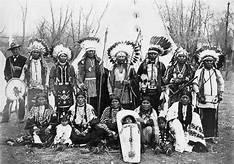
The influx of Anglo-Americans had a disastrous toll on Native Americans. The Cheyenne and Arapaho were brutally suppressed on the Colorado plains and sent to reservations in Oklahoma. The Ute Indians were forced to cede over half of their traditional hunting grounds and were confined to a reservation within the western part of Colorado by the Treaty of 1868.
At the time, the white population had little interest in that part of the Colorado Territory, but the lure of abundant riches and available land soon brought another wave of western expansion.
Reports of a land rich in natural resources made the Ute Reservation too valuable to be left to “roaming savages.” With gold and silver to be mined and farmland to be cultivated, miners and settlers began to encroach upon Ute land, and, despite Ute Chief Ouray’s plea, the federal government refused to prevent this migration.
Politicians in the newly formed state of Colorado designed a land policy that favored miners and settlers. The policy was based on the determination that the Utes would be removed from Colorado within ten years and their land transferred to settlers as quickly as possible.
“The Utes Must Go,” declared Frederick Walker Pitkin, recently elected Governor of Colorado. The uprising of a band of Utes that led to the Meeker Massacre in 1879 presented governmental officials with a choice: extermination or removal.
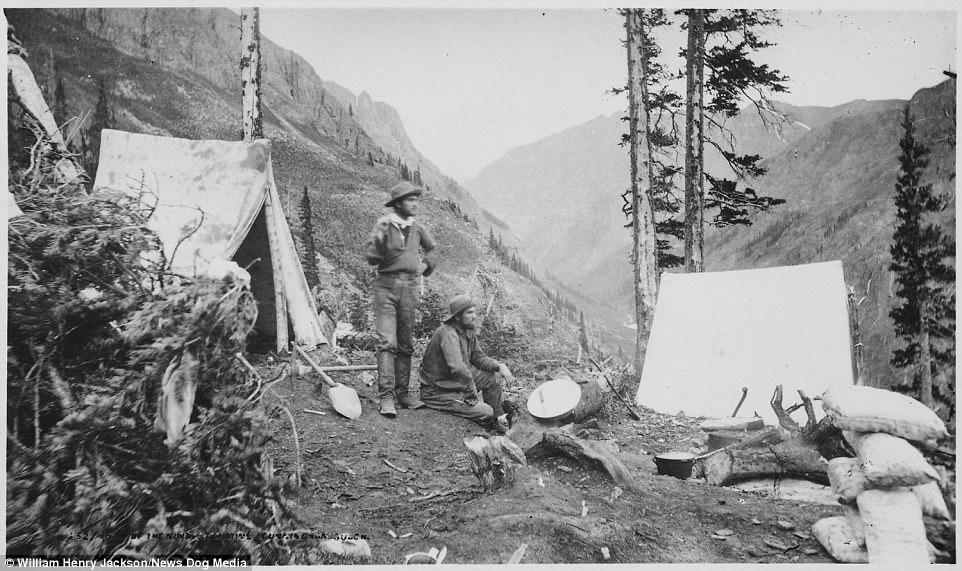
The latter course was chosen, and in 1881 the Utes were removed to a reservation in Utah. As a result, western Colorado, including the Roaring Fork and Crystal River valleys, was open to settlement and mineral extraction.
Some of the reports describing the mineral wealth of the Rocky Mountains came from the Ferdinand Hayden expeditions. In 1873, the U.S. Geological Survey commissioned Hayden to study the Elk Mountain Range in west-central Colorado. With the reluctant permission of Chief Ouray, Hayden’s crew extensively mapped and William Henry Jackson photographed the Crystal River Valley in 1874.
It was noted in the survey report that this mineralized and complex geological area contained large quantities of high-quality coal resources. The report would be, as were earlier ones reporting the silver deposits in the Aspen area, an invitation for prospectors and entrepreneurs to come to the region to take advantage of that mineral wealth.
John C. Osgood, the future “Fuel King of the West” and founder of Redstone, arrived in the Crystal River Valley in 1882 to begin his coal and coke enterprise in western Colorado.
A few years earlier, small parties of prospectors from Leadville, with copies of the Hayden surveys in their hands, crossed Independence Pass into the Roaring Fork Valley to stake sil-
ver claims. They were soon followed by town builders and mining entrepreneurs who purchased many of the claims and established Aspen, Independence, and Ashcroft mining camps. The opening of coal and silver mining operations in the two valleys set the stage for the region’s development.
The Colorado silver boom, which started with the discovery of silver at Leadville in 1879, was one of the most consequential factors in shaping the area’s early history. It beckoned thousands of people, mostly single men, to Leadville. Many eventually migrated to Aspen, where they prospected, worked in the mines, or freighted (hauled goods).
Aspen, like Leadville before, could not accommodate all of the men who were lured there by the silver boom. For some, the silver towns were merely transit points to the newly opened land to the west. In the spring of 1882, hundreds of settlers rushed to the Roaring Fork and Crystal River valleys to establish farms
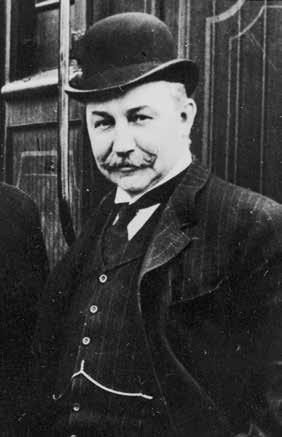
and ranches by preemption (the right of a settler to purchase 160-acres of unsurveyed land he had improved for $1.25 per acre) to provide the hay and fresh food for the Aspen population.
Before the railroads expanded the agricultural economy beyond the local area, truck farming (growing produce for the local market) was the primary form of farming and ranching in the two river valleys. W. F. Corhead’s farm on the Crystal River was typical of a truck farm of this period. In 1882, he planted turnips, potatoes, cabbage, oats, rye, and buckwheat. He also cut 15 tons of hay.
The growing Aspen market for produce and hay encouraged others to give up mining and take up farming and ranching. Eugene Grubb achieved recognition by developing the science of potato cultivation on a ranch he purchased on the Crystal River, south of the present site of Carbondale. Through his efforts and those of other Carbondale pioneers, potatoes became the specialty crop of the area well into the 20th century.
The arrival of the railroads — the Denver and Rio Grande and Colorado Midland— was the last of the events that shaped the area’s early history. The coal deposits in the coalfields southwest of Carbondale brought the trains to
the Grand, Roaring Fork, and Crystal River valleys. Their arrival in 1887 ended Carbondale’s isolation and made it an energetic hub of agricultural and commercial prosperity during the early 20th century.
The region’s history from early exploration and settlement to industrialization is a microcosm of the nation’s westward expansion.
Darrell Munsell is a native of Hays, Kansas, who received BA and MA degrees in history from Fort Hays State University and a Ph.D. from The University of Kansas. He taught modern British and European history at West Texas A&M University, where he was awarded the title of Emeritus Professor. After his retirement in 1997, he and his wife, Jane, moved to the Crystal River Valley south of Carbondale. He was active in historic preservation work and a member of several regional historical societies. He is the author of five books, including: From Redstone to Ludlow: John Cleveland Osgood’s Struggle against the United Mine Workers of America; Colorado Artist Jack Roberts: Painting the West; Protecting a Valley and Saving a River: The Crystal Valley Environmental Protection Association. He and his wife recently moved back to Texas.

OPEN SATURDAYS 8:00AM - 3:30PM

A L L H U B W I N T E R S P E C I A L E V E N T S H A V E B E E N C A N C E L E D
D o t o w i n t e r i l l n e s s e s o n t h e r i s e w e a r e c a n c e l i n g
T h e H u b s p e c i a l p r o g r a m s W e w i l l c o n t i n u e t o s t a y o p e n S a t u r d a y s t h r o u g h o u t t h e w i n t e r
F e b r u a r y - R i d d l e M o n t h
F R E E H O T C H O C O L A T E A L L M O N T H
2 / 5 R i d d l e : W h a t t i m e i s i t w h e n a n e l e p h a n t s i t s o n a f e n c e ?
2 / 1 2
R i d d l e : I c a n f l y b u t h a v e n o w i n g s . I c a n c

There has been a secret sculptor quietly at work here for about the last million years. Unlike other local sculptors, she does not express a preference for marble, instead, she carves every kind of stone she can find. She works at the largest possible scale, shaping the very mountains in which we live.
The sculptor, of course, is mother nature. Human sculptors can choose their tools: Either hammer and chisel, power grinders, or air tools. Nature has tool choices too. Under the force of gravity, mountains are attacked by wind, ice, water, thaw and freeze cycles, chemical decomposition, plants, and animals. This is the story of one carving tool used by nature: Glacial ice.
by Alex Menard
The most spectacular and visible features we enjoy in this valley were created by glaciers. These include broad, U-shaped valleys with steep sides, hanging side valleys which create waterfalls, rock basins that hold lakes, knife-edge ridges, and sharp peaks with bowl-shaped basins just below.
The Ice Age, or Pleistocene Epoch, took place from about one million to 10,000 years ago. During that period, lowered temperatures caused more snow to fall than what melted each year. Snow compacted to become ice and glaciers were formed. In North America continental glaciers formed from the pole to the northern states. Further south, glaciers were confined to the high mountains. These are called alpine glaciers.
A few words about climate change are fitting here. The cause of the ice age is unknown, only subject to speculation. It could have been due to cyclical periodic changes in the earth's orbit or tilt on its axis or even changes in the sun's energy output. While we can't do much about the sun or earth's orbit, today, we may certainly affect changes being caused by global warming.
Geomorphology is the branch of geology that studies the landforms of the earth, but this is not just a scientific discipline. Every visitor to national parks or other scenic spots is there to appreciate a natural landform.
A geomorphologist deduces general principles to understand what the traveler sees. This understanding allows them to see behind, inside, and into the history of the feature that others only see at its surface. Geomorphology is the least technical branch of geology, as the principles are easily stated and intuitive.

Glaciology is the branch of geology related to the mechanics of glaciers, their formation, motion, and resulting erosion and deposition. If you make the effort to learn the following terms, your appreciation of the glacial features you see here will be enhanced every time you apply them to a local scene. So, here comes the jargon.
An Arête is the technical term for a knife-edge ridge formed by glacial carving. In the Crystal Valley, the most prominent and spectacular arêtes project in all directions from the main peak and subpeaks of Chair Mountain. Arêtes result from glaciers carving away at a ridge from both sides. The popularly known arête in this area is the “Knife Edge” on Capitol Peak making the mountain one of the most challenging 14,000-feet peaks to climb in Colorado.
Circques are related to arêtes and are located just below them. They are the large amphitheater-like basins we see high up on any glacially carved mountain. On the leeward side of ridges, the prevailing winds deposit the most snow. This zone of accumulation compacts to form a glacier. This is where the ice starts moving downhill, picking up rocks to use as carving tools. Skiers call them bowls.
The best example of a horn is the Matterhorn in Switzerland. The Alps are the case study for mountain glaciers, which is why it is referred to as Alpine glaciation. Several horns are seen on Chair Mountain. Horns result from carving away at a peak from three sides or more.
Moraines are depositional features, unlike the three previous erosional features. Glaciers pluck rocks from the mountain sides and more fall on them from above. The rocks are carried as the glacier moves downslope and are deposited at the terminus or sides of the glacier. Terminal moraines are seen below the Town of Aspen.
In the Crystal Valley, unstable slopes and mudslides have obscured any valley bottom mo-
raines. The entire site of the Town of Marble is an alluvial fan/ flood plain, which destroyed any remnants of moraines.
Glacial Lakes are formed in two ways: Moraines can dam up the water behind them or glaciers can scoop out rock basins to hold water. All local alpine lakes are glacial in origin.
Lizard Lake is an interesting example. Did you ever wonder why a lake sits on a ridge between two drainages? A glacier traveling down the canyon of the upper Crystal River traversed that ridge to join ice traveling down Lost Trail Creek. On the way, the glacier scooped out the basin for Lizard Lake.
Other cool local glacial lakes include Geneva Lake at the base of Snowmass Peak, Emerald Lake on the other side of Schofield Pass, and the remote Yule Lakes on the slopes of Treasure Mountain.
U-Shaped Valleys are broad, flat bottomed with steep sides that were formed because ice carves differently than water erodes. Stream eroded valleys are more narrow and V-shaped in cross-section. As glaciers move down the valley they join with other side valley glaciers on the way. So, the main channel of the glacier picks up more ice and therefore cuts deeper.
The side valleys are not cut as deep and meet the main channel at a higher level. These hanging valleys become the sites where streams become waterfalls or cascades. Numerous examples include Milton Falls behind the Marble airstrip as well as Milwaukee and Chicago Falls on the road to Crystal City.
Erratics are rocks that have traveled on a glacier and deposited in a place where they otherwise would not be found. As mentioned before, the record of moraines in the upper Crystal Valley floor is absent, but erratic boulders, actual marble from Treasure Mountain, were found 800-1,000-feet above the slopes of Coal Creek near Redstone. The glacier carried them 12-miles down the valley. Erratic granodiorite




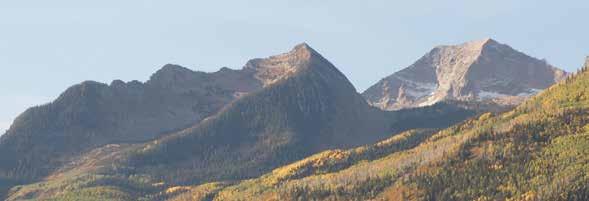
rocks from Snowmass Peak are found on the south slopes of Sheep Mountain.
Glacier polish and striations are minor features that identify the path of glaciers. Glaciers use rocks of every size to carve including fine rock dust for polishing. When a glacier passes over a large piece of exposed bedrock, it may polish it to a high gloss or scratch it with parallel grooves showing the direction of travel. Both these features are seen on the way to Crystal City.
Chair Mountain is a local example that shows all these features. There are multiple cirques, arêtes, and horns that can be seen at a distance. Buck Creek Basin, located between Chair Mountain and the rugged ridge known as "The Raggeds,” is a broad U-shaped valley with three glacial lakes and multiple moraines.
Rock glaciers are contemporary remnants of glaciers. A rock glacier is a permanent snowfield that moves downhill like a glacier but consists of more rock than ice. Rock glaciers on Mt. Sopris are well studied and may date back to the end of the ice age.
In Marble, the north side of Mt. Daly has a rock glacier which is the source for Carbonate Creek. This source makes Carbonate Creek a perennial stream, even though the area it drains is small.
The demise of the glaciers in North America coincides with the entry of man crossing the Bering Strait. The post-glacial, modern epoch is called the holocene or Age of Man; since the glacier's retreat, stream erosion, rockfall, landslides, and mudslides are slowly obscuring the
glacial sculpture.
In summary, 4.6 billion years of building up, breaking down, heating, cooling, crushing, melting, recrystallizing, folding, and faulting of the earth's crust was followed by the crowning touch of carving performed by glaciers in the very last million years. To this last process, we owe most of our spectacular scenery including rugged mountains, waterfalls, and high mountain lakes.
For further interest, Rob Hunker of Redstone has produced a series of aerial flight recordings over the local mountains. The pass over Chair Mountain is breathtaking and shows all the results of glacier action. This film is shown daily at the Marble Museum during summer.
The museum also has rock and mineral collections, geologic maps, and many geology books in the reference library. USGS Bulletin No.1603, Geologic Story of Aspen Region has a complete description of the Pleistocene glaciation in this area. In March, Colorado Mountain College is offering a local geology class. Visit coloradomtn.edu for more information.




Written
and researched
by Maya Lopez, 8th Grade
Sitting Bull was a Lakota Sioux leader and was well known for his courage and defending native land. Sitting Bull was born in 1831 near Grand River, Dakota territory in what is now called South Dakota. His birth name was “Jumping Badger” but his father renamed him Sitting Bull for his courage. At the age of 10, Sitting Bull killed his first buffalo.
Sitting Bull first battled the U.S army in June 1863, when they came after the Santee Sioux in revenge for the Minnesota Uprising. He then faced the U.S military again at the Battle of Killdeer Mountain on July 28, 1864, when U.S forces under General Alfred Sully surrounded an Indian trading village, in time forcing the Sioux to retreat. On June 25, 1876, 600 men led by General George Custer, entered the valley. Sitting Bull ensured all the women and children were safe while Crazy Horse led over 3,000 Native Americans to victory in the Battle of Little Big Horn, defeating Custer and his men who were all killed in what is now known as Custer’s Last Stand. Sitting Bull surrendered to the U.S army on July 20, 1881 in exchange for liberty for his people. He was a prisoner of war in South Dakota’s Fort Randall for two years before getting released to the Standing Rock reservation. On December 15, 1890, a native police officer woke Sitting Bull up at 6 a.m with the intention of arresting him. When he refused to go quietly, a crowd gathered. A young man shot a member of the native police, who retaliated by shooting Sitting Bull in the head and chest. Sitting Bull instantly died from the gunshot wounds. Two weeks after Sitting Bull died, the army massacred 150 Sioux at Wounded Knee, the last fight between federal troops and the Sioux.
On October 29, 2021 the DNA results concluded that Ernie LaPointe, 73 years old, is the closest descendant of Sitting Bull. He first got interested when researchers approached him in 2007 and wanted to do a DNA test to prove his relation to Sitting Bull. Ernie believes his great grandfather’s grave is not being treated with the respect it deserves. He hopes to find a worthy location for Sitting Bull’s remains and to ensure they are treated with respect.
In Powwows, there are different dance styles. The first dance that's performed is the Gourd Dance; it's performed by men. Women participate by dancing in place behind their male family members. The Powwow is then started with the Grand Entry; all the dancers enter the arena as the announcer calls their categories. Each dancer has a number that the judges write down for the competitions later on. During the Grand Entry, there are two different songs played, the Victory and Flag songs. The announcer calls out one of the drum group’s names and that group sings the Flag song. The dancers that are gathered stand around and face the flag to show respect. After the Flag song, a different drum group takes over and sings the Victory or Veteran song. The dancers then dance in place, honoring the veterans that fought in war. After introducing the veterans and
flags, an elder would say a prayer for the day. Once the Grand Entry is over there are several intertribal songs for anyone that wants to dance. Usually dancers take this opportunity to practice on their foot work and enjoy their time in the arena. Later, the competitions are announced and there's different dance styles and ages that are split. Tiny tots don’t compete but they dance and have a chance to show their moves. Then, the competitions are organized. The junior boys compete in four different dance styles: Traditional, Grass dance, Fancy, and Chicken. Then, the junior girls compete in a traditional dance followed by junior girls Jingle and Fancy. The teens dance next in the same order, and after a couple of competitions there is a break between. Usually beef stew and Indian tacos are served. In an hour, the Arena Director announces for all dancers to get ready for the second Grand Entry. The second Grand Entry is the same as the first. After the Grand Entry, sometimes each drum group sings an Intertribal song. The arena is then cleared for the next competitions: the men's Traditional, Grass dance, Fancy, and Chicken dance. The women's category dance is after the mens. Sometimes there are a couple of honorings. For example, every year a princess gives up her crown to the next chosen one. When the crown is given to the new princess of the year, a ceremony is held to honor her. The Powwow then ends with a closing song that the dancers dance to; it's similar to a Grand Entry.
When I lived in Denver, I had no interest in knowing my Native American heritage because I grew up in a Mexican community and only acknowledged that part of me. I thought that my life would be difficult to adjust to when I moved here, but then I realized that I was living a similar lifestyle as my Native American ancestors. In social studies, we were choosing what culture we wanted to learn more about and that was when I got the idea to research my culture and history. I got so deep into this project that I decided to teach myself more about my history since I don't have anyone at home to teach me. Growing up as Apache and Lakota has made me feel strong inside knowing that even when we had our land taken from us we still managed to survive. One of my biggest influencers is Keya Clairmont and Red fawn. Keya Clairmont is the reason why I still dance. I felt like giving up on dancing and she saw potential and gave me one of her regalia. Even to this day, I am so honored to dance in it. Red fawn is another of my influencers, she was arrested for protesting against the Dakota Access Pipeline. Even when she was arrested, she fought to be freed.

Grab a cold one from the Bar & Grill and head down to the Game room. Open Daily.

Stop at the General Store for a latte & snack, and browse wares from Local artists.



Propaganda Pie hosts Trivia Night on Tuesdays from 6-8pm. Also check out Community Nights on Fridays from 6-8pm with amazing specials
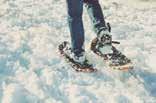
Snowshoeing and Cross country skiing up Mclure Pass or Coal Basin Road.
Ice Skating at Ron's Rink. Check out the shed to borrow some skates and hockey sticks.

Next RCA Meeting February 1st 6pm, at the Redstone Inn
Please keep your dogs on leash in Redstone!
By Gentrye Houghton, photographs provided by Connie Hendrix
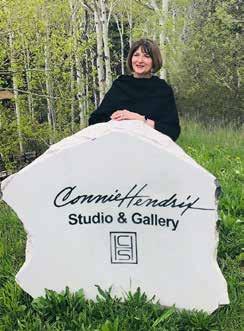
Marble artist, Connie Hendrix, welcomed me to her home last month. She opened the door and her larger-than-life personality immediately embraced me with a hug, and we sat down at her dining table for a warm afternoon while the snow fell outside.
Hendrix grew up in Iowa and explained that one of her greatest and earliest influences was her grandfather, a retired school teacher.
“There wasn’t an art teacher where I went to school, so most of my Christmas gifts growing up were art sets. My grandfather really encouraged me to freely explore my artistic expression at an early age.”
A child of divorced parents, Hendrix rode the California Zephyr back and forth to spend every summer in Brush, Colo., with her mother. It was during a two-year stint living there full-time that Hendrix experienced her very first art teacher in the 4th grade.
She graduated with an undergraduate degree from Drake University in Des Moines, Iowa, where she also worked in ad design for LOOK Magazine. By her senior year, she’d earned her way to getting her own drawing board at LOOK Magazine.
After Drake, she began teaching art within the Memphis, Tenn., school system; one of the perks as a teacher was to attend classes free of charge at the Memphis College of Art, where she furthered her education in Sculpture and Photography. However, she quit teaching and returned to the advertising world before she had the opportunity to attend classes in stone carving.
“While Iowa maybe my home state, I spent more time through my career in Tennessee and that’s where I blossomed,” Hendrix explained. Around 1990, she wanted to start creating full-time but felt a need to master stone carving and came out to Marble for the second-ever MARBLE/ marble Symposium.
“It’s so beautiful here, it grabbed my heart,” Hendrix explained. “I told my husband, Charlie, that I was coming back next year and buying something.
“So I did, and then told him, ‘Well I bought something, I hope you like it!” she said, laughing exuberantly. It took the couple four years to build the home where they currently reside.
Hendrix is largely influenced by fossils, skulls, kaleidoscopes, and gal axies, and these images are quite apparent in her work. “My fossil series is what made me stand out; at the time, no one was doing it and it really distinguished me on the national scene.”
However, today, her creative focus is shifting. She’s still painting and sculpting, but she’s more absorbed with helping others explore their cre ative sides.
“I feel like my life has been such a privilege and an honor, and I just want to share and give back,” said Hendrix. She says her goal is to help emerg ing artists explore, find inspiration, and to help free them from fear.
There are three opportunities to take classes with Hendrix starting this
month and going into the spring.
Starting February 7, participate in a watercolor class every Monday for six weeks. The class meets at the Marble Community Church’s Fellowship Hall from noon to 3 p.m. Setup happens an hour before class starts, and she’s reserved the hour following instruction for cleanup. This course includes watercolor demonstrations, weekly assignments, critique sessions, and painting time; if you’re interested in signing up, please call (964-6417) or email (CHendrixStudio@ aol.com); the course costs $275. “Students will need to purchase their own supplies, but I also have lots and love to share,” said Hendrix.
“Beginning Sculpture” is offered through Colorado Mountain College (CMC) on Thursdays from 9:30 a.m. - 12:30 p.m. at the Carbondale campus. According to CMC’s website: Learn how to think and design in 3-D or in the round to create a sculpture. Students will translate sketches into a small maquette, and complete the final process for three different projects. This class will prepare students for larger projects, more expensive media, and to get more from your investment in future sculpting classes and workshops. The course runs from March 24 - April 28 (despite what you may see on CMC’s website).
“Watercolor: Exploration in Mixed Water Media” is a four-day workshop, also offered through CMC, early in May. CMC’s course description says, “This workshop offers students the freedom to explore in water-based mixed media - watercolor, acrylic, casein, and gouache. There will be an emphasis on the Elements of Design, the process of generating ideas, and an understanding of different water-based mediums and how they can work together. Each student will experiment with different materials, integrate different mediums, and utilize different paper surfaces for the first two days. This knowledge acquired will be applied to a planned composition on a larger sheet of paper on the last day of class. Prerequisite: some prior painting experience.”
Both offerings through CMC costs $159, some materials will be provided, but there will be additional costs for some supplies. Interested participants may sign up by visiting coloradomtn.edu/community-education/ and clicking on the blue button under the photo that reads “Search & Register Community Classes.”