

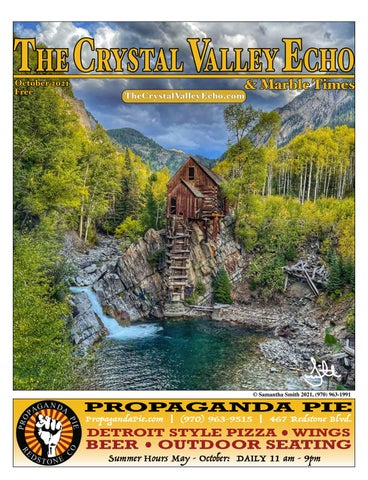
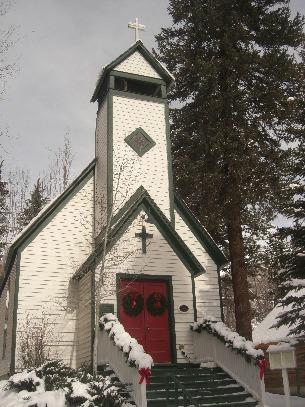
Original comment posted to the Crystal Valley Swap Facebook regarding community use of the Church at Redstone.
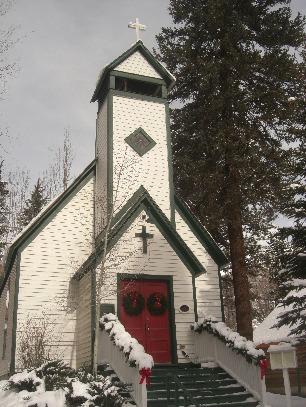
I am sure that if Jesus rose again and entered this church [in Redstone] that he would not recognize his own teachings and so would not feel welcome. I thought that part of being a Christian was to be a witness for love, compassion, grace and forgiveness. You need to have your doors open for those who are curious about Christianity to learn about its teachings. When the doors are closed, as you have them, then it is impossible to share the good word. We learn not only by direct instruction but by example and exposure. I am sorry to say that the leadership of the Redstone Church no longer seems a good fit for the majority of the community and what it believes in. Unfortunately, there are many other churches around the country that embrace this kind of exclusivity and judgment. If the current leadership cannot better reflect and serve its present community then perhaps it is time for them to move on?
— Nikki Beinstein
Have an opinion? Want to voice a concern? We want to hear about it! Send a letter to our Editor, Gentrye Houghton, at gentryeh@hotmail.com Marble Bench Dedication: Marlene Bauer
Ms. Houghton,
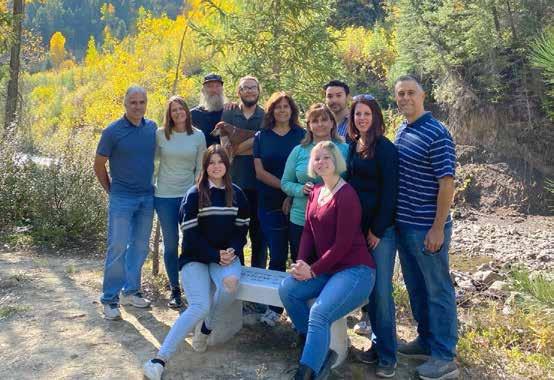
I wanted to write to request an addition to The Crystal Valley Echo regarding a wonderful experience we had with two individuals in Marble. I have attached three photos.
We recently contacted Gary Bascom of Abstract Marble & Gift Shop to create a marble bench for our mother, Marlene J. Bauer, to place by the river in Marble, which were her last wishes.
We lost our mom during Covid in November 2020 and were unable to see her the last six months of her life due to restrictions at her assisted living facility. That being said, it was very important to us to honor her in this way. She was a resident of Carbondale for many years but found solace, peace and quiet near the river in Marble.
Gary got to work immediately and enlisted the assistance of Ron Leach from the Town of Marble to find a spot for the bench. These two men were instrumental in making this wonderful tribute happen and we wanted to truly thank them for their kindness and generosity. We understand this is the first bench of this kind to be placed on the river.
Last weekend, September 26, 2021, our family traveled from all over the country and gathered by the bench. We finally held a small memorial for our mom and it was beautiful, emotional and touching.
Thank you again to Gary and Ron for making this wonderful tribute a special day for all of us.
Regards,
Cathy Berra and Family
Marble Times
Mission Statement: To provide a voice for the residents of the Crystal River Valley; to bring attention to the individuals and local businesses that are the fabric of the Crystal Valley region; to contribute to the vitality of our small town life.
Editor • Gentrye Houghton gentryeh@hotmail.com
CONTRIBUTORS
Stephanie Deaton • Amber McMahill Alex Menard • James Steindler
ADVERTISING SALES
Heather Marine at Elephant Mountain Creative heather@elephantmountaincreative.com (970) 718-5848
The Crystal Valley Echo is published monthly, and is distributed throughout the Crystal Valley.
NEWSPAPER BOX LOCATIONS:
Carbondale (old) City Market • Village Smithy Carbondale Post Office • Redstone Inn Propaganda Pie • The Marble Hub FOR SUBSCRIPTIONS
Please send $40 for print or $25 for digital editions along with address information to: The Crystal Valley Echo 364 Redstone Blvd. Redstone, CO 81623

In our last update regarding litigation surrounding public access to Dorais Way, we learned that the case had entered into the Federal Court system. The Crystal Valley Echo spoke with Richard Neiley, Assistant Pitkin County Attorney, in September and learned that the case has once again changed courts.
Before this, the United States Forest Service was listed as a defendant in the case but is no longer an involved party; therefore, the case has again moved back to the 9th Judicial Court.
"The County refiled their complaint earlier this year with the State court and is still in the discovery stage with depositions to follow probably in the next four months," explained Neiley. "Currently, there is no trial date yet. Local judges require parties to complete mediation before setting a hearing date; mediation has not been scheduled and our deadline is the end of February 2022. Mediation usually happens after discovery but can sometimes happen sooner; however, the defendants' council does not want to schedule mediation until the discovery phase has been completed."
Neiley went on to explain that he does not foresee a trial date in the mix before this time next year, but more than likely it will happen towards the end of 2022.
Have an opinion about this issue? We want to hear it; send a Letter to the Editor at gentryeh@hotmail.com
Oct 5 Redstone Community Association's regular meeting. 6 p.m. at the Redstone Inn.
Oct 7 Town of Marble Board of Trustee’s regular meeting. 7 p.m. Marble Community Church’s Fellowship Hall.
Oct 9 Wilderness Workshop's Celebrate the Crystal! A valley-wide celebration of our treasured river. All ages, activities beginning at 3 p.m., Wild Rivers film tour starting at 6:30 p.m., free and open to the public.
Oct 12 Redstone Senior Days at the Redstone Inn. For information or to RSVP: (970) 920-5432
Oct 26 Redstone Senior Days at the Redstone Inn. For information or to RSVP: (970) 920-5432.
Join friends and neighbors at a valley-wide celebration of the Crystal River in Marble on Saturday, October 9!
Celebrate the Crystal! – Saturday, October 9 at Marble Mill Site Park.
• All events will take place outside and begin in the Amphitheater at the Marble Mill Site Park.
• Activities start at 3:00 p.m., including a naturalist walk, a pumpkin-carving contest, and more!
• Enjoy delicious food from Slow Groovin’ and a specialty cocktail, with a Crystal River twist, from the Marble Distillery, during a pre-film screening social hour at 5:00 p.m.
• Films about the Crystal River and selections from America Rivers’ “Wild Rivers Film Tour” begin at 6:30 p.m.
• Learn more about ways to protect the unmatched beauty and scenic qualities of the Crystal River, forever.
This event is hosted by Wilderness Workshop, the Crystal Valley Environ-
mental Protection Association (CVEPA), American Whitewater, American Rivers, and the Roaring Fork Conservancy. Attendees are encouraged to bring a water bottle, camping chair, and warm layers/blankets.
Wilderness Workshop is a nonprofit advocacy organization based in Carbondale, CO, that engages in research, education, legal advocacy, and grassroots organizing to protect the ecological integrity of nearly 4 million acres of public land in Western Colorado. Learn more at WildernessWorkshop.org
Registration is encouraged by visiting wildernessworkshop.org/celebrate-the-crystal, but not required to attend the event.
Celebrate the Crystal is free and open to all, so feel free to invite anyone who loves the Crystal River.
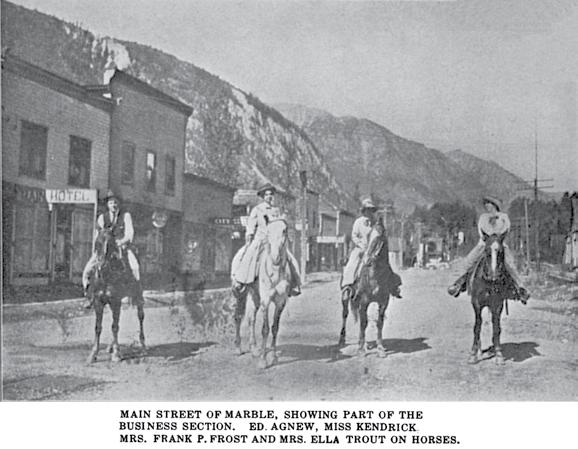
with words from Bob Meredith, introduction and photographs from Larry Meredith, and content sponsored by the Redstone Historical Society. Bob Meredith, the author of the following piece, grew up in the Crystal Valley at the foot of Mt. Sopris on a ranch halfway to Redstone. He wrote this piece in answer to a request and it shows he has a prodigious memory (and a fine writing talent).
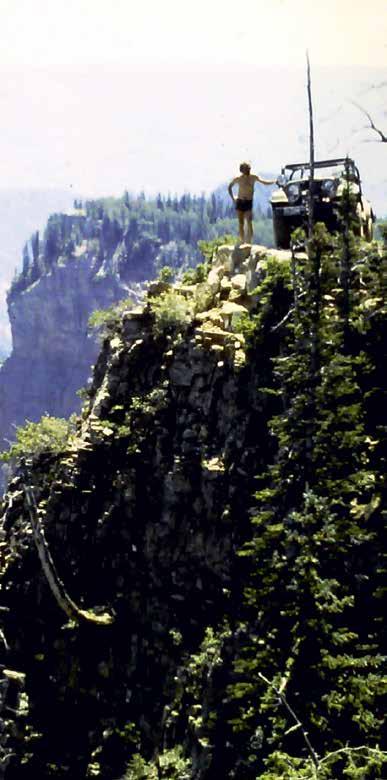
He and his wife Trish now live in a home they built in Guatemala and settled there after purchasing a sailboat and voyaging as far south as Cartagena, Colombia, before returning to Guatemala’s Rio Dulce (Sweet River). Before that Bob and Trish saw the high country from horseback and he and his cousin (me) explored practically all of Pitkin, Gunnison, and Garfield counties in his 1972 Jeep CJ-5 (now owned by our son Greg). Bob was also among the first to introduce my wife and me to the wonders of skiing – at Buttermilk. He was very patient . . . Heck, we even had a business operation together.
Bob’s folks were Ione and Pegg (Lowell) Meredith. Most Valley folks knew them, particularly Ione who taught third grade in Carbondale for many years. Later, many folks knew Bob’s wife, Trish, a long-time employee of Alpine Bank in Carbondale. Although never really an oldtime family clan, there were other Merediths in the area. Meredith brothers included Truman (Doc), Leadville’s long-time photographer who later owned a ranch up the Crysta, and Sug (Lloyd), who was a Glenwood Springs’ long-time photographer.
I first visited the Valley in the 1940s as a baby with my parents, Lawrence (Chub) and Eva Meredith. They ultimately owned riverfront property on Redstone Boulevard, but it takes someone, like my cousin and good friend Bob, who can claim much more knowledge about this area to be able to write authentically about it. Enjoy!
— Larry K. Meredith
I don’t believe I was aware Labor Day had passed; all I knew was that it was a bright sun-
ny Monday morning in early September, and I was standing on a point of land in front of the old ranch house, looking down at the Crystal River and the dirt road on which the school bus would soon appear.
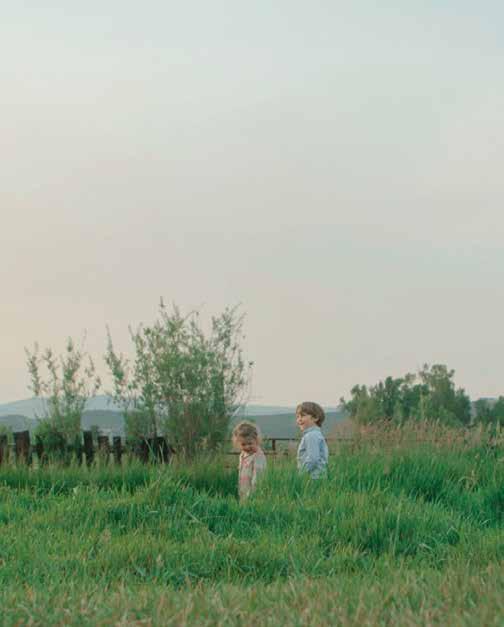
My parents had recently bought the Whitbeck Ranch which was located on Nettle Creek, eight miles up the river from Carbondale. The year was 1949 and I was about to do something I had never done before. I was six-yearsold, and head off to school.
In the spring of 1948, my parents packed me, the dog, and a cat up to move from Oklahoma back to a small cabin they owned in Reudi, Colo., where my mother had been the school teacher in the little community’s one-room schoolhouse during the years we know today as the Great Depression. She had an uncle who owned a ranch there and an aunt who had a tea house where the stage stopped.
My mother accepted a teaching position in Carbondale; by that summer they had purchased the Whitbeck Ranch, and I spent the rest of that summer on the ranch with them. My mother began her third-grade teaching career in Carbondale during the fall of 1948, and I spent that school year at home with my dad. However, I was able to spend the following summer with them both until that September day had finally arrived, and I would attend my first day of school.
I was going to school but was not happy about it. As an only child of older parents, I was not used to being around others my age. I would have been happy just staying home with my dad and enjoying the few animals we had around.
This article focuses on the years spanning from 1949 through 1961, and the story that follows are my thoughts, memories, and impressions of growing up in the Crystal River Valley in the 1950s. A time when a sign at the entrance to town read, “Welcome to Carbondale, Population 1,000, Home of 999 friendly people and one grouch.”
I stepped through the doors of Carbondale Union High School, “Home of the Bulldogs,” where the upper grades were taught on the building’s second floor and the classrooms for the younger age groups located on the ground floor. I quickly learned to stay out of the way of the staircase traffic when high school classes changed.
Time passed and I began to understand that there were town kids and there were ranch kids. It seemed the town kids had nothing to do and the ranch kids had too much to do. My parents were shopkeepers, ranchers, and coal miners. I remember learning that some folks around were Italian but I didn’t understand why that was of interest.
Maybe it was because, as I learned in later years, they made chokecherry wine. I started comprehending that snow may fall on Easter and that you might also have a white Halloween. We all looked forward to the 4th of July fireworks and for a couple of years, they shot a display from Mount Sopris’ middle peak.
In the early 50s, Carbondale’s Main Street was not yet paved and the road up the Crystal River was a somewhat improved and often graded dirt road. The railroad had been abandoned and its rails salvaged for the war effort years before; however, there were many railroad spikes and rail plates to still be found along the abandoned right-of-way.
On the railroad side of the river, there were many places where “scrap” marble, some blocks as large as refrigerators and others perfect for stepping stones, was used as rip-rap. One memory I have from the 1950s is watching this marble slowly disappear as the public helped themselves to various pieces.
Outside of town, there was the turn-off to Dinkle Lake where a small dairy farm was located. The fish hatchery was there where the road turned and went through the Historic Perry
Ranch property beyond which were merely old ranches until you reached Redstone.
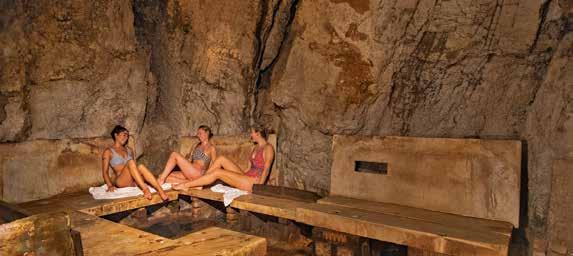
A solitary building, the Rock Creek schoolhouse was no longer in use except as a Pitkin County polling place. Janeway Flats was vacant except for a collapsed building (still there today). The Redstone Coal Mines’ Hot Springs Bathhouse was in disrepair and inaccessible across the river, but the small public roadside bathhouses, one with hotter water than the other, were still in use.
There was no Redstone by-pass. You had to cross the river entering Redstone by traveling past the Redstone Campground and you exited by again crossing the river at the coke ovens’ location. Further upstream, Placita was abandoned.
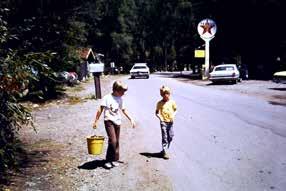
And Redstone… Redstone, with its dirt Boulevard that flooded sometimes during the spring, had its original miner’s cottages, some still occupied by miners, and executive homes. Of course, there was Cleveholm, now the “Redstone Castle,” the Redstone Inn, and I seem to remember there was a store on the corner diagonal from the Inn. However, the Redstone General Store was the only business in the town of interest to me.
I don’t quite remember what all they sold but the General Store had a gas pump with cold Coca-Colas and a Hershey’s candy bar, just in case you needed provisions, and that was good enough for me.
Tourism during the 19050s did exist up the Crystal and it was common for locals to cart visitors as far as Marble. My folks, as did many others, always stopped at the Redstone General Store; sometimes on the way to Marble, sometimes on the way back, and sometimes we stopped both ways.
However, it was Ruby Isler’s pop stand in Marble that owned my heart. Actually, it was Ruby herself. I enjoyed looking at her photos of the area’s past glory and listening to her stories of the old days she both loved and missed.
I remember that most of us Carbondale kids, even by the time we were 10 or 12, had no real idea of where we were, even though we thought we did. We’d been to Glenwood
Springs, maybe even as far as Grand Junction, and some of us might have been to Aspen.
To some of us, Missouri Heights was a vast maze of bad roads. I suppose to some, it still is. Most of us had been to Marble and maybe one or two as far as Crystal City, but the old McClure’s Pass Road into the Muddy was steep with switch-backs and few went that way, although not as steep as the visible Ute trail which the road followed in places.
To us school kids, the 50s were an innocent time. Our lives, as did the town’s, revolved around the seasons and the school’s sports schedule. While relatives were perhaps serving our country, we kids were not concerned about the Korean conflict and only knew of its end by the arrival of shiny Korean jackets with dragons on them.
Most of us went to the town’s movie theatre once a week but, usually, westerns were shown, though a war movie was played every once in a while, and so we had very little exposure to the world beyond the Crystal and Roaring Fork Valleys.
The Crystal River Valley did have electricity and telephone service but television did not arrive in Carbondale until well into the ’50s, and even then it was not available in most rural locations and radio reception was sporadic depending on your location. Both electricity and telephone service was relatively reliable.
known by Down Syndrome; but at that time, there were no Native Americans, African Americans, Asian Americans, or Latin Americans until a family from Mexico moved to town about the same time a family or two of refugees arrived from the Hungarian revolt (around 1956). As we aged, we became more aware of the world but we were an innocent and sheltered bunch.
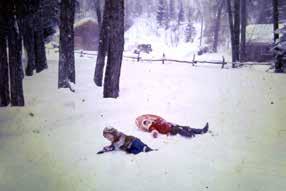
Things that were important to us included the Potato Day Celebration and those days when, sometime following the first frost of Fall, the school was dismissed so students could help with hand-picking of the potato harvest. We looked forward to snowball fights that were fought across the holding pens and bucking chutes of the rodeo grounds, which were located just beyond the schoolyard.
We boys shot each other with pea shooters and no one swallowed a pea and choked – well, at least not to death. We drank out of creeks, rivers, and irrigation ditches. We had slingshots and BB guns and nobody lost an eye. We played “potsy,” trying to lag our shooter marble (no steelies allowed!) into a small hole dug against the brick wall of the schoolhouse.
Most of us carried pocket knives and during lunch played mumblety-peg, a game in which, according to Dictionary.com, each player, in turn, throws a knife or pointed stick from a series of positions, continuing until it fails to stick in the ground, and we managed to grow older.
Many of us had 22 caliber rifles and some of us were fortunate to own hunting rifles. I suppose most of us tried cigarettes and a few others snuff, but drugs meant that we might come up with a six-pack of 3.2% beer.
I don’t know about the other guys, but during my early elementary grade years I had no idea of what the girls in school
The telephone was okay but our phone number was Redstone Six. We were on a “party-line” and if the phone started ringing, you started counting rings. In our case, if the phone rang six times it was for us.
All six-party members heard every ring, so we all knew who got a phone call. Of course, you could listen in. But who would do that? You’d picked up the handset and listened to see if the line was open before you made a call. A friend, who was on the same line as us, and I figured out that if we both picked up our phones at a set time well, then, there we were on the phone with each other.
We learned to deal with the local town character, the family that was “different,” the kid with bad hygiene, and the kid with Mongolism, as it was called at the time yet today is


T h a n k s g i v i n g i s l e s s t h a n a m o n t h a w a y . L e t t h e
R e d s t o n e I n n m a k e y o u r T h a n k s g i v i n g D a y D i n n e r
t h i s y e a r . C a l l t h e R e d s t o n e I n n f o r r e s e r v a t i o n s o r
m o r e d e t a i l s 9 7 0 - 9 6 3 - 2 5 2 6
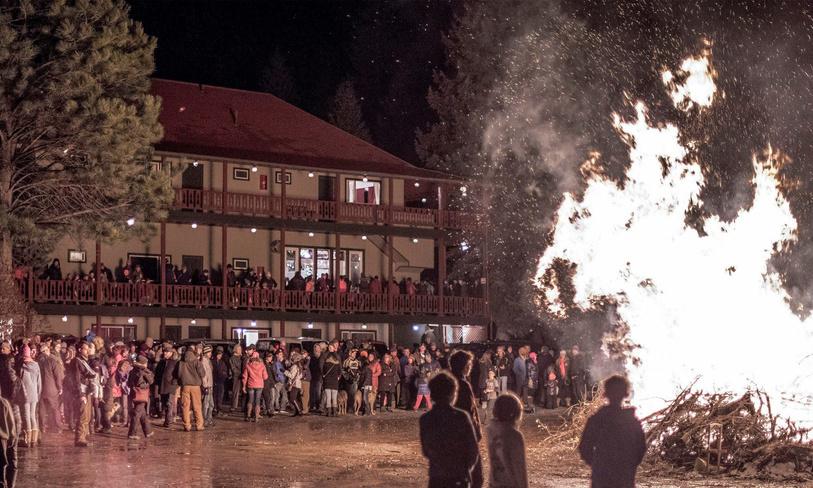
G r a n d I l l u m i n a t i o n i s a g o t h i s y e a r C e l e b r a t e t h e
c o m i n g o f t h e h o l i d a y s e a s o n o n F r i d a y , N o v e m b e r
2 6 t h w i t h a b o n f i r e i n t h e l o w e r p a r k i n g l o t o f t h e
R e d s t o n e I n n . S a n t a C l a u s a n d h i s h e l p e r s w i l l l i g h t
t h e t r e e a c r o s s f r o m t h e G e n e r a l S t o r e a n d t h e n
w a l k t h e B l v d t o t h e B o n f i r e
w h o v i s i t F a l l a l s o b r i n g s o p p o r t u n i t i e s f o
R e d s t o n i a n s t o g e t t o g e t h e r a n d e n j o y t h e w e a t h e r
a n d f e s t i v i t i e s . G h o u l s a n d G h o s t s w i l l b e w a l k i n g t h e
B l v d o n H a l l o w e e n n i g h t . T r i c k o r T r e a t i n g b e g i n s a t
d u s k , r e m e m b e r t o d r e s s w a r m u n d e r t h o s e
c o s t u m e s . K e e p a n e y e o u t f o r t h e R e d s t o n e G e n e r a l
S t o r e w h o i s s u r e t o h a v e s o m e t h i n g s p o o k y p l a n n e d ! N e x t R C A M e e t i n g O c t o b e r 5 t h 6 p m , R e d s t o n e I n n
P l ea s e k eep y our dogs on
l ea s h i n R eds ton e!
did and I didn’t really care. I did understand, though, that they were intelligent, capable, and were not to be underestimated. Some were smarter, some were prettier, some I liked, some I didn’t…wait for a second, maybe I did care.
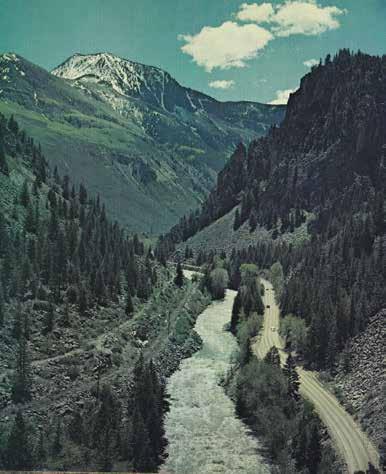
Those of us who drove the Crystal River Road memorized the path. We learned where the permanent rocks were, which curves had washboards, and which curves were shaded and more likely to be slick in winter. We knew where there might be deer on the road and knew where there was likely to be a tourist taking a picture.
We accepted that every spring and fall bands of sheep and herds of cattle would be driven to and from their high-country grazing grounds. We knew that cloud-bursts, triggered by the hot afternoons of summer, could close the road with mud and rock slides, but the road seldom closed because of snow.
We came to know that the Black Panthers, the trucks hauling coal from the Coal Creek mines, were to be given as much room as possible but we also knew where it was safe to pass. Those trucks were fast but they weren’t that fast.
Around 1955 there was an issue with school crowding, so sometimes my class attended that school year in a Main Street storefront a couple of doors east of Keepers Drug Store (now the Pour House). It was also around that same time that the Redstone school closed and the Crystal River school bus route became quite a bit longer.
As the end of the 50s approached, Carbondale’s Main Street was paved as was the Crystal River Road.
The kid who lived nearest to me was not quite two miles away, and after the Redstone school shut down, there were approximately 10 kids on the bus when it picked me up, then, if we went up to Prince Creek first, we might have picked up 10 more kids on the way to Carbondale. Some of us had siblings, but I did not, I suppose it was a somewhat lonely life, but that was to change. When I turned sixteen, I got a car and was able to drive to school instead.
Many of us had cars, and we liked to plat “ditch’em” through the town’s dirt streets. I think maybe they paved the Crystal River Road in 1960 (editors note: Highway 133, as we know it today, was gradually expanded through the late 1950s and early 1960s as the mines were reopening; the route was paved in its entirety by 1978 while smaller sections were paved along the way). I know it was paved when I graduated in 1961.
After the pavement was laid, we would drag-
race from the bridge to the railroad tracks. Later, someone painted quarter-mile markers across the road near the Pitkin/Garfield County Line which, I was told, irritated the State Patrol. I wonder who would do a thing!
We attended the school’s sporting events and attended school dances in the basement of the community church. After the dance was over, the “make-out” spot was on White Hill which also had good radio reception and we could usually tune in to KOMA out of Oklahoma City, which played the latest, most popular songs. Eight-track tape and players had not yet been introduced.
The adults had their “family dances” at the IOOF Hall. Music was provided by the Sopris Six. A few Square Dances were called, and I thought those women wore funny-looking dresses. Thinking about it makes me remember that I thought there was a “Squaw Dress”
We learned that the road, as it wound through the Perry Ranch yards, was to be driven slowly and with respect. There were 200-yards or so comprised of the grade at the fish hatchery, the bridge that crosses the Crystal River, and the grade at the ranch entrance was one of the worst sections of the entire road. It was not a favorite spot for the school bus or the coal trucks and at times everybody wondered if they were going to make it.
The students who brought sack lunches could eat them in the shelter of the grandstands of the schoolyard or join those in the school cafeteria. The cafeteria was about a block and a half away. Some of us ran the few blocks to Main Street to have a fifty-cent hamburger, fries, and coke at Miser’s Café.
At the Redstone Inn
TUESDAY, OCT. 12
• Noon – Lunch ($10)
NEW TIME!
RSVP by the Thursday prior – space is limited. Plated lunch will be served. Gluten-free option available.
• 1:00 pm – A Little Help info with Rick Smith
PLEASE RSVP: (970) 920-5432
TUESDAY, OCTOBER 26th at the Redstone Inn
BLIZZARD BOXES 9:00am - 2:00pm
• 3-day supply of shelf-stable food to have on hand in winter
• For Pitkin County seniors in rural areas, at no cost to you
• Order your Blizzard Box by calling (970) 920-5432
FLU SHOTS 9:00am - 11:30am All ages welcome!
• Regular: $30, High-dose: $50
• Covered by Medicaid, Medicare and some insurance; bring your card
• Pre-registration: Call Senior Services at (970) 920-5432 and leave your email address & phone number. You will be sent a link to pre-register to speed up the process. Walk-ins are welcome.
COVID BOOSTER SHOTS Availability TBD
• Visit PitkinSerniors.com after October 7 for updated info
SMILES FOR SENIORS 9:00am - 4:00pm
• Call for an appointment (970)309-2064
• Comprehensive Cleaning and Screening $85 (financial assistance available)
ADDITIONAL SENIOR SERVICES 9:00am - 2:00pm
• Consultations on Care Navigation, Economic Assistance, Veterans Services, and Medicare
LUNCH 12:00 pm Please RSVP (970) 920-5432
• ($10) followed by dessert and Halloween treats
It’s undeniable that the winter holiday season is when Americans spend the most, averaging over $1000 per consumer!
is is the time of year that everyone is seeking out those unique, handcra ed gi s, and as a local artisan, you have exactly what our community is looking to give their loved ones this year.



fashion at the time.
Carbondale lost its identity as the Home of the Bulldogs, it was dictated that after an addition to the original school building was built, and Carbondale Union High School would change its name once they began to accommodate students who were being bussed from Basalt while their new school was being built. In 1961 my class was the first to graduate from Roaring Fork High School, and a Carbondale High School ceased to exist.
I am still upset about the “powers that be” denying the students suggested title of Mount Sopris High School and instead landing on "Roaring Fork,” after a river that runs from the Continental Divide, beyond Aspen, to its confluence with the Colorado River in Glenwood Springs. We felt it was a great goodbye to our hometown identity.
With the passing of the 1950s, Carbondale’s post-war innocence and serenity faded as the ranch land of the Crystal Valley and elsewhere began to be subdivided and the area’s economy moved away from agriculture and coal mining. The times were, indeed, changing as I, Carbondale, and the Crystal River Valley entered into the turmoil of the 1960s.


The Marble Board of Trustees began the September meeting in executive session to be advised by legal counsel regarding the ongoing on-site wastewater treatment (OWTS) applications on nonconforming lots.
“The board is working toward a resolution to these conditions here in town,” said Town Administrator Ron Leach, “We know that we have about ten properties in town that have houses without functioning OWTS systems.”
nation go through in the future.”
“I’m happy you touched on that,” said Vinciguerra, “because there was concern with augmenting and the Wild and Scenic designation.”

by James Steindler
Leach brought up that one resident has had a “repair permit for their OWTS on the table now for seven months.” Mayor Ryan Vinciguerra acknowledged that the OWTS resolution has been a long-time coming. “We definitely touched on how long it’s been, and we need to get it buttoned up,” Vinciguerra stated.
The MarbleFest committee was pleased to report that they did not go in the red as far as the budget for the event was concerned. A small portion of the funds will pay for additional t-shirts people ordered after they had sold out at the Fest. Whatever funds are left will carry over to the park fund. The board acknowledged that there were complaints that the music on Saturday night went too late.
After dinner at Slow Groovin BBQ, Pitkin County Commissioner Kelly McNicholas Kury joined the intimate Town meeting. Kury discussed Yule Creek mitigation efforts and encouraged the Marble Board to take the Quarry up on its invitation to the quarry.
Kury primarily addressed the potential of wild and scenic designation of the Crystal River and bringing the relevant stakeholders together to discuss the topic.
“It was really refreshing when we met with the River District that we have a shared goal that any augmentation wouldn’t undermine the Wild and Scenic effort,” said Kury, “it wouldn’t get in the way of designation should that desig-
Kury believes that Wild and Scenic is a good goal, and otherwise, the path forward will be “fight after fight” to prevent large developments, such as a dam, on the Crystal.
“With the water crisis that we’re in, the crazy ideas are right on the other side of where people can move water,” she lamented, “we’re not interested in seeing any water moved to the Arkansas Basin, the Gunnison Basin, or the Roaring Fork Basin... we want it to stay in the Crystal.”
Kury stated that Marble is a key interest holder in the case of Wild and Scenic designation. Although she added, “whether or not Wild and Scenic is the right thing for Marble is for later on down the line.”
She continued, “We’re hoping to get you guys to just scope out what a stakeholder process should look like.” Kury suggested that Gunnison County and the River District should also be at the table as well as the Cattlemens’ Association and other ranchers along the Crystal River.
Kury noted that Pitkin County has set money aside for facilitating the stakeholder process. “We recognize Marble’s budget may not have that, but your participation in it is equally as meaningful,” she stated.
The Town of Marble Board of Trustees regularly meets on the first Thursday of every month in the Marble Community Church's Fellowship Hall at 7 p.m., and is open to the public. Their next meeting will be held on Thursday, October 7th; for more information, visit their website at www.TownOfMarble.com

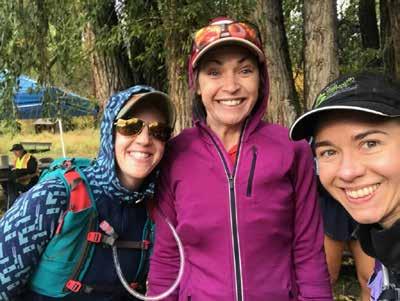
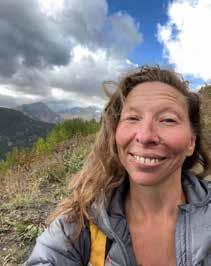
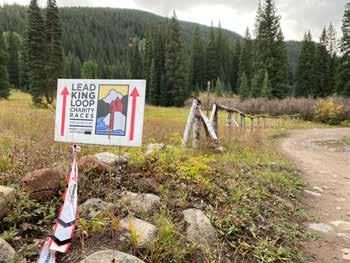
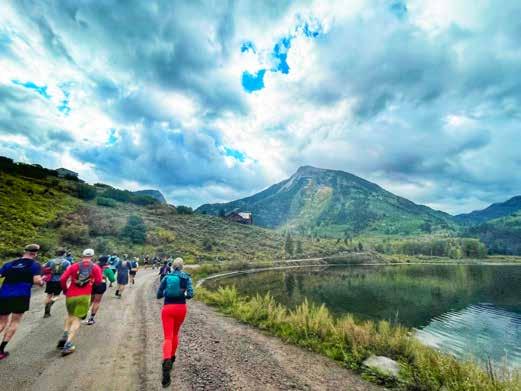
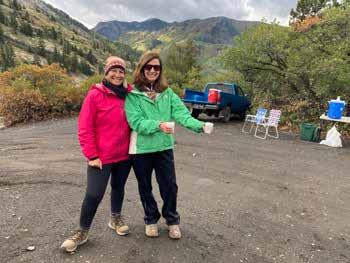
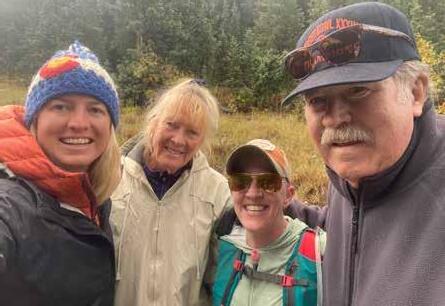
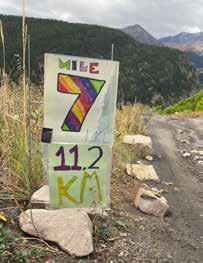







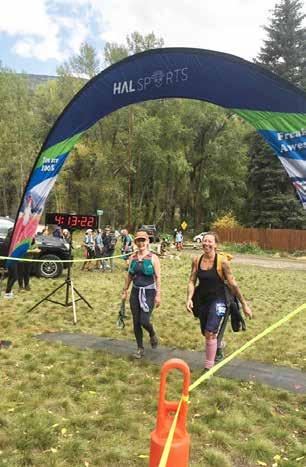
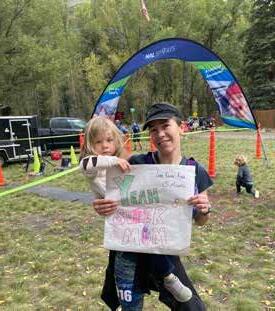
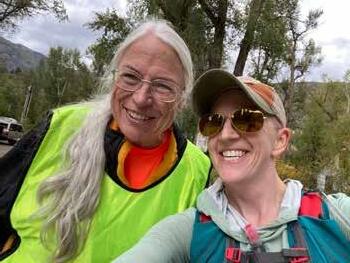
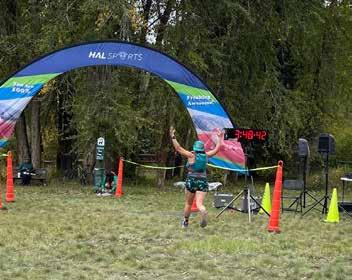
The Annual Lead King Loop Charity Races benefiting Marble Charter School went off without a hitch on September 19th Though storm clouds dared to rain on racers’ parade, participants instead lucked out with a cool, overcast day to enjoy the fall colors.
RESULTS:
Men’s Run
1. Joseph Demoor of Carbondale, 2:04:15
2. Paul Kipling of Paonia, 2:16:45
3. Peter Goergen of Denver, 2:20:19
Women’s Run
1. Chloe Dodge of Boulder, 2:39:17
2. Kate King of Boulder, 2:48:47
3. Jen Burn of Carbondale, 2:50:39
The Marble Charter School would like to thank the following Financial Sponsors from our 19th Annual Lead King Loop 25k Charity Race. Your contributions go a long way to support the students at MCS!
Aloha Cyclery
Alpine Bank
Aspen Ski Company
Avalanche Ranch
Backbone Media
Beaver Lake Lodge
Best Cleaning Aspen
Bonfire
Blythe Tardie
Carbondale Co-Op
Castle Valley Children's Clinic
Chalet
Clyde's Customs
Coldwell Banker Mason and Morse
Colorado Stone Quarries
Cripple Creek BackCountry
Deborah Obenauf
Desire Archuletta
Diane Ownes
Dillard Team at Integrated Mountain Properties
Elevate Payment Alliance
Environmental Process Control
Gentrye Houghton Massage
Glenwood Springs Ford
Gretchen Robinson
Harmony Scott
Independence Run and Hike
Jessica Owings at The Mortgage Network
Mallory Paige
Marble Community Church
Marble Crystal River Chamber
Marble Distillery
Marble Gallery
Marble Mo Creations
Marble SUP
Nancy Chromy
Nelson's Autobody
New Jammies
Mellie Test
Obermeyer
OSM Delivery
Nathan Helfenbein
Peppinos
Pifco
Propaganda Pie
RPS Rentals
Redstone Inn
Slow Groovin BBQ
Smoke Modern BBQ
Sopris Engineering
Sopris Wine and Liquor
State Farm, Todd Fugate
Sunlight Mountain Resort
Ute Mountaineer
Verde Land Management
Vicky Branson
Village Smithy

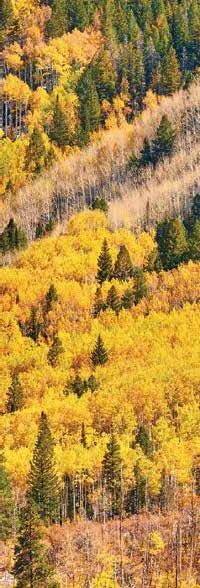
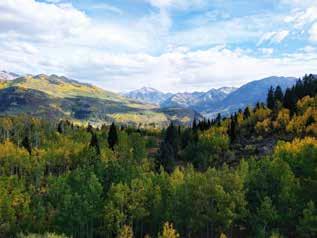
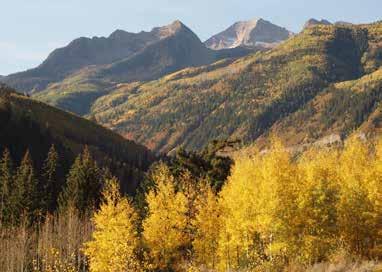
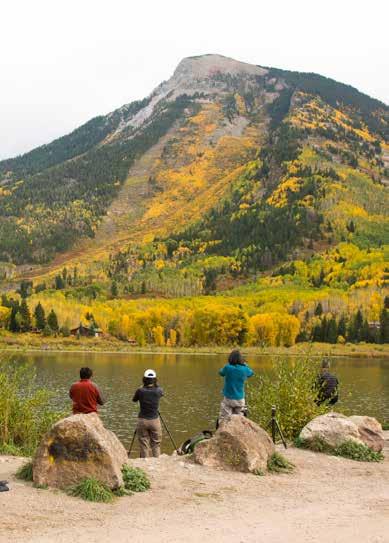
As the green growing world reaches the fall transition in its circular cycle there is a wonderful, colorful climax. Visualize tall, thin white aspen trunks topped with orange, yellow, gold, red, and shades of fading green leaves with a backdrop of deep green conifers and blue skies. This image is quintessential Colorado.
Besides such visual enjoyment, there is another entirely different way to appreciate fall and that is by understanding the science behind the transition of color.
Trees, flowers, and shrubs are more than just decorative scenery on the stage where we live our lives. They are the oxygen factories that make life possible on earth and the food factories at the bottom of the food chain, which includes all organisms. In this age of global warming, plants also remove carbon dioxide from the atmosphere. Our appreciation of plants should transcend aesthetics that include science.
by Alex Menard
bring enough sun and warmth. Growth explodes until late June when it is completed and next year's buds are set. These new buds won't open until after experiencing a chilling winter, thus completing the cycle.
The flora continues to produce chlorophyll throughout the growing season to continue photosynthesis, but plants are also sensitive to the photoperiod — the period of time each day in which an organism receives illumination; thus, the relative length of day and night.
called transpiration.
There must be a balance between the amount of water taken up by roots and that lost by leaves, without it plants would wilt and die. With freezing fall temperatures, humidity levels drop and the frozen water in the soil may become unavailable for root absorption. So another reason for leaves to fall is to reduce transpiration.
Photosynthesis is the process by which leaves create oxygen and carbohydrates for use of plants and animals. Leaves are factories that take in carbon dioxide and water and use solar energy to produce oxygen and carbohydrates. The chemical in the leaves that makes this process happen is chlorophyll, which also gives leaves their green color. Other pigments are always present in leaves, but chlorophyll masks their appearance.
Two pigments always present are carotene and xanthophyll, which are the source of yellow, orange, and gold colors. The presence of these pigments in leaves allows the gathering of a wider wavelength of sunlight than chlorophyll alone.
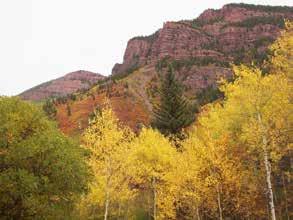
Anthocyanin, another pigment, is not usually present in leaves but is the result of the decomposition of sugars in the leaves. Anthocyanins are responsible for the deep red and purple colors. The purpose of this pigment is not fully known, but these colors are useful in producing flowers to attract certain insect pollinators.
The period of growth in this area is quite short. New stems develop from overwintered buds in the spring once longer days

Sensing shortening daylight periods in the fall, plants stop producing chlorophyll. As the green chlorophyll fades other pigments are revealed. These are the autumn colors. Since the photoperiod determines the decrease in chlorophyll production, the color change calendar for one location is the same every year.
So, plants realize that it is time to shut down their chlorophyll-powered food factories when the days are too short to provide sufficient solar energy; yet, there is another process to consider when plants shut down.
Like animals, plants also breathe. Plants, of course, take in carbon dioxide as well as inspire and expire oxygen. On the surface of leaves are organs called stomata, which take in carbon dioxide and oxygen. While taking in gases, stomata also release water vapor. The process of evaporation of water from leaf surfaces is

The process by which plants detach their leaves is called abscission; a layer of blocking cells grows at the point where the leaf stalk meets the stem. This cuts off the flow of minerals to the leaf, which causes chlorophyll in the leaf to decrease and weakens the leaf attachment.
Writing today, just before October 1st, the conditions seem to be very favorable for good peak color in a few days. As mentioned above, the timing of the color change depends on an invariable, which is the photoperiod. For this reason, the last Sunday in September is widely designated "Color Sunday" in our valley, but other factors can affect color quality.
Temperature, sunlight, and soil moisture greatly affect color quality. Abundant sunlight and low nighttime temperatures, which occur after the formation of the abscission layer, cause a more rapid decrease in chlorophyll production and an increase in anthocyanin production with more color resulting. Hard freezes cause an end to anthocyanin production and an early end to color.
Drought conditions can, of course, stress plants causing early leaf browning and leaf drop. So


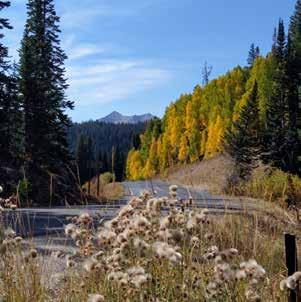
last August's monsoonal rains have increased soil moisture and hopefully prevent this from happening. Although, wind and rain can also cause early leaf drops.
Comparing our local color show to the famous New England colors leaves us behind in variety but ahead in magnitude. We can't match the number of different hardwood species there, each with slightly different hues, and we lack the vibrant reds that are supplied by the New England maples. Yet, the sheer volume of Aspen forests with their yellow to orange and very limited reds is quite the stunning display.
For example, the Aspen forest traversed by the 30-mile long Kebler Pass road, from Paonia Reservoir to Crested Butte is considered one of the largest Aspen groves on earth. As mentioned in a previous issue, Aspens reproduce mainly by spreading root systems.
This means that groups of Aspens are actually genetically identical and could even be considered a single organism, called clones. Notice that members of each group tend to be of the same color with the same timing for leaf changes. Nearby groups may have different colors and timing.
Our earliest fall colors appear on shrubs before many trees begin to turn. On shady stream-side slopes, the red Twig Dogwood (Cornus sericea) sports
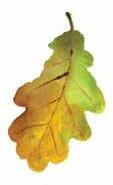
bright burgundy leaves to compliment red stems and white berries. On sunny south-facing slopes, Scrub Oak (Quercus gambelii) spreads its rusty red, accompanied by Chokecherry (Prunus virginiana) which turns ruby red.
Turning to domesticated plants for a moment, don't miss the spectacular show of Burning Bush (Euonymus alatus) in front of the Glenwood Hot Springs this fall. Some residents try to introduce red fall color with Maple trees in their yards. Maples are challenging, susceptible to diseases, alkaline soil, heat, and drought. One good maple to suggest is the Wasatch or Bigtooth Maple (Acer grandidentatum). It is native to nearby areas, is available in nurseries, and is worth seeking out.
By the time The Echo hits the stands, the colors will be at their peak and then will be gone in another week. Good landscape planning includes deciduous trees on the south side for summer shade and evergreens on the north to cut the winter winds. So leaf drop allows the sun to warm us in the fall and coming winter.
If you’d like to know more, further information about the science behind fall colors can be found on many of the regional USDA Forest Services websites.






































from Larry Good
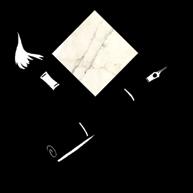
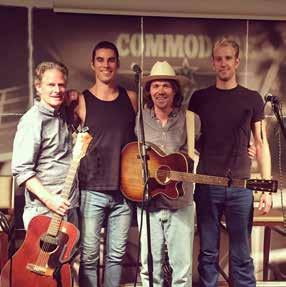
If you search your music streaming service for David Walker Good, you will likely see this silhouette photograph, the cover for Good’s new single, “Mountain Man,” which is a fiery introduction to David, the artist, and the full album of original songs he is recording in the Marble Recording Studio behind the Beaver Lake Lodge. It has been available on all streaming services since mid-September.

Good is a true Marble local. He attended Marble Charter School as “Orangie” and Roaring Fork High School in Carbondale as David and is now putting his songs out worldwide as David Walker Good. He has found local fans by performing at Songwriters’ Nights at the Beaver Lake Lodge (series scheduled to return in November), Slow Groovin’ Barbecue, Marble Fest 2021, and occasional offerings of gospel and original songs at Marble Community Church services.
Good’s next release, “The Quarterback, the Class Clown, and Me” is a folk-tale that looks into the futures of his classmates, the Covid-class of 2022, whose members have already faced the re-drawing of their life plans with resilience, or resignation. This poignant, eyes-wide-open statement will be ‘dropped’ (as the cool kids say) by the time this article appears.
This brings us to the original point of this article: The status and projects of one artist’s studio in Marble, Colorado. Over the past two years, musicians worldwide have been forced to collaborate separately, and the Marble studio where David Walker
This content is sponsored by the Marble Art Guild

Good’s dad, Larry, is producing his album is a hub for musical work done both nationally and regionally.
Through a local network that includes Aspen’s Great Divide Studios, drummer Paul Valentine’s El Jebel rhythm studio, Gary Mankin’s San Francisco studio, bassist Doug Whitney’s rolling recording workshop, Mad Dog Ranch Studios in Old Snowmass, and other facilities, Larry Good is producing music for clients in Los Angeles, Calif., Nashville, Tenn., New York, N.Y., as well as locally — all right here in Marble!
Jessa Young’s “Wake Up Humanity” project is an example of this process in reverse, where L. Good was a spoke on the wheel rather than the hub. He received tracks from Young’s Los Angeles producer, Jeff Bova, which he used as a background to record Young and the Marble Charter School’s Sebastian McMahill. Then he forwarded these new tracks to Bova for assembly.
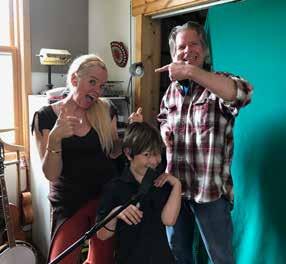
Another project by Los Angeles hip-hop producer Mark V came to L. Good for electric guitar tracks, and boom! The song “Driftin’” by Da Problem Children was released several weeks later, and L. Good was da guest Problem Child.
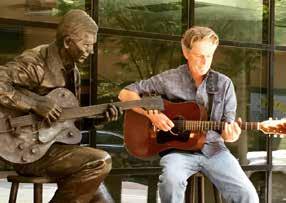
All Around,” for which he recreated the original arrangement – including the kitten mewing at the end. L.
Good wrote the theme for Redstone’s “Picking to Repurpose” series as well. It is a timeless ragtime song called “The Junk Man’s Comin.’” L. Good says:
“I learned late in my broadcast career that if you write the theme, they can’t fire you between seasons. I also learned to maintain ownership of the music, and license it to the productions you are working with. I used to give it to them because I was so grateful to be doing film and broadcast music at all.”
Now L. Good licenses the leftover production music to media music libraries, which generates “literally, hundreds of dollars!”
One song that D. Good (Orangie) performed with his band at last month’s Marble Fest was written by his dad with friend Adam McCabe. “The Things You Carry” deals with the process faced by returning veterans when their deployments end.
McCabe, a retired USMC Veteran, is a songwriter out of Austin, Tex., and Nashville, with a history of military-based activism. He co-founded the Roaring Fork Valley non-profit Purple Star Veterans and Families, speaks in schools around the valley about his military experience, and is involved in Veterans’ recovery and performance programs in Nashville.
The music for Redstone’s PBS series “Picking to Repurpose” was produced in El Jebel, Aspen, Marble, and mastered in Los Angeles. L. Good also did the music score for a comedy pilot (Peri-Street) from New York City using the same network of musicians and engineers — and the show went viral through Covid-restricted online Film Festivals!
Now, L. Good is set to score three new PeriStreet episodes shot in late July. He describes the show as “just like Seinfeld, but all the characters have been changed into peri-menopausal women. And they drink a lot!”
McCabe has been spotted around Marble lately (he is loud and hard to miss in a town this size!), as he and L. Good are recording together and have been rehearsing for a recent performance at Glen Frey’s old Mad Dog Ranch Studios.
From “The Things You Carry,” as well as McCabe’s “My Baby and My Bible” the two songwriters are developing a concept album for, written by, and about returning Service Veterans. As U.S. Veteran songwriters and performers share their songs and tracks from all over the country, the Marble studio’s network is developing along with this worthy project.
www.marbleartguild.com
For Peri-Street, L. Good composed retro ‘space-age-bachelor-pad-lounge’ music. He also wrote the show’s theme, a parody of the Mary Tyler Moore theme called “Hormones
Singers and songwriters are being solicited through the Nashville Songwriters Association
and McCabe’s contacts. L. Good and McCabe hope that today’s Nashville, Tenn., country artists will be enthusiastic about collaborating for this ambitious project — and some already are!
So, that is the report for Marble’s small, but increasingly connected recording studio. David Walker Good plans to release (or ‘drop’) a song every month, culminating in an album release in the spring, and a corresponding benefit concert. This is D. Good’s required high school graduation ‘Capstone Project.’
In November, the Songwriters’ Night series will likely resume at the Beaver Lake Lodge, with David Walker Good, Adam McCabe, and other local favorites.
Over the past few years, the Marble Crystal River Chamber (MCRC) has been working towards re-defining the Upper Crystal River Valley as more than just an OHV destination while at the same time attempting to alleviate the effects of high-impact visitors through education. They have worked to produce literature, such as brochures and maps, that highlight the area's colorful history and culture of art.

MCRC generously supports the Marble Arts Guild to highlight local artists and fund The Marble Hub in its capacity as a visitor information center. Their new website reflects these efforts, as well as, including a "Marble Manners" video and information on traveling in the area.
Most recently, the MCRC has received a grant for the Restart Destinations Program through the Colorado Tourism Office (CTO) to explore strategies that encourage more responsible visitation and build Marble's reputation as a destination for art, history, and the quieter pursuits of nature. The program includes an in-depth assessment of where visitors are traveling from, how they learn about Marble and the surrounding area, and what websites they visit. Also, part of this assessment is a resident sentiment survey to allow locals to voice their opinions and offer ideas.

Towards the end of October, representatives from CTO will come to Marble to work with the Chamber, Town of Marble, Whiter River National Forest Service, Colorado Parks and Wildlife (CPW), and Gunnison County representative to create an action plan to address some of the issues. In these efforts, they are aided by the Lead King Loop Working Group, which has been working for the past few years to build a coalition of stakeholders and collect data and information regarding the backcountry for which Marble is a gateway.
Once the action plan is decided upon, the grant provides 75-hours of professional technical support to implement the plan with an additional $10,000 in direct funding.





from Soren Mile
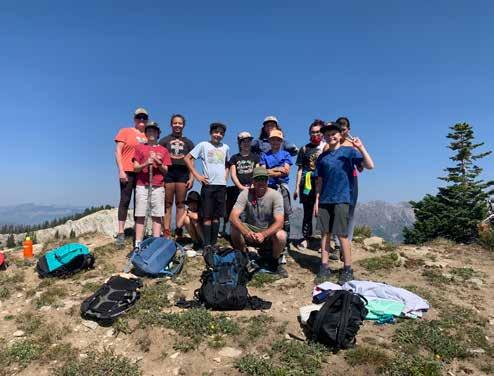
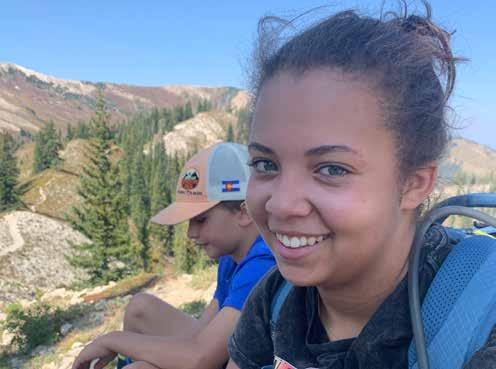
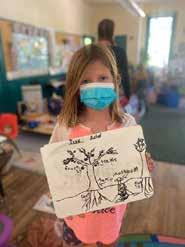
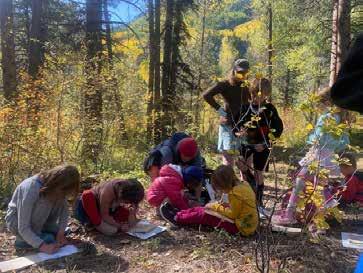
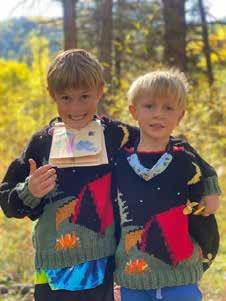
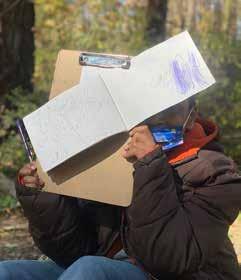
On September 9th, the sixth, seventh and eighth graders at the Marble Charter School climbed Marble Peak. There were 10 students and four adults including Matt Jaeger, Keegan’s father. We all made it to the top, even some of the students who did not make it last year. We ate lunch at the summit After Lunch Matt took a few students to the beginning of the Raspberry Ridge Trail. On the way back they scared a family of mountain goats toward the other part of the group. There were two adults and 1 baby goat. When the group joined together again, Matt did a presentation on Avalanches and set up an avalanche beacon hunt. It was a fun and educational expedition. I was crouching in a pit pulling little weeds while
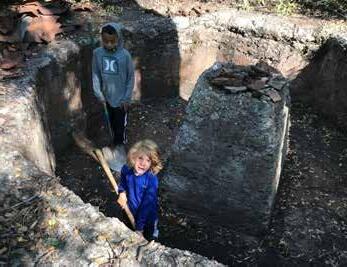
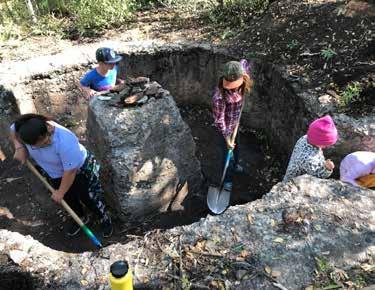
Tobin and Myra were using a shovel and McCloud to get dirt out. There three concrete pits with stairs at the bottom and a pillar in the middle were used to polish marble, a beautiful stone that our town is named after. I looked up to see Auggie and Nina sprinkling wildflower seeds on a pile of soil that we had just got out of the pit. After a while it was time to meet back up at the stage in the middle of the millsite park.
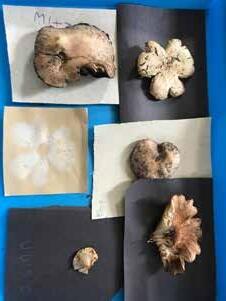
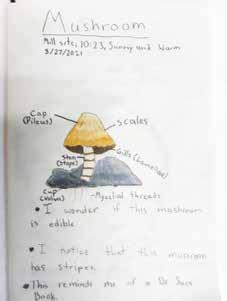
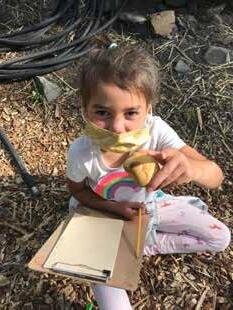
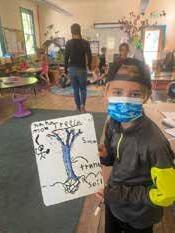
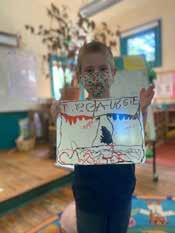
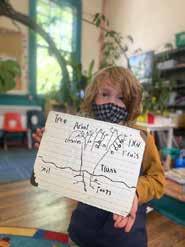
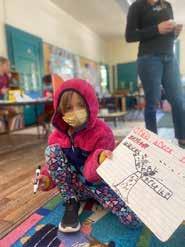
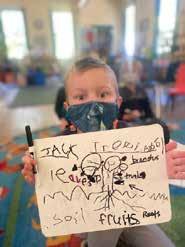
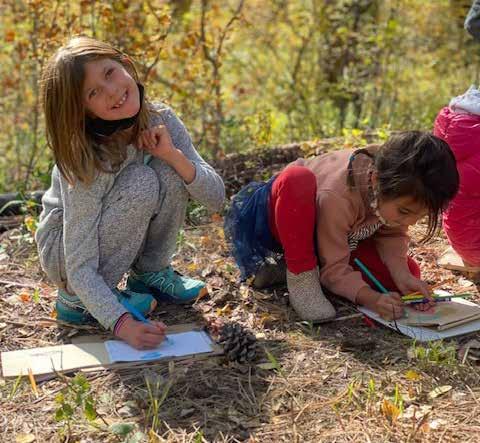
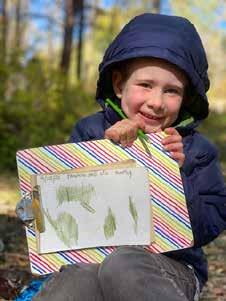
We have spent the last few Fridays focusing on Science and Stewardship. The next station was learning about decomposers. Decomposers break down dead plants and animals and make nutritious soil for plants to thrive in. They are a very important part of the ecosystem.
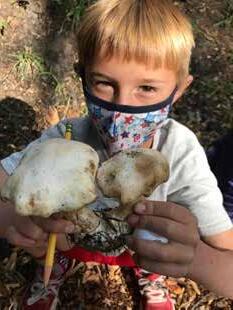
Ben (one of the Roaring Fork Outdoor Volunteer staff member) told us to grab a hula hoop, clipboard, pencil, container, and a sheet of paper with different decomposers on it. We followed Ben to a clearing and set our hula hoops in a space we thought decomposers would be. I found a decomposing long and broke it open to find six rolly pollys (isopods). I also found a snail (gastropod). After our stations, we ate lunch, played a game and walked back to the school. In conclusion I have enjoyed learning about decomposers and working with RFOV.



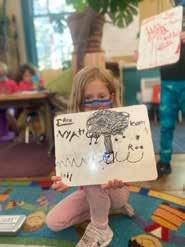
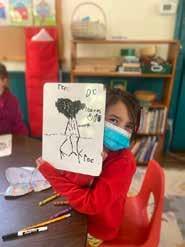
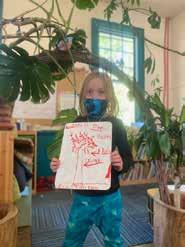

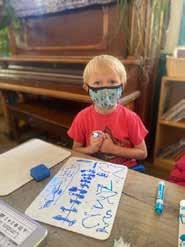

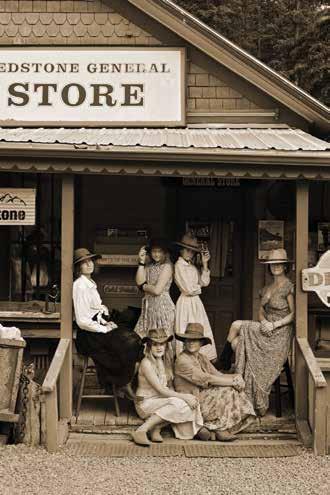








Your support of the Redstone General Store goes beyond our doors to families that live in Redstone, along the Crystal River, the Roaring Fork Valley and over the Hill to our Neighbors south of us. When friends, family and multiple generations come together and weave magic the whole community feels it.









It’s been quite an e ort finding our flow. We would like to thank our sta including:






Annalise Basso, Asher Moebius, Bailey Hardman, Bella Moebius, Daisy Kelly, David Kelly, Destin Strong, Liz Gracia, Emmaline Warner, Gina Tassinari, Jon Amdur, Laura Barbieur, Lexi Moebius, Molly McGregor, Rebecca Bier-Moebius, Ruby Hood, Sam Rosenberg, Samantha Dowell, and Taylor Bentley.







Additionally we’d like to thank: Olivia Pevec, Claire, Tara...and all who have added flavor to our o erings.
Lastly, thank you: Je and Janette Bier, Ama G, Tyler Moebius, Chris Lawrence, Gentrye Houghton, Roger Yoder and all our local artisans and local distributors.


Needing a notary? Don't drive all the way to Carbondale!
Contact Lisa Wagner, Notary Public, at Crystal Dreams B&B. (970) 963-8240
Jim Wheeler
President
Bruce Norris Service Manager
1100 Hwy 133
Carbondale, CO 81623
(970) 963-2032
Fax: (970) 963-9743
Wanted for La Belle Femme Spa at Crystal Dreams Bed & Breakfast: Massage therapist living in the Marble and Redstone area. This is a great opportunity to start your own clientele will little to no community. At least wo-years of experience, and copies of lisence and insurance are required.
Contact Lisa Wagner at Crystal Dreams B&B/La Belle Femme Spa: (970) 963-8240
NOTICE is hereby given that a proposed budget has been submitted to the Redstone Water & Sanitation District for the ensuing year of 2022; a copy of such proposed budget has been presented to the Board of Directors and is available for inspection from Ryan Kenney, District Manager. Such proposed budget will be considered at the regular meeting of the Redstone Water & Sanitation District to be held on December 14, 2020, at 7:00 p.m., due to the current pandemic, the meeting will be held via Zoom and a link may be obtained by contacting the District Manager, Ryan Kenney (his information is provided below).
Any interested elector of the Redstone W&S District may inspect the proposed budget and file or register any objections thereto at any time prior to the final adoption.
Contact Information: Ryan Kenney (970) 963-1495
For anyone needing help stretching their food budget, Gunnison County Officials currently have boxes of food available distributed through the Marble Community Church.
There is no charge to the recipient and no reservation is needed; boxes are available for an individual or up to a family of four and contain enough meals to last approximately three days.
Please call Pastor Jon Stovall at the church to arrange a pickup time for your box today, (970) 963-1464.









Join friends and neighbors from all throughout the Valley to celebrate our beloved Crystal River!
All events will begin in the Amphitheater at the Marble Mill State Park.
Activities start at 3:00 p.m., including a naturalist walk, a pumpkin-carving contest, and more!
Films about the Crystal River and selections from America Rivers’ “Wild Rivers Film Tour” begin at 6:30 p.m.
Learn more about ways to protect the unmatched beauty and scenic qualities of the Crystal River, forever.
Enjoy delicious food from Slow Groovin’ and a specialty cocktail, with a Crystal River twist, from the Marble Distillery, during a pre-film screening social hour at 5:00 p.m.
Learn more about other planned activities & register at wildernessworkshop.org / Celebrate-The-Crystal