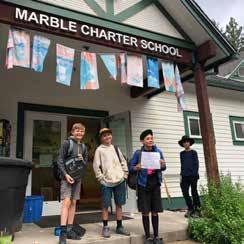
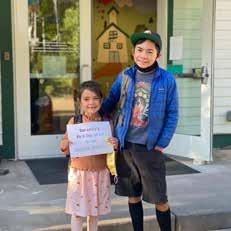
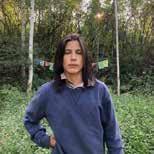
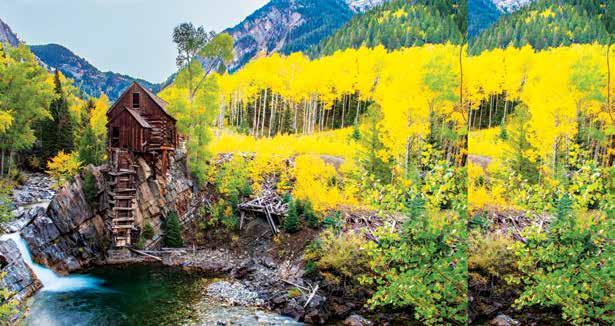
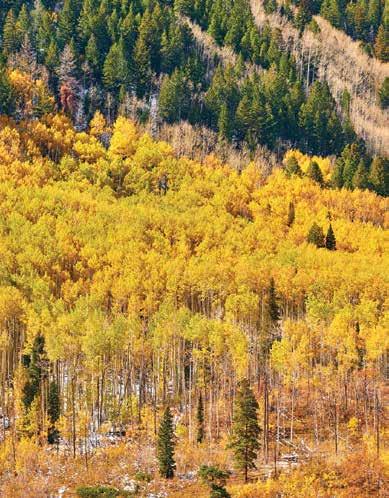
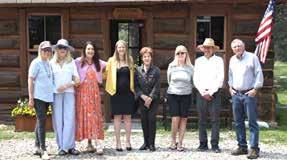
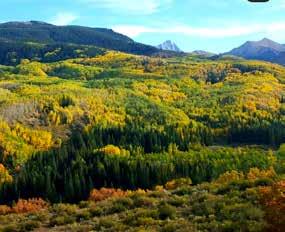
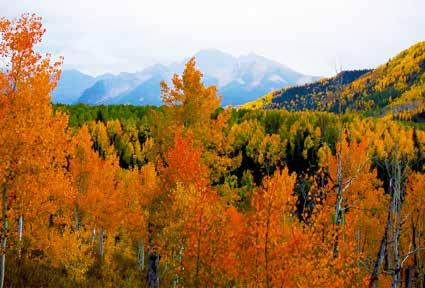
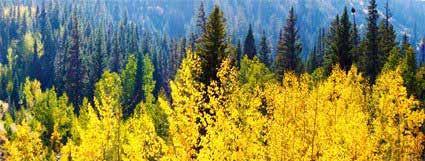
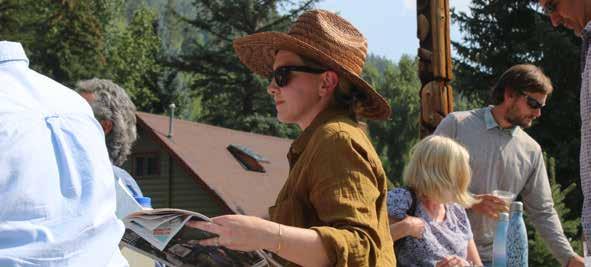
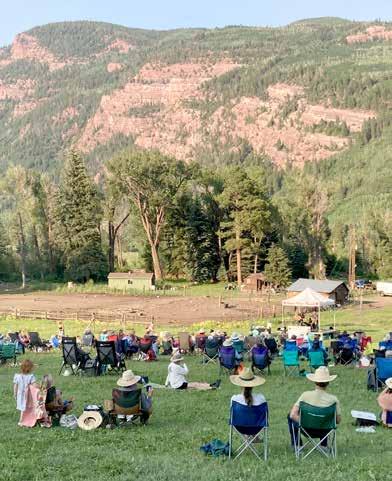
The Crystal Valley Echo would like to extend special thanks to the parents who submitted photos: Mellie Test, Monique Villalobos, Shana Light, Carly deBeque, Tracey Harris, Blythe Chapman, Karly Anderson, and Sonya Moore.
Letter to the Editor
Regarding the "proposed special recreation permit fee for overnight camping in the Maroon Bells-Snowmass Wilderness "
From my perspective this is absolutely necessary. My perspective has been developed over a 47 year period of roaming around in these areas. Yes, we moved to Colorado 47 years ago as we wanted the wild that was still here. Now in our 70’s we still roam, camp, and hike. But we are having to go more and more remote to escape the shocking ways humans are treating this beautiful earth. In some areas the pristine wild just simply is gone due to human ignorance? Human disrespect?
The last five years my husband and I have witnessed horrible, heartbreaking, devastation in our long time favorite wild places in Colorado. Global warming/climate of course is at the top of the list for so much of what we are experiencing. This too is an issue of human ignorance and disrespect.
We HAVE to be charging a fee for these areas due to overpopulation and abusive overuse. Not enough people to help in these areas. The Forest Service desperately needs more workers. If a fee would help fund more workers than it is incredibly important that we do this. And too, maybe create an outdoor ethics education system? I know unlikely but would be wonderful.
That is it in a nutshell. I could write a book on the whole subject.
Thank you, Susan Holbrook Denver, Colo.
Crystal River Caucus
Thursday, September 9, 7 – 9 p.m. | Regular Meeting via Zoom
The agenda includes three presentations:
1. Reintroduction of Wolves to Colorado: What That Means for the Crystal River Valley with Delia Malone, Ecologist and Wildlife Chair, Colorado Chapter of the Sierra Club;
2. Methane Emissions and Potential Capture from the Coal Basin Mining Complex with Chris Caskey, Climate Scientist; and
3. Maroon Bells-Snowmass Wilderness Fee Proposal by Kevin Warner, Sopris District Ranger for the US Forest Service.
There will also be two updates including efforts for Wild and Scenic Designation for the Crystal River, and the Yule Creek Quarry application to the US Army Corps of Engineers.
A Zoom link will be emailed to those on the caucus email list. If you are not on the list but would like to be included, send an email to crcaucus@gmail.com
With every one of your Alpine Bank Loyalty EDUCATION Debit Card* transactions, Alpine Bank donates 10 cents to localized community causes and charities that align with your passions and interest, in the form of grants, sponsorships and gifts. Like the Marble Charter School and its Lead King Loop 25k fundraiser!
T HE C RYSTAL VALLEY E CHO &
Marble Times
Mission Statement: To provide a voice for the residents of the Crystal River Valley; to bring attention to the individuals and local businesses that are the fabric of the Crystal Valley region; to contribute to the vitality of our small town life.
Editor • Gentrye Houghton gentryeh@hotmail.com
CONTRIBUTORS
Stephanie Deaton • Amber McMahill Alex Menard • James Steindler
ADVERTISING SALES
Heather Marine at Elephant Mountain Creative heather@elephantmountaincreative.com (970) 718-5848
DISTRIBUTION
The Crystal Valley Echo is published monthly, and is distributed throughout the Crystal Valley.
NEWSPAPER BOX LOCATIONS:
Carbondale (old) City Market • Village Smithy Carbondale Post Office • Redstone Inn Propaganda Pie • The Marble Hub FOR SUBSCRIPTIONS
Please send $40 for print or $25 for digital editions along with address information to:
The Crystal Valley Echo 364 Redstone Blvd. Redstone, CO 81623
Redstone Senior Days
At the Redstone Inn
The Redstone programs are for residents & visitors of the Crystal Valley. RSVP: (970) 920-5432
SEPTEMBER 14 & 28
There will be no yoga classes in September
• 1:00 p.m. – Lunch ($10) RSVP by the Thursday prior – space is limited. Plated lunch will be served. There will be a gluten-free option.
• 1:45 p.m. – Program
September 14: Christi Couch History’s Mysteries
September 28: Kindred Spirits Vocal Quartet
SAVE THE DATE: October 26 (tentative) Flu Shots, Smiles For Seniors and more!
WANT
Send us your email address: (970) 920-5432 • seniors@pitkincounty.com
A Summer of Motocross
from Alan Leslie
It’s been a very busy spring and summer for Zaida Leslie as she raced motocross in seven states. We traveled to Washington and California for Loretta Lynn National Championship Regional Qualifiers, and her best finish was seventh. While she needed to finish fourth to guarantee a spot in the Championship, she was chosen as an alternate.
The Loretta Lynn National Amateur Championships were held the beginning of August where Leslie was able to practice with some of the world's top female racers. She was called to suit up and stage at the starting gate, but unfortunately didn’t get the final call to race. So, she hung out and supported her Sun Powersports Colorado teammates for the rest of the week.
The latest news for Leslie is that she took second in Girls Class and third in Women’s during the State Supercross (indoors) Championship in Greeley, Colo., the last weekend in August.
She still has several races left in the Colorado Motocross (outdoors) series with the State Championships
coming up in October. Leslie’s state ranking is currently second in Girls Class and fourth in Women’s.
Crystal Calendar
Sept 2 Town of Marble Board of Trustee’s regular meeting. 7 p.m. Marble Community Church’s Fellowship Hall.
Sept 3 - 6 25th Anniversary of the Redstone Art Foundation's Labor Day Art Show and Sale on the Redstone Inn lawns. For more information as well as a full schedule, visit www.redstoneartfoundation.org.
Sept 4 Feeding Giants for the Magical Moments finale at the Redstone Stables. Free. 5:30 - 7:30 p.m.
Sept 5 Grand re-opening of the Redstone Musuem at Redstone Park. $15 donation for non-members. 1 - 3 p.m. For more information, visit www.historyredstone.org
Sept 9 Crystal River Caucus regular meeting via Zoom. 7 p.m. To receive the Zoom link, email: crcaucus@gmail.com.
Sept 14 Redstone Senior Days at the Redstone Inn. For information or to RSVP: (970) 920-5432
Sept 19 Lead King Loop Charity Races. For more information and to register, visit www.leadkingloop25k.com
Sept 28 Redstone Senior Days at the Redstone Inn. For information or to RSVP: (970) 920-5432.
Get ready for a great day of running through the spectacular fall colors in the heart of Colorado’s Elk Mountain range. Run, walk, or hike the 25k loop around Lead King Basin, zipping past the Crystal Mill and ghost town of Crystal.
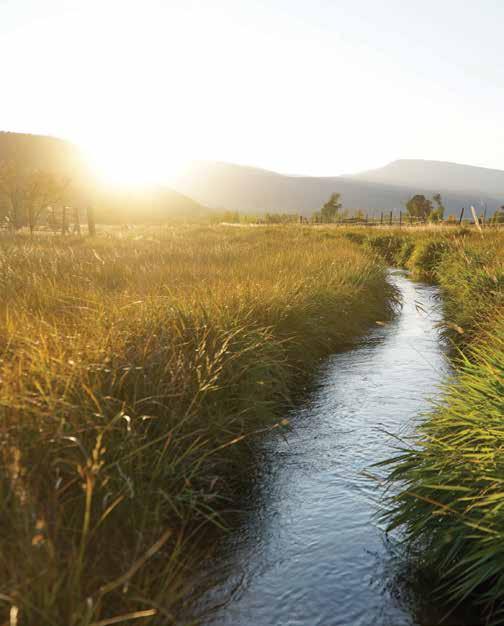
can help save a historic, working ranch, 3/4 mile of riverfront, wildlife habitat, and a future of possibilties.
Practice at Loretta Lynn’s National Amateur Championship in Tennessee in August.
Vintage Valley: Potatoes Once Rivaled Valuable Ores in the Crystal Valley
from Larry Meredith with all materials provided by the Redstone Historical Society.
A number of railroads traversed the Crystal River Valley in the early 1900s, mainly for the transportation of coal, marble, and other valuable ores. But another important and valuable product of the Crystal Valley soil was also transported by rail –potatoes.
The growing and harvesting of potatoes reached its heyday during the Crystal Valley’s booming mining days in which coal, marble, and other ores occupied center stage in the minds of many.
Those days are now recalled and celebrated annually in October during Potato Days, Carbondale’s traditional agricultural community celebration of this life-sustaining tuber. According to Carbondale Historical Society Vice President Sue Gray, Potato Days, which began in 1909, is the longest-running annual community event in Carbondale. Regular sponsors include the Carbondale Historical Society, the Town of Carbondale Recreation Department, the Garfield County Regional Library in Carbondale, and The Sopris Sun
The Aspen Center for Environmental Studies (ACES) claims that in the Roaring Fork Valley, “the soils and climate. . . are perfect for growing potatoes. It has been said that in the 1920s the Valley produced more potatoes than the entire state of Idaho. At one time, the town of Carbondale was exporting around 400 railroad cars full of potatoes annually. By the 1930s labor shortages and low potato prices essentially killed the potato industry in the [two] valleys.”
Grubb said, in 1912, that no part of the world is better fitted by nature for growing potatoes than the mountain districts of Colorado. “The Roaring Fork and Crystal River Valley section of Colorado is as nearly perfect in soil condition as can be found, and the potatoes grown there are not excelled anywhere in the world and are equaled in but a few places.”
In 1901, Grubb traveled throughout Europe studying agriculture. He was impressed by potato cultivation techniques in England and adopted many of them for his Carbondale operation.
Grubb became a consulting agriculturalist and was commissioned by the U.S. Secretary of Agriculture to write a definitive book describing potato cultivation all over the world. The book became the standard text on the subject after it was published in 1915.
Many varieties of potatoes have been grown in the Carbondale area. According to Elk Mountain Odyssey by Paul Andersen and Ken Johnson, they include Russet Burbank, White Peachblow, Gold Coin, Peoples, Red Peachblow, Red McClure, Russet Rural, White Cobblers, Red Pontiac, and Bliss Triumph. Of course, there may be others too numerous to mention.
ple of all ages how to grow healthy, local sustainable food.
Among the many varieties of crops grown at the ranch are potatoes, of course. Each year the ranch plants and harvests a small area. Other growers are putting potatoes back into area agricultural lands as well. Woody Creek Distillers, for example, harvests well over one million pounds of potatoes annually.
Rock Bottom Ranch is also home to ACES educational programming featuring in-school environmental science for Aspen, Basalt, and Carbondale elementary schools as well as field programs for more than 50 regional schools.
Today, China and India are the main producers of potatoes, with the United States ranked fifth. In the United States, Idaho topped the ranking of leading potato-producing states. Washington and Wisconsin were the next largest producers.
Depending on the year, Colorado ranks 4th to 6th among potato-growing states. In Colorado’s San Luis Valley, farmers grow red, yellow, and even purple spuds. Each year between 50,000 and 60,000 acres of the crop are harvested.
In 2020, the value of potatoes grown and harvested in Colorado amounted to nearly $260 million.
And it began near Carbondale, in the Crystal River Valley, more than 100 years ago.
Article author Larry K. Meredith is the author of the historical novel This Cursed Valley which deals with the early history of the Crystal River Valley
Take a tour of this unique
and get a
The story of potato-growing began in the Crystal Valley in the late 1800s when Thomas McClure, an Irish immigrant who had been a miner in the Leadville area, moved to near Carbondale and began a life of farming. He introduced a variety of potatoes now called the “Red McClure.” This potato quickly became a favorite of growers statewide.
However, the most effective and strongest advocate for farming and ranching in the Carbondale area was Eugene Grubb whose 1,800-acre ranch south of Carbondale was renowned as a state-of-the-art farming operation, with potatoes as the main cash crop.
In 2010, members of the Roaring Fork chapter of the “Slow Food” movement added the Red McClure potato to the Slow Food USA Ark of Taste, a group of more than 200 foods that are deemed delicious, endangered, and worth fighting to protect.
A hub for environmental education, wildlands preservation, and sustainable agriculture is Rock Bottom Ranch, owned and operated by ACES and situated between the crown of Mt. Sopris and the Roaring Fork River. The 113acre ranch includes wetland, spring-fed ponds, teaching farmyards, pasturelands, and gardens.
Ranch Director Jason Smith says the ranch features a diverse selection of livestock and vegetables. The ACES website says the ranch is western Colorado’s “school” for teaching peo-
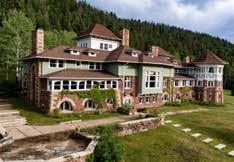
The Castle’s 66 rooms include an English-style Great Hall, a Russianinspired formal dining room and a delicate French-style Ladies Drawing Room.
Reserve your private tour by emailing us at info@theRedstoneCastle or by visiting
The RedstoneCastle.com or by calling 970.963.9656
Overnight boutique suites are also available.
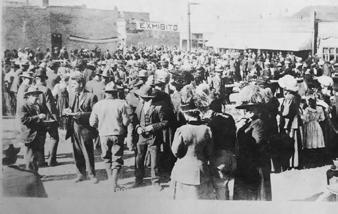
Early Potato Days in Carbondale.
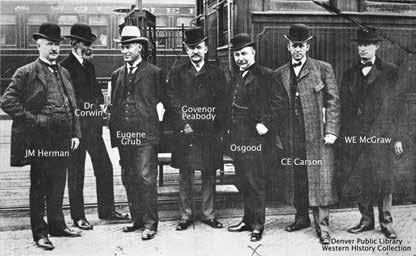
JM Herman, Dr. Corwin, Eugene Grub, Governor Peabody, John Osgood, CE Carson, and WE McGraw.
Bucky Builds Back
Hi folks, my name is Bucky the Beaver. We have never been formally introduced, but you may have seen me slap my tail on the water before diving deeply. My ancestors and I have been living in this valley longer than any of your own ancestors.
We beavers are the creators of the wetlands which fill the upper Crystal Valley. We work with nature cutting down trees and shrubs to build lodges and dams to control the water. The dammed-up water creates safe areas for us to gather wood for winter food storage and float it back to our lodges. The effects of our activity on the environment are exceeded by no other species besides man.
dam is six feet high and creates the many acres of wetlands immediately west of Beaver Lake and north of the Crystal River.
by Bucky the Beaver
While it may seem that our activity is for our benefit alone, we understand that every species depends on each other. Our work in creating wetlands provides habitat, food, safe paths of travel, nesting sites, and water for the majority of birds and mammals who live in the area. Wetland vegetation is the basis of the food chain which works from aquatic insects to fish, birds, and all mammals including man. Our activities promote the health of the ecosystem in which we live.
The wetlands benefit man by slowing down runoff, allow for additional time for absorption to the groundwater supply. Wetlands also filter sediments and pollutants.
In the local beaver family, I am considered a patriarch with many offspring and relatives living nearby. My large, very old
Visitors to the lake may see moose, ospreys, great blue herons, or eagles in the adjacent wetlands. In fact, it is the best bird-watching spot in Marble with regular spotting of red wing blackbirds, yellow warblers, kinglets, and other songbirds.
Imagine my family’s surprise when a large tracked machine approached several weeks ago and cut a wide swatch out of the center of our dam. Over the next few days, the wetlands drained completely. I felt sorry for my friends the geese with young goslings and the ducks standing in the mud looking vulnerable and confused.
Yet, the sound of running water immediately stirs bea-
vers into action, and just two weeks later (at the time of publication) the breach has partly been rebuilt and the wetlands are refilling.
Editors note: Bucky's ghostwriter is Alex Menard, who learned to translate tail slapping just for this article.
Grand Re-Opening Celebration
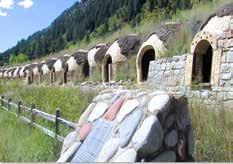
COKE OVENS
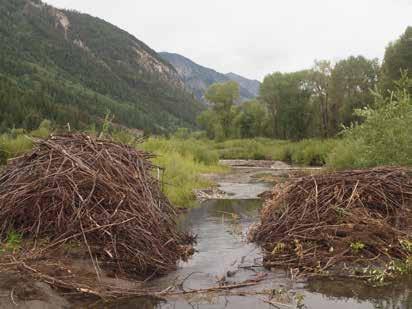
The breach in Bucky's beaver dam is immediately under repair. Notice the leaves on a freshly cut branch placed across the opening. Photo by Alex Menard.
Redstone CommunityAssociation Bulletin
The Colorado Air National Guard Graces
Redstone with an Annual Flyover
The highlight of every Redstone Fourth of July is the Colorado Air National Guard (CONG) flyover. Pilots from the Buckley Space Force Base go as far west as Telluride, Silverton and Lake City before returning to the Front Range flying for about two hours. Redstone is very fortunate to be one of the few flyover areas The fourth of July brings in hundreds of excited people to celebrate our independence with a parade, ducky derby race, water games with the fire department, and the anticipated flyover. This year's was the best yet. Standing on the Blvd. looking up to the clear blue sky and off in the distance you hear them approaching. Before your next breath they are above you, so close you think you can touch them, thundering through the sky. In the next breath they are gone and the adrenaline coursing through your body leaves you shaking with excitement. This is how Redstone starts our Fourth of July Many thanks to the pilots of CONG for making Redstone's Fourth of July the best around.
While the Pitkin County Board of Commissioners (BOCC) continues to address land use issues, we have also been interviewing applicants and then appointing volunteers to serve on various citizen boards. We have appointed several residents from the Crystal River Valley, some new members and some re-appointed members who have chosen to continue their work.
Some of those from the Crystal Valley who are volunteering their expertise, time, and energy to improve the lives of all of us are:
veloping a system to capture the methane and to generate energy from it.
While this production of energy would release carbon dioxide, the impact of methane is 25 times as harmful as that of carbon dioxide, so there would be a significant overall reduction in emissions.
Andrea Garr, of Redstone, recently appointed to the Citizen Grant Review Committee (CGRC). This is an important committee that reviews applications to Pitkin County for grants from the Healthy Community Fund.
According to their mission, “the CGRC evaluates each non-profit grant request in terms of demonstrated financial need, fiscal viability, and adherence to the goals and values of Pitkin County. The CGRC makes recommendations to the BOCC so that the county contributions from the Healthy Community Fund are purposeful, prudent, and effective.”
Bill Jochems, also of Redstone, Chuck Ogilby, of Hell Roaring and Avalanche Ranches, and Lisa Tasker, of Carbondale, all serve on the Healthy Rivers and Streams Board. This Board assists and advises the BOCC on the financial administration of the River Board’s fund. They work to maintain and improve both water quality and water quantity within the Roaring Fork watershed, as well as to protect water rights. Their work also contributes towards securing, creating, and augmenting minimum streamflows.
Thank you to each of these volunteers who work to sustain the quality of life in our valley for all residents.
Coal Basin Methane
The BOCC (primarily through Greg Poschman) is working with the Community Office for Resource Efficiency (CORE), Aspen Skiing Company, local scientist Chris Caskey, and many others to find a solution and possibly a benefit from the daily emissions of 1.3 million cubic feet of methane venting from the old coal mines in Coal Basin above Redstone. This methane release is greater than all other emissions from Pitkin County and is one of the most polluting methane leaks in Colorado.
A coalition has been working towards a solution and this group recently met with our senator, Michael Bennet, to enlist his support in de-
Mona Newton, representing CORE, has been acting as the organizer for this project. Unfortunately, she is stepping down from her position as Executive Director. (Many kudos to Newton for nine years of sound leadership and significant contributions to combatting climate change in the Roaring Fork Valley.)
However, others from CORE, Larry Sandoval from the Bureau of Land Management (BLM), Kevin Warner from the Forest Service, Greg Poschman from the BOCC, and representatives from local non-profit and private organizations will continue to pursue mechanisms for putting this destructive pollutant to good use through the Holy Cross power lines that already exist and are maintained as a potential backup to the grid. If the methane were used on-site to create electricity, there is the possibility that it could supply the whole Crystal Valley. The BOCC is really excited about the potential that exists here and is thankful to everyone working on it.
Grant Awarded for Redstone Marketing
On July 27th, the Commissioners approved a grant of $10,000 for Redstone to use for marketing. These funds can be used to promote Redstone through various social media, online platforms, or local advertising. Hopefully, this will give a boost to tourism in Redstone.
Update on STRs
We continue to work on regulating short-term rentals (STRs) in the County through a licensing program. While Redstone is not the only community affected by the rapid increase in STRs, the representatives from the National Historic District of Redstone can certainly be credited with lighting a fire under the commissioners to research and implement policies for controlling the exponential growth of this type of lodging.
Wolf Reintroduction
As you may know, I was selected to be a member of the Wolf Reintroduction Stakeholders’ Advisory Group. I am one of 17 stakeholders from around the state, mostly, but not entirely, from the Western Slope. The group is comprised of two county commissioners (myself and Commissioner Bloom from Moffat County), an officer from the Defenders of Wildlife, the president of the Cheyenne Mountain Zoo, a
woman who runs the wolf sanctuary in Divide, Colo., a couple of ranchers, at least two outfitters, and others, some of whom have extensive experience with game management.
Each meeting is also attended by representatives from Colorado Parks and Wildlife (CPW). We meet once a month in various communities throughout the state, including Salida, Craig, Grand Junction, Glenwood Springs, and Denver. These meetings last all day and mostly the members of the group attend in person. (On August 25, I attended by Zoom for three hours before joining the BOCC meeting as we were meeting with Aspen Ski Co to discuss the addition of ski terrain on Aspen Mountain in an area known as Pandora. More to come on that next month.)
We are currently engaged in ongoing education about wolves, and our work is supported by the Technical Working Group composed of scientists and wolf specialists. Among the areas in which we will advise the CPW Commission are:
• Wolf capture: Where from, how many, genetic composition, age, sex, capture methods;
• Reintroduction: Techniques for release, time of year, locations for release, numbers;
• and Social impacts to affected communities.
Since we are not the scientific “experts,” a lot of our discussion is about the social impacts of wolf reintroduction. The importance of this approach became very apparent when we heard from the public in Moffat County.
They were vociferously opposed to the reintroduction of wolves in their area. Most of the income for residents of Moffat County comes from ranching and outfitting, and the public who attended our meeting in Craig said they believe that wolves will threaten both of those industries.
So the Stakeholders’ Advisory Group (SAG) is tasked with working with the scientists as well as the local residents of differing areas of the state to help advise CPW on a plan that will ensure the success of the reintroduction program, establishing a stable wolf population which does not negatively affect Colorado communities.
The Pitkin County Commissioners hold weekly work sessions on Tuesdays and bi-monthly public hearings on Wednesdays in our BOCC meeting room at the Pitkin County Administration and Sheriff’s Building. Both meetings are televised live and repeated on locater CG12 TV. They are also streamed live and available on the County website. Agendas are posted in the Aspen/ Glenwood newspapers and on-line at www.pitkincounty.com. In this column, your District 5 Commissioner, Francie Jacober, offers her take on current matters. You can reach her at francie.jacober@pitkincounty.com
Francie Jacober Pitkin County Comissioner District 5
A Guide to Leaf Peepin' on the Western Slope
Fall is upon us. Shorter days mean waking up earlier than the sun most mornings and watching it set before supper is over. Cooler temperatures call for layers and jackets that haven’t been seen since last spring. It also means that autumn colors will soon start to blaze around the Crystal River Valley. A statewide drought is expected to cause the leaves to peak a full week early. Scientists anticipate peak season to be between mid-September and early October on the western slope.
Feeling up for more adventure? The Dark Canyon Trail starts at the Erickson Springs Recreation Area off Kebler Pass and can lead into Marble, Colo. if you turn at the North Anthracite spur. The trail begins by following Anthracite Creek through the towering rock walls of Dark Canyon. Powerful waterfalls can be seen along the way. After 4.2 miles, you can turn around or continue toward Marble via the North Anthracite Trail
by Stephanie Deaton
Fall may be my favorite season in Colorado, although I think I say that about every season as it starts to unfold. The crisp blue skies and the vibrant yellow aspen leaves make it a gorgeous time of year to be outdoors. Not to mention, cooler temperatures make hiking that much more enjoyable.
Although we see many plants change color this time of year, aspens are our signature stunner. Did you know that a stand of aspens is called a clone? That is because groups of aspens are all one organism. They grow from one single root system that sends shoots up to form trees. You can tell which aspens are members of the same clone because their leaves all turn colors at the same time. Pretty neat, huh?
Kebler Pass, located south of the Crystal River Valley, is home to one of the largest aspen clones in the world which means it is one of the single largest living organisms. Take a drive over Kebler Pass to Crested Butte to see vivid yellow stands so bright, you might need sunglasses. Kebler Pass is about a 34-mile drive on a well-maintained dirt road.
While you are in the area, the Three Lakes Trail which starts at Lost Lake Campground is a moderate 3.4-mile loop that is well marked and easy to follow. It gradually winds around Lost Lake. Enjoy great views of the East Beckwith Slough, and the Ruby Mountain Range. A side trail leads to Dollar Lake, a spring-fed natural lake with native trout. Trailhead coordinates: Latitude: N38.869, Longitude: W-107.209.
Follow North Anthracite Creek into the Anthracite Basin before climbing steeply to Anthracite pass. Beyond a creek crossing, a steep, rocky section gives way to dense aspen groves. There is a section of loose shale where route finding becomes necessary. The pass eventually opens to a panoramic view of Mount Justice, the Crystal River Valley, and the historic town of Marble. Make this strenuous 13.9-mile trek a multi-day excursion so you have plenty of time to hike, rest, and enjoy the views. Dark Canyon trailhead coordinates: Latitude: N38.959, Longitude: W-107.263.
Latitude: N39.07251, Longitude: W-107.18486
Traveling down the valley to Redstone, an easy hiking path runs east of town from the Redstone Inn to the Redstone Campground. Walk through aspen groves, conifer stands, and wildflowers on this lightly traveled footpath unofficially named the Redstone Campground Trail. It’s 1.5-miles one way with very little elevation gain, perfect for any hiker. Begin either at the Redstone Inn or at the campground.
Adventure seekers can try the East Creek/Gift Creek Trail, one of the most challenging trails in the Maroon Bells Snowmass Wilderness. A high clearance 4WD vehicle is required to get to the trailhead, one mile east of town. You can also walk up the dirt road just past the last house on the Boulevard.
Stop and admire the views of Redstone and Coal Basin while catching your breath along the way. Once you reach the trailhead, it’s 0.5-miles to a bridge that crosses East Creek. A quarter of a mile beyond that, stop and say hello to the Redstone gnome. The trail forks shortly afterward, and is a good place to turn around.
If you choose to continue on, you can take the left fork into Hawk Basin and then straight up the Gift Creek “Trail.” Route finding is a must from here, but the trail links up to the Avalanche Lake Trail after eight miles.
Back in the Crystal River Valley, the new Quarry Trail gives stunning views of Yule Creek and the above-ground portion of the active marble quarry. It is a moderate, short, steep hike, only about 0.3 miles one way, but the route offers magnificent views of the area. Trailhead coordinates: Latitude: N39.03990, Longitude: W-107.17152
For more of a challenge, try the Carbonate Creek Trail on the north edge of Marble. The first 1.5-miles travel through private property, so please stay on the trail. It is all uphill until you reach Avalanche Pass at 5.2 miles.
After the pass, a steep descent winds down to an intersection with North Lost Trail and the North Fork Lost Creek Trail (Arkansas Mountain Trail). Choose your own adventure. You can travel east along the North Fork Lost Creek Trail, rejoining Carbonate about a mile from the trailhead.
You can also continue down the North Lost Trailhead. Shuttle a high clearance 4WD vehicle to this trailhead to make a quick getaway, or walk back into town. This challenging trail is seven miles to the intersection and features aspen and wildflower meadows along with spectacular views of the Raggeds Wilderness Area. Carbonate Creek trailhead coordinates:
The other option is to take the right fork and follow Lily Lake Trail through aspen groves and conifer forests. This trail will eventually lose itself in avalanche debris between Hawk Creek and Little Kline Creek. Route finding, a map, and a good GPS are highly recommended on both treks. East Creek trailhead coordinates: Latitude: N39.17905, Longitude: W-107.23210
Looking for a long hike that is a little less taxing? Avalanche Lake Trail is a moderate 11-miles (one way) trek that ascends through aspens before it intersects with Hell Roaring Creek, 2.5 miles from the trailhead. This is a great place to turn around if you are looking for a shorter out-and-back especially since the Hell Roaring bridge washed away during runoff several years ago.
If you choose to continue on, the creek crossing is not bad this time of year (especially aided with trekking poles). Keep going
View from the Capitol Creek-Ditch Creek trailhead with Capitol Peak in the background. Photograph by Stephanie Deaton.
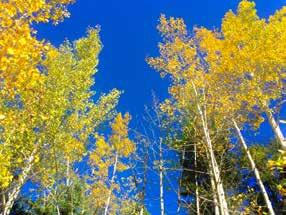
A stand of aspen trees is called a clone. Photograph by Stephanie Deaton.
until you eventually reach Avalanche Lake, a beautiful alpine lake nestled in the shadow of Capitol Peak and other magnificent rockfaces. Avalanche Lake trailhead coordinates: Latitude: N39.23484, Longitude: W-107.20235
Wherever you go this fall remember to research your trip beforehand. Many of our most pristine areas are without cell phone service and have very few visitors. Take a map and a GPS device along with plenty of food and water. I also like to carry a personal locater beacon and a first aid kit. Also, remember that the temperature can vary drastically this time of year from the high 70s during the day to the 30s and even 20s at night. Always pack a warm layer even if you don’t plan on using it.
Archery season begins September 2nd and hunting season runs through November 28th. For your safety, know when hunting season begins and ends. When you are out on the trail, wear bright colors and keep your dogs on a leash. Announce your presence if you come across any hunters. Hike during the middle of the day as hunters and animals are most active at sunrise and sunset.
Chair Mountain as seen from Coal Miner's Daughter trail. Photograph by Ryan Kenney.
This summer, mudslides captured the attention of residents, travelers, and the local media. Slides have always been a part of life in the mountains. Anyone living in Marble knows to try and make it across Slate Creek before the worst of the rain hits in the afternoon. Sometimes, though, the slides become a force of nature without much planning or predition. This was the case in the summer of 1941 when a cloudburst brought a flood of water, rock, and mud cascading down Carbonate Creek and through Marble's Main Street.
August 8, 1941, was sunny and clear, with no indication of what was to come. There was a different sort of cloud that hung over Marble that summer: The impending closure of the quarry and mill. The once-booming population dwindled to a few hundred residents, and Main Street consisted of a handful of shops interspersed among the boarded-up buildings.
Soon enough, the waters of Carbonate Creek, that ran through the middle of town, turned black. This was the only warning anyone received before a wall of debris flooded down, reaching depths of 20-feet.
Much of the 1,000-foot swath of mud flowed down the town's main street, knocking buildings from their foundations. The hospital was destroyed as were several other buildings. Mrs. John Smith tried to escape through the mud with her young son clinging to two trees for support while the mud flowed around her, injuring her legs. The William's House was knocked off its foundation while a young mother carried her children, one under each arm, up Silver Street to higher ground.
No one died that day, and even with the looming threat of the quarry closure, the townsfolk began to dig out. Within a few days, despite steady, daily rain, the electricity and water were flowing once more. The slide happened on a Friday, but it reportedly wasn't until the following Wednesday that those trapped on the East side of the slide made it out of Marble. In a letter, road overseer Wilfred Parry commented, "We have all shoveled mud until we dream mud."
Late that October, the quarry and mill shut down; a few months later, the attack on Pearl Harbor dragged the United States into the war efforts in Europe. Marble emptied over the next four years, the post office closed, and the railroad track was torn out. The parts and pieces of the quarry, mill, and town were sold off or stolen little by little.
On July 31, 1945, after a long dry summer, another mudslide came, this one in the evening. In Marble Colorado City of Stone, Marjorie Orlosky remembered, "I shall never forget the tremendous noise of the flood and of houses breaking up like cardboard boxes and the sight of houses floating like boats and bumping other houses."
This slide was even worse than the flood of 1941, with a wall of mud 30 - 40-feet deep swallowing up much of Marble's remaining downtown. Buildings were pushed into the Crystal River, causing log jams in the river, leading to more flooding. Fortunately, the townsfolk all survived the disaster; with a population of only 40, many lived outside the flood zone then.
The damage done by the July downpour wasn't confined to Marble, however. Over 20 rock slides cut off access to Crystal City, trapping 19 people. A series of slides along the road, some as long as 900 feet, isolated Redstone.
The aftermath of the 1945 slide is still visible in Marble today. Carbonate Creek rerouted itself and now runs down what used to be Center Street. The grid of roads laid out in the early 1900s has now shifted towards the river once you pass Slow Groovin’ BBQ.
Some roads start and stop and start once more, cut into sections by the debris. If you look at pictures down Main Street heading over the bridge that now crosses Carbonate Creek, it used to be a flat straight shot into a bustling business district. Now there is a hump in the landscaping, the remains of the mud that swallowed up the town.
Mudslides, Monsoons, and Mushrooms
After years of absence, monsoonal rains returned to the valley last month bringing mudslides and mushrooms. There is a fairly simple explanation for this return.
We have all heard about El Niño, which is the warming of the ocean water in the eastern Pacific. The more modern weather model is called ENSO, which stands for El Niño Southern Oscillation. This model predicts periodic swings in ocean temperatures over a two to seven-year cycle. The rise in ocean temperatures causes a flow of moist air from the Pacific and Gulf of California into the southwest which is called the North American monsoon.
The intensity of these slides may have been the result of clearcutting of timber and overgrazing on the hillsides above the town. Maintenance of the Carbonate Creek channel down former Center Street is essential to deal with potential future mudslides.
by Alex Menard
Since the eastern Pacific does not heat up as much as other ocean locations, we are spared the brunt of hurricanes and the intensity of the Asian monsoons. The effects are felt every year in Arizona and some years even stretch across North America to Colorado and as far north as Wyoming. The warm air holds more moisture, which is released as the ascending air is lifted over the mountains and cools. The storms are often slow-moving and concentrate rain on a small area.
Mudslides were the frequent result, ranging from Glenwood Canyon to locations around the Crystal Valley, and including the upper valley from mile marker 58 to 47, Slate Creek on County Road 3, and one on the Marble Quarry Road. Multiple slides and closures occurred in these areas.
The prolific reappearance of mushrooms was a more pleasant experience, seeming to pop up everywhere overnight. Mushrooms may be called the fruiting bodies of various species of fungi which are always present throughout the soil. To call mushrooms fruit is not entirely accurate as fungi are in a different kingdom from plants and do not flower or have fruit. Mushrooms, more accurately, are the mechanism for the release of spores, which is a method of asexual reproduction.
Fungi exist in the soil as thin threads known collectively as mycelium and are part of the ecosystem in three possible ways: As saprophytes, parasites, or in a symbiotic relationship. Saprophytes live on dead or decaying organic matter and are responsible for decomposing plant material. Parasites attack living plants or animals and can cause problems within humans. Symbiotic fungi are called mycorrizal and their mycelium sheath the roots of companion plants, expanding the plants' root system and exchanging nutrients with the green plant. Some plants cannot grow without their companion fungi.
der attack. We used to think that plants only competed with each other, this is evidence of cooperation.
Douglas fir and birch trees can share sugars through this network, the firs sending nutrients to the leafless birch during the fall and winter, and the birch return the favor to firs growing in the shade. Such interspecies cooperation results in better overall health for the plant community, more photosynthesis overall, and greater resilience.
Suzanne Simard, a Canadian forest researcher, originally began studies of this network. She used radioactive carbon isotopes, which can be traced easily. She injected carbon into one plant and measured its flow to connected plants through the network. Suzanne postulated the existence of "Mother Trees,” the oldest members of the forest who share nutrients with their offspring.
Always consult a guide, preferably an experienced person and a referencing book, before consuming any mushroom!
Choice edible species of mushrooms which recently appeared here include Boletus eduis, also known as porcini, puffballs, and chanterelles. Although mushroom identification is not simple, these three varieties are very distinctive. A disclaimer is in order here: Always consult a guide, preferably an experienced person and a reference book, before consuming any mushroom! That said, you don't need to know how to identify every mushroom you encounter to recognize these three choice shrooms.
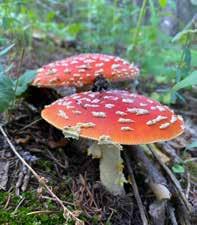
Amanita muscaria deserves special mention due to its bizarre appearance and widespread occurrence. This is probably the mushroom on which the hookah-smoking caterpillar sat when he asked Alice while in Wonderland: "Who are you?" Seriously, this is the most pictured, discussed, and analyzed of all mushrooms. Strange, intoxicating brews have been made in many different world cultures. It is also considered poisonous.
Historically, the biggest slides occur during this monsoonal period, which lasts from July through August. The 1941 and 1945 Carbonate Creek slides, which buried central and eastern Marble under many feet of rocks and mud, both occurred during August thunderstorms.
Recent research into the soil and mycelium has revealed the presence of a vast, secret underground electrochemical communication network between forest plants, even plants of different species. This network is the mycelium in the soil connecting the roots of trees and shrubs. Through this network plants exchange water, nutrients, and defense signals when un-
On a similar note, Psilocybin mushrooms, aka magic mushrooms, do not occur here naturally, but their psychedelic properties have recently been studied as therapy by psychologists. Colorado recently decriminalized possession and cultivation, the first state to do so.
In conclusion, Pacific ocean weather patterns have cycled back last month to conditions that produced intense monsoon rainfall, resulting in the interesting appearance of mushrooms and potentially dangerous mudslides. This cycle will certainly repeat many times in the coming years.
Amanita muscaria seen on the East Creek trail by our editor. Photo by Gentrye Houghton.
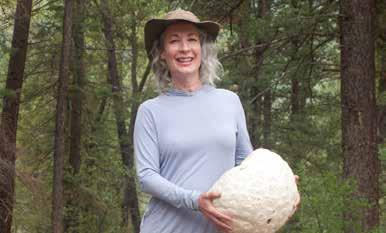
Tracey Harris with a puffball mushroom. Photo by Alex Menard.
What's Up with Gunnison County?
The Gunnison County Commissioners hold alternating work sessions and regular meetings on Tuesdays in our BOCC meeting room at the Gunnison County Courthouse Building. Meetings are streamed live by Zoom. Agendas and links to work sessions and meetings are available on the County website at gunnisoncounty.org. In this column, your District 1 Commissioner, Liz Smith, offers her take on current matters. You can reach her at eksmith@gunnisoncounty.org
School is back in session in Gunnison County. The Gunnison Watershed School District began classes on August 23rd, despite experiencing staffing challenges faced by school districts across the state. With only seven out of 12 bus routes operating in the valley, we’ve been working hard with the school district, the Gunnison Valley Rural Transportation Authority (RTA), and Mountain Express to ensure there is adequate capacity for children commuting to the Crested Butte Community School.
Western Colorado University (Western) students also began the semester on Monday, August 23rd with a larger incoming class of freshmen compared to 2020. With universal vaccine and masking policies in place and randomized COVID testing for students who opt to not get vaccinated, everyone is hoping for another successful in-person semester.
Following President Gregory Salsbury’s departure from Western this summer, Nancy Chisholm, a former Western graduate and twoterm member serving on the Board of Trustees, was appointed and has been serving as Interim President. A search is currently underway to hire a new President by the end of the calendar year.
Much of the talk around town, though, has focused on the matter of masks in schools. Although Western is requiring masks for all indoor spaces on campus, the school district has decided not to implement a mandatory masking policy. This decision was made by our local public health experts working closely with the school district by weighing several factors, a
few of which I’ll mention here.
The first considers the unique socio-emotional, speech, language, and reading development needs for young children who are not eligible for vaccination. In addition, the Colorado Department of Health and Environment has expressed support for developing local policy decisions based on local conditions of the virus, including whether a community is considered to be at higher or lower risk for disease transmission.
In contrast to some areas of the nation that have just over 30% vaccination rate, Gunnison County is over 70% fully vaccinated, the school district staff vaccination rates are over 83%, hospital admissions and transfers have been manageable, and trends are generally holding steady. Local mask guidance may change in response to changing conditions.
In the meantime, the emphasis continues on proper building ventilation, air filtration, and increasing vaccination rates in the community. Both Western and the school district will be hosting periodic pop-up vaccine clinics throughout the semester, the State Vaccine Bus has scheduled stops through the valley, and several pharmacies and health clinics have options to schedule an appointment to get vaccinated.
Shifting topics, regional boards across the state are organizing to develop plans for disseminating nearly $400 million in opioid settlement money from pharmaceutical companies to be dispensed over 18 years. Twenty percent of funds will go directly to local governments; 10% will be allocated for infrastructure to address lacking programs and facilities in some regions; 10% will be retained by the state attorney general’s office for prevention and education programs; and 60% will be allocated across 19 regions.
Each region will then determine how the funding can best be utilized in the area to address the opioid epidemic. As part of the Southwest Region, Gunnison County will work with Hinsdale, Ouray, San Miguel, Montrose, and Delta Counties to develop plans for how to best sup-
port treatment, recovery, prevention, and education efforts.
At this point, county attorney offices across the region are collaborating on intergovernmental agreements to be adopted by each of the county boards so that by-laws and a governing structure can be established. The boards are designed to include perspectives from a diverse set of stakeholders, including (but not limited to) law enforcement, the judicial system, public schools, veterans, juvenile services, behavioral health providers, health care providers, municipal and community representatives, and those with lived experience with the opioid crisis.
County-led efforts to address the housing shortage are underway as well. Outreach to community members and stakeholders for developing the 13-acre Whetstone parcel has been in progress the past several weeks with several site visits to the parcel to answer questions and gain insight into the best way to develop the land. On August 26-27, roughly 25 individuals participated in a two-day charrette to inform a sketch plan for the RFP (request for proposal) to be issued for developers.
More information on the project can be found at whetstonehousing.weebly.com. We’re also exploring the possibility of developing a parcel in Gunnison adjacent to the Fred Field Western Heritage Center. Already zoned for dense residential housing with utility infrastructure in place, the parcel, which is just over an acre in size, could support up to 42 desperately needed housing units.
As always, I welcome comments and outreach from all Gunnison County residents. Take care and be well.
For anyone needing help stretching their food budget, Gunnison County Officials currently have boxes of food available distributed through the Marble Community Church.
There is no charge to the recipient and no reservation is needed; boxes are available for an individual or up to a family of four and contain enough meals to last approximately three days.
Please call Pastor Jon Stovall at the church to arrange a pickup time for your box today, (970) 963-1464.
Liz Smith Gunnison County Comissioner District 1
The Marble Buzz Continues
Every month the Marble Board of Town Trustees (BOTT) meets to discuss the topics of the town and allocate funding where deemed appropriate. The Crystal Valley Echo strives to keep folks informed about the details of those meetings.
An executive session to discuss Marble’s on-site wastewater treatment systems (OWTS) was postponed until the September meeting. As covered in our August issue, “The OWTS study has identified properties in town that are below the minimum lot size, have a structure but do not have a functioning OWTS in place.”
by James Steindler
MarbleFest went off with a bang and brought yet another successful annual gathering of mostly locals under the tree canopy at the Mill Site Park. While the MarbleFest committee raised more than $10,000 for the cost of the event, they were still short about $1,800 on the heels of the opening act. The BOTT unanimously passed a motion to kick another $1,500 towards MarbleFest.
Town Administrator Ron Leach brought up the idea of requiring a use permit for reserving the park for an event. Leach mentioned that folks will use the park to make money and that a fee could go towards the park fund, and the board agreed a permit system could help prevent double booking the park.
Leach sent out six short-term rental applications to properties in town limits that are advertised on Airbnb sites; all but one has been returned with fees included.
The Pitkin County Commissioners sent a letter to Marble’s BOTT. “They would like to talk to the Town Council of Marble about the Wild and Scenic designation and the situation at the Marble Quarry, up at the mine,” Leach explained, “They are in favor of the Wild and Scenic designation and they are opposed to the situation at the mine.”
PitCo Commissioners have offered to organize an “EcoFlight” over the area. EcoFlight is based out of Aspen and according to the organization’s website, “educates and advocates for the protection of remaining wild lands and wildlife habitat using small aircraft.”
“getting water to East Marble, we’ve talked about the agreement where everyone pays $130 a month… we’ve talked about a back up well.” He further advised, “I think that it’s really good that these two boards get together and begin a dialogue.”
Fire restrictions were lifted for the Town of Marble during the meeting.
CVEPA Annual Meeting
The Crystal Valley Environmental Protection Association (CVEPA) met for their annual meeting on August 29th at Propaganda Pie in Redstone. Author and historian Duane Vandenbusche was the keynote speaker and the theme this year was: Water.
The board decided they’d welcome the Pitkin County Commissioners for a joint meeting and likely take them up on an EcoFlight. According to the minutes, Mike Yelico, “cautioned the council regarding the Wild and Scenic designation in regard to the need for an augmentation pond.”
The Marble Water Company (MWC) board recently reached out to Leach in hopes of meeting with the Mable BOTT. “They [MWC] approached me and said they’d like to meet with the town council in a work-session setting,” Leach said, “they would like some time to talk about whatever issues they have for the future and the issues we have for the future.”
Leach mentioned that the BOTT has discussed,
During the meeting, Wild and Scenic designation came up along with the perceived lack of support from Marble.
“CVEPA does support inclusive and transparent support of the Wild and Scenic designation relying on local support,” said CVEPA Board President John Armstrong. He also mentioned that Pitkin County Attorney John Ely said he, “‘can’t imagine a Wild and Scenic Act passing without local support in the Upper Crystal Valley.’”
For more information regarding CVEPA visit cvepa.org
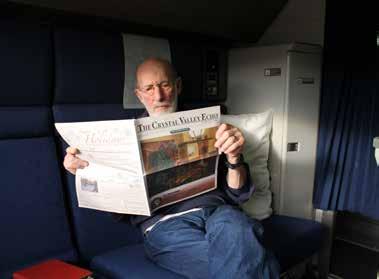
Katie Todt, Senior Consultant with Lewicki and Associates(operator of the Marble Quarry) peruses the Aug. issue of the Crystal Valley Echo while attending the CVEPA annual meeting at Propaganda Pie.
Photo by James Steindler.
THE MARBLE TIMES
A LOOK AT LIFE AT THE MARBLE CHARTER SCHOOL
Sustainability
During the previous school year, Sixth, Seventh and Eighth Graders explored four types of meals and how they get to their table. Students read The Omnivore’s Dilemma and other texts and learned about the Industrial Meal, Industrial Organic Meal, Local Sustainable Meal, and Hunted, Gathered, and Gardened Meal. They evaluated the authors’ motives, purposes, and points of view including whether and how conflicting viewpoints were addressed. Students then researched topics that impact access to healthy food to present their findings to a community audience.
Guiding Questions:
• What food choices should we make as a community to keep our community sustainable?
• What factors should we prioritize when making choices about our food? How do we share these recommendations with others?
• What factors influence our access to healthy food? How do we research this?
• How do we analyze arguments about how food should be grown and processed?
• How do I determine if an author has used sufficient relevant evidence and sound reasoning to support his or her claim?
Pesticides and The Environment
by Keegan Jaeger,
written during the 6th grade
Imagine driving to a farm and once you get there you realize it's just a big factory. You ask the man, “What is this?” “It's a vegetable farm,” the man says. You ask about the process of growing. He says, “First we plant the seeds, then we
spray them with pesticides, insecticides and herbicides.” You ask him if you can go into the field to see the vegetables but he says no because we sprayed pesticides. It's too dangerous to go in the field. A question pops into your mind, “Is this stuff safe and we are eating it?” Although pesticides make your vegetable grow faster and protect it from bugs and disease, but also that raises a big health question. So let's embark on a journey to learn about how pesticides harm us, why do we use pesticides, what are the benefits of pesticides.
With all the knowledge we have about pesticides, many people wonder why we still use them. In the short term, pesticides greatly assist pest control. This shows that pesticides is a substance that repels pests by the toxin that is the pesticides. (Chefs Best, “The Advantage and Disadvantage of Pesticides.” ) Furthermore, for many years the use of pesticides was largely unregulated. However, the impact of pesticides on the environment and human health has been under greater scrutiny since the publication of silent spring by Rachel Carson in 1962. (Thorpe, 2017.) The use of pesticides is very controversial because some farmers depend on it and some find it harmful to the environment. (Encyclopedia Britannica)
Based on what I have read, pesticides can be very harmful to the environment, animals, and human health. Some pesticides, if exposed to, can lead to sickness such as the insecticide DDT. For example, DDT came into wide use in the 1940s and was later heavily restricted in the United States and elsewhere because of its adverse effects on health, environment and wildlife. Another pesticide that was highly restricted was neonicotinoides. In the early 21st century, the use of neonicotinoids was highly restricted in some countries including throughout the entire European Union because of its harm to bees. The ideal pesticide would destroy it’s target without causing any harm to humans, non-target plants, and the environment. The most commonly used pesticides come close to the ideal standard, however, they are not perfect and their use does have health, environment and wildlife effects. (Encyclopedia Britannica)
There are some alternatives to pesticides, some work well and others don’t, but there are alternative pesticides. Specifically, modern organic was developed as a response to the environmental harm caused by pesticides in conventional agriculture. The concept of organic farming was developed in the early 1900’s by Sir Albert Howard and others who believed animal manure should be turned into compost. This shows that compost is a biological based pest control which resulted in better farming. The organic food sales increased steadily from the late 20th century. Greater environmental awareness, coupled with concerns with health, impacts the use of pesticides. (Encyclopedia Britannica)
Pesticides have their ups and downs but overall I think pesticides are more harmful than useful. Every time you buy industrial vegetables it could be covered in harmful pesticides and not just harmful to you, harmful to the environment and wildlife. All those french fries you eat could be covered with pesticides too. All those amazing salads that you see at the grocery store can be covered in pesticides too. So do yourself a favor and read the labels before buying your vegetables and salads and all your plant based products, not just for you, for the environment, and wildlife too.
Bibliography: Matthew Thorpe. “Are Pesticides in Food Harming Your health?” May 3, 2017. Encyclopedia Britannica Chefs Best. “The Advantages and Disadvantages of Pesticides.”
Help Wanted
LOOKING FOR A MASSAGE THERAPIST
Photo from Heather Marine.
Artist Feature: Charlotte Graham
by Rebecca Branson
The Crystal River Valley has something special about it. Visitors and residents alike talk about an intense feeling the first time they come here. Whether you call it magic, energy, or a deep spiritual connection, it's impossible to not fall in love with this glacially carved canyon.
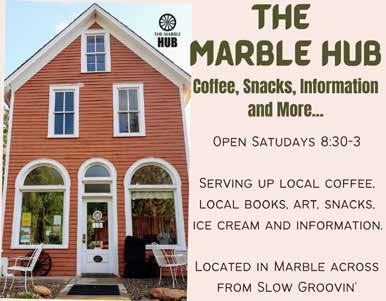
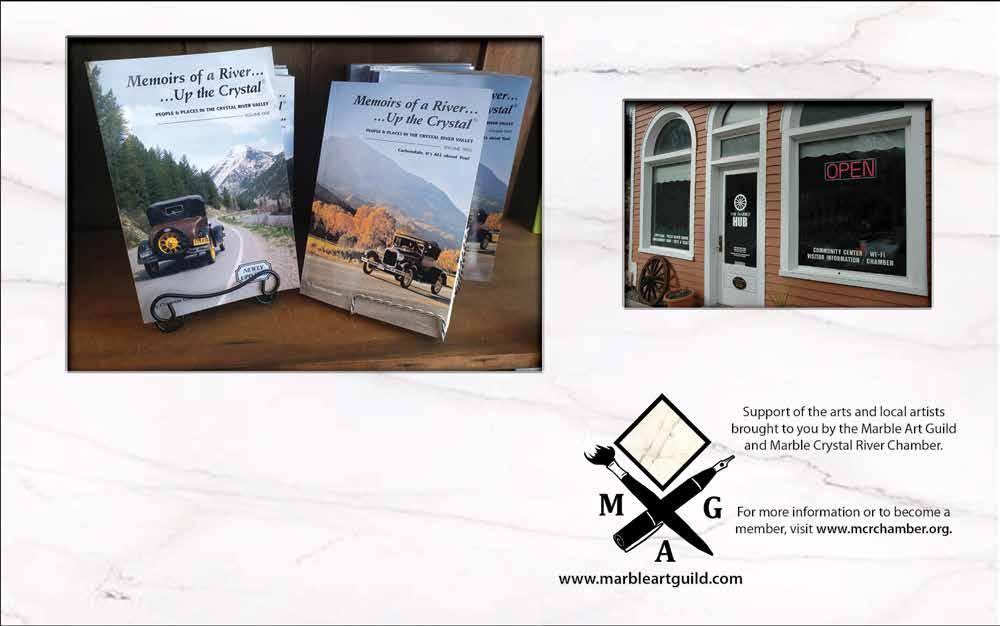
The area is graced with natural beauty and steeped with a long, rich history. One of the best ways to learn about that history is to drop by The Marble Hub and pick up Memoirs of a River... Up the Crystal. The coffee shop and books are both the labors of local author Charlotte Graham. I had the pleasure of sitting down for a chat about her own experiences with that Marble Magic and how she came to be a pillar of our community.
the Southwest making etchings of petroglyphs that were being sold at the Lost Trail Gallery, which was once located across from Raspberry Ridge Bed and Breakfast. The gallery manager, also a personal friend, called and asked if they would come to a 4th of July art show, and they had the most wonderful weekend.
Things kept falling into place for them to stay longer, and, during their first winter, Charr put together Lost Post Coffeebar in the gallery area. The coffee shop only lasted until spring, but they were here to stay.
Charr says she could feel that there was something unusual about the valley. She wanted to know what made this place so remarkable. Following her Native American roots, she did what felt natural and reached out to the elders, and set about recording stories of the oldest residents of Marble.
Though she had collected a great many tales, she felt that there was something more, something deeper, than what those who were currently here could tell. That was what sparked her interest in the valley's first inhabitants, the Northern Utes, and she contacted members of the tribe to include their stories about this valley.
Her strong sense of community led her to serve as a grant steward for the Marble Charter
School. With a dedicated committee, she hosted large town parties and adult classes, trying to bridge the gaps between school and community.
She helped to put together a school newspaper which was eventually picked up by Alyssa Ohnmacht to become, presently, The Crystal Valley Echo (which then changed hands again in 2019 with the current publisher).
It was at this time that those collected stories began to be published in the budding newspaper. When people began to lament not keeping issues with stories they loved, Ohnmacht helped Charr arrange them into the first volume of Memoirs of a River. It only made sense to follow the river on down. Volume Two became all about Carbondale.
In 2011, Charr asked Connie Hendrix to help her transform the empty Marble Bank building into what she envisioned to be part information center, part community gathering spot, and partly one of the only places in a 30-mile radius to get a great cup of coffee.
The Marble Hub has been supported by hundreds of volunteers and served thousands of visitors in its 10-year history. It is a lasting legacy of Charlotte's love for the town of Marble and its history, as well as ensuring it is the best it can be in the future.
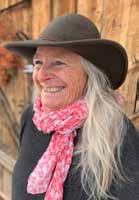
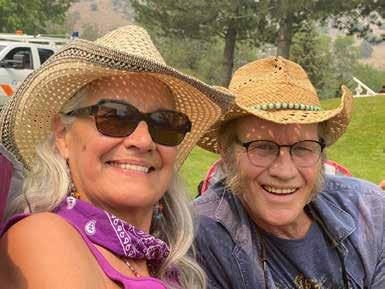
In 1997, Charr (two r’s please, she isn't a charbroiled cheeseburger) and her husband, Doug Whitney, were traveling around Charlotte Graham and Doug Whitney. Provided by Rebecca Branson.