
A what's happening piece as told from a dog's point of view.
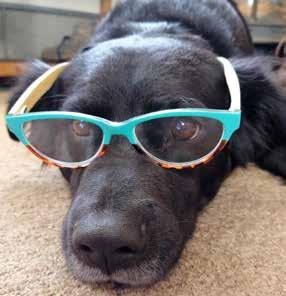
Tourist Season officially kicked off Memorial Day weekend. The Redstone Art Foundation hosted its first annual Plein Air Paint Out, an open-air painting festival in historic Redstone. Propaganda Pie supplied live music and a crowd of locals and tourists joined in the festivities. It was a dog's paradise for sights and sniffs and the lucky bite of unattended pizza.
Rock scaling continues on Highway133 between Redstone's north and south bridges. Look for more cars on Redstone Boulevard as they try to avoid traffic stops and delays. Drivers remember that the Redstone Boulevard is a pedestrian thoroughfare
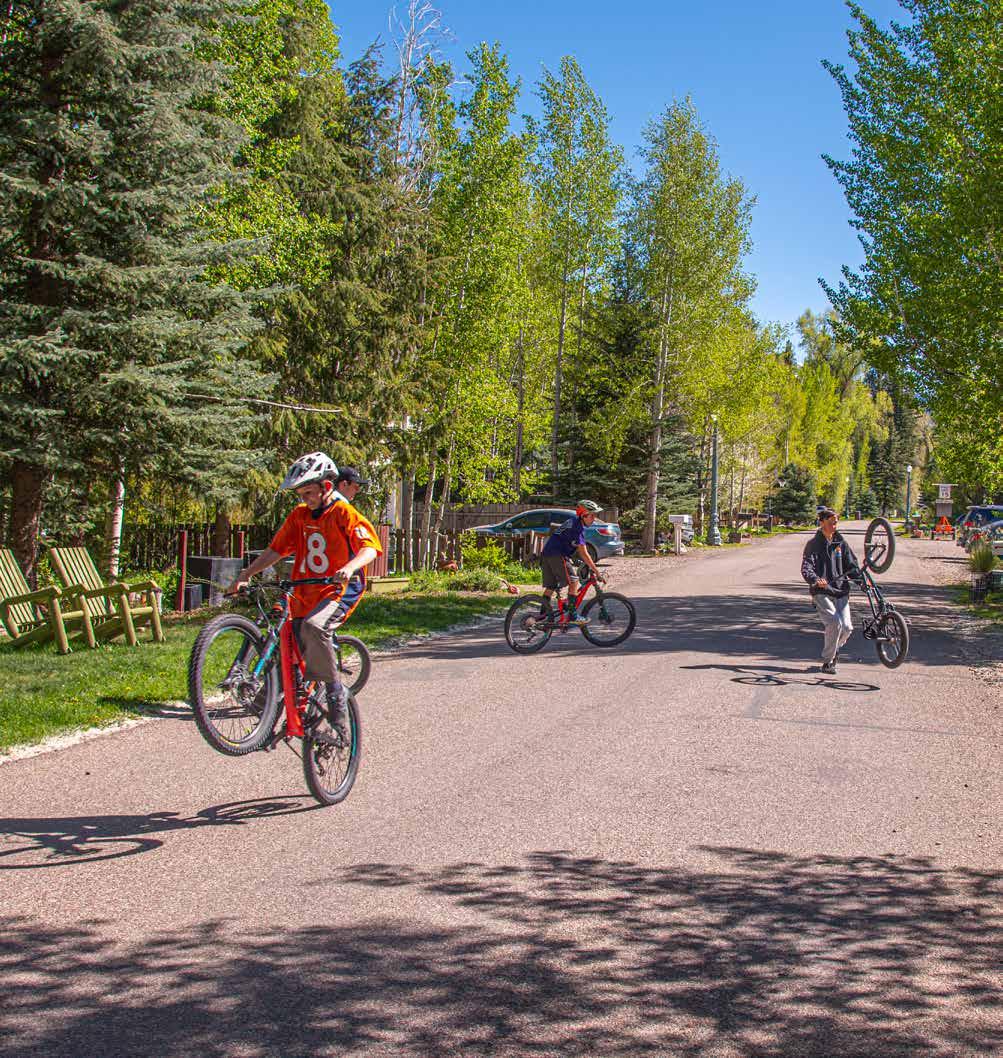
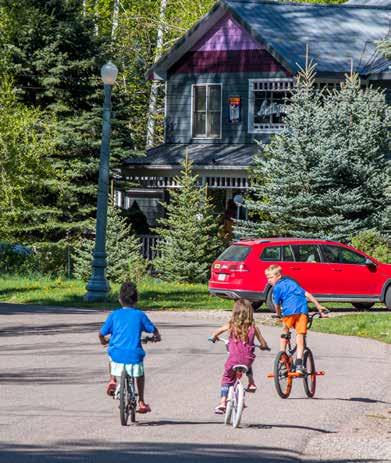
and walkers - both two and four-legged - have the right of way. The speed limit is 15 mph AT MOST. When kids are playing or people are walking, be prepared to go slower.
Remember to paws for pedestrians. Bears have been spotted in and around Redstone. Keep food and anything that smells (trash, sunscreen, lotion, Chapstick, etc.) out of a bear's grasp. If you have visitors in town, remind them how important bear diligence is. A fed bear is a dead bear!
We dogs love it when you clean up after us. Doggie bag stations are located at the Redstone Inn and in multiple locations in the park. When we’ve done our business, don't forget to throw the baggie away. Poop bags really take away from the beauty of our valley. On top of that, they offend a dog’s delicate senses.
Keep your nose to the ground. And remember the words of wildlife photographer, writer, and preservationist Roger A. Caras, “If you don’t own a dog, at least one, there is not necessarily anything wrong with you, but there may be something wrong with your life.”
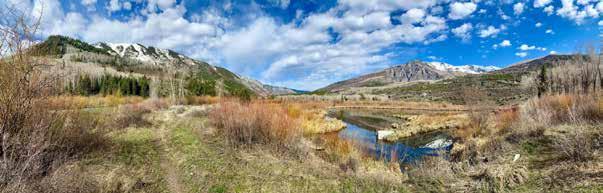
Take a walk on the wild side this summer with nature walks sponsored by The Marble Hub and Marble Museum. All walks are free, will meet at The Hub, and are designed for all skill sets.
The first two walks will help you to know the local native plants including, flowers, shrubs and trees. Experts in botany and ecology have been invited. Over 100 species have been identified in this location.
The next walk focuses on the weed invasion . You will learn how to identify and control the key species that threaten to take over. Followed by a walk in August that visits and celebrates the wetlands. Co-sponsored by the Roaring Fork Conservancy, this will be the 6th annual Wetlands Walk and Beaver Talk.
These walks will culminate with a sky party during the Perseid Meteor Shower in August. The event last til around midnight and starts with a
chili dinner, followed by a 3D astronomy program, and telescope viewing; tickets, $20, will be available starting in July.
More details are on the way coming up in July.
Sunday, June 6 Wildflowers, 1 p.m.
Sunday, June 13 Trees and Shrubs, 1 p.m.
Sunday, July 11 Weed ID and Control, 1 p.m.
Saturday, July 18 Weed Work Day, 8am
Saturday, August 7 Wetlands Walk and Beaver Talk, 10 a.m.
Thursday, August 12 Summer Star Party
6 - 8 p.m. dinner, 8 - 9 p.m. astronomy program, 9-12 p.m. observation
Marble Times
Mission Statement: To provide a voice for the residents of the Crystal River Valley; to bring attention to the individuals and local businesses that are the fabric of the Crystal Valley region; to contribute to the vitality of our small town life.
Editor • Gentrye Houghton gentryeh@hotmail.com
Stephanie Deaton • James Steindler
Charlotte Graham • Alex Menard
ADVERTISING SALES
Gentrye Houghton • 970-963-1495
gentryeh@hotmail.com
The Crystal Valley Echo is published monthly, and is distributed throughout the Crystal Valley.
NEWSPAPER BOX LOCATIONS:
Carbondale City Market • Village Smithy
Carbondale Post Office • Redstone Inn
Propaganda Pie • Marble Hub
Please send $40 for print or $25 for digital editions along with address information to: The Crystal Valley Echo
Cr ystal River Ar ts, Craf ts, and Collectables hosts Cr af t Satur da ys at Redstone Clif fs Lodge


Ever y Saturday in July & August, rain or shine. Fees include materials.
July 3 Cr ystal River Rock , kite & pinwheel Painting, 10 am - 1 pm,
10 am -12 pm, $30.00
Aug 7 Tree of Life, 10 am -1 pm, $40.00
Aug 14 Coptic stich journal and handset type postcard, 10 am - 1 pm. $40
Aug 21 Leather and bead wrap around bracelets, 10 am - 1 pm, $40
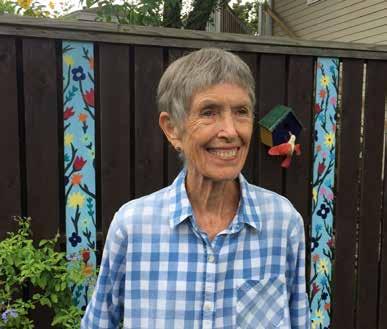
March 27, 1938 - May 13, 2021
Roberta Stokes was born in Evanston, Illinois in 1938 and spent her early years in Chicago and Michigan. Later in life, the memories of these places, people and events inspired her American Story Paintings. Her love of dance began at the age of four while performing “I’m A Little Tea Pot.” Her brother John would take tickets at the door, and play the music for her. At one point she wanted long hair, so she took fabric from her mother’s sewing box and made long fabric braids to attach to her head for a family performance. Young Roberta also fancied herself a weather reporter. Family members were not allowed to watch the weather, while she watched alone. She then gave a theatrical weather presentation using a big drawing to show everyone what was happening. Drawing pictures and cartoons became a part of her creative expression. Roberta majored in dance and art at the University of Indiana, where she studied with dance pioneer Helen Tamiris. Roberta eventually taught and performed dance in a variety of places, including Belgrade Yugoslavia.
In 1968, Roberta moved to Houston with her husband Gale, professor of History at Rice University, and their two children, John and Karen. Roberta began teaching in the Art After School program for the Contemporary Arts Museum where she eventually developed a dance program that included classes and performances. She was a founder and director of the Contemporary Arts Museum (CAM) Choreographers, a group of choreographers who explored the city with audiences, hosting the annual Modern Dance Gathering as well as the Houston Modern Dance Council. She served on the advisory board of Cultural Arts Council of Houston (CACH) and the dance
panel for the Texas Commission on the Arts. Roberta taught dance for the Houston Dance Center, Houston Ballet, and her own dance studio where she also directed her non-profit organization: Roberta Stokes Dance Co. After a dance career of 25 years, she turned her attention to painting full time. Roberta Stokes had one-person shows at Williams Tower, The Art League of Houston and a retrospective show of fifty paintings at Transco Tower. Her works were also shown in Chicago, Washington DC and California. “I hope that my work creates pathways to seeing and celebrating, ways to anchor to one's own humanity.”
Roberta was a torrent of creative activity in her place making, dance, gardening, reading, sewing, journaling, piano playing, and artwork. She began each morning by reading the New York Times, and proceeded to fill her day with a long list of activities. Each activity brought her interest, with the possible exception of her exasperation with the computer. Gardening was a huge part of her life. You could often find her kneeling in the dirt around her flowers, elbow deep transplanting. Roberta collected small colorful salt & pepper shakers made in Japan from antique stores, could not resist buying a beautiful quilt, and was eternally joyful to find a great folk dance skirt from Value Village (second hand store) for under $3. Roberta was a storyteller. Her paintings tell stories of place and family, of childhood, and of her childhood dog Spunky. After her husband Gale passed away, she created a group of paintings of broken down farm homes on vast landscapes, titling the haunting series “Silent Homes Speak.” Her art ranged from small quirky pen & ink cartoons, to large 6’X6’ colorful abstracts and detailed story paintings. In her ‘spare’ time, Roberta crafted 10 beautiful black paged and leather bound photo albums that tell the story of her family with handwritten sliver writing and photos. Her writings include over 30 carefully written journals.
Roberta had an uncompromising clarity of direction, exemplified by her childhood dream of marrying a history professor and living in a cozy “white picket” fence home with two children. Roberta had some rough patches in childhood due to family circumstances and was impatient with laziness. She identified with the working class, and had a “chop-chop” attitude towards work – get it
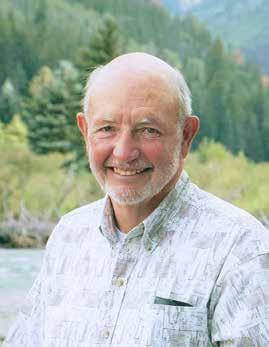
Ernest LeRoy (Ernie) Bradley
August 28, 1943 – February 15, 2021
Saturday, June 26, 2021
Church at Redstone
213 Redstone Blvd. 10:30 a.m.
done and move on! She had a passion for organizing and planning, a joyful zest for house cleaning, a constant determination to be her best self, and a deep pride in her family. She loved music, in particular Bach’s Goldberg Variation, Americana music, and hymns. She adored hosting parties at her house that included singing around the piano, dancing, and game playing. She was a party conversation starter – asking guests to participate in a “round robin” style sharing. Roberta particularly loved to be the winner of games, namely horse rummy, Chinese checkers, and Mexican train. She relished being a boorish & exultant winner and a sardonic sarcastic loser – in which she overpraised the winner (whether herself or another) with ridiculous superlatives. She also did not mind having a nice Manhattan cocktail at the end of a long day. Roberta’s constant energy and joy in “the doing” of life was inspirational to all that knew her. After discovering she had late stage ovarian cancer in May 2020, Roberta continued to fill the last year of her life with the things she loved, expressing daily her gratitude for the beauty of her life – which she felt was complete.
Roberta’s capacity for joy was immense and her pleasures were many. These pleasures included dancing with her husband with the Houston International Folk Dancers, traveling in Europe, attending church, going to theater and art events, gardening, summers in Redstone, Colorado, painting everything, and entertaining friends. Best of all were the times with her family and being at home. She believed that home is where the heart is, with family and friends at the center.
Roberta was preceded in death by her beloved husband Gale Stokes, her adored brother John Russell Black Jr., and her parents Lorne Russell Black and Florabelle Ruby Johnson Black. Roberta is survived by her son John Gale Stokes, daughter Karen Elizabeth Stokes, daughter-in-law Deborah Warshaw, son-in-law Yves Delepine, granddaughters Maya and Hannah Stokes, step-granddaughter Chloe Delepine, and members of the Ferguson and Ingram families.
The family will host a Zoom memorial on Saturday June 5, 2021. Please email The Crystal Valley Echo at gentryeh@hotmail.com for the Zoom link once it becomes available.
You are invited to help us honor the life of Ernie Bradley. We’ll leave our sadness at the door and bring our stories, love, laughter, and happiness over a life that was lived to the fullest. Ernie was a beloved husband, father, grandfather and friend. He loved life, his family, being in nature, traveling, food, storytelling, bird watching, hunting, and fishing. He also loved Redstone and the people that inhabit this valley. We invite you to dress casually and join our family to remember this fabulous man. If you are comfortable staying for lunch, let us know so we can have enough food prepared.
E-mail to bettybradley1216@gmail.com or call/text (970) 404-0717.
The Pitkin County Commissioners hold weekly work sessions on Tuesdays and bi-monthly public hearings on Wednesdays in our BOCC meeting room at the Pitkin County Administration and Sheriff’s Building. Both meetings are televised live and repeated on locater CG12 TV. They are also streamed live and available on the County website. Agendas are posted in the Aspen/ Glenwood newspapers and online at www.pitkincounty.com In this column, your District 5 Commissioner, Francie Jacober, offers her take on current matters. You can reach her at francie.jacober@pitkincounty.
The Pitkin County Board of County Commissioners (BOCC) have been involved in many land-use issues for the last two months, most of which involve Open Space and Trails (OST). The following are some of the items the Commissioners have been discussing.
Pitkin County acquired a small section, 0.1 acres, of the properties around Penny Hot Springs in 1991 and it was adopted into the OST Program in 1999. Last March, a management plan was adopted to improve the area and protect it for future users.
The Colorado Department of Transportation (CDOT) entered into a lease agreement with Pitkin County for the parking area and the parts of the pools under CDOT easement. This lease agreement with CDOT was finalized by the BOCC recently and work will begin soon to improve the degraded slope next to the pools with the intent to improve access and sanitation.
The management plan includes the following:
• Installing a port-a-potty in the hot springs pullout. (Already completed)
• Seeking a potential location for an emergency call box.
• Installing interpretive signage with some history of the hot springs and reasons why it is important to protect them.
• Redesigning the parking lot with a defined entrance and exit as well as several designated parking spots.
• Creating a single trail from the parking lot to the pools which are sustainable and safe, and repair the degraded sections of the hill.
• Developing alternate parking for other users of the area, such as sightseers for Filoha Meadows and rock climbers accessing the area at the Narrows.
For those who enjoy these beautiful and historic hot springs, OST is hoping these improvements will enhance the experience at this historic site as well as conserve the pools and the hillside. For a thorough and really interesting history of Penny Hot Springs, visit the Properties and Trails page of the Pitkin County website, and click on Penny Hot Springs in the list of properties.
On March 24, the BOCC approved the purchase of the conservation easement on the 141-acre Coffman Ranch after it was purchased by Aspen Valley Land Trust. It is a lovely ranch with 35-acres of wetlands, a mile and a half east of Carbondale, on Catherine
Store Road.
When I walked the property recently, hundreds of cottonwoods, watered by the Roaring Fork River, were in various stages of spring growth. This extensive expanse of trees encompasses all ages of cottonwoods, from tiny first-year saplings to twenty-foot tall adolescent trees in perfect condition.
This is a rare site anymore in the West as we have diverted and controlled our rivers so that riparian lands do not receive the spring floodwaters that have created the groves of cottonwoods throughout the western valleys in the past. Three-quarters of a mile of the Roaring Fork runs through this beautiful property.
The Coffman Ranch has been owned and operated for 60 years by Rex and JoAnn Coffman. In the purchase agreement, they will be granted lifetime tenancy on the ranch. In the last few years, it has been leased by Bill Fales and he has run cattle there, in a manner that keeps the fields grassy green and productive.
The purchase of the ranch breaks from tradition with the Aspen Valley Land Trust. They normally buy the development rights to a property but this time they bought the land straight out. Pitkin County was a pivotal partner and bought the conservation easement. While it is unusual for Pitkin County to acquire property or conservation easements in another county (in this case, Garfield), Dale Will, Acquisition and Special Projects Director for OST, said the following explanation in a memo to the BOCC: “Conservation of this ranch will directly benefit Pitkin County by protecting a valuable reach of Roaring Fork River riparian habitat, protecting senior downstream water rights, ensuring appropriate recreation river access, and protecting another high-quality agricultural resource in our watershed.”
Pitkin County, through OST, maintains an agricultural lease program on several properties. Earlier this year, the OST received applications from seven agricultural producers to lease two parcels on the agricultural section of the Glassier Open Space. This is an agricultural property that is contained within the 282-acre Glassier Open Space.
Two Eagle County properties, known as Red Ridge Ranch and Glassier Ranch, were purchased by both Eagle and Pitkin Counties in 2013 and 2014. Pitkin County owns the land and Eagle County holds the conservation easement. In an agreement amicable to both counties, Pitkin County manages the Glassier Open Space and has developed recreational trails for hikers, bikers, and horseback riders as well as the agricultural lease program.
From the seven applicants for the lease (on Parcels known as B which has 81.2-acres and F which has 3-acres), The OST selection committee awarded the two leases to Marigold Livestock Co., owned by Alyssa Barsanti. Barsanti has been at Rock Bottom Ranch for the last several years, developing sustainable agricultural programs.
Her proposal includes raising sheep and egg-laying chickens, in addition to vegetable production. She uses a holistic approach that addresses the sustain-
ability of the land, livestock and wildlife animals, the people and community in which she lives, as well as the economics of agriculture.
“The driving goal of Marigold Livestock is to improve soils and sequester carbon while additionally providing food for the Roaring Fork Valley. I’m excited to steward this piece of land and take great care and attention in irrigating and building healthy soils, and ultimately produce food for the valley,” Barsanti said at the BOCC meeting on Wednesday, May 12, during which her award of the lease was approved.
Unfortunately, the process for awarding this lease on the Glassier Open Space has provoked a dispute between another applicant, Jose Miranda, and the OST selection process. Miranda filed an appeal in February which first went to the County Manager, Jon Peacock. He assessed that there were no discrepancies within the process that would alter the decision of the selection committee.
When Miranda continued his appeal process, his dispute then went to the County’s Hearing Officer, Sarah Oates. She also found no reason to overturn the OST selection committee’s original decision.
This appeal process, along with several public letters and opinion pieces, has challenged the transparency and efficacy of the established selection procedures. OST is working to ensure that its outreach is inclusive and that future selection processes will further Pitkin County’s commitment to diversity and sustainable agriculture.
The delay caused by the appeal process has prevented Marigold Livestock Co. from getting on the land and beginning the growing season early in the spring, but OST has been irrigating and maintaining the property during the interim. Barsanti is now ready to begin her fiveyear lease and to commit herself to sound agricultural practices that conserve water and soil and provide for the continued use of the land by wildlife.
During their May meeting, Marble’s Board of Trustees (BOT) heard a plethora of issues. Here are some of the highlights.

by James Steindler
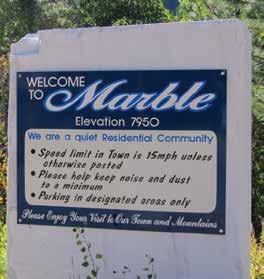
Looking ahead to the upcoming busy season, the board and town citizens voiced their concerns about the Beaver Lake Retreat not following the same rules as neighboring overnight establishments. Enforcing quiet hours and security, in general, was at the top of their list. Owner Vince Savage indicated that newly hired personnel would be willing to confront guests not respecting the quiet hours ordinance, whereas before that was not the case.
“This October 13 will mark the 33rd year that I’ve owned Beaver Lake Retreat,” said Savage, “We’re advertising it as Marble Lodge not Beaver Lake Retreat,” he added due to a clerical error and not filing the correct domain name.
Confusion over the various address listings for the business was also brought up. Attendees agreed the confusion could be detrimental when emergency services need to be called to the site, and that neighbors end up directing many of the resort’s guests to the right location.
Questions regarding whether the property should be considered commercial or qualify as a short-term rental (STR) came up. The question partly arose due
to the property’s listing on Airbnb as an STR.
The town asked that Savage agree to their conditions in writing which Savage suggested he’d be willing to do. The item was put on June’s agenda to follow up. Savage assured the board that there is only one group with over 40 people planning to stay this summer. The one larger party will consist of 75 folks.
Scott Wilson’s auto repair shop application was unanimously approved by the board. Nicole Farrell was not present to discuss her application for the Marble Candle Co. and the discussion was tabled till June.
The Parks Committee will begin meeting the first Monday of every month and those for Marble Fest will take place every second Monday — each at 6 p.m.
Park Committee Chairman Brent Compton mentioned the Roaring Fork Outdoor Volunteers (RFOV) project with the Marble Charter School to clean up the Mill Site in May. He also brought up RFOV’s commitment to come again in July and submitted a request to have half of those volunteers camp at the Mill Site Park for one night only.
Plans for the new ice rink were discussed but are still in the early stages. The site for the rink is up for debate; whether it should be at the basketball courts or require a larger space, perhaps at the Mill Site.
Signage for parking and speed limits were a priority when it came to the pervasive off-highway vehicle (OHV) issue. “One goal, just so people are on the same page here, is that there is no truck and trailer parking in town other than down at the Mill Site loadout,” said Mayor Ryan Vinciguerra, “that signage will be prominent.” He went on, “Right now we kind of have a couple of residents who have taken it on themselves to throw some branches out or spray paint their own signs,” and summed up, “It should really help to have a presence down at that intersection identifying where those truck and trailers can park which the town really doesn’t have right now.”

The OHV topic took up the last hour and a half of the meeting; one aspect being enforcement. “Without enforcement you have nothing,” said Trustee Tim Hunter, “At what point do we say enough is enough?” He continued, “Why is it such a horrible idea to have a weekend cop that’s up here writing tickets and slumping down the speeders and people that are behaving badly?”
Hunter said he was okay recommending that the county not open Daniel’s Hill to OHV traffic but doesn’t think the solution would end there. “I would like to work towards having something in place that next summer we’re prepared for,” he said, “I just see us getting more and more overwhelmed.”
Board member Larry Good pitched a moratorium motion which was shot down by a vote of 3-2.
“I’m a hospitable person by nature and I feel that people have a right to this access,” said Vinciguerra, “and it’s on our shoulders to help manage that but closing a door on them is not the correct solution.”
Gunnison Board of County Commissioners’ subsequent May 18 decision to permit OHV traffic up Daniel’s Hill until the end of the year leaves the town in the position of having to handle the increasing OHV traffic for at least one more season.


This is a multipart series dedicated to wolf reintroduction in Colorado. This series will focus on the history of the wolf in North America and both sides of the wolf debate. To weigh in, contact The Crystal Valley Echo by emailing gentryeh@hotmail.com
population can grow exponentially forever.

by Stephanie Deaton
Few animals ignite as much emotion as the wolf. Historically, hunter-gatherer societies such as the Uncompahgre Ute, who lived here before us, saw wolves as great predators that were both strong and loyal. Cultures whose lives depended on agriculture and livestock were threatened by wolves and depicted them as malicious, greedy, and destructive. In the present day, the dividing line between both sides of Colorado’s wolf reintroduction plan is so distinct that it is hard to find someone without an opinion - and a strong one at that.
The United States government, intent on the complete removal of the wolf from the American environment, created a nationwide policy of control that lasted for centuries. Wolves were hunted without restraint. They were seen as wild creatures that threatened the safety and prosperity of the American people.
Shockingly, the federal government was still incentivizing the killing of wolves up until 1965. Known for his dedication to the natural environment, President Theodore Roosevelt called the wolf “the beast of waste and desolation” and like many others advocated for its total annihilation.
Wolves were shot, trapped, poisoned, dug from their dens, and hunted by dogs. Humans deliberately drove the wolf to the brink of extinction. It was only after the declaration of federal protection under the Endangered Species Act in 1974 that widespread wolf recovery became possible. However, the goal of the Endangered Species Act was to prevent extinction. It was never meant to be a long-term management strategy.
Ed Bangs and Mike Jimenez, both retired U.S. Fish and Wildlife Service biologists recently sat down in a Colorado Parks and Wildlife Wolf Reintroduction Educational Session to talk about wolf reintroduction in Colorado. Both men have studied wolves and have taken part in the reintroduction of the gray wolf in Yellowstone National Park.
Both believe that certain Colorado areas – specifically large areas of sparsely inhabited wilderness west of the Continental Divide would be ideal locations for small wolf packs. This sounds a lot like the Crystal River Valley which is even home to natural prey such as deer, elk, and mountain sheep.
Ed Bangs assured Coloradans that we do not have the type of landscape to sustain large wolf packs. There is no danger of reintroduced wolves growing into huge, unmanageable groups. Scientifically, no

Limiting factors like environment, disease, and competition for food halt the population growth of a predator species just under the area’s carrying capacity threshold. Carrying capacity is the maximum number of a specific species that can be sustained by an environment — given the food, habitat, water, and other resources available in that environment.
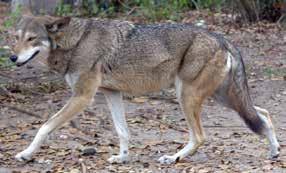
Red Wolf is the only distinctly American wolf. It is small, weighing about 45-80 pounds. It has reddish-brown coloration. Some say that it looks like a wolf-coyote hybrid. Before the colonization of America, the red wolf lived up and down the East Coast and Southeastern seaboard. However, settlers hunted the red wolf to extinction throughout its range. By 1980, red wolves survived only in captivity, their breeding highly regulated to preserve genetic diversity.
Smaller than the typical gray wolf, the Mexican gray is usually sandy or tawny-colored and lives in small packs that are adapted to the high desert environments of Mexico, Arizona, and New Mexico. This species went extinct in the American Southwest in the 1970s. Those that survived in Mexico were seriously threatened. In 1980, the Mexican gray wolf became completely extinct in the wild. However, scientists placed the last seven wild individuals in captive-breeding programs. By using a breeding registry, biologists hoped to preserve the genetic diversity of the animal.


The Gray Wolf is the species to be reintroduced in Colorado. They typically stand 26-32 inches high at the shoulder and weigh anywhere from 55-130 lbs. They live, travel, and hunt in packs of 7 - 8 on average. Packs include the alpha male and female, their pups, and older offspring. At one time 27 subspecies of gray wolves inhabited North America. There are now only five subspecies of grays left.
Some are concerned that non-native wolves will be reintroduced to the area, and that has sparked hot debate. Ed Bangs pointed out that the biggest problem in wolf reintroduction is bad publicity. He explained that wolves have wide dispersal capabilities. A wolf’s territory can cover 50 – 1,000 square miles. Many subspecies cross territories and interbreed. Therefore, it is hard to pinpoint an exact area where a subspecies is “native.”
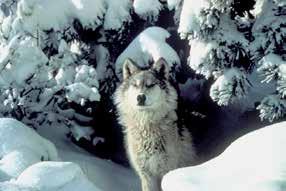
When Colorado reintroduces gray wolves, we will have years of scientific data gathered from reintroduction efforts in Yellowstone National Park and Idaho. Yellowstone’s wolf discussions started in the 1960s even though packs were not released in the
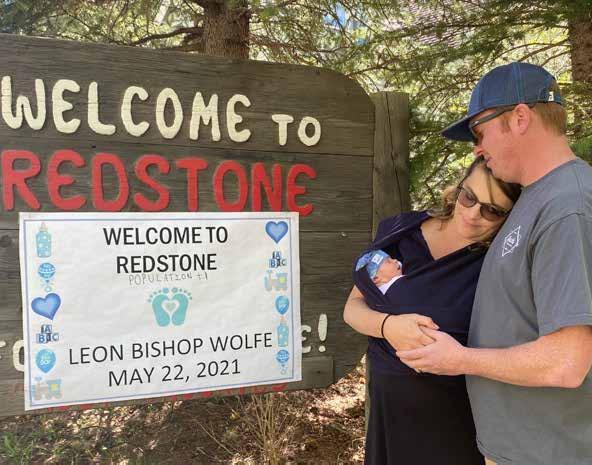
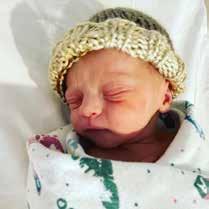
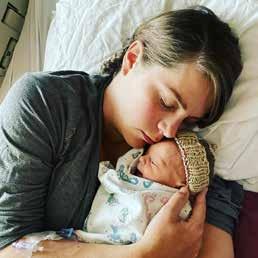
Molly and Jack Wolfe of Redstone gave birth to a beautiful baby boy on Saturday, May 22, 2021 at Valley View Hospital.
Leon Bishop Wolfe was born at 8am, weighing in at 6.4 pounds and measuring 19-inches long.
Leon's paternal grandparents, John and Nancy Chromy, reside just a few houses down on the Redstone Blvd, as well as grandparents Don and Susan Wolfe, of South Padre, Tex.
Maternal grandparents, Melissa and Joel McGregor, from Oakhurst, Calif., are planning to meet this man cub very soon.
area until 1995.
In between that time was a lot of research and a lot of legislation. Bangs points out that wildlife reintroduction is common. People are concerned about the wolf issue because not everyone benefits from wolves. While they once fed on Colorado's bison, elk, and deer, people are now worried that wolf packs will cause considerable damage to livestock.
Loss of livestock may be insignificant to the industry, but critical to private ranchers who rely on every head of cattle to survive. Colorado Parks and Wildlife assures the public that Federal compensation programs are in place to help the impact of wolves on livestock. There will be loss of livestock due to wolf predation, but it should be minimal.
Mike Jimenez, a wolf biologist, points out that wolves compete with humans for available ungulates – deer, elk, sheep, and cattle. In the Yellowstone release, wolves are monitored, and behavior is still closely watched.
Sometimes wolves kill livestock. If control efforts fail to work on problem wolves, they are destroyed, much like problem bears and moose. In Jimenez’s research, the destruction of livestock in Wyoming rose until 2006. After 2007, it decreased as control efforts grew. Wolves will be reintroduced into the area, but that is not where the research and monitoring stops.

Whatever the plan, wolf reintroduction will be hard in Colorado for the wolves and our citizens. Proposition 114 barely passed with the tiniest majority. This shows how divided we are on the issue. Regardless, the reintroduction plan will rely on data and information collected from years of research.
To stay informed, Colorado Parks and Wildlife is keeping the public updated and involved. Go to https://cpw.state.co.us/learn/Pages/ Wolves-Stay-Informed.aspx to watch the Wolf Reintroduction Series, read frequently asked questions, and get involved.
Yoga - Pilates Strength Training
Tuesday & Thursday 9:00-10:45 a.m. in Elk Park Call 963-8240 to confirm.
9 a.m. - 1 p.m. or 1 p.m. - 5 p.m. Pools closed ReservationsWednesdays required Massage available daily 9 a.m. - 7

It's Official!! The Fourth of July festivities will take place in Redstone this year! The only parade that you get to see twice will start at 12:00pm Floats and parade entries will meet in the lower parking lot of the Inn no later than 11:00am Decorating for the Kids Bike Parade will be on the Redstone Inn front lawn The flyover has been approved again this year, be outside and ready to look up at any minute! Pie Sales and Ducks for the Ducky Derby will be set up in front of the museum, all pies must be dropped off before 10am and sales will take place shortly after. Stay around after the Parade for a live band outside Propaganda Pie, cover fee TBD, proceeds will go to the RCA. The RCA is looking for volunteers, please email rcaredstone@gmail com for more information
Times Subject to Change
10:00am Pie & Ducky Sales across from General Store 11:00am Boulevarde closed to vehicles.
11:00am Bike Decorating at the lawn of the Redstone Inn 11:00am Parade participants gather at the Lower Parking lot of the Redstone Inn
US Air Force Flyover (no exact time Look up!)
12:00pm The only Parade you get to see TWICE! 2ish pm Ducky Derby - river access near Propaganda TBD Live Band outside Propaganda Pie
Mark your calendars for June 15th at 6pm, the Redstone Community Picnic will once again take place at the Redstone Park Due to Covid and doing our part to keep our neighbors safe, we will not be holding a Potluck style dinner. Instead it will be a true Picnic. Each family brings their own food and drink. This is a time to gather as a community, meet and welcome our newest neighbors Bring your chairs, blanket and a cooler of food and drinks to enjoy The RCA will have a meeting in the Park directly before at 5pm to hold Officer elections and to sign up volunteers for the Fourth of July Festivities. We will be looking for volunteers to help with parking, managing parade floats, Pie and Ducky sales, and gathering Ducky Derby prize donations You can also email the RCA at rcaredstone@gmail.com to volunteer





Redstone is an unincorporated village that relies completely on donations and volunteerism spearheaded by the Redstone Community Association (RCA) Your membership dues directly fund RCA projects and events Thank You for your support! Name:


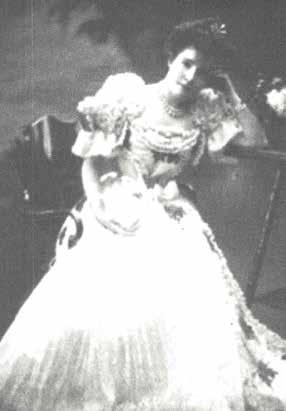
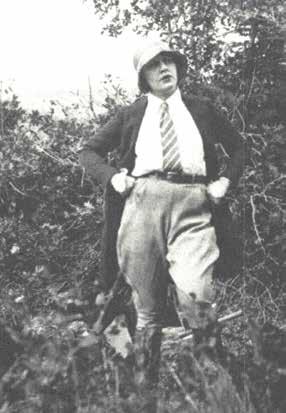
John Cleveland Osgood is duly acknowledged as a prominent industrialist and the founder of Redstone; but the story is incomplete without recognition of the three women who, as Osgood’s wives, assumed significant roles at pivotal times in his career.
Nannie Irene Belot married John Osgood in New York in 1887. His financial career was on the rise, and her beauty, vivacity, and youth seemed appropriate for a future life of wealth and travel. She had a passion for writing, and her husband’s establishment of the Cleveland Press resulted in the publication of her first novel, The Shadow of Desire. Reviews of the book were less than laudatory, but Irene continued to write, spending much of her time in New York and England. Osgood’s plans for a palatial home for her in the Crystal River Valley were underway, but she found Colorado dull and uninviting and preferred to remain in England. They were quietly divorced in l899. Irene remarried twice in the following years, the second ending in scandalous publicity. She continued to write under the name Irene Osgood and established her own publishing company. She died in England in 1922.
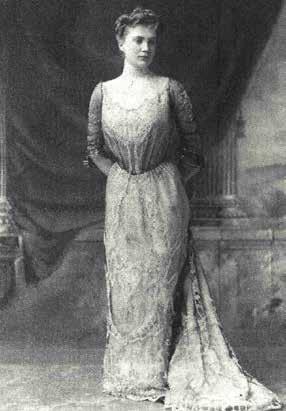
In 1915 she traveled to France as a volunteer in war relief work. By the time she returned, her marriage was essentially over. Divorce papers were finalized in 1920. Her last years were spent in New York City, where she died in 1954.
Lucille Reid and John Osgood were married in October 1920. Some 40 years younger than her husband, Lucille‘s role at Cleveholm began in earnest in 1924 with extensive remodeling, modernizing, and updating of the house and surrounding estate. As Osgood’s health deteriorated, Lucille became both caretaker and companion; and on his death on January 4, 1926, she assumed her duties as the beneficiary of the estate, including property in the village and the management of the Victor American Fuel Company, founded by Osgood. In 1932 she married

Alma Regina Shelgren joined Osgood in marriage in 1899 just three months after his divorce from Irene was finalized. A young woman of striking beauty and regal bearing, Alma easily settled into her role as Lady of the Manor at Cleveholm, Osgood’s country estate, which was finally completed by 1902. Her sense of artistic fashion and organizational skills set the tone for elegant socializing and entertaining. She also played a more altruistic role, that of “Lady Bountiful,” visiting the women in the village of Redstone, providing books for the library, and entertaining the village children at lavish Christmas parties. Speculation about her heritage and background added a sense of mystery to her relationship with Osgood, who rarely provided information about his private life. The idyllic life did not last. By 1909 Redstone’s coal productivity came to an end, and Alma spent little time at Cleveholm.
www.History.RedstoneColorado.org
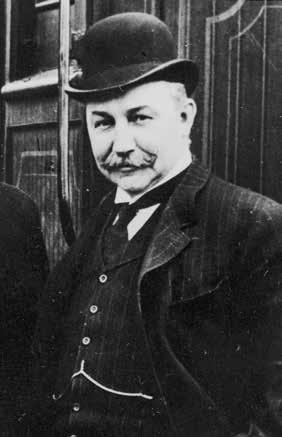
Huntley MacDonald, who joined her in the operation of the company. She was recognized as a successful Denver businesswoman. As maintenance costs increased at Cleveholm, Lucille began the disposal of properties, selling the Redstone Inn in 1940 and Cleveholm in 1944. She spent much of her time in California in later years but maintained connections in Redstone. She died in Seattle, Washington in 1984.
Osgood’s wives were independent, resourceful women whose stories, spanning major periods of growth and change, are an integral part of Redstone’s history.
Whenever I unlock the doors of the Marble Museum I feel a sense of delight. The schoolhouse, in which it is housed, was built in 1910.
It feels good just to be there, in a pleasant environment surrounded by artifacts that tell the amazing stories about Marble's past.
The museum will soon be filled once again with visitors’ wide eyes and big smiles as they take in the exhibits and artifacts with wonder and delight.
This article is an attempt to give credit where it is due, and the three heroes I have chosen are Henry Johnson, Oscar McCollum, and Charles Moore.
by Alex Menard
Henry Johnson was the Yule Marble Company photographer from 19101919 and again beginning in the early 20s to 1931, documenting all the operations including the hydroelectric powerhouse, quarry, and mill operations. He also photographed the town, taking pictures of school kids, the May Day parade as it headed down Main Street, concerts at the bandstand, baseball games, and more. His photographs, especially of the shops downtown, are valuable records of Marble’s history. Johnson advertised himself in the local paper as an art photographer and produced landscape shots that he produced as postcards.
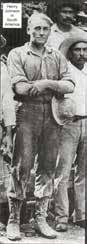
His high-quality, large-format negatives can be blown up and still retain their details. The negatives, some of which are glass, were developed in the darkroom at his home that still stands on Hill Street above east Marble.
The museum displays a collection of his cameras including an 8x10 large-format camera complete with hood and bellows (the accordion-like, pleated expandable part of this large-format camera that allows the lens to be moved), as well as a panorama camera, which has a motor-driven apparatus that moved to take in a broad view.
Johnson's photos allowed our next hero, Oscar McCollum, to write a two-volume history of Marble. Not only did Johnson's photos fill the volumes, but they also served as reference materials for McCollum's magnifying glass. In his research, McCollum must have spent countless hours examining photos to identify faces and which store stood on what corner and when.
McCollum first came to Marble in 1941 as a geology student, spending that summer in Crystal. He witnessed the Marble mill and quarry in its last year of operation. At summer's end, he left just a few days before the downtown section of Marble was destroyed by a combination flood and mudslide from Carbonate Creek.
He returned to the area after retirement from a career with the CIA in 1976. At the time, there was an increased interest in both civic and his-

toric projects in which McCollum was involved. He created the museum in the old high school building, that was first leased and later purchased from the school district.
The school contained classrooms in the condition they were left in 1941, complete with books, blackboards, lab equipment, and pencils, and the building instantly became a museum. McCollum collected treasures from many of the old-timers.
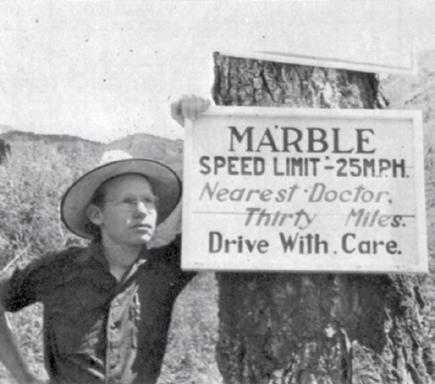
He went to work on turning the building into the museum with re-roofing, installing a modern electric system, and adding indoor plumbing to replace the historic outhouse. Other improvements included a fire escape, a wheelchair ramp, and replacing the bell in the tower. McCollum also donated a vintage camera collection and his personal stock of rocks.
His book, Marble a Town Built on Dreams, is out of print, though you may find copies on eBay or Amazon as well as copies at the museum for you to inspect.
McCollum was instrumental in the acquisition of the Mill Site Park by the Town of Marble. He also served as mayor and town trustee, and was recalled three times. McCollum just turned 100 in March and is doing well, and resides in Denver.
So far, the history of the museum is about found objects, those either left behind or contributed, but the story of Marble can be eloquently told by the creative exhibits of Charles Moore.
Moore retired from the Air Force as an officer and gained experience in museums during his 20-year stint on the USS Texas, a battleship museum located in Houston, Tex. He came to Marble one summer to work for Glenn Smith, his cousin, as a driver for the
Crystal River Jeep Tours. Moore’s first interest here was in the Marble Mill Site.
His skill in computer graphics allowed him to produce panels depicting many aspects of Marble's history. One of the most popular exhibits is "Where the Marble Went," which is a map of the United States with photographs superimposed of buildings or monuments that were created in Marble. Visitors to the museum search the map to see projects located near their hometowns.
Other exhibits Moore created include the "Mill Site," "Quarry Operations Then And Now," the "Tomb of the Unknowns," and the "Lincoln Memorial." Moore also created the information panel currently located at the entrance to the Mill Site Park.
Another popular exhibit is about the life of the Ute natives, which was researched and written by Marble Charter School students. Inspired by the visit of an Ute elder, the kids went to work, and with Moore's help, created the exhibit. These children showed wisdom beyond their years in their examination of multiple aspects of Ute culture.
Moore also did research on the Mill Site and wrote and edited many editions of Marble Chips, the historical society newsletter. He digitized all the photo archives, so small details can now be observed with high magnification on a computer screen. He also scanned complete works of all the historic newspapers providing easy access to details for historians, authors, and members of the public who are welcomed and encouraged to perform their research here.
Others who have contributed to the museum include Tom Williams, who framed all the exhibits Moore created, and Kimberley Perrin, who was the grader of Marble blocks at the quarry for many years and created a display showing the different grades of marble the quarry produces. Perrin also stocks the museum gift shop.
Gary Bascom, who has held every job at the quarry including quarry master, is the star of the Quarry video that’s shown continuously during operating hours. His marble products are also available at the museum gift shop, but a visit to his shop, Abstract Marble, is a must for those who have caught marble fever.
The museum is located four blocks up Main Street from the Marble Hub, and is open on weekends in June, every day during July and August, and back to only weekends during September. Operating hours, no matter the day or month, are 11 a.m. - 3 p.m.


Paul Roman, the son of former MCS School Director Wendy Boland attended Marble Charter School for 1st through 8th grade here, before graduating from 8th grade here in 2010. Now 25, Paul found time for me to interview him among his busy schedule, here are the questions I asked him.
1. Do you think Marble Charter School prepared you for high school and beyond?
Paul said that MCS definitely prepared him for high school. He believes that the close Teacher/Student interactions helped him. The love and connection with the outdoors inspired him and helped him think and decide about what he wanted to do in life.
2. Where did you attend college?
Paul graduated with a B.S. in General Engineering from Ft. Lewis College in Durango in 2018. He said it was helpful to learn a little bit about Civil Engineering, Mechanical Engineering, Electrical Engineering, Construction Engineering, as well as Environmental Engineering which was of most interest to him. After getting his B.S. degree in General Engineering, Paul decided to pursue more education at Northern Arizona University in Flagstaff. He attended grad school for 1 ½ years and was working on his PHD in Ecological and Environmental Informatics before the pandemic hit.
3. What are you doing now?
Paul is working as a Landscaper in Redstone and is applying for jobs to do field work for large government agencies and private companies in the future.
4. How has the pandemic affected you?
The Pandemic made attending graduate school challenging for Paul. He came home to take care of family and has decided not to continue to pursue his P.H.D right now.
5. How long are you home from college?
Paul has been home most of the year and thinks he will be here into the fall, possibly the winter.
• Do you think you will return to live in this area in the future?
Paul said that he would like to live in the Crystal Valley but with housing prices the way they are, he would have to win the lottery to settle here.
6. Do you have any advice for students at Marble Charter School?
Paul’s advice to MCS students was to hang on to some of the joys of adventure because it’s harder to do at the high school level with much fewer field trips and outdoor activities. He wants to encourage young adults to participate in lots of clubs and after school activities in high school and college which can be life changing experiences.
Another smart MCS alumni and the last one that I got to interview was Paul Boland. He has a sharp mind and a passion for the outdoors and the environment. It was interesting to see an MCS alumni who nearly got his Ph.D., arguably one of the highest of academic achievement. Paul has a broad range of ideas for the future. He is aiming to help tackle the environmental crisis facing our world today.
Thank you for reading my series of interviews and will hopefully continue next school written by another student. Off to high school for me!

A poem by Sam Brown.
In rock climbing you need certain kinds of gear.
You need gear like climbing shoes, a chalk bag, a harness, a helmet and more. You need things to protect you like draws and a rope.
Climbing can make you very strong and it could lead to being famous. To get good at climbing you have to eat healthy and get good sleep
And most of all you have to eat healthy and get good sleep. Most of all you have to practice. Climbing is a good sport.
MERRITT, MCS 8th grader

About all of the gear, Draws can protect you in many ways. One way that draws can keep you safe is when you clip in the draws they protect you and withstand your weight. When you are lead climbing you also clip into the rope.
And if you think climbing is serious, it is not!!
Marble Charter School is one of seven Colorado charter schools awarded a School Wellness Mini-Grant. Wellness Mini-Grants were awarded to support increased access to school meals, emergency food for families, expanded healthy school meal options and health services. The grant awards were made possible with the support of the Colorado Health Foundation, and through the Colorado League of Charter Schools, to advance student health within charter school communities.
Marble Charter School’s $2,000 grant award will help launch a farm-to-school meal initiative. School Food & Facilities Director Jennifer Cox said, “Our meal program has always had a focus on healthy food. The grant will enable us to bring in local farm fresh foods as part of our farm-to-school meal pilot program. We know that local foods are the best for kids, our community and local farmers. We are thrilled to pilot more of these items in our program.”
Kia Murray, Director of Academic Services at the Colorado League of Charter Schools, said, “We are pleased to see Marble Charter School supported with this mini-grant opportunity to support its farm-to-school initiative because it creates more healthy connections between students and the community.”
About Marble Charter School
The mission of Marble Charter School is to teach a growth mindset in a unique and nurturing environment, while exceeding state standards. Marble Charter School is dedicated to building sustainability and awareness of the relationship it has to the greater global community. For more information about Marble Charter School, visit marblecharter.gunnisonschools.net.
About the Colorado Health Foundation
The Colorado Health Foundation serves as a key partner in helping charters design and implement innovative solutions to advance health equity. For more information, visit www.coloradohealth.org


The Marble Charter School, which is a public charter school under the Gunnison Watershed School District RE1J, is announcing the following vacancy for the 202122 school year:
Lunch Coordinator
Duties:


● Menu Planning
● Grocery Shopping & Budgeting
● Prepare and serve lunches to students and staff
● Clean and uphold tidy kitchen
Qualifications:
● Applicants must be able to pass a background check
● Friendly, committed, and responsible
● Willing to receive Public Health Department certification o fee coverage and training provided
Compensation:
● $15 per hour
● Position is 25 hours per week
Location: This position is located at Marble Charter School, Marble, Colorado
Application Process: Submit Application and (which can be found on the Gunnison Schools website), Resume and three letters of reference.
Jen Cox Marble Charter School
418 W Main Street
Marble, Colorado 81623
Email marblecharter@gunnisonschools.net
Deadline: Until filled (5/10/21)

& 2.5k Kids Race
Get ready for a great day of running through the spectacular fall colors in the heart of Colorado’s Elk Mountain range. Run, walk, or hike the 25k loop around Lead King Basin, zipping past the Crystal Mill and ghost town of Crystal.
It was a Saturday. A year or so ago.
“This is the worst day, of the worst weekend of my life,” eight-year-old grandson Memphis groaned to his grandparents, Bill and Debra Russell. They were getting ready to leave the next day after a visit with their son, daughterin-law, and two grandkids in Lancaster County, Pennsylvania.
“That tugged our heartstrings pretty hard,” Bill said, “we didn’t get to see him nearly as often as we wanted to. We thought about how we're missing out on so much of their young lives. We started thinking about making a change, but we love Colorado.”
And there were positive “signs” too. “Right after the people looked at the house, an eagle landed in our yard. Kind of looking in the windows at our house,” Bill said.
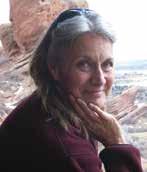
by Charlotte Graham
He continued, “We love our house, we love our location, we love the people there, it was just the best place we've ever lived. It was hard, really tough … to even think about leaving.”
Then, Memphis got bit by a rattlesnake. Bill shared how shaken he and Deb were upon hearing the news. “They rushed him to the hospital, then airlifted him to another hospital; he ended up at Hershey Medical Center there in Pennsylvania.”
Memphis received 28 vials of anti-venom. They had a world-renowned snakebite expert tutoring them on how to treat him and they finally got it under control. He spent 11-days in the hospital.
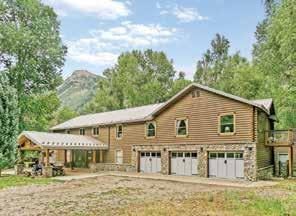
“That [incident] made us miss the children all the more,” Bill said softly. "We still hadn't put the house on the market or anything, but out of the blue, we got a call from our friend, Edie Engstrom. We‘d mentioned to her a year or two ago to let us know if she ever got anybody interested in a property on the River.”
In March, a realtor from Aspen called Engstrom and said she had clients looking for such a property in Redstone. She called the Russells, who were in Arizona on a “mini-vacation” at the time.
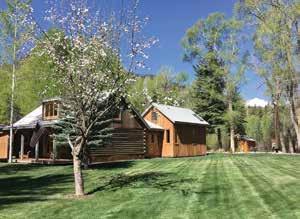
Deb said. “Edie told me, besides being on the river, the clients wanted a cottage-style home like ours, and did we want to show? We said ‘sure!’”
Bill added, “Edie asked what we wanted for it. We told her. The clients came to see it four or five days later.”
Of course, there was a time crunch. Isn’t there always?

Debbie laughed. “I said, ‘that’s a good sign, I know that’s a good sign.’ The next day we got a contract.”
Bill went on, “The new owners have a large family and children. Lots of people are going to be enjoying the house, which I really like since I built the house myself. It’s a win-win situation.”
However, that next 60-70 days turned into a buzz saw of activity for the Russells. Bill explained, “It was like another world that whole time. Just crazy. We've never been so emotionally and physically drained in our lives.”
Debbie said, “Edie’s a fantastic realtor. She came and helped us move heavy stuff. She put items on Craigslist for us and sold them. She got so much done to help us. [Her husband] Gary helped too. She’s something else, a great person.”
They went on to tell a wild story of challenges on their way out of town, how a slew of rental moving truck snafus reared up in the last days, including a sudden, unplanned 15-hour round trip to Wyoming and back to Redstone to pick up the last available truck. All going right to the last minute, ticking down on the transfer-of-ownership clock.
“We want to apologize to everyone,” they said together, “because we planned to spend the week after we got moved out to visit with all our friends, say goodbyes and hang out. Turned out, we didn't have time to socialize as we planned.”
“After we signed the papers,” Bill said, “we pulled in our drive and we just had to sit there and cry for quite a while. It had been this wonderful chapter of our lives, but we know it’s also the beginning of a new chapter. We're going to be able to spend time with our grandchildren, teach and do things with them. Because when they start getting 14, 15, 16, they don’t want as much to do with you as they do at their ages now. You don’t want to miss that.” he noted. “Now, the new owners get to enjoy the house we built, and … everybody’s happy.”
They both laughed when he added, “As it was, we turned left on the highway to leave just as the new owners were pulling into our driveway! We drove as much as we could and arrived in Pennsylvania just in time for our granddaughter’s birthday party.”
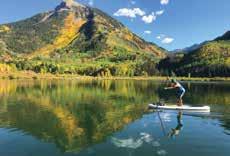


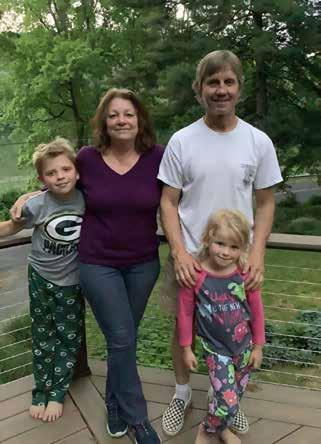
Bill looks forward to keeping up with his vintage motocross too. There is a “really good” racing organization there, he said.
“Now, my son and grandchildren get to watch me. They’ve never seen the race before; I travel all over the country, so I look forward to sharing all that with them. [Recently] I ran in a national series, came in second in my class. I did pretty good for an old guy.”
Bill ended the story of their tornado-style departure with, “We feel like we're on a new adventure now. We're going on a trip around Virginia in our Sprinter van and look for our new home somewhere in Northwest Virginia; Shenandoah, Blue Ridge mountain area, or such. But we're really going to miss Redstone.
He continued, “It was like a fairytale place to live. We loved Marble, the whole Crystal Valley. It is absolutely the best place to be able to live with the nicest people; it's just an incredible place. Colorado and the Crystal Valley is our new vacation destination. We'll be back and look forward to seeing everyone again.”
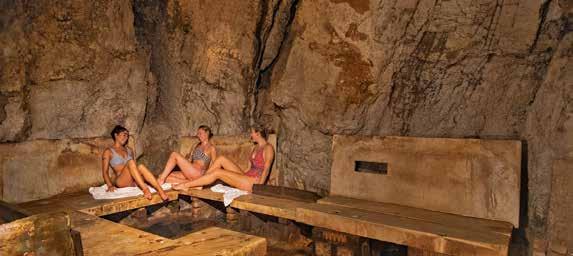












the arts and local artists brought to you by the Marble Art Guild and Marble Crystal River Chamber.
For more information or to become a member, visit www.mcrchamber.org. www.marbleartguild.com
by Gentrye Houghton
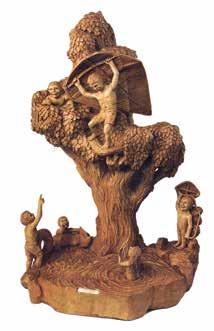
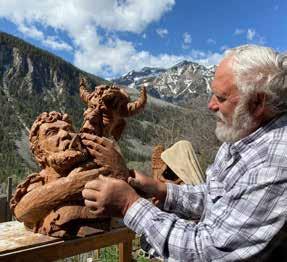
Many of us are familiar with Rex Branson’s work as a stone and carver; you can find his large Yule marble pieces often in the theme of good vs. evil dotted with puzzle pieces at The Marble Gallery and may watch his progress during the MARBLE/marble Symposium, typically in July. However, did you know that Branson’s an internationally recognized woodcarver? Neither did I.
Rex, and his wife Vickie, invited me to their Marble home last month. “Rex! I should have known your house would be the one with the huge blocks of marble at the entrance,” I shouted from my car upon finding their driveway. Their property is covered with art, in various mediums from wood to metal to stone.
Branson originated from Oklahoma and dabbled in woodcarving in high school. However, it wasn’t until he took a shoe carving workshop in Winfield, Kan., that things kind of took off. While residing around Branson, Mo., the couple began carving Santas.
“Pete Engler would buy all the hand-carved Santa Clauses we could crank out, and at the time, we had teenage daughters at home who would paint them. As an artist, you've got to have the little stuff, it’s what sells,” said Branson.
During Marble’s first annual Gem & Mineral Show this month, Branson’s bringing out wood carvings from his personal collection.
“I really want to show people what they haven’t seen before. These are my private pieces that I’ve won with, several times, at the International Woodcarver’s Congress.”
Flipping through his portfolio, I was struck by the incredible talent we have right here in the Crystal River Valley. Stop by the Branson Art Work booth this month at the Gem & Mineral Show, June 11-13. I had the pleasure of getting a sneak peek, and take it from me, you do not want to miss his stellar carvings!

Marble Yard Sale
June 12 & 13
While you're in town for the Gem & Mineral Show, wander around for a town wide yard sale. Residents will have antiques, treasures, and other goodies on their lawns.
You never know quite what you'll find!