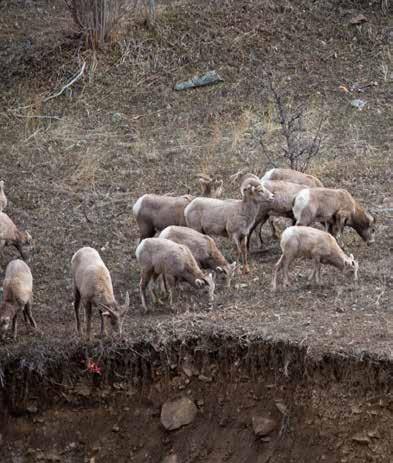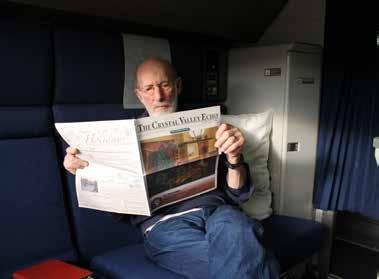
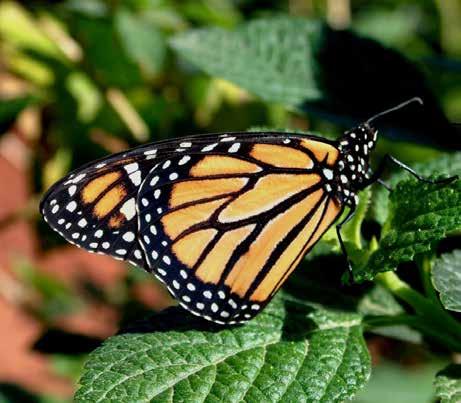

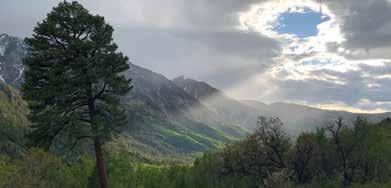
Photo by Ryan Kenney.
Photo by Ryan Kenney.
Stock photo provided by Stephanie Deaton.

To me, it seems like there has been quite a shift with some of the “old-timers” in the Crystal Valley community over the last few years; some have simply relocated — heading to lower elevations while also having the opportunity to be closer to family, and especially grandkids — but sadly, many have moved on from this world.
Bob and Miriam Leone have been deeply embedded within this valley for much longer than myself, and I always enjoyed our encounters. As a fellow editor, Miriam shared with me stories of her time in the industry after I'd acquired this paper. We often ran into Bob and “Sasha,” their dog, close to the East Creek trailhead while we were walking our new puppy. Sasha was a bit aggressive, and we all just thought it was a hoot how much our pup loved it when she’d bite him, or at least try to. In the end, Sahsa really liked my Trace, and it was a good excuse for me to gab with Bob.
I was terribly saddened to learn of Miriam’s passing early last year, a sadness that intensified when I learned of Bob's death towards the end of February. The Leone’s loved this valley and left lasting impressions on so many of us here, and I am so very grateful for all the time that I was given with them.
- Gentrye Houghton
I first heard about an exciting new restaurant happening in Marble when I was still a Redstone resident looking for a place to settle down in 1990. The Crystal River Way Station pizza night every Friday drew literally the whole town for Miriam's unique home style pizza. While she threw the pizzas in the oven as fast as she could, I was the waiter running to deliver to 15 tables at once. The food was wonderful, but more importantly, the event drew the community together on a weekly basis.
Later as a landscaper, I became aware of Bob's inspired stone work, Bedrock Stone Masonry, which appeared throughout the valley. The care and precision with which he fitted the natural stone together lives on in his many projects. The size of some of the stones used is testament to Bob's strength, as all his work was with hand labor only.
- Alex Menard
& Marble Times
Mission Statement: To provide a voice for Crystal Valleyites; to bring attention to the individuals and local businesses that are the fabric of the Crystal Valley region; to contribute to the vitality of our small town life.
Editor • Gentrye Houghton CONTRIBUTORS
Stephanie Deaton • Alex Menard
ADVERTISING SALES
Gentrye Houghton • 970-963-1495 GentryeH@hotmail.com DISTRIBUTION
The Crystal Valley Echo is published monthly, and is distributed throughout the Crystal Valley.
NEWSPAPER BOX LOCATIONS:
Carbondale City Market • Village Smithy Carbondale Post Office • Redstone Inn
Propaganda Pie • Marble Hub
FOR SUBSCRIPTIONS
Please send $40 for print or $25 for digital editions along with address information to:
The Crystal Valley Echo 364 Redstone Blvd. Redstone, CO 81623
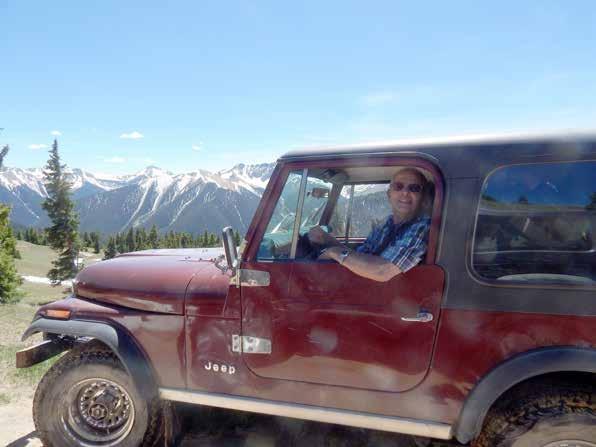
The Darrell who ran his maroon 1980 CJ7 Jeep up and down the Redstone Boulevard for 23-years checked out of this world on Friday evening, March 5, 2021, at Montrose Memorial Hospital. It was almost after he was diagnosed with ALS, and life has not been the same.
He had many happy times in Redstone. He took care of several second homes for people and could fix anything for anyone, and was called upon many times to do so. His favorite thing was eating Chicken Wings and Beans at the Crystal Club on Friday nights!
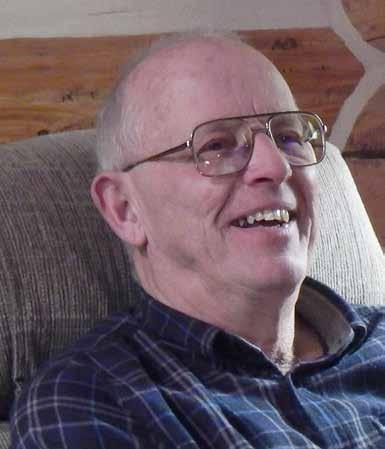
We have lived in Montrose for 5 1/2 years but want to thank all of you in Redstone for our many happy times there.
- Mary

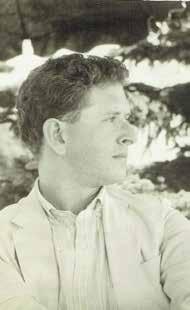
At age 87, after stoically fighting cancer for several months, Dorik Mechau died at home in Palisade, Colo.
Dorik (named after the Doric column) was the elder son of artist Frank and of Paula Mechau, who made Redstone their home in 1937 when the town and nearby valley contained scarcely more than two or three families. With his two sisters and brother Dorik attended grade school in Redstone strictly taught by the wife of one of the town’s caretakers.
Like all the family, he was bereaved by Frank’s sudden death. He gradually undertook to perform tasks suitable to the man of the house. As well as playing an important part in the family folk singing group led by Paula, some summers while in high school he wrangled horses; other times he worked on construction jobs

and learned carpentry, and with his excellent sense of design produced many fine results in the course of his life.
Dorik graduated from high school in Carbondale and in 1955 received a liberal arts degree from St. John’s College in Maryland. A year later in Maine, he married Margaret Beston. (They were divorced years later after their children became adults.)
Beginning in 1958, Dorik was employed for 10 years by the Smithsonian Astrophysical Observatory in Cambridge, Mass. He became chief of the satellite tracking station in Hawaii and in Greece assisted in establishing a geodetic observatory.
In 1968 he moved to Alaska and worked for universities, government, and native organizations on various projects– two of the most significant being the evaluation of the Alaska Native Claims Settlement Act and directing the Alaska Humanities Forum.
A blessed event occurred in 1991, while in beautiful Sitka, Alaska, Dorik met Carolyn Servid. They fell in love and in due course got married. Carolyn was the founder and director of the Island Institute, a small non-profit organization that hosted literary and community sustainability programs focused on the nexus of story, place, and community. Dorik became co-director and he and Carolyn successfully ran
the Institute’s widely recognized programs until 2014. In recognition of their significant contributions to Alaska, they were awarded honorary doctorate degrees by the University of Alaska.
Although happy in their snug home and deeply engaged in the community of Sitka, in 2017 Carolyn and Dorik moved to Palisade to be near his family where most of them live as well as to be near Redstone and the valley whose beauty and importance for him never waned.
In addition to his wife Carolyn, Dorik is survived by his sisters Vanni and Duna (Jack), and his brother Mike (Blakely); his children: Clarissa (Johnny), Mark (Fionnuala), and Mally; his grandchildren: Melina, Leandro, Louis (Katie), Homer (Liz), Jemima (AJ), Roman and Felix; and by his great-grandchildren: Roman Jr., Jonathan, and David.
Have you been able to get a vaccine, or are you making a vaccine plan? If a vaccine clinic came to the Crystal Valley in late spring, would you get your vaccine there? We are working with Community Health and Pitkin County Public Health to assess the need. We want to make sure everyone who wants a vaccine can get one.
If you or someone you know is having a hard time, what would help? Let us know! seniors@pitkincounty.com • (970) 920-5432
We are beginning internal discussions and reaching out to the Redstone Inn about plans for exercise and lunches in Redstone. We will let you know as plans develop!
Send us your email address: (970) 920-5432 • seniors@pitkincounty.com
May 29 & Sun. May 30
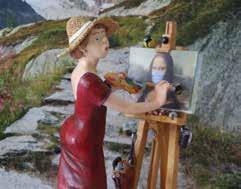
Join us for a fun art-filled Memorial Day Weekend in Redstone. This is your chance to see, visit, support and purchase original art from our local plein air artists.
For more information to go: Redstoneartfoundation.org/pleinair-2021


by Gentrye Houghton
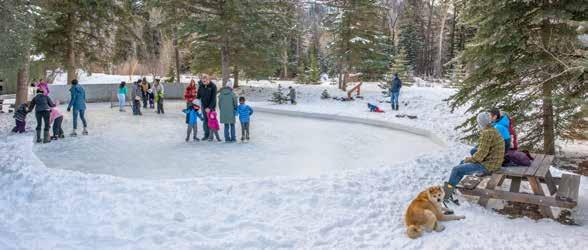
“Have you seen the new sign? Michael made it!” said Rob Hunker, early in March, as he filled me in on the new Redstone skating rink dedication that had appeared above RCA’s donation box on the warming shed.
According to Michael Askew, Lisa Wagner contacted him nearly a year ago about creating a sign to commemorate the rink’s founders as well as the massive effort by Ron Phaneuf to construct, maintain, and tear down the rink every season. It also gave him an excuse to use his new CNC router machine, and a “Ron’s Rink” sign was installed on March 1, 2021.
“The idea for the rink was originated by Stephanie Askew and Janette Bier in November 2013,” said Phaneuf, “They obtained skates, and obtained permission from Open Space and Trails to use the site for that purpose.”
Phaneuf continued, “Ivo Bensch was enlisted to design the rink structure and purchase needed supplies and a group of us local volunteers was organized to build the support structure. Gary Nelson, who was remodeling the Franke house at the time, helped us to level the site. That winter I helped Bensch to set up and maintain the rink and gradually assumed more responsibility for it in subsequent years since I was retired and had more free time.”
The rink itself is typically open for three full months, December - February, but sometimes longer or shorter as the weather allows. Skating usually subsides by early March due to warm daytime temperatures; this is caused by an increase in the strength of the sun that softens and melts the ice creating poor skating conditions and making maintenance nearly impossible.
This year, however, Ron shared that he “decided to leave the shed open during that time because, being lighter, small kids don’t seem to mind the poor ice surface and have fun there anyway, sometimes just sliding down the snowbanks.”
While the rink is now closed, stop by the warming hut to see the rink’s recently installed dedication; and from all of us — Thank you, Ron and all of our community volunteers, for all that you do!









by Bill Jochems
Thwap… thwap… thwap followed by the echoes of helicopters woke all of Redstone at dawn on April 15 — it was 40-years ago but seems like yesterday. Then, “and this morning, in Redstone, Colorado…” Tom Brokaw broke through from the national news as an intense and tragic story unfolded locally.
There had been a massive explosion deep in Mid-Continent’s Dutch Creek Number One mine in Coal Basin six-miles west of Redstone. Twenty-one miners were still down there.
The gas blew, early during the swing shift, that fateful morning in 1981, and frantic rescue efforts continued for two days. Some miners were able to call out and rescue team members Tim Cole and Lee McBride went in within a couple of hours. They helped six injured miners out, but the devastation kept them 800-feet from the explosion, and 15 men were still missing.
Heavy gloom weighed our town down; we all knew these men.

families in houses and single men in motels and apartments.
They patronized and socialized in the Inn and Townhouse (now Propaganda Pie). The end of every day’s shift brought a line of pick-ups to the General Store, buying six-packs for the drive home. At Mid-Continent’s zenith, several hundred miners produced up to a million tons of metallurgical, or coking, coal a year. Two shifts of 30-ton trucks, one every four-minutes, hauled coal to the unit train at Carbondale.
Access to the explosion site was difficult. The portal was located above Redstone at 10,000-feet in Coal Basin. And then the tunnel extended access 6,000-feet into the mountain, following the coal seam down the 10-degree dip, and ending an extraordinary 3,000-feet under Huntsman’s Ridge. That was the site of the explosion.
Gas had to be cleared and human safety insured before rescuers could access the site on the second day. Sadly, they confirmed that all 15 men had been killed by the explosion.
How did this happen? The Coal Basin mines were known to be “gassy,” and another explosion in 1965 had killed nine men.
Methane oozes from every face of newly cut coal and when it reaches between 5-15%, a tiny spark will set it off. Great efforts were made to ventilate the mines to keep the methane levels below 1%. Powerful eight-foot fans, were at the portals, forcing gales into the mines. Heavy brattice curtains** directed fresh air to the gassiest locations.
When gas levels exceeded 1%, operations were shut down. But something went terribly wrong that day. A federal investigation followed, but questions remain. Why did gas build-up? What was the ignition source?
Mid-Continent mined coal for another 10 years, but as the American steel production declined, so
did the market for metallurgical coal. By the early 1990s, the mines shut down.
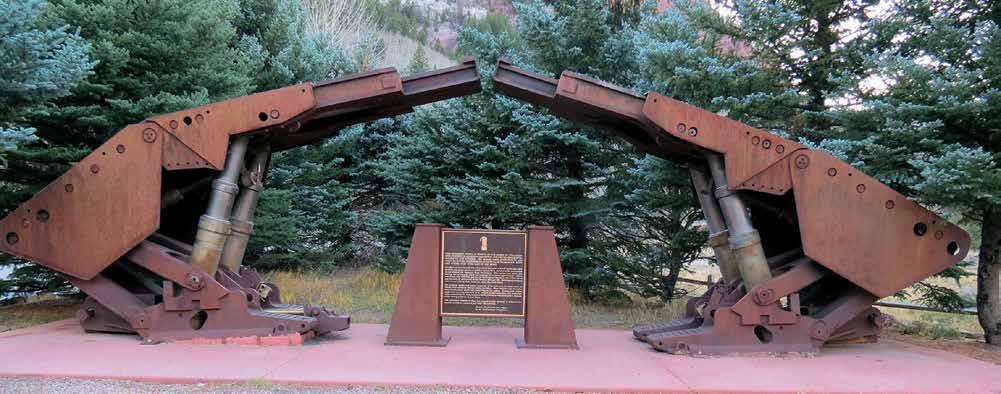
The names of the 15 men who died on April 15, 1981, are inscribed on the plaque at the base of Coal Creek Road, along with the names of the 40 other men who died in Coal Basin from 1901 to 1990. The plaque is inscribed: COAL MINING HAS ALWAYS BEEN DANGEROUS WORK.
**A brattice is a partition used in mining that is built between columns of a sub-surface mine to direct the air for ventilation. Brattices may be permeant, made of either concrete or wood, or temporary, typically made of cloth and called curtains.
At the base of Coal Road stands a plaque with fifty-five names, Of fifty-five men who died in Coal Basin. Today Redstone village is acclaimed for its past, With Osgood’s mansion and the Redstone Inn. These were profits, from mining the coal.
Fifty-five men were losses, from mining the coal.
Gone now is killer methane, awaiting a spark, Gone is sour smoke from coking the coal, Gone is black water flowing from the mines. And the remainder became a tourist town; But what remains of the men, who died mining coal, Are their names on a plaque, at the base of Coal Road.
Industry claims success at the base of Coal Road, With mighty roof jacks, which held up the mountain, While a great whirling shear cut the coal underneath. And the long run of coke ovens carefully restored, Show what was done, with coal from the mines. And then there’s the plaque with fifty-five names.
- Bill Jochems
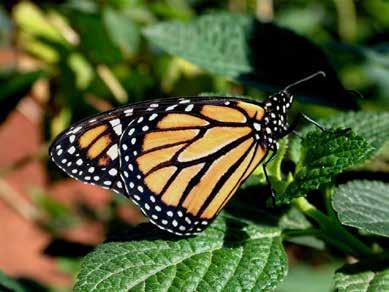
The Monarch butterfly (Danaus plexippus) is in danger of extinction, and the US Fish and Wildlife Service recently announced that the Monarch will not gain protection under the Endangered Species Act. The Western Monarch population has experienced a 99% decline since the 1980s according to the Xerces Society of Invertebrate Conservation. This is due to habitat loss, pesticide use, climate change, and increased wildfires.

by Stephanie Deaton
When encountering a Monarch butterfly, picture a flying work of art. Their three-inch wingspan resembles delicate stained glass with bright orange patterns, white spots, and black veins. Male monarchs have two black spots in the center of their hind wings. These are scent glands that attract female mates. The Monarch butterfly is one of the most iconic insects in America. They signify the arrival of spring and are representative of strength, rebirth, and transformation.
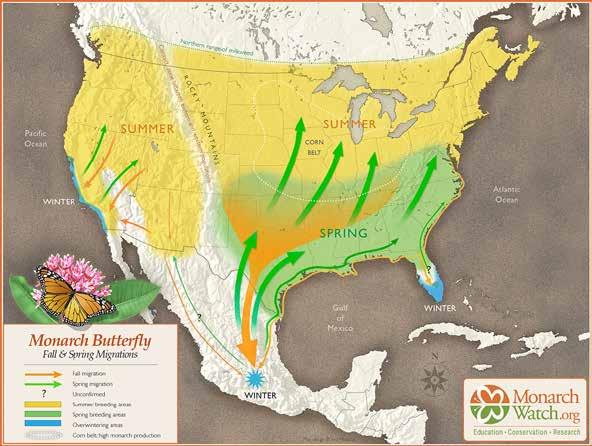
Monarchs in North America are divided into two main groups. Eastern Monarchs are found in the Great Plains and Canada. These butterflies overwinter in Central Mexico.
Western Monarchs are a much smaller population and are the butterflies we see in western Colorado. During summer they live in canyons or riparian areas in the West, Southwest, California, and Northwest up to British Columbia. A small number can be found in the Pacific Northwest. Instead of making the journey to Mexico, Western Monarchs migrate to coastal areas of central and southern California.
Most adult monarchs live only a few weeks. They search continuously for nectar, mating partners, and milkweed, on which to lay their eggs. The last generation that hatches in late summer is referred to as the Super Generation because it undertakes a remarkable fall migration.
This generation can live up to eight months to complete its journey south. The monarch migration is one of the greatest phenomena in the natural world. Monarchs know where to travel even though the individual butterflies are generations away from ever having made the trip before.
They follow an internal “compass" that points them in the right direction each spring and fall. A single monarch can fly hundreds or even thousands of miles to complete its voyage.
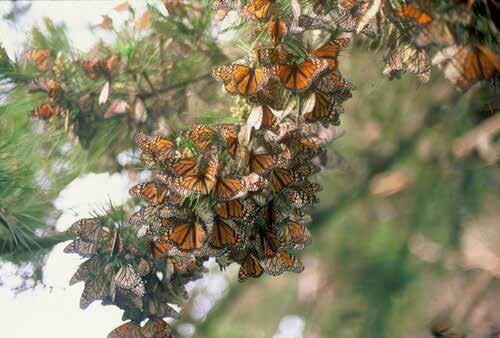
According to the Xerces Society, the annual Thanksgiving count of Western Monarchs shows that fewer than 2,000 overwintered on the Pacific Coast of California and Northern Baja this year. This is
a sharp decline from the 28,000 documented the previous year and millions in the 1980s, amounting to a 99.9% fall in the number of insects that once filled the trees.
Monarch butterflies rely on the milkweed plant for survival. It is crucial to their life cycle. In fact, milkweed and the Monarch have evolved symbiotically in nature.
Milkweed is toxic, but monarchs have developed immunity to the toxins. As they feed, the caterpillars store the poison in their bodies, which deters predators. The toxins remain in their system even after metamorphosis, protecting them as adults as well.
The plant typically grows on the edge of farmland or in ditches along roadsides. The pesticide used from home and agricultural spraying is taking a toll on milkweed, and urban expansion is uprooting the plant to make way for development.
A changing climate has also impacted monarch
populations. We no longer see predictable, stable weather conditions. Remember last year’s snow in June and September and warm dry winter days? Monarchs rely on predictability to complete their migration.
Climate change threatens not only their migration path but has also led to increased wildfires. According to the Monarch Joint Venture, “Wildfires can damage habitat both in overwintering sites and along the migratory pathways. Larger, more frequent wildfires can remove can both milkweed host plants, and nectar-producing plants during critical periods, while directly killing adult and immature monarchs.”
The Monarch is not included under US Endangered Species Act because of the backlog of other species in line for protection. US Fish and Wildlife Service Director Aurelia Skipwith said in a statement, “…before we can propose listing, we must focus resources on our higher-priority listing actions.” Currently, there are more than 160 species in line before the Monarch. If it still

warrants being listed by 2024, the USFWS will propose doing so.
In a press release, the Xerces Society said that while it is glad the agency recognized that protection is warranted, the Monarch "cannot wait." It is important to note that placing Monarchs on the Endangered Species list is controversial because it would create additional regulations for pesticide and land use in agricultural and residential areas.
A simple way to help the Monarch population is to plant native milkweed in your garden. Over 100 species of milkweed exist in North America, but only about a quarter of them are known to be host plants for Monarch butterflies. Many uninformed gardeners have planted non-native, tropical milkweed. They intend to help, but this has led to problems.
Tropical milkweeds do not die off seasonally, so they can become host to a parasite that infects monarch larvae. A complete list of milkweed varieties that are native to Colorado is listed at https:// www.growmilkweedplants.com/colorado.html. You can also receive free seeds through saveourmonarchs.org, a foundation dedicated to preserving the butterfly. Just send a self-addressed envelope to:
Save Our Monarchs P.O. Box 390135 Minneapolis, MN 55439
Look for the Monarch, a harbinger of spring as it migrates across our area from April through June.
Butterflies taste with their feet!
Butterflies have one of the most complex visual ranges of any species on the planet. They can see things that you and I cannot, like ultraviolet and polarized light. One species from Australia has at least 15 different photoreceptors in each of its eyes. These are comparable to the rods and cones our eyes use to sense light and color. They use their extreme color vision to search for food, find mates, recognize predators, and distinguish different types of nectars.
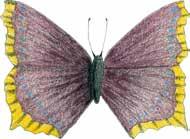
One of the first butterflies seen in the spring in Colorado is the Mourning Cloak Nymphalis antiopa (Linnaeus). It overwinters as an adult in tree bark, leaf debris and under the eaves of houses. When the sun comes out on a warm spring day, you may see them flying around. Be on the lookout, my first spotting last year was April 5.
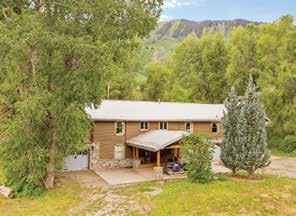

200 East Main, Marble
$995,000 | 5 Beds 4 Baths
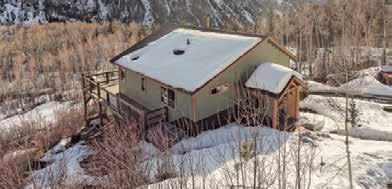
Just steps from the Crystal River, this immaculate home comes fully furnished including multiple ATVs. Four garages, multiple decks for entertaining, tree covered on 1.5 acres and potential rental income. The perfect getaway for an active family.
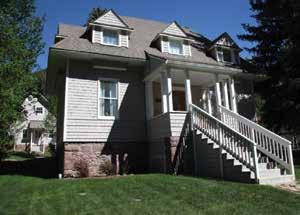
112 Redstone Blvd. Redstone
$884,000 | 3 Beds 4 Baths
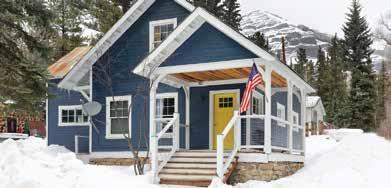
This Redstone Landmark since the turn of the century has been completely renovated and restored to the highest standard. A Carriage House with guest apartment ADU and a two-car garage, complete this beautiful example of early Redstone.


Jeff Bier 970.379.0523
Chris Lawrence 970.309.4605


masonmorse.com


by Alex Menard
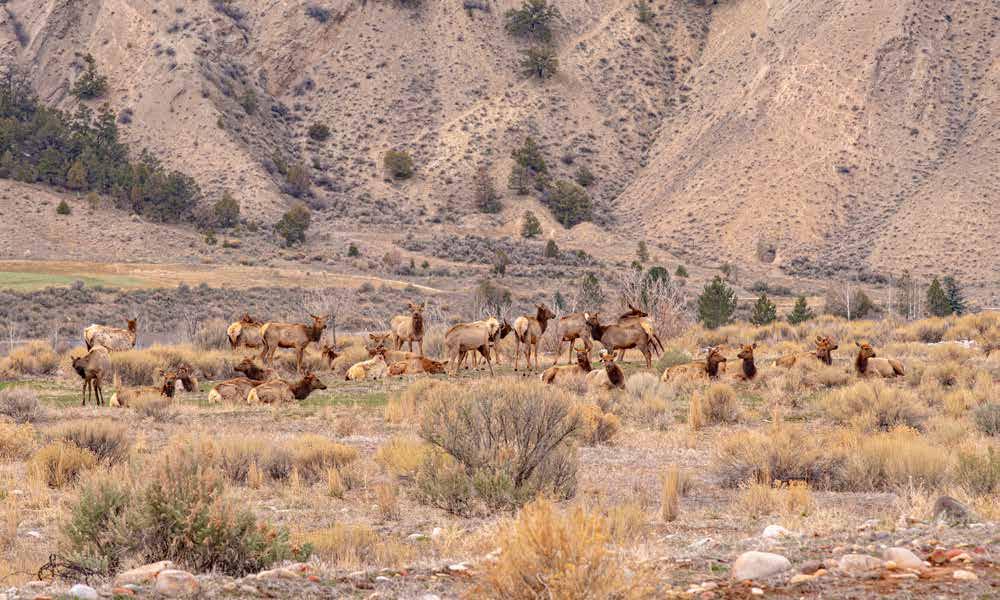
In the 1870s, when this was still Ute country, survey parties came to this area mainly to evaluate the potential mineral resources. The Hayden party was the first American group to explore and name our local mountains, and the large population of elk they found influenced them to call our mountains the Elk Mountains. Colorado is still home to more elk than any other state.
The American Elk, known to scientists as Cervus elaphus and to natives as the Wapiti, is the second-largest, to the moose, in size in the deer family. Bulls can weigh around 700 lbs and cows about 500 lbs.
After white men settled in this area, the elk population decreased to near extinction in the 1910s due to overhunting. The elk were imported from Yellowstone to repopulate the Colorado herd, and today, the elk population’s sustainability levels are managed by Colorado Parks and Wildlife (CPW). The main control of the population is the number and location of hunting licenses issued.
Our local elk belong to the Avalanche Creek Herd (ACH), which is more or less coterminous with the Elk Mountains. In the Crystal Valley, there are two main groups: One centered in Filoha Meadows, and the other on Elk Mountain above Marble. To avoid confusion, remember that Elk Mountain is a single mountain in the Elk Mountain Range.
Elk Mountain is the long ridge that ends above Marble at the rugged, unstable slopes of Mesa Verde sandstone and Mancos shale known as Gallo Hill. Elk Mountain rims the valley of Carbonate Creek, curving around behind Mt. Daly to end at Avalanche Pass. Sharp eyes in the valley can often spot large elk herds up on this ridge.
The Filoha group winters on the south-facing slopes and meadows near the Penny Hot Springs and ranges in summer above Redstone to the subalpine and alpine meadows above Gift and Hawk Creek drainages.
The Marble group has a few elk above Serpentine Drive, with many more year-round residents on Elk Mountain, where the south-facing slopes mean the snow is not so deep. These elk range up to the Crystal headwaters during the summer and fall.
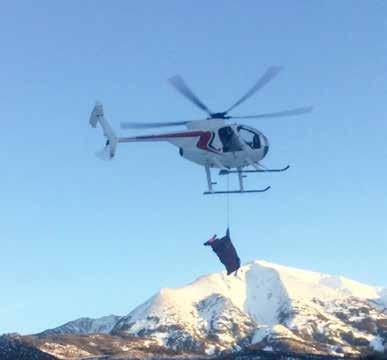
CPW is in the third year of a six-year study using the Avalanche Creek Herd to focus on the stability of the elk population and movement of groups. Techniques and equipment for this study are pretty high-tech; the use of helicopters and radio collars are used
for tracking. This impact is necessary for their protection.
The current population of the ACH is about 3,500 and seems to be decreasing. This could be a natural fluctuation after the extremely cold winter of 2007 - 2008, while habitat loss and global warming could be other factors. One significant stressor on the elk population is the impact of recreation activities.
To study the population, pregnant cow elk are flown out in special slings suspended from helicopters. As the bird lands, a gunner shoots a net to trap the elk. Then, the cow is fitted with blinders, tranquilized, and her legs are secured in a special bag.
To limit the stress on the cow, the flights are kept as short as possible. Upon landing with the veterinarians, cows are given a vaginal implanted transmitter, which sends a signal when a birth takes place. Researchers will then return to fix a radio collar on the calf.
The ratio of calves to cows is a good measure of the viability of the herd; a ratio of 60 calves to 100 cows is indicative of a healthy herd, while 40:100 may not be sustainable. Current ratios being measured are at the lower level showing that the population is at risk.
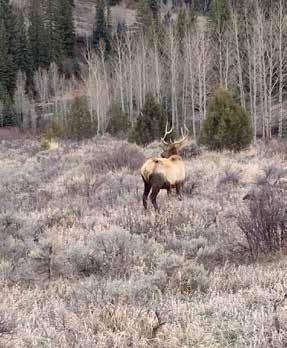
Bull elk begin bugling before rutting season to attract competitors to a duel and females to mate. A successful bull will defend his harem from other males with his impressive rack, often measuring more than four feet across. Long scars found on tree trunks are from the bulls rubbing the velvet from their antlers. The breeding season is from mid-September to mid-October.
Calving season peaks between May 15 - June 15; preferred calving areas can be found in a mature Aspen grove, near water and serviceberries, a favorite food. Pitkin County has established seasonal closures in many areas to protect elk during calving season in the lower Crystal Valley. Depending on snow conditions, the upper Crystal Valley, which is in Gunnison County, may be heavily impacted by motorized use on the Lead King Loop during this time.
Multiple studies have been done on the effects of elk behavior from recreation, and also found that disturbances to cow elk during calving season can be very serious; disturbed elk tend to decrease feeding time and instead increase their travel time.
The “Cumulative and Universal: ATV impacts on the Landscape and Wildlife” study, that was put together by Backcountry Hunters and Anglers in 2011, showed that when disturbed seven times during calving season, 30% of the calves died. When disturbed ten times, no elk calves survived. The disturbance is even associated with decreased lactation. This may make you reconsider whether your dogs should ever roam free.
“Behavioral Responses of North American Elk to Recreational Activity” is another study published in the Journal of Wildlife Management in 2009 that compared different types of recreation in Oregon. They concluded:
“The highest travel response by elk was during ATV exposure and was followed by increased resting time. This type of recreational activity may have forced elk to forgo foraging in favor of hiding until the disturbance ended. In contrast to this, any disturbance during the mountain biking and hiking treatments resulted in feeding activity increasing. It is possible that being quieter

The Gunnison County Commissioners hold alternating work sessions and regular meetings on Tuesdays in our BOCC meeting room at the Gunnison County Courthouse Building. Meetings are streamed live by Zoom. Agendas and links to work sessions and meetings are available on the County website at gunnisoncounty.org. In this column, your District 1 Commissioner, Liz Smith, offers her take on current matters. You can reach her at eksmith@gunnisoncounty.org
I want to begin this monthly update by acknowledging the hard work that’s gone into the COVID-19 response and vaccination efforts in Gunnison County. As we all know circumstances can change unexpectedly, but at the present moment, I find myself cautiously optimistic: Western Colorado University is back in session from Spring Break, we have largely managed the spread of the virus throughout a successful winter tourism season, and rates of infection continue to fall. I can’t say we “celebrated” it, but this month also marks the one-year anniversary of Gunnison County’s COVID-19 response efforts.
Early on, Gunnison County had one of the highest infection rates per capita in the nation. It was decisive, steady leadership in those early days that made our relative success in managing the pandemic possible. As such, I’m pleased to share that on Saturday, March 20, the Red Cross acknowledged Gunnison County Health and Human Services Director Joni Reynolds as a “Community Hero” for her extraordinary leadership in this dynamic and evolving public health emergency.
And while COVID-19 will be an ongoing challenge in 2021, we all acknowledge the new challenges that face us as we transition from winter tourism and brace for the influx of visitors over the summer months. Many of you are probably aware of the conversations that Roland Mason, Gunnison County Commissioner for District 3, has commenced with the Sheriff, Public Works, Pitkin County, and stakeholders in the Lead King Loop working group. On March 23, the Gunnison County Board of County Commissioners held a work session to discuss the progress and ideas that have emerged from those discussions.
While no official direction or decisions can be made by commissioners in a working session, I think Marble area residents may be interested in what has been discussed. From my conversations with constituents, enforcement for parking and ATV, OHV, and UTV use have been primary concerns. With only one Sheriff’s deputy, the Marble area has been understaffed due to difficulty the Sheriff’s office has encountered finding someone to fill a funded vacancy. According to Sheriff John Gallowich, a second deputy has been hired and is completing his training in the academy. Upon graduating in late April or early May, he will undergo roughly three months of training before being sworn in. Once he completes this onboarding process, Sheriff Gallowich expects to have two full-time deputies that will be able to provide enforcement to the Somerset and Marble areas 7 days per week.
Part of the new deputy’s continued training over the summer will entail traveling over Kebler Pass from Gunnison to Marble with another officer. (Coincidentally, this should be helpful when it comes to managing diverted traffic from Little Blue Highway 50 construction.) In this work session, we also discussed some changes to citations that would allow officers to issue tickets for parking in places like Beaver Lake without the driver being present.
I want to emphasize the productive partnerships that have emerged from these conversations, which afford opportunities to identify and pursue short- and long-term solutions that work best for the community. Having another deputy on patrol will be a big improvement, but in addition, the Town of Marble has indicated they would be willing to offer building access to the new deputy. This would allow some of the desk work associated with the position to be conducted on-site and encourage a more sustained presence and relationship with folks in the community. There has been some discussion of a partnership with the White River National Forest to assist with enforcement, though details of what this might look like are not currently clear. We’ll be circling back to these issues with the Town of Marble at a BOCC work session in April.
Much of what I’ve described thus far addresses short-term solutions in anticipation of summer
2021. As this was a working session with a very narrow agenda, we have not been able to delve into other urgent issues connected to the volume of visitors and motorized use, though I have flagged them for subsequent work sessions. We realize that long-term solutions are in order, and I want to emphasize that there is little meaningful action the BOCC can unilaterally take that would solve the issues related to ATV, OHV, and UTV use in the Marble area. If it were something we could do ourselves, we’d have done it already. A resolution was indeed required to allow access for these motorized vehicles on County Road 3, but that agency extends only to the 0.7 miles beginning at the boundary limits to the Town of Marble at Beaver Lake to the bottom of Daniel’s Hill. The county’s authority does not extend to the Lead King Loop portion of CR3, which falls under federal jurisdiction.
I hope this helps illuminate why, as a board, we’ve been committed to working with partners to achieve the best possible solutions for both the short- and long-term for residents of the Marble area. The county seat may be geographically distant, but we do understand and care about these issues on the other side of Kebler.
As always, I welcome comments and outreach from all Gunnison County residents. Take care and be well.
than the ATVs, mountain biking and hiking did not disturb elk once they moved away from the routes; elk were, therefore, able to make up any energy lost by resuming foraging activity.”
However, the “Avalanche Creek Elk Herd E-15 Data Analysis Unit Plan,” a local study performed by CPW in 2012, agreed with the 2009 study regarding ATV disturbances stating that "elk increased their travel time and decreased their foraging time in response to off-road recreation activity, with ATV riding producing the most change in behavior, followed by mountain biking, hiking, and horseback riding.”
So if elk could fly, where would they go to escape these disturbances?
Unfortunately, suitable habitat for elk is limited. Since we have chosen to live and recreate in their homes, perhaps we should consider our natural neighbors' needs. Observe seasonal closures, travel quietly, and keep dogs within your control. Also, encourage your elected officials to consider the protection of elk habitat when making management decisions in the national forest.
Author's note: Thanks to John Groves of CPW for help with this article and to the research group who is dedicated to learning how to protect our local elk herd.


Winter snow has started to melt back, revealing areas hidden from our view for the past several months. As green emerges from the moist, brown earth, many other things of interest begin to appear. A few flowers take advantage of the first warm sunny days. One among these is truly spectacular.
The Pasque flower (Pulsatilla patens ssp. hirsutissima) has many other common names including windflower, wild anemone or tulip, and easter flower. The many names are evidence of the interest that this flower draws with its pale lavender petals and a golden center. A member of the buttercup family, Pasque flower blooms soon after the snow melts. The subspecies name hirsutissima means very hairy, a reference to the fuzzy silky hairs that cover the entire plant.
by Alex Menard
One secret spot where you may take a peek of the Pasque flower is at the Redstone Inn! When the snow melts in Redstone, climb up the small ridge that separates the west parking lot of the Redstone Inn from the Crystal River to see a good display on the top and sides.

Another early bloomer is the Oregon grape (Mahonia repens). This low-growing evergreen sports leathery, often burgundy-tinged spiny, holly-like leaves and sprays of bright yellow, fragrant flowers which turn into blue berries, a favorite food for bears. This plant is also available at nurseries as a valuable landscape ground cover.
Other April flowers to look out for include: Wallflowers (Erisimum spp.) tall orange four-petaled flowers; and wild candytuft (Noccea montana), with delicate white flowers — both are members of the mustard family. Yellow violets (Viola nuttallii) have small yellow nodding flowers among long-stemmed leaves with pointed tips.
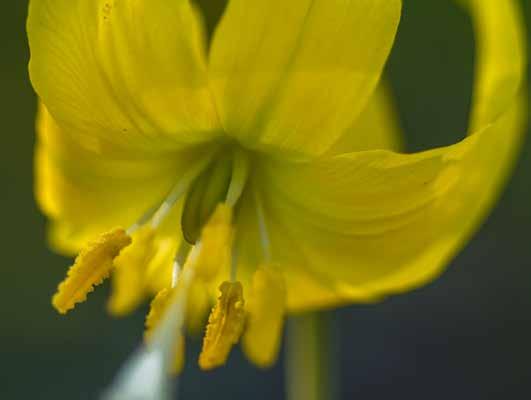
Later in April, a wonderful flower spectacle occurs on top of McClure Pass. Walk up the Ragged Mountain Road about a quarter-mile when snowmelt is well underway, to see every supersaturated bare spot filled with Snow Lilies (Erythronium grandiflorum) and Spring Beauties (Claytonia lanceolata). Snow lily, also known as Glacier Lily and Avalanche Lily, lives up to its species name with large recurved yellow flowers. Spring Beauties sport white peppermint striped petals.
just for show?
The Mourning Cloak butterfly (Nympalis antiopa) is usually the first butterfly to be seen in the spring, even when snow still covers the ground. This early appearance is because this butterfly, along with other members of the family Nymphalidae, overwinter only as adults.
In the summer they are the black and red spiny caterpillars that we see feasting on willows. They pupate and become butterflies in the fall, hibernate in cracks in tree trunks and then emerge early in the spring to feed on tree sap, since no flowers are available at that time. Another early spring butterfly is the spring azure, which is tiny and brilliant blue.
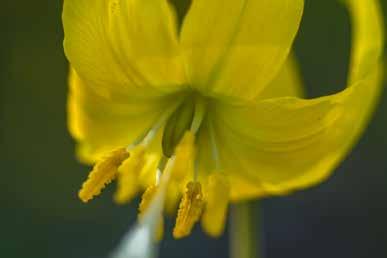
Although this flower display contains only two types, its abundance is overwhelming. Anyone who confines their flower watching to July alpine meadows is truly missing out.
At home in the garden, look out for early flowering bulbs including daffodils, hyacinth, and crocus. For those whose only interest in plants is eating, rhubarb is an heirloom plant that is harvested early and asparagus begins to appear in irrigation ditches around Carbondale. A trip over McClure Pass will reveal fruit trees in bloom, starting first with Apricots.
Trees can flower too and one member of the Willow family, the aspen, has prominent flowers this month. Willows are dioecious, which is a fancy way of saying that the reproductive organs of each sex are born on different individuals.
We take this for granted with humans. For willows, this means that the flowers, which are in the form of drooping spikes called catkins, are of two types: Male, which produces pollen, and female, which when fertilized by the pollen produces seed. Both the pollen and the seed are distributed by wind. The flower display for Aspens is stunning because it takes place before the trees leaf out.
Aspen reproduction is done mainly by sending out runners underground, with the new trees that emerge being genetically identical to their neighbors. This results in not just individual trees being male or female, but entire colonies of genetically identical trees connected as just one big organism and either male or female. Male tree pollen could thus have a long way to travel to find female flowers. Perhaps the whole aspen flowering process is
Male bears emerge hungry from hibernation in April, although females and cubs stay in their dens until May. This is a reminder to lock all doors, both house and car, at all times. Bears can break in and wreak havoc. Watch trash cans, barbecues, and bird feeders.
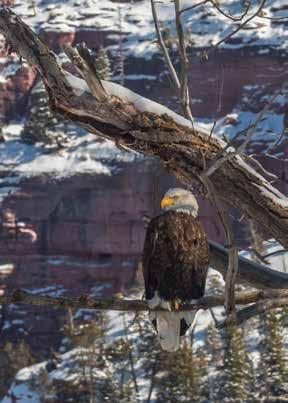
Migrating raptors, including eagles, hawks, and falcons put on an aerial show this month. Most are passing through to breeding grounds further north. The best time to watch is mid-morning because raptors depend on strong thermal updrafts to gain altitude. Later in the day, they will be lost high in the blue sky. A few bald eagles nest in Colorado, but most head further north. River runners can see a large eagle's nest in ponderosa pines on the river right when they float past Aspen Glen on the Roaring Fork.
Signs of Spring Cont . . .
Canadian geese (Branta canadensis) return in pairs before the snow melts to the same spot every year. The pair mates for life and nests in a feather-lined depression on the ground; goslings swim on the day they are born. The Canada goose is native to the western slope but became nearly extinct soon after European settlement. Reintroduction took place in the 1950s and today they are overpopulated and considered pests in some areas because of their noise, excrement, and aggressive behavior. Canadian geese are well accepted here in the Crystal Valley, they are year-round residents now, only migrating to lower elevations for open water.
Spring in the mountains is typically a very wet season; as we begin to see life reemerge as the snow melts, this is also an imperative season to care for our local trails. Hiking, running, and biking in mud degrade the trails so watch conditions and plan accordingly. We are also on the cusp of the end of seasonal closures, however, April is still a protected time for calving. Please observe the remaining time on these closures, while still getting out and enjoying our local flora and fauna!
Perham Creek
Avalanche Creek
East Creek
Braderich Creek
Bear Creek
Coal Miner's Daughter
Placita
Old McClure Pass
Huntsman Ridge
Castle Overlook
Sutey Ranch
Mushroom Rock
Red Hill
Hawk Creek Overlook
Milton Falls
Lost & Found
Crystal Bike Path
Rio Grande to Emma Coal Creek Road
Coal Basin Trail
Braderich Creek
Glenwood Canyon
Easter Sunday, April 4th at 10 a.m.
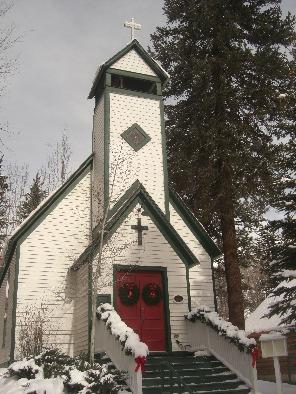

For anyone needing help stretching their food budget, Gunnison County Officials currently have boxes of food available distributed through the Marble Community Church.
There is no charge to the recipient and no reservation is needed; boxes are available for an individual or up to a family of four and contain enough meals to last approximately three days.

I met with Elizabeth Robinson over Google Hangouts on March 6th to ask her about the two years she spent here more than 16 years ago. She attended sixth and seventh grade at Marble Charter School. Ms. Robinson is now 28 and a software engineer living in Denver.
1. Did Middle School at Marble Charter School prepare you for high school?
Elizabeth said that she felt that MCS was beneficial in that it allowed her to focus on her strengths and weaknesses which helped her grow as a student and as a person.
2. Did you go to college? Where? Graduate?
Elizabeth went to University of Colorado in Boulder and graduated last year in May 2020. She waited five years after she graduated high school before she started college and added “I waited to go to college because upon graduating from high school, I didn't know what I wanted to go to college for. I lived in Aspen during those years and worked several jobs to try out different fields and travelled to 10+ countries.”
3. What did you study? Why?
Elizabeth majored in Computer Science and minored in Spanish. She chose those because she wanted to study something she could get a job with but also something in a field that was of interest to her and had opportunities.
She says that computer science is basically problem solving with puzzles and that no two are alike.
4. What are you doing now?
Elizabeth started her job last June right after graduating from CU Boulder. She is currently a software engineer at Twilio, a company that makes communications APIs used by developers which allows companies to easily make automated text messages or automated calls. They have hundreds of other products too.
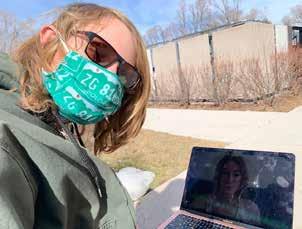
5. On the company culture Elizabeth said, “I like the company culture. They are involved with social justice and really care about their employees. I think I will be here awhile. I am working with the same company and team that I did as an intern. Although I am working from home doing lots of Zoom and Slack, I look forward to going to work in person.”
6. Do you have future plans? Goals/Dreams?
Elizabeth states that given that Twilio has many global offices, she hopes to travel and work abroad in the next five to ten years.
7. Do you think you will return to live in this area in the future?
Elizabeth said that she probably won’t move back here although she loves the area. Instead, she enjoys exploring new places that she hasn’t been to yet.
8. Do you have any advice for students at Marble Charter School?
Elizabeth advises MCS students to take advantage of the personalized education offered at MCS, as well as take full advantage of the outdoor programs and to enjoy your time there.
In my opinion, Elizabeth Robinson is another, already important person coming out of Marble Charter School. She is on her way to becoming successful and contributing to a growing and thriving field today, some of which Elizabeth accredits to MCS. It seems to me that everyone who attends Marble Charter School quickly rises, and becomes an important, successful, and happy member of society. Given that I only have 2-3 interviews left, these interviews have truly shown me the amazing school that MCS is, no matter what path in life you choose.
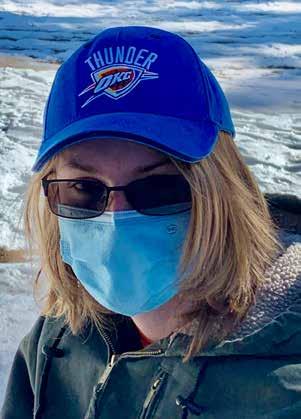
In Social Studies, 6-8th grade students have been using primary and secondary sources to investigate the disappearance of Amelia Earhart. They then wrote arguments explaining why she disappeared, citing evidence from multiple sources to defend their positions. After listening to each others’ claims, students wrote counterarguments to debunk other theories about her disappearance.
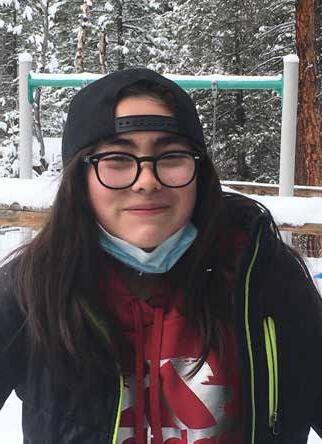
By Lilly Wofford, Sixth Grade
I believe Amelia Earhart’s plane crashed before making it to Howland Island because she ran out of fuel. According to the text at, “0742 planes position reported as near the island and gas running low.” (Kronwall, 2012) Therefore, she probably ran out of gas and didn’t make it to Howland Island. Amelia had a splendid mentality and was a very ambitious person. (Thaden, 1938) If you knew Amelia as Louise Thaden did, she seemed like a good person and probably would not have crashed her plane on purpose. For instance, Amelia’s flight was going just fine. The sky was perfect and there was no wind in the sky and the ocean was calm and the weather was nice. (Itasca, 1930) She couldn’t have crashed unless she ran out of gas.
One theory is that she was captured by the Japanese. However, there is not enough evidence that the Japanese had her. The only evidence was a letter in a bottle that the Japanese wrote. Another theory is that she crashed for publicity and that she planned this with her husband. Although many people believed she crashed for fame she probably would have been more famous for flying around the world. Therefore, she most likely ran out of gas and crashed before making it to Howland Island.
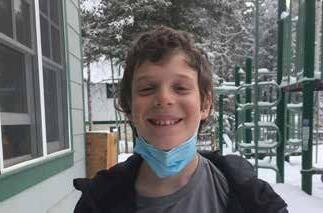
By Eli Sorensen, Sixth Grade
The Amelia Earhart mystery could officially be solved. I believe that Amelia Earhart was captured by the Japanese and executed. This quote came from a French prisoner in a Japanese prison. It claims that he has seen Amelia Earhart in a cell. The letter read, “...contained on one side written in french the following: ‘I have been a prisoner at Jaluit (Marshalls) by the Japanese; in the prison there, I have seen Amelia Earhart and in another cell, her mechanic, as well as several other European prisoners; held on charge of alleged spying on large fortifications erected in the atoll.’” This could also mean that the Japanese saw Amelia’s plane and thought that she was spying. This message contains more though, claiming proof that Earhart could be dead. A 37 year old man found a bottle that contained 3 messages and chestnut colored hair. One note said “...The hair is Miss Earhart’s and will prove the veracity of this story and that I have seen Amelia Earhart supposedly dead.” This proves that Amelia Earhart was captured by the Japanese. The note continues saying that police should arrive “incognito to free Miss Earhart and other prisoners.” (National Archives) A Channel Documentary “put forward new evidence that she didn’t die in a crash. But was captured by the Japanese - who’d only a few years later declared war on the U.S., where Miss Earhart was from.” Hence, the Japanese attacked, that was where one of their prisoners was from, which eventually led to WWII. (Newshub)
Numerous people suspect different theories about what happened to Amelia Earhart. Although, I have arguments against them. One argument is that Amelia and her husband set up a stunt crash for publicity. This can’t be true because Amelia was flying with a navigator, not her husband. Also, if she wanted to become popular, where’s the reason for that if she can’t get any fame with a fake identity? To put it another way, if she’s “dead,” what would she get if she has a fake identity? She would just be some random person with nothing to do with Amelia Earhart. As can be seen, she had no reason to fake her death.
An additional argument about the cause of Earhart is that she ran out of gas and landed on the beach. This can’t be true because if she landed on a beach, then why haven’t they found her plane yet? Shouldn’t they have found her? The people who looked for her during the three days they did would have found her. She was nearing Howland island when her gas was running low, so if she landed on an alternate island, it would have been close to her destination and they would have found her.
By Keegan Jaeger, Sixth Grade
I believe that Amelia and her husband set up the crash for publicity. Amelia states before she takes off, “There is about one more fight left in my system.” (Dawson and Bowles, 2005). I think she slipped and said something she wasn't supposed to and she was planning to “crash” for more fame. Another reason that makes me think this is, “The plane and occupants were never found.” (Dawson and Bowles, 2005) This shows that they probably hid the plane and got new identities. One other piece of evidence that makes me think this, is Amelia was reaching Howland Island and her gas was running low. (Kronwall, 2012) This is important because she must have faked it and landed on a different island and hid her plane. That is why I think it was just a publicity stunt for fame.
Many people think that their theories are more accurate than mine, but they are wrong. One prediction is that she crashed because she got lost and ran out of gas because of poor radio reception. On the other hand, she must have faked having poor radio reception so everyone would think she crashed in the ocean so she could get more fame. Another claim is that she was captured by Japanese. I think otherwise because Pearl Harbor was four years after her flight so how could the Japanese have taken her. Some people believe that she crashed in the ocean because her gas was running low. However, they never found the plane or its occupants and they looked for three days. Some may argue they crashed on a beach and got pregnant then ate her baby. Moreover, if she got pregnant and crashed because she went into labor wouldn’t there be medical records on her pregnancy. In the final analysis, I think my statement is the strongest.
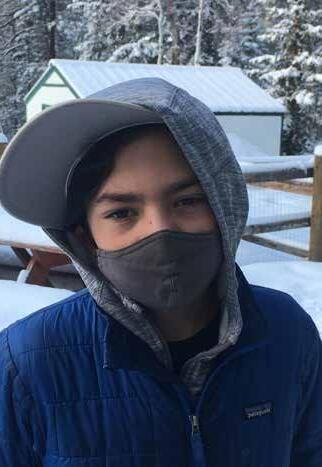
from Sue Turner, Counselor
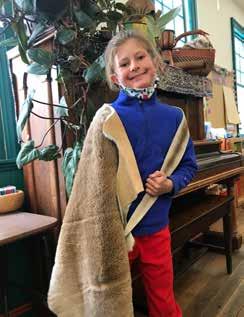
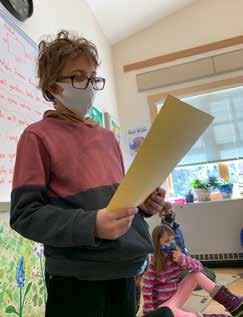
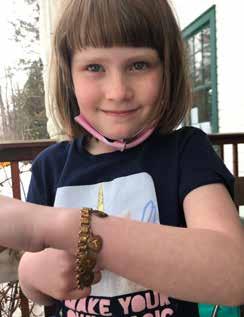
Since January, we have been planning lots of different Diversity Activities once a week in the K-2, 3-5, and 6-8 classes. On Thursday, March 11, we closed with an ALL SCHOOL MEETING in which every student and teacher shared a little bit about themselves, many sharing an important artifact from their life. Some students brought photos of their families or pets. Others brought a piece of jewelry, an ornament from their heritage, a snow globe from a vacation, a walking stick, and one shared classical music.
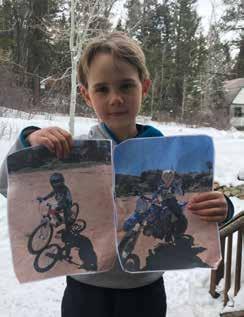
We are pleased that our students have learned a lot about each other and can appreciate our similarities and our differences, making life more interesting. We have discussed how important it is to make sure everyone feels included and to have empathy and compassion toward all. We will continue to work toward peace and respect among ourselves so that we can all feel valued and appreciated.
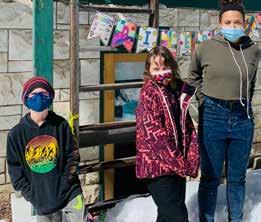
Top Middle: Sullivan, Ellamae, Myra in front of their Diversity Banner.
Middle: Lilly shares her story about joining the
Bottom Left: Maddie shares her kangaroo pelt from Australia.

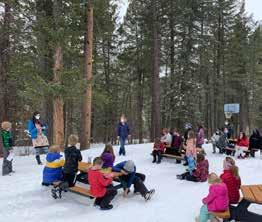

Middle Bottom: End of the day, closing to the all school diversity meeting outside at MCS.
Bottom Right: Mitzie shares her grandmother's "Mitzie" bracelet.

CONTACT: Redstone Cliffs Lodge, (970) 963- 2691 or info@redstonecliffs.com