

Photo by Ryan Kenney
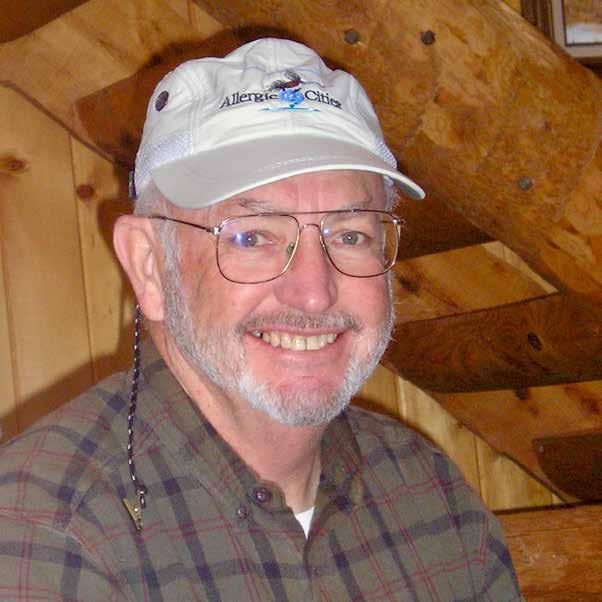

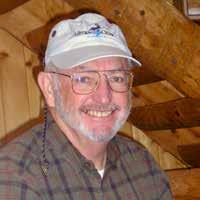
Ernest LeRoy Bradley, 77, passed away on February 15, 2021, in Marble Falls, Texas. He was born August 28, 1943, in Roswell, New Mexico, and grew up near De Beque, Colorado.
Ernest was a lifelong outdoorsman. He enjoyed hunting, fishing, hiking, camping, bird watching, backpacking, target shooting, horseback riding, and telling stories about all of the above. When he couldn’t be in the outdoors, he liked reading or watching shows about the outdoors.
Ernie also loved people. He could talk a leg off a horse, his mother might have said. He would often
& Marble Times
Mission Statement: To provide a voice for Crystal Valleyites; to bring attention to the individuals and local businesses that are the fabric of the Crystal Valley region; to contribute to the vitality of our small town life.
Editor • Gentrye Houghton CONTRIBUTORS
Stephanie Deaton • Alex Menard
Russ Cunningham
ADVERTISING SALES
Gentrye Houghton • 970-963-1495
GentryeH@hotmail.com
DISTRIBUTION
The Crystal Valley Echo is published monthly, and is distributed throughout the Crystal Valley.
NEWSPAPER BOX LOCATIONS:
Carbondale City Market • Village Smithy
Carbondale Post Office • Redstone Inn
Propaganda Pie • Marble Hub
FOR SUBSCRIPTIONS
Please send $40 for print or $25 for digital editions along with address information to:
The Crystal Valley Echo 364 Redstone Blvd. Redstone, CO 81623
strike up conversations with strangers and would offer advice on the best hiking route or the best fishing spot. He was kind and generous and would go out of his way to help someone in need.
LeRoy, as he was known to family and friends from his youth, grew up farming and ranching. He graduated with a petroleum engineering degree from the Colorado School of Mines and then served in the US Army as a paratrooper and engineer during the Vietnam conflict. After his military service, he worked his entire civilian career at Exxon until eligible for retirement at age 55.
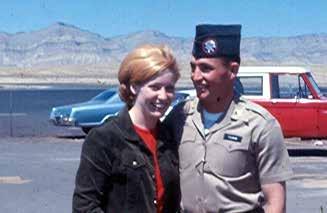
The luckiest day of Ernie’s long life was when he met Betty Joyce North in 1967 in Grand Junction. One of their early dates was to go fishing! Their courtship was short and they were soon married in Hawaii while Lt. Bradley was on shore leave from Vietnam. The couple lovingly raised three sons, traveled all over the world, and spent 53 rewarding years together.
Ernie was preceded in death by his father Cecil, mother Grace, and younger sister Carol. He is survived by his wife Betty; sons Todd (Brooke Powers), Kent (Rebecca), and Matthew (Rachel); grandchildren Kristina, Elliott, Lorien, and Alina; and numerous cousins.
He somehow survived country medicine, being shot in the foot as a child (no kidding), broken bones, a compound fracture of his finger while hunting in British Columbia, army food, Viet Cong snipers, repeated frostbite, and getting lost in the woods more times than it’s possible to count. But he finally met his match with the COVID-19 virus. He will be forever loved by all who knew him.
A celebration of life will be planned for summer 2021 in western Colorado. In lieu of flowers, the family suggests donations be made in Ernie Bradley’s name to the Rocky Mountain Bighorn Society (bighornsheep.org) or The Church at Redstone (churchatredstone.com).
It is a strange winter. Some days feel subarctic, while others almost make a person believe it is spring. I talked to Joel Gratz, the founding meteorologist of Open Snow and Open Summit, snow forecasting websites about what this winter means for us in the future.
by Stephanie Deaton
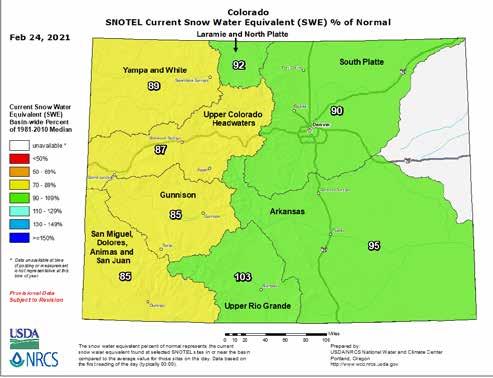
As Crystal Valley residents, we are a part of the upper Colorado Headwaters watershed. It is at 87% of the average snowpack this year (as of February 24, 2021). According to Gratz, “snowpack is the amount of water that is contained within the snow that’s currently on the ground.”
This number is better than it was earlier in the season, but it still means we are at a snow deficit. Not only does this affect the ski and snowboard industry, but it also impacts the water levels this summer.
Snow is our main source of water throughout the year. The United States Geological Survey (USGS) website explains that “mountain snowfields act as natural reservoirs for many western United States water-supply systems, storing precipitation from the cool season, when most precipitation falls and forms snowpacks, until the warm season when most or all snowpacks melt and release water into rivers.”
Added to the low snowpack this year, warmer temperatures also affect our watershed. Warm temperatures in spring make snow melt faster. This can cause rapid, high runoff and spring flooding. Warmer temperatures also mean that less snow remains in the mountains to supply water to the area later in the year. Springtime runoff can cause water shortages in the summer.
I asked Joel Gratz what this means for our future. He replied that “There is a lot of variability in the weather and snow from year to year, though in general, temperatures have risen over the past couple of decades and most projections show that temperatures will continue to rise for the coming decade.” This has an im-
pact on multiple areas of our lives. Ski seasons have become shorter and shorter, with many resorts opening later and closing earlier. The summer months are also hit hard in the tourism industry, as fishing and boating are affected as well. Low levels of water impact wildlife and their habitats, and we know all too well that drier weather means a higher fire danger.
On the bright side, March is historically Colorado’s highest precipitation month according to US Climate Data. We are not done with winter yet. Hopefully, we will get more snow, for now, and for those warm months that seem like a faraway memory.

Observing the earth and its processes is viewed through the window of scale. Understanding scale whether it applies to time, surrounding topography, or the volume of water and sediments flowing through the river beds is important.
We look at a time frame with respect to a life span when a hike to the top of Mt. Sopris is not insurmountable, but lament the times to say “no thanks, I don’t want to, or cannot make that climb again.” We all know the phrase “been there, done that,” or is it an acknowledgment that time has made some deeds much more difficult to accomplish?
by Russ Cunningham
Fortunately, we have the Wayback Machine to carry us back in time hundreds of millions of years to view a geologic time that contributed to creating the current physical environment. That is a window and appreciation of time scales: A lifespan or the earth’s timespan.
Driving and hiking in the Colorado mountains is not only a privilege but a view into their scale. Hiking the East Creek trail that begins in Redstone seems like climbing a mountain through a rich forest. Driving from the Denver metro area to the Crystal River valley suggests a trip through the Rocky Mountains from the eastern plains to the western slope. The drive just completed was through a small portion of the Rocky Mountains venturing through several well-defined “mountain ranges” including the Front Range, Mosquito-Ten Mile-Gore Ranges, around the Sawatch Range, and into the Elk Mountain Range. This is a view of mountains through a window of scale.
We watch the flows on our local rivers, the Colorado River through the narrows below the Shoshone power plant. Is the Roaring Fork really roaring? Has the Crystal River topped the midstream boulder, used to estimate runoff, along the drive

from Carbondale to Marble?
The United States Geological Survey (USGS) measures river flows throughout Colorado, one such gauge is just downstream from Penny Hot Springs on the Crystal River and those data are accessible at waterdata.usgs.gov/nwis. The Crystal River flow rate is significant because it tells us when to float the stream on an inflatable tube, when to fish dry flies on the surface or bounce nymphs on the bottom, and most importantly when to pack sandbags to keep our homes from flooding!
Avalanche Creek is a tributary of the Crystal River, the Crystal is a tributary of the Roaring Fork River which is a tributary of the Colorado River, which is one of the largest rivers to drain the western portion of the North American continent. This is all a view of rivers through the window of scale.
The Rocky Mountains are a portion of a global scale mountain range that extends from Alaska to the southern tip of South America (Cape Horn). The Rocky Mountains are in Canada and the United States, the continuation of this range into Mexico is named the Sierra Madre Mountains (Figure 1). The South American
equivalent mountain range is known as the Andes.
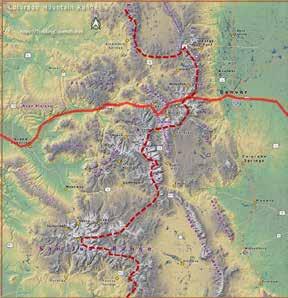
The Colorado Rockies (not those guys who play baseball) consist of several well-defined “mountain ranges” based on geological and geographic criteria (Figure 2). These mountain terranes will be discussed in future issues of this publication pending the publisher’s approval!
A significant feature of the Rocky Mountains is the Great Continental Divide that separates the rivers flowing to the west of their headwaters from the rivers flowing to the east. The Colorado portion of the Great Divide generally follows the highest peaks. Mountain passes that cross the Great Continental Divide include Wolf Creek, Monarch, Independence, Fremont, Rabbit Ears, and, of course, the Eisenhower Tunnel.
This divide is also the boundary between Gunnison and Chaffee Counties, Pitkin and Lake Counties, and Summit and Park Counties. Many of Colorado’s “14ers” are located along the Great Continental Divide including the Collegiate Peaks and the highest elevation in Colorado at Mt. Elbert (14,433-feet).
The Great Continental Divide separates North America’s principal drainage basins. A drainage basin is an area from which a major river collects water and sediments from tributaries that have smaller tributaries, and they have tributaries that are smaller yet, and so on. The largest American drainage basin is the Mississippi River basin on the east side of the divide, the Colorado River and Snake River basins are the prominent drainage basins on the west side of the continental divide (Figure 3).
The Platte River, Arkansas River, and the Colorado River all have their headwaters near the Great Continental Divide in Colorado. These “major” rivers have numerous tributaries, also with their headwaters in the Colorado Mountains.
The North Platte and South Platte Rivers merge

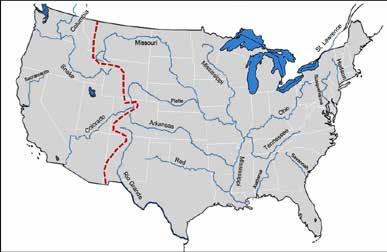
and are joined by the Poudre River on the eastern plains then flows into the Missouri River in Nebraska. The Arkansas River is joined by a number of tributaries in southeast Colorado and flows into the Mississippi River in Arkansas.
Finally, the Colorado River’s headwaters are in Grand County, the Eagle River joins the Colorado at Dotsero before entering Glenwood Canyon. The Roaring Fork River joins the Colorado at Glenwood Springs after having been joined by the Fryingpan River at Basalt, and the Crystal River at Carbondale (Figure 4). The Colorado River flows southwest through the Grand Canyon all the way to the Gulf of California.
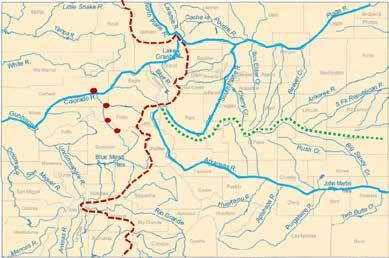
(Modified from Geology.com)
Figures 1 and 2 illustrate the significance of scale when enjoying mountains while figures 3 and 4 show the importance of scale in understanding fluvial (river) systems.
Recognizing the Crystal River valley is a little piece of paradise that is a portion of a much larger geomorphic and ecological system affords an appreciation of the natural environment.
Russ Cunningham is a geologist living part-time in the Crystal River Valley. He has been practicing geology over 40 years after receiving a Master of Science degree in 1978. Cunningham has worked internationally as well as in numerous regions of the United States while in the oil and gas industry helping America become energy independent.
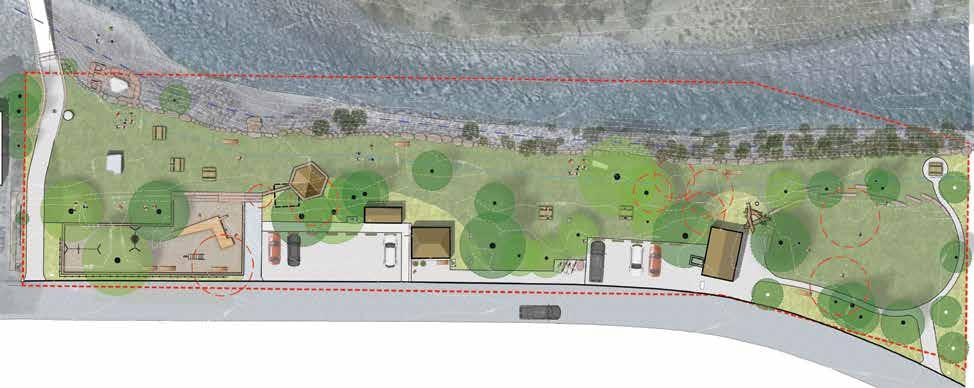
The Crystal River Caucus will hold its next regular meeting on Thursday, March 11, at 7 PM. The agenda will include: 1) The Redstone Park Draft Management Plan, Jessie Young, Pitkin County Open Space and Trails (OST); 2) Redstone to McClure Pass Recreational Trail revision, Gary Tennenbaum, Director, OST; 3) Forest Service plans for Prescribed Burns in the Crystal Valley during 2021, Sopris Ranger District Staff; 4) Yule Quarry Response Update; and 5) Update on Wild and Scenic Designation for the Crystal River. The meeting will be conducted via Zoom, and a Zoom link will be sent to all on the Crystal River Caucus email list. If you are not on the list and would like to be included, please send a request to crcaucus@gmail.com.


Once upon a time, not long ago, in a beautiful mountain valley, not far away, there was the magical, mystical town of Marble. Like the mythical Shangri La, Marble was surrounded and protected on three sides by majestic mountains. To the north, the rugged Elk Mountains contained the Maroon Snowmass Wilderness, established by the first wilderness act of congress in 1964. To the south were the mysterious, mostly undiscovered Ragged Mountains, also largely wilderness. Mountains such as Chair, Capitol, Snowmass, and the Maroon Bells became famous for their beauty.
Through this valley ran a river so clear and beautiful that it was called the Crystal and is still being considered for inclusion as a national wild and scenic river.
The town of Marble was established soon after the Utes, summer visiting game hunters, were driven out by miners. When the purest and most valuable marble in the world was discovered up Yule Creek, the town developed an industry. The pure, white marble was used for monuments to honor the highest ideals of man including the Lincoln Memorial and the Tomb of the Unknown Soldier. Boom and bust cycles followed, with a maximum population of a thousand and a half to the present population that is about one-tenth of that.
One relic from the mining era survived intact, which was called the Crystal Mill. To call it picturesque was an absolute understatement, it served as an icon. To visitors, it symbolized the delightful environment and suggested stories that combined human enterprise with a place of great natural beauty.
When the town was founded in 1899, the horse and wagon were the main modes of transport. The streets were laid out wide and straight, but never really developed beyond narrow paths. To this day, Marble has just one paved route. The town roads had no shoulders and in fact, flowers bloomed right up to their edges. Nature walks were conducted each May right in town by local botanist Dr. Dave. A plant list was created which contained 150 native plants.
Many town residents still remember summer Sunday mornings when a very large bull moose, with a six-foot rack, sauntered through town. On his leisurely six-block trip from the Elks, across the Crystal to the Raggeds, he paused frequently to say hello and pose for pictures. He felt secure in his habitat and the people were happy to share the town with him. No one thought

of fishing as a very exciting spectator sport, until they saw an eagle rising off the shimmering crystal waters with a large trout in his talons.
On a clear summer night, all was deliciously dark except for the millions of stars above and the wide, white band called the Milky Way. It was perfectly quiet.
The townsfolk came under the spell of that most primitive, basic form of love for their mountain kingdom, which is called pure delight. This they freely shared in the form of smiling and waving to each other and sharing stories of their experiences on the wild side. It truly was Shangri La.
Then they came.
At first, the numbers were few and the impact was low. The first ATVs were small one-passenger vehicles, not too fast and not too loud. But year by year the numbers of ATVs, as well as their size, power, noise level, and speed, grew.
Last season, several hundred vehicles were observed in a single day. Sometimes they traveled in groups of 20 or more, which made it hard for hikers to hold their breath long enough for the caravan to pass with dust and exhaust fumes.

The attitudes of the drivers changed too, from being an easy way to access backcountry to having speed, noise, and dust to be a desirable part of the experience. (If you doubt this, Google: “Polaris RZR commercial” and see what they advertise as selling points.) The names of ATV models including Prowler Dominator, Renegade, and others reveal the attitudes that are sold to prospective drivers. Political flags are flown on many of these mad max machines.
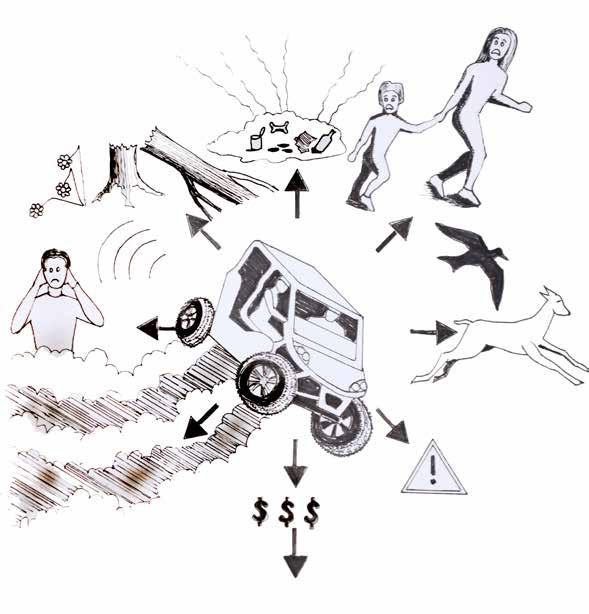
The new machines are capable of going 80 mph and racing as fast as possible being the goal of many. Noise levels have been measured at 90 decibels; for reference 70 dB is considered harmful. To add to this, many ATVs have loud stereo speakers.
Damage to vegetation results from vehicles that do not stay on established paths. Everywhere that native vegetation is killed is replaced by weeds, which then spread and take over the natural plant communities. To maintain a natural environment after disturbance requires weed control and revegetation, expenses imposed on the town and the forest.
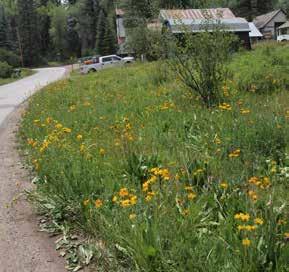
ATVs can go just about anywhere and there is currently no way to control their use once on the trail. Most ATV drivers ride the sides, that is, they weave back and forth, banking off the sides which aids in increasing the widths of trails. The flowers growing on the roadsides in Marble are now crushed by ATVs and their trailers.
Constant loud noise scares away wildlife The moose previously mentioned has never returned. And if the noise wasn't enough, the latest accessory for ATV drivers is a panel of super bright lights. They are so bright and offensive that you have to shield your eyes as they approach. For the ATV driver, they serve as a warning to all that they are coming through and do not plan on slowing down pedestrians. They also allow drivers to stay out hours after sunset, while Mr. Moose waits on the dry hillside for a safe moment to descend to the creek for a drink.
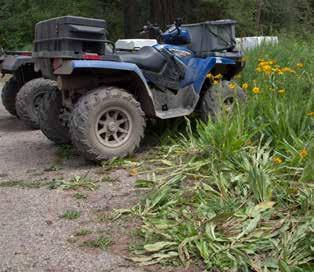
There are many safety concerns resulting from the ATV invasion. Drivers assert that they have a right to do what they want and seem not to think about whether it may be the right thing. They park anywhere, blocking access to driveways and, at times, even the county road. Most locals have had a close encounter with a speeding ATV.
On a busy day, dust clouds, created from ATV use, arise into the air coating the vegetation on both sides of the trail with a thick layer. ATV drivers have no ethics about restricting use during muddy conditions when erosion is greatly accelerated. Their path is also lined with trash and human waste.
For half of the year, the mountains were safe, protected by a thick blanket of snow. But come
spring through fall when the cycle of life returned, with the green belt gradually climbing higher up the mountainside, the ATVs returned, more every year.
Of course, there are three trailheads from Marble, which the people could use to gain the wilderness; another eleven trailheads are accessed only from the Lead King Loop, where pedestrians have to contend with noise, dust, and being run off the road by speeding ATVs.
These are the only routes to the high country, on this side of the Elk Mountains, from the rugged granite ridges of Capitol and Snowmass Peaks to the red ledges of the Maroon Bells. Many locals, as well as some visitors, are discouraged from using these trails for nearly half of the year by the harshness of the ATV encounters.
On the other side of the range, the trailheads are packed with too many pedestrians at places like the Maroon Bells. So it seems odd that these trailheads are being abandoned to become a race track for assault vehicles at war with nature.
At the little church, which was known as "the Little Chapel in God's Great Cathedral," the pastor preached from the pulpit. He quoted from the most famous Gospel of Matthew, from the Sermon on the Mount: ”Do not give to dogs what is sacred. Do not cast your pearls before swine. For they may trample them under their feet."
His interpretation was not meant to call ATV drivers pigs or dogs, rather to merely point out that there are no more precious pearls than Marble's natural environment and that they should be protected from harm by those who don't understand or appreciate them.
National forest surrounds Marble and becomes a wilderness area within one mile of town limits. But, because of the legacy of mining and resulting land ownership, the Lead King Loop became an inholding for nature outlaws.
The tiny town of Marble at first considered the ATV invasion a force of nature, like a hurricane that was uncontrollable. They joined a task force with the County and United States Forest Service (USFS) to study the problem. This action, along with turning over the parking lot of the historic Mill Site park for ATV parking, was later understood to be codependent behavior, enabling the County and USFS to proceed without doing anything to solve the problem.**
The members of the Marble Chamber, the lodging community, one restaurant, service providers, and shopkeepers, knew that a forest service study showed that only 2% of national forest users nationally were ATVers. It seems the impact of the 2% is keeping the other 98% away. The 98% were more affluent and more pleasant. So they decided to try and attract a different clientele.
Landowners along County Road 3 investigated the possibility of a lawsuit to force the County to act. Realtor Jeff Bier stated that properties along CR3 have lost up to 10% in value due to noise and dust.
This possible action has a clear path. First, Gunnison County has a duty of care, that is, a legal obligation to protect us from the externalities of ATVs, especially considering that the County has allowed them access.
Second, there has been no enforcement of speeding, parking, or other regulations at all. This shows a breach of duty.
Just as this issue headed to print, the Lead King Loop (LKL) task force convened for a meeting. Roland Mason, the District 3 Gunnison County Commissioner, received a large number of opinions against ATV use on the LKL. He has scheduled a meeting with the Aspen Sopris Ranger District to discuss the details of the district's agreement to enforce the OHV prohibition on roads within Pitkin County.
The Town of Marble will be discussing the LKL issue during their monthly meeting on Thursday, March 4 at 7 p.m. at the Marble Community Church. All are encouraged to attend.



Third, we can establish causation between this breach of duty and the effects listed in the second paragraph. Finally, physical damage is easy to document and the loss of appraised value of adjacent properties can help establish a dollar value for this claim.
Now that we have reached the end of our fairy tale we come to the part about living happily ever after. To return serenity to the upper Crystal Valley, we must stop being people to whom things happen and become people who make things happen.
This is an emergency! The impact of the existing ATV use on Lead King Loop is so great on the environment and community that it should stop immediately. ATV use should only be reconsidered if the County can provide support services and resource protection.
If even one of the Gunnison County Commis-
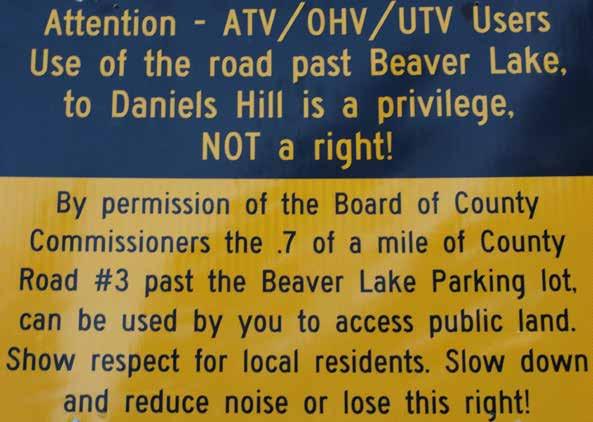
sioners lived on this side of the mountains, the severity of the problem would have already been recognized. Commissioner Liz Smith can testify that it was hard to be heard over the roar of the ATV loading station during a meeting held last September at the Mill Site Park. See the photo of a County-placed sign which explains how the County is complicit with the ATV damage to our environment, community, and quality of life.
Professional problem solvers, whether mathematicians or politicians, know that to look for solutions to similar problems elsewhere is wise. Five years ago, Pitkin County experienced identical problems. In a referendum, 67% of the public voted to eliminate ATV use from all county roads. PitCo Public Works Director Brian Pettet has stated that if Marble was in Pitkin County it would already be closed to ATVs.

If our three commissioners can be persuaded to rescind OHV use on CR3 between Beaver Lake and Daniels Hill, this would reduce ATV use on the Loop by at least 90% and trailer parking in Marble by almost 100%. Jeeps and licensed motorcycles would still be allowed. ATV Users could still drive up to Daniels Hill with trailers, but that is so difficult and limited that it would discourage use by almost everyone.
Also, the County could prohibit parking at the base of Daniel's Hill. Locals could still use their ATVs in town, as well as landowners in the town of Crystal and residents who own property around the Loop would also retain their right to access via ATVs.
This action by the County alone would solve most of the problems experienced in the town and the forest on the Lead King Loop!
The time to act is now.
Get involved by sending letters to:
• Director of Public Works for Gunnison County: Marlene Crosby (mcrosby@gunnisoncounty.org)
• Our three commissioners: Elizabeth Smith (eksmith@gunnisoncounty.org), Johnathan Houck (jhouck@gunnisoncounty.org), Roland Mason (rmason@gunnisoncounty.org).
• Gunnison County Sheriff, with emphasis on enforcement: John Gallowich (jgallowich@gunnisoncounty. org)
Join CVEPA, and see the related article on the following page.
Don’t forget to support the The Crystal Valley Echo with a subscription or monetary contribution so this publication may continue bringing light to the issues that face the residents of the Crystal Valley.
**Editor's note: At the time of publication, new information unfoled regarding ATV access in Marble, which is reflected in "What's Up with Gunnison County" on the following page as well as "Stop the Press!" found on the previous page. The author of this editorial opted to leave the article as originally written.


The Gunnison County Commissioners hold alternating work sessions and regular meetings on Tuesdays in our BOCC meeting room at the Gunnison County Courthouse Building. Meetings are streamed live by Zoom. Agendas and links to work sessions and meetings are available on the County website at gunnisoncounty.org. In this column, your District 1 Commissioner, Liz Smith, offers her take on current matters. You can reach her at eksmith@gunnisoncounty.org
Gunnison County is off to a running start in 2021. Construction for a new library building is underway, and final renovation plans have also been approved for a $22 million airport renovation funded entirely by CARES Act money. In addition to bringing the facility to at or close to Net Zero through solar panels and geothermal heating, the redesign will address facility flow issues through security, expand restrooms, add
refreshments, and develop lacking infrastructure for baggage processing. Most of the work is slated to be completed by the end of the year.
Managing the pandemic has been a heavy lift for the county, but numbers are currently on the decline. Over 6,000 Gunnison County residents have received their first dose of the vaccine, and more than 2,000 have been fully vaccinated. The vaccination effort is important as we continue to see tourism numbers on the rise. County-wide, sales tax, and lodging revenues for the summer and beyond from 2020 have consistently outpaced numbers from the previous year.
On this point, as Gunnison County residents on the other side of Kebler know all too well, visitors have flocked in even greater numbers to the most remote corners of rural Colorado. When I visited Marble in September last fall,
the frustration I heard from residents around OHV use, environmental impacts, and lack of enforcement left a lasting impression on me. After months of outreach to key stakeholders from CPW, the Town of Marble, White River National Forest, Gunnison County Sheriff and Public Works, and Commissioner Roland Mason convened on February 22nd a meeting to discuss these issues and explore possible solutions.
A follow-up meeting is planned in the coming month or two. The outreach we’ve received from Marble area constituents has overwhelmingly encouraged the Board of County Commissioners to consider rescinding OHV access to the 0.7-mile stretch of County Road 3 managed by the County. While the most effective solutions would require collaboration between key stakeholders, speaking only for myself, I would not necessarily be opposed to this if it does not look like a better solution can be reached.
As always, I welcome comments and outreach from all Gunnison County residents. Take care and be well.
If you were a Ute arriving for the summer in the Crystal Valley in 1800, you would feel wealthy if you saw lots of deer, elk, and bighorn sheep. These animals provided food, clothing, and shelter. If you arrived just 60-years later as a mountain man, traveling up the North Fork from Fort Uncompahgre and dropping over McClure Pass, you would measure wealth in beaver pelts. As a miner in 1885, you would feel rich if you saw color in your gold pan or found a lode with silver, lead, copper, or zinc. If you were a marble quarry operator, your treasure would be the purest and most valuable marble in the world.
Service. The quality of the restoration was raised greatly by CVEPA.
by Alex Menard
Today, our wealth in this valley can be measured in terms of environmental quality. This is true whether you are a businessperson who depends on tourism or just a person who chose to live here because you love the way it is. We are holding more wealth now than any of those earlier visitors. The Crystal Valley Environmental Protection Association (CVEPA) has been protecting this wealth since 1972.
Originally founded to protect Marble and the upper valley from rampant development by a proposed ski area, CVEPA's first members came from Marble and Crystal. The organization offered two objections to the ski area. First, it would encroach on land which was designated to become a wilderness. Second, the local environment would be devastated by the scale of the development.
CVEPA then insisted on an environmental impact report and brought in the Pitkin County government as a strong partner. Together these groups stopped the ski area.
Next, the organization helped prevent the development of two dams in the upper valley. The West Divide Project proposed a dam at Placita and later at Redstone to hold water for diversion through a tunnel to Silt and Rifle. Through public information projects and legal action, CVEPA and Pitkin County were instrumental in preventing the dams and water diversion. CVEPA later fought for legislation to maintain minimum stream flows in the Crystal.
CVEPA then turned its attention to Coal Basin, where sedimentation of Coal Creek infiltrated the Crystal River as a result of decades of coal mining. They insisted on reclamation and restoration of Coal Basin after Mid Continent shut down in 1990. The group informed the public about the project and spurred other groups into action, including Pitkin County and the United States Forest
Currently, the group is monitoring Colorado Stone Quarries, where a recent diesel spill and diversion of Yule Creek took place with little public knowledge.
A Wild and Scenic designation of the Crystal River would protect scenery, ecology, and recreation. The plan proposed is customized for this valley and local property rights will not be threatened.
CVEPA found funding to investigate costs for reclaiming tailings from the historic Hoffman Smelter in the Hepola wetlands, across the river from the town of Marble. This information could lead to the Aspen Valley Land Trust's acquisition of this property, to be preserved as an open space and wildlife refuge.
Two members of CVEPA are participants in the Lead King Loop task force. Many upper valley residents feel that the ATV invasion is the most important problem we now face. Rather than create another organization, we can join CVEPA and encourage them to put the ATV delima on their project list.
From its inception, CVEPA has been committed to protecting the upper valley from proposed development and can now help with necessary preservation resulting from ongoing activities. You may become a member by visiting their website: www.cvepa.org

It’s been one-year since COVID-19 first struck our community. Last March felt uncertain. Sitting at my kitchen table after Pitkin County shut down businesses indefinitely, I didn’t know what to do to combat the overwhelming sense of unease. Everyone was being told to stay indoors, stay home! I needed to work in order to pay my bills but also to maintain my sanity. I needed something to do. As I looked outside at a world that had suddenly become much smaller, I was at a loss.
by Stephanie Deaton
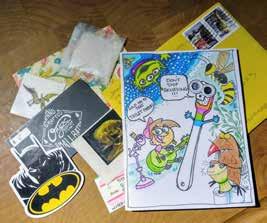
Art has always played a big part in my life. I’ve used it to express feelings and emotions that are difficult to convey with words. I taught art in the public school system for a decade. It has helped me communicate with the world. As the snow fell outside, it came to me, I’d craft an experiment in social distancing. I got out the art supplies and the cardstock and created five cards. I sent each card to a friend in a different area of the country with directives to add to the card and send it along to someone else in a different part of the world.
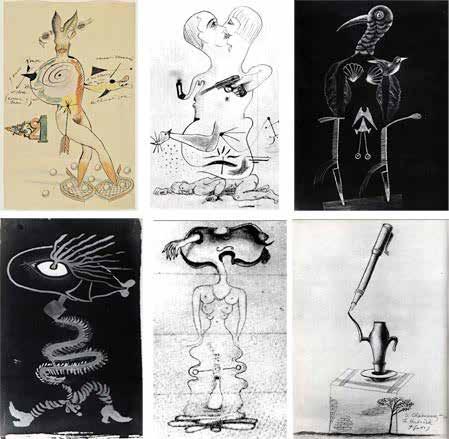
The idea is a play on Exquisite Corpse, a parlor game created by Surrealist artists in the 1920s where people take turns drawing on a piece of paper, folding it to conceal their work then passing it to the next player for further contribution. Many of the images created by the Surrealists were human-esque, but the combination of different artistic ideas and techniques often led to drawings that ranged from humorous to haunting. As an art teacher, I used the game as a brainstorming activity or icebreaker for new students.
It was a fun way to pass the time, a great stress reliever; and I hoped to maybe get a response or two. I cautiously walked down to the mailbox to send them off into the world - for someone else to enjoy.

The county is continuing discussions around plans for possible vaccine clinics in Redstone and other parts of the county, but it may be late spring before this is feasible. Colorado allows people to get vaccinated in any county they wish, so you may choose to register in Garfield County. In addition, some local pharmacies, including City Market, are beginning to set up vaccine clinics. Please check with your local pharmacy. You are also welcome to schedule an appointment at the current mass vaccine clinic site in Aspen, as appointment availability allows. If you are homebound or have significant hardship with travel to a vaccine site, please call the Senior Center at (970) 920-5432.
For additional help scheduling a vaccine, reach out to the Shot Whisperers at:
• Catharine "Ryn" Calhoon, RN, member of Carbondale's Emergency Task Force: cathycalhoon@gmail.com • (970) 618-1257
• Niki Delson, chair of the Carbondale Age-Friendly Community Initiative (CAFCI): niki@agefriendlycarbondale.org • (707) 496-3322
• Nicolette Toussaint, Sopris Sun columnist and CAFCI board member: thymetoblossom@gmail.com • TEXT ONLY (970) 274-1024 For vaccine information and to sign up for appointment notifications: covid19.pitkincounty.com/vaccine
That was almost a year ago. As life moved on, sometimes I’d stop to wonder if the cards were still out there. Occasionally I’d get an update on their progress.
Towards the end of February, I stopped by the mailbox and found a letter from a stranger in Illinois.
Could it be?
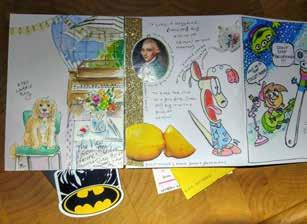
I ripped the envelope open right there on the street and found that a card had been returned! It had traveled to Arkansas, Virginia, Illinois, and back to Colorado. It contained messages of hope and encouragement to recipients. Drawings reflected events happening at the time, from the toilet paper crisis to a picture of a makeshift “studio” and the caption “Quarantine day 90.” Many contributions reflected the randomness and uncertainty that has taken place this year.
Looking over it made me smile at the glimpse
into each contributor's life, but it also made me reflect on what has happened this year. Personally, I’ve changed jobs, been socially isolated from friends and family. I’ve lost loved ones and had two COVID-19 tests. I’ve also made decisions to better my life, began taking classes at CMC, and have discovered so many outdoor places in our area.
Nationally, we have experienced civil unrest, protests both violent and non-violent. We have seen historic atrocities committed at the highest levels of our government. A disease has wiped out hundreds of thousands of people. And our country has become divided from within.
I look at the art created by people whom I’ve never met. I see how the differences work together to create a balance and wonder if we as a nation can come together. I wonder if our differences can complement instead of conflict. I hope that we can become an elaborate exquisite corpse and succeed in building ourselves up again.
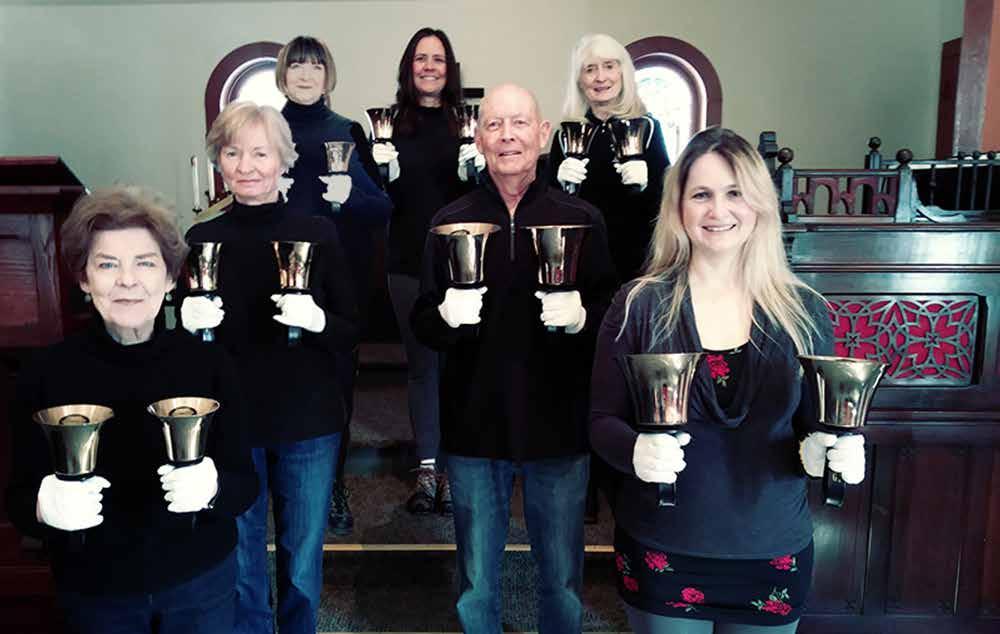
The Crystal River Valley has played such an important part of our lives, and for Suzy and Greg too. For my husband, Larry, it has been part of his life nearly since he was born. Our roots go deep and we are grateful.
We find ourselves involved, perhaps a bit too much, in a number of groups whose emphasis we value.
I have formed the Marble Handbell Ensemble at the Marble Church and our 'premiere' performance is on Easter Sunday. I have directed many Handbell choirs but never performed in such a short period of time. None of the members had ever held a bell much less read music but amazingly, after only three rehearsals, they are doing great. It's a blooming miracle!
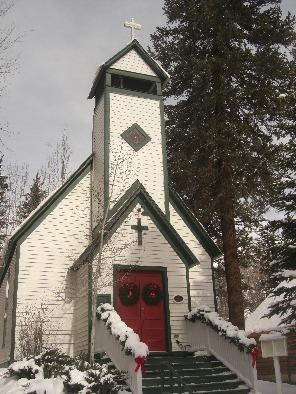
Welcome to the church in the midst of a cathedral created by God
Traditional worship Sundays at 10:00 a.m. 970.963.1464 - Pastor Jon Stovall www.marblecommunitychurch.org
For anyone needing help stretching their food budget, Gunnison County Officials currently have boxes of food available distributed through the Marble Community Church.
There is no charge to the recipient and no reservation is needed; boxes are available for an individual or up to a family of four and contain enough meals to last approximately three days.
Please call Pastor Jon Stovall at the church to arrange a pickup time for your box today, (970) 963-1464.
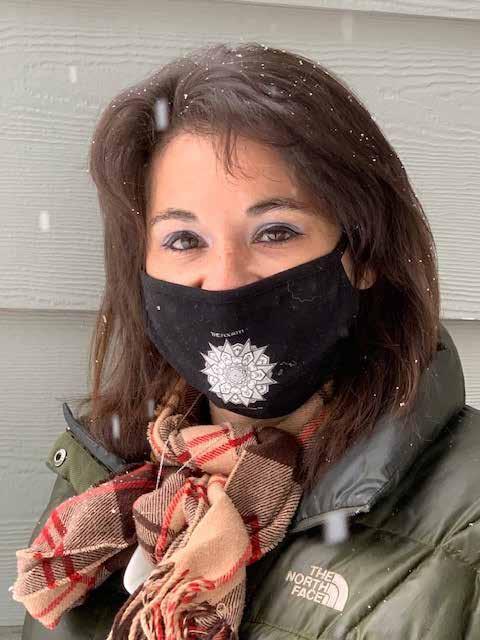
Monique Villalobos was one of the first students to attend MCS. I met her last week when she came to serve Timbo's Pizza to all of the staff and students at MCS. Her husband, Jason owns and manages Timbos’ Pizza in Basalt and they wanted to do something to give back to our school. They have a 3rd grade daughter, Aisha who is attending school here in the 3-5th class, making Aisha the first child of an alumni to attend the school, I believe.
How long ago did you attend Marble Charter School?
“I started school here in 1994 when MCS first opened its doors - 26 years ago. My mom was president of the school board. I was born in 1986 when the population of Marble was 17, I was number 18.”
How many years did you attend MCS and what grade levels?
“I went to MCS for 4 years - 4th through 8th grades.”
What was it like back then?
“There were about 30 kids living in Marble at
the time and we were being bussed to Carbondale for school. Some of the parents got together and decided that they wanted to start a school here in Marble. They got funding, re-did the entire museum building, and made two classrooms there. They opened in 1994, and that’s when I started school here. We started with two teachers, two classrooms and between 17 and 30 students.”
Do you think Marble Charter School prepared you for high school and beyond? If not, WHY?
“I was not really prepared for high school. At the time - a lot of our education was experiential, 4th - 8th graders were all in one classroom. We had lots of Outdoor Ed so we had lots of science but my reading and writing skills weren’t too good.”
Where did you go to high school?
“I went to Roaring Fork High School and graduated in 2004.”
What was your experience there after being at MCS?
“High school was a culture shock to me, my class was 90 kids so I had to adjust a lot. I remember reading a lot on the bus a lot, it helped me improve my reading skills.”
Did you go to college, if so, where?
“I went to Colorado Mountain College and studied Business.”
What are you doing now?
“I have my own business - Marble Mo Creations. I make marble jewelry, cut and polish stones, and then I also do podcasts interviewing locals in Marble that have lived here over 30 years to talk about how it has been changing.”
How has the pandemic affected you?
“It’s been challenging but it’s been exciting. I did a lot with my personal business, my website, sales, and fun.”
Where do you live?
“I live here in Marble behind the Marble Gallery. I have lived here off and on for 30 years
and it’s so great to be back.”
Do you have any advice for students at Marble Charter School?
“Enjoy every second of being here at Marble Charter School, it’s very special and there is no other place like it.”
After living in other places in the Roaring Fork Valley, Monique and her family moved back to Marble last year. She enrolled her daughter, Aisha for 3rd grade at MCS. “We are so excited, she is thriving here and it’s so great to be living here and having a daughter going to the same school I attended years ago. I also have a son, James who is nearly two and keeps me busy and his grandparents next door to help out, they own the Marble Gallery.” Monique is one of the best examples of success in this valley. MCS and the Marble community helped to establish MCS as it is today, laying the strong foundation for future students like myself, and helping to churn out the other alumni I have interviewed. I truly enjoyed my interview with Monique and look forward to my next one.
In the Fall of 2020, Sixth, Seventh and Eighth Graders explored four types of meals and how they get to their table. Students read The Omnivore’s Dilemma and other texts and learned about the Industrial Meal, Industrial Organic Meal, Local Sustainable Meal, and Hunted, Gathered, and Gardened Meal. They evaluated the authors’ motives, purposes, and points of view including whether and how conflicting viewpoints were addressed. Students then researched topics that impact access to healthy food to present their findings to a community audience.
Guiding Questions:
* What responsibility do individuals have to respond to the needs of refugees?
* What can an individual do to help the refugee crisis?
* How can closely examining a troubling moment in history inform our choices today?
* Learning Target: I can gain a better understanding of the refugee crisis and what it means to be a refugee.
By Dove Parr, 8th grade
Imagine you are escaping from Cuba in a boat with you and your friends family and your friend gets eaten by a shark. What would you do? In the book Refugee, you follow three refugees across countries, and oceans. Josef tries to escape the Nazis on a boat to Cuba. Mahmood tries to escape terrorists in a small dinghy. Lastly, Isabel tries to escape Cuba and get to America in a boat. What ties these three characters together are the themes throughout the book; these themes are fear, sacrifice, and loss. How the characters handle these problems also binds them together.
In each story you will find the theme of fear. First and foremost, Josef experiences fear when the Nazis ransack their house, take his dad, and threaten to come back for him. Later in the book, Josef has
more fear then ever when his mother tries to pay the Nazi soldiers, to let them go but does not have enough money. Similarly, Isabel has fear when the sharks come up to her boat while she is hanging off the side of the boat. Another time Isabel was scared was when her boat was sinking while she was getting chased by the coast guard. Lastly, we have Mahmood. Mahmood experiences fear a lot. For starters, when he is on a raft/ dinghy crossing an ocean they hit some rocks and pop the boat. Mahmood sits in the ocean holding his cold drowning mother up out of the water. Later in the story, his whole family gets robbed at gunpoint and then left in the middle of nowhere. All the characters learn that fear is something that will happen no matter what and you have to deal with it and move on.
Another theme in Refugee is sacrifice. All of the three characters have to sacrifice a lot of things to have a better life in a different place. For example Josef gave up what was a good life in Germany before the Nazis came. Josef also sacrificed his life so his sister could go on and live a good life. In addition, Isabel gave her trumpet away to pay for gas so they could run the boat engine. Later in the story, Isabel’s grandfather jumps off of their small boat and distracts the coast guard; he gets caught and has to go back to Cuba but Isabel makes it to America. In addition, Mahmood’s family sacrifices all their money to get to Greece. Mahmood also sacrifices his sister and gives her to a random person on a raft while they are drowning. The characters learn that you must make sacrifices in life to get success.
The last theme that I will talk about in the book is loss. I firmly believe that toward the end of Joseph's story, Joseph and his mother lose their lives to save Ruthy. Next, Isabel loses her trumpet when she trades it for gas. Isabel later loses her best friend to a shark while they are running from the coast guard. In addition, all of the characters lose their residences in their home country. Lastly, Mahmood is separated from his sister while they are drowning by helping her into another boat . Mahmood and his mother are later found by the coast guard. All three characters learn that you have to lose things to get what you want.
Fear, sacrifice, and loss really cinched these characters together. These characters had obstacles thrown at them but they still came over it. I learned that refugees have a very hard life and a lot of people do not like them. I also learned how hard the refugee path is. You would have to fight the country you are leaving and also fight to get into the new country. In the end, I'm very thankful I live in a free country and I don't have to be a refugee.
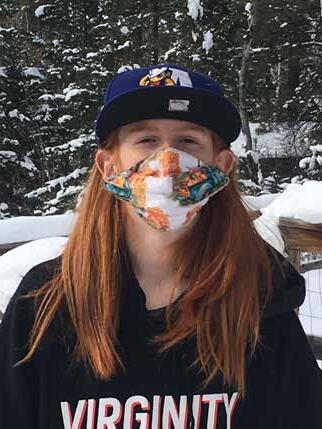
My name is Dove Parr and I am in 8th grade. My hobbies are skating, video games, and petting my dog. I also like skiing during the winter. I have been going to MCS for 5 years now. I am 14 and looking forward to high school and driving.
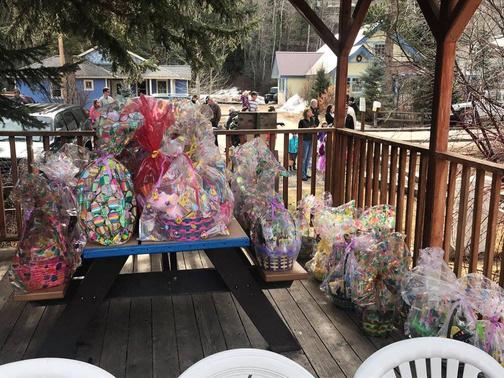

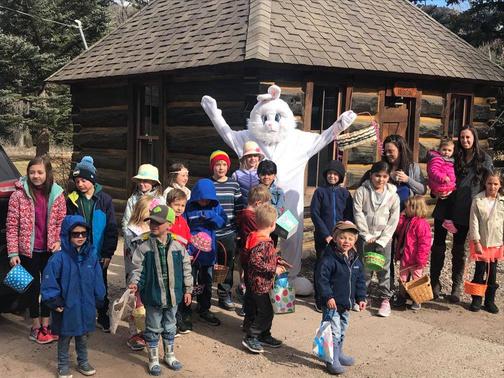
After the hard decision to cancel the annual Easter egg hunt in the Redstone Park last year, we are officially on for 2021! The hunt will take place promptly at 10:00am on Saturday April 3rd for children under the age of 10 Reservations will be REQUIRED, please call The Redstone Inn at 970963-2526 to reserve your spot Masks are required on all adults and children 2 years and older. Please be aware that other COVID regulations may come into effect by then You can donate by making Easter baskets or a cash donation, these can be dropped off at the front desk of the Redstone Inn
The following article appeared in the May 5, 1951 issue of Collier’s Magazine. This installment edited for
online at history.redstonecolorado.org.

low lights. A refectory table in the window, built by Frank, does double duty for dining and studying.
With five Mechaus crammed into the cabin, every crevice is in use. Paula and Vanni sleep on the two living-room couches; Dorik and Mike in the pint-sized bedroom-sewing room; and Duna in an alcove off the living room. Leading off of the big room are a little kitchen and bath.
Every Saturday, Duna does the family wash and Vanni the ironing. The boys help Paula clean the house. In winter they make their own ice. Put a pail of water on the back steps at night and by morning it’s frozen solid.
Saturday nights, if there are no concert dates, the children take in a schoolhouse dance. Weeknights, after study, they sit around the fire and sing ballads, or try out new numbers for an approaching concert.
They have several concert dates booked for the summer. They also want to travel through the country singing their songs and hunting others. So far they’ve only tapped Colorado. Whether or not the Mechaus increase their audiences, Paula finds the ballads and folk songs they sing have already given them the things that count most; a rich and mature outlook on life; a belief in the goodness of people.
The Mechaus’ philosophy isn’t divided into an easy, convenient arrangement of one set of rules for business and another for their friends. They live up to the moral code of the beloved ballads.
by Helen Worden
One morning not long ago. Dorik drove me to Carbondale’s old schoolhouse, a one-room white frame building where Mrs. Mechau was teaching.
At first glance, I wondered how such a tiny, fragile woman could find the strength to cope with the problems which have plagued her. But, after observing her management of the kindergartners, it was easier to understand. And obviously, she is the spiritual head of her own family.
Mrs. Perry and Mrs. Pabst pay for the lunches. Two women cook this substantial noon meal each day in the rear of the old school. I could see steaming hot chicken pie, baked sweet potatoes, fresh home-canned peas, and wild-plum tarts being dished up.
The grade and high school buildings are half a block from the old schoolhouse. I heard the noon gong sound and watched the children race across lots, singing as they ran – Pretty Little Black-Eyed Susie and The Kansas Boys.
Duna was among the next batch of children surging in for lunch. Her blond hair was tied
with a scarlet ribbon, and she wore a scarlet sweater with a plain little gray suit. Dorik and Vanni drifted in with an older group for luncheon.
Friday nights, during the summer, the Mechaus sing at Crystal River Lodge, a dude ranch beyond Redstone. Among the people, they met there last year were Mr. and Mrs. James Lawrence, of Brookline, Massachusetts. Mr. Lawrence, an architect, is a Harvard graduate. The Mechaus’ ballads enchanted him. This winter he wrote Dorik that a Harvard scholarship awaits him when he finishes high school. He is now in his last year.
Vanni is pretty enough to pose for a magazine cover. She has high color, clear gray eyes, soft, light-brown hair, and a gift for looking right in full skirts, tight-fitting basques, and flat-heeled slippers. From childhood on she has dreamed of attending Bennington College in Vermont.
At the cabin near Carbondale, the enormous natural-pine-paneled living room faces Mount Sopris. Its rafters are hand-hewn, its fireplace native stone. There are neutral-toned rugs, natural-wood furniture, numerous couches, and
The time is not far off when the Mechaus will go in different directions. But always they will carry with them those folk songs, sing them when they are homesick and lonely – and when they are with friends and are gay. Whenever they come together they will sing them once again as a family. But they will never forget the ballads – and they will pass them on to their children – and perhaps yours – to have and to cherish.
If you missed any of the installments of this article, please visit history.redstonecolorado.org for the full article.