

In this difficult time of pandemic, incredible financial inequality, and a divisive/dysfunctional national government, it is inspiring to discover a well-organized health operation serving the citizens of Pitkin County.
Due to my age, I was among the first to be treated at the Gillespie Street makeshift medical outdoor facility set up on the Aspen Music Tent parking lot. All those wonderful young people working in freezing weather were extremely efficient, polite, and well-rehearsed for performing their various duties. Indeed, their performance was just as outstanding and inspiring as any given in the Music Tent during the summer.
Furthermore, their commitment to doing a professional job will save lots of lives. For this reason I call them “The Gillespie Street Angels.”
I strongly urge health personnel from the other three counties in the Roaring Fork and Crystal Valleys (Garfield, Gunnison, and Eagle) to get permission to visit the Gillespie Street operation in order to replicate it in their own counties.
—
Clay Boland Jr., retired CMC professor of Communications and Humanities

Marble Times
Mission Statement: To provide a voice for Crystal Valleyites; to bring attention to the individuals and local businesses that are the fabric of the Crystal Valley region; to contribute to the vitality of our small town life.
Editor • Gentrye Houghton CONTRIBUTORS
Stephanie Deaton • Alex Menard
Ryan Kenney
ADVERTISING SALES
Gentrye Houghton • 970-963-1495
GentryeH@hotmail.com
DISTRIBUTION
The Crystal Valley Echo is published monthly, and is distributed throughout the Crystal Valley.
NEWSPAPER BOX LOCATIONS:
Carbondale City Market • Village Smithy
Carbondale Post Office • Redstone Inn
Propaganda Pie • Marble Hub
FOR SUBSCRIPTIONS
Please send $40 for print or $25 for digital editions along with address information to:
The Crystal Valley Echo 364 Redstone Blvd. Redstone, CO 81623
The Redstone skating rink started out this season with about 80 pairs of donated skates; among them are two, nearly matching, small, hockey skates of good quality but both for the left foot. I have looked everywhere numerous times for their mates, without success.
Towards the end of January, I noticed that the number of unpaired left-foot skates had grown to four, again all of a similar size and type. Because of their quality I am reluctant to discard them, expecting, superstitiously, that their right-foot partners will likely show up as soon as I do so!
We love a good mystery here at The Echo, and, along with Ron, would love to hear your theories about where the right-footed companions may have skated off to; please send your thoughts and stories to us at gentryeh@hotmail.com
There are more winter myths swirling around this year than actual snowflakes. You have probably heard them your whole life. You might even catch yourself saying one or two occasionally. Here, we have asked a few experts and done a little research to debunk four winter myths, as common as the cold.
Spending Time in the Cold Will Give You a Cold

Your mom told you to put on a coat as you ran out the door when you were younger saying, “You’ll catch your death of cold!” In reality, cold air does not make you sick, germs do, and more people do, indeed, fall ill in the winter than during the summer months. Humidity plays a vital role. When the air is dry, it causes your mucus membranes to dry out, which makes your body more susceptible to infection.
Cold air does not hold as much moisture as warm air, and indoor heating can dry out any humidity in your home. Another factor is that people tend to gather indoors more in the wintertime. More people in closer, tighter spaces means more opportunity for germs to spread.
Don’t fear the cold as temperatures hover around freezing, but don’t disregard your mother either. It is still a good idea to layer up…
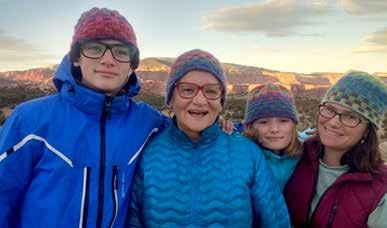
This one is tricky because people do lose body heat through their heads, but not as much as you might think. According to Richard Ingebretsen, MD, Ph.D., “The head only represents about 10% of the body’s total surface area.” It is unreasonable to think that most of your heat escapes through such a small area; the head would have to lose heat at a rate 40 times faster than any other part of the body.
The reason this rumor-turned-legend has been in circulation for so long probably started from military experiments in the 1950s. Researchers exposed test subjects to cold temperatures and found that their uncovered heads lost significantly more heat than the rest of their bodies, which were covered in multiple layers.
It’s true, you do lose a certain amount of warmth through any part of your body that is uncovered in cold temperatures, but you only lose about 7% through your head. Walking out without a hat is like walking outside without a shirt on. If you’re not covered, you’re going to get cold.
Wearing a lot of layers
by dropping or adding a layer.
Sunscreen is not Necessary in the Winter
Yes, you can get a sunburn in the winter even on a cloudy day and especially when the forecast predicts clear, bluebird skies. Ask anyone who has made this unfortunate mistake after a day of riding powder on the slopes. Sunburns happen in the winter. We live at a high elevation, meaning that we are closer to the sun.
When the sun is out, it not only shines down from above but also reflects up from the snow. This means you are more apt to get burnt where you don’t expect it. Coming from personal experience, a sunburn up the nose is not something you want in your life. Wear sunscreen every time you plan on being outdoors for more than a few minutes.
According to the Mayo Clinic, the flu shot, or any other vaccine for that matter, won’t give you the flu. There are a few reasons you may feel crummy after getting vaccinated, however:
• Reaction to the vaccine. You may experience aches or a low-grade fever after getting the vaccine. While it may not feel great, it shows that your body is producing antibodies and the shot is working!
• Wrong predictions. Doctors predict which strain of the flu will be most prev-
alent during flu season each year and they vaccinate for that particular strain of the virus. If their predictions are off, you may get a vaccine for a different strain of the flu, and it may not protect you from the virus going around that particular season.
• Timing. It takes about two weeks for a vaccine to take full effect. If you are exposed to the flu virus within that window, you could still get sick.
• The common cold. Other illnesses produce flu-like symptoms. In the age of COVID-19, we’re all very aware of that. You may be sick with something else entirely. If you experience flu-like symptoms, consult with your doctor, quarantine, and maybe even get a COVID test. Free COVID-19 tests are available by visiting RFVcovidTest.com.
You can get both the flu shot and the COVID-19 vaccine this year. Getting both will help protect you from both viruses. However, the Centers for Disease Control advise that you not get both at the same time. “COVID-19 vaccines should be given alone with at least 14-days either before or after you get any other vaccines, including a flu vaccine.” Talk with your doctor if you have questions about getting vaccinated.
Don’t let these myths put your plans on ice this winter. Stay safe, stay healthy, and stay informed. And don’t forget to get out there and enjoy yourself!

FOCUS ON WHAT REALLY MATTERS.
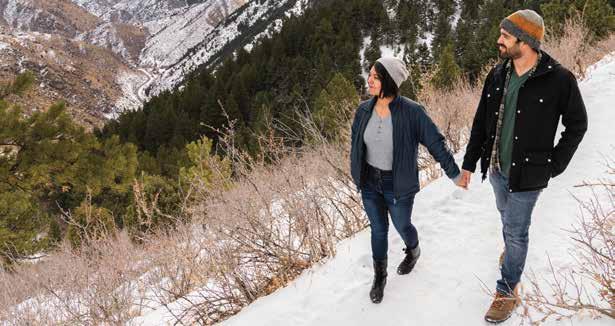
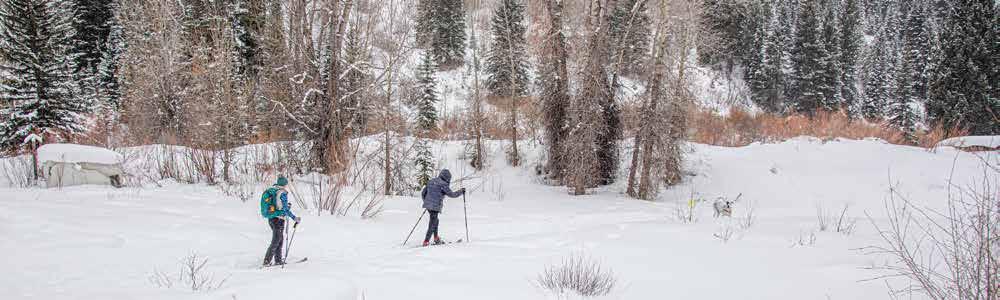
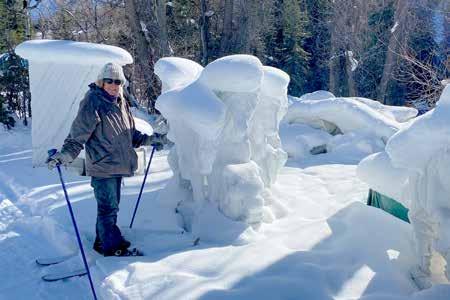
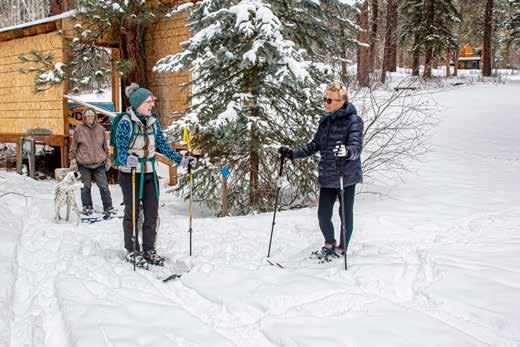
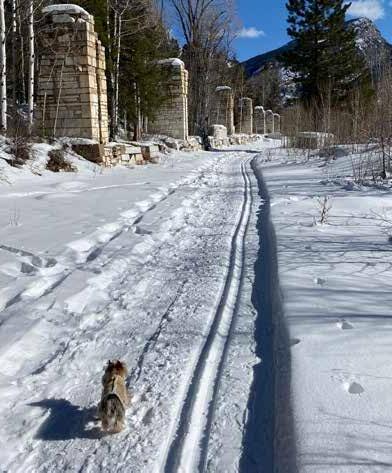
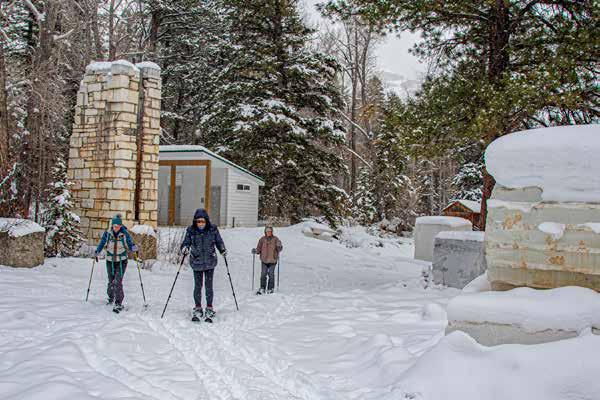
“You’ll want to wear boots that you can sinch down your ankles pretty tight; I like to wear my cross country boots,” Cyndi Fowler told me before I headed to Marble to try out the Hok skis from Altai Skis and explore the new XC Trail through the Mill Site Park.
These skis are a hybrid between snows and cross country skis; they’re fatter than the XC setups, come in two lengths that are assigned to you based on weight (we wore the 125cm), are outfitted with permanent skins, metal edges, and an easily adjustable snowboard-like binding without a heel strap.
“For me, who was an avid downhill skier, I thought they were sort of difficult to make the transition,” said Fowler, and for this avid backcountry skier, I agree that there’s a bit of a learning curve.
However, we were joined by Vickie Branson, who started skiing just last year. “I tried the traditional cross-country skis, but felt like I couldn’t stay up on top of those skinny things.” Branson chuckles, “but with these, I have no problems, and I am just having the best time!”
Through Fowler's suggestion of staying right on top of your feet (as opposed to leaning back like one does when they downhill ski), I felt like I started to get the hang of things as we continued through the picturesque Mill Site trail.
Branson mentioned that in the past she’s struggled to get adequate exercise in the winter when walking was her only option, but with the Hok skis she’s upped her game. “I think these are going to be popular with all the Boomers who are leaving behind their days at the downhill resorts.”
While the Fowlers through SUP Marble intends to offer a fleet of skis for rental use as well as providing an opportunity for users to purchase these skis, just like many things during this time, COVID has thrown a real kink in the supply chain. “We have about six pairs ordered that I’ve been told will arrive in February, and people can place orders through us during March.”
If you’re interested in demoing these skis, and we really think you should, give Cyndi a ring at (970) 963-4855.

From altaiskis.com, The


Above and Below: These easily adjustable bindings can be fitted to any boot size. The binding is stiffer than both my snowshoes and Dynafit AT bindings with less freedom of flex in the toe. However, the thickness underfoot allows for extra stability and float, but the integrated skin is a little slower going than a XC setup.




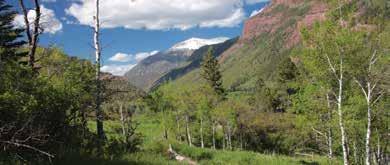


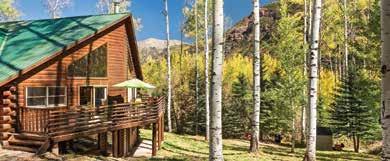


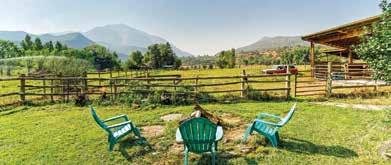


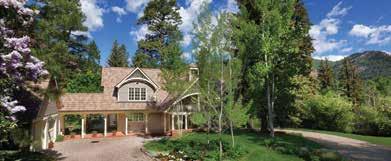

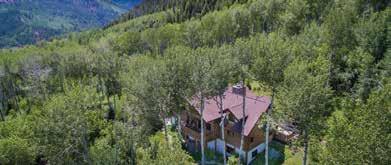









After years of planning and negotiations, Sunfire Ranch, the largest unprotected tract of land remaining in the lower Crystal Valley, has attained a conservation easement with Pitkin County Open Space and Trails (OST). The 1,240-acre property now owned by Jason and Alex Sewell has been home to six generations of Sewell ranchers since the operation began in the 1880s. These days, the Ranch supports a variety of endeavors ranging from agricultural research and education, a special events venue, conservation, and sustainable farming. They even run an outfitting operation known as Sunfire Outfitters. Regardless of what the Sewell family and their partners take on, there is one idea at the center of every project: Sustainability.
Suzy Sewell began conservation discussions with Pitkin County OST in 2004. Jason Sewell, one of the current owners, met with Dale Will, Acquisition and Special Projects Director for Pitkin County OST, in 2010 to develop an Open Space Master Plan for the project. In 2015 Sunfire Ranch officially presented OST with a proposal.
The Sewell’s vision for the Ranch aligns closely with OST’s primary mission: To protect biodiversity, agriculture, and scenic resources. The conservation easement protects the land and the wildlife that call the property home, and the uniqueness of the terrain makes it an important habitat for many diverse plants and animals. According to Will:
“Much of the ranch consists of shrub-covered slopes and lies within critical elk and mule deer habitat. Its relatively undisturbed condition and connectivity to large expanses of public lands and other conserved lands add to the larger landscape of wildlife habitat that is so important to larger ungulates and predators. The Colorado Division of Parks and Wildlife (CPW) has recorded lynx in the valley, and mountain lion sightings are not uncommon. The elevation of the Ranch ranges from irrigated lands at approximately 6,380-feet, to uplands that reach 7,540-feet. These uplands contain a severe winter range for mule deer and Rocky Mountain elk, and the CPW has requested that we seek to eliminate development from this area. This portion of the ranch also lies partially within the Smith Gulch Potential Conservation Area (PCA) identified in the Colorado Natural Heritage Program’s Roaring Fork Biological Inventory.”
The easement will guarantee that this area of Pitkin County retains its rural character. Most of the property was parceled off in the 1970s by Bob Sewell into 29 residential plots. “Rather than 29 lots spread across the heights of Thompson Canyon, we would end up with six lots clustered in a location that is outside critical habitat and shielded from view along Highway 133,” says Will.
The acquisition of the conservation easement comes at a price of $10 million; the plan is two-tiered, keeping six free-market lots and a commercial gravel extraction area unless additional funds are raised to eliminate these. If the funds are raised, they could potentially be replaced with a five-unit family residential envelope, keeping development mainly in the area where the agricultural operations take place today and eliminating the gravel pit altogether. Pitkin County OST provided $9 million for the acquisition, and a grant was awarded from the Great Outdoors Colorado (GOCO) for the remaining $1 million.
Sunfire Ranch has been in the agricultural production business for 130 years and has no plans to change that. If anything, they are thinking of growing additional agricultural enterprises to
continue ranching into the future.
“Local” is a major buzzword in the realm of sustainability these days. Local farms impact our community in many ways. Buying local means less transportation and reduced environmental impacts. Also, small, local businesses are the largest employer in the country. Supporting local farms sustains our friends and neighbors. Furthermore, farmland is an intrinsic part of our community’s character. It helps define who we are as Coloradans.
Sunfire Ranch plans to develop more sustainability and educational programs with the proceeds from the sale. It plans to continue its
partnership with Wild Mountain Seeds, a seed farm and high-altitude research and education facility. The Ranch also plans to continue working with Seed Peace, a non-profit that provides food to those in need and performs climate change research.
The Sewells consider themselves “Stewards of the Land” and hope to preserve the Ranch into the future, which is why they have worked so long to attain the conservation easement. Their goals and those of Pitkin County OST — to protect the biodiversity and scenic beauty of the Crystal River Valley — will be met through this conservation easement into perpetuity.


The Pitkin County Commissioners hold weekly work sessions on Tuesdays and bi-monthly public hearings on Wednesdays in our BOCC meeting room at the Pitkin County Administration and Sheriff’s Building. Both meetings are televised live and repeated on locater CG12 TV. They are also streamed live and available on the County website. Agendas are posted in the Aspen/ Glenwood newspapers and online at www.pitkincounty.com
In this column, your District 5 Commissioner, Francie Jacober, offers her take on current matters. You can reach her at francie.jacober@pitkincounty.
There has been a lot going on in the County and with the Board of County Commissioners this month. I’ll let you know a little about county-wide news, and then hone in on the Crystal River Valley.
The most prominent topic in the County – at Board meetings and in people’s houses – is, of course, COVID. The Pitkin County incidence rate has been exceptionally high. This rate, published daily on the Pitkin County COVID website, is based on 100,000 people. While our daily rate seems small when compared to other hot spots (yes, Pitkin County is considered a hot spot), that is because we have a low population rate. If we have an average incidence rate of 10 positive cases per day, that translates to 140 cases in two weeks. (Most of the metrics used by Colorado agencies, the CDC, and other tracking agencies use a 14-day average as the standard measuring tool.) 140 cases in two weeks here would amount to 823 per 100,000.
Why are these numbers critically important to us in Pitkin County right now? Our two-week incidence rate for the County was running around over 3,000 for the first half of January. This caused considerable alarm among health workers as it was the second-highest rate in the state. The Board of Health (BoH) met on January 11 and, after considerable discussion, voted to voluntarily move the County into the Red Zone. With this, County restaurants were required to close for inside dining and could only offer take-out and delivery. The goal for repealing this order and allowing restaurants to reopen their dining rooms is an incidence rate below 700 and a steady decline in daily positive tests for two weeks.
This Board of Health order precipitated a strong response from restaurant owners and has affected businesses throughout the Valley – from Aspen and Snowmass to Redstone. County commissioners have received many letters of opposition to this BoH order, including a very compelling video of the workers from several Aspen restaurants. With all of our towns dependence on tourism, closed dining rooms is a disincentive to possible visitors and the effects ripple throughout our entire economy. The Board of Health and the Board of
Commissioners do not take this lightly. We are analyzing COVID numbers daily in the hopes of opening up our restaurants as soon as possible. Fortunately, we have had a steady decline and are approaching the point at which we may meet the criteria.
Short Term Rentals, particularly in Redstone
At the Crystal end of the Valley, the hot topic has been short-term rentals (STRs). At the Crystal River Caucus meeting on Thursday, January 14, there was a discussion of shortterm rentals among some of the approximately 35 people in attendance via Zoom. The discussion was dominated by those who feel that the negative effects of STR’s outweigh the positive ones. In brief, the positive effects mentioned were:
• Increased income to help offset the high cost of living in our area
• Increased numbers of tourists visiting Redstone
• Additional income for local stores and restaurants.
The negative effects discussed were:
• Lack of knowledge of and poor compliance with COVID safety regulations
• A partying atmosphere, leading to noise
• A decrease in the community culture due to non-residents inhabiting “many” of the residences
One Caucus member proposed a ban on short term rentals on Redstone Boulevard. This was followed by a vote. Of the Crystal Valley residents in attendance, 15 voted in favor of the ban, 11 against, and 5 abstained.
Since that meeting, there have been many letters to the Board of Commissioners. The majority of these letters have been in opposition to the proposed ban, often accompanied by a complaint that they did not know about the Caucus meeting and were unaware that the topic of short-term rentals would be discussed. At the Board of Commissioners’ meeting on Tuesday, January 26, there was a discussion of short-term rentals throughout the County and an explanation of the recent Colorado legislation which granted counties the power to zone, regulate, and monitor short-term rentals within their jurisdiction. Zoning and regulating STR’s is at the sole discretion of the Board of County Commissioners.
In further discussion, the Board decided to begin a licensing process for short-term rentals throughout the Valley. The Board recognized that licensing and further regulations would need considerable public input before any decisions could be made. An opportunity for public comment will be forthcoming.
In other actions by the Board of Commissioners that directly affect the Crystal River Valley, the Board voted to request, on behalf of Pitkin County, that the United States Corps of Engineers allow for public comment regarding the Yule Creek Quarry, operated by Colorado Stone Quarries. This follows significant work by the County and other organizations to develop mechanisms for holding Colorado Stone Quarries responsible for the environmental damage to Yule Creek when they rerouted the creek and filled in the original creek bed, in violation of the Clean Water Act. The Crystal River Environmental Protection Association (CVEPA), led by John Armstrong, along with Pitkin County Open Space and Trails, the Healthy Rivers Board, and others have worked to develop suggestions for mitigation projects, possibly off-site, to help compensate for the disruption to the natural flow of Yule Creek. This will require ongoing cooperation with Gunnison County, the Corps of Engineers, Pitkin County, the U.S. Forest Service, and other entities.
To read more about the quarry, its operations, and efforts to address the environmental violations which have occurred at the mine, please read the article in the Aspen Times by Heather Sackett in the September 22, 2020 issue. There are other articles as well over the last few months. On YouTube, you can view “Destruction of Yule Creek by Colorado Stone Quarries Marble,” a short video by Maciej Mrotek, as well as Colorado Stone Quarries (a pictorial presentation of the Yule Creek mine). Both of these videos can give you a sense of the scope of the current mining operations.
Let me know what’s on your mind. You can email me at francie. jacober@pitkincounty.com with your views on any topic.

We are working on a plan to bring vaccines to Redstone, but we don’t yet know when it will be feasible. Due to the logistics involved, current efforts are focused on efficiency – getting vaccines to the largest number of people as quickly as possible. We understand this places a burden on people who may have difficulty traveling long distances. As soon as capacity allows, we will be planning a vaccine clinic in Redstone. In the meantime, all county residents are encouraged to pre-register and come to current clinic sites as appointments become available.
For more information on vaccine availability: covid19.pitkincounty.com/vaccine
I remember the first time I saw Redstone’s Coke Ovens as we drove south along Highway 133 on the way to climb in the Black Canyon of the Gunnison. It was October 2012, and peak of the peeping season. I’d never seen that color of gold from the aspens before, and my husband and I were awestruck with the sheer rugged beauty of the Crystal River Valley.
We stayed here because of Billy and Kim Amicon, the previous owners of the Crystal Club Cafe which is now Propaganda Pie, who opened our eyes through fantastic stories about a tightly woven community of unique individuals — the Amicons always kept us in stitches. Today, that sense of community is threatened to be gobbled up by short-term rental (STR) property investors.
taxes, you should be able to do as you wish, within reason.”

However, one major issue with STRs that many are not aware of is their tax status. All of the short-term rentals available within the District are classified as residential property with only one of these properties being considered a primary residence; therefore paying only a quarter of the tax rate of commercial properties.
Tunes quickly change once this discrepency is explained, and all we spoke with replied similarly to Lewis, "Absolutely, they should pay more in taxes!"
Due to the large tax disparity across the state, we see this play out dramatically in Redstone itself as we are losing more and more commercial properties to residences, making it easy for investors to gobble up relatively cheap STRs for commercial use, a process that is allowed under our current laws. A byproduct of such disparity is the drastically changing availability of employee housing and the ability of our businesses to retain a staff.

“I believe all businesses in Redstone struggle to acquire and more importantly maintain employees due to how expensive it is to live here, not to mention the limited options they have to choose from,” explains Lewis. “We have finally reached the point, with full support from the owners, to make a portion of the Inn’s guest rooms unavailable for revenue, and instead offer housing for desperately needed staff."
In 2007, the website airbnb.com got off the ground, formed out of desperation by two roommates, Joe Gebbia and Brian Chesky, to afford their rental payment in San Francisco. According to a 2019 Business Insider article, their first guests slept on three air mattresses in their loft apartment. In its inception, shortterm rentals were an attempt to rent an air mattress, a couch, a spare bedroom, or anything that would help primary residents make ends meet.
Today, Airbnb is a publicly-traded $31 billion-dollar company, and Redstone is losing primary residents left and right to this profitable endeavor.
Currently, approximately 20% of the properties in the Redstone Historic District (“the District”) are considered STRs. Wild Horse Enterprises is the home to four long-term renters; however, it’s under contract to be sold this spring to immediately flip these units by creating between four and six short-term rental units. This addition in STRs will put the number of available rentals close to 30 as well as eradicating one of a small number of retail spaces.
During the January Crystal River Caucus meeting, the following motion passed 15:11 with five abstaining, and the following recommendation has been made to Pitkin County’s Board of County Commissioners (BOCC):
”In Redstone's Village Residential and Village Commercial Zone Districts, rentals for residential purposes for periods of less than 30 consecutive days shall be prohibited uses, except in Hotels, Motels, Lodges and Bed and Breakfasts as those uses are defined in Title 8, Chapter 11 of the Pitkin County Land Use Code.”
Many we spoke with echoed the sentiments of Redstone Inn General Manager, Sara Lewis, “I personally think if you own property, and pay
Property taxes and zoning are a complicated issue not only in the State of Colorado but also within the District itself. Simply put, the District is essentially divided into two zones: Village Residential (VR) and Village Commercial (VC).
Under the Pitkin County Land Use Codes, the intent of “the VR zone district is intended to preserve the historical integrity of the existing neighborhood, ensure compatibility with existing uses, and retain the village atmosphere, … and unique character of Redstone.; while the intent of “the VC zone district is intended to preserve the historical integrity of the existing Redstone historical district, to provide for businesses that sell goods and services to residents and visitors of Redstone, and to ensure that commercial development is consistent with the scale of existing structures and uses within the zone district.”
These zones are clearly outlined in Figure 1; properties within the Village Commercial zone may be used for both residential and commercial purposes, in fact, this type of mixed-use is encouraged in Redstone’s Master Plan (1993).
Under the current state tax rate, commercial properties pay 400% more than those that are classified as residential. While this rate will change due to last year’s repeal of the Gallagher Amendment, the rate is currently fixed until new legislation is drafted. This means that STRs merely cough up $0.25 to every dollar paid by the handful of struggling retail shops found on the Boulevard
This specifically affects the dollars of every singlepropertywithintheRedstoneWaterand SanitationDistrict(RWSD),whichhasafixed annualbudgetthatislargelycollectedviataxes.Underthissystem,shouldoneSTRchange their tax status to commercial, every other user’s taxes would be decreased — as the largest property owners in our community the Red-stone Inn and Redstone Castle are effected themost.
“This I believe says a lot,” she continues, “as we have such a small window to bring in revenue, but we cannot operate to the best of our ability without a fully staffed Inn.”
Complaints all summer long came from full-time residents up and down the Boulevard of loud parties right next door, issues with bags of garbage left on the curb days away from pickup — a smorgasbord for our resident bear population — or even

filling the rubbish bins put out by permanent neighbors. Retail shops complain that these new visitors to the Crystal aren’t spending money or time in their shops and a general decrease in foot traffic. In the time of COVID, health and safety is another grave concern from our residents and the visitors inability to, for example, simply avoid parking in fire lanes.
According to RWSD Manager, Ryan Kenney, the mandate that has now been made as a recommendation to the BOCC “would not outlaw STRs for people wanting to buy a residence and rent it through sites like VRBO.com. It would only require that they meet the basic regulations that all other lodging and hotel properties must meet. There is no reason to give special treatment, especially a large tax reduction, to these short-term rentals.”
During the January 26th BOCC Work Session, County Attorney John Ely explained that new state legislation, passed in March 2020, gives authority to county governments to regulate STRs, a power that already existed within municipalities.
According to leg.colorado.gov, Colorado House Bill HB201093, in summary, states that “the act grants a board of county commissioners the authority to license and regulate an owner or owner's agent who rents or advertises the owner's lodging unit for a short-term stay, and to fix the fees, terms, and manner for issuing and revoking licenses issued therefor.”
Ely went on to explain that this bill specifically deals with the ability to capture sales tax revenue; property tax classification status is not discussed under this piece of Colorado legislation.
“Keep in mind that this is not a win for the County,” Ely said, meaning that the licensing fees and regulations discussed are directly related to administrative costs and do not fatten the County’s pockets. However, the ability to gain revenue via sales tax that is not currently being collected does help to increase the County’s budgets.
Ely continued, “This is much easier to regulate through licenser as opposed to making changes via land use.” All of the commissioners, during this session, appeared in favor of implementing a licensing program.
While the presence of STRs on the Redstone Boulevard was part of this work session discussion, the impact disparity mentioned in this article was not well articulated. Researching the master plans is one work order that did come about in regards to the next steps, but what does the Redstone Master Plan say about STRs?
Repeated over and over within the Master Plan are the phrases “to preserve historical integrity” and “maintaining a balance between existing residential, commercial, and tourist accommodations.” To fully understand these terms, as well as the intention of the Master Plan committee, we took a page from The Echo’s geological contributor, Russ Cunningham, and hopped into our Way Back Machine with a phone call to Peter Martin, Redstone resident from 1984-2019, and Redstone’s Chairperson for the Master Plan Task Force.
“Short-term rental was not yet a term that existed when we developed the Master Plan way back in the early 90s,” said Martin, “but the committee was concerned with keeping a balance between full-time residents and tourists.”
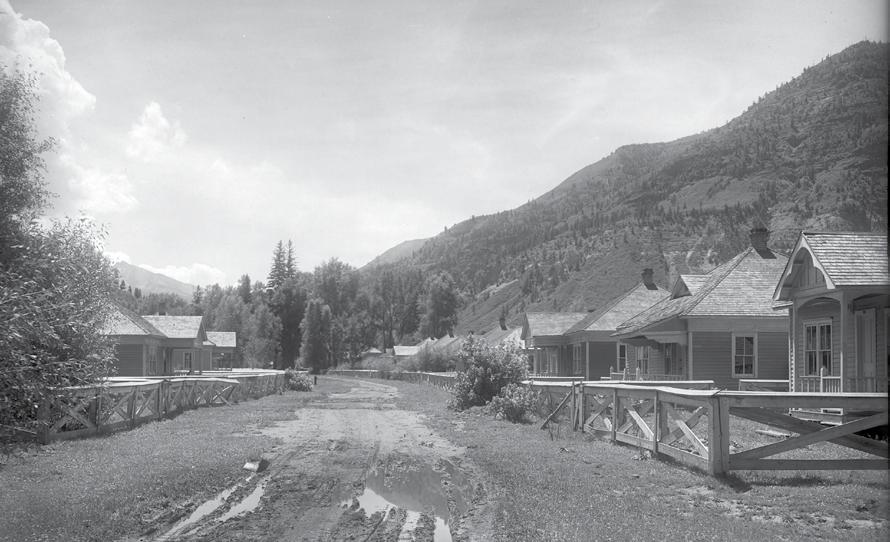
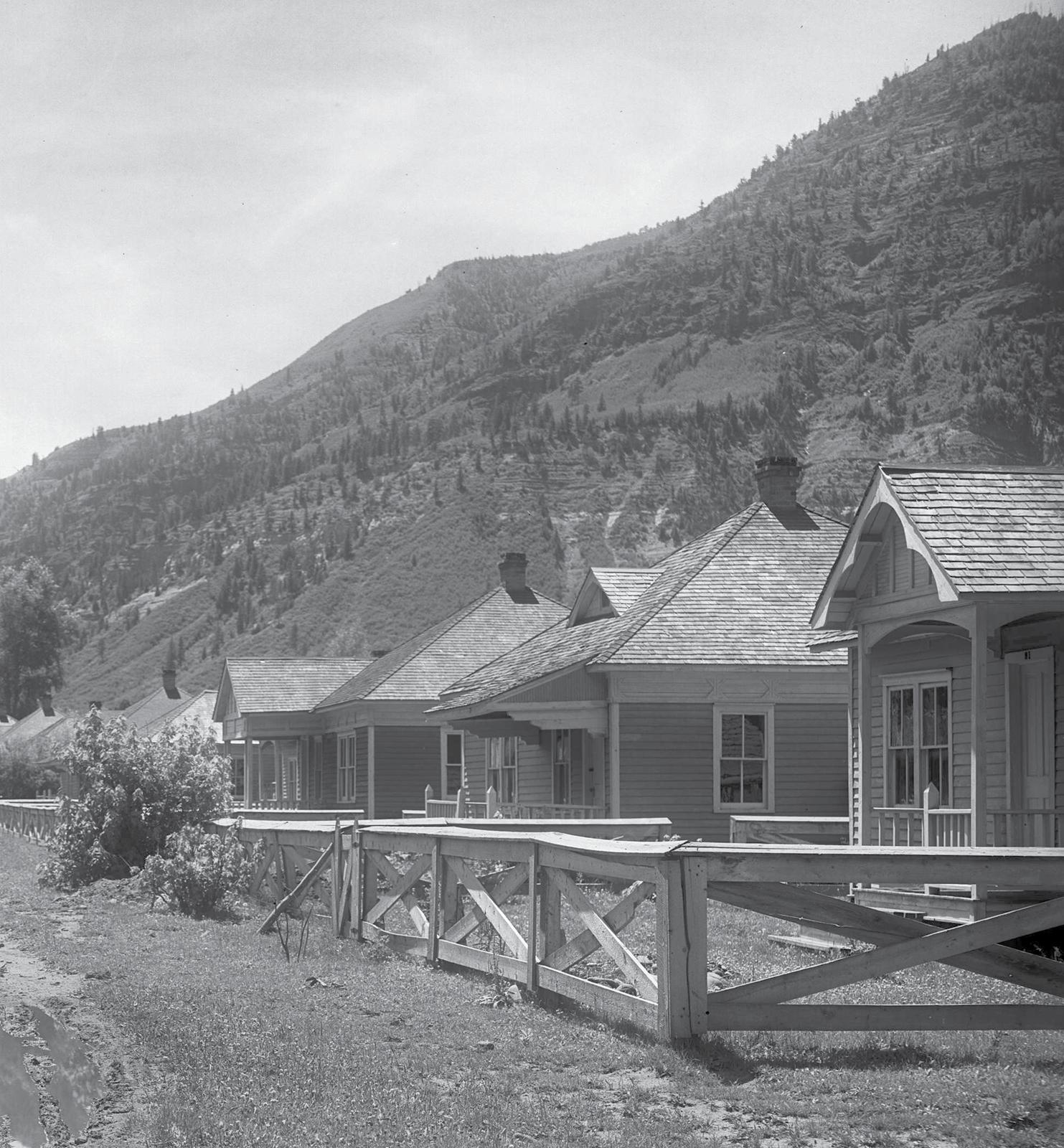
Historically, Redstone emerged in the early 1900s as a community full of Osgood’s coal and coke workers. The limited number of commercial entities catered to the needs of the residents. In fact, the Master Plan clearly states that priority should be given to residents first and visitors second.
“It was our intention that full-time residents would be prioritized under the Master Plan, that Redstone would be preserved as a residential community and to limit the growth of tourism,” explains Martin.
Under the plan, tourist accommodation facilities are specifically mentioned in which such expansion is expressly limited and preference given to the existing accommodation facilities, such as the Redstone Inn, Redstone Cliff’s Lodge, and Crystal Dreams B&B.
As far as the next steps go, the County Attorney is beginning to draw up paperwork for a licensing program that will be implemented across unincorporated Pitkin County at large. While Historic District residents may find this solution insufficient in dealing with the impacts we are seeing up the Crystal, “Licensing is a good first step,” says the newly appointed District 5 Commissioner, Francie Jacober.
Yet, until Redstone addresses the considerable inequality within the tax system, STRs have
a clear advantage over all other commercial types within unincorporated Pitkin County. If growth continues under its current trajectory, short-term rentals will dominate the Redstone market all the while stealing from the pockets of their neighbors. At what percentage of STRs within the Historic District does it take to finally say that enough is enough?
Under the new Colorado legislation, the BOCC retains the power to apply stricter regulations in varying zones, but may not do so unless voices are heard from their constituents. If you feel strongly about this issue, The Crystal Valley Echo encourages everyone to write a letter to our Commissioner. You can reach Francie Jacober at francie.jacober@pitkincounty. com, and please share your opinions with your community by sending them to me at gentryeh@hotmail.com
The Crystal River Caucus holds regular bi-monthly meetings on the second Thursday of odd-numbered months; members include anyone living in the caucus area, which is defined as the Pitkin County portion of the Crystal River watershed — this includes long-term renters who do not own property. Information regarding meetings and agendas are disseminated via email; if you would like to join the mailing list, please send an email to crcaucus@gmail.com.
Looking out on a clear February day, you see broad swatches of color. Overhead the deep blue dome of the sky reminds us why the Utes were known to their neighbors as the “Blue Sky People.”
At the skyline ridges above timberline, you see light reflecting off the pure white snow, which is the frozen lifeblood of all plants and animals below, both wild and civilized. Lower still, at about 11,500-feet where timberline is reached, the band of evergreens begins. Looking dark and somber at a distance, this green zone extends down to surround our homes on the valley floor.

As we approach closer, we see that the colors vary from the yellow-green of pinyon pines to the blue-green spruce. Evergreens change little through the cycle of the seasons, providing a permanent backdrop to our lives. Because they show signs of life year-round, evergreens have been used as symbols in ancient rituals to mark the return of the sun following the winter solstice. This is the origin of the Christmas tree.
Although trees are inanimate objects, they still have personalities. This is shown by how they grow, where they choose to grow, which plants and animals they associate with, their lifespan and life history, how their behavior changes in different environments, and how they react to changes within their environment. Let's get personal with our native trees.
The pine genus is identified by having the needles gathered in bundles surrounded at the base by a paper-like sheath. Different pine species are distinguished by the number of needles in a sheath and the length of needles.
Starting with the pine, the biggest stature in our area is the Ponderosa (Pinus ponderosa) and possibly everyone's favorite pine. This could be because where it chooses to grow, on a level, dry, open valley floor or a sunny south-facing slope is like an inviting parkland to us. Either in pure stands or association with almost any other tree species, the ponderosa towers over sunny wildflower meadows.
The ponderosa's popularity might also be because of its appeal to all the senses. Bury your nose in the large patches of golden bark on a hot summer day to experience the delightful vanilla scent. No less a tree hugger than John Muir appreciated this tree with his ears, saying, "Of all the pines, this one gives forth

the finest music to the winds."
This tree sings so well because of the long needles, in bundles of two or three, which are from four to seven inches long. The thick straight trunks tower overall from 60 to 120feet tall in this area. In the Sierra Nevada, however, this height is nearly doubled. A ponderosa will grow for 50-years before it bears cones.
Lodgepole pines (Pinus contorta) are more common on the other side of the Elk Range in the Roaring Fork Valley. This may be because it is a "fire" pine, meaning that this tree's strategy is to populate disturbed areas after a fire. Lodgepoles have two kinds of cones, one of which is designed to open only after a fire scorches it.
Look for two short twisted needles in a bunch to identify this tree. The scales on the small cones have bristles on their tips. The tall straight trunks were used by natives to build lodges, which is the origin of its common name. Lodgepoles often grow in pure stands.
Limber pines (Pinus flexilis) are a personal favorite because of their habit of growth and choice of habitat. This gnarly tree with extra-long twisty branches takes unusual forms. A tree only 15-feet tall can have a two-foot thick trunk. This pine chooses to grow on steep, rugged, dramatic slopes starting around 8,000-feet up to timberline.

gins, a comprehensive field guide encompassing Snowmass Village and Aspen.
During a conversation with Huggins, she could not remember the location of the grove or her source for this information. So, dear reader, if in your wild travels you have encountered these trees, help to fill in this missing information.
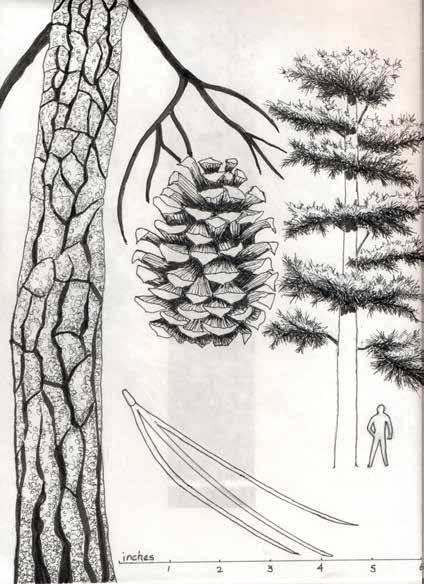
Because it competes with other trees by choosing difficult sites to grow it is not common here but is found down to the valley floor on the Quarry Road and the ridge between the road to Crystal and Lost Trail Creek. Identify this tree by the short needles in groups of five, which do not have flecks of white pitch on them. The cones do not have bristle tips.
Bristlecone pine (Pinus aristata) is similar to Limber pines in growth and location, they also have five needles in a bundle, but with white pitch flecks on the needles and bristles on the cones. Bristlecones are rare in this area. They are only included here because a single stand is mentioned in Wild At Heart by Janis Hug-
Bristlecones grow in scattered groves throughout the west, near timberline in the mountain ranges of the Great Basin and the southern Rockies. By counting the tree rings, the ages of these trees can be determined and they are the oldest known trees on earth at almost 5,000 years.
The only other pine found in this area is the Pinyon pine (Pinus edulis), which is found in a different life zone, the pinyon-juniper woodland from an elevation of 6,000 to 8,000-feet. This is the foothill zone between the sagebrush below and the Douglas Fir above.
Fire is a frequent visitor to this area. Pinyons and their companions, the junipers, control the terrain on these steep slopes. But when they are burned, it may take two or three centuries to restore this population.
The scientific name of the species means, of course, that it is edible. In the American west, pinyon nuts are a traditional native food, also gathered by the earliest Spanish settlers. Harvesting is done by spreading a blanket or tarp under a tree and beating the branches with a broom.
Yields vary greatly from year to year, but sometimes you can find a squirrel's stash with 10 to 15 pounds of nuts! You are competing with a plethora of wildlife for this harvest including the pinyon jay, who is adapted to the nuts as the main staple of his diet.
The pinyon is a low bushy tree with needles in groups of two to three. Don't sit under a pinyon tree as they are very resinous and could get a gummy pitch on your clothes. The pitch was used by the Navajo to waterproof baskets and water bottles. Ancient pit house structures were framed with pinyon branches.
Spruces are identified by having sharp, square (i.e. four-sided), and stiff needles. There is no sheath at the base of these needles and the cones are pendulous. Cones are of two types: Female seed cones and male pollen cones. In the spring the yellow pollen is often thickly deposited by the wind on your windshield or porch. Two spruce species are native to this area, but they also hybridize. This could make distinguishing between the two difficult.
The Colorado Blue Spruce (Picea pungens) is the state tree of both Colorado and Utah. It thrives in moist environments, such as along streams and north-facing slopes from 5,500 to 10,0000-feet. The species name pungens means sharp, which refers to the needles. Blue spruce can grow from 70 to 100 feet tall around this valley.
The Engelmann Spruce (Picea engelmannii) is the brother of the Blue Spruce and thrives in higher, drier locations of permanent winter snowpack. It can grow taller and is usually narrower and more pyramidical in shape. The aromatic pitch of this tree suggests butterscotch. Last year, the national Christmas tree for the White House lawn was an Engelmann spruce harvested nearby in Ouray, Colo.
The Subalpine Fir (Abies bifolia) has the perfect shape for a Christmas tree: tall, narrow, and spire-shaped. The tree's horizontal branches are very short to resist bending under snow load and bear flat, short, blunt needles with upper branches that produce upright purple-black cones.
Remember fir needles are flat, friendly, and flexible. A few Subalpine Firs occur on the valley bottom in Marble, but become more numerous as you climb higher. Subalpine Firs may attain heights of 50 to 75-feet maximum here, reducing to two to three-feet at timberline. But even these short timberline trees resist the tendency to become bent over wind-

swept forms, instead of retaining their spire shape.
Douglas Fir (Pseudotsuga menziesii) is very easy to identify because of its characteristic cones. The pendulous female cones have a three-pronged bract that protrudes between the scales. These bracts resemble the hind legs and tail of a mouse diving for cover. Twigs hang down from the branches producing a kind of weeping effect. Douglas firs may form almost pure stands or associated with spruce and aspens, ranging from mid-elevation forests to the subalpine zone. They may also follow moist canyons down to lower elevations as they do near Glenwood Springs.
Two local Junipers, Rocky Mountain Juniper (Sabina scopulorum) and the Utah Juniper (Sabina osteosperma) are identified by their flat scale-like leaves and berry-like green cones. They are companions to the Pinyon at lower elevations, but the RM juniper also ranges up to Marble on south-facing slopes the Townsend Solitaire is a flycatcher that has adapted to eat juniper berries. Thus he can survive the winter in a juniper grove with no insects to eat.
For more information, everyone who lives in the valley should pick up a copy of Wild at Heart, available at The Marble Hub. For more serious students of local botany, we also recommend Colorado Flora Western Slope by William Weber. A treasure trove of information is contained in Natural History of Western Trees by Donald Culross Peattie. This dictionary sized book from the 1950s is beautifully illustrated with prints by American master Paul Landacre.






For anyone needing help stretching their food budget, Gunnison County Officials currently have boxes of food available distributed through the Marble Community Church.
There is no charge to the recipient and no reservation is needed; boxes are available for an individual or up to a family of four and contain enough meals to last approximately three days.
Please call Pastor Jon Stovall at the church to arrange a pickup time for your box today, (970) 963-1464.

I met with Megan Rusby, (the daughter of former Marble Charter School Director, Amy Rusby) one day in mid January. She was among some of the first students here at MCS and attended from 3rd through 8th grade. Megan is 20 years old and in her third year of college. These are the questions I asked her:
Do you think Marble Charter School prepared you for high school and beyond?
Megan says MCS helped her enter Roaring Fork High School with no worries academically and strong social skills. She started at RFHS with two or three other new freshmen from Marble Charter School.
Where are you attending college?
Megan is attending Gonzaga University in the state of Washington. She is a junior and plans to graduate in the Spring of 2022. Megan was leaving to go back to college the day we met in January.
What are you studying?
Megan is majoring in Art and Communication Studies and plans to graduate in the spring of 2022.
What do you hope to do after you graduate? Megan is not entirely sure what her plan is after college but hopes to do something creative; making art, possibly being an art teacher? A
bigger dream of Megan’s would be to work behind the scenes in a movie sometime in future.
What are you doing now? . . . And do you have any plans for the summer?
Megan is currently attending school at Gonzaga University for the next year and a half, and is hoping to work with the MCS Summer Program, assuming it is not cancelled.
How has the Pandemic affected you?
Megan says it has been challenging, as all of her college classes, with the exception of her art classes have been online. She did have a long winter break at home with family.
Do you think you will return to live in this area in the future? Megan hopes to live here in the future, assuming there are enough job opportunities locally, and if is not too expensive.
Do you have any advice for students at Marble Charter School? Megan beautifully phrases the near unanimous advice from alumni by saying: “Savor your time at MCS, you’ll never have another experience like this again. MCS is a unique place. Play in the woods at recess and learn all you can. My time at Marble Charter School was some of the best years of my life that helped shape me into the person I am today.”
The list of promising young people to come from MCS seems only to grow. Megan Rusby has a creative mind and a knack for art that will help lift others from times that seem to drain the hope from all of us, and continue the proud legacy of Marble Charter School.
TANNER MERRITT, MCS 8th grader
In the Fall of 2020, Sixth, Seventh and Eighth Graders explored four types of meals and how they get to their table. Students read The Omnivore’s Dilemma and other texts and learned about the Industrial Meal, Industrial Organic Meal, Local Sustainable Meal, and Hunted, Gathered, and Gardened Meal. They evaluated the authors’ motives, purposes, and points of view including whether and how conflicting viewpoints were addressed. Students then researched topics that impact access to healthy food to present their findings to a community audience.
* What food choices should we make as a community to keep our community sustainable?
* What factors should we prioritize when making choices about our food? How do we share these recommendations with others?
* What factors influence our access to healthy food? How do we research this?
* How do we analyze arguments about how food should be grown and processed?
* How do I determine if an author has used sufficient relevant evidence and sound reasoning to support his or her claim?
By Amyah Clayborne, 7th grade
Driving down the road you smell delicious burgers cooking and you stop at the restaurant to eat because you thought it smells delicious. But did you ever think about how it affects your body or the ecosystem. Does it cause diseases? Does it impact the animal ecosystem? Are there dangerous health risks to eating fast foods? You may not think about these effects because the food tastes really good but that’s how they pull you in. You also may be questioning, “Why is fast food so popular?”. Fast food is addicting to most people because of the taste. The salty fries at the fast food restaurants have so much sodium and salt it causes health problems. In order to want to change your eating habits you have to really want to do it. I'm not saying go all vegan just try to cut back on your fast food consumption.
Greasy foods have a big impact on the human body because the body absorbs the grease and people just want to eat more and more. Clearly, greasy foods will affect us in multiple ways. Greasy foods can cause heart disease and even strokes. Greasy foods cause weight gain be-
cause of how good it tastes, people want to eat more. In fact, most people don’t have really high metabolism. Then, when they eat fast food they gain weight.
Furthermore, it also causes stomach pain from eating a lot of the grease. All the grease the humans consume causes bloating and even nausea. For these reasons, I strongly believe that we should reduce the amount of fast food we consume. (healthline.com)
It is certain that salty foods also have a big impact on the human body. Salty foods can cause kidney and blood pressure problems. This means that if you have over 2,300 milligrams, which equals one teaspoon, you can get high blood pressure. Eating salty food can cause kidney problems. It alters the sodium balance and strains the water out of the kidney which causes kidney diseases. If you consume this much salt almost everyday or more you can have these health problems. Having high blood pressure can be hard to manage sometimes. Some people have a really hard time bringing their blood pressure down. Sometimes if the kidney has too much salt it can knock off the sodium balance and it can cause kidney failure.
I am sure that fast food is addicting to the large majority of the world population. Fast food is so addicting because of the sugars that are in some of the food. When we consume large amounts of sugar, our brain tells us that we should not stop. Fast food restaurants have put their menus at low prices. For example, McDonalds has their menu at a low price and has deals (ie. Buy two burgers for five dollars). People want to go back and get more and more. Clearly, they also use media and toys to bribe kids to get a happy meal. They have billboards, commercials, and even mascots they use as tools to lure people in. People go to fast food restaurants because they usually don’t want to cook at home and the kids want to go to get the free toys. This is how they pull people in to buy their food. (Schlosser, 2007)
Some believe that fast food restaurants don't affect our ecosystem but it actually does. Most importantly, it creates fossil fuels when they use their inside grills. They use grills to cook their burgers and they have a metal chimney that comes out the top of the restaurant. When you drive by, you usually can smell and see the smoke coming from the chimney. They are going to need trucks to bring in burgers, fries, and other foods. The trucks produce this gas called carbon dioxide emissions. When the truck goes a long distance, it causes this gas to go into the air we breathe. The packaging they use is harmful to the animals. They use cardboard
boxes, plastic, and metals but some restaurants don’t recycle, so those items go to the landfill. At the landfill animals find a way to get stuck in soda rings, cans, and other things that can harm them.They build landfills close to wildlife and take over their habitat. This is the reason there is so much pollution and animal harm.
So how can we change our fast food consumption and have less pollution? Next time when you're on a road trip don’t stop at McDonalds, bring your own healthy food. Use natural gasses. I strongly believe you should take my advice and consider making healthier food choices for your sake and the ecosystems.

My name is Amyah. I am 13 and in 7th grade at Marble Charter School. For fun, I like to play sports and listen to music. When I grow up, I want to be a doctor. My goals are I want to travel to all 50 states and go to Switzerland and Jamaica. Another goal I have is I want to go to college and Medical School.
J i m m i e B e n e d i c t
R o n a l d P h a n e u f
M i r k a & I v o B e n s c h
L a u r i e B e r n h a r d
S k i p a n d K a y B e l l
E d B e r t a g n o l l i
C h r i s B u n c h
K i m B o d d i c k e r
F r a n k B u s s e
K e i t h C h e e s e m a n
J e f f D i P a l m a
C h u c k & D o r i s D o w n e y
B o b & L i s a D u p r e
G a r y & S h a r o n G a m m
J u d y I l l e m a n G a u k e l
K a t h e r i n e & R o g e r
G i b b o n s
S u s a n G r a v e s
J u d y G a r m a n
J o A n n Z w a n z i g e r
C l a r k & P a m H e c k e r t
B a r b & M i c h a e l H u r s t
J a s o n & C o u r t n e y J a y n e s
B i l l J o c h e m s
R y a n K e n n y
G e n t r y e H o u g h t o n
J
D
J
C a t h y M o n t g o m e r y
R i c k M e y e r
P a u l & S o n y a M o o r e
H e n r y P i t o t
K i k
D
H
R e m m e r s
T o m & P a m R o b i n s o n
P a u l & S a n d r a R o u t z o n
E v a n & N a t a l i e T h o m a s
M i k e W a r r e n
K a r e n T o t h
C u r t & B a r b W e b b
M a r g a r e t Y a m a s a k i
R i c h a r d & P a m e l a
W a d s w o r t h
R e d s t o n e I n n
R e d s t o n e A r t G a l l e y
C r y s t a l D r e
Next Meeting is Tuesday March 2nd at the Redstone Inn


Originally published by Collier's Magazine by Helen Worden

Concerts
It wasn’t all easy going. Once or twice when they needed money most, people overlooked a fee for their concerts.
The Mechaus are the most unmercenary family this side of Utopia. Colorado Springs people, hearing of their plight, gave the family $1,000. With her warm heart and magnificent indifference to money, Paula, immediately thrust $750 of it in the hands of a hungry poet.
The year Frank died they took a cabin at Woodland Park, a tiny village above Colorado Springs. They took it because at first they weren’t able to face being at Redstone without Frank. But they went back to their mountain home the following summer and every summer after that.
In 1949, the children implored their mother to let them remain at Redstone through the winter. She warned them of the hazards.
“We’ll manage, Mom,” they told her.
And so the Mechaus spent the winter of 1949-50 high in the Rocky Mountains.
The local powerhouse, last vestige of Osgood’s empire, had been closed in 1948, leaving the Mechaus dependent on kerosene lamps. Their biggest expense items that winter were oil and coal: $50 for Kerosene, $150 for coal.
John Henke, the mailman, also a trapper, brought supplies when Mrs. Mechau and the children couldn’t get to the store in Carbondale.
The Mechaus spent weekends and holidays learning new folk songs. They built up a repertoire of 300 tunes. But ballad practicing isn’t like ordinary practicing. It’s just family singing around a big table after supper, or before an open fire –singing because you like to sing. The Mechaus sang and only the mountains heard.
There were four families at Redstone that winter: Frank Worley and his four sons (they mined coal at nearby Placita); Mr. and Mrs. Harold Christopher (she kept store in the summer; he also mined at Placita); the Dean Cooks, who owned Crystal River Lodge, a ranch upcreek; and Mr. and Mrs. George Clayton, old-timers.
Every other Saturday night there were dances in the local school and the Worleys supplied the music. Frank Worley played the fiddle, his boys strummed guitars. Families fifty miles distant came.
New Year’s week Paula and the children climbed in the old sedan and drove to Montrose, Olathe, Ridgway, Delta, and Grand Junction for more concert engagements. Paula wished that Frank had lived to see the recognition of his philosophy and hers.
The Mechaus had water trouble. That can be tough in the mountains. Kline Creek, half a mile from the house, was their source of supply. The water flowed into a pipe which crossed the creek and emptied into a settling tank. One evening Paula noticed that the water pressure was low. Before the dishes were washed every faucet in the house went dry.
Life is not simple in the mountains, Paula said.
You’ve got to work twice as hard for what you get; but she and the children found it worth it. The folk songs prepared them.
“But we’ll never pull through another winter in the mountains,” prophesied Dorik. “The car won’t hold together.” Just when she was wondering what to do, Lloyd Reynolds, the young principal of the Carbondale school, asked her to drop in. How about teaching folk ballad singing and its lore to the Carbondale children in return for a rent-free cabin and a salary of $160 a month? The cabin was less than two miles on a level road from town. Paula said yes in a hurry.
Carbondale is hardly more than a scattering of frame bungalows and log cabins at the junction of the Roaring Fork Creek and Crystal River. In the near distance looms Mount Sopris, more than 12,000feet high. Carbondale itself has a population of less than 500, but circling it are enormous fertile ranches. Typical are the Bob Perrys’ Mount Sopris Hereford outfit and the Harold Pabst farm adjoining the Merchau cabin. Carbondale is a modern-minded community encouraged by educators like Reynolds and his friend Scott Abbott, civic professor. But the town’s only transportation link with the outside world is a twice-a-day bus from Glenwood Springs.
End of Part III. See Part IV in next months Echo.