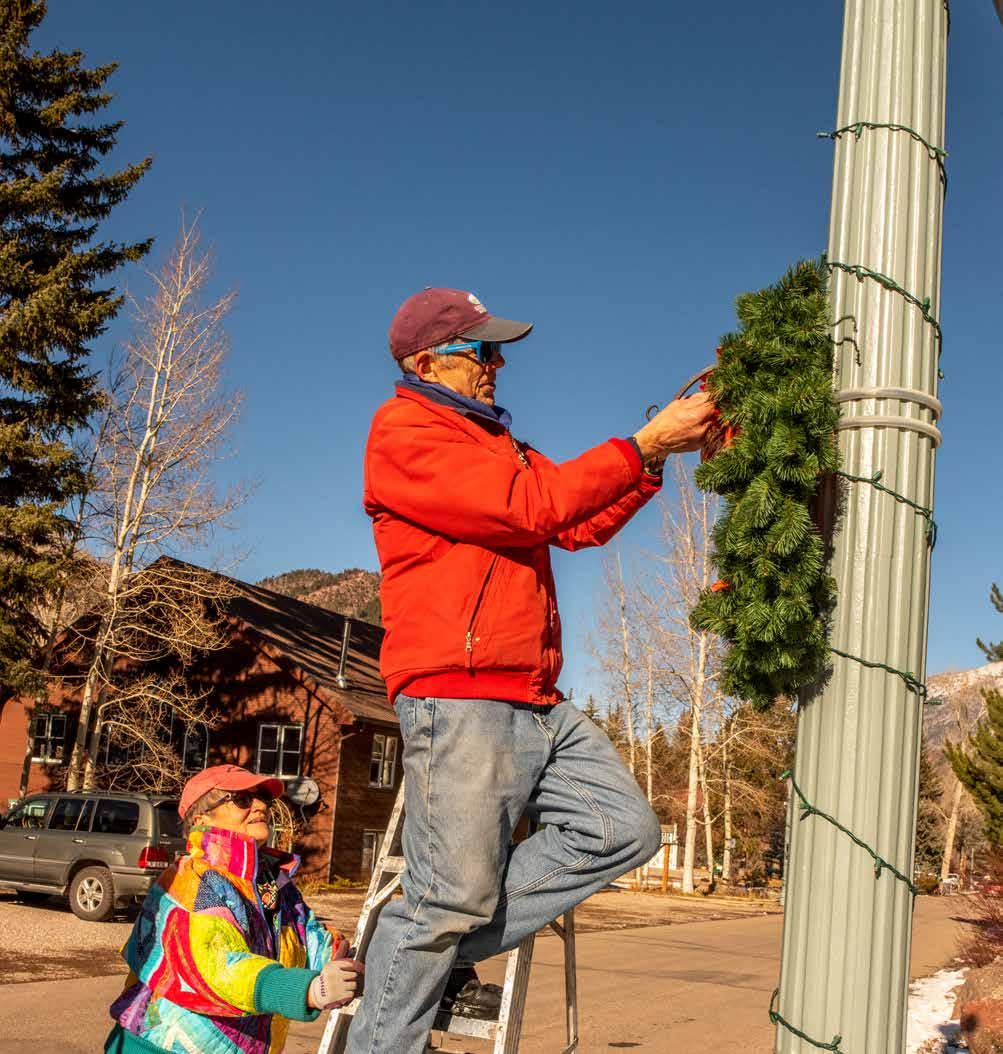


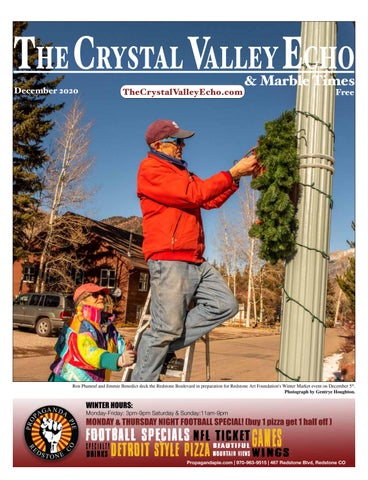
Photograph by Gentrye Houghton.
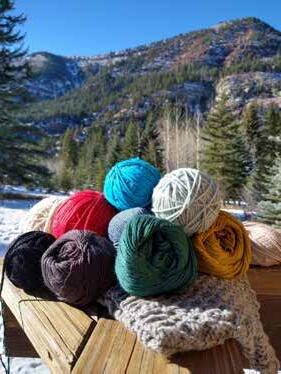
Crafting and community? Two knitting groups in the valley are getting creative and giving back to those in need.
Jessica Markham started the Facebook group Roaring Fork Yarn Club in November after picking up crochet as a way to relieve stress and anxiety. She was looking for a local knitting or crochet group and figured why not start her own.
“It’d be great to meet people in the area who share my hobby,” Markham said. Members of the quickly growing group expressed interest in doing a community service

project, so Markham reached out to LiftUp, a non-profit that provides essentials to those in need. They are also working with Stepping Stones, a community-based youth mentoring program.
Members are making hats, scarves, and mittens. All goods gathered between November and December 1st have been split between the two charities. Interesting fact, Markham’s relatives, Paul and Annette Markham lived in Redstone for over 30-years.
The knitting group in Redstone has been giving comfort and support through prayer shawls for almost 14-years. Kay Bell, Redstone’s knitting coordinator remembers how the prayer shawl ministry started in Redstone. A group member asked about her project and when she explained how the shawl would wrap, comfort, and give solace to a person going through a time of need, people were eager to join in.
“It’s taken on a life of its own and it’s really beautiful,” says Bell. They began coordinating via email, but then eventually the phone would ring and alert the group to start knitting for someone in the community needing comfort.
The Redstone knitters have also contributed to projects for breast cancer survivors and children in Haiti. Group members just seem to pick a passion and go with it. Usually, other members are eager to join in.
The group has had to postpone in-person meetings due to COVID restrictions, but Bell is keeping in contact with the group via email and is adamant that when restrictions lighten, they will once again meet in person. People are still working on projects. Bell laughs, “busy hands are happy hands. That’s what my grandma used to say.”







Marble Times
Mission Statement: To provide a voice for Crystal Valleyites; to bring attention to the individuals and local businesses that are the fabric of the Crystal Valley region; to contribute to the vitality of our small town life.
Editor • Gentrye Houghton CONTRIBUTORS
Stephanie Deaton • Alex Menard
Larry Meredith
ADVERTISING SALES
Gentrye Houghton • 970-963-1495
GentryeH@hotmail.com DISTRIBUTION
The Crystal Valley Echo is published monthly, and is distributed throughout the Crystal Valley.
NEWSPAPER BOX LOCATIONS:
Carbondale City Market • Village Smithy
Carbondale Post Office • Redstone Inn
Propaganda Pie • Marble Hub
FOR SUBSCRIPTIONS
Please send $40 for print or $25 for digital editions along with address information to:
The Crystal Valley Echo 364 Redstone Blvd. Redstone, CO 81623

Dear Commissioner and Editor:
On behalf of the Crystal River Country Estates Water Company (“CRCE Water Co.”), we are writing in response to George Newman’s and the Pitkin County Attorney’s article in "What's Up with Pitkin County?" published in August 2020. As a small water company in the Crystal Valley, the CRCE Water Co., along with numerous other water users in the Crystal Valley, supports the study to determine the need for, and possible options, for an augmentation plan to provide domestic water for the Crystal Valley users in time of drought and when there is a senior call on the Crystal River.
The article seemed to imply that the study is to build a dam in the Crystal Valley. This is a completely inaccurate characterization of the feasibility study. The CRCE Water Co., in addition to the Town of Marble, Chair Mountain Ranch Filing No. 2, the Colorado River District, Crystal View Heights, Filing No. 1 Subdivision, and the Seven Oaks subdivision all contributed funds to support the study. The study is also supported by the Colorado Division of Water Resources, the state agency tasked with administering water rights, the Colorado Basin Roundtable, the Gunnison Basin Roundtable, and the Mount Sopris Soil Conservation District. We have enclosed copies of their letters of support for the study.
The goal of the study is: 1. To determine what Crystal Valley residents and subdivisions need augmentation water in the event of a senior call on the Crystal River, which occurred in 2018; and 2. To examine possible sources of augmentation water. There is absolutely no proposal to dam the Crystal River and the augmentation water will likely have to be obtained through leased water or a series of smaller storage areas. It is concerning that Pitkin County would oppose an effort by local residents to proactively develop a solution for providing domestic water and complying with Colorado water law.
In 2018, Crystal River Country Estates, along with other subdivisions and water users in the Crystal Valley, was notified of a senior call on the Crystal River. This is the first time that a senior water user placed a call on the Crystal River. The Division Engineer worked with the water users to conserve as much water as possible during this call. There is, however, no immediate augmentation source. The call brought to light a larger problem: The fact that many water users in the Crystal Valley could be left without domestic water in the event of another call. Several water users in the Crystal Valley met to discuss the next steps and a possible solution.
The CRCE Water Co., Town of Marble, Chair Mountain Ranch Filing No. 2, the Colorado River District, Crystal View Heights, Filing No. 1 Subdivision, and the Seven Oaks subdivision met with West Divide to discuss the possibility of an augmentation plan. It was determined that, first, a study was necessary to determine how much augmentation water would be needed in the event of another senior call. It is more cost-effective, and, frankly, smarter, for the water users to work together to develop a solution. Potential options include leasing water, water storage tanks, ponds, or other sources to provide a source of augmentation water. Not all water users have the ability or resources to store water in the spring and have it available for late summer. For example, our neighborhood lacks a common area that could be used for water storage. This is where a central solution is much more practical, cost-effective, and beneficial.
The West Divide Water Conservancy District study will help us answer these questions. As a reputable local group, West Divide has offered to facilitate the study. Despite claims to the contrary, this is not a dam project. An augmentation plan is needed to protect the Crystal River from overuse, for local residences, and to protect property values by having a dependable, legal supply of water.
The very goal of the augmentation study is to determine the need for augmentation water and different options. As a small water company in the Crystal Valley, we ask
the Commissioners and Crystal Valley residents to support the study and find an acceptable solution that will promote the health of the Crystal River and the needs of Crystal Valley residents.
Respectfully,
Crystal River Country Estates Water Company Board
This letter comes in response to a letter written by the Pitkin County Attorney’s Office and published in the August 2020 edition of The Crystal Valley Echo. That article attempted to explain the purpose of a feasibility-level study being conducted to determine the extent of the augmentation needs in the Crystal River Valley and to identify potential solutions to meet that need. The article contained inaccurate information and was seemingly intended to stoke fears that the Crystal River would be dammed. This is not the case. Rather, a collaborative effort is afoot to help solve a long-standing water problem that faces Crystal Valley residents.
Water rights in the State of Colorado, and the Crystal River Basin, are administered according to the Doctrine of Prior Appropriation, commonly referred to as “first in time, first in right.” When a senior water user is not receiving a full supply of water, a “Call” can be placed by the senior water user that requires junior water users to stop diverting so that the senior water user can obtain a full supply. The oldest water rights on the Crystal River, and throughout Colorado, were decreed for mining and irrigation uses. The most senior rights on the Crystal are decreed for irrigation uses lower in the basin. In addition to senior irrigation rights, the Colorado Water Conservation Board (CWCB) decreed the earliest Instream Flow Rights (ISF) in the State on the Crystal River. Even though these ISF rights are junior to the irrigation rights, Calls can be placed year-round when flows are insufficient to meet the decreed ISF water rights.
Historically, irrigators on the Crystal River have worked cooperatively during times of water shortages and a Call was rarely, if ever, placed. However, in recent years the CWCB has placed ISF Calls which have resulted in irrigators also placing Calls to fulfill their senior decreed water rights. As a result, several subdivisions within the Crystal River basin were contacted by the Division Engineer’s Office for Water Division No. 5 (“Division Engineer’s Office”) to inform them that their water diversions were being made out-of-priority and that a plan for augmentation was required for them to continue diverting water. There is also a real threat that other water users will receive these notices in the future as our climate, hydrology, and administrative regimes evolve over time.
A plan for augmentation provides a means to replace out of priority depletions with water from another source and allows water users to continue diverting water when there is an active Call. Generally, county regulations require proof of both physical and legal water availability prior to issuing development or building permits. Unless they have their own decreed plan for augmentation, many Crystal River water users currently have no way to augment out of priority depletions. Without a plan for augmentation, senior water users can be injured and out of priority water uses can be curtailed. West Divide currently operates five separate augmentation plans to serve several hundred clients in water-short areas using a variety of tools including historic consumptive use credits, exchanges, and storage.
At the request of the Division Engineer’s Office and several local water users in the Crystal River Basin, the West Divide Water Conservancy District and the Colorado River Water Conservation District, are working on a study to quantify the augmentation need in the Valley and to suggest potential solutions to this very real issue. This
project was not conceived by West Divide or the River District but rather was created in response to local Crystal River water users reaching out to West Divide for help with solving their local legal water supply issues. Some of the local water users include but are not limited to the Town of Marble, Chair Mountain Ranch Subdivision, Seven Oaks, Crystal River Country Estates, and Crystal View Heights, to name a few.
West Divide and the River District seek to help create a coordinated solution rather than have each water user develop their own plan for augmentation which can be costly in terms of legal, engineering, construction, operation, and maintenance. To further this effort, West Divide and the River District received a grant from the CWCB to conduct this study. Each of the noticed water users has contributed matching funds to this effort. West Divide operates several augmentation programs and issues water allotment contracts to water users throughout its District. By obtaining a water allotment contract, water users can get augmentation water without going through a Water Court process to decree their own individual plan for augmentation (which is very time consuming and costly).
There is no interest from either West Divide or the River District to develop a large water storage project or dam the Crystal River. Contrary to the opinion of the Pitkin County Attorney’s Office, this situation is not new and there is a problem that requires a solution as Alan Martellaro, the Division 5 Engineer, explained in his September 2020 Crystal Valley Echo Letter to the Editor. Alternatives besides traditional storage projects are being considered in this study, such as alluvial storage projects which use natural alluvium in lieu of traditional reservoirs. While some traditional storage may be needed, as Mr. Martellaro mentioned in his letter, a dam across the Crystal River is not being considered, nor is any large storage project. The study aims to quantify the demands within the basin and determine the most appropriate and palatable solutions, working with local water users, to solve the issue of a legal water supply for Crystal River water users.
To find out how you can support this effort, or if you have a legal water supply issue in the Crystal River basin, please contact West Divide at (970) 625-5461 or the River District at (970) 945-8522. Please also inform Pitkin County of your support for this effort.
Sincerely,
Divide



One of the features that make life interesting in this beautiful valley is the cycle of the seasons. This column will point out the changes in nature to understand what is happening around us.
December is the first month of winter and contains the solstice day, December 21st, when the daylight is only about 10-hours long, the shortest of the year. The sun remains in the sky a little longer each day thereafter, but the coldest part of winter is still ahead. On this day the sun follows its lowest path across the southern sky reaching an angle of only 27.5 degrees above the horizon at noon.
each other less readily.
Our biggest buddies, the bears, will be hibernating by mid-month. Until then it would be wise to keep your car and house locked, as well as keeping your trash secured at all times. Bears are getting smarter; recently, there have been multiple reports of damage from bears breaking into cars and houses in Marble, so one may assume that they will continue trying to open doorknobs, handles, and latches.
This low angle is the reason the sun disappears behind the mountains for so long and makes the actual hours of direct sunlight even shorter. Solar panel users tilt the panels to 54 degrees in winter to be perpendicular to the angle of the sun.
The first snowstorms of winter bring the largest flakes because the snow falls through the warmest air causing the crystals to grow more tightly. Later in the season, colder temperatures mean smaller flakes because the ice crystals adhere to
Bighorn Sheep come down the slopes of Mt. Sopris to hang out across the river from Penney Hot Springs. This is the peak of their mating season or rut, so rams do their best to look big and strong while they butt heads with each other. The Bighorn is the official State mammal and is featured as the symbol of Colorado Parks and Wildlife. Numbers of Bighorn statewide are now only in the thousands. Habitat loss at lower elevations has caused them to winter on slopes above timberline.
Winter birdwatching includes common winter residents: The Black-capped Chickadee, Pygmy nuthatch, and Stellar’s

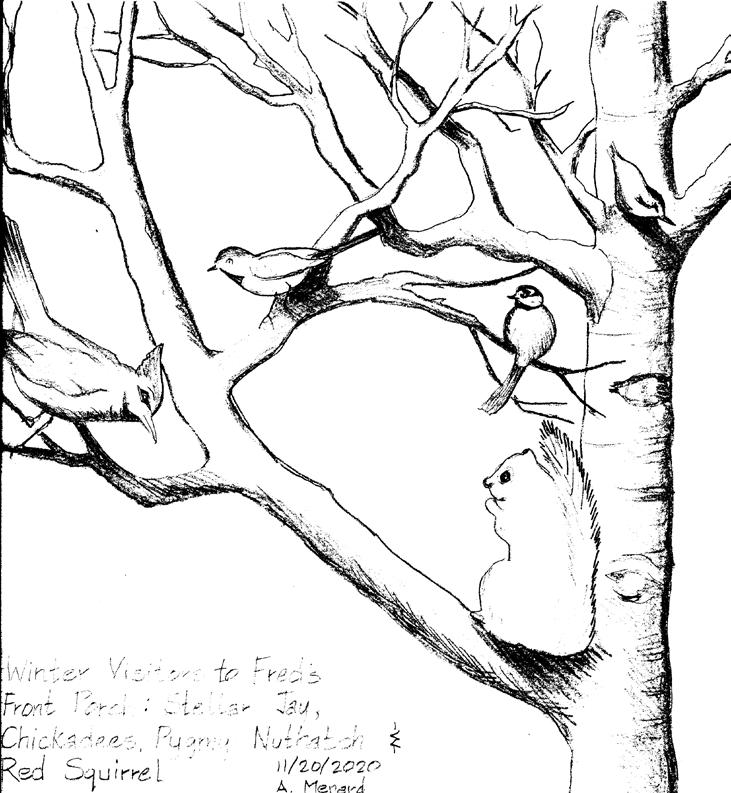
jay. These birds are often seen traveling together in multi-species flocks.
Chickadees are always the most numerous, noisy, and visually apparent in these groups. Less than five inches long from beak to tip of the tail, these tiny birds live right on the edge of survival. They must consume many calories every day to counteract heat loss each night.
The Pygmy Nuthatch is even smaller and is easily identified as the only bird seen walking headfirst down a tree trunk. A specially designed rear toe helps to anchor the nuthatch on his downward journeys. This behavior may be a strategy to hunt for bugs from a different vantage point than other birds.
The section of Highway 133 from mile marker 63, near Sustainable Settings, through mile marker 66, by the Crystal River Fish Hatchery, is what I call “Raptor Road.”
Any time you drive through, scan the treetops and river bed for bald eagles and various hawks, including the Sparrow hawk or Kestrel — a dove sized bird designed to harvest smaller birds. You will often see him perched on a fence post right by the highway. There is even a large Osprey nest in a cottonwood over the river near the Hatchery, and large flocks of Wild turkeys pick over the feed that ranchers put out for their cattle.
The Roaring Fork Audubon Society Christmas bird count is a great annual event, which is not being advertised this pandemic year.
The most characteristic feature of the winter night sky is the constellation Orion, the hunter. You may locate Orion by looking low in the southern sky around 9 p.m. Three stars close together form Orion's belt with a faint sword seen hanging from it. Four bright stars form the hunter's rectangular body around the belt, which you may follow down and to the left to reach Sirius — the brightest star in the sky in any season. If you know Orion you can find nearby constellations including Taurus, Gemini, and the Pleiades.
While most mammals are known only from their scats and tracks in the snow, the Chickaree, or Red Squirrel, may be the most seen and heard. Active all winter, the Chickaree has an intimate connection with the Blue Spruce. During the summer and fall, you can see this little guy cutting cones off the spruces. His collection of cones are called middens and may be 10-feet long and wide as well as several feet deep. This is their food supply which allows them to stay active all winter. Continued on Next Page . . .
The red squirrel's personality, you might say, is in your face. The loud "chuck, chuck, chuck " is often heard, while they stand up on his rear legs and shake their tails above their head. They may even charge toward you.
Some winter animals are prey for others and develop winter coloration for camouflage. Snowshoe hares turn white becoming invisible except for their black ear tips. Their large feet are just the right size, big enough to act as snowshoes in deep snow, but not so big as to slow their speed in escape from predators.
Ptarmigans are big birds that turn white except for black feet and bills. They live in the willows where they burrow into the snow for warmth.
The white coat of the ermine in the winter wear of the Least weasel, or Mustela erminea. Skiers often see them scurrying across the slopes below the chairlift. The tip of their tail remains black, which may be a strategy to confuse hawks. Confronted with the black tail, the hawk may not know which end to attack.
Even those who don't feel the need to offer sacrifices to the gods to guarantee the return of the sun and warmer seasons will not disparage Christmas, the celebration of all that is good about human nature: Peace, love, and goodwill towards all. So, if you want to get a Christmas tree from the national forest, go online to rec.gov for a permit as Forest Service offices are closed due to COVID; permits are only $10, and the outing to get the tree is an adventure in itself.
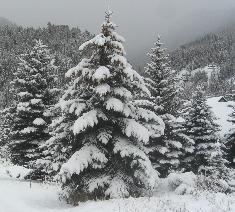
Choice spots for tree hunting include Thompson Creek, Coal Basin Road opposite Redstone, and Ragged Mountain Road on McClure Pass. Stay on the left (north) side of the road on McClure Pass as your permit is for White River Forest only. One of the best species of tree to get is the Subalpine Fir, found at 9,000-feet and above, as it has dense foliage and is very conical in shape.
Blue Spruce is off-limits. Just Remember: fir needles are flat, friendly, and flexible, whereas spruce are sharp, square, and stiff.





It’s the time of year when snow is beginning to accumulate. People are dusting off winter gear, firing up snow machines, and looking toward the mountains. Winter is calling!
Up here in the West Elks, it is the season many enjoy the most. We live in a place where the mountains are literally in our backyard. We see a lot of people pass through on their way to or from epic, snow-filled adventures. Our towns see a great deal of backcountry use from people in our community and the surrounding area.

More people are choosing to recreate in the backcountry now than ever before. Snowmobile sales were up 6.6% in 2019 and are expected to rise further in the coming season.
Backcountry gear sales have been on the rise for the past few years. Since COVID-19 prematurely shut down ski resorts this spring, that trend has skyrocketed. Our area will likely see many experienced backcountry users along with a fair share of novices, and that has many people concerned. Not everyone venturing off-piste is familiar with the ruggedness of the terrain. Are people recreating in the backcountry aware of the risks?
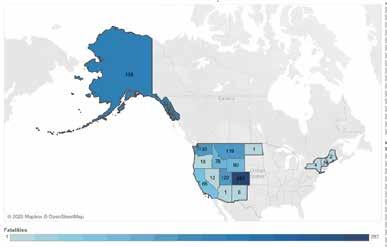
More avalanche fatalities happen in Colorado than in any other state, and most of these accidents are triggered by backcountry skiers and snowmobilers. Brian Lazar, Deputy Director of the Colorado Avalanche Information Center (CAIC) said this is due to our snowpack and our access to terrain.
In Colorado, we have continental snowpack, a type of snow that is characterized by less frequent storms, very cold nights, and low snow water equivalent. This is what makes skiing and snowboarding so enjoyable - that light, dry snow that is perfect for carving turns.
Since there is less snowfall in a continental snow climate, it might be presumed that there is less avalanche risk. Unfortunately, this is not the case. Because we get shallow storms and our nights are so cold, there is a greater temperature gradient within the snowpack. It changes the snow into crystals called facets. These facets create a weak problem layer. Most avalanches in Colorado are caused by persistent slabs. These form when a weak layer is buried by additional layers of snow. The problem persists even after snowstorms have subsided, sometimes even after weeks or months. These types of avalanche problems are dangerous because they are hard to predict, they can be triggered at a distance, and they can cross terrain features.
Another key to Colorado’s high avalanche fatality rate is that we live in an area where the backcountry is easy to access. Often, we can be in avalanche terrain minutes after stepping out of our cars or homes. Pitkin County has the highest avalanche fatality rate in the state, while Gunnison County has the 4th highest rate. It is important for anyone
who lives on or near the mountains to know about avalanche conditions and how to avoid exposure to avalanche terrain.
This is not a warning to stay inside this winter. On the contrary, if we become aware of our surroundings, we should be able to take part in many winter activities. We can still stay safe in our beautiful mountain community as long as we stay avalanche aware. We must consider our risks and take into account how our actions impact ourselves and how they impact others. A skier or snowmobiler can set off an avalanche remotely from a distance causing harm to someone who is below or adjacent to the initial trigger.
Several members of the outdoor community have expressed safety concerns, especially as COVID-19 has limited in-bounds options. Scott Messina, the Rescue Leader Coordinator for Mountain Rescue Aspen warns us to “expect to see a surge in backcountry use.”
Mountain Rescue Aspen is the first responder organization for this area. When asked what they are doing to prepare for this season, Messina stressed that the organization is striving to maintain the health of the team so they can respond effectively as needed.
Mike Wagner from the Carbondale and Rural Fire Protection District echoed his sentiment and stated that even though they expect more backcountry use, they are “not doing anything beyond the heightened awareness that already exists.”
New to the Backcountry and Not Sure Where to Begin?
Lazar suggests first getting the forecast. The CAIC offers free avalanche forecasts for Colorado through their website or smartphone app. Learn more at www.avalanche.state.co.us/
He also suggests traveling with the minimum essential avalanche rescue gear: A transceiver, probe, and shovel, and to avoid traveling solo. Most important-
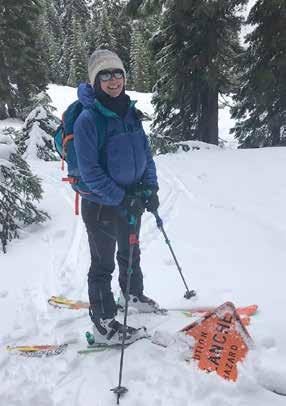
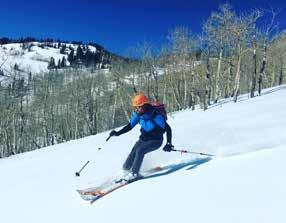
ly, get the proper training. Sign up for an avalanche safety course at www.avtraining.org, or a Know Before You Go course through CAIC. Many of these courses are now offered online.
Lazar suggests to “start learning before you even sign up by doing online training.” Mountain Rescue Aspen is offering a snow science virtual event on December 11th at 6:00 p.m. Messina, of MRA, encourages you to take extra gear. If a member of your party is injured, you might have to stay the night before rescuers can get to you.
If you have recently joined the growing group of uphill skiers in the valley but are still uncomfortable in the backcountry, there are other options in the area. Sunlight Ski Resort and all four Aspen Mountains offer uphill access. Check with each resort, designated hours and blackout dates vary.
Some mountains may require a pass for uphill access. There are a variety of groomed cross-country ski trails in the area as well. Bluebird Backcountry, near Steamboat Springs, is the only in-bounds backcountry ski area in the US. They make it safer and easier to learn on their avalanche-evaluated and ski-patrolled terrain.
As a community of backcountry users, we can spread the word about avalanche awareness and safety. Expect to see new avalanche safety posters and brochures around the Crystal River Valley, thanks to the Friends of CAIC, a non-profit organization that supports avalanche forecasting and education throughout Colorado.
Read the avalanche forecasts frequently, learn the trends, and have a better sense of what happens in our area. Lazar asks that you report any activity you see to CAIC. The more that is known, the better they can predict.
“We appreciate and rely on observations sent to CAIC from the community” Lazar explains. “You don’t have to be an expert to submit an observation on the website or your smartphone.” By gathering more data, they can provide the best avalanche forecast so you can make the best decisions.
It is important to mention that many organizations that help us recreate safely rely heavily on support from the community. During this season of giving, consider becoming a member of the Friends of CAIC to further avalanche forecasting and education or donate to Mountain Rescue Aspen, an organization that is entirely funded by donations and
Continued on next page . . .
grants from the community. All their rescuers are unpaid volunteers.
To learn more or to sign up for Mountain Rescue Aspen’s free Snow Science Virtual event on December 11 at 6:00 pm, visit mountainrescueaspen.org/category/events/
CAIC offers free virtual Know Before You Go avalanche awareness programs. Visit www. avalanche.state.co.us/education/caic-programs/know-before-you-go-colorado/ for access.
If you’d like to learn more about avalanche safety or snow science, check out the Colorado Avalanche Information Center (CAIC) at www.avalanche.state.co.us/, Mountain Rescue Aspen mountainrescueaspen.org/, The American Institute for Avalanche Research and Education (AIARE) avtraining.org/, and Open Snow opensnow.com
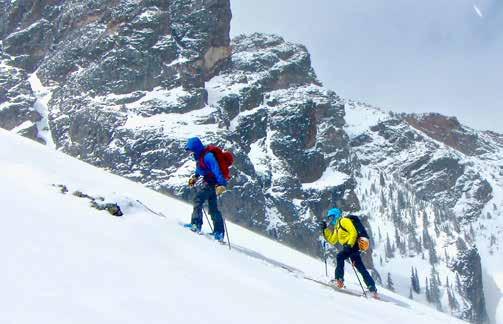

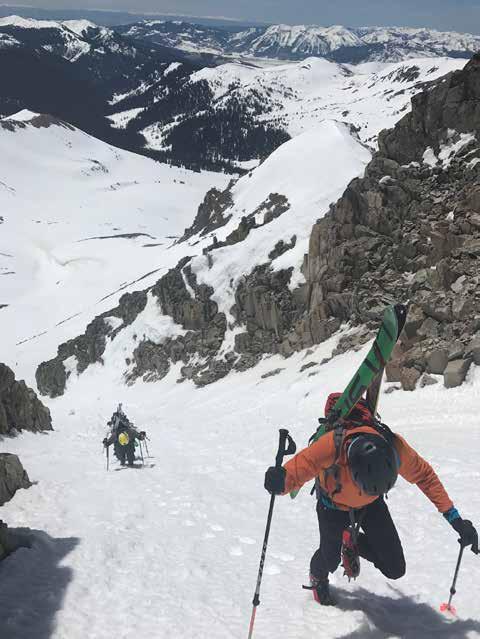



by Alex Menard
After almost 20-years of absence, groomed trails for skiers, snowshoers, and other users will be available at the Marble Mill Site Park this winter. Ute Meadows Nordic Center offered nearly 7.5-miles of groomed trails at the Darien ranch until nearly the turn of the 21st century. This private enterprise welcomed many happy skiers, snowshoers, and their dogs. Ute Meadows, which had a trail fee to cover costs, had a hard time competing with the free trail systems offered at Spring Gulch and Aspen.
Thanks to an investment in equipment and labor by Marble resident Hawkins Siemon, Marble now has the ability to provide a free packed and tracked system of trails at the Mill Site. Siemon has acquired a utility snowmobile, a roller for packing snow, a grader to level and renovate the snow surface, and a setter to make the tracks for nordic skis.
20% off store wide 15% off Pendleton
20% off store wide 15% off Pendleton
*excludes antiques, jewelery, artist handmade products
Trail planning took place on Saturday, November 14 at the Marble Parks Committee meeting, socially distanced outdoors at Thompson Park. Tim Hunter and Ron Leach represented the Town and provided input and map assistance. Trail construction took place the following day.
Brent Compton demonstrated his professional landscape skills with Siemon to quickly bring the trails up to the quality needed to allow machine grooming. Compton has also very successfully worked to eradicate weeds in the Mill Site, especially thistles and mullein.
This trail work builds upon improvements made by school groups led by the Roaring Fork Outdoor Volunteers (RFOV) this fall. Ben Sherman and Carl Nelson of RFOV instructed school groups including Carbondale Community School, Rocky Mountain School, and Marble Charter School (MCS) in the use of tools for trail construction.
The upgraded trail they worked on leads to and highlights Shop No. 4, which was one of the two shops constructed to produce the parts for the Lincoln Memorial. Besides the trail work, the school groups did a little industrial archeology excavation of two rubbing beds used for finishing and polishing marble pieces.
These large circular concrete pits were carefully dug out to about four-feet deep and yielded many valuable artifacts: Hardware, tools including files and chisels, electrical parts, and others. Some of these artifacts are now on display at the Marble Museum.



Although there are only a couple of miles of trails completed, this effort represents the start of one of the goals of the Marble Parks Committee, which is a non-motorized trail system for the town. The trails are narrow and allow for classic ski technique only and are not wide enough for skate skiing. They are wide enough for walkers, snowshoers, and fat-tire bikers as long as they stay off the ski tracks.
No motorized users are allowed, except electric bikes, and dog owners are expected to pick up after your buddies. Although short and narrow, the trail visits beautiful river overlooks and historic features. Picnic tables and a heated bathroom, courtesy of R.E.D. Graniti Marble Company, have been provided. Trails will be marked with blue diamonds.
There is much potential for expansion of these trails for year-round use. Many abandoned town streets and alleys could be included. The future goal is to connect the Mill Site with the school by a ski trail as every child at MCS has its own nordic skis and cross country skiing is the major winter physical activity.
The 2.5-acre property currently being purchased by the town will connect the MARBLE/marble Stone Carving Symposium with the Mill Site. The Marble Crystal River Chamber is now promoting alternative lower impact activities to attract other quieter visitors.
While an alpine ski area would cost millions and have a large impact, a nordic ski area has minimal impact and costs only in the thousands of dollars. Benefits include healthy, full-body exercise, easier access to the winter woods, and a boost to businesses that are currently very seasonal.
Many members say their church is “small but mighty,” which is exactly what Peter Bone tells those who inquire about the Marble Community Church that was moved from Aspen to Marble on a railroad car in the early 1900s.
Bone, who served as Chairman of the Church Council for four years before turning over the reins this year to Bob Rue, continues to serve as chair of buildings and grounds. His wife, Becky, is chair of missions and oversees the church’s efforts on behalf of those in need.
The Bones say those efforts change focus each quarter. Throughout the year, programs are directed locally, valley-wide, and world-wide.
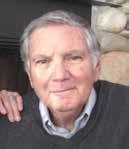
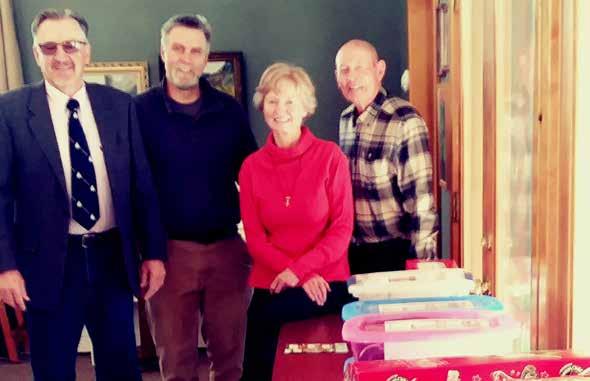
Peter and Becky and the new Council Chairman Rue, along with many others, are “amazed’ at the generosity of church members who willingly support outreach efforts financially and with contributions of time and talent.
“We don’t have to beg people to provide help and support,” Rue says. “The members of this church give readily. Most people are very active and can be counted on.”
Becky Bone agrees. “People like to be responsible. We try to be very specific in terms of how donations and in-kind help will be used.”
For example, the church is currently providing dozens of shoeboxes full of toys and needed supplies for children around the world. “Operation Christmas Child” is part of the Samaritan’s Purse, and the boxes will be delivered to children all over the world. The church does not know where they are going until after they have been delivered; last year they went to children in Mexico.
There are many similar programs the church supports, such as the several thousands of dollars that have been allocated for the past twoyears to a Safe House and Orphan Care facility in South Africa, which is under the leadership of Kerus Global Education.
The Bones and Rue are eager to point out that much of this willingness to be of help is due to outstanding church leadership, especially from Pastor Jon Stovall and his wife, Peggoty.
Stovall, who is beginning his 10th year as Pastor of the church, is a retired Air Force Chaplain who answered Marble’s call during a time when, as Becky Bone puts it, “the church found it difficult to find the money to pay bills.” She adds that the biggest key to the church’s success is Stovall. “He walks the talk,” she said.
Pastor Stovall emphatically states that “any church is more than a building and Sunday morning services. We stress outreach and bringing the good news to as many people as possible.”
That outreach begins at home where members have, for some time, provided financial support to a young family with a boy suffering from brain tumors. In addition, members cut and stack wood to help a local woman stay warm in the winter, shovel snow, provide financial support to the Marble Charter School. The church gives sleeping bags to the homeless, gift food bags to anyone in need (members or non-members), provides a Thanksgiving dinner to anyone, leads hikes, hosts meetings for the Town Council and other groups, support for Treasure Mountain Bible Camp and Marble Retreat, and carries out dozens of other projects too numerous to list here.
Stovall recently started a men’s group, "the ROMEOs" — Retired Old Men Eating Out — which meets monthly for various work projects, to
town and surrounding area allows for an opportunity to get acquainted and to invite people to church. “I’m always on the alert for ways to be of help to people,” he said.
Rue who, with his wife Lisa, serves as host of the Marble Retreat, says “the biggest takeaway” from what he loves about the church is that “we’re small but we have a big footprint throughout the world.”
In addition, Rue says he is “more at home in this church” than in any other church he has attended.
Sunday services are usually packed with regular attendees from as far away as Glenwood Springs, Snowmass, and elsewhere, including many visitors from around the country. Additional chairs are often provided; although, COVID rules have more recent-
hear the testimony of members of the group, and to have a regular social event. Stovall also carries out many other pastoral duties such as weddings and funerals, leading Sunday services, and counseling those in need.
“Jon makes himself and the church available to everyone,” attests Becky Bone.
Stovall says delivering food bags throughout the
ly limited attendance to smaller numbers.
The Rues, Stovalls, and the Bones, along with all church members (which includes a variety of age groups with many different political leanings) would like to invite anyone interested to attend Sunday services at 10:00 a.m. and to come to the planned Christmas Eve service at the church at 7:00 p.m.
For anyone needing help stretching their food budget, Gunnison County Officials currently have boxes of food available distributed through the Marble Community Church.
There is no charge to the recipient and no reservation is needed; boxes are available for an individual or up to a family of four and contain enough meals to last approximately three days.
Please call Pastor Jon Stovall at the church to arrange a pickup time for your box today, (970) 963-1464. Free Food Bags Available in Marble
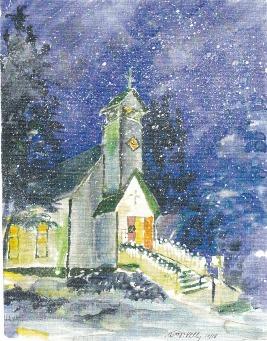
“Christmas Eve” by William N. Kelly

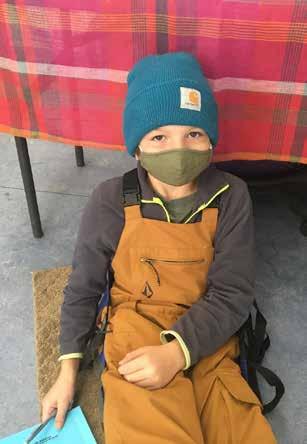
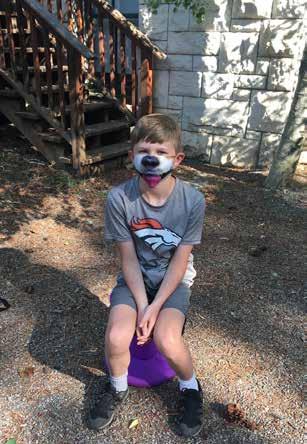
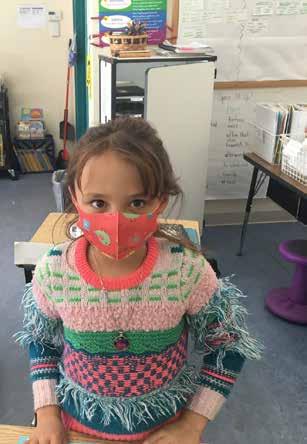
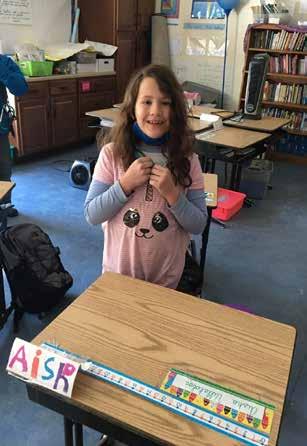
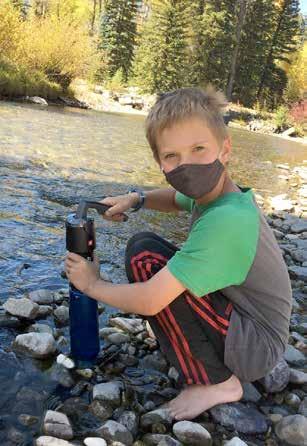
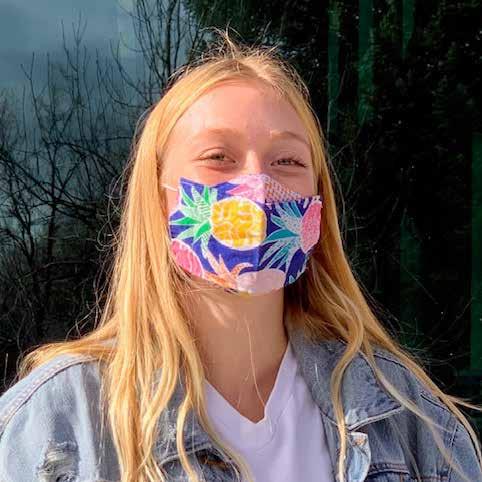
I sat down in front of the Carbondale Branch Library to interview Erica Savard, a senior at Roaring Fork High School who left Marble Charter School at the end of 8th grade in the spring of 2017. She attended MCS for a full nine years from kindergarten through 8th grade.
Here are some of the questions I asked Erica:
1. Did Middle School at Marble Charter School prepare you for high school?
“Yes, it did, and a lot more than I thought it would. It didn’t just prepare me for high school, but for life. Currently, I am taking a few classes at Colorado Mountain College and definitely the communication I learned from my teachers at MCS helped me a lot for my classes in high school and college. It also helped me a lot for the social aspect, the workloads, time management, and organization - actually more so than the actual work itself, but it has all been very beneficial.”
2. What are you doing now?
Erica is currently enrolled in high school, taking three CMC classes on-line, and has two jobs. She works at the Rec Center and at the new restaurant, Brass Anvil, both in Carbondale.
3. Where are you living? And do you think you will return to live in this area in the future? Erica lives in Glenwood Springs right now with her mom. She said she misses being in Marble. Eventually, she thinks she wants to come back and live in this valley after being gone for a while.
4. How are you involved at MCS with your Capstone Project?
“It started with a pretty broad idea for my Senior Capstone Project - wanting to teach kids about eco bricks, which is a plastic bottle filled with plastics that you can’t recycle. Since then, it’s evolved into a much bigger project that involves working with Mary Lewis, the 3rd-5th grade teacher at MCS, and incorporating more sustainability into their curriculum. Figuring out how to get the younger students aware of what's going on in our world is pretty cool to see, and so I chose to do that at MCS instead of somewhere else because I had gone there. I love that school, and I thought it would be easy to work into their system because sustainability is already talked about there.”
5. Future plans?
Erica says that she hopes to earn her associates degree at CMC by the end of 2021, before travelling to Costa Rica for a year to work with sustainability there. After that, she is planning to return to the U.S. to attend college majoring in sustainability and business. After returning from Costa Rica and going to college, Erica expresses a desire to go to other countries and help educate them as well with sustainability.
6. Do you have any advice for students at Marble Charter School? “Yes, for the younger ones, enjoy it as much as possible and make the most of your time at MCS memorable. But for the older ones - as eager as you are to get out, don’t take the last few months for granted. Slow down and be present because you’ll be out soon enough and I know you will look back and wish you were still there. I really believe MCS is what shaped me as a person.”
I enjoyed interviewing Erica, as her future plans seem very similar to mine, even if my plans to go to other countries are more to satisfy my own academic interests. It seems that MCS has produced a bright light for the future, a light of the type this world needs more than ever right now. I look forward to interviewing other alumni in the future.
Tanner Merritt, MCS 8th grader
The Enchanting Eagles and Optimistic Ospreys have been busy since the beginning of the 20202021 school year at Marble Charter School learning how to write Informative Writing Pieces to teach their readers about a topic. We all choose a topic that builds background knowledge, digs deep into our Science Standards and is part of our sustainability project this year so listen up!
Last month, Erica Savard led a presentation about plastics and pollution, she also participated in a disucion following the presentation and answered many questions from a very curious group. Ali Wooffard also shared her reflections during the discussion with the entire class focusing on what students can do to be more sustainable in their daily lives.
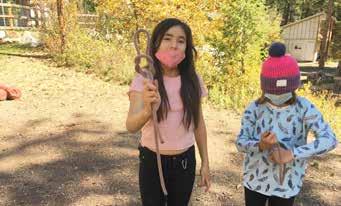
Ali Wofford
Humans affect the environment in positive and negative ways. I am going to tell you about both negative and positive ways humans make an impact on Earth’s resources.
First I will tell you positive ways humans affect the Earth. One way humans affect the Earth is we create environmental regulations to take care of Earth and make sure we are using the resources carefully.
Single Use Plastic by Loch Wempe
My Name is Loch and this is my writing piece on Single Use Plastic. Single Use Plastic are goods that are made primarily from fossil fuels. Another fact about Single Use Plastic is that they like to stick around for a while. The reason Single Use Plastic is not a nice thing and why it is best to use next to no Single Use Plastic is because it usually takes over 100 years to decompose. It would be nice if I could live that long! Here are some examples of Single Use Plastics: plastic forks and knives, plastic shopping bags, plastic coffee cup lids, plastic water bottles, styrofoam and plastic take out containers and, of course, plastic straws.
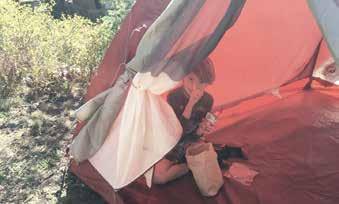
Now that you know a lot about Single Use Plastic, I expect you to cut down on the amount of Single Use Plastic you use. Thank you for listening to my work.
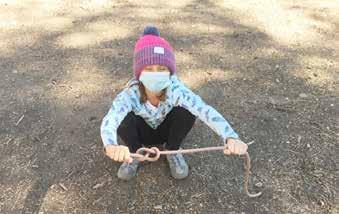
There are some special resources that come from
am going
is only found in
Marble, Colo. The Lincoln Memorial’s exterior is all Yule Marble. It is Marble that is 99.5% calcite. The size of the pieces are large so that it can make things like the Tomb of the Unknowns.
Finally I want to tell you that very unique resources come from Marble, Colo.
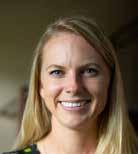
Liz Smith was sworn in as Gunnison County Commissioner for District 1 on July 14, 2020, when John Messner stepped down to accept an appointment by Governor Polis to the Colorado Oil and Gas Conservation Commission. She was returned to office on the November ballot for a four-year term beginning in January 2021.
You can reach her at eksmith@gunnisoncounty.org
As the newest member of the Gunnison County Board of County Commissioners (BOCC), I’d like to thank The Crystal Valley Echo for this opportunity to update folks from the other side of Kebler and Schofield.
When I visited Marble in late September, I confronted a deluge of reports from residents regarding ATV use, sustainable tourism, the absence of county law enforcement, and divergent perspectives of stakeholders on managing the consumptive and non-consumptive use needs on the Crystal River. Since that visit, I’ve heard similar complaints about the increasing environmental impacts of ATV use from ranchers, recreators, as well as people in surrounding communities, like Pitkin County.
Tourism this summer has stressed recreation management infrastructure in the Gunnison Valley and other rural communities across the state, though it appears Marble has experienced this to a greater degree and intensity. The BOCC is working on securing a meeting with key stakeholders (e.g. Gunnison County Sheriff’s Department, Town of Marble, White River National Forest, etc.) as soon as the weather and COVID-19 meeting conditions allow.
The logistical difficulties present for our rural Colorado communities attest to the challenges we face with our current communications infrastructure. Not everyone in the state can easily hop on a Zoom call. On this topic, state legislators recently requested ideas from commissioners for innovations that might be funded by investments in broadband from an economic stimulus and recovery package proposed by Governor Polis for the next fiscal year.
As if to illustrate the urgency in securing more reliable internet infrastructure, on November 19, a severed utility line near Montrose caused a communication blackout in the Gunnison Valley shutting down internet, cell phone, and emergency 911 services.
Plans for internet redundancy are in the works for the valley, but I’ve also been thinking about the broadband needs of rural communities across the state amid the uncertainty posed by COVID-19 as case numbers continue to rise. With many communities reliant on expensive or unreliable internet, completing schoolwork online or working from home is not always possible.
One of my suggestions is to look into emergency internet connectivity solutions for communities without broadband infrastructure, should it become necessary, so we don’t face the same challenges with connectivity we faced in the spring.
We have many other challenges ahead with COVID-19 continuing to spread across the state. In the valley, we have been busy in recent weeks delivering HEPA air filters to restaurants and businesses and urging folks to be more vigilant than ever when it comes to wearing masks, keeping distance, and limiting travel and gatherings with people who live outside our households over the holidays.


The Pitkin County Commissioners hold weekly work sessions on Tuesdays and bi-monthly public hearings on Wednesdays in our BOCC meeting room at the Pitkin County Administration and Sheriff’s Building. Both meetings are televised live and repeated on locater CG12 TV. They are also streamed live and available on the County website. Agendas are posted in the Aspen/Glenwood newspapers and on-line at www. pitkincounty.com. In this column, your District 5 Commissioner, George Newman offers his take on current matters. You can reach him at george.newman@pitkincounty.com
Dear Neighbors, Friends, Constituents:
This will be my 107th and final column as my third and final term as your County Commissioner comes to an end. In 2010, Lisa Wagner asked if I would write a monthly column for The Crystal Valley Echo to provide the community on the Board of County Commissioners (BOCC) issues and actions. Not being a writer per se, I took on Lisa’s request, and with the expert editing help from my wife, it became a monthly assignment for me. I hope I was able to provide you with more in-depth information or new information on the issues before us. As long as I have been doing the columns, I passed them to the Emma and Frying Pan Caucus members.
Representing the downvalley or 5th District, I was the point person for some of the critical issues for this area. Highlights included working with the United States Forest Service


STAY
Check

Volunteers are standing by to help with grocery shopping, essential errands and other tasks.
KEEP IN TOUCH
We know it’s tough
HAVE
Meals


(USFS), our US Senators, the top staff at the Department of Interior and Agriculture, Wilderness Workshop, and The Thompson Divide Coalition, where we were able to extinguish the oil and gas leases that were up for renewal in the Thompson Divide as well as setting the stage for permanent protection from any further industry exploration with Senator’s Bennett’s and Congressman Neguse’s CORE Act.
With the County Attorney’s office, we also negotiated the cancellation of the conditional water rights held by the West Divide Corp and the Colorado River District of the potential Osgood Reservoir, which would have put the Historic District of Redstone underwater as well as a potential dam at Placita.
It should be noted that this does not mean a future water developer could not file again for water rights. The past work by several Crystal Valley residents with the BOCC support in gaining a Wild and Scenic designation for the upper Crystal River is still critical in preventing the potential of a future dam on the Crystal.
Working with the Open Space and Trails Department, we acquired many different parcels as well as conservation easements in the Crystal, as well as in Emma and the upper Frying Pan, extinguishing development rights thereby protecting wildlife habitat, maintaining scenic
vistas, leasing for local agriculture operations, and expanding and enhancing our trail system for pedestrians, bicyclists, and equestrians.
I also had the opportunity to represent the county on several boards, including Roaring Fork Transit Authority (RFTA), where I chaired for two-years; Community Office for Resource Efficiency (CORE), where I chaired for 10-years; Aspen/Pitkin County Housing Authority (APCHA), where I helped set up its new governance structure; CDOT’S Intermountain Transportation Planning Region Committee; as well as being appointed by the former Interior Secretary Sally Jewell to serve on the Bureau of Land Management’s Northwest Regional Advisory Council.
Although some may not have agreed on a few of my stances and votes, I hope I was able to fairly represent your issues and concerns to Staff and the BOCC. It’s been a pleasure, and an honor, to have gotten to know so many of you and to have served you these past 12-years.
Congratulations to Francie Jacober. I am sure she will continue to work hard for us all to keep Pitkin County the special place it is.
Sincerely,
George Newman
The Crystal Valley Echo would like to congratulate Francie Jacober on her election to the Pitkin County Board of County Commissioners for District 5. Jacober is a retired teacher who has been a member of the Roaring Fork and Crystal Valley communities for 26-years, and currently resides up Prince Creek.
Jacober has committed to continuing the "What's Up with Pitkin County" monthly column giving rural Pitkin residents in the Crystal River Valley an update and connection to the happenings within our county government.
Look for Jacober's first column in the January edition of The Echo

Bank Loyalty Debit Card. Remember that every time you use it Alpine Bank donates 10 cents to nonpro ts right here.
Originally published by Collier's Magazine by Helen Worden
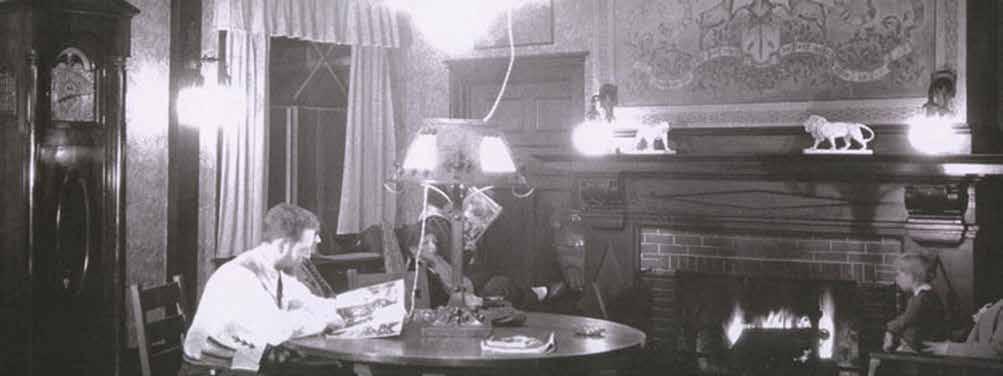
The following article appeared in the May 5, 1951 issue of Collier’s Magazine. This installment has been edited for space requirements; see the full article online at history.redstonecolorado.org/.
“I ain’t got no use for the wimmen. A true one may seldom be found. . .”
The sweet untutored voices of Paula Mechau and her four children – Vanni, 19; Dorik, 17; Duna, 15; and Mike, 13—carried the early Western mining-camp folksong to the farthest corner of the Colorado rural schoolhouse.
“. . . They use a man for his money, When it’s gone they’ll turn him down . . .”
Men in the audience nodded, clapped hands and stamped feet. Women smiled and shushed babies.
“It’s hard, ain’t it hard—”
Everybody joined in the chorus. Vanni Mechau’s guitar plaintively beat time. Dogs barked outside. Babies howled inside. It was a typical Mechau evening.
Then the ballad singers swung into "Go Tell Aunt Rhody."
“Go tell Aunt Rhody the old gray goose is dead. The one she’s been savin’ to make a feather bed.”
Their folk-song barnstorming has a dual purpose. They are bringing back folk ballads to the people whose ancestors composed and sang them in the first place and they are tracking down the lost folk songs of America, especially of the early West.
And, because of this ballad business, the Mechaus are the richer by a Bennington scholarship for Vanni; the offer of a Harvard scholarship for Dorik; a steady folk-song teaching job for Mrs. Mechau (pronounced Mee-Show); and a winter cabin for the whole family in
Colorado’s high mountain country.
Best of all, the frontier philosophy of those old songs has given the Mechaus a faith to live by. Paula puts it this way: “So many people seem to have lost deep human values in this modern commercial civilization. We sing these songs because they express emotions and ideas of great depth and feeling.”
It's a far cry from Western ballads to the cafeteria of a New York department store, but that is where the Mechau story began. On a rainy day in December, 1925, Paula Ralska and Frank Mechau happened to sit at a table for two in the employees’ cafeteria of Lord and Taylor. She was 18; he was 21. They introduced themselves. She told him she wrote advertising copy. He said he clerked in the book department. She dreamed of becoming a great actress. He hoped to paint great pictures. It was love at sight.
The first child was born at the American hospital in Paris in 1932. They were going to name it Vaughn, after Frank’s brother. But when the baby turned out to be a girl they called her Vanni. She was her father’s daughter.
Frank looked like exactly what he was – a true Bohemian with thick curly blond hair and beard, laughing eyes and an addiction to casual dress. Not by the wildest stretch of imagination could one think of him as domesticated, certainly not the sort of father who would ride the baby on his knee or floor-pace her at night. Yet that was what he did. And he found he could put Vanni to sleep with the folk song his mother had used with effect on him when he was a baby in Colorado.
At breakfast one morning, Paula asked Frank to write down the words.
That evening she rocked Vanni to sleep with the song while Frank worked. “I like this,” he said. “It sets the mood for my painting.”
A 1934 commission from the PWAP – the federal government’s Public Works of Art Project – for a series of post office murals depicting the early West took the Mechaus to Colorado. As a boy, Frank had often ridden horseback from Glenwood Springs, his home, to Redstone, a ghost mining town originally built by J. C. Osgood, of the Colorado Fuel & Iron Corporation.
Frank and Paula coaxed Mrs. Osgood to let them buy the superintendent’s house on the hilltop estate and the firehouse, an ornate stone building topped by a handsome bell. They managed the deal on a $2,000 federal home loan. In that firehouse-studio Frank painted Horses at Night for the Denver Fine Arts Library; Pony Express and Dangers of the Mail for the Washington, D.C. post office; and murals of roundups, runaway mustangs and wild cowboys for five other federal post-office buildings. There, he also produced paintings which now hang in the Metropolitan and Cincinnati art museums, the Detroit Institute of Art, and the Museum of Modern Art in New York.
Edward Bruce, director of the arts project, later commented: “Frank Mechau’s paintings alone would have justified the entire PWAP program.”
End of Part 1. See Part II in next month’s Echo.
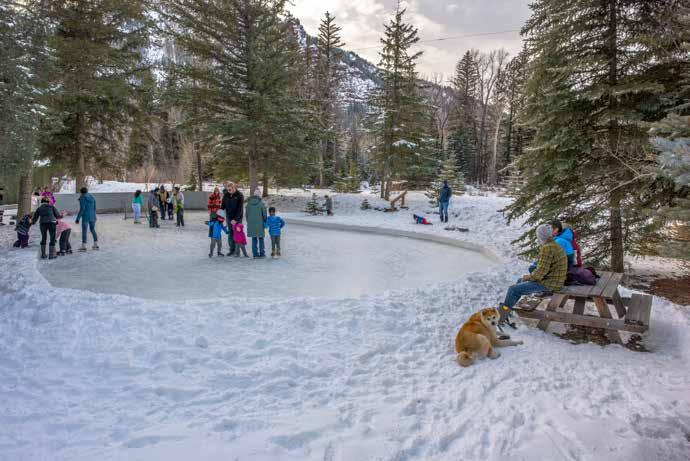

The RCA has created a marketing subcommittee to promote Redstone's accomodations, attractions, activities, and amenities to increase tourism revenues in Redstone. It is responsible for creating, overseeing, and revewing the tourism marketing program of the RCA. Business owners are invited to attend meetings held before the regular RCA Board meetings the first Tuesday each month at 6:00 p.m. at the Redstone Inn. If you have questions please feel free to contact DJ at DJredstone68@gmail.com