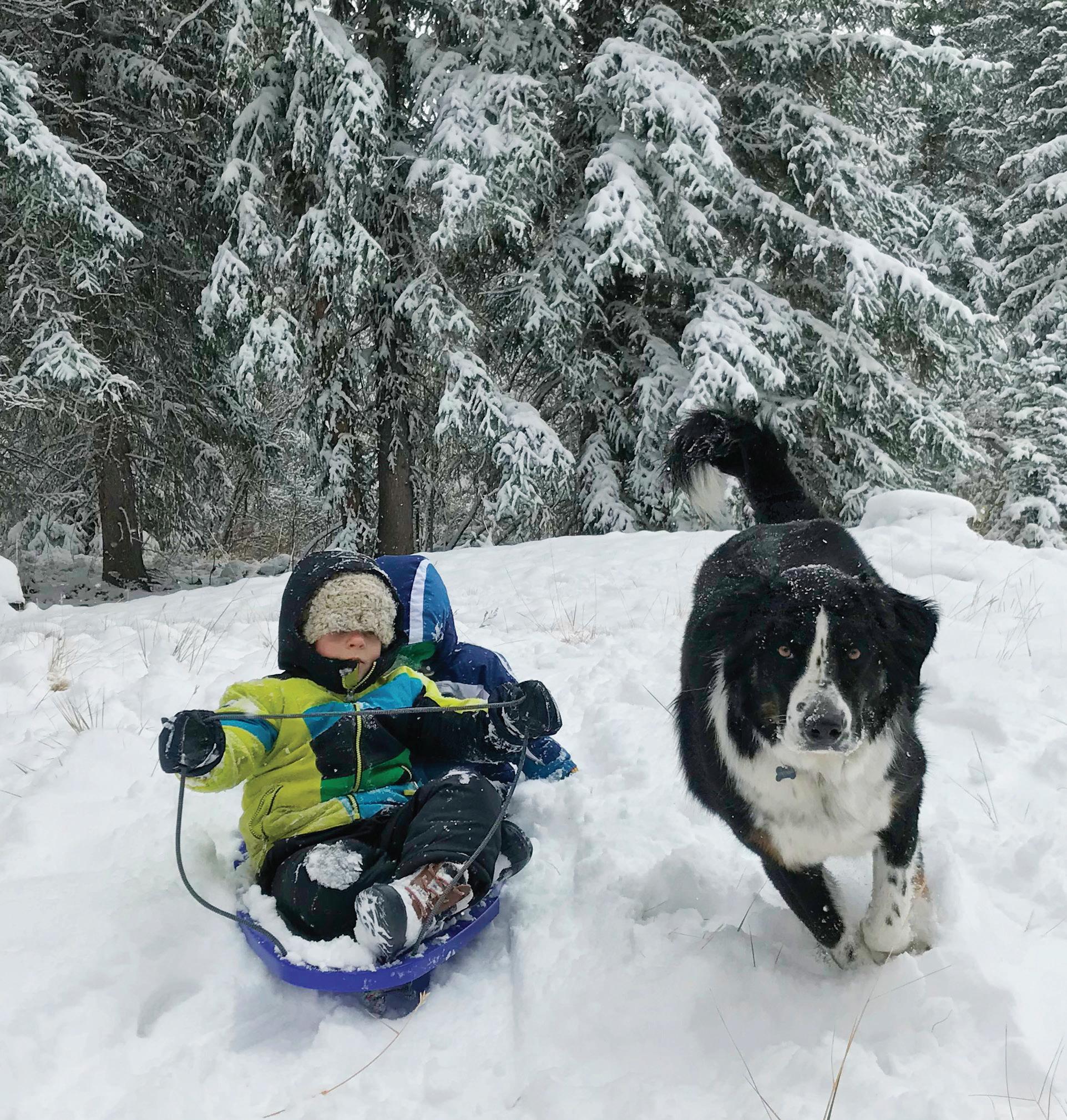

Gabriel and Belle Marine
while sledding with Myah Papayah.
Photograph by Heather Marine.
To Our Dear Readers,
What a wild ride this year has already been! Living through and navigating a pandemic has certainly proven to be frustrating with surprising rewards. We’ve seen properties flip, cornerstone businesses close, but also some much-needed love given many entities such as the Marble Millsite Park and the Redstone Museum.
As we begin to trade the golden Aspen leaves for snowflakes, we move into a season full of gratitude and giving. I have been constantly surprised this year by the amount of support this paper has received, and I am beyond grateful to all who contribute, from columns and editorials to advertisers, but also every single one of our readers. Thank you for keeping The Echo going!
Yet, more COVID restrictions loom overhead and we are also entering into a season that can result in a lot of isolation, even before adding the threat of viruses. I have heard over and over about struggles with motivation, anxiety, as well as symptoms of depression, and it’s important to me that you all know you are not alone and that even this very Editor struggles right along with you.
Therefore, I’m asking that you send us your photos all winter long. We want to see what you're up to, projects you're working on, and your triumphs and tribulations so that we may draw closer together while we will inevitably be apart. We are a community of resilience, and we are Crystal Valley Strong.
I’ll get this party started with the following photos. Please send all submissions to: gentryeh@hotmail.com
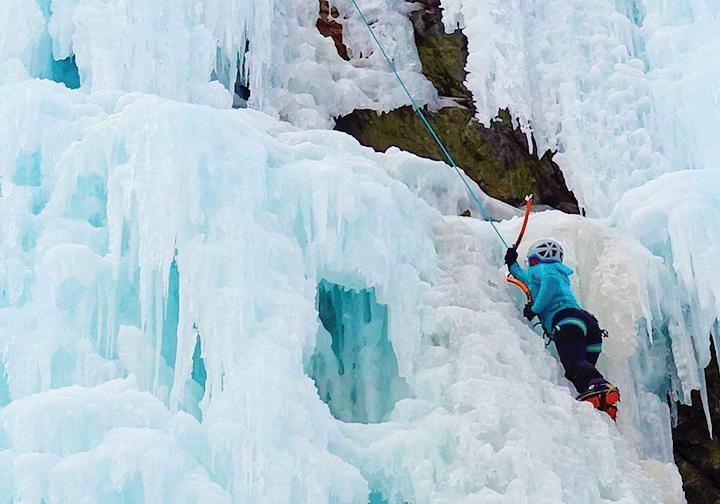
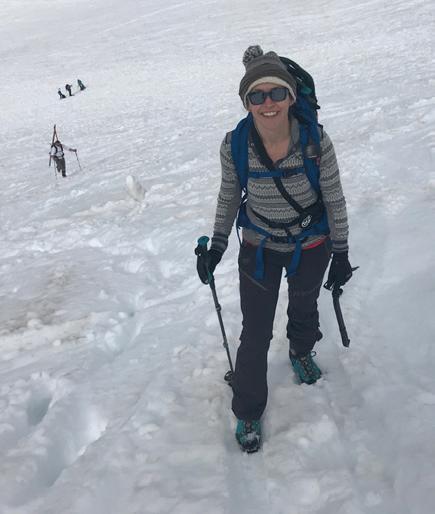
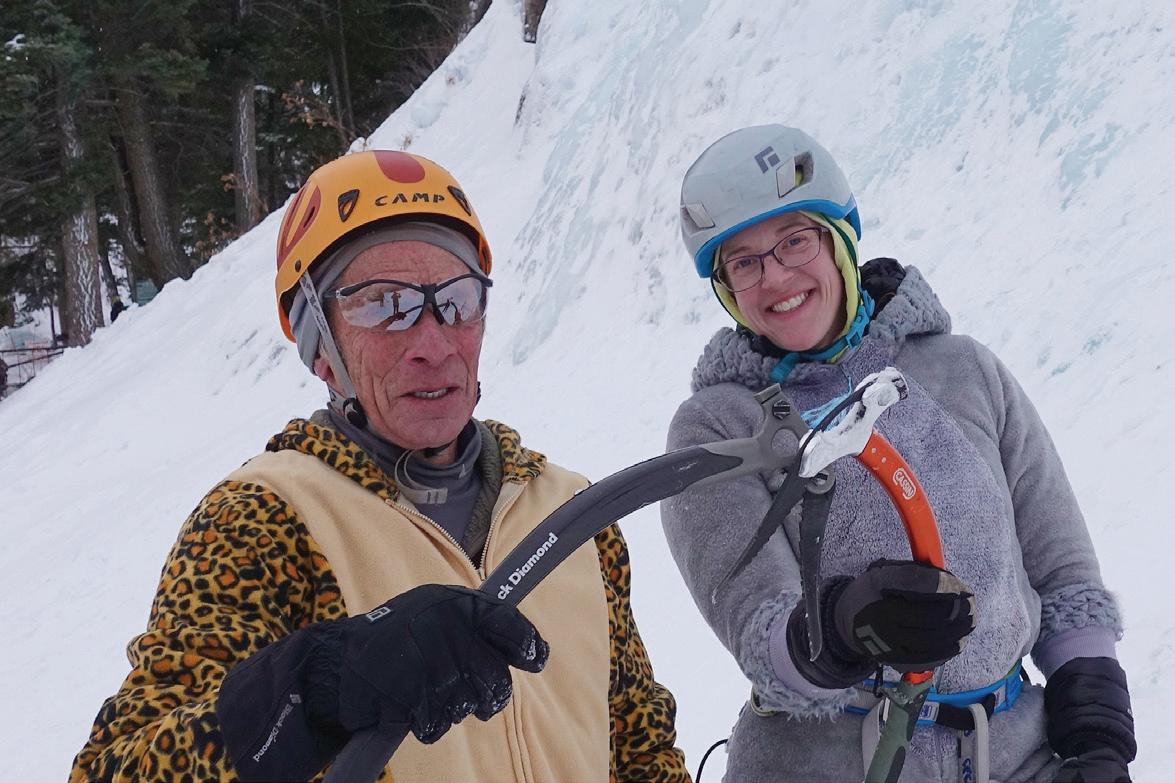
I am really looking forward to winter sports, changing my activities, and spending time with my partner in crime (aka "the Hubs)! Here I am climbing at Ouray's Ice Park in January; while we might not make it back this coming year, there's plenty of fun to be had right here in the Crystal River Valley.
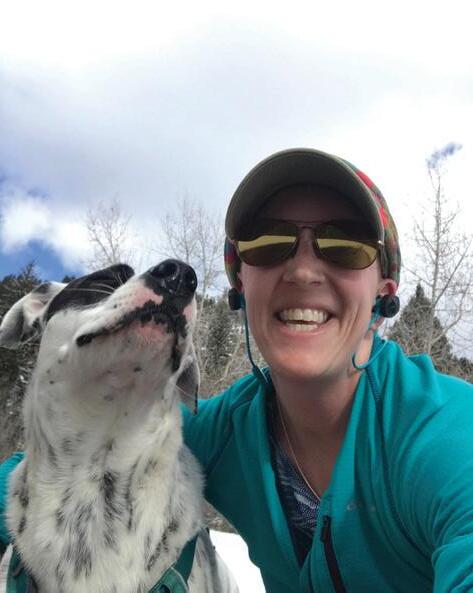
In case you don't already know, I love animals! This little guy turns two this month, and no matter what, I just can't get enough of him. Trace keeps me in stiches, whether he's chasing me on skis, snuggling, or providing a plethora of distractions while editing.

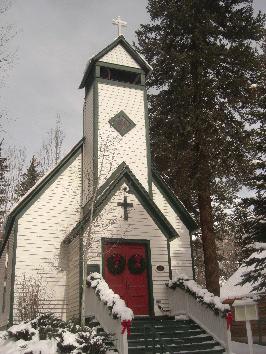
to the church in the midst of a cathedral



Marble Times
Mission Statement: To provide a voice for Crystal Valleyites; to bring attention to the individuals and local businesses that are the fabric of the Crystal Valley region; to contribute to the vitality of our small town life.
Editor • Gentrye Houghton CONTRIBUTORS
Russ Cunningham • Amber McMahill
Stephanie Deaton
ADVERTISING SALES
Gentrye Houghton • 970-963-1495
GentryeH@hotmail.com
DISTRIBUTION
The Crystal Valley Echo is published monthly, and is distributed throughout the Crystal Valley.
NEWSPAPER BOX LOCATIONS:
Carbondale City Market • Village Smithy
Carbondale Post Office • Redstone Inn
Propaganda Pie • Marble Hub
FOR SUBSCRIPTIONS
Please send $40 for print or $25 for digital editions along with address information to:
The Crystal Valley Echo 364 Redstone Blvd. Redstone, CO 81623
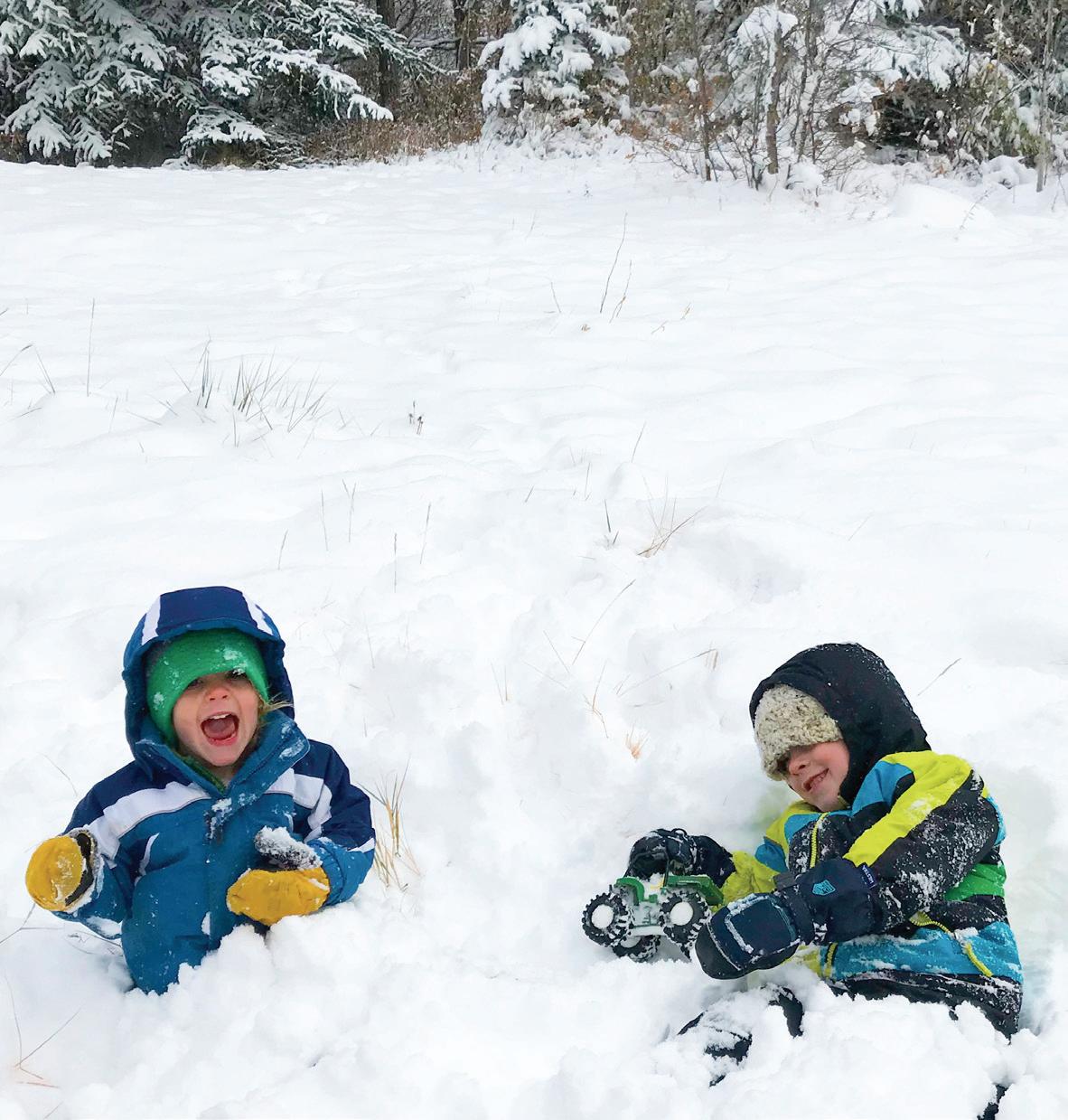
age 2, and Gabriel Marine, age 4, are rarely seen without the company of their trusty companion, Myah, age 3. They all love the snow and being outside. These two Redstone youngsters enjoy camping, books, playing pretend, and their mother, Heather, shared that there is constantly lava and monsters everywhere, "and sometimes fire." Belle can't wait until she's big enough to ride her bike, but most of all wants to do everything her big brother is doing. Gabriel loves cars and his dumptruck, and wants to play basketball and soccer.
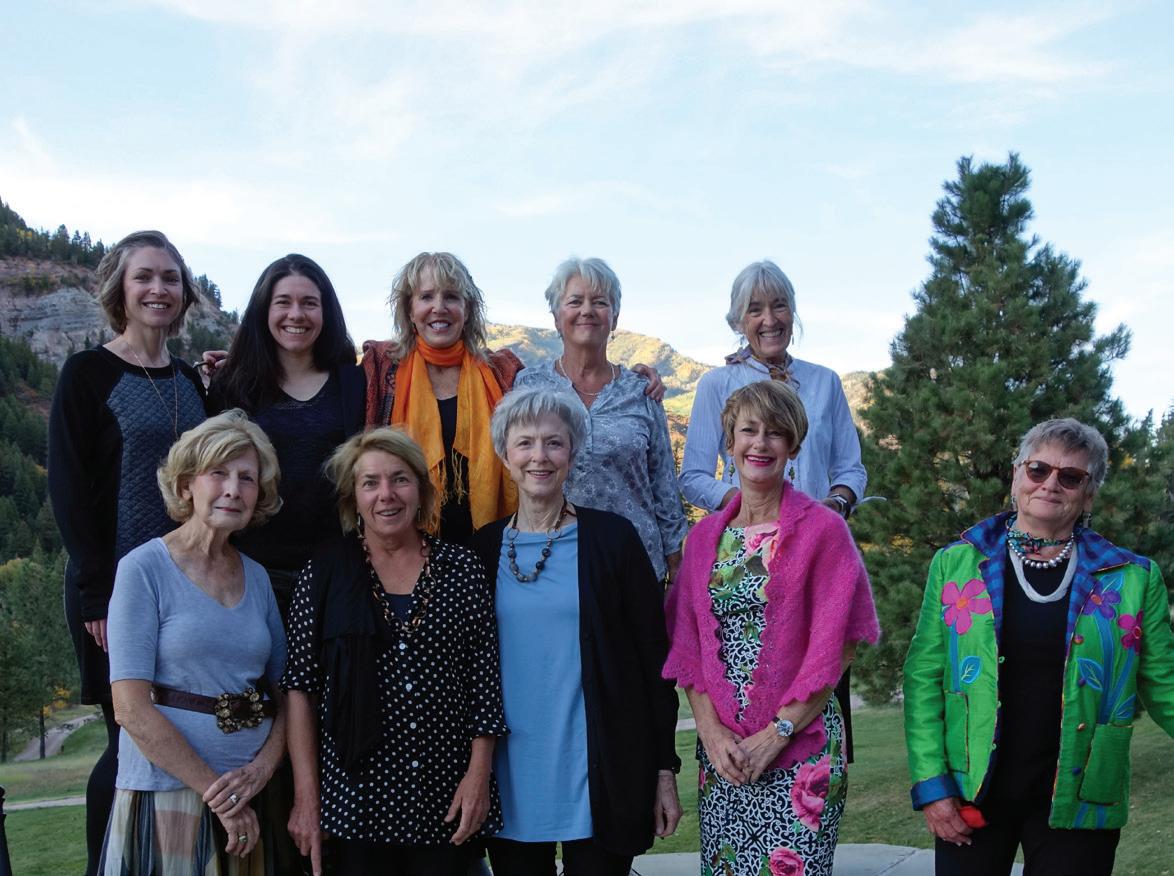
2020, you have challenged and changed the norm in all areas of our lives. For the Redstone Art Foundation (RAF), it has meant the canceling of the 2020 Labor Day Art Show, an unfortunate choice to have to make on our 25th year. Yet, it’s given us time to turn inward and an opportunity to reinvigorate.
The RAF has been busy over the past few months. Our milestones include:
Awarding the Jack Roberts Memorial Scholarship to Sara Ramirez
Sara is a talented and driven graduate of the Roaring Fork High School. She was awarded $2,500 towards her studies of education in art therapy at Colorado State University.


Through a generous donation from the Bob and Joyce Rankin Fund at the Aspen Community Foundation, we were able to replace our 20-yearold, beat up display panels. The new panels are of professional quality, easy to assemble, and are complete with lighting.
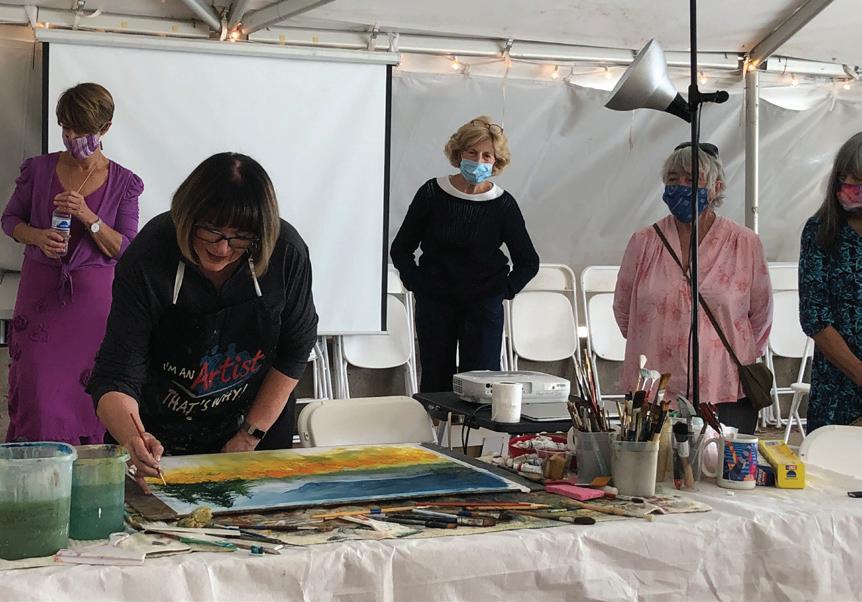
In September, we hosted a workshop in the tent at the Redstone Inn with Connie Hendrix. Hendrix is a nationally and regionally known sculptor and painter who lives in Marble with her husband. She has been very prolific over the years sculpting, painting, and teaching all while earning a living in advertising. Hendrix shared an interactive presentation about her journey as an artist as well as a watercolor demonstration with a group of about twenty.
Last month, the RAF Members and guests toured the Powers Art Center in Carbondale featuring the work of Jasper Johns and other contemporary artists. In accordance with Pitkin County restrictions, we had two groups of no more than ten.
To show our appreciation to Bob and Joyce Rankin for their generous donation, we hosted an outdoor hors d'oeuvre and social hour the beginning of October at the Redstone Castle. We could not have asked for a better evening. Bob and Joyce Rankin, the RAF Board Members, as well as some spouses, and Steve and April Carver, attended the reception.
Over the years, the RAF has had the same mission but never the same logo or branded identity. Over the summer, we collaborated to select a logo that more appropriately represents who we are as well as presenting clarity in our mission, values, and vision.
We now have a clear direction and plan for the future, and are excited to continue to promote and encourage the arts in the Crystal River Valley!
As part of our long-range plan, we have been developing a new website. The final details and revisions are being completed now, and we are excited for it to launch. Be sure to check it out: RedstoneArtFoundation.org in the coming weeks.
On Saturday, December 5th from 11 a.m. to 6 p.m., we will present the Redstone Holiday Market. It will be a European style festive gathering where you can find unique gifts and holiday decorations. Local artists will be partnering with Redstone businesses to offer their fairs.
Artists will be selling works on the porch or under a tent of businesses located along Redstone Boulevard. Participating businesses will start at the south end of town at the Redstone Inn and continue north to Crystal Dreams Bed & Breakfast. You’ll find something unique at each location.
The Church at Redstone will be offering COVID-friendly refreshments. Please utilize parking available at Elk Park accessible along Highway 133, the Redstone Inn, or the Church at Redstone.
Cash or check preferred; remember to mask up and socially distance to make it a fun, safe night!
Through a collaboration with Amy Kimberly at Carbondale Arts, we were asked to participate in a valley-wide campaign to inspire the creative economy. From November through the end of Decem-
ber, the campaign will be featuring local art and artists from Aspen to Carbondale to Redstone.
It’s an amazing campaign that will shine a lot of light on arts in the Roaring Fork and Crystal River Valley. We are excited to see it unveil. Be sure to listen to KDNK and read your local newspapers for more information.
As you can see 2020 has resulted in an exciting year for the Redstone Art Foundation. It may not have been everything we expected but our talented members made it more than we could have hoped for amidst COVID restrictions and shutdowns.
Moving forward, we will be announcing more events and workshops. Be sure to check out our website’s event page for more information as it becomes available. If you are wondering how to join us, consider becoming a volunteer!
Email us at info@RedstoneArtFoundation.org



Usually by now, you would have received a letter in your mailbox informing you of our annual membership drive. Yet due to COVID, we recognize that many may not be able to contribute to RCA this year. Therefore, we're asking those who are able to consider renewing, joining, or donating.
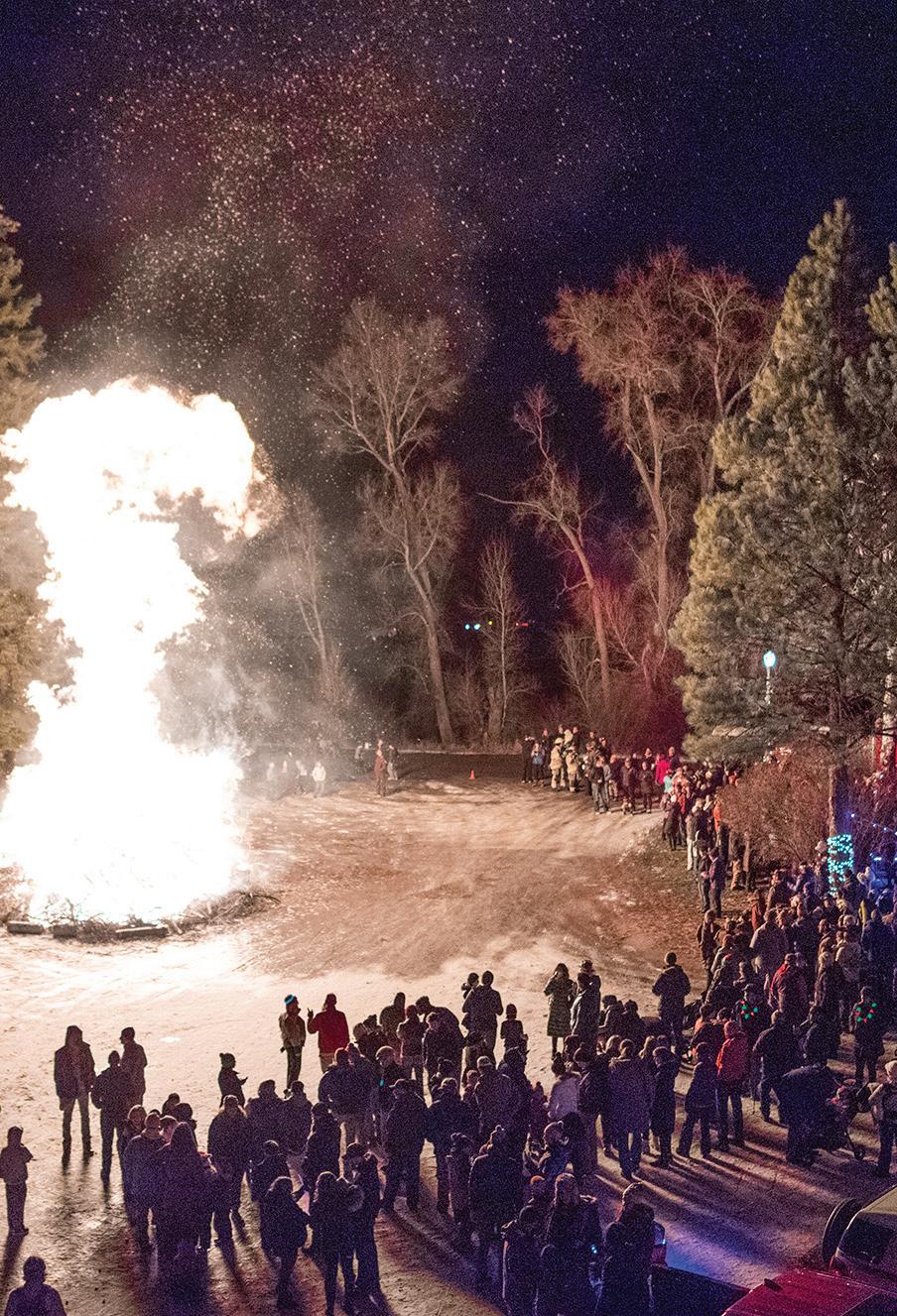
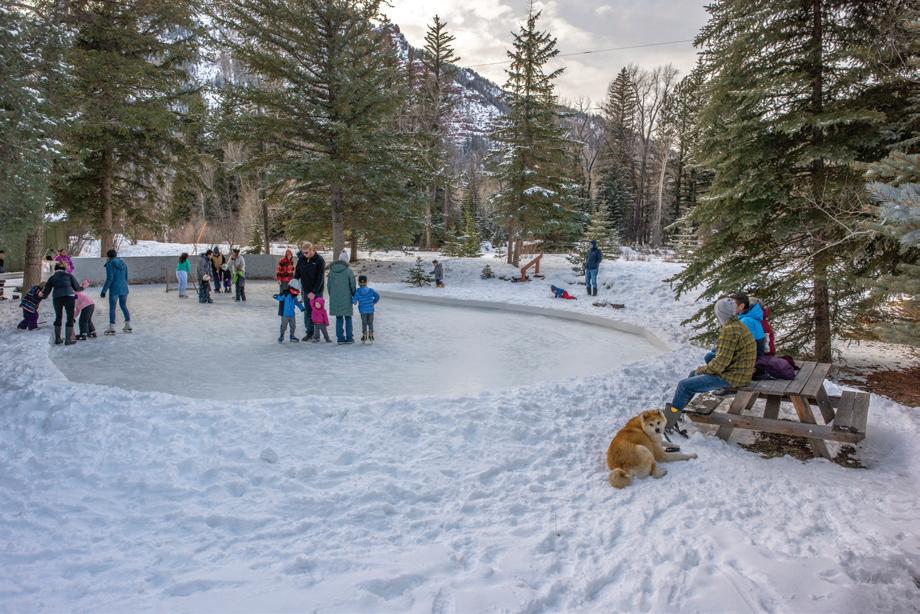
This has been a very different summer for all of us, and while we've only been able to hold less than a handful of meetings and practically no events (such as the ones photographed here), the RCA Board continues to be hard at work. While your contributions will go towards the hosting of future events, we are still using funds to manage the cleaning of the bathrooms and trash removal at Redstone Park, managing composting service for the community, and of course, we still plan to erect and maintain the skating rink during the 20-21 Winter season.
We ask that those who can to please renew your membership, we also welcome you to join RCA, or provide an additional contribution so we may continue bringing our community together as safely and cautiously as we can.

The RCA has created a marketing subcommittee to promote Redstone's accomodations, attractions, activities, and amenities to increase tourism revenues in Redstone. It is responsible for creating, overseeing, and revewing the tourism marketing program of the RCA. Business owners are invited to attend meetings held before the regular RCA Board meetings the first Tuesday each month at 6:00 p.m. at the Redstone Inn. If you have questions please feel free to contact DJ at DJredstone68@gmail.com
All dues received after August 31, 2020, will be applied to 2021 fiscal year.
Redstone is an unincorporated village that relies completely on donations and volunteerism spearheaded by the Redstone Community Association (RCA) Your membership dues directly fund RCA projects and events.
“Do you want to see what we’ve done?” Rochelle Norwood says to me at the end of our interview, it's more as an enthusiastic lure than a question.
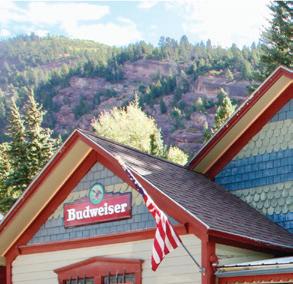
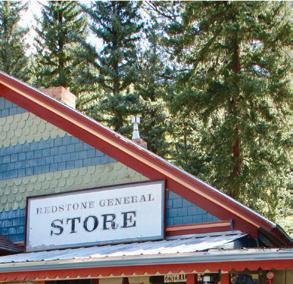
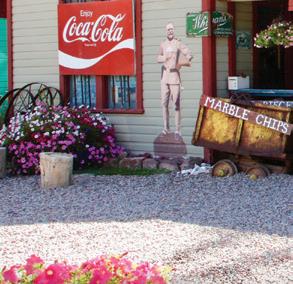
Stepping through the entrance of the Redstone General Store in late October was seemingly familiar, yet not familiar at all. It’s still the same little historic miner’s cottage but with empty shelves as Norwood and Rebecca "Oriana" Bier-Moebius clean, rearrange, and implement their vision.

The Redstone General Store emerged with new ownership earlier last month: Oriana and her husband, Tyler.

Bier-Moebius is the daughter of Jeff Bier and Anne Cox, and was born and raised at Avalanche Ranch. She shared her excitement to be back in Redstone as memories of her childhood come flooding back and she looks forward to creating memorable experiences for future generations.
Norwood came to the valley in January 2008, right after earning her degree, and is involved with the Africana Village of Peace project that supports building a village in Ghana, Africa. She is an artist: Creating art through sewing, a chocolatier, and a designer for the Green is the New Black Fashion Show.
“Redstone will certainly receive a burst of vitality as she steps into her role as GM of the Redstone General Store,” assures BierMoebius.
Norwood spent this past summer traveling and encountered many small towns. She shared that she was drawn to general stores in these areas. “I’ve seen general stores all over the world and how they function, and how important they are to each community,” she explained. “It gives me chills for the General Store to thrive here in Redstone.”
Both Norwood and Bier-Moebius are avid outdoor enthusiasts and share a deep love for nature. “We met and became sisters through Rebekah’s Lodge in Carbondale, Colo, and both continue to volunteer with the organization, where love, truth and, friendship in service are the guiding principles,” says Bier-Moebius. “It is from this intention that we embark on this co-creative journey in business.
“Once I knew Rochelle was interested," she continues, "there was great energy and I knew providence would come. This whole process has been really easy.”
“ZING!” Norwood interrupts. Both women laugh and add, in unison, “It’s been downright fun!”
They are looking forward to opening the General Store at the beginning of January and begin their service of nourishment to the community.
Bier-Moebius explains, “The purpose of the store is to be a pillar of the community on the Boulevard, and continuing to encourage the creative spirit already that exists here. We are excited to have a place where our children can work and give back.”
They will “level up” products and services seen inside the store, with the intention to source as much locally while pulling from other communities near and far, all while maintaining sustainability values.
One question from many locals is if this means

there will be ice cream once again on the Boulevard? And the answer is, you bet your boots!
“We would like to thank Michael and Lisa for carrying the torch for the last 13-years,” added Bier-Moebius. “As well as extending gratitude to Tyler Moebius, Jeff and Janette Bier, and Chris Lawrence for encouraging, supporting, and taking the leap with us. The Redstone General Store will most definitely be a Ruby in the Rockies.”
For more information, shoot them an email at TheRedstoneGeneralStore@gmail.com, or just stop by.
“Our door remains open even though we aren't actually open," beams Norwood. "We love meeting everyone!”









There have been five major ice ages throughout our earth’s history. Two occurred during the Precambrian Era (4,600 — 541 (+/-) million years ago, or mya), two during the Paleozoic Era (542 — 251 mya), the second Paleozoic ice age lasted 100-million years, a time during which the deposition of the Leadville Limestone and the Maroon Formation happened in Colorado. Finally, the last ice age began 2.6 mya in the Pleistocene Epoch, for which we are still living through.
effect on the climate.

During these ice ages, there are glacial and interglacial periods. Glacial periods are characterized by large continental ice sheets, during interglacial periods the large ice sheets are absent. The most recent glacial period began about 125-thousand years ago (kya) and reached the maximum ice stage about 18 kya, according to NOAA's National Climatic Data Center.
During the maximum Pleistocene ice stage, continental glaciers covered all of the Arctic — Canada, the northern portion of the United States, and all of northern Europe and Asia. Also, Antarctica was covered by an ice sheet that extended northward into South America.
These continental ice sheets extended to approximately 42° to 45° latitude in both the northern and southern hemispheres. Alpine glaciers existed in higher mountain elevations outside of these latitudes. Aspen, Vail, and Steamboat Springs are all close to the 40° parallel and therefore may not have been affected by the continental ice sheets, but experienced Alpine glaciation in the higher mountain regions.
That’s right campers, we are living in an interglacial period of the Pleistocene Ice Age! Homo sapiens existed during the maximum ice period but in such small numbers and “stone age” technology has to be a negligible
Between 18 kya and 12 kya, the climate warmed and the earth entered into an interglacial phase. With all due respect to politicians and the media, humans did not cause climate change, they exacerbated the rate of warming by emitting greenhouse gases into the atmosphere during the past several centuries.
Glacial and interglacial cycles are caused by the interaction of several of the earth’s processes including but not limited to: The global position of continents, the earth’s magnetic field, the shape of earth’s orbit, and, finally, the planetary axis tilt and wobble. All of these factors affect how much solar radiation reaches the earth, especially in the northern hemisphere which has a profound effect on global climate patterns.
Glaciers form over thousands of years when more snow and ice accumulate during winter months than melt, or sublimate, during summer months. As the snow accumulates, the glacier increases in thickness and begins to move down the valley driven by gravity.
The glacier moves by sliding across bedrock on thin layers of water at the glacier’s base. This water is derived from three processes:
1. Pressure solution — the glacier’s weight melts the lowermost ice layers;
2. Contact melting — the earth’s near-surface crustal temperature is approximately 50° F and melts the ice;
3. Percolation — surface water percolates (filtering gradually through a porous surface or substance) down from the glacier’s surface through cracks in the ice.

retreat are commonly one to two-feet per year, depending on local climatic conditions and glacial thickness.
Pleistocene glaciers varied in thickness from a few hundred feet to a few thousand feet thick (Figure 1). Advancing glaciers are an efficient erosional mechanism that scours the underlying bedrock, incorporates large boulders from the scoured surface into the ice mass, and leaves a lasting “footprint” on the landscape. This glacial footprint is described in terms of glacial geomorphology (the study of earth’s form and structure).
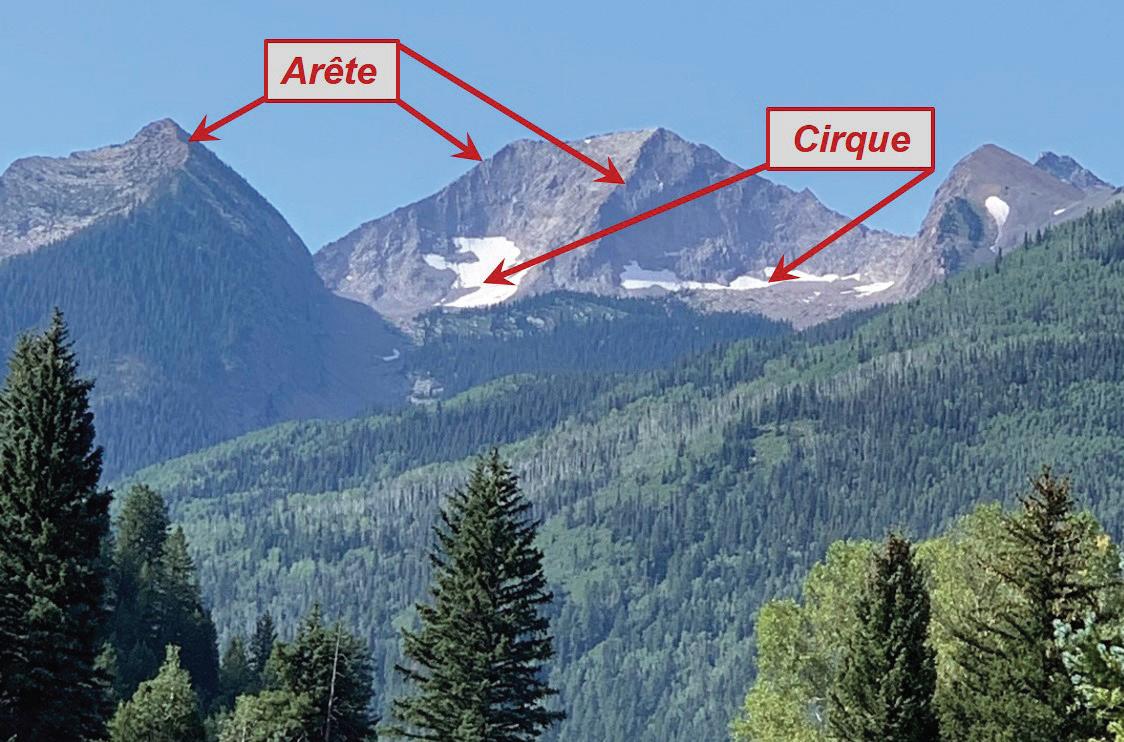
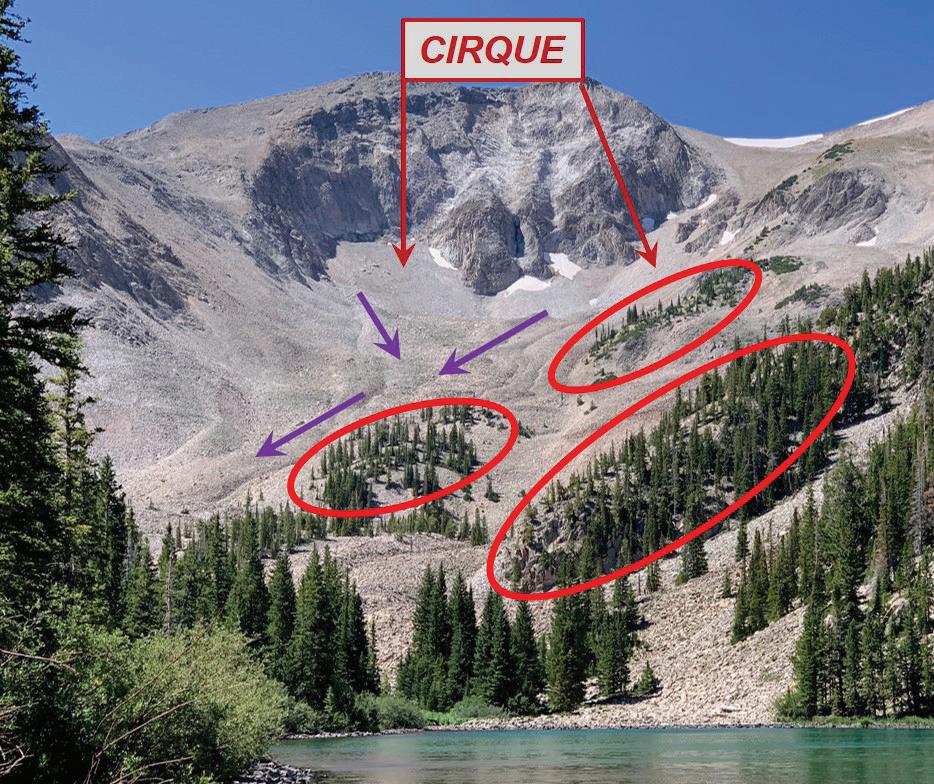
Alpine glaciers begin in high mountain elevations near the crest of peaks. The glaciers scour out a bowl-shaped depression called a cirque. If another glacier forms on the same mountain but in an adjacent drainage valley, the new cirque is separated from the first cirque by a ridge called an arête, or a sharp mountain ridge (Figure 2).
As the glacier advances down the valley, it scours the valley walls and floor, again incorporating more sediment into the ice mass which increases the abrasive ability of the glacier. The valley scouring changes the valley shape from a V-profile typical of river valleys into a U-shaped valley typical of glaciated valleys.
The upper portions of the Crystal River Valley are a U-shaped glaciated valley and can be clearly seen from McClure pass on Highway 133 looking southeast upstream.
For example, Raspberry and Milton Creeks flow from the mountains southwest of Marble into the Crystal River south of the landing strip along County Road 3, just outside of town. When the principle valley is filled with a thick ice sheet, the feeder valleys only erode down to the principle valley ice surface level.
Then, as an interglacial stage begins and the main glaciers retreat, the ice thickness decreases and the feeder valley floor is topographically above the principle valley floor. This is called a hanging valley and during runoff season or any high precipitation season, waterfalls are created from the hanging valleys into the principle stream valley.
Contrary to the erosive nature of advancing glaciers, retreating glaciers deposit sediments that were incorporated into the ice mass. Sediments deposited along the ice margins are called lateral moraines, sediments at the glacial toe are called terminal moraines and represent the farthest down valley glacial advance.
The glacier ice thickness can be inferred from the moraine height. The melting ice creates streams that transport sediments away from the glacier and deposits them on the outwash plain. These sediments are poorly sorted (grain size from silt and sand size to cobbles and boulders several feet in diameter).
Rock Glaciers
Rock Glaciers in Colorado usually occur at elevations between 10,000-feet and 12,000-feet; higher when they develop on 14ers. They form in previously glaciated terrain and are pervasive in cirques found in the Elk and the Sawatch Ranges.
In the Elk Mountains, a topographic ridge trends south-southeast from Chair Mountain (12,721-feet) to Ragged Mountain (12,094-feet). This ridge is an arête and separates the Buck Creek basin from the Crystal River Valley.
Rock glaciers exist on both flanks of the ridge but predominantly occur on the east-northeast slopes facing the Crystal River Valley. This ridge consists of seven peaks higher than 12,000-feet, five of which are unnamed. This ridge is also the boundary between the Gunnison and White River National Forests.
There are more than a dozen rock glaciers along this ridge that all originate in cirques just below the ridge crest. The rock glaciers consist of fragments eroded from the substrate, bedrock or glacial moraine deposits, and rockfall from the cirque walls. Rock glaciers consist of poorly sorted sediments, large angular blocks (>5-feet) with smaller clasts (fragments of pre-existing minerals and rock) interspersed with sand and silt between the large blocks.
Rock glaciers contain water in pore spaces between the rock fragments. Some rock glaciers contain ice just a few feet below the surface. There is a continuum of interstitial fluid in rock glaciers: One end member has no fluid, only air; the mid members are water or water and ice; and the other end-member of the continuum is solid ice. The interstitial fluid content assists in the downslope movement of the rock glacier.
B. Bryant (1971) measured nine feet of displacement over four years (two feet per year) on two rock glaciers near the Maroon Bells. Comparable creep rates have been measured on rock glaciers in Colorado’s Front Range as well.
P.W. Birkeland (1973) studied seven rock glaciers on Mt. Sopris, some in excess of a mile in length, and determined the rock glaciers are not all the same age and have multiple periods of movement. Some rock glaciers are active and are currently creeping downhill while others are inactive and have soil profiles and surficial vegetation (Figure 3).
Finally, for the intrepid Mt. Sopris hikers, the rock glaciers may be the last obstacle to reaching the summit for those who have inadvertently wandered off the trail!
brought to you by the Colorado Avalanche Information Center
Taught by professionals, pro athletes, accident victims and rescuers, the Know Before You Go (KBYG) program gives you a peek into the power of avalanches, helps you understand when and why they happen, and helps you navigate the mountains while avoiding danger. KBYG doesn’t tell skiers, snowboarders, and snowmobilers to stay home. Instead you are given the tools to get out and have fun safely.
If you are interested in the KBYG program, The Colorado Avalanche Information Center (CAIC) offers an on-demand and e-learning version at www.avalanche.state.co.us/education/caic-programs/know-before-you-go-colorado/. Learn about safety while remaining safer at home. You can also search for CAIC or KBYG on the web.
More avalanche safety and backcountry recreation information to come in the December issue of The Crystal Valley Echo
Russ Cunningham is a geologist living part-time in the Crystal River Valley. He has been practicing geology over 40 years after receiving a Master of Science degree in 1978. Cunningham has worked internationally as well as in numerous regions of the United States while in the oil and gas industry helping America become energy independent.

FIRE EMS RESCUE
The Board of Directors of the Carbondale & Rural Fire Protection District will be discussing the proposed 2021 budget at their regular monthly meeting.
Wednesday, November 11, 2020 11:00 a.m.
Carbondale Fire Station at 301 Meadowood Dr., Carbondale Or via Zoom https://us02web.zoom.us/j/6657553341 PASSCODE 81623 or (346) 248-7799 Meeting ID: 665 755 3341 Passcode: 81623
de Protección de Incendios de Carbondale y Rural La Propuesta del Presupuesto 2021
FIRE EMS RESCUE
La Junta Directiva del Distrito de Protección de Incendios de Carbondale y Rural estarán hablando sobre la propuesta del presupuesto 2021 en su junta mensual.
Miércoles 11 de noviembre 2020 • 11:00 a.m.
de
en Carbondale: 301 Meadowood Dr., Carbondale Or via Zoom https://us02web.zoom.us/j/6657553341 PASSCODE 81623 or (346) 248-7799 Meeting ID: 665 755 3341 Passcode: 81623
Winter is hard for many people. Dropping temperatures drive people indoors. Daylight comes later and disappears earlier. Soon, flu season will begin, and outdoor gatherings will become impractical or impossible. Not to mention that we’ve been in a pandemic since the first of the year. Add to the mix a dash of economic instability along with a spoon full of social unrest and it’s no surprise that depression in American adults is on the rise.

As winter looms in the not-so-distant future these problems are likely to worsen, say mental health experts. At the time restrictions began, it was during a relatively mild spring.
What if we are in store for a long, hard winter? What if things get difficult again? What can we do now to prepare our future selves for a safe and healthy pandemic winter?
Unlike the shock most experienced when much of the state shut down this past spring, we can be ready come winter. We can trust that this time we will not be caught off guard because we now know so much more about both the coronavirus and ourselves.
Take time to reflect now, and honestly ask yourself what helped during the first part of the pandemic and what resulted in negative effects mentally and physically. This will help you plan for the worst, while still hoping for the best.
What to Know: Seasonal Affective Disorder
Seasonal Affective Disorder (SAD) is a type of depression that appears with the changing seasons. It usually occurs during the fall and winter months, when there is less sunlight and improves with the arrival of spring. It is important to note that SAD can occur in the summer too, although it is less common.
According to the American Psychiatric Association, indications of SAD can vary from mild to severe and can include symptoms such as:
• Feelings of unhappiness
• Loss of interest in activities you once enjoyed
• Changes in appetite, specifically eating more and craving carbohydrates
• Change in sleep patterns
• Loss of energy or increased fatigue regardless of sleep
• Increase in purposeless physical activity (inability to sit still, pacing, handwringing)
• Feeling worthless or guilty
• Difficulty thinking, concentrating or making decisions
• Thoughts of death or suicide SAD may begin at any age, but it typically starts between the ages of 18 and 30.
Even if you are not experiencing Seasonal Affective Disorder, you may become anxious this winter. According to psychologists, there are three things we can start doing now that will increase mood and help us combat seasonal depression and anxiety.
Try to get outside in the fresh air every day and move. Starting to exercise can be difficult when you are depressed and feel exhausted, but research shows that your fatigue will improve if you keep it up.
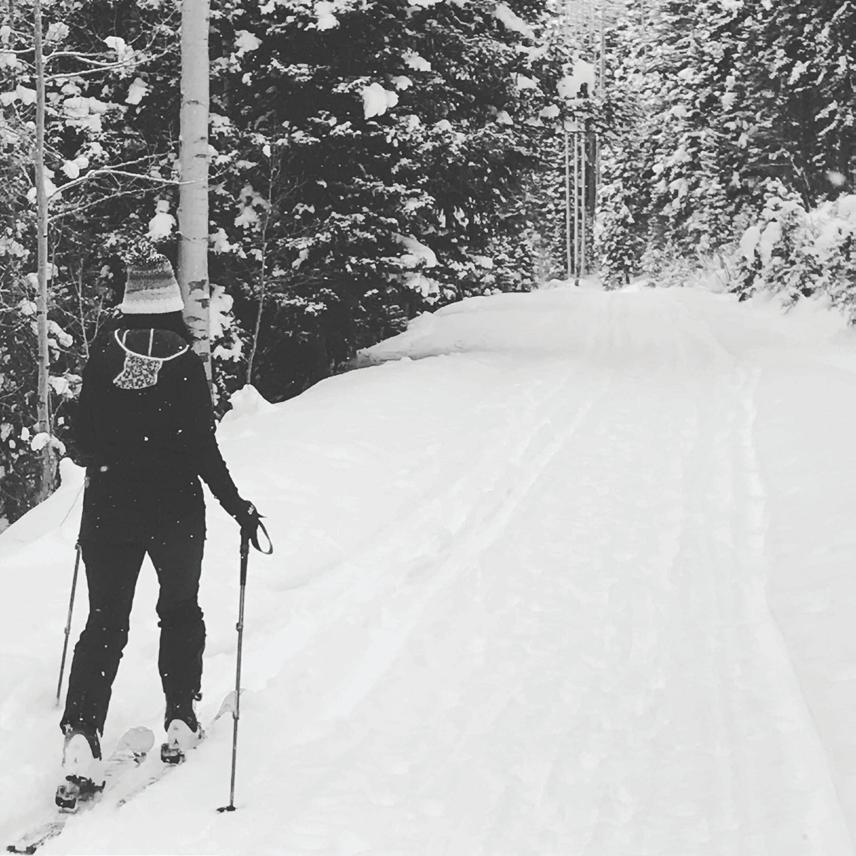
Sometimes the idea of exercise is overwhelming and stops people before they start. If you have trouble wrapping your mind around an “exercise routine,” remember any activity like walking the family pet or shoveling the driveway counts as exercise.
As temperatures drop, snow increases, and daylight wanes, make sure you have the proper outdoor gear. Good gloves and insulated boots are import-
ant, but for those icy streets and trails traction devices are a must. Invest in a pair like those by Yaktrax or Kahtoola. They make ice grips for all types of activities and you will love the security you feel when wearing them.
A good quality headlamp is something to consider as well. The sun sets quickly in the winter, and you do not want to get caught out in the dark. It’s dangerous not only for you but for those you pass along the road, too. Take inventory and purchase items you need now. If you wait they might be sold out by the time you need them.
If being outdoors this winter does not appeal to you, there are still ways to incorporate movement into your routine without ever leaving the house. White Horse Yoga and True Nature Healing Arts, both in Carbondale, offer virtual classes. Or find something you like to do and YouTube it. Weight training, martial arts, and dancing all provide whole body, rhythmic-movement which is a fantastic type of mood-elevating exercise.
The average adult needs about 7-8 hours of sleep a day. Creating a routine and maintaining proper sleep habits will increase the quality of your sleep so you’ll wake up rested and less fatigued.
According to the Sleep Foundation, going to bed and waking up at the same time each day helps reinforce your body’s natural sleep schedule. Early morning sunshine regulates your circadian rhythm. Open those curtains when you wake up, or if natural light isn’t an option, consider using a light therapy lamp.
Wind down at night before you go to bed. Electronics can keep your brain wired, making it hard to fall asleep. The light from these devices also reduces your natural production of melatonin. Try to disconnect for 30 minutes or more before going to bed. If you’re struggling to fall asleep at night or you wake up and can’t go back to sleep, doctors suggest getting out of bed and doing something relaxing. Train your brain into thinking that the bed is only good for two things: Sleep and…you adults can figure out the other thing.
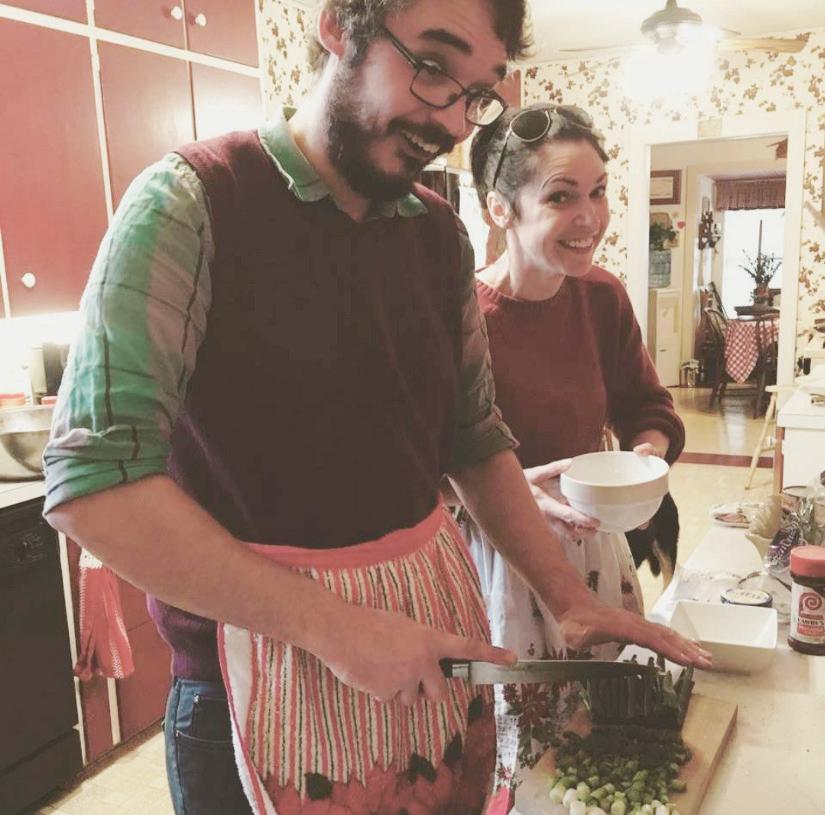
What you put in your body affects how you feel. We are all staying home and cooking more. We have control over what we eat. Mawa’s Kitchen, out of Aspen, is offering free online cooking classes to registered participants this fall. Learn how to make delicious recipes from the experts. If that is not your speed, dust off the slow cooker or the Instapot for food that is fast and easy even if you do not like to cook.

Check our website for more informationon current hoursand availability.
Some foods affect mood more than others. Starchy carbohydrates, sugar, caffeine, and alcohol affect the brain in different ways. During the spring, the European World Health Organization (WHO) issued a recommendation for people to limit these items during COVID, for mental health reasons:
“People may drink more alcohol to deal with stress or boredom at home; this is likely to cause or intensify mental health issues, thereby increasing the risk of anxiety and depression.”
You don’t have to give up these things, just be mindful of the way you consume them.
These are only a few of the ways to remain healthy this winter. There are many more options out there. Sometimes it may take some time and experimentation to find the right combination of several things to get you feeling your best. Other things to remember are:
Maintain Social Connections
If you feel comfortable and safe with the people in your bubble, schedule activities with them. They can be low key or epic. We are social creatures. It is important to maintain our connections. If you are unable to hang out with your loved ones in person, connect online. Zoom, Google Hangouts, FaceTime, and many others offer a variety of video calling options. You can also pick up the phone and call someone the old-fashioned way.
Therapy
You might consider help from a professional, especially if you are experiencing harmful thoughts. While therapy has a stigma attached to it, it is a truly valuable tool. A licensed professional can help with coping strategies that cater to your personal needs and schedule. It’s also really nice to talk to someone who is objective and non-biased, and who’s undivided attention is focused on you.
It is important not to rely solely on your partner or your friend(s) if you are truly struggling. A good friend will be caring and supportive during difficult moments, but a good therapist will be empowering, compassionate, and insightful without risking any damage to your relationships. Having both people in your life is a plus.
BetterHelp.com offers online counseling services and a quick google search will point you to many available professionals in our area, some who do telework, too.
Remember not to become complacent. Although we all crave normalcy, the pandemic is not over yet. Continue to wear a mask, social distance, and wash your hands frequently.
Life throws us difficult curveballs sometimes, but there is a big difference between difficult and impossible. While depression and anxiety are not easy, you have more control than you realize. The key is to start small and build from there. The first step is always the hardest. Going for a walk or dancing to your favorite music are things you can
do right now. They can greatly increase your mood and energy for several hours — long enough to put a second step into action, like preparing a healthy meal or arranging to meet a friend.
By taking small steps daily, you’ll soon find yourself feeling happier, healthier, and more hopeful again. Take good care of yourself to be as strong as possible both mentally and physically this winter. You are worth it.
If you feel your depression or anxiety is severe or if you are experiencing suicidal thoughts, seek help immediately. National Suicide Prevention Lifeline: www.suicidepreventionlifeline.org/ or 1-800-273-TALK (8255).


Studies of massage benefits show it is an effective treatment for reducing stress, pain, and muscle tension.
Some studies show it may also be helpful for:
• Anxiety
• Depression
• Insomnia related to stress
*Massage is not meant as a replacement for regular medical care.
Deep tissue massage gets deep into your muscles and tissues to help you heal from:
• Headaches
• Soft tissue strains or injuries
• Sports injuries
There are many plans afoot in Marble, at least as far as the parks and trails are concerned. During February, in the upstairs room of the Marble Hub, a small but energetic group of volunteers met to plan and dream. As the meeting progressed, the list of ideas and projects grew longer and longer, becoming a brainstorming session that stretched well into the evening.
This was the first meeting of the Marble Parks Committee, and the only time they’ve been able to meet in person due to COVID-19 bringing much of the economy and the usual way of things to a halt. Still, the group pressed on, communicating through e-mails and working on projects individually.
Sprucing up the Park

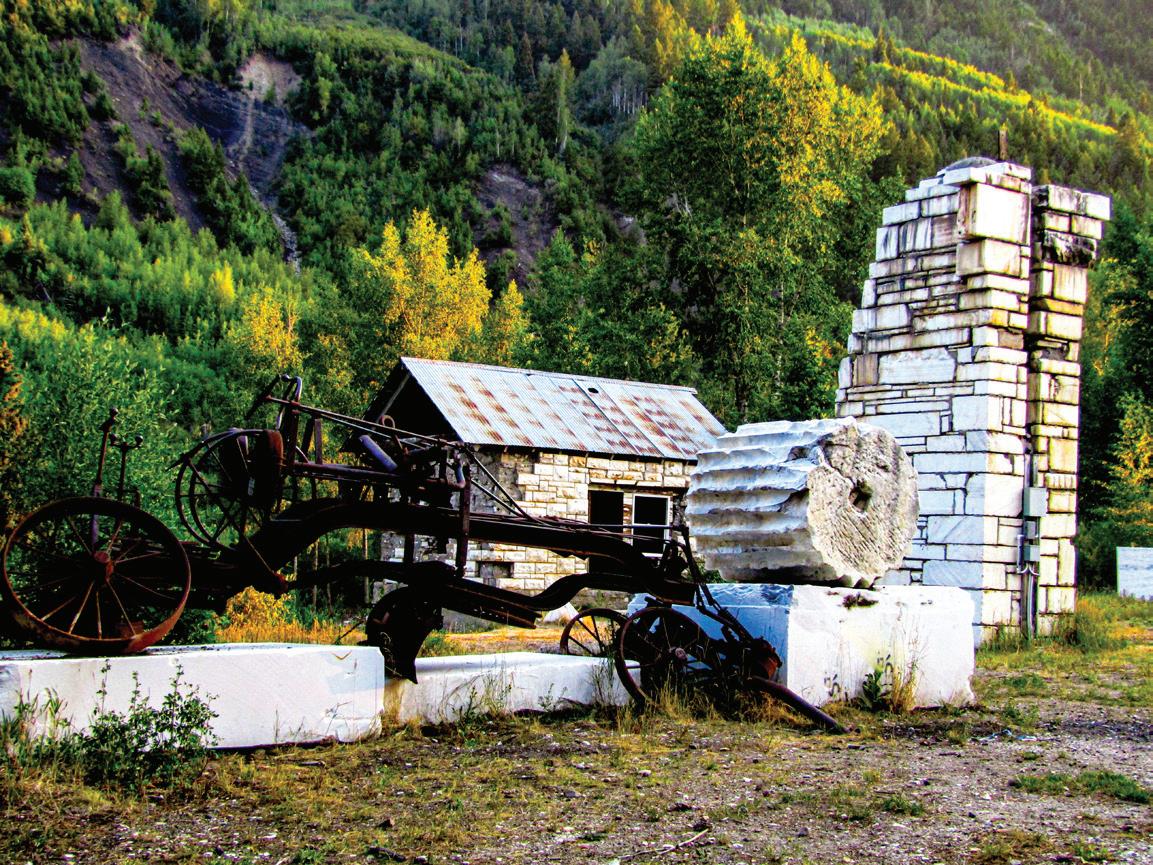
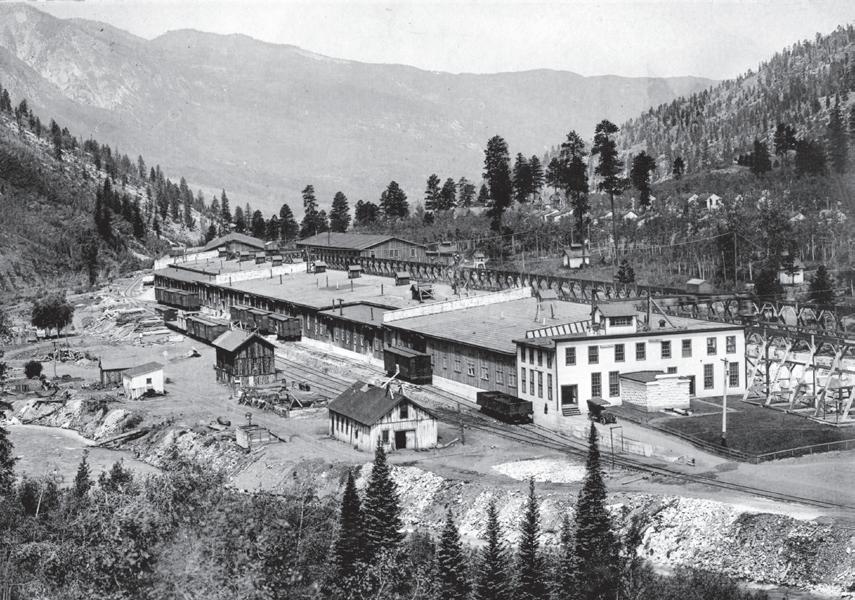
The Marble Millsite Park is a 25-acre park situated in the middle of town and was the site of a massive marble finishing mill in the early 1900s. It is treasured, not only for its historical significance but also for its wild trails and recreational opportunities.
A disc golf course crosses through the area where the company office once stood before winding along the river. Over a decade ago, another park committee cleared some of the overgrowths from the marble pillars and walls and built a self-guided historic trail through the mill section — the trail paths created from marble dust.
Since then, the park's upkeep has been solely in the hands of a few town volunteers that spend their free time wandering the park and taking care of fallen branches, litter, and weeds. Despite their efforts, nature reclaimed much of the work initially done.
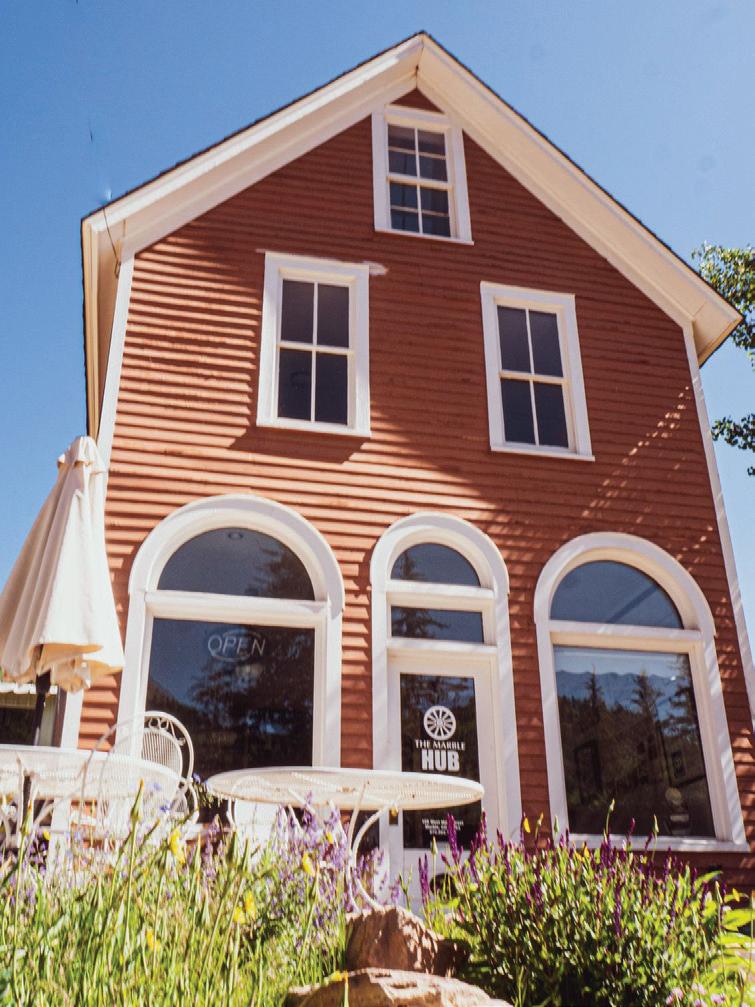

One of the first projects the newly formed Marble Parks Committee wished to tackle was general maintenance on the Millsite Park. Marja O'Connor, a teacher at the Marble Charter School and member of the committee, put her efforts into arranging this.
On an early June day in the drizzling spring rain, O’Connor and a few other members of the committee met with Ben Sherman and Carl Nelson from the Roaring Fork Outdoor Volunteers (RFOV). At the time, the Town had just reopened to people outside the county, and they met for the first time outdoors, behind masks.
As they walked through the Millsite park, plans began to take shape. The original markers and signage from the self-guided history walk had all but disappeared along with an upper trail that once ran from the stage area to shop number four.
This small, almost forgotten section of the old mill was hidden by a large tree that had fallen years before. Pit-like beds once used to form columns were now barely visible beneath a pile of branches. The shorter walls, used as a base for a large overhead crane that transported the large marble blocks, was shielded from view with bushes and shrubs.
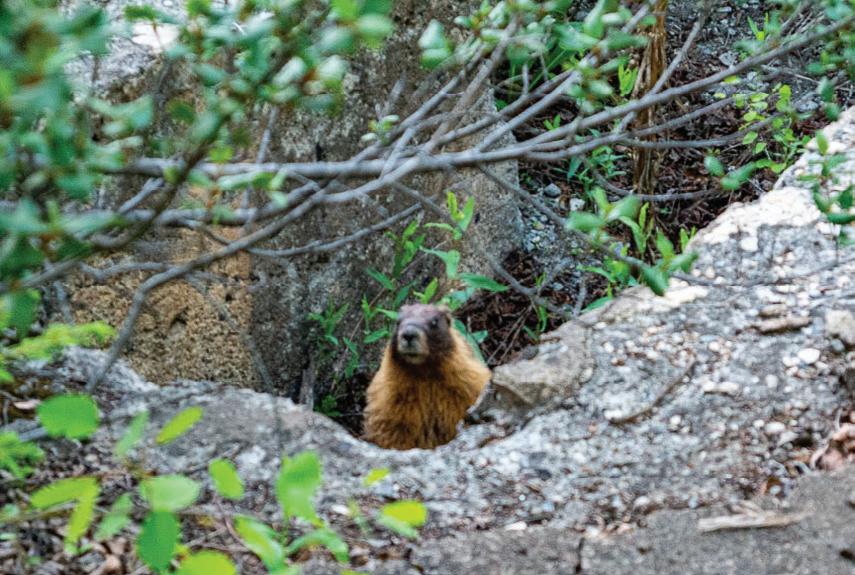
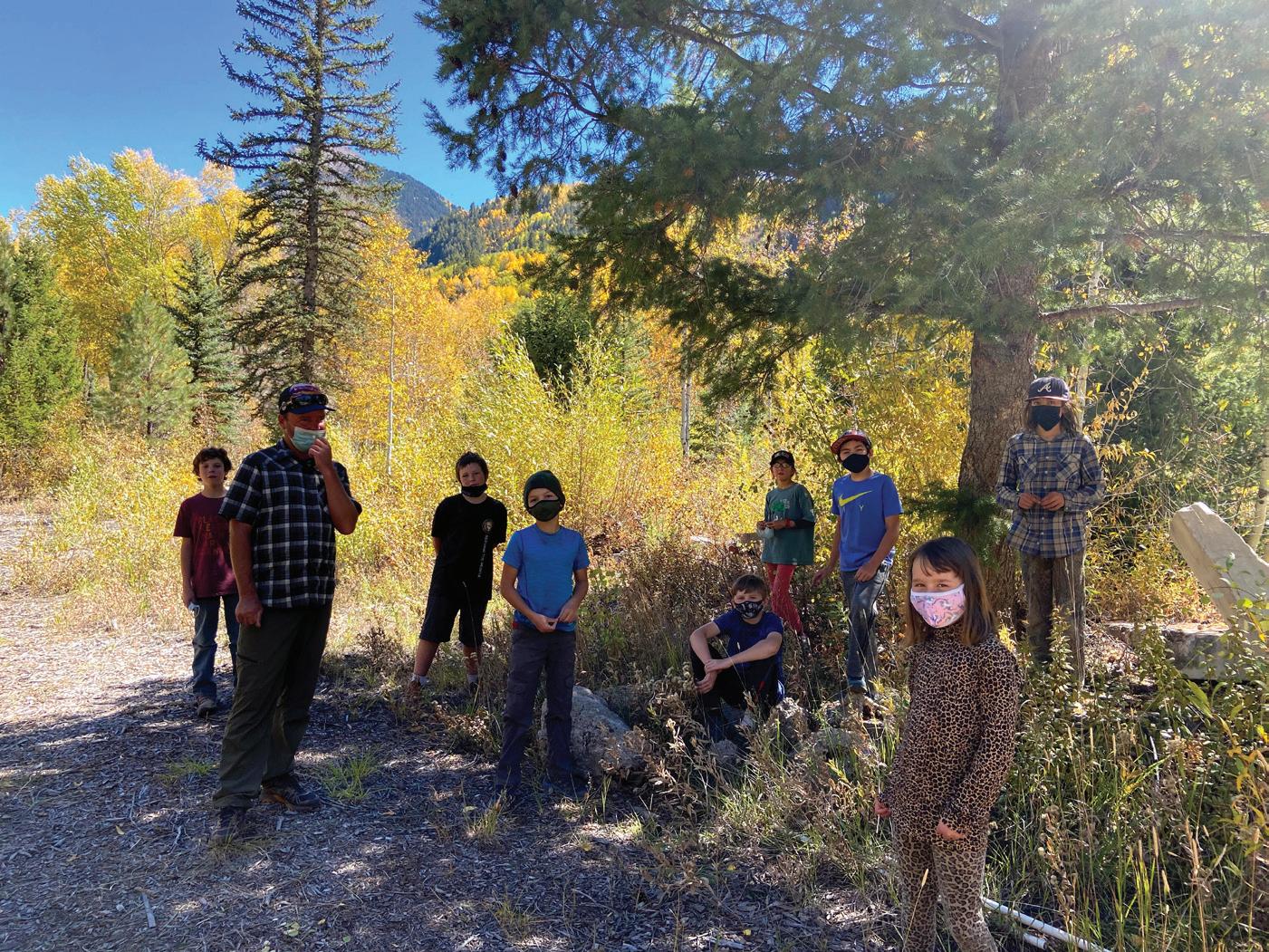
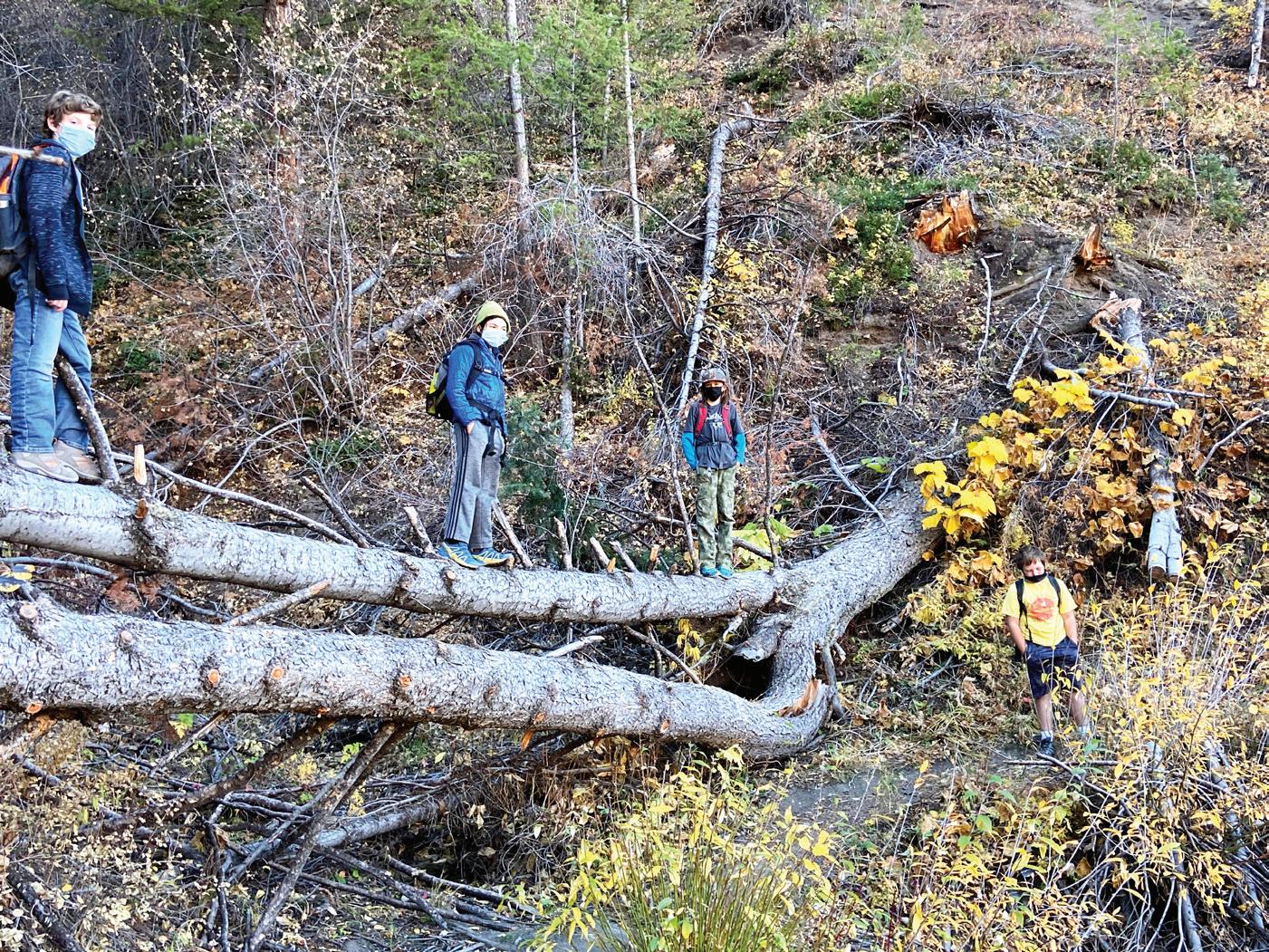
Planning became a reality when RFOV arranged six separate workdays around the Marble area with three different schools. The first group, Colorado Rocky Mountain School, spent a day working on the Yule Creek Trail above Marble and their second day at the Millsite Park.
They transformed the upper trail, which was all but completely lost because of foliage, into an easy well-defined path that leads visitors from the stage and picnic area to that of the fourth shop. They
also worked to remove the organic debris, leftover from the fallen tree, from the pits. Marble Parks Committee member Alex Menard, who is also the curator of the Marble Museum, was on hand to help as well as lend historical insight on the area.
A week later, they brought in students from the Carbondale Community School, who also worked to clear out the pits and trim away much of the brush obstructing the views of the marble pillars.
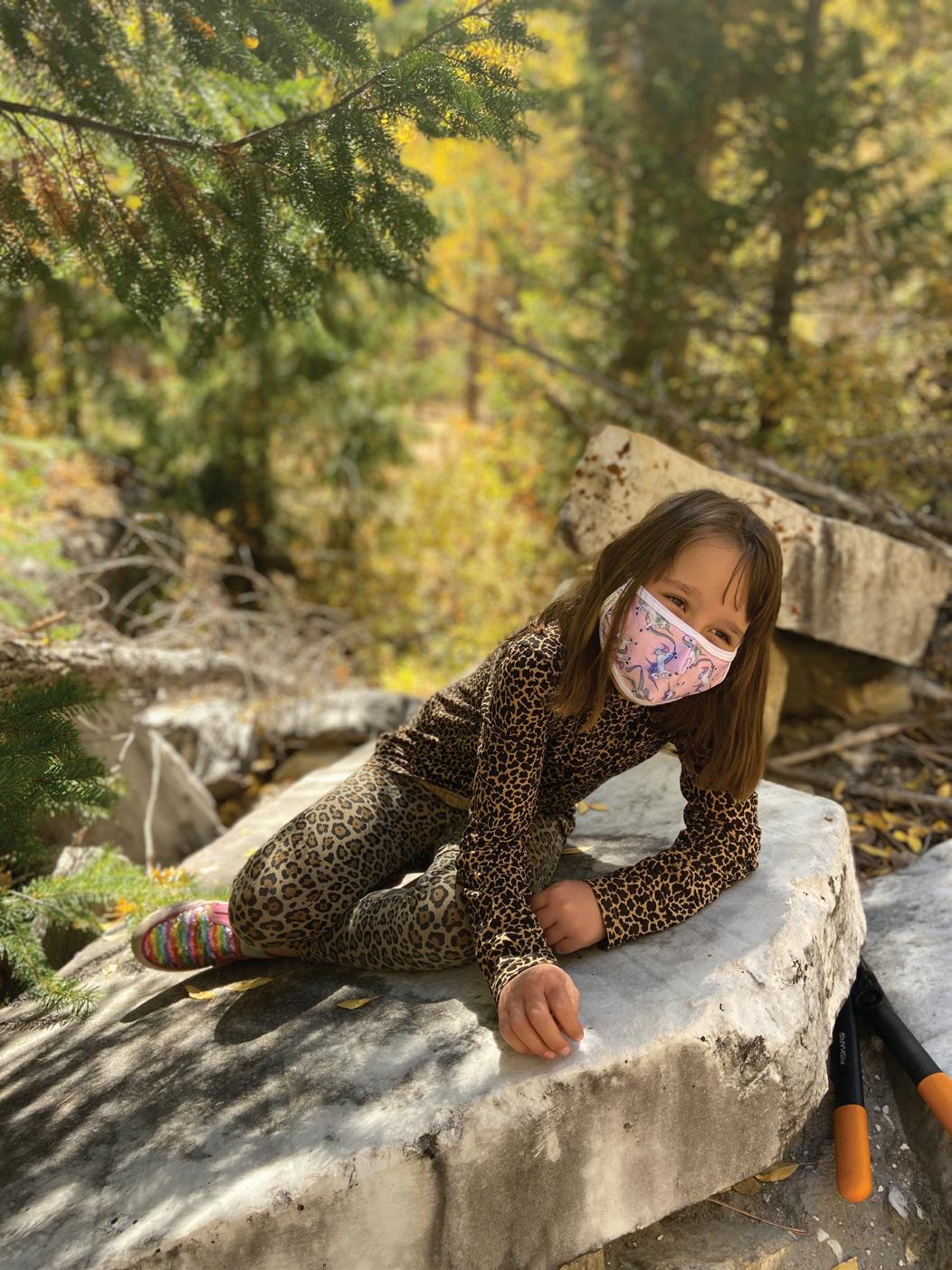
The Marble Charter School, sponsored by the Marble Crystal River Chamber, also pitched in along with volunteers from RFOV and worked for two days. The MCS staff and several crews of kids, each worked on individual projects within the park and new trail. This venture not only fits in perfectly with the outdoor classroom model, a direction the school moved into as a response to COVID-19 but also with their current project-based study of stewardship.
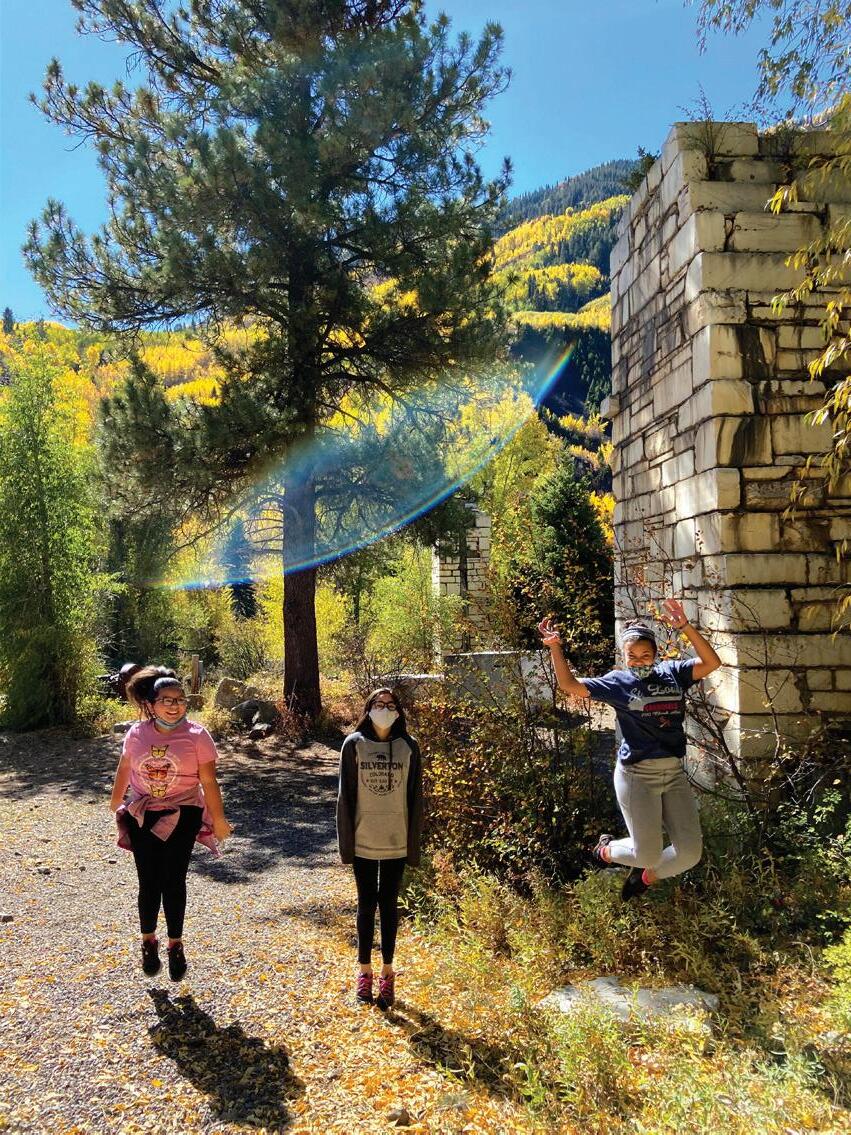
While the RFOV was hard at work, other members of the Marble parks Committee were focusing on other projects within the Millsite Park. Mike Yellico removed several dead trees from the park area and helped maintain the disc golf course. Richard Wells, who has helped maintain the parks

for years, took care of the details of trash collection and litter control. Another member, Brent Compton, addressed the invasive weed problem, notably a large swatch of thistles that were taking over a section of the park.
Compton, who owns Verde Land Management, specializes in non-toxic weed management and used his skills to get a handle on the noxious weed problem in the park. Over eight trips to the park, he utilized many methods including, hand removal, mowing, and non-toxic applications with salt, vinegar, and dish soap.
"I also heavily seeded with native grasses and wildflowers in the areas most impacted with high noxious weed populations,” Compton explains. “This seed should germinate in the spring after the snow melts and will help to combat the battle against thistles and other noxious weeds in all the park and recreation areas of Marble.”
As Marble tries to shift further away from loud, high-impact tourism (such as OHV users) and more towards promoting the arts and nature, the Marble Parks Committee is working towards projects that reflect such an atmosphere.
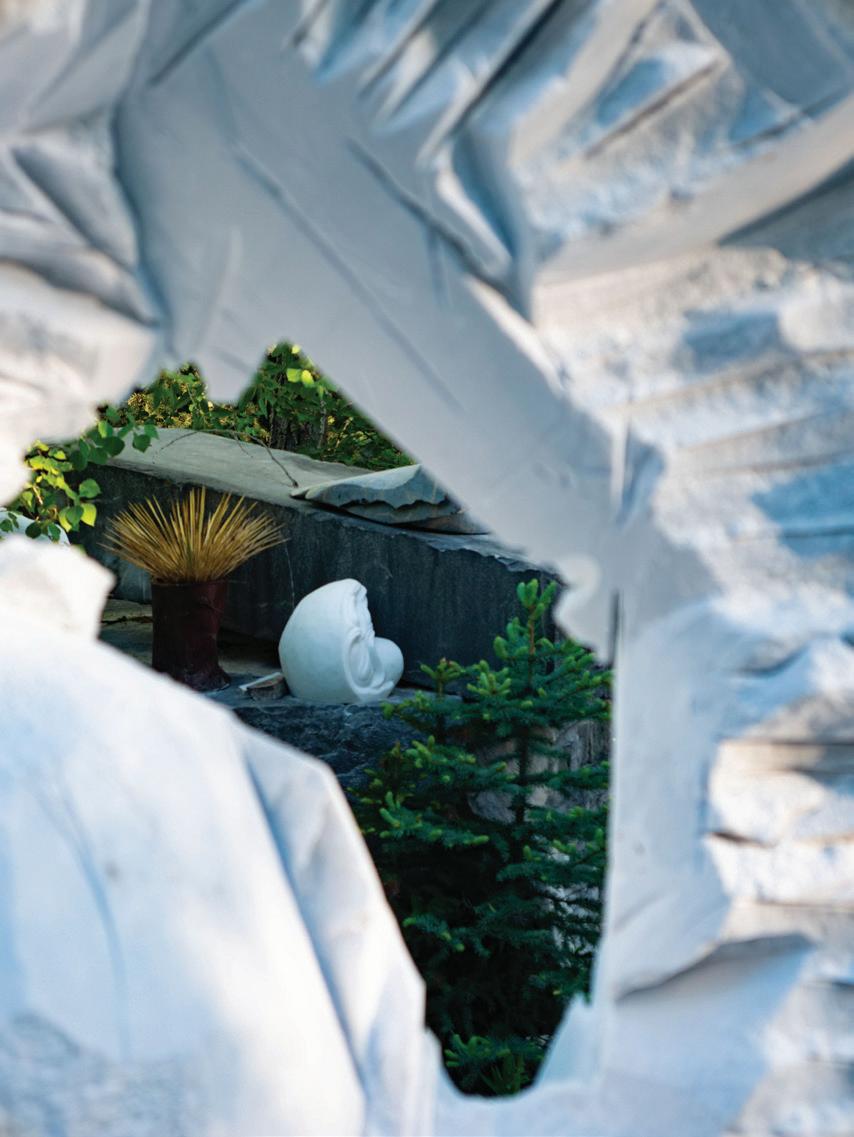
The investment in the park by the students attending MCS will increase further as they work to create signs that turn the trail they helped to build into an educational walk. O’Connor is working with fellow teacher Karly Anderson and the rest of the MCS staff to create six signs that will educate visitors on native flora and fauna.
Signage is also in the works. These interpretive signs will help bring sections of the old mill site to life and teach visitors about Marble's rich history. An upgraded map for a historical tour is also in the works.
A third walk is planned with the Marble Institute of Colorado, which hosts its MARBLE/marble
Symposium on property adjacent to the park. This walk will be a meditative sculpture walk, featuring the marble carvings from symposium participants around the world.
Plans also include a new, quieter entrance to the Millsite Park. This would allow those simply wishing to enjoy walking the trails and historical structures safer access than what the current entrance provides, as it is often over-run with trucks pulling trailers with OHVs. This plan includes expanding the park by 2.58-acres and the group has worked to secure a grant towards this goal.
These walks combined with other projects, including nature-themed backpacks filled with educational materials that can be “checked out” by visiting families and, once activities resume, historical and ecological events. The overall purpose is to help visitors, especially youth, fall in love with the nature, history, and art of Marble.
Although Millsite Park is a primary focus of the committee, they also have plans for Marble Children's Park, otherwise known as Thompson Park. This park, located in east Marble, is adjacent to the Historic Jailhouse and was given to the Aspen Valley Land Trust (AVLT) by former owner Pamela Hepola with the intention that it become a park for the Marble Charter School's use as well as all the children of Marble.
AVLT will be working closely with the committee and the school to improve the park. Dave Erickson recently met with the committee to discuss plans. "He was very interested in our vision of the park and was excited to involve the school and students,” said O’Connor. “We agreed it will be a good balance between usability, like the baseball diamond, and native grasses and fauna. No one wants a manicured lawn look.”
Some ideas in the discussion are a community garden, irrigation system, improved baseball diamond, and perhaps even a volleyball area.
Work on this park will go hand-in-hand with another near-by project. Last month, Marble Trustee Emma Bielski submitted a grant for the restoration of the historic Jail House owned by the Town. The building houses the original cells and bunks and was home at various times to many of Marble's more colorful characters. Combined with the adjacent Children's Park (Thompson Park), it will create a more usable and accessible asset for the community.
Plans
Even with COVID delays and the challenges of navigating meetings and restrictions, the small volunteer committee has accomplished several items from the list they initially during the past winter.
One of the projects they hope to tackle next is winter recreational opportunities for the community. The Committee hopes to be able to purchase a groomer for a cross-country trail system that utilizes the town's alley and parks. Another winter project, that has garnered a lot of community support, is a skating rink.
Along with equipment for winter sports, the group is working to build a shed that will safely house the new community assets. Yellico has offered his services to construct the shed and gather donated material.
MarbleFest is still on the list of plans. This project includes finishing the MarbleFest stage, located in the upper section of the park. Originally built by Mario Villalobos as a semi-temporary stage, it has become so popular as a park feature that plans are in the works to make it permanent.
The stage needs additional work to winterize and assure that it stands for many years to come. Of course, those plans are contingent on the current state of the pandemic and restrictions, but the group is hopeful that they will be able to host some forms of live music this coming summer.
Despite all the challenges that COVID has presented for so many, the Marble Parks Committee made some great progress on their perceived projects. They’ll take a step back to focus on planning and organization during the frozen months to come, all while looking forward to another productive work season once the snow melts.

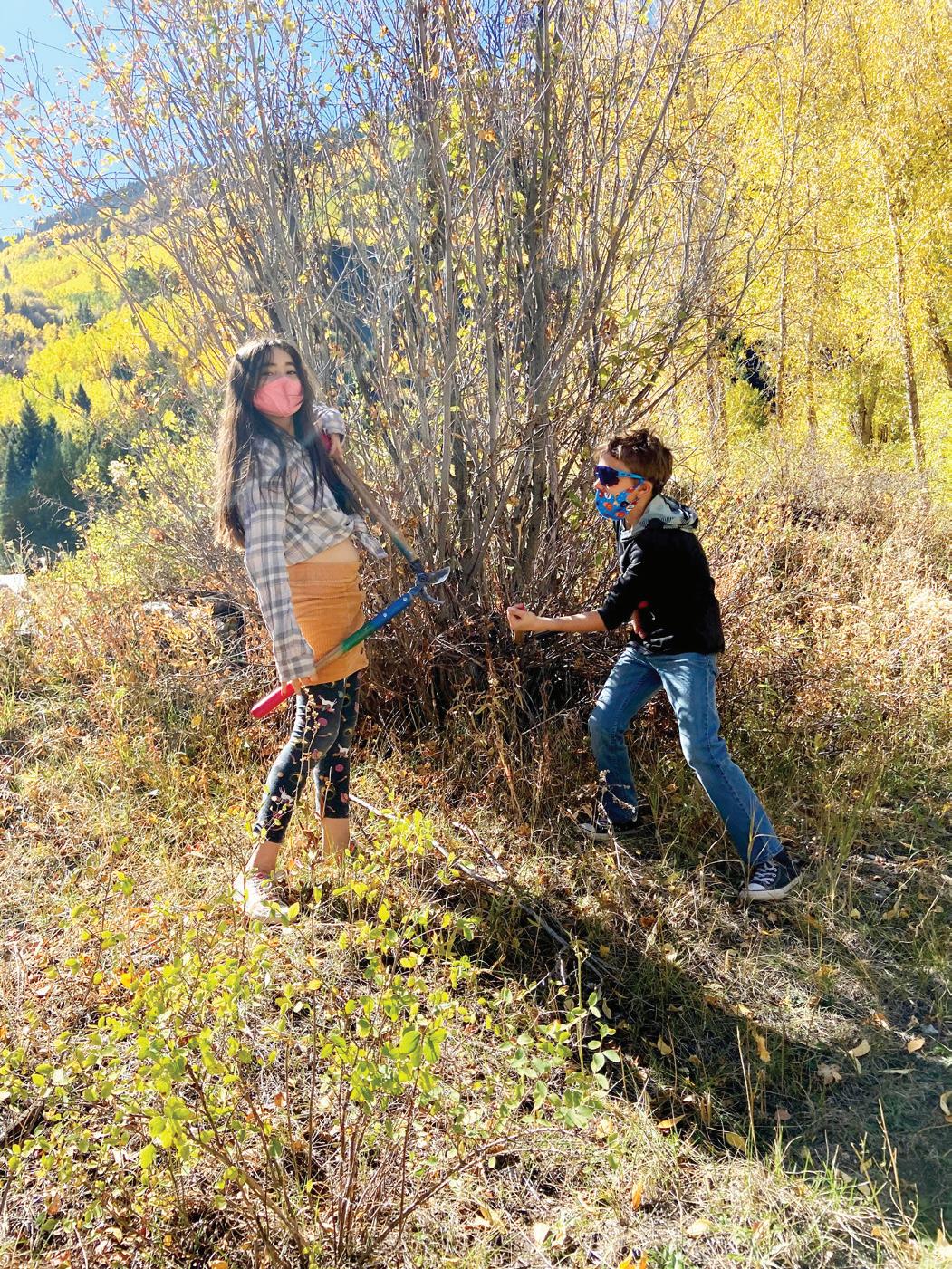
"Working at the Millsite was fun and made me tired. A couple of classmates of mine and I cleaned up at the back of the Millsite in the pits. The pits had metal, nails, and marble in them. We cleared out the dirt and the tree limbs. These pits are about three feet deep and are made out of concrete. (They were used for polishing marble blocks). My group got super close to finishing cleaning out our pit. We shoveled dirt for hours. It took us about thirty minutes before we reached the bottom. We benefited the community by cleaning out the pits so people can now walk around and look at them."
- Amyah Clayborne, Grade 7
"On Tuesday, September 28, 2020, the school went to The Millsite Park with Roaring Fork Outdoor Volunteers. We cleaned up the mill site with loppers and saws so people could enjoy the paths and historic sites, and so that the roots of small trees don’t destroy the buildings. I enjoyed cleaning up the mill site that day because it was a perfect day outside and I had another day of getting myself worn out."
- Eli
Grade 6
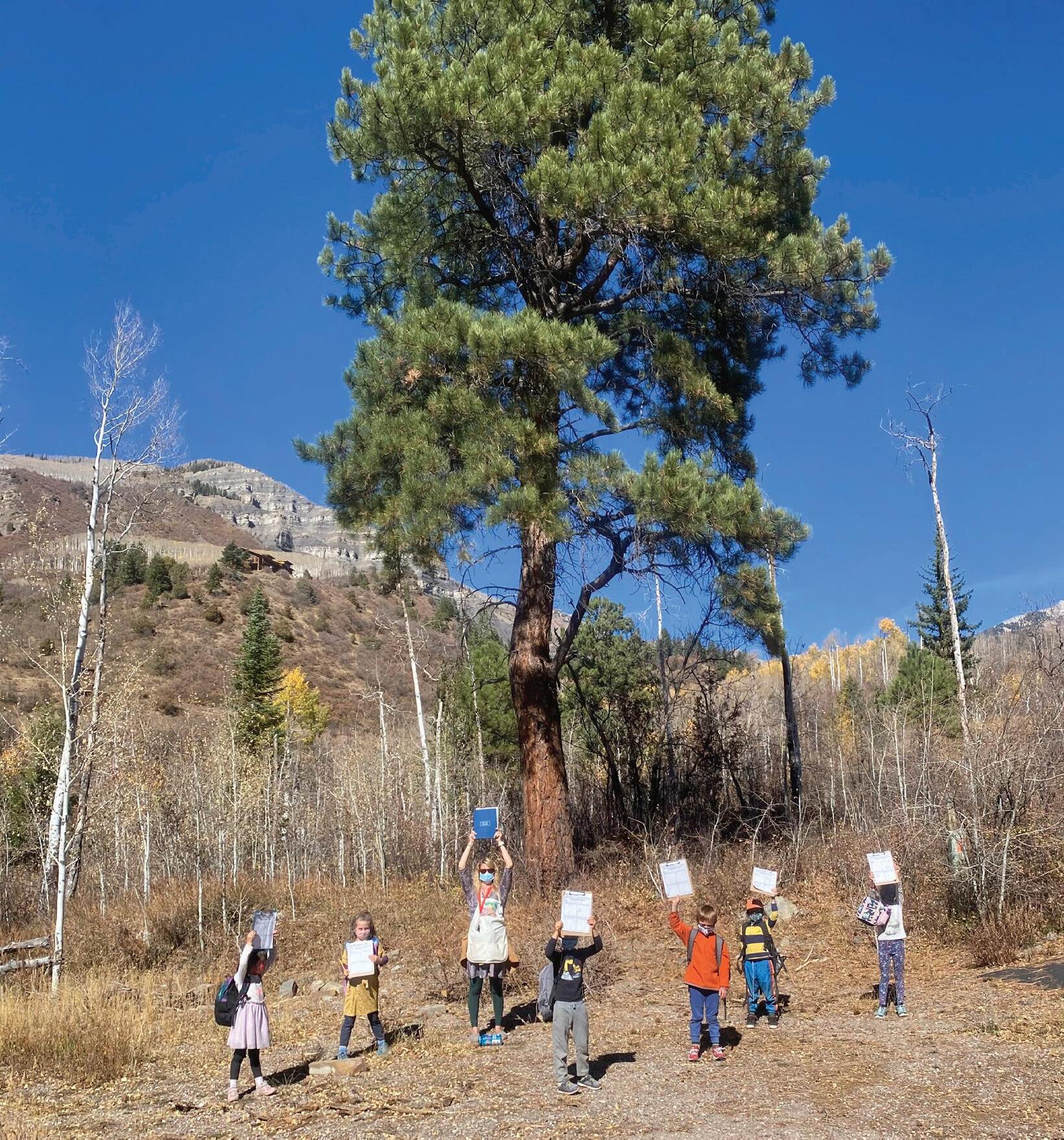
We are adding a gratitude section to the Marble Times each month from all the staff at the Marble Charter School. It truly takes a village, and we’d like to acknowledge the many, many people who contribute to keeping MCS going!
November Submissions:
In Gratitude to:
• All Lead King Loop runners, volunteers, and donors! We are so appreciative of the support you give to our school!
• Roaring Fork Outdoor Volunteers! Thank you for working with our students and staff. Our school spent two-days working on trail maintenance at the Millsite Park in September for Outdoor Ed.
• The Marble Chamber! Thank you for funding our volunteer days with Roaring Fork Outdoor Volunteers!
• Nathan Helfenbein. Thank you for volunteering your time to help our school comply with new state guidelines to make our transition indoors go safely!
• Town of Marble. Thank you for your financial support!
• Slow Groovin’ BBQ. thank you for your financial support and for donating lunches for Lead King Loop!
• Colorado Stone Quarry. Thank you for your financial support!
• Thank you to Ron Leach & Carbondale and Rural Fire Protection District for helping to keep us all safe!
• Thank you to Premier Party Rentals for giving us a discounted price on the tents for our outdoor classrooms!
• Thank you to the COVID task force for your ongoing efforts in keeping our school open and safe.
• Thank you to Emma Bielski for your help with our Social Emotional Programming!
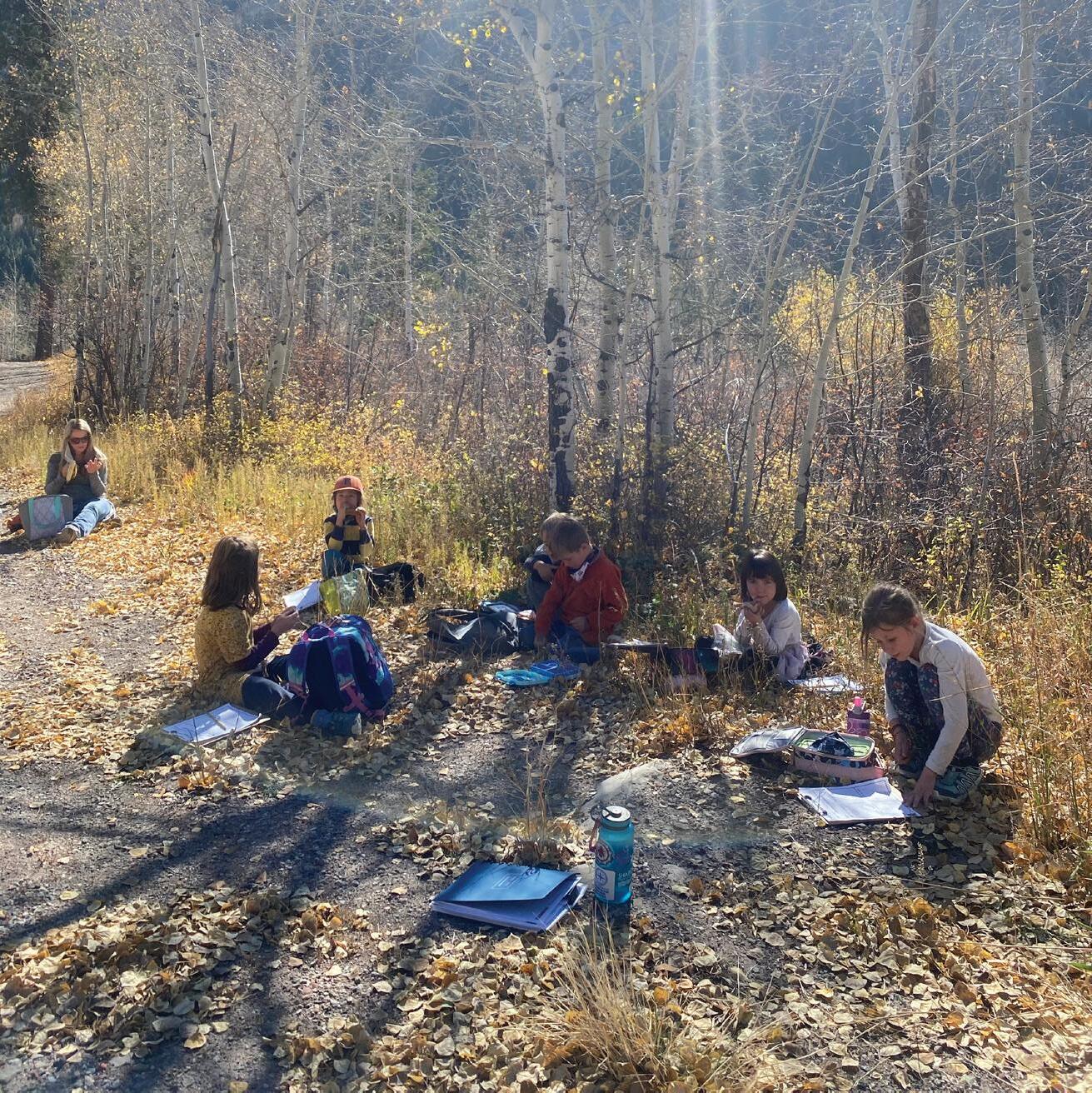
“In science this year we started learning about the local squirrels of Marble. Since then we are moving into studying the local tress in Marble. Here we are studying a Ponderosa Pine through the five senses.”
~Jaime Fiske, MCS Science/ Social Studies

and from
Originally published by History Colorado

In the early months of 1905, the whole state of Colorado was in an uproar. Miners were on strike, an election clerk had just jumped out of a moving train while fleeing the law, and nobody knew who the governor really was. And it was all caused by one of the most corrupt elections in American history.
The election of 1904 came on the tail end of the Gilded Age, a time of rampant corruption nationwide. Political machines were hard at work in every major American city, churning out votes for their party no matter the cost. And things had grown especially bad in Colorado, where over a decade of troubles were reaching a boiling point.
by: Devin Flores

Riots, arrests, and violence were abound in Colorado all through 1904 as the Colorado Labor Wars were in full swing. Union members were often assaulted and arrested by the Colorado National Guard, who were backed in their actions by business owners' associations and corrupt local governments. In return, the union workers would strike, riot, and ultimately defend themselves violently. The tumultuous situation inspired this nationally-distributed poster, which boldly asks: "Is Colorado In America?"
The investigation swelled to a truly ludicrous level, eventually amounting almost 200,000 pages of evidence and the testimony of over 2,000 witnesses. In the end, the “most flagrantly corrupt incident that has ever happened in Colorado,” according to the Rocky Mountain News, ended not with justice but with backroom deals.
The incumbent governor was Republican James H. Peabody, and while his political career was thus far short it was also very controversial. During his tenure the state was wracked by continuous strikes by miners fighting for rights and representation. Previous governors had sided with the working class in strikes like this, but Peabody instead responded with brute force. He sent out the state militia to crack down on striking workers, starting the brutal Colorado Labor Wars. Peabody gave command of the militia to an officer who notoriously scoffed: “They want habeas corpus? We’ll give them post mortems!”
According to the Denver Post, “Never has there been such wild disorder in any legislature.” The investigation quickly found evidence of blatant and egregious corruption on behalf of both parties.
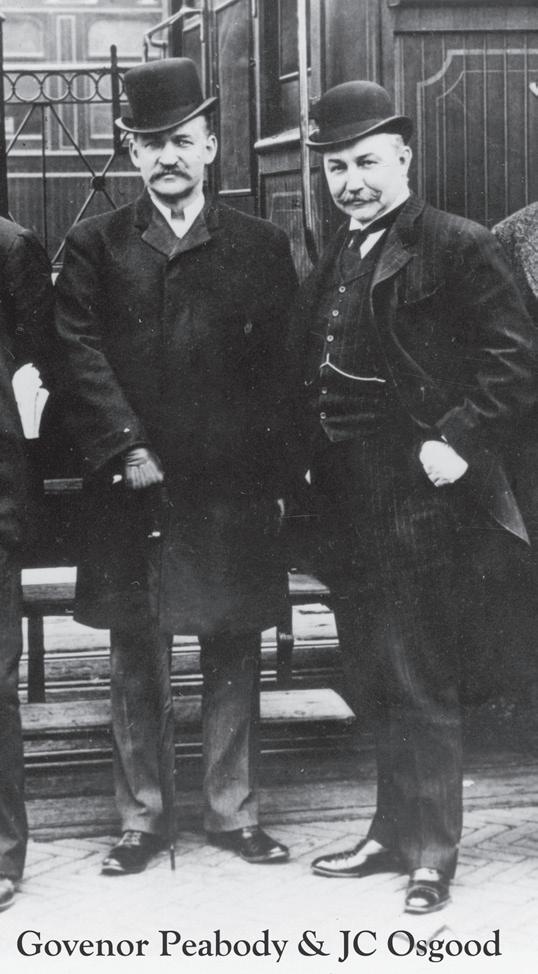
In Denver, the Democrats had stuffed ballot boxes to ridiculous extremes. Democrat-controlled police had promised criminals acquittal if they committed voter fraud by voting multiple times using disguises or simply by traveling from ballot box to ballot box. One individual was found to have personally voted 169 times, and 717 Democrat ballots were cast in one precinct with only 100 legal voters. And all over, the police were not only turning a blind eye to the obvious crimes, they were even assisting them.
Meanwhile, in the mining towns, Republican voter coercion was everywhere, and just as blatant:
“If the Democrats should win, we may have to close the mine down,” said the owner of the Victor Fuel Company to his assembled workers.
“And if the Republicans should win and we find out that one of the working men voted the Democratic ticket, we will fire him.”
(Note: JC Osgood, at the time, was the
Adams, his once robust political career now in tatters, willingly resigned late in the day on March 16, 1905. He had been in office for barely more than two months. Peabody was immediately sworn in as his replacement, but his victory was extremely short-lived. He had also agreed to concede the election, so early the very next morning he too resigned, and Lieutenant Governor Jesse MacDonald was sworn into office. The question of the governorship was finally resolved, a full five months after the election, and Colorado won the dubious distinction of being the only state in American history to have three different governors within a single 24-hour period.
These excerpts are reprinted with permission from HistoryColorado. org. To read the entire article go to: www.historycolorado.org/story/2020/09/30/1904-most-corrupt-election-colorado-history
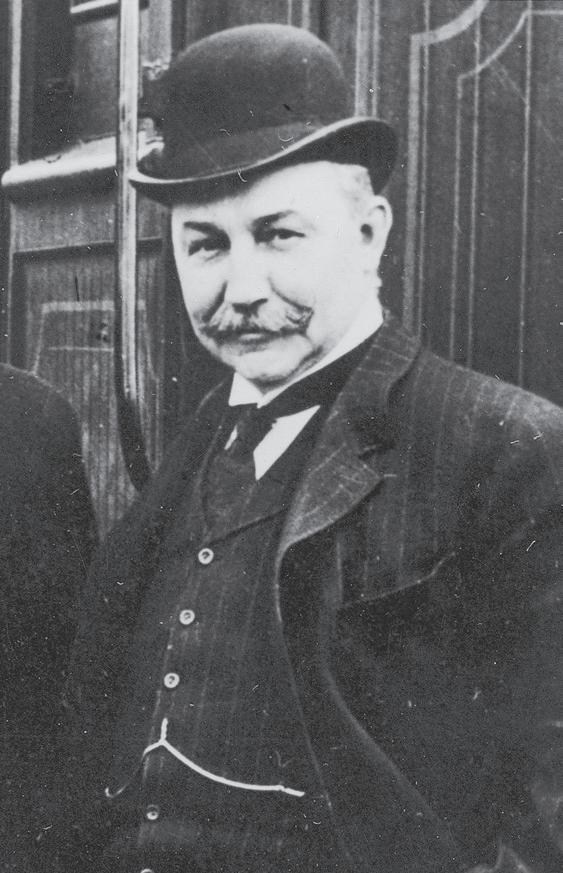
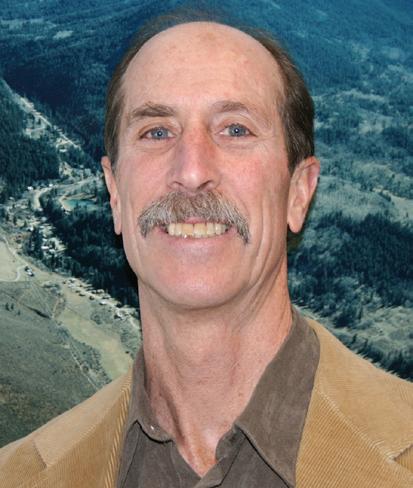
The Pitkin County Commissioners hold weekly work sessions on Tuesdays and bi-monthly public hearings on Wednesdays in our BOCC meeting room at the Pitkin County Administration and Sheriff’s Building. Both meetings are televised live and repeated on locater CG12 TV. They are also streamed live and available on the County website. Agendas are posted in the Aspen/Glenwood newspapers and on-line at www. pitkincounty.com. In this column, your District 5 Commissioner, George Newman offers his take on current matters. You can reach him at george.newman@pitkincounty.com
As we approach colder weather and the holidays, this column will provide the current status of COVID and planning for our Winter Season. Unfortunately, cases are on the rise; now is not the time to become complacent. Our community spread (the percentage of people who tested positive and don’t know where they were infected) has increased from 10% to 31% between mid-September and mid-October. During this same time, the 14-day rolling average has increased by 60% over the previous period. As of October 14, 2020, the Public Health Team is investigating five separate outbreaks -- the most ever during the pandemic thus far.
If these trends continue, it may force our community to move from “Safer at Home Level 2” to a more restrictive “Safer at Home Level 3” on the State’s COVID-19 tracking dial which relies on three key metrics, including:
1. Disease incidence rate over 14-days,
2. Percent of positive COVID-19 test results over a rolling 14-day average, and


STAY ACTIVE
Check out our on-line Virtual Events and Activities page for fitness classes & other activities you can do on your own.
GET HELP
Volunteers are standing by to help with grocery shopping, essential errands and other tasks.
KEEP IN TOUCH
We know it’s tough being home, so we want to hear from you!
HAVE LUNCH
Meals are available for pick-up or home delivery. Call us for more information.
3. The number of hospitalizations for COVID-19 in the preceding 14-day period.
Each level further determines the guidelines and restrictions on capacity limits based on the risk within each county. Pitkin County will continue to monitor additional metrics for trends that might indicate an increased spread of COVID-19 and the need to implement additional local measures.
New developments include a regional communications strategy made known by the Healthy Winter Task Force to ensure clear and consistent messaging. The Board of Health highly recommends getting a flu shot now as that will help differentiate flu symptoms from COVID-19 symptoms; for example, loss of the sense of smell or taste may be a COVID-19 symptom but not a flu symptom.
In addition to a 12-person health department staff increase this summer, the BOCC recently approved hiring a COVID-19 testing and vaccine analyst to assist with the planning and coordination of testing as well as the future distribution of a vaccine. A new case investigator/contact tracer will focus on Snowmass Village.
Aspen recently extended their mandatory mask requirements until May 1, 2021, though they can rescind it at any time, and are also looking at utilizing more parking spaces for restaurant curbside pickup.
The Aspen Skiing Company has submitted a plan to Pitkin County and the State ensuring safe employee housing arrangements, protocols for crowd management, and plans for safely lodging guests that may need to isolate or quarantine should they test positive during their stay.
RFTA is considering increasing passenger load to 50% capacity for trips over 15-minutes and 75% for trips lasting less than 15-minutes (masks are mandatory).
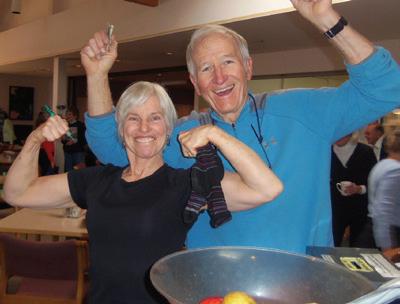
Aspen Valley Hospital seeks to increase access and reduce barriers for testing, including a new testing site in Basalt and improved online screening for appointments for valley residents.
What you can do to help — continue to follow the Five Commitments to Containment:
1. Maintain 6 feet distance from anyone not in your household.
2. Wash your hands often.
3. Wear a mask in public.
4. Stay home when sick.
5. Seek testing immediately and self-report if you experience symptoms.
In addition avoid the Three C’s as we move into winter:
1. Closed spaces with poor ventilation
2. Crowded spaces with many people nearby
3. Close contact settings such as close-range conversation.

Basic tenets of our current Public Health Order include:
• Informal gatherings (limited to 10 or less, no more than two households)
• Mask Mandate (age 2 and up)
• 10-day symptom-free before traveling (either to or from Pitkin County)
• Quarantining while waiting for testing or testing results
• Comply with contact tracing (residents and visitors)
Masks are required in the following: All offices, lobbies, elevators, indoor businesses, common areas, and gyms (except while using an indoor pool), and while receiving any Personal Services (massage, hair salon, etc). Businesses must post signs at each entrance instructing customers of the mask requirement upon entering and while inside the business. Service must be refused to individuals not wearing masks.
We recognize how difficult these restrictions are for everyone but ask that you remain diligent in your actions to protect yourself, your family, your employees, and your community. By following the above rules, together we hope to keep our schools and businesses open and our winter season on target.
For more comprehensive information on Public Health Orders and updates go to pitkincounty.com, click on the top bar for COVID-19. You can also sign up for the Pitkin County COVID-19 Response & Recovery Newsletter.
I will care for your's inside my
For more information, including rates & reservations, contact:
Acres home, whether you're gone for the day, week, or month! Betsy Wedemeyer BetsyW@sopris.net (970) 618-6407
(Pursuant to 29-1-106, C.R.S.)
NOTICE is hereby given that a proposed budget has been submitted to the Redstone Water & Sanitation District for the ensuing year of 2021; a copy of such proposed budget has been presented to the Board of Directors and is available for inspection from Ryan Kenney, District Manager. Such proposed budget will be considered at the regular meeting of the Redstone Water & Sanitation District to be held on December 8, 2020, at 7:00 p.m., due to the current pandemic, the location of the meeting will either be at the Redstone Inn or held online, depending on the current restrictions.
Any interested elector of the Redstone W&S District may inspect the proposed budget and file or register any objections thereto at any time prior to the final adoption.