On November 3, 2020, all Pitkin County residents will be selecting the County Commissioner who will reflect the concerns of District 5, an area that includes the town of Redstone, the Crystal River Valley, the communities of Thomasville and Meredith, and a portion of the Frying Pan River Valley! While candidates are selected by district, the five members of the Board share the discussions, observations, and decisions regarding the needs of all five districts.
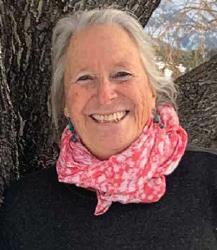
We need a representative who knows and understands our area, and one who knows and understands the needs and interests of the entire county. Francie Jacober is that candidate. As an educator, she understands the challenges and opportunities of learning in our diverse communities and the role of county governance in meeting the needs of our students. As a businesswoman, she understands the role of a small business, the necessary response to community needs, the importance of a budget. As a longterm resident, she understands the commitment to the protection of our special environment, the wild places and the wildlife, the need for and value of appropriate public transportation, and respect for the needs and dreams of all who share our village.
Francie Jacober understands that IT TAKES A VILLAGE, and she is willing to take on the obligations of a Pitkin County Commissioner to protect the place we live in and love, and the serious issues that the County must address if we are to retain and protect this special place.
VOTE NOVEMBER 3, 2020 FOR PITKIN COUNTY COMMISSIONER, DISTRICT #5---FRANCIE JACOBER
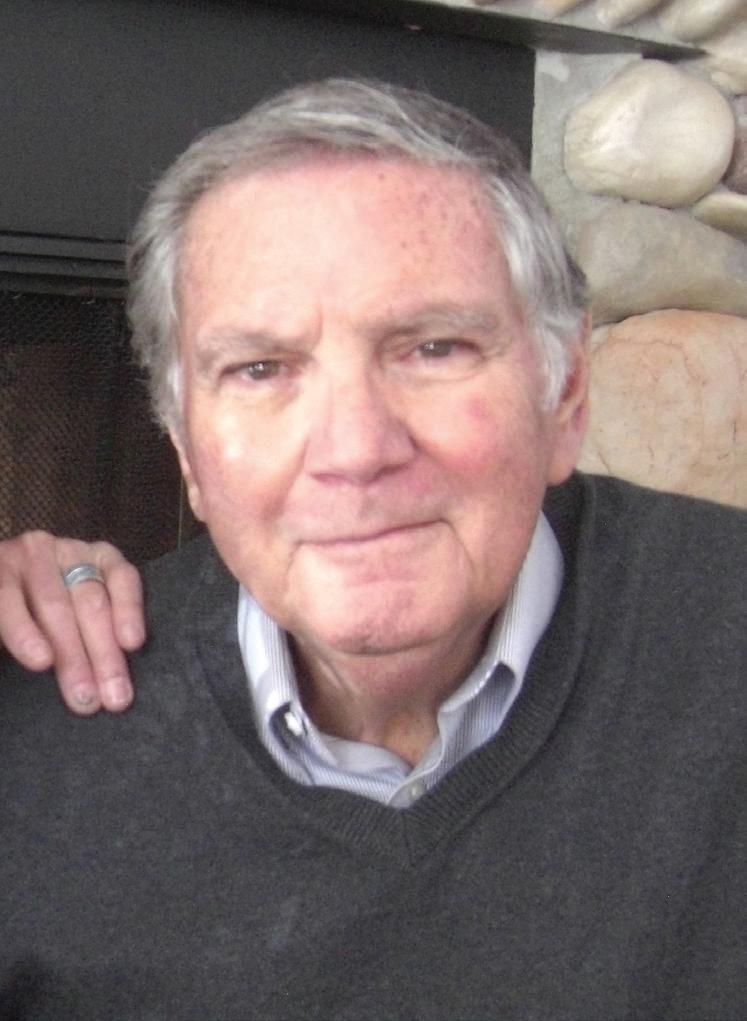
Dorothea Farris Crystal Valley
On the down-ticket side of this scalding November 3rd election, there is a new, Independent candidate for Pitkin County Commissioner who deserves your attention and your vote.
Jeffrey Evans has involved himself in local politics as a private citizen for almost forty years, not just because he cares for the entire Pitkin County community and its’ formidable natural resources (which he does), but also because he’s really good at seeing through problems and inefficiencies and solving them. I expect Jeffrey is about the smartest candidate on the ballot, so if you are voting for intelligence this time around, check Jeffrey Evans’s box on your ballot.
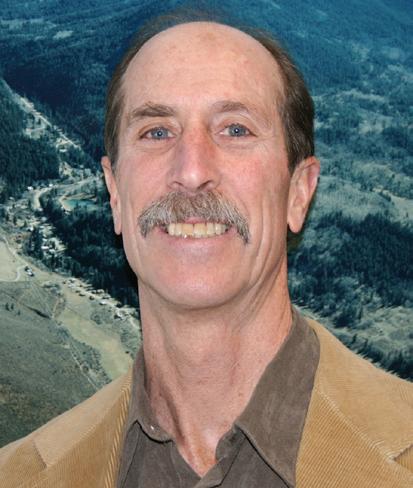
Larry Good Crystal Valley
Bank from home, work, or the hills.
Take advantage of AlpineOnline® and AlpineMobile®[1] to bank. They are secure and always available - with any Alpine Bank account.
[1]
T HE C RYSTAL
VALLEY E CHO
& Marble Times
Mission Statement: To provide a voice for Crystal Valleyites; to bring attention to the individuals and local businesses that are the fabric of the Crystal Valley region; to contribute to the vitality of our small town life.
Editor • Gentrye Houghton CONTRIBUTORS
Dan Sohner • Amber McMahill
Stephanie Deaton
ADVERTISING SALES
Gentrye Houghton • 970-963-1495
GentryeH@hotmail.com
DISTRIBUTION
The Crystal Valley Echo is published monthly, and is distributed throughout the Crystal Valley.
NEWSPAPER BOX LOCATIONS:
Carbondale City Market • Village Smithy
Carbondale Post Office • Redstone Inn
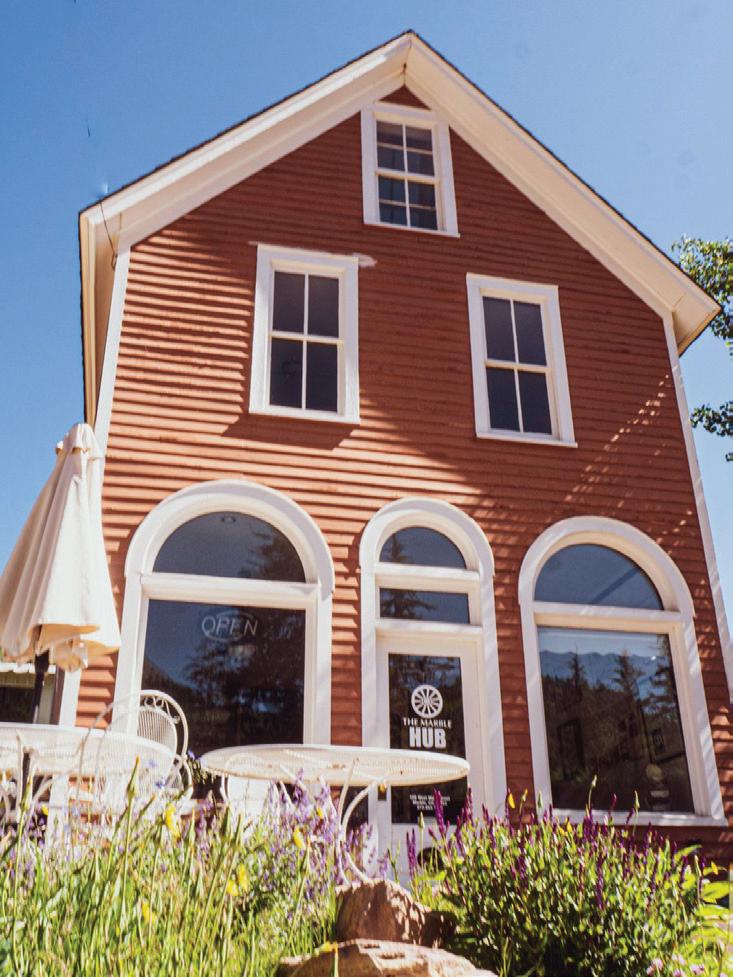
Propaganda Pie • Marble Hub
FOR SUBSCRIPTIONS
Please send $40 for print or $25 for digital editions along with address information to:
The Crystal Valley Echo 364 Redstone Blvd. Redstone, CO 81623
Love Redstone Update
We couldn’t have done it without you! Thanks to the generous donations from people in the Redstone/Marble community, and from people outside the community, Love Redstone was able to raise $5,500 to bless 22 families with City Market gift cards. We held a drawing, prayed over the names, and came out with our winners. We have been slowly delivering these gifts and the response has been overwhelmingly grateful. So many thank-you’s, smiles, and a few tears came out of this project. A few people said, “I’ve never won anything before!” We’re so glad we were able to bless our community with this!
Special thanks to the Church at Redstone for helping me jumpstart this project and helping me with the logistics. Another thanks to the people who participated in nominations. It is because of your kindness and thoughtfulness we had people to bless! Everyone was very happy to know that someone was thinking about them. You really made a difference! Thank you!
Sincerely,
Sophia Moon
Larry Meredith
The difference between the right word and the almost right word is the difference between lightning and a lightning bug.
~Mark Twain
Words matter, whether written or spoken.
As a publisher, I sometimes receive submitted manuscripts with poorly constructed sentences, misspellings, and obvious indications of ignorance of the meanings of words or, at the least, lousy proofreading.
Maybe email is at fault. Tweeting and texting and their lackadaisical attention to spelling, grammar, and capitalization play important roles. Or maybe it’s just plain old indifference on the part of people more concerned with telling their digital friends where they are or what (or how much) they drank or smoked last night than they are in using proper language, spelling, and punctuation to convey something more meaningful and/or interesting.
Whatever the cause of this lack of interest in the proper use of language, it is an appalling circumstance that only exaggerates the increasingly poor communication traits among many elements of society.
Like, I mean, you know. You hear what I’m sayin’?
Let’s not go their
See what I mean? If you don’t, you just made my point.
Sadly, the improper use of our language is encouraged by song (and rap) lyrics, movies, television, and many role models (sports stars, movie stars, and others who, for no evident reason, are simply stars).
Even more discouraging is the way our language is being hijacked and bastardized by government “leaders” who have mastered the art of what George Orwell termed “dou-
Opinion: Words Matter
blethink,” a term he coined in the literary classic 1984 to describe the results of the government’s use of language. Even before the publication of 1984, which came out in 1949, he wrote: “Political language – and with variations, this is true of all political parties. . . – is designed to make lies sound truthful and murder respectable, and to give an appearance of solidity to pure wind.” (From Politics and the English Language, 1946.)
To illustrate the point about how political speech can (and does) convince many listeners that less is more or vice versa, Orwell included the following in 1984: War is peace.
Freedom is slavery.
Ignorance is strength.
Others have been equally disdainful of the way politicians use language.
For example, George Will, American newspaper columnist for the Washington Post, journalist, and author, believes “a politician's words reveal less about what he thinks about his subject than what he thinks about his audience.”
The H-word: Hate
The heinous word “hate” has become increasingly commonplace. “I hate that man” (or woman), “I hate all (fill in the blanks with your least favorite political party),” “Don’t you just hate that song?” “I hate school,” and therefore “I hate to write themes.”
Does one actually hate? Or does one simply “dislike” certain men or women, specific politicians and their policies, some music, and various aspects of school?
The ubiquitous and anonymous rants on the Internet clearly illustrate the widespread use of the word by what appears to be a large percentage of society.
When one uses a word often enough to describe feelings, emotions, or even people, one begins to believe it. This is often true, even if “hate,” for example, is the descriptive word used initially even though the feelings might not have been as strong as indicated by the word itself.
Back to Language in General
Not too long ago I enjoyed televised “discussions,” “conversations,” and “debates.” Lately, however, many of them have become little more than shouting matches where the loudest voice (including that of the so-called “moderator”) wins.
I suspect noted author Philip Roth would agree. In his 1969 novel Portnoy’s Complaint, he wrote: “The English language is a form of communication! Conversation isn't just crossfire where you shoot and get shot at! Where you've got to duck for your life and aim to kill! Words aren't only bombs and bullets — no, they're little gifts, containing meanings!”
Too many “guests” on TV programs seek to impress by coming up with rambling sentences designed to show they have some four-syllable (and/or four-letter) words in their vocabulary and little else. In fact, David Ogilvy, author of Confessions of an Advertising Man, confided that “our business is infested with idiots who try to impress by using pretentious jargon.”
Television, and its reliance on advertising revenue for survival, contributes mightily to the demolition of proper language use. Thanks for the remote, however, for without it we would be even more completely inundated with sound in which the only decipherable word in an ad is the name of the product.
“As advertising blather becomes the nation's normal idiom, language becomes printed noise,” says Will.
Frankly, I’m worried.
If the members of the general public, or a good portion of it, are not at least minimally educated in the proper use of language and in how it can be (and often is) perverted for causes that range from political to social and from fundraising to salesmanship, powerful leaders will continue to have their ways with us and the results will benefit only them and not the rest of us.
Even that great philosopher Robin Williams is quoted as having said “no matter what people tell you, words and ideas can change the world.”
Unfortunately, I tend to agree with Aesop who, in Aesop’s Fables, wrote: “After all is said and done, more is said than done.”
Larry K. Meredith lives near Redstone and is the author of three books, the most recent of which is the memoir Real, Rural: Growing Up Rural in the 1950s.
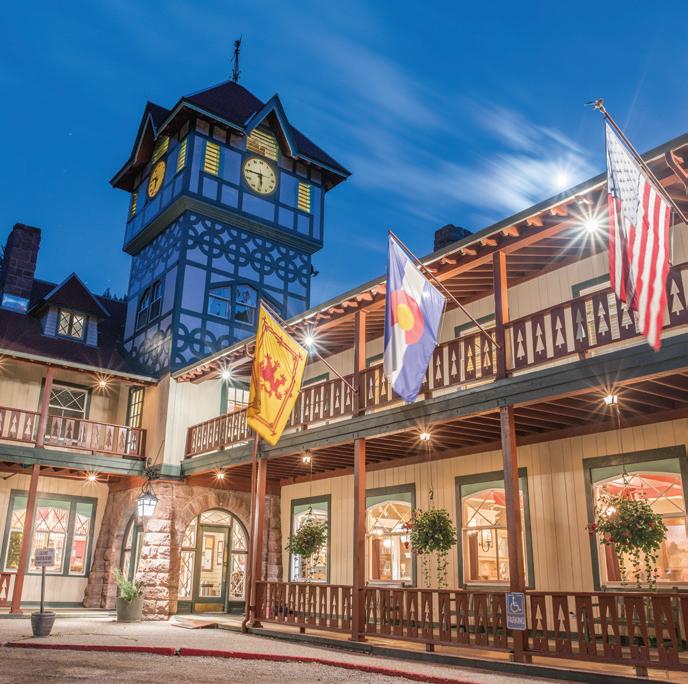
Take a tour of this unique national treasure and get a glimpse into early 20th century life for the elite. For 2020, all tours are with a private reservation. Please email info@theRedstoneCastle.com or phone 970.963.9656 to select and reserve your preferred time.
For an exceptional experience, stay the night in a beautifullyrenovated historic suite.
What's Up with Pitkin County?
George Newman
Pitkin County Comissioner District 5
The Pitkin County Commissioners hold weekly work sessions on Tuesdays and bi-monthly public hearings on Wednesdays in our BOCC meeting room at the Pitkin County Administration and Sheriff’s Building. Both meetings are televised live and repeated on locater CG12 TV. They are also streamed live and available on the County website. Agendas are posted in the Aspen/Glenwood newspapers and on-line at www.pitkincounty. com. In this column, your District 5 Commissioner, George Newman offers his take on cur- rent matters. You can reach him at george.newman@pitkincounty.com
THE 2020 ELECTION IS HERE!
Pitkin County Commissioners and County Clerk and Recorder Janice Vos Caudill are reaching out regarding the upcoming General Election. Colorado County Clerks have been mailing ballots to all active, registered voters for every election since 2013, in addition to providing Voter Service and Polling Centers during Early Voting and on Election Days. In fact, over a dozen elections have been conducted according to the law in this manner and our County Clerk assures us, the Pitkin County community: “We’ve got this!” She recommends following these four easy steps with more details below:
1. Make sure your mailing address is correct
2. Look for your ballot in the mail the week of October 12th
3. Use a 24/7 surveillance drop box to return your signed, completed ballot
4. Remember to sign up for BallotTrax!
DETAILS:
1. Make sure your mailing address is correct:
Go to www.pitkinvotes.com and review your voter registration record to assure your information and address is correct. If not, update it immediately and the Election Office will send you a ballot to the correct address. By law, the last day to request a ballot to be mailed is on Monday, October 26, 2020.
2. Look for your ballot in the mail:
More than three weeks before the November 3rd Election, Pitkin County will send all active, registered voters a mail ballot on October 9th. Look for your ballot in the mail the week of October 12th
3. Use a 24/7 surveillance drop box to return your signed, completed ballot:
Drop boxes are safe and secure, and ballots are protected while being transported promptly and directly to the County Election Offices. Your voted ballot will arrive at the Clerk’s office more expeditiously than using USPS. Pitkin County’s 24/7 surveillance drop boxes locations are:
• Pitkin County Administration Building, 530 E. Main St. in Aspen
• Snowmass Village Town Hall, 130 Kearns Rd. in Snowmass Village
• Basalt Town Hall, 101 Midland Ave. in Basalt
Voters may use ANY 24/7 surveillance drop box in ANY Colorado County. County Clerks, your trusted election source, will assure all ballots are forwarded to the correct County.
In addition, Pitkin County offers two Mail Ballot Drop-Off Locations for use closer to Election Day:
• Aspen Village Fire Station: 31350 Hwy 82, Aspen
(Open Monday, November 2: 8 a.m. - 5 p.m. and on Election Day, November 3: 7 a.m. - 7 p.m.)
If returning your ballot via USPS, the last day to return one’s ballot in the mail is October 26th; that is assuming mail is locally posted and not outside of the area. The key point, however, is to vote early!
It is also recommended by Pitkin County Clerk to use two stamps when returning your mail-in ballot.
4. Remember to sign up for BallotTrax!
By integrating with the State of Colorado and County election offices, BallotTrax alerts the voter when their ballot has been placed in the mail, when it will be received by the County Clerk’s election office, and accepted for counting by a bi-partisan team of election judges. The voter will receive a real-time message via email, text, or voicemail notifying them of the status of their ballot during the entire process, “From printed to accepted,” according to the BallotTrax home page. Always anonymous, always secure, and with the safety of knowing your ballot was received by the Pitkin County Elections Department. Go to www. pitkinvotes.com to sign up – it’s easy!
VOTING IN PERSON
Due to the COVID pandemic, if it is necessary for you to go to the polls to vote in person, the County Clerk and Recorder encourages everyone to please respect the safety of your community members. While locations have been chosen based on space available to accommodate social distancing; masks will be required for entry. If you need to go to the polls, we encourage everyone to avoid the crowds on Election Day and VOTE EARLY.
EARLY VOTING DATES: October 19, 2020 — November 2, 2020
EARLY VOTING LOCATION:
Aspen Jewish Community Center
435 W. Main St., Aspen
HOURS: Mondays – Fridays, 8:30 a.m. – 4:30 p.m.
Saturdays (no Sundays), 10:00 a.m. – 2:00 p.m.
ELECTION DAY: November 3, 2020
ELECTION DAY PITKIN COUNTY VOTER SERVICE AND POLLING CENTERS:
• Aspen Jewish Community Center, 435 W. Main St., Aspen
• Snowmass Village Town Hall, 130 Kearns Rd., Snowmass Village
The Pitkin County Clerk and Recorder encourages everyone to vote early because it safeguards your ballot will be counted. Early voting also ensures your ballot will be included in the Secretary of State’s election night reporting once the first return of votes cast is released shortly after 7 p.m.
Voting as early as possible also ensures:
a.) the avoidance of any weather/storms that may hinder travel on Election Day;
b.) the possible time to cure and count your ballot should it be rejected due to a signature discrepancy or missing signature; and
c.) removing your name from electioneering lists (because you already voted).
Colorado County Clerk’s offices are your trusted election source! Go to www.pitkinvotes.com for all your elections information, including a Sample Ballot, TABOR Notice, Blue Book, etc. or call Pitkin County Elections at (970) 429-2732.
It's election season, and there are four candidates split between Pitkin and Gunnison Counties who need your attention. We wanted to give you some basic information about their platforms.
Pitkin County District 5
George Newman has tireless served as the Pitkin County Commissioner for District 5, but has termed out and is not up for re-election this year. Instead, Francie Jacober and Jeffrey Evans are fighting for your vote.
Agriculture
Francie Jacober is a retired teacher who has been a member of the Roaring Fork and Crystal Valley communities for 26-years, and currently resides up Prince Creek. Here's a brief rundown of her campaign:
• Supporting efforts to attain a net zero carbon emission status for the entire county
• Working towards sustainable building practices for new residential and commercial construction
• Protecting open spaces & wildlife.
Community
• Exploring how to make educational opportunities more equitable for all students, teachers, and families in the county
• Expanding affordable childcare throughout the county
• Increasing affordable housing so all our generations can live here
• Supporting RFTA
For more information about Jacober, visit FrancieJacober.com
Jeffrey Evans has been a long-term advocate for a solution to the entrance to Aspen. Though he currently resides in Basalt, he is a past resident of
Swiss Village in the Crystal River Valley.
His web page largely focuses on transportation issues, and proposes creating a four lane highway entrance into Aspen so people dont have to use public transportation. Evens is also opposed to a redesign of the Aspen Airport, which favors public transportation.
For more information about Evans, visit EvansForCommissioner.com.
Gunnison
County District 1
Elizabeth Smith was appointed during 2020 to complete John Messner's term, and is running for re-election. Here's a look at her platform:
Diversity, Equity, and Inclusion
• Formalize DEI in our countywide strategic plan
• Collaborate with municipalities, Western, and community stakeholders to strengthen our commitment to DEI
Environmental Protections
• Identify sustainable recreation solutions as trail use and backcountry tourism increases
• Seek out new water forecasting technologies and methods to protect our watersheds and water quality
• Continue pursuing energy efficiency by increasing natural gas RTA fleet and utilizing geothermal and solar on county buildings
Economic Resilience
• Reinforce support networks for business owners through resources like the OVPP's business toolkit
• Build in more transparency with the county’s contract with TAPP
• Advance solutions to winter RTA load challenges linking CBMR to Crested Butte, CB South, and Gunnison
• Support industry subgroups to strategize and adapt business models until we can open without restrictions.
Community Health
• Uphold county health experts and evidence-based policies to prevent the spread of COVID-19
• Work to facilitate collaboration and an integrative health approach across substance abuse prevention programs
The Redstone Inn is Open!
• Patio seating available
cocktails
• Dine-in & carry out
**Due
• Develop a strategic health coalition and comprehensive behavioral health plan with Gunnison County, Western, GVH, and the Center for Mental Health
Essential Services
• Support workforce and affordable housing units countywide
• Ensure awareness and access to food security programs
• Strengthen and support quality and affordable childcare networks
For more information on Smith, visit LizForGunnisonCounty. com
David Taylor purchased the Gunnison KOA in 2004 and is often referred to as "KOA Dave;" he is also running for Gunnison County District 1 Commissioner. However, at the time of this writing he was unable to be reached for information and a web site was not present at the time of publication. For information, you may reach out to him at the Gunnison KOA at (970) 641-1358.
Statewide, Local, and Regional Ballot Measures
By now, you've received your 2020 State Ballot Information Booklet, these are the items we recommend you to familiarize yourself before voting.
Amendment B: Gallagher repeal.**
Proposition EE: Tabacco tax for education funding.
Proposition 113: National popular vote.
Proposition 114: Gray wolf introduction.
Proposition 116: Reducing Colorado income tax rate from 4.63% to 4.55%
Proposition 117: TABOR extension.
Proposition 118: Paid family and medical leave, 12-weeks. Town of Snowmass Ballot Issue 2A: TOSV property tax extension in support of Aspen School District.
City of Aspen Ballot Issue 2B: Extend 0.3% sales tax in support of educational programs.
Aspen School District Ballot Issue 4A: Bond issue to support Aspen School District.
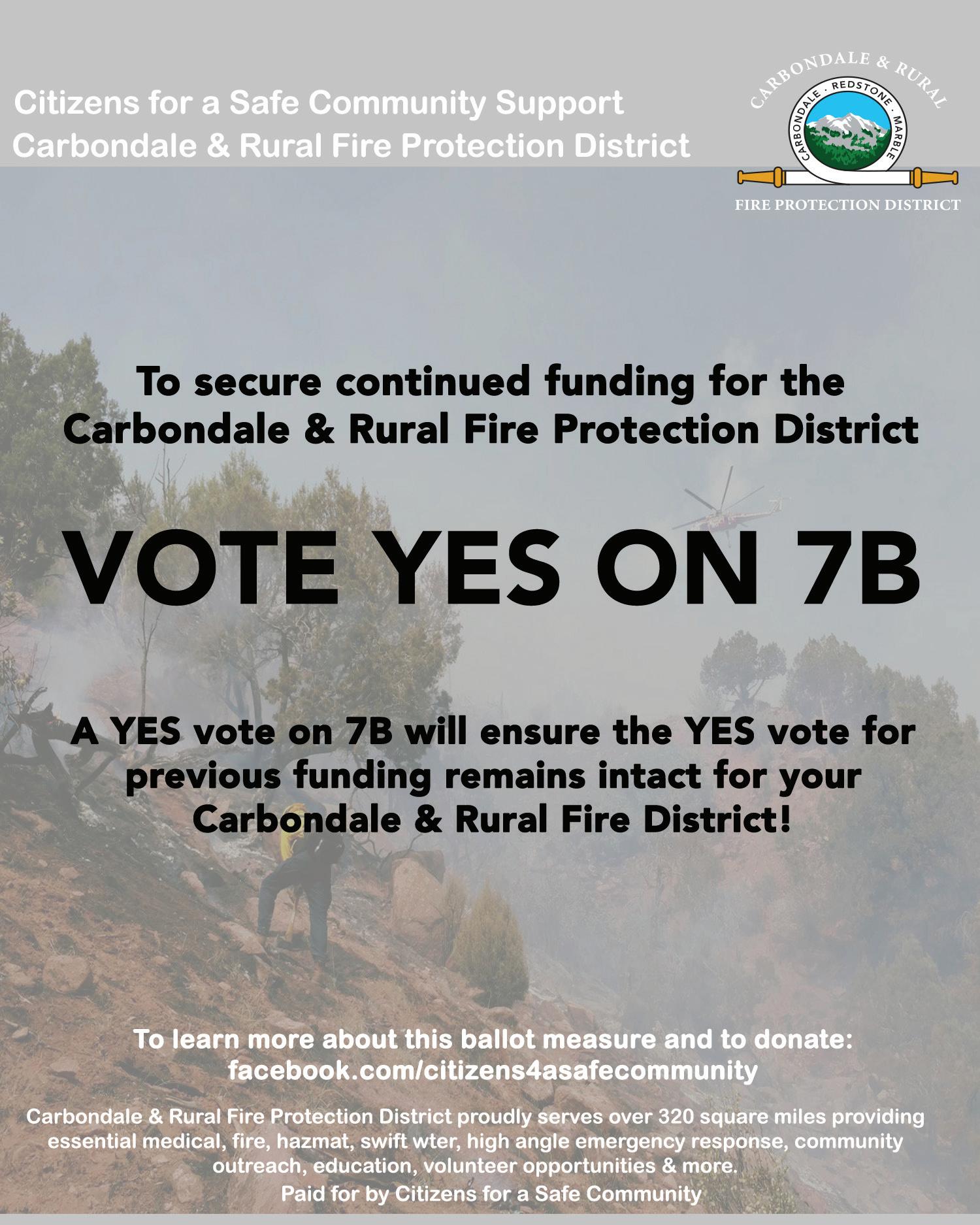
Colorado River Water Conservation District Ballot Issue 7A: Property tax levy increase of $1.90 per $100,000 of residential home value to safeguard western Colorado water. Carbondale and Rural Fire Protection District Ballot Issue 7B: Gallagher offset.**
** The Gallagher Amendment was passed in 1982 to maintain a consistant ratio between property tax revenue collected between residential and commercial properties. As a result, the assesment rate for residential property has declined by more than two-thirds due to Colorado's population growth and an increase in residential real estate values with a decline in commercial values. The Carbondale Rural and Fire Protection District, with Ballot Issue 7B, is giving voters the opportunity to ensure their funding allowances under the Gallagher Amendment remain intact should it be repealed in November.
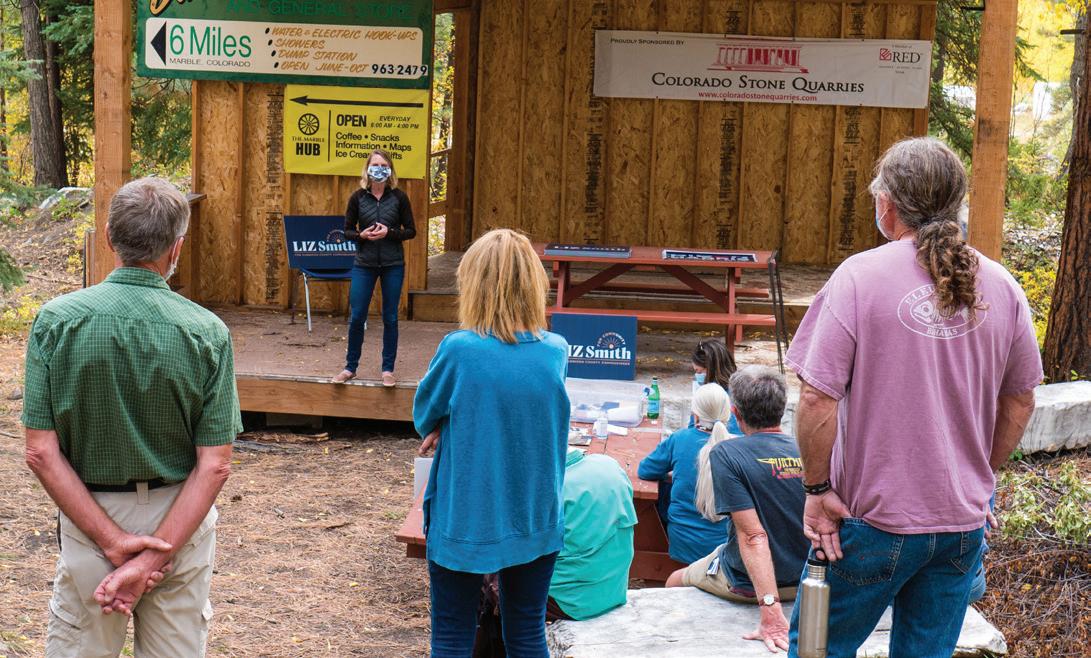
Liz Smith met with a group of around 30 Marble constituents towards the end of September at the Marble Millsite Park.
Photograph by Amber McMahill.
Marble Ballot Initiaitive: Sales Tax Levy
For the past 45 years, the Town of Marble's sales tax rate has remained the same; that might change this November as Marble municipal voters will decide if they want to raise the rate to 4%. The town's Board of Trustees passed a resolution in July to place the proposed increase on the ballot. Marble's current rate is well below that of surrounding communities, including Carbondale, Paonia, and Delta. The sales tax revenue currently brings the town between $50,000 and $60,000, making up a large portion of the town's small budget. The proposed increase would potentially double that amount. The majority of this revenue comes from lodging, stores, and the restaurant, most of which are open seasonally and geared towards tourism.
ing with a coalition of other communities in the same position, but any plans will require funding.
A third infrastructure project that the town hopes to put an increase of funds towards is improved highspeed internet. Mammoth internet has applied for a grant to fund the work needed to stretch the broadband into the town, but funds are required to match their efforts. Fater internet would allow the Marble Charter School and town residents the capability to learn and work online.
Along with the high-speed internet, the town plans to direct more funding towards the school, especially in light of the state's recent
At the July meeting, discussion surrounding the proposed increase focused on many of the current budget's needs and shortfalls. One such need is for roads; the increase in visitors means an increase in road use and the town has had a hard time affording the upkeep on the dirt roads. The all-volunteer crew does most of the current small repairs, jokingly referred to as MDOT and spearheaded by current Trustee Tim Hunter. Most roads need more work than a volunteer crew can handle, however.
Water augmentation is another infrastructure project the town is forced to work on. The drought two years ago brought to attention the state's required augmentation plan. In short, if a downriver entity with senior rights (such as the ranches outside of Carbondale) places a call on the river, Marble risks closure or rationing of the town's water. Marble is work-
budget cuts for education. The school has increasing expenses with the current COVID regulations and needs surrounding the condition of the historic building they currently occupy.
The historic building and the parks surrounding them are also in desperate need of funds and attention. The historic Jail House is competing for a historic restoration grant and the town is working with Aspen Valley Land
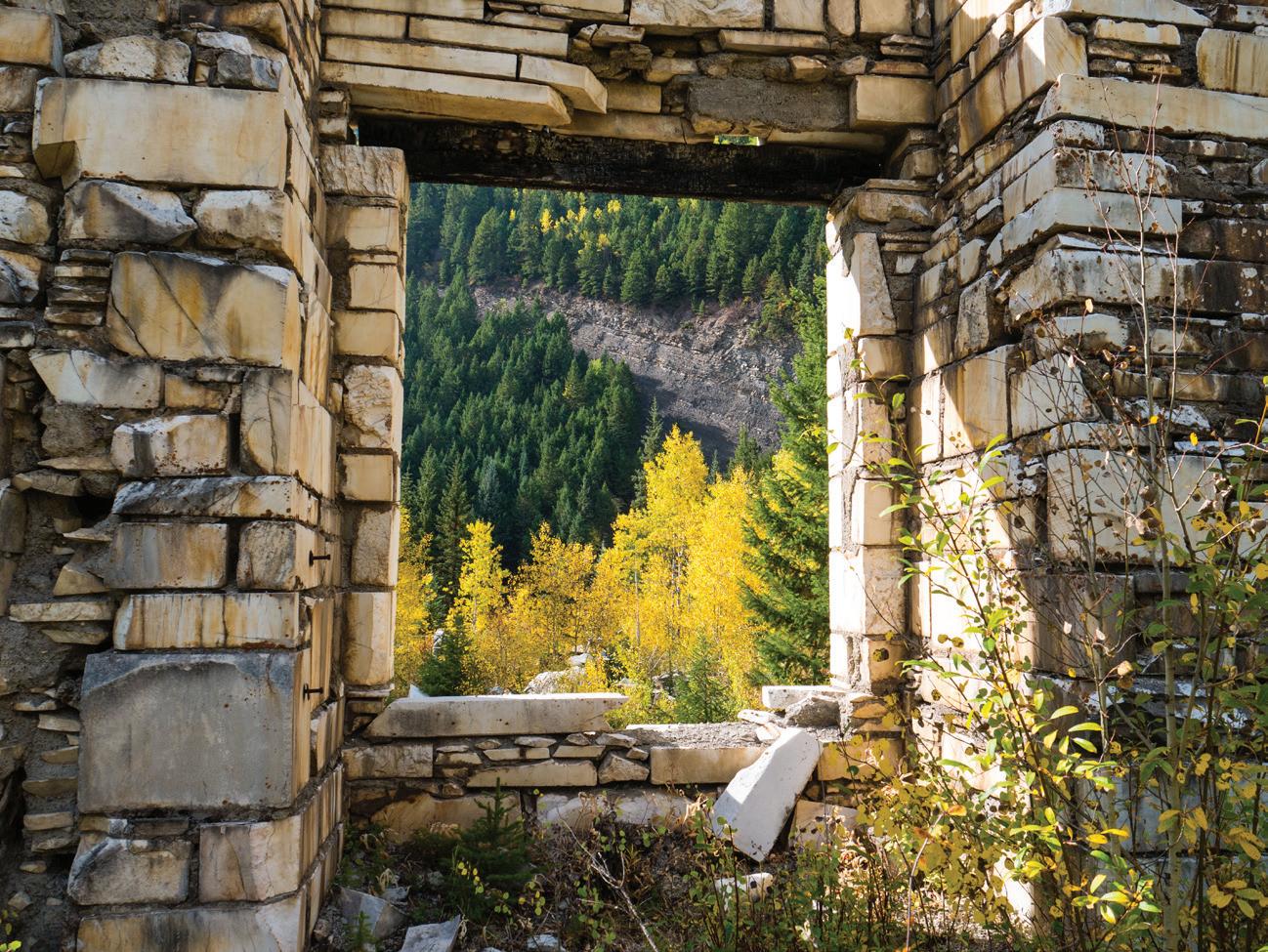
Trust who owns the surrounding property for improvements. The Millsite Park and the historic finishing mill remnants are in poor repair, and in need of a restoration grant to keep the walls and pillars from crumbling.
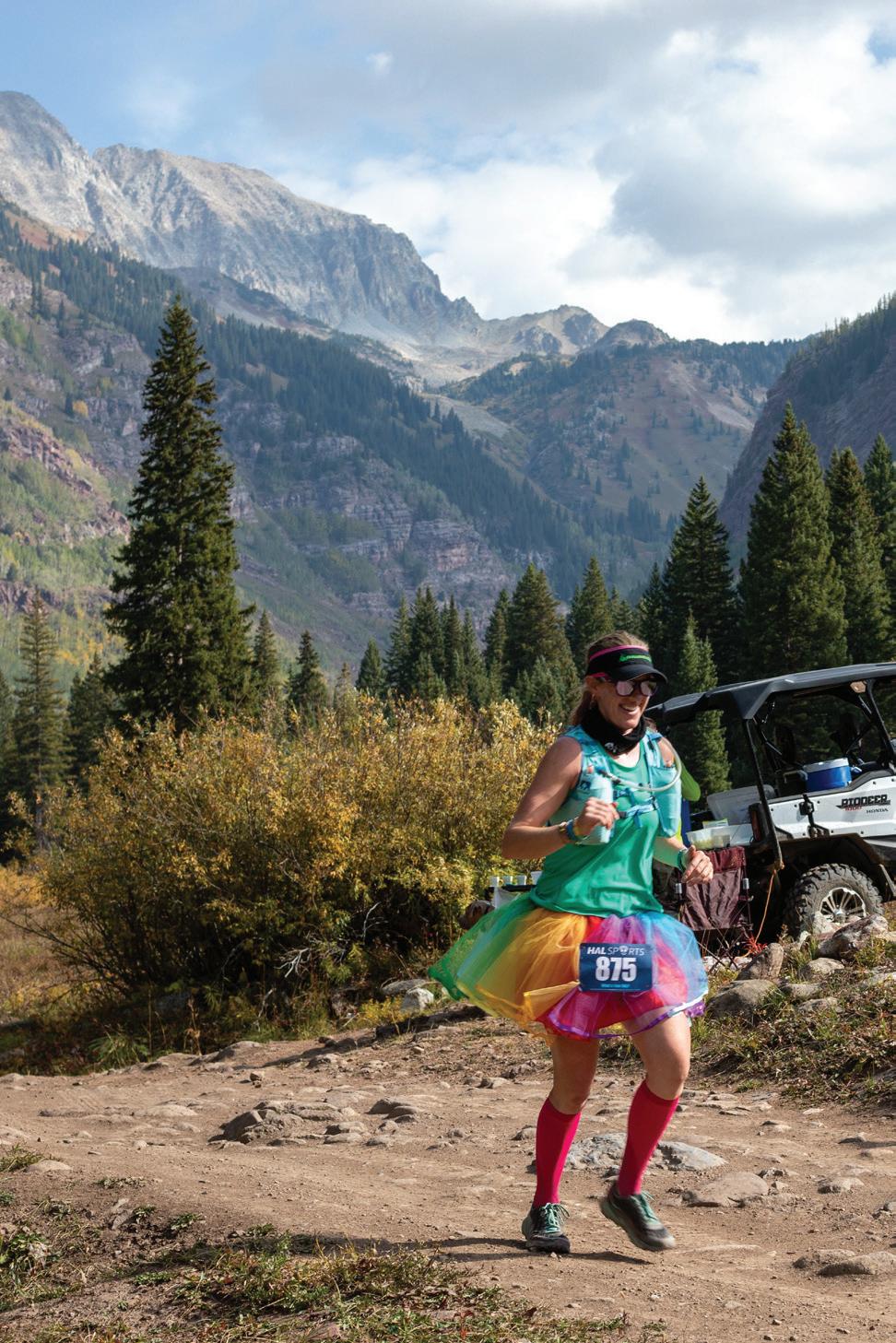
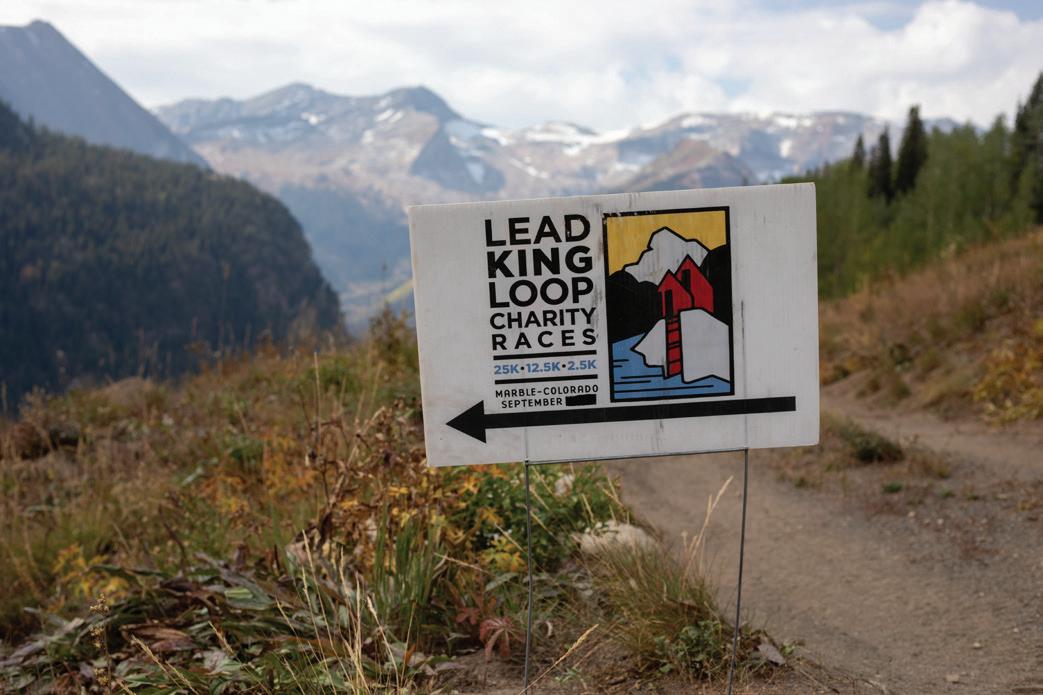
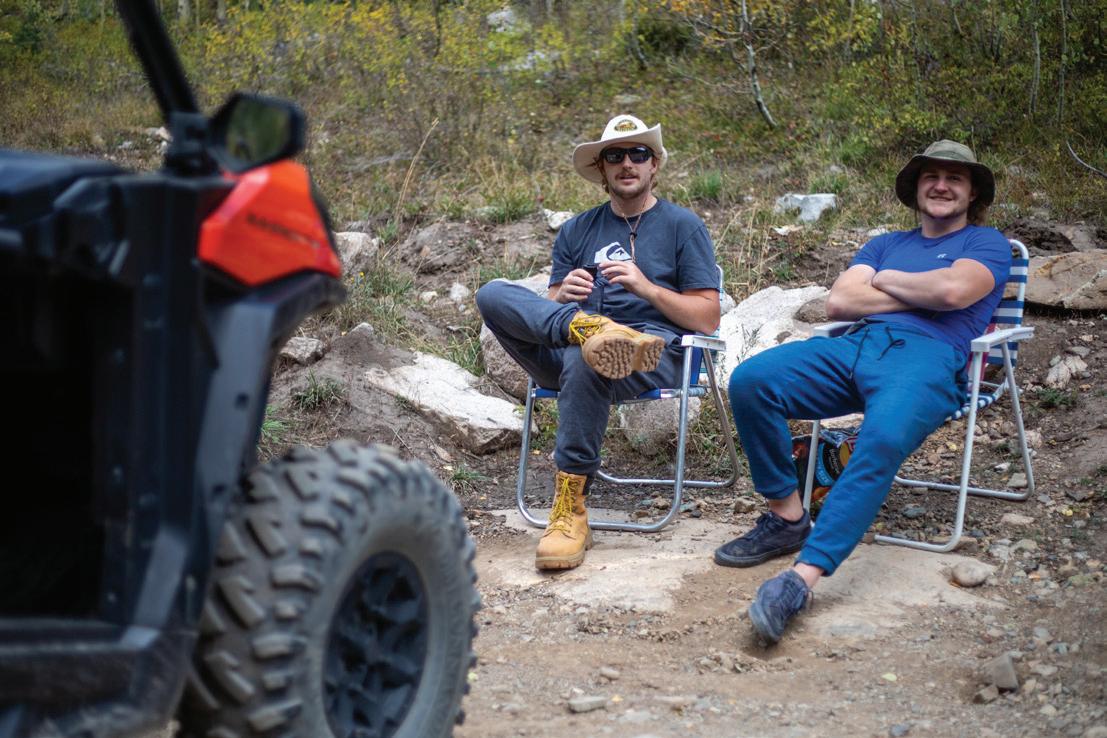
Of course, there is the issue of the overwhelming amount of OHV users and the congestion caused by the massive trucks and trailers that haul them into town. For the past three years, the Lead King Loop Steering Committee, a working group comprised of the Town of Marble, the Forest Service, Gunnison County, Gunnison Sheriff's office, representatives of Crystal, and the Division of Parks and Wildlife, have been working on viable solutions to the overuse. The trustees hope to put part of the additional revenue towards plans to alleviate the area's overuse.
Marble Voter information
Mail-in ballots will be mailed out: October 9th
Last date to register and receive ballot through mail: October 26th
Last date recommended to mail back ballot (be sure to put postage on it): October 26th
Ballots can be dropped at ANY drop box including: Redstone (Election Day only) Carbondale Town Hall (Starting Oct. 12th)
You can register online: GoVoteColorado.gov (it takes about 2 minutes)
Amber McMahill
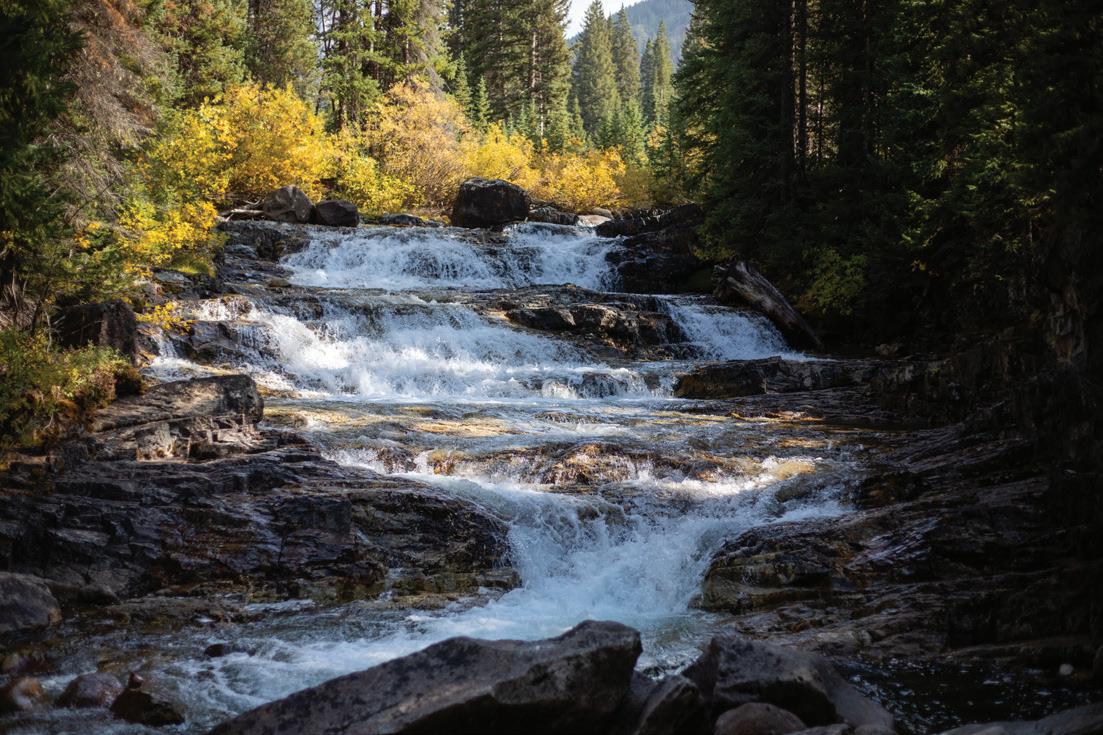
Fall colors at Millsite Park. Photo by Amber McMahill.
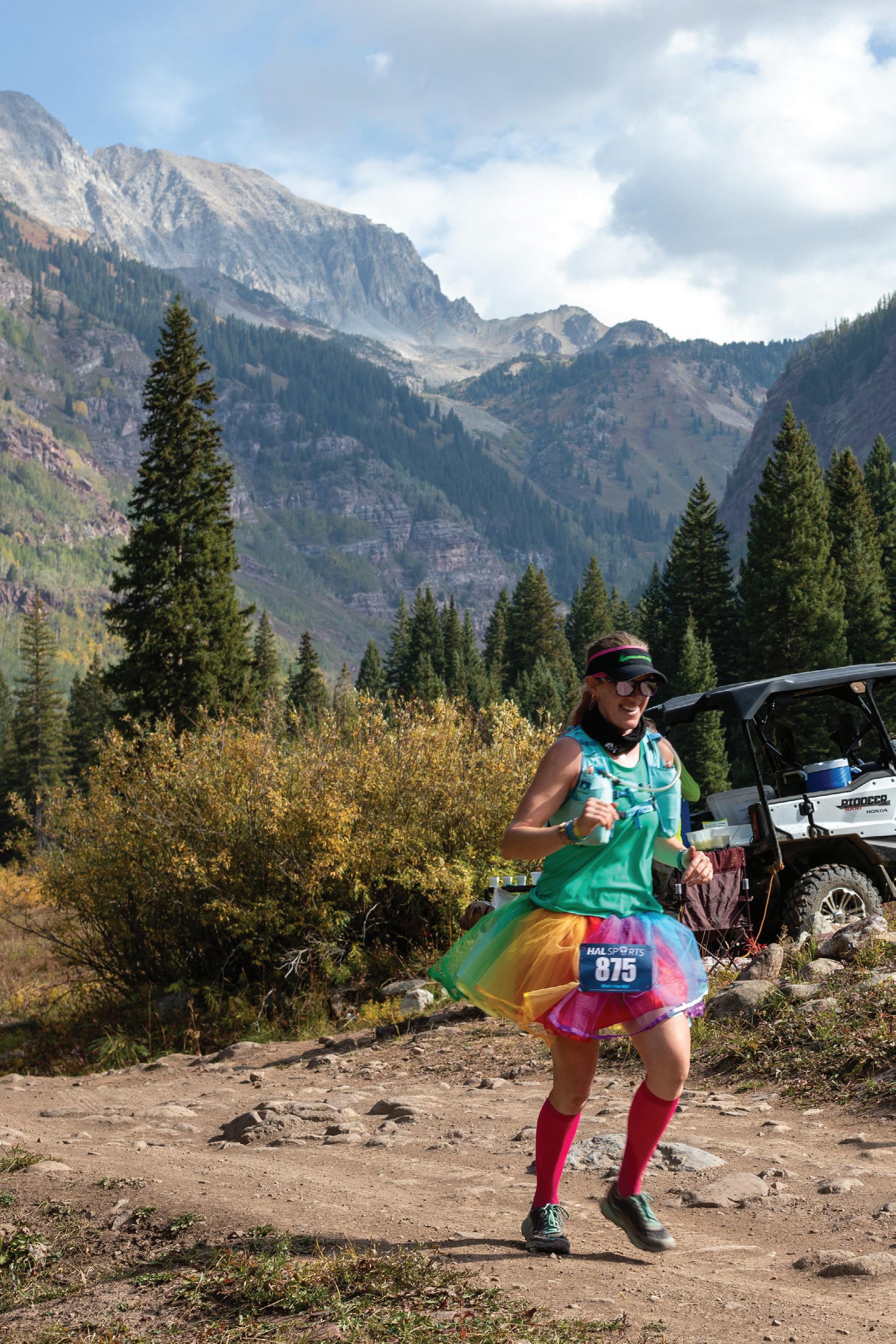
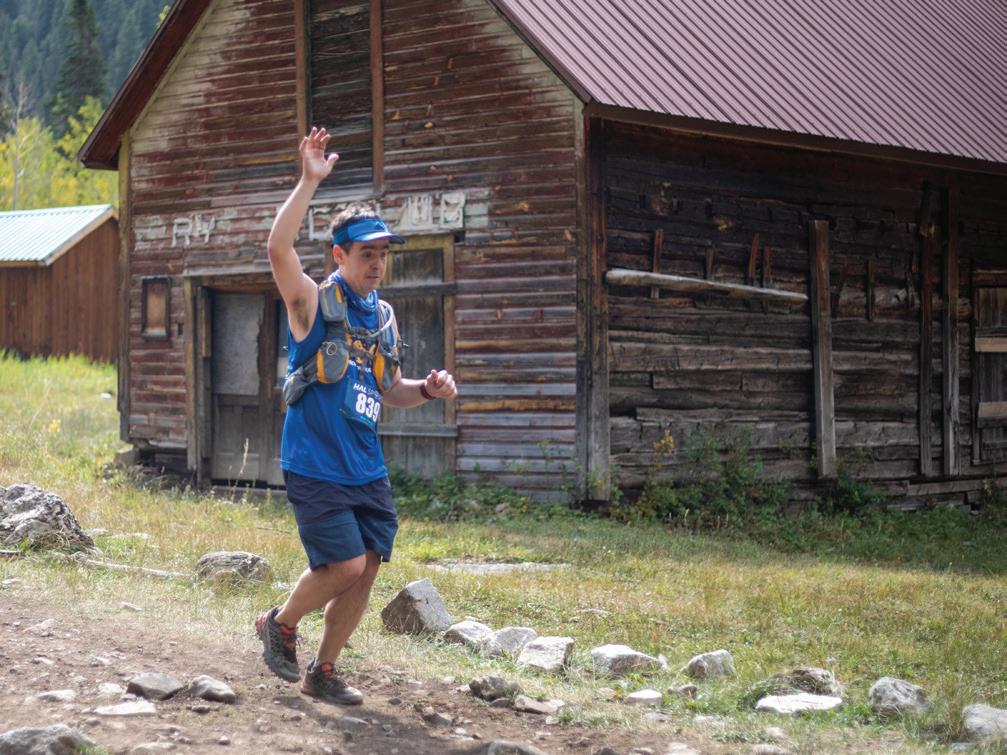
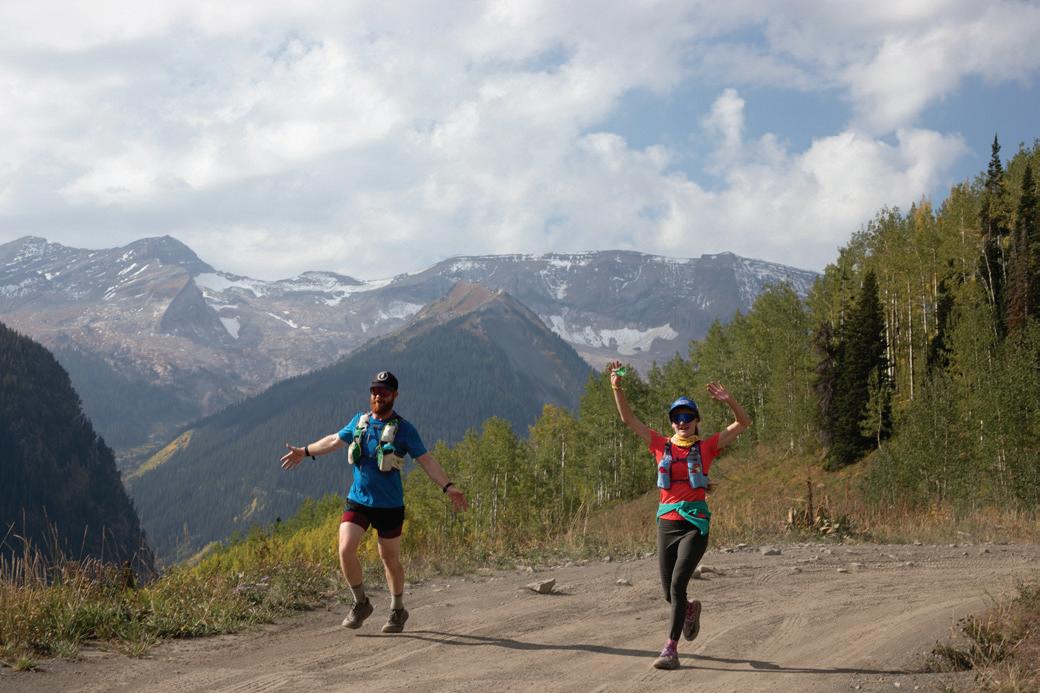
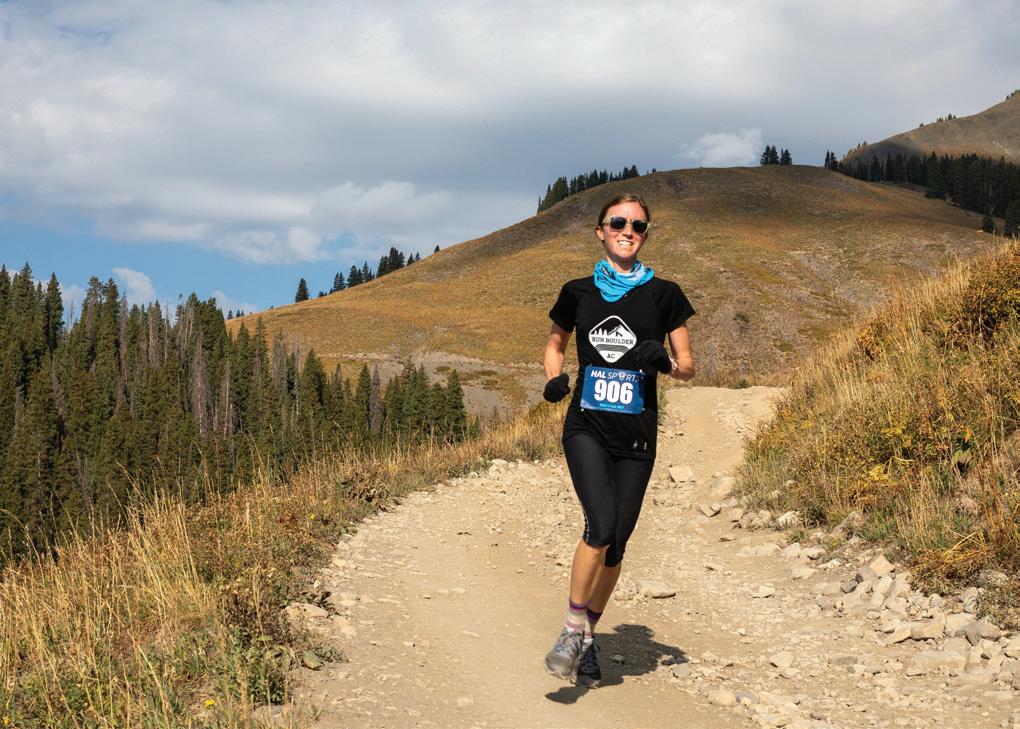
Lead King
Loop Races
by Charley Speer
Out and About with the 100 Club
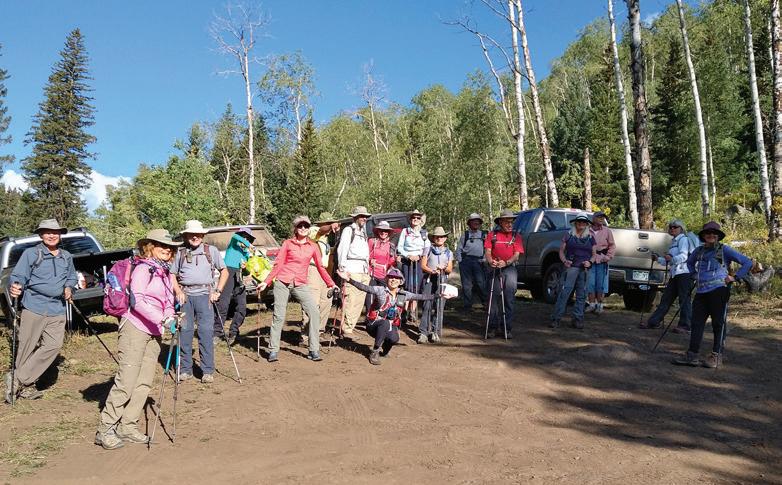
It’s early morning in Redstone. Everything is quiet as I gather my things and pull on my hiking boots. I feel the cold bite of autumn in the air. Golden aspens and dark evergreens are framed by a sky so blue; it almost hurts. A perfect day to meet up with the “100 Club.”
My first encounter with this activity group was on the Capitol Lake trail. I came across a duo taking in the spectacular view of the lake and struck up a conversation. I soon learned that they were members of the 100 Club, a group of active couples over the age of 50. The only requirement to join the club is that the combined age of each partnership must be at least 100. “We’re working on an IQ requirement too, but that hasn’t happened yet,” they said with a laugh.
impacted how the group interacts, but they still manage to find a way.
As everyone started to gain their stride, we moved briskly down the trail while one hiker joked, “You know, some people call this the 100 mile an hour Club.” We talked and laughed all the way to the top. Everyone was eager to share their personal 100 Club stories, which were poignant and funny.
Since the club hikes all over the area, I asked if there were any favorite Crystal River Valley hikes. Ann English, a former English teacher who has had property in Marble since the 70s, said a personal favorite of hers is Raspberry Ridge – a hike I have yet to complete without getting lost.
The 100 Club was founded in 1990 by Tom and Ollie Sherman as a skiing group who met at Sunlight Mountain Resort every week. The popularity of the club grew, as did the membership. When ski season ended, they decided to try hiking during the offseason. The first summer, they met about six to eight times. Now they hike twice a week, typically with an easier trek on Mondays and a longer, more strenuous option on Wednesdays.
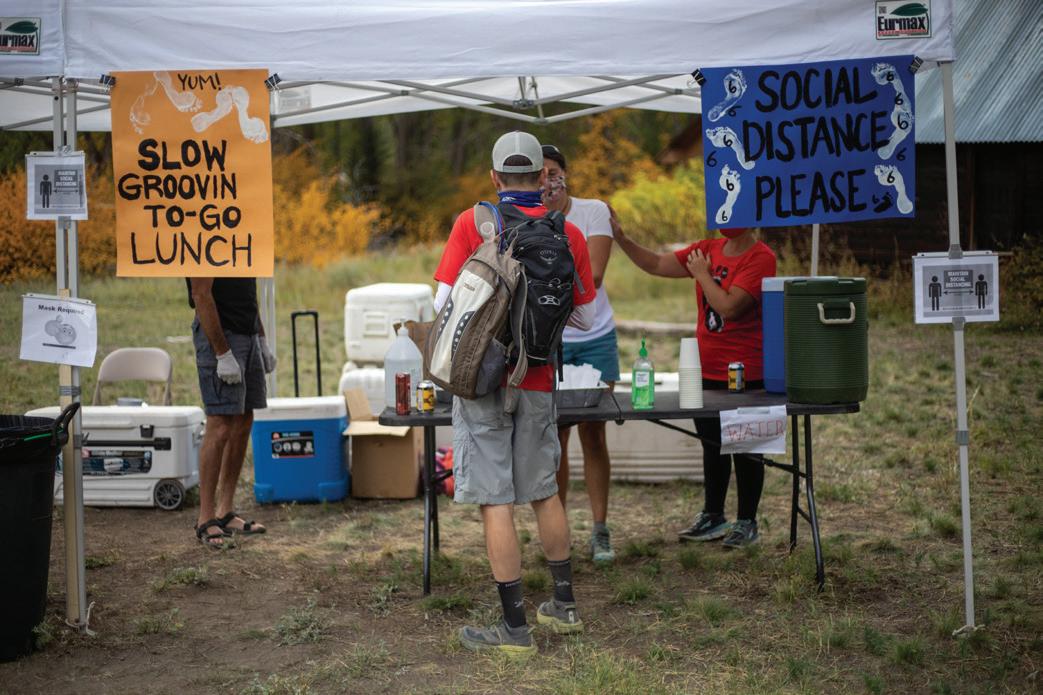
Gatherings look a little different this year since COVID-19 hit. Hikes have been staggered throughout the week, and there are more options so groups can remain smaller. Everyone is beginning to find their “normal.” At first, people hiked in groups of two or three to avoid exposure and stayed close to home. Everyone still carries a mask and hikes at the recommended six-foot distance.
According to Gerry Roehm, a self-professed control “enthusiast,” scheduling has been challenging this year. His official title is Hiking Chairman, but he says, “My unofficial title is Cat Herder in Chief… because running this group is very much like herding cats… no more so than this year.” COVID restrictions, fires, and road closures have
The Club has grown since its beginning, in membership and activities. In addition to hiking, the group enjoys biking, tennis, bridge, monthly dinners and, of course, the club still gets together to ski. They still meet at Sunlight and now Snowmass as well. Of course, if it is a powder day all bets are off. Members will be scattered from Vail to Sunlight. I guess the old saying holds true: No friends on a powder day.
When we got back to the trailhead, everyone pulled up a seat for the post-hike tailgate. “This is the best part, besides taking your boots off and putting your sandals on,” said Renee Miller with a smile. We toasted Kathy Kline, who has hiked 400-miles with the club this summer, just steps behind Farshideh Jahani, who is hoping to get 500-miles this season.
In the beginning, mileage was tracked a little differently than it is now. Hikes and mileage are recorded in every sanctioned group hike and awards are given to people when they reach pivotal goals. To this date, Hal Sundin, one of the founding members has over 7,000 miles with the club. “In the beginning, Hal’s method was a person can hike 2-miles an hour. And that’s how we kept track. It’s a little more accurate now,” explains Miller.
The club hikes anywhere from Rifle to Vail and
makes several trips up the Crystal each season. Many members are admitted exercise junkies but meeting them got me thinking. With our access to trails in the valley, how hard is it for local novices to discover our backyard?
When I asked Deb Korbel what advice she had for people who want to start hiking she said, “There are so many trails, so many different ways. Just start getting out… stay low. When you’ve built up your lungs, then try hills.”
Everyone I spoke with was so upbeat and thriving. They were happy to be in the wilderness on a gorgeous fall, bluebird day in Colorado. Many couples had moved to the area for just this. When asked what brought her here, English said, “The Mountains. We wanted to raise our kids here, so we moved. Lock, stock, and no jobs.”
Over the years, this group, like so many in our valley has become a family. They look out for one another on and off the trail. Additionally, they try to keep this area beautiful by doing trail maintenance and highway cleanups. They do not yet have any Crystal River Valley members, but maybe someday. Although I have known the 100 Club for a short time, they’ve taught me a lot about community and the outdoors. Most importantly though, they taught me that just because you grow up does not mean you have to grow old.
Check our website for more informationon current hoursand availability.
It is an incredible time of year to enjoy the Colorado wilderness. The Crystal River Valley is home to a variety of trails that are accessible to people of varying fitness levels. If you are interested in hiking here are a few recommendations on getting started:
Know Before You Go.
I like to rely on an old-fashioned, paper National Geographic map. These are easy to read and I can also download and review them on my phone even without cell phone service. There are great apps out there, too. Colorado Trail Explorer (COTREX) is a free app
Stephanie Deaton
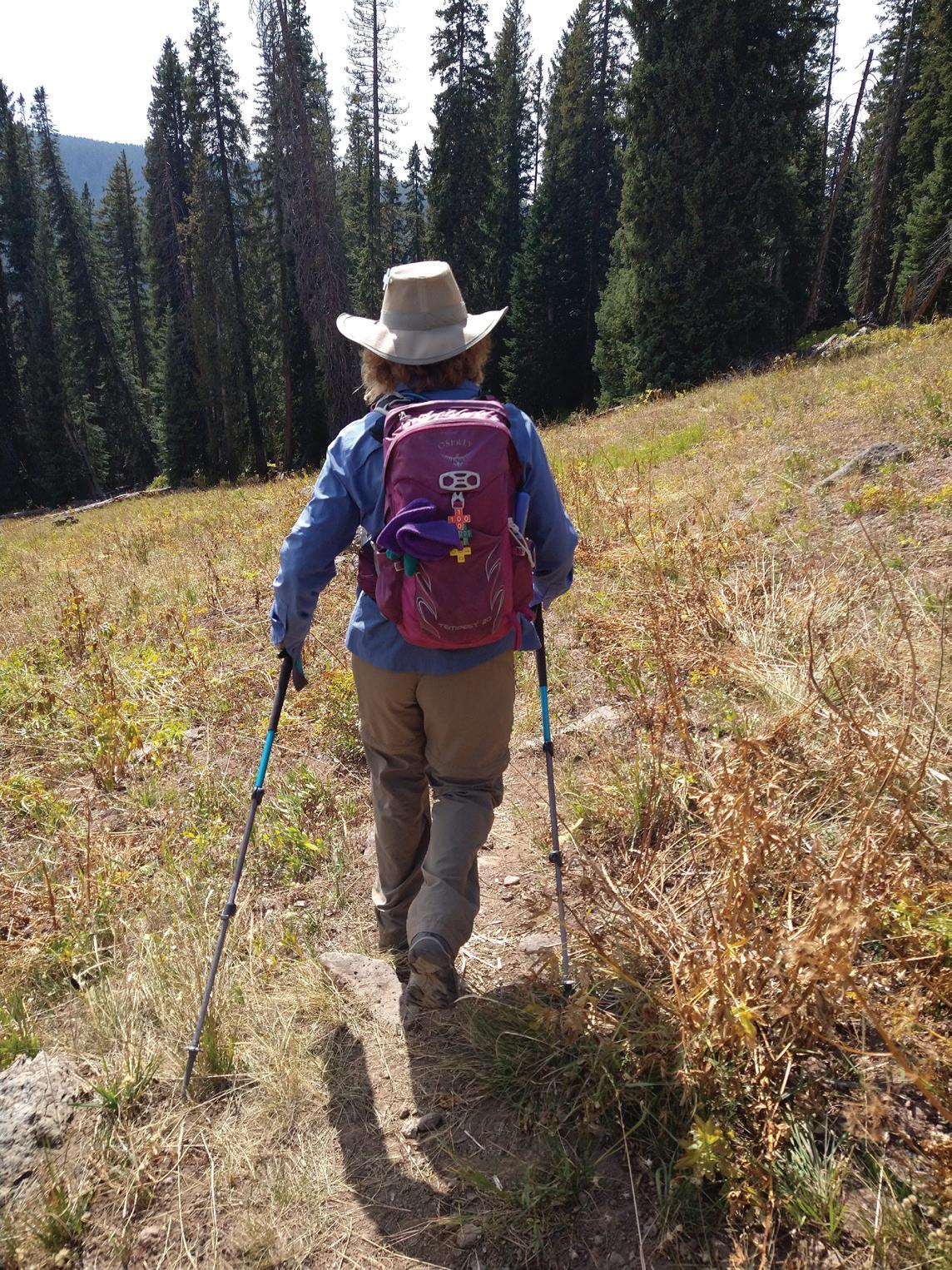
Above: Deb Korbel speeds along the trail. Left: The 100 Club at the trailhead of the South Branch Middle Thompson Creek.
built on data from over 230 Colorado Parks and Wildlife (CPW) Trail Managers. Ask a friend for information if they have been there before. Or better yet…
Go With a Friend
There are many hiking groups in the area. The 100 Club is just one of them. The fastest way to become a good hiker is to get out with other people. It’s fun and can be really motivating. If you do not feel quite comfortable navigating the woods, hire a guide.
Start Small
Pick a short, easily navigable trail with little elevation gain, or choose a more challenging trail and turn around when you feel worked. Next time push a little harder until you reach your goal.
Tell Someone Your Plan
Let a friend know where you are going and when you plan to come back. Have a contingency plan ready if you have not returned on time.
Take Appropriate Gear
You may have heard about the 10 Essentials of Hiking. It is a shortlist of things that are especially useful in the woods. I usually take more or less depending on the length of the hike and the weather conditions.
* Navigation - map, compass, GPS device, personal locator beacon (PLB), or satellite messenger
* Headlamp - plus extra batteries or a way to recharge
* Sun protection - sunglasses, sun-protective clothes, sunscreen
* First aid - including foot care and insect repellent (as needed)
* Knife - plus a gear repair kit
* Fire - matches, lighter, tinder, and/or stove (depending on the length of stay, and make sure you are aware of any fire bans)
* Shelter – tarp, emergency bivy, or mylar blanket
* Extra food - energy bars are lightweight and calorie-dense
* Extra water - at least one-liter with an option to filter more
* Extra clothes - Even during the Colorado summer, pack a puffy and a rain jacket
Have fun
It is not a race or a competition (unless you want it to be). As many thru-hikers on the 2,190-mile Appalachian Trail say, “Hike your own hike,” which boils down to: Each hiker is out there for their own reasons and will each get something different out of the experience.
While you are discovering your favorite trail this season, remember this space is shared with many other user groups, including hunters. Whether you agree with hunting or not, it is important to stay safe and informed during the hunting season.
Avoid Heavy-Use Times – Dawn and dusk is when animals are most active. Opening day of various seasons and weekends will see a larger influx of hunters in the woods. Hiking mid-week or during the middle of the day, along with awareness of the individual hunting season dates, will reduce contact with most hunters.
Stay On Trail – This is not the time to go exploring, Meriwether Lewis. Hunters will be looking for movement off-trail in wooded areas. Also, staying on the trail keeps our wilderness wild. It protects vegetation and fragile ecosystems for future enjoyment.
Wear Brightly Colored Clothing – Hunters are required to wear 500 square inches of orange when in the woods so that they may be seen. Remember to wear something bright.
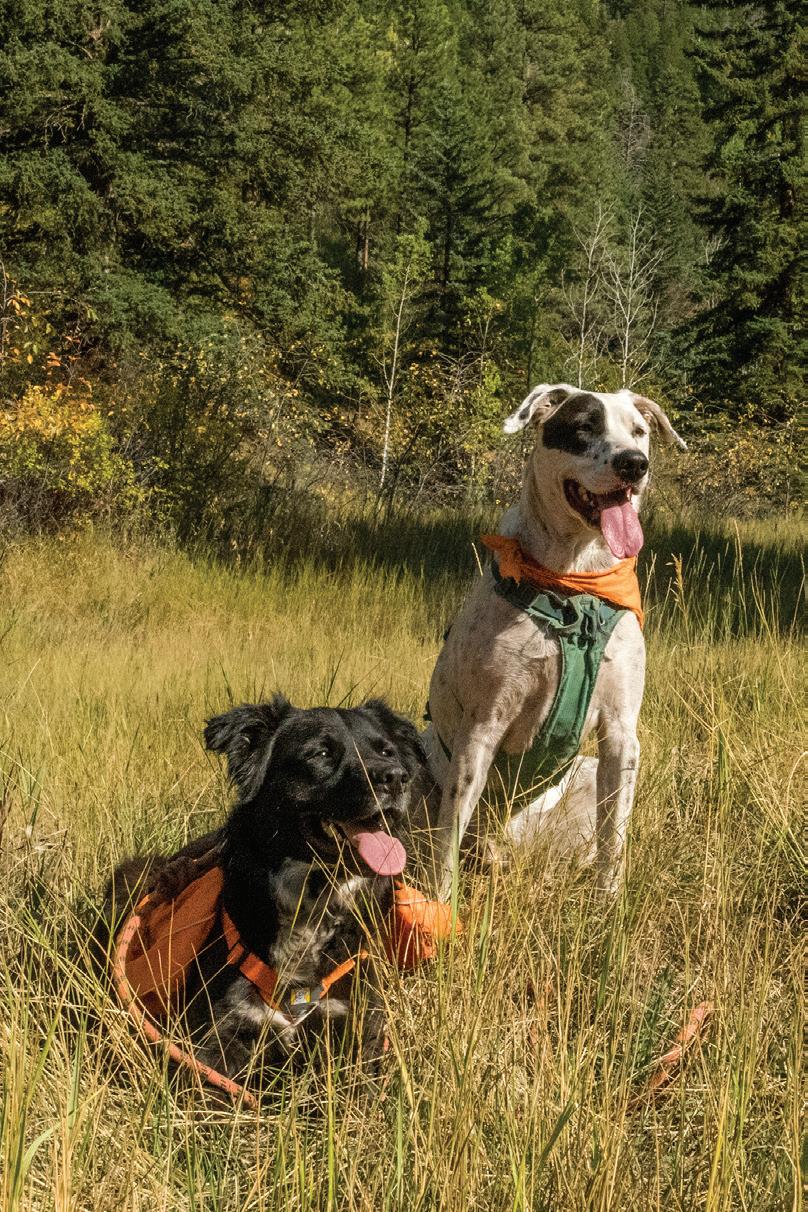
Keep your animals safe, too! – If you are hiking with a pet, tie a brightly colored bandana around their neck. Not only will they look adorable, but it will also be harder to mistake them for wild game. Keep them leashed so you know where they are at all times. CPW also urges horseback riders in the backcountry to wear orange because of the chance that a hunter might mistake a horse for an elk, deer, or moose.
It is also important to note that since Colorado mandated hunter education in 1970, accidents have decreased drastically. According to CPW, “In the first 10 years of implementation, fatal hunting accidents were cut in half. By the 1990s the yearly averages were down to 1.3 fatal and 11 non-fatal hunting accidents. This trend has continued into the new millennium and hunting accidents, both fatal and non-fatal, are at their lowest levels ever.”
In truth, the greatest dangers are not related to firearms at all but occur for other reasons. Car accidents traveling to and from hunting sites and falls from tree stands are at the top of the list.
Remember, hunters are enjoying the outdoors in their chosen activity - much like hikers. We are all using our public lands together. The fact that hunters are out there should not deter you from using the trail, but it should be another consideration in your decision-making process.
For more information, visit the Colorado Parks and Wildlife website at cpw.state.co.us/.
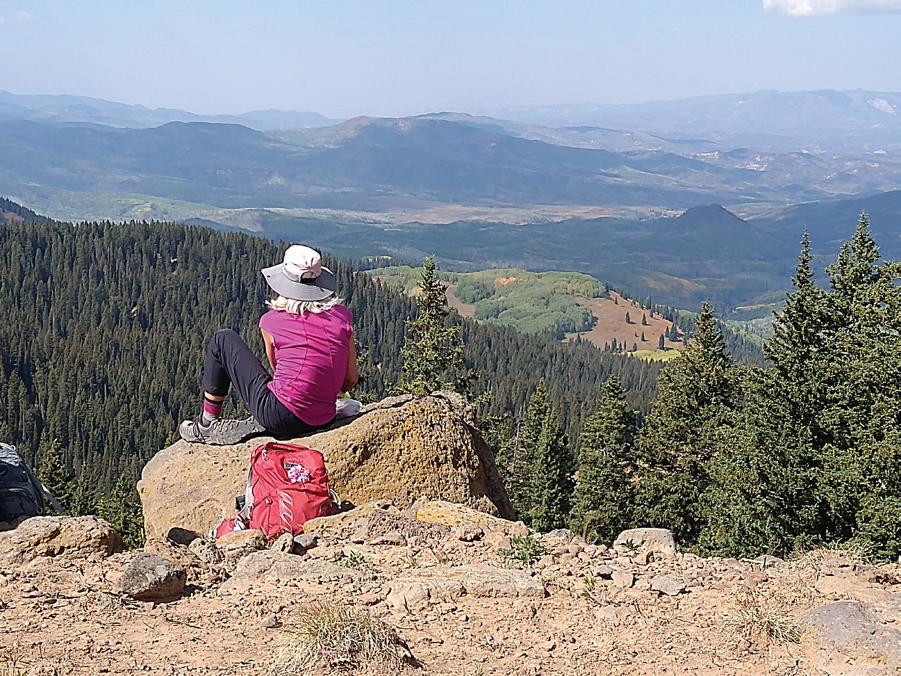
Above: Patti Sundermann taking in the view.
Below: Mazzy and Trace, dogs of The Crystal Valley Echo staff, show off their hi-vis gear.
Carbondale & Rural Fire Protection District Wants YOU!
Forty-six percent of Americans who participated in a market research study, released in May 2018 by Cigna and Ipsos, described feelings of loneliness either some or all of the time. The survey found that these feelings were more heightened in younger age groups and especially those ranging from 18 to 22-years-old.
“Loneliness has all sorts of adverse consequences, both in terms of your psychological health and your physical health,” said Tim Bono, Ph.D., a psychologist at Washington University, in a 2018 Healthline article.
Many psychologists suggest combating these feelings of isolation through efforts that help make us happy. Happy people tend to make healthier choices, especially surrounding their diet, exercise, and getting enough sleep.
Research shows that the happiness variation is only made up of roughly 50 percent genetics, 10 percent is determined by an individual’s particular circumstances, and 40 percent is affected by what’s called “intentional activities,” or activities that people use to become happier.
While residing in a valley that lends towards isolation, how can we combat these feelings, especially as we move into a season full of isolation in the middle of a pandemic? How does one become happier?
“Increasing things like gratitude, exercise, meditation, pro-social behaviors, or spending time with others,” says Bono. “Those are the small daily things that we can do that seem to reliably increase happiness.”
There are loads of opportunities to get involved through volunteerism in the Crystal River Valley, but one organization seems to meet all those “small daily things” that increase happiness and combat feelings of isolation: The Carbondale and Rural Fire Protection District (CRFPD).
About the District
a call,” explains Rob Goodwin, Fire Chief. “We want you to go about with your normal day but sticking around the area with your pager on so that you’re ready to go when your services are needed.”
Goodwin went on to include that all volunteers are invited to join the staff down at the main station in Carbondale to participate in any of their daily routines, including training, equipment and apparatus checks, working out, helping with chores, and any station tours or other public events.
Why Volunteer?
“This is my fourth summer as a volunteer, and I was offered a full-time position about a month ago,” said Marble resident, Max Gibbons.
He continued, “I’ve always been a volunteer somewhere, I just got in the habit of giving back to the communities where I lived. I got to know some of the volunteers, plus I have a background in EMT on an ambulance from about 10 years
are just fantastic,” he beamed.
“I can attest to the people within the Carbondale District, they’re just different from other departments,” added Gibbons. He describes the crew as very inclusive, “In fact, I don’t know that I’d still be here if they weren’t.”
Gibbons describes Goodwin as a guy with a big heart who loves people. “He goes a long way to help them be included when maybe they might not feel like they would fit otherwise, which I think speaks volumes of our leadership. The district makes great allowances for their volunteers, as long as they’re committed.”
Time Commitment
Applicants accepted to the fire department first become Probationary Members, not only is this a time to see if you’re a good fit but the district is on probation too. You’ll also go through the New Member Academy, which was specifically developed for volunteers with little or no experience in emergency services. This is the basic information and training necessary to become a First Responder for your community, but what does this commitment actually entail?
“There’s kind of a lot upfront, to get your basics and EMR,” says Gibbons, “but these are extremely handy classes that establish a baseline of usefulness, and you get certified in this training.”
An Emergency Medical Responder (EMR) teaches the skills needed to treat injured trauma patients, and to care for patients experiencing illness or serious medical problems; this course is a key element in providing emergency care and is the same material and practices presented in a Wilderness First Responder course.
The CRFPD is a Colorado Special District that provides fire suppression, fire prevention, emergency medical services, and rescue services to 300-square miles of the Crystal River and Roaring Fork Valley areas. Approximately one-third of the area serviced belongs to rural Pitkin and Gunnison Counties up the Crystal River.
The District has an integrated staff of both career and volunteer firefighters and emergency medical technicians (EMTs). These volunteers have the same responsibilities and training as fulltime staff and are eligible to join special response teams within the department such as swift water rescue, technical rescue, and woodland firefighter. Volunteers are given priority for employment when positions open.
CRFPD answers approximately 1,200-1,300 calls a year, with 5080 calls being split between Marble and Redstone. As a volunteer up the Crystal, you are asked to sign up for shifts and carry a pager.
“When you sign up for a shift and you live in Redstone or Marble, what we’re really asking you to do is to be available in the event of
ago, and I saw that there was a real need for volunteers. I signed up to begin the process right after I bought my house in 2016. It was a struggle, at times, to meet the time commitment the first six months while attempting to pay my mortgage, but these are really exceptional people that I have come to be supported by.”
Chief Goodwin shared that he always had a hard time walking away from situations where he saw someone in need, even as a child. “In 1986, I saw my third car wreck on Highway 82 driving into Aspen every day, and I just had such a hard time not intervening. I was also really upset that I didn’t know how to be useful in those situations. So, I came home and told my wife that I was tired of not being able to help and signed up for an EMT class.”
He said during the course, Barbara Bush slapped an application on his desk and told him that he was signing up as a volunteer. The hook was later set when he entered his first structural fire and was quickly sucked into the camaraderie.
“The people and culture within this department
The EMR course is around 40-45 hours, “It takes approximately six weeks to complete,” says Goodwin, “with evening classes, Saturdays, and online options.”
The Basic Firefighter program provides new recruits with some of the basic knowledge and skills necessary to help them function as members of the department. Again, this course is approximately 45-hours and takes about six weeks to complete.
“We are completely dedicated to the safety of our people, this course gives you the basics on how to answer calls and not die,” Goodwin shares with a smile.
By the time you’ve completed this basic training, the District has invested approximately $6,000-$8,000 in the individual, this includes the cost of books and tuition, gear, and safety equipment.
“I definitely struggled with the time commitment going through the basics, but that’s what volunteering is sometimes. They ask a lot from you in the beginning, but the CRFPD really does match the effort of all their volunteers with
Gentrye Houghton
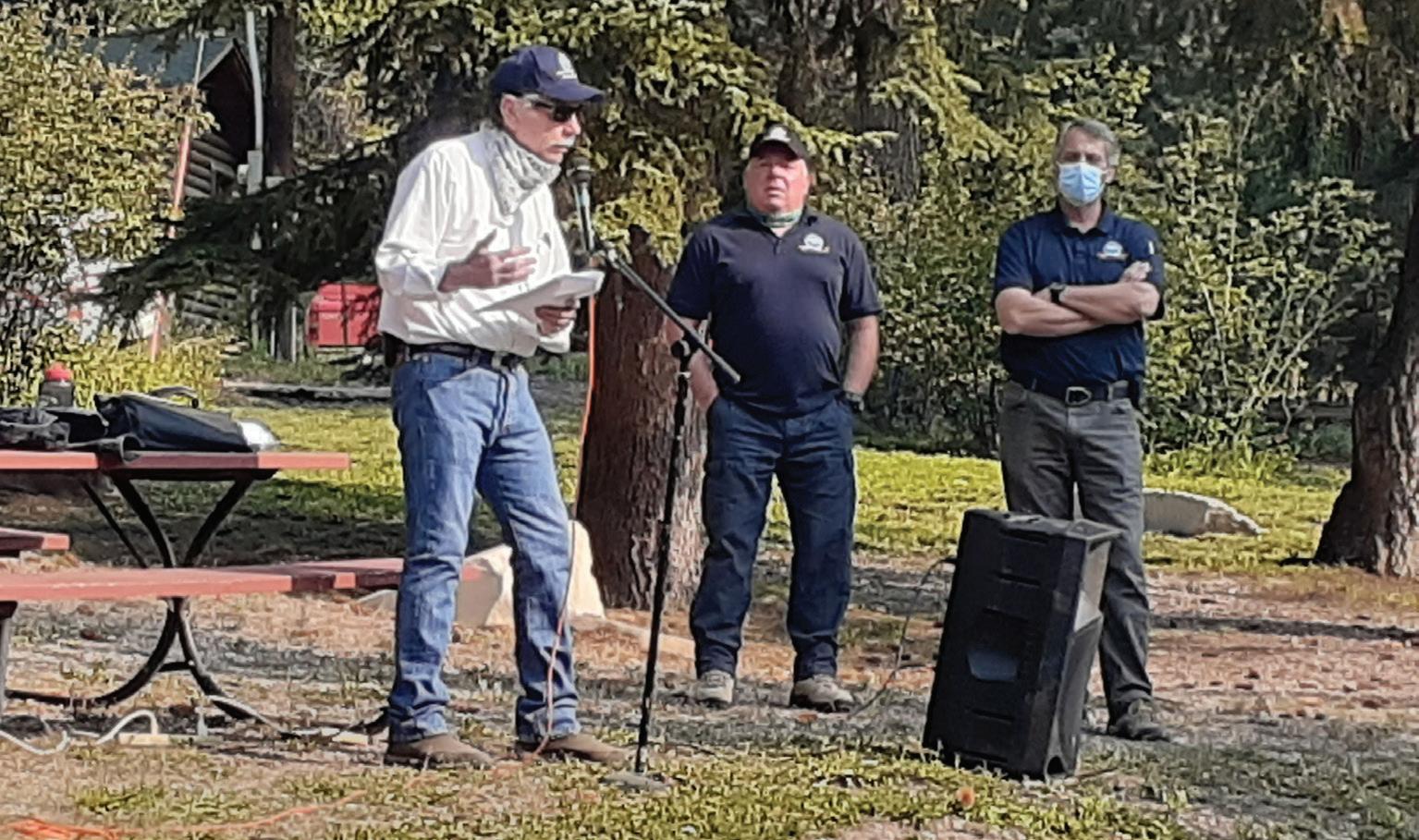
Ron Leach speaks during the Wildfire Prevention and Preparedness Meeting hosted by the Carbondale and Rural Fire Protection District in August at the Marble Campground.
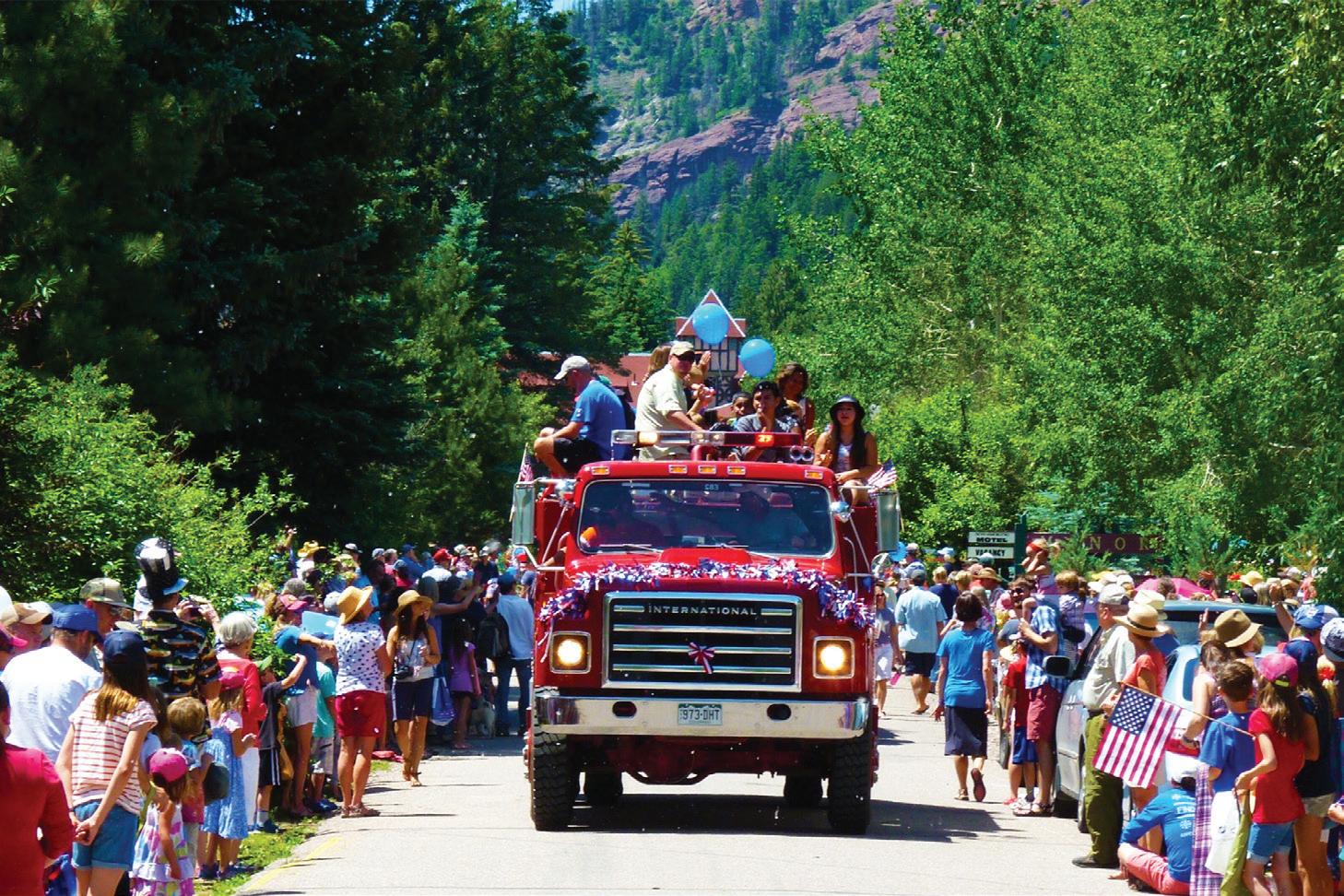
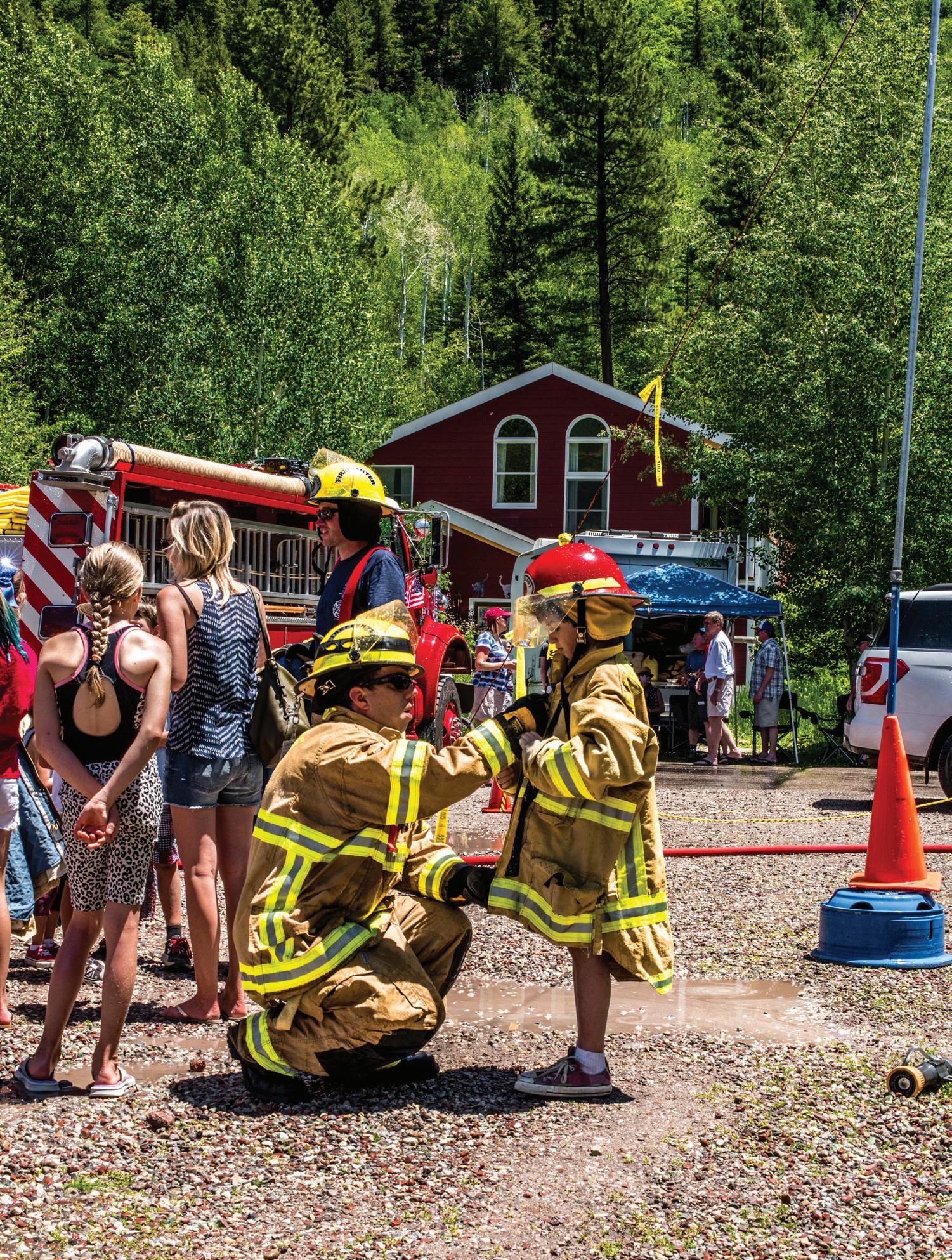
Above and right: Full-time staff and volunteers alike provide a plethora of services to our community, including participation in community events such as the Redstone's 4th of July Parade, water fights at Propaganda Pie during the Independence Day celebrations, MarbleFest, and Grand Illuminaion.
Continued. . .
resources, and training,” says Gibbons. “It’s just like anything in life though, you get out what you put in.”
Continuing education requirements once you become a volunteer are approximately 35-40 hours per year.
Do You Have What it Takes?
While everyone we spoke with gave testaments to this supportive community, they also did so with a warning stating that joining the fire department is not for everyone.
“You need to already possess some mental strength,” said Kat Bernat, CRFPD Office Manager and past Redstone resident.
“You see things you never thought or wanted, and you cannot unsee those things. It’s hard; everyone’s had it happen and dealt with it,” said Goodwin. He also went on to talk about the amazing support that is available through the Fire District’s organization and the valley as a whole.
“This is a group of people with great compassion, possibly because of the struggles and challenges, and when you join the district, you’re becoming part of something bigger than you could ever imagine.”
Through his many years of service, Goodwin attested to the “family” he joined as a volunteer and said he slowly realized that this group isn’t limited to just the Roaring Fork and Crystal River areas. “You’re joining a community of firefighters and emergency medical professionals that span across not only the state but nationally as well. It’s a really special bond, and it’s pretty cool!”
Interested Yet?
“This is really gratifying work,” explains Goodwin. “You’re able to intervene on someone’s worse day and make an impact while providing care. You get to give back to your community, and you’re never hung out to dry.”
Goodwin encourages anyone interested in signing up as a volunteer to “come have a conversation with us, and see what life is like.” However, there are a few key requirements you’ll need to make sure that you meet:
1. Minimum of 18
2. You must live within the district as a legal US resident with a valid Colorado Driver’s License
3. High school diploma or GED
4. Satisfactory driving history and background check
5. Willingness to learn
For more information or to request an application, contact Kat Bernat at bernat@ carbondalefire.og or call (970) 963-2491.
A note from Betsy Wedemyer:
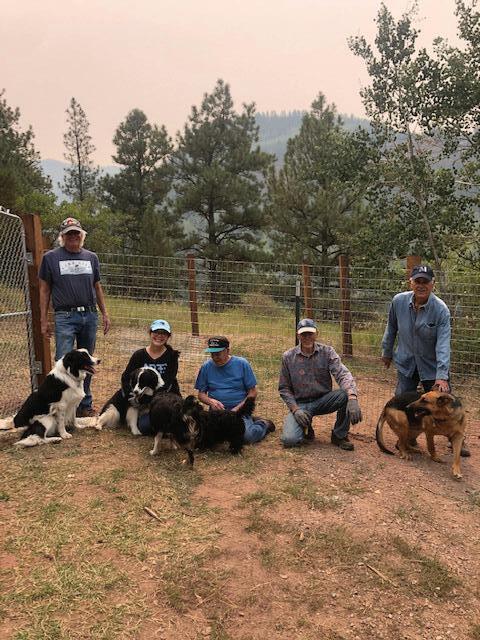
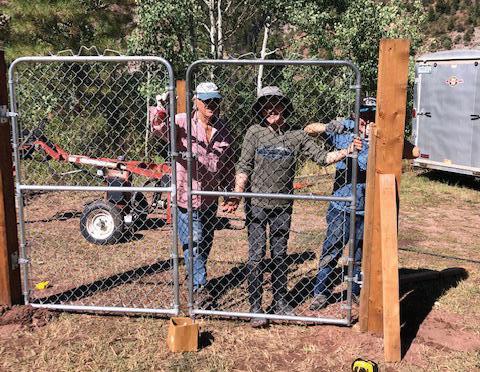
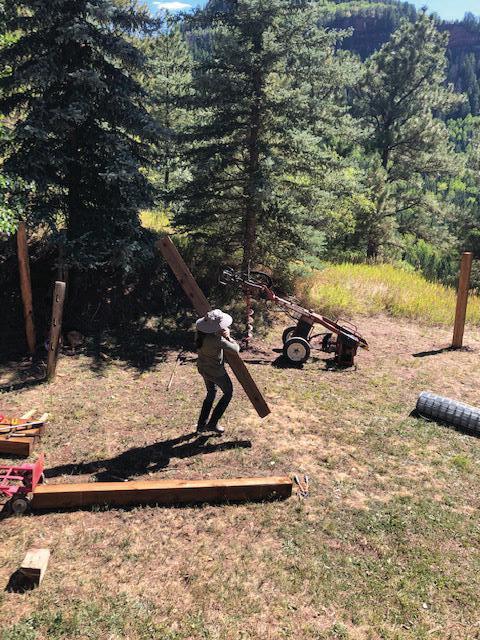
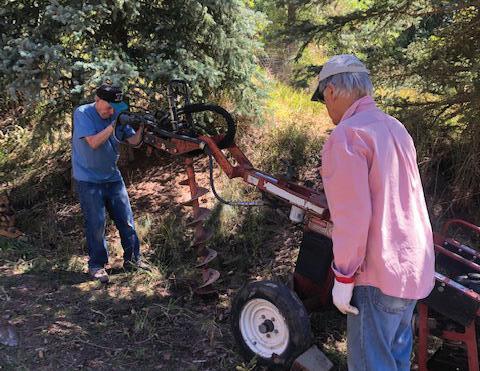
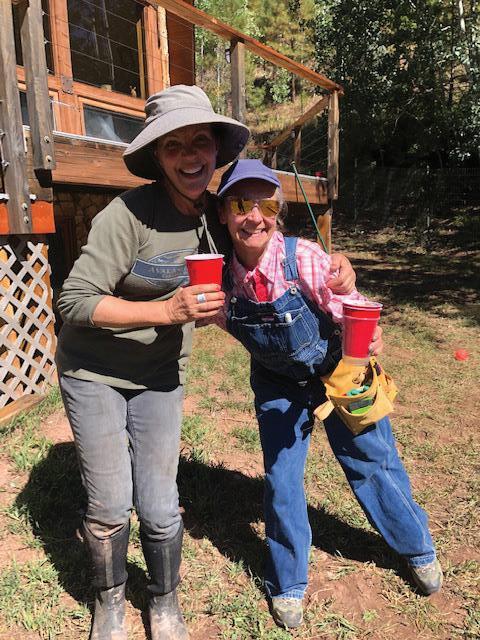
Spearheaded by Stephanie Askew, several volunteers from the Redstone community helped build a fence for me so that I may begin fostering dogs. Stephanie organized the gathering of helpers, materials, and pitched in with labor herself.
I want to thank Stephanie and her husband, Michael, as well as Tim Hasselman, Jack Lauer, Maureen O'Brien, Jim Lester, Ron Phaneuf, and Mark Hilberman for all of your help.
Now I can pursue my goal of fostering dogs, something I've been wanting to do since my husband passed away suddenly in February, as well as finding compaionship for my 15-year-old Lab, Bailey.
This was truly a project of love, and lots of hard work, and I am so grateful to this community.
~ Betsy
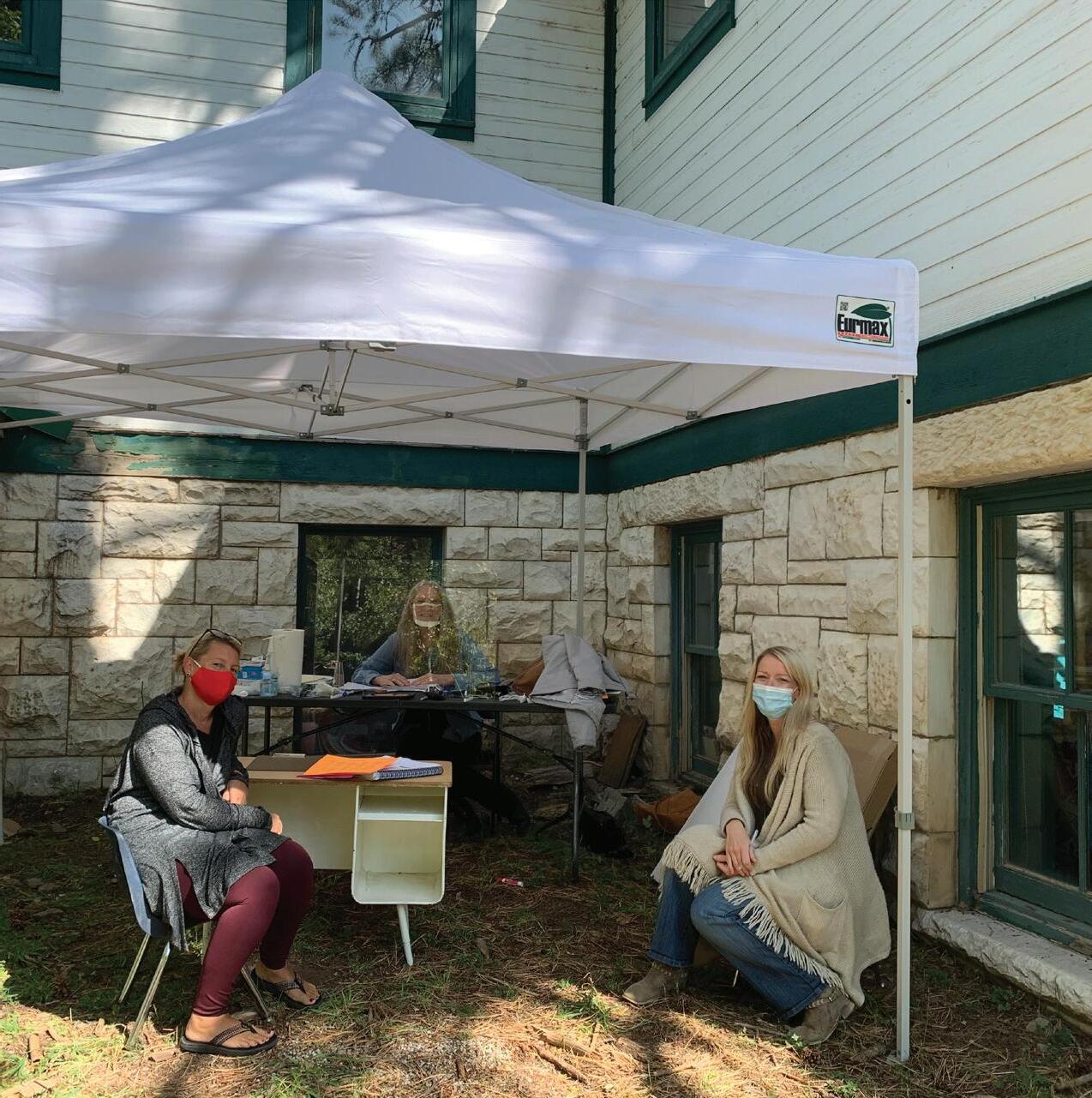
Left: Speech therapy accommodations with Amy Rusby, BJ Brubaker, and Sonya Waller.
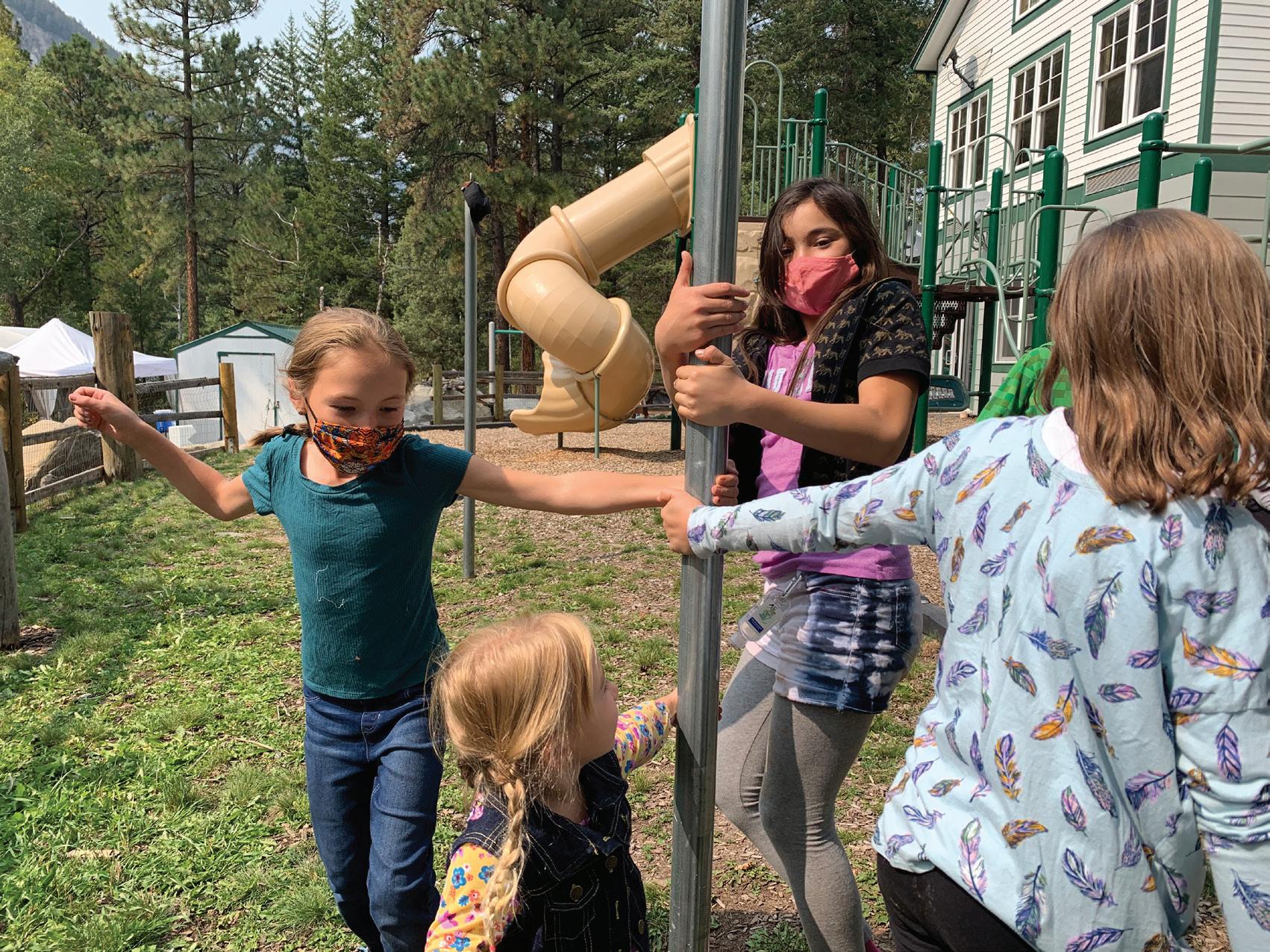
Right: Marble Charter School students playing during reces.
by: Dorothea Farris
Vintage Valley: COAL BASIN MINING HISTORY
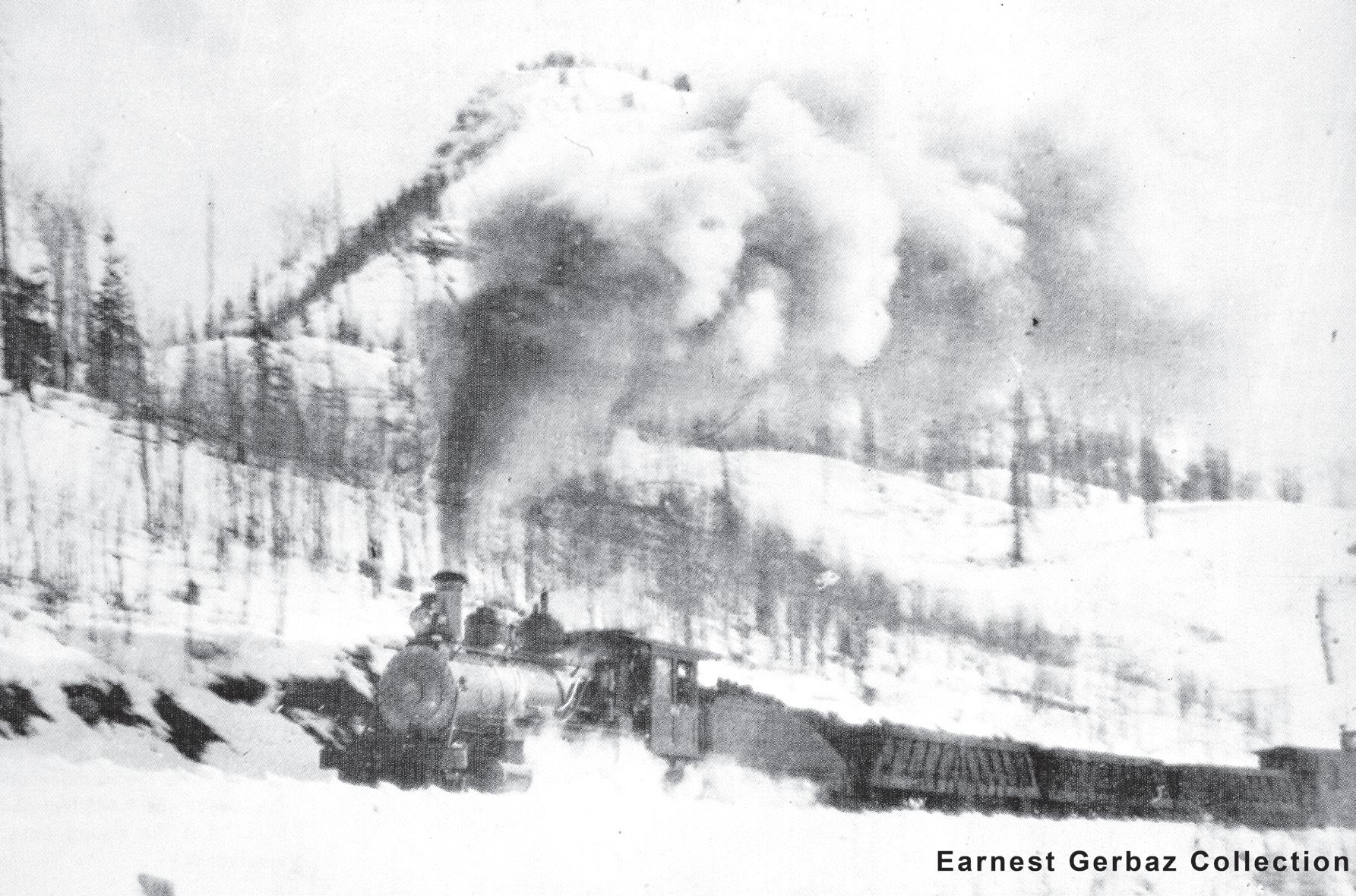
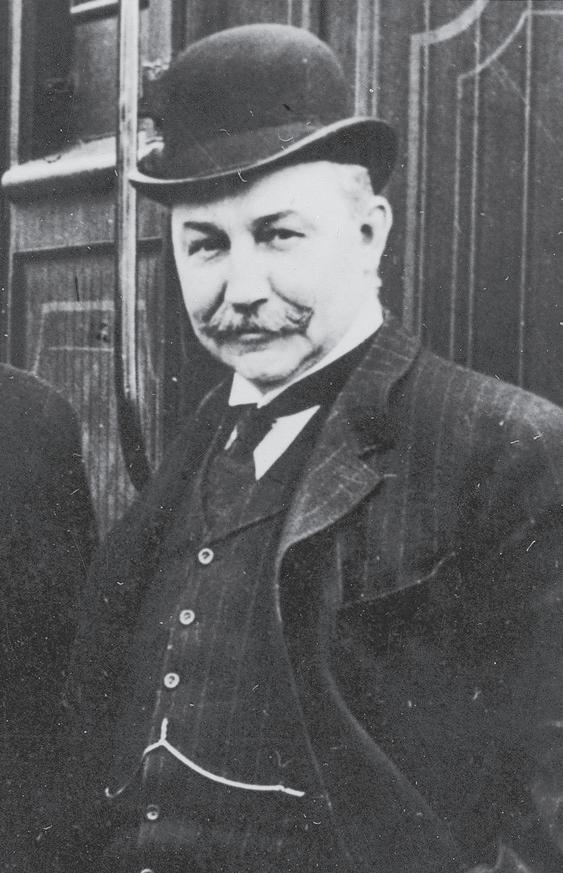
The history of mining in Coal Basin started with the discovery of major coal deposits in 1886. Then, following a decade of exploration, an investor and entrepreneur named John C. Osgood who founded Colorado Fuel and Iron (CF&I) opened the first Coal Basin mine portal in 1900. To support the mine, a railroad up the Crystal, and then from Redstone to the mines in Coal Basin, was also completed in that year, allowing the Coal Basin mines to hit full stride.
Financial problems had plagued Osgood for some time, and in 1903 he lost control of his CF&I company to John Rockefeller. The mine continued under Rockefeller, but compounding financial troubles, combined with a decline in the demand for coke, eventually triggered the mine’s bankruptcy and closure in 1909. The mine had a history of financial problems causing it to sit idle for four-decades from 1912 to 1956 when Mid-Continent Resources gained ownership, undertook a major upgrade and expansion of the operation, and resumed mining.
The impact of Mid-Continent Resources’ mining activities in Coal Basin from 1956 to about 1990 dwarfed the early mining activities of the Osgood era. Mid-Continent’s operations ceased in 1991, and
the company declared bankruptcy in 1992, closing the books on a century of mining, in which over 58 million tons of coal were removed from Coal Basin. The bankruptcy left behind an area of almost 6,000-acres that was essentially abandoned, leaving massive scars from a century of intense mining, as well as several buildings, various pieces of mining equipment, and two enormous piles of coal debris. What was left was a major environmental disaster.
In 1995, the Colorado Department of Reclamation, Mining and Safety (CDRMS) undertook a four-million dollar restoration effort that lasted through 2002. This reclamation changed the upper Coal Basin from a massive industrial waste dump into a respectable forest but left behind much to be done.
Environmental groups pressured Mid-Continent to enter into a series of land trades with the US Forest Service to bring 5,600-acres of the basin into the public domain. It was one of the largest land trades in Colorado history and opened the basin to the public. This 5,600-acre Forest Service acquisition stretches from the tiny settlement of Placita north along Huntsman Ridge and the Pitkin-Gunnison county border, then
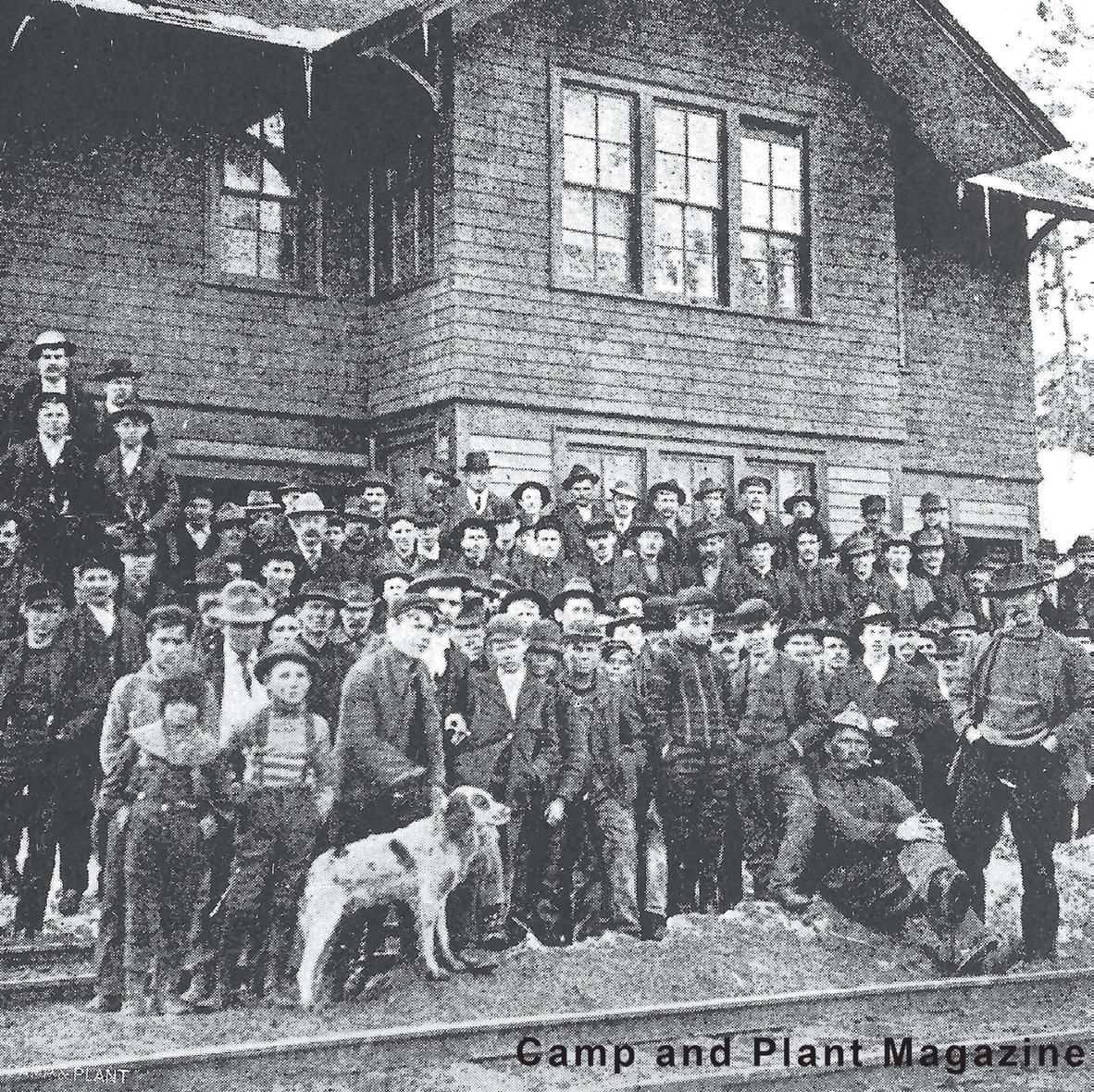
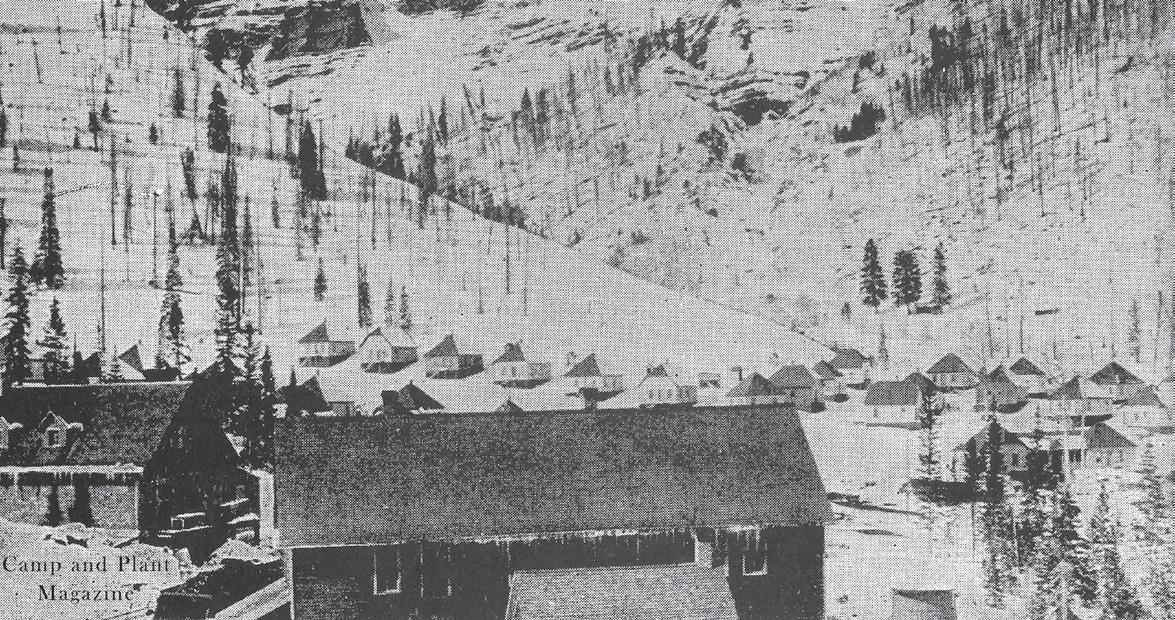
Above: Coal Basin Town, 1901 - Located almost 3,000 feet above Redstone, 265 miners worked Osgood's steep tunnel mine. Now listed on the National Register of Historic Places as Dexter Park, all that remains are a few berry bushes.
Left: Coal Basin Payday, 1903 - Workers wait for the "pay car" to arrive. The miners were paid not by the hour, but solely based on the weight of the pit car that each miner loaded with coal - no payload, no pay.
Right: The Highline Railroad - It is said that this narrow gage track ran eight miles, crossing Coal Creek 26 times, to connect the Coal Basin Mine with the Redstone Coke Ovens.
west to the Dexter Park area, but excludes two privately held parcels. One of these parcels, now owned by the Walton family, will open to the public with mountain bike trails in the near future.
Dorothea Farris has been a Crystal Valley resident since 1957 and served as a Pitkin County Commissioner for 12 years. Dorothea's actions, work, and dedication reflect her commitment to protecting our environment, history, and freedoms.
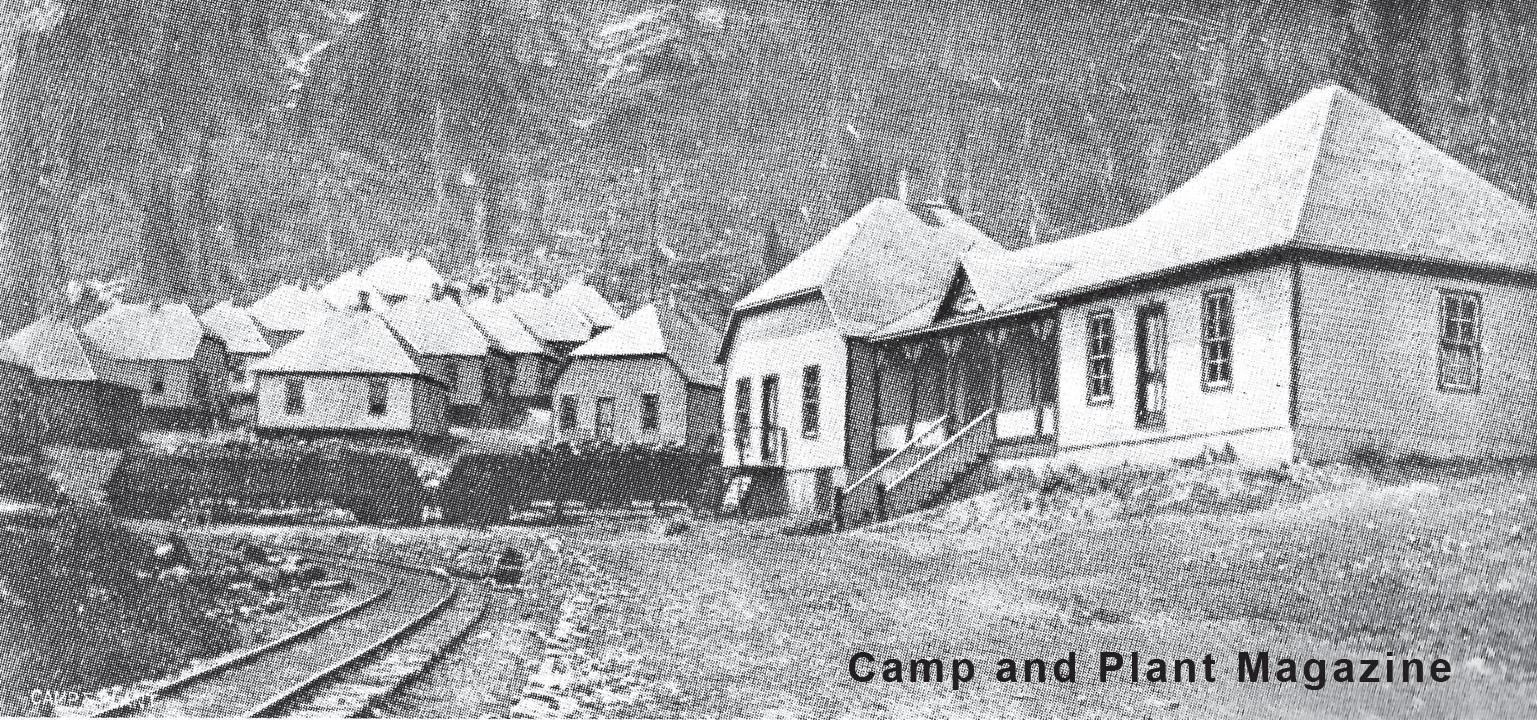
Coal Basin Clubhouse, 1902 - This four room Clubhouse, in the foreground, was modest in comparison to the Redstone Clubhouse that featured three floors including a 200 seat theater.
Redstone Community Association Bulletin
BOARD OF DIRECTORS
(DJ)
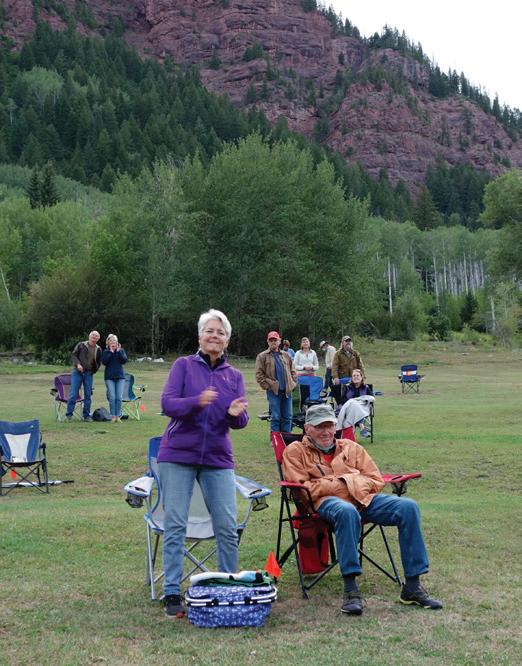
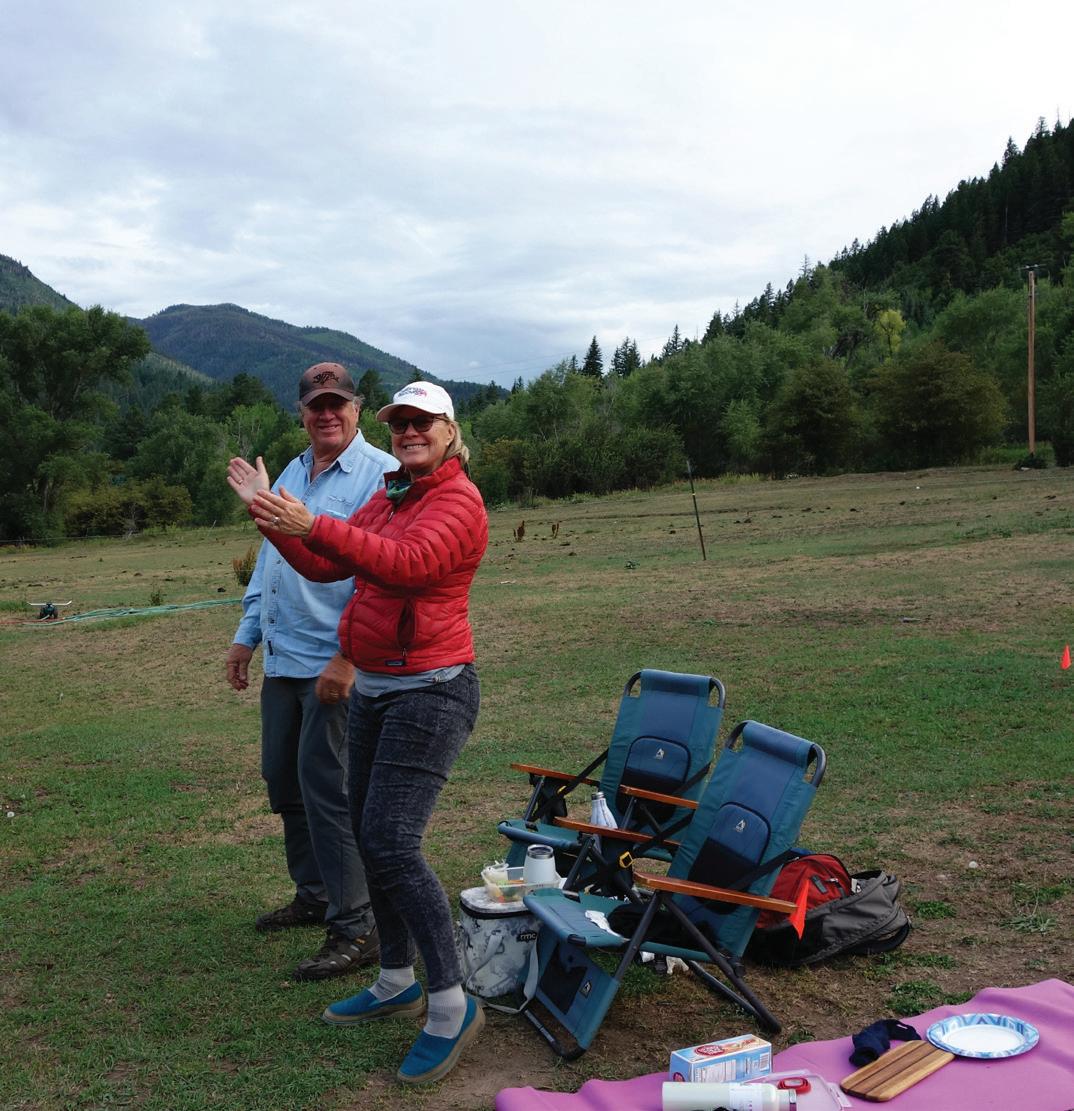
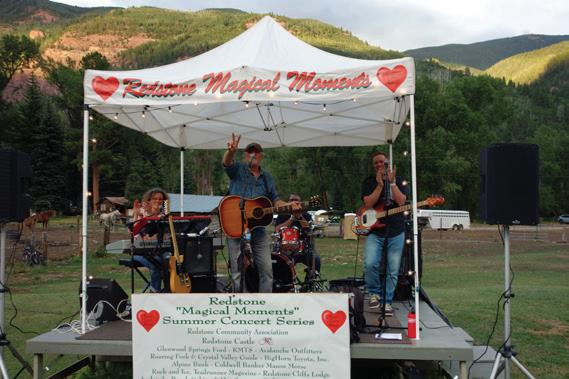
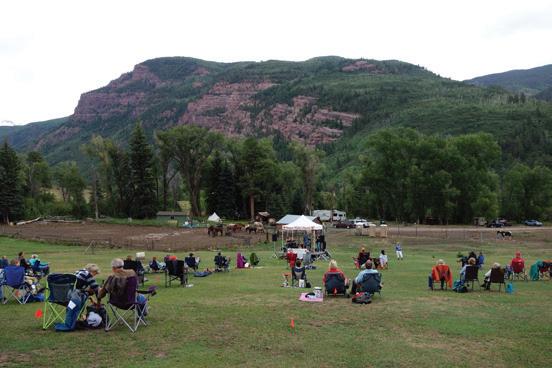
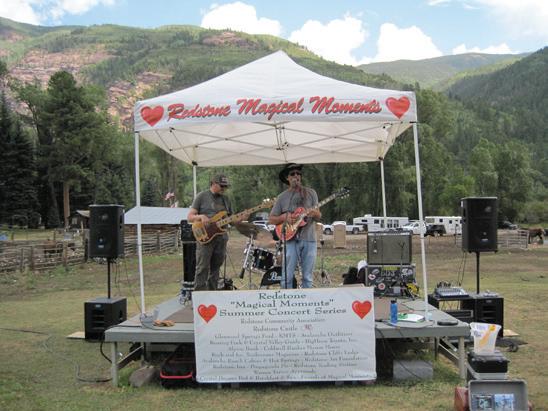
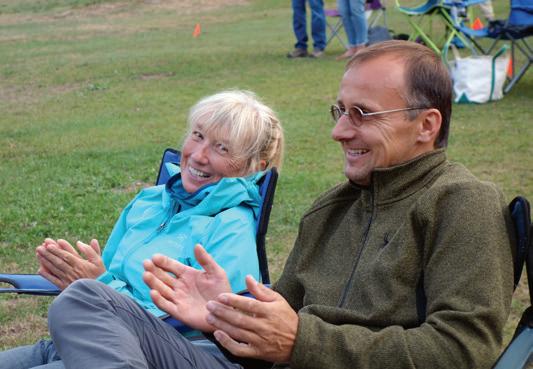
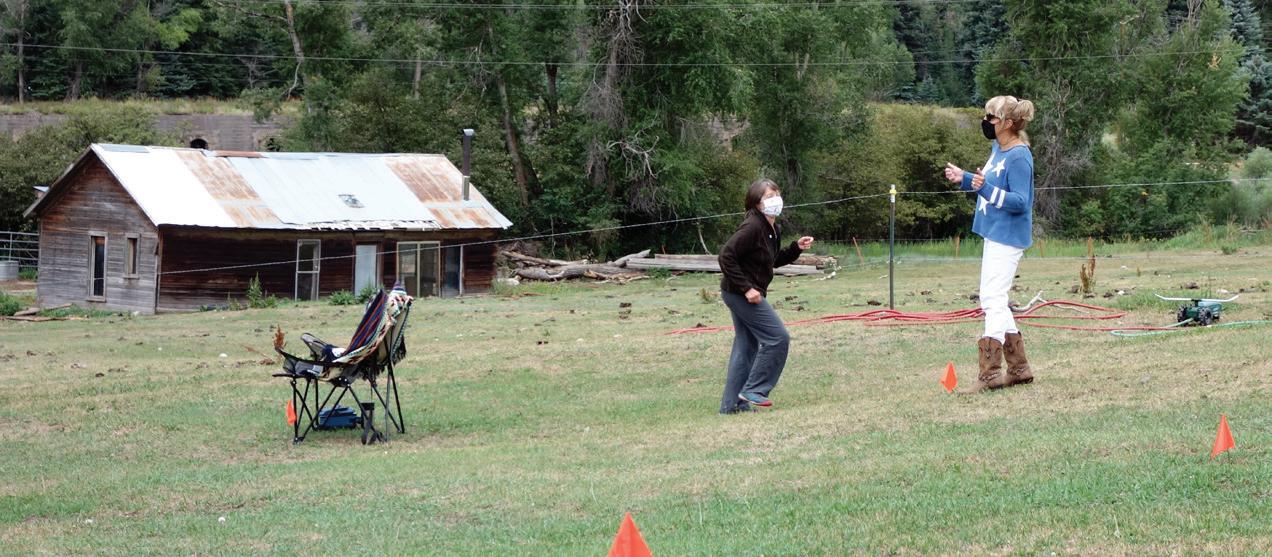
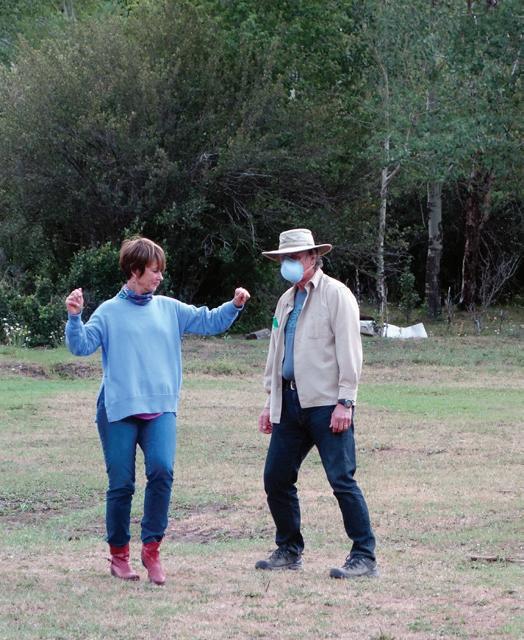
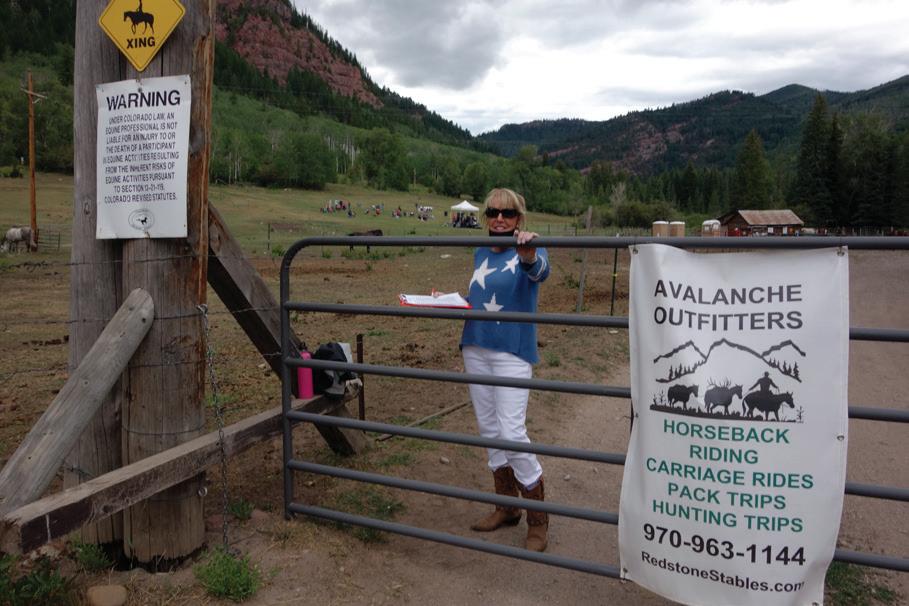
With guidance from Pitkin County, the 2020 Magical Moments Concert Series moved accross the highway to Avalanche Outfitters at the Redstone Stables and hosted eight live events throughout the summer. The following is a note from the coordinator:
"As I always say, these Free Concerts would not be offered without the funding from Sponsors, I would like to gratefully thank them for their yearly support:
Redstone Community Association, BigHorn Toyota, Inc., Redstone Castle, Alpine Bank, Redstone Art Foundation, Warren Turner Appraisals, Redstone Trading Station, Avalanche Ranch Cabins and Hot Springs, Coldwell Banker Mason Morse Real Estate Company, Rock and Ice, Trailrunner Mag azine, The Redstone Inn, Roaring Fork & Crystal Guide, Glenwood Springs Ford, KMTS Radio, Crystal Dreams Bed & Breakfast & Spa, Propaganda Pie/Slow Groovin BBQ, Redstone Cliffs Lodge, Friends of Magical Moments and cash contributions.
A special thanks to my Stage Hands: Ron Phaneuf, Mark Hilberman, Ray Meyer, Rob Hunker, Harry Remmers, Bruce Garr, Pete Menardi, Kent Michell
Thank you, Pitkin County Open Space and Trails, Avalanche Outfitters, and the Horses for the use of their property for these “MAGICAL MOMENTS."'
All dues received after August 31, 2020, will be applied to 2021 fiscal